Archive for the ‘News and Views’ Category

h1

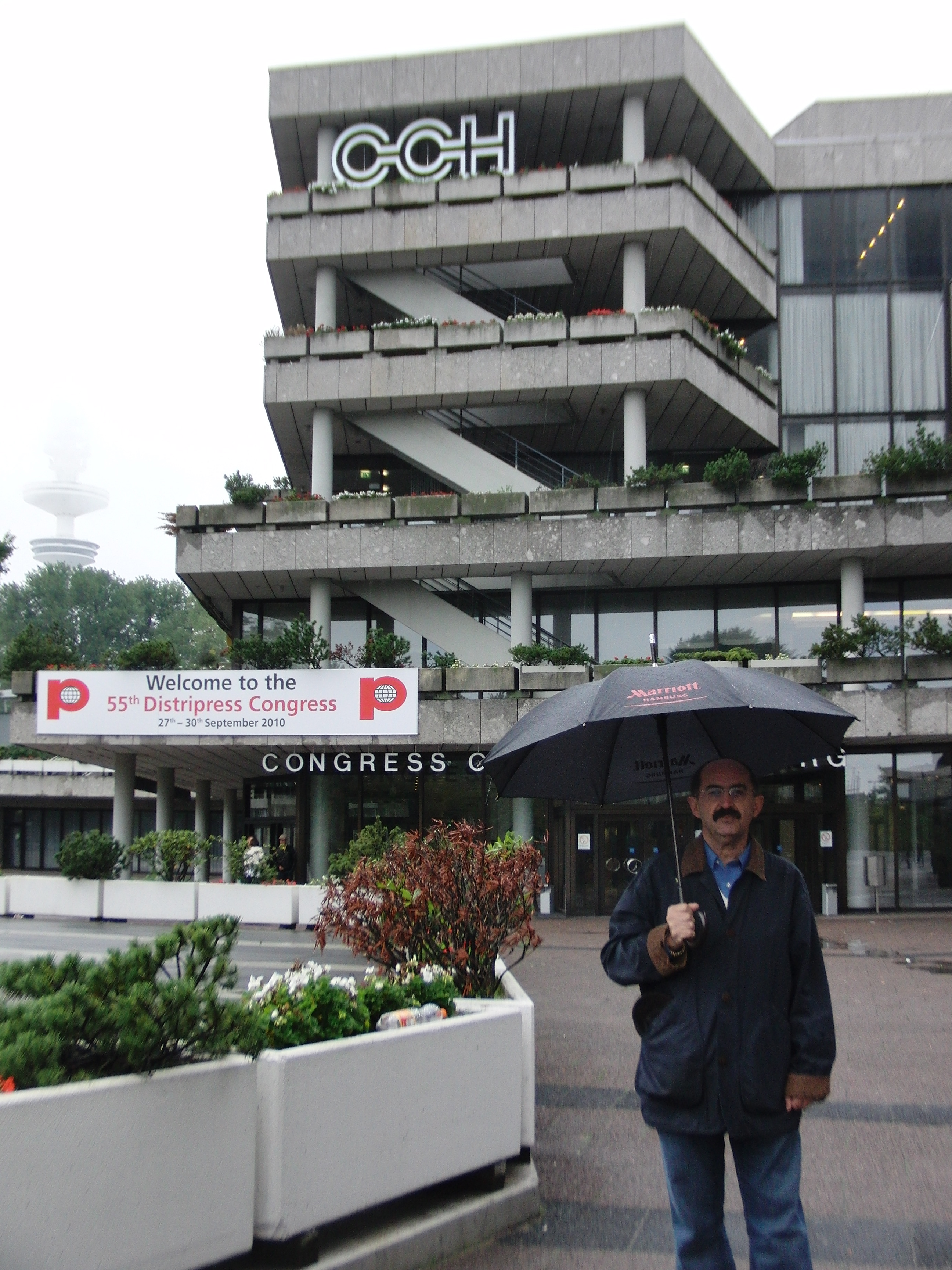
55 Lessons from the 55th Distripress Congress in Hamburg, Germany: The Three Musketeers Needed to Save the Publishing Industry: Vision, Leadership and Courage

October 4, 2010

The future was front and center at the 55th Annual Distripress Congress in Hamburg, Germany. More than 1050 attendees gathered, engaged and interacted (try to do that Mr. iPad) with each other at the Distripress annual meeting of the association that bills itself as the “Platform for World Wide Press Distribution.” The wide range of topics focused on providing solutions for publishers and distributors of magazines and newspapers worldwide. Problems were identified and solutions were offered. There was no escape forward attitude and no blame game for the problems facing our industry. The lack of vision, leadership and courage were cited by Tyler Brulé of Monocle as a major source for the ills of the industry.

That was but once lesson from the 55 great lessons that I have learned from the Forum during the 55th Distripress Congress. Here are all the lessons:

1. The role of magazine and newspaper publishers is changing. It is about protecting the heart of journalism and about responsibility. It is the duty of any publisher all over the world to ensure the diversity of opinion and to control competing powers in a democracy.

2. To protect the heart of journalism and to meet our responsibilities we need to be aware of three fundamental aspects:
a. There will be no relevant information without journalistic quality.
b. There will be no journalistic quality without journalistic independence.
c. There will be no journalistic independence without economic independence – which means profitability.

3. The Internet has given us a lot of freedom and journalistic opportunities. But it is not acceptable that third parties use our expensively produced content for their business without any compensation. The economic loss to the publishers is not only massive – it is a threat to press diversity. Therefore it is important to improve the copyright protection and to establish copyright laws for publishers.

4. The greatest challenge of our time is to set up an economic base that allows publishers to run quality journalism as a profitable business.

5. Any strategy for the future of publishing must follow a three- legged model objective: Re-inventing the core, expanding the core and building a new core in the professional publishing segment.

6. Print can and is still a highly profitable and successful business – today and in the future.

7. Technical innovations like the iPad will make an important contribution to the world of media products, and they will help us to win younger audiences.

8. Any newly developed media channel is worthless, if we do not succeed in making a profit from it in the long term!

9. The digital revolution is forcing a complete reinvention of the publishing industry while targeting customer profiles that diverge more and more (in ten years core customer targets will all be internet-native…)

10. The publishing industry as a whole has to reinvent itself. Publishers and distributors have to make their own (R)evolutions.

11. There are three reasons for hope: A growing need for entertainment and media; Reading remains a pleasure and a noble hobby among the population; and reading newspapers and magazines represent an aspirational trend and a new lifestyle among the middle-class population in new countries.

12. Paper remains the easiest way to read newspapers and magazines.

13. A Publication on paper:
a. Is the cheapest device
b. Has the highest definition
c. Is suitable for long reading hours
d. Is mobile, easy to pocket and carry anywhere
e. Allows immediate access, no need to connect and reload
f. Is quick to browse, with immediate response time
g. Has an excellent touch and feel
h. With a special smell
k. Is 100% recyclable

14. Our challenge is to address the “ready-to-move-to-the-web” and increasingly mobile population in a more individualized & differentiated way per age, habits

15. We must venture into mixed offers paper / digital:
a. premium content on portable devices on top of existing paper press with differentiated contents.
b. 3D in printed press both newspapers and magazines (see the Sunday German Bild newspaper example below)

16. Publishers must have a solid commitment to the issue of copyright. They must learn from the mistakes of the music industry and adapt.

17. Inability of publishers to stand united and firm will lead to disastrous results.

18. Unlike music, magazines and newspapers, are not a background medium… they are front and center for the consumer.

19. Customers must come first.

20. Do what you do best and than link to the rest.

21. Endless customers choices is leading to unlimited demand.

22. Consider a business strategy like this one:
a. Determine your customer‘s needs.
b. Focus on the value added you provide best.
c. Make use of technology and platforms.
d. Collect and organize data.
e. Engage your customers – your community.
f. Act authentic.
g. Listen to digital natives and engage them.

23. In the midst of this digital age, we believe in print and we have the story of Grazia in Germany to put our money where our mouth is

.
24. Anti-cyclical acting will be rewarded and sometimes luck is with the bold and active ones.

25. Launching in economically difficult times can possibly create positive expectations and as a consequence strong support from your market and business.

26. Medium sized companies may not be at any kind of disadvantage in difficult times as
reaction time and therefore time to market is possibly faster.

27. Successful international concepts and licensed models can succeed, even
in saturated markets.

28. Stay with your strategy: Our strategy is: Print FIRST.

29.There is a children’s daily newspaper in France called “Le Petit Quotidien” and published in three different editions to reach different age groups from 6 to 14.

30. The daily paper feels and reads like a magazine with relevant focus to the relevant age group. The paper grows with its readers and has a total paid circulation of 150,000.

31. The web and the internet are not to be blamed for our troubles and problems in print.

32. The publishing industry needs to fight back with the tactile nature of its product.

33. Our problems can be summed by: a lack of vision, a lack of leadership and a lack of courage.

34. Every industry, every sector had to rethink the ways they are doing business in the last decade, except for the newsstands business.

35. It is time for a complete overhaul: selling me a candy bar with my newspaper is not the answer nor print on demand is the answer.

36. Look for Japan and South Korea: two places where they are creating rich, true diverse markets and experience… both in print and digital

37. Do not give away your publication. Monocle charges more for a subscription than buying it from the newsstands.

38. Make your subscribers feel like they are club members. Give them some evidence of that membership to showoff and identify with other members.

39. Subscribers will become patriots of the brand.

40. Deliver one story across the globe. Monocle aims to give the newsstands “love.”

41. Do in print what National Public Radio in the United States did to radio.

42. Print has become a more premium medium.

43. Monocle is creating newspapers, stores, products, events using intense branding and partnerships.

44. Soon the Monocle hotels may start appearing and the first one maybe in Beirut, Lebanon. See why in my two minutes interview with Tyler Brule, Monocle’s founder and editor in chief. (See video below)

45. Tyler Brulé and his magazine are a rare breed, but it is not too late to follow his lead.

46. Print will be with us for a long long time.

47. The magic of using four different kinds of paper in the same issue of your magazine works magic and create a wow factor that is missing from a lot of magazines on the market place.

48. When launching a new magazine, go to the source: the customers. Ask them what they want, when they wanted and how they wanted.

49. Think different: feeling good does not necessary means losing weight or looking beautiful.

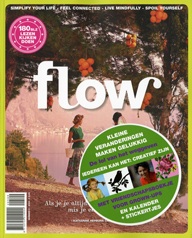
50. Print is still the best platform for Time for ME. (See Flow magazine cover below)
51. We live in a digital age, but Print is still a very profitable business.

52. Newspapers and magazines are not dying, however some are committing suicide.

53. We can’t afford to be just content providers anymore, we have to become experience makers. In the midst of everything digital we need to focus on the humans.

54. Publishers must sell their products at a premium and must use from digital and technology what enhances their print product and not destroy it.

55. We are in the business of making money, any model invented, being invented or is soon to be invented, if it does not provide the publisher with sources of revenues it will not work.

The aforementioned lessons my friends, are just but a few pearls of wisdom that I’ve learned from the 55th Distripress Congress in Hamburg, Germany. There is much much more to be learned, but since that was the 55th Congress, I will stop at 55 lessons. I can’t wait to learn some more next year in Barcelona. I will have the chance to learn 56 lessons. Enjoy!

Giving credit where credit is due, lessons 1 to 8 came from Dr. Bernd Buchholz, Chairman of the Executive Board, Gruner + Jahr AG, Germany; lessons 9 to 15 from Dag Inge Rasmussen, President and COO, Lagardére Services, France; lessons 16 to 18 from Bhaskar Menon, Director, NDTV, India and Chairman & CEO of International Media Investments, USA; lessons 19 to 22 from Ewald Wessling, Media Consultant, Germany; lessons 23 to 28 from Lars Joachim Rose, President and CEO of Klambt Verlag, Germany; lessons 29 to 30 from Francois Dufour, Editor in Chief at Play Bac Presse, France; lessons 31 to 46 from Tyler Brulé , Chairman and Editor in Chief of Monocle, United Kingdom; lessons 47 to 50 from Anita Mooiweer, Head of Business Development, Sanoma Uitgevers, The Netherlands; and lessons 51 to 55 from yours truly. Thanks to all.
h1

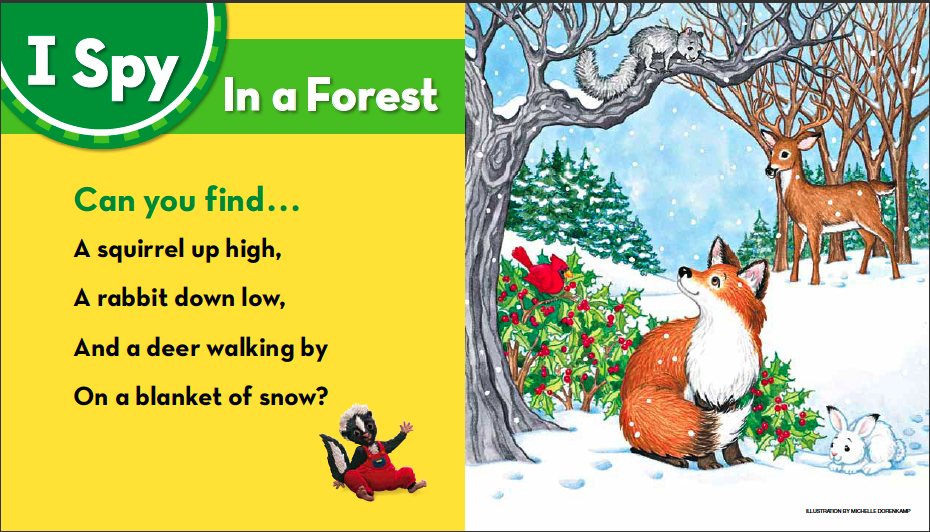
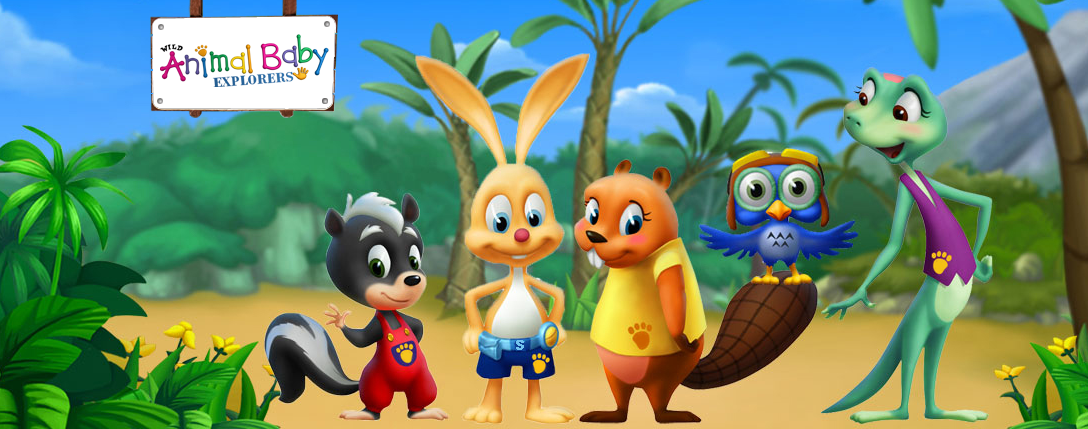
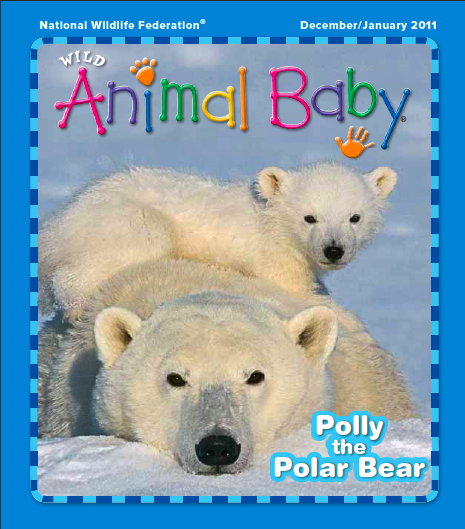
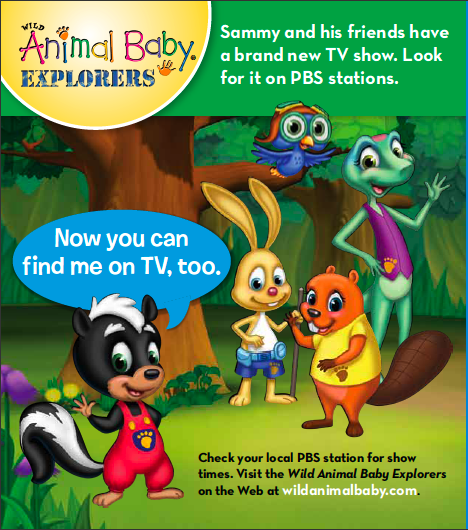
From Print to Television and Beyond: The Adventures of Sammy and the Wild Animal Baby Magazine: The Mr. Magazine™ Interview with Lori Collins, Editor, Wild Animal Baby

October 1, 2010

First came the magazine, now the television show. Wild Animal Baby is going 360 and anyone who doubts that children and their parents can multitask have to think twice. Ten years after publishing the magazine for the 2 to 4 years old, Sammy, the explorer skunk, moves from the pages of the printed magazine to the television screen where he and his friends star tomorrow (Oct. 2) in the premiere of Wild Animal Baby Explorers television show on the PBS stations. The goal is to go where the “the kids and their parents are.” The pages of Wild Animal Baby magazine which will also sport a new look starting with the December 2010 issue, will jump, move and explore on the television screen the same way it is doing in print. The goal is one according to Lori Collins the magazine’s editor, “giving children a foundation for a lifelong love of wildlife and wild places.”

I had the opportunity to ask Ms. Collins few questions regarding this evolution from being a print publication to a 360 brand. The Mr. Magazine™ Interview with Lori Collins follows:

Samir Husni: Why television and why now?

Lori Collins: Historically, we’ve grown our subscription base via direct mail. But direct mail has become more expensive and less effective for today’s busy parents. The reach of television is far greater than anything we could achieve through traditional marketing means. By going where kids—and their parents—are, we hope to grow the Wild Animal Baby brand, including magazine sales. By the way, Wild Animal Baby magazine is just one of four children’s magazines published by National Wildlife Federation. As these new Wild Animal Baby subscribers get older, we hope they will move on to our other print publications: Your Big Backyard (ages 4-7), Ranger Rick, (ages 7–14), and Just for Fun (ages 7–14).

SH: How do you see the future of print in this digital age? Is the future all digital or is there print in the future? What are you doing to ensure a print (and do you think it is necessary for kids) future in a digital age?

LC: I think print will continue to play a vibrant role, at least in the near future. Both kids and adults love technology, no question about it. They like the bells and whistles. But kids, especially young ones, love the simple magic only a print product can provide. Our readers look forward to getting mail each month that is not only addressed to them, but also made just for them. It makes them feel special.

More importantly, young children like the quiet time they spend curled up with a parent, mostly at bedtime, going through the pages, looking at the pictures and reading the stories. Most parents cherish those hours with their child as well. Perhaps someday the iPad will allow parents and children to have that cozy, shared experience, but I don’t think we are there yet.

That’s not to say our publications staff isn’t keeping a close eye on where technology is headed. Like other children’s magazines, we’re dabbling with how our wildlife content can be applied to media such as phone apps, software games, and a more interactive website. But for us, it’s a little too early to draw up a specific roadmap. We’re still trying to figure out how to make digital experiences that are as necessary, sufficient, and relevant as the experiences kids already have reading our print magazines.

SH: Launching a magazine for two- to four-year-olds in normal time has been seen as crazy; how about it in digital times?

LC: Our experience is that publishing a magazine for two to four year olds really isn’t that crazy. You have to remember that preschoolers have been enjoying Wild Animal Baby magazine for over 10 years. We aren’t launching the television series because we think the magazine has run its course. Quite the opposite. We don’t have any reason to believe young children won’t continue to enjoy Wild Animal Baby magazine. We’re launching the television series because it allows us to create an experience for preschoolers that is different, but just as valuable as the one created by reading the magazine. We expect our current readers will watch the show and believe viewers will want to read the magazine. Both media offer unique opportunities for us to share our wildlife message.

SH: Will the television show be a lot like the magazine?

LC: As we developed the television show, it was important to us that there be clear connections between the TV series and the magazine. We didn’t want to create another sub-brand for NWF. We wanted to build on the existing Wild Animal Baby brand. So, like the magazine, Wild Animal Baby Explorers introduces preschoolers to the world of animals and helps them develop important observation and problem-solving skills. But we also wanted to make sure that we took advantage of all that television offers. So the series features a unique mix of loveable 3-D animated characters and stunning high-definition wildlife footage that will keep young children engaged and having fun.

Sammy, a young skunk in red overalls, has long been a fixture in Wild Animal Baby magazine. Each month he hides among the pages, and our readers love to find him. (We get more comments about Sammy than any other aspect of the magazine.) So Sammy is one of the five animated characters in the television show. And like in the magazine—Sammy hides at some point during each episode, and the viewers are encouraged to find him.

“I Can” is another favorite feature of the magazine that we incorporated into the television show. At the end of each episode, viewers are encouraged to get up and move to imitate an animal that has been featured in the show.

But we didn’t just want the magazine to inform the show. We also wanted to include elements of the television show in the magazine. So starting in November, each issue of the magazine will feature a cartoon-style story based on Sammy and his four new friends—Skip, Izzy, Benita, and Miss Sally—that appear in every episode of Wild Animal Baby Explorers.

SH: Are you attempting to be a 360 publisher? TV, print, web, apps, products, events, etc.

LC: NWF is a conservation organization that has a long-standing commitment to educating people—especially children—about wildlife. We view our children’s magazines as educational tools—but not the only possible tools. Our goal is to share our appreciation of the natural world with as many people as possible. That means we need to meet people where they are—watching TV, surfing the web, playing with apps, attending special events, or reading magazines. We’re really just trying to share our love of wildlife and to nurture children’s inherent love of animals.

SH: Five years from now, where do you want the Wild Animal Baby brand to be?

LC: I’d like Wild Animal Baby Explorers to be in every preschooler’s home in the United States—and in homes in several countries overseas as well!

I’d also like for Sammy to have become a beloved character to millions of children, much like Big Bird, Barney the purple dinosaur, and our own Ranger Rick. If that were to happen, it would mean that we were successful at a lot more than selling magazines and producing TV shows. It would mean we were successful at giving children a foundation for a lifelong love of wildlife and wild places.

SH: Thank you.

h1

Zinio’s EVP and Chief Marketing Office Jeanniey Mullen and VIVmag editor in chief Anne Russell to speak at the Magazine Innovation Center’s first ACT Experience

September 24, 2010

A good thing just got better. Two more speakers have been added to the great line up of keynote speakers for the Magazine Innovation Center’s first ACT Experience. Anne Russell, editor in chief of the digital only magazine VIVmag and Jeanniey Mullen, executive vice president and chief marketing officer of Zinio will speak on “How to launch an all-digital magazine without a blueprint; the story of VIV Magazine” and “three secrets to worldwide Digital publishing domination,” respectively.

Jeanniey Mullen, is the executive vice president and chief marketing officer for Zinio and its sister company, the exclusively digital magazine, VIVmag. Jeanniey is recognized as a pioneer and visionary in the digital marketing and advertising space, with an expertise in e-mail marketing.

Anne M. Russell is the editor in chief of VIVmag, and has an extensive background in health and fitness journalism. She previously served as editor in chief of Shape and prior to that was the editorial director of FOX Television’s Health Network, where she oversaw the Network’s website, as well as on-air content.

The two aforementioned speakers will join a host of keynote speakers in Oxford, Mississippi October 20 – 22 for the three-day event “Reimagining the future while we still have time.” And talking about time, now is the time to register for the event. Limited spaces are still available. To check the complete roster of speakers at the event and to register for the ACT Experience click here.

h1

It is not too late to get to know the future…

September 23, 2010

Limited space is still available at the first Magazine Innovation Center’s ACT Experience. The three days of Magazines, Music and Mississippi themed “Reimagining the future while we still have time” is going to take place on Oct. 20 thru Oct. 22.

To be part of this inaugural event click here.

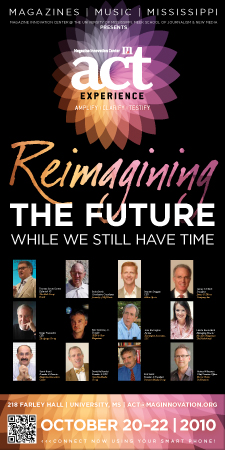
Today, I am also pleased to release the poster for our first ACT Experience. The poster was designed by J. Kevin Tugman, executive vice-president for creative services at the Sunshine Media Group, one of our Magazine Innovation Center sponsors. Check it out and hope to see you in few weeks.

h1

MOZINES™ are here… Is this the future? The Mr. Magazine™ Interview with Mozines™ Creator Mike Cartabiano, CEO, Thumb Media Group

September 22, 2010

If the iPad and its many cousins and relatives are Game Changers for the publishing industry, then the question one needs to ask is, “Who is playing the game and who is leading the changes?” The publishing industry, historically speaking, is not known for its quick moves when it comes to change, or the will to join a new game if not invented and created by the industry itself.

Well, times have changed. And more people from outside the publishing industry have been leading the innovation and change in our industry ( The name Steve Jobs comes to mind ). But that is the topic for another blog.

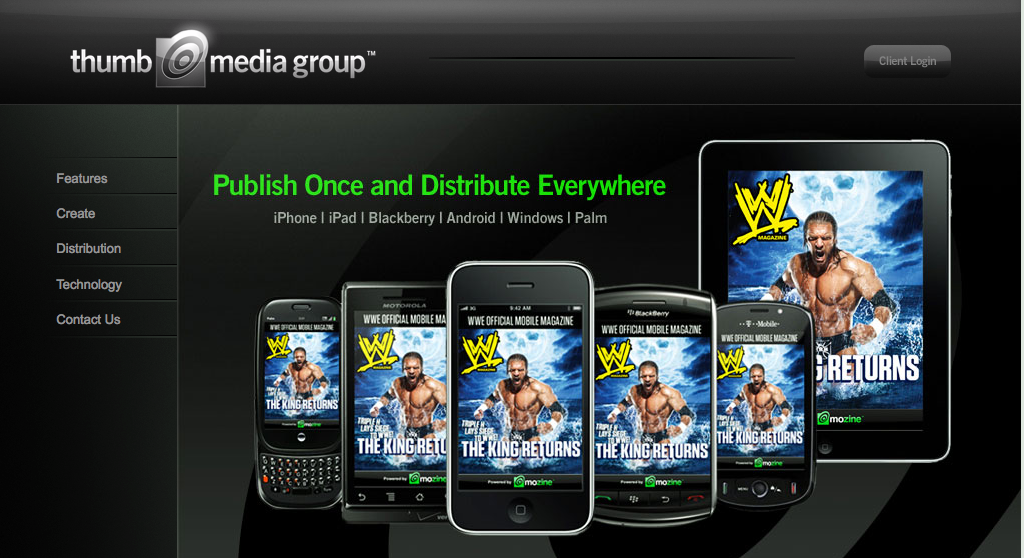
One innovation that has caught my attention this week is Mozines™. The company behind Mozines™ is Thumb Media Group (TMG). The company has developed Mozines™ a software for mobile publishing platform and advanced mobile on-device application technology for mutiple Smartphone handsets including iPhone, Blackberry, Android, Windows Mobile, Palm, and Symbian. Our Mozine™ mobile publishing platform allows clients to quickly and cost effectively build a mobile audience and reach customers.

The brain behind Mozines™ is Mike Cartabiano, CEO, TMG. Mr. Cartabiano’s intentions for Mozine™” is to be another media channel, the mobile media channel.” He added in this segment of the Mr. Magazine™ Interview, ” Mozines™ are a bridge to online viewership and advertising and user adoption. It’s also a bridge to print, so it facilitates exposure to the print offerings of publishers.” What follows is my interview with Mike Cartabiano, CEO of the Thumb Media Group and his take on the future of our industry:

Samir Husni: What was the rationale behind developing Mozine technology, and what do you expect to accomplish?

Mike Cartabiano: I come from a background where I am constantly engaged in bringing brands and their messages to target audiences. At Thumb Media Group, we have developed the technological and business methodology to do this, and believe that magazines — more than any brand-driven business — are in need of our solution.


SH: The web has proven to be very elusive when it comes to paid content and money making for publishers. Why do you think mobile and digital delivery is different?

MC: Consumers on mobile platforms are more accustomed to paying for goods and services than they are on websites. As long as our value propositions fall within mobile consumer expectations, we are able to monetize mobile content. We have also found mobile transactions are much more impulsive than online ones, as they are available to consumers anywhere and at anytime. In addition, consumers tend to trust mobile transactions because they have not been hit with too many scams or worthless products. Last, mobile consumers have advocates in the form of their wireless carriers and third party application storefronts that can solve problems for them and screen out undesirable products and services.

SH: Some believe the business model for mobile applications should be similar to that of print: making money from both distribution and advertising. What are your thoughts?

MC: This is absolutely true, BUT the business model must be integrated with the characteristics of the mobile media channel, which is vastly different from that of print. End user expectations, from the user experience to various transaction models across different operating systems, devices and distribution channels are all unique to mobile platforms.

SH: A lot of platforms are using replicas or replicas plus of print magazines. How are Mozines™ different and how can you help publishers?

MC: Mozines™ are never replicas of print, which sets them apart from other magazine apps. Instead, Mozines™ provide optimized brand communication to all smartphone users in the mobile landscape. Mozines™ can reach millions of targeted mobile consumers worldwide with the best possible brand message in the mobile space. In addition, Mozines™ do not replace print or online. Mozines™ complement these media channels and serve as a bridge to let consumers tap into a brand across a variety of media.

SH: What differentiates Mozine™ from similar applications? What makes Mozines™ more attractive?

MC: There are two plea points that stand out. The first is that we’re about promoting the publisher’s brand. They’ve invested in their intellectual property. They have an audience. I even call that audience a fan base because that audience wants to see that brand everywhere they go, whether they’re in a waiting room holding a magazine or they’re in line, or whether they’re online and they’re searching that brand out and experiencing that. Or whether they’re on mobile, where they’re 24/7, everywhere and anywhere with mobile. We push the publisher’s brand and then we push that brand across multiple platforms.

SH: How many clients do you have? Can you handle newspapers?

MC: We can handle newspapers. We can also handle product brands. We are at WWE (World Wrestling Entertainment) working with their magazine group. But they’re also a product brand. We have a project with Miller/Coors in Puerto Rico and that’s a marketing configuration. It’s a mobile newsletter. We reach out to magazine publishers, newspapers and brands who have an audience and a message to deliver to that audience on smartphones and tablets.

SH: Who do you consider your biggest competitor in the marketplace?

MC: There are some good companies out there. Texterity is a real good company and they’re offering one solution. Pixel Mags has a good solution and bite-size candy. But those groups, what they provide for the publishers, is a digital replica. We don’t do that. A digital replica on a smartphone is not a very good user experience. We provide an optimized experience. We aggregate content from the publisher and put it in a new format. So we’ll take magazine articles and features and advertising and we have some proprietary technology where we format that, compress it, optimize it and distribute it to all the Mozines™ applications in distribution. We also take feeds from a publisher’s website, their blogs and their Twitter, we integrate those and offer those through the application. Then again, we have the storefront; the ability to pick subscriptions, so there’s the monetization. On top of that, we have the advertising. Our competitors don’t have the support systems to have that combination of features, nor the support systems to provide that to the publishers.

SH: At what cost? Are you free to discuss the cost per publisher? Do you work on a commission, on a partnership?

MC: Our basic business model is that we have a low-cost monthly fee. This is a services fee that covers hosting, actual development and quality control, submission through app stores across different platforms. We keep updated with the upgrades, new technology, new platforms, make those improvements. We handle all that distribution, we handle customer service and we also provide reporting.

We have a very detailed weekly report. Soon we’ll be able to provide hourly reports so that a publisher will be able to log in to a dashboard and they can see on a hourly basis how many Android, how many Blackberry, how many iPhone downloads were done in different territories worldwide and on different phones. In that reporting we’ll also have a unique user account, so we’re able to provide a publisher with a database with user profiles.

But we also provide integrated advertising through a number of mobile media networks like Millennial, Ad Mob, iAd, and we also provide the ability for the publishers to offer campaigns for their advertisers so that their ad sales group can go to a advertising client and say, “We can offer you a bundle, here’s print, here’s online, now here’s mobile and iPad advertising package.” What we’ll do is create and deploy campaigns and track those campaigns for publishers.

We also offer revenue solutions that are integrated with the program. We have subscriptions on a month-to-month basis, or six months, or a per-download basis and through National Publisher Services and Fry Communications, we also offer mobile optimizing in storefronts.

There’s the ability to sell goods and services. After a short period of time, the publisher can actually cover their monthly service fee and start seeing positive revenue flow. Once it gets to that point, we move from a monthly service fee to a revenue-funded program. So there is no fee commitment.


SH: How are publishers charging for Mozines™?

MC: With Nylon, they’re giving it away. You were asking about the end user, it’s free with advertising in that. With WWE, a subscription of $2.99 a month and a user gets four weekly issues and they also get daily updates through blogs, Twitter and RSS feeds.

SH: Will the Mozine™ application work on any device?

MC: The Mozine™ is a single app that is distributed simultaneously and seamlessly across all platforms. We are currently deployed on iPhone/iPod Touch, over a dozen Blackberry devices and over 40 Android smartphones. All of these are available globally.

We are developing on WinMo, Palm and Symbian, and have Mozines™ for Feature phones. We are also developing for iPad so can offer our clients incredible consumer reach very economically and efficiently with a very high quality, consistent user experience.

SH: Part of what we do at the Magazine Innovation Center is try to help amplify the future of print. Where do you see the future of print going, and what role do you see Mozines™ taking in the future of print?

MC: Print will always have a huge audience but must evolve as media-savvy readers use their mobile devices and tablets to access information that is important to them. The role of publishers will be as creative sources of great IP targeted at their audiences. Distribution solutions will be the responsibility of firms like Thumb Media Group.

Mozines™ intention is to be another media channel, the mobile media channel. And by the way, tablets are somewhere between online and mobile. They exhibit characteristics of both and provide new and unique characteristics. But Mozines™ are a bridge to online viewership and advertising and user adoption. It’s also a bridge to print, so it facilitates exposure to the print offerings of publishers.

We sell subscriptions in Mozines™ to print. And we’re working with publishers to bring the promotion they have in a print magazine, like the blow-ins, we’re bundling subscription offers with Mozines. Though, if you subscribe to the print by Mozines™, for example, you would get a promotional discount on a print subscription.

We also cross promote, so, in the Mozines™, we promote the print. So there’s promotion in the print, an online presence of publishers that talk about Mozines™ and what they’re about and where to get them.

SH: One of the things that grabbed my attention when I found out about Mozines™, is that somebody is finally doing something different than the norm. It’s not saying, “Let’s grab you another replica, or replica-plus or replica-plus-plus.” I’ve been telling people no matter how many pluses you add, you’re still staring with a replica.

MC: Exactly. The thing is, for example, when online has really developed into a media channel of its own. You don’t have digital replicas necessarily there. When there is a digital replica, there isn’t a great following to that. Publishers have a hard time getting the subscription revenue in digital online versions of their products. So they have to think of the media channel, “What’s the difference about it? What are the end users’ expectations about that media channel?”

We have to tailor their intellectual property and their brand and their revenue models to that media channel. So, mobile is an entirely different media channel. We’re a little bit unique in that we bring really deep wireless experience to consumer application and development and distribution.

SH: What are your expectations for Mozines™ a year from now?

MC: We provide a great end-to-end, seamless, mobile media publishing solution with more revenue models and three times the distribution than our closet competitors. In a year, we will have significantly grown our client base, and because of our association with Fry Communications and National Publisher Services, we will be able to offer our services as a true cross-media, one-stop publishing solution integrating mobile, print, online digital and all popular tablets.


SH: Anything else you’d like to add?

MC: What we’re doing also on the iPad, let me talk about. That is a digital replica, but the foundation is our Mozine platform, which supports Android and Blackberry and iPhone. Consequently, when the new tablets from, let’s say, a Google or Blackberry come out, we already have a foundation in place to support those tablets. We have an iPad solution right now, and we’re working on a couple of projects for our clients, so we’re offering our clients a bundle. There’s efficiency to working with them to take that content, their content, and we deploy it across the different platforms. We’re supporting the iPad now and we’ll be supporting the other platforms as they come out.

We’re not a developer. We’re a solution. We’re an end-to-end service solution. We know the problems that publishers face with resources and financial challenges, especially today. We do not want to go in there and tax their limited resources. We have a very seamless process. We’ve had great feedback from Nylon magazine and WWE. They’ve confirmed that it’s seamless and it works very smoothly for them. They don’t have to worry about it.

SH: Thank you.

Truth in Reporting: During my interview with Mr. Cartabiano I learned that one of his partners in this venture is Fry Communications, who are in turn the sponsors of the Mr. Magazine™ website and blog. Needless to say that this information changed anything in the interview and in my views regarding Mozines™ and whatever future role it may play in the future of our industry.

h1

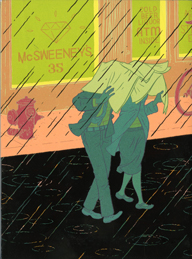
Looking for Innovation in Print: McSweeney’s 35 Has the Answers

September 10, 2010

How can you make your good magazine remarkable? How can you go beyond being just a content provider, no matter how good your content is? Well, the answers to the aforementioned questions are really simple and innovative if, and only if, your name is McSweeney’s. The magazine is the brain child of David Eggers and issue 35 has just hit the newsstands.

To quote from McSweeney’s website, “McSweeney’s Quarterly Concern publishes on a roughly quarterly schedule, and we try to make each issue very different from the last. One issue came in a box, one was Icelandic, and one looks like a pile of mail. In all, we give you ground- breaking fiction and much more.” What they don’t tell you as how innovative each issue is and how much that innovation adds to the great content and changes the magazine from a mere content provider to an experience maker.

The latest experience making issue comes with no explanation and a lot of heat-sensitive ink on the cover and inside flaps. The cover illustrations of folks walking in the rain transfers to a pond filled with all kind of fish when you hold the cover and rub the ink. The heat makes things appear and disappear. But it does that so fast that one can’t scan the cover to show you the after result. So, I had to video the cover to illustrate that latest innovative technique with the magazine. Click on the movie below to see the cover in action.

Unlike other magazines that alert their readers to such innovations, McSweeney’s makes you work for it. Inside the back flap of the magazine there are a few cover lines that one needs to rub too and see everything vanish except the phrase HOLD & SEE. Well, sorry for letting the secret out, but without the help of my assistants, I would have continued to think that someone has messed up my clean magazine and the folks at McSweeney’s are using just cheap ink and not magic ink.

A great read, a great experience and yet another example of the power of ink on paper used well. Very well indeed. Enjoy.

h1

Unbecoming Southern Living…

September 9, 2010

In a land not far far away there used to be a great magazine called Southern Living. It was the pride and joy of these Southern United States. It had three corner stones that anchored the bar stool called Southern Living magazine. They all started with an S: Southern, Seasonal and Service. The magazine was filled with recipes, more than a 100 in some issues. Folks from all around the South knew it was Southern Living from its yellow logo and predictable covers. In December it was a white cake; in October the fall leaves and pumpkins welcoming the Fall. In April the purple flowers and in November, what else but a festive Thanksgiving buffet. Those were the days. There was no fashion, no beauty, no frills or thrills. Just seasonal southern service. The Soul of the South was inside the magazine, not only on the cover.

What happened to Southern Living? A redesign after redesign inched one step after the other away from its southern roots. The covers became as unpredictable as the southern weather. The recipes dwindled to a few. And to top it all off, this month ushers a new section focusing on looks, fashion and beauty. The killer is an article about blow drying your hair, exercising and losing inches all at the same time. This is NOT the Southern Living I have known for the last 27 years. This is not the magazine that most of my friends knew and loved. It is definitely NOT your mother’s magazine anymore, but it is also NOT your daughter’s magazine.

Southern Living has lost its soul. It is anything but southern. It is a shame to see a great magazine become so un-southern. The only solace is in the fact that there are a few folks publishing in the same town as Southern Living (in the not so far far away land), who are trying and succeeding in filling the void left by the magazine.

This is a cry from the heart, a first for me, to bring back Southern Living. Bring back the Southern in the Living. There are plenty of women’s magazines that deal with fashion, beauty and other lifestyle issues, but there used to be one and only one Southern Living. Bring it back, please.

h1

Magazine Innovation Center’s ACT Experience: Planning for the future at a minimal cost

August 30, 2010


Are you thinking of launching a new magazine? Are you interested in learning what is going on in the largest South American marketplace? How about successful magazines in The Netherlands? Is there a future for digital or is it the future? Can the advertising driven magazine publishing model survive? What role will design, marketing, branding, distribution play in the future of magazines?

These questions and many other will be answered at the “Re-imagining our future while we still have time” the first Magazine Innovation Center’s ACT Experience taking place in Oxford, Mississippi on Oct. 20, 21 and 22 this year. The experience, which will be conducted by some very high-powered media folks, will be intimate in nature and limited to no more than 100 participants.

Discussions at the ACT Experience will include, but not limited to, our print magazine future, the digital world, marketing and distribution, launching new products, advertising and promotions and a road map for our future.

In addition to the learning aspect of the Experience, the three days will include a trip to the Mississippi Delta, birthplace of the Blues music and a visit to William Faulkner’s House, the Nobel Prize winning author.

Billed as three days of Magazines, Music and Mississippi, the Experience promises to be unlike any other meeting or convention you’ve ever attended. Guaranteed! Click here to register “while we still have time!”

Questions about the ACT Experience, feel free to drop me an e mail at samir.husni@gmail.com and I will be more than glad to answer all of your questions. Looking forward to seeing you in October. It will be an experience of a lifetime.

h1

Health Magazine is HEALTHY and on its way to be a “Life-Changer.” The Mr. Magazine™ Interview with Ellen Kunes, Health Magazine’s Editor in Chief

August 26, 2010


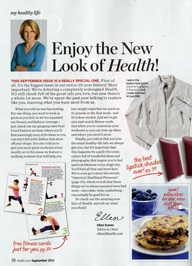
Health magazine is healthy. Thank you very much. A statement, of course, that does not reflect the status of the majority of the magazine industry. However, Health magazine has been able to live up to its namesake. The September issue (now on the stands) is the largest issue ever in the history of the magazine. Health magazine is also sporting this month a total new look outside-in. A new logo (a shame that it was half covered by the head of the beautiful Molly Sims) and a lot of new departments and features covering all subjects related to its readers well-being. Be it the obvious (health, food and fitness) or the more focused (beauty) or the brand new (fashion), the magazine moves with the new design and look from a special interest health publication to a “full-fledged women’s lifestyle magazine.”

To quote Ellen Kunes, editor in chief of Health magazine and editorial director of Health.com (who in turn is quoting her mentor Kate White, Cosmopolitan magazine’s editor in chief), Health magazine is “blowing it out.” Kunes adds, “doing things by halves doesn’t get you anywhere.”

I asked Ms. Kunes seven questions regarding the magazine’s redesign and reinvention. Her answers, although short and sweet, are as healthy and energetic as her magazine. The energy and resilience that you read in every answer is nothing short of an “active, fun, reader-oriented” editor who wants to “infect” her readers by the same bug she has. She wants her readers to do things that are pretty revolutionary. “Actually enjoy living the healthy life,” she says.

Health magazine is much more than a content provider, it is yet another example of how a magazine can and should be an experience maker. To quote Ms. Kunes again, “What more could you ask from a magazine?”

Yes indeed. What follows is my interview with Ms. Kunes.

Samir Husni: Is the magazine moving from a specialized health magazine to a more general interest women’s magazines by adding fashion and beauty to the content?

Ellen Kunes: Health has always featured a monthly front-of-book beauty section along with a beauty well feature. Now we’re introducing a new fashion section in the front of book as well as a well feature, and we’re also including spreads in both of these sections, which gives readers a much more exciting visual experience. With our new design and content, we’ve become a full-fledged member of the women’s lifestyle category.

SH: Few years back when the magazine moved from SF to Birmingham, beauty was added to the content, but soon after was pulled out? Why do you think this will work now?

EK: Beauty was never pulled out nor has beauty coverage ever been reduced: In fact, our beauty paging has consistently increased in size in the past 10 years.

SH: Health had a good ride both in terms of circulation and advertising in the last two years. Why mess with success?

EK: In this media landscape who can afford to sit on their laurels? You have to push the envelope with every single issue. My great mentor, Cosmopolitan’s Kate White, always taught me to “blow it out”—doing things by halves doesn’t get you anywhere. We’ve been talking to our readers and they tell us they want more beauty, fashion, food and fitness coverage—along with the same trusted, healthy-life advice we’re famous for—and we always listen to our readers.

SH: How are you using digital and the web to ensure a print future for Health magazine?

EK: We’re so lucky at Health because our web business has 12.5 million unique users, which brings the Health magazine + Health.com reach to a total audience of 20.8 million readers and users each month. We’re also far ahead of our competitors in the social media arena, with 121,800 Facebook fans, and 1.2 million Twitter followers. In addition to bringing us a hefty number of new subscribers each month, we’re able to reach consumers in ways that are both broad and deep—and advertisers and marketers really appreciate that unique strength.

SH: The magazine industry is recovering from one of the worst years in its history, how do you see the future of the industry in general and Health magazine in particular?

EK: I believe that those magazines delivering an experience that’s original and exciting and is enhanced by other digital platforms are going to continue to do really well—which is exactly what Health does. We’re in complete brand-building mode right now, with a website that both expands on our magazine experience and goes beyond it, giving consumers, marketers and advertisers full-circle, healthy-life information and opportunities. We’re also taking the brand into books, with our New York Times bestseller, The CarbLovers Diet, and What the Yuck?!, both released this month. These build on our brand platform: to give women great new ways to enjoy their healthy lives.

SH: In the 1980s the marketplace was flooded with health magazines… today the market has shrunk to a handful of health magazines. What gives and how is today different than the 1980s?

EK: What we’ve discovered is that smart, customized medical content and vital wellness information is incredibly engaging online, while enjoyable, fun, visually-driven, feel-great stories and advice are perfect for print. We’ve learned how to inspire people to enjoy healthier lives using the best possible platforms. Which means that at Health, we now able to reach more than 20 million readers—and that number is growing all the time.

SH: Magazines are much more than content providers; they are experience makers. How do you describe the experience readers have with Health magazine and where to you see this experience heading with all the changes taking place with the magazine?

EK: Reading Health today is really life-changing for our readers: We know that every minute of every day they want to feel great. When they read Health, they expect smart and fun new ways to stay in shape, look amazing and eat fabulous and healthy food. We help them do something pretty revolutionary–actually enjoy living the healthy life. What more could you ask from a magazine?

SH: Thank you.

(The pictures above are for Health magazine new logo (now you can see it without the beautiful Ms. Sims head covering it), the newsstands cover and the subscription cover, the letter from the editor page, and Ms. Kunes picture taken by Heather Weston).

Don’t forget to register for the first Magazine Innovation Center’s Experience ACT. Click here for information and registration forms.

h1

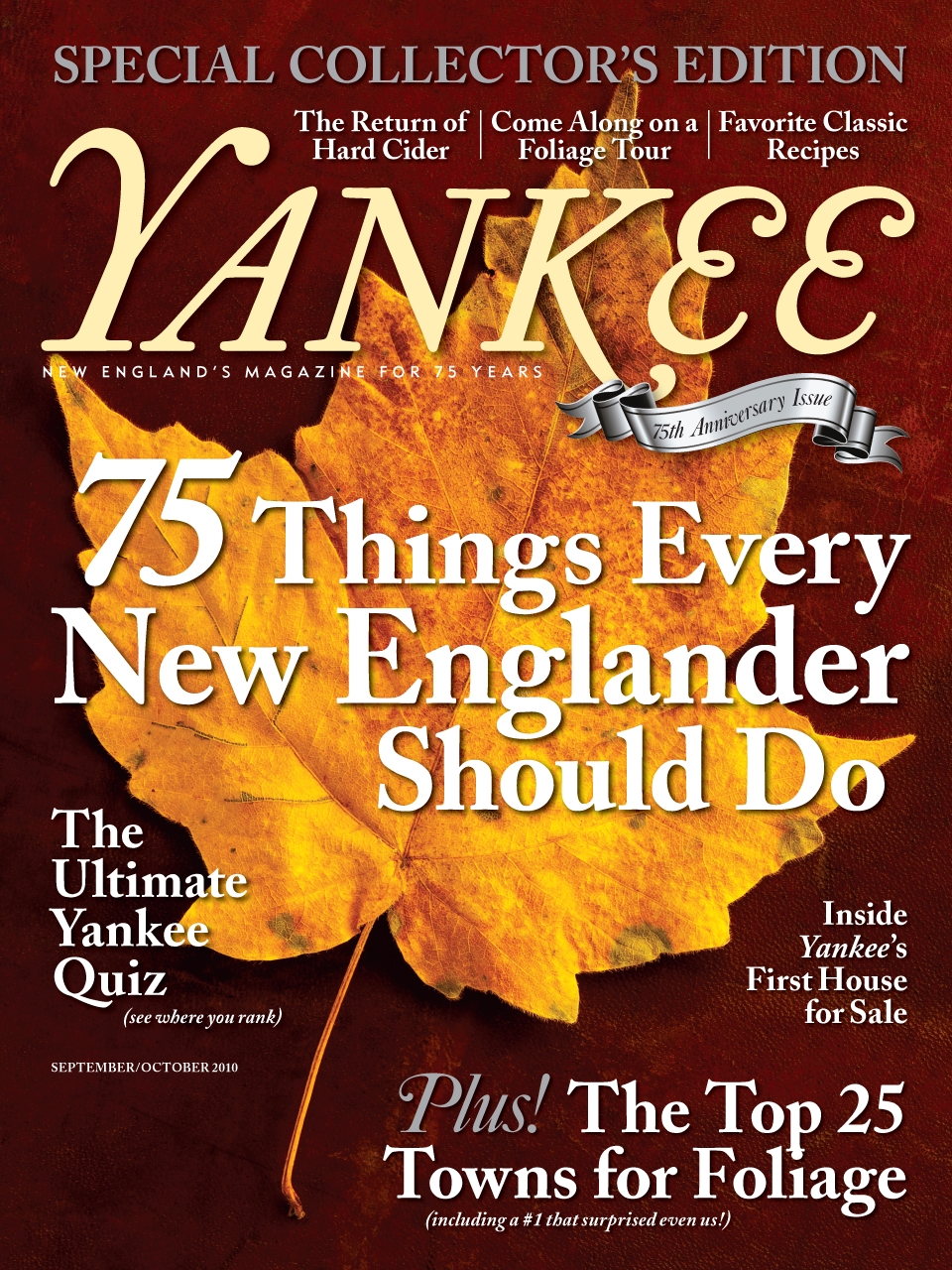
On the occasion of Yankee Magazine’s 75th Anniversary: Jamie Trowbridge, President of Yankee Publishing to Mr. Magazine™ “As long as the idea of New England endures, there will be role for Yankee.” The Mr. Magazine™ Interview

August 9, 2010


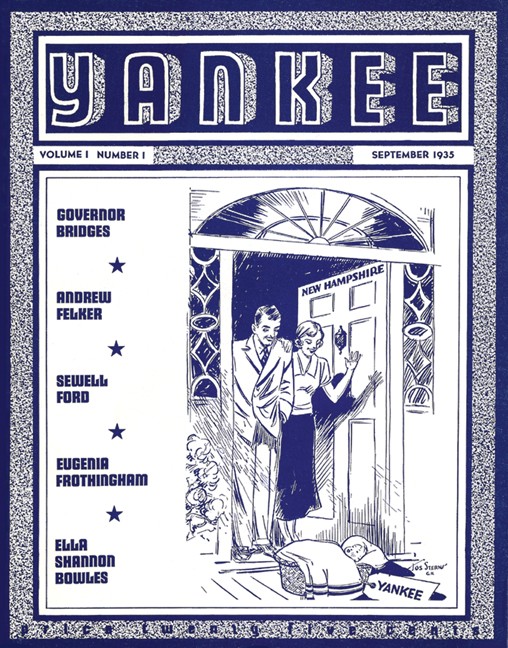
From the first issue 75 years ago, until the present time, Yankee Magazine is one of the few magazines that have been true to its DNA from day one and never veered from the fact that the magazine role was, is and will continue to be “to connect people to New England and all what it has to offer.” Through feature stories and stunning photography the magazine has been a powerful example of the visual impact of print, mixing the best writing it can offer with the best pictures it can show. The mix between those two elements is no more obvious than in this 75th anniversary issue that hits the newsstands later this month.

I had the opportunity to ask Jamie Trowbridge, the grandson of the founder of the magazine and president of Yankee Publishing few questions regarding Yankee magazine, the regional magazine scene, the future of print, and how is Yankee Publishing using digital to ensure a print future for the magazine. What follows are my questions and Jamie Trowbridge answers:


Samir Husni: As Yankee celebrates its 75th anniversary, a major milestone in the life of a magazine, where do you see the future heading for this major regional publication?

Jamie Trowbridge: A typical city/regional magazine provides useful information for residents of the city/region. Yankee does more than that. In every issue we demonstrate and celebrate the idea of New England, the values that bind the six states together. As long as the idea of New England endures – and we believe it is stronger than ever – there will be a role for Yankee.

SH: Yankee has passed through many changes through the years, what are the three positive changes that you can think of and the three that you wish did not take place?

JT: Positive changes:
— When Jud Hale took over from founding editor Robb Sagendorph in 1970, he made a commitment to increasing the quality of the magazine’s content that we continue today. There are so many city and regional magazines that are unprofessionally produced or puff pieces. Yankee stands apart.
— Continued family ownership of Yankee has allowed the magazine to survive and evolve. I doubt that Yankee would have survived the last decade in the hands of an owner that demanded results in the short term.
— In 2007 we changed the dimensions of Yankee from 6” x 9” to normal size. We considered this change for 10 years before we made it. We were afraid our long-time readers would hate the change, and some of them did. But most of them stuck with us, and now we hear positive comments even from some of the readers who were most upset with us.

Changes we wish did not take place:
— When Robb Sagendorph started Yankee in 1935 he paid a subscription agency for 600 subscribers so there would be an audience for the first issue. All the names turned out to be fraudulent, so it could be said that Yankee started with 13 readers, all family members. (Actually, I’m glad this happened – it’s such a good story.)
— When we published our 50th anniversary edition in 1985, the introductory subscription price for Yankee was $15. Today it is $14. Competitive subscription pricing from other magazines has depressed our ability to increase price and therefore our ability to invest in more content and pages in the magazine.
— In 2002 we tipped the balance of Yankee’s editorial content more toward service. We disenfranchised some of our readers who liked Yankee’s features the most. It took us a while to adjust, but we’ve got the balance in about the right place now.

SH: The magazine has been the ‘idea generator” for many successful regional magazines, Southern Living and Midwest Living to name two. Why do you think that the copycats have fared better than the ground breaker (circ and ad numbers and revenues)?

JT: The first “super regional” was Sunset, which was founded more than 100 years ago. Sunset, Southern Living, and Midwest Living are focused almost entirely on service. Yankee is different in that it is a general interest magazine about New England. The bigger population bases enjoyed by the other three magazines led to larger circulations, and their focus on service led to larger ad revenues. The population of New England is only 6% of the total U.S. population.

SH: Are there any plans to go back to the monthly frequency and the digest size?

JT: We’d love to increase the frequency of Yankee, and we’re looking to do it incrementally. This fall we’re launching a “bookazine” called Best New England Recipes. If we can sell enough copies on the newsstand and eventually attract good advertising support to the issue, it’s likely we’d try to offer it as an issue of Yankee down the line. Another idea is to offer digital editions of Yankee in the months that we don’t publish a print edition, but we’re not there yet. We’re creating more original content for distribution outside the pages of the magazine all the time.

Despite the fondness we and some of our long-time readers have for the old size of Yankee (6” x 9”), we have no plans to change back. The larger format allows us more room to showcase our stunning photography, and the new design of the magazine makes it easier to browse.

SH: Looking back at the DNA of the magazine, what are some of the characteristics of that DNA that are still there and what are some that are missing?

JT: I occasionally reread old issues of Yankee and it’s remarkable how little the subjects covered in the magazine and our approach to covering them has changed. The most notable difference is that we’ve cut way back on fiction and poetry, which were at one time regular features. Also, we don’t write pure history stories any more, although every story we publish connects in some way to the region’s rich and interesting history.

SH: What are you doing to ensure a print future for Yankee in a digital age?

JT: We’re focused on producing great content and distributing it however our customers want it. We expect at least a subset of our audience will want to receive Yankee in print form for a long time to come. The big question down the road is what will we have to charge them and will they be willing to pay a premium to receive the print edition?

SH: What are you doing to keep the grass roots operation at Yankee well, alive and kicking?

JT: Yankee Publishing has a team of 50 employees working to publish Yankee Magazine and The Old Farmer’s Almanac in Dublin, New Hampshire, a town with only 1,500 residents. We’re committed to offering these good publishing jobs in this remote corner of the country.

SH: In 25 years as Yankee celebrates its 100 anniversary, where and how do you see the magazine at that marker? (I know I am asking you to put on your prophetic hat, but it will be great to hear from you what you expect the magazine to be 25 years from now…)

JT: Like most magazine publishers today, we’ve already transitioned to being more than just a magazine. I expect we’ll have to extend our operation even farther to be successful 25 years from now. If we think of our mission as connecting people to New England and all it has to offer, regardless of how our customers choose to make that connection, we should be able to celebrate our 100th anniversary in style.

SH: If someone comes to you today and said, ‘I would like to start a new magazine…” what advice would you give that person?

JT: This happens with some frequency. I always start by telling the future publishers to do their homework about the magazine industry. Then I tell them that many of the new magazines that succeed are started by people that “don’t know better.” Especially today, when so much in our industry is changing, the door is open to a magazine publisher who wants to invent a new way of succeeding.

SH: How are you using digital to enhance and enrich the brand Yankee?

JT: Of course we have YankeeMagazine.com and other Web sites, we are using social media to extend our audience, and we’re looking at mobile and special applications for e-readers as possible investments. We see great potential for ecommerce through our digital channels, whether it be selling content, products (both our own and others’), or experiences. There are people who love New England all over the world, and new digital technologies are allowing us to identify and interact with them.

SH: Thank you.