Archive for the ‘News and Views’ Category

h1

John Harrington: Anyone worried about the future of publishing, whether in traditional or digital formats, would have their spirits boosted by attending (the ACT 3 Experience)

July 24, 2012

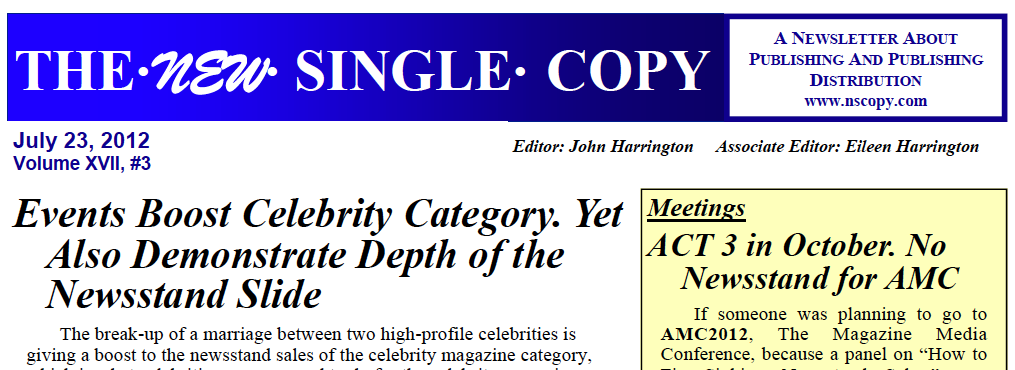
“Anyone worried about the future of publishing, whether in traditional or digital formats, would have their spirits boosted by attending (the ACT 3 Experience)” writes John Harrington, editor, The New Single Copy in this week’s newsletter.

What follows is a reprint from an article in the July 23, 2012 issue of The New Single Copy, the “newsletter about publishing and publishing distribution.”

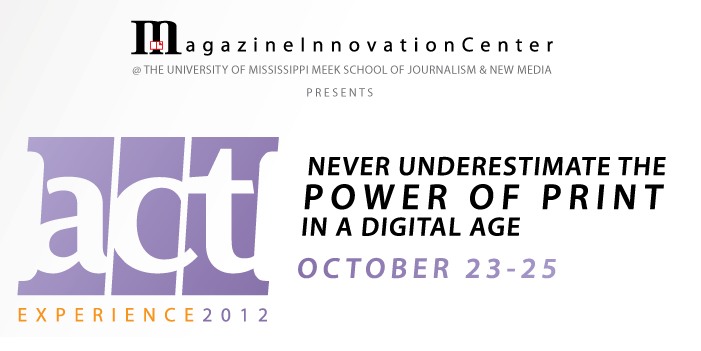
… However, the following week (Oct. 23 – 25), newsstand will definitely be on the agenda, at ACT3: “Never Underestimate the Power of Print in a Digital Age.” The third edition of “Amplify, Clarify, and Testify,” sponsored by the Magazine Innovation Center, at the University of Mississippi Meek School of Journalism and New Media, will be held in Oxford, Mississippi, October 23 to 25. The panel one that promises an a very diverse experience. Among the participants will be Keith Bellows, vice president and editor-in-chief, National Geographic Traveler; Rebecca Darwin, president and CEO, Garden & Gun; David Friend, editor, creative development, Vanity Fair; Sid Holt, executive director, American Society of Magazine Editors; Kevin Keefe, vice president-editorial, Kalmbach Publishing; Dan Lagani, president, North America, Reader’s Digest Association; Roy Rieman, founder, Reiman Publications; Michael Rooney, chief revenue officer, The Wall Street Journal; Bob Sacks, president, Bosacks.com; Tony Silber, general manager, Red 7 Media; and John Harrington, The New Single Copy.

It may seem self serving to devote a good deal of space to ACT3, but the ACT programs have been truly unique, bringing a broad cross section of perspectives (foreign publishers, printers, advertising sales representatives, and new media innovators are also on the program). However, the most innovative aspect of ACT series has been the participation of undergraduate and graduate students in the program. Anyone worried about the future of publishing, whether in traditional or digital formats, would have their spirits boosted by attending. The Magazine Innovation Center at the University is under the direction of Samir Husni. For more information about ACT3 and the center, visit http://www.mrmagazine.com/act■

Thank you John. Space is limited at the ACT 3 Experience. To be one of the 60 people who can register to attend click here.

h1

Never Underestimate the Power of Print in a Digital Age: The ACT 3 Experience Oct. 23 – 25, 2012

July 15, 2012

Twenty Four leaders of the magazine media industry will converge on Oxford, MS to engage in a two and a half days experience regarding the power of print in a digital age. The third ACT (Amplify, Clarify and Testify) Experience hosted by the Magazine Innovation Center (MIC) at the University of Mississippi’s Meek School of Journalism and New Media will take place Oct. 23 – 25, 2012. The gathering is the third “think and do” experience that takes place at MIC, the innovation center founded by Samir “Mr. Magazine™” Husni that is dedicated to “amplify the future of print in a digital age.”

Registration to the Experience is limited to 60 attendees and 20 students. You can click here to register for the event. Once 60 registrations are received the registration will be closed and no longer accepted. So be the first to register if you want to take part of this triple M experience Magazines, Mississippi and Music.

Here is a list of the confirmed speakers so far (in alphabetical order):

Keith Bellows

VP and Editor in Chief
National Geographic Traveler

Jennifer C. Bergin

Vice President Marketing
Brown Printing Company

Rebecca Darwin
President & CEO
Garden & Gun magazine

Jim Elliott
President
The James G. Elliott Company

David Friend
Editor, Creative Development
Vanity Fair

Steve Grande

Vice President, Sales
Fry Communications, Inc.

Michael Gross
Owner & President
Paragon Media Inc.

John Harrington
Co-Publisher, The New Single Copy

Lisette Heemskerk

Publishing Director, Linda. magazine
Mood for Magazines, The Netherlands

Sid Holt
Executive Director
American Society of Magazine Editors

Carla Kalogeridis
Editorial Director
Association Media & Publishing

Kevin P. Keefe
Vice President-Editorial, Publisher
Kalmbach Publishing Co.

Mike Koedinger
Founder and CEO
Maison Moderne – Independent Publishing and Media, Luxembourg

Dan Lagani
President
North America, Readers Digest Association, Inc.

Mike Obert
Managing Partner
Open Book

John Parke
COO, Democrat Printing & Lithographing Co.

Jeramy C. Pritchett

Co-Founder, Blindfold magazine

Roy Reiman

Founder, Reiman Publications
Co-Publisher, Our Iowa magazine

Michael Rooney
Chief Revenue Office
The Wall Street Journal

Bob Sacks

President, Bosacks.com
and Precision Media Group

Tony Silber
General Manager
Red 7 Media

Michael J. Simon

EV President, Sales
Publisher Press

Sanne Visser
Publisher
Glossy Magazines, Sanoma Media
The Netherlands

Dick Waterman

Legendary Photographer and Journalist

For more information on the ACT 3 Experience click here and to be one of the 60 people to register click here.

h1

The Man Behind FLAUNT Magazine: Luis Barajas’ Love Affair with Magazines. The Mr. Magazine™ Interview.

June 21, 2012

To paraphrase an old saying, behind every great magazine there is a great person. Well, behind the most interactive printed magazine FLAUNT (see my tour inside the pages of the magazine here) is a great man: FLAUNT’s co-founder and editor in chief of the magazine Luis Barajas. I reached out to Luis via Skype and conducted an interview with him about his love affair with magazines, the story of FLAUNT, the creative designs behind the magazine, the ideas behind the covers of FLAUNT, the genesis of the denim issue, the future and of course, what keeps him up at night.

Enjoy this Mr. Magazine’s™ flaunt, and lightly edited, interview with Luis Barajas, co-founder and editor in chief of FLAUNT magazine:

h1

My Magazine Alphabet Starts and Ends with a C: The ABCs of Publishing

June 18, 2012

My magazine alphabet starts with a C and ends with a C. Content, Customers, Clients, Consumers, Choice, Control, Constant and Change are but a few of the Cs that compose my magazine alphabet.

In the big debate over digital first and print second, digital first and content second, one major voice has been ignored: the customer’s. Before I am ready to declare a winner in these heated discussions, I urge you to remember that as journalism changes with the times, so does our audience. I have always believed, and will continue to do so, that the customer comes before anything else, and here is why.

Hank Price is the president and general manager of WXII-TV, the Hearst-Argyle owned NBC affiliate in Winston-Salem, N.C. He is also a senior fellow in broadcast news strategy at Northwestern University’s Media Management Center, where he teaches in both the domestic and international executive training programs.

Recently, I spoke with Price about “customers first.” He identified two important changes influencing consumers today:

1. Choice and 2. Control.

“The consumer wants to achieve choice, on their own time, and at their own pace,” Price told me. “And they want to control the content on their timetable, not ours. That’s why less than 60 percent watch TV programs at their originally aired times.”

He also added the four criteria that consumers are looking for:

1. Trusted sources. His take: “Content for our customers still trumps everything else. It doesn’t matter whether you have an iPad, an iPhone or a PC with the most brilliant screen resolutions available, if you don’t have what your customers are looking for in content, you might as well have a stone tablet with markings on it. They’re not buying it.” My take: It’s not about the platform, but rather the folks behind, and in charge of, the platform.

2. Immediacy. His take: “The public today not only expects immediacy in their content, they demand it.” My take: To borrow a line from Fleetwood Mac: “Yesterday’s gone.”

3. Screen size. His take: “Screen size is growing in the workplace, and getting smaller at home. More people are buying and enjoying apps than ever before. Once you create that magnificent content, you have to give it to them the way they want it. Above all, it’s their choice.” My take: It is a crazy place out there. After years of buying bigger and bigger TVs for our homes, now we are watching TV on our iPhones.

4. Quality. His take: “This means detailed quality in whatever platform you’re using. Whether your priority is pixels, screen resolution, or the paper you’re printing on, quality is mandatory.” My take: The days of poor quality pictures, paper, etc. are in the past.

I always add a fifth criterion that is absolutely proven in our current market. Customers today are looking for an experience. Good content is no longer enough by itself; we have to become experience-makers.

History Lessons
Going back in history, our forebears in this industry knew who their product was for: not themselves, but their customers. It didn’t matter what they liked; it was what their audience wanted that was uppermost in their minds.

Mother Jones magazine was founded on the principle that working men and women come first. It has always championed the underdog, been David to the corporate Goliaths and is still operating under the same mission statement the 17 members of its staff voiced some 36 years ago. Mother Jones’ founders envisioned a magazine devoted to a new brand of socially conscious journalism—one that took on corporate as well as political power. Today, that mission remains as timely as ever.

“Customers first” would have to be the prime mission of this magazine. After all, the Irish-American trade union activist, Mary Harris Jones, inspired this truth-seeking publication. Its history and present-day success validates its mission statement wholeheartedly.

The legacy of “customers first” is a rich and distinguished one. Time magazine’s commitment to its readers was prevalent from the beginning. The goal of Henry R. Luce and Briton Hadden was to deliver a magazine intended to
bring news to the mass public in a better way than the competitors of its day, such as The Literary Digest, which they considered their only real rival. Luce and Hadden wanted to break the news down into categories with each category delivering short punchy news pieces that the busy consumer could quickly understand and absorb.

The success of their innovations and mission statement to make news more than just bland facts, written down in black and white, validated their belief in caring about how their customers read and reacted to the news of that era. The philosophy carries over to the readers of Time today; the magazine’s longevity is a statement of that validation.

You can’t think “customers first” without mentioning Reader’s Digest. It was, and is, just what its title implies: A digest for its readers. Reader’s Digest was launched from the springboard idea that the founders (DeWitt Wallace and his wife, Lila Acheson) could provide their readers with the best value for their money by combining a “digest” of information: magazine, newspaper and periodical, all in the pages of one publication. However, after being unable to get any publisher interested in what seemed to be an impossible task, the couple decided to take on the mission themselves. They used direct mail as their marketing strategy and charged $3 for a year’s subscription, with a money-back guarantee. The magazine was launched in 1922 and was an instant success.

Wallace and his wife sought to save their readers money by giving them more varied content between their pages than the average magazine. For that reason, they more than validate their mission statement, and prove that a business model aimed at giving your customer the ultimate experience can, and will, succeed, no matter the odds.

Which brings me back to the fifth point on our criteria list: creating that experience. All of the above-mentioned publications went beyond the norm for their era (even beyond their own means, in some cases), to bring their readers more than just words on a page. They used the power of content to fight for justice, and to help right wrongs they saw inflicted. They tried to entertain, as well as to inform, and they sought value for their readers, when they could have, instead, just put their product out there like everyone else was doing. But they knew who mattered.

Experiences and encounters will be remembered—that’s the key. And when you give your customers the right experience, the sort of real encounter that effects all the senses, you are moving toward the stratosphere of real success.

Also, if you can realize that customers today want to have choice and control in their hands, not those of the publications that seek to maneuver them this way and that, the debate over which should come first, digital or print, will cease to be everyone’s main focus.

The main focus should always be our customers. No matter the format. End of story.

This column appeared in the May/June issue of Publishing Executive magazine.

h1

Counting Customers or Customers Who Count? The Self-Inflicting Ills of the Magazine Industry

May 17, 2012

The magazine business model drama continues… It is amazing that after all this talk about the new magazine business model and how it is going to be more “consumer centric,” to receive offers to  subscribe to some great-name-brand magazines for a mere $5.00 for five or six issues (That is at least 80% discount of the cover price).  There is no need to blame customers and consumers for the decline in single copy sales, and there is no need to blame the tablets for that decline either.  There is no one to blame but the magazine publishing industry itself.  Publishers willing to sell a magazine like Wired, Vanity Fair or GQ for a mere $5.00 for the entire year, need to blame no one but themselves if their newsstands sales are declining.  For the magazine industry to survive and thrive we have to start charging the fair value for the content and experience magazines deliver, whether on the newsstand, digital or by subscription.  Otherwise, if we continue to be in the business of counting customers and not the business of customers who count, the magazine business can easily see the writing on the wall… and that writing is NOT good news!  Take a look at the latest offer that arrived in my inbox this morning…

h1

Magazine Covers Gone Viral…

May 16, 2012

The following article is from CommPro.biz:


Gay President, Rainbow White House and Breastfeeding Mom Buoy Media Coverage of Magazines
By Mr. Magazine™ and Critical Mention for the Critical Now Channel
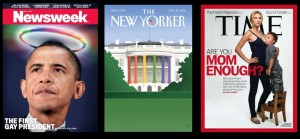
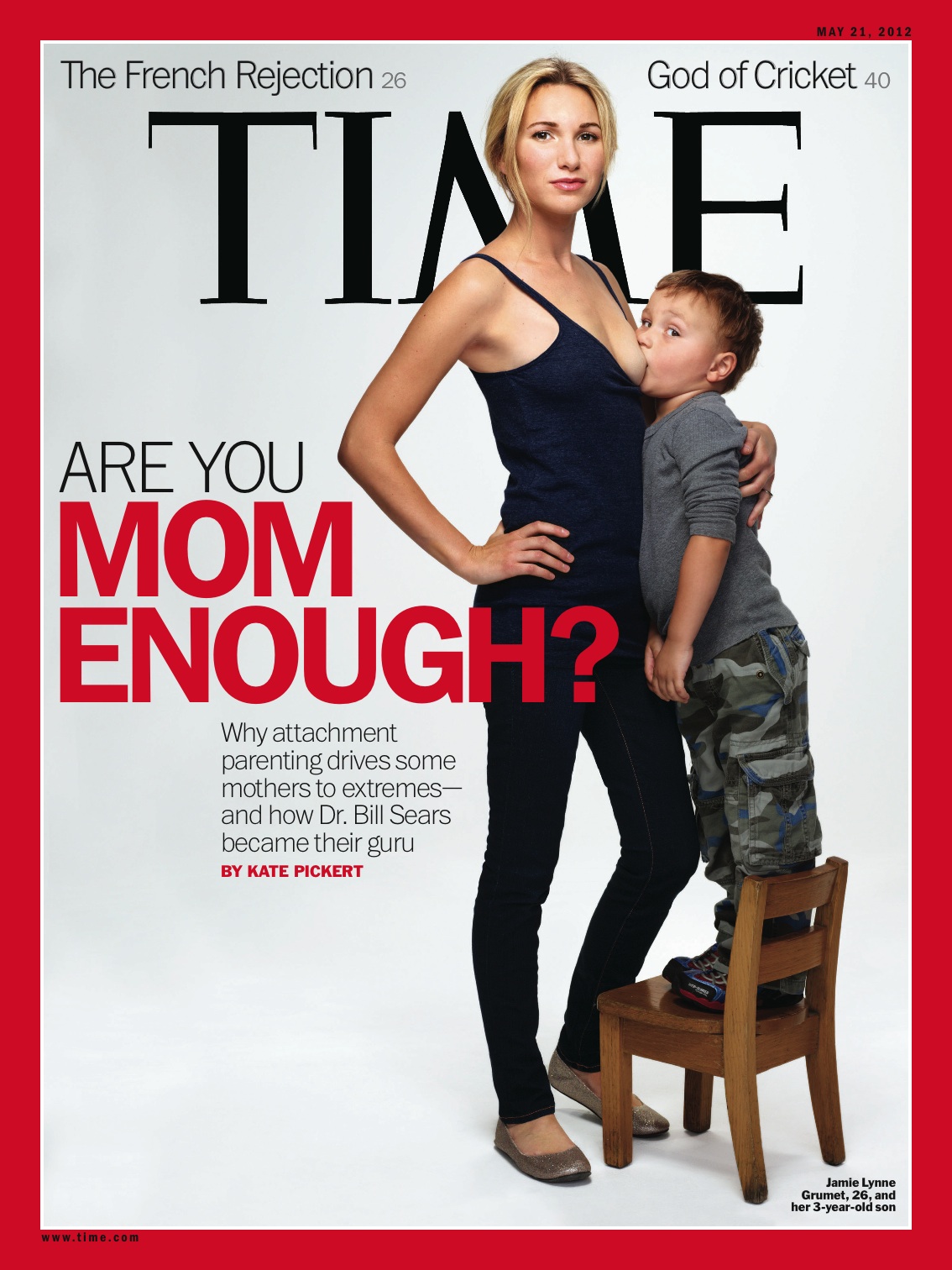
All it took was a front cover headline about a gay president of the United States, the White House painted in rainbow colors and a bare-breasted mom with her suckling 3-year-old son to pump up the volume in the magazine industry. It worked. Coverage on TV and radio of Time, The New Yorker and Newsweek during the first two weeks of May was five times higher than the whole month of April, reflecting intense interest by broadcasters to comment on the sensationalist magazine covers. Samir Husni, director of the Magazine Innovation Center at the University of Mississippi, says the buzz has built to a crescendo, and for different reasons.Read the entire article and watch my views here.

h1

TIME Magazine and The Power of Print: Creating and Continuing the Conversation

May 11, 2012

This week’s cover of TIME magazine created more buzz than any many cover in recent memory… and it did not have to do with a celebrity or scandal.  It dealt with a very real subject with a very real human being.  Here is the cover to judge for yourself and here are two of the many links in which I have offered my views on the subject matter:

The first is in the LA Times and the second is in CommPro.biz

In short, in this digital age where everything travels faster than a speeding bullet, this cover, in print, has been able to stop people in their tracks, create a conversation and carry on with the conversation like no other medium has done before.  There is still plenty of life in good print.  There is a print life after digital.  Today and tomorrow.  So, never underestimate the power of print in a digital age. Never!

And here is the video for the CommPro.biz interview…

h1

Testing, Testing, Testing… Magazine Covers for Every Taste, Gender, Color…

May 11, 2012

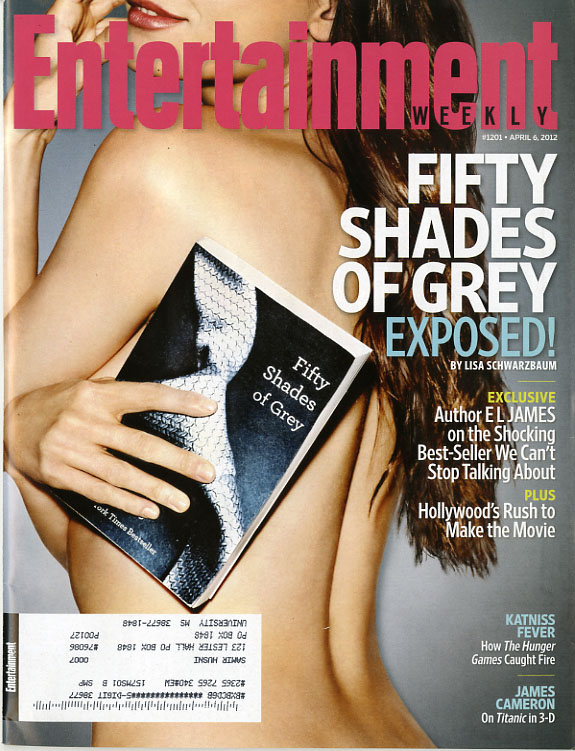
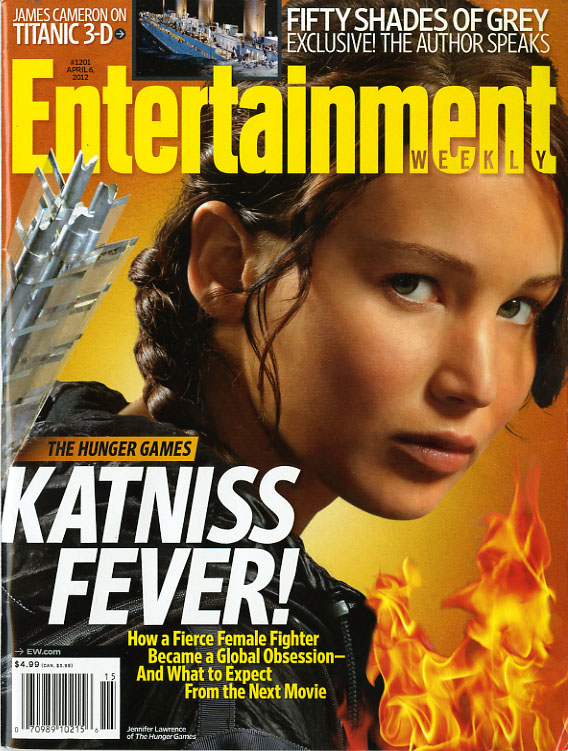
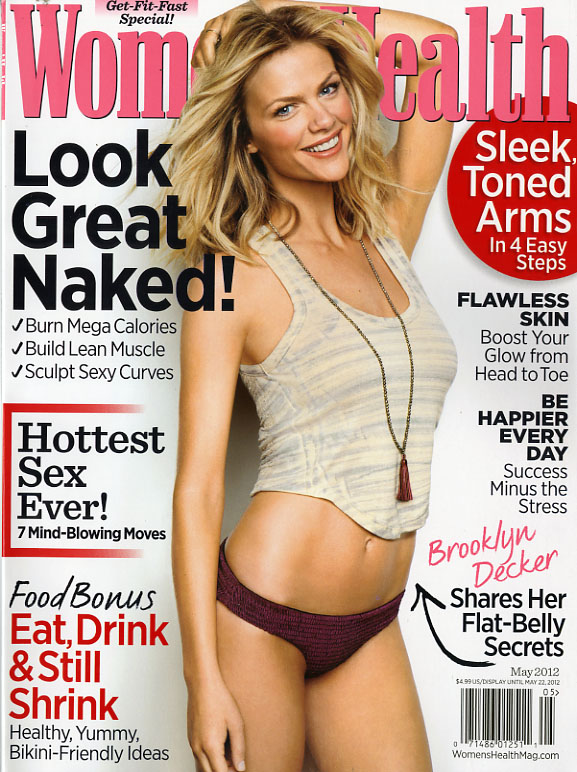
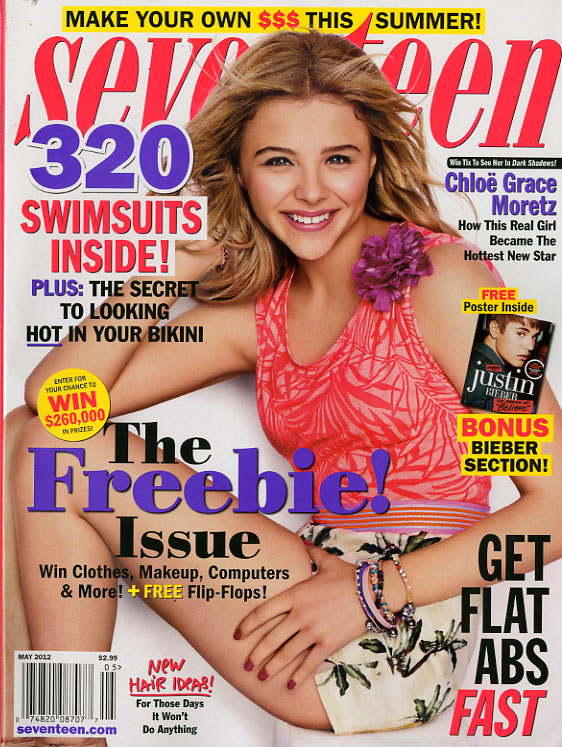
No two magazines are alike and no two covers are the same.  The magazine industry seems to have discovered the art of split covers en-mass.  It is rare to see a magazine with one cover anymore.  Through my travels across the country, and overseas, I was able to collect a variety of magazines that shared the same date, same issue, but different covers.  The covers differed in the treatment of the nameplate, images, cover lines, colors, etc…  Below is a gallery of images with a brief explanation of what some magazines are testing or just trying to grab readers’ attention in one way or the other (no pun intended here…)

Here are some of the magazines in random order:
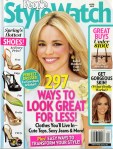
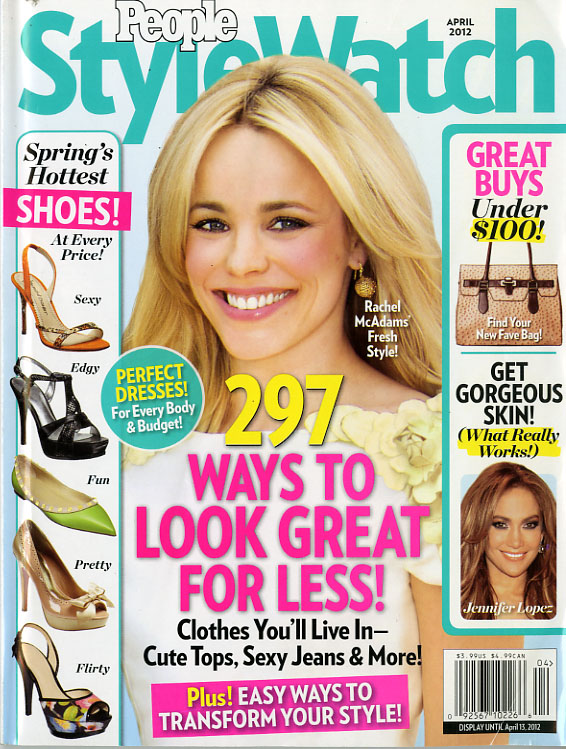
People Style Watch:  A different nameplate…

April 2012

There are two different covers for this magazine. The differences easily detected are the name, stretched across the top on one, and broken apart and stacked on the other cover. A $1 off coupon is attached on one and also has the tantalizing offer of “Exclusive Discounts for You!” where the other magazine has neither. The feature story is presented in a different placement as well, on one it is centered, midway the page, and the other cover has it aligned left, yet far enough from the edge to allow for the same sidebar story on Spring’s Hottest Shoes, while it still holds the midway spot.
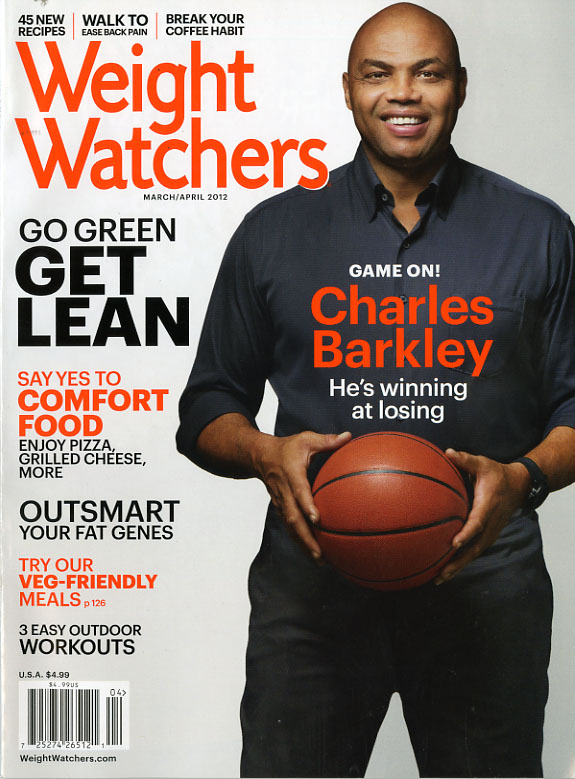
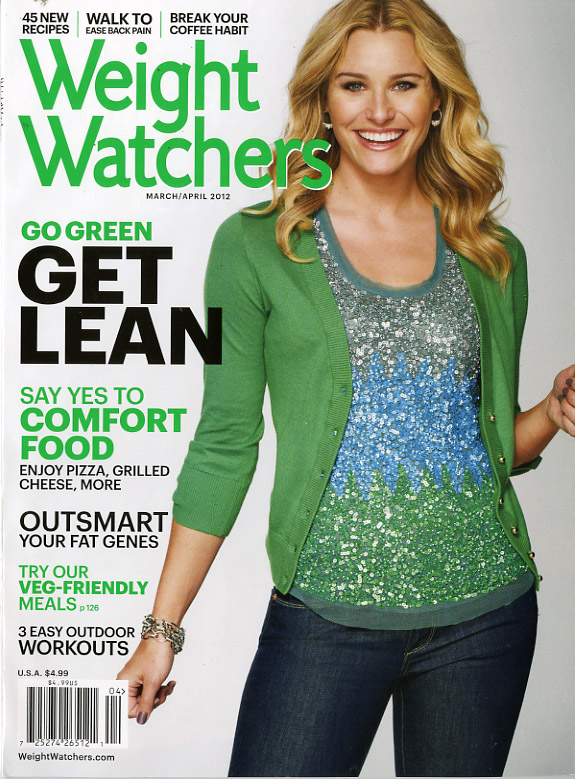
Weight Watchers:  Different images, different colors…

March/April 2012

This issue of Weight Watchers has two covers. One has Charles Barkley, with the color orange (possibly due to the basketball in Barkley’s hands) used to highlight certain words on the page, and the other cover is a slim, attractive young woman wearing a green sweater, with a coordinating sequined top beneath. Green is the chosen color on this cover, with the highlighted words inviting us to do as the main story suggests: Go green, get lean. Inside the cover, on the table of contents, Weight Watchers calls the reader’s attention to the fact that there are two covers and invites consumers to respond with an e-mail as to which one they prefer.
Men’s Fitness: The female touch…

May 2012

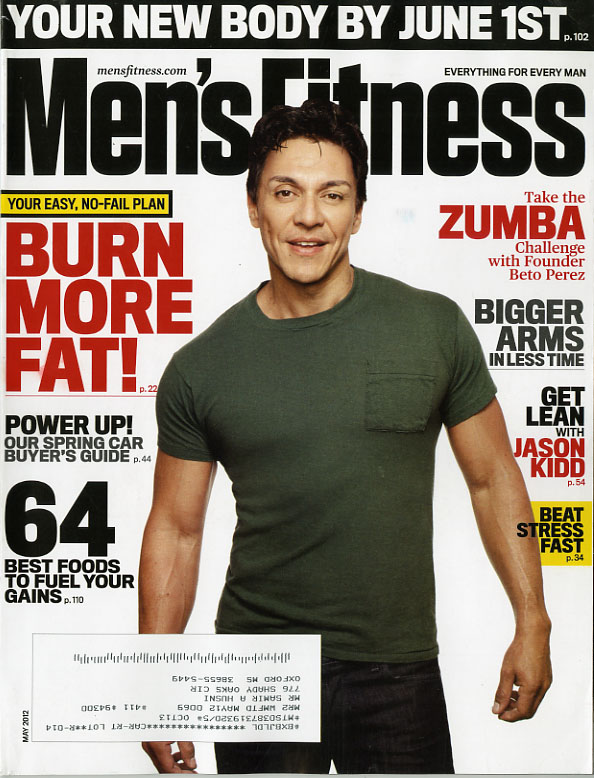
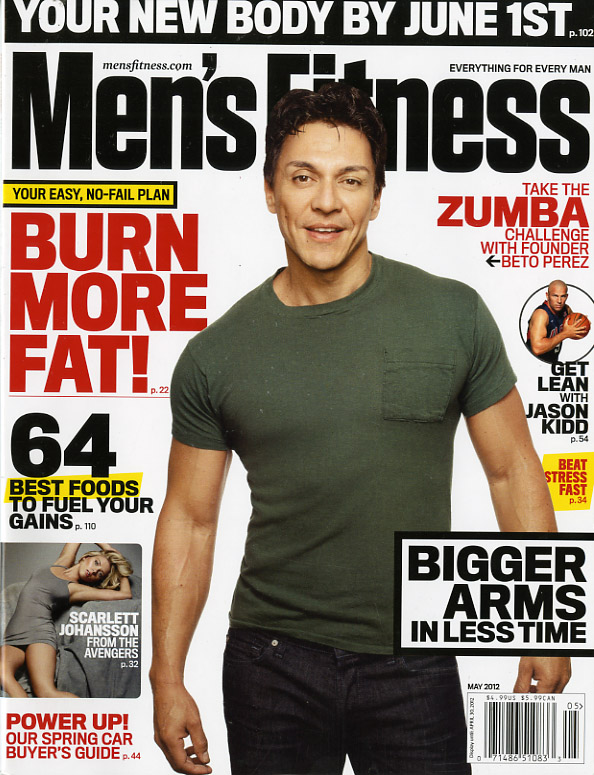
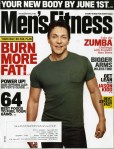
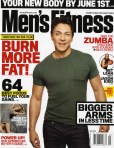
Two covers this issue, one for the subscriber, the other for the newsstands. Both have the very enigmatic Beto Perez, the founder of Zumba, on the cover, but the newsstand issue also has a very provocative, left-corner shot of Scarlett Johansson from The Avengers, while the subscriber’s get only their address label located there. The cover lines are also arranged differently on each magazine, and on the newsstand issue, there is a promo shot of Jason Kidd, and the command to “Get Lean” with him. The story “Bigger Arms in Less Time” is more predominantly featured on the newsstand issue, and there is an identifying arrow pointing toward Perez that is missing from the subscriber’s, as well.
Men’s Fitness:  The cover lines: Sex vs. Ripped…

June 2012

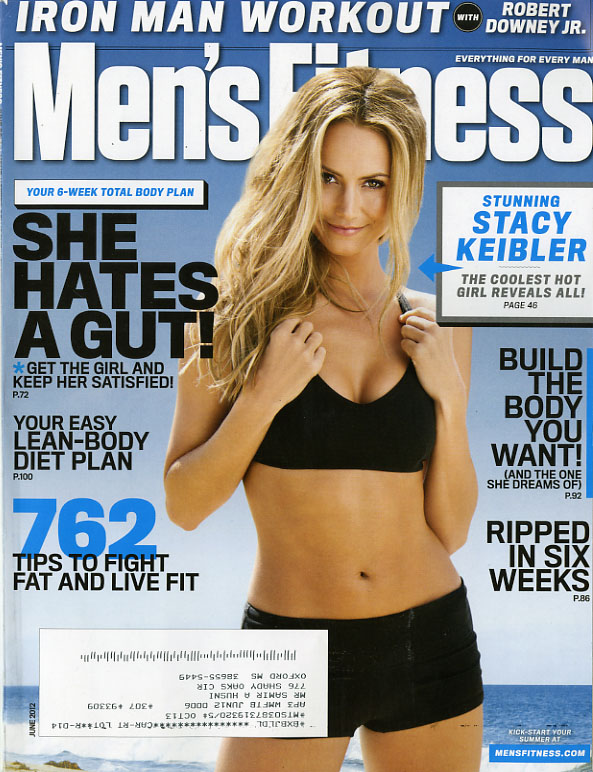
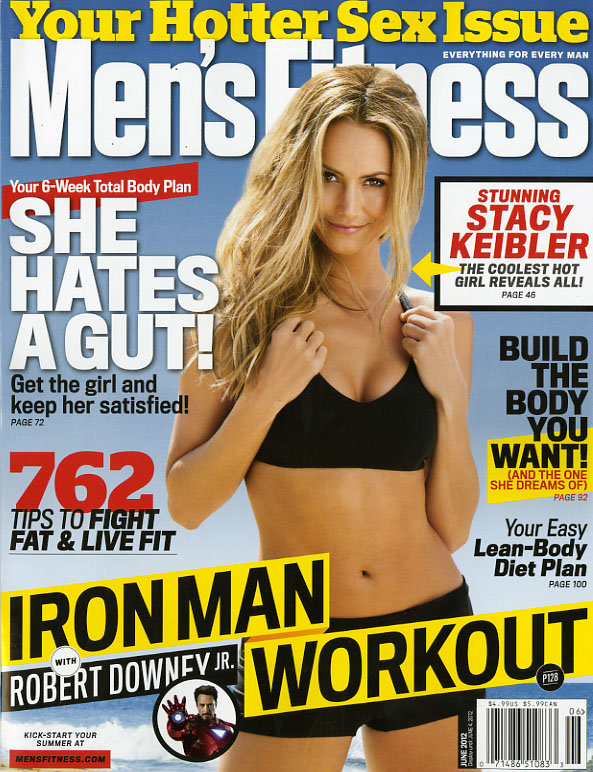
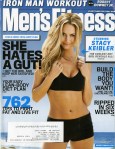
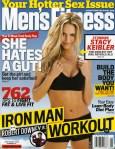
Two covers for June, subscriber and newsstand. Newsstand gets the promise of “Your Hotter Sex Issue,” while the subscriber gets “Ripped in Six Weeks.” The cover story about Stacy Keibler is the same, except for color and font size (her name is bigger and in red on the newsstand issue and the title is done in white, versus black on the subscriber’s copy).
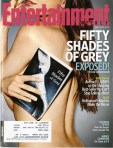

Entertainment Weekly:  A sexier image for the subscribers?

April 6,  2012

Two covers for this issue. The newsstand offering has a big, splashy photo of Jennifer Lawrence, in her Hunger Games regalia, living on the cover. And the subscriber’s edition has a much calmer, albeit, provocative, image of a nude, female back, arms crossed in front, and one hand clutching the New York Times Bestseller, “Fifty Shades of Grey.” The newsstand issue devotes the entire front cover to The Hunger Games, with a small mention of James Cameron’s Titanic 3-D (complete with a small photo of a partially-sinking ship), and the Fifty Shades of Grey “Exclusive,” as it is written here, while on the subscriber’s cover it is designated as Fifty Shades of Grey “Exposed,” and Cameron’s Titanic 3-D has no image. So, the cover lines are very different on the two magazines.


Women’s Health:  No sex for subscribers…

May 2012

Two Covers for the May issue, newsstand and subscriber. If you buy it from the newsstand, you can have the “Hottest Sex Ever,” and also have your attention drawn to a story on how to “Look Great Naked,” by having checkmarks beside each of the criteria, but with the subscriber’s issue, no such bonuses. There are minute differences in the other cover lines, such as line placement of words, but no major changes anywhere else.
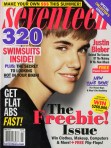
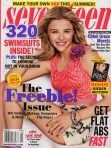
Seventeen:  A collector’s edition…

May 2012

Two newsstand covers, one has Justin Bieber, the other Chloe Grace Moretz. The Bieber cover is designated as a “Special Collector’s Cover.” Moretz’s issue has her story, and a chance to win tickets to see her in Dark Shadows, and Bieber’s issue has his story on the making of his new album, but both offer a free poster of JB inside the magazines. The Moretz issue also has a small photo of Bieber next to the poster offer. The other cover lines are arranged a bit differently on each magazine, as well.
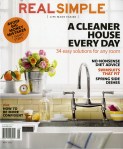
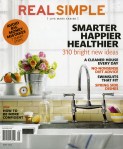
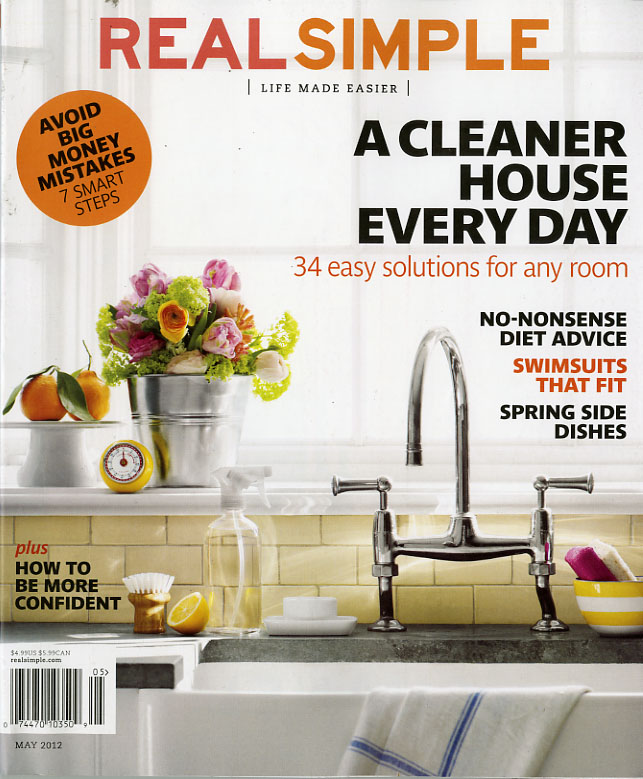
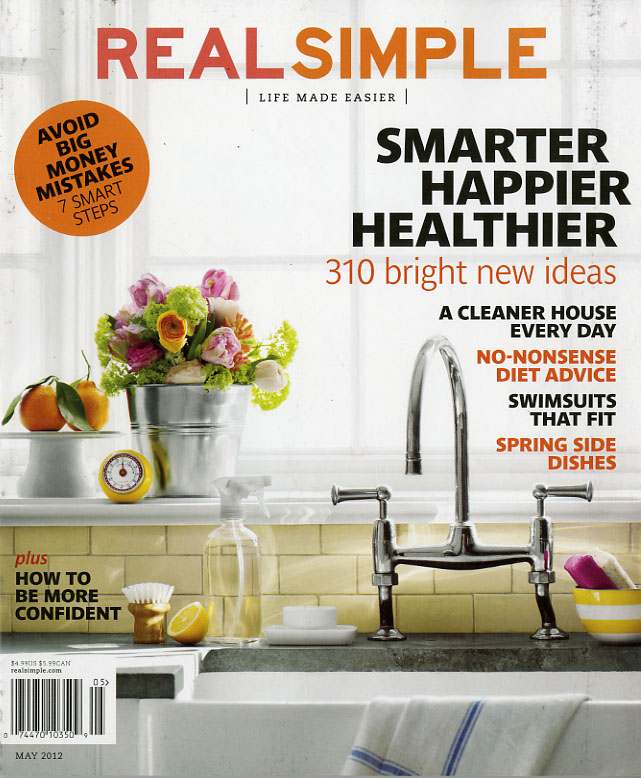
Real Simple:  Different cover lines…

May 2012

Two newsstand covers. One, you can have a cleaner house every day, the other you can be smarter, happier, and healthier. The smarter, happier, and healthier issue also has the cover line, “A Cleaner House Every Day,” but favor wasn’t returned on the other cover. Other than that, everything is the same.
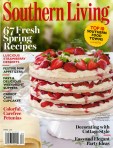
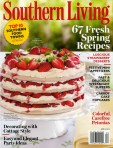
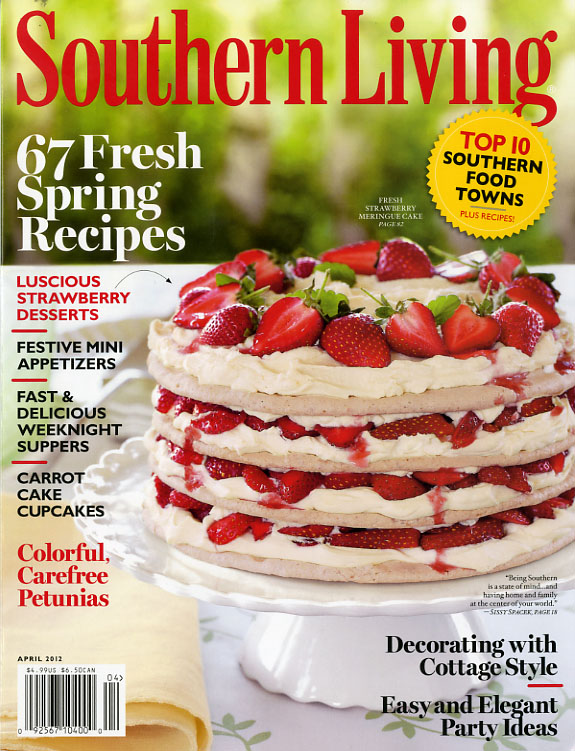
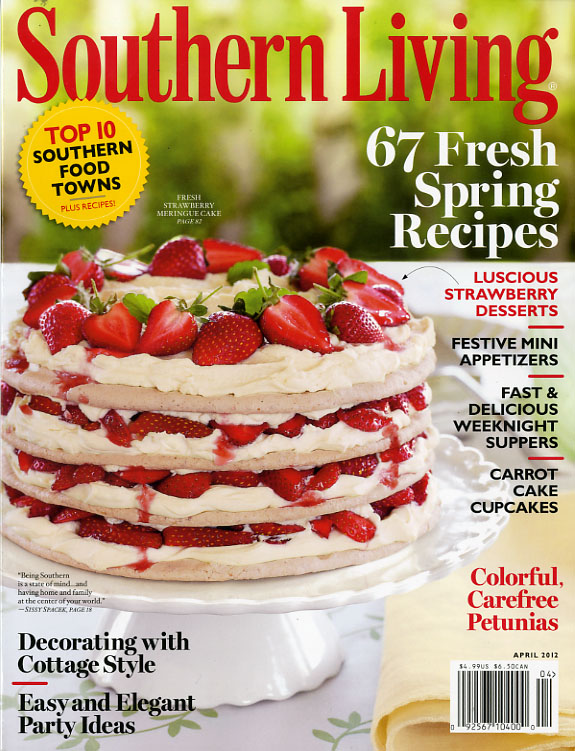
Southern Living:  Cover line placements: Right or left…

April 2012

Two newsstand covers, both with the same luscious-looking strawberry meringue cake. The main differences are one is left-sided cover lines, the other is right-sided. Other than that, they are alike.

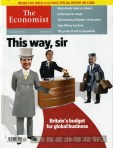
The Economist: Europe vs. USA

March 24 – 30, 2012

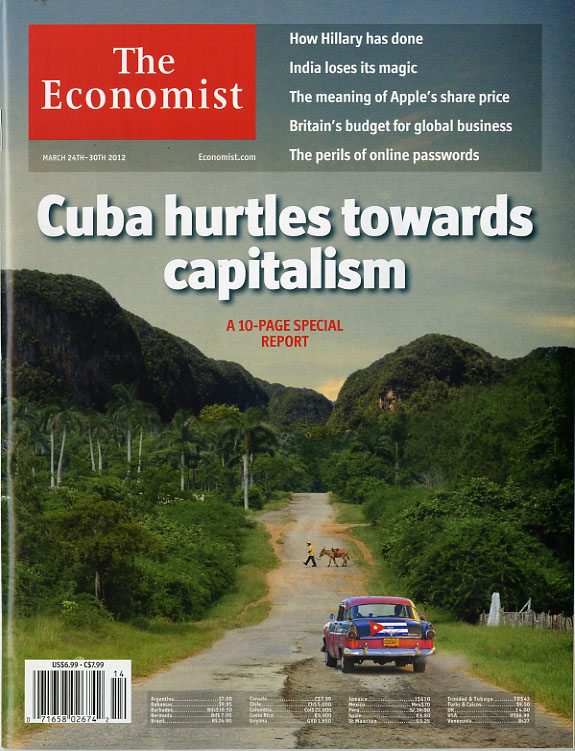
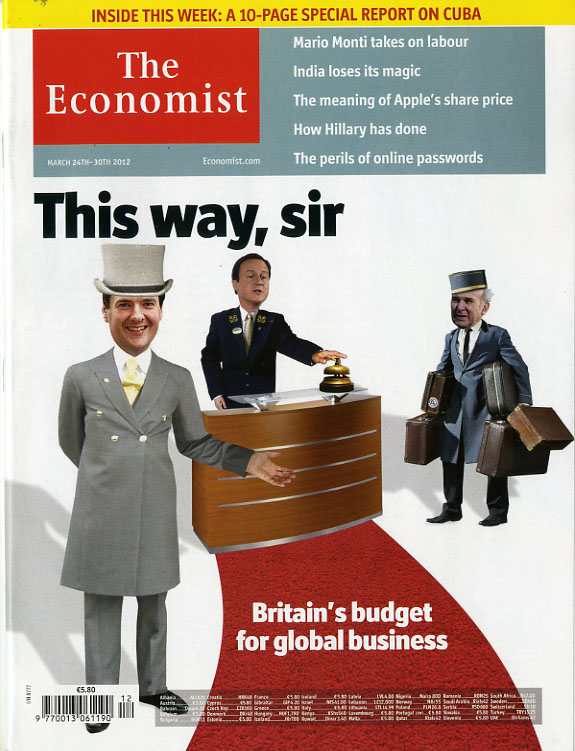
Two newsstand covers. One is the US edition, which has a cover story about Cuba; the other is the UK version and has a story about Britain’s budget for global business. The British edition includes the Cuba story in one of its cover lines, as does the American version with the British budget story. Other than a piece on Mario Monti in the UK edition, all the other cover lines are the same.
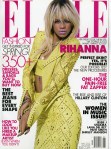
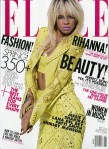
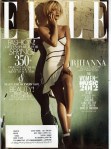
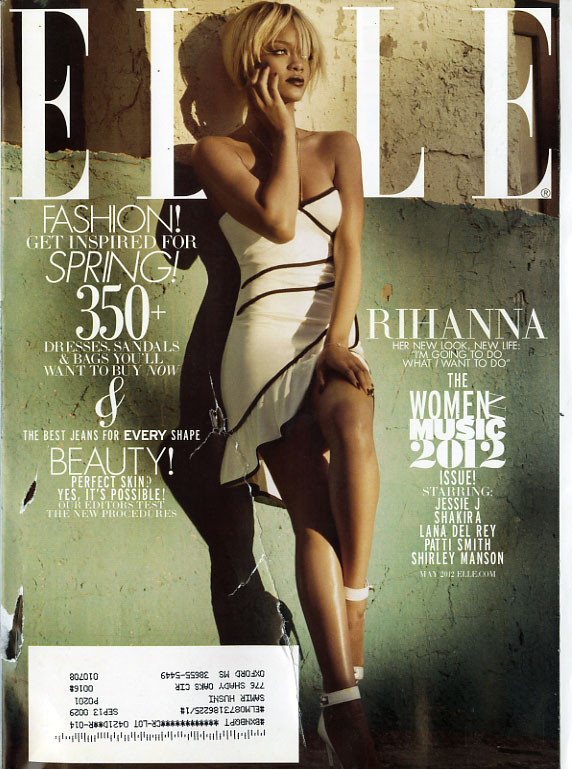
Elle US:  Cover lines, images and design treatment…

May 2012

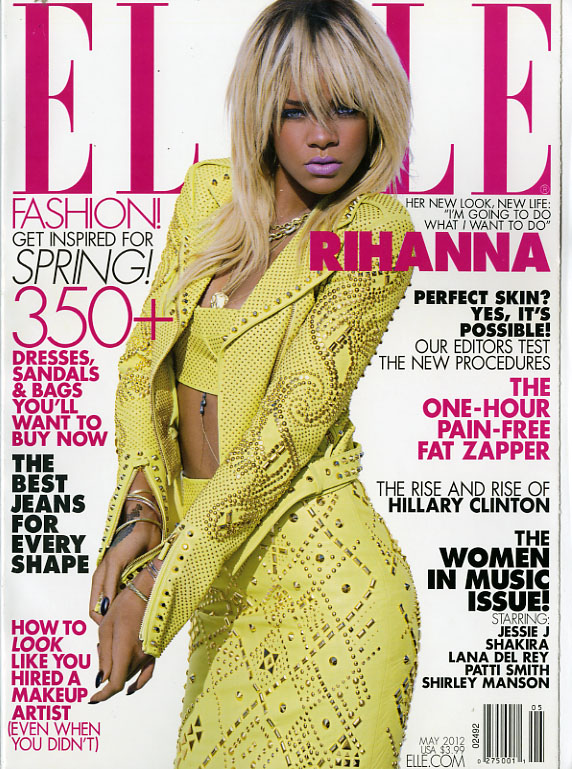
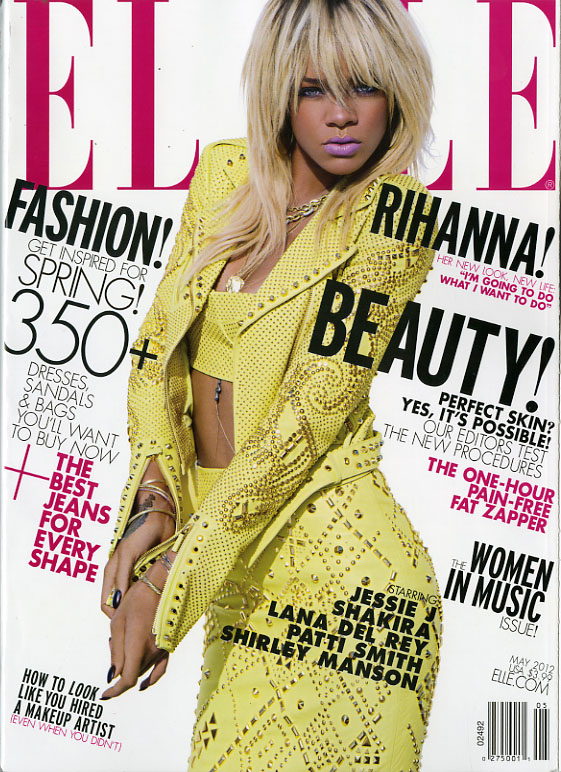
There are three different covers for the May 2012 issue. While all three feature the singer and actress, Rihanna, and the two newsstand issues are very similar, except for the placement and angles of the cover lines; the subscriber’s copy is a totally different entity. The photograph of the singer is far-removed from the mega-entertainer look that she has on the newsstand copies, and the text on the cover is much less spread out and more compact. There are two cover titles missing from the subscriber’s issue also.
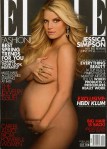
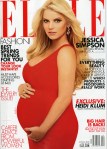
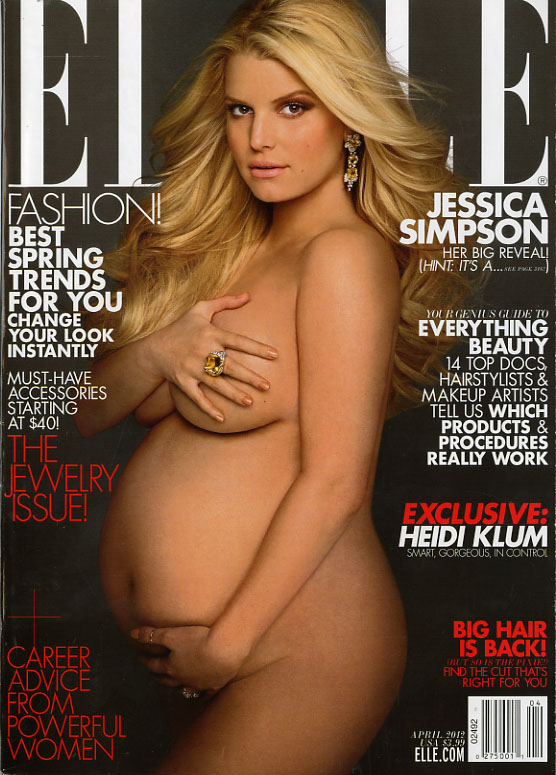
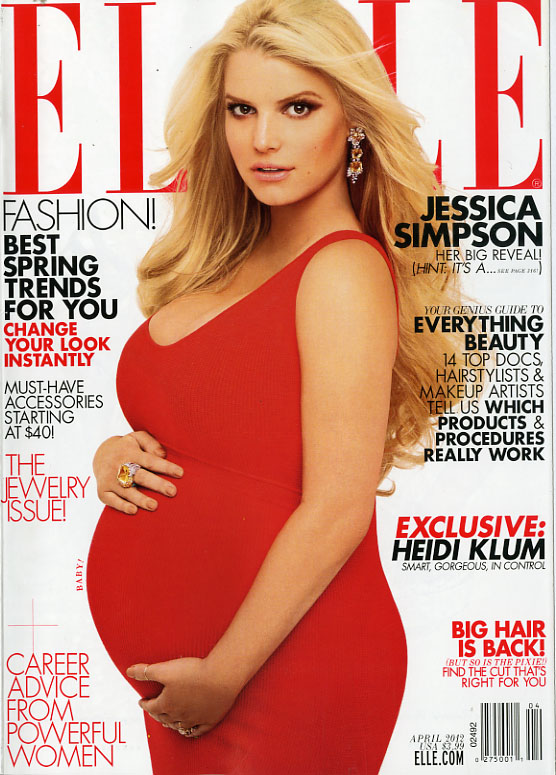
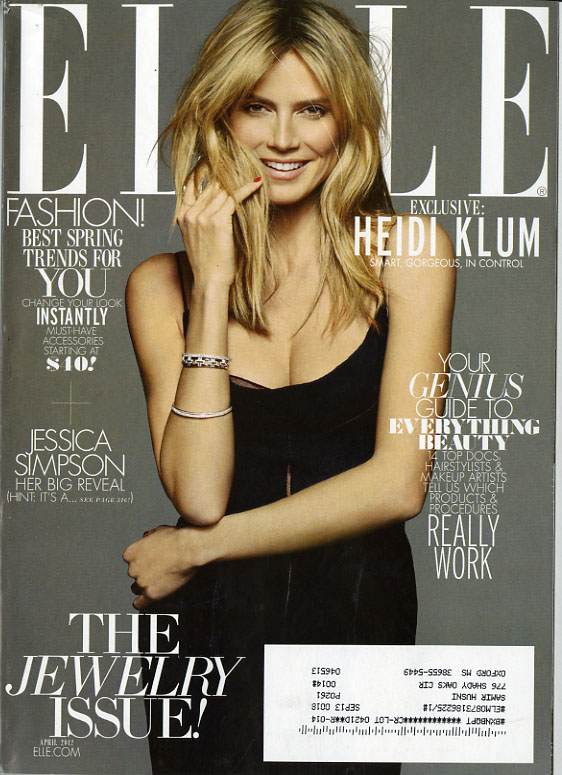
Elle US:  More cloth for sensitive eyes and regions of the country…

April 2012

There are three covers for this issue, two newsstand editions and a subscriber’s. The newsstand issue offers a very pregnant Jessica Simpson, one nude, but strategically covered. The background colors are different, but the cover lines are the same. The subscriber’s issue features Heidi Klum, and while the Jessica Simpson story is listed, Klum owns the cover. It’s also missing one cover line story the newsstand issues have.
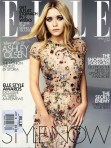

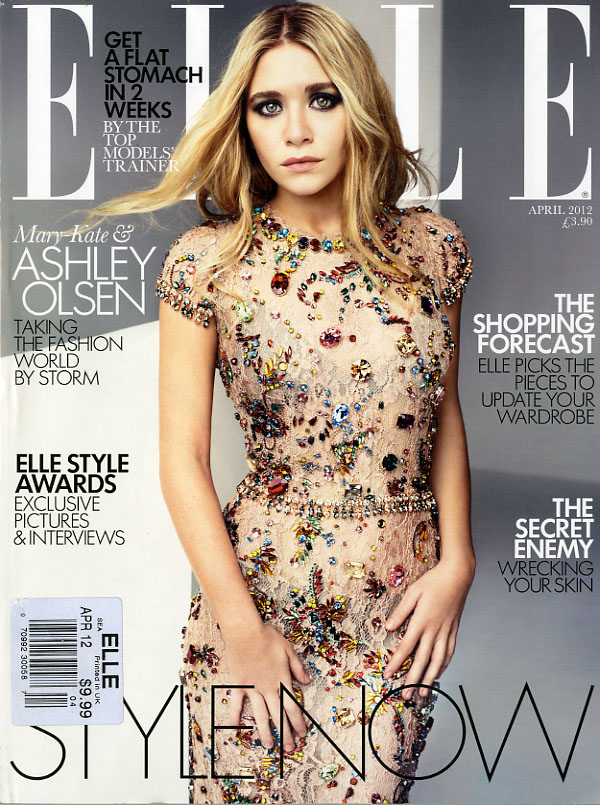
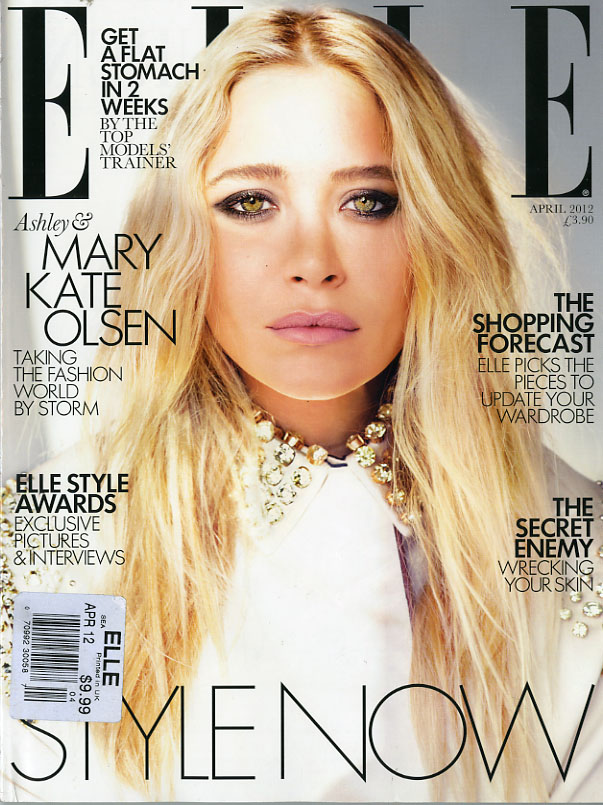
Elle UK: Sister sister…

April 2012

There are two newsstand covers for the UK editions, one with Mary-Kate Olsen, the other with Ashley. The cover lines are the same, but the background colors are different, and the Olsen’s first names are listed according to the cover: Ashley’s first on hers, and Mary-Kate’s first on her page.
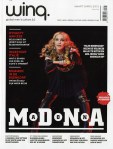
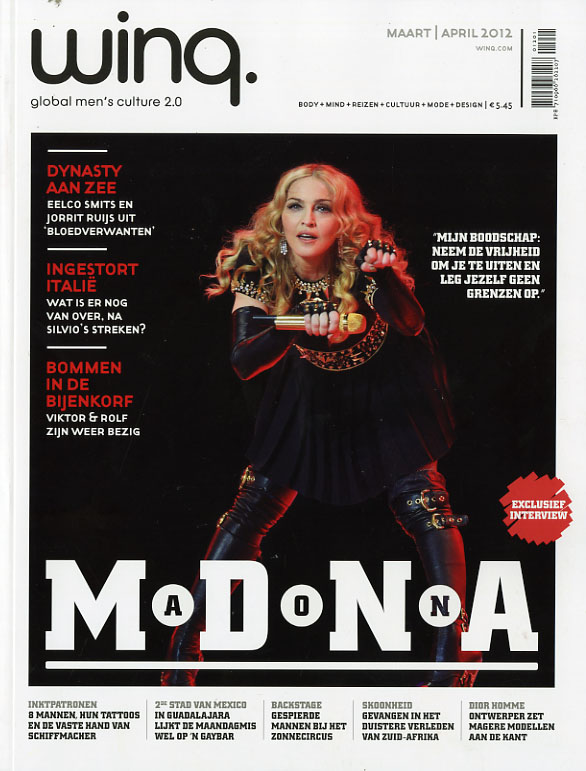
Winq. Netherlands:  Same magazine, different language, different name

March/April 2012

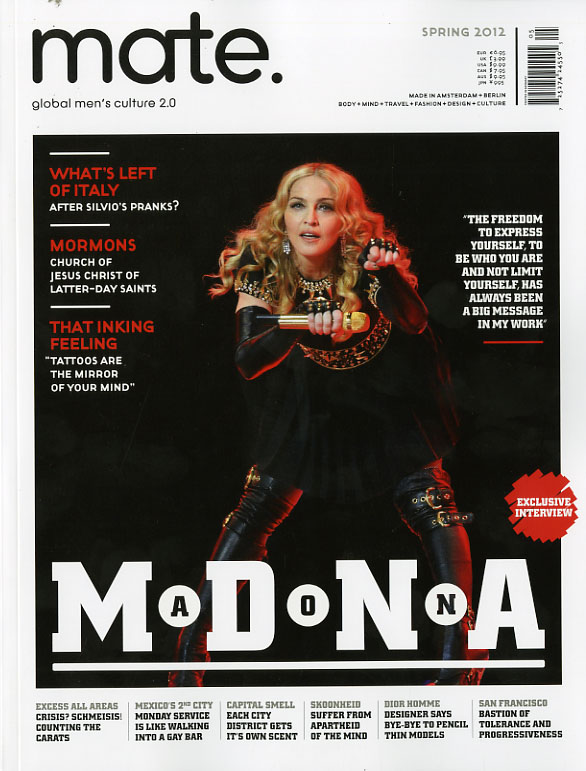
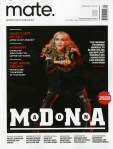
Mate.:

Spring 2012

The global man’s magazine has two different names, two different versions, but both have MaDonna as their cover girl. The cover lines are designed the same, but the content is different, but other than that, the entire look of both magazines is exact.
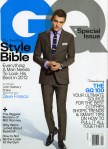
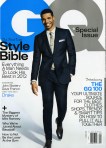
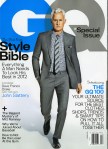
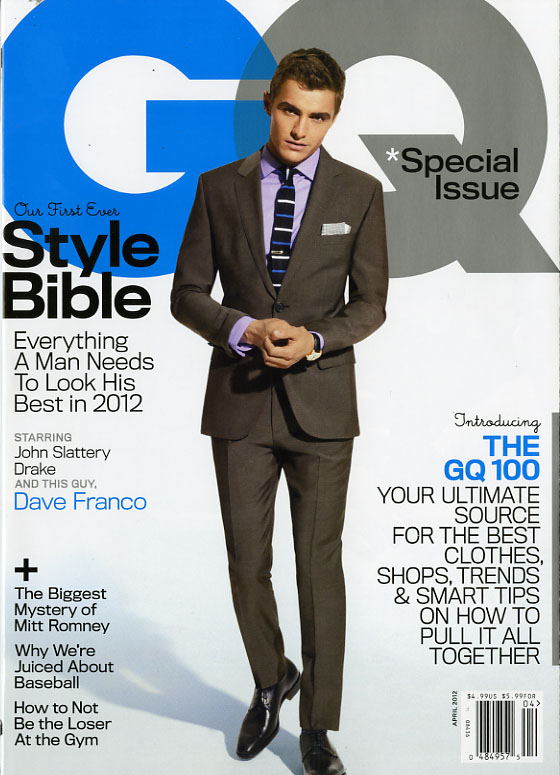
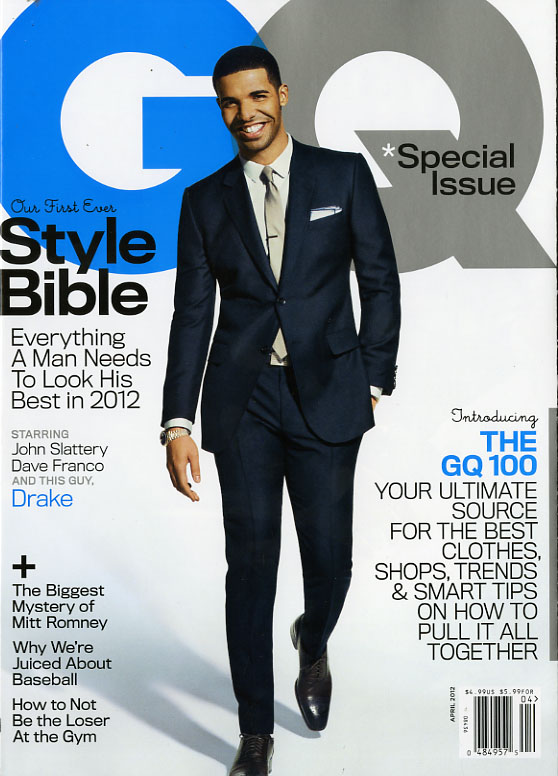
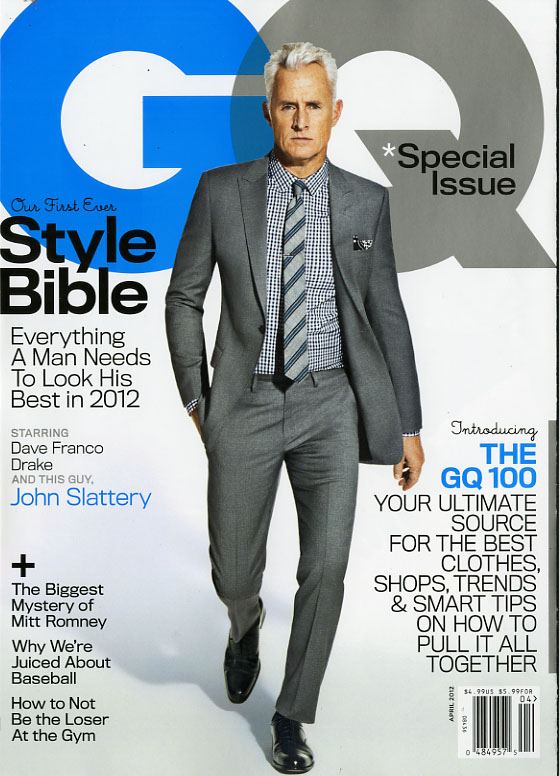
GQ:  Three images, same magazine…

April 2012

Three different covers for this issue, all of them designated as “Special Issues.” Cover lines, color scheme, and design are all exactly alike; the only difference is the models: one is rapper, Drake, and the other two are actors Dave Franco and John Slattery.


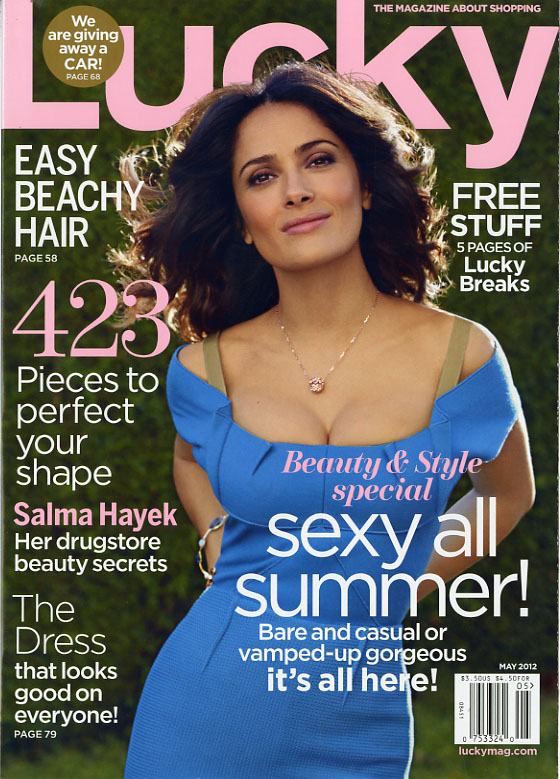
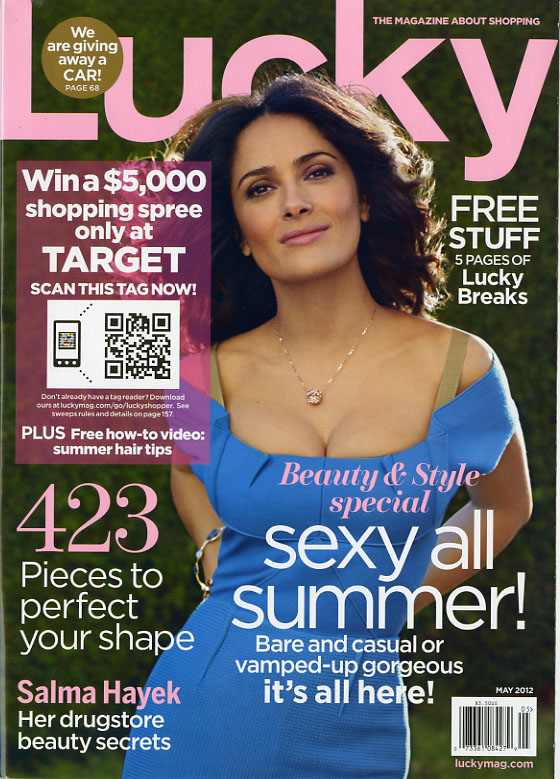
Lucky:  Only at Target…

May 2012

Two different newsstand covers. Salma Hayek graces both covers, but one issue offers a tag the consumer can scan at Target to win a $5000 shopping spree. The other offers one different cover line. Everything else is the same.
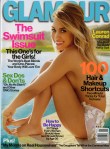
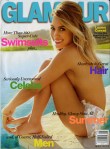
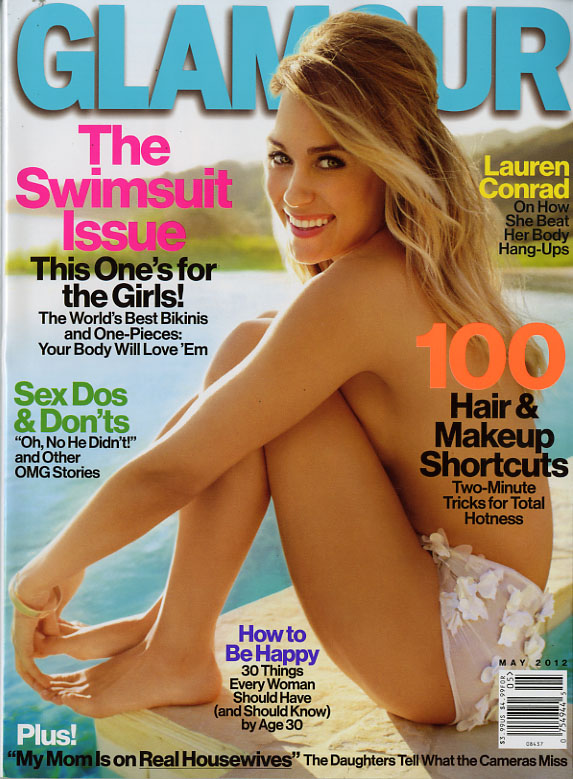
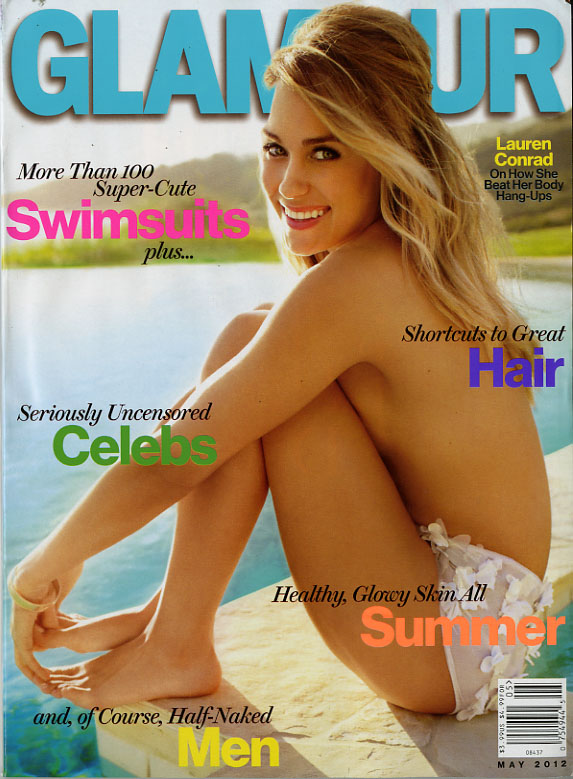
Glamour:  Cover line treatment…

May 2012

Two different newsstand covers, same model (Lauren Conrad) and same overall look, but very different cover lines. While some of the stories are the same, the words used to describe those articles are very different on each magazine. The only difference for Glamour: the cover lines.


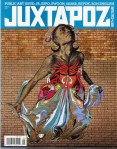
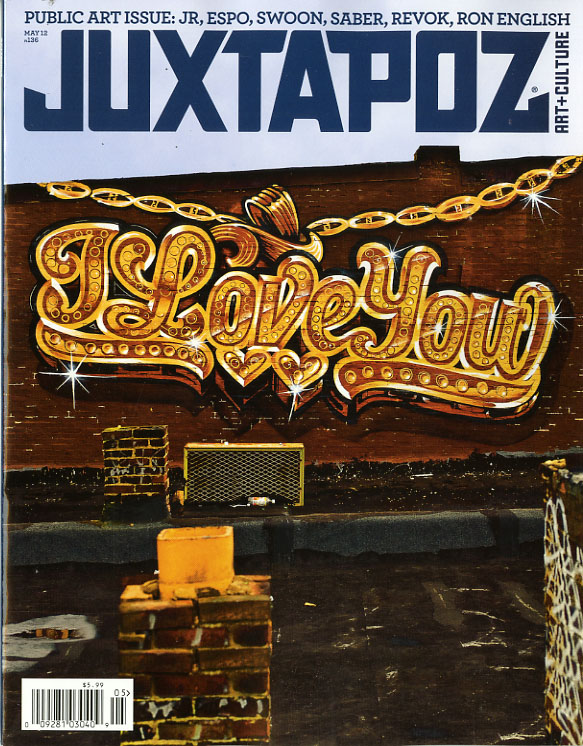
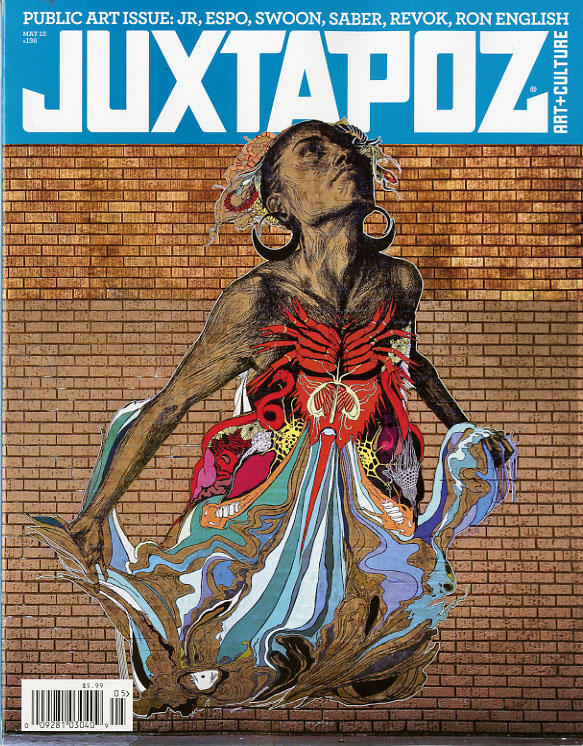
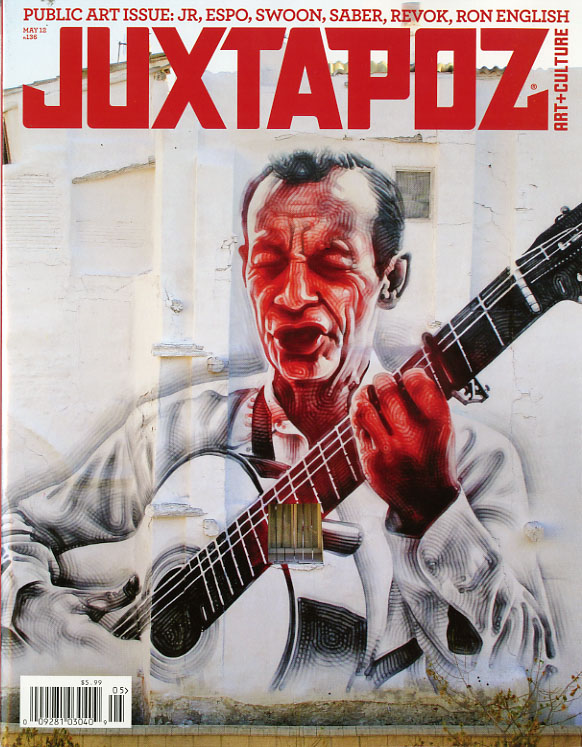
Juxtapoz: Creating a collector’s item…

May 2012

Four different newsstand covers, with the cover line (line-as in only one) the same, just four different photos and artistic images on each cover.


Harper’s Bazaar: Subscribers deserve less…

May 2012

Two different covers, both with Penélope Cruz on the cover. One, the subscribers’, has just a faded image of her face, that showcases her eyes, no cover lines, except for “Eye On The Season,” the other, the newsstand’s cover, is filled with all the stories inside both magazines. It’s an amazing contrast.
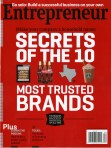
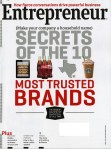
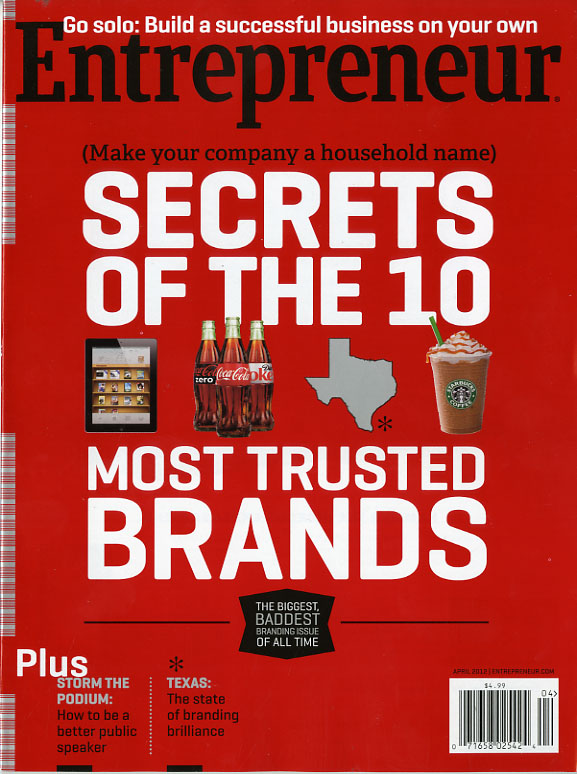
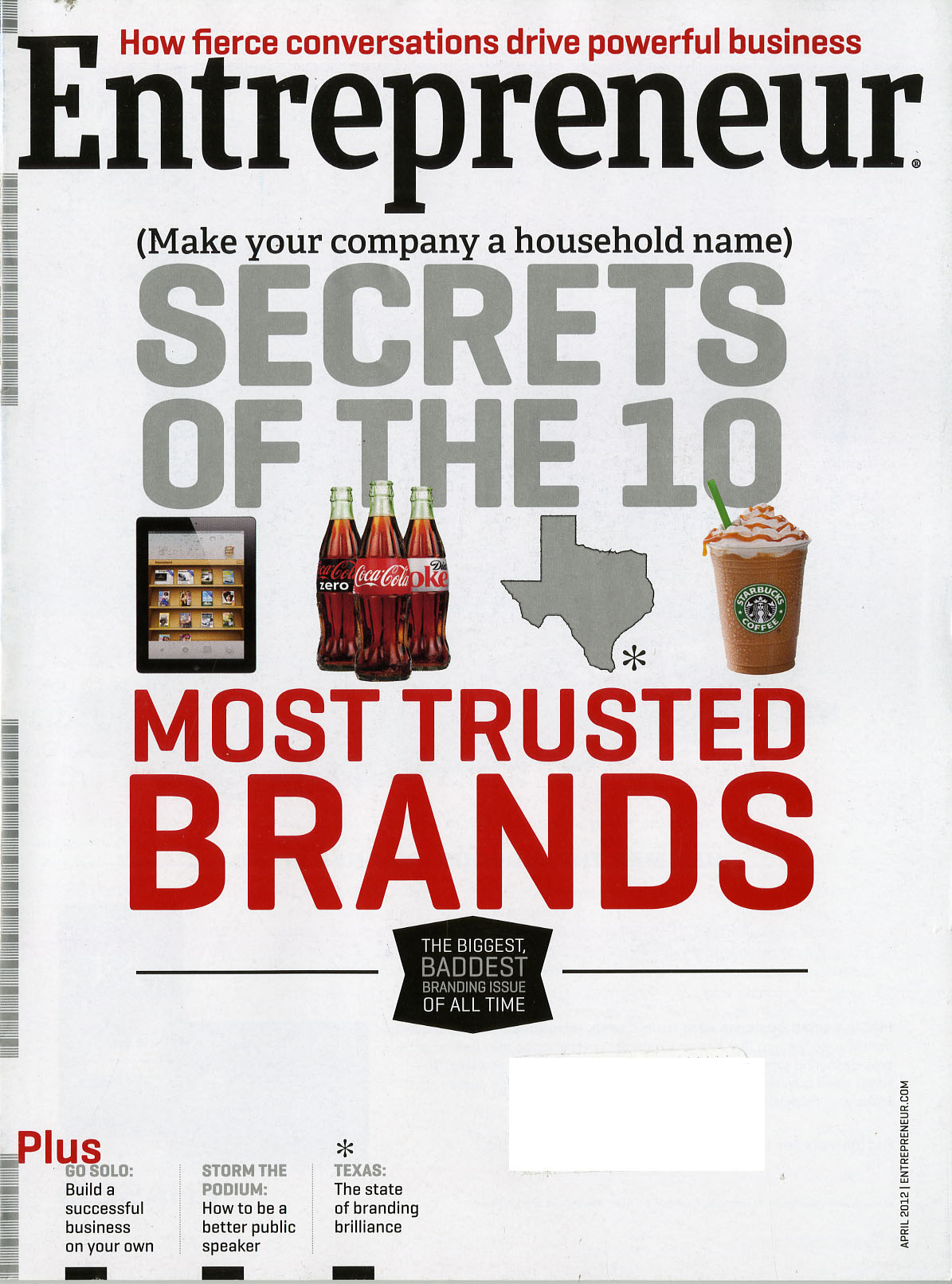
Entrepreneur: Red sells more on the stands?

April 2012

There are two different covers for this issue: one is red for the newsstand and the other white for the subscribers. The cover lines are somewhat rearranged, but nothing too drastic. Overall, other than the actual magazine color, the other differences are minimal.

Hope you’ve enjoyed the journey…

h1

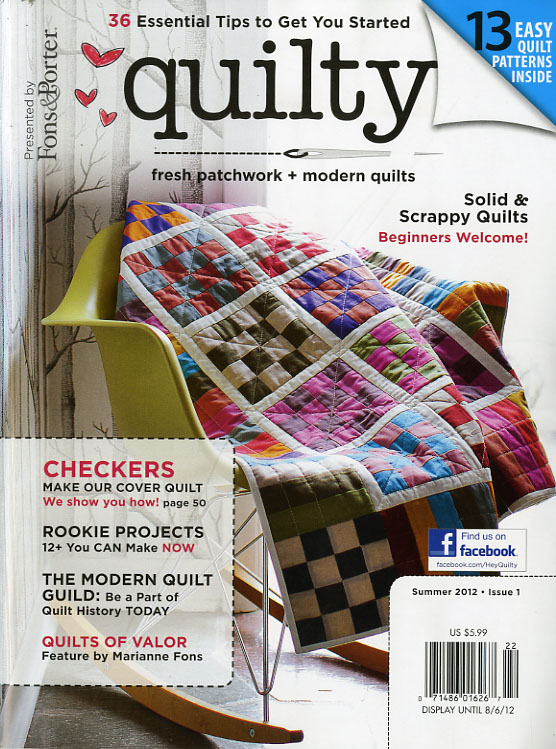
“A Great Magazine is a Joy to Behold.” Introducing Quilty magazine For the Love of Quilts and Magazines

May 10, 2012

In the sea of new magazines, almost 60 new titles arrive at the newsstands every month, it is always a delight when one magazine stops you in your tracks and demands attention, much more attention than the rest of its siblings.  Quilty is the new magazine for “fresh patchwork + modern quilts.”  However, it was not the cover that demanded that attention nor the cover price.  It was the editorial written by Mary Fons, Quilty’s editor.

Ms. Fons’ love of magazines and the media is in her blood.  Her grandmother ran her town’s newspaper, her mother co-created Fons & Porter’s Love of Quilting magazine and both of her sisters are busy bees in the world of media.  Ms. Fons starts her letter from the editor by the profound confession, ” I adore magazines.”  She goes on to write,

If they are made of paper, I bend them, fold them, dogear them.  I tack torn-out pages on the walls of my office; I rip out images to stick on my fridge.  My magazines get wet, get crinkled, get read.

If I’m reading a magazine on a screen — which happens more and more, I notice — I click with wild abandon. I gleefully bookmark.  I zoom in, I zoom out.  I forcibly close the nine shopping carts I open. (Usually.)

As I mentioned earlier, Mary Fons comes from a family of “image and word people. Idea people.  And a magazine is the perfect vehicle for timely, consumable ideas.”

A great maiden-voyage editorial and a great maiden-voyage issue of a great new magazine: Quilty.  Add to that a very smart-named web site  http://www.heyquilty.com

Indeed, magazines are all about ideas, consumable ideas that go beyond good content to great experiences.  Pick up one today and enjoy!

h1

You Don’t Know America if You Don’t Know Baseball and You Don’t Know Baseball if You Don’t Know Baseball Digest magazine. The Mr. Magazine™ Interview with Norman Jacobs, Publisher of Baseball Digest magazine

May 4, 2012

Since my arrival  to America I was told I must learn about baseball if I am to learn about America.  “If you know baseball, you know America– and its favorite past time.”  Well, needless to say that magazines were and still are my best educators, and when it came to the subject of baseball, Baseball Digest was the magazine to go to.  The magazine has  been covering the game for almost 70 years now.  Norman Jacobs has been the owner/publisher of Baseball Digest since 1969. Over the years he has started and sold many titles: Football Digest, Hockey Digest, Basketball Digest and Inside Sports. With Baseball Digest’s 70th anniversary rolling around in September, Mr. Jacobs takes us to the ballpark- the new and improved ballpark he has planned for the re-launch of Baseball Digest.  I talked with him recently as he explained the improvements and increased circulation he has planned for the title.

And as is with every Mr. Magazine ™ Interviews, first the video, followed by the sound-bites and the very lightly edited transcript of the entire interview.

So, sit back, relax, and watch the video interview with Norm Jacobs.

The Sound bites:

On the history of Baseball Digest: Well, back in 1969 I had sold my publishing company, at that time we were publishing business and trade magazines. I looked around to find some kind of publishing property to buy and develop. Lo and behold, I found in my hometown of Highland Park, not more than a mile from me, Baseball Digest Magazine published in someone’s home.

On the plan for the magazine’s future: And furthermore, we’re talking about developing within the magazine; the pro-scouting information, this is data never available before and developed by an outside company, to drop in possibly as an insert and re-launch this magazine, hopefully with our 70th anniversary, which is in September of this year, 2012.

On whether or not he believes there is hope for baseball, since the entire country seems addicted to football: Well, I certainly do, because as we all know, baseball attendance is zooming. And the baseball fan has always been thirsty for information and knowledge, particularly for statistics and the kind of information that may not be in other publications.

On where he will be a year from now: Well, I would hope that we’d be…well, we’re thinking of launching with a 100,000 on the newsstand, hopefully we’d be at 200, or somewhere around that point, 250 even.

On what keeps him up at night: Mostly cash flow. We all know that publishing today is so different than it was in the old days.

And now for the full, lightly edited, transcript of the interview with Norman Jacobs, owner and publisher of Baseball Digest magazine:

Samir Husni: Baseball Digest is a legend. It’s going to be 70-years-old this coming September. Tell us a little bit about the history of the magazine, and what the plan for the future is. What do you tell folks who say, “Baseball Digest, is it still being published?”

Norm Jacobs: Well, back in 1969 I had sold my publishing company, at that time we were publishing business and trade magazines. I looked around to find some kind of publishing property to buy and develop. Lo and behold, I found in my hometown of Highland Park, not more than a mile from me, Baseball Digest Magazine published in someone’s home. I, personally, had not been to a baseball game in twenty years. But it did excite me that this magazine was for sale because the publisher had passed away. It excited me because it only had about 10,000 in circulation and even I figured with all the millions of baseball fans in the country, this title should be much more than that. So I went ahead and purchased it, and working for the first time with the agents and direct mail, we quickly got the circulation up to over 200,000. At which time, I decided to go forward with Football Digest and then later on, hockey, basketball, and all the sports titles. But Baseball Digest was always known to the baseball fan, they always liked the magazine and we traded on that. Originally, I tried to get involved with the little leagues, selling Baseball Digest as a fund raiser, but on the staff there was myself and my secretary and that was it. We didn’t go too far with that. So the years went on and the circulation grew, but I got very involved in our other titles, particularly with Inside Sports when I bought that and re-launched it. So really there wasn’t all that much attention paid to it. And over the years as I grew to a point where I was publishing 20 magazines, I started selling some of them off and a few had to be closed down and so forth. And so that brings us up-to-date; right now I am left with or only have 2 titles in my publishing group, Baseball Digest and another magazine called Cruise Travel. However, we are now talking to people about really, quote “re-launching” the title and making it a lot more than it is today. And by that I mean, to give some detail, we’re only distributing 10 or 12,000 copies on the newsstand, so we’re talking about going to a 100,000 or more. And we’re talking about going from a news print publication to a very slick, beautifully-designed baseball magazine. And furthermore, we’re talking about developing within the magazine; the pro-scouting information, this is data never available before and developed by an outside company, to drop in possibly as an insert and re-launch this magazine, hopefully with our 70th anniversary, which is in September of this year, 2012. So there is a lot of work to do, it’s very, very exciting; the Baseball Digest brand is well-known, it’s just that we need to get it out there again so all of the people who have known Baseball Digest over the years will realize that we’re back in business, but with a much bigger and better package.

Samir Husni: Someone once said that you can’t know America without knowing baseball. Do you think you can re-create a magazine that will help people fall in love again with baseball? Do you think that people have lost their first love, and football is now everywhere and everybody talks about football; do you think there is hope for baseball?

Norm Jacobs: Well, I certainly do, because as we all know, baseball attendance is zooming. And the baseball fan has always been thirsty for information and knowledge, particularly for statistics and the kind of information that may not be in other publications. Now, with Baseball Digest as practically the only frequency-type of publication available, mostly the other titles are annuals. But I do think, yes, that because it has been around for so many years and so many people that I’ve talked to say, “Oh, I remember. I read Baseball Digest when I was five, seven, or ten-years-old.” I think that if we develop the product, bring it up-to-date and have a magazine that has some nostalgia to it, as it always has, but new and current ideas, and articles and features, plus getting involved in the digital era with all kinds of websites and iPads, iPhones and databases and everything like that. So, I’m very hopeful for the future of the title.

Samir Husni: If we’re here having this discussion a year from now, what’s your hope? Where will you be a year from now?

Norm Jacobs: Well, I would hope that we’d be…well, we’re thinking of launching with a 100,000 on the newsstand, hopefully we’d be at 200, or somewhere around that point, 250 even. Our subscriber base would go from 70,000 to hopefully several 100,000, I don’t know if that’s ambitious or not, but with the proper promotion and the effort behind it, a year from now would be a much different picture than it is today, for sure.

Samir Husni: You’ve been a publisher for years and years, and I ask this question to almost everyone I interview: What keeps Norm Jacobs up at night?

Norm Jacobs: Mostly cash flow. We all know that publishing today is so different than it was in the old days. I remember when I wanted to start a new magazine, I’d pick up the phone and call Curtis and say that I’m starting Hockey Digest and I want to distribute 70,000 copies and that was it. I’d have a sell sheet and it was done. Today it doesn’t work that way. Unfortunately, there’s a lot more to it and it’s a lot more expensive. And a re-launch of this title, this brand that we’re talking about, we’re talking about quite a bit of an investment. And I think that would keep me up a few nights along the way.

Samir Husni: If someone came up to you and said, “Mr. Jacobs, I want to start a new magazine today.” What advice would you give them?

Norm Jacobs: Well first of all, I think that I would say, call Samir. You need to talk to the consultants, the people who really know the industry; particularly those who are up-to-date with what’s going on. Because it’s more than just a magazine today, there’s got to be everything that’s surrounding it in the digital era. And secondly I’d say, you better have a lot of money. And thirdly I’d say, you need a lot of luck. And fourthly, you know, there’s really a lot of work that has to be put into any new title. I guess that’s what I’d say.

Samir Husni: Thank you.

(Full Disclosure:  I guess Mr. Jacobs followed his own advice. Few weeks after my interview with him, I was asked to join the team as a publishing consultant.  I have accepted that invite and joined the team as a publishing consultant for the relaunch of the magazine).