Archive for the ‘News and Views’ Category

h1

Just Common Sense: Mr. Magazine’s™ Ideas to Grow and Cultivate Magazine Media. A New Book with an Introduction by David Carey, President, Hearst Magazines

March 8, 2013

Just Common SenseToday, I turn 40. That is if you believe that 60 is the new 40. It has been 51 years since the day I bought my first magazine and I can honestly say I never looked back. I have been blessed time and time again by God and family, to continue my hobby, turned education, turned profession, every single day of my life since 1962. I do not think you will find too many people who can repeat that last sentence.

But through my entire hobby-turned-career (if you can call it that) I had one, and only one, guiding principle: Just Common Sense. The principle has been validated, almost every time I give a speech, consult or teach. Folks come to me at the end of my presentations and lectures and say, “Samir that was just common sense.” My answer has always been, “and you paid me for that!”

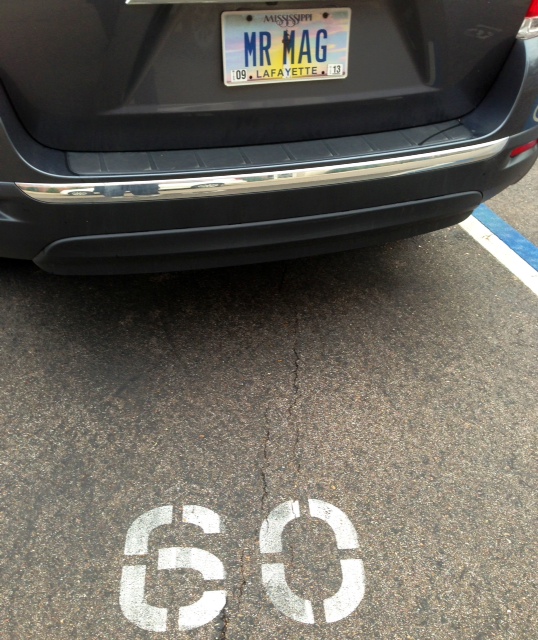
mrmagis60So on my 60th birthday I decided to compile some of “the just common sense” articles and blogs in this mini coffee-table style book aptly called Just Common Sense: Mr. Magazine’s™ Ideas to Grow and Cultivate Magazine Media. I invited David Carey, president of Hearst Magazines, to write the introduction. I am glad that he accepted my invitation. His intro follows:


How many people can call themselves Mr. Magazine™ and get away with it? Exactly one: Samir Husni, who has been enthralled by the medium since his youth in Tripoli, Lebanon. Since then, he has been living, breathing and dreaming magazine media. He is a source of knowledge, inspiration and constructive criticism. All in all, there is no better cheerleader for our industry, and this collection of his essays tells the story of his passion for ink on paper.

Many in the industry fell in love with magazines early in life. In my case, it was as a teenager growing up in Long Beach, California. We share a belief in the power of truly original, engaging content that transports readers, shapes dreams and aspirations, and provides windows into faraway worlds and cultures. As a professor of journalism and director of the Magazine Innovation Center at the University of Mississippi School of Journalism, Samir has taught some of the most talented editors in the business, including our own Newell Turner, editorial director of the Hearst Design Group, who, after winning House Beautiful’s first National Magazine Award for General Excellence in 2012, immediately texted his former professor to give him the good news. I imagine there’s nothing more rewarding than seeing your life’s work come to fruition in a student’s success and recognition by his peers.

david_carey_by_frank_veronsky-7985Samir believes in modernity and understands print’s important place in the future of entertainment. He champions the incomparable experience of devouring a magazine full of images, information, ideas and inspiration. At the same time, he believes in the exciting opportunities that digital and mobile offer our industry, when approached in a smart, strategic way. A healthy dose of Samir’s insight and optimism is good medicine, indeed.

David Carey
President, Hearst Magazines

To order a copy of Just Common Sense click here.

h1

Mr. Magazine™ Minute: Michael Rooney, Chief Revenue Officer, The Wall Street Journal, on the Launch of WSJ’s New Print Magazine & The Power of Print in a Digital Age

March 7, 2013

The Wall Street Journal is launching a new quarterly magazine called WSJ.MONEY on Saturday. I asked Michael Rooney, the Journal’s chief revenue officer about why the Journal is launching a new print title just a few months after killing Smart Money magazine? His answer, and his take on the power of print in a digital age are in this Mr. Magazine™ Minute:

h1

Mr. Magazine™ Minute: Mary Berner Identifies the Place of Print in Magazine Media

March 6, 2013

When Mary Berner was named president and chief executive officer of MPA – The Association of Magazine Media last September, one of her first edicts was to ensure that the word “media” followed the word “magazine” every time it was used. I asked Ms. Berner about the place of print in the magazine media mix. Her answer appears below in the Mr. Magazine™ Minute. Enjoy.

h1

Mr. Magazine Minute™: Richard Stengel on TIME Magazine’s Next 90 Years…

March 5, 2013

The very first entry on the Mr. Magazine™ blog in March 2007 was on Richard Stengel’s reinvention of TIME magazine. Last Sunday, March 3, TIME celebrated its 90th anniversary. So, in honor of TIME’s anniversary and the Mr. Magazine™ blog’s sixth anniversary, I have opted to introduce a new quick v-blog entry called the Mr. Magazine™ Minute. The first entry, you’ve guessed it, is with Richard Stengel, TIME’s managing editor. I asked him about the next 90 years of TIME. His answer is in the following raw, unedited Mr. Magazine™ Minute:

h1

Digital Heaven or Immortal Hell? Why Print Needs Print to Survive in a Digital Age? The Mr. Magazine™ Webcast…

March 1, 2013

On Wed. Feb. 27 I gave a webcast on the topic Digital Heaven or Immortal Hell. The webcast via CommPRO.biz was produced by Onstream Media and sponsored by Akamai Technologies.
The webcast in its entirety is posted below. Enjoy and feel free to comment or ask more questions. Click on the link below to watch the webcast.

h1

Audience, Advertisers & Emloyees: Who’s the Most Important of Them All? Bernie Mann Will Tell You Who.

February 28, 2013

In an earlier blog, I talked about Passion, Emotions and Guts as an important and very much needed corner stones in the new magazine media business model. My friend Bernie Mann, publisher of Our State magazine in North Carolina, responded to my blog with the e-mail below. Wow, what an inspiring response and what an example to follow. I hope there are more owners and publishers who subscribe to “The Mann Way” in running their magazine media businesses. Read on and thank you Bernie for allowing me to share your email with the rest of the magazine media world:

I think I have 3 constituencies that are important to please. Audience, Advertiser and my employees. Who is the most important? Of course they all are crucial but without question my employees are the most important.

If my employees are passionate, happy and conscientious they will make my audience pleased with the product we produce and my advertisers will be happy too.

Bernard Mann
Publisher
Our State Magazine

-1

h1

The Cost of Living with Magazines Has Definitely Gone Up…But Has the Cost of Living Without Them Become an Option for Some?

February 25, 2013

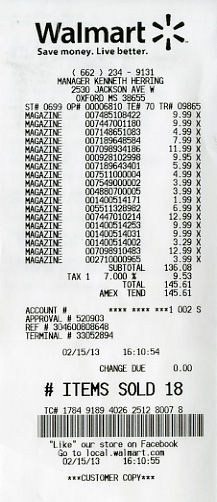
Receipt The receipt you see to the right is the actual amount that I spent at Wal-Mart on 18 different magazines: $145.61. That’s an average of $8 per magazine. For the typical American looking to buy two of their favorites a week, adding an extra $16 to your grocery bill can cause you to sit those two inedible objects right back on the newsstands.

And we wonder why newsstand sales are declining.

Let’s take a look at what I got for my money, why I chose the issues I did and which ones were worth the price. In no particular order:

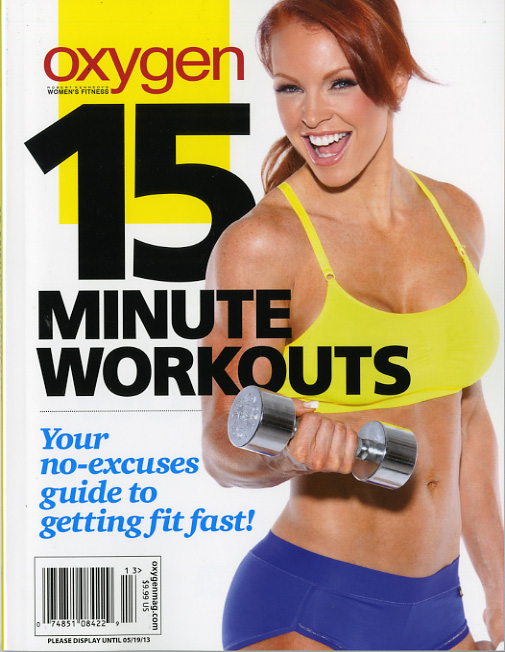
Oxygen 15 Minute Workouts
1. Oxygen 15 Minute Workouts – a very specialized magazine that focuses on 15 minute workouts and affirms the validity of such abbreviated physical activities by asserting to be ‘Your no-excuses guide to getting fit fast.’ And while I’m sure there is a great deal of truth in that statement…the price to actually find that out is $9.99. A fitness magazine that costs $10? I was expecting to see Richard Simmons leap from between the pages when I opened it, and lead me in a ‘Sweating to the Oldies’ workout.

Men's Fitness
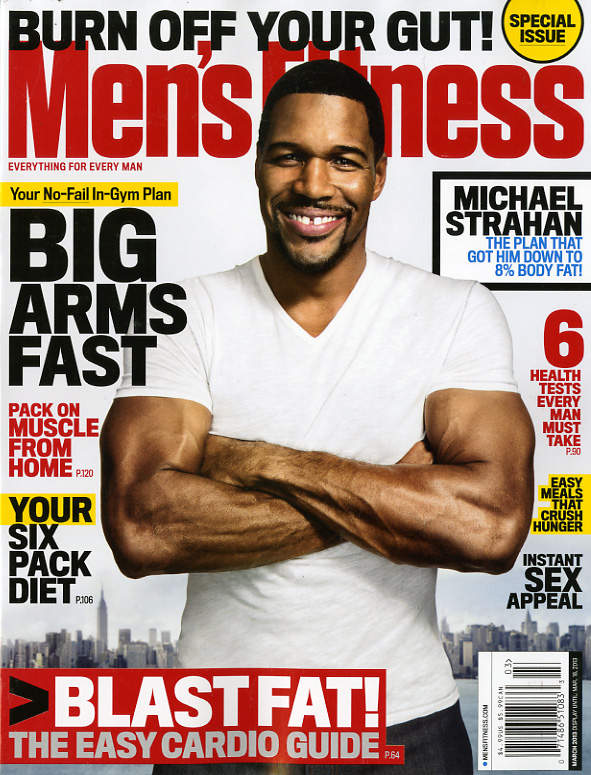
2. Men’s Fitness
– staying with the physical…the newsstand issue I bought at Wal-Mart is different from the subscriber’s issue. Different, in that it has an alternate cover and the paper the magazine is printed on is totally opposite, with the newsstand issue being much thicker and heavier than the subscriber’s copy. Why is that? Why are we not consistent between out subscribers and our single-copy sales as far as the quality of our product? Shouldn’t we be?

Rolling Stone Bob Dylan
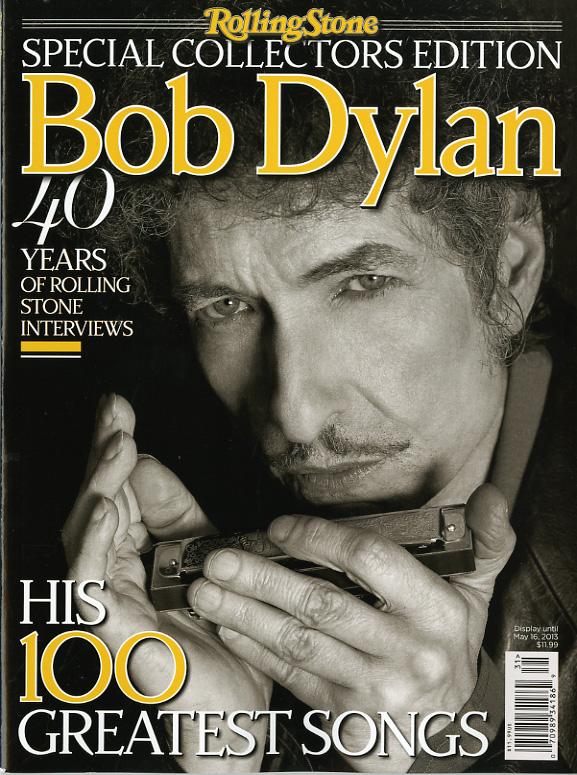
3. Rolling Stone – Special Collectors Edition – Bob Dylan – And of course, the title says it all. Legendary Bob Dylan is on the cover holding a harmonica a hair’s breadth away from his mouth, in preparation to play; all the while staring back at you with that brooding, stony glare that he is known for. And for $11.99 you can count yourself among the lucky ones who own this collector’s copy. His top 100 greatest songs are ranked and listed here, with Bono selecting “Like a Rolling Stone” as number one. It’s an up close and personal look at the man and his music as only RollingStone can put together. Worth every penny!

NAIL IT
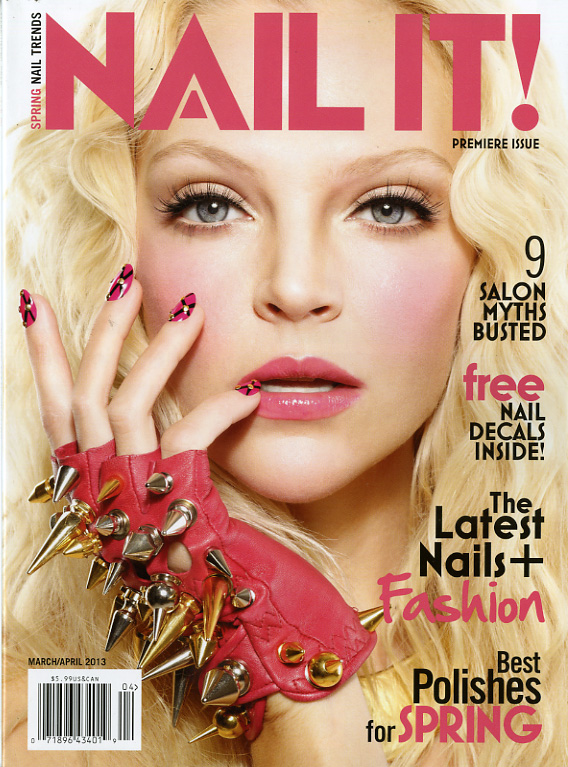
4. Nail It! – The premier issue of a magazine about nail trends – of the finger variety. A bi-monthly magazine devoted to the latest in nail polishes, decals, and tips. A must have for nail fashionistas everywhere. And for $5.99 you have to decide if it’s worthy or not. But it does prove niche publishing is vogue with the country, and in some cases profitable. It remains to be seen whether this one will be.

Chicken Dinners
5. Chicken Dinners
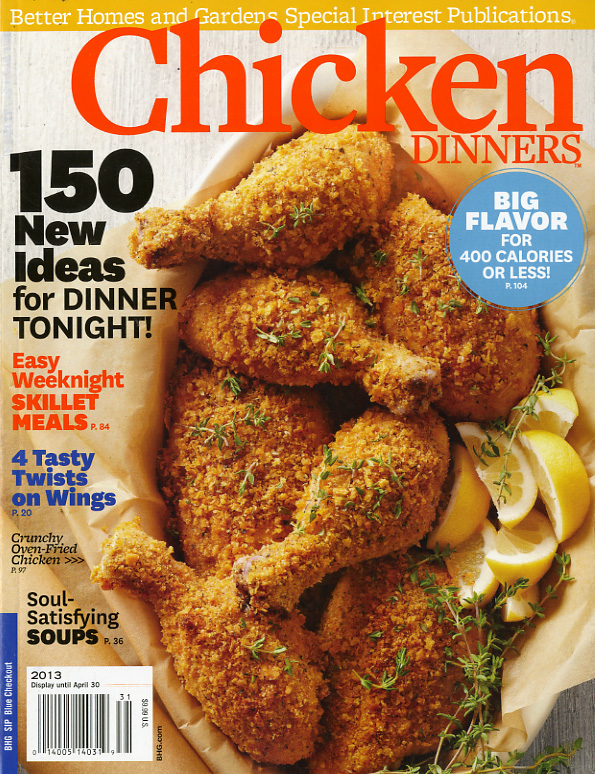
– from Better Homes and Gardens Special Interest Publications – an entire magazine devoted to chicken. Whether it’s fried, skillet-prepared, baked, or brined with maple, this magazine will give you the recipe for preparing it. And it’ll only cost you $9.99 to read. Of course, I would imagine searching the net for few hours one may find the same chicken content for free. However, as experience makers folks, it seems OK to charge $10 for a magazine that shows us how to cook chicken.

30-Minute Dinners
6. 30-Minute Dinners
– also from Better Homes and Gardens Special Interest Publications. Please refer to #5.Same rules apply.

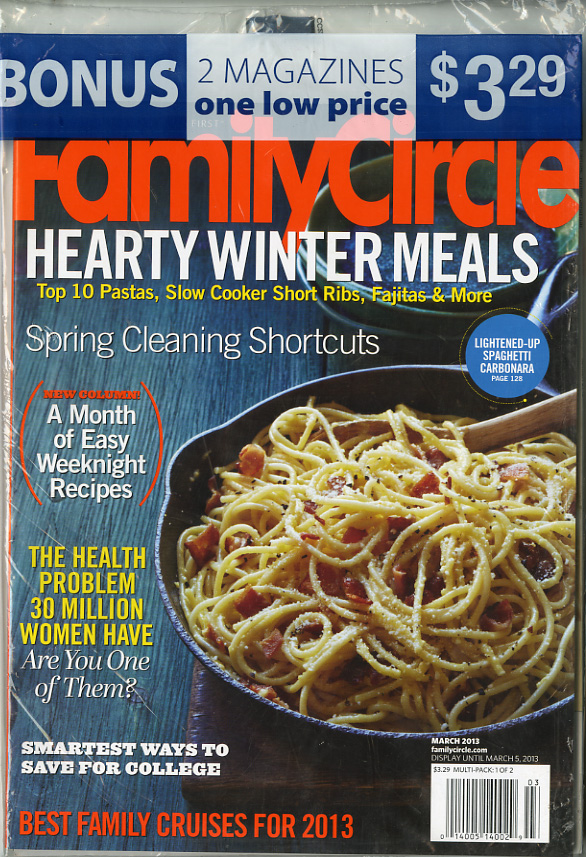
Family Circle
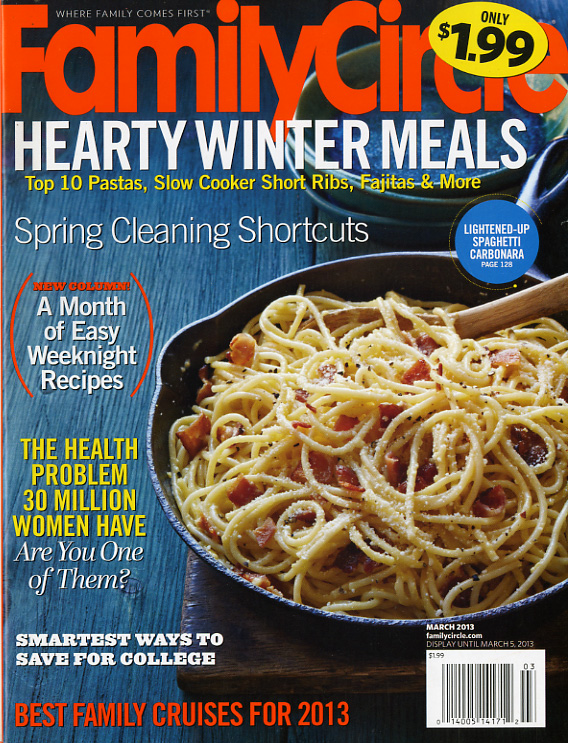
7. Family Circle – for $1.99 you get the traditional Family Circle fare at a great price. Unlike the $2.79 cover price at Kroger.

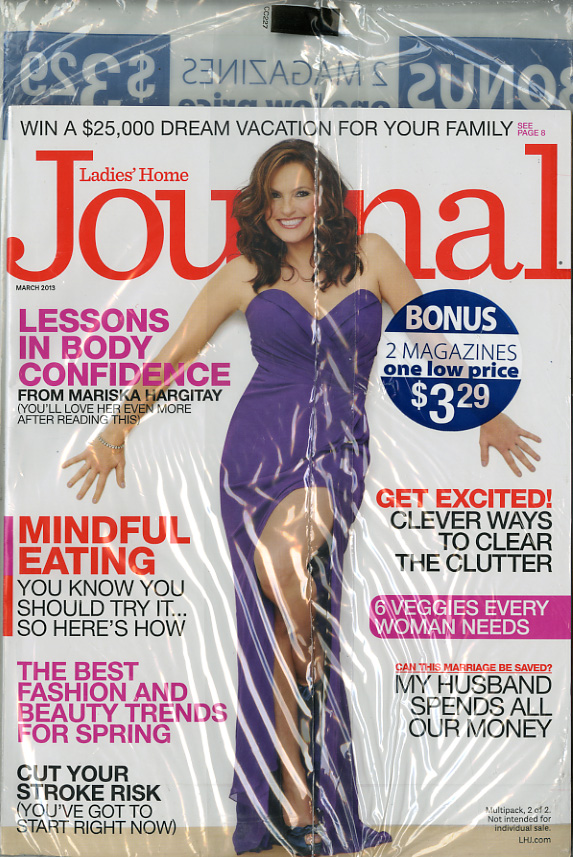
Bonus 2 Magazines-one low priceLadies' Home back Bonus 2 Magazines-one low price
8. Family Circle + Ladies’ Home Journal
– a two-magazine baggie deal that is a tremendous opportunity for fans to get both magazines for the low price of $3.29.

HISTORICAL
9. Historical – the collector’s issue celebrating Black History Month – a vast array of information on many black leaders from yesterday and today. But for $7.99 an issue, you could probably get your history lesson a lot cheaper somewhere else.

FLEA MARKET STYLE
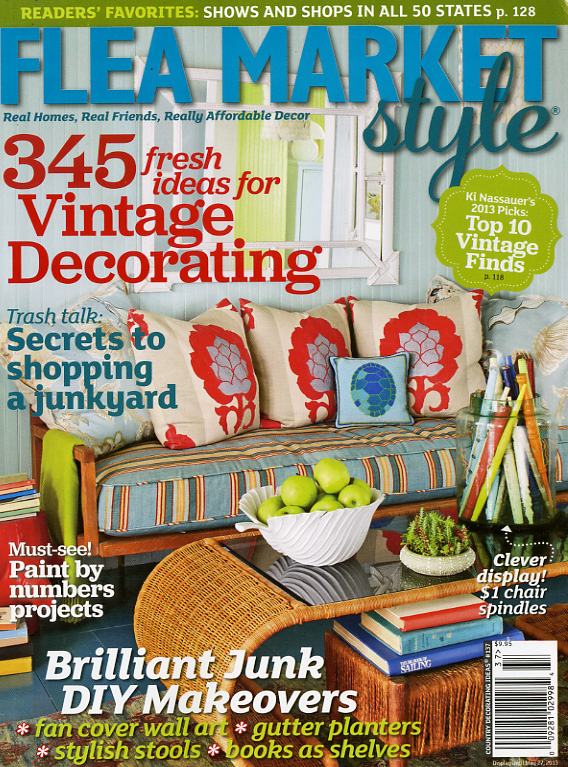
10. Flea Market Style
– A magazine that for $9.95 an issue will show you how to take rummage sale and junk sale items and turn them into usable, and in some cases, extraordinary novelties. Another niche publication for just that right audience; whether the price is right for those folks, will be up to them. I bought it because of an article about a home near by in Water Valley, Miss. produced by a former student of mine.

Recycled Style
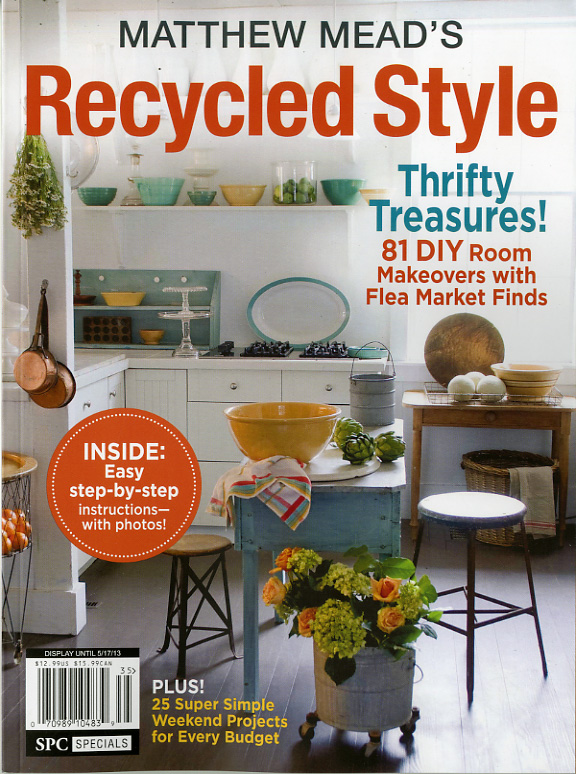
11. Matthew Mead’s Recycled Style
– Another magazine where throwaways and no-longer used items are, this time, ‘recycled’ and used again. But to read the recycling revelations from the folks over at Oxmoor House, who bring you this magazine, you’re going to have to shell out $12.99.

Taylor Swift
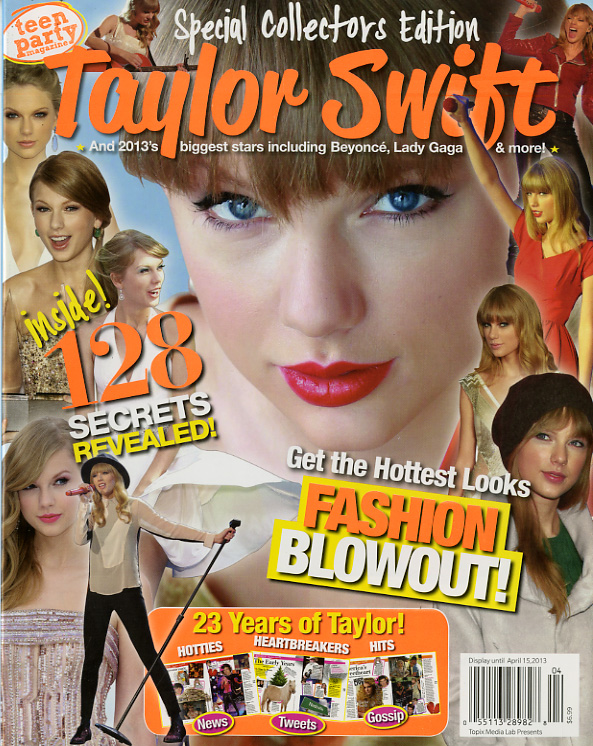
12. Taylor Swift – Special Collector’s Edition – this magazine is just what the title indicates – a magazine devoted to country music sensation, Taylor Swift. And for $6.99 it can be in your collectible magazine stack today. But should it be at that price? Up to you. By the way the real name of the magazine, the smallest type on the cover, is Teen Party magazine.

SELF
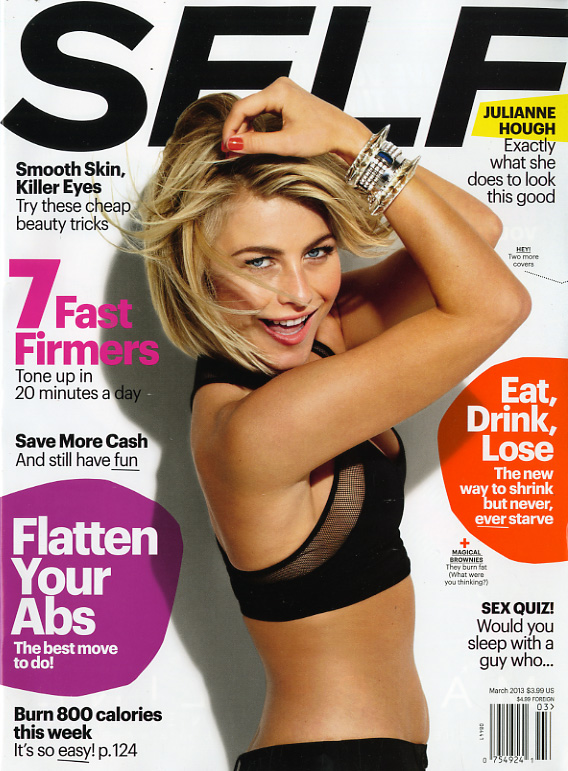
13. Self – a whole new look from the inside/out, Self magazine has rejuvenated and redesigned. It’s fresh, crisp and only $3.99

VANITY FAIR
14. Vanity Fair
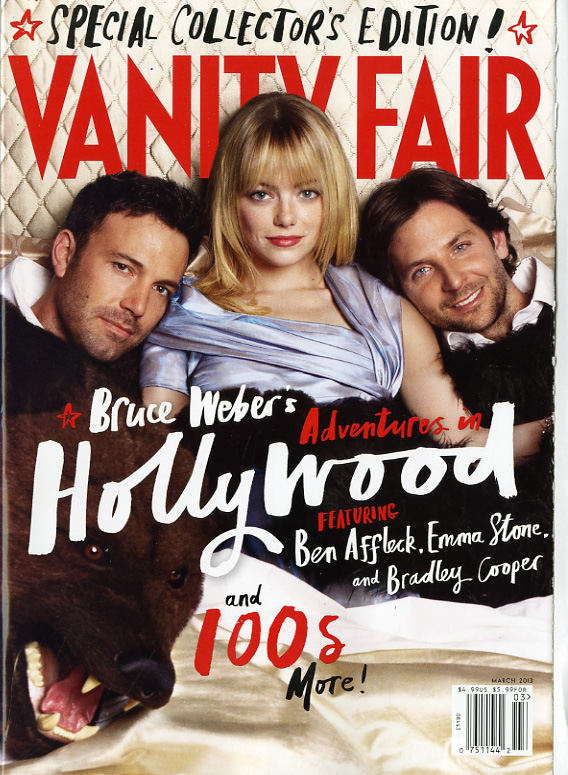
– Special Collector’s Edition – chock full of stylish information and a foldout cover that not only promotes the issue with content teasers as you unfold, but also shares space with a very imaginative Calvin Klein ad. And the magazine is almost 400 pages…all for only $4.99.

Cosmopolitan
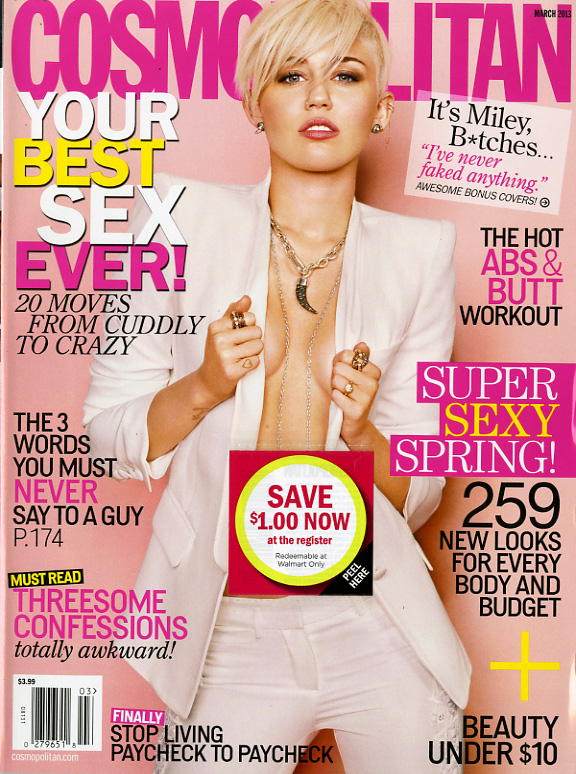
15. Cosmopolitan – the March issue with the matured version of teen sensation Miley Cyrus. The magazine sells for $3.99 and my Wal-Mart issue has a $1 off coupon taped to the cover. Of course, only redeemable at Wal-Mart, but nobody’s perfect. By the way I did not use my coupon. I needed to keep it so I can show it to y’all.

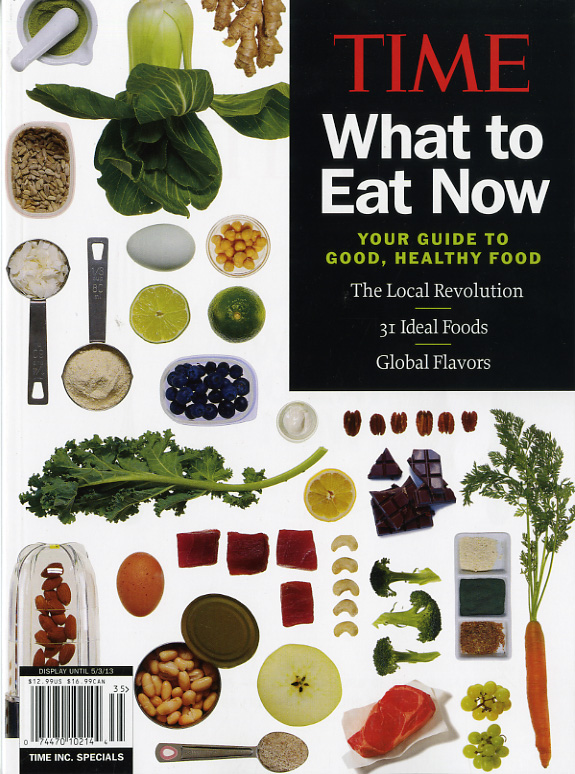
TIME What to Eat NowTIME What to Eat Now
16. What to Eat Now – a niche effort from the good folks’ at TIME that has two different covers. One has a more vertical slant to it (no pun intended), the other a more horizontal. For folks who just can’t decide how they want to see vegetables and fruit displayed on a magazine cover. By the way, it’s 12.99.

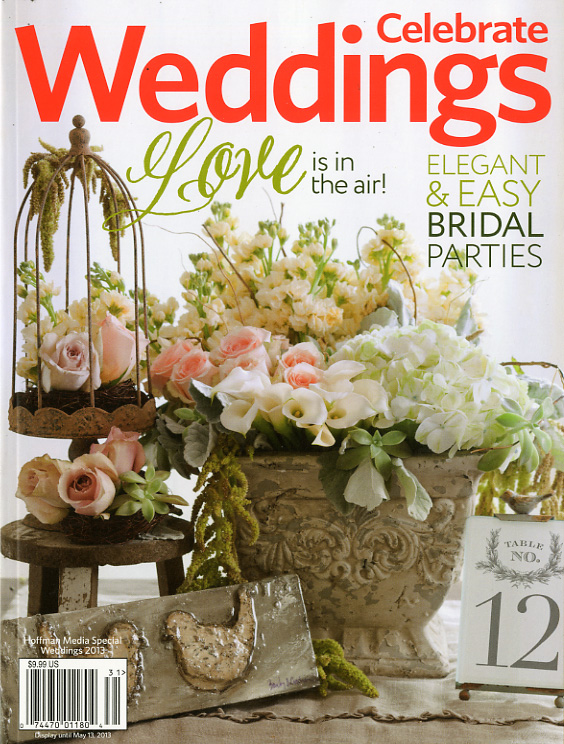
Celebrate Weddings
17. Celebrate Weddings – a bridal magazine from Hoffman Media devoted to everything matrimonially trendy. Your impending nuptials can feel the effects of the suggestions between the pages for $9.99.

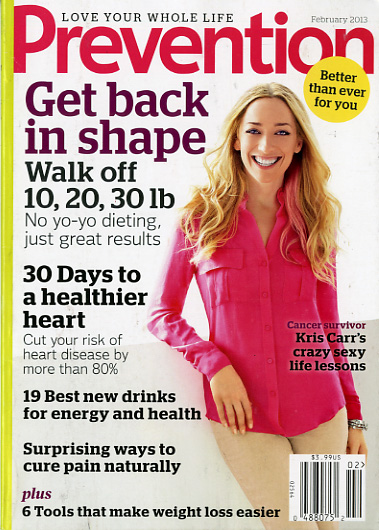
PreventionPrevention2
18. Prevention – two different covers promoting getting back into shape by walking. The cover lines are exactly the same, other than the colors, but the pictures are totally different, yet, almost the same, other than the poses. Why the need for two different covers? It is a question I will need to address in a future blog. But for now I am happy to spend $3.99 to get cover 2 of the magazine.

Eighteen magazines for $145.61 …I think it’s a good thing for the magazine industry that Mr. Magazine™ and his love for magazines exist.

Next stop Kroger… the ticket, $95.68. Tomorrow is another day! Indeed the cost of “magazine living” is on the rise.

h1

Don’t Forget to PEG Your Magazine Media: Add Passion, Emotion, and Guts to Your Daily Regimen… And Please Take Your Vitamin Cs… Mr. Magazine™’s Prescription for a New Magazine Media Business Model

February 20, 2013

TIMEreader's digestWhen DeWitt Wallace shopped his idea of Reader’s Digest to every major magazine publisher in New York City in 1920 he was faced by one rejection after the other. When Henry Luce launched Sports Illustrated in 1954 he was not disheartened when the magazine lost money for 12 years. Wallace went on to publish Reader’s Digest on his own in 1922 and Luce stuck with Sports Illustrated making it the largest sports weekly magazine in the world.

Both men were passionate about the subject matter, emotional about the content and staunch believers in what their gut told them to do.

This is a far cry from today’s owners of the magazine media, most of whom have no editorial background whatsoever. Luce and Wallace were editor’s first, business folks second. They knew good editorial content when they saw it and they knew the value of such editorial in reaching customers, both readers and advertisers.
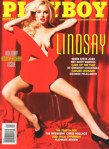
Rolling stonelilo playboy 131211Wine SpectatorHugh Hefner , Jann Wenner and Marvin Shanken are but three remaining editors/publishers who still act from their emotion, passion and, above all, guts. All three have been overseeing both the business and the editorial side of their respective magazines.

Luce must be turning in his grave hearing the news of the eminent sale of his creation Time Inc. and Wallace has probably flipped completely over by now.

I know history shouldn’t repeat itself, but it was, still is, and will continue to be a great instructor, teaching you to live in the present, but plan for the future.

However, I know that the magazine media today must undergo a transformation if it is to thrive, as well as survive. Because if they can’t make it today, why should they care about tomorrow? It’s as simple as that, and as complex.

The old business model of the passion driven and need-based product is changing into a numbers driven and want-based existence that requires a complete shake-up of the magazine media’s ideas and the very foundations the industry has been built on for the last 150 years. That good-old, complacently-content magazine familiar won’t fly in this digital age, or so they tell us. The bubble has burst. On that, I think we can all agree.

The new model today is synonymous with the statement: If I give you what you want, you will find what you need.

Think about that for a second. Just let it really sink in. If I give you what you want, you will find what you need.

And to empower that declaration into action, you need the mega-boost of some very potent vitamins…and I have them.

The Vitamin Cs for magazine media …the new business model in action.

Customer: From Mass to One…
Content: From Who, What, When, Where, Why and How to What Is In It For Me…
Commerce: From See and Buy, to Produce, Introduce and Buy…
Community: From Melting Pot to Birds of a Feather…

No longer are we, the media in charge. There’s no possible way, with all the choices out there, that as an industry we can possibly believe that we dictate what our customer’s will and will not consume when it comes to their media experiences. No way.
That is foolish thinking and just won’t wash anymore.

There are two types of customers that exist in our world and must be satisfied: the audience of one and the advertiser. Without either of these two, we’re sunk before we leave port.

Both customers: the audience (albeit a reader, viewer, listener, or user) and the advertisers have another 3 Vitamin Cs they enjoy and cherish: control, choice and comfort. Both are now more in control of their destiny than ever before, both have plenty of choices and both are looking for this comfort zone they call their own.

But out of those two, the audience of one is the most important. Why, you might ask? Why, when advertising dollars far surpass any single subscription or cover price of an individual consumer.

The answer is simple: the audience of one is twice the customer. Has the train jumped the track with you in it on that statement? If so, I’ll be happy to explain. The audience of one is our buying public, our reason for existing; they nail down our homes on the newsstands and keep them secure. But they’re also the reason the advertisers exist; they are the glue that sticks their products to the store shelves. Without nails and glue, our products would be free-floating, like a balloon in the sky, floating up, up and away…never to be seen again. And that would not be a good thing.

So we’re selling content to our audience and our advertisers are fishing for those audiences any way they can catch them.

So our second Vitamin C – Content – is vital to the body of our new business model. However our content today is in no way your father’s content. No ledes with journalists’ best friends Who, What, When, Where, Why and How, but rather What Is In It For Me, the WIIIFM factor. Note the three IIIs in the WIIIFM factor. It is all about me, the audience of one. The heart of our being can’t live without content. So it’s got to be the best and most significant information and entertainment that it can be for our customers.
There is no shortage of information out there. Between the social media, the constant e-mail updates, the Tweets and the re-Tweets, our customers are wired and “on” at all times. So the information we supply them must exceed their expectations and define what they’re looking for. That’s why priority number one for media publishers today should be content curation and solution creation.

Remember our job now can be summed up in three things: content curators, solution creators and experience makers.

Commerce is that wonderful buying and selling we call capitalism that we all know and love. But today, with our audience of one in control, it has to be more than that random ad placed on that random page hoping for that random sell. It has to be much more targeted and geared toward that audience of one.

I offer you a sunny-day-at-the-lake scenario for your consideration: The content of our product is the bait, the advertisers are the fishermen bringing their poles, and the audience of one, our top priority, is the fish. So it’s very apparent that the selection of the bait determines the fish we’re going to catch. Therefore it’s up to the fisherman to choose well.

But more than that, media publishers need to realize that we’re in the business of selling to make a profit too. That’s why the new business model proposes divvying up the fish, so that the advertisers aren’t the only fishermen in the boat. We need to share in that common stream of revenue and be creative and interactive with our advertisers and our audience of one. We have to engage in this fishing tournament for the sake of that singular audience member, to ensure we are the ones providing his or her experience from that moment on. Because, folks, the lake is too big for just a few anglers; we’re not just providing the bait anymore, we’re bringing our rod and reels too.

That’s why in our day and age endemic ads make perfect sense. If you’re a children’s magazine, for example, why would you advertise Harley Davidson’s in that publication? It just doesn’t make sense that a fisherman would choose tadpoles, when he or she would catch more fish with worms.

Relevant message to a relevant audience via the relevant medium… just pure common sense.

Community is our 4th vitamin in the bottle. In this age of Infinite Transcended Media, we are no longer one big happy family who excludes outsiders and panders to the egos of our own kind. ‘Our own kind’ simply doesn’t exist anymore. Today we are clusters of communities; the melting pot has become a melting vat instead. And the ultimate goal of any person within that huge vat is to belong to a community. We have to treat our customers like members of our community. Birds of a feather flock together. It isn’t just an old, outdated saying. If you live New York City, but actually reside in one of the suburbs, say…Brooklyn; when someone asks you where you live, you’re going to respond, Brooklyn. That’s because you feel more connected to that smaller enclave, your community, than you do to the entire city. It’s the same with the clusters of media communities. Our customers are flocking together and we have to be there with the Welcome Wagon when then move in.

And the cushion of all of this is creativity. There must be more to us than just surface banter. We have to achieve depths and allow our customers to discover the layers one at a time. Then we give them what they really want, comfort. Choice, control and comfort are the priorities our customers are demanding today. And the sooner we realize that, the better off we’ll be.

If we take these Vitamin Cs of the new business model and swallow them down with the MVP approach: Meet and exceed the expectations of our customers – Validate for them, everything that is out there – Preview the near future so they know what to expect tomorrow – then we begin to see the effects the Cs have on our new business model. Subsequently, we have new strength and have acquired immunity to the bugs out there that threaten to put us in our sickbed.

Our cheeks are rosy and we finally have the good health we have been seeking for so long. Bring back the passion, add a dash of emotion and have the guts to let your heart lead the way, because I know there is no other way for the magazine media to thrive in this numbers-driven, statistics-shackled age. So start spreading the news, change, the right change, is the only constant in the magazine media business and both Change and Constant start with C.

h1

Newsweek in Print: All Over the World Except in The United States?

February 18, 2013

Picture 2Here is yet another update on Newsweek in print from a comment posted on the Mr. Magazine™ blog by J Ramos
jcunharamos@sapo.pt

AG is pleased to announce its partnership with Brazil’s Castelo de Pedra to publish Newsweek for newsstands in Europe, the Middle East, and Africa.

AG Publications has been producing Newsweek Pakistan since 2010, and Castelo de Pedra began publishing Newsweek for 28 Latin American countries earlier this month. The London-incorporated joint venture between these two companies, AG Castillo Media Limited, will publish Newsweek every week for newsstands in 55 countries across Europe, the Middle East, and Africa.

Production for all three hardcopy issues—available in 84 countries around the world—is managed by AG Publications in Lahore. The first AG-produced Latin America and EMEA editions of Newsweek (Feb. 4, 2013) hit stands this week.

AG Castillo Media’s directors comprise Fasih Ahmed, João Paulo Diniz, and Mauricio Weinstein.

For more information, please email desk@newsweek-emea.com

Here is my older blog entry:

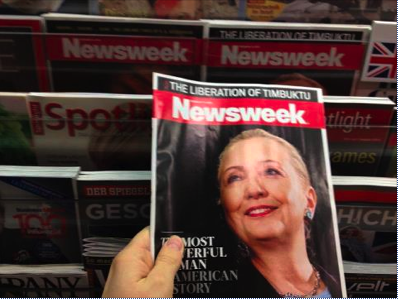
Did the folks in Europe hear the news that Newsweek is now a digital only entity? After all the fanfare about morphing into a digital entity, my friend Branislav Ondrasik from the Pan European University in Bratislava, Solvakia emailed me a picture from a newsstand in the capital city with the comment questioning whether the folks at Newsweek “still believe there is market for it at least here.” He adds “Newsweek is on a newsstand in Bratislava, Slovakia and across the continent.” The proof is in the picture below. The cover is dated Feb. 13, 2013. Go figure!

h1

Sorry Ashton, The Shooter Took You Out: The Story behind Esquire’s Split Cover…

February 15, 2013

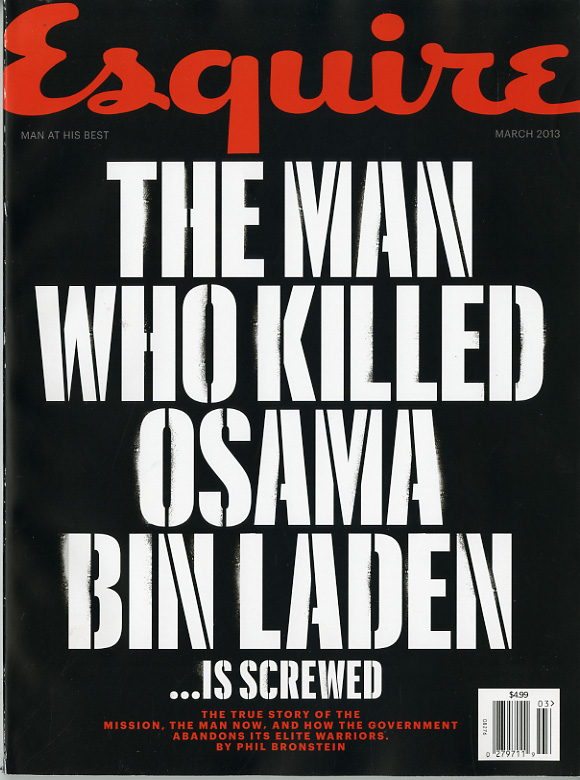
Esquire - The Man Who Killed Osama Bin LadenThe March cover of Esquire magazine is creating a buzz, a major buzz, on the nation’s stands. And this cover can only be found on the nation’s newsstands. As you can see, it is a typographical cover with some explosive words (no pun intended) to say the least. This is not your usual cover for Esquire. But, the cover story is not usual either. However subscribers are receiving the more traditional cover of the magazine with Ashton Kutcher’s picture and the usual array of coverlines.

ESQ030113COVER_CanNS2[1]I asked David Granger, editor in chief of Esquire, about the decision to create this cover and the split between newsstands’ copies and those of subscribers. His answer:

In general, I do not believe in splitting covers. I think it as as important to sell your subscribers on what’s inside as it is potential newsstand buyers.

In this case, we had a story of major importance—the first time the SEAL who killed Osama bin Laden spoke, both about the raid and, more important, about the slipshod way veterans (including our most elite forces) are treated when they leave the service—and a story that I thought could inspire a cover that make a splash when it hit newsstands.

The story came together much later than usual for a large feature and we were actually unsure if we could get it into the issue in time. So we prepared both two covers and two versions of the feature well. (Two stories were actually held for future issues when we completed work on “The Shooter.”)

At that point, we decided that we would promote the story as aggressively as we could with all the covers going to the newsstand and then go with a more conventional cover (with a dramatic coverline above the logo about “The Shooter.”)