Archive for the ‘News and Views’ Category

h1

Reed Phillips and James G. Elliott: “How Magazine Publishers are Creating Value for Their Companies in the Digital Age.” Reliving the ACT 4 Experience (Part 2)

November 17, 2013

Now that the Magazine Innovation Center’s ACT 4 (Amplify, Clarify, and Testify) Experience is one for the history books, the Mr. Magazine™ Blog is going to showcase the keynote speakers and panels that took place during the two and a half days Experience.

Below is the question and answer panel between Reed Phillips, CEO and Managing Partner, Desilva + Phillips and Jim Elliott, CEO, The James G. Elliott Company. The theme was creating value for your printed magazine in this digital age. Mr. Phillips offers his advice on what to do with your magazine publishing company, how long does it take to establish value for your company, and how the value of magazines and magazine media is fast changing in this ever changing media world. That and much much more in this Mr. Elliott asks and Reed Phillips answers keynote panel at the ACT 4 Experience Nov. 6, 2013.

Enjoy.

Screen shot 2013-11-13 at 9.47.23 AM

h1

Another ACT 4 Experience Mini Review by Linda Ruth

November 14, 2013

The following is but one paragraph from Linda Ruth’s blog on Audience Development magazine’s website:

category_pictures_9 “I’m just back from ACT 4, Samir Husni’s great publishing event at the University of Mississippi. It’s a brilliant example of convergence in the classroom, where Mr. Magazine pulls together the greats of publishing and his own students, established wisdom and cutting edge thinking, circulation and technology and editorial. It’s an opportunity to assess what used to work, what is now working, and what might bring us into the future.”

You can read Linda’s entire blog entry here.

Screen shot 2013-11-13 at 9.47.23 AM

h1

Billy Morris and Donna Kessler: The Power of Print Integrated. Reliving the ACT 4 Experience (Part 1)

November 13, 2013

Now that the Magazine Innovation Center’s ACT 4 (Amplify, Clarify, and Testify) Experience is one for the history books, the Mr. Magazine™ Blog is going to showcase the keynote speakers and panels that took place during the two and a half days Experience.

Opening the presentation is William “Billy” Morris chairman and CEO of Morris Communications and Donna Kessler, president of the Morris Media Network.

As Bo Sacks reported in a previous post on this blog, Mr. Morris explained carefully that print and digital are a marriage and for them to work together both have to be respected. He said, “We believe in print and it is paying the bills.” He also said, “Digital is not a challenge nor a threat, but rather it is an opportunity and an evolving new media. What we do is gather, assemble, package and deliver content on any platform. We are now selling a continued contact with the reader.”

Enjoy tuning in to Mr. Morris and Ms. Kessler’s presentation on the power of print integrated in a digital age.

Screen shot 2013-11-13 at 9.47.23 AM

h1

Some Thoughts on a Month of Conferences – Three in fact. An ACT 4 Experience Mini-Preview by John Harrington

November 12, 2013

Screen shot 2013-11-12 at 2.00.26 PM

Since the beginning of October, I’ve attended three major magazine related conferences: The Distripress Congress, the American Magazine Media Conference (AM2C), and, last week, the ACT 4 Experience*. At two of them, Distripress and ACT, I was part of the program. I reported on Distripress (The New Single Copy (10/14/13) and AMC (10/28/13). Each of them have elements of pep rallies, and that description is meant to be complimentary. Each of them has somewhat different audiences, and consequently somewhat different attendees, and that is something that is a little disconcerting.

Distripress is attended primarily by circulation executives. AMC draws an audience of magazine senior management, as well as editors. The ACT Experience is the most varied, international, trade and consumer, consumer marketers, print, production, and digital suppliers, financial types, entrepreneurs, and, most uniquely, students. There was a common element to each event in that they shared tremendous levels of energy, even as they each recognized that magazine media is in the midst of a period of extraordinary change. As an observer, there is a frustration that the dialogues generated are isolated, virtually taking place in silos, when there is so much that could be gained from greater sharing. Logistics would be daunting, but the rewards might be profound.

Short Notes on ACT 4: I have written before about the ACT Experience conference and last year wrote, “It is becoming one of the most important events on the magazine industry’s calendar.” A year later, I stand by that description. If there was one message that I brought back from Oxford, Mississippi, last week, it is that it all begins with print.

You could expect that message from some of the large publishers who spoke, but the one presentation that hammered that down for me was “Celebrating Magazine Launches,” a panel moderated by Tony Silber, general manager of Red 7 Media, publisher of Folio. Six new (and comparatively young) magazine publishers shared their experiences, all characterized by a remarkable level of integration across publishing platforms: print, of course, but also websites, tablets, seminars, and levels of brand extensions. Their energy and enthusiasm was contagious, and they deserve a special mention. There’s more than a good chance they’ll be heard from in the future, but for what it’s worth, they were Real Food Real Kitchens, Simply Gluten Free, Cake & Whiskey, Business Black Box, Covey Rise, and Story.

(Note: I’ll be writing more about this ACT Experience in the future).■

* Distripress is the international trade group for press circulation. AM2C is sponsored by MPA – the Association of Magazine Media and the American Society of Magazine Edi- tors. ACT 4 is sponsored by the Magazine Innovation Center at the school of journalism at the University of Mississippi.

Re-published by permission from John Harrington, Editor, The New Single Copy, November 11, 2013 Volume XVIII, #17. You can reach John at jharrington@nscopy.com

h1

Publishing Acts Out Again In Mississippi: An ACT 4 Experience Review by Bo Sacks

November 11, 2013

BoSacks Speaks Out: Publishing Acts Out Again In Mississippi

Screen shot 2013-11-11 at 2.11.39 PM

Imagine, if you will, a cozy academic auditorium filled with professionals from every part of the publishing universe – publishers, editors, circulators, investment bankers, writers, digital visionaries, retail experts, printers and even people who sell paper. Sure, and let’s throw a pundit or two into the mix and then fill the rest of the seats with enthusiastic journalism students. What you have is the ACT 4 Experience at Ole Miss created and hosted by Dr. Samir Husni.

This is the fourth year of this amazing annual event and the third time for me. I would have been at all the events but four years ago I had a fight with some kidney stones, and I lost my first and only debate in many a season. It turns out that logic doesn’t work with kidney stones.

Over the course of two days we heard perspectives from every aspect possible in the publishing business. The event opened when we heard from Billy Morris, CEO of Morris Communications, a private, family-owned company which began more than two centuries ago as a single newspaper in Augusta, Ga. and today has grown into a diversified, midsized, global media company. Mr. Morris explained how his company is still growing and merging his print empire into a diversified global print and digital company. He explained carefully that print and digital are a marriage and for them to work together both have to be respected. He said, “We believe in print and it is paying the bills.” He also said, “Digital is not a challenge nor a threat, but rather it is an opportunity and an evolving new media. What we do is gather, assemble, package and deliver content on any platform. We are now selling a continued contact with the reader.”

Next we heard from Donna Kessler, President of Morris Media Network which publishes Where Magazine. Yes, that’s right, the magazine you and I have found in any major city hotel in damn near any country you can name. Did you know that the world-wide circulation of Where Magazine is 65,000,000? They have created a broad platform in each market. As an example they have printed 60 million brochures in Paris in multiple languages including Chinese. If I heard Donna right she suggested that they have the high end magazine, the middle end magazine, and a lesser grade magazine in each market, and all built off of one single platform.

Mr Morris added that Morris Communications intends to “become indispensable world-wide.” Bo’s reaction is that, that ain’t bad for a 200 year old company which clearly isn’t having trouble adjusting to either a profitable 21st century or the digital age.

Jim Elliott, president of the James G. Elliott Co., which is the largest national magazine advertising sales outsourcing firm for publishers, interviewed Reed Phillips, Co-founder of DeSilva+Phillips, which is one of the leading M&A advisors to the media and marketing industries. DeSilva+Phillips have advised our industry on more than 250 transactions valued at over $8.5 billion.

Do any of you remember the old advertising campaign from a few decades ago, “When E. F. Hutton talks, people listens?” It was a classic often repeated campaign. Well, when Reed was talking, everyone was listening. When it comes to the publishing world, Reed is an advisor to kings, sometimes known as publishers.

He told us that from an investor’s perspective, “Magazines are based on their profitability and that is how investors must look at it.” He said there have been changes and adjustments to investing and that EBITDA is now worth half of what they were once were. (EBITDA is an acronym that refers to a company’s earnings before the deduction of interest, tax, depreciation and amortization.) He also said recurring revenue such as getting money from subscribers ahead of actually making the product is an important consideration. Investors want companies with broad exposure and varied avenues of revenue, such as events and other creative, monetized sources.

I would say from one who was listening carefully that it was a meaningful and sobering dialog about how successful investors are looking at our industry. All of us, professionals and students alike, learned a lot in a 45 minute investor chat.

Tony Silber, General Manager of Red 7 Media, who among other media titles publish FOLIO: magazine and MIN (Media Industry Newsletter) had the envious job of moderating a panel of start-up publishers on the topic of Why and How We Launch Print. On the panel were Julie Wilson, of Story magazine, Craig Chapman of Real Food Real Kitchens, Laine Craft of WHOA Magazine, Carol Kicinski and Thom Kicinski of Simply Gluten Free Magazine, Megan Smith of Cake & Whiskey magazine, Jordana Megonigal of Business Black Box magazine, Kelly Waldrop of Covey Rise Magazine.

As you can see from the broad diversity of editorial topics chosen by these start-ups, the entrepreneurial spirit is still very much alive and well in the field of publishing. Tony started with the not so simple question, “Why Print?” The answers were diverse, but several pointed out that they had heard often readers enthusiastically say they loved the printed magazines, but never heard as much excitement about digital magazines.

Most, if not all, admitted that they were learning on the job and adjusting to business conditions and the media school of hard knocks. Jordana Megonigal confessed she knew she made a few mistakes early on, but recently changed her business plan with great new results. I think there is a great lesson to be learned in that. As hard as it sometimes is, rather than admitting defeat, be ready to acknowledge mistakes made and errors in your plans and then change direction. Many a business fails because they never learn that flexibility.

Next John Harrington, founder and editor of The New Single Copy, discussed the newsstand business and introduced, Gil Brechtel, President and CEO of MagNet Data. Gil’s company tracks almost every magazine on sale, and they collect valuable data on our progress as a newsstand industry. He started with a review of newsstand from 2003 to 2007 when both unit and dollar sales increased, driven by cover price increases which on average went from $3.86 to $4.13 – an average of 27 cents per copy sold. What makes the information even more impressive is that TV Guide and other tabloids were declining during this same time period. It was mostly the celebrity titles that were driving the newsstand sales upward. At the end of 2007, the magazine newsstand business was producing nearly $5 billion annually.

Unfortunately, as Gil pointed out, 2008-2012 provided a very different economic picture for the country and the magazine business. The economy dropped in 2008 and sadly the newsstand sales trends went with it. Celebrity and newsweekly sales losses were big contributing factors to the overall newsstand losses.

The other major impact on newsstand sales came from the fact that the consumer is no longer making as many shopping trips as they had previously. Online shopping is having a big impact on the number of trips consumers are making to brick and mortar stores.

Gil noted that the top 1,000 magazine titles in 2012 were down 12.6 % in sales. Besides the celebrity title numbers are those titles ranked below the top 1,000 in sales. These smaller niche title sales were down $960 million, 74% in dollars and over 75% in units. So, of the total $1.4 billion dollar sales loss during the last five complete year sales period, nearly $1.2 billion came from celebrity titles and small niche titles that either exited the newsstand or were dropped by the wholesalers.

On the bright side, if it can be considered that, all of the rest of the titles were down only about 15%. Gil pointed out this mixture of sales figures brings a sobriety to the analysis, but it’s important to look at all the details of the newsstand business before calling it dead. Gil suggested that at an average cover price of $6.84, wholesalers can make money on magazine titles if they manage to fix their efficiencies and focus on those titles that are truly niche and not just “me, too” titles. In short, Gil said that there are too many duplicate titles on the newsstand, and the industry would perform better if there was less sameness of subject matter.

Of course, the problem in that is the wonderful entrepreneurial spirit as discussed above in the start-up session with Tony Silber. Who can, would, or should say to any wannabe publisher, “No, for the betterment of the industry, you can’t print and publish that title?” That is an unanswerable business dilemma.

My friend Samir threw me a curve ball this year that I greatly enjoyed. Usually I speak at the ACT Experience about the future of the industry including a recap of where we are and where we are going. This year Samir asked me to moderate a panel of printers with the title “The Future of Print and the Printing Presses.” As a seasoned Director of Manufacturing, talking to printers is like coming home for Thanksgiving. On the Panel was John Bussolari of Lane Press, James Pilcher of Freeport Press, Gal Shweiki of Shweiki Press, Michael Simon from Publishers Press, Thomas Whitney from Democrat Printing and Steve Zdanowicz of Brown Printing.

Since I was moderating, I don’t have notes of how the discussion developed, but I thought each panelist handled himself with distinction and had insightful things to say, and there were a number of compliments afterwards. Later I tweeted the following:

Epiphany. Moderating a panel of magazine printers at @MrMagazine’s Act 4 event is much like herding cats who were straying tangentially

Here are some other random notes or statements from the Act 4 Experience in no particular order.

Lynn Rosen – Editorial Director, Publishing Executive… While speaking to a panel of editors asked a great question. Do you look at the sales potential of your work?

Jay Annis – VP of The Taunton Press. “We survived better than most because we are reader driven”

Rich Jacobsen – President and CEO, Time Inc. Retail Sales and Marketing. “Magazines are no different than milk, bread or coke to retailers.” What a wacky idea – “Media companies using media to sell their magazines.”

Steve Slon – Editor-in-Chief at the Saturday Evening Post, “The most important content in a magazine might be the cover lines.”

Luke Magerko – Managing Director, Market Analytics Project LLP, “My solution to newsstand centers around the analysis of data, but just not from an operational standpoint. This data cannot only generate bottom line savings and sales opportunities, but also provide publishers with a wealth of data to aid editorial analysis and insights to the entire publishing house.”

Michael Simon – EVP, Publishers Press, “We believe that the printed magazine sector has a place at the future media landscape table”

Roy Reiman – Founder of Reiman Publications (Taste of Home), “I think the future of print is great… If you have an excellent product. There are still 300 million people in the country and a good percentage of them still like to ‘hold things in their hands’ as they read them. So for quality magazines, I think the future is promising.”

Maarten Lens-Fitzgerald – Co-Founder and US General Manager at Layar, “I think surviving is not a matter of technology or medium; it’s a matter of the publisher. The publisher needs to know its audience and mold its products according to the needs and desires of the reader.”

John Puterbaugh – EVP & CDO at Nellymoser, “Magazines are linear narrative, carefully constructed and curated collections that have resulted in some of the strongest brands we’ve known… In the future mobile and social media will make print more interactive, blurring the boundaries and distinctions between form and content, between the static and the social.”

Bernie Mann – Publisher, Our State Media, “I don’t think there is such a thing as the “magazine industry.” To me the magazine industry is not of one mind, but of 11,000 views of how to be successful. For some the future looks bleak. For others, like myself, 2013 has been the best year in the 80 year history of my magazine company. And I fully expect it will be even better in the future.”

h1

Acting Out in Mississippi*. An ACT 4 Experience Review by Lynn Rosen

November 9, 2013

Picture 17

LynnRosen_185

Print or digital? Digital or print? Sick of that debate yet?

The answer: “Integrated.” That is the keyword down here in Mississippi, from whence I write.

This week I made my second trip to Oxford. Unlike many visitors to this charming historic town, I didn’t come for football, nor did I come merely to shop at Oxford’s fabulous indie Square Books (although that in itself might be worth the trip), nor did I come to visit the home of William Faulkner (did that last time). I came for a repeat visit to the annual magazine conference hosted by the only man I know with a trademark in his name, Samir “Mr. Magazine™” Husni , director of the Magazine Innovation Center at the University of Mississippi, as well as mastermind of the annual ACT “experience,” this year themed: “Don’t Let Digital Scare You: The Power of Print Integrated”

This friendly non-conference brings together editors, printers, publishers, account execs, producers and more from across the US and internationally for a few jam-packed days of discussion, mixes in a group of Ole Miss journalism students eager to learn and enter the industry, throws in, for good measure, some delicious southern cooking and some Delta blues, and the resulting mix is a fresh look at how we do business and move forward successfully in these changing times.

So back to this integrated print & digital thing….

William Morris III, Chairman & CEO of Morris Communications,Opens in a new window began the day on Wednesday with what I found to be an interesting statement: “the product is the content.” In the book publishing piece of my career, I’ve seen countless people cringe when anyone would refer to a book as a product. And yet, my passion for good literature aside, does not a book, being something we create, manufacture, promote, and sell, meet that definition? So for Mr. Billy Morris to pull out content, that nebulous thing only recently released from the confines of containment in print-bound media and available for placement in any number of packages, and refer to it as our essential product, was something I found refreshing. And our job, says he, is to “gather, assemble and disseminate content.”

Morris, whose publications include the WHERE brand of magazines, also declared that digital is the greatest opportunity for media that has come along “in my lifetime,” although it is “very much still an evolving medium.” Acknowledging the underlying print v. digital debate that lurks alongside any discussion of the state of the industry, Morris said that print is still the foundation of what they do as it “pays the bills.”

In the reality of the day-to-day workplace, we must each make our own decision about our print/digital balance, and about how we integrate content in what Brian O’Leary calls its various containers, and this conference spoke to the fact of where we all are in time, in the midst of this huge ongoing transition.

For those interested in print, the conference offered an update on print technology, offering talks from representatives of a large range of printers. For those wishing to move forward in digital, the conference offered behind the scenes looks into the workings of augmented reality, digital watermarking, and various software platforms to design digital editions and create apps. The list of speakers can be seen here. As I write these words, we are still listening to presentations demonstrating some pretty cool new technology (more on that to come!).

Media sales expert Jim Elliott interviewed Reed Phillips , CEO and Managing Partner of DeSilva+Phillips, an M&A firm focused on traditional and digital media, for a take on investment opportunities and possibilities in magazine publishing. During the digital transition over the last few years, says Phillips, a lot of magazines lost 30-40% of their advertising revenue, and are now looking to reclaim the loss in value by expanding their platforms, doing other things like hosting events. As an example of the loss of value, he cited McGraw-Hill’s sale of Business Week to Bloomberg for $5 million, when ten years earlier, according to Phillips, they had turned down an offer of $1 billion.

Ever the optimist in a turbulent publishing climate, Dr. Husni likes to present examples of successful magazine launches, and these success stories were featured in a panel led by Folio’s Tony Silber . In a group that included Simply Gluten Free, the Kentucky-focused Story magazine, and Real Food, Real Kitchens, which comes out of a documentary style series of TV programs featuring families preparing family recipes. One stand out was Cake & Whiskey magazine, a publication that grew out of events created to provide networking opportunities for business women.

In all, the magazine publishers convened this week in Mississippi are sharing ideas freely about how they are integrating print and digital, new and traditional media, and the status quo with the demand for change.

*Lynn Rosen is editorial director at Publishing Executive and Book Business magazines. Her blog Literally Speaking: Acting Out in Mississippi is republished here with her permission.

h1

New Magazine Launches: October Harvest Was Extremely Plentiful As We Had A Total Of 115 New Launches – 32 Of Them With Regular Frequency

November 4, 2013

October 2013 was an unbelievable month for new launches! The magazine media industry saw 32 new magazines with regular frequency and 83 specials…for a total of 115 October launches! Absolutely a stellar performance for the world of new magazines. From Christmas cooking magazines to the new weekly, Closer, aimed at a more mature celebrity-craving audience and that’s first issue was priced at a mere $.25 and will sell after the premiere issue for $3.99; the magazines were fun, colorful and entertaining. So let’s take a look at this outstanding list of new magazines, beginning first with our frequency issues. (As always, magazines are not listed in the launch monitor until a physical copy of the first issue is acquired, received or bought by yours truly.)

Click here to see and each and everyone of the 115 new magazines.

h1

ACT 4 Experience: Don’t Let Digital Scare YOU: The Power of PRINT Integrated

November 1, 2013

The wait is over and the engines for the Magazine Innovation Center’s ACT 4 Experience at The University of Mississippi’s Meek School of Journalism and New Media are cranking up. While the magazine and magazine media industry have plenty of good conferences, the ACT 4 Experience is an Experience and not a conference.

It is an interactive experience between industry leaders and future industry leaders. The Experience covers all aspects of the magazine and magazine media industry. The three pillars of the magazine industry will be addressed: editorial, advertising and circulation. The three channels of revenue for the magazine industry will also be addressed: advertising, circulation and digital.

Check out the agenda here
, and watch this space for continuous coverage of the ACT 4 Experience launching Nov. 5 and follow us at #micact4

Picture 2

h1

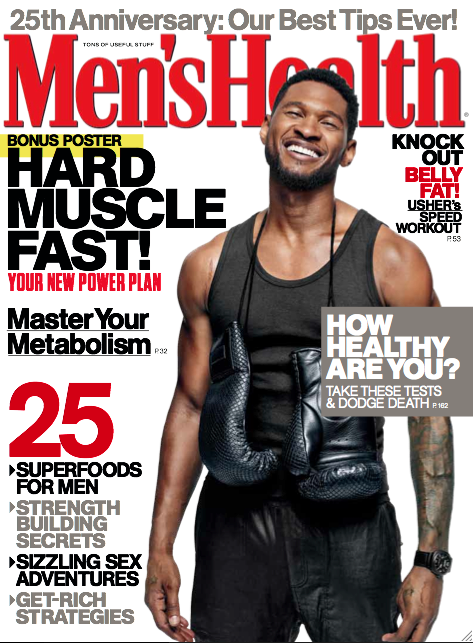
1152 Useful Tips To Produce, Edit, and Sell a Great Magazine: A Mr. Magazine™ Conversation With Men’s Health Publisher, Ronan Gardiner and Editor, Bill Phillips.

October 31, 2013

How About “Tons of Useful Stuff” to Empower, Motivate and Galvanize You Into A Call For Action? Men’s Health Magazine Has At Least That Many And Maybe A Few More When It Comes To Their Readers’ Health And Well-Being. Read The Mr. Magazine™ Interview With Publisher, Ronan Gardiner And Editor, Bill Phillips And Get On Your Own Yellow Brick Road To Health, Wealth And Possibly Oz Itself With Men’s Health Today!

When Publisher, Ronan Gardiner and Editor, Bill Phillips talk about Men’s Health, the excited animation comes through in their voices and you instantly realize this isn’t your father’s men’s magazine anymore. And it never will be again.

6041_MH_078_BW_HRsmaller
Bill Phillips (left) and Ronan Gardiner Photo credit: JAMES SALZANO

From grooming to fashion, travel to food; the Men’s Health magazine of today is innovative, creative and motivating. It seeks to bring every known and unknown benefit that exists to each and every one of its readers. The magazine knows its audience and their “guys” know them. And they want to engage with each other on every level possible.

Men’s Health is sold in more than 50 countries around the world, including Oz – OK, that’s only a possibility. But you can bet over the rainbow somewhere, you’ll find at least one copy of Men’s Health. From the munchkins to the Wizard himself, every male loves Men’s Health and they have the ruby slippers to prove it.

So sit back and enjoy your trip through Men’s Health land and always remember the people at Men’s Health welcome you like you were at home.

And of course, there’s no place like home!

But first, the sound-bites:

On the secret of the magazine’s longevity and success: I think the secret is very simple: it’s that the magazine is, and always has been, about the reader. It reflects what the reader is thinking and is worried about and it reflects what the reader wants to learn. There’s no one on my staff or Ronan’s who hasn’t been changed by this magazine.

On keeping their balance between being a reflector and an initiator when it comes to men’s lifestyles: It’s interesting to me that we don’t really have a secret formula. We are men largely and we talk to millions of men and we know what they want because they tell us. We also live it.

On the fantastic year they’ve had in advertising: A very good year, yes. Firstly, I think advertisers recognize the societal shift toward health and wellness. I think that they’re acutely aware of the fact that there are a growing number of men, and women too, of course, who are reprioritizing, recommitting to leading and living a healthier life. I think everyone is aware of that.

On whether it matters if it’s ink on paper or pixels on a screen: We’re in a very fortunate position where we’re seeing both our print audience and digital continue to grow. We’re reaching 12.6 million guys in print every month, we’re reaching over 10 million guys online and you were very kind to recognize our page growth this year. We’re up 25 percent in paging.

On whether they can ever envision a time without print: No, I really don’t foresee that. Print will not go away forever. It’s such a tactile experience and it’s a nice sort of getaway. Digital is about getting your fix and moving on. I just think that there is going to be a large group of men and women who are always going to want that experience of paging through a magazine at their leisure.

On how the magazine is different today than it was ten years ago: It’s very different because guys have changed since that time. We’re doing more food than we’ve ever done, more grooming, style, tech, travel and more fatherhood. The content mix has certainly changed.

On the major stumbling block in the future of Men’s Health: I would hate to appear to be avoiding the question, but to be absolutely honest with you; I don’t see a stumbling block in front of us. All I see is even more opportunity. And I believe that very sincerely.

On how they are using digital to promote the print product: It’s another one of the challenges that the industry is facing. We need to be able to clearly express to our customers why the printed magazine is special and why it’s worth paying for. Why there is value there. And I don’t think as an industry we’ve done a good job of that.

On what keeps them up at night: The commitment to excellence keeps me up at night, but I have an amazing team and as long as I keep them empowered and cultivating their creativity, it’s all good.
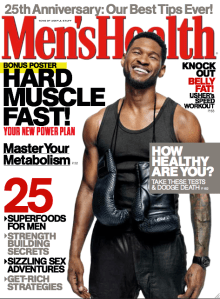
Screen shot 2013-10-30 at 11.49.45 PMAnd now the lightly edited transcript of the Mr. Magazine™ interview with Men’s Health Publisher, Ronan Gardiner and Editor, Bill Phillips.

Samir Husni: Three years ago, I gave Men’s Health the most notable launch of the last 25 years in America.

Bill Phillips: We remember it. We’re still celebrating.

Samir Husni: I remember the 80s and the fact that no one dared to publish a magazine for men, unless it was a sex magazine or fishing and sporting magazine, then Rodale put the first issue of Men’s Health on the marketplace in 1988 and now 25 years later, the magazine is available in 47 different languages all over the world.

What do you think is the secret of the success of Men’s Health? While so many other magazines tried imitating and have since come and gone.

Bill Phillips: I think the secret is very simple: it’s that the magazine is, and always has been, about the reader. It reflects what the reader is thinking and is worried about and it reflects what the reader wants to learn. There’s no one on my staff or Ronan’s who hasn’t been changed by this magazine.

I came here a little over ten years ago thinking it would be a stepping stone to a bigger gig. It turns out, it was a stepping stone to a better life. But as soon as you start taking the magazine to heart, learning from it and trying some of the small changes it suggests, whether it’s in your fitness routine or nutrition plan or relationship, it works and it changes your life for the better. If you can transform your body, you feel like you can do anything. And that’s what the magazine does; it empowers you to really seize control of your life.

Men have changed over the last 25 years and largely, I think the magazine has given men permission to care about today, things like fatherhood, cooking, grooming and style. Maybe it did start 25 years ago with a lot of sex and beer, but that’s just not who men are anymore. We’re in tune with all the aspects of our lives and the magazine is here to help guide them.

Samir Husni: How do you balance between being a reflector or an initiator of men’s lifestyles?

Bill Phillips: It’s interesting to me that we don’t really have a secret formula. We are men largely and we talk to millions of men and we know what they want because they tell us. We also live it. So, naturally, we’re also an expert-driven, research-based magazine. We have an editorial advisory board and not a day goes by that we’re not consulting with someone from that board. Every day we’re talking to ten to twenty different experts across all the disciplines that we cover.

So, we’re hearing what’s changing and what the research is saying. Most of it comes from internally, our staff and our guys. We know what they’re thinking because we’re living it.

Samir Husni: Do you think that you’re more of a magazine that cares about customers who count or you’re more in the business of counting customers?

Ronan Gardiner: I think Bill has made two very, very good points. Your first question was how Men’s Health not only continues to survive, but prosper, and I think Bill’s answer was spot-on.

On every single page of Men’s Health magazine there is a call to action for our readers to improve some aspect of their life, and we’re going to inform and inspire them on how to do just that. That in itself is a remarkable proposition, truly remarkable.

Bill recently spoke to my team and he stood up and talked about the circulation of Men’s Health magazine now being 1.8 million in the United States and our readership being 12.6 million and our global readership being over 30 million and then he made the point that there are about 3 billion men on the planet, so we’ve only really just started.

One of the reasons that I think our international footprint is so big is because men the world over are a lot more alike than we think they are. They want to be healthier, they want better relationships and they want to be more successful in the workplace. They want to be better fathers, husbands and boyfriends. And that doesn’t matter whether you live in Russia or China or New York City, men the world over really care about mostly the same things.

Bill Phillips: Peter Moore is the number two editor here and he just took a vacation to Nepal where he climbed to base camp on Everest. His guide told him, after spending a week with him; we need Men’s Health here because the mentality of men here is 50 years behind the mentality of men in the U.S.

You look at the developing world and there are just great opportunities for us to impact and shape the conversation in other countries too. It’s rather funny to say there are 3 billion men on the planet and we’ve only touched two percent of them. I’m totally serious. Until we’ve touched them all, we’re not done.

Samir Husni: How do you sell those men to the advertiser? Because in the midst of all this gloom and doom; you had a very good year in advertising.

Ronan Gardiner: A very good year, yes. Firstly, I think advertisers recognize the societal shift toward health and wellness. I think that they’re acutely aware of the fact that there are a growing number of men, and women too, of course, who are reprioritizing, recommitting to leading and living a healthier life. I think everyone is aware of that.

It’s a very positive movement, obviously, and it’s a conversation and a movement that advertisers want to be a part of. They want to play a role in that. They want to be seen both in encouraging that and in helping people to live a better and healthier life.

People who are committed to health tend to be better educated, tend to have better jobs and make more money and they tend to be more optimistic about their economic futures.

So for all of those reasons, advertisers want to speak to them as well. It’s largely the fact that the shift is taking place and it’s very well recognized and within the pages of Men’s Health, it’s a very positive place for advertisers to deliver their message.

Samir Husni: Do you think it makes a difference whether it’s ink on paper or pixels on a screen? Can you envision selling the same content if it was digital only or does having that printed edition add to the formula?

Ronan Gardiner: We’re in a very fortunate position where we’re seeing both our print audience and digital continue to grow. We’re reaching 12.6 million guys in print every month, we’re reaching over 10 million guys online and you were very kind to recognize our page growth this year. We’re up 25 percent in paging. We’re up by almost the same percent in digital revenue as well, so what I think we’re seeing is those guys want our content. They crave our content and want to engage with it across multiple devices.

They’ll read the magazine, use their tablet, download Men’s Health apps, go to Men’s Health.com and they’ll come out and participate in Men’s Health events. Wherever we make our content available, they’re guys who will engage with it.

Samir Husni: What is the ratio of digital subscriptions to that of the tablet?

Ronan Gardiner: Our total print subscriptions right now are about 1.3 million. And we’re selling about 115,000 digital copies.

Samir Husni: Bill, can you envision not seeing Men’s Health in print?

Bill Phillips: No, I really don’t foresee that. Print will not go away forever. It’s such a tactile experience and it’s a nice sort of getaway. Our lives are filled with clutter and there is nothing like huddling up with a magazine and paging through it. It’s just a different experience. It’s more of a sensual experience, maybe that’s not the right word to use for guys, but there is something to it.

The magazine tells a story as you page through it. It starts with quick bits and it builds into more thoughtful pieces toward the end.

Digital is about getting your fix and moving on. I just think that there is going to be a large group of men and women who are always going to want that experience of paging through a magazine at their leisure.

I had heard that the e-book concentration/penetration has reached about 30 percent and stalled and people still want their printed books. Seventy percent of the audience still wants that printed book.

It’ll be interesting to see what happens with magazines. We’re still growing and our digital subscriptions are still growing and we’ve seen a lift over the summer, but they’re not growing as quickly as they were a year ago. Right now, we’re at ten percent. It’ll be interesting; maybe there is sort of a natural penetration of 15 or 20, but that’s it; that’s all we see. I guess time will tell.

Samir Husni: Magazines have only been in tablets for a little over three years, but usually people jump early. They go now.

Bill Phillips: Tablets are great too. I mean, you’re saving the paper and printing costs and renewals are very high on tablets. So, it’s a great business to be in. I almost look at, and I know Ronan does too, as a separate business. You think of print and online as two separate businesses. And the tablet edition is almost an entirely different business as well. It’s a different type of person who’s buying the tablet edition. That’s just their lifestyle.

When you look at Gen Y and Gen V, these are my kids who are glued to their iPods and iPhones already and don’t even have email addresses that they use, because they just text with their friends. It’ll be interesting to see if that generation ever has a moment where they realize the satisfaction in a printed product. I think we have a lot to learn on that front still.

Samir Husni: Yes, it’s amazing. Typing is the new talking.

Bill Phillips: Yes, definitely. But there’s a satisfaction in seeing your progress in a printed book too, I think, and if we woke up every day and went and turned on our computers and our tablets and sat and read The New York Times and then somebody said: “You know what? I could actually give this to you in a form factor where you could take it into any room you want; you could sit in the bathroom and read it, see it, feel it and smell it,” we’d think that would be an innovation. Print would be an innovation, if all we knew was digital.

I think it’s going to depend on the person. There’s going to be a large amount of people who still want the print experience.

Samir Husni: Outside the media circles in New York City; did any of your readers write and ask you about the editor change?

Bill Phillips: The only one I can remember is I received a Tweet from somebody saying, “Why don’t you want to talk? You’re not out there responding to all the stuff Dave is saying.” I responded by saying, “I’m just here to serve our readers.”

I think the best product wins always, so that’s going to be 100 percent of my focus.

Samir Husni: When you look at Men’s Health now and compare it to ten years ago, I believe you said you came to Men’s Health ten or so years ago.

Bill Phillips: Yes, in 2003.

Samir Husni: How is the magazine different today than it was in 2003?

Bill Phillips: It’s very different because guys have changed since that time. We’re doing more food than we’ve ever done, more grooming, style, tech, travel and more fatherhood. The content mix has certainly changed.

What I’ve tried to do, and I’m not saying anything negative toward Dave at all, but the magazine had started to get stuck in a bit of an editorial rut in that everybody was so busy, we were so focused on doing other businesses: building apps and doing digital and the website, that the magazine sort of became a little bit stale and wasn’t as surprising and as enterprising as it was back when I joined.

It was amazing journalism back then and it was fun and surprising and we sent writers to Darfur, Afghanistan and Iraq. And those kinds of stories we just weren’t doing anymore.

So my focus has been to get that element of empowerment. Men’s Health every month is going to empower you, surprise you and make you laugh and cry, but in the end you’re going to set it down and say, “Wow! I just learned a lot about myself. And I’m going to go live a better life tomorrow.”

Samir Husni: Ronan, from a marketing and advertising point of view, did the change in editorship cause a hiccup in the road?”

Ronan Gardiner: It really wasn’t, to tell you the truth. I worked closely with Dave and liked him personally and wish him nothing but the very best.

But we were very fortunate in that we had a pretty deep bench of very, very well-respected and smart editors in the business and had been working at Men’s Health for a long, long time. So, I think in many ways and the numbers from the issues would certainly support this; we’re stronger and more relevant, more vital and more needed for more men than we’ve ever been.

I’m just interested in the product being the best that it can possibly be and it most certainly is.

Samir Husni: What’s the major stumbling block in terms of the future of Men’s Health and how are you working to avoid it?

Ronan Gardiner: I honestly think in a lot of ways, we’re just getting started. I really do believe that. We’re 25 years in and we’re now the biggest men’s magazine brand on the planet, with forty editions in 57 countries and we’re the bestselling men’s magazine on U.S. newsstands. We have apps and tablets and events and I think there is so much more that we can do.

The beauty of health and wellness is it’s not a trend. No one is going to wake up six months from now and say, “Remember when we cared about feeling good?” That’s not going to happen. In fact, the movement is only going to continue to grow. And it needs to. Because there are a lot of people who, frankly, need to pay more attention to their health and wellbeing. And that means even more opportunity for Men’s Health to grow.

I would hate to appear to be avoiding the question, but to be absolutely honest with you; I don’t see a stumbling block in front of us. All I see is even more opportunity. And I believe that very sincerely.

Samir Husni: So Ronan, when should we expect to see a 916 page Vogue-like Men’s Health edition? Next September?

Ronan Gardiner: I can tell you one thing; we’re carrying more fashion than we’ve ever carried. We’re carrying more grooming than we’ve ever carried, more food, more financial advertising; so categories that traditionally have not looked toward magazines such as Men’s Health are really starting to wake up to the power of the brand and the power and size of the audience.

So, I don’t think we’ll be producing a tome-like September issue like Vogue does, in the immediate future, but I do think across multiple categories we can see our business continue to grow.

Bill Phillips: In terms of obstacles, I think our challenge and focus will be the Men’s Health everywhere strategy. When I ran online in 2009 up until I was promoted into this spot, Men’s Health everywhere was something we talked about a lot. Wherever our guys are out there in a digital landscape, let’s go get to them. So if they’re in the Apple store, let’s go there, if they’re in the Kindle store, let’s go there, Facebook or Twitter or Pinterest…wherever, we need to have a presence so that we’re reaching those eyeballs.

And we need to bring that same philosophy to the print product. We do know that when guys touch the magazine or open the magazine, they want it. We did a newsstand survey which was amazing. It was one issue and guys who bought it at the newsstand, so these are people who don’t get the magazine every month and 97 percent said they intended on buying it again. Ninety-seven percent. That’s amazing to me. And people who picked it up because they spotted it on the newsstand and we’re capturing 97 out of a hundred of them. And that’s impressive.

So we have to take that knowledge that we create a world-class product and when people see it, they want it and then we have to get it into more people’s hands. And that means that newsstands will always be a part of that equation, but fewer people are walking by the newsstands, we know that, so where are our guys? Well, they’re at gyms and traveling, they’re at airports and hotels, working out at the YMCA, they’re running obstacle races and those are the guys we need to put a magazine in the hands of. If we do that, then they’re going to send that subscription card in.

That’s our challenge and it’s changing the way we’re marketing, now it’s more of a grass roots marketing. It used to be companies like ours could just do direct mail and sit back and watch the orders roll in, but in this world there is just too much clutter for that to work well anymore. It still works a little bit. So now the question is: what is the new way to get the magazine out there into people’s hands? That’s the challenge.

Samir Husni: How are you using digital to promote the printed magazine?

Bill Phillips: We’ve tried a number of different ways. Obviously, if you go to our website you’re going to find subscription offers and that sort of thing.

Recently, we launched something we called The Men’s Health Search Party, which is where you answer three questions correctly about the Men’s Health brand and you’re entered to win whatever prize is being offered.

One of the questions came from the current issue. But if you don’t have the current issue, you can still enter the contest, just those types of ideas that can bring about awareness of what’s in the magazine.

It’s another one of the challenges that the industry is facing. We need to be able to clearly express to our customers why the printed magazine is special and why it’s worth paying for. Why there is value there. And I don’t think as an industry we’ve done a good job of that.

We are looking at things for next year where subscribers would have special access on our website. Those are all works in progress. Our social following is exploding. We’re over 2.5 million on Twitter and Facebook.

Those are people who engage with us multiple times each day. They’re fans and they love our brand. A small percentage of them are actually subscribers. How do we get those others to realize it’s worth it to have Men’s Health coming into their mailbox every month? The survey suggests to me and others like it, we just need to get them to test it and try it.

Samir Husni: What keeps you up at night?

Ronan Gardiner: That’s a great question. I sleep really well. Probably because I think I have the best publishing job in the industry, among other things. When you’ve had a year as successful as the one we’ve just had, and I by no means want to sound arrogant, on the advertising front, on the editorial and international fronts, you can’t help but be a little bit nervous about the year ahead.

But the challenge of replicating success, well, that’s a great challenge. The challenge of only getting stronger, I mean, what a fun challenge that is to have. I don’t think that there’s anything that needs fixing at Men’s Health, so as long as the challenges continue to be how do we just get even bigger and better and even more relevant, capture even more market share, break even more new advertising goals and speak to even more customers and consumers, that doesn’t really keep me up at night as it wakes me up in the morning.

Bill Phillips: What keeps me up at night goes back to what I said about the best product wins. And every month I want to be better than the month before. Every month I want that surprising read, that really enterprising and exhaustive reporting and what we call Hot Spots. And Hot Spots are just tidbits of useful information located in the front of the magazine. Hot Spots are so simple and easy to remember, but so important. Are there enough Hot Spots?

I want to see more of the words You and Your so that we’re talking directly to our readers.

Those are the kind of things that wake me up at night. We want to push the benefits to our readers, in every headline and every story.

The commitment to excellence keeps me up at night, but I have an amazing team and as long as I keep them empowered and cultivating their creativity, it’s all good.

Samir Husni: Thank you.

h1

“The Print Magazine is Thriving and Magazine Circulation Is Very Stable,” Says Hearst’s Michael Clinton.

October 30, 2013

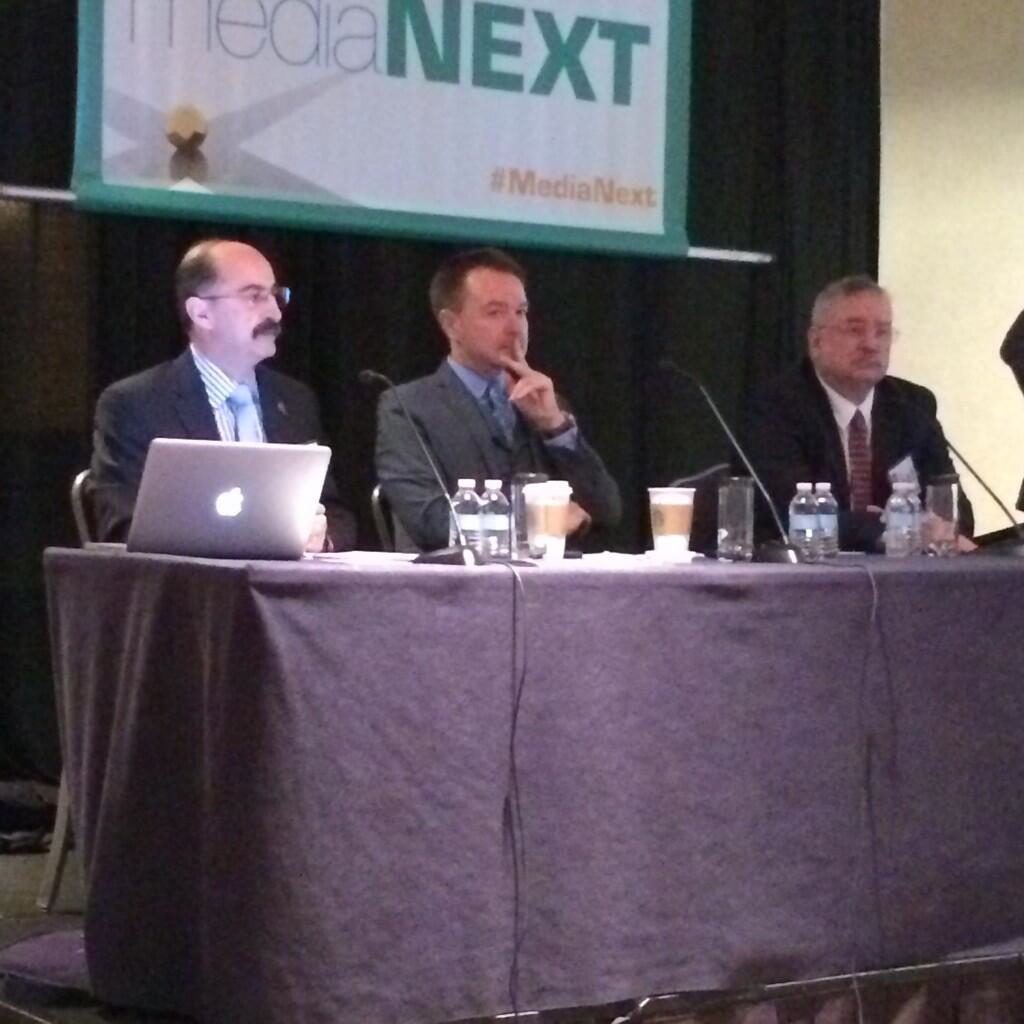
At Media Next with Michael Clinton and Bo SacksThe print magazine is thriving and the circulation of American magazines is very stable, Michael Clinton, President, Marketing and Publishing Director of Hearst Magazines, told me during his appearance as a guest at the standing room only “Samir ‘Mr. Magazine™’ Husni and Bo Sacks Show” at the Folio: Media Next Conference in New York City Monday Oct. 28. His revelations and advice may surprise you as he talks about the printed word and the digital world we live in.

Mr. Clinton noted that magazines are “paid content in a world of free content,” and in the case of Hearst, “a 126-year-old entrepreneur,” everything is paid content. Whether you buy the print edition or the digital edition you have to pay a separate price for each edition.

In the midst of the question and answer session Mr. Clinton asked the audience to guess the percentage of digital subscriptions on the tablets compared to that of print: 3% was his surprising answer to an audience that was guessing 20 and 30%.

However, Mr. Clinton is quick to add that Digital is now the third channel of revenue in the magazine media business complementing advertising and circulation revenues. “If you’re in the print business today you can’t just wear a print hat,” he told the audience.

The aforementioned words of wisdom and many more you will discover in this lightly edited highlights from the conversation with Michael Clinton. I believe you’ll find it an eye-opening reading experience.

On hope in the magazine industry during a time of great transformation:

I’ll just open by saying that perhaps a provocative statement that many of you will find interesting is that the print magazine is actually thriving. And you may all say, “Huh? What do you mean by that?” And what I do is I go to the consumer because what has happened with the print magazine industry is pre-during and post the recession, what we learned is that overall circulation of magazines in this country actually remained very stable. And if you think about what a magazine costs — it’s not a lot of money — if you buy a copy of a magazine or a subscription, but if you think about what stress people went through during the recession, you don’t have to buy a magazine to live.

So some people might have thought we would see magazine circulation plummet from the consumer point, but actually it was just the opposite — it remained very consistent. I might add that it is paid content in a world of free content. We ask consumers to pay money for our content, which is a completely different model than the free web and/or other information that’s available out there.

On the percentage of total magazine subscriptions that are delivered on tablet devices in the industry:

So let me ask my favorite trivia question that I ask people when I’m sitting next to them on airplanes or in media meetings or in groups like this. And I’ll just ask you to yell out a number. What is the percentage of total magazine subscriptions that are now delivered on tablet devices in the industry? Throw out a number… The answer is three. Most people say 30. Most people think there’s been this massive transformation of magazine subscriptions onto tablets and they will say 30 or 35 percent, which is part of the urban myth of what is the reality in terms of the consumer. It is three percent.

On the struggles of moving people from the printed product to the tablet:

Some of the complications are that discovery is a real problem for consumers. It’s hard to find a magazine on a digital newsstand. You have many, many different newsstands now so you can go onto — iTunes, you can go onto Zinio, you can go onto Next Issue Media, you can go onto lots of different places. So discovery is a problem. I don’t know how many of you have tried to authenticate from a print subscription to a digital subscription, meaning if you paid for your print subscription you can get the digital copy at no cost. That’s called authentication. I’ve tried it on a couple of different magazines that I subscribe to personally. It’s very, very hard sometimes.

The downloading process, the whole technology, you finally give up and say it’s not worth it because it’s very complicated and that’s a problem we need to sort out as part of this process. We did just an interesting study with people who did not renew and by the way on the tablet subscription we have great renewals, we have great demographic profiles and we have great engagement, but we also have people who have not renewed now that we’re cycling. And when we go back and ask them why they haven’t renewed, it’s generally two things. One, they’ve gone back to print because they just prefer the print experience, or two, the technology and the clunkiness of it frustrated them in terms of getting the download into the shelf and forgetting that the new issue had come.

You know, when you get a magazine in your mailbox you’re sort of reminded that your favorite magazine is here — great. Sometimes when it’s downloading onto the shelf you forget that your new magazine has come. So that’s part of the technology as well, we like to be reminded.

On the importance of digital as a third channel:

We, as mentioned, are the leader in the number of subscriptions we have on tablet and we have a very, very aggressive plan and a big investment. That’s because we do believe in this as the third channel.

So I would argue that if you’re in the business of starting or running a magazine, the beautiful story is you now have three channels of distribution. You have the newsstand channel, you have the print subscription channel and now you have the digital subscription channel. And I always make the analogy, for those of you who know the beauty business, when Sephora was born it was a great story for the beauty manufacturers because they got a new channel of distribution aside from department stores and traditional means.

So we want to embrace this in a big way because we think it will grow. Last week at the magazine conference I think our CEO said that we have an aggressive plan up through 2017 to almost triple that number, so we’ve got a very big initiative and we think it’s a great new channel to cultivate and develop.

On insisting that consumers pay for the print AND digital versions of magazines:

I think for those of you who are thinking about this or doing this I’m just going to give you a bumper sticker line that is our mantra and that is “fee not free.” So what do I mean by that?

You know if you go to Barnes & Noble and you buy a physical book, when you leave the store do they give you a free download to download that book on your tablet? No. When you go to watch the movie Gravity, when you are walking out of the movie theatre do they give you a coupon to download the film on Netflix? No.

If you choose to watch a film on your tablet or you choose to buy a book on your tablet, regardless of if you’ve bought the physical or have the physical experience, you pay for it. So our point of view in our company is if you have a paid subscription you’re not going to get the tablet subscription for free. If you want the tablet subscription, you buy it.

Some people will have both and some people will have one versus the other but we would argue, thank you Steve Jobs, that he taught the consumer that you pay for content and so when you go on iTunes and you’re buying a song or you’re buying a book or you’re buying a movie you’re actually paying for that product on that platform.

On customers insisting on print over digital:

I think you know I talked about what we do to the consumer, you know when we put out a new magazine as we are with Dr. Oz The Good Life, which is coming Feb. 4, we are always promoting the print magazine to our consumer base. I’ll give you one example and then I’ll switch over to the advertising side.

When we launched HGTV 18 months ago we had the most aggressive plan ever in terms of offering the consumer both the print edition or the tablet edition. So everything we did to market to the consumer was to serve up the tablet edition just to also see what kind of take rate we would get. And we generated about 750,000 print subscriptions and we generated about 70,000 digital subscriptions and I keep going back to “It’s the consumer, stupid.” The consumer will make the choice what they want.

So what we know is that in putting out new products and even in our renewals and our direct mail efforts with the print product versus digital that that still seems to be the No. 1 choice in how they want the product.

On not being able to just wear a print “hat” today:

Listen, if you’re in the print business today, and this might get into another discussion about skillsets and how do you grow a career and how do you build a career; if you’re in the print business today you can’t just wear a print hat.

You know, we call it the ecosystem of the brand, I’ll take Cosmo for example. Cosmo has 17 million readers in its print edition but when you look at all the other platforms, when you go to Cosmo.com, that’s 13 million uniques, and by the way only 10 percent of them overlap with the print subscriber. If you go to any of the social media platforms, you have Cosmo on Facebook, Twitter, etc. You have Cosmo Tablet Edition, which is the manifestation of the print edition on the tablet. They’re actually the leading women’s edition in terms of tablet edition.

You have Cosmo on Sirius radio, we have Cosmo in 63 countries, we’ll launch next fall Cosmo Live, which will be a 2-day empowerment conference for millennial women.

So we think about it in the context of the ecosystem of the brand. So how do you build the brand community? Print is at the core, but all of the other platforms, we have to be vigorously cultivating and developing because we can bring people into our brand story through other messages and other formats.

On the evolution of the required skill set for an editor:

Our editors are constantly thinking about what content do they produce for the various platforms. And it’s interesting, we just completed a major millennial study with three cohorts: 14-20, 21-30 and 30-plus. What’s interesting is the millennials.

When we were kids we watched TV, we were on the phone and doing our homework and our parents would say, “How can you concentrate when you’re doing all three?”

Today they’re doing nine things and they’re on different platforms — they’re digitally wired. But they use each platform for different things. So they use Instagram for one thing, they use Facebook for another, Twitter’s their newsfeed, Facebook is their spy, etc., etc.

So our content people will have to know how to adapt content for those platforms. You can’t just put it out because each one is emerging as a different source of information. It’s complex, we’re constantly learning, we’re constantly training and we’re constantly evolving.

On harnessing the skill sets of digital natives to help drive a magazine’s digital component:

What I would suggest that someone do is go out and hire a 21 year old or somebody just out of college who is a digital native and say to them, “Your job and your only job is to be our social media expert. I want you on our sites every single day posting content that’s relevant for our particular brand.” And let them loose.

You will find that young, digital natives are very inventive and innovative as to how they go about developing social media. So you don’t necessarily have to spend a fortune with regards to some of these things. But you have to have some kind of a digital offering because it’s what the consumer wants from your brand.

On Hearst as a 126-year-old entrepreneur:

We want to know everything new that is emerging. We want to play in every space, we want to play in the print-e-commerce space, we want to play in a more robust digital space i.e. being more, but you know respect our legacy and our DNA. We want to be able to understand what Blipper is before everybody else does and be first to market with it.

We’re often times first to market and test, trying different kinds of new concepts — digital concepts in particular. Programmatic buying I mentioned.

So we sort of view ourselves as an entrepreneur so that we can stay as nimble as we can. We are fortunate that we’re a private company so we can invest some money in the new, emerging technologies and try and test different kinds of things. If you don’t there’s that great expression: “innovate or die.” If you’re not constantly thinking about this then you will miss the mark.

But that being said, you know what we continue to respect and continue to acknowledge, and I’m the guy that has to ultimately, with my publishing team, bring in the revenue, is that the revenues are still predominately print based.

So advertising and circulation combined still represent 90 percent of our revenues. And I don’t see that changing in any huge way in certainly the next few years. So look at the legacy. Constantly doing innovative things on the print side, which I can get into if you want, but then also being very, very entrepreneurial on the digital side so that we can grow and evolve that part of our business as well.

On the struggle to successfully monetize mobile advertising:

Consumers’ eyeballs are shifting and a lot of those eyeballs are obviously shifting to this device, the smartphone, as well as the tablet to an extent and will continue to grow. And the advertising dollars are not necessarily following where the eyeballs are.

Now part of that is that no one has cracked the code yet on meaningful advertising solutions, advertising units on mobile devices. The mobile device is very hard to monetize from an advertising standpoint. So someone has to crack that code and figure out what is going to be the mobile experience in terms of advertising without it being viewed as intrusive and/or an annoyance for the consumer. So that will happen over time.

On the importance of advertising in magazines:

One of the things we think about a lot in the magazine business is what is our USP. What’s our unique selling proposition to the consumer and to the advertiser?

And one of the things which is a great benefit to us, and this may not surprise you, but you know research after research after research proves this out, that in the magazine experience, the print experience, the consumer actually wants the advertising. It’s part of the experience.

I love reading Outside Magazine. Outside Magazine is one of my personal favorites and I spend as much time in the advertising because it shows me a lot of new products that are coming out in the outdoors space.

If you love fashion magazines, think about what your issue of Harper’s BAZAAR would look like in terms of the experience without any advertising. You’d probably feel half empty.

So one of the things we know is that consumers actually embrace advertising in our medium, which is really a compelling story that we can tell the marketers who are trying to get the consumers’ attention in a very fleeting, ADD world where people are constantly seeing messages fly by them every single day. They actually, when they’re on the printed product, stop and look at the ad because they want to see what the new golf product is in Golf Digest or what Prada is doing in fashion. So that’s a great story for us to tell.

On career advice for young people:

Careers are always a bit of performance, and skill, and luck and timing. It’s that elusive mix of all of those things. And I think the core of it is performance because when you do your job and you do it best and you excel, people who are in my seat notice that and have an eye on, in my case, who will be the next publisher of one of our magazines because they’ve excelled and performed in the job that they’re currently in.

And what I look for is not only just the performance but the vision. What is their vision of what their assignment is, not their own personal vision of who they are, but the vision of what kind of new innovation are they bringing to what they do and that is always a good way to propel someone to the next place.

And in addition to that you need to be ready to jump when the opportunity is there and when the opportunity arises — that’s the timing piece. I cannot underscore the importance of having a mentor. I have had two very great mentors in my career who are still my mentors and I mentor people as well. It’s important to hitch your wagon onto someone who can help develop and you can brainstorm and you can be totally open to in terms of putting it all out there.