Archive for the ‘New Launches’ Category

h1

Shocking News: The Web is NOT a PRINT Medium…

February 11, 2009

For starters I agree with the saying, “if it does not move, or if it does not sound, it has no place on the web.” The beauty of the internet is it provides us with moving objects, beautiful sounds and animated illustrations. Unlike magazines, which by nature, are meant to provide us with still objects (frozen great images) and a combination of the 26 lead soldiers (the ABCs for those who want to know) in a way that will and should (if done well) captivate all our senses. To each medium its own.

So, it is beyond me to understand why people, very creative people, spend so much time to create what they call “e-zines” that do nothing but imitate ink on paper. If I want a magazine page to flip open, I will reach to a printed magazine. Why should I imitate that flipping feel of a real magazine on the web? If I wanted to read something for the pleasure of reading why do I have to use a magnifier to do so on the screen? I do not do that with my printed magazine. picture-1

The web and the internet are completely different beasts from the printed publications. Until we use them as such, we will continue to do our industry and our magazines a disservice to both our readers and customers. New media deserve to be treated with new ideas and not a mere rehash of old stuff that we’ve being used too. What are the benefits of recreating “traditional media” on the screens of the “new media?” It is, for sure, beyond my scope of understanding. Successful ventures are going to be those which utilize all the relevant channels to serve the relevant audiences with the relevant messages.

It is a shame to put good ideas to waste, just because we are trying to imitate something else.

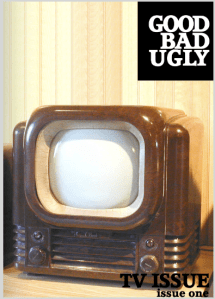
By the way, the reason for this blog is an e mail I received this morning from the United Kingdom. David Leydon, the creator of a new e-zine Good Bad Ugly sent me an e-mail introducing his new e-zine. He wrote:

Good Bad Ugly is another one of those e-zines that keep cropping up, but Good Bad Ugly is hopefully a little different in approach and style and hopefully we manage to deliver a half decent magazine for free.

If you think about it how often do you spend £4 on a magazine and feel robbed? Belittled? Disappointed? Saddened? Angry? Or Frustrated? Well it happened to us at Good Bad Ugly a lot. In fact almost every time we bought a magazine at least one of those things buzzed through our head. So we set about building our very own magazine. Take a look and decide what you think, hopefully you’ll avoid some of those emotions as you wander through Good Bad Ugly’s very first issue, the TV Issue. Or we just be a rubbish free mag – who knows???

The idea behind it all is that if you contribute you take ownership of what you do and have complete artistic freedom with it – well as long as it’s not going to get sued!

Check it out and find I6 pages of irreverent, hopefully entertaining, possibly artistic, different, inventive (well it could be?),free and completely independent goodness.

Click here to read the first issue of Good Bad Ugly. To me, Good Bad Ugly deserves an A for effort, as for the execution, that is a different story for a different blog.

h1

Alyce Alston: A Purpose Driven Publisher Who’s Helping Reinvent the Publishing Model

February 8, 2009

Alyce Alston is on a purpose driven mission: meeting customers’ demands and acknowledging that content is king. She is not afraid of what is going on in the media business nor she is afraid of starting new magazines in this climate. “This is the real world,” she told me in a phone interview, “and we have no other choice but to find unique ways to publish and to leverage the Reader’s Digest global brand.” The President of the Home & Garden and Health & Wellness at The Reader’s Digest Association is living the real world both in her professional and personal life. She launches three new magazines this week and enjoys driving a mini-van while living in a country house watching birds with her son. The former publisher of W and O, The Oprah magazine said that her current job is the “most entrepreneurial job she’s ever held.” She referred to her job at RD both as a “producer and a development officer.”
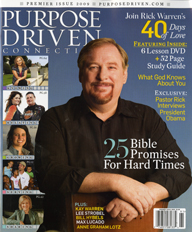
purposedrivenconnectionBeing true to her title at RD, she is in the business of “planting seeds.” And this week Alston isplanting three new seeds, Rick Warren’s Purpose Driven Connection, Best You and Fresh Home. Three new magazines but the “greatest of them all” is the Purpose Driven Connection. “These are exciting times, planting new seeds, finding new ways to do things and being involved in the biggest effort and investment of a new launch.” The Purpose Driven Connection is “The Bomb, The Big Thing” Alston said. “It requires a different level of confidence and a totally new model of publishing.”
Creating a “microphone to the world” was the genesis of the idea Alston presented to the Rev. Rick Warren. RD is a global company and Warren is global. RD is a multi-media and so is Warren. RD, the 3 billion dollar company has a giant marketing arm that can reach afar. “So, taking the message and vision of Rick Warren and putting the two power houses together, Purpose Driven Connection was born.” Warren has the content, the vision and the longevity. He is “an everyday visionaire” said Alston and we wanted to take that vision and content and create “an ongoing communication vehicle.”
Alston asked herself a series of questions regarding this ongoing vehicle. “How to disseminate the content? What is the best medium to do such a job? What is the best approach to create such a vehicle?” Well, the answer came in Alston’s vision of a new publishing model: the membership model. “We have the message, we have the audience, now we have to create the channel,” she said. So, a magazine alone was not enough, but a rather a bundle of information (a magazine, a video, a workbook, a website, etc) all aimed at members rather than just readers. “That bundle of information will provide a lot of value to the consumers and will have a much bigger value than the price the consumer will pay for the product.”
The Purpose Driven Connection is being launched with a circulation of 500,000 with the aim of reaching a million circulation by the end of the first year. The publishing model is based on a two-tier model. First tapping in the 100,000 plus churches that are affiliated with Rick Warren, than other churches offering them memberships in the Purpose Driven Connection. Direct mail and e-mail blasts and kits will be reaching those churches and their pastors inviting them to be members of the PDC. The other part is putting the magazine on the newsstands providing the same opportunity for folks to join the network. “This is a circulation driven model,” Alston said. “The focus is on building the membership first.” Next in the plans for the PDC and Alston is the launch next week of the “biggest Christian website ever built.”
bestyouYou will think that the Purpose Driven Connection project should be keeping Alston busy 24/7. Well, think again. The mission-driven publisher with the purpose to reach customers who count is launching two other titles at the same time. Fresh Home and Best You are two new quarterlies that share one secret according to Alston. “The model is completely different. I am leveraging the assets of our global company and I am leveraging the content from other countries,” she said. “You can’t publish a new magazine today if we don’t find a better way of efficiently planting seeds.” freshhomeblog Fresh Home is using re-purposed content from a sister magazine in Australia and Best You is doing the same from a sister publication in Canada. “We will not do it if it was not for the content re-purposing,” Alston said. “The cost will make it prohibitive in today’s marketplace. I have no other choice.”
Alston is using the newsstands as the “acid test” for those two new magazines and hoping that the “consumer demand” that their research showed will come true on the newsstands. Both magazines offer fresh (no pun intended) content to serve the best of you. This is the real world indeed, and those are real magazines. Alyce Alston is helping plant some new seeds to create a new publishing model. The time is right, and as Alston said “content is king” and “consumer demand” will be the key to open the new publishing kingdom doors.
No wonder Alyce Alston is a purpose driven publisher.

h1

If MTV marries HGTV the baby will be MH+L…

February 3, 2009

mhl-dummy-cover
OK, enough from the cryptic language. Here is a story about publishing with passion. Forget the big name companies. Forget all the magazine closings in recent months. Forget the statistics and all the analysis that go with them. Avoid the paralysis analysis and follow your gut feeling to create a brand, yes a brand and not just a magazine, or a web site, or even a television channel.
This is not a poetic introduction for some romantic love affair with magazines. It is a true story of a man who have more passion in his voice and more energy in his actions than I have seen in a long long time. His name is Herman Flores and his current title is Publisher and Co-founder of a new venture that will be a magazine in print, a web site and a television channel. His wanna-be brand is Modern Homes + Living or for short MH+L.
I spoke with Mr. Flores yesterday and was captivated by his passion for what he is doing. His work with the industry started back in 1994 as a co-creator of Industry Insider Magazine. In 2000 he co-created DUB magazine converging cars and lifestyle in one publication and later he co-created MTV Cribs Car Edition. For the last eight years he has been co-producing MTV’s Cribs. The man knows what he is doing and knows exactly what is next on his plate. His goal is to provide the industry with an outlet, a brand, that is defined by the following mission statement:

In showcasing the homes and lifestyles of celebrities, it is the mission of MH+L to present its readers with the interior and exterior design styles, approaches and products that comprise successful living in a new and unique way…one that enlightens rather confuses, inspires rather than intimidates, teaches rather than promotes.

Why now and why in print? I asked. “I know print has taken a major hit,” he fired back, “But there is still nothing like the way you hold, display, showcase stuff in a printed medium.” However, Mr. Flores was quick to add that in addition to the printed magazine there will be an online component and a television presence. His plan reminded me of the speech that I gave in Brussels two weeks ago entitled: One Message, One Customer, Multi-Channels. Mr. Flores knows his audience and knows how and where to reach them and to enhance their way of life and living.
MH+L aims to define successful living, he told me. It will go beyond the traditional home magazines that shows you how to redo your kitchen for less than a $1,000 and in fact, showcase a kitchen, a bedroom or a living room of a celebrity, an actor or actress, a singer or songwriter, an athlete who “have earned the right to buck convention and express themselves in ways that are new, unique, genuine and committed.”
The magazine will not only be an invitation from celebrities to see how they live, but also to learn what makes their house their home. Flores’ plan for MH+L is to become a major brand with its printed magazine, website, television channel (think MTV meets HGTV) and a major industry trade show. Learn more about the MH+L here and look for the first issue of the printed magazine is to appear at a newsstands near you in April.
Thank you Mr. Flores for lighting yet another candle in the new world of publishing rather than cursing the dark.

h1

HOPE in the Midst of all the Bad News… New Magazine Launches are UP

January 28, 2009

boho-4xorganicbeauty-6xspry-12x
I will leave it up to other media reporters and critics to report the bad news of our industry. As for me, I will continue to be the bearer of good news, and talking of good news I am glad to report that the number of new magazines launched in 2008 has exceeded that of 2007 by two titles. Our final tally of new magazine launches reveal that in 2008 a total of 715 new magazines were launched compared with 713 in 2007. Of note is that this number exceeds all predictions (including mine) that the number of new launches in 2008 will be down. Of more interest is the number of new launches 20 years ago totaled 491 new magazines. Of course, for those of us with short memories, there was no internet in 1988.
While the number of magazines published with a 4X frequency or more continues to witness declines in the last few years, the number of annuals and specials are on an increase. Publishers are finding solace in all those book-a-zines in which the cover price ranges from $9.95 to $14.95. Even the annuals have taken a back seat to all those specials that have no frequency commitment (lovingly referred to in our industry as one-shots).

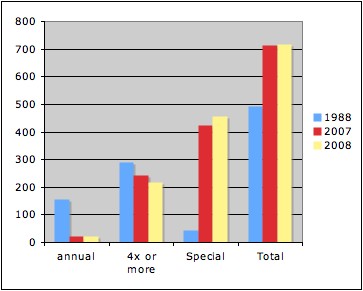
The chart below illustrates the breakdown of titles in 1988, 2007 and 2008.

breakdownoftotalimage

For those who need the exact breakdown, here are the numbers for 1988, 2007 and 2008:
Annual: 157, 21, 22
4x or more: 290, 243, 217
Special: 44, 422, 456
Total: 491, 713 , 715

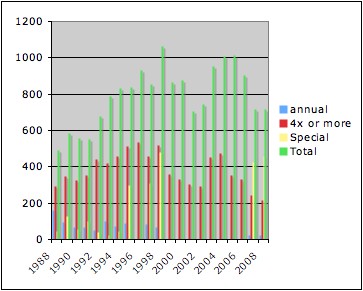
And if that is not enough to give you some hope, take a look at the chart below to see the number of new magazine launches during the last 20 years and how did we fare in this business.

launches
So, the next time you hear or read about yet one more magazine beating the dust, just in keep in mind that it is not all bad out there. It is just so hard when the times are tough to see the light at the end of the tunnel. We can only see the train coming. I hope the charts above will act as a reminder that it is much better to “light a candle rather than curse the dark.”

h1

Design Mind…Putting Print in Motion: An Interview with Sam Martin

January 16, 2009

designmind_motion_cover01

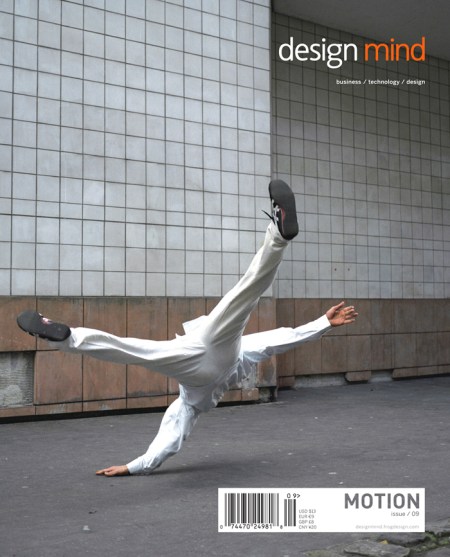
Innovation seems to be the topic of the moment. Bright spots in the midst of all the dark clouds surrounding our industry are starting to surface. One such bright spot is a new magazine that was launched last July: Design Mind. Today the second issue is out. What follows are two clips from the magazine’s press release and an in-depth interview I have conducted with Sam Martin, Design Mind editor-in-chief.

Design Mind in their own words:

“By reading design mind, business leaders and design professionals gain ideas and insights into everything from social innovation and design research to technology news and management techniques,” said Sam Martin, editor-in-chief of design mind. “Following the successful launch of our first print issue, we’ve taken the magazine to a new level, designing it so that our readers can easily engage with frog’s leading thinkers.”

Written by frog designers, technologists, and strategists, design mind articles provide the design and innovation community with perspectives on industry trends, emerging technologies, and global consumer culture. The magazine is published three times per year and features interviews with high-profile thought leaders along with contributions from external writers, designers, and photographers.

My Interview with Sam Martin, Design Mind’s Editor-in-Chief

sam-martin-headshot
When the first issue arrived in my office I was stunned by an elegant personalized hand-written note from the editor-in-chief. It was something I have not seen in ages. The handwritten note and the magazine were reason enough for me to get in touch with Mr. Martin and ask him a series of questions. Whose behind Design Mind? What does it offer? Why in print? Is there a future for print? These questions and more were answered by the magazine’s editor-in-chief Sam Martin. I asked Mr. Martin What is Design Mind?

Design Mind publishes articles that comment on the intersection of technology, business, and culture. A lot of what informs this intersection is design, so we sort of look at culture, business, and technology through the lens of design.

This is the product Frog Design, Inc. Can you give us a little background? What is the link between the two?

Yes, there is definitely a link. That is, it is published by Frog Design and is part of the Frog marketing platform. It is a custom publication. However, we are very much looking for a journalistic voice here and some really objective commentary. We consider it a thought leadership effort at picking out trends that are building, looking at the fringe of what is happening in culture and business and where things might be headed. Frog is what we call a global innovation firm. We’re going to have our 40th anniversary as a company next year.

We were started in Germany by a well-known German product designer named Hartmut Esslinger. Hartmut worked for Sony in the seventies. His big break was being hired by Steve Jobs at Apple in the early eighties where he helped design and actually came up with the design language for the Apple 2C computer, which is called the Snow White computer language. It was a big break that came with a lot of attention. That’s when Hartmut and the whole team moved to California.

Over the years, we have taken on a lot more. We get a lot of product design. We also moved into sort of visual design, designing user interfaces in cell phones, web sites, and other kinds of digital software and that sort of thing. After all of this, we’ve now become design consultants, where we give largely global Fortune 500 companies advice on product strategy and that sort of thing. So, Frog is the reason behind the magazine, but it’s also its own brand.

Which brings me to my next question: why a magazine? Are magazines still matter? Does print still matter in your business?

Yes. I think print does matter. I don’t think print is dead, as has been the contention for so many years. I think that this is because print has a longevity that’s not available by digital means. Now, I do think that print is being redefined. We think it’s a good idea because we can target our audience, almost hyper-targeting. We do a small print run at 5000 copies an issue. And we have the ability to partner with other media groups or with conferences like Poptech. We think that the value that it gives our clients as a piece of marketing material is second to none. In fact, there are statistics that show that business executives still read print. It’s almost a 2:1 margin in print versus web reading. While my opinion is that news and print aren’t necessarily compatible, I think print offers much more memorable long term and valuable outlet for information. It’s something you want to keep around. It’s the tactile feel that people really enjoy, and, from a marketing prospective, it’s also a little bit of a surprise. We got a lot of media attention because of it. Why are you doing print? And for us, it’s actually working quite well. It’s doing what we need it to do, which is drumming up some PR. It’s an excellent outlet for the people that work in our company. We have over 400 people worldwide working at Frog, the kind of people that always have great ideas. They’re looking for outlets, and this a great place for them to show their ideas off.

So, what is your publishing model that you are following with Design Mind?

That’s an interesting question. We have to figure out a different way to use print, and I think that might be what you’re getting. The fact that it is significant that this magazine is being published by Frog Design Company, using a marketing budget. I think it speaks to sort of the splintering of news. It’s commensurate with what’s happening with this world. This long tailing of fact where you’ve got lots of small businesses or many voices as opposed to one voice. Because we produced it from the inside looking out, it worked. It wouldn’t work if we did it as if we were talking at people, even overly pushing the fact that it comes from Frog Design or tried to sell our brand. This really is about talking about relevant ideas and exploring trends. It just happens to be sponsored by Frog Design. It works for the reader and the publisher in that regard.

Why themed issues? First it was Numbers, now Motion….

Well, the themes that we choose are largely based around the areas in the industries that we’re playing in, we want to play in, or we want to get involved with. They are very, very loosely interpreted.

On Motion, Frog does a lot of work in the mobile industry. We also do a lot of work in the health care industry. So, we thought motion could encompass both of those things. There is also stuff on the entertainment industry, so we could talk about moving pictures on a very basic level. There’s also going to be an article on ADHD, because children with ADHD are often described as being in perpetual motion. The mobile industry and the movement of digital media and social media is also gonna be part of the next issue. So, we choose the things because we think they’re interesting. They’re focused on the industries that we deal with.


One of the things in the magazine that has received a lot of high accolades is terms of the design in terms of the presentation, and if we look at the name, Design Mind, how do we create a name for a magazine? Where did the name Design Mind come from?

I think a lot goes into a name of a magazine. Design Mind, for us, speaks to our background as designers. That is the reason why we’re in existence. That is the lens through which we look at all of our dealings, so design had to be in the title somewhere. Design Mind really speaks to the fact that we want this to be a thought leadership publication. We wanted to let people know that if you’re reading this magazine, you’re reading our minds. You’re seeing what’s going on behind the scenes. You can have a better understanding of how designers think, and how we are applying design to lots of different problems going on. I think that’s the key. Design has changed so much over the years. What we’re talking about with the magazine is how design can be applied to various problems be they social, how you use a product, how you approach a life situation, how you organize information, how you get to the doctors, how you measure your health, how you watch media or how you connect with other people. Design isn’t just graphic design. It’s not just product design. It’s really kind of a solution-based issue.

What makes Sam Martin tick?

I’m in a unique position here. My background is in journalism. I was an editor at This Old House Magazine for a number of years and before that Mother Earth News. I’ve written a number of nonfiction books, so coming into a company working for a marketing team is a little bit of a change of pace for me. Doing a custom publication has a lot of freedom. Handwriting a note is part of that customization. It’s part of being able to be personal with my audience. I think that is lost sometimes in digital. I think print is very personal because it’s so tactile. It even has a smell to it. I also think that’s very much what this company’s all about. We work with some of the largest companies in the world on many different continents, but we’re small, and we we’re able to give personalized attention to each of our clients. It’s just a culture here, and, for me, it’s important as a writer. You always want to know that you can reach out and influence somebody with your writing and I guess that’s why I sent the handwritten note.

Do you consider yourself a writer or designer or both or can you separate between the two?

I definitely consider myself a writer wearing an editor’s hat right now. Design is something that, I specialized in over the years. I feel very close to the process and being here I’m learning a lot more about it. But I’m a writer first and foremost.

What about the future of print?

I think that this splintering and this hyper-targeting of print products is the future, because I think that’s the only way it can survive. You know the newspaper industry is in such turmoil right now because they just can’t keep up with the news. I think we’re seeing an increase in op-ed style articles. We’re also seeing an increase in trend stories. That’s the only way for print to survive right now. It can’t compete with online news reporting. Print has to become either a thought leadership proposition, or it has to become a deep dive into trends. If you look at successful books like Freakanomics or Malcolm Gladwell’s books, these are books that have picked out trends. They’ve gone past the first couple layers and they’re making connections on the fringes of culture that are not normally made. That’s what innovation is, and, interestingly, Frog is an innovation company. In order for print to innovate, you have to be able to spend time writing your stories. It used to be where reporters would go out and 80% of the time was spent reporting, 20% of the time was spent writing and that’s the way print would work. It would make sense that you would have this hyper-targeted magazines targeting smaller audiences but having many more of them. It’s the long tailing. It’s the same idea behind the long tailing business or the boutiquing of businesses.


So we’ll be doing more digging then?

More digging. Yeah. More searching. There’s too much information. You have to be able to make sense of the information, and you have to be able to draw atypical conclusions. You have to be able to spend more time looking at the information in order to make relevant conclusions.

If somebody asked you and said, Mr. Martin, recommend some magazines for me to actually engage with, benefit from, learn from, imitate, what would those magazines be, besides Design Mind?

I think The New Yorker is still perhaps the best magazine out there right now because of the resources they give to their reporters and the quality of the reporting. Fast Company is one that kind of plays on the same field as Frog does, where they have one foot in design and one foot in business, using that to comment on the culture of those things.

Thank you.

h1

Innovate. Don’t Stay the Course. Don’t Ride it Out. Words of Wisdom from Greg Schumann, Group Publisher, The Parenting Group

January 14, 2009

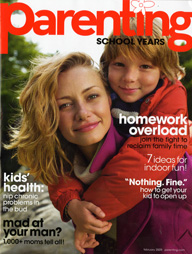
parenting1parenting2

“Innovation is the key and not staying the course,” says Greg Schumann, vice president and group publisher of Bonnier Corp.’s Parenting Group (TPG). That, in fact, sums Schumann’s take on the current status of magazine publishing in general and on Parenting magazine in particular. Parenting magazine is now two magazines serving the needs of two separate groups of moms, where the mantra of “one size fits all” no longer exists.

Schumann’s strategy is not only limited to innovation.

The new strategy isn’t just an innovative way to launch a new publication. By separating the current Parenting (for moms of kids 0-12, 2.15 million circ) into two separate monthly editions – Parenting School Years (for moms of kids in kindergarten through 5th grade, 500,000 circ) and Parenting Early Years (for moms of infants, toddlers and preschoolers, 1.65 million circ), Parenting is offering readers the ability to choose the content that’s most relevant to them, and offering advertisers a new way to customize their marketing messages to target moms with children in different age groups.
This strategy brings to life what TPG has learned from studying the effects of Gen Y moms on the parenting media landscape: Today’s generation of web-savvy moms expect customization – so it’s time to rethink the concept of the “one-size-fits-all” mass parenting magazine in a media universe populated with niche web sites and mommy blogs targeted to every possible subset of moms. The more targeted the content, the better. And the more relevant the magazine is to its readers, the more advertisers’ messages will resonate with their intended audience.

To follow up on this strategy, I asked Mr. Schumann few questions regarding Parenting magazine, The Bonnier Corp. and the magazine industry in general.

What is the secret of your success with Parenting and what is the secret of Bonnier Corp.’s success in the midst of all this doom and gloom?

Well, I think I’ll answer in two-fold. I’ll answer it first on what we’re doing and why we’re doing it. I had lunch with a business consultant in the industry, and we were talking about (the fact that) there’s so much defensiveness going on right now in light of the turbulence that’s being felt economically and certainly in our industry. But I am a believer that difficult or challenging circumstances demand innovation. And that’s the time you should be looking to do things differently and to improve on things versus, let’s ride it out or stay the course.

The rationale behind one magazine with two editions is based in that I am a believer in the research that we did leading up to deciding definitively on our strategy that this approach of one size fits all for moms is no longer working. I would even argue that one size fits all is becoming a challenge to strategy. The needs of moms are so different relative to the stages that they’re in motherhood, relative to the age of their child or children. You just couldn’t think that you are going to be able to properly address their informational needs in one entity.

We’re taking the approach with the business model from a consumer standpoint. We’re serving her more targeted, more relevant information that feels more personalized, more customized, relative to the place she’s in. And also for advertisers, to a point, we are providing the most efficient means to invest their dollars relative to their target, the sub-segment targets of mom. The response we’ve gotten and the feedback have been incredibly positive. It’s been incredibly positive from moms. It’s been incredibly positive from the advertising community.

But in the midst of the doom and gloom, and I know it sounds really cliché and maybe a little holier than thou, but there should be no conditions on doing the right thing for the business. There should be no circumstances that dictate whether you do the right thing or not as far as figuring out constantly how you best serve your consumer and in our case, obviously, moms. So, to me the economy, and the advertising climate shouldn’t weigh into that debate. We have a mission: How do we best serve moms? We think we’ve found the best way to do it with this versioning, targeting strategy. We’re going to do it, whether the economy’s healthy or not healthy. Whether the advertising business is up or down…because it’s the right business decision.

As far as how is Bonnier is doing it, I think this is one of the advantages of being operated by a philosophy that’s looking long term. When Jonas Bonnier acquired our division along with the rest of the other titles that we were sold from Time, Inc., he made it very clear: I am doing it to expand our business, to expand our footprint in the United States, and I’m doing it to have a long term viable, sustainable, growing business. And so, he always talks about the notion of evaluating 20 years from now. The fact that we’re privately held allows, obviously, and helps facilitate being able to take a longer term approach to things. Unlike the industry that seems to live quarter by quarter, as far as how Wall Street goes, earnings and so forth… I do think that in too many instances, in our industry and in American business, we foster just short term thinking. The industry is always trying to get immediate gratification or instant gratification for the business needs, perhaps at the expense of really thinking long term and figuring out what’s the best model looking outward.

I think we’re fortunate to be in a corporation, part of an entity that does look at things long term.

Are we really in such a gloom and doom marketplace today? Is the cup half full or half empty?

The current industry environment too often is viewed as problematic. And I believe it is opportunistic. If you adhere or believe in the notion that within any problem lies an opportunity, I think that without question, that the economic landscape’s changing, our industry landscape’s changing, but anytime there’s change, there’s opportunity. It’s just that too often people tend to look at it as the change is problematic. I think that there is a little too much negativity. Because the country as a whole, and even our industry has been a little bit traumatized by the events in the last twelve month and in particular the last six months.

So do you see light at the end of the tunnel or is it the train coming?
Well, I had an interesting explanation from someone in the financial industry. He said you should look at this situation as though the economy is a giant pan and we’re at the bottom of the pan. But the pan is elongated, meaning it’s not going to get much worse, but it’s not going to be remedied quickly. And so I’m of the school of thought that I think you’re going to be hard pressed to see the economy really turn around, this year.
But, I do adhere to the thinking that the mood, this fear that you talk about, the doom and gloom, that’s the first thing that will go. People are going to start to see the sun again. And then I think that’s going to be the precursor to seeing re-investments and the general dynamic of the economy starting to turn and then people starting to invest more aggressively, but I think that’s probably not going to happen until 2010. So what do you do? I think that everybody has to re-examine their business model. This is the time that everyone should be thinking about innovation. If you look at this situation as an opportunity instead of a problem I think that’s what should be our approach.

h1

One Magazine, One Diet (or Weight Loss), Two Names…

January 6, 2009

diet2009-1myweightloss-1diet2009-2
Do you rather go on a diet or would you rather have a plan just for you to lose weight? That is the question that the folks at Meredith seem not to find an answer to. Thus they gave their newest Better Homes and Gardens Special Interest Publication magazine two different names with the exact same content (and what seems to be the IN cover-line these days Yes, You Can!). One edition of the magazine is called Diet 2009 and the other edition is called My Weight Loss. However, neither name of the magazine is to be found anywhere inside the magazine. Even on the table of contents the editors managed to introduce a design element that covered the name of the magazine on the inside cover replica. Clever, very clever indeed!

h1

Let the Bad Times Roll… “Hard Times are Good Times” for New Magazines

November 21, 2008

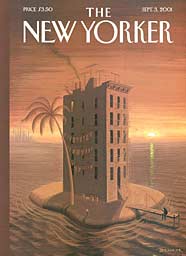
2001_09_03_v2564
Some say these are the worst of times, and some others remind them that so were the 1920s. New magazines arrive on the market place, and other magazines depart the market place. There is nothing new under the sun. But, for a change, you do not have to take my word for it. Here is an article from the vault of The New Yorker magazine circa Sept. 3, 2001. It was published a week before the tragic events of Sept. 11, so I do not think it got a lot of attention. For those of you who are feeling the pain of today’s economic crisis, you will find solace in reading James Surowiecki’s article titled Let the Bad Times Roll. Here is one quote from the article, “But history suggests that for new magazines hard times are good times.” Read the entire article here.

h1

Introducing The Hottest Magazine Launches of 2008…

November 10, 2008

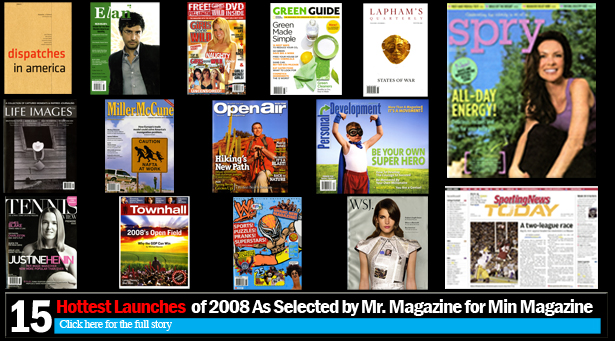
lowres-workfile2This morning at the min magazine Awards Event at the Grand Hyatt, NYC I handed out the honors to the 15 new magazine launches published between Oct. 2007 and Sept. 2008. The honor of The Hottest Magazine Launch went to Spry magazine from the Publishing Group of America. That is three out of three new launches that the PGA introduced that have won The Hottest Magazine Launch of the year. The first two were American Profile and Relish. Congratulations to all. The event was sponsored by min: media industry newsletter and you can read more about it here. The Digital Hottest Launch of the Year went to Sporting News Today.
In addition to the new launches two established magazines were recognized for reinventing themselves. They were Bon Appetit and Ebony. More details and complete info later on the mrmagazine.com website.

h1

52 New Magazines with 4X Frequency Born in Sept. and Oct.

November 2, 2008


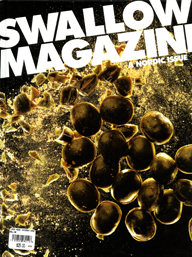
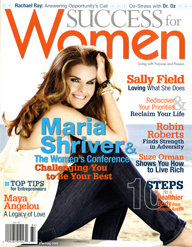
I know that it seems there is no room for good news in our magazine world these days. I also know that the media is more biased toward reporting their own bad news (unlike any other business in this world) rather than the good news. So when a magazine like CosmoGirl! folds, it is big news all over the media outlets and blogs. But when 26 new magazines appear for the first time on the nation’s stands in September with a frequency of four times or more, the media pundits fail to report on that. And when another 26 new titles with a four time frequency or more appear in Oct., still the prophets of doom and gloom are silent. In fact the last two months have witnessed an increase in the number of the regularly published magazines (at least 52 titles in Sept. and Oct. 08 compared with 36 during the same period of 07). Some magazines are an extension to the Edible magazine brand with the latest in the franchise being Edible Manhattan, some are based on a revisit of a yet-another-attempt to bring a high-class fashion and art magazine such as Future Claw, and some, such is the case of Swallow, are adding a new twist to the tried and tested food titles. Add to the mix titles such as Success for Women, EquiShopper and The Last Magazine and readers are treated by a host of new magazines, each and every one of them, is by itself a new media.
In fact Oct. witnessed the birth of 74 new titles (still short of the record Oct. month of 07 with 93 titles) but with the same number of four time frequency titles (26 for both). Add to that the good news from the third quarter of 08 in which the number of new launches stands now at 166 compared with 126 from 07, that is 40 more new titles.
For those doubting Thomases out there, click here to see every new magazine published so far this year.