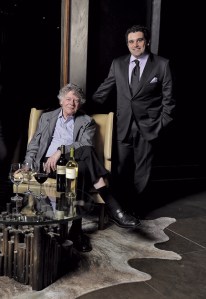
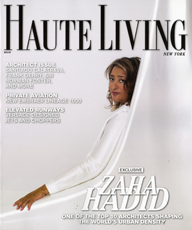
Is there such a thing as a recession-resilient market in our magazine business? Well, for one publisher, Seth Semilof of Haute Living series of magazines, recession-resilient is the key word he built his entire publishing model on. Semilof, together with his partner Kamal Hotchandani, launched earlier this year their fourth edition of the upscale magazine Haute Living. The magazine is now published in four U.S. cities: Miami, New York, Los Angeles and San Francisco. (Photo: Semilof with Gordon Getty practicing what he preaches)
SH: You hear some people saying that the affluent market is becoming a nightmare instead of a dream, and here you are launching a fourth edition of Haute Living magazine in a fourth major city, acting as if there is nothing wrong with the industry. Why is that?
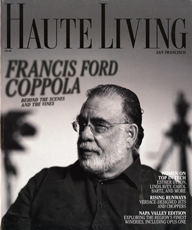 SS: We consider ourselves recession-resilient. That’s the word we classify it as – recession-resilient. We believe that there is something going on that is wrong with the economy, but, at the end of the day, it impacts someone like Tiger Woods, Kobe Bryant, or Madonna differently. Yesterday Madonna closed on a $40 million home. The very, very affluent, upper one percent of people we’ve always wanted to reach, still have money. They’re still going to buy nice cars. They’re still going to buy nice watches. They’re still going to buy these types of things. I personally believe that, because of this crazy economy, luxury is going to actually become more of what real luxury is. I was with one of the owners of Mercedes, and he was explaining that 40 percent of leases for the C-Series ended in repossession while the more-expensive S-Series only had eight percent repossessed. We’ve always hit our niche and that’s all. We’ve continued to hit our niche. Our niche is simple. In each market, we mail to homes with incomes in excess of $5 million. We hit the private fliers on over 10,000 private jet flights per month. We are in high-end hotels, high-end boutiques, and retail traffic stores. We feel that if we hit those three areas, then we’ve hit what we [call the] money in motion. Our strategy is not trying to hit someone who lived in a $6 million home three years ago, lost his business, and now he’s out—our advertisers don’t want to hit that guy. Our advertisers want to hit the guy that is living in a $6 million home now. We were able to hit him. Launching in San Francisco wasn’t easy at all. It was very hard and very costly, but, in a short period of time, we’ve built a brand with recognition.
SH: A lot of people told us that print is dead, and everything is now going digital. At the same time, you are continuing to launch print magazines. You have “H-Interactive.” You have extended your presence on the Web and are continuing to add things. What are you doing to innovate in print and the Web, and how do you differentiate the two entities?
SS: I do not believe print is dead. I believe print has changed. Things change, and you have to change with them. I think some print publications are in trouble, [particularly] the ones that give you daily information. But for us, it helps us, because we have built the brand for the magazine, because we go to people’s mailboxes and private jets, [and we] use the Internet to our advantage. We’ve built a section called Haute Interactive Media where we’ve built many websites: HauteJets.com, HauteYachts.com, HauteResidence.com, Haute100.com, HauteMD.com and HauteGifts.com. Each website is niche related and updated daily, but also promotes our advertisers, promotes our editorial stories and educates our readers. It also provides the best news on yachts, jets, etc. We use the Internet to complement the magazine and to go to our advertisers with a larger package.
SH: What is your biggest challenge now in the marketplace?
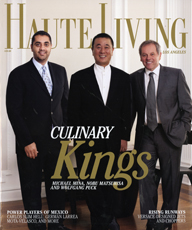 SS: To be honest with you, this economy was great in building our character. The last six or seven months it’s been hard. A lot of our competitors that were 800-pound gorillas and had a lot of money are now struggling or out of business. That is interesting, because six months ago, when I was speaking to advertisers, 100 magazines had classified themselves as luxury brands. Everyone was pitching to advertisers a lot of stuff that I felt was not possible. I used to tell that to advertisers. Now, those companies that claimed they were doing all these great things are out of business, because they weren’t doing those things. And I think given our brand more credibility. In this tough time, we can make it. Today my partner in the magazine secured a very large deal, a monumental deal for my magazine. We signed up to be guaranteed on 10,000 private jet flights a month in 13 major cities around the world. Whether you like it or not, someone that has the money to spend $75,000 to fly one way from L.A. to New York has to have money to buy watches, cars and so forth. And some of our advertisers, Rolls Royce, Cartier and East Coast Jewelers, are still getting amazing results. We just had a client who had an $8.5 million piece of property in Miami put an ad in my magazine. A gentleman on a Net Jet flight saw the magazine, loved the property, bought it sight unseen and paid 8.5 million dollars cash for the property, just through an advertisement in my magazine. This was all because the guy picked our magazine. He was from London. He had just been in Palm Beach on a business trip and wanted to buy that island because it was about 45 minutes away from Miami. I believe print works. I believe now, just like in all businesses, the best are going to survive and a lot will not, but print is by no means dead.
SH: What is your philosophy in picking up the cities. You started in Florida, then New York, then L.A and now in San Francisco. Is there a method to the madness?
SS: To be honest, there is no method to our madness. I looked where my competition wasn’t. At the end of the day, I liked Chicago, but I saw two of my competitors were in Chicago and I didn’t want to be the third. So, the reason why I picked San Francisco was because I didn’t see much competition. There is a lot of wealth in Silicon Valley, San Francisco, Marin, and Napa, as I felt this market was lacking a magazine like Haute Living, that would connect each city, and give content that would appeal to most of our readers. Plus, that is where I am from, and it was exciting to go back and build something in a market I live for over 8 years. We only saw one major player in San Francisco, and we felt the market was big enough to have a second player. The same thing happened with New York and so forth. We just studied where our competition was and we stayed away from areas that were heavily polluted.
SH: I know there is a lot of local content in each of the magazines, but at the same time, there is a cross breeding of editorial content among the magazines. There are some articles that transcend the city. How is that decision being made? Is there a formula?
SS: We have built an interesting formula. We share content that write about private jets, private yachts, exclusive jewelry stories, and so forth. Most people in all our markets are interested in reading this type of editorial, from the latest Rolls Royce 200EX, to Cartier’s new watch, to the new trends in men suits. If you live in L.A., Miami, San Francisco or New York, it doesn’t matter to you. This content appeals to everyone, in most major cities. We kept the same name to build the brand, but changed content on a regional level. A lot of our clients drive Rolls Royce’s, so it’s all the same to them. If you live in Miami Beach or Newport Beach, you still are interested in the same type of boats, as they are international brands. We just did an amazing story on a writer visiting the corporate headquarter of Patek in Switzerland. Most of our readers are Patek customers, and found this story very interesting and appealing. What we deliver is what our reader wants.
SH: How did you come up with this idea? What made you wake up one day and say “Aha! There is a void. There is a niche. There is something in the marketplace that no one is doing.”
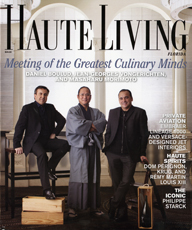 SS: That’s a very good question. I moved back to Miami to be with my ex-girlfriend. I wanted to get involved in real estate, but I didn’t want to actually sell real estate. I decided to launch a real estate magazine, that would promote listings over $2 million in Miami. I was a big fan of Ocean Drive magazine, the major player in Miami, but a lot of people that I knew weren’t really Ocean Drive readers. I believe that Ocean Drive and my magazine can complement each other. A lot of people when they launch magazines will fight and compete with the big guys. We always complemented them and said, “You should buy ads and read both my magazine and Ocean Drive.” We tried not to copy and do what everyone else does. We tried to build our own niche and brand. A lot of people argued with us and a lot of people thought we were crazy when we launched the magazine. We wouldn’t accept ads that we felt didn’t merit the attention of our readers. If you go look at most of the ads, they’re all name brands. We turn down at least 10 percent of the ads every month if we don’t feel they meet the criteria of our readers. It’s almost like a very high-end nightclub, where they don’t let a lot of people in, but the people they do let in are the quality names. I think that’s how we kind of built our brand. I saw a void in Miami, and I started the magazine and then I got involved with my partner, Kamal Hotchandani. He was able to take Haute Living to the next level. We then decided to build the publication in Miami for the next year, and then launch in New York. After success with New York, we launch Los Angeles, and then San Francisco this year. This has been a thought out process, for the past four years.
SH: What makes Seth get out of the bed every morning and do what you’re doing?
SS: Basically, I love what I do. My partner, Kamal and myself, we love what we do. We love building a brand from scratch. I like when we go into a market and people think we are crazy. I like the challenge. I believe in our product. I believe that the product actually works and the product benefits our advertisers. That is what is so exciting. I constantly hear success stories about advertisers. Getting a lot of new business and making money through Haute Living.
SH: What advice would you give to someone fresh, new? Prestige New York just published its first issue, Niche Media continue publishing and expandiing, and, like you said, everybody wants to be in the luxury market.
 SS: Niche Media is a fine organization. I’m a huge fan of Jason Binn and Jerry Powers. I think Jason Binn and Jerry Powers are the godfathers of luxury magazines. What they accomplished is amazing. Jason built his niche, and I think his brand is going to continue to build and go into cities. If I talked to any young publisher, I would tell them, the only way you’re going to make it happen is if you’re selling, building the edit, and distributing. The only reason Kamal and I built our brand is because we were the ones that got the amazing editorial content, that gave us credibility. You can’t buy the story. What people think is that they can get a million dollars, hire a big editor, hire a big sales guy and build a brand. You can’t. If I had to give advice to anybody, the advice is look at how Jerry Powers and Jason Binn build their business. They build it from scratch. When they launched Ocean Drive, they would put blood and sweat. They built everything on their own. I think anyone who wants to make it in publishing should do it on their own. You have to put blood and sweat into it, and you can’t hire somebody to make it successful. I believe if someone has a passion, they can make it happen. I believe a magazine is like a restaurant. Nine out of ten restaurants close within the year. The owner is what makes a restaurant successful. That’s my humble opinion. We’ve done well, and we’ve never tried to buy people to build it.
SH: How far have you come from where you first launched and today
SS: I look at the magazine just for fun. We continue to get better. I think people like us because we grow with our readers. I have advertisers called the “Jills” that are the most successful realtors in Miami. They’ve been with me since day one. They buy two to four pages each issue. Good or bad they’re with me, and we’ve delivered. They can call me up and call Kamal up, and we’re around. Same with Rolls Royce, as we have developed a great partnership, along with friendship. I also take a lot in pride in the team we have built. I have a great Art Department, Editorial Department, and back end that makes our company special. Most of our people have been with us for the past couple of years, as they have been a huge part of our success.
SH: One final question Seth. How many people have you let go since the downturn of the economy?
SS: On the sales side, the only people that I’ve laid off are under-performers. Sales is the most important part of this business, and we have been able to rebuild our team, and hire some great regional people that believe in Haute Living, and are going to help take our brand to the next level. We’ve hired seven new sales people in the last 90 days. It is very humbling, as they all give credibility to Haute Living, which speaks about the hard work Kamal and myself have invested into building Haute Living. We have kept our back office team, editorial team, and distribution team intact.


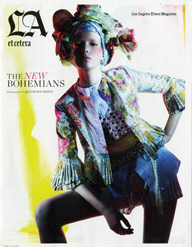
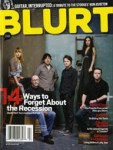 167 news magazines appeared for the first time on the nation’s newsstands in the first quarter of 2009. This number represents 14 titles more than the 154 titles first published in 2007 and 13 titles more than the 153 titles first published in 2008. Call it what you want, but yet again the innovative media companies and entrepreneurs have shown a resiliency against all odds, and for that matter against the prophets of doom and gloom.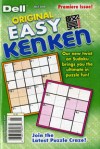
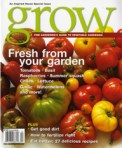
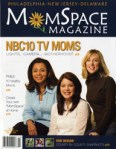
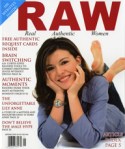 The new magazines of 2009 included 61 titles with a stated regular frequency and 106 with no frequency stated. Compare that with 48 new magazines with a stated frequency in 2008 and 106 with no frequency stated. Amazing to say the least, is that in the worst of times American magazines will know that the best of magazines were launched in the worst of times. To paraphrase Charles Dickens, these are the worst of times. Let the new magazines roll off the presses and enjoy the images of the some of the new magazines launched in the month of March.
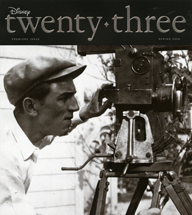 What do Disney Twenty-Three, Dirt Rag Bicycle Times, and Big Man have in common? They are but three new magazines published in the midst of the worst economic times we’ve seen in our lifetime. However, when in comes to new magazine launches last month, the numbers beg the question What Recession?
 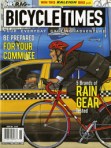 81 new titles appeared for the first time on the nation’s newsstands in February (the best February yet) despite all the problems with the wholesalers and distribution channels. In one way or another those magazines found their way to the retailers and offered readers options to buy one out of 30 magazines published at least four times a year, one with a twice a year frequency, four annuals and 46 specials or book-a-zines.
 When I announced earlier this month my intentions to create the
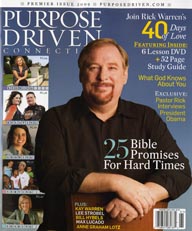 Another case-in-point is the Purpose Driven Connection magazine published by the Reader’s Digest Association. The quarterly sells for $9.99 and offers readers a 144-page magazine, a DVD and a Six-Session Video-Based Study Guide for Small Groups taught by the Rev. Rick Warren.
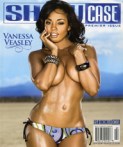
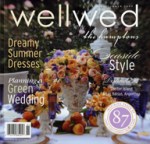
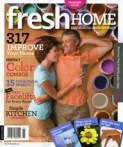
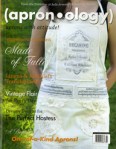


 The first magazine, and my own favorite, is called (apron.ology). It is the magazine for “aprons with attitude!” 144 pages of beautifully crafted and designed aprons that are set to satisfy the needs and wants of all “the apronistas of the world.”
 Last but not least, is the third new magazine Stuffed, a gathering of softies. More than 100 “softie” projects fill the 144-page magazine offered complete “with an artist portfolio, techniques articles and a large gallery section.”


 Mr. Magazine