Archive for the ‘Inside the Great Minds of Magazine Makers’ Category

h1

In-Depth Conversation With Roger Black: From AMERIKA To Big Bend Sentinel… The Mr. Magazine™ Interview With A Genius Art Director

December 18, 2025

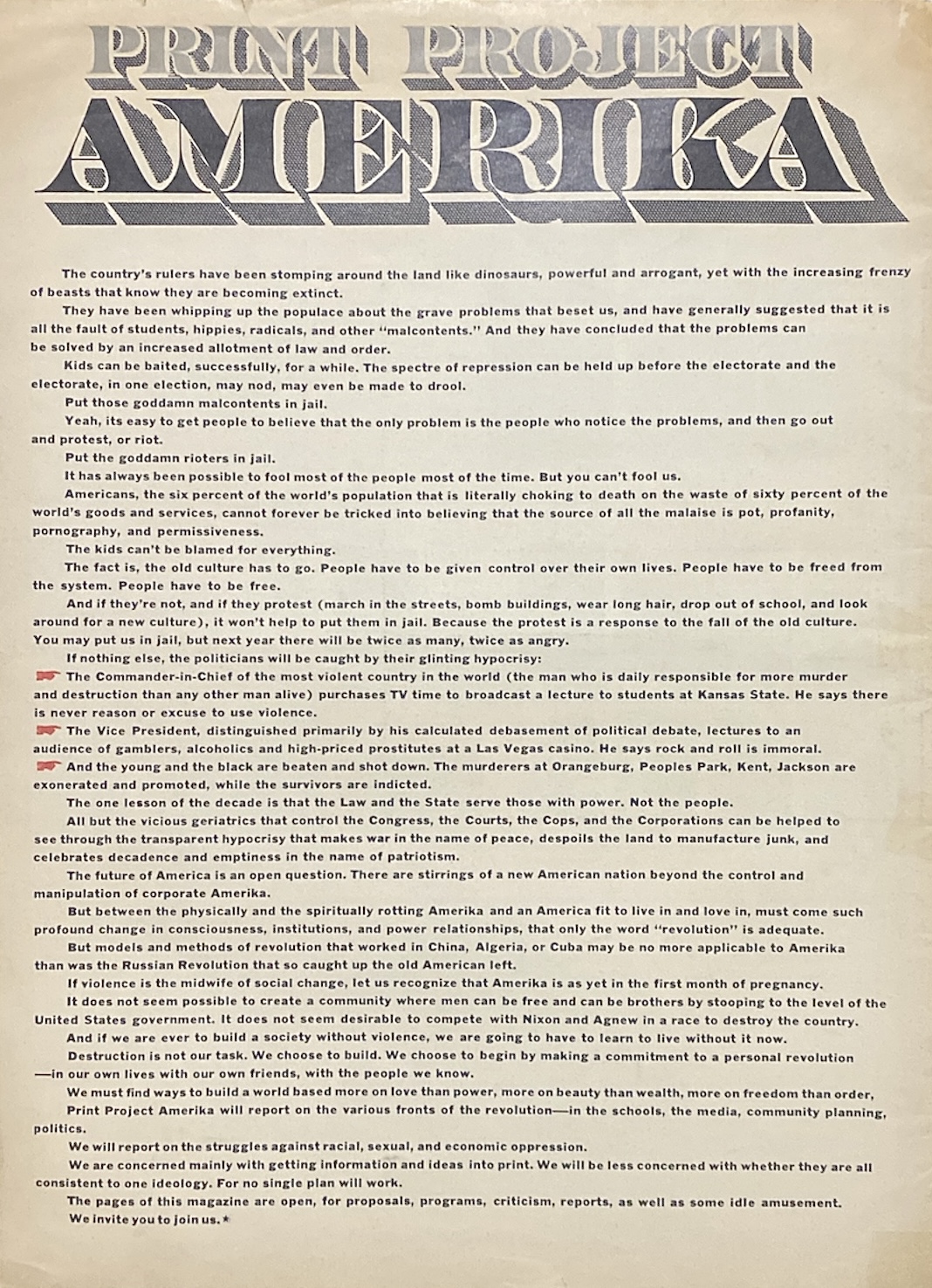
 “This is a hard time to start a magazine. The country shaking like an old drunk. Who knows he has to give up the hoosh. Does not provide a climate of reason and ease that magazines thrive on. There is a recession.Magazines are collapsing left and right,” wrote Roger Black in his role as Editor of a magazine called AMERIKA in 1970.
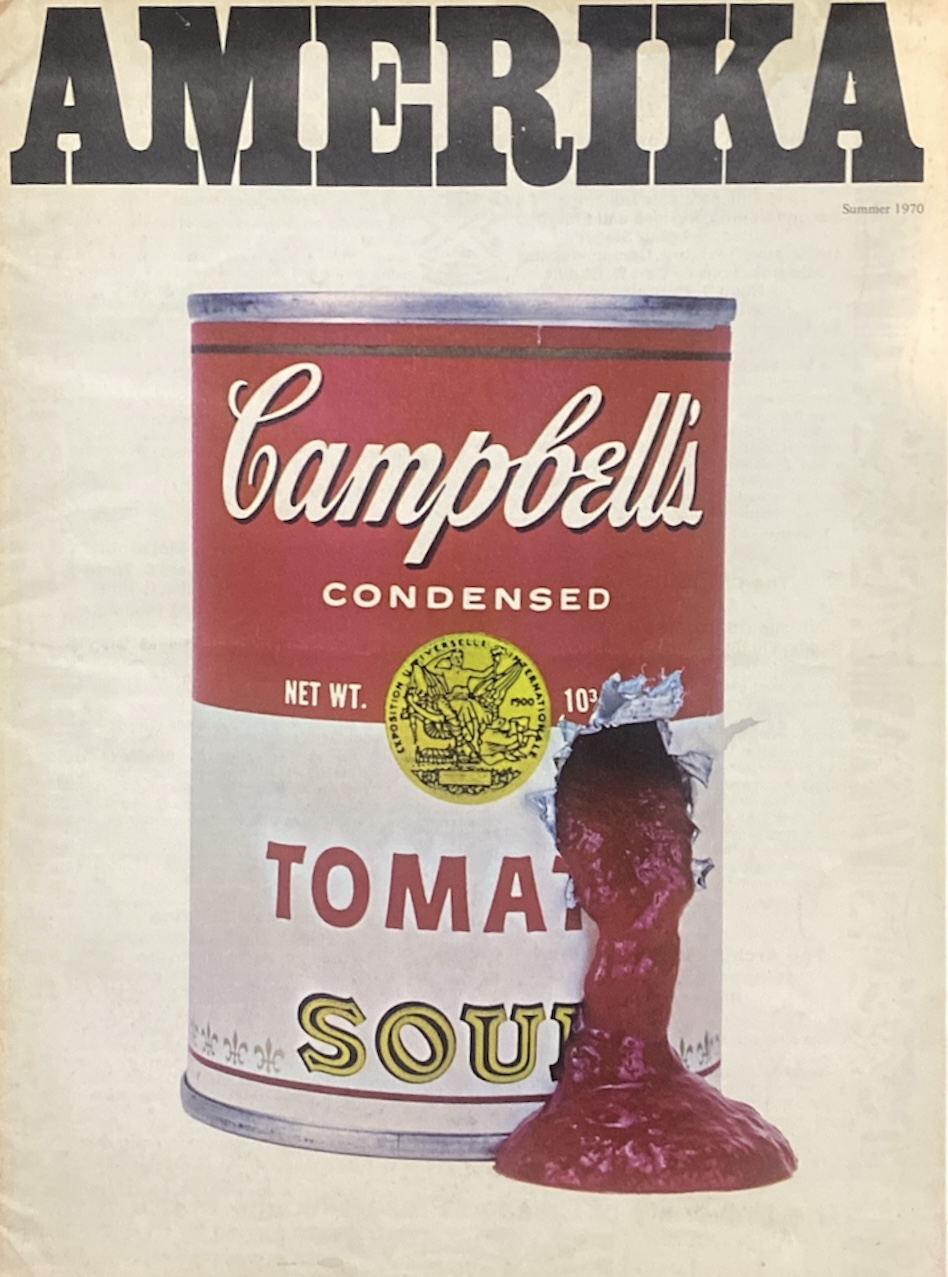
Mr. Black was a student at the University of Chicago and editor of the students’ newspaper, The Maroon.  AMERIKA was forced to change its name after the dummy issue was published and the first and only issue published was called PRINT PROJECT AMERIKA.

I reached out to Mr. Black to talk about the story of AMERIKA and to get an update on what he is up to these days.  He told me that he’s “back actually doing a publication. And this is an urgent time for magazines and newspapers. We must find a way of keeping them going, keeping them independent.”

In fact, Roger Black wrote this week on his Facebook page under the heading “ROGER BLACK’S FAREWELL TOUR?” Join me at Big Bend Sentinel, where a team of innovative journalists is redefining local news.  We’re testing two old ideas. In the video (that accompanied the post) watch for the key words: “fact” and “art.”

Mr. Black continued, “I started this tour in 1973 as art director of LA (1973). Now, as acting Art Director and non-profit chair, I’m back to weekly newspapers! The real work is done by a small energetic band of editors led by Rob D’Amico, Sam Karas, Mary Etherington, and Ariele Gentiles.”

He adds, “Can weekly newspapers survive and flourish? Can we hold onto local journalism?” 
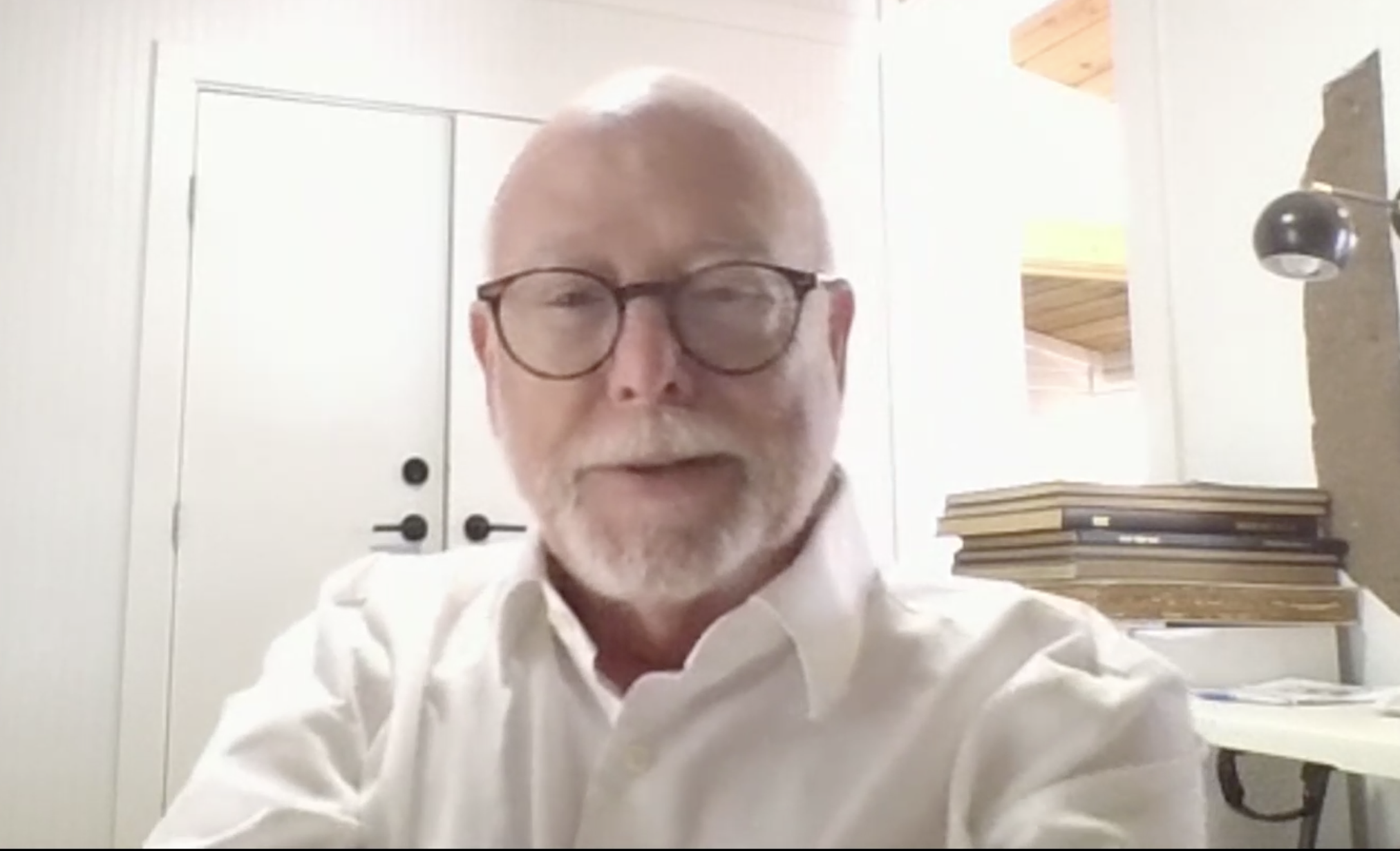
I reached out to Mr. Black to ask him about his original work on newspapers and magazines. I was mainly interested in the very first magazine, “AMERIKA” he edited while still a student at the university.  Needless to say, he is a wealth of information and he has left his thumb print on many national and regional publication throughout his career.  I hope you will enjoy this lightly edited conversation with a person who for years I called “a genius creative art director.”

Samir Husni:  You ask Chat GPT about Roger Black and it tells you, “Very influential in magazine and newspaper design,”  but no mention that you were an editor of a magazine back in 1970 while you were still a student at the University of Chicago.

Roger Black: Yes.

Samir Husni: And the magazine was called America with a K: AMERIKA

Roger Black: Well, that was the dummy. Later, it was PRINT PROJECT AMERIKA. There were only the dummy issue and the one and only first issue.

Samir Husni: So, tell me about your journey with AMERIKA.

Roger Black: AMERIKA was envisioned as Parade magazine (The Sunday newspaper supplement) for student newspapers.

In 1968, I was the editor of the Maroon, the student paper of the college at the University of Chicago. I must tell you, that was a very good year to be a student editor. And particularly in Chicago.

We had a lot of news. It was a big time for change. We started putting out a weekly magazine called Gray City Journal, which ultimately became its own publication.

So we started thinking that many student papers don’t have that kind of content. Harvard, Yale, and other elite schools do.

But in terms of magazine style, both entertainment and serious stuff, photojournalism and drawings, they didn’t really exist. If you go back and look at the 1960s’ student newspapers they were pretty dry.

A guy in the business school at the university, named Mark Brawerman, who is from California, came up with the idea.

A very sharp guy who just started school. He didn’t really have any business experience.

He thought that we could do this. One of the things that he did, and with my involvement, I thought it was a good idea, too, he started writing all the student newspaper editors and publishers saying, we have this idea.

Would you be interested in taking it? And we’re going to print a prototype, and you can decide. That was the reason for the prototype; we had to get the circulation.

I was interested in design. I had started doing some publication work before I got to college. I had a wonderful teacher named Robert Gothard, a famous typographer, who did student, alumni magazines, and other publications for universities and colleges and did other things, too. He was a great designer.

So, I got interested. He was the first art director of Print magazine, for example. I was really interested in magazines from really as a young kid. My mother worked for magazines.

We had written all these people, and we got enough responses that if we could print 200,000, we could have distributed them.

So I started working on the prototype. And it’s funny because my girlfriend at the time is listed as the art director. I don’t even remember her name now.

There you go. The prototype cover came from Kent State. It was from an art student there who did this kind of Andy Warhol homage after the Kent State shooting. And there’s more stuff of that inside. Anyway, I thought I could be a designer.

I looked at a lot of magazines. How hard can it be? So, I did this issue, this prototype. And by some wild set of coincidences, Sam Antupit, who is a great art director, the art director of Esquire at that time.

George Lewis did the covers, but he did the inside. And it was beautiful. He was doing a special issue of Print Magazine about magazines.

And he put this in a box called Hopeful Upstarts. We realized we were going to leave Chicago and move operation to New York. So, I got to New York and I looked him up.

And we had gotten some funding. We were starting to sell ads. But I couldn’t find an art director.

That was the funny thing. There weren’t a lot of people, if you think about it, Rolling Stone and New York Magazine only started in 1967. And before that, there were art directors at Esquire or at Town and Country or the fashion magazines, and Holiday magazine.

There were certain kind of visual magazines that had art directors. But National Geographic didn’t have an art director. Life Magazine didn’t have an art director.

It was not really one of those job descriptions that people, their mom said, you can be an art director. No one, no one really was thinking about that. And I couldn’t find any.

But Sam had this fantastic studio on, I’m going to say, East 52nd Street in a brownstone building. Later, the previous Citicorp Village was built there. But he was doing a bunch of different magazines out of the studio or doing designs, and redesigns.

He had a famous magazine artist, Richard Hess, who was his partner in that. So, it was called Hess and Antupit.

It was the name of the studio. And they were on the top floor. I was totally blown away how great it all was.

He did have student aides from SVA or Pratt or Cooper Union students working part time or as interns for him. What he couldn’t really recommend any other kids to be art directors. I finally came back and asked him if he would do it.

And by some miracle he said yes. And agreed to our price, which included all the type setting, all the illustrations and photos, the whole art project. He said he would do it for a fixed price.

I probably lost my shirt on it. He took over in that first real estate number one. It was really the designer’s Hess and Antupit.

I got to be the editor. So that was fun.
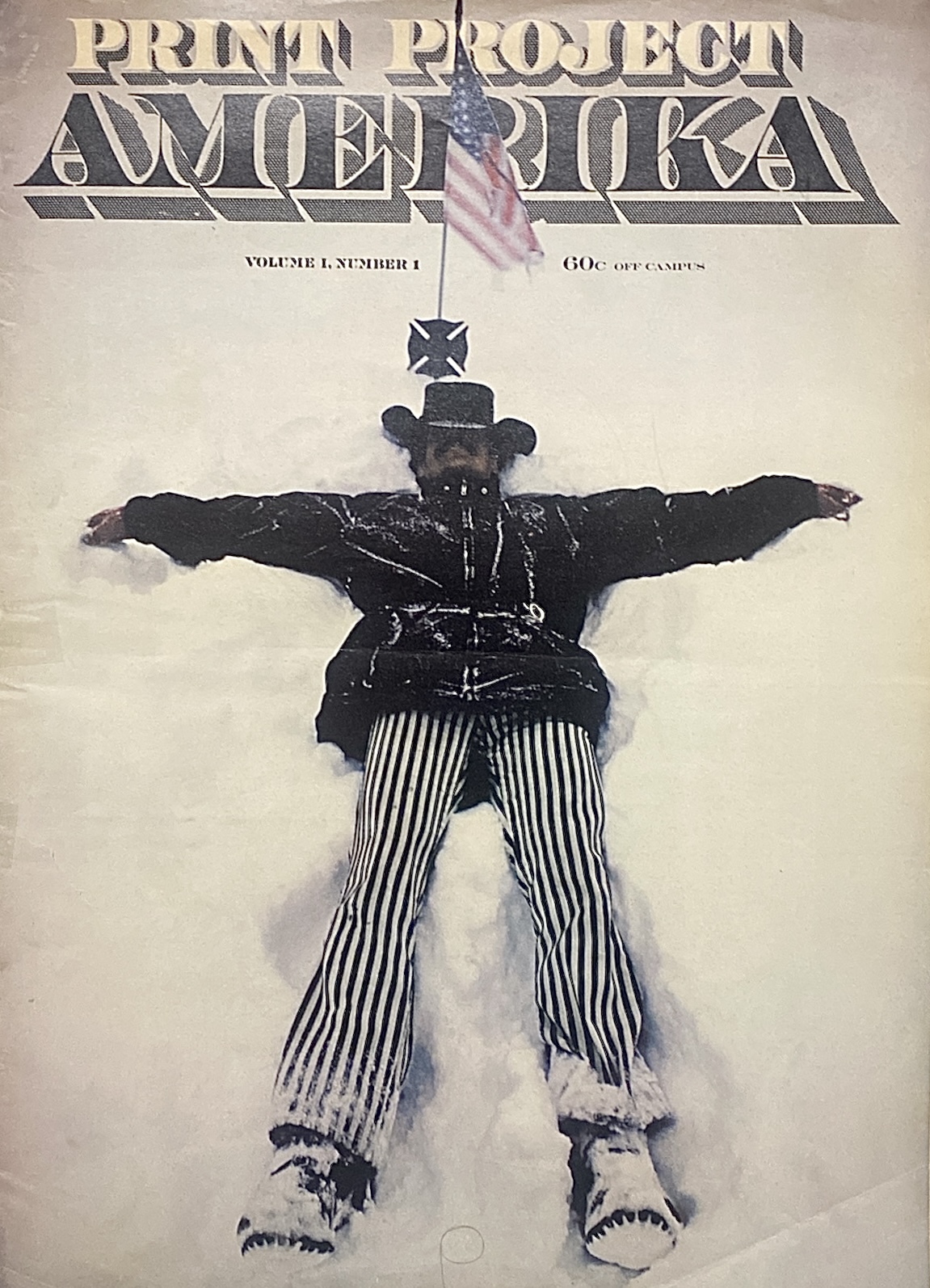
Samir Husni:  The dummy issue was called AMERIKA, and the first issue PRINT PROJECT AMERIKA, why did you change the name?

Roger Black: I’ll tell you the story why we changed the name.

We got a letter from the Catholic Church. They sent us an official letter saying that they have a magazine called America and we have the trademark, so you can’t use America even with changing the C to a K.

Of course, I knew even at age 20 that you can’t trademark a place name. You can’t put a trademark on America. So I wrote back saying, you can’t trademark a place name.

So, I’m ignoring their letter. They wrote back and said, well, how many lawyers do you have? Basically, I said, these people are going to give us a hard time. I’m going to just add a qualifier.

We added the phrase PRINT PROJECT AMERIKA.  We made it more experimental, new media feeling.

Samir Husni: The State Department didn’t send you a letter saying we have a magazine aimed to the Soviet Union called America.

Roger Black: Well, their magazine was only circulating in Russia. And we weren’t going to Russia. They are not allowed to distribute it here.

Samir Husni: In this digital age, where do you see print role?

Roger Black: Print magazines had a very good run. I like to say it was a hundred-year run. If you look at the magazines, like the late 19th century, magazines that started running art, photo engraving had come in.

They were impressive. And then you had with the invention, of rotary presses and linotype typesetting and all that. Magazines followed the newspapers in increasing press runs.

So you had the concept of mass magazines. That whole business model kept morphing. Everyone forgets about this, you know, like in 1995, the commercial web appeared and everybody said, oh, everything’s over.

But I don’t think the commercial web was much more of a kick in the head than the television. And before that, there was a similar abrupt change with radio. The idea that entertainment could just sit in your chair and not have to think and just listen.

Magazines like The Saturday Evening Post were really hurt by that. Because that was their position, at home after they were reading entertaining stuff. But they survived and they adapted.

I think that the biggest challenge for a contemporary magazine, and that also includes online, is the attention span problem and the way that the kind of addiction to the constant scroll, just going vertically with dozens of different things that you’re barely aware of what it is. You stop on a cat or whatever you want to look at.

That has changed dramatically in the last 10 years. We didn’t even know about TikTok 10 years ago. And Facebook seems for people my age now.

All that keeps morphing. Instagram had its moment in the sun. And everything, everything is always moving. My feeling is that print offers a new kind of respite for that.

In the way that radio seemed like a respite for reading. Print, going back to reading, is a relief from that addictive scrolling that everyone’s doing. Or just that very short attention span, you look at one thing, you look at another thing, you look at another thing.

That kind of short attention span gets tiresome after a while.  And why can’t I say that with any confidence? It’s because the long form media, like books or movies, are blasting ahead fun. I mean, movie says, the movie, the Hollywood studio business is once again in convulsions. With every year, there’s a headline that says, Hollywood is no longer the same. It will never be the same.

We don’t recognize it anymore. And they’ve been saying that since about 1920 since talkies came in. So that long form sitting in a movie theater or watching it on Netflix is a very compelling experience.

And people enjoy it. It’s still, there is a business model in the same way that music kind of changes business model from the time of the record business. Movies are too, but also books.

It’s very interesting to me to see things like the eBooks for the digital side, but also bookstores are coming back. There are new bookstores everywhere. And there are very niche bookstores.

Bookstores about cooking or bookstores about architecture. All over the place. It’s fairly like Marfa, Texas, where I am right now, it’s just a few thousand people, right? It has an extremely good bookstore that also has a quite a good art collection.

Now, Marfa may be a special town, they just finished a new library or a big addition to this little library in Marathon, Texas. Population 400. And every time I’ve been by it, it’s full.

A lot of kids. Why is that? Because there’s something very pleasant about holding a book and reading it. And getting it, one of the advantages that books have and movies have over the endless internet is that you finish the book.

I’ve read the magazine. I’m done. I finished The New Yorker.

Almost nobody can say that online. There is a real feeling of accomplishment. And of course, The New Yorker’s secret that Howard Gossage, the advertising man, pointed out when he was doing their advertising.

The cartoons in The New Yorker are the guilt reliever. Because you can go, page all the way through, get a few chuckles. You might read a talk piece or one or two other things.

And then you sit the magazine down and somebody says, and you mentioned something that you saw in The New Yorker.  I read it in The New Yorker. I read The New Yorker every week.

That’s a definite feeling of accomplishment. From a psychological point of view, there is satisfaction that comes from the phenomenon of the edition. This is a magazine.

This is the September issue of our magazine. Or this week’s magazine. Whatever.

And the same thing. You get to feel like you finished it. You go through it.

The online newspapers, you never finish. The digital crowd is very surprised that people like the PDF replicas of newspapers. Like The Dallas Morning News now presents that first.

If you go to their website, you get the replica first. Then you get the actual website. Because people know how that navigates.

They know where their stuff is. Everything’s in a familiar place. And things like PressReader made it increasingly easy to read on different devices.

The feeling about sessions, session time, completing an edition, very important. I think that magazines, in the same way that I think anthology, television like 60 Minutes will go on despite everything else. Now we still must work on the business model.

The numbers are much smaller than they used to be. We’re not doing mass magazine. But I think that quite a few people, we see people getting in and surviving.

And it’s delightful.
Samir Husni: Mr. Black, if someone comes to you and says, I want to start a new magazine, what do you tell them?

Roger Black: I really ask them, who’s your reader? I think it all starts with the reader.

Who is it you’re trying to talk to? Have you talked to them? You communicate with them. And I think that’s the way that we all got in the media have gotten in trouble over the years, is that we think that we’re the media. And it’s a two-way thing.

Reading is interactive. And I continue to find, maybe it’s because of my extreme age, I find reading the most effective kind of communication. It’s faster, it’s cheaper, and it’s inexpensive, as opposed to a video that you do on TikTok or YouTube.

That’s an effort. It’s a production. Maybe we don’t have a TV station like we used to.

And we’re relying a lot on Apple and the others to fix our video for us. But I think that having a group of people just writing, taking pictures and putting them together into a magazine, is very low cost compared to what the big guys are trying to do. And I think you can, if you make it good.

If you connect with the reader, it can work. And it doesn’t have to be high art. It doesn’t have to be the kind of level of journalism you’d expect in The New York Times or something else.

But if it can be good and readable, and is hitting a chord that people like, I think you can make it. One example you mentioned, Arena, the Santa Fe magazine, which is two old, French, encrusted print guys. One, John Miller, worked with me.

Owen Lipstein, somewhat controversial publisher from New York, who was the publisher of Smart Magazine, which I did in the late 90s with Terry McDonnell, only 13 issues ever published. Anyway, they got the idea of doing a big fat real estate magazine in Santa Fe, which of course, people in Marfa would say that Santa Fe is a real concoction of the real estate salespeople, which it may or may not be. But what they did to get the content, because they didn’t have a huge budget, and none of this stuff, no one is paying what Vanity Fair is paying.

I don’t think even Vanity Fair’s paying what they used to pay. But what John Miller, the editor there, and designer, did was to just do a lot of interviews. He had video, and some of the interviews were trimmed to just be the answers.

It was like a first-person article. Sometimes they would have a lot of pictures of their home, or they would go there. Sometimes it was just pick up what they could provide, the decorator, the designers, pictures of the house or whatever, or their potters, and they had stuff on their website.

Just thinking about it carefully and making it interesting with interesting people.

Basically, it’s all about the people in magazines. So you start with the reader, but then you give them stories about people to read.

That’s basically the core of every good magazine.

Samir Husni: Before I ask you my typical two last questions, is there any question I failed to ask you you’d like me to ask?

Roger Black: I sort of expected you to say, why are you still doing this? Which is funny, I don’t know what else I would do. It’s like somebody says, why do you have this place in Texas out in the desert? And my answer is, I can’t think of anything, any other place I’d rather be.

I can’t think of anything else I would rather do than try to work with typography. We have Type Network, I’m chairman of Type Network, and we’re doing a wonderful collaboration with 100, more than 100 type designers and type founders with special custom design projects. Some of it is consulting, and some of it is type design.

I’m not a type designer, but I can connect them to the market. It’s a very small operation, but quite fun. I want to keep working.

My father worked till he was 80. And then, even later, he said, I never should have quit. So, the next question is, what are you doing now? As well as Type Network, I’ve come out to Marfa, and I’ve taken over by starting a new non-profit with Don Gardner from Austin, and Gonzalo Garcia Bautista from Mexico City.

We have started a non-profit, and we are now publishing this paper, which you can go to at BigBenSentinel.com. You can join and get the PDF, or we’ll mail it to you. For 60 bucks, we’ll mail it to you.

Folks, that price is going up, so act now.

Samir Husni: If I come unannounced to your house…

Roger Black: In Marfa, now? Well, it’s a marathon.  I also hang out in Florida. We’re still repairing from the hurricane last year.

And I have an apartment with my husband in Oslo, Norway. So, I kind of am nicely balanced.

Samir Husni: So, if I come unannounced one evening, what do I catch Roger Black doing to rewind from a busy day?

Roger Black: Reading. I’m still old-fashioned.

Samir Husni: And what keeps you up at night?

Roger Black: I don’t stay up at night. I am a great sleeper.

I don’t know why. I go to bed early. I go to bed by 11 or so.

In the old days, I’d stay up late. My peace of mind results from, as you get older, you realize you must let things go and become balanced, or you’re always anxious. The other thing that helps me, has helped me in my whole life, is I have a colossally developed ego.

It doesn’t occur to me until years later that I could be wrong. It’s like later people point out, that was a complete disaster. And I say you’re right.

I was completely unaware of that at the time. And I still, you know, it’s like I tried to do that thing, Screensaver, I thought we could do a technology solution for reading digitally. And it turned out that it didn’t work beautifully.

It turned out that the publishers didn’t have a business model for that. So, I do find myself waking up sometimes and thinking about those things. But I go right back to sleep.

I’m not what you’d call a troubled old man.

Samir Husni: Thank you. Take care. Have a great day.

h1

Quiltfolk & homecooked: Two Successful Ad-Free Magazines Led By Publisher Michael McCormick. The Mr. Magazine™ Interview.

September 2, 2025

Cooking and quilting—two hobbies that require a lot of love and patience—find their match in homecooked magazine and Quiltfolk magazine, each providing that same love and patience to their audiences every quarter. These two beautiful, ad-free publications bring a tactile experience to two tactile crafts.

Michael McCormick is the young man behind both magazines. He started Quiltfolk nine years ago and launched homecooked just last year. You may ask, why would a young man start two print magazines in this digital age? His answer is simple: “I love magazines, and I believe in the business model.” It’s a model that has served him well with Quiltfolk and now with homecooked: 164 pages, no advertising, and excellent content. Each issue carries a premium price—$22 on the newsstand, or $16 per issue by subscription.

Michael is quick to credit his success to the art of storytelling and the tactile nature of his products. His passion for these topics is evident in every issue of both magazines. He is constantly on the road, searching for stories to tell, and focuses on one region at a time. As one Facebook ad for homecooked puts it: “You’ll read it like a magazine. And keep it like a cookbook.”

I had a fascinating interview with Michael, where we discussed both magazines, his love for print, and the challenges of owning a small business. Without further ado, please join me on this journey with Michael McCormick, publisher of homecooked and Quiltfolk magazines.

But first, the soundbites:

On the reasons he is publishing printed magazines: “I’ve always loved magazines, I believe in the business model fundamentally, and we like storytelling. I think the combination of storytelling, the tactile nature of what we’re producing, and just an underlying belief in the business.”

On why “Live to eat and not eat to live”: “It would make sense that we wouldn’t just do it just to live. It’s not just like breathing or whatever, it’s an outlet. I would say the same thing for quilting.”

On whether the ad free business model is working: “Yes, it’s working. If you a single issue, it is $22. And when you join us with a subscription, you get a discount plus you get a free issue. It works out to be about $15 or $16 an issue for your first year.”

On the challenges of owning a business: “Owning a business, no matter what it is, it’s just never a straight path. It’s never a straight line.”

On using Facebook for marketing the magazines: “That’s pretty much our number one paid platform would be Facebook and Instagram.”

On the reason for regional coverage of each issue: The “reason why that makes sense for us is that both Quilts and Food, you do have regional differences and curiosities and different pockets of the world that you get to explore.”

On what he does to recharge at the end of the day: “I would say right now in this stage of my life, there’s not a lot of recharging, relaxing. It’s sort of we’re going 100 miles an hour from usually 5:30 in the morning till 8:30 at night.”

On what keeps him up at night: “The answer is always, at least for me, it’s always cash flow.”

 And now for the lightly edited interview with Michael McCormick, publisher, Quiltfolk and homecooked magazines:

Samir Husni: My first question to you is, why would a young guy like you start a print magazine in this digital age?

Michael McCormick: Actually, I don’t know if you know this, but I have another magazine called Quiltfolk that we started about nine years ago that’s very similar to homecooked. It’s very similar format, 164 pages, no ads, we travel around.

And why? I’ve always loved magazines, I believe in the business model fundamentally, and we like storytelling. I think the combination of storytelling, the tactile nature of what we’re producing, and just an underlying belief in the business, I think, why not? I mean, there’s not as many people doing it. I feel like in a way it’s a little bit less competition, we get to go out there and make the thing that we really want to make, and we love doing it.

Samir Husni: Both magazines deal with tactile issues, Quiltfolk and homecooked. Are the printed magazines a reflection of the concept of the two magazines?

Michael McCormick: I think so. I think especially for quilters, that’s the space that I know the best.

They are tactile, and they’re getting that joy and that pleasure from feeling their materials and sitting down in quiet time and producing something that means a lot to them. Quilts hold a lot of stories in them. And then food, it’s amazing, the similarities between food, cooking and quilts in that way.

A lot of times it’s something you’re making for somebody else, it’s creative, it’s traditional, but you can also put a new spin on it. So, there’s a lot of overlap there, and I think the audience is to your point, appreciate being able to hold something in their hands and pass it around, and even enjoy it in a quiet setting.

Samir Husni: I read an article in the first issue of homecooked, “Live to eat and don’t eat to live.” What do you mean by live to eat, but don’t eat to live?

Michael McCormick: It was a quote from somebody in the article, but I think just on the topic we’ve been discussing, There are things we do every day, like as an example, eating and preparing food, that you can put a little bit more care into, a little bit more creativity, elevate those things into something that expresses who you are and what you love a little bit more deeply. And especially with cooking and food, we’re doing it multiple times a day, all the time, all around the world. We’re doing it with people that we love in the spaces that are the most intimate to us.

So, it would make sense that we wouldn’t just do it just to live. It’s not just like breathing or whatever, it’s an outlet. I would say the same thing for quilting.

You could just have a blanket, but in the case of quilting, that thing is with you when you’re sleeping on your bed and again, in the places that are the most used. So, as humans, we find ways of adding our own personal spin and our passion and our creativity into the things that we spend the most time with. I think that’s one of the uniquely fun things about being human.

Samir Husni: You utilize an advertising free model and even no sponsorships, nothing. 164 pages of editorial and a hefty cover price of $22.  Why do you believe this business model works or is it working for you?

Michael McCormick: Yes, it’s working. If you a single issue, it is $22. And when you join us with a subscription, you get a discount plus you get a free issue. It works out to be about $15 or $16 an issue for your first year.

I don’t think it’s astronomically more than a lot of other newsstand prices. It does catch people off guard the first time that you see a magazine that’s priced at that price point. But we believe in the model because in the end of the day, people will pay for stories and content, they love and that they enjoy that inspire them.

So, for me, it’s not so much will the customer pay, it’s can we produce the kind of magazine that they really, truly love and that has the potential of transforming their lives? Because if that’s the case, whether it’s $15 or $20 or whatever that price point is, it’s still a small price to pay for, what in a perfect world, they’re getting back from us.

Samir Husni: Since you started Quiltfolk like nine years ago and now homecooked, has your journey been a walk in a rose garden or there have been some challenges?

Michael McCormick: Owning a business, no matter what it is, it’s just never a straight path. It’s never a straight line.

Sometimes maybe for a selected few people, but most people, it’s full of ups and downs. That’s certainly been my experience. I tend to always be overly optimistic about how long it’s going to take us to hit certain goals.

On one hand, that’s frustrating because I always feel like we’re sometimes missing the mark. On the other hand, I think that optimism is probably why I felt we could start a print magazine in 2024. But I would say the education of the customer, in terms of what we really are, is difficult because when you say the word magazine, particularly now, people have a specific idea of what comes to mind.

It’s usually thinner and there’s ads and whatever that is, what we expect from a magazine.  The process of trying to educate the audience is what we’re trying to and this is what makes us different It can take a lot longer than we anticipate. It’s been a slow but pretty steady climb, I think for us in terms of subscriptions.

We’ve been fortunate. But it’s always something, if it’s not selling things and whatnot, it’s something else, it’s paper costs or shipping costs or whatever it might be, there’s always something going on.

Samir Husni: How are you marketing the magazines? I first saw it on Facebook…

Michael McCormick: That’s pretty much our number one paid platform would be Facebook and Instagram. And then we are on newsstand for homecooked, which we think more as a marketing value to us just to get us out in the world.

It’s really word of mouth. I would say paid Facebook, Instagram to kind of amplify that message.

Samir Husni: With homecooked, with every issue you concentrate on an area, either a region or a city, why is that?

Michael McCormick: Well, it’s two reasons.

And they’re very different, but they come together, which is great. The first reason is, it’s just more cost effective to, because, let me back up. One of the things that’s different is we send photographers and writers on the road for these issues that we produce.

So, I just got off the road from Kentucky a week before that we were in Coeur d’Alene, Idaho. And so, we’re in their homes, in their spaces, in their studios, on the road for two weeks at a time at the bare minimum to produce these issues. It’s very difficult logistically.

And from a cost standpoint, if we were doing that, across the country, across the world. So just logistically, it allows us to do what we want to do, which is be on the ground in person with our crew.

The second reason why that makes sense for us is that both Quilts and Food, you do have regional differences and curiosities and different pockets of the world that you get to explore.

So one thing we like to do is say, hey, look, there’s this through line of people who are passionate about cooking as an example. And there are things that they do that are the same. There are values that they share that are the same.

But also, when you’re doing that in Louisiana versus the Pacific Northwest where I’m from, you’re working with different ingredients, you’re working with different cultural things that add a little spice and a little bit of uniqueness to those home cooking dishes. So for us why not celebrate that? Why not lean into it and just make that both logistically make sense and editorially provide like a backbone for the way we do storytelling.

Samir Husni: If somebody comes to you and say, Michael, I want to start a new magazine, what do you tell them today?

Michael McCormick: I would say, well, the piece of advice I give people for starting anything is if it takes twice as long as you think, and it’s twice as expensive as you think, and you still want to do it and can afford to do it, then you’re in the right framework for kind of tackling that.

It’s just starting stuff is difficult no matter what it is, whether it’s a magazine or an app or anything like that. So just going in with the right mindset of knowing it’s going to be like a lot of pushing and a lot of getting that flywheel spinning. I think that’s important.

But from a magazine specific standpoint, I would say, make the thing that you really want to make. Don’t worry a lot about what’s out in the market or what people have done before. Just try to make the thing that really excites you that you believe other people will find valuable.

Then you just must have a crazy conviction for that. And you must be willing to adjust and pivot as time goes on. And that’s exactly what we did with homecooked.

We had the core of the idea, but I would say this first year has been a lot of trial and error, a lot of learning. So, the North Star remains where it’s always been. We know the product we want to make, but the whole team has worked hard to try to figure out how to get there.

So, it’s not, again, been a straight road. It’s a lot of trial and error and you must be kind of prepared to go on that journey.

Samir Husni: Can you pinpoint a major challenge that you faced and then you’ve overcome and how?

Michael McCormick: The initial marketing launch of homecooked was slower than I thought it was going to be.

It took probably four to six months to really figure out the messages that were resonating with folks online. So, you can imagine during that first four to six months, you got a lot of cash burn. There’s a lot of frustration because we’re producing this great product.

Everyone likes it. We believe in it. And you have enthusiasm on one hand, is at an all-time high, because you just launched something, but you’re not seeing things necessarily respond that way in the market when you first start.

That was very difficult. Thankfully, our team kept going, kept working on that. Now we’re in a good spot, six, nine months later, we’ve found our voice a little bit and settled in and things are coming along much better.

Samir Husni: Is there a question that I failed to ask you you’d like me to ask?

Michael McCormick: I don’t think so. Hopefully those answers are okay.

Samir Husni: My typical last two questions are, one, if I come uninvited to your house one day in the evening, what do I catch you doing to rewind from the busy day?

Michael McCormick: If you came to my house right now, I would be chasing my three children.

They’re six, four and two. And then my wife’s also pregnant with our fourth. She’s due in a couple of months.

I would say right now in this stage of my life, there’s not a lot of recharging, relaxing. It’s sort of we’re going 100 miles an hour from usually 5:30 in the morning till 8:30 at night. My wife and I get a half hour or so to catch up on the day.

Then we’re usually in bed and trying to get ready for the next day. So that’s sort of what it’s like right now.

Samir Husni: And my typical last question, what keeps you up at night?

Michael McCormick: It’s a small business. The answer is always, at least for me, it’s always cash flow. We bootstrap everything and we’re always constantly working on sales and managing costs and trying to balance what we can build and how fast we can go with what we have. I’m always paranoid about that. I’m always working on sales, and the team knows like Monday morning when I got off here, we’ll have a marketing call.

We’ll review our numbers. I’m pretty dialed into that. I would say around the clock, even when I’m sleeping.

Samir Husni: Thank you and all the best.

h1

Eric Hoffman To Samir “Mr. Magazine™” Husni: We’re Fundamental Believers In The Power Of Our People, Our Creativity, Our Brands Being Authentic.”

July 28, 2025

Honoring their mom’s legacy, Eric Hoffman and his twin brother Brian Hart Hoffman, are leading Hoffman media to new heights, two years after Hoffman Media founder Phyllis Hoffman DePiano died.  Eric is the CEO of the company and Brian is the COO.  Eric brought the business to new heights and Brian brought the content to new heights.  Between the two of them, Hoffman Media is a thriving magazine, video, events and book publishing business.

I had the opportunity to interview Eric Hoffman who is determined on focusing the business.  We talked about the new book publishing venture, the new business model for the magazines, the events and retreats that Hoffman Media is hosting, and the video shows and programs.

Eric is very optimistic about the future of the business and places the biggest bet on his people.  He places, in his words, “a lot of emphasis on our people and values our company culture, being a family business.”  He is both happy and proud that it is a family business and that they have no outside investors.   He told me, “Being family owned and being private and not having outside investors, it gives you a lot of latitude that, unfortunately, our industry, so many along the way, have been bought, sold, bankrupt, shut down, relaunched.”

As for AI, Eric is joining The Magazine Coalition in an advisory capacity and is working with Michael Simon to ensure that magazines receive what they deserve from the AI companies.  Eric is quick to mention that “100 percent, we will never be creating content with AI.”

So, without further ado, please join me in reading what Hoffman Media is up to and enjoy my interview with Eric Hoffman, CEO, Hoffman Media.

But first, the soundbites:

On the new book publishing business: “Our imprint, 83 Press, 83 as a nod to 1983 when she (Phyllis Hoffman DePiano) started the company.”

On the event business: “For example, Bake from Scratch magazine alone will do over 15 events all around the world.”

On the magazine business: “In the core magazines, you’ll see that we still very much value print. We value our print media. But magazine revenue is only about 50% of the company’s total revenue now. Much in part to subscription, it’s still a very stable business.”

On the new offices in downtown Birmingham: “The creative center that we have now really does lend itself to thinking about the future of the business with digital, with video. Our test kitchens are second to none.”

On what should AI companies offer the magazine companies: “I do think that there are some clear opportunities for the publishing industry to flex that muscle and have the proper representation to let the AI world properly compensate but also let publishers then have a true path to partner.”

On a major highlight of his tenure at Hoffman Media: “I would say that 83 Press, our book publishing side.”

On the role his twin Brian plays: “What he’s done is taking his passion for travel and his passion for baking and really build something that harnesses all that.”

On what keeps him up at night: “What keeps you up at night is the several places in this business that can scale, well beyond where we are today.  We are about 33 million in revenue and, my brother and I’ve set the target that we can reach to 50 million in the next five years.”

And now for the lightly edited conversation with Eric Hoffman, CEO, Hoffman Media:

Samir Husni: It has been a little bit over two years since your mom died and you and your brother, took the lead and moved Hoffman Media into new grounds. I know you’re a private company, but imagine you are reporting to a shareholder meeting. What would you tell them? What have you done in those two years?

Eric Hoffman: Sure. First, we very much honor her legacy. We place a lot of emphasis on our people and value our company culture, being a family business. I would say that the biggest thing that we’ve tackled over the last couple of years is focusing the business. We had 11 magazine brands.

We consolidated a couple of them, so we have eight magazine brands today. But what we found is that there’s significant growth opportunities in our book publishing business. Our imprint, 83 Press, 83 as a nod to 1983 when she (Phyllis Hoffman DePiano) started the company.

Our book publishing will be approaching close to 30% of our revenues this year. Then the event side of the business is just amazing. For example, Bake from Scratch magazine alone will do over 15 events all around the world.

We’ve got events in France, Sweden, Italy. We’ve got two next year in Japan. We’re seeing an amazing way to take the core magazine brands and build out the other revenue streams in a significant and very intentional way.

Going through the journey of losing her, it allowed Brian and I to really challenge the business model and figure out where do we want to focus going forward. In the core magazines, you’ll see that we still very much value print. We value our print media.

But magazine revenue is only about 50% of the company’s total revenue now. Much in part to subscription, it’s still a very stable business. We’ve pulled back a lot on the newsstands.

Newsstand used to be, as you know, a very large piece of our business. It’s not even 10% of the revenues now. We’re focusing a lot more on subscription.

Then on the digital side, we’re doing a lot more with video. We’re in our fourth year of a wonderful partnership with Williams-Sonoma. In fact, it’s Monday, so today is Baking School. Monday nights at seven, we do a live baking class. We film it right out of our studios in Birmingham and have several hundred attendees participate online.

It’s become a great brand builder. If I was to say, what have we done the most, I think focus keeps coming to mind. With that, 2024, we produced revenue growth and profitability growth, which is exciting.

Coming into 2025, we’re feeling great about the pipeline that we’ve got. I will say that even just in the core business, what we found is advertising is growing. We were up double-digit last year.

I think we’re tracking to beat that number again, probably up another 10%. We’re seeing advertisers are valuing the quality of the readership, which you and I have talked about for the better part of 18 years now. We’re seeing that shift to where people want high quality, they want engagement.

One of the things that Hoffman Media can bring to our clients is we’re great at the content business. We’ve been producing content for over 40 years. Now we’re able to turn the power of the publisher to the benefit of the client.

We’re doing a lot of interesting things like developing cookbooks for our advertising food brand clients. We’re doing video where we’re leveraging our test kitchens and our video teams. It’s been really exciting to see that shift.

I told this story the other day, and you’ll really appreciate this. When I joined Hoffman Media in 2007, the business was about the same size as we are revenue-wise today. Think about that.

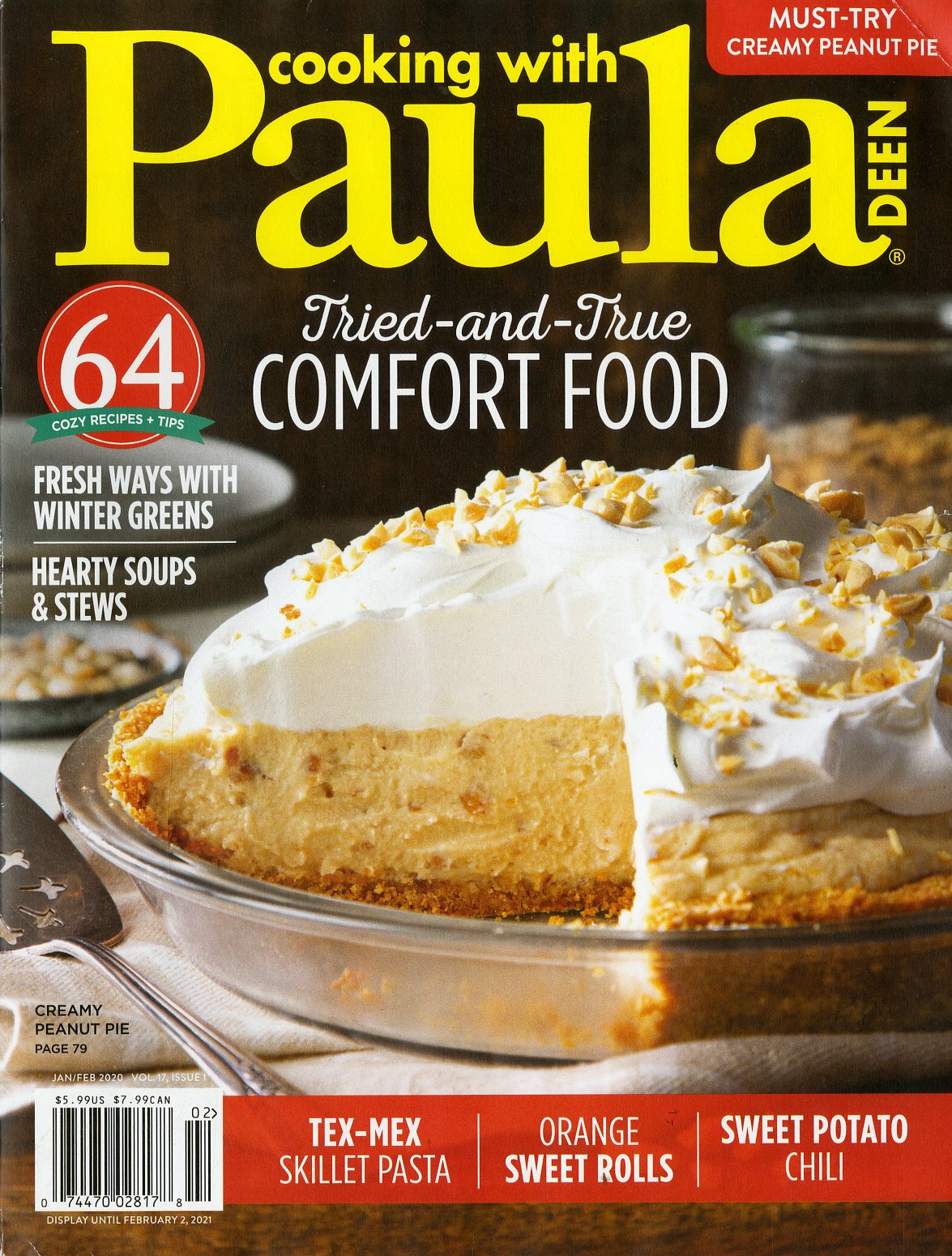
We were 100% magazine, and probably 30% to 40% of the business was newsstand. But in totality, Cooking with Paula Deen magazine was over 80% of our revenues. We had private equity owners that owned half the business.

If you look at the 18-year progression of being with the company, not only Cooking with Paula Deen’s magazine sunset last year, so it’s not even in the business. We’ve shifted the business entirely to offset that. Along the way, we ended up buying out our private equity investors in 2012.

It’s just been a long but exciting journey. I must get you to Birmingham. One of the things we did coming out of COVID, we bought a building downtown Birmingham right in the heart of the city and redeveloped it.

The creative center that we have now really does lend itself to thinking about the future of the business with digital, with video. Our test kitchens are second to none. We’re using that.

We do a lot of consumer events in our space. We host advertisers in our space. It really gave us that thrust forward to lean into where we think the future of the business is going.

It’s been exciting. Mom got to see that project come to the finish line. We keep her office for her there every day. My brother and I, keep a lamp on her desk. It’s still there. Can’t touch it. Don’t turn it off.
Samir Husni: That’s great. You’re keeping up with the change. Change is happening faster than any time in our lifetime.

Where does AI fit in all the change that’s taken place? Do you use it? Is it a thief? Is it a helper? Where does AI fit in the equation of what you’re doing?

Eric Hoffman: I would say one is, I think we’re early in thinking about AI. 100 percent, we will never be creating content with AI. We’re fundamental believers in the power of our people, our creativity, our brands being authentic.

We always want that to be a pillar by which we stand on. But if you think about processes and things that can be automated, sure. There’re some things that we’re looking at.

But again, I would say we’re early in it. I have followed closely, in terms of the industry, just what’s going on. I know that Michael Simon and his team with the Magazine Coalition is certainly resonating very well with us.

We’re joining the Magazine Coalition. I’ve asked to help Michael in an advisory capacity to really get some momentum because I do think that our industry needs to have the proper representation. I think that the AI companies must accept that they’ve done things to violate copyright and learn off the backs of publishers.

I would say, I think enthusiast publishers that have very niche content that’s very deep in nature. I think there’s some things that will play out there. I think there’s been precedent with a lot of the larger publishers have already had settlements and licensing agreements put in place.

Gaining some traction there for the rest of the industry is important. I chaired IMAG back in the day when all the independent magazines association was together. I got to see it very young in my career, the cohesiveness of our industry, enthusiast publishers, independent publishers from across the country coming together and sharing in our learnings and having that representation.

I would say that some of that’s not as in place as it used to be with some of the consolidation with associations and everything else. I do think that there are some clear opportunities for the publishing industry to flex that muscle and have the proper representation to let the AI world properly compensate but also let publishers then have a true path to partner. That’s still early, but there’s something coming there.

I’m excited to help Michael and his team there.  I think there’s a lot of action there.

Samir Husni: Is Bake from Scratch now the cornerstone of Hoffman Media? It just celebrated its10-years anniversary.

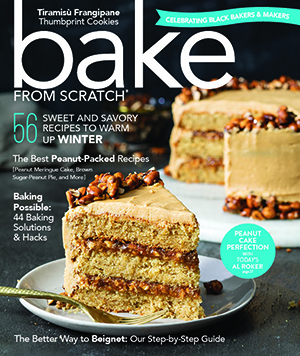
Eric Hoffman: Yes, Bake from Scratch is our most profitable brand. It is by far and away our most followed digitally on social media. I would say that when you think about just the quintessential enthusiast magazine brand that started with a newsstand special, we tested it, saw that we had something there, got the subscription side going. I give 100% credit to Brian.

He came up with this idea truly from scratch.  He’s just plowing his passion and energy into that brand. It’s very reminiscent of how my mother started the business with her own interests and her own hobbies.

We have an annual cookbook. We have these events around the globe. We’ve got this Monday night video partnership with Williams-Sonoma, that is a real revenue generator, and the magazine. It’s the model by which we think about on a go-for basis, and how can we get our other magazine brands to replicate that. It’s incredible.

Kudos to Brian, Brooke Bell, our test kitchen, and our video team. Really the organization, everyone that touches that magazine has just done a fantastic job. It’s quality in everything we do. It’s truly every recipe, every video, every event, every page. It’s intentional and there’s a lot of good people that are spending time thinking about it and how to continually improve.

We’ve got seven other magazine brands, so I’m not going to say it’s the cornerstone, but it is our perfect business model and how we want to continue to grow the rest of the business.

Samir Husni: Are you continuing to shuttle between New Orleans and Birmingham?

Eric Hoffman: Yes. My wife and I and kids, we just hit eight years living in New Orleans, a city that we absolutely love. I’ll be in Birmingham next week, and then again, the following for a few days. So, I do make it back.

One of the benefits coming out of COVID is our people, we really wanted them to enjoy the flexibility of being able to do what we’re doing right here. So, we’ve embraced the meeting cadence and a lot of our communication away to where we can do video. When we do have in-person, it’s very intentional around strategic planning and kind of getting the whole team together. It’s great.

It’s not that far away.  I love getting back. But yes New Orleans is home. Been here eight years. It’s a wonderful city. There’s no other place in the world like it.

Samir Husni: It sounds that the last two years has been a walk in a rose garden. Did you have any challenges, or it was smooth sailing?

Eric Hoffman: No, we had a lot of challenges. Unfortunately, mom passed away in July of 2023.

And frankly, the business was having a bad year. Our labor was running too high, cost in general coming out of COVID. We saw enormous pressure.

One of the hardest things I had to do that fall is to do the company’s first ever reduction in force, which you hope, as an owner and as an executive, you never have to go through that. I would tell any executive that. But it forced us to focus the company. We had to do some things to get the business profitable and having the right people in the right places doing the right things.

Systematically going through that, while it was tough, it positioned the business and in going into 2024 to enjoy the benefits of that and then be able to make investments in the growth side of the business. So, yes, certainly had some challenges.

Samir Husni: And what if you can pinpoint one highlight that was like the this is the best we’ve done in the two years? What will that be?

Eric Hoffman: I would say that 83 Press, our book publishing side, we were doing some amount of book publishing on a one-off basis.

Coming out of pandemic, we started doing some custom, authored work, mainly with social media influencers. Brenda Gantt Cooking with Brenda Gantt is an amazing business partner and she took a bet on us to be her book publisher. That jumped the business full into book publishing.

We followed that, by doing the Cajun Ninja’s book, social media guy out of Louisiana, saw great success there. Then as we kept looking at how we could grow, it finally became obvious that we needed an executive to own and run that that business. And so, we added Kristy Harrison to our team. She is a 20-plus year veteran of Time Inc. She joined us as a C-level executive to run the book business.

Back to my point on focus, now that we have that focus, we’ve got business development, outside sales and the pipeline is great.

We’ve got amazing projects coming out this fall and we’ve already got our 2026 pipeline well underway. That’s been fun to watch.

Samir Husni:  I know you don’t travel as much as your twin brother Brian.  I follow Brian on Facebook and he’s a jet setter. Last week he was flying back from Japan. He was in Paris a few weeks ago. And then before that, Italy and Sweden. Is it all for Bake from Scratch or he’s promoting the entire Hoffman media?

Eric Hoffman: The entire business for sure.

Several of our other magazines we have, are doing these tours as well. What’s great about all the countries you named is he’s going into these markets, capturing content that’s feeding the upcoming issue that is themed.

It could be Irish baking issue, or it could be French baking, whatever it is. But then we’re allowing that content to lead into releasing a retreat the following year.

Samir Husni: So, there is a system to what he’s doing. A method to the madness.

Eric Hoffman: Yes, exactly. But again, back to channeling that passion. What he’s done is taking his passion for travel and his passion for baking and really build something that harnesses all that.

We’ve thought about do we get into television? He’s got the personality. He’s got the opportunity. Are there longer show formats? Are there other retreats that we can do? When you look back, you think we’ve done like San Miguel, Mexico, we’ve done Paris, we’ve done Sweden, we’ve done Italy, and we are doing Japan next. It really is amazing to think about a business like ours right from Birmingham, Alabama, that’s doing these tours on a global basis. So it’s exciting to watch.

Samir Husni: My typical last two questions are, if I come to visit you one evening unannounced, what do I catch you doing? Cooking, watching TV, having a glass of wine.

Eric Hoffman: Well, Samir, today is Monday. In the Hoffman house, we have Monday night, steak night. It’s a family tradition we started probably three years ago and do just about every Monday night. Have a couple of ribeyes we share as a family, maybe one good glass of wine.
We love to cook. So, if you caught me at home, I’d be doing something in the kitchen for sure.

Catch me on a weekend, probably go out to dinner somewhere. New Orleans has obviously no shortage of restaurants here. Amazing food.

So, but yes, that’s tonight. Tonight’s steak night.

Samir Husni: And my final question is, what keeps you up at night these days?

Eric Hoffman: What keeps me up? I keep going back to focus. Being in a in a creative business, you must decide if you’re looking at the next big, great idea or if you’re looking at a shiny object.

Being good at saying no to things can get you further down the road. We’ve tried to do is. Get more intentional about where we’re going to place our bets and where we’re going to push for growth.

We’re way ahead of where we would have been otherwise. Trying a lot of things are good, being able to do it a calculated way.
What keeps you up at night is the several places in this business that can scale, well beyond where we are today.  We are about 33 million in revenue and, my brother and I’ve set the target that we can reach to 50 million in the next five years. There’re certainly some places where we look and see that opportunity.

Scaling the advertising, the event business, the book publishing business. We’re looking at digital memberships to some of our brands. And so. It’s a good problem to have, but what keeps me up at night is how to focus the organization and do it the right way and how do you fund it? How do you do that?

We love the business. We got a long view of what we’re doing. And I think it’s great. Being family owned and being private and not having outside investors, it gives you a lot of latitude that, unfortunately, our industry, so many along the way, have been bought, sold, bankrupt, shut down, relaunched.

We’re fortunate that we, in some form or fashion, made it this long. And I think scale is important.

Buying power and having marketing teams, dedicated advertising teams, production and procurement and all the stuff that comes with it, it’s a good thing and we’ve got a lot of longevity, too, which I think is fantastic. My chief operating officer, for example, Greg Baugh, started at the company in 2004 and he has taken on a lot and helped execute in so many ways.

Then we hired Missy Polhemus, who is our first ever chief marketing officer, came back to us. She worked at Hoffman from 2008 to 2013, and then she spent the better part of 10 years in the tech space with some startups and then had a chief marketing officer job at a really big company. It was the perfect timing to join the business, not too long after my mother passed.

Also, we had never had someone fully sitting on top of our digital experiences, allocating marketing dollars beyond some of the traditional direct mail and insert cards. Now we’ve probably got half our budget going into new channels that she’s driving.

I guess it’s the focus and opportunities in front of me that keep me up at night.

Samir Husni: Thank you.

h1

Sam Jacobs, Editor-in-Chief, TIME, To Samir “Mr. Magazine™” Husni, “There Is No More Valuable Real Estate In Media Than The TIME Cover.” The Mr. Magazine™ Interview

June 8, 2025

Sam Jacobs in a lengthy informative and educational conversation on AI, Print, Social Media, and the TIME 100 franchises.

Imagine stepping into a time machine — intentionally or not — and landing in 1923, the year Henry Luce and Briton Hadden founded TIME magazine.  That’s exactly how I felt when my Zoom screen lit up for an interview with Sam Jacobs, the youngest editor-in-chief of TIME magazine since Luce himself.

The first book I read as a journalism student in the United States was The Intimate History of Time Inc. The story of TIME’s founding captivated me — two ambitious Yale graduates, bursting with vision and drive, determined to create a magazine that would explain the world to busy people. That same energy and curiosity I once read about in Luce and Hadden felt alive in Sam Jacobs. This conversation felt like a full-circle moment.

Sam Jacobs, Editor-in-Chief, TIME.

Sam isn’t just passionate about TIME’s legacy — he’s actively shaping its future. He is leading TIME in a direction that would make Luce and Hadden proud, balancing the challenge of engaging younger audiences while remaining loyal to long-time readers. Under his leadership, the legacy brand is not only surviving in 2025 but thriving — arguably more dynamic and relevant than ever.

We talked about AI, and Sam’s approach was refreshing: use it where it adds value, but don’t let it replace the human editorial judgment that has defined TIME for a century plus. Print still matters, he reminded me.

Of course, we couldn’t speak without discussing TIME’s iconic Person of the Year. Sam walked me through the editorial thinking behind naming Taylor Swift as the 2024 honoree. And yes the cover of TIME remains one of the most coveted spaces in journalism.

So please, without any further ado, join me in this informational, educational, and entertaining interview with Sam Jacobs, Editor-in-Chief, TIME.

But first the soundbites…

On how TIME uses AI: “We think about it in several different ways, first and foremost as an area of coverage. We’ve focused on AI two or three years ago; we launched the TIME 100 AI list and community.”

More on how TIME uses AI: “We’re really trying to focus on the people behind this technological transformation that’s always been TIME’s strength is to focus on people.”

On how TIME journalists use AI: “It’s certainly our journalists use tools that are powered by AI to make themselves more efficient.”

More on how TIME journalists use AI: “We also use ChatGPT or something like Claude as a thought partner, as someone who has spent years staring at magazines that have no words on them and trying to figure out what words to put on them. It’s very useful to have someone to talk to, which isn’t to say that they’re writing the lines, but it’s saying, OK, well, what are some expressions that involve this word?”

On the role of TIME in the age of AI: “The strong brands figure out a way to hold on to their value, hold on to their heritage, find new audiences, use new distribution mechanisms.  I’m really excited about the potential for TIME’s trusted journalism to provide guidance to readers and users all around the world instantaneously in multiple languages and multiple formats. I think all of that is powerful.”

On whether AI is a thief or a curator: “The answer is very likely both. I wouldn’t say any company. Certainly, we can track and see which bots are crawling Time.com. I can see every day how many different companies are coming through and scraping TIME.”

On the role of the cover of the printed TIME: “The important thing is that there’s no more valuable real estate in media than the TIME cover, that people continue to covet it, that the connection to the print magazine gives a huge amount of credibility and authority.”

On the role TIME 100 franchises play: “It’s a big driver of our live events business, our journalism, our live journalism business. And that is a big thing that we’re leaning into. We’ve moved from about three or four live events a year to now maybe close to 35.”

On having 45% of his audience below 35: “The people creating the journalism are in touch with the people in their lives and are creating journalism for people that appeals to people in their lives. Of course, TIME’s audience is intergenerational, and I hope it always is. We’re always trying to go from the kid in the classroom all the way to the grandparent who wants to talk about the world with that grandchild.”

On what he tells someone wanting to start a new magazine: “I think it’s a terrible thing to work in a profession and tell people that they shouldn’t be doing your profession. It’s something that I think it’s important to get people enthusiastic about what we do.  There are tons of interesting models right now.”

On any think he likes to add: “I feel so lucky to be at this place. This month is my twelfth year at TIME, and I’ve been editor now for more than two years. And I think we all just feel lucky to work at a place that means so much to so many people.”

On what he does to unwind at the end of the day:  “I do a lot of reading. I am an atypical magazine subscriber. I probably get 12 or 15 different magazines, watching Netflix and trying to catch up on TV shows. Love to go running in my neighborhood here in Brooklyn.”

On what keeps him up at night: “Everything. You know, the world is a complicated one to cover.”

And now for the lightly edited interview with Sam Jacobs, editor-in-chief, TIME.

Samir Husni: My first question to you, your CEO Jessica Sibley in a press release last week embraced AI on so many different fronts at TIME but mentioned at the end of the release that the content of TIME will continue to be produced by the editors, reporters and writers at TIME. 

Can you tell me, is there any role AI plays in the creation of the magazine, the website, the digital, the newsletters?

Sam Jacobs: Samir, this could be like an hour-long conversation just about AI, but I appreciate it. We think about it in several different ways, first and foremost as an area of coverage. We’ve focused on AI two or three years ago; we launched the TIME 100 AI list and community.

We’re really trying to focus on the people behind this technological transformation that’s always been TIME’s strength is to focus on people. Obviously, for the first three decades of the magazine, you had a person on the cover every week and we have these big franchises like TIME 100 and Person of the Year. We’re trying to use those storytelling strengths to focus on the people behind artificial intelligence.

So that’s first and foremost as an area of coverage. And I think that there’s an opportunity for TIME to be one of the most successful, if not the most successful communicator to large audiences about what AI means for people’s lives and to be a bridge between the decision makers in this field and the general public. I look at every economic transformation tends to have a publication that captures that moment.

You could go back to The Economist in the 19th century, Fortune in the 20th century, our former sister title. You can look at something like Wired when you have this information technology transformation. And so certainly our aspiration is for TIME to be considered the publication that really gets this moment from a coverage perspective.

Obviously, then there’s a question of how does TIME as a company use AI and how does the newsroom use AI? It’s certainly our journalists use tools that are powered by AI to make themselves more efficient. I occasionally, if I were really good at math, I wouldn’t gotten into this job, I do find that when I have to do things like budgets and planning, using AI as a check on, well, am I forecasting this right? Am I seeing it right? That is super helpful.

I interviewed Lisa Su last year, the CEO of AMD (Advanced Micro Devices) at our Yearend TIME event, and I was trying to figure out basically if you invested a thousand dollars in Lisa Su’s company before she became CEO, what would that be worth today? If you type that in as a Google search, the results are terrible. If you type that into Claude, the results are quite wonderful. And so as a tool to augment my ability to do my work, it’s helpful.

We also use ChatGPT or something like Claude as a thought partner, as someone who has spent years staring at magazines that have no words on them and trying to figure out what words to put on them. It’s very useful to have someone to talk to, which isn’t to say that they’re writing the lines, but it’s saying, OK, well, what are some expressions that involve this word? There are ways in which as a as a pattern recognizing language generator that AI can be super helpful. And then obviously it moves up and down our business.

Our legal team uses it for certain things. Our technology team, etc. I think the power for AI at TIME, and I would say for all of the media right now, is really as a distribution mechanism and as a discovery mechanism.

For our business, we’ve entered into a number of partnerships with different AI companies, more than a dozen now, but pretty much every major player in this space, TIME is either in conversation with or has come to an agreement with some kind of partnership. If you are using Perplexity, if you’re using ChatGPT, if you’re using Amazon’s Alexa, you’ll be able to find TIME’s journalism there. I think that’s important for TIME to be at the forefront of where users are finding information.

Obviously, TIME has navigated several different transformations when it comes to distribution of our journalism. Think back to delivery of the magazine, entrance of the website, the arrival of social media, the arrival of the iPad. We can go through all these different ways.

And Samir, you’ve covered this across your career where people are consuming magazine media. I look at our forbearers and I hope that each time they had an opportunity to say, I want TIME to be excellent in this new format, that they seized that opportunity. And I think AI presents a similar opportunity for us at this moment.

I also think about the power of AI for discovery. There are huge limitations to the ways in which any organization can present original information. If you look at the tool we built for Person of the Year last year, I think it’s a good example of where we want to go.

I Think where the industry is going to go. So that was a tool that allowed you to ask questions about Person of the Year articles, allowed you to have conversations with it in different languages. And when I think about the potential for discovery where we can publish a great original story, let’s say, I was lucky to go to the White House to interview Donald Trump a few months ago.

We published the transcript. We published a feature story. We’ve got a fact check of that conversation.

That is immediately limiting who that story is accessible to. It’s only in one language. It’s only at a certain length. That’s only in one format. And for me to think, what would be possible for that to be translated into multiple languages? For you to be able to have a conversation with TIME’s Archive about we’ve written thousands of articles about Donald Trump, but they’re not all there in that screen on that phone. For you to be able to interrogate TIME and say, well, what did he mean when he said this? And we could say, well, immediately you can create a response that is grounded and based on our journalism, that is sourced in our factual, trusted journalism.

We’ve always been moving TIME through different form factors, through different audiences. And I feel like AI is this amazing tool potentially to accelerate that transformation. I think about, TIME for Kids, right? This is taking time journalism and presenting it at a different grade level to a different audience in a different format.

That’s not an extension, an amplification of TIME’s journalism. And I think AI as a delivery mechanism is powerful for us. I recognize that media’s biggest challenge and magazines have always been that we don’t ever own our distribution.

We’ve talked about digital as something that disrupts print, right? Well, in print, you own the distribution. Of course you don’t. There’s a printing press. There’s a postal service. There’s the newsstand. There are all these economic forces like this year we were looking at the possibility of tariffs against Canadian paper, which is what most magazines print on.

There are all these disruptive forces when it comes even to reaching that dedicated audience or people think something like email. Well, email is great. It’s a direct way to reach the consumer.

Well, you and I know, of course, it’s not that if Gmail or Apple or Microsoft make a certain decision about how they’re going to present information, you completely lose touch with that. And there are all these different partners and players in every ecosystem. For me, AI is just another example of how can smart, successful media companies figure out how to navigate this new transformation? It’s complicated.

It’s new. But you’ve watched this over your career. I’ve watched it over mine.

The strong brands figure out a way to hold on to their value, hold on to their heritage, find new audiences, use new distribution mechanisms.  I’m really excited about the potential for TIME’s trusted journalism to provide guidance to readers and users all around the world instantaneously in multiple languages and multiple formats. I think all of that is powerful.

And I think it’s also consistent with our history.  If you go back to the original issue of TIME that came out at a moment when there’s so much information in the world. Four hundred newspapers across New York City and a couple of 20-year-olds said, well, what if we just put that all into a smart package that you consume it as you want to consume it? I see AI as just a sort of another step in that transformation.

Samir Husni: Do you think that what you and your editors are creating is being stolen by AI?  Is AI a thief or a curator?

Sam Jacobs: The answer is very likely both. I wouldn’t say any company. Certainly, we can track and see which bots are crawling Time.com. I can see every day how many different companies are coming through and scraping TIME.

We know which ones are licensed partnerships and which are not. And I would encourage, as an editor, all companies that work in this information space to properly pay, properly cite, properly support an information ecosystem. I think we often look to the music industry as an example of one where there was this massive technological transformation that really harmed the content creators.

And that industry was able to find a way back to now in a world where we have lots of successful musicians who are compensated through their work. Is it the same as it was 20 or 30 years ago before Napster and Spotify, etc.? No, but there is now a thriving ecosystem. And I hope there’s a future for journalism where we are paid fairly.

It’s hard to imagine what type of content you’re going to be getting from an AI interface if it’s not dependent upon a constantly refreshing source of information created by newsrooms like ours. And I think we should be fairly compensated for that work.

Samir Husni: You create now more than one cover on your digital website. Last week there was three covers, one on the Democrats, one on Are You Human, one on a Broadway actress. How do you select which one of those covers make it to the print edition?

Sam Jacobs: There are very few covers, Samir, that are not printed. Occasionally we produce a cover that is digital only because of a news cycle reason.

We’re printing 10 days from now. The news is happening now. It’s going to take another 10 days potentially for that to reach you in your home.

It doesn’t make sense for you to be getting that cover at home 20 days later. We’ll produce it online. But most of our covers are printed and then they’re distributed through newsstand, through direct mail.

You can buy it through a seller online or across the world.  I would say, 5% at most of our covers right now are truly digital only. Everything else is printed in different geographies.

And this has been true for the entire time I’ve been at TIME and certainly the entire history of TIME. We’ve thought about distributing the cover by geography. Now I think about it more as topic and vertical and be able to tell more stories.

The important thing is that there’s no more valuable real estate in media than the TIME cover, that people continue to covet it, that the connection to the print magazine gives a huge amount of credibility and authority. And frankly, the fact that it’s a limited resource. There are only going to be so many TIME covers produced every year.

I think that gives it a lot of power. I can tell you lots of stories about what it means to be on the cover of TIME. But right now, we’re producing, frankly, fewer covers than we did when I started.

So it’s actually a more select, more exclusive piece of real estate than it was 10 or 15 years ago.

Samir Husni: You’re creating more franchise issues. You started with the Person of the Year in 1927, then the TIME 100, and then TIME Health and TIME Business. How are those verticals working with the mothership?

Sam Jacobs: They work well. Person of the Year and TIME 100 are two of the strongest franchises in media. Person of the Year is going to turn 100 years old in a couple of years from now.

TIME 100 is now 21 years old. They truly have become the gold standard when it comes to influence on the news and recognition for ability for people to move the headlines. We’re now taking that framework, that way of thinking, and moving it to different communities, to different verticals that we think are going to shape the future.

It’s a big driver of our live events business, our journalism, our live journalism business. And that is a big thing that we’re leaning into. We’ve moved from about three or four live events a year to now maybe close to 35.

People want to get together. Coming out of COVID, people want to be together. And I think people crave TIME’s curation.

You talk about something that AI can’t do. It can’t do the type of work we can say, well, these are the 100 people who are the most influential people in health. That requires a huge amount of historical knowledge, relationships, conversations.

And I don’t think yet the technology can recreate that with our editorial spin, with our focus. We’ve been successful at building these different communities. I think for a long time, the magazine was the central relationship between the reader and a publication like TIME.

And now, as magazines understandably have fallen out of some people’s weekly lives, certainly not yours and not mine. But we need to create new ways for people to connect to brands and new ways for people to connect to titles like TIME. And my hope is that for lots of people out there seeing TIME 100 AI as an entry point to understanding what’s happening in that field and all the other ones we’ve created, that this is a useful new way to understand the world.

Samir Husni: Were you surprised, or it was on purpose that almost 45 percent of your audience now are under the age of 35?

Sam Jacobs: I’m not surprised. It is on purpose. You always need to reach new audiences.

I think about that not just in terms of age, but in terms of interest and geography and lots of different ways we can think about that. We’re very successful on social media. We have 60 million followers across our different channels.

There are people on some of those channels, they skew lower in age than others. There’s a big audience there that is a younger audience that is receiving TIME’s journalism all the time. And a huge part of our organization is in that age group.

The people creating the journalism are in touch with the people in their lives and are creating journalism for people that appeals to people in their lives. Of course, TIME’s audience is intergenerational, and I hope it always is. We’re always trying to go from the kid in the classroom all the way to the grandparent who wants to talk about the world with that grandchild.

It’s important for brands to find these new audiences. It’s exciting that a brand, as old and revered as ours means something to this new readership.  I saw that perhaps most startlingly or most visibly when we named Taylor Swift Person of the Year.

 I heard back from my sister-in-law that our niece, who was nine at the time, was passing around a copy of TIME magazine with her friends and they were reading it on a sleepover. That is the power of print media. That is also showing that when we cover the right stories, they can appeal to audiences of all ages.

We’re constantly looking at new ways. We’ll launch a new franchise in July that’s thinking about a younger audience as well. We’re always looking to appeal to these different groups.

Samir Husni: I remember telling the New York Times that from a marketing point of view, it was a genius move.  It sold over 200,000 on the newsstands compared with the usual 50,000 or 60,000 copies. Sam Jacobs: It was very successful. Obviously, she’s a cultural juggernaut.

I also would point out a couple of things. She gives very few interviews, and she gave the first interview in four or five years to TIME. What I thought was very interesting about that moment, Samir, is when I went on TV to talk about, this is the Person of the Year and went around media giving interviews about it, everyone said, oh, well, you had to pick her.

 I have to tell you that when we got together in the summer and said, well, wouldn’t it be interesting if we see if we could make Taylor Swift Person of the Year? Well, we can’t do that. It doesn’t make any sense.

She’s an entertainer. You know, Person of the Year should be president. It should be Elon Musk.

It did not fit inside of our typical understanding of the framework for who belongs in that designation. But by the end of the year, it became obvious to everyone. And that kind of journey is a very satisfying one to go on.

Samir Husni: The question that I must ask is, did President Trump Person of the Year sell as much as Taylor Swift?

Sam Jacobs: I would have to come back to you on that. Of course, we’ve done a lot of covers on President Trump and some have sold very well. But for us, the metric on the newsstand is just one, right? The newsstand now is a small piece of our business.

It’s much more about how much coverage are we getting? Are we driving the conversation? Are we getting picked up in other media? Is it helping increase our impact and credibility? There’s a whole mosaic of metrics that I would use to judge the success of something.

Samir Husni: If somebody comes to you and said, Sam, I want to start a new magazine. I just graduated from college, and I have this magazine idea. Help me. What do you tell them? Are you out of your mind or go away?

Sam Jacobs: No, I think a print magazine is an expensive proposition, right? And it’s a hard thing to move into. But I think you and I have both seen stories of new magazines that have started in the last few years that have been incredibly successful. I would encourage them.

I think it’s a terrible thing to work in a profession and tell people that they shouldn’t be doing your profession. It’s something that I think it’s important to get people enthusiastic about what we do.  There are tons of interesting models right now.

What’s interesting is to see some of the new media players who have started up in reaction to traditional media and legacy media over the course of time, their modes of delivery, their models, their presentation starts to resemble the thing that they were rejecting in the first place. You know, there’s something wonderful about what a magazine does by bundling together different voices, by providing news or information across multiple cadences. All of that can be very hard to recreate in a Substack.

But what we’ve seen over at Substack, which is great, is that they’re trying to recreate the emotions that we have in magazines.  Let’s have multiple columnists and conversation together.

Let’s do video. If you like this person, maybe you like that person. I mean, that’s what a great magazine does is introduce you to new ideas, new people, new forms of storytelling.

To me, there’s lots to be excited about.

Samir Husni: Well, I know I must respect your time, but before I ask you my typical last two questions, is there any question I should ask you that I did not?

Sam Jacobs: You tell me. No, I think I couldn’t be more excited about where TIME is today.

I feel so lucky to be at this place. This month is my twelfth year at TIME, and I’ve been editor now for more than two years. And I think we all just feel lucky to work at a place that means so much to so many people.

Sam Jacobs, Editor-in-Chief, TIME

Samir Husni: If I come to visit you one day in your home unannounced one evening, what do I catch Sam doing to unwind from the day’s work?

Sam Jacobs:  Oh, God.  I do a lot of reading. I am an atypical magazine subscriber. I probably get 12 or 15 different magazines, watching Netflix and trying to catch up on TV shows. Love to go running in my neighborhood here in Brooklyn.

I feel very lucky to work in a job that reflects my interests, I’m curious, I want to know more about the world, I want to hear different perspectives, and so that’s often how I’m spending my time.

Samir Husni: And what keeps you up at night these days?

Sam Jacobs: Everything. You know, the world is a complicated one to cover.

Our industry has always been challenged, but it’s challenged today. Trying to figure out a way to create journalism that has impact, that supports a sustainable business is something that would keep anyone up at night.

Samir Husni: Thank you.

h1

Doug Olson, President & Chief Media Officer of a360media to Samir “Mr. Magazine™” Husni: “There’s Always Room For Print.” The Mr. Magazine™ Return Interview…

December 15, 2023

“Magazine advertising and print publications are definitely going to be a part of our mix. Digital is definitely going to grow. It’s not one or the other, it’s both.”

“I think the weekly is now more of a story behind the story if people want to get a little more in depth on what’s going on. It’s also a great summary vehicle, especially on the celebrity and entertainment side of things.”

As I sit in front of my computer today, I have a very deep need to tell everyone how blessed I am. This interview with the inimitable Doug Olson is my first since having a massive heart attack and three stents placed in my heart’s arteries that really showed me how much I love my family, my life, and my work. While recovering, of which I am very thankful to God, I have been reflecting on what makes Mr. Magazine™ Mr. Magazine™, if you will. I have found that the love and care of my entire family is my number one possession in life. And the title of Mr. Magazine™ isn’t just a moniker. It’s also who I am. I’ve missed the words, pages, and smell of ink on paper. It’s in my blood and it’s who I am. And I am very thankful. I’ve missed you all. 

And now Doug Olson.

There is no doubt that Mr. Magazine™ loves interviewing magazine media people and Doug Olson definitely falls under that category. Prior to his role today as President & Chief Media Officer of a360media, the media division of accelerate360, he was President of the Magazine Division at Meredith Corporation, the leading multi-platform media company in the country. Throughout his career, he has held a variety of senior leadership positions in technology integration, strategic planning, and service delivery. In short, the man knows his way around magazines.

In this interview, we talk about magazines and magazine media, what he thinks they mean to the world today and where they’re headed in the future. He marvels at how successful bookazines have become and talks about the cultures that a360 is maintaining. It’s an informative discussion and I invite you to sit down, read and enjoy.

And now the complete interview with Doug Olson…

But first the soundbites:

On 2023, in terms of magazines and magazine media, especially for a360media: I think 2023 was a little bit more like 2022, input costs that went up are still there  and are slowly starting to come down. I would say the consumer has held in there with us, both from a subscription standpoint and at newsstand.

On the amount of weeklies a360media has: Yes, we have a lot of weeklies and obviously that’s something that we’re constantly looking at. As long as the consumer holds in there with us we’ll continue to provide them and when the consumer shows signs that they don’t need a product anymore, we’ll make some changes. 

On the role of a digital weekly in today’s digital age: I think the weekly is now more of a story behind the story if people want to get a little more in depth on what’s going on. It’s also a great summary vehicle, especially on the celebrity and entertainment side of things.

On the different companies they use to produce their bookazines: At the end of the day we want premium content. So we’ve gone to partners. People that have really good content in some of these genres. We think that they can do it at a very affordable price. And they like it because they get paid for their content and we like it because we know we have a better than average chance of it working out for us as well.

On whether bookazines are a reflection of American society: I believe that’s a true statement. If the consumer finds something that they’re really passionate about, what we call enthusiast brands or participation brands, something that they’re really into, they’re willing to pay their hard-earned money for it.

On whether bookazines will dominate a360 next year: In 2024, we’re probably going to reduce our number of releases and put more draw out on things that we think have a high probability of selling. And so would you rather have 500 that sell an average of X or would you rather have 400 that sell at a higher than X average.

On what his hope are for the women’s weekly magazines that a360 has: When you look at Woman’s World and First for Women, we think they have a tremendous upside. The digital properties of those are still relatively small. Both are two of the top-selling magazines in the country from a units and dollars perspective, with Woman’s World being the biggest. First for Women is 17 times per year, a tri-weekly, if you will. So we think they have a big opportunity.

On having ads in the bookazines: That’s really a content play there for the consumer, so you’re not going to see advertising, unless it’s really something special, within the pages of the magazine. Now the covers, especially Cover 4, is something that we have been talking with some of our marketing partners about and they’re really trying it. But it’s working out really well for them. 

On the revenue split between print and digital at a360: Our traditional business is still larger than our digital business. But I will tell you that I believe we will have big growth in our digital business in 2024.

On being at a360 for two years now and whether it has been easy for him: Well, year one, as you know, is nothing but constant inputs going up, so that’s always fun when you’re a magazine-centric, newsstand-centric portfolio. And then year two has really been a lot of Google changes, a lot of Meta changes. As you’ve read, a lot of people’s digital business has kind of stalled out in 2023 and we were not immune to that.

On what he is most proud of accomplishing so far: I would say that the leadership team that we have now in this organization and all of the changes that we’ve made to the culture.

On the future of quarterly magazines with celebrity partnerships such as Drew with Drew Barrymore: I’m a big partnership guy and I love those types of collaborations. Better with Dr. Jen Ashton (now Dr. Jen Ashton magazine) was very successful right out of the gate. Drew has really gotten a lot of great momentum, not only in the advertising community, but with the consumer.

On whether he thinks there’s still room for print in this digital age: Yes, absolutely. There’s always room for print. It’s just smaller and you have to be smart about how you do it. And you have to go where the consumer wants to be. And that’s what we’re trying to do. I think the biggest difference in what we’re doing and others have done in the past is if something isn’t working, we’re willing to give up on it and pivot to something else. 

On whether he ever compares his job at a360media to Meredith: Probably more than some of the people who work for me want to hear. (Laughs) There’s some great people who work now for Dotdash Meredith, people who made me very successful in that role for many years that I would do anything for. So I wish them nothing but success and I think it’s going to take all of us.

On the future of tabloids: I think the tabloids have a very loyal audience. And it’s really a newsstand play. The advertising that they get is more direct response. I think they’ve done quite well through some really difficult times in the economy.

On the trust factor in print: The one thing I always found fascinating, no matter what the person’s background was, they always felt like if they had their own magazine that was the ultimate badge of honor.  

On anything he’d like to add: How did we possibly get through the last several months without Mr. Magazine and his trademark being a part of our lives? In all seriousness, we’re so glad you’re back. Many people have been praying for you. And we missed you.

On what keeps him up at night: The biggest thing that keeps me up at night is what is Google doing? Because all of us trying to build our digital business, keeping up with Google used to be tough. Now it’s a full time job.

And now the lightly edited transcript of the Mr. Magazine™ interview with Doug Olson, President & Chief Media Officer of a360media.

Samir Husni: How would you describe 2023, in terms of magazines and magazine media, especially for a360media?

Doug Olson: I think 2023 was a little bit more like 2022, input costs that went up are still there  and are slowly starting to come down. I would say the consumer has held in there with us, both from a subscription standpoint and at newsstand. 

The nice surprise for us was that print advertising has actually held up pretty well. I know there has been a lot of secular decline over the last 10 years in magazine advertising and we’ve had a good year there. 

And our Specials business continues to grow. We’re doing really well there. I think we’re somewhere at the 35% or 36% of every single unit sold at the newsstand comes from a360 media and about 30% of every dollar spent, all of the revenue, comes from a360 media. So we’ve really done a lot of good work on the newsstand, especially with our Specials.

Samir Husni: And you’re still the only major magazine media company in the States that has nine weeklies? 

Doug Olson: Yes, we have a lot of weeklies and obviously that’s something that we’re constantly looking at. As long as the consumer holds in there with us we’ll continue to provide them and when the consumer shows signs that they don’t need a product anymore, we’ll make some changes. We have made some changes in the last couple of years since I arrived here, but obviously we are keeping a close eye on everything.

Samir Husni: What’s the role of a print weekly in this digital age?

Doug Olson:  I think the weekly is now more of a story behind the story if people want to get a little more in depth on what’s going on. It’s also a great summary vehicle, especially on the celebrity and entertainment side of things. It is hard to keep up with all of the news and who’s doing what and what releases are coming out and who’s starring in what television shows and what streaming services are available. So I think it’s a very good executive summary of what’s going on. But really the stories are more the stories behind the story. \

Samir Husni: You said your bookazines are exploding and yet when I look at them I see the rather large cover price. For example, the latest Taylor Swift with the collector’s poster was almost $18. And you’re also using so many different companies. I see Turnpike Media is doing some, Ten Media, Twenty-Two Media; can you explain how this works?

Doug Olson: That’s a great question and it’s by design. As you know from all the great work you’ve done in the industry, I’m a big believer in this bookazine format, the higher-priced, lower-frequency magazine, if you will. Our whole strategy is real simple: if we have owned and operated premium content, we will put bookazines out there under our owned and operated brands. 

But really at the end of the day we want premium content. So we’ve gone to partners. People that have terrific content in some of these genres. We think that they can create it at a very affordable price. And they like it because they get paid for their content and we like it because we know we have a better than average chance of it working out for us. 

But we take the risk. We take the risk on what the draw should be, where to distribute it, etc.? So it’s kind of a win/win. The content organizations get to be content houses and get paid for their great work and we do what we do and that’s take the risk and evaluate all of this. 

Samir Husni: So it’s more like a freelance? You buy the content from them regardless of the situation?

Doug Olson: We have a couple of different business models, but we certainly have a pure- content house model where we’re just paying them to do content for us. And we also have some partners where they participate in the upside if there’s any profit. We’re very flexible on our approach to this and at the end of the day: if we think it can work for us and if it works for our partner, then we’re all in. So we’ve gone from a couple of hundred bookazines a few years ago to around 525 that we’ve put out this year in 2023.

Samir Husni: Bookazines are technically taking over the market. You have to search for a frequency-published publication anymore. We use to say that magazines were a reflection of American society, but today do you think it’s the bookazines that are the reflection?

Doug Olson: I believe that’s a true statement. If the consumer finds something that they’re really passionate about, what we call enthusiast brands or participation brands, something that they’re really into, they’re willing to pay their hard-earned money for it. 

The trick now is this has all went down really from mass to niche and if you find the right niche… you know as well as I do that Taylor Swift and Barbie and some of these things in 2023 were absolutely on fire. We did way more around Barbie and Taylor Swift this year than we did around the Queen passing in 2022.  We thought the Queen was a big event for the industry, but that was a rounding error compared to what Ms. Taylor Swift has done for the economy. 

Samir Husni: I see you’ve brought out some big names. Are they in-house or are they freelancers? I know Bob Guccione Jr. did a Jesus magazine, he was the editor in chief, Steve Russell did a Cruise bookazine, Keith Blanchard is doing a lot of your own bookazines…are they all freelancers or something else?

Doug Olson: With our bookazines, we have a very small consumer revenue team that works on them. But almost everything else is either a partnership or freelance. 

Samir Husni: It’s surprising to see all these titles; you said 525 this year?

Doug Olson: Yes. 

Samir Husni: And if you add to that what Dotdash Meredith and Hearst is doing, bookazines are now the movers and shakers of the magazine industry. And you’re not only a publisher, but also a distributor. So I ask you, how do you see 2024 lining up? Do you see this trend continuing? Are we going to have 750 bookazines from you next year?

Doug Olson: It’s a portfolio play, right? Not everything you put out is going to be profitable. You hope that the majority of it is, but you never know, You get to a certain size and you are really only limited by display at retail. If you have enough display you can continue to put out a lot of product.

In 2024, we’re probably going to reduce our number of releases and put more draw out on things that we think have a high probability of selling. And so would you rather have 500 that sell an average of X or would you rather have 400 that sell at a higher than X average. 

With input cost being so high, we also have something that we call our fast reprint strategy. It’s really a replenishment strategy. So if you and I come up with an idea and we decide to put a special out around beautiful photography in Mississippi and we put it out there and it sells really well right out of the gate, the first week or two, we’ll turn around and reprint it right away. Then replenish that if we need to, because on average these are mostly quarterlies, they tend to stay out around 80 to 90 days. So if we find something that looks like it’s going to be a hit with the consumer, then we want to do more of it. 

Samir Husni: As I look at your portfolio, I see that you just brought Liz Vaccariello back to be editor in chief of Woman’s World and First for Women after Carol retired. You’re the only owner of  women’s weeklies in this country, what’s your hope for these magazines?

Doug Olson: When you look at Woman’s World and First for Women, we think they have a tremendous upside. The digital properties of those are still relatively small. Both are two of the top-selling magazines in the country from a units and dollars perspective, with Woman’s World being the biggest. First for Women is 17 times per year, a tri-weekly, if you will.  

That audience is quite different than where a lot of our competition is aimed. If you really look at the content of those magazines, it’s really mainstream women, that those products are aimed at; the C & D counties, the more rural areas, the Midwest, not big cities like some of the competition. 

I have a lot of experience with the big city targets as well, but we really think that what we call the Women’s Lifestyle Group has a lot of upside so we brought Liz Vaccariello in and she’s honestly a hall of famer, if you will. With her EIC experience on Prevention, Reader’s Digest, Parents, Real Simple, and PEOPLE magazine; she has a ton of experience in this publishing world and a lot of success. 

And we also brought in  Cece Ryan, who was the publisher at PEOPLE magazine and before that the publisher at Real Simple and she’s going to lead our sales and marketing efforts. So we’re really throwing our shoulder into our Women’s Lifestyle Group because it serves the market really well already, but can serve it even better and be bigger and more important to our portfolio.

Samir Husni: I see some of the bookazines are now carrying a back page ad; is that going to be a change, in terms of starting to have advertising in the bookazines?

Doug Olson: That’s really a content play there for the consumer, so you’re not going to see advertising, unless it’s really something special, within the pages of the magazine. Now the covers, especially Cover 4, is something that we have been talking with some of our marketing partners about and they’re really trying it. But it’s working out really well for them. 

You probably saw Skechers is on the back of several of our specials and bookazines… SAMIR HOLDS UP A BACK COVER OF ONE OF THE SIPS… yes, there it is on Martha Stewart. Skechers has been a great partner of ours and they continue to experiment with new things and I think it’s working out pretty well for them. 

But we’re going to be really respectful. We know that when the consumer is paying that kind of money for a content product that they’re expecting a lot of content, so the advertising will be, at least at this point, really on the covers and we’ll try to make it relevant to why the person is buying it in the first place. 

Samir Husni: Can you give me an idea what the split is in revenue between digital and print at a360media?

Doug Olson: Our traditional business is still larger than our digital business. But I will tell you that I believe we will have big growth in our digital business in 2024. And I would explain it to you this way: I’ve worked on some very large brands that had their fair share and it was really hard to figure out how you were going to get the next five percent out of some of those brands. They were so large and so successful to the advertising community. But we’re still working on getting our fair share. 

When I came into the organization, I brought a lot of very accomplished leaders with me over the last couple of years. And we’re still trying to get our large chunk of “fair share.” So we’re not looking at three or four or five percent growth like everyone else is, we’re looking at how we can get 10, 15 or 20 percent growth. We still have a ways to go to get our fair share in the digital space. It’s definitely smaller than the traditional part of our magazine portfolio. 

Samir Husni: You’ve been at a360 for almost two years now. Has it been a walk in a rose garden for you?

Doug Olson: Well, year one, as you know, was nothing but constant inputs going up, so that’s always fun when you’re a magazine-centric, newsstand-centric portfolio. Then year two has really been a lot of Google and Meta changes. As you’ve read, a lot of digital businesses have stalled out in 2023 and we were not immune to that. 

But we feel like between the people we’ve brought in and the partnerships we’ve developed during the last six months that we’re really positioned well to get our fair share of the digital business. So you’ll see us talking a lot about our digital growth and at the same time, you also saw the growth in our bookazine side of the business has been substantial. And that made up for some of the erosion we’ve seen or secular decline we’ve seen on something like a weekly magazine.

Samir Husni: If you had to pick one thing that you’re proud of accomplishing during your two years at a360, what would that be?

Doug Olson: I would say that the leadership team that we have now in this organization and all of the changes that we’ve made to the culture. Obviously, you get measured as a leader in media today by your financial results. I think all of us are on the hot seat because it’s not a walk in the park, to use your words, to be in charge of these organizations. But we’ve held our own and we’ve put a team of leaders together here that are unbelievably talented and accomplished.  I think the best for us is yet to come. We’re going to have an awesome 2024 and beyond. 

I’m really excited for what they’ve done in a very short period of time. A lot of them have been here less than 10 or 11 months. They and their teams are so collaborative and there are a lot of really good people here. They just needed really good leadership and they now have that. So I’m most proud of the leadership team and all they have done on the softer side of the business as far as changing the culture and getting the people to collaborate and be on board for what we’re trying to do.

Samir Husni: And you were one of the few who launched a few quarterlies besides the bookazines this year, including Better with Dr. Jennifer Ashton, Drew from Drew Barrymore, what do you think the future is for those type magazines?

Doug Olson: I’m a big partnership guy and I love those types of collaborations. Better with Dr. Jen Ashton (Better is now called Dr. Jen Ashton magazine) was very successful right out of the gate. Drew has builtup a lot of great momentum, not only in the advertising community, but with the consumer. The subscriptions with that one are doing great. So we’ll see more of that. I think that’s all part of the mix in this portfolio play that we call bookazines. 

Samir Husni: So you still believe there is room for print in this digital age? 

Doug Olson: Yes, absolutely. There’s always room for print. It’s just smaller and you have to be smart about how you do it. And you have to go where the consumer wants to be. And that’s what we’re trying to do. I think the biggest difference in what we’re doing and others have done in the past is if something isn’t working, we’re willing to give up on it and pivot to something else.  

I think a lot of the big publishers in the past have been really hesitant and by the time they made that decision it was too late. We have a lot of performance indicators that we keep track of. Magazine advertising and print publications are definitely going to be a part of our mix. Digital is definitely going to grow. It’s not one or the other, it’s both.

Samir Husni: Do you ever compare your job at a360media to Meredith?

Doug Olson: Probably more than some of the people who work for me want to hear. (Laughs) There are some great people who work for Dotdash Meredith, people who made me very successful in that role for many years that I would do anything for. So I wish them nothing but success and I think it’s going to take all of us in this industry to do our part. We can’t be fighting each other, we have to keep a united front to the industry so they see that magazines still matter. And they’re still a great base to feed other platforms from a content perspective. 

They’re just so different. We had all of this digital traffic, all of this data, and all of these huge brands when I was at Meredith and they made some decisions about which ones they wanted to go forward and which ones they didn’t, obviously, now that they’re under Dotdash. 

Now I have a different portfolio that has different needs and different wants, if you will. We’re going to try and get our fair share of digital, but at the same time we still think, especially in the bookazine genre, that the consumer is really interested in something that they’re passionate about. And we’re trying to serve them as best we can. So, two different ends of the spectrum. Meredith was very subscription-driven and this organization is much more newsstand-driven. But they both needed advertising. So there’s a lot of similarities, but they come at it from different perspectives. Great people in both organizations.

Samir Husni: Any future for the tabloids? Someone told me the tabloids were the digital of print. 

Doug Olson: I think the tabloids have a very loyal audience. And it’s really a newsstand play. The advertising that they get is more direct response. I think they’ve done quite well through some really difficult times in the economy. I’m not the expert in the tabloid business, but I can tell you that I have a lot of respect for the people who work on those titles. And they have a very loyal audience, so for the foreseeable future, they’re doing just fine. 

Samir Husni: Any comment on the trust factor in print?

Doug Olson: I think I’ve told you this before when we’ve talked, but getting back to the partnership part of the bookazine business, I have always been fascinated. We had a lot of partners that had very successful television shows or other venues when I was at Meredith, someone like Martha Stewart. 

But the one thing I always found fascinating, no matter what the person’s background was, they always felt like if they had their own magazine that was the ultimate badge of honor.  With Joanna Gaines, I think she is most proud of her magazine The Magnolia Journal. At least, when I was there she said that all of the time. And if celebrities had something with their name on it, there was just something special about that. 

I’m a big fan of magazines. We’ve all had to pivot. I don’t think the mass thing is a great idea. I wouldn’t launch a magazine that’s aimed at the masses in 2024. But if you find something 100,000 here or 200,000 there and do something really well, they’ll support it. And advertisers will come as you put together these audiences. It’s just a different way of doing it. You just have to be really patient and selective and put out premium content that the consumer is willing to spend their money on.

Samir Husni: Is there anything you’d like to add?

Doug Olson: How did we possibly get through the last several months without Mr. Magazine™ and his trademark being a part of our lives? In all seriousness, we’re so glad you’re back. Many people have been praying for you. And we missed you. We missed someone in the industry that still believes in it and still organizes all of us. I couldn’t be happier to be your first interviewee on your comeback. And I’m super glad that you’re back on the job.

Samir Husni: Thank you. I really appreciate that. 

Samir Husni: My typical last question, what keeps you up at night?

Doug Olson: The biggest thing that keeps me up at night is what is Google doing? Because all of us trying to build our digital business, keeping up with Google used to be tough. Now it’s a full time job. You have to make sure that your team out in the field knows exactly what they’re doing because everyone is looking for partners, brand safety and everything else, it’s become the number one thing. Keeping up with your digital business is keeping up with Google. 

Samir Husni: Thank you.  Season’s Greetings and the best of the New Year. Below is a picture I took of a Blue jay celebrating the season. See you in 2024.

h1

The Magazine Century: A Macro-History Of American Magazines 1900 – 2020…

January 15, 2023

Q and A with Co-author David Sumner by Co-author Samir “Mr. Magazine™” Husni

The Mr. Magazine™ Interview

The New Yorker said of magazines: “And yet it’s notable that what made magazines appealing in 1720 is the same thing that made them appealing in 1920 and in 2020: a blend of iconoclasm and authority, novelty and continuity, marketability and creativity, social engagement and personal voice.”  David Sumner

“Yes, magazines originate when new interests emerge.  When people become interested in something new, a magazine pops up to serve those interests.” David Sumner

“The histories of individual magazines are micro-histories, and The Magazine Century is a macro-history.” David Sumner

This is a first for me: an interview with the co-author of my new book The Magazine Century, second edition.  The book is published by Peter Lang. You may say, but isn’t this a conflict of interest, and I will be quick to say, no.  In this day and age of overload information and fake truths, I have learned that if you are the best person to promote what you believe is your best work, just do it.  Let alone the work of  David E. Sumner, Ph.D., who wrote, alone, the first edition of The Magazine Century. David is professor emeritus of journalism at Ball State University where he taught magazine journalism for 25 years.  Two other books he co-authored are Magazines: A Complete Guide to the Industry (2006) and Feature and Magazine Writing: Action, Angle and Anecdotes (3rd ed., 2013).  He has also written two football biographies.

David asked me to co-author the second edition of The Magazine Century and I thought that would be the perfect start for my newly established Magazine Media Center that focuses on preserving the past, present and future of magazine media.  A giant first step in preserving the history and role of American magazines in the last 120 years, from 1900 to 2020.  More steps are to come, but for now, let us hear from David himself on the ins and outs of The Magazine Century, second edition in this special Mr. Magazine™ interview:

Professor David E. Sumner

Samir Husni:  In a nutshell, what is The Magazine Century?

David Sumner: Henry Luce, founder of Time Inc.,  wrote in a Life editorial on Feb. 7, 1941: “The world of the 20th century, if it is to come to life in any nobility of health and vigor, must be to a significant degree an American Century.” The idea for The Magazine Century  title came from Luce’s famous quote because the 20th century was a magazine century and an American magazine century. Magazines were the first medium capable of reaching a nationwide audience until radio became popular in the 1920s. By the end of the century, the U.S. published three times as many magazines as any other country. Even accounting for population growth, the typical American read three times as many magazines at the end of the century as he or she did at its beginning. 

S.H. : The 20th Century may have been the golden century of magazines; is this reflected in the book, and do you agree with that statement? 

D.S. Magazines will never again prosper and flourish as they did in the 20th century. Some top print magazines have closed or reached their circulation peak before declining  But we have seen a rebound since 2000 and overall magazines remain much stronger in circulation and profitability than newspapers. Newspapers have tried to be all things to all people, and their public trust has increasingly declined. Since the 1950s, magazines have increasingly focused on offering specialized, curated content to targeted demographic groups. That is the reason for their enduring strength. In a 2021 article, The New Yorker said of magazines: “And yet it’s notable that what made magazines appealing in 1720 is the same thing that made them appealing in 1920 and in 2020: a blend of iconoclasm and authority, novelty and continuity, marketability and creativity, social engagement and personal voice.”

S.H. : I, for one, believe that magazines are the best reflectors of society; is this reflection echoed in the book?  

D.S. :  Yes, magazines originate when new interests emerge.  When people become interested in something new, a magazine pops up to serve those interests. The Magazine Century reflects those changing interests throughout the 20th century. Each chapter in the book is focused on a decade. In the 1950s, magazines competed with television for advertising revenue and this chapter explains how that happened. In the 1980s, personal computers were introduced, and so this chapter describes the rise (and fall) of computer magazines. As the women’s movement gained strength, a group of women started Ms. magazine in the 1972. African Americans sought more career opportunities in the 1970s, so Earl Graves, Sr. started Black Enterprise in 1975. Every new magazine began with a new trend or interest.

Professor Sumner and his wife Elise during a visit to Dotdash Meredith’s test gardens in Des Moines, Iowa.

S.H. :  There have been many books written about the history of individual magazines from the 20thCentury; how is this book different?

D.S. : The histories of individual magazines are micro-histories, and The Magazine Century is a macro-history. Probably 100,000 magazines came and went during the 20th century, so it can’t cover all of them. The book mostly focuses mostly on the best-known magazines that are still being published–who founded them, the interests they met, and their evolution to the present day.  The book also tells a broader story of trends and how they affected magazines—such as the Great Depression in the 1930s, World War II in the 1940s, television in the 1950s, and the “New Journalism” movement of the 1960s. Early chapters contain short profiles of leading publishers of their era, such as Edwin T. Meredith, Condé Nast, Harold Ross, Henry Luce, William Randolph Hearst, Cyrus Curtis, DeWitt and Lila Wallace, John H. Johnson, and J.I. Rodale. Later chapters have short profiles of well-known editors in the 1980s and 1990s, such as Martha Stewart, Tina Brown, Grace Mirabella, and Anna Wintour.

S.H. :  Who is the intended audience for this book?

D.S. :  The first is audience is magazine professionals who want to understand the history of their industry and the major magazines. The second is media historians, especially those who teach in universities.  Many journalism schools have media history courses, and The Magazine Century makes an excellent supplementary text. I was quite surprised to learn how many scholars and doctoral students around the world are interested in U.S. magazines.  According to Google Scholar, the first edition of The Magazine Century was cited in more than 150 books, journals, and dissertations by scholars in more than 15 countries. 

S.H. : This is a history book about American magazines; how can it be helpful with understanding the current and future status of magazines?

D. S. : Magazines and newspapers made many mistakes when the internet first became popular during the 1990s.  First, they gave away all their content, then they begin to experiment with pay walls and revenue models, which they are still doing. At the same time, publishers discovered that the internet offered an excellent way to reach new audiences and attract potential subscribers to their print and online products. 

Chapter 13 contains a table comparing the 1990 and 2021 circulations of 25 leading magazines. Only six of those lost print circulation, while the remaining 19 gained. Martha Stewart Living, Men’s Health, Health, Entertainment Weekly, and The New Yorker doubled their circulation during those 30 years. Readers can look at these leading magazines to discover what they’re doing right.

S.H. :  Anything else you would like to add?

D.S.: The Magazine Century is the only book containing information about the history of American magazines in the last 30 years. Those have been turbulent years and understanding what happened is crucial to understanding the state of publishing today. I am proud of the work we did, and I think it will become a standard magazine reference for many years.

S.H. :  My typical final question is, what keeps David up at night these days?

D.S.:  On New Year’s day: I wrote on my Facebook page: “I am not making any resolutions this year. I’ve done most of the things I wanted to do in life, and what I haven’t done, I don’t care anymore.” Of course, I stay busy with writing projects; I go to the gym to run and work out; I’m active in my church; I’m always reading a book on Kindle, usually about American history. But there’s not much that keeps me up at night. I’m very fortunate.

S.H. : Thank you

You can order The Magazine Century, second edition, by clicking here.

h1

A “Mr. Magazine™” Conversation With Tom Florio, Founder And CEO Of ENTtech Media Group. Part 1.

November 4, 2021

The News: “PAPER and Google Shopping have partnered to transform the trends of 2021 into an innovative shoppable magazine. Celebrities and influencers Jennifer Coolidge, Bella Poarch, Bretman Rock, Bia and Law Roach are featured. The shoppable magazine packages 21 of the most boundary-pushing trends in an editorial feature conceived by cultural disruptor PAPER. The trend list, including ‘cottagecore’ and TikTok Beauty was curated based on Google trends data.”

The Interview: Having seen the aforementioned press release, I decided to reach out to Tom Florio, of Vogue & Condé Nast’s fame and currently the founder & CEO of ENTtech Media Group LLC, which owns PAPER, and engaged in a Mr. Magazine™ conversation about ENTtech Media Group, 21of21 Shoppable magazine, the past, present and future of magazines and media brands.  Here is part one from our conversation presented in a new Mr. Magazine™ interviews format. Hope you will enjoy…

The concept of ENTtech Media Group: I don’t approach what I do with the parameters of a magazine or not a magazine. I think that what we’ve built is an entertainment technology company (ENTtech Media Group). The foundation of the company is the distribution part, right? Like you talk about magazines, you have content, you have distribution and you have an audience. And I think when you come from the media world with that point of view, you create content for an audience, as opposed to what we see a lot of. Many brands and many agencies think they’re in the content business, but they’re not really creating content to bring in an audience. They’re creating content with a brand in mind to communicate to an audience like a group of people, a consumer. 

Defining a magazine: So my answer to your question is magazines have a connection with a consumer base and they’re creating content for that consumer base to, to accept, to take it in. So, I think that the first step is there needs to be a content strategy and there needs to be an audience. Then, with some regularity, you’re communicating with that audience, but that could also apply to Tik Tok, right? You have multiple infinite numbers of creators that have created an audience, but they’re not magazines, like the D’Amelio girls have 25 million followers bigger than Vogue, you know? But to me, when I approach a magazine, it’s to create content for like-minded people, and to communicate it with a certain curated informed point of view. That’s the idea of ENTtech Media Group. It is to let the creative process drive the content, but to use technology, to identify and distribute the content. 

Circulation vs. Advertising:  Unlike the old days of magazines, where you basically bought your audience with the lowest price, a dollar a name, and we know how it worked. You sell a bunch to the airlines and the airlines would send you a check. You create a circulation base and then you charge a CPM against that circulation base with the rare situations of like the People magazines of the world, or like The New Yorker, which I actually was the one who pushed The New Yorker from $16 a subscription where we were losing $16, because it costs $33 initially to break even on that subscription, to $50. Right. And this is back in 1995, The New Yorker was able to actually raise the subscription price and not lose any circulation at all. 

Usually, as you know, there is a relationship between how much you raise the subscription price and the fall out in circulation. There was none.  But if you looked at that field, looked at the circulation of The New Yorker, pre Tina (Brown), people like up here who has been subscribing for 10 plus years, and we drop the subscription to $16 to bring in all these other people over here because they wanted to make it cool and like a Condé Nast magazine. Right. But, in reality, the consumer should always pay for The New Yorker and the advertising should be secondary. So you have The New Yorker, you have People magazine, you have a handful of publications that were making money on circulation, but most weren’t.

The genesis of ENTtech Media Group: So what I wanted to do is to use technology to identify audiences and serve audiences messages based on their interests. And you don’t need a subscription strategy to do that. I took the team out of a company called The Audience. 

The Audience was a social architecture company, started by Sean Parker, Ari Emanuel and Oliver Lockett. The Audience was one of the first social media companies that could identify groups of people and serve them messages via social media, like using Facebook and such. What they wanted to do then was build these audiences around celebrities for the purpose, not of today’s influencer marketing was way too soon, but to drive movie viewership and things like that.

The approach that they used ended up failing. Not the technology, but the approach and I took the team out of that and were actually one of the founders of ENTtech. So my idea was if I could create a content strategy that’s highly creative and curated, and now I could identify people out there in the world, I could just push my content out to these people and then build my website. And that what was interesting about Paper specifically when I acquired it. Paper had just broken the internet with that famous Kim Kardashian cover. In fact “break the internet” is now a phrase trademarked by Paper. So I had seen that while I was interested in this new business model for media. And I was like, well, that was interesting because if we look at Paper’s Kim cover versus the Vogue’s Kim cover that was shot by Annie Leibovitz, which was four months apart. Let’s say that the Vogue cover cost $200,000 because it is Annie’s, right. Jean-Paul Goude shot the Paper cover for $10,000. The Vogue cover generated 750,000 uniques to the Vogue website. The Paper cover generated 30 million uniques to the Paper site, which nobody knew about Paper.

What I found to be very interesting is, here’s this social architecture that is really not being exploited across media properties. You had politicians using it very successfully, as we saw for this last election, you had brands buying it and using it on Facebook, but you really didn’t have media properties going in and using it to find audiences. So, I had this Paper that knew how to make content for the internet, which was really low budget content that would go viral.  The idea of ENTtech was to bring these two things together and to use it that way and to see if we could repeat it. And we did.

The changing business model: The print magazine, which I would have closed anyway, even without COVID, was more like marketing and merchandising PR, but nobody is buying print advertising really. It didn’t make sense and it wasn’t part of the strategy. It didn’t matter how much circulation Paper had or even its three and a half million uniques across our social platforms. 

Take for example AT&T; they were sponsoring the Jennifer Lopez Super Bowl Saturday concert. We just created all the meme marketing around it, and white labeled our social architecture. We went into the market by doing AB testing and everything else with our content. We went back to AT&T and said I know you are using this other company out there to do your social buying, a very big one that also does Procter & Gamble. I said, but I can tell you right now, Jennifer’s real fans are not going to tune in to Super Bowl Saturday on Facebook at 10 o’clock at night and watch her video. And they were like, what are you talking about? And we came up with this whole strategy that was kind of content. And then using our social architecture and with a $2 million budget delivered 7 million live streams, bigger than Taylor swift the year before who had a big social presence and actually gave AT&T a million dollars back. And they were like, wait a minute. Guess what, I did it with three people. 

So that’s when I knew we were onto something. That’s when we first launched ENTtech; it was three months into the company. And they were like, wait a minute. You know, like this other company, you outperform them two to one. And, and so we as a brand, the Paperbrand sits at this intersection of internet culture and pop cultureWe amplify internet culture in a pop culture way. So, for example, Paper covered Billie Eilish five years ago and then it pushed that content out through the internet. So now we get to this project and we, this long history of doing this including all the social media for the BTS concert in Riyadh globally.  We also did the social media for the 20th anniversary of Target and delivered 16 million live streams, bigger than CNN’s Trump debate. 

To be continued…

h1

John Mack Carter: A Magazine Legend Remembered By His Daughter Jonna On The Women’s Sit-In 51st Anniversary At Ladies’ Home Journal…

March 18, 2021

John Mack Carter was not only a legendary editor with the distinction of editing all of the “Big Three” women’s magazines of his time: McCall’s, Ladies’ Home Journal and Good Housekeeping, but he was also a mentor and a friend. 

I first met him in the early 1980s when he came to the University of Missouri’s School of Journalism School to speak to our class. It was a dream come true and the beginning of a lengthy mutual friendship and professional relationship.

March is Women’s History Month, designated by a presidential proclamation to recognize the importance of the role of women in American history. In March 1970, an 11-hour sit-in happened in the Ladies’ Home Journal office of John Mack Carter. It became a defining moment for him. He was always a man who believed in listening to the ideas of people, but on that day when a large group of women stormed his office and demanded he listen to them personally, he did just that. What started as a volatile protest turned into something different; it became a turning point for his thinking when it came to the role of women in society and especially in the world of magazines.

What follows is an essay written for Mr. Magazine™ blog and newsletter by his daughter Jonna Carter, who today is a writer and columnist at her local newspaper in New Hampshire. Jonna reflects on growing up in the 1960s and ’70s as the daughter of a magazine editor for the top three women’s magazines of the time. As her father helped to transform the world of women’s magazines during the feminist era, Jonna longed to be a part of the movement and watched as her father basically changed history in women’s service journalism. 

On this anniversary, March 18, of the infamous Ladies’ Home Journal sit-in, please enjoy the essay from John Mack Carter’s daughter, Jonna Carter and relive a moment of pivotal history in women’s magazines.

Ladies’ Man

By Jonna Carter

Jonna Carter with her father the magazine legendary editor John Mack Carter (Photo courtesy of Jonna Carter)

March is Women’s History Month, so designated since 1987 by Presidential proclamation to honor the role of women in American history. I’ve never paid much attention in the past, but this year I’m feeling especially reflective.

I have my own unique historical perspective growing up as I did during the second wave of feminism of the 1960s and 70s. Out of the social upheaval of the 1960s, i.e. the Civil Rights movement, the Vietnam War protests and the sexual revolution, evolved the women’s liberation movement. Not only did I grow up during this pivotal era, I grew up in the thick of it with a father who was both a target and a champion of the women’s movement.

My father was a women’s magazine editor, and he moved his young family to New York where over the course of his editing career he would achieve an unprecedented trifecta as he took the helm first at McCall’s, then Ladies’ Home Journal, and lastly Good Housekeeping, the powerhouse women’s magazines known in the publishing world as the “Big Three.” In my father’s 2014 New York Times obituary Leslie Kaufman wrote, “John Mack Carter, a Kentucky-born journalist…had the singular distinction of editing all of the so-called Big Three women’s magazines and, in doing so, helped transform the genre during the feminist era.”

At age 33 my father became the editor in chief of McCall’s and began revamping its content from predominantly fluff pieces to more substantive articles about issues affecting women. This was 1961, two years before Betty Friedan’s The Feminine Mystique sparked the women’s liberation movement. In a 1963 New York Times interview he said, “Women’s magazines were badly behind the times…They were failing to keep up with the rising educational levels in this country.” I credit him with being cognizant, if not indoctrinated.

John Mack Carter and daughter Jonna (Photo courtesy Jonna Carter)

In the late 1960s the women’s movement became organized and noisy, especially in New York City where radical feminist activists were attracting a great deal of attention as they strove to be heard and to effect societal changes through various avenues. The likes of Germaine Greer, Angela Davis, Bella Abzug, and the dynamic and glamorous Gloria Steinem, were all over television news and the front pages of the newspapers piled on our suburban kitchen counter. My father was acquainted at least peripherally with many of the heavy hitters, and he was paying close attention as women were integral to his livelihood. He had by this time transitioned to the Ladies’ Home Journal.

I was living a cloistered suburban childhood, minutes from the very demonstrations demanding and creating change, and yet impossibly removed. I secretly longed to be if not Gloria Steinem, then recreated in her image. I was desperately shy and lacking in any degree of self-esteem, and to be possessed of the ferocity and determination, the overall confidence and composure of Gloria, was my dream. These women were absolutely consequential fighting for equality and eliminating hurdles in my future. I desperately wanted to be in the game and not merely a kid on the sidelines. Until it got personal. And scary.

In March 1970, in a demonstration designed to expose sexism and oppression in women’s magazines, somewhere between one and two hundred feminist activists led by Susan Brownmiller, Ti-Grace Atkinson and Shulamith Firestone, stormed the editorial department of Ladies’ Home Journal and held my father hostage during an 11-hour sit-in in his office. They were protesting the magazine’s articles and columns, the role of women on the editorial staff, and advertising deemed offensive from companies profiting from the subservience and objectification of women. The protesters came armed with a list of demands, among them that editorial content be radically altered, that advertising be overhauled, that the magazine provide free daycare facilities on the premises, and that my father resign and be replaced by a woman. The demonstration was volatile, and negotiations in fits and starts continued into the night.

At home we were glued to the TV as the New York stations were broadcasting live footage and updates from his office. Overall things remained peaceful, but there were moments of physical aggression with protesters pushing their way onto his desk and helping themselves to his cigars. Shulamith Firestone actually lunged at him across the desk, but was blocked by her peers and talked down. At one point there was discussion by a few of the most extreme of throwing him out his fifth floor office window. Tensions were high in that office, and tensions were high in our home. Late that night when this exhausted man walked through our front door I wept with relief.

My father was a brilliant man, but there are many. The quality contributing to my father’s unique success was that he was genuinely interested in people’s ideas and he listened. On March 18, 1970, he listened. The sit-in had a profound impact on him, and he later credited it as a turning point in his thinking. He began to balance and expand content so as to span the gamut of women’s concerns and choices, and he became a vocal advocate for women’s issues such as sexual harassment, job discrimination and women’s health. Ironically, the Ladies’ Home Journal slogan was “Never Underestimate the Power of a Woman,” and he did not. 

The sit-in had been a defining moment for my father, and such was reflected in the coming years as it drastically altered his magazines, and others followed suit. Eventually he was wooed by Hearst to Good Housekeeping, and management knew and always appreciated their prize. What they got was not the young spitfire, but the seasoned and compassionate feminist who had embraced a movement and an era.

As the sit-in had been a defining moment for my father, so it had been for me as well. It altered and expanded his thinking, his relationships with women, and his relationship with me. John Mack Carter was a southern gentleman and would never be a radical activist, but he was a feminist to the core, and this is the torch he so proudly passed on to me. 

I overheard my mother once tell my college age children that their mother was a “radical feminist.” I smiled to think how proud that would have made my dad!

h1

TIME: At 98, Still Transforming And Giving Birth To A New Vertical: TIME Business. The Mr. Magazine™ Interview With TIME’s CEO and Editor In Chief Edward Felsenthal.

February 28, 2021


“When you and I talked last in 2014, there was just a period where the word legacy was kind of a bad word in this industry. It was considered a negative, because all of the digital upstarts seemed like they were the sole future of media. And there was a skepticism in the industry itself about legacy. And I think what we’ve seen in the pandemic, with the misinformation about vaccines, the election, with the lies that have spread through the campaign and after, I think you’re seeing a resurgence of legacy; the power of legacy media; the value of legacy media, because we have 100 years of trust that nobody can replicate.” Edward Felsenthal…

Edward Felsenthal is the Editor in Chief and CEO of TIME. Prior to his current position, Edward was managing editor of Time.com where he directed its digital operations and successfully created a global 24/7 news operation. 

I spoke with Edward recently and we talked about his current role at TIME and operating such an esteemed and important legacy title during a pandemic. Soon the magazine will celebrate its 100th year in publishing. On March 3,  the brand will be 98-years-old and is still going strong. Edward shared that after they were removed from the constraints of being a part of Time Inc. and sold by Meredith to their current owner, opportunities became a reality, even during a pandemic.

In April of this year TIME will launch a special print issue called TIME Business and rollout a digital component of it as well. Edward said it will be a vertical area of focus for the company. The print magazine is now biweekly with a minimum of 100 pages per issue. 

So, while times may be trying and uncertain right now, Mr. Magazine™ can appreciate this ray of hope on the horizon, hope which always springs eternal. So please enjoy the Mr. Magazine™ interview with Edward Felsenthal, CEO & Editor in Chief, TIME.

Edward Felsenthal, CEO & Editor in Chief, TIME

But first the sound-bites:

On how his role is different today as CEO of the entire Time brand than when he was managing editor of Time.com: The theme is the same throughout, which is transformation. We have a brand that will be 98-years-old next week, March 3rd. And so we’re nearing our 100th anniversary. Our brand has been built on this amazing magazine, which we all love and that I grew up reading. The task of the last couple of decades, and certainly the theme of my tenure at Time, which started right before you and I talked in that 2014 conversation, has been transformation. What are we going to build on top of the magazine? What is its digital future and where can the brand go? So, that’s the work I’ve been engaged in since Rick Stengel and Nancy Gibbs hired me.  

On how the turmoil of 2020 impacted TIME: First of all, like everyone, we had to figure out how to do what we do remotely. We’re at almost a year from when we sent everyone home from our New York headquarters. We had just moved into a beautiful new office in Midtown a few months before and we were just adjusting to that space when everything went remote. And the rise in and realization of the danger of misinformation that ran through the election and continues to run through the world we cover has been a massive change in society. 

On how TIME combats the spread of misinformation: You had a presidency conducted by Twitter. And so I think it extends beyond the pandemic and it extends beyond the media. Obviously, we have a role to call it like it is; to commit to truth. We have an opportunity as a brand. And I think what we’ve seen in the pandemic, with the misinformation about vaccines, the election, with the lies that have spread through the campaign and after, I think you’re seeing a resurgence of legacy; the power of legacy media; the value of legacy media, because we have 100 years of trust that nobody can replicate. 

“Obviously, we have a role to call it like it is; to commit to truth. We have an opportunity as a brand…” Edward Felsenthal

On anything new on the horizon for print: With Time Inc., as I said, there were some constraints. Many times opportunities and investments went to other brands. But now, in April, we’re launching TIME Business and we’ve hired a terrific editor from The Wall Street Journal. It’s going to be a vertical area of focus for us. We’ll launch it with a special print issue and a digital rollout in April, looking at the role business plays in these various crises the world is facing. 

On how he decides when content should be in print and what content should go online: We love print and I love print. And we have a very strong presence in print’ we’re a million-six subscribers in the U.S. We’re the largest player in print on news in the U.S. and in number of subscribers. Every issue is 100 pages at least, generally more. We’re really using print as a vehicle to go deep.

On whether moving forward, TIME will continue to be biweekly with double issues: Yes, double issues. A lot of brands now are doing double issues with 70 pages. I think the 100-page experience is a better experience. And it’s what print is supposed to be. It’s depth and you can immerse yourself into it in a way that you can’t in a 56-page book.

On what motivates him to get out of bed in the mornings: It goes back to what we talked about earlier. This is a moment of crisis for all of us across the world and I feel at TIME we have an opportunity to make a difference as the world rebuilds. We’ve really totally adjusted in the way we think about our coverage in light of the last year. And what the world is facing is unprecedented. We’re facing these multiple crises all over the world all at once. Health crisis; crisis of inequality and injustice; a sustainability crisis; a trust and truth crisis; an economic crisis. And the opportunity in these crises is how we rebuild. What gets me up in the morning is thinking about the role that TIME plays in this.  

On how he unwinds in the evenings: I have three young kids, great kids. An upside to having our offices being remote is it’s two and a half hours of commuting that I don’t have to do. We have homeschooling here; we have remote work. It’s crazy. So there’s not a lot of R & R.

On what keeps him up at night: It’s just been such a challenging time, such a challenging year. As I said, I’m incredible inspired by the TIME team, their commitment and focus and coordination across the global team. A big worry of mine is burnout and stress, and the fact that I had trouble answering the “how do you relax” question is indicative of where everybody is right now. (Laughs) 

And now the lightly edited Mr. Magazine™ interview with Edward Felsenthal, CEO and editor in chief, TIME. 

Samir Husni: Last time we chatted, you were the managing editor of Time.com, now you’re the CEO and editor in chief of the entire brand. How different is your role today than what you were doing?

Edward Felsenthal: The theme is the same throughout, which is transformation. We have a brand that will be 98-years-old next week, March 3rd. And so we’re nearing our 100th anniversary. Our brand has been built on this amazing magazine, which we all love and that I grew up reading. The task of the last couple of decades, and certainly the theme of my tenure at Time, which started right before you and I talked in that 2014 conversation, has been transformation. What are we going to build on top of the magazine? What is its digital future and where can the brand go? So, that’s the work I’ve been engaged in since Rick Stengel and Nancy Gibbs hired me.  

A lot of magazine companies and Time Inc. was one of them, although there were some early efforts, the profits from print were so good for so long the digital transformation happened slowly. Starting in 2014, I remember during the interview process for Time.com, the lead story was about Lincoln. So we really set about for the next few years building a major website; building an audience; building the relevance of the brand between the magazine and the web.

We built a huge social presence; we’re one of the largest players now on Twitter, Facebook and Instagram in our business. When I got to Time, we did about four videos per week, which were usually an editor interviewing another editor about what was in the magazine that week. We’ve now got an Emmy-winning video team and a studio division that is producing broadcast television and documentaries, and growing very quickly.

My role expanded when my friend Nancy left and I became editor and we also have new owners. As you know, Meredith Corporation bought Time Inc. and put some of the titles up for sale and TIME was one of them. And I led that process for the TIME brand. And when our new owners acquired us and we became an independent company for the first time in many decades, they asked me to take on this added role. But the work has been the same, transforming the brand; how do we have impact in our journalism and how do we deliver that journalism across platforms. 

We had expanded into live events until the pandemic hit. We’re now doing virtual events. The pandemic accelerated massively all of that change. 

Samir Husni: In 2018, under the new ownership, you went more toward an entrepreneurship and all of these changes began to take place. Then everyone was hit by the pandemic, social unrest, and the turmoil of the election. How did all of that impact TIME?

Edward Felsenthal: First of all, like everyone, we had to figure out how to do what we do remotely. We’re at almost a year from when we sent everyone home from our New York headquarters. We had just moved into a beautiful new office in Midtown a few months before and we were just adjusting to that space when everything went remote. 

Actually, there was kind of a prophetic moment for us in the early part of last year, we were on our morning editorial meeting, which is where people from other parts of the country and the world join virtually and one of the editors in our Hong Kong office said greetings from the future, because they had already left their offices. That comment was driven home to me a couple of weeks later when we began working from home. 

And that was of course a massive transition, but our team did a wonderful job getting everyone out safely and ensuring that our operations continued. And we didn’t miss a beat. 

We then had to regroup in several areas. One of the nice things about getting out of Time Inc. was we had been somewhat constrained. All of these brands grew out of TIME: PEOPLE, Sports Illustrated; they all grew out of TIME. They were all pages in the magazine at one point. And we were constrained in some areas within that context.

One of the things that we were able to do as we got out on our own was live events. We had a great TIME 100 Summit in April 2019 with a long list of dignitaries. And we were going to do it again in 2020 until the pandemic came and it wasn’t possible. So we launched TIME 100 Talks, which over the last year has been our fastest growing product in business. So we now do more or less once a week a virtual Summit. So we pivoted very quickly digitally.

Another example was TIME for Kids. We’ve been doing it for 25 years; it’s print and it goes into schools. But nobody was in school, so there was no way to deliver it. In a period of two or three months, we did something that was already on our roadmap, but the pandemic just hurried it along, now it’s a digital subscription product. Of course, we had to make the school product digital, but it also enabled us to offer for the first time an at-home option for kids and an international option for kids. We’ve accelerated a lot of the digitization of our work and what we do. 

You mentioned social unrest and the overdue awakening around racial justice that began in earnest after the killing of George Floyd and obviously that has played out in both our coverage and in our company. We’ve dedicated ourselves to the areas of focus in our coverage. One of them is equality and justice, and injustice. And that has been a value running through our coverage for a while, but was redoubled in 2020. 

We’ve also recognized that we must hold ourselves accountable for ensuring that equality and justice and inclusion runs through our company, and building a company that reflects the demographics and experiences that we cover. So that has been a powerful change and direction for us. 

And not just the presidential election, but the rise in and realization of the danger of misinformation that ran through the election and continues to run through the world we cover has been a massive change in society. Charlotte Alter and some of our team went on the road in the Fall and did a series where they really explored and exposed what was called on that piece “Unlogic.” And the prices of unlogic. I think we all thought at some level there was a combination of optimism and realism. This crisis of misinformation and some of the other crises that the pandemic and 2020 exposed are going to be with us for a long time.

Samir Husni: How does TIME combat the spread of misinformation?

Edward Felsenthal: Martin Baron, who is retiring from the Washington Post, has been doing a series of interviews. Recently in one, he was asked this same question and he said, and I agree with him, the press, the media, we have a big role in addressing this crisis, but it obviously extends way beyond us. And talking about the impact of the pandemic, I think a lot of it goes back to so much media now coming through social media, where this is no filter or where the filter are minimal. 

And you had a presidency conducted by Twitter. And so I think it extends beyond the pandemic and it extends beyond the media. Obviously, we have a role to call it like it is; to commit to truth. We have an opportunity as a brand. 

When you and I talked last in 2014, there was just a period where the word legacy was kind of a bad word in this industry. It was considered a negative, because all of the digital upstarts seemed like they were the sole future of media. And there was a skepticism in the industry itself about legacy. And I think what we’ve seen in the pandemic, with the misinformation about vaccines, the election, with the lies that have spread through the campaign and after, I think you’re seeing a resurgence of legacy; the power of legacy media; the value of legacy media, because we have 100 years of trust that nobody can replicate. 

And that’s not everything because there are people out there who are going to believe what they believe and for whom the legacy either doesn’t matter or they treat as a negative. But I think an institution like ours has a tremendous amount of trust. At a time when there’s very little trust in society at large; we have a lot. And I think we have an opportunity there to use that.

I would add that I think that trust applies, not just what to know, but what to do. We’ve seen that in the pandemic. What I mean by that is for decades TIME’s role was informing people about what’s happening in the world. But we’re also seeing that people trust us as I said, not just about what to know, but about what to do in their own lives. 

And we asked what is our value-add going to be in covering the pandemic? And we said that it was going to be holding governments accountable, providing trusted guidance about the pandemic and the health issues; it’s going to be celebrating the front line workers and this incredible moment where people were coming together in powerful ways. But also providing clear information about how to keep safe. The vaccines as they’ve developed, the masks, and really providing guidance to our readers as human beings and to their families. 

We launched a Coronavirus newsletter that is now over 100,000 subscribers, the fastest growing newsletter by far. And I think that’s another level where trust connects to the pandemic. We have found our role, and we had it all along, in the guidance we’re providing to people about their own health and the health of their families during the pandemic.

Samir Husni: Anything new on the horizon as far as print that you’d care to talk about?

Edward Felsenthal: With Time Inc., as I said, there were some constraints. Many times opportunities and investments went to other brands. But now, in April, we’re launching TIME Business and we’ve hired a terrific editor from The Wall Street Journal. It’s going to be a vertical area of focus for us. We’ll launch it with a special print issue and a digital rollout in April, looking at the role business plays in these various crises the world is facing.  

We’ve always had business coverage, but the focus of business at Time Inc. was Fortune, so we have an opportunity now and a great new leader coming in for it.

Samir Husni: I’ve noticed that TIME the magazine is published biweekly now instead of weekly, with an additional issue in January. Yet the website is 24/7. How do you decide what content should be in print and what should go online?

Edward Felsenthal: We love print and I love print. And we have a very strong presence in print’ we’re a million-six subscribers in the U.S. We’re the largest player in print on news in the U.S. and in number of subscribers. Every issue is 100 pages at least, generally more. We’re really using print as a vehicle to go deep. Nobody is getting their news in a physical product delivered to their door. Breaking news is already there; our readers know what’s happening in the world when they pick up the magazine. So we want to give them depth and take them somewhere, and an incredible experience with that physical magazine, 100 pages with a great glorious cover. 

We have 2.3 million print and digital subscribers around the world, so all of our content is on the website. We’ve launched a digital subscription that is a huge area of focus for us, growing our digital relationship with our consumers. Our print readers can connect their accounts to digital. We’re just a few weeks into it, but it’s great to see the interest in TIME digital and that people are willing to pay for our digital content as well as our print. 

Some brands have pulled out of video. Our philosophy has been multiplatform. We love print; we’ve invested tremendously in digital and digital subs; and we’ve built out video and are doing short and long-form video, and in-studio. We did three, one-hour primetime broadcast specials in the Fall of 2020. So, we’re committed to multiplatform and we’re reaching different people on different platforms; expanding our audience and expanding our impact and reach of the journalism that we do. And that’s incredibly exciting.

Samir Husni: Moving forward, TIME will continue to be biweekly with double issues?

Edward Felsenthal: Yes, double issues. A lot of brands now are doing double issues with 70 pages. I think the 100-page experience is a better experience. And it’s what print is supposed to be. It’s depth and you can immerse yourself into it in a way that you can’t in a 56-page book. 

We have an incredibly loyal readership, a million-six subs and people just love the brand. And we say thank you. 

Samir Husni: Henry Luce was described as Time’s lightning and Briton Hadden as its thunder. Are you both the lightning and the thunder now?

Edward Felsenthal: (Laughs) I think I’m lightning. I’ll have to think about who’s thunder. 

Samir Husni: What motivates you to get out of bed in the mornings?

Edward Felsenthal: It goes back to what we talked about earlier. This is a moment of crisis for all of us across the world and I feel at TIME we have an opportunity to make a difference as the world rebuilds. We’ve really totally adjusted in the way we think about our coverage in light of the last year. And what the world is facing is unprecedented. We’re facing these multiple crises all over the world all at once. Health crisis; crisis of inequality and injustice; a sustainability crisis; a trust and truth crisis; an economic crisis. And the opportunity in these crises is how we rebuild. 

So what gets me up in the morning is thinking about the role that TIME plays in this. There aren’t many brands like ours; we’re global; we have 100 years of trust and a brand that can reach everywhere in the world. We have an opportunity and an obligation to spotlight solutions, write about solutions for the crises themselves, but also focus our journalism on how we can make the world better.

Samir Husni: After a very busy day, how do you unwind in the evenings?

Edward Felsenthal: I have three young kids, great kids. An upside to having our offices being remote is it’s two and a half hours of commuting that I don’t have to do. We have homeschooling here; we have remote work. It’s crazy. So there’s not a lot of R & R. 

I have some friends whose kids are older who talk about just finishing something on Netflix and they’re about to start something else. We’re doing a little bit of that, but it’ll take me another 20 years of getting through Netflix. There’s not a lot of relaxing. (Laughs)

But I feel very fortunate. We’ve been healthy; the TIME team has really pulled together. It’s been really hard on everybody. And I’m really proud of the team. 

Samir Husni: My typical last question; what keeps you up at night? 

Edward Felsenthal: It’s just been such a challenging time, such a challenging year. As I said, I’m incredibly inspired by the TIME team, their commitment and focus and coordination across the global team. A big worry of mine is burnout and stress, and the fact that I had trouble answering the “how do you relax” question is indicative of where everybody is right now. (Laughs) 

And we’re working hard to do what we can to make sure people take their vacations, even though sometimes it’s unclear where to go. Or to take time off and encourage them to raise their hand if they feel burned out. But everyone is so committed to what they do. But that’s a concern, mental health and wellness as we approach the year mark of this massive change in the way we live and work.

Samir Husni: Thank you.

h1

Hoffman Media’s President & Chief Operating Officer, Eric Hoffman, To Samir “Mr. Magazine™” Husni: The Relationship With Our Print Customer Is Special And We Believe In It And We’re Committed To It. The Mr. Magazine™ Interview…

January 12, 2021

“We very much think that the core print business, consumers want it; it’s an invited friend to their mailbox. It’s a wonderful opportunity when our magazines show up in a world where so many things that we get in our mail we don’t like and don’t want to see or is complete junk.” Eric Hoffman…

Bloom in the Midst of Gloom and Doom … Magazine Media 2021  Part 8: Eric Hoffman, President & Chief Operating Officer, Hoffman Media.

2020 is now behind us with a brand new year finally here. The hope is there for a return to normalcy, a return to sanity, where life doesn’t seem quite as different and complex as we all have recently experienced. With this in mind, Mr. Magazine™ offers up his end of the year interviews with presidents and CEOs of major magazine media companies to get their take on what they feel 2021 holds for each of their companies and magazines in general. Our next magazine media president has arrived. Please enjoy…

Family owned and operated, Hoffman Media is a leading special-interest publisher based in Birmingham, Ala. From Southern Lady to Bake from Scratch, Hoffman Media creates some of the most popular and iconic brands in the marketplace today. But like everyone else in 2020, the company had some major adjustments and shifts to contend with during the pandemic.

I recently spoke with Eric Hoffman, president and chief operating officer of the company, who along with his twin brother, Brian Hart Hoffman, and their mother, founder of the company, Phyllis Hoffman DePiano, runs a tight ship and saw many opportunities and blessings even through this pandemic year of 2020. 

So, please enjoy the eighth installment of the Mr. Magazine™ end of the year (2020) interviews with Eric Hoffman, president & chief operating officer, Hoffman Media.

But first the sound-bites:

On the biggest challenge that Hoffman Media faced in 2020 and how the company overcame it: Where we’ve shifted, coming off the challenge of 2020, is we’ve shifted to having a lot more emphasis on video education, paid video, and we’ve done that both within our sewing business and also within brands such as Louisiana Cooking and in a broad way, we’ve done it with Bake From Scratch.

On the roadmap for Hoffman Media into 2021: We believe that with the vaccine and when things reach a certain point, and live events are able to come back, I think there will be an enormous pent up demand for those live experiences. We’re being very cautiously optimistic about the event business coming back, potentially in the second half of 2021. That being said, we’re investing heavily in our video platform. We just announced a renewed partnership with Williams Sonoma for an 11-week program kicking off in January.

On the future of print in this digital age: I oftentimes think that people are scared to say because they somehow think it’s going to drive their valuation and their business down. I could care a little bit less about that. As you know we have a family-owned business; we do not have institutional investors and we frankly think that the print business managed right can still be a remarkable business to be in. Having the quality of the customers rather than the quantity is something that resonates better today than maybe ever.

On the changes he sees on the horizon for magazines and magazine media: In respect to the larger media houses, I do see them making a fundamental shift. Certainly there are several brands and SIPs that have become a meaningful piece of their business and look to be doing quite well. I certainly see them in a leadership role in our industry, both really running that business in the right way to the consumer, but also creating the narrative to the advertiser of why these niche markets actually matter, because changing the conversation with ad agencies can be difficult. And I think you need industry advocates at the top that truly believe that. So, when we see that and I think we are, that’s going to be exciting.

On some of the things Hoffman Media is doing to implement more diversity and inclusion into the company: On the editorial side of the business we certainly have been vocal to that end. Take southern cuisine and food, for example, you go back to the cultural influences that drive the cuisines that we celebrate today, absolutely there’s a voice there and we celebrate that. Hoffman Media is a family business and we love our employees, we love our customers, and we love our clients. And we treat them like family.

On whether he thinks we’re erasing history or trying to learn from history: I’m of the mindset that erasing history is short sided because to celebrate where we are today, it means that much more when you know where we’ve come from. Within the Black community, to have U.S. presidents, to have Supreme Court justices, Fortune 500 CEOs, valedictorians at Princeton University, these are wonderful opportunities to celebrate. When organizations and municipalities choose to completely eliminate history, I question whether it long-term impacts the successes and the achievements that are actually there right in front of us today.

On what makes him tick and click: I’ve been spending a lot more time this past year on things that I would call “on” the business rather than “in” the business. I’ve read several books this year that were exciting to me. I read “Scaling Up,” “The Great Game of Business,” and “Built to Last,” and have really been thinking differently about the way we run our business. I think the intrigue over scaling is interesting and doing it the right way. So, the strategy side of our business is certainly what’s driving my ambition today.

On how unwinds at the end of the day: I’ve gotten into making a really good Old Fashioned. (Laughs) And I love to cook. I spend a lot of time barbequing and I’ve learned to cook a pretty mean gumbo.

On what keeps him up at night: As of recently, I would have to tell you that it’s the political unrest. I was deeply disappointed to see where we are as a country sort of play out on national television. I’m hopeful that as a nation and as a country we can find some unity and find ways to work together on both sides of the aisle. I believe we as a country have never been more divided, at least in recent years. So, I think there is certainly opportunities for us as business leaders in the community to carry that message. To the extent that I have the ability to do that within my role, I hope to do that in my own community.

And now for the lightly edited Mr. Magazine™ interview with Eric Hoffman, president & chief operating officer, Hoffman Media. 

Samir Husni: 2020 has been one of the most difficult years for all of us, on all fronts. What has been the biggest challenge that Hoffman Media has had to face this year and how did you overcome it?

Eric Hoffman: For us, as a business, if you go back and look, November 2018 we made a strategic acquisition where we acquired the original sewing and quilting expos from F+W, which is a wonderful business that’s been around for a long time. We have nine markets that we’re in. It’s a fantastic business and has great customer loyalty. We had gone into 2020 with projections of growing the business. Obviously, around March 13, give or take, the live event business was brought to a halt.

We were very fortunate in some other respects in that throughout the year we saw our subscriber base not only stay with us, but grow, so we had a remarkable year on the subscription front. Average customer value increased; retention rates were phenomenal; and direct mail performed at probably  the highest level we’ve seen in a long time. 

So, the core magazine business, if you think about the consumer first as a business model, a lot of our larger competitors in the marketplace are sort of speaking this narrative of late, that they’re looking at more consumer-driven businesses and less advertising-ended businesses, which you and I have talked now for the better part of a decade or longer that our business model seems to make a lot of sense. 

Through the pandemic we saw some things happen and one was that the newsstand held up very well in light of everything taking place. If you think about checkout for example, which drives about 70 percent of magazine volume sales in grocery stores, we originally thought that might be challenged, because standing six feet behind the next person might prevent you from perusing and making a last minute purchase. But we saw the newsstand perform well. 

I would say, that while we’re not an ad-driven business, one of the most remarkable things we saw through 2020 was our advertising business and our clients stayed with us. In fact, we were flat on advertising revenue from 2019 to 2020 and if you go back from 2018 to 2019 we grew the business 20 percent. So, we were able to deliver a remarkable year. 

And that was driven by CPG (consumer packaged goods) companies that we do business with, they stayed with us. We do a whole lot more than just sell ad space, most of our clients we deal with on a very custom boutique approach, we create a lot of content for our advertising partners. So, we’ve seen a lot of strength in the core business. 

We were very fortunate in being eligible for our PPP loan, which I think a lot of people would point to as a great thing to have. We were very fortunate not to have to lay off anybody, including within our event business.

Where we’ve shifted, coming off the challenge of 2020, is we’ve shifted to having a lot more emphasis on video education, paid video, and we’ve done that both within our sewing business and also within brands such as Louisiana Cooking and in a broad way, we’ve done it with Bake From Scratch. 

Probably the highlight of the year, and much to my twin brother’s credit who is the face of Bake From Scratch and also our chief content officer, Brian Hart Hoffman, we put together a seven week partnership with  Williams Sonoma, where we did Williams Sonoma’s baking academy. It was a live, one hour baking class on Monday nights during the fourth quarter. It was an incredible opportunity for us, for our brand-building, but also a very unique and interesting way to drive profit opportunities in a non-traditional format. 

All in all, Hoffman Media was able to thrive on a net-net for 2020 with obviously some misses coming out of some areas of the business and our consumers really carrying us in other areas. 

Samir Husni: What’s the roadmap for Hoffman Media as you move toward 2021?

Eric Hoffman: We believe that with the vaccine and when things reach a certain point, and live events are able to come back, I think there will be an enormous pent up demand for those live experiences. We’re being very cautiously optimistic about the event business coming back, potentially in the second half of 2021. That being said, we’re investing heavily in our video platform. We just announced a renewed partnership with Williams Sonoma for an 11-week program kicking off in January. 

We have advertising partners like Bob’s Red Mill that we’re doing other baking academies with. We’ve done some Instagram live work with iconic brands like Tabasco with Louisiana Cooking, where we’ve been able to use our chef relationships and do some interesting programs there.

We very much think that the core print business, consumers want it; it’s an invited friend to their mailbox. It’s a wonderful opportunity when our magazines show up in a world where so many things that we get in our mail we don’t like and don’t want to see or is complete junk. I still believe that relationship between our print customer is special and we believe in it and we’re committed to it. 

We will follow the consumer in how they want to interact with our business. We’ve seen podcasts as a growing opportunity; our book publishing business has actually grown and is doing quite well and we see that as still a growth opportunity. And then I wouldn’t put it past us to potentially even look at acquisition opportunities during this time. We believe long-term in the live event business to the extent that there are incremental opportunities to expand there. I think we’ll be doing that. 

Also, with just more pure play digital opportunities; a business like ours that publishes 11 magazines and has for quite some time, we have an enormous amount of content. So, being able to retool the experience of how perhaps new audiences interact with that content might lend itself to more pure digital opportunities. 

Samir Husni: What is the future of print in this digital age?

Eric Hoffman: I oftentimes think that people are scared to say because they somehow think it’s going to drive their valuation and their business down. I could care a little bit less about that. As you know we have a family-owned business; we do not have institutional investors and we frankly think that the print business managed right can still be a remarkable business to be in. Having the quality of the customers rather than the quantity is something that resonates better today than maybe ever. 

If you think about print buying from an advertiser perspective, I think that reaching a quality audience over quantity, certainly that business model works better. I would be very nervous if I were running mass-reach brands that were running on a legacy business model that was large rate-based-driven and running sort of as a loss leader. I don’t see that as a viable business long-term. 

Samir Husni: In general, what do you see on the horizon for magazines and magazine media? What are some of the changes you see taking place?

Eric Hoffman: In respect to the larger media houses, I do see them making a fundamental shift. Certainly there are several brands and SIPs that have become a meaningful piece of their business and look to be doing quite well. I certainly see them in a leadership role in our industry, both really running that business in the right way to the consumer, but also creating the narrative to the advertiser of why these niche markets actually matter, because changing the conversation with ad agencies can be difficult. And I think you need industry advocates at the top that truly believe that. So, when we see that and I think we are, that’s going to be exciting.

I think there’s also opportunity for a lot of new entrants into the market in very niche ways. Magazines that I’ve seen and that I think are doing quite well: Okra Magazine, I’ve certainly seen them growing and I think it’s an interesting brand. So, the entrepreneurial side of this industry exists and always will exist. I’m an industry guy; I hope more people believe in launching their publications and doing things that serve our industry well. 

Samir Husni: Beside COVID, 2020 was a year filled with upheaval. Whether it was social injustices and Black Lives Matter, diversity, equality, or inclusion. And at last count in the past several months there have been over 336 magazines that have had Black subjects on the cover, which is more than there has been in the last 60 years. What are some of the things that you’re doing now to ensure that social responsibility, inclusion, diversity and equality are taking place at Hoffman Media?

Eric Hoffman: On the editorial side of the business we certainly have been vocal to that end. Take southern cuisine and food, for example, you go back to the cultural influences that drive the cuisines that we celebrate today, absolutely there’s a voice there and we celebrate that. Hoffman Media is a family business and we love our employees, we love our customers, and we love our clients. And we treat them like family. 

We’re certainly inclusive and we’re accepting of all. And I think that we demonstrate that day in and day out in our business. 

Samir Husni: Other companies are having seminars and hiring outside consultants on diversity and inclusion and then there are media companies like Condé Nast that I recently read are looking at their archives and erasing things that could be deemed offensive. Do you think we’re need to erase the history or learn from the history?

Eric Hoffman: I’m of the mindset that erasing history is short sided because to celebrate where we are today, it means that much more when you know where we’ve come from. Within the Black community, to have U.S. presidents, to have Supreme Court justices, Fortune 500 CEOs, valedictorians at Princeton University, these are wonderful opportunities to celebrate. When organizations and municipalities choose to completely eliminate history, I question whether it long-term impacts the successes and the achievements that are actually there right in front of us today. 

Samir Husni: What makes you tick and click these days?

Eric Hoffman: I’ve been spending a lot more time this past year on things that I would call “on” the business rather than “in” the business. I’ve read several books this year that were exciting to me. I read “Scaling Up,” “The Great Game of Business,” and “Built to Last,” and have really been thinking differently about the way we run our business. I think the intrigue over scaling is interesting and doing it the right way. So, the strategy side of our business is certainly what’s driving my ambition today.

We are keenly interested in several structural things within the business. Just for reference, we have 12 months left on our lease of 31,000 sq. ft. of office space in Birmingham. We certainly believe that we will have office space that’s collaborative and creative, but what does that look like? We think that there is going to be a lot more emphasis around where the content is created, in terms of remarkable test kitchens and studios and wonderful space for that, but it also presents an interesting opportunity for us to do something maybe more dynamic than we are today. 

So, there are some things that I think will come down the pike in maybe the next year or two that I think will be exciting for our employees. At the same time, I also would say what allows me to tick also is the family. It’s been interesting working remotely in a lot of ways, but it’s given, not just myself, but all of our employees the time to do things within the home that they needed to do and still perform. And they have done a wonderful job with that. They have made a remarkable shift and are excited about the ability to still be a vital team member and do it in a new and modified format. I would expect to some extent that will continue long-term. 

So, those are the main things. It’s exciting. I believe in our industry and I think that COVID has proven the magazine business is resilient in general. And I think that when you look at our industry relative to a lot of the narrative you’re seeing around programmatic ad buying and some other digital ad tech, we may not be valued in the marketplace as high from your EBITDA multiple or whatever you want to measure us by, but it’s a phenomenal business that has stood the test of time. And I think the consumer, if you listen to them, I think we’ll be here to stay for a while. 

Samir Husni: How do you unwind after a day working?

Eric Hoffman: I’ve gotten into making a really good Old Fashioned. (Laughs) And I love to cook. I spend a lot of time barbequing and I’ve learned to cook a pretty mean gumbo. 

Samir Husni: My typical last question; what keeps you up at night?

Eric Hoffman: As of recently, I would have to tell you that it’s the political unrest. I was deeply disappointed to see where we are as a country sort of play out on national television. I’m hopeful that as a nation and as a country we can find some unity and find ways to work together on both sides of the aisle. I believe we as a country have never been more divided, at least in recent years. So, I think there is certainly opportunities for us as business leaders in the community to carry that message. To the extent that I have the ability to do that within my role, I hope to do that in my own community.

Samir Husni: Thank you.