Archive for the ‘Innovation in print’ Category

h1

Looking Backward Takes History, Looking Forward Makes History…

October 5, 2022

Magazines: United We Stand; Television, Internet, And Social Media: Divided We Sit. Part Two

Lessons from the past for today’s magazine editors and publishers… “Whoever has ears, let them hear.” Matthew 13:9

October 1942, 80 years ago, Harper’s Bazaar was celebrating its 75th anniversary.  On page 32 of that issue there was an ad for Hearst Magazines, publisher of Harper’s Bazaar and seven other magazines back then.  The ad read: 

“Looking backward takes history

For three-quarters of a century, Harper’s Bazaar has brilliantly chronicled, year-by-year, step-by-step, the expanding life of a great nation, the more or less intimate details of burgeoning frontiers in many fields of thought and expression. In similar capacities these seven other magazines of the Hearst Group have reflected in their turning pages, the living history of a people – what they saw and wanted and liked, what they ate and wore and did for a living, what they reasoned and argued about and cared for deeply – as no single historian will ever be able to write it down.  These magazines are an integral portion of the past in the country. No complete picture of that past can really be obtained without consulting them. For they are history.”

“Looking forward makes history

These gratifying records of years of continuous publication and esteemed public service are rooted primarily in the determination and the capacity of these magazines to set the pace. They have made and continue to make history because they accept the challenge of the future – accept it and forecast it and help to shape it. Longevity in magazines is no happen-so, but the carefully considered and earnestly dedicated efforts of their publishers to give them a useful and valiant purpose to contribute workable material to the lives of their readers, to make them an instrument for good in the hands of the people they seek to serve.” Harper’s Bazaar, October 1942, Page 32.

And all what I can add to the above ad is a quote from the Good Book, “Whoever has ears, let them hear.”

In the first part of this blog I wrote (if you read part one of this blog, you can skip down to Cosmopolitanmagazine, October 1942):

“In 1788, George Washington wrote a letter to Philadelphia publisher Matthew Carey in which he expressed the hope that American magazines would succeed because he considered them “easy vehicles of knowledge” that are “more happily calculated than any other, to preserve the liberty, stimulate the industry and meliorate the morale of an enlightened and free people.” 

John Tebbel, in his book The Magazine In America, commenting on Washington’s letter, noted that magazines were incomparably better purveyors of knowledge than the newspapers of Washington’s time. I agree and would add that magazines are incomparably much better purveyors of knowledge than the internet and social media which, together with television, are becoming the major source of news and information for the people, according to a recent study by the Pew Research Center.

80 years ago, in 1942, American  consumer and trade magazines led a campaign titled “United We Stand.” Almost every magazine in the country carried the American flag on its July cover and continued with the slogan “United We Stand” until the end of WWII.  This was a coordinated effort by the collective body of magazine publishers of that time.  Unlike  today’s internet and social media, magazines back then were attempting to unite the country, while social media, the internet and television now are allowing the country to live a “virtual civil war” with no end in sight. 

Some of those magazines from 1942 are still alive and kicking. They are still promoting the good things in life, nurturing the many changes that took and are taking place in the country.  For better or worse, magazines and their brands have contributed to the betterment of the country and its people regardless of the prevailing trends.  They were and are innovators, influencers, and educators at the same time.  This is a far cry from what social media is today or what it will be tomorrow.  Indeed, social media, with all its platforms, could be said to be united under one term, “Divided We Sit.”  The majority of magazines adhered to their roles, both social and financial, with great responsibility, unlike today’s social media that only carries the name “social” without any responsibility. In fact, social media is as unsocial as unsocial can be. 

I truly believe that the war of the 1940s was much less dangerous to our country than the “virtual civil war”we are witnessing today.  The magazines of the 1940s united together to help the country stay united and to help the American public survive and thrive in every aspect of  its lives.  What follows are a few randomly selected examples, from the Samir “Mr. Magazine™” Husni magazine collection, from 1942 of how magazines and their advertisers supported the war effort and helped keep our country united.  The contents and magazine experiences, both in editorial and advertising, were much more than a slogan (“United We Stand”),but rather a way of life and a call to action. 

May the editors and publishers of today’s magazines look at the history of American magazines and  discover  how magazines served their customers first–both advertisers and readers–and never veered from their mission of  editing and publishing for that intended subscriber or newsstand buyer…”

In addition to the aforementioned ad from Harper’s Bazaar above, here is the second set of examples starting in alphabetical order and based on the magazines that I own:

Cosmopolitan, October 1942

In an article by Ralph Barton Perry on page six of the October 1942 issue, he writes, “AN ARMY sergeant remarked after hearing a friend of mine explain where Hitler got his ideas, “That Machiavelli certainly was no cream puff.” He was beginning to see that something was fundamentally wrong with the present state of the world.  As long as two years ago a New Hampshire farmer of my acquaintance, who had been reading the newspapers, said, “Well, I suppose that sooner or later we’ve got to lick that man Hitler; and the sooner we get at it the better.  I’ll be seeing you on the other side.”

“Mr. Average American doesn’t regard war as a picnic or a great adventure: he can think of lots of things he’d rather be doing. But once he is convinced that there’s a job to be done, he’ll do it and he’ll see it through…”

“So when I am asked what sort of world we want, and I try to speak for other Americans as well as for myself, I say that we want a safe world, and a free world, and a just world. We want safety, freedom and justice; we want them for others, as well as for ourselves and we have come to see that we cannot have them for ourselves unless we share them with others in a common world,  All who would live in such a world must fight for it together along the hard road that ascends through the valley of war to the heights of victory.”

As for the ads, the “United We Stand” could easily be seen in the majority of the ads including this one for Pullman (The Greyhound of the 1940s)… The ad reads:
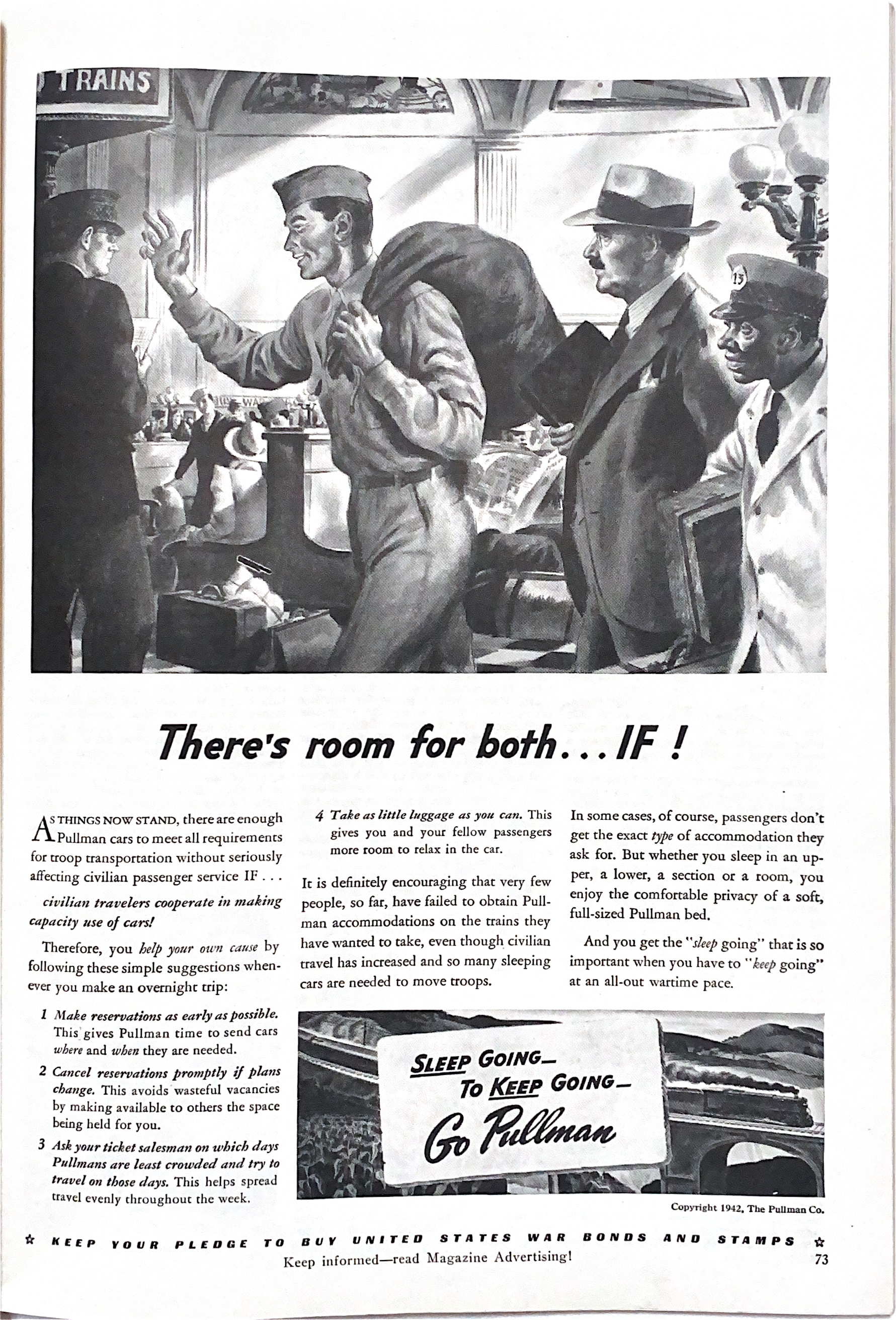
“There’s room for both…IF !

AS THINGS NOW STAND, there are enough Pullman cars to meet all requirements for troop transportation without seriously affecting civilian passenger service IF… civilian travelers cooperate in making capacity use of cars!

Therefore, you help your own cause by following these simple suggestions whenever you make an overnight trip:

  1. Make reservations as early as possible.
  2. Cancel reservations promptly if your plans change.
  3. Ask your ticket salesman on which days Pullmans are least crowded and try to travel on those days.
  4. Take as little luggage as you can.

And you get the “sleep going” that is so important when you have to “keep going” at all-out wartime pace.”

On final note, every ad page in the magazine had a sentence in the folio of the ad-page, “Keep informed – read Magazine Advertising!”

Esquire, July and October 1942

The July 1942 issue of Esquire had not one, not two, but three American flags on the cover. The main flag appeared on the traditional metallic ink section that was a trademark of Esquire’s right hand side of the cover with a list of the contents of that issue on it.  In an editorial on page 6 of this issue, the editors wrote, “WITH this issue we bid goodbye, for the duration to the metallic ink on the front cover.  Appropriately enough it goes out in a blaze of Old Glory, as it frames the flag that is a front cover feature of virtually all the magazines that are on sale the week of July Fourth this year.  Next month, to mark the transition the flag will stay on our cover, but the metallic ink will be gone…”
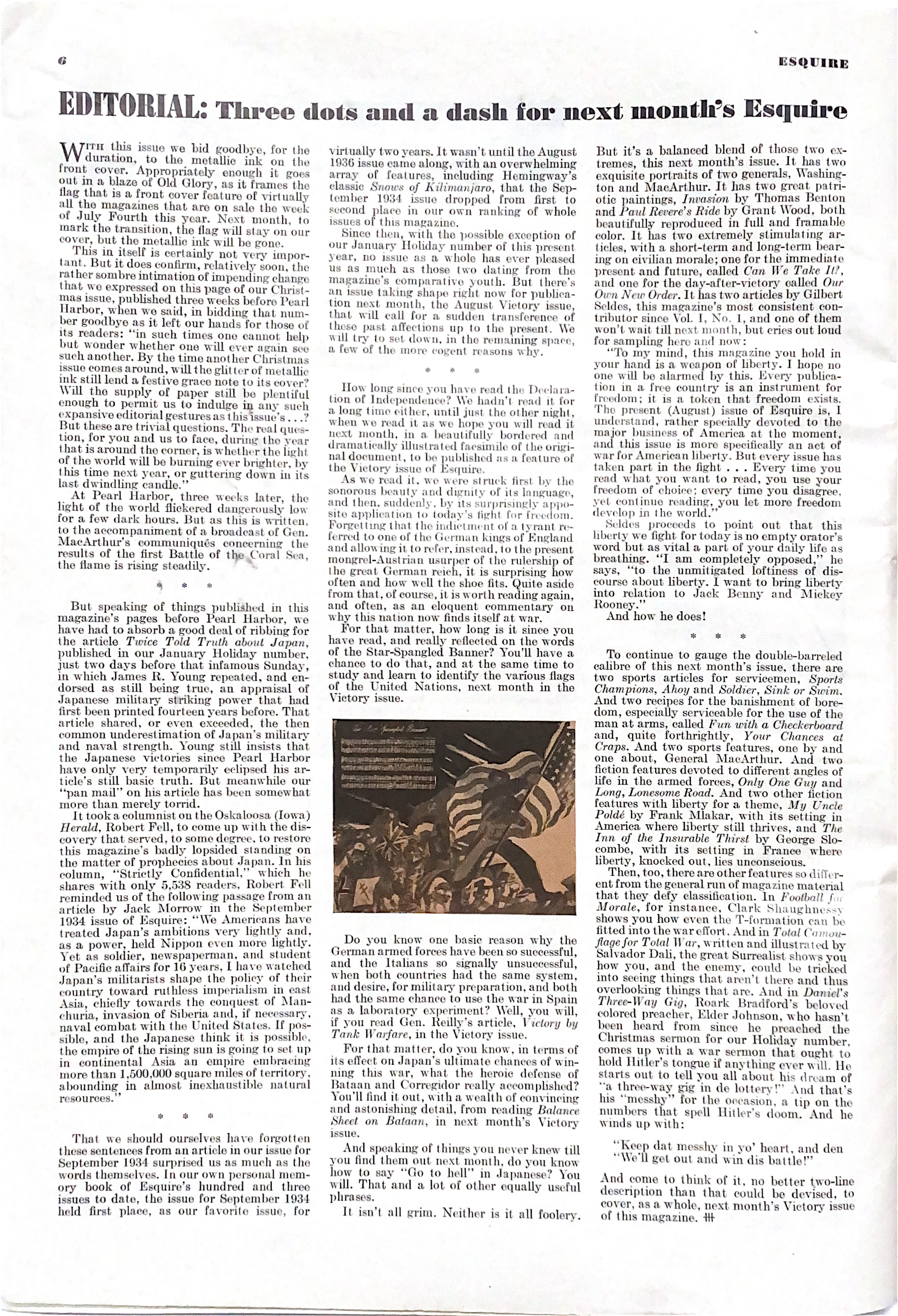
“At Pearl Harbor… the light of the world flickered dangerously low for a few dark hours.  But ss this is written, to the accompaniment of a broadcast of Gen. MacArthur’s communiqués concerning the results of the first Battle of the Coral Sea, the flame is rising steadily.” 

And in October 1942, Esquire, “The Magazine for Men”, and “the largest selling fifty cents magazine in the world,” continued its United We Stand campaign and Old Glory draped the content on the cover sans the metallic ink.  Old Glory continued to appear on the cover one more issue and it was retired with the December 1942 cover.

As for the advertisers, and there were plenty, they played their role in the United We Stand campaign.  Here is one example from the October issue from the United States Rubber Company. 

“Thanks for the Rubber that Saved his Life!”

“Already in America any one of a million mothers might have written that line.  Planned is an army of six million, many of them destined for overseas.

On every transport there is life-saving equipment for every man… on every plane that flies far over the water there is a rubber boat.  Such essential protection must not be skimped. It is unthinkable…

Precious life will be sacrificed unless each one of us helps. Will you do your part to the utmost limit? Will you take watchful care of your tires and every other rubber product you own so that they will last for the duration of the war?

Field & Stream, July 1942

Field & Stream, like the majority of the magazines, had a painting of the American flag on the cover together with “United We Stand” and “Buy United States War Savings bonds And Stamps.”  What was unlike the rest of the  magazines  was a spread headlined WHAT WE ARE FIGHTING FOR :

“AS long as deep love of country burns I the hearts of our young men, we need not fear the future. The letter which we here publish speaks for itself. We are proud of this letter and proud to print it. It was written by a young student at the University of the South, Sewanee, Tennessee, to his aunt in Columbia, South Carolina.”
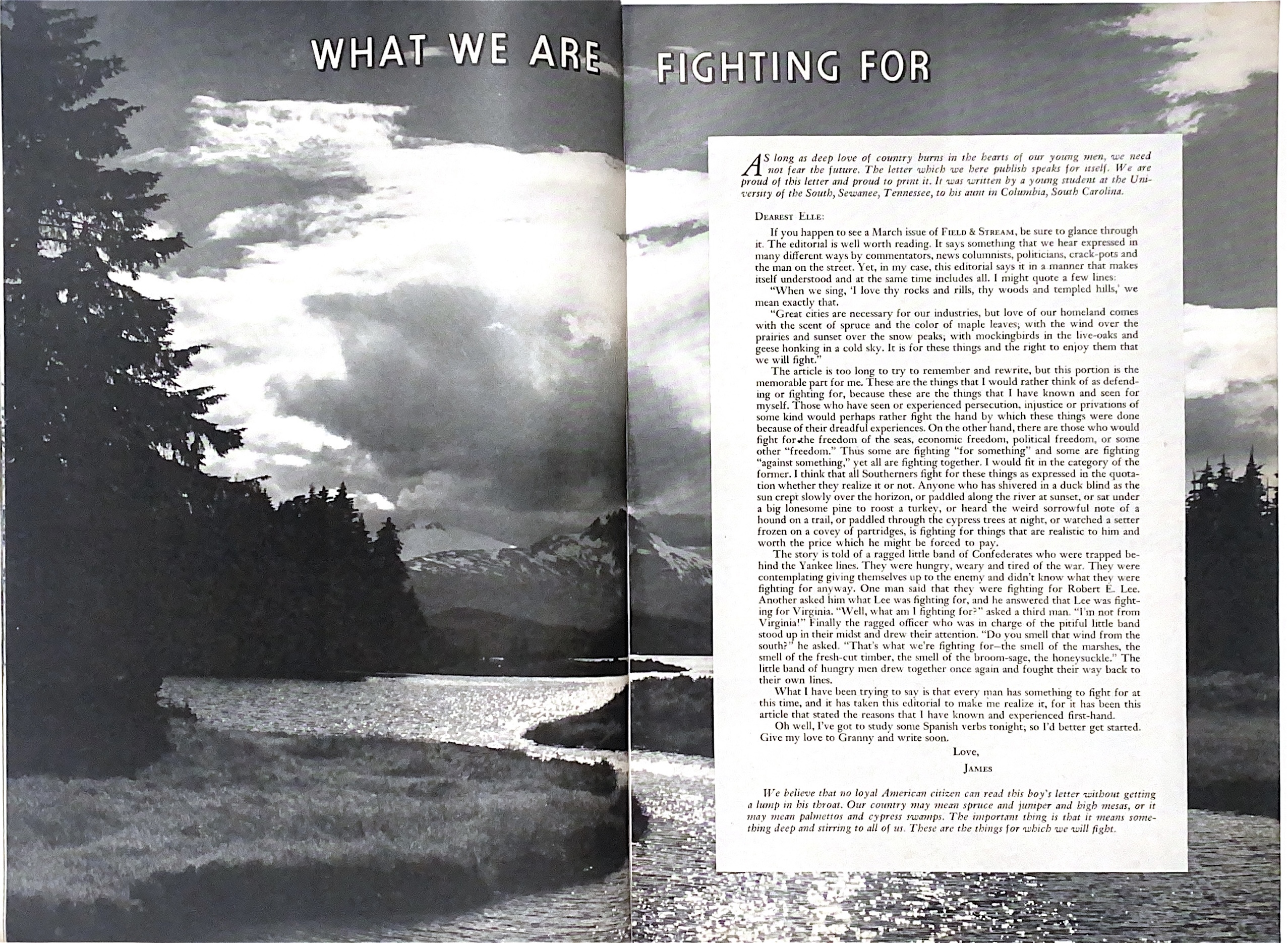
The magazine published the letter  and followed it with,

“We believe that no loyal American citizen can read this boy’s letter without getting a lump in his throat.  Our country may mean spruce and juniper and high mesas, or it may mean palmettos and cypress swamps.  The important thing is that it means something deep and stirring to all of us.  These are the things for which we will fight.”

On the ad front, an ad on page 84 asking readers to Give to the USO.  Under the heading The War isn’t fought in Fox Holes alone
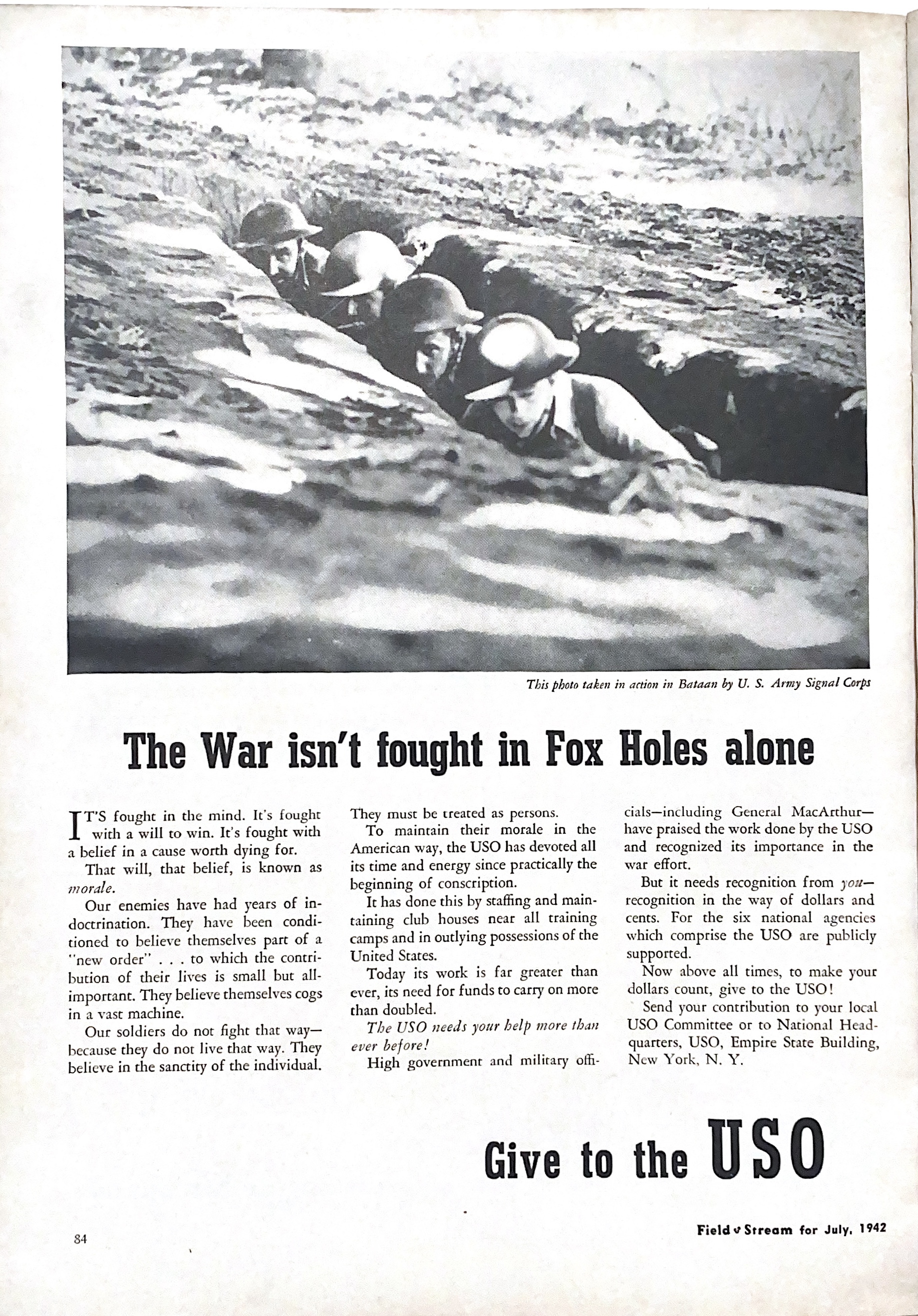
“It’s fought in the mind. It’s fought with a will to win.  It’s fought with a belief in a cause worth dying for.

That will, that belief, is known as morale.

Our enemies have had years of indoctrination. They have been conditioned to believe themselves part of a “new order”… to which the contribution of their lives is small but important. They believe themselves cogs in a vast machine.

Our soldiers do not fight that way – because they do not live that way. They believe in the sanctity of the individual. They must be treated as persons…

Now above all times, to make your dollars count, give to the USO!

Harper’s Bazaar, October 1942

It’s the 75th anniversary issue of the magazine that was launched in 1867.  An ad on pages 16 f and 16 g for the New York Dress Institute sums the state of the magazine during the United We Stand efforts.  The ad reads: 

“A Woman’s Right of Choice”

“IN TEN SHORT MONTHS we have been hurled into a strange new world – a world battling to determine whether freedom of choice shall survive. As a people, we have cheerfully chosen to restrict our freedoms nowthat freedom itself might live.

ENTHUSIASTICALLY, we are investing our savings in the greatest cause I history.  Eagerly, we have entered into various war works.  Willingly, we have chosen to share our riches with those who share our hopes. For ours is a land of plenty in a very empty world.

IN MAKING SUCH A CHOICE, we have deliberately limited the quantity of many times essential to the war effort. This is as it should be. But, there are other goods and many workers which cannot be absorbed into war industries. These industries must be kept earning that they, too, can contribute their share to the war economy in taxes and bonds…”

And the ad concludes, 

“SO BUY YOUR FULL QUOTA OF WAR BONDS – more if you can. Then, erase every doubt that you are being unpatriotic when you choose fashions to keep you lovely.”

To be continued…

Samir “Mr. Magazine™”Husni

Founder and Director

Magazine Media Center

Preserving the Past, Present, and Future of Magazine Media

samir.husni@gmail.com
h1

Magazines: United We Stand; Television, Internet, And Social Media: Divided We Sit. A Mr. Magazine™ Musing… Part 1.

September 28, 2022

Lessons from the past for today’s magazine editors and publishers…

In 1788, George Washington wrote a letter to Philadelphia publisher Matthew Carey in which he expressed the hope that American magazines would succeed because he considered them “easy vehicles of knowledge” that are “more happily calculated than any other, to preserve the liberty, stimulate the industry and meliorate the morale of an enlightened and free people.” 

John Tebbel, in his book The Magazine In America, commenting on Washington’s letter, noted that magazines were incomparably better purveyors of knowledge than the newspapers of Washington’s time. I agree and would add that magazines are incomparably much better purveyors of knowledge than the internet and social media which, together with television, are becoming the major source of news and information for the people, according to a recent study by the Pew Research Center.

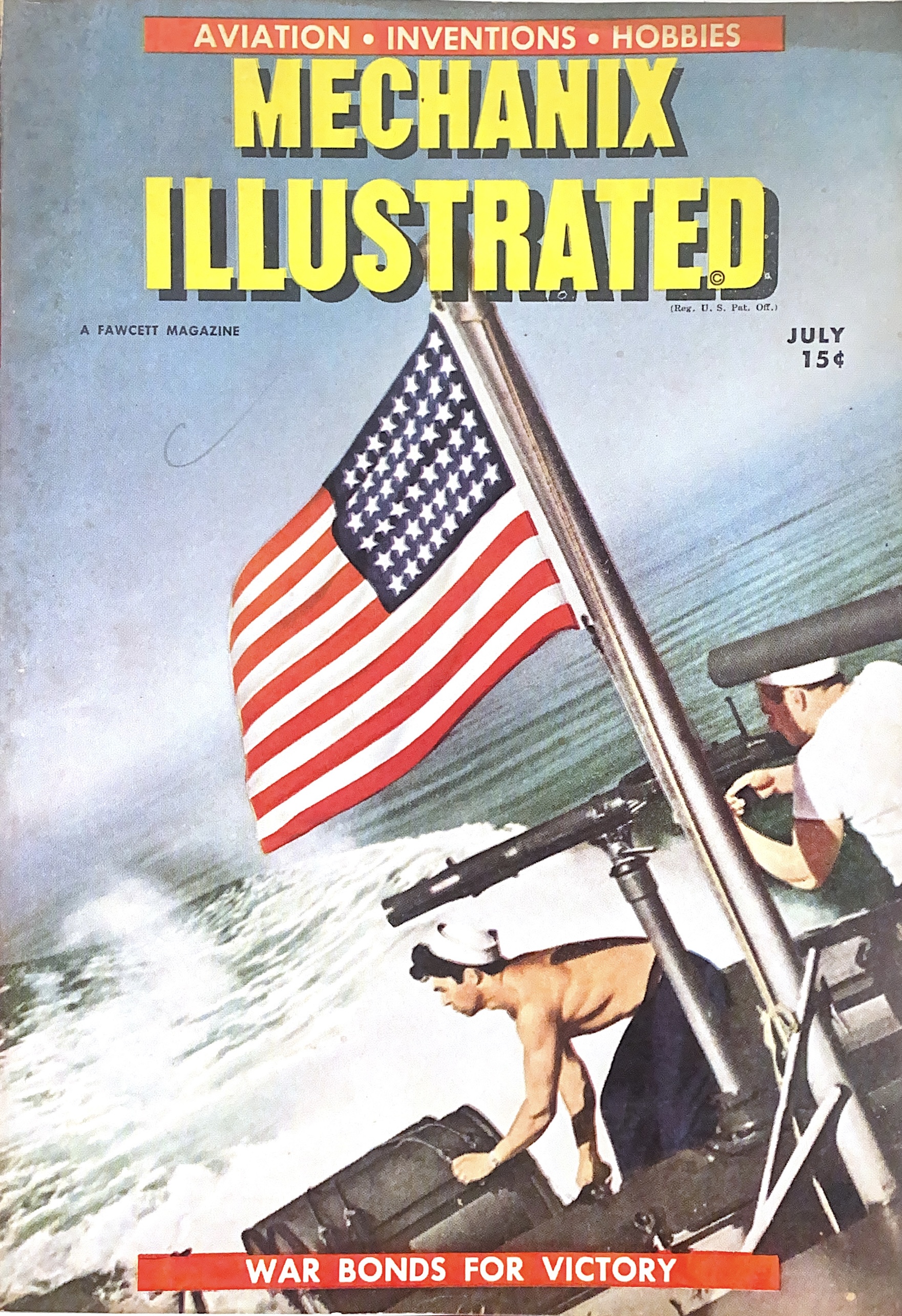
Mechanix Illustrated July 1942

80 years ago, in 1942, American  consumer and trade magazines led a campaign titled “United We Stand.” Almost every magazine in the country carried the American flag on its July cover and continued with the slogan “United We Stand” until the end of WWII.  This was a coordinated effort by the collective body of magazine publishers of that time.  Unlike  today’s internet and social media, magazines back then were attempting to unite the country, while social media, the internet and television now are allowing the country to live a “virtual civil war” with no end in sight. 

Some of those magazines from 1942 are still alive and kicking. They are still promoting the good things in life, nurturing the many changes that took and are taking place in the country.  For better or worse, magazines and their brands have contributed to the betterment of the country and its people regardless of the prevailing trends.  They were and are innovators, influencers, and educators at the same time.  This is a far cry from what social media is today or what it will be tomorrow.  Indeed, social media, with all its platforms, could be said to be united under one term, “Divided We Sit.”  The majority of magazines adhered to their roles, both social and financial, with great responsibility, unlike today’s social media that only carries the name “social” without any responsibility. In fact, social media is as unsocial as unsocial can be. 

I truly believe that the war of the 1940s was much less dangerous to our country than the “virtual civil war” we are witnessing today.  The magazines of the 1940s united together to help the country stay united and to help the American public survive and thrive in every aspect of  its lives.  What follows are a few randomly selected examples, from the Samir “Mr. Magazine™” Husni magazine collection, from 1942 of how magazines and their advertisers supported the war effort and helped keep our country united.  The contents and magazine experiences, both in editorial and advertising, were much more than a slogan (“United We Stand”), but rather a way of life and a call to action. 

May the editors and publishers of today’s magazines look at the history of American magazines and  discover  how magazines served their customers first–both advertisers and readers–and never veered from their mission of  editing and publishing for that intended subscriber or newsstand buyer…

Here is the first set of examples starting in alphabetical order and based on the magazines that I own:

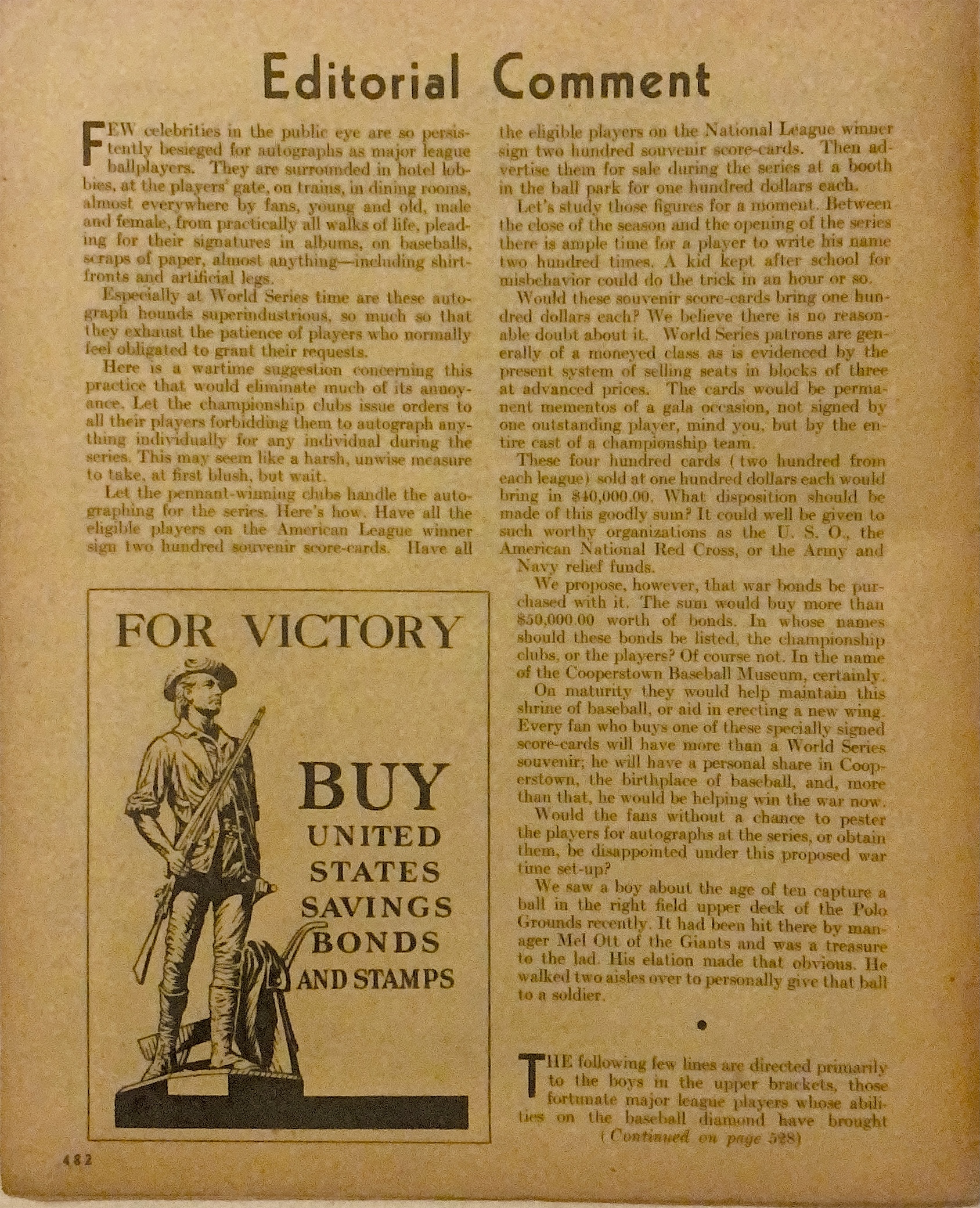
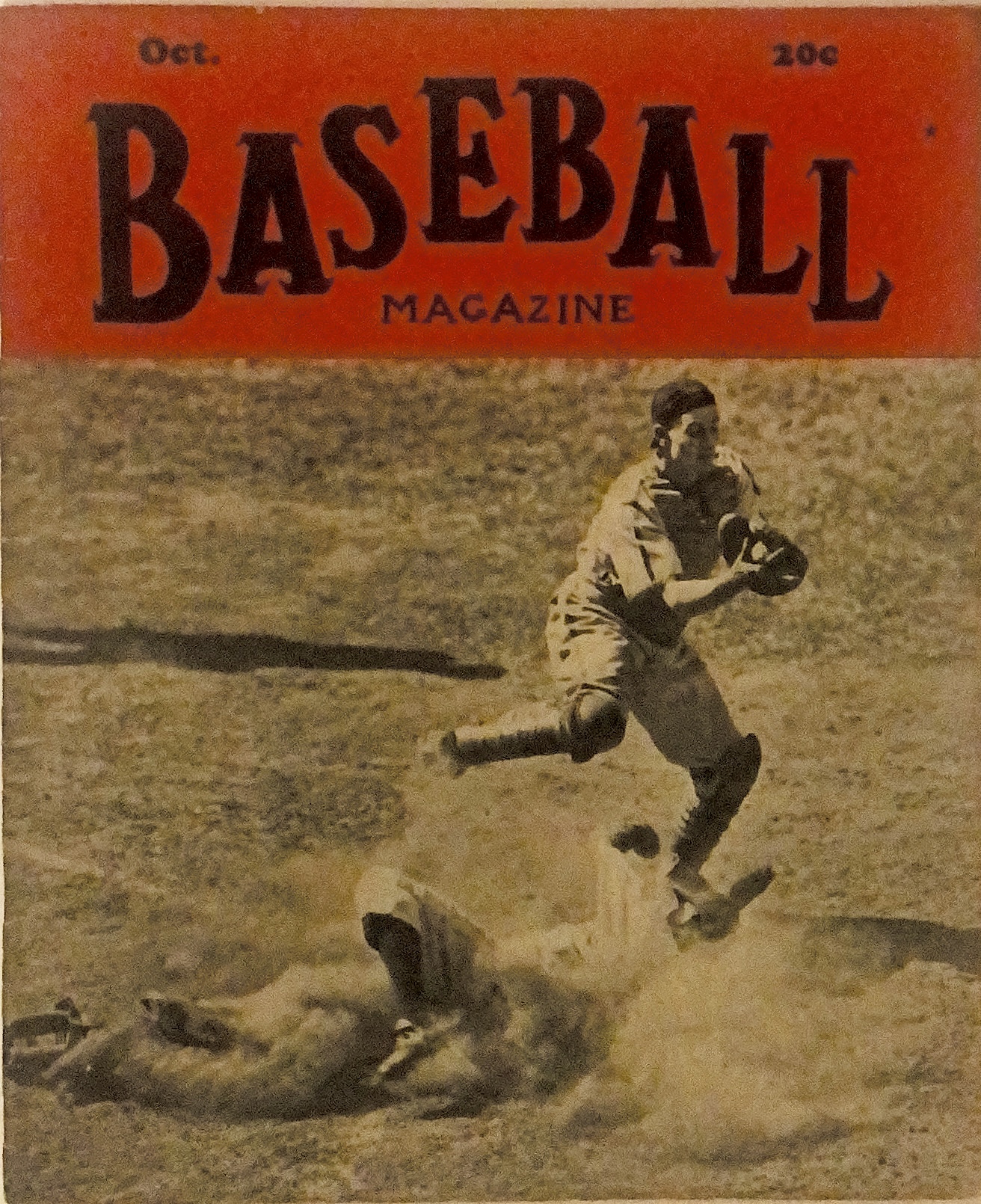
Baseball Magazine, October 1942

Baseball magazine October 1942

An editorial comment in the magazine stated that, “Between the close of the season and the opening of the series there is ample time for a player to write his name two hundred times…”

“Would these souvenir score-cards bring one hundred dollars each? We believe there is no reasonable doubt about it.  World Series patrons are generally of a moneyed class as is evidenced by the present system of selling seats in blocks of three at advanced prices. The cards would be permanent mementos of a gala occasion, not signed by one outstanding player, mind you, but by the entire cast of a championship team.”

“These four hundred cards (two hundred from each league) sold at one hundred dollars each would bring in $40,000.00. What disposition should be made of this goodly sum?…”

“We propose, however, that war bonds by purchased with it. The sum would buy more than $50,000.00 worth of bonds. In whose names should these bonds be listed, the championship clubs, or the players? Of course not. In the name of the Cooperstown Baseball Museum, certainly.”

Although the magazine is ad-free it managed to devote a quarter page for victory and to ‘BUY UNITED STATES SAVINGS BONDS AND STAMPS.’”

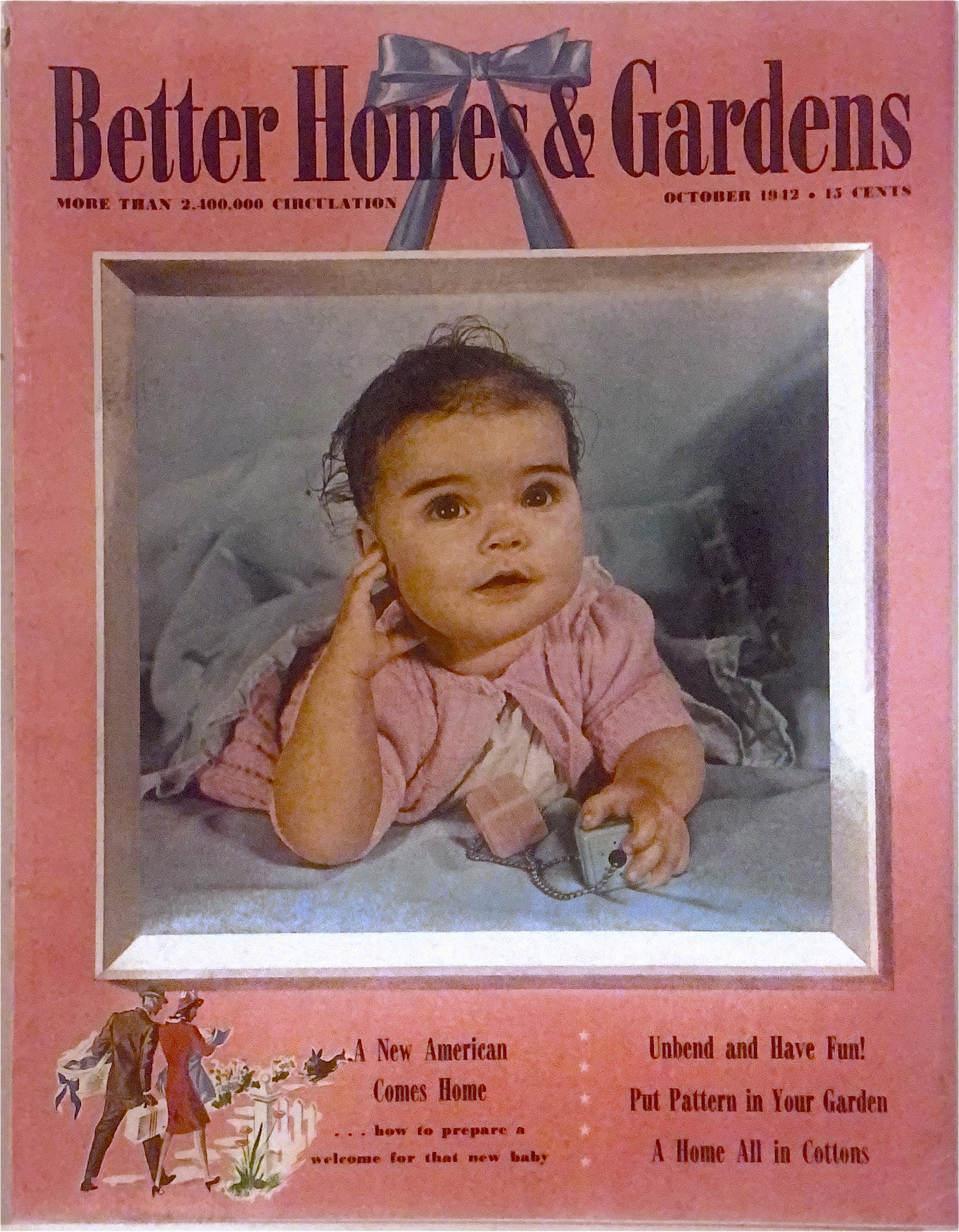
Better Homes & Gardens, October 1942

Better Homes & Gardens October 1942

Under the heading “What ‘Home Front’ Means to Us” the editors wrote in the opening editorial: “THE STATUS OF HOME is thus the supreme issue in this titanic upheaval.  The guns and the tanks and the planes are deciding that issue. And thus it is that amid the blackout of barbarism we light again the candle of Liberty, seeing in in the window of the American home where it can be seen from afar. Countless millions are turning strained eyes across land and see to catch that gleam of hope shining into their despair from this Land of the Free. With every tortured breath they pray that we may be wiser and strong as we strive for the victory, and for their sakes as much as our own, we shall not fail.”

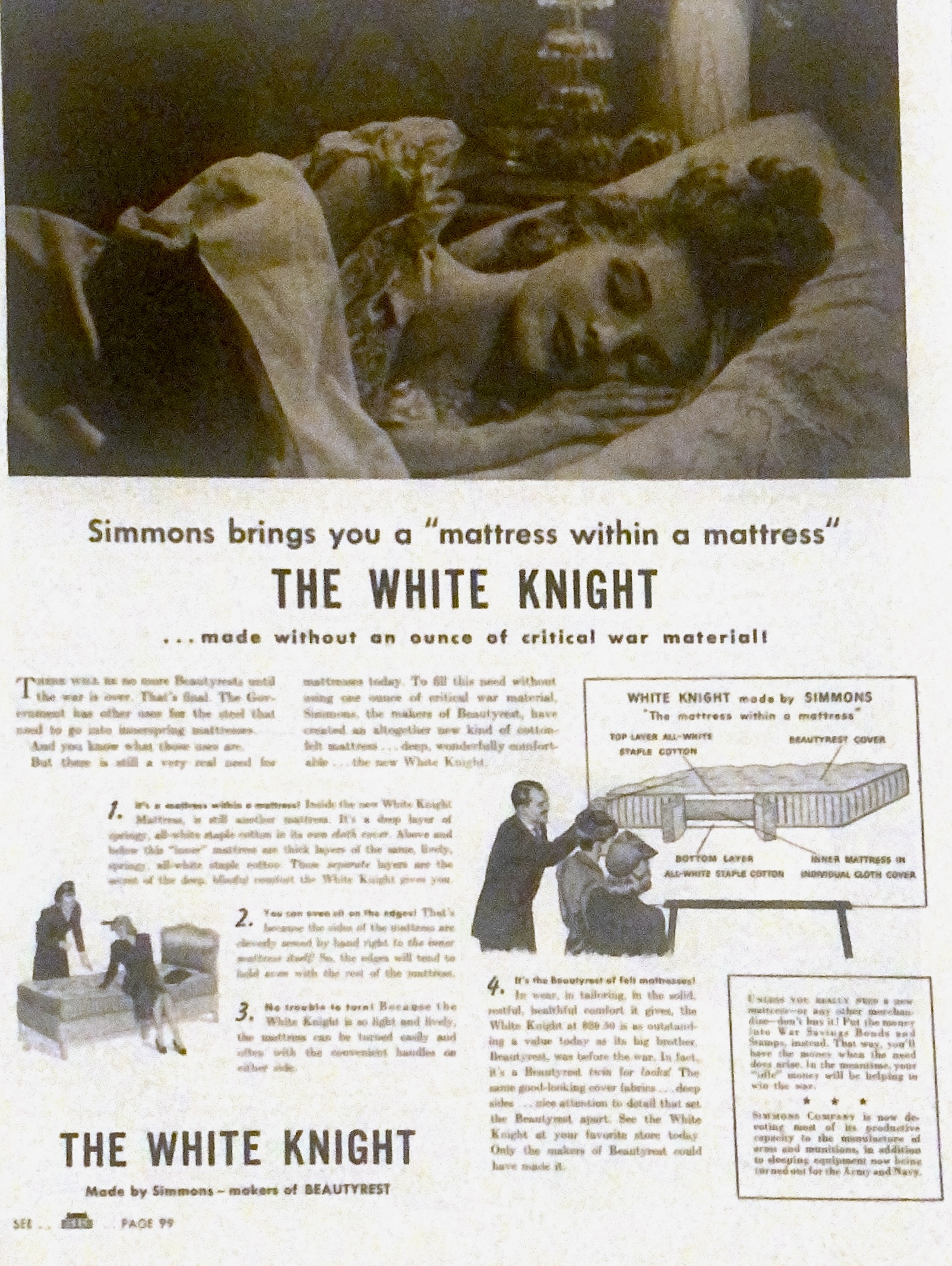
And from the ads in the magazine, here is  one example from Simmons, the makers of BEAUTYREST mattresses for their The White Knight mattress that is “made without an ounce of critical war material.” The ad encourages American that, “UNLESS U REALLY NEED a new mattress – or any other merchandise – don’t buy it! Put the money into War Savings Bonds and Stamps, instead. That way, you’ll have the money when the need does arise. In the meantime, your “idle money” will be helping to help the war.”

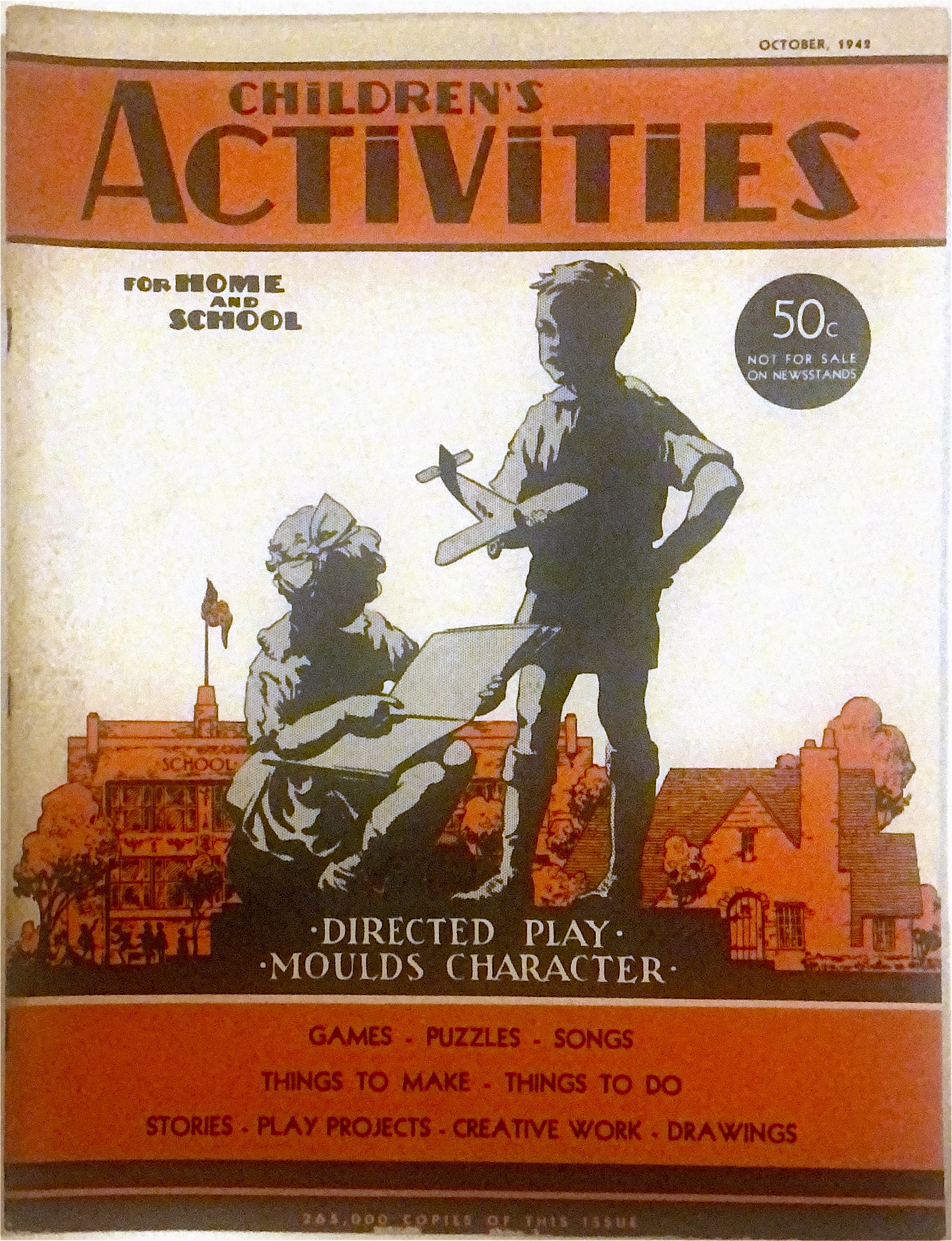
Children’s Activities, October 1942

Children’s Activities October 1942

Garry C. Myers, Ph.D., the editor-in-chief of Children’s Activities magazine (and four years later the co-founder with his wife Highlights for Children magazine) wrote in The Editor Chats, “We all love our country. We are proud to be Americans. We want to be GOOD Americans! Here in America we enjoy freedom. WE are free to have good schools and good communities to live in. We are free to worship God as we please.”

“Some of us have fathers or brothers or uncles who are soldiers or air pilots or who are serving otherwise in the army, navy, or air force. They are risking their lives to defend this wonderful country of ours and to save for us all that we hold dear.”

“It seems a shame that any child would harm or destroy anything of value when so many men must sacrifice their lives to save these very things from being destroyed by our enemies.”

“We can all do much to help win this war and bring it to a speedy end.  Boy and girls can do their part by trying harder always to do as they know they should do, by being thoughtful of the rights and possessions of others – in short, by being good American citizens.”

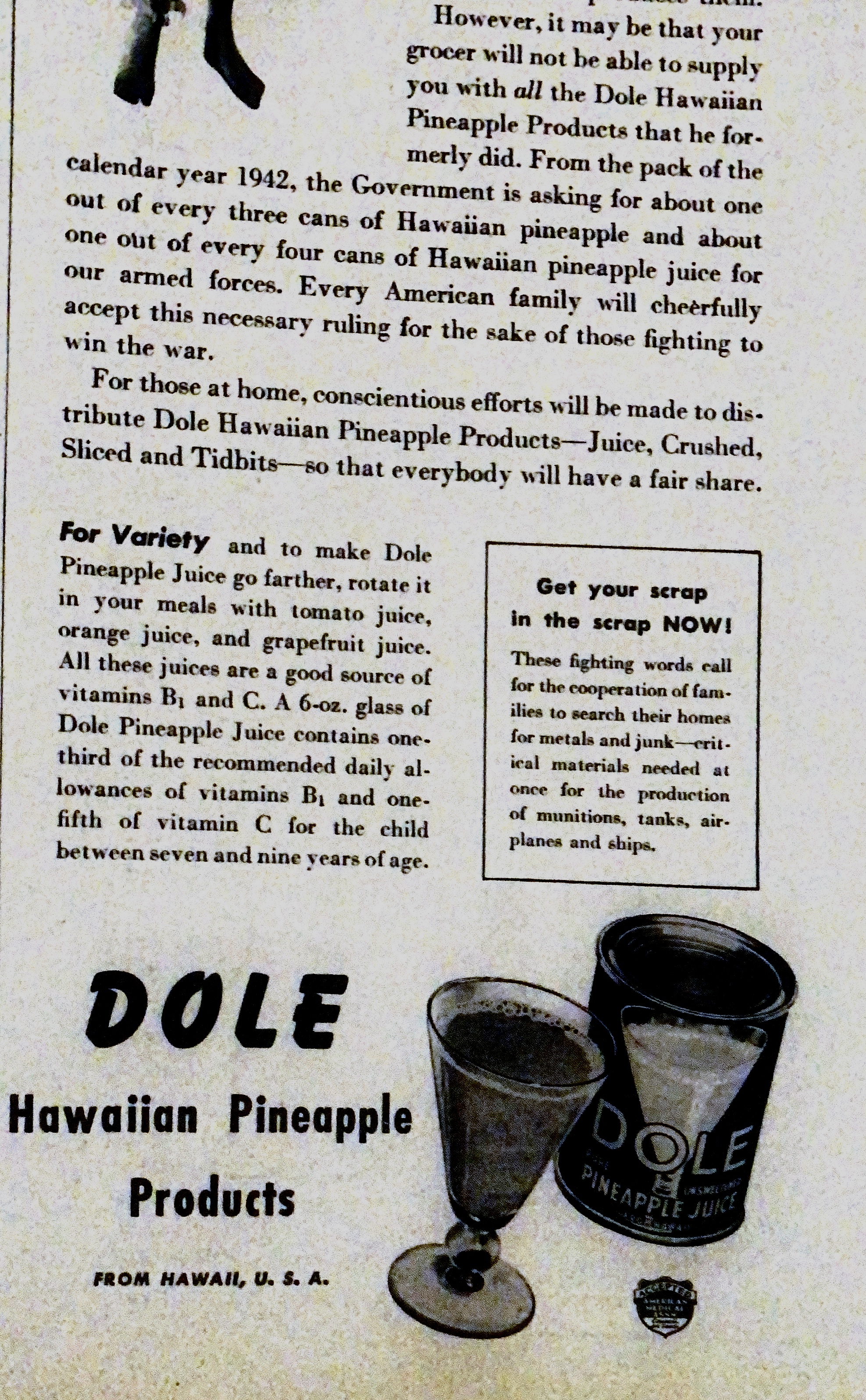
And from the ads in the magazine, (unlike Highlights for Children, there were ads in Children’s Activities magazine), an ad for DOLE Hawaiian Pineapple Products contained the following sidebar: “Get your scrap in the scrap NOW! These fighting words call for the cooperation of families to search their homes for metals and junk —  critical materials needed at one for the production of munitions, tanks, airplanes and ships.”

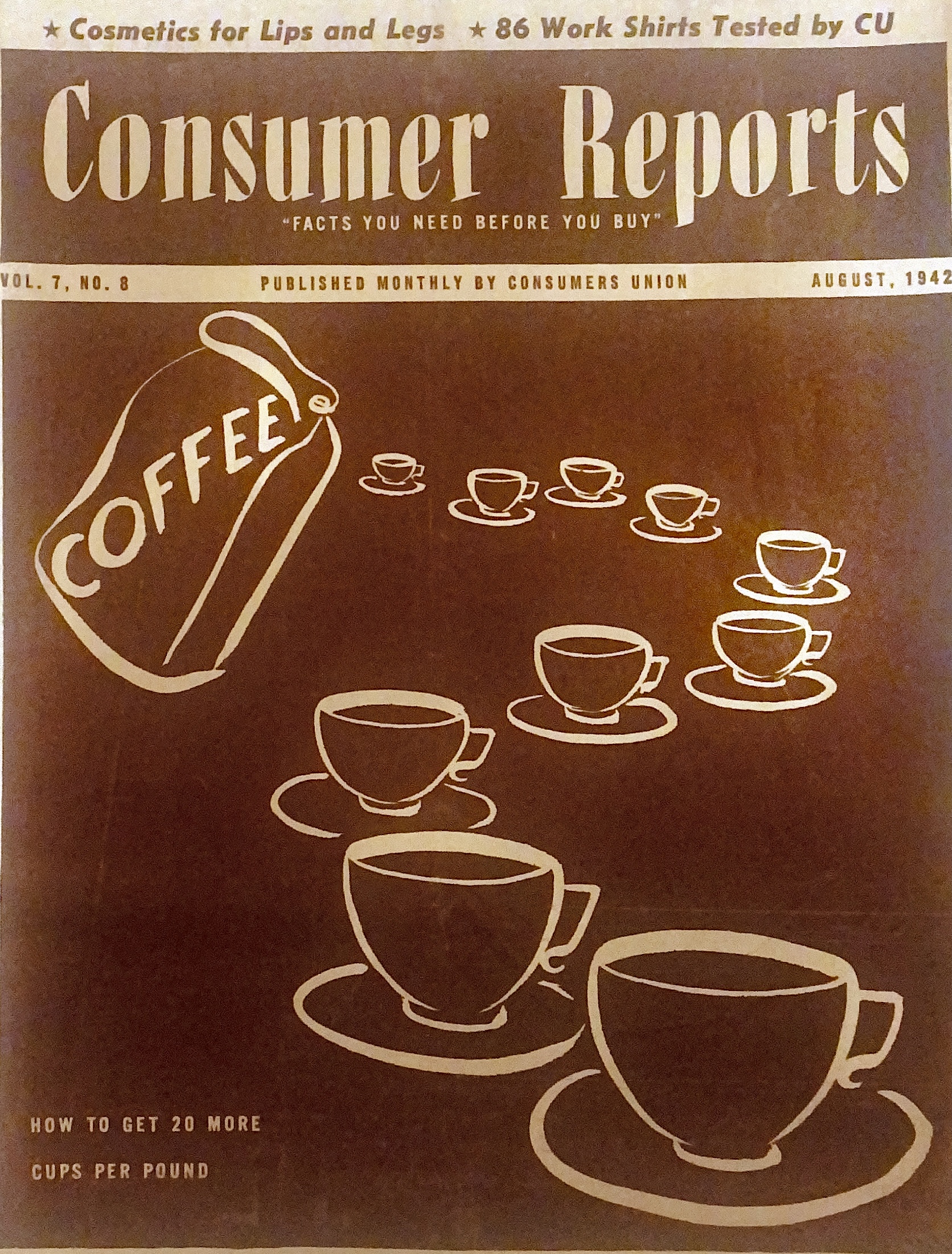
Consumer Reports, August 1942

Consumer Reports October 1942

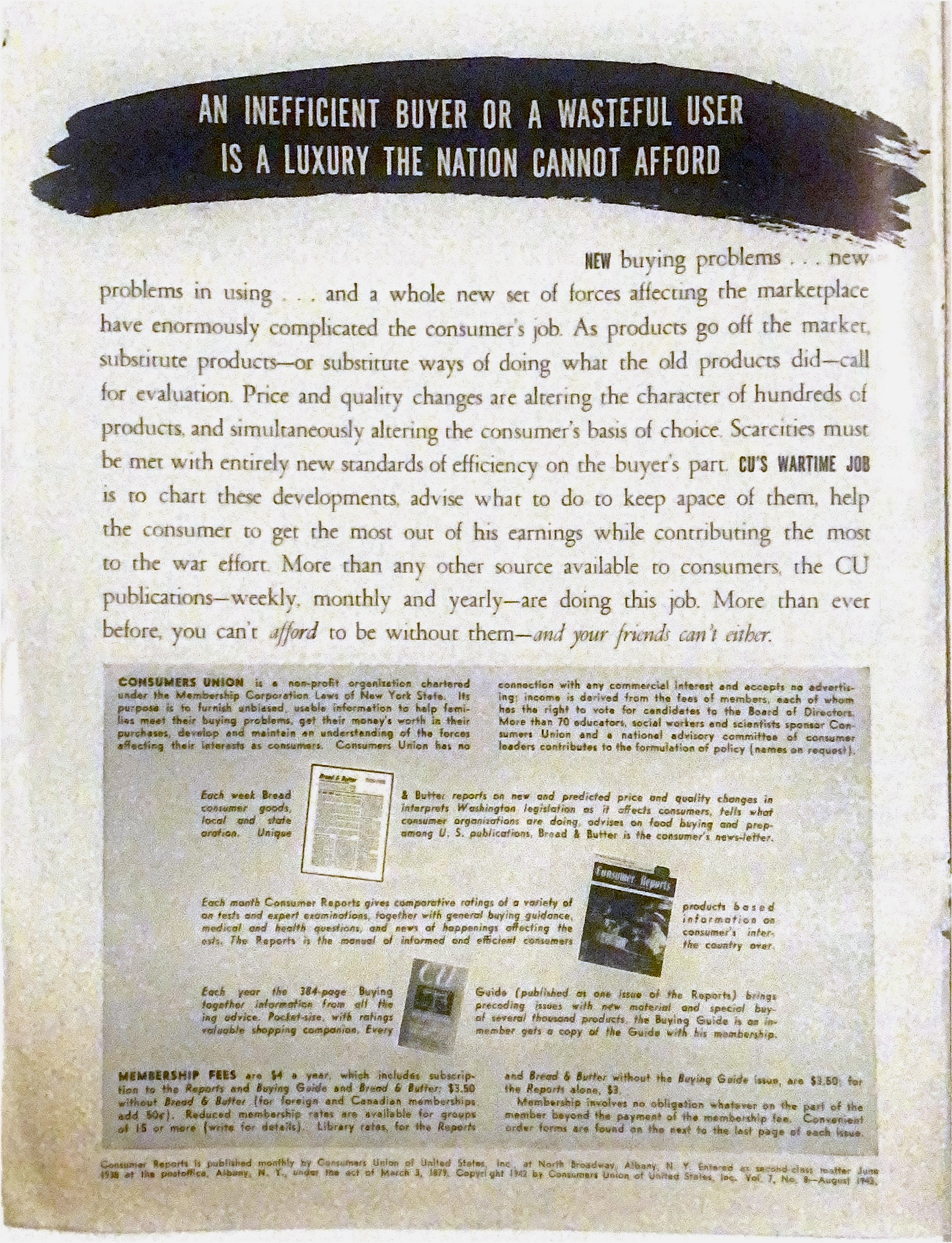
The magazine that is published by the Consumer Union (CU) and does not carry any adverting ran an editorial on its inside front cover that read: “AN INEFFICIENT BUYER OR A WASTEFUL USER IS A LUXURY THE NATION CANNOT AFFORD… NEW buying problems… new problems in using… and a whole new set of forces affecting eh marketplace have enormously complicated the consumer’s job. As products go off the market, substitute products – or substitute ways for doing what the old products did – call for evaluation. Price and quality changes are altering the character of hundreds of products and simultaneously altering the consumer’s basis of choice. Scarcities must be met with entirely new standards of efficiency on the buyer’s part . CU’S WARTIME JOB is to chart these developments, advise what to do to keep apace of them, help the consumer to get the most out of his earnings while contributing the most to the war effort.  More than any other source available to consumers, the CU publications – weekly monthly and yearly – are doing this job. More than ever before you can’t afford to be without them – and your friends can’t either.

Of note is the August issue cover story was on coffee and offered readers “how to get 20 more cups per pound.”

Comments, reactions, etc. feel free to email me at samir.husni@gmail.com or leave your comments below.

TO BE CONTINUED…

© 2022 By Samir “Mr. Magazine™” Husni, Ph.D. 

Founder and Director, Magazine Media Center, U.S.A.

h1

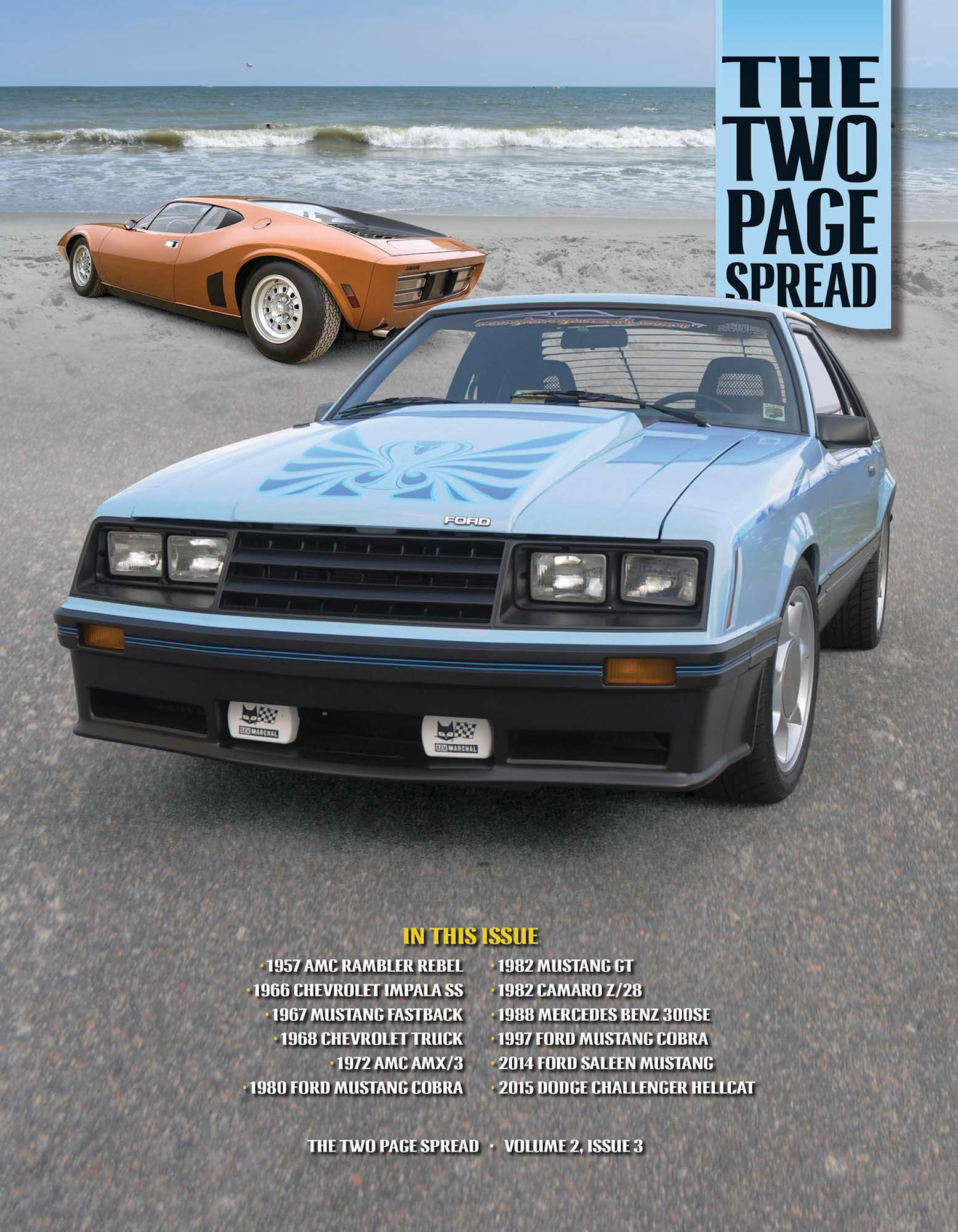
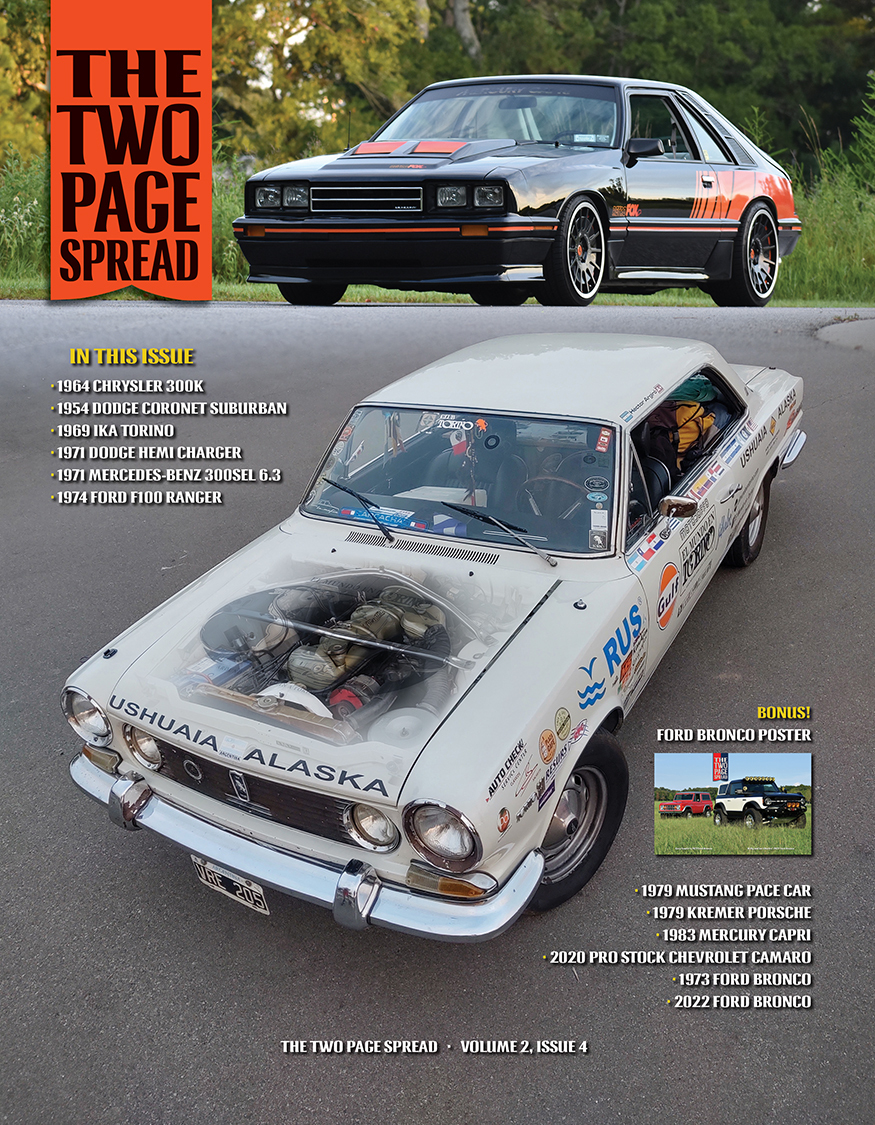
The Two Page Spread: A New Auto Magazine Where Content Is A Beautiful Experience… A Mr. Magazine™ Launch Story

September 26, 2022

“In keeping with my love of print, each new feature will also include a link to a downloadable file of the Spread in a high-resolution, printable format, suitable for printing 36″ x 24″ posters. Because ‘Print Rules’.” Keith Keplinger, Publisher and Art Director

“I think that working with Keith, I have an art director who sees my editorial vision of what a print magazine can be in this age of people “reading” enthusiast content on their phones.” Richard Truesdell, Editor and Chief Contributor

Keith Keplinger and Richard Truesdell are two well known names in the circles of automotive media. You mention Keith or Rich and folks will stop and listen to see what those two are up to. Some folks at their age either retire or leave the entire industry behind, but their creative juices refuse to let them stop, and as Michael Clinton would say, they are roaring into their second act. And roar it is. Between the two of them, the ideas don’t only come, but are executed in a well curated, edited, and designed way.

What follows is the story of the launch of their latest magazine The Two Page Spread (T2PS). Founded by Keith in 2020 and later teamed with Rich the magazine is a beauty to look at and a welcomed addition to the world of print.

In a typical Mr. Magazine™ format, I asked Keith and Rich my seven questions about the launch of The Two Page Spread and the plans for the future.

Without any further ado, here is The Mr. Magazine™ Interview with Keith Keplinger, publisher and art director, and Richard Truesdell, editor and chief contributor.

Samir “Mr. Magazine™” Husni: Tell me the story behind the launch of The Two Page Spread and what role each one of you play with this new magazine?

Keith Keplinger

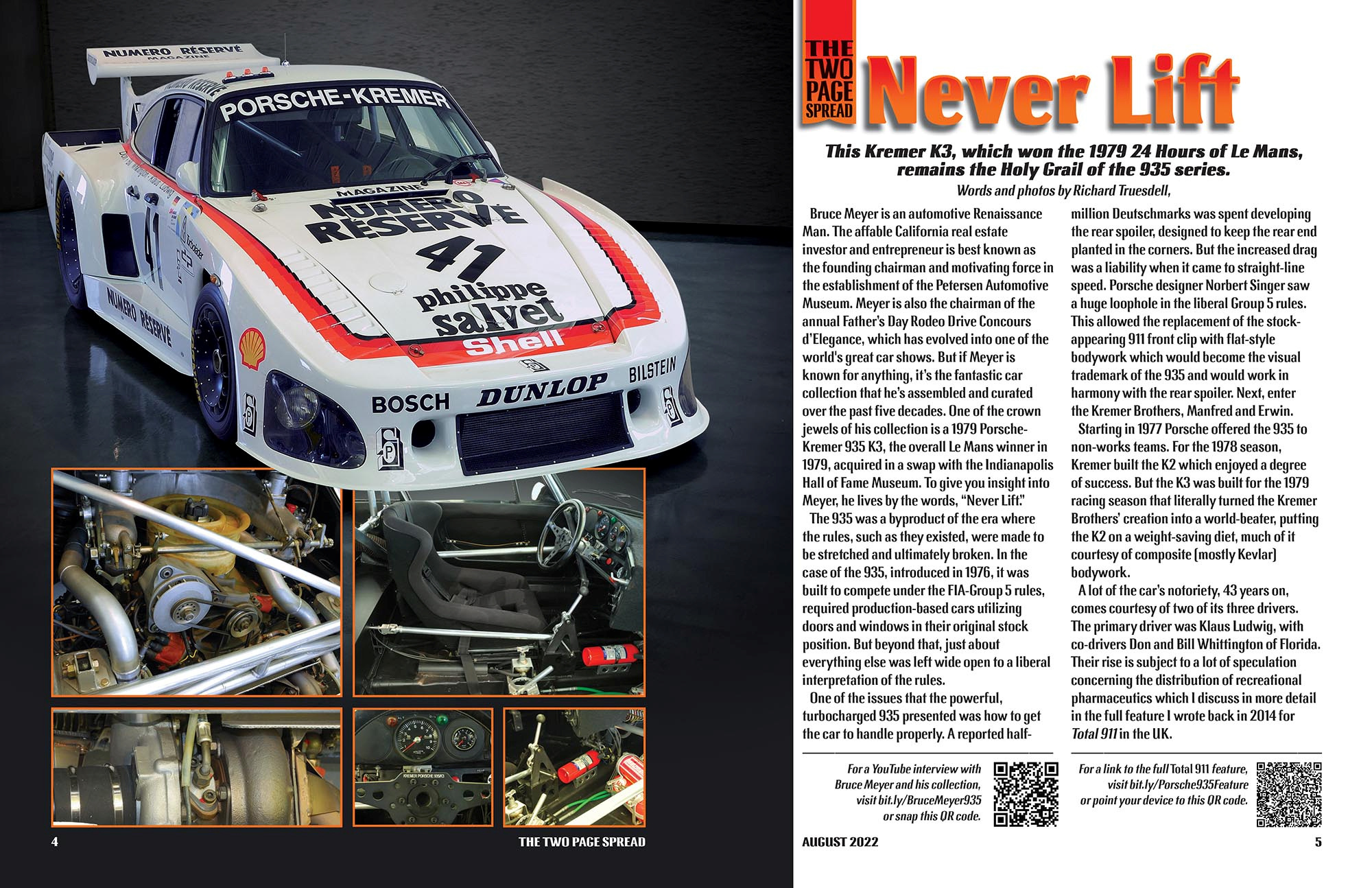
Keith Keplinger: The story: Back In the 1980s, before the dinosaurs vanished, auto magazines were mostly black and white, with only 16 pages of color in the center. After selling a page or 2 in color to paying advertisers, a good editor/art director team could get 7 feature cars in each issue, by making the features ‘Two Page Spreads’. 

I’ve designed hundreds of them, as art Director and Creative Director for Dobbs Publishing Group in the late 80s and early 90s. Loved the concise nature of them, the pure, simple story in 2 pages.

These days, the few print books still out there give six or more pages to the features – beautiful photos, with flowing stories. And the Webzines offer almost unlimited space freedoms. And I think those are great. But I miss the simplicity of my old favorite.

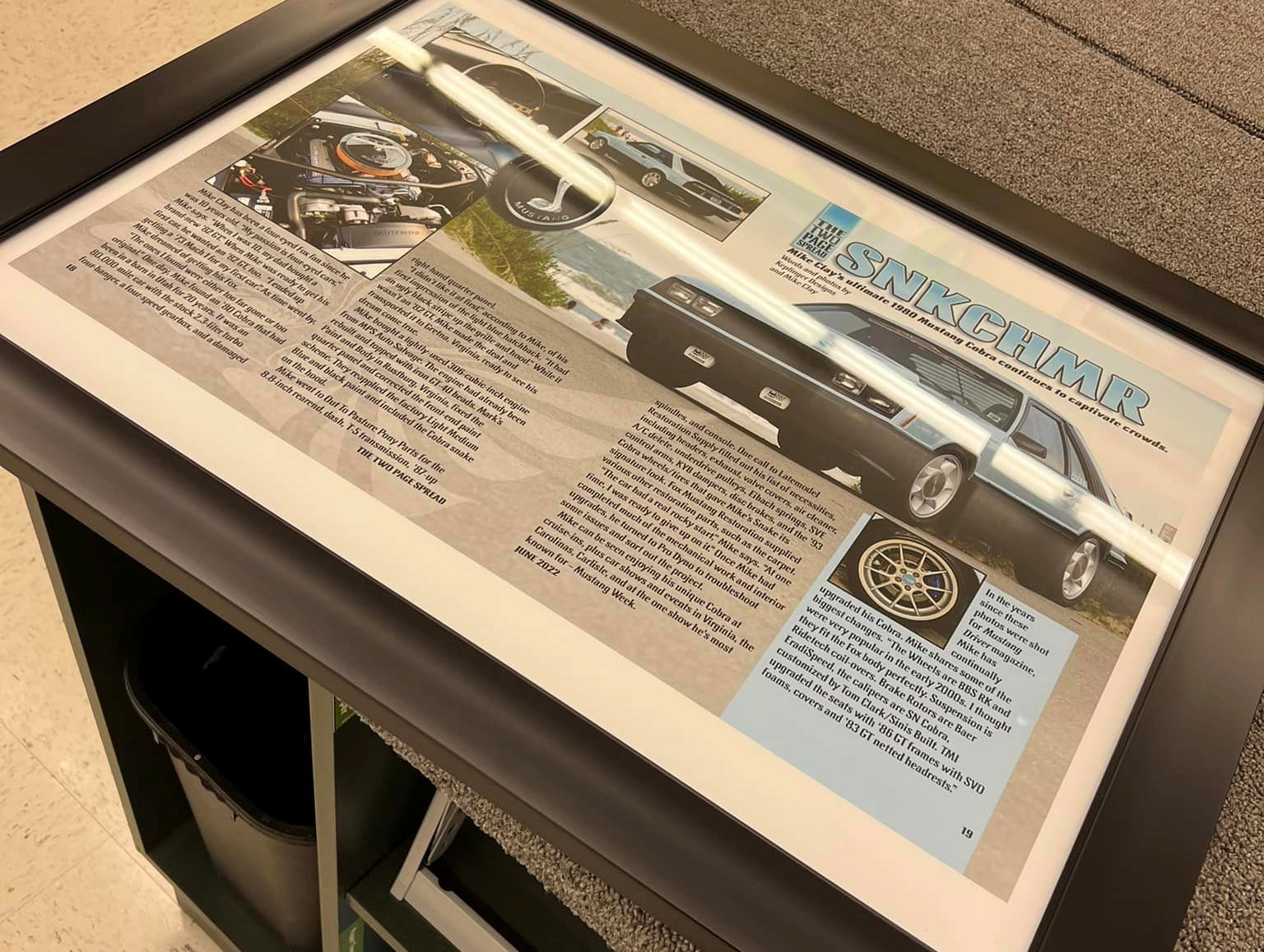
I launched ‘The Two Page Spread’ on Facebook on September 3, 2020, as I was beginning Cancer treatment, to help keep me busy and to give the features that I had shot but never made it into magazines after December 6, 2019, when Motor Trend Group killed 19 titles. On the Facebook page, we showcase The Two Page Spreads of cars I’ve shot and select few other editors/photographers have shot, too. In keeping with my love of print, each new feature will also include a link to a downloadable file of the Spread in a high-resolution, printable format, suitable for printing 36″ x 24″ posters. Because ‘Print Rules’.

I play dual roles as Art Director and Publisher. Richard joined in early 2021 as Editor and Chief Contributor.

His first contribution, in April 2021, was a T2PS on the famous Playboy Playmate AMC AMX.

Richard Truesdell

Richard Truesdell: My story is a bit different than Keith’s as after a short academic career in which I taught high school social studies from 1976 to 1981, I launched a mobile electronics store in 1980, while I was still teaching. It ran until 1992 and during that time I started writing feature stories for trade (Autosound and Security) and then consumer titles. Because of my contributions to Autosound and Security, I was asked to write a monthly column on installation tech when Hachette launched Car Stereo Review in 1987. That led to a three-year gig producing a car electronics special section for Car and Driver. That’s when I got the magazine bug in my system. I’m sure you know that story Samir.

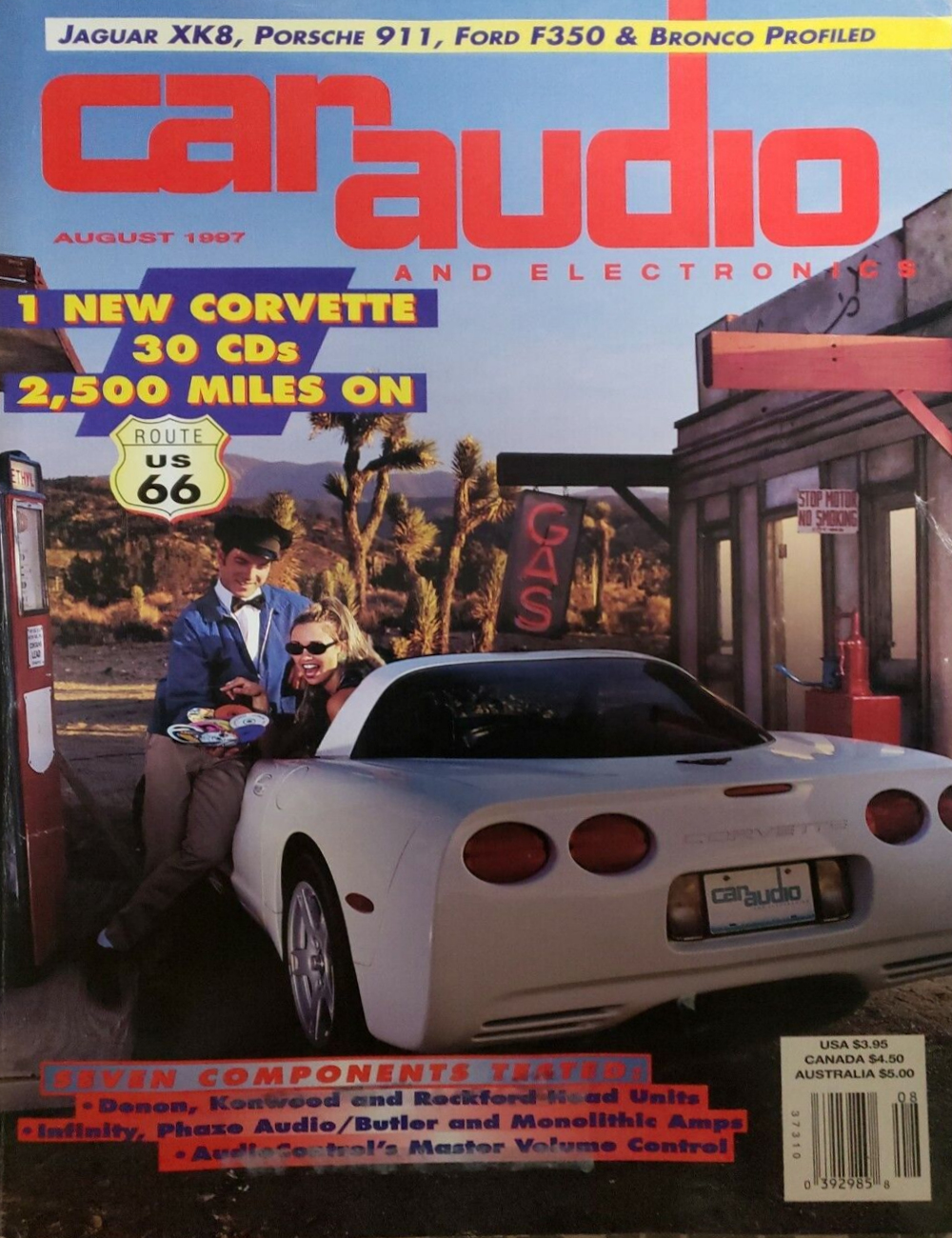
Ten years later, while I was still contributing to Car Stereo Review, after Primedia bought a small boutique publisher, AvCom, and the entire staff of CA&E  quit, I was approached to see if I would take the EIC position at their title, Car Audio and Electronics. At the time CA&E was the category leader, circulation-wise. At the time, I was living in Albuquerque, contributing to several titles in the automotive sector while producing a monthly four-page department in Motor Trend called Autotronics. That was a huge paying gig when MT was published by Petersen, Primedia’s main rival. I accepted the offer but it lasted just 10 months as the publisher, who was technically my boss, thought I wanted his job. Nothing was further from the truth.

As it turned out, the art director at CA&E complained to the publisher that I was always late (which was true as I always strove to make each magazine the best it could be, especially when coverig industry events), which he used as the cause to fire me. It didn’t matter that during my one-year tenure as EIC, both circulation and ad pages increased more than 10%. Five years later, after three editors, Primedia shuttered the title.

In less than 90 days, I rebuilt my freelance business and was making more than I was at CS&E. Then I started self-syndicating my work around the world and except for one year, 2010 when I was the launch editor of Chevy Enthusiast at Amos Automotive (where I also had a running battle with the art director there as I was pushing the design envelope at CE compared to the other six titles), I have been an independent freelance/contract writer, photographer, photojournalist, and now editor from 1997 to the present day, I’ve produced more than 1,500 magazine articles and co-authored three automotive books with my best friend, Mark Fletcher.

I stumbled upon Keith’s The Two Page Spread on Facebook, I queried him to see if he would be interested in using content from my archives. He said yes, and we’ve been working together now for over a year. I brought my print-on-demand experience on CreateSpace/Kindle Direct Publishing where we’ve produced five titles together. I see T2PS Facebook page as a way to get my content in front of more editors around the world as I can produce PDFs of my content items.

And Keith is the only art director I’ve worked with that hasn’t tried to get me fired.

S.H.: You have a different launch model, can you explain it and elaborate on the reasoning behind it?

Keith: When I started, I had zero dollars to invest in conventional printing, so began it online only, with the downloadable print-ready poster. Mid-2021, Richard discussed his success with Kindle Direct Publishing, and we had the first two ‘Annuals’ of 100 pages each on Amazon by Black Friday. We decided to go to a 52-page quarterly model in early 2022 and currently have three quarterly issues available with a fourth on the way next month. And are now exploring newsstand options. The one stroke of brilliance I had with the first print books is that they are not dated, but rather go by volume and issue. Therefore, they have an unlimited shelf life. No wasted copies.

Rich: Just this past weekend I got the T2PS print edition placed in Autobooks-Aerobooks in Burbank, California. I’ve known owner Tina Van Curren for more than a decade as she’s hosted book signings for all three of my books. Autobooks-Aerobooks is the nation’s leading automotive and aviation bookstore. They’ve been around since the 1950s. Jay Leno is a regular and through a stroke of luck back in 2012, Tina got me and Mark a gig on Jay Leno’s Bookshelf which really helped the sales of our first book, Hurst Equipped. And Jay appeared at the book signings for 1970 Maximum Muscle and Hemi Under Glass: Bob Riggle and His Wheel-Standing Mopars in 2021.  

S.H.: What are the major challenges you are facing?  How do you plan to overcome it?

Keith: We’ve had intermittent success reaching people thru posting on the various Facebook Groups on a particular make/model of car (one hit over 37K impressions), but hitting long-term, consistent growth has proven elusive, partly because of the vast variety of makes/models we feature.

Rich: Because of my retail and self-publishing experience, I look at things from a different perspective. I have been kicking around the idea of a quarterly magazine that will focus on cars of the postwar era (1949-89). I think that working with Keith, I have an art director who sees my editorial vision of what a print magazine can be in this age of people “reading” enthusiast content on their phones.

I think that there needs to be a bridge that spans the print-digital divide. We’ve started experimenting with it on T2PS with Keith embedding QR codes into some of the features, mostly mine. Because with T2PS, we’re limited to just 400 words, I sometimes use QR codes linked to PDFs of the original four-to-10-page magazine features which tell a much more complete story.

S.H.:  What are some of the pleasant moments that you have faced since the launch of the magazine?

Keith: I’m loving the design process! Keeps me on my toes. Hearing from the car owners that we’ve made one of their lifelong dreams come true by being featured in a print magazine always puts a smile on my face. Meeting up with Richard and having a place to share his amazing collection of vehicle features and giving them all a new look and life. Working with Richard, one of the best editors I’ve ever known, and learning the art of writing from him.

Rich: I feel the same way about Keith, who I have never met in person. While I have some design expertise, it pales in comparison to Keith’s. But when I transfer the content package (text file, 20 images, and supporting graphics) to him, he instinctively knows what I want.

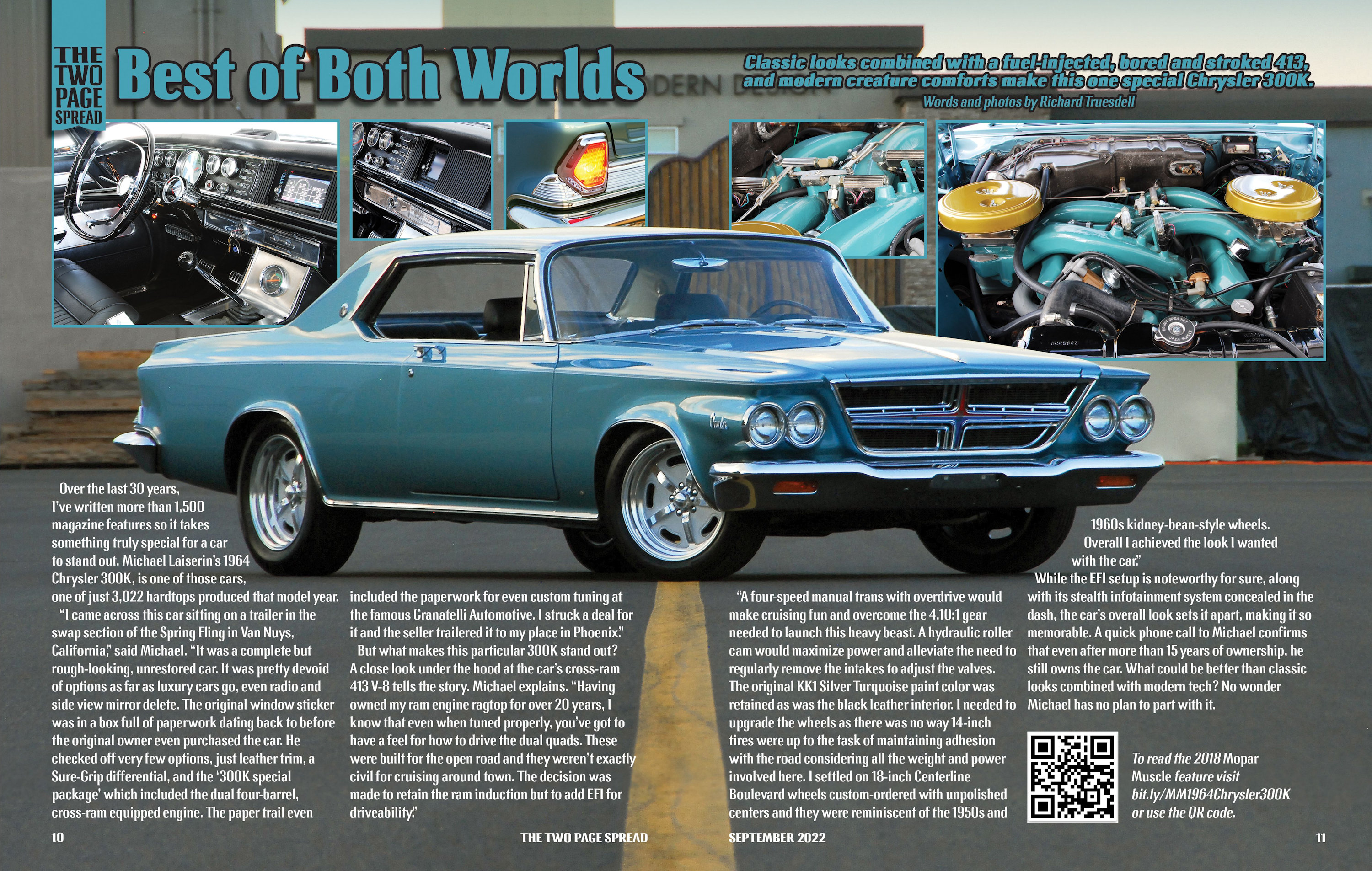
A great example is a recent T2PS on a modified 1964 Chrysler 300K. Because of the space constraints of T2PS format, we don’t have the luxury of captions. Keith read my text and saw where I mentioned a concealed high-end infotainment system. For two of the five inset photos, he showed the dash with the panel closed as well as open. He knew instinctively what I wanted. From an editor’s viewpoint, that is invaluable. It’s a brilliant layout.

We do disagree on some points but always find a way to make things work. 

S.H.:  The automotive magazine market is definitely not as used to be five, or ten years ago. What is your take on the auto magazine media marketplace?

Keith: One of my areas of expertise while at Dobbs in the 1980s & 1990s was creating the promotions for circulation and advertising. NOTHING I LEARNED OR THAT WORKED THEN APPLIES NOW!

The marketplace is much more scattered, and people have become accustomed to getting free content online. Converting those eyeballs into print book buyers continues to be a challenge.

Rich: You have to give readers something they can’t get digitally if you are going to expect them to pay $10 to $15 per issue. But I believe that digital can complement the print product. That’s what I, we, want to do with my postwar quarterly. It’s aimed at a more mature audience—many who are suffering from failing eyesight—with larger-than-normal fonts, for those who grew up with print magazines, like Keith and I did. We’re all 55+, some more plus than others.

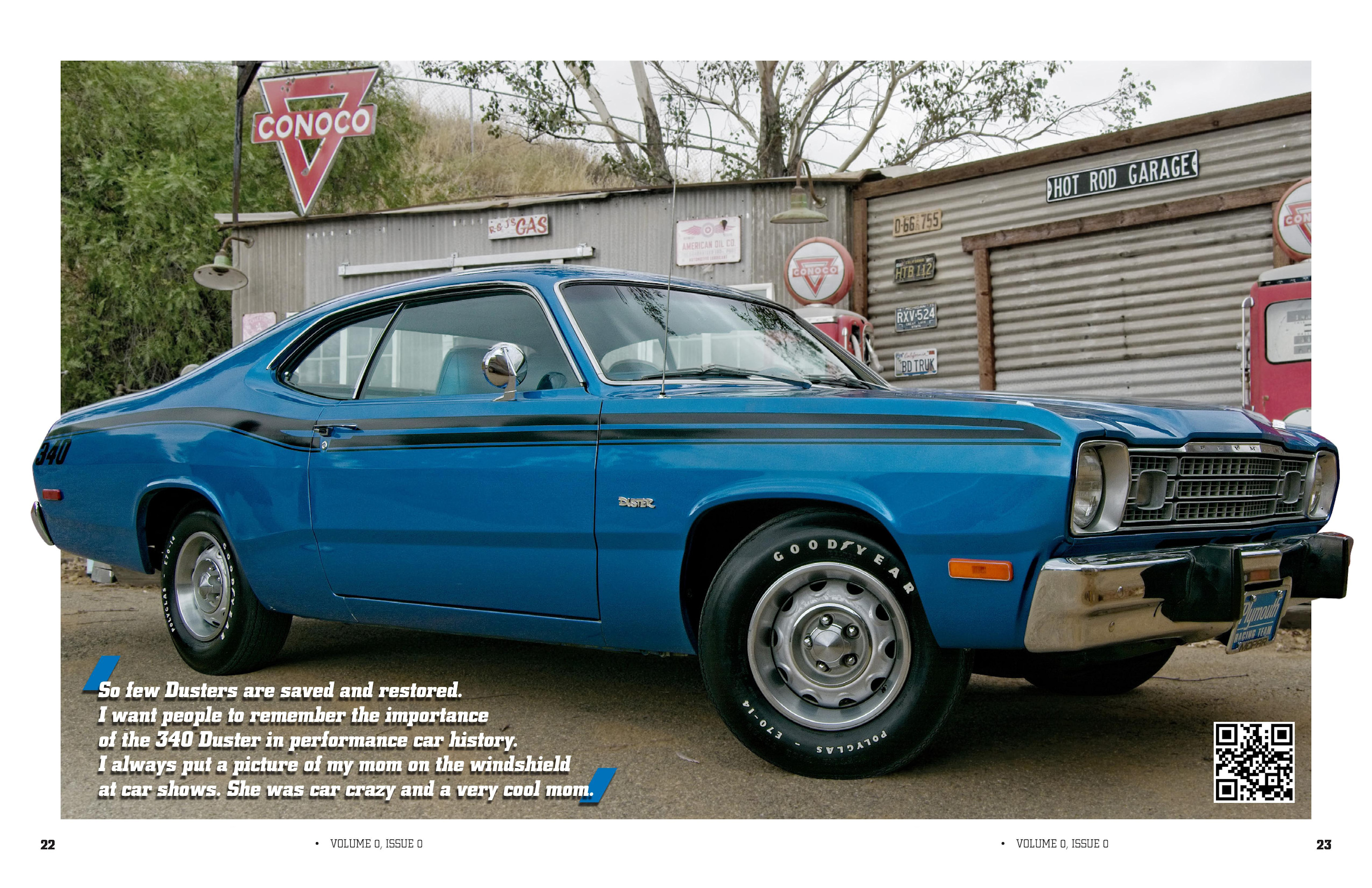
Here’s another example. One story we’ve done in T2PS is on a 1973 Plymouth Duster 340 that’s been in the same family since new, now five decades. In the layout for the postwar magazine, at the end of the story, you see a QR code. After you’ve finished reading that feature, you point your phone to the QR code and it brings up two television commercials for the new 1973 Duster already available on YouTube. It’s an added level of engagement that I think enhances the print reading experience.

S.H.: As you view the near future, what is in store for the magazine and the two of you?

Keith: Continuing to shoot more cars, tell more stories. Dipping our toes into the brick-and-mortar booksellers is an exciting possibility. We’re also looking at repackaging some of this year’s Spreads as 100-page annuals, each one appealing to a more targeted slice of the automotive pie. We’ll launch the annuals on Black Friday.

Rich: We can easily repackage the existing T2PS content into more targeted packages as Keith said above. Keith’s background is primarily Mustangs and Fords so one of the 100-page annuals will target that area. I’m much more of a generalist although I have a penchant for the unusual, out-of-the-mainstream marques, like American Motors and more obscure European brands. At $25 each, they will be great stocking stuffers for your favorite auto enthusiast on your list. The challenge will be how to get noticed. Social media only goes so far. Getting real-time online reviews and getting Amazon to recommend us is crucial. I’m working on that.

S.H.: My typical question is, what keeps you up at night?

Keith: I’ve been cancer-free for over a year now. I’ve been blessed with being a working artist/art director for my entire career, dating back to 1979 when I dropped out of college to take my first AD position. ‘Running out of time’ is what keeps me up at night. Literally. I have more ideas than I can put to page. Things like T2PS – Motorcycles, T2PS – Tiny Houses,  T2PS Mid Century Modern. And exploring other print ideas with Richard.

My hobby is that I’m a serial remodeler, and over 40 years I’ve become so good that friends and family are now imploring me to teach them how to reimaging their houses. And with the downturn in conventional print advertising (my ad agency for the last 28 years, Keplinger Designs, is aimed at the automotive aftermarket), any revenue is welcomed.

Rich: I had a near-death experience this Spring which put the launch of the postwar magazine on hold. We had hoped to launch it (yes, I’ve been coy with its title) this Summer during Pebble Beach Week but have delayed it until January 2023, for Scottsdale Car Week.

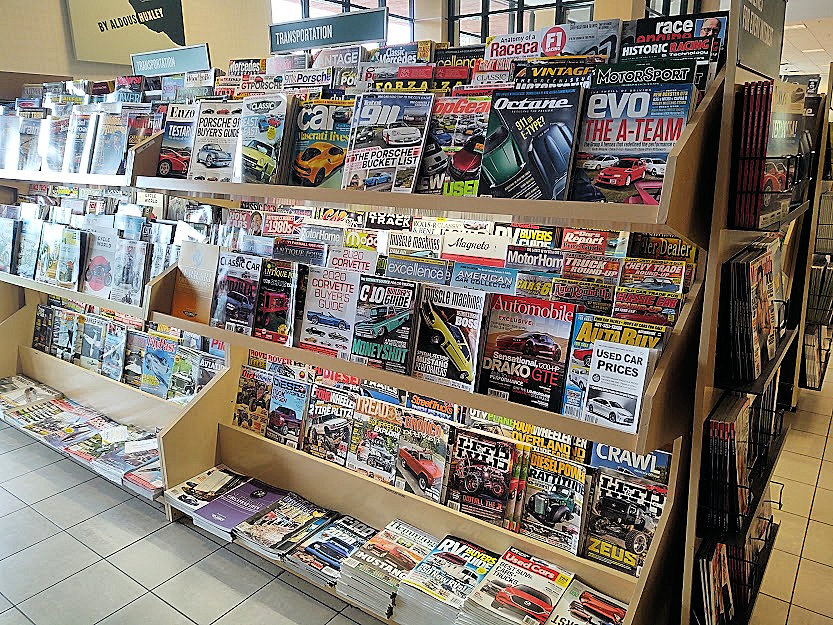
If one looks at the auto section of the Barnes and Noble newsstand, almost half the titles are now from the UK, which to me is sad. One thing I know is unless retail is willing to buy it outright at a deep discount for the visibility—with no returns—newsstand is out. We simply can’t afford that unless we are part of a larger publishing organization. 

Having an entity in the vintage automotive world, especially in the high-end auction sector, to be the cover-line sponsor, is the road we’re currently exploring for the postwar title. It allows me to leverage my of almost 30 years in the automotive editorial space, to get the title launched. And having Keith as the design partner is so exciting, seeing what he’s done with my legacy content, giving it a fresh lease on life with T2PS.

That’s the challenge we face. But T2PS does allow us to explore and test many ideas with it costing us nothing except for the time we put into producing T2PS.

S.H.: Thank you both.

Keith: Thank you for this wonderful opportunity and for your helpful insights into our little publishing concept.

Rich: Like Keith, I also want to thank you for giving us this exposure. I clearly remember how helpful you were when I launched Automotive Traveler as a digital-only online magazine back in 2007. I’m hoping that lightning strikes twice.

To view all the Facebook The Two Page Spreads, visit bit.ly/AllT2PS.

h1

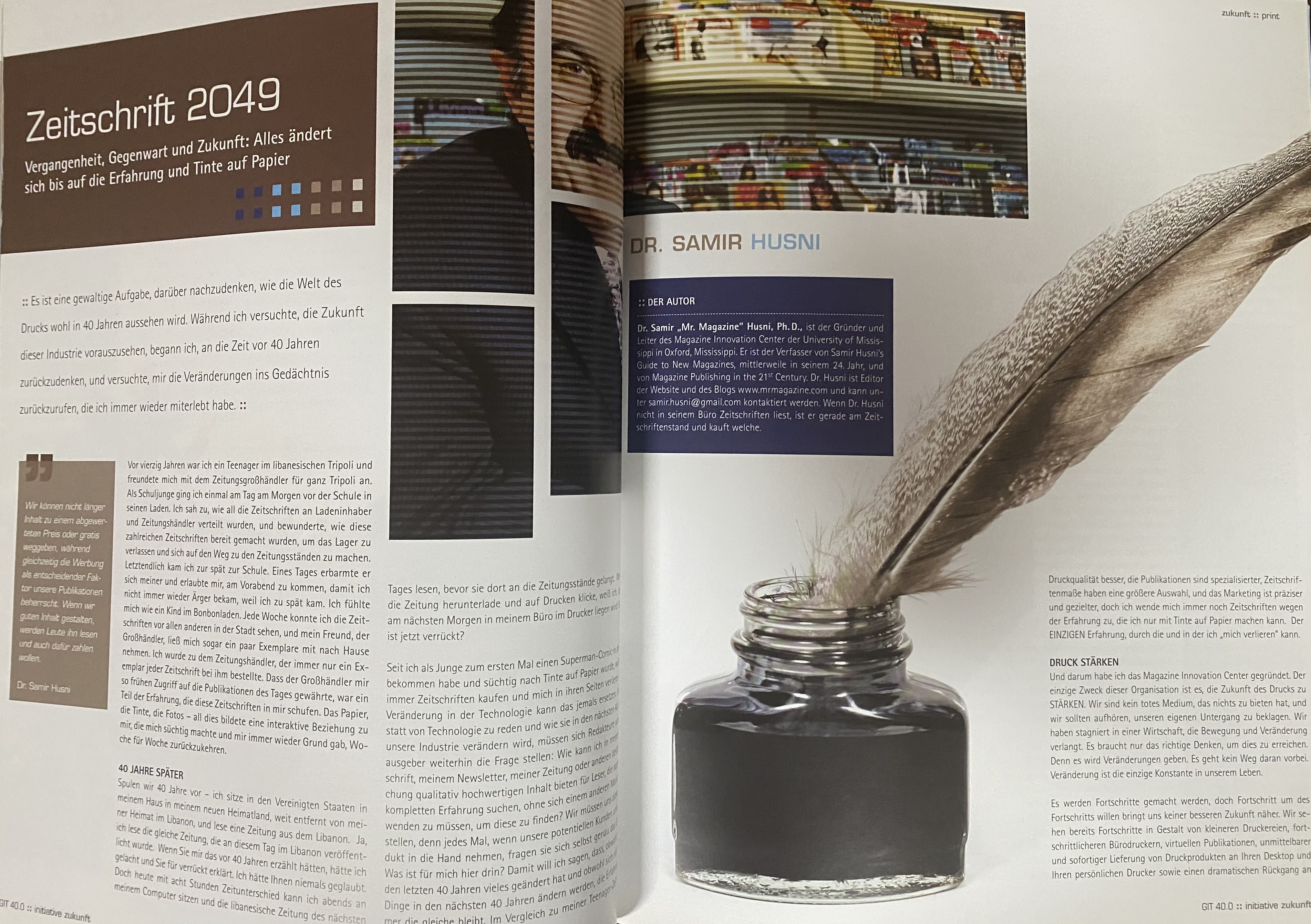
Magazines In 2049: A Mr. Magazine™ Preview. The Past, The Present, And The Future: Everything Will Change Except The Experience And Ink On Paper…

September 19, 2022

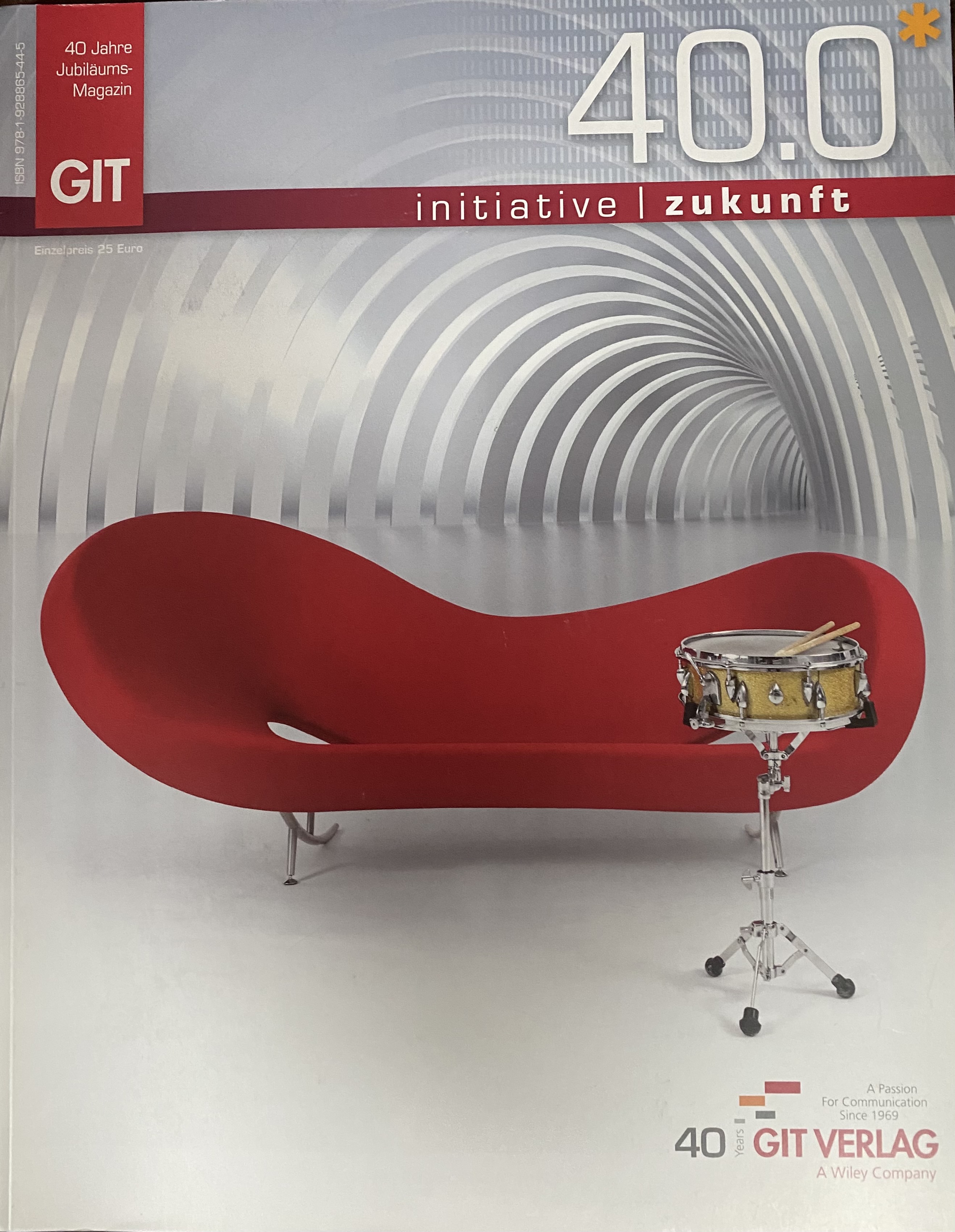
In 2009 I was asked to write an article for the German magazine GIT VERLAG in celebration of their 40th anniversary. My article focused on magazines in 2049. Here is, for the first time, the English version of the article that appeared in the German magazine… Keep in mind this article was written in 2009 and is published here with no editing or changes. Hope you enjoy this journey through memory lane. 

Magazines 2049

It’s a daunting task to try and think about what the world of print will look like in 40 years. While trying to see the future of this industry I began to think back to 40 years ago and tried to imagine the changes I have seen happening all over again.

Forty years ago I was a teenager in Tripoli, Lebanon when I befriended the wholesaler for all of Tripoli. As a schoolboy I would go by his shop once a day in the morning before school. I would look at all the magazine’s being distributed to shop owners and news- agents and admire the many magazines getting ready to leave the warehouse and head to the stands. Ultimately this would make me late for school. One day he decided to take pity on me and told me to come by the night before so that I wouldn’t get in trouble at school for being late over and over again. 

I was a kid in a candy store. Each week I would be able to see the magazines before anyone else in town, and my friend the wholesaler would even let me take copies home with me. I became his newsagent who will order only one copy of each magazine. The wholesaler allowing me early access to the day’s publications was a part of the experience that those magazines created with me. The paper, the ink, the photos; all of it formed an interactive relationship with me that got me hooked and kept giving me reasons to return week after week after week. 

Fast forward 40 years, I am in the United States sitting in my house in new home country, far away from my home in Lebanon, and reading a paper from Lebanon.  Yes, reading the same paper published in Lebanon on the same day of publication.  If you told me that 40 years ago, I would have laughed at you and accused you of being crazy. I never would have believed you.  But today, with the eight-hour time difference I can sit at my computer in the evening and see the next day’s newspaper from Lebanon before it hits newsstands over there.  Once I download the paper, hit print, I know it will be sitting in the printer at my office the next morning. Whom are you calling crazy now?

Since I first picked up a copy of a Superman comic book when I was a boy and got hooked on ink on paper, I have always wanted to pick up a magazine to lose myself in its pages. No changes in technology can ever replace that. So instead of talking about technology and how it will change our industry over the next 40 years, editors and publishers need to continue to ask the question how can I provide quality content in my magazine, newsletter, newspaper or other publication for those readers who are looking for a complete experience without having to travel to another medium to get it all. We have to ask that question because each time our prospective customers pick up our product they ask themselves the exact same thing: what is in this for me?

All this is to say that while many things have changed in the last 40 years, and while many things will change over the next 40, the experience will always stay the same. Compared to when I was a teenager, printing quality is better, publications may be more specialized, magazine dimensions have greater range and marketing may be more exact and targeted, but I still go to magazines for the experience I can only have with ink on paper.  The ONLY experience that I “lose myself” through it and in it.

And this is why I have created the Magazine Innovation Center. The sole purpose of this organization is to AMLIFY the future of print. We are not a dead medium with nothing to offer and we should stop bemoaning our own demise. We have become stagnant in an economy that calls for movement and change. It just takes the right thinking to get there. Because there will be changes. There is no way around it. Change is the only constant in our lives. 

Progress will be made, but progress for the sake of progress moves us no closer to a better future. We are already seeing progress in the forms of smaller printers, more advanced office printers, virtual publications, immediate and instant delivery of printed products to your desktop and personal printer and even a drastic decline in waste in the printing and distribution world. With all of this our industry can stay current with technology and the like, but it still doesn’t change the fact that we are based off of experiences our customers have with us, and when we lose sight of that we can’t regain ground with gimmicks on the internet or special inks on our covers. 

One of the biggest changes will be a change in our mentality about everything. We will change the way we think about how we do publications and how we conduct business. I have been saying for quite some time now that the way we do business is outdated and acting as an anchor for our industry. We cannot continue to give content away for a devalued price or for free while advertising reigns as the make or break factor in our publications. If we create good content, people will want to read it and also want to pay for it. 

For the last 60 years  in the United States of  America we have relied on a publishing model that devalued subscribers and focused heavily on the customers supplying the advertising, but not the customers we were actually supposed to reach: the readers themselves. 

I know it may be disappointing to some of you that my forecast for the next 40 years is based on the last 40 years, but would I have believed when I was walking to the wholesaler in Tripoli that 40 years later I would be reading magazines and newspapers from thousands of miles away in the exact same way today?  

There are three things that the future will benefit from if we constantly consider. First, we must make sure we focus on the present. For all the talk about tomorrow and next year, there is no point planning for the future if we can’t survive today. 

Second, we must create the complete experience. As everything changes around us, our publications must provide a total package. We don’t need to create something that relies on another medium to finish our job. Readers shouldn’t have to go to another outlet or source to get the rest of our stories. Henry Luce recognized this 80 some years ago when he started Time magazine. With over 20 newspapers in New York City at the time, he saw that readers wanted a one-stop alternative to get their news in less time and less space.

Third, there will be more need to know our readers. With increased technology, it is becoming easier and easier to know more and more information about out readers. We have to start treating them like customers: know what they want, who they are, what the like to read and what they like to buy. The more we let technology help us learn about our readers, the better we can serve them as customers. 

I know you expected me to write about the future and create a vision of the next 40 years, but as I have said before, there are only two people who can tell the future: God and a fool. I know I am not God, but if you want to read it, here is a future scenario of a fool. Everything I have written to this point I can guarantee, but feel free to read the rest at your own risk.

In 2049 I will receive a box in the mail. I place the box on my desk, open it and find a magazine called Samir’s, the magazine about my lifestyle. The cover has a striking image of exactly what I am wearing except in a different color. It is trendy, hip and relevant. In big type below the title is a tagline that screams “The magazine you can read, listen to and watch.” I open the cover and turn to the first of the 90 high quality glossy pages. As I open it I am greeted by a screen in the middle of the pages, a disposable screen with a menu that allows me to interact with the magazine in different ways unique to the articles I have flipped through. After I have read a great review about the latest Britney Spears Golden Oldies music collection, I have the option of bringing up the interactive screen to view videos from her years gone by. The paper provides me with the experience I have always loves and cherished. I am able to touch and feel the pages while the disposable, interactive screen hooks me with its multimedia experience. With all the benefits of this publication it still remains under 15 dollars ensuring that I won’t feel guilty leaving the magazine behind somewhere after I have enjoyed it, exactly like a chocolate bar I am able to eat and leave the wrapper when I’m done. Inside the magazine are subscription offers for Samir’s sister publication Elliott, the magazine for grandchildren

Time to wake up.  Forty years from now I will be still reading the magazines the same way I read them today and the same way I read them 40 years ago.  Others maybe engaged in other types of new media, but as for me the past, the present and the future are all summed in that wonderful “lose myself” experience while reading the printed magazine. You don’t have to take my word for it, just see me 40 years from now and we will see if my present is still my future.  

Samir “Mr. Magazine™” Husni, Ph.D.

Founder and Director

Magazine Media Center

Preserving the Past, Present, and Future of Magazine Media

samir.husni@gmail.com
h1

Mr. Magazine™: The Beginnings. Part 2 Of Mr. Magazine’s™ Life With Magazines.

September 12, 2022

At age 10 I fell in love with magazines. The rest is history. A history that you will read about it soon in the book I am working on The Magazines And I. What follows is part 2 of the book’s introduction. Hope you will enjoy…*

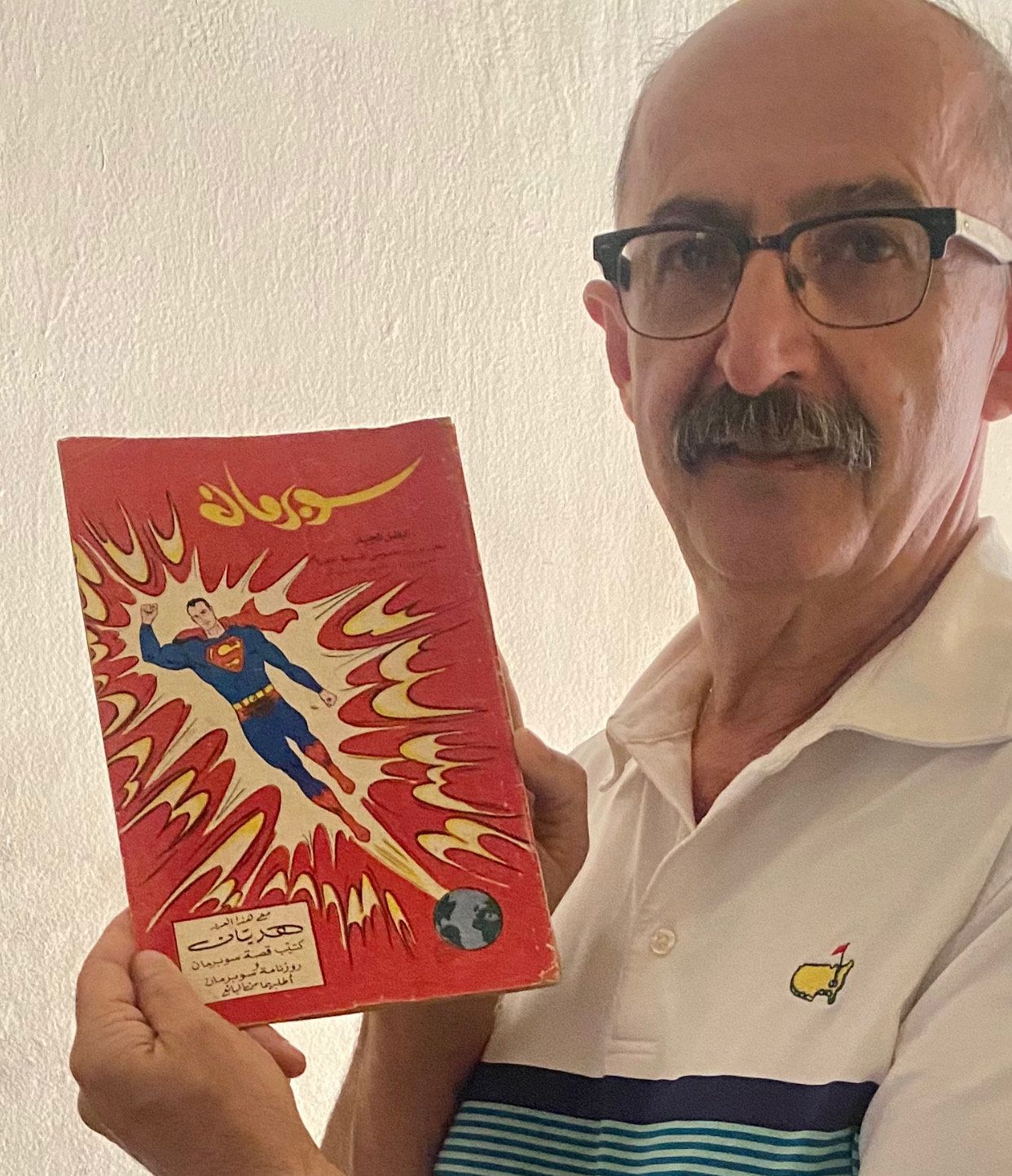
Superman and I: The magazine that started my journey into the magazine world.

My Family Roots

There were five children in my family, my older sister, my three brothers and me. My eldest brother, who was three years older than me, died in 1999 of multiple sclerosis. He was the pride of the family and carried my grandfather’s name – Khalil, like Kahlil Gibran, but spelled correctly. He was the first one in our entire family to have a Ph.D. – it was in English Literature and from the University of Exeter in the United Kingdom. My sister and my two younger brothers are still in Lebanon. I am the poor, misunderstood middle child and maybe that explains my tendencies to be different from what my family deems “normal.” My wife, Marie, is also the middle child. Possibly the reason we understand each other so very well. 

My father was Presbyterian and my mother was Greek Orthodox. They moved from our village called Hakour 20 miles to the north of the big city of Tripoli so my dad could find work. My grandfather was the mouhtar (mayor) of the village, and we had olive groves and an olive mill to make olive oil. When my parents married, my mom was 14 and my dad was 20. It took my mom five years until she had her first child. It was always looked upon as wrong if you didn’t have a child. My dad was the only son, and he had six sisters. My mom had no brothers. So I had no uncles – just aunts. 

Dad found work at the Iraqi Petroleum Company, which was owned by the British. He worked in shifts, and whenever there was a holiday they paid him double. When I was born in 1953, Tripoli was the second largest city in Lebanon. Tripoli comes from the word Tri-po-lis, which goes back to Greek or Roman days, and means the tri-city. The city flooded in 1955 when the river, Abu Ali, overflowed. For some reason, I can remember my dad carrying me on his shoulders and walking in the mud. I was only two, but I recall that he was wearing rubber boots and the mud was high. We lived on the first floor, of the apartment building and the entire floor was filled with mud. 

Our family of seven lived in a two-bedroom apartment. Mom and Dad had a room and the rest of us shared a room.  Being Presbyterian, we kids were sent to a Presbyterian school started by American missionaries. From the first day that you start school at age three, you learned to speak, read, and write Arabic and English at the American school or Arabic and French at the French school. If you were Presbyterian, you went to the American school. 

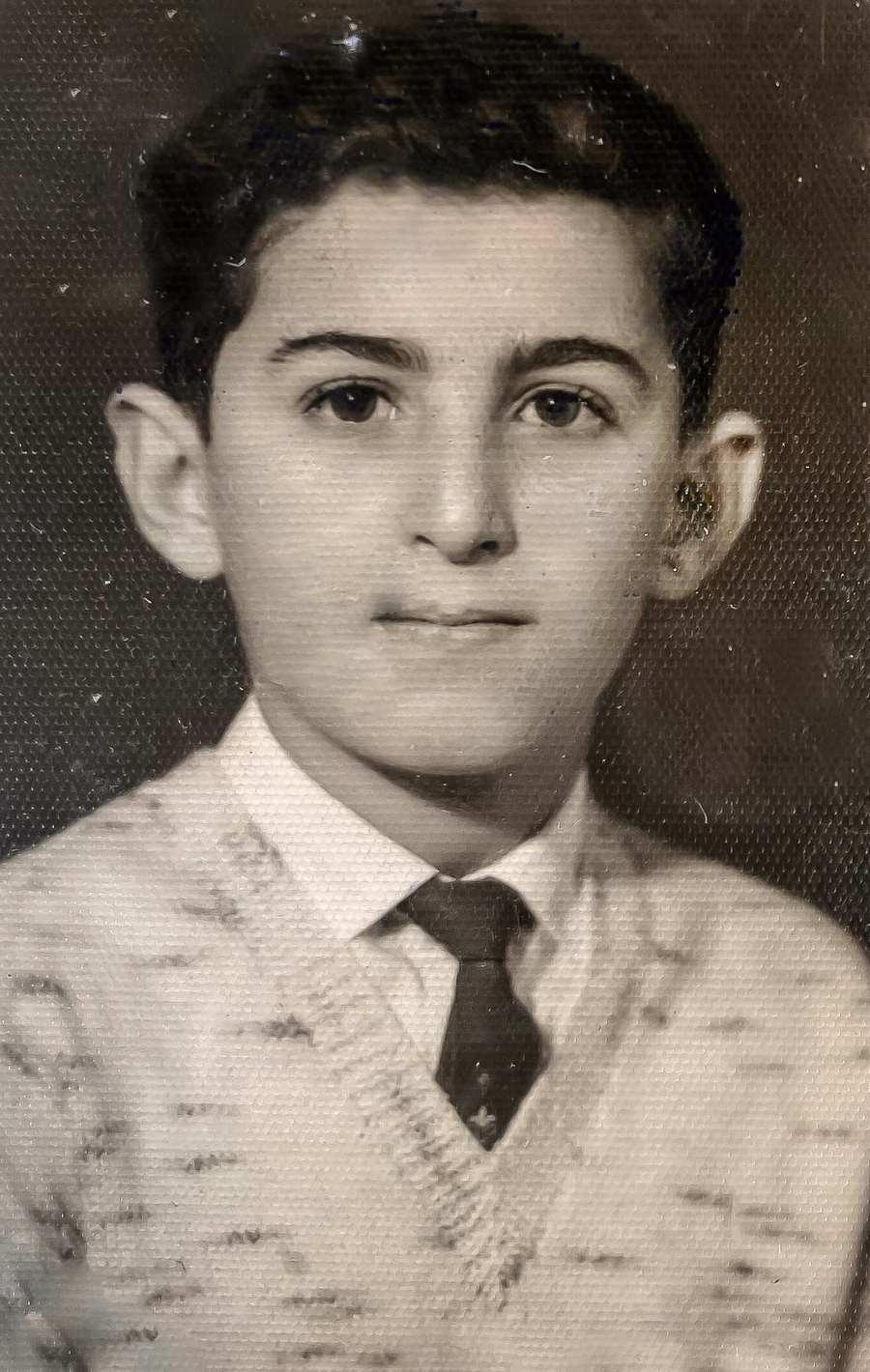
At age 10 my long lasting relationship with magazines started…

We had two American schools in Tripoli: the boys’ school and the girls’ school, run by Presbyterian missionaries. It wasn’t until 1958 that the missionaries gave the schools to the Presbyterian Synod in Lebanon and Syria to be run by locals. The American boys’ school was a good walk away on a hilltop, and the girls’ school was closer to our house, so that’s where I went, the girl’s school, until the third grade. 

The Tripoli Boys School, where I studied from grade 4 to 12, before the beginning of Lebanese Civil War in 1975. The school was occupied and semi destroyed during the war.
I visited my original school in 2018. It has been renovated and is now a public school in Tripoli, Lebanon. Tripoli Evangelical School is now the combination of both Boys and Girls school and is located east of Tripoli.

They were actually called Tripoli Boys School (TBS) and Tripoli Girls School (TGS), but everybody referred to them as American Schools. Today they are combined and called Tripoli Evangelical School (TES). After third grade, the boys and girls went to separate schools. That was the environment that I grew up in. 

Words of Wisdom

From an early age, my dad used to give me what he thought the principles of life were that any employed man should live by: comb your hair, keep your clothes clean and shine your shoes. Simple as that. Before school, he’d shine our shoes. Or if he was busy, he’d get somebody to do it for him. He was so adamant about this, and neither he nor my mom even had a high school education. Dad did his best to study English on his own because most of his employers were British. Because of this, and recognizing the need for a formal education in the future, my parents recognized the importance of education early on, and invested in sensing us to private schools instead of the free public schools. 

Names carry heavy meaning with them in middle eastern culture. All children carry their father’s first name as their middle name. First born sons have the privilege of naming their own first born sons after their fathers. So after my brother was diagnosed with MS and before his death in 1999, he gave me his blessing and his privilege of naming any son that I might have after my dad, “Afif” (Afif is the French spelling that we Americanized to Afeef, the English spelling for easier pronunciation), because he would never have the opportunity to do so. Sometime after that, when my wife was pregnant with my son, I was on the phone with my father and he asked me when he was going to have his “Afeef.” Until that point, we had not truly considered calling our son Afeef. After that, we knew we had to honor my brother’s memory and my father’s wishes and give him a namesake. When my son, Afeef, was born, Dad said he could die in peace.

That’s why a name is so important – it’s a commitment, a culmination of all things past and present that make up a deeper meaning for all who hear it. Some people have asked me why I would call my son a difficult name like Afeef in America. People don’t understand the importance of that name. My dad’s name was Afif, which means pure, and my mom’s name is Afifi, which is exactly the same thing, just feminine. They were not related, just pure coincidence. In Arab culture, often times people can distinguish what religion you are based on your name. All of the names of the children in my family were genuine Arabic names, not named after any particular saint or prophet. My grandfather used to say all the time that people should know your religion by deeds, not by what you tell them, not by what they call you. Myth has it, or what I heard growing up, that if you are Presbyterian and you appear in court, you don’t have to swear on the Bible because Presbyterians don’t swear. Only one percent, if not less, of Lebanon is Presbyterian. So, needless to say, we were from the minority of minorities.

The True Beginning

In the ninth grade, I started calling and harassing editors and complaining to them. That was about the time I started creating my own small magazines. Because at that age, we would visit my grandparent’s village in the summer where there were no magazines. I felt like I had magazine asthma without my ink on paper. I started making my own as an idea to kill time. I would borrow my grandfather’s transistor radio and all day I would sit down and create my own little daily. I’d use candles from my grandmother’s house, rubbing the candles on paper and then rubbing the paper back on old newspapers to get pictures. I’m not sure how I knew to do that, how I knew that images could be lifted in that way, but I did. And I was ecstatic.

That was when I discovered the concept of what I now believe in wholeheartedly. It’s what I preach, teach and consult about: the audience of one.

In those early publications of mine, I was the editor, designer, reporter, and the publisher. At the end of the day, I’d sit down and read my own creations. This whole concept of one theory was both an epiphany and also unbelievable to me. I made my magazines for me, to my specifications. Those may have been some of the first niche productions. At that point in time, without really realizing it, I had targeted an audience: myself.

The First Byline

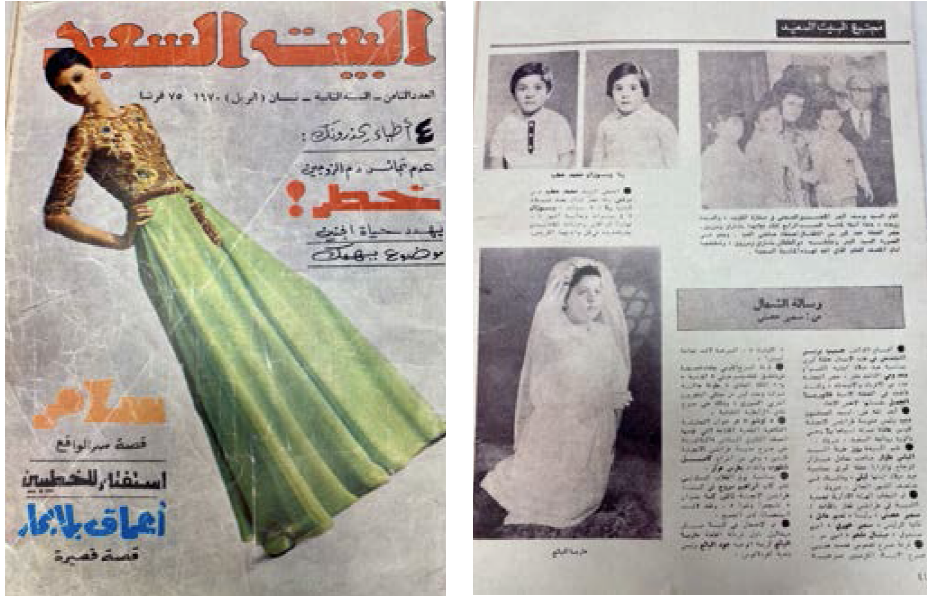
But the breakthrough in my childhood magazine career happened when I had the opportunity to visit Beirut in 1969 and tour some actual magazine publications. I met the publisher of a magazine called Al-Biet Al-Saeid (Happy Home), and I told him how much I loved the magazine. On the day I left Beirut, his wife called me and asked if I wanted to be the correspondent from the north for the magazine. I said absolutely.

The Happy Home magazine where my very first printed byline appeared in April 1970.

My first assignments consisted of sending actual reports from our area of the country back to Beirut. It wasn’t long until I was doing “News from the North” with my byline. I would include items like “so and so died or so and so got married.” I actually still have a copy of that. My late cousin, God rest her soul, sent me a copy because I wrote a piece about her when she was christened and included her picture. The combination of doing my own writing and starting to buy every issue I could get my hands on changed my approach to things in junior high and later in high school. At that time the number of titles flooding the marketplace continued to grow, names like Superman, Tarzan, Batman, and even a pure born and bread Lebanese magazine called Magic Carpet, with the other Egyptian titles such as Mickey and Samir (my namesake, ha ha ha).

Even having a magazine with my name it continuously didn’t satisfy me. I wanted all magazines in general. During that time period, I was very involved with my church. It was not an option for us growing up. If it was Sunday, that meant Sunday school and church. I remember spending my Sunday allowance, which my dad gave me 50 cents, one quarter for Sunday school and one for a piece of cake from the pastry shop next to the church. One time, on my way to church, I lost one of the quarters. It was a big debate. Did I lose the Sunday school quarter or my allowance quarter to buy the piece of pastry? I made up my mind. God can see everything. That was his quarter and he knew where it was. My parents didn’t seem to agree. Beside that piece of cake, all my allowances went to buying magazines. I don’t think my parents ever really understood my magazine obsession. Their dream was for me to either go to seminary because I was so involved with the church and become a preacher, or become a dentist- both noble professions in their eyes.

Math Meets Magazines

In Lebanon, once you reach the 11th  grade, you declare an education concentration: scientific or literary. And if you are going to dental school, you have to go with science and take classes like physics, geometry and calculus. If you want to study languages, you do literary.

It was a struggle. I had to listen to my dad. I went with the scientific orientation. I’d be sitting in the geometry class, which I was never good at because I never had any patience to sit down and find the area of a triangle or a circle; I’d find myself sitting in class relating the triangles and circles to magazines. What would I create? My entire notebook had more magazine covers than any geometry problems.

I was an average student in high school, but that fascination was always with me. It led me to daydream a lot about this business. Triangles and circles became magazines. And of course, I discovered how this business worked. I learned about wholesalers, distribution, which day they would go on sale, etc. I worked my way from the newsstand sellers to the wholesalers. I tracked the line backwards from how the magazine came to the consumer.

It was at that time that I became acquainted with the wholesale distribution house in Tripoli, which was owned by a family called Jarrous. And because the man had told me to start coming at night so that I could see the magazines before anyone else, I became a fixture there. The distribution house was in an alley near the old center of Tripoli. I remember the first time before he offered me the see-before-anyone opportunity, I would stand sheepishly by the door because I didn’t want them to scream at me. The magazines were unloaded and people from newsstands came to collect them. One day I got the guts to go in and ask the guy if I could take a look. A few days later, I talked to him and he began to explain how distribution worked. It was so fascinating to me that he’d let me see magazines before they were on the newsstands. It was on one of those days when Mr. Jarrous asked me if I wanted to come the night before and he’d let me take whatever magazines I wanted so I wouldn’t be late for school. I would have magazines in my hand before anybody else in the entire city. I don’t think I slept that night.

All the while I stayed on the scientific course I had set for myself. I loved algebra and loved statistics, but I hated geometry. When I took the national test, the math exam was all on geometry. I flunked it badly. But when things were tough, I fell back on my hobby, when things were dark, I’d start dreaming, and when things were light, I kept on going.

The Success of Failure

Since that time, I have thought about one defining fact in my life, if I hadn’t flunked that year, my whole academic career would have ended one year earlier. My life would have been tragically different. I would have graduated before the Civil War in Lebanon began. I wouldn’t have met my wife and I wouldn’t have had a job at the newspaper. So many things would have been different. But there is a reason and a time for everything, I truly believe.

When I was repeating that year, my youth director came to me one day and said, “Samir what have you decided you want to do?” I said that I didn’t know – my parents wanted me to go to seminary or dental school. He looked me in the eye and said he knew it wasn’t his place to disagree with my parents, but, “If you do anything in your life besides journalism, you are disregarding the gift that God has given you.  You don’t have to be a preacher to tell people about God and his love. You don’t have to be a dentist and spend the whole day looking in people’s mouths. God has given you this gift called journalism, and that’s what you need to do.” That year I passed the exam because it was mainly algebra and statistics, and I told my parents that I was going to journalism school.

I had built up these expectations that they were going to be angry. But amazingly, they were resigned to the fact that this was going to be my chosen path. I realized that this was it. What I had been dreaming of the last decade from age 10 to 19 was about to become a reality. I was going to journalism school.  And they said okay. (More on that later…)

*To see the first part of the beginning of my journey with magazines please click on the link below…

h1

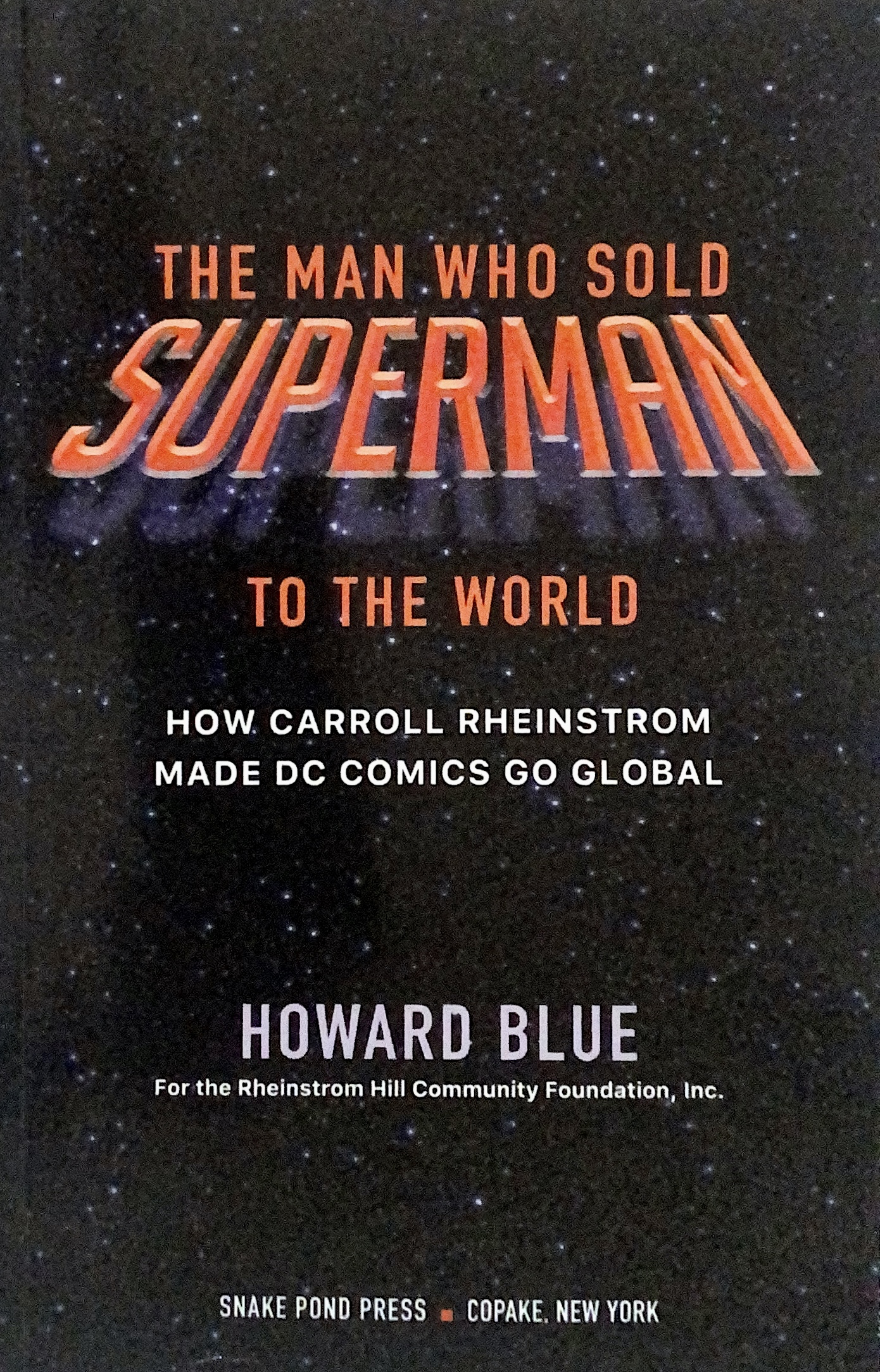
The Man Who Sold Superman To The World (And Me)… A New Book By Howard Blue

August 16, 2022

By now, most of this blog readers, know that my career in magazines started after falling in love with the ink and paper of the Lebanese first issue of the comic book Superman. Well, until recently, I did not how Superman made it to Lebanon in the 1960s of the last century. Howard Blue, the author of the new book The Man Who Sold Superman To The World, knew and documented how Superman made it to Lebanon and the rest of the world for that matter.

The Man Who Sold Superman To The World( front cover).

After reviewing the book, here is what I wrote and Howard thankfully used my review on the back of the book:

In the same manner DeWitt Wallace introduced Reader’s Digest and Helen Gurly Brown introduced Cosmopolitan to the world, Howard Blue’s book, The Man Who Sold Superman To The World, left no stone unturned and no kryptonite unearthed detailing the story of Carroll Rheinstrom, the man who introduced DC comics to the rest of the world.  

Years of reporting, researching  and fact-checking summed up in an informative and entertaining prose provide us with the life story of a man who took a comic superhero like Superman and introduced him to the world in a style worthy of being a superhero himself.  Justice (with the help of the league) has finally been given to Mr. Rheinstrom.  

Thank you, Howard Blue, for finally telling the story of how my (and millions of other folks) superhero Superman, who started my lifelong career in magazines after buying that very first Lebanese issue in 1964, made it all over the world. A job very well done.

Samir “Mr. Magazine™” Husni, Ph.D.

Founder and Director

Magazine Media Center

The Man Who Sold Superman To The World (back cover).

And here is part of what Mr. Blue wrote about my fascination with Superman in the book:

In Tripoli, Lebanon in 1964, ten-year old Samir Husni who became a dedicated fan of IP’s version of Superman (and who would in his professional life become known as Mr. Magazine) heard of it for the first time in a TV commercial when the famous phrase, “Look up in the air. It’s a bird it’s a plane, it’s Superman,” caught his attention. Saving up his weekly forty cents allowance, Samir crossed the street in front of his apartment and bought a copy in the neighborhood grocery store. Walking back home he had an almost magical experience, mesmerized as he read about the man from another planet…

The Man Who Sold Superman To The World is available on amazon.com by typing “Howard Blue Superman” you will land on the page to order the book. Highly recommended if you are a DC Comics fan and even more recommended if you are a Marvel Comics fan (as in know your enemy)… Enjoy

h1

A Tale Of Two Magazines: One & Tomorrow’s Man. From The Mr. Magazine™ Vault

August 8, 2022

A Tale of America’s First Two Gay Magazines

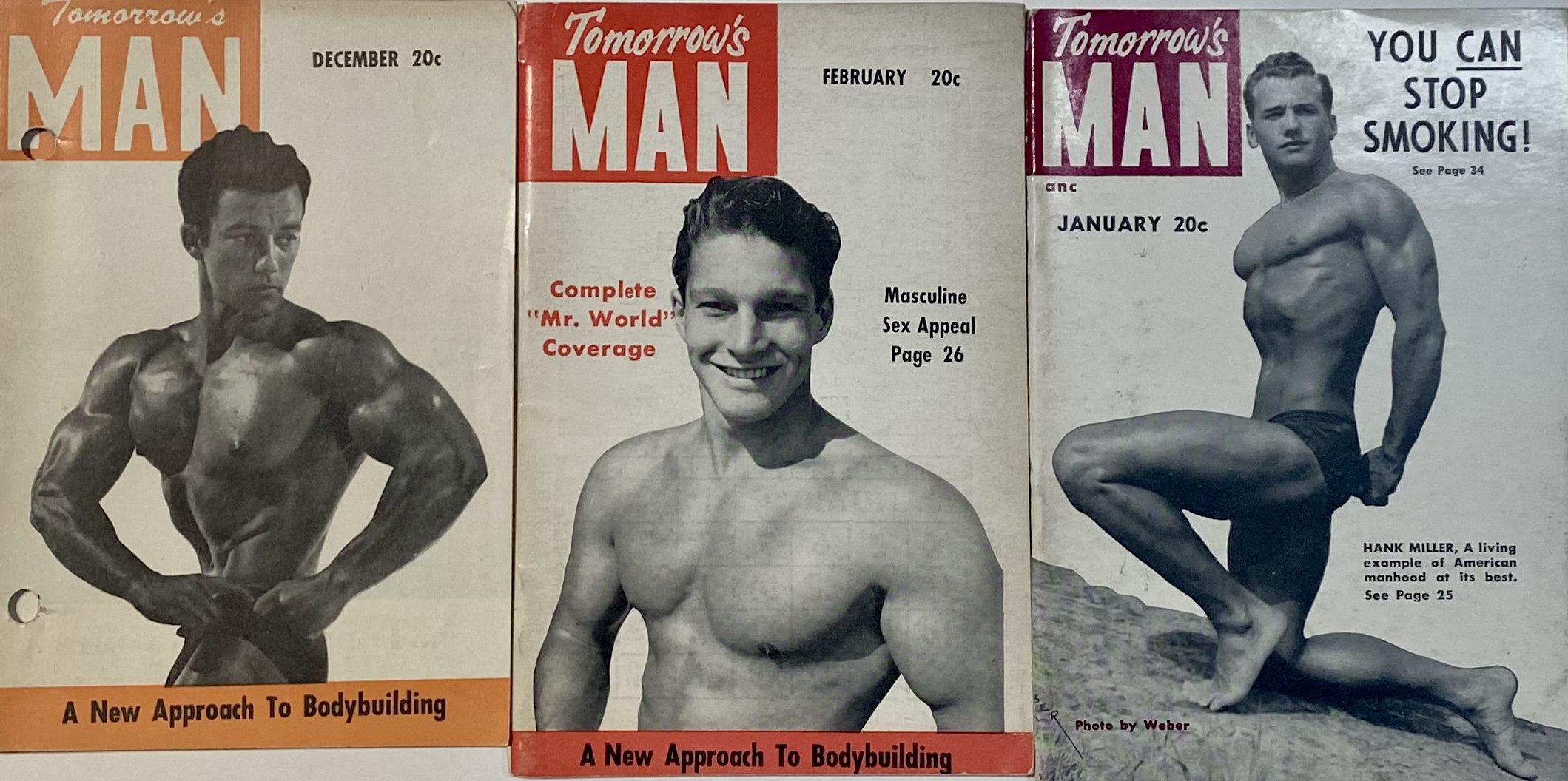
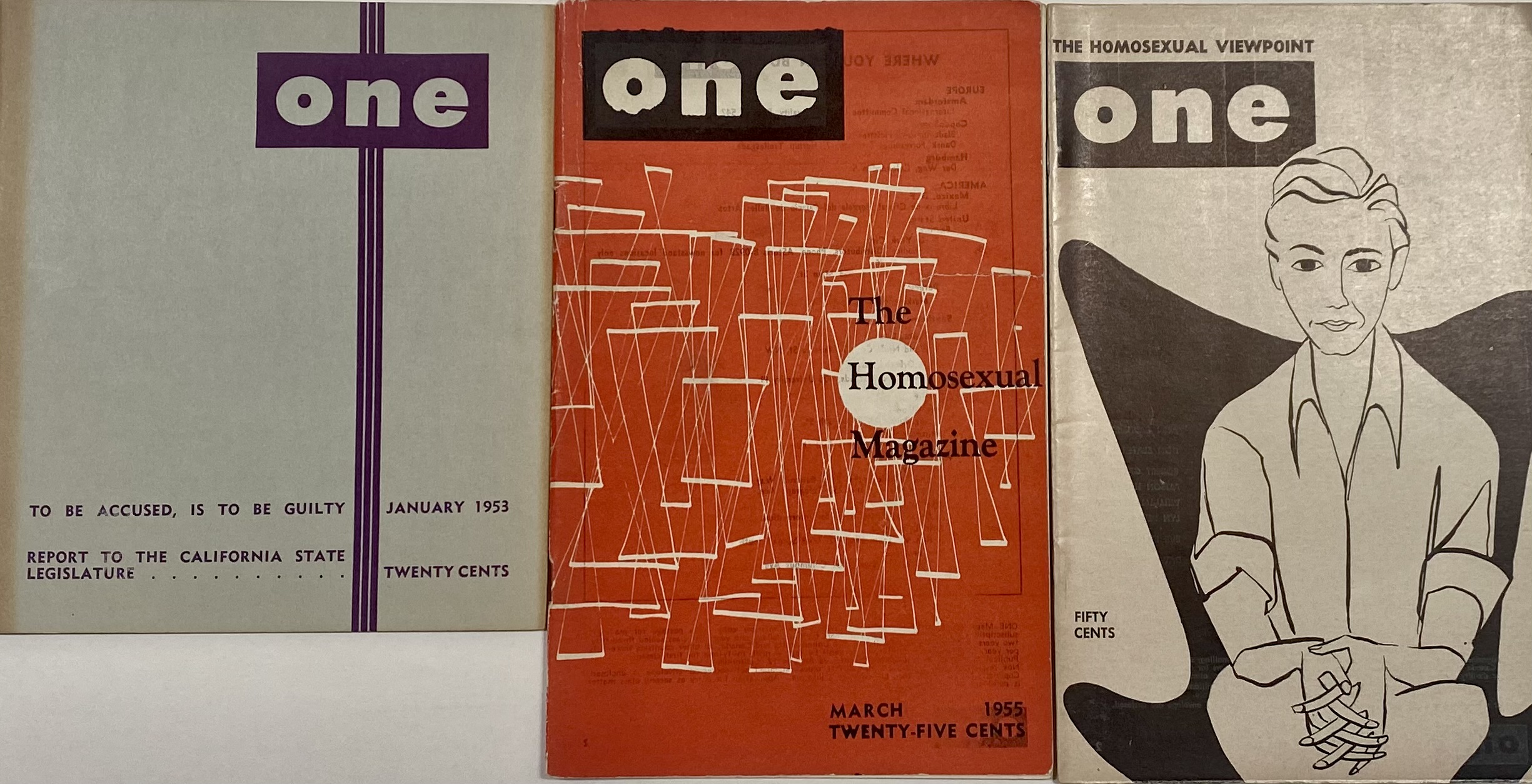
This is a story about what many consider the first two gay magazines in America.  It is a bicoastal story for one (no pun intended) was born on the west coast and the other in the Midwest only to move at the ripe age of two to the east coast. Both died before they reached the age of 20 but the impact they left on the publishing industry and on their audience is unforgettable. One was out, and Tomorrow’s Man was in the closet. Onelaunched in January 1953 in Los Angeles and TM launched in December 1952 in Chicago.  One sold out of the 500 copies that it printed and TM skyrocketed to the largest selling bodybuilding magazine on the nation’s newsstands selling 100,000 a month.  One  labeled itself  first as “The Homosexual Magazine,” and later as “The Homosexual Viewpoint,” and TM was labeled as “America’s first homosexual directed photo magazine.”  One was published from 1953 to 1967 and TM was published from 1952 to 1971.  

The genesis behind the idea for this blog (think of it as a preface to a possible book)  is an article written by the editor of  Drum magazine in 1965. What follows are excerpts of the aforementioned article: 

The Story Behind Physique Photography

From Drum, October 1965, Volume V, Number 8

By Clark P. Polak

“The first issue had a scant 32 pages and measured a tiny 3-3/4 inches by 5-3/4 inches, selling at the then high price of 20¢. Today it has 48 pages and sells at the now low price of 35¢. Then was almost 14 years ago, the magazine was Tomorrow’s Man.

Conceived by Irvin Johnson in his Chicago Health Studio gym as an additional medium for promotion of his already successful high protein tablets, vitamin supplements and other so-called body building products, the first book was mailed to a few hundred enthusiasts.

But Johnson had bigger ideas for his little book. He managed to convince the monolithic American News Co. (now disbanded) that TM was really a body builder’s handbook and within two years his dream came to fruition with TM selling an amazing 100,000 copies per month.

The current best sellers, Strength and Health, plus many more of the ilk, were no competition to America’s first homosexual directed photo magazine, though TM has now dropped from its hey-day top.  Others have now joined the bandwagon, but TM sales, always respectable, are again rising.”

So here are the facts about Tomorrow’s Man magazine (the older of the two by one month) and One magazine…

Tomorrow’s Man magazine:

Tomorrow’s Man magazine from the collection of Samir “Mr. Magazine™” Husni

Tomorrow’s Man

Dec. 1952

Vol. 1, No. 1

20 Cents

32 pages 

3-3/4 inches by 5-3/4 inches

A New Approach To Bodybuilding

Published in Chicago, IL

Tomorrow is yours… pages 2 and 3

“You are standing on the threshold of a new life… a happier healthier existence.  The men who cross this threshold will be stronger, more efficient men, ready to assume roles in the world of tomorrow. In a world torn by strife, the demand for greater strength of mind and body is not only pressing, it is vital.

Whether you take the challenge… whether you open the door or pass it by… depends on you.  Tomorrow can be yours, but the choice is up to you. 

This magazine is dedicated to that better tomorrow. It is dedicated to the young in spirit who will be tomorrow’s men. It is dedicated to men willing to accept something new and revolutionary…

Thus we dedicate this magazine to Tomorrow’s Man. In these pages you will find new ideas on building mental and physical strength.  They are “new” only because they are just now coming into use.  Actually, they are as old as common sense. But “old men” have refused to accept them since they do not conform to old teachings.

We think you will enjoy TOMORROW’S MAN. We hope it will help you find increased physical and mental strength. We know it can… if you’re young enough to accept a “young idea.”

AN OPEN LETTER

PAGE 5

THE Before and After pictures on pages 12 and 13 speak for themselves.  They prove that the Johnson System really works.

The training program you undertake now will determine what you will be two or three months from now.

If you are really sincere, you can start your training now. Just send me a note saying “Send me full information about Johnson’s Scientific Body Building and Nutrition Course.”

IRVIN JOHNSON

22 E. Van Buren

Chicago, 5, Ill.

Table of contents is on page 7 with Irvin Johnson listed as editor and publisher. The magazine is published monthly with a subscription price of $2.00. Cover price 20¢.

One magazine:

One magazine from the collection of Samir “Mr. Magazine™” Husni collection

One magazine

“… a mystic bond of  brotherhood makes all men one.” — Carlyle

Vol. 1, No. 1

January 1953

Published monthly.

20 Cents  per issue, two dollars a year.

6 inches by 7 inches

28 pages

Published in Los Angeles, CA

Editorial Board: Martin Block, Dale Jennings, Don Slater. Contributing Editor: Donald Webster Corey. Business Manager: William Lambert. Circulation Manager: Guy Rousseau.

Letter to you:

ONE is a non-profit corporation dedicated to the service of humanity. Its hopes are high. Its plans ae big, but the moral support and practical backing of ONE’s readers must be had, if it is to go forward and achieve great things. There must be many and substantial financial contributions for supplies, for printing, for legal counsel, for equipment needed. The subscription rate cannot cover the cost of production, and advertisers brave enough to support such a publication may be few for some time to come.

If you cannot personally with us working side by side, your check or money order will put you into the front line. Let us show the world what we can do. It is now up to you, ONE’s readers, for this magazine will continue to go forward as fast you permit. 

THE EDITORS  

Page 3

In the June 1953 issue of One the price became 25¢ by now and the total pages still at 28 and the subscription is $2 a year. 

 On the inside front cover this was written: 

“Everyday come orders for those two historic issues, One’s first and second, January and February 1953.

Everyday we regret we had only enough cash to print five hundred copies each.

Everyday we say, “The minute we get a little ahead, let’s reprint those two.” Then the printer, paper-supplier, binder and plate-maker all gleam with high-priced delight….”

On the last page of the June 1953 issue One identifies itself as such:

“ONE is a non-profit California corporation formed, “to publish and disseminate a magazine dealing primarily with homosexuality from the scientific, historical and critical point of view, and to aid in the social integration and rehabilitation of the sexual variant.” It is also “concerned with medical, social, pathological, psychological and therapeutic research of every kind and description pertaining to socio-sexual behavior,” and aims “to promote among the general public an interest, knowledge and understanding of the problems of such persons.”

One: The Homosexual Magazine tag line appeared for the first time on the cover of the  January 1954 issue and was later changed in 1957 to The Homosexual Viewpoint.

Tomorrow’s Man was heavily driven by photography, largely semi-nude man posing in different forms of bodybuilding. One, on the other hand, was text heavy with very little photography used.

To be continued…

Comments, ideas, responses, feel free to email me at samir.husni@gmail.com or comment in the space below.

Samir “Mr. Magazine™” Husni, Ph.D.

Founder and Director

Magazine Media Center

Preserving the past, present, and future of magazine media.

h1

So What Is A Magazine? A True And Tested Definition… From The Mr. Magazine™ Vault.

June 1, 2022

Defining a magazine, to some, is a very mercuric issue. To others, it is a clear cut definition. During some recent readings, I came across this definition from the book Magazines In The United States published in 1956. However, the definition is from 1908.

An issue of The Independent from 1910 for illustration purposes only…

What is a magazine?  A definition from The Independent  October 1, 1908

Early in the twentieth century The Independent, at the time a powerful weekly, could say editorially: “Modern American magazines have to a large extent fallen heir to the power formerly exerted by pulpit, by crowds, parliamentary debates and daily newspapers in the molding of public opinion, the development of new issues, and dissemination of information bearing on current questions.”

The Independent editorial writer expanded his argument by specific illustrations: “The magazine represents intellectual activity in its terminal buds. Its function is to work over old plots into new stories; to rewrite biography and history in accordance with the taste of the time, to resurrect forgotten truths, to make sound information palatable, to convert abstract science into applied science, to throw a searchlight into dark corners of the earth and some spots of our civilization, to start new movements and to guide old ones, to wake up people who are asleep by sounding the burglar alarm, to twist around the heads of those who are looking backward over their shoulders; in short, to inspire, to instruct, to interest.”

Quoted from Magazines In The United States, Second Edition, by James Playsted Wood. Published by The Ronald Press Company, New York.  Page 197.

h1

The Resiliency Of Print… An Interview With Mr. Magazine™

May 24, 2022

I was interviewed by Ashley Norris for FIPP website as part of his series of interviews with the speakers at the FIPP Congress in Portugal, June 7 to 9.

Please click here to read the interview.

h1

Revealed: The Simple Secret For A Successful Magazine Launch. The Mr. Magazine™ Interview With Doug Bitto, Principal, Advantage Circulation Consulting.

May 17, 2022

I found my match.  Doug Bitto, the principal of Advantage Circulation Consulting, LLC. is as big of a magazine junkie as I am.  He also is a firm believer that if it is not ink on paper, it is not a magazine. He describes himself as a bit of a pop culture junkie. “Magazines have fascinated me ever since I was very young,” he told me, “so it’s no surprise that I gravitated towards the business.”

Doug’s formula for a successful magazine is relatively simple as he says: “The underlying formula for all successful print magazines is relatively simple: Passion combined with deep knowledge, framed within the greater cultural understanding (i.e. what people actually want to read and buy at this particular moment in time).”

So with that in mind, and after a chat with Doug, here is the Mr. Magazine™ interview: Enjoy.

Samir Husni:  During our chat, I felt I found my match in a person who believes in the power of print, can you please explain why? 

Doug Bitto: When a print magazine is produced and distributed, it is a permanent snapshot of a culture. It cannot be changed, to be reviewed and scrutinized for decades (or even centuries) after being produced. A digital “magazine” on the other hand can be altered and the original message lost forever, including the advertising which is an essential component of cultural understanding. In addition, print is much more effective than digital in conveying a message because more of our senses are used when interacting with print. When was the last time anyone smelled their iPad? 

S.H.:  You run a circulation consulting company, do you mind expanding some of what your company does and your role running it? 

D. B.: We have evolved into an end to end consulting firm over the last 20 years. In addition to the physical nuts and bolts aspects of newsstand distribution and management, we have expanded to include consulting on product development, working very closely with editors and designers. One of our strengths, I believe, is our ability to successfully recognize cultural trends and how they are applicable to our clients.

As far as my role is concerned, I wear many hats. At the end of the day, however, it’s about ensuring that I successfully guide my clients.

S. H.: Small, regional, and new niche magazines are your specialty. Why and do you think there is still room for new magazines in this digital age? 

D. B.: Culture is constantly changing but much like radio, print will always be around. One trend we are seeing post-pandemic is the return to traditional media, as discussed in a recent article by Harvard Business Review https://hbr.org/2022/04/why-marketers-are-returning-to-traditional-advertising. Personally, I have not “seen” a digital ad in years, much less clicked on it. And if I find myself on a website that has pop-up ads (or worse yet, autoplay ads) I immediately click out without even looking. Not only are they annoying, they can actually create physical stress. Multiple studies have shown this. As the article states, people are becoming “ad blind” digitally due to these factors. 

Print on the other hand is relaxing. And if ads are well curated, they fit seamlessly within a print magazine. I hate to break it to the digital ad folks out there but from a practical standpoint, print ads are far superior. When you turn the page of a print magazine, you HAVE to look on the next page. Ad blindness is almost impossible. 

Advertising aside, magazines are rapidly turning into higher quality, higher dollar items with very little or no advertising. Again, not a new trend, but it is accelerating. And people are willing to pay for this experience. Out of the six new title launches we have recently launched or are launching over the next few months, four fall into this category. All are high quality in content and physical presentation. All are between $12.99-$14.99US, $14.99-$19.99CAN. 

S. H.:   Define a magazine for me. 

D. B.: I take a traditional approach. Mirriam-Webster’s first entry is how I would define a magazine:

Definition of magazine

1a a print periodical containing miscellaneous pieces (such as articles, stories, poems) and often illustrated

A digital publication is not a magazine, even though our culture is now defining many forms of media as a “magazine”. A different term should be used to describe a digital only publication. 

www.advantagecirc.com
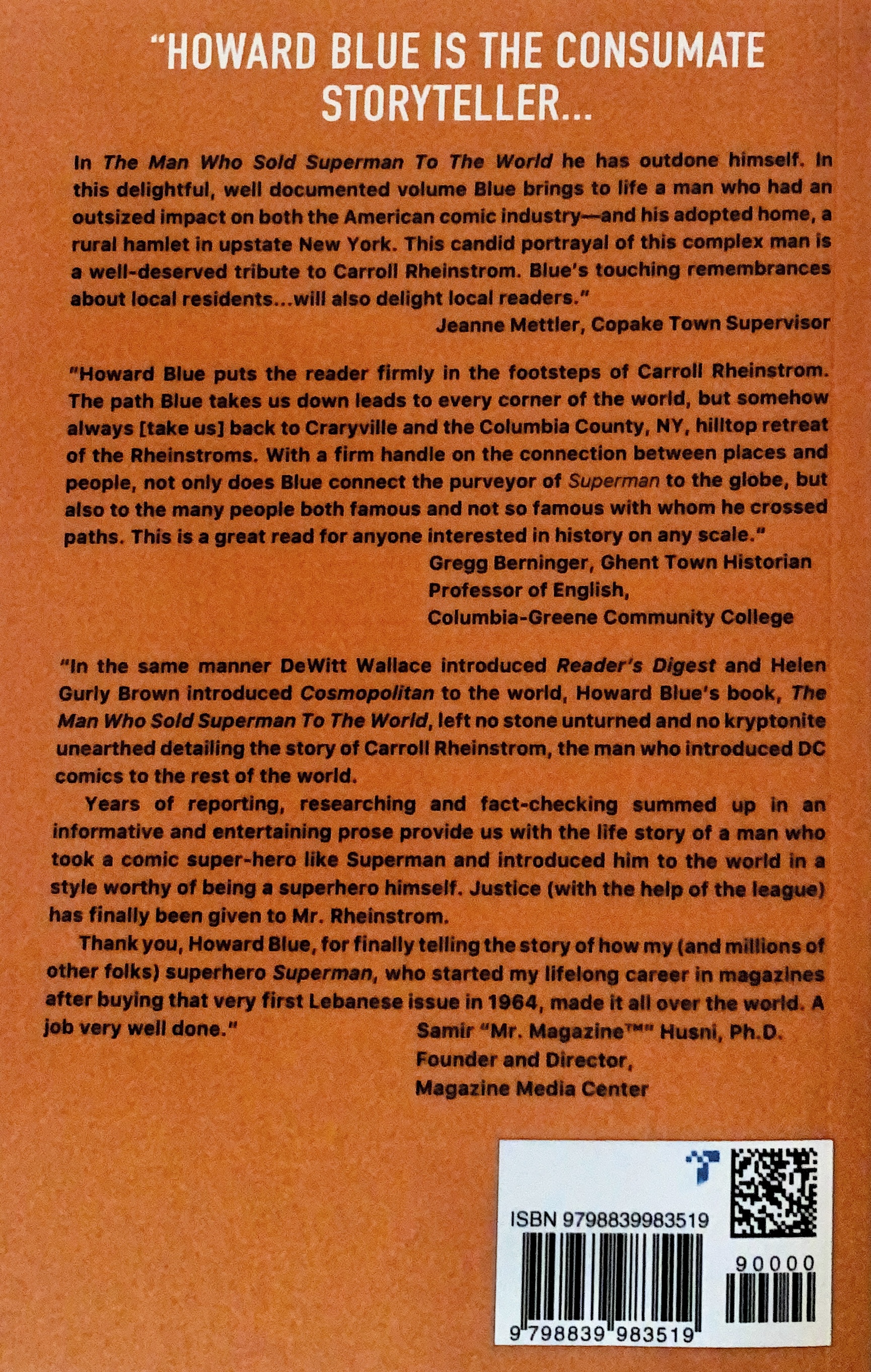
S.H.:   Can you share a success story of a new launch that you consulted on, and can you share one that failed? 

D. B.: I would like to speak in general terms first.

The underlying formula for all successful print magazines is relatively simple: Passion combined with deep knowledge, framed within the greater cultural understanding (i.e. what people actually want to read and buy at this particular moment in time). A product that not only informs and inspires, but entertains. Especially with niche and hyper-niche titles, readers are more than likely to be passionate experts in their own right. They are looking for knowledge above and beyond what they possess. The “formula” does not guarantee success but without its understanding, failure is guaranteed. The most successful publishers have an innate understanding of this. 

Regarding a successful launch, we have one title in the Sports Category that was basically a “gear” catalog when first presented to me. At launch it was approximately 40% catalog, not including additional advertising. But the content was excellent. The launch issue sold 51%. They have since expanded their content extensively but to this day their best selling issue of the year is always the “gear review” issue. Again, the publisher is one of the top experts in his field. And readers trust that the message being printed and products being presented are high quality. 

Now for the really bad failure. When I first started consulting over 20 years ago I signed a lifestyle magazine whose only concern was ad dollars, as I came to find out later. Content was secondary. Lowsingle digit sales on the launch issue. And when I say low, I mean LOW…3%. Naturally, they did not last for more than a couple of issues. 

S. H.:  Anything else you would like to add. 

D.B.: It may sound ridiculous in the digital age but nothing has really changed on the newsstand side of the business since its inception. Print magazines are produced and sent through distribution channels to retail. I believe that this industry has in many respects lost sight of the fundamentals. We cannot forget that this is an organic business and the most important people within the distribution channel are the merchandisers. Proper title placement and rotation are absolutely essential.  Without merchandisers who understand how to merchandise magazines as the unique products that they are, the industry suffers.

On the publishing side, I foresee almost all of the large publishers eventually going digital with print being reserved for special issues, and small independent publishers launching at an increasing rate. This movement started more than a decade ago but it will accelerate and become more prevalent in the future. Driven, ironically enough, by the digital age and the increasing ease of publishing in print.   

S. H.: What keeps Doug up at night these days? 

D. B.: Without question, the health of the newsstand distribution industry. With costs rising and large publishers continuing to go digital only, all levels are being squeezed. That being said, I am actually very positive about the future of newsstand. There will undoubtedly be more pain to come, but I believe that this industry will survive. 
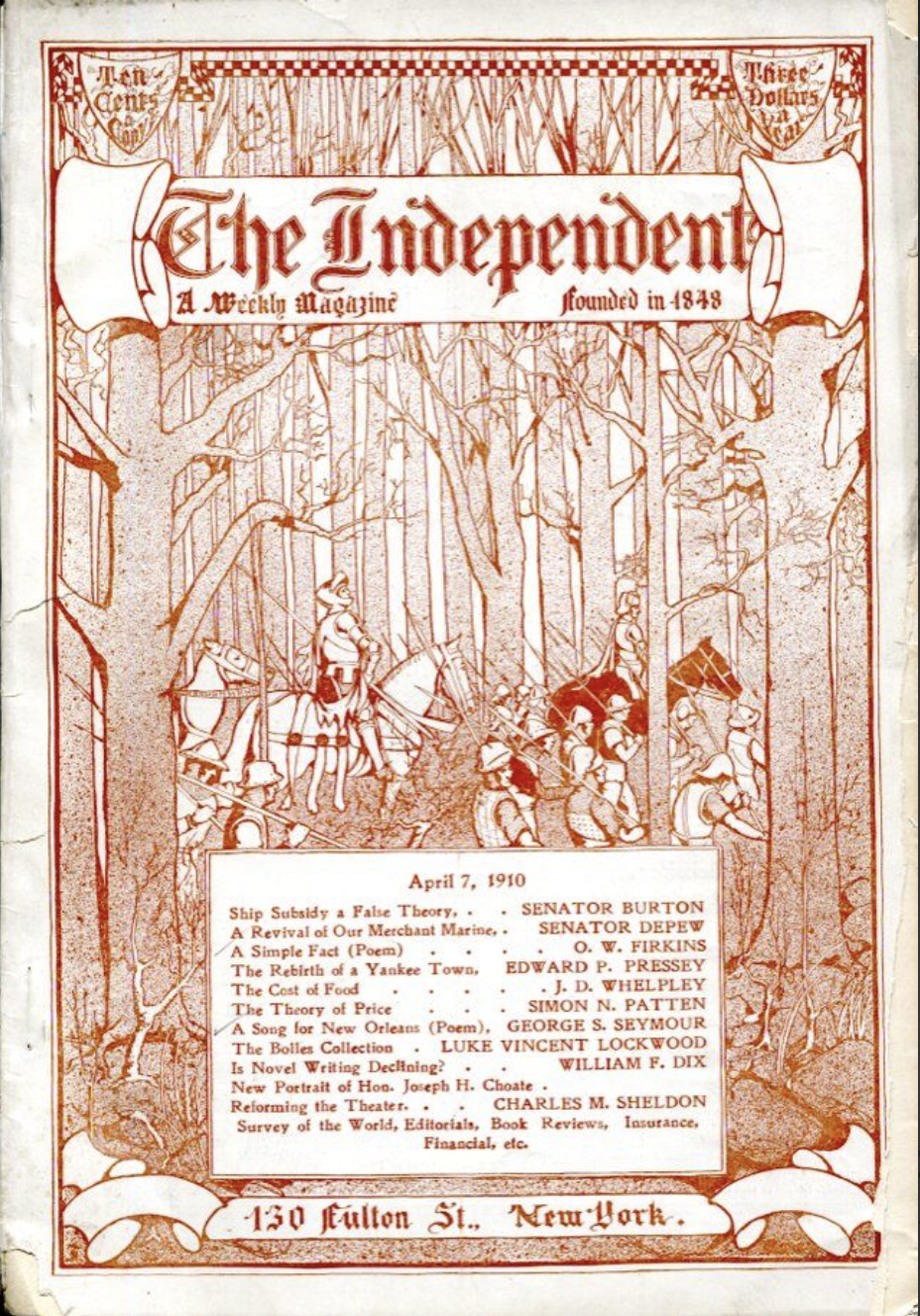
S. H.: Thank you.