Archive for the ‘From the Vault’ Category

h1

Beau: The Man’s Magazine Of The 1920s… Defining Upscale Audiences While Fighting Censorship… A Mr. Magazine™ Blast From The Past

August 28, 2019

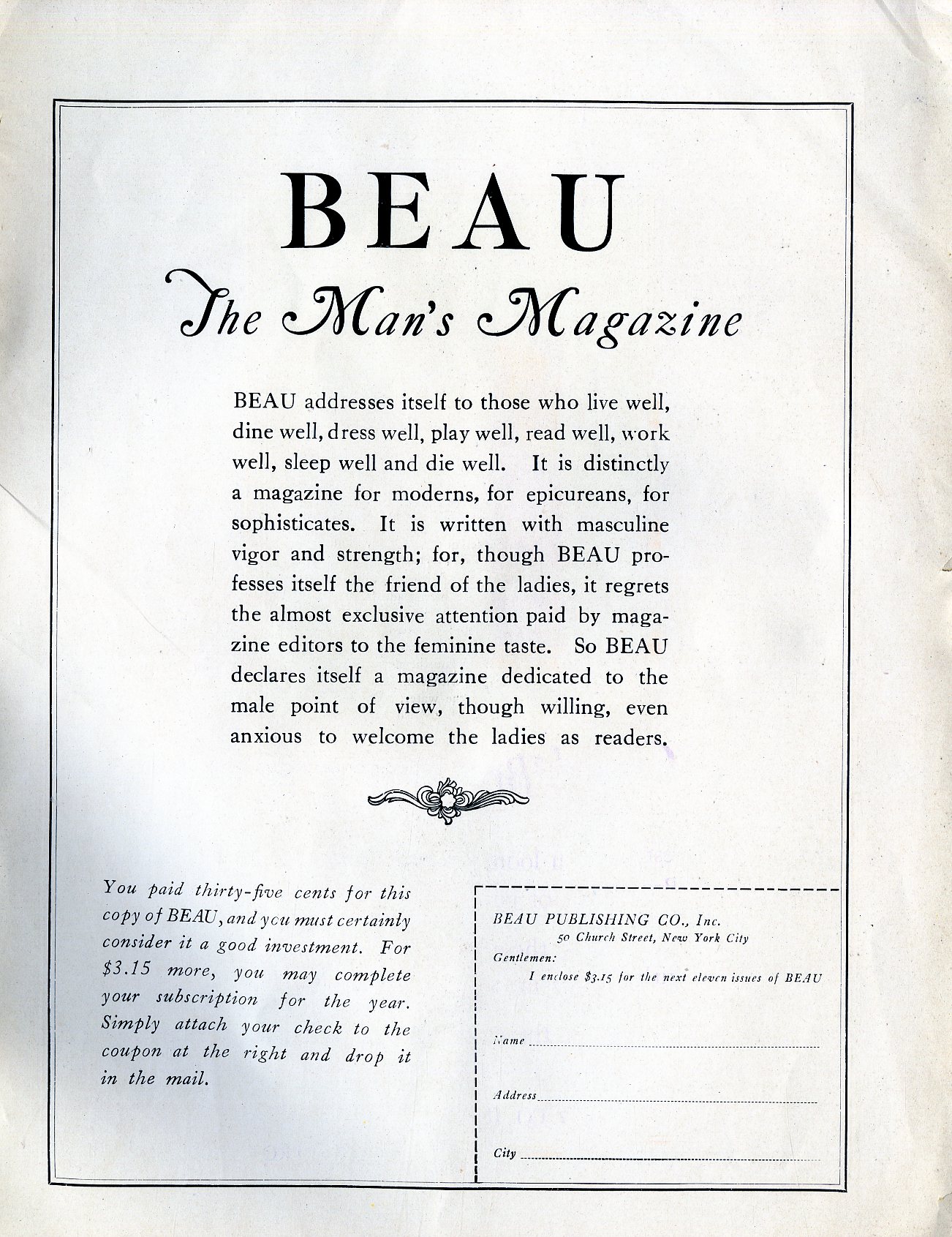
Beau addresses itself to those who live well, dine well, dress well, play well, read well, work well, sleep well and die well. It is distinctly a magazine for moderns, for epicureans, for sophisticates. It is written with masculine vigor and strength; for, though Beau professes itself the friend of the ladies, it regrets the almost exclusive attention paid by magazine editors to the feminine taste. So Beau declares itself a magazine dedicated to the male point of view, though willing, even anxious to welcome the ladies as readers. (Beau, Volume One, Number One, October 1926)

The more I dig into the old magazines, the more I discover personalities and magazine makers that somehow during my studies of publishing history, and my professors’ teachings, were either marginalized or were not mentioned enough, in terms of the role they played in the American magazine industry.

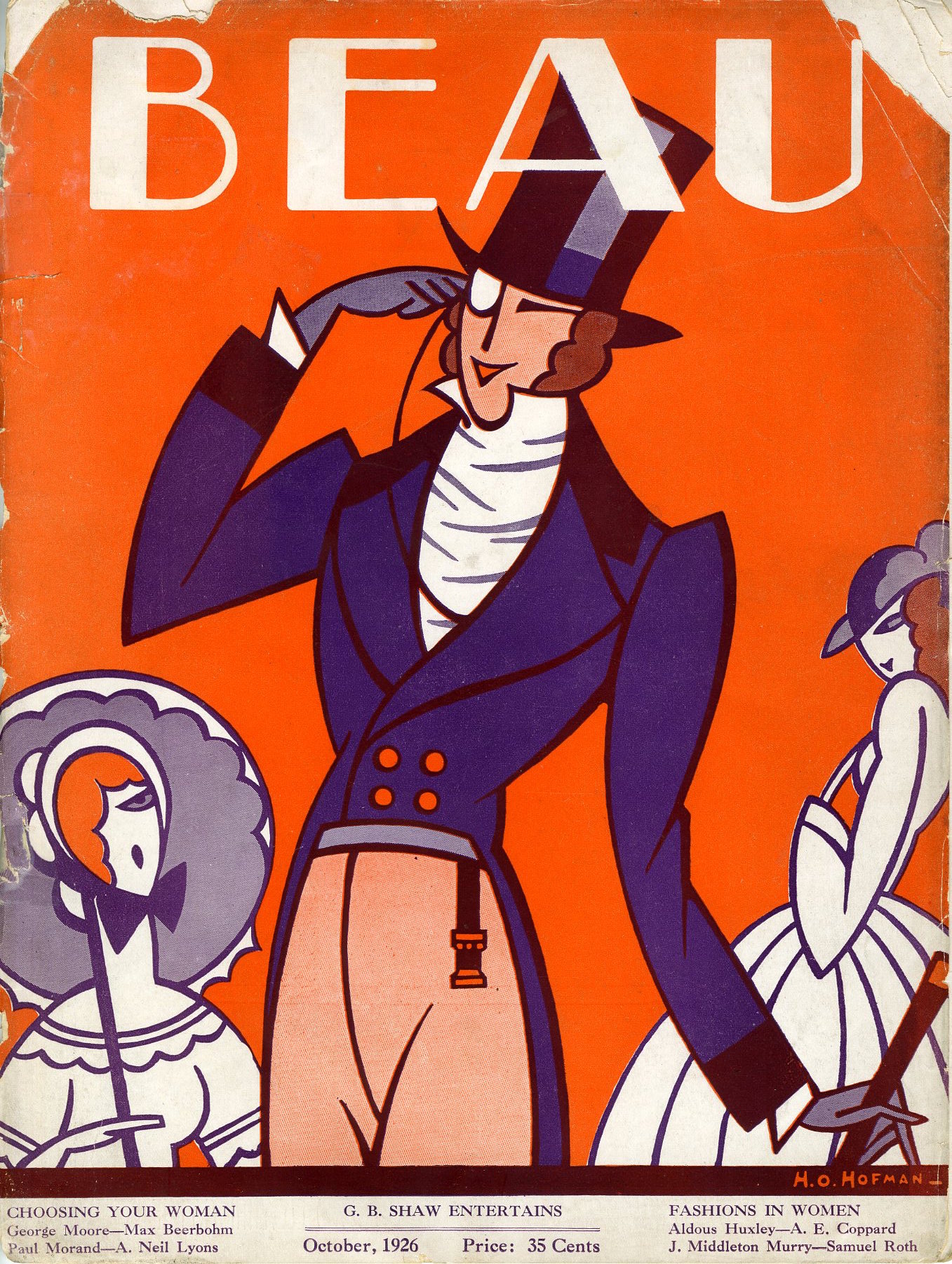
One such person I’m discovering is Samuel Roth, who published at least five different magazines during his tenure from the 1920s all the way to the 1950s, including Two Worlds Monthly and one that really caught my attention, which he referred to as the man’s magazine, Beau. (See Mr. Roth’s concept for the magazine above). Beau was a magazine that, almost like all of his other titles, was very high-priced, almost 50 cents per issue. His reason for that was because he didn’t want his magazines to be bought by common folks. In fact, he would have preferred his magazines to be sold only to doctors, lawyers, and other upper-echelon professionals.

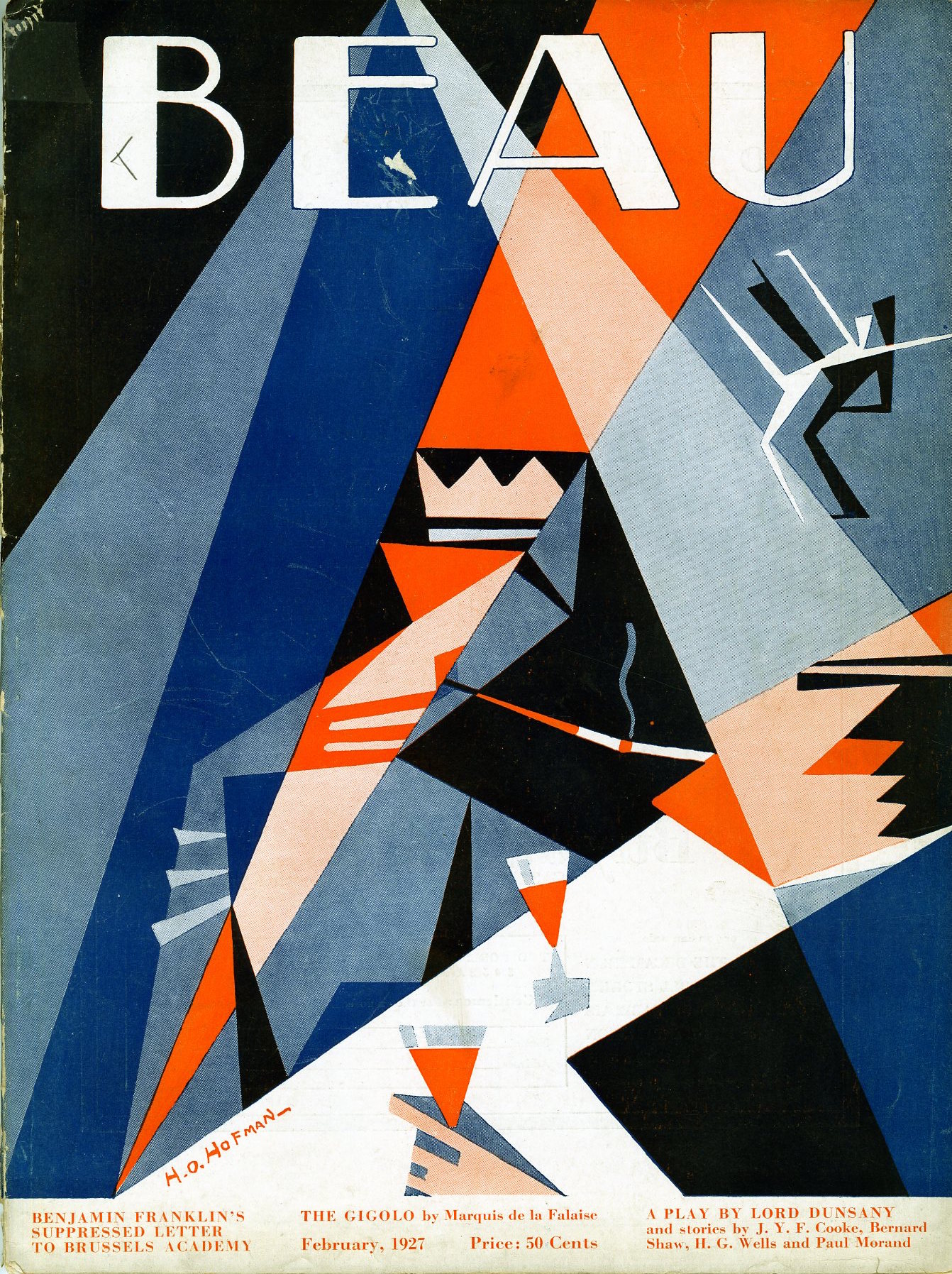
As he mentioned in one of his editorials, after his February 1927 issue was banned from distribution in New York City, his man’s magazine was devoted to the comforts and luxuries of living.  His argument for that line of thinking was that he didn’t want common people to get “cheap thrills” from his magazine; it was for the sophisticated only. That he wasn’t appealing to the baser natures of mankind, but rather the more educated and elite of society.

What follows are some quotes that he wrote in an editorial from March 1927 after the February issue of Beau from that same year was banned from distribution in New York City, and the fascinating description of what the magazine was all about:

“Two Worlds Monthly and Beau are written and published for the sophisticated only, that neither by lewd pictures or lewd contents do we make appeal to the baser passions of mankind.”

 “Two Worlds Monthly was quite alright, he said (he being, John Sumner, secretary of the New York Society for the Suppression of Vice), and we could go ahead distributing it immediately, but Beau, ah, that was a different story. It was absolutely unthinkable to let Beau go out on the harmless newsstands dripping with nudes, which any little boy may purchase for fifteen cents. No, said Mr. Sumner, he did not approve Beau and if I dared to issue it of my own accord he would unfailingly prosecute me.”

 Here is a small excerpt from that March 1927 editorial:

Here, cried my friends, is your opportunity for plenty of publicity – publicity that will create a vast demand for your magazines. But strange as it may seem, I did not follow their advice, I did not take the matter into court with Mr. Sumner. Such publicity, I felt, would bring many readers to Two Worlds Monthly and Beau, but not the sort of readers I want. Such publicity would bring me readers who look to magazines for filth whereas all we have to offer is wit, beauty, and gaiety. It would be taking an unfair advantage of the poor dubs.

But I want the readers of Beau to judge between myself and Mr. Sumner. Mr. Sumner characterizes as filth the famous suppressed Franklin letter To The Academy of Brussels,and the Paul Morand story Finding Your Woman in Paris, whereas I regard them as exquisite satirical compositions calculated to enrich the life of every man or woman capable of reading them.

What is more, I think the suppressed number of Beau probably the most beautiful copy of any magazine ever printed in America.

Samuel Roth

I physically own the particular copy of Beauthat caused this bit of controversy. Ironically, there is no nudity, such as Sumner speaks of with the description: “dripping with nudes.”  But Samuel Roth is definitely a gentleman from that past that made his mark known in the word of magazines, and nudity in his other titles was prevalent.

We’ll discover more about Mr. Roth in the future as I delve more into his past and the magazines he published.

Until the next time…

h1

The Pioneers Of Chicago Blazed A Selling Trail That’s Still Visible Today…A Mr. Magazine™ Blast From The Past, Circa April, 1953

August 15, 2019

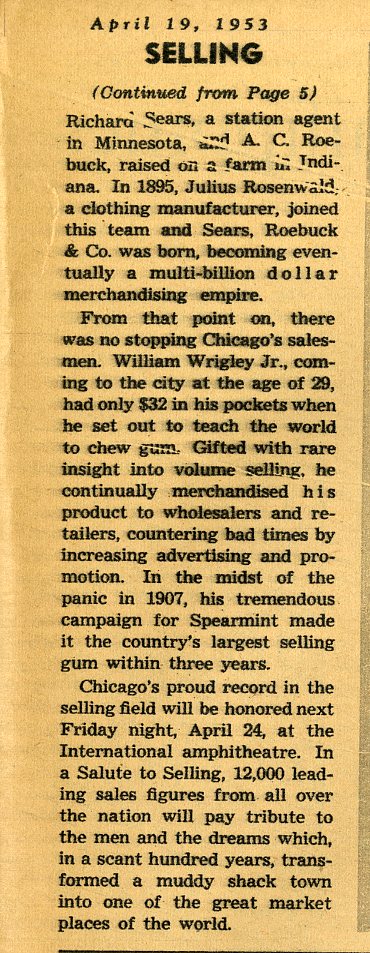
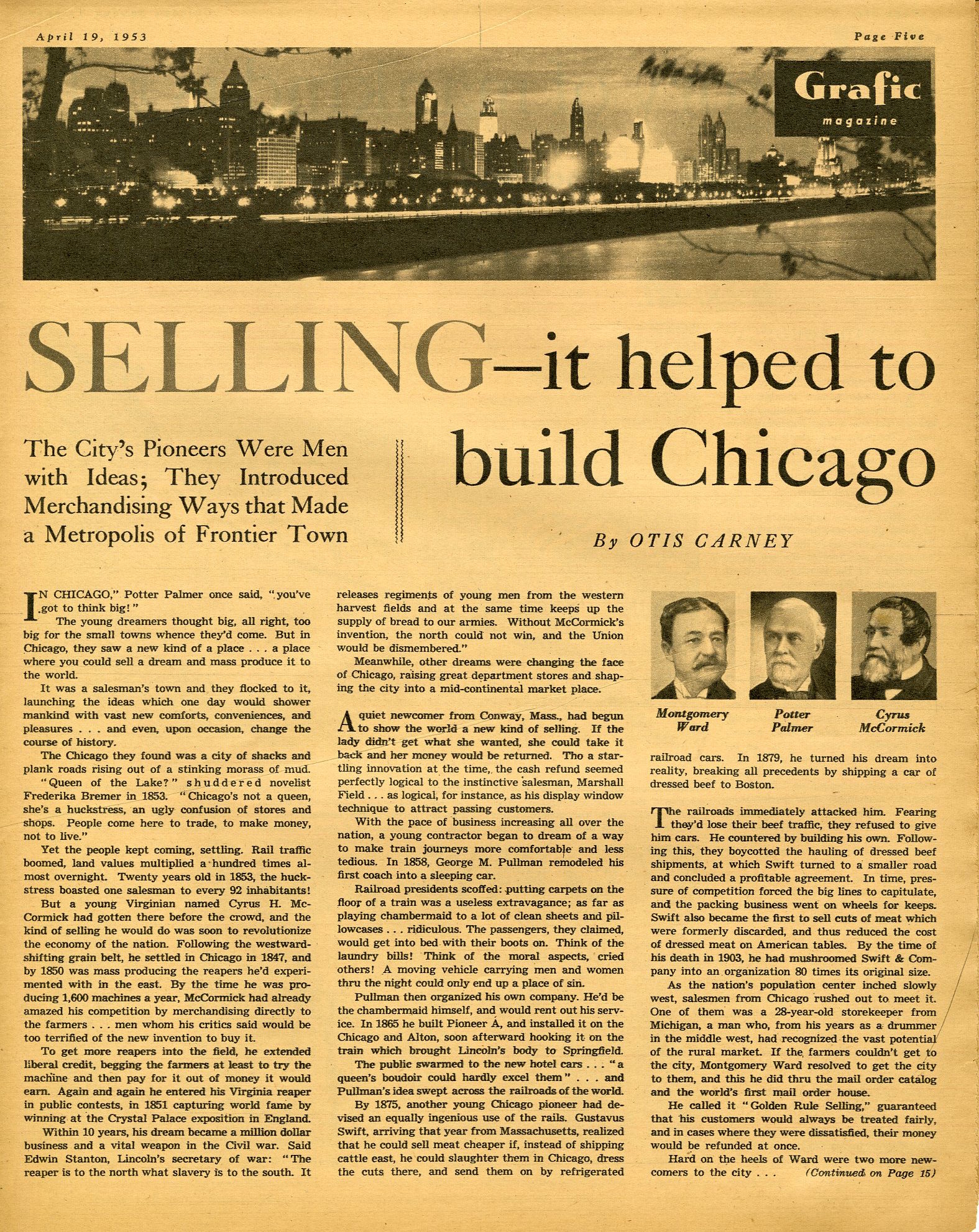
Once again Mr. Magazine™ has been exploring the past, still in that wondrous year known as 1953 (the year of my birth, don’t you know) and I ran across this story in Grafic, which was the Sunday Chicago Tribune’s magazine at the time. The history and the inspiration of this story had to bolster Chicago’s own spirit when it ran on April 19, 1953. The pioneers of the Windy City were the epitome of entrepreneurs. From William Wrigley Jr., who only had $32 in his pockets when he set out to teach the world to chew gum, to Montgomery Ward, who had the world’s first mail order house, Chicago certainly has something to brag about when it comes to the humble beginnings that certainly blazed the trail for what it is today – a major metropolitan destination.

And print was there in 1953 to showcase it! The story is amazingly historical without being preachy and does what ink on paper still does so brilliantly – tells a unique story in a format that can be archived and drawn upon in any generation. That’s one of the things that Mr. Magazine™ loves about ink on paper: if you decide you want to go diving into 1953 or any other year, the information is still there. It hasn’t disappeared into the realms of cyberspace, never to be seen again.

In fact, in the book I’m working on about the magazines of March 1953, I chose my birth year and month (Feb. or April will do if I can’t find a March issue or if the magazine was bimonthly) to concentrate on and physically have 532 magazines to hold in my hands and touch and do research from – all from that month. Amazing! I dare you to find 532 websites out there from 1953… (Mr. Magazine™ feels safe in offering that dare). So, enjoy this Blast From the Past and let me know what you think of the story and the idea that ink on paper lasts forever – even from way back in 1953…

SELLING – it helped to build Chicago

By Otis Carney

April 19, 1953


The City’s Pioneers Were Men with Ideas; They Introduced Merchandising Ways that Made a Metropolis of Frontier Town

“In Chicago,” Potter Palmer once said, “you’ve got to think big!”

The young dreamers thought big, all right, too big for the small towns whence they’d come. But in Chicago, they saw a new kind of place…a place where you could sell a dream and mass produce it to the world.

It was a salesman’s town and they flocked to it, launching the ideas which one day would shower mankind with vast new comforts, conveniences, and pleasures…and even, upon occasion, change the course of history.

The Chicago they found was a city of shacks and plank roads rising out of a stinking morass of mud.

“Queen of the Lake?” shuddered novelist Frederika Bremer in 1853. “Chicago’s not a queen, she’s a huckstress, an ugly confusion of stores and shops. People come here to trade, to make money, not to live.”

Yet the people kept coming, settling. Rail traffic boomed, land values multiplied a hundred times almost overnight. Twenty years old in 1853, the huckstress boasted one salesman to every 92 inhabitants!

But a young Virginian named Cyrus H. McCormick had gotten there before the crowd, and the kind of selling he would do was soon to revolutionize the economy of the nation. Following the westward-shifting grain belt, he settled in Chicago in 1847, and by 1850 was mass producing the reapers he’d experimented with in the east. By the time he was producing 1,600 machines a year, McCormick had already amazed his competition by merchandising directly to the farmers…men whom his critics said would be too terrified of the new invention to buy it!

To get more reapers into the field, he extended liberal credit, begging the farmers at least to try the machine and then pay for it out of money it would earn. Again and again he entered his Virginia reaper in public contests, in 1851 capturing world fame by winning at the Crystal Palace exposition in England.

Within 10 years, his dream became a million dollar business and a vital weapon in the Civil War. Said Edwin Stanton, Lincoln’s secretary of war: “The reaper is to the north what slavery is to the south. It releases regiments of young men from the western harvest fields and at the same time keeps up the supply of bread to our armies. Without McCormick’s invention, the north could not win, and the Union would be dismembered.”

Meanwhile, other dreams were changing the face of Chicago, raising great department stores and shaping the city into a mid-continental market place.

A quiet newcomer from Conway, Mass., had begun to show the world a new kind of selling. If the lady didn’t get what she wanted, she could take it back and her money would be returned. Tho a startling innovation at the time, the cash refund seemed perfectly logical to the instinctive salesman, Marshall Field…as logical, for instance, as his display window technique to attract passing customers.

With the pace of business increasing all over the nation, a young contractor began to dream of a way to make train journeys more comfortable and less tedious. In 1858, George M. Pullman remodeled his first coach into a sleeping car.

Railroad presidents scoffed: putting carpets on the floor of a train was a useless extravagance; as far as playing chambermaid to a lot of clean sheets and pillowcases…ridiculous. The passengers, they claimed, would get into bed with their boots on. Think of the laundry bills! Think of the moral aspects, cried others! A moving vehicle carrying men and women thru the night could only end up a place of sin.

Pullman then organized his own company. He’d be the chambermaid himself, and would rent out his service. In 1865 he built Pioneer A, and installed it on the Chicago and Alton, soon afterward hooking it on the train which brought Lincoln’s body to Springfield.

The public swarmed to the new hotel cars… “a queen’s boudoir could hardly excel them”…and Pullman’s idea swept across the railroads of the world.

By 1875, another young Chicago pioneer had devised an equally ingenious use of the rails. Gustavus Swift, arriving that year from Massachusetts, realized that he could sell meat cheaper if, instead of shipping cattle east, he could slaughter them in Chicago, dress the cuts there, and send them on by refrigerated railroad cars. In 1879, he turned his dream into reality, breaking all precedents by shipping a car of dressed beef to Boston.

The railroads immediately attacked him. Fearing they’d lose their beef traffic, they refused to give him cars. He countered by building his own. Following this, they boycotted the hauling of dressed beef shipments, at which Swift turned to a smaller road and concluded a profitable agreement. In time, pressure of competition forced the big lines to capitulate, and the packing business went on wheels for keeps. Swift also became the first to sell cuts of meat which were formerly discarded, and thus reduced the cost of dressed meat on American tables. By the time of his death in 1903, he had mushroomed Swift & Company into an organization 80 times its original size.

As the nation’s population center inched slowly west, salesmen from Chicago rushed out to meet it. One of them was a 28-year-old storekeeper from Michigan, a man who, from his years as a drummer in the middle west, had recognized the vast potential of the rural market. If the farmers couldn’t get to the city, Montgomery Ward resolved to get the city to them, and this he did thru the mail order catalog and the world’s first mail order house.

He called it “Golden Rule Selling,” guaranteed that his customers would always be treated fairly, and in cases where they were dissatisfied, their money would be refunded at once.

Hard on the heels of Ward were two more newcomers to the city…Richard Sears, a station agent in Minnesota, and A.C. Roebuck, raised on a farm in Indiana. In 1895, Julius Rosenwald, a clothing manufacturer, joined this team and Sears, Roebuck & Co. was born, becoming eventually a multi-billion dollar merchandising empire.

From that point on, there was no stopping Chicago’s salesmen. William Wrigley Jr., coming to the city at the age of 29, had only $32 in his pockets when he set out to teach the world to chew gum. Gifted with rare insight into volume selling, he continually merchandised his product to wholesalers and retailers, countering bad times by increasing advertising and promotion. In the midst of the panic in 1907, his tremendous campaign for Spearmint made it the country’s largest selling gum within three years.

Chicago’s proud record in the selling field will be honored next Friday night, April 24, at the International amphitheater. In a Salute to Selling, 12,000 leading sales figures from all over the nation will pay tribute to the men and the dreams which, in a scant hundred years, transformed a muddy shack town into one of the great market places of the world.

h1

Focus Magazine And The Misrepresentation Of Facts By The American Press – A Mr. Magazine™ Blast From The Past, Circa October, 1938…

July 26, 2019

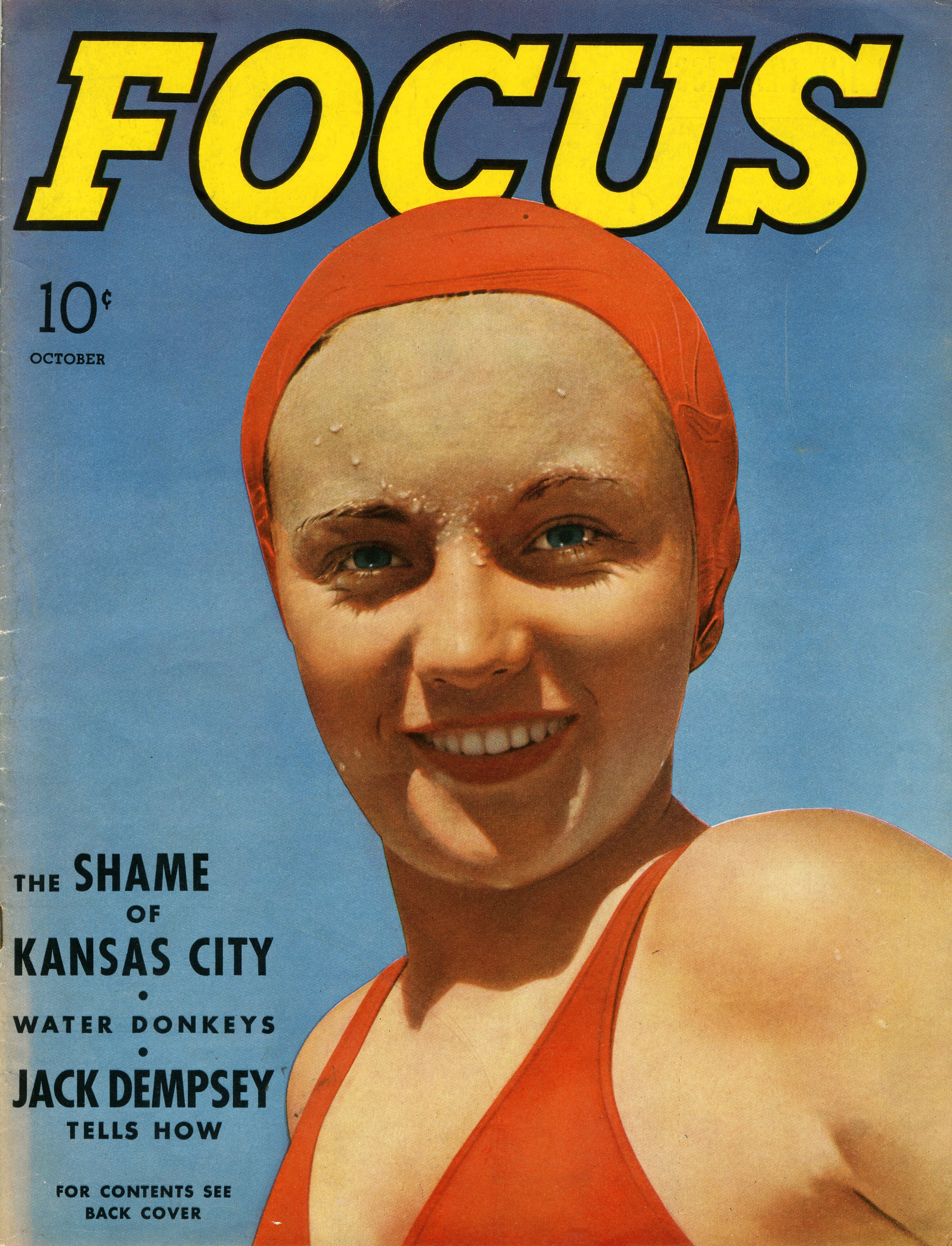
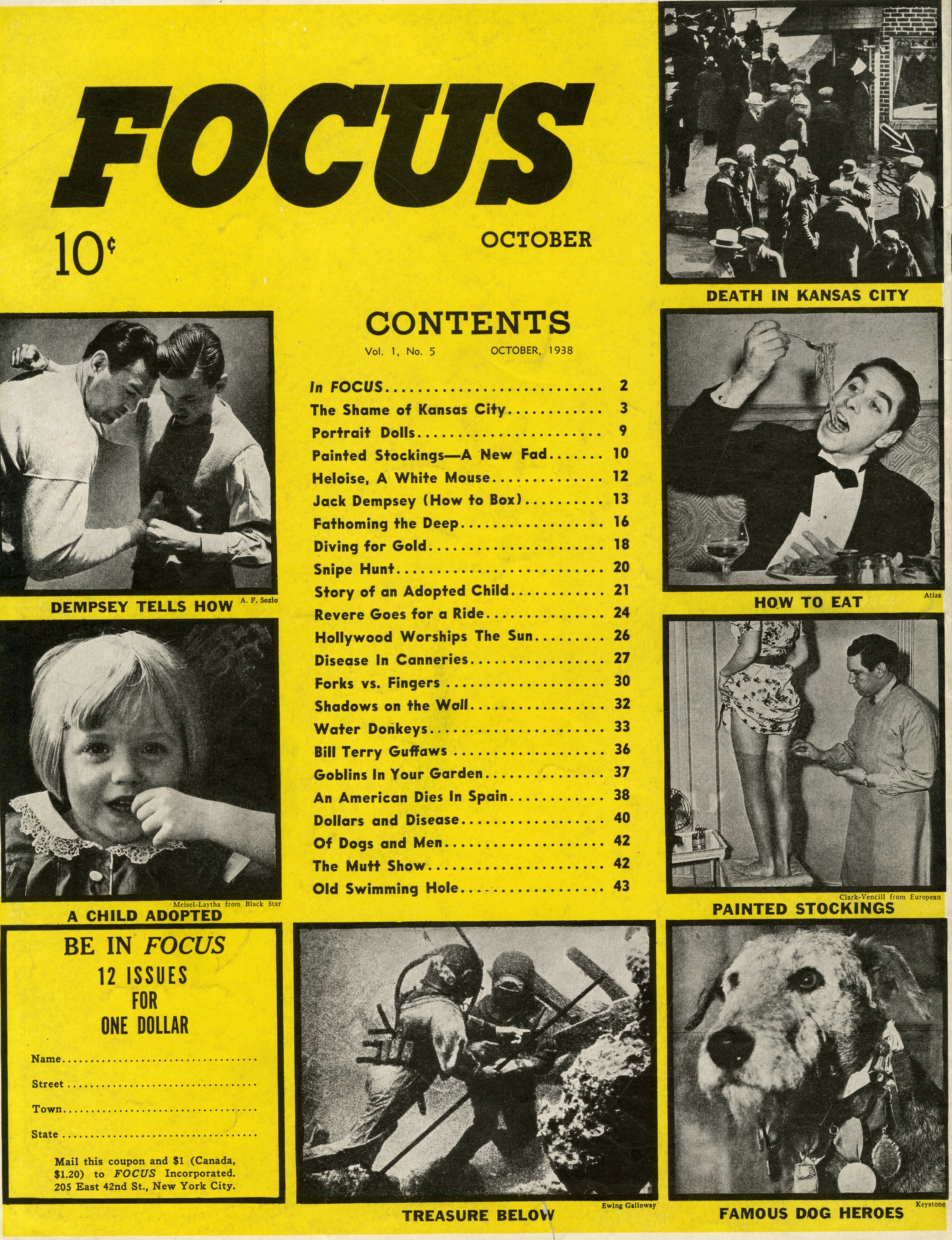
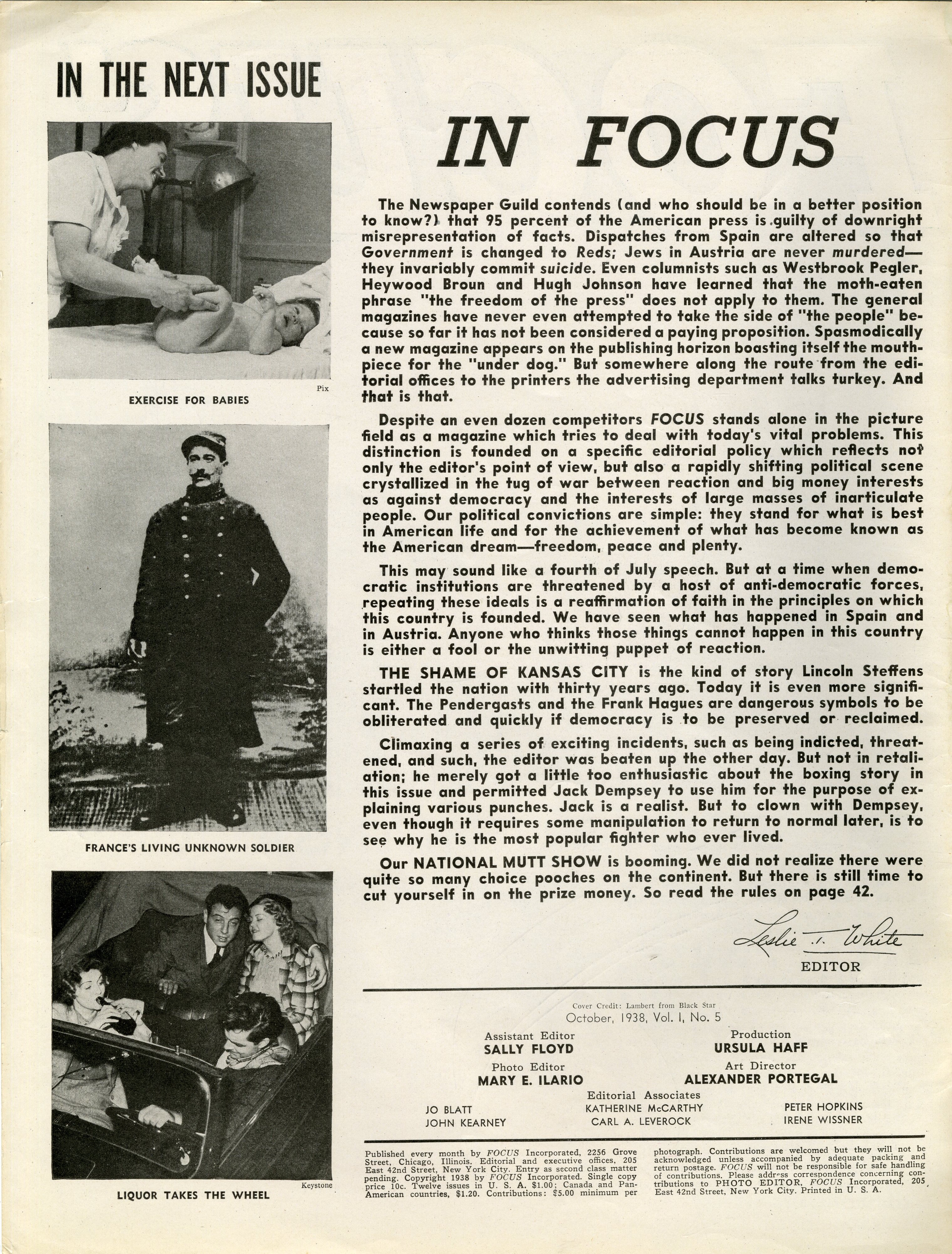
Our current president’s repeated remarks that today’s press grinds out “fake facts” is really nothing new. For generations the American press has been accused of producing biased information  – we’ve all heard the phrase “Freedom of the Press belongs to those who own the Press.” That being said, Mr. Magazine™ delved into his Classics Vault and brought up the October 1938 issue of Focus magazine. The editor’s letter centered on a contention made by the Newspaper Guild that 95 percent of the American press, at that time in journalistic history, were guilty of misrepresentation of facts, reporting on the statement that Jews in Austria were never murdered, they committed suicide and that the dispatches from the Government in Spain  altered and changed to read “Reds” when written about.

It’s a founding father thing, if you ask Mr. Magazine™. I’ve always believed that to give one’s opinion as a journalist reporting and writing a story, you’re becoming an opinion columnist instead of a non-biased reporter. My professor at the University of Missouri’s School of Journalism told our class on day one, “when a journalist gives his or her opinion, he or she is no longer a journalist.”  Something to think about as the age we live in is slowly becoming the age of opinions, speculation, and predictions. Is this journalism? Your “opinions” on this, at least, would be most welcomed. The floor is yours…

Focus

October, 1938

Vol. 1, No. 5

The Newspaper Guild contends (and who should be in a better position to know?) that 95 percent of the American press is guilty of downright misrepresentation of facts. Dispatchers from Spain are altered so that Government is changed to Reds; Jews in Austria are never murdered – they invariably commit suicide.  Even columnists such as Westbrook Pegler,  Heywood Brown and Hugh Johnson have learned that the moth-eaten phrase “freedom of the press” does not apply to them. The general magazines have never even attempted to take the side of “the people” because so far it has not been considered a paying proposition. Spasmodically a new magazine appears on the publishing horizon boasting itself the mouthpiece for the “underdog.” But somewhere along the route from the editorial offices to the printers the advertising department talks turkey. And that is that.

Despite an even dozen competitors Focus stands alone in the picture field as a magazine which tries to deal with today’s vital problems. This distinction is founded on a specific editorial policy which reflects not only the editor’s point of view, but also a rapidly shifting political scene crystallized in the tug of war between reaction and big money interests as against democracy and the interests of large masses of inarticulate people. Our political convictions are simple: they stand for what is best in American life and for the achievement of what has become known as the American dream – freedom, peace and plenty.

This may sound like a fourth of July speech. But at a time when democratic institutions are threatened by a host of anti-democratic forces, repeating these ideals is a reaffirmation of faith in the principles on which this country is founded. We have seen what has happened in Spain and in Austria. Anyone who thinks those things cannot happen in this country is either a fool or the unwitting puppet of reaction.

The Shame of Kansas City is the kind of story Lincoln Steffens startled the nation with thirty years ago. Today it is even more significant. The Pendergasts and the Frank Hagues are dangerous symbols to be obliterated and quickly if democracy is to be preserved or reclaimed.

Climaxing a series of exciting incidents, such as being indicted, threatened, and such, the editor was beaten up the other day. But not in retaliation; he merely got a little too enthusiastic about the boxing story in this issue and permitted Jack Dempsey to use him for the purpose of explaining various punches. Jack is a realist. But to clown with Dempsey, even though it requires some manipulation to return to normal later, is to see why he is the most popular fighter who ever lived.

Our National Mutt Show is booming. We did not realize there were quite so many choice pooches on the continent. But there is still time to cut yourself in on the prize money. So read the rules on page 42.

Leslie T. White

Editor

h1

RAVE – A Magazine NOT For Idiots Or Advertising Either – A Mr. Magazine™ Blast From The Past, Circa April, 1953

July 18, 2019

You may have noticed lately that I am not as active on the blog as usual.  Two reasons for that, first, the summer break and second, working on two books, the first on how to launch a magazine and the second on the magazines of the 1950s.

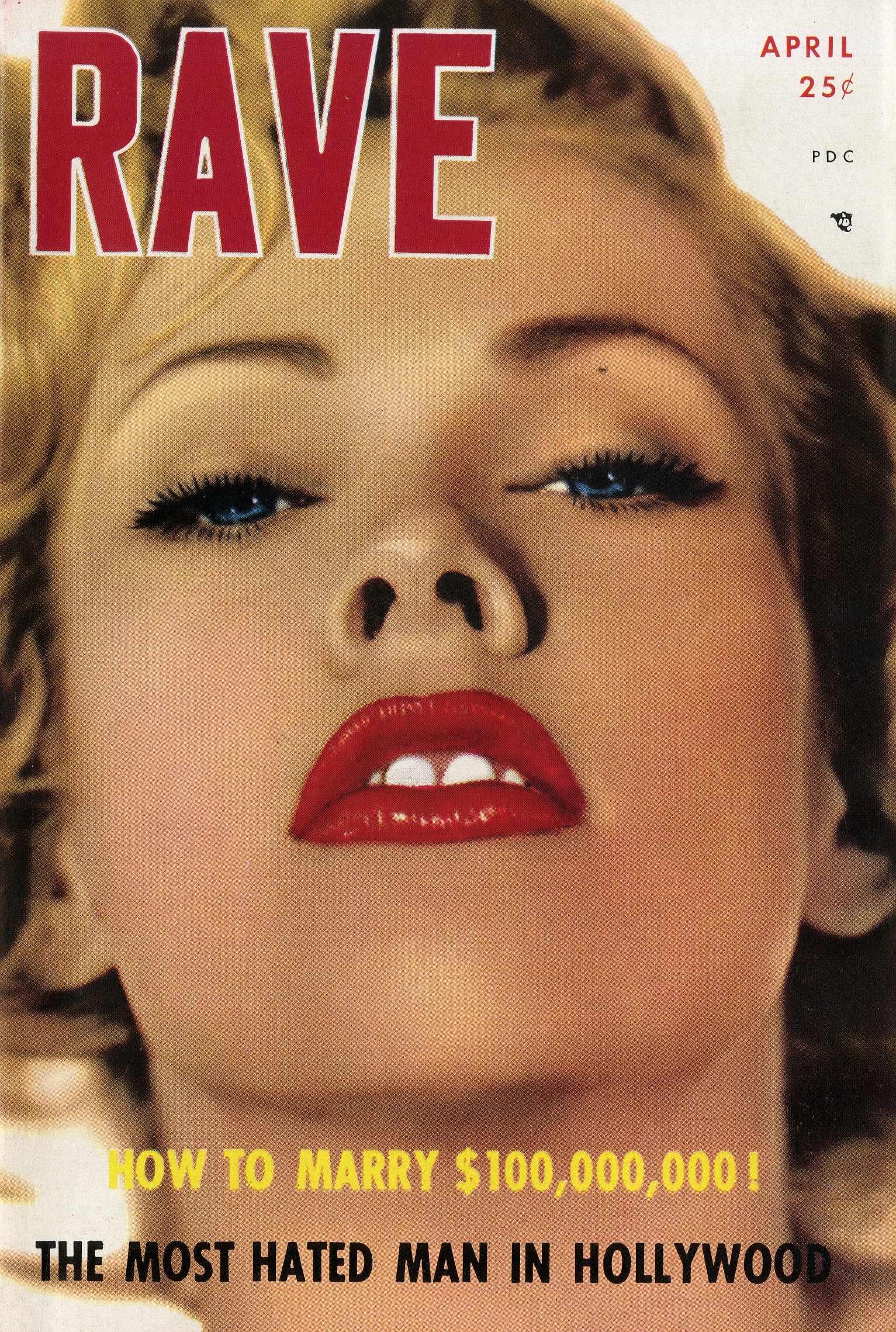
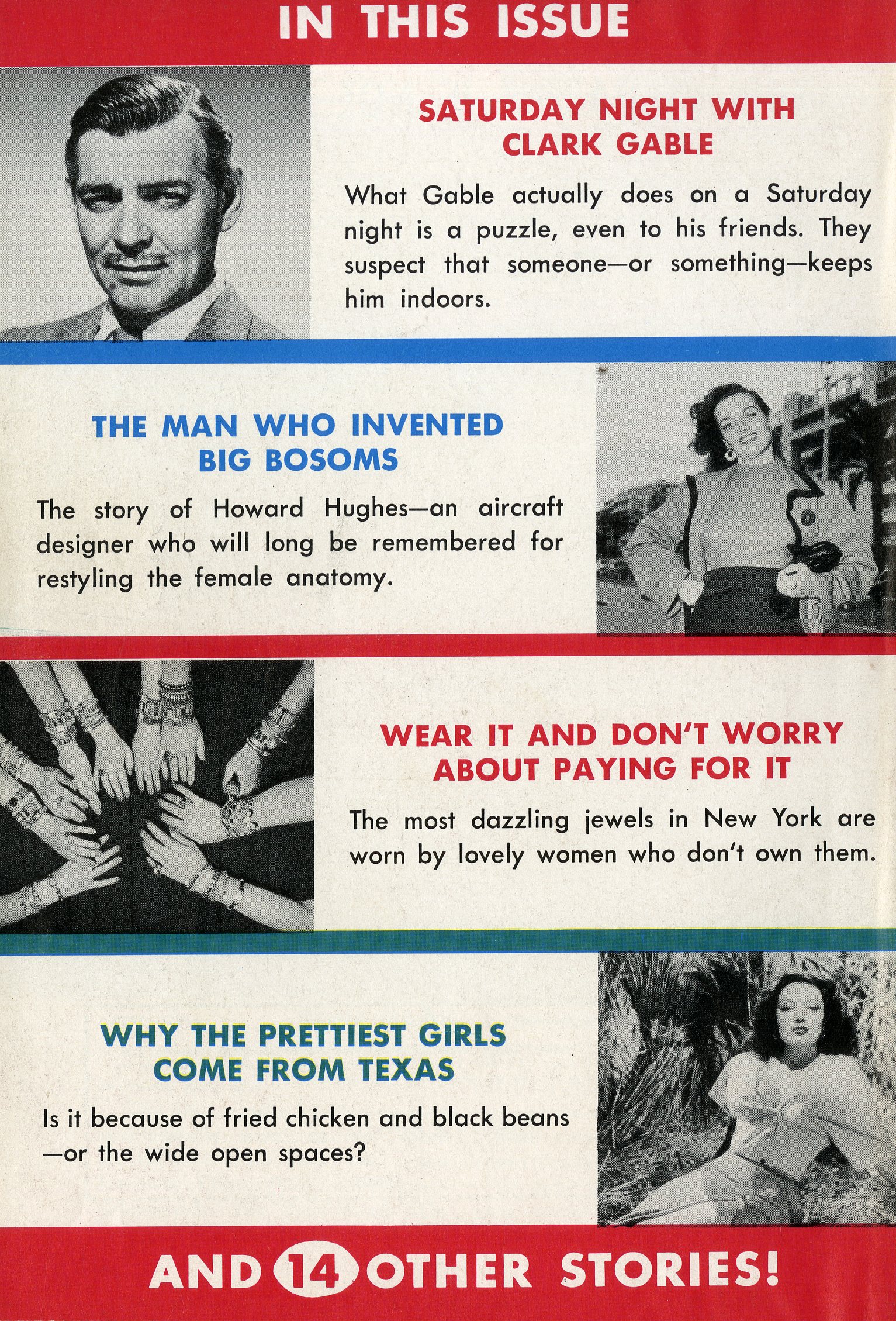
RAVE was a magazine that showcased Hollywood stars, business tycoons, East Coast & West Coast, and occasionally people and places across the pond.  From gossip to facts, the magazine brought the reader up close and personal with celebrities and others who led interesting and provocative lives. And it did it all without advertising. In fact, the premiere issue’s editorial made it a point to draw attention to that, noting, “We would not accept an advertisement of any description even if it were offered to us on a gold platter. Therefore, our choice of stories and pictures will never be influenced by advertising agencies or the counsels of public relations. We’ll call ’em as we see ’em….”

The circulation-based business model has always been a part of the world of magazines, not just in contemporary times. Bringing the reader unbiased information, with no outside interest influences, has been an attractive and often lucrative way for some magazines to exist for generations. This proves, yet again, that there is nothing new under the sun. Magazines have generated controversy and revenue in many interesting ways, and will continue to do so for eons to come. And in Mr. Magazine’s™ world, that is a very good thing.

So, I hope that you enjoy this Mr. Magazine™ Blast From the Past …

RAVE magazine – April 1953

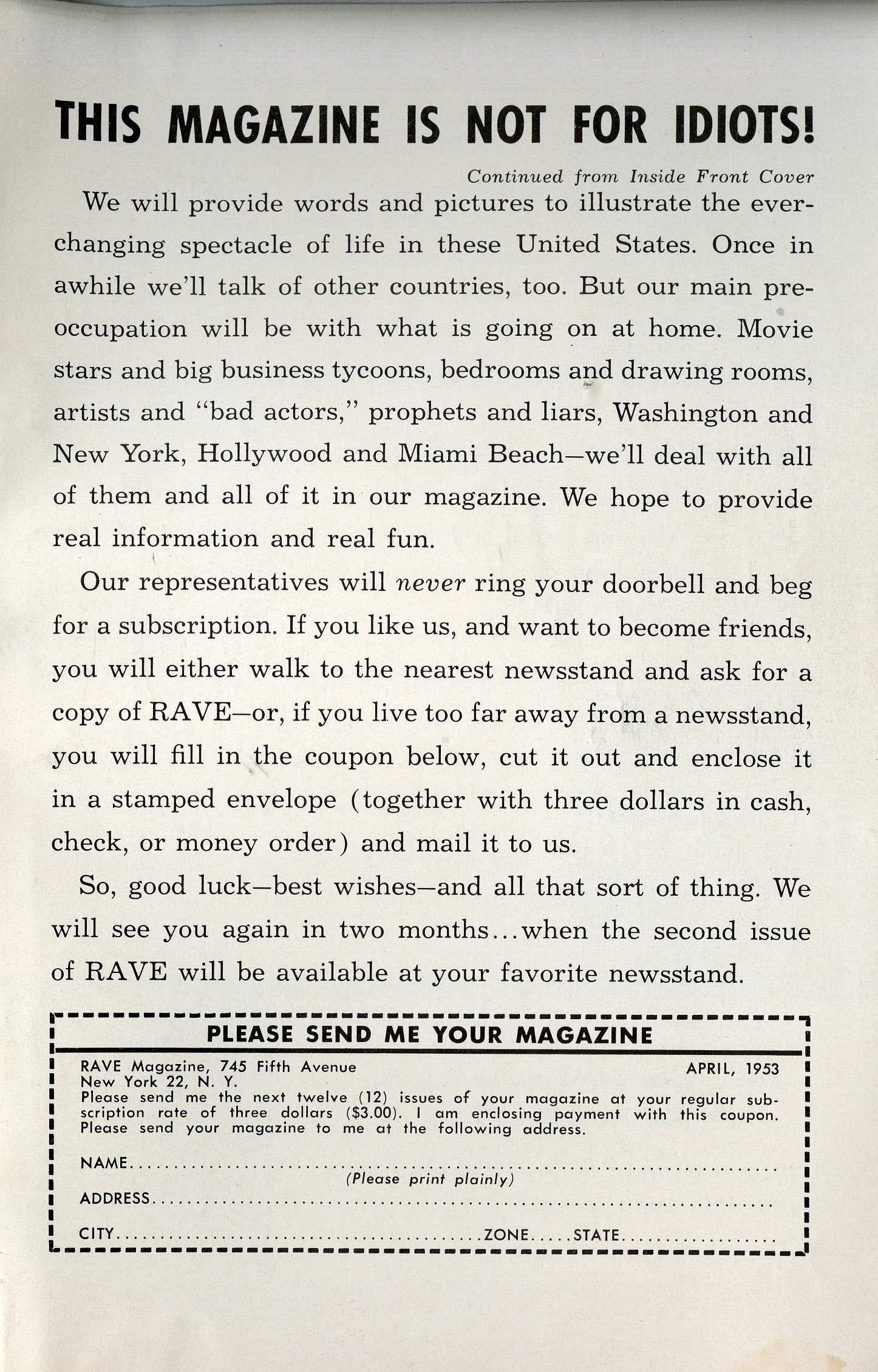
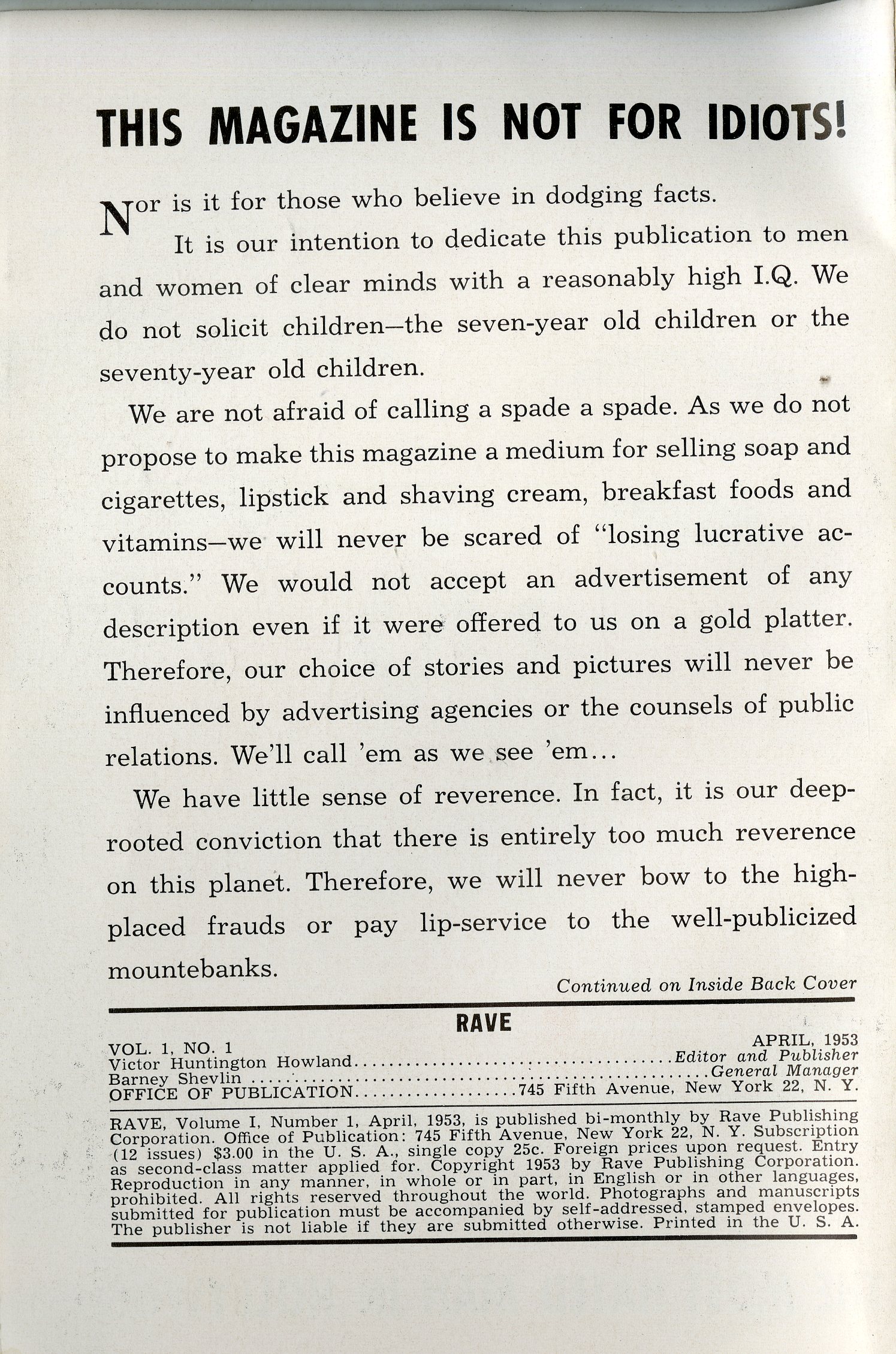
THIS MAGAZINE IS NOT FOR IDIOTS!

Nor is it for those who believe in dodging facts.

It is our intention to dedicate this publication to men and women of clear minds with a reasonably high I.Q. We do not solicit children – the seven-year old children or the seventy-year old children.

We are not afraid of calling a spade a spade. And we do not propose to make this magazine a medium for selling soap and cigarettes, lipstick and shaving cream, breakfast foods and vitamins-we will never be scared of “losing lucrative accounts.” We would not accept an advertisement of any description even if it were offered to us on a gold platter. Therefore, our choice of stories and pictures will never be influenced by advertising agencies or the counsels of public relations. We’ll call ’em as we see ’em….

We have little sense of reverence. In fact, it is our deep-rooted conviction that there is entirely too much reverence on this planet. Therefore, we will never bow to the high placed frauds or pay lip-service to the well-publicized mountebanks.

We will provide words and pictures to illustrate the ever-changing spectacle of life in these United States. Once in awhile we’ll talk of other countries, too. But our main pre-occupation will be with what is going on at home. Movie stars and big business tycoons, bedrooms and drawing rooms, artists and “bad actors,” prophets and liars, Washington and New York, Hollywood and Miami Beach – we’ll deal with all of them and all of it in our magazine. We hope to provide real information and real fun.

Our representatives will never ring your doorbell and beg for a subscription. If you like us, and want to become friends, you will either walk to the nearest newsstand and ask for a copy of RAVE – or, if you live too far away from a newsstand, you will fill in the coupon below, cut it out and enclose it in a stamped envelope (together with three dollars in cash, check, or money order) and mail it to us.

So, good luck-best wishes-and all that sort of thing. We will see you again in two months…when the second issue of Rave will be available at your favorite newsstand.

h1

The “Pipeline From Washington” Still Flows Freely – A Mr. Magazine™ Blast From The Past, Circa June 1953

July 10, 2019

You may have noticed lately that I am not as active on the blog as usual.  Two reasons for that, first, the summer break and second, working on two books, the first on how to launch a magazine and the second on the magazines of the 1950s.

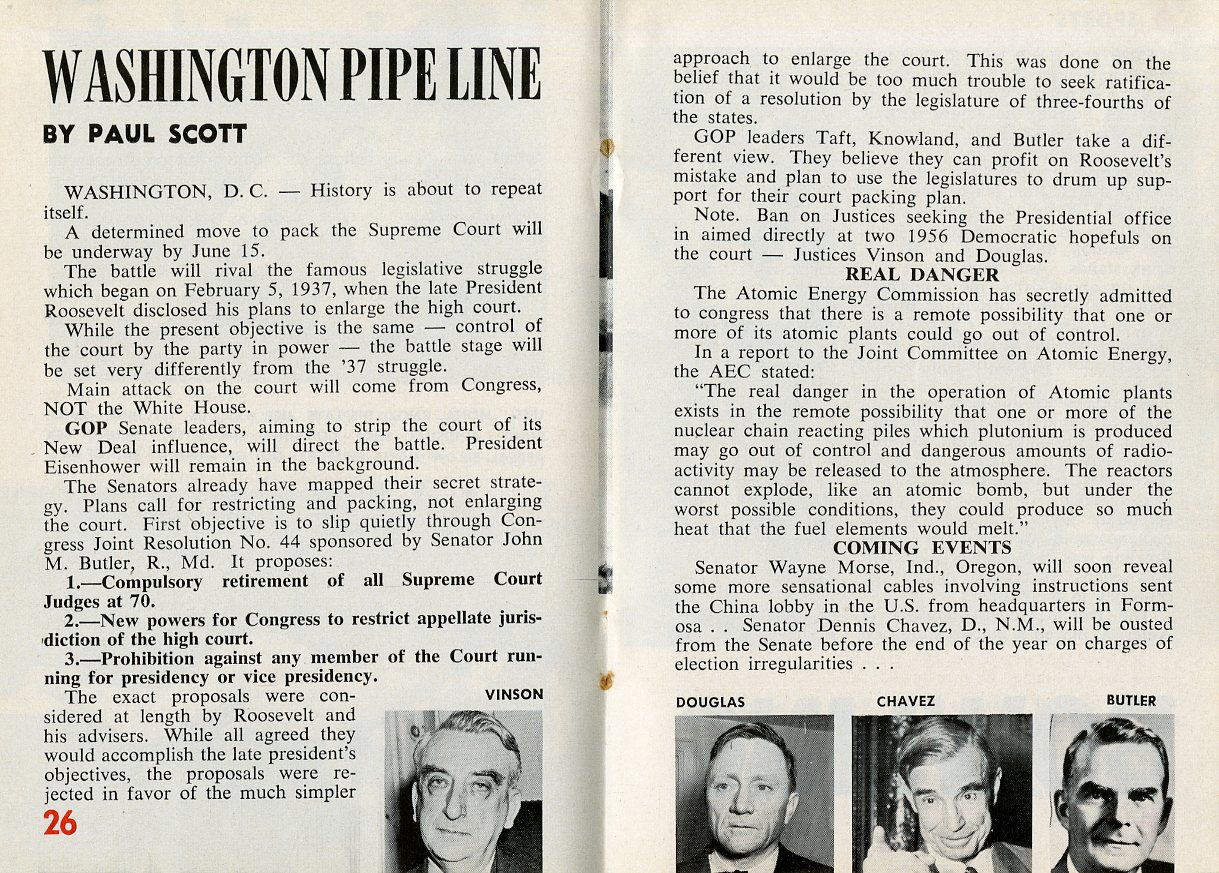
As I continue to delve into the Mr. Magazine™ research project for the book I will be doing on the magazines of the 1950s, I came across this article in Dare magazine, issue date June 1953. The article is titled “Washington Pipeline” by Paul Scott and focuses on a maneuver to control the Supreme Court by the party in power, which at the time was the Republican Party. Dwight D. Eisenhower had been sworn in as president of the United States in January 1953 and while this struggle was far different than the most recent power play that took place within the structure of the Supreme Court, the Brett Kavanaugh controversy, the fact that magazines were and still are the best reflectors of our society’s times and actions remains the same.

There is nothing new under the sun when it comes to topics such as politics. The players may be different, but the scenarios can be variably similar. And while “variably similar” may be an oxymoron, the past and the present can be harmoniously contradictory as well, especially where magazines are concerned.

So, I hope that you enjoy this Mr. Magazine™ Blast From the Past and please feel free to leave me your comments. I look forward to your thoughts…

Dare Magazine – June 1953

WASHINGTON PIPELINE

BY PAUL SCOTT

WASHINGTON, D.C.—– History is about to repeat itself.

A determined move to pack the supreme court will be underway by June 15.

The battle will rival the famous legislative struggle which began on February 5, 1937, when the late President Roosevelt disclosed his plans to enlarge the high court.

While the present objective is the same- control of the court by the party in power -the battle stage will be set very differently from the ’37 struggle.

Main attack on the court will come from congress, not the White House.

GOP Senate leaders, aiming to strip the court of its New Deal influence, will direct the battle. President Eisenhower will remain in the background.

The senators already have mapped their secret strategy. Plans call for restricting and packing, not enlarging the court. First objective is to slip quietly through Congress Joint Resolution No. 44 sponsored by Senator John M. Butler, R., Md. It proposes:

  1. -Compulsory retirement of all Supreme Court Judges at 70.
  2. -New powers for Congress to restrict appellate jurisdiction of the high court.
  3. -Prohibition against any member of the court running for presidency or vice presidency.

The exact proposals were considered at length by Roosevelt and his advisers. While all agreed they would accomplish the late president’s objectives, the proposals were rejected in favor of the much simpler approach to enlarge the court. This was done on the belief that it would be too much trouble to seek ratification of a resolution by the legislature of three-fourths of the states.

GOP leaders Taft, Knowland, and Butler take a different view. They believe they can profit on ROOSEVELT’s mistake and plan to use the legislatures to drum up support for their court packing plan.

Note. Ban on justices seeking the presidential office in aimed directly at two 1956 Democratic hopefuls on the court-Justices Vinson and Douglas.

h1

Norman Cousins On The Future Of Print & The Role Of Magazines, Circa 1972… A Mr. Magazine™ Blast From The Past…

June 22, 2019

“Print will continue to be a primary force in the life of the mind”…Norman Cousins

Happy birthday Mr. Cousins.

Norman Cousins was born June 24, 1915 in Hoboken, New Jersey and he died in 1990. He was a longtime editor of the Saturday Review, global peacemaker, receiver of hundreds of awards including the UN Peace Medal and nearly 50 honorary doctorate degrees.

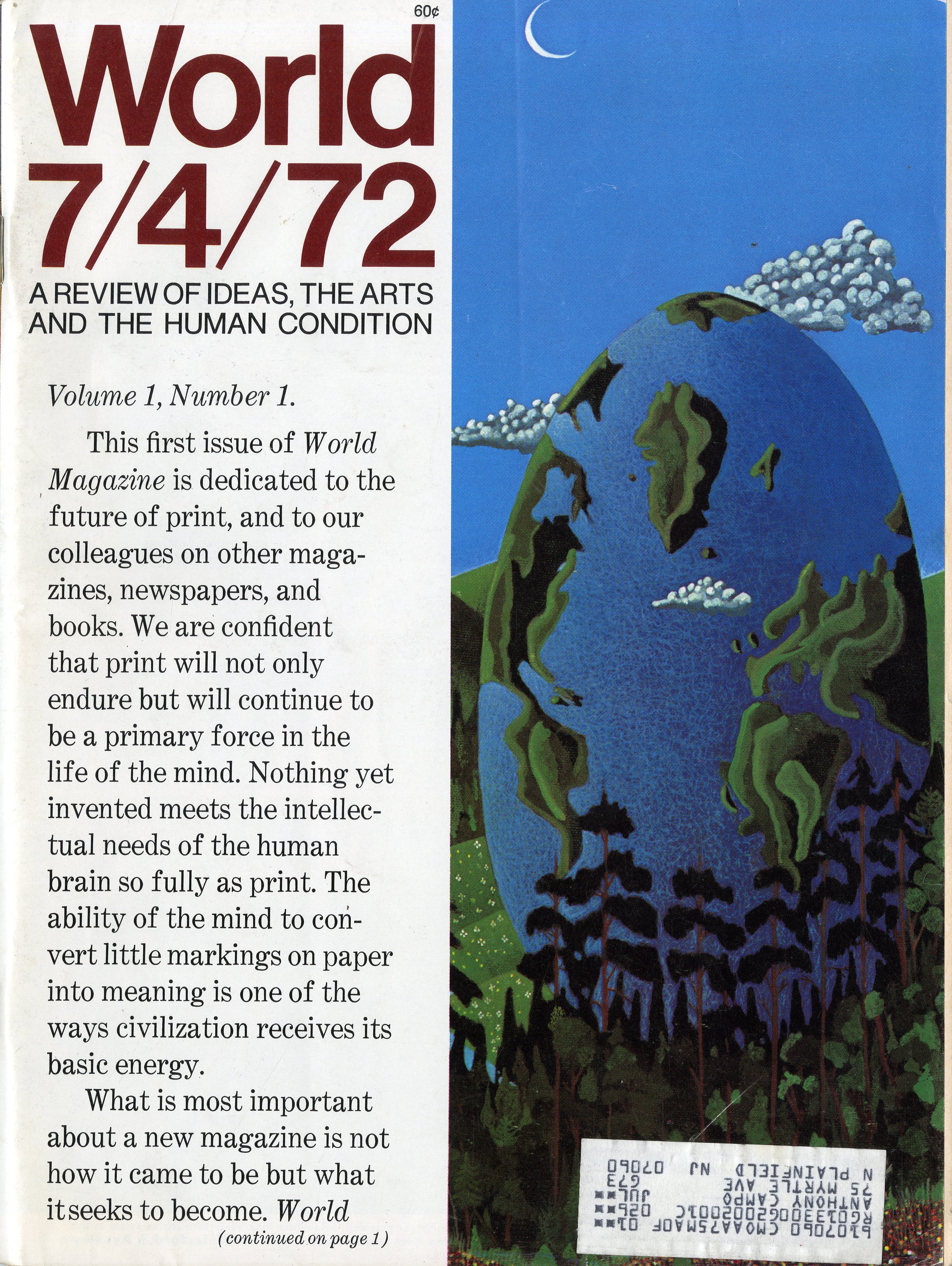
In 1972, Cousins resigned from Saturday Review and founded World Magazine, which called itself “a review of ideas, the arts and the human condition.”

In this Blast From the Past, read about the future of print and the role of magazines circa 1972. Once again, there is nothing new under the sun. The wisdom of 1972 still rings true today. Please enjoy this excerpt from literary giant, Norman Cousins, introducing his new magazine. And Mr. Magazine™ would love to hear your comments…

World 7/4/72

A REVIEW OF IDEAS, THE ARTS AND THE HUMAN CONDITION

Volume 1, Number 1.

This first issue of World Magazine is dedicated to the future of print, and to our colleagues on other magazines, newspapers, and books. We are confident that print will not only endure but will continue to be a primary force in the life of the mind. Nothing yet invented meets the intellectual needs of the human brain so fully as print. The ability of the mind to convert little markings on paper into meaning is one of the ways civilization receives its basic energy.

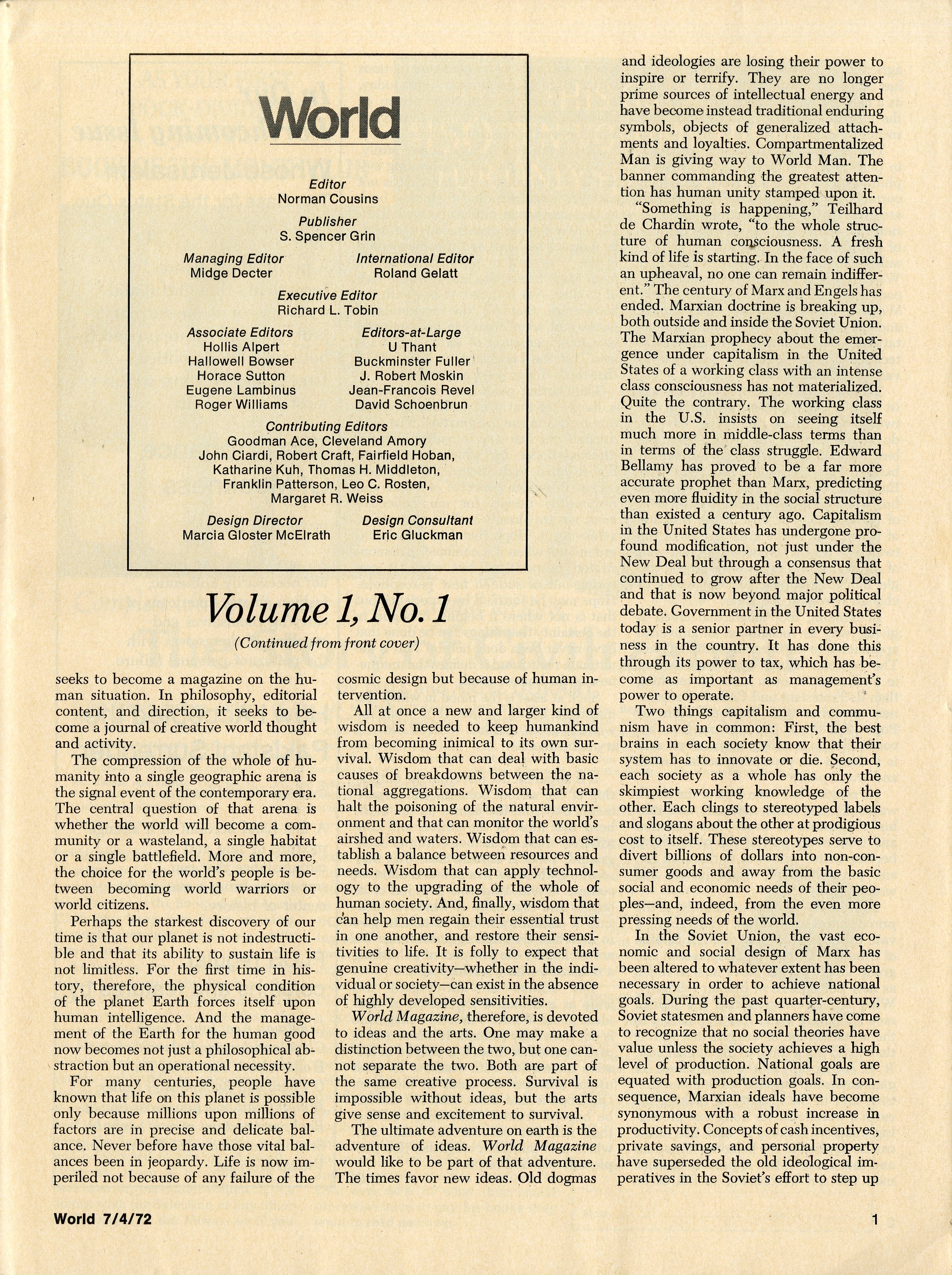
What is most important about a new magazine is not how it came to be but what it seeks to become. World seeks to become a magazine on the human situation. In philosophy, editorial content, and direction, it seeks to become a journal of creative world thought and activity.

The compression of the whole of humanity into a single geographic arena is the single event of the contemporary era. The central question of that arena is whether the world will become a community or a wasteland, a single habitat or a single battlefield. More and more, the choice for the world’s people is between becoming world warriors or world citizens.

Perhaps the starkest discovery of our time is that our planet is not indestructible and that its ability to sustain life is not limitless. For the first time in history, therefore, the physical condition of the planet Earth forces itself upon human intelligence. And the management of the earth for the human good now becomes not just a philosophical abstraction but an operational necessity.

For many centuries, people have known that life on this planet is possible only because millions upon millions of factors are in precise and delicate balance. Never before have those vital balances been in jeopardy. Life is now imperiled not because of any failure of the cosmic design but because of human intervention.

All at once a new and larger kind of wisdom is needed to keep humankind from becoming inimical to its own survival. Wisdom that can deal with basic causes of breakdowns between the national aggregations. Wisdom that can halt the poisoning of the natural environment and that can monitor the world’s airshed and waters. Wisdom that can establish a balance between resources and needs. Wisdom that can apply technology to the upgrading of the whole f human society. And, finally, wisdom that can help men regain their essential trust in one another, and restore their sensitivities to life. It is folly to expect that genuine creativity-whether in the individual or society-can exist in the absence of highly developed sensitivities.

World Magazine, therefore, is devoted to ideas and the arts. One may make a distinction between the two, but one cannot separate the two. Both are part of the same creative process. Survival is impossible without ideas, but the arts give sense and excitement to survival.

The ultimate adventure on earth is the adventure of ideas. Word Magazine would like to be part of that adventure. The times favor new ideas. Old dogmas and ideologies are losing their power to inspire or terrify. They are no longer prime sources of intellectual energy and have become instead traditional enduring symbols, objects of generalized attachments and loyalties. Compartmentalized man is giving away to World Man. The banner commanding the greatest attention has human unity stamped upon it…

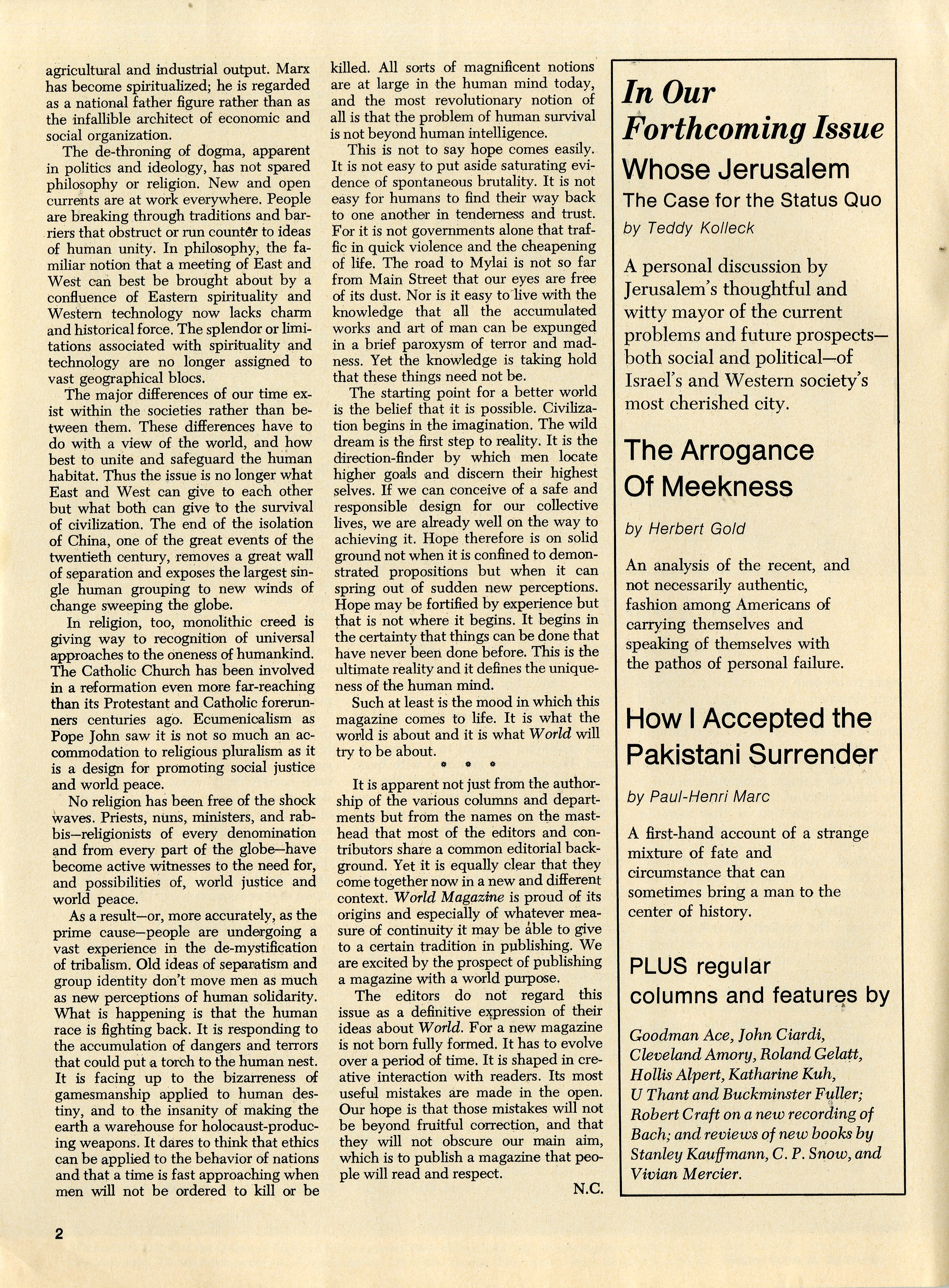
…It is apparent not just from the authorship of the various columns and departments but from the names on the masthead that most of the editors and contributors share a common editorial background. Yet it is equally clear that they come together now in a new and different context. World Magazine is proud of its origins and especially of whatever measure of continuity it may be able to give to a certain tradition in publishing. We are excited by the prospect of publishing a magazine with a world purpose.

The editors do not regard this issue as a definitive expression of their ideas about World. For a new magazine is not born fully formed. It has to evolve over a period of time. It is shaped in creative interaction with readers. Its most useful mistakes are made in the open. Our hope is that those mistakes will not be beyond fruitful correction, and that they will not obscure our main aim, which is to publish a magazine that people will read and respect. NC


Editor’s Note: You may have noticed lately that I am not as active on the blog as usual.  Two reasons for that, first, the summer break and second, working on two books, the first on how to launch a magazine and the second on the magazines of the 1950s.

h1

Russian Interference In Presidential Elections Circa 1952… A Mr. Magazine™ Blast From The Past…

June 17, 2019

You may have noticed lately that I am not as active on the blog as usual.  Two reasons for that, first, the summer break and second, working on two books, the first on how to launch a magazine and the second on the magazines of the 1950s.

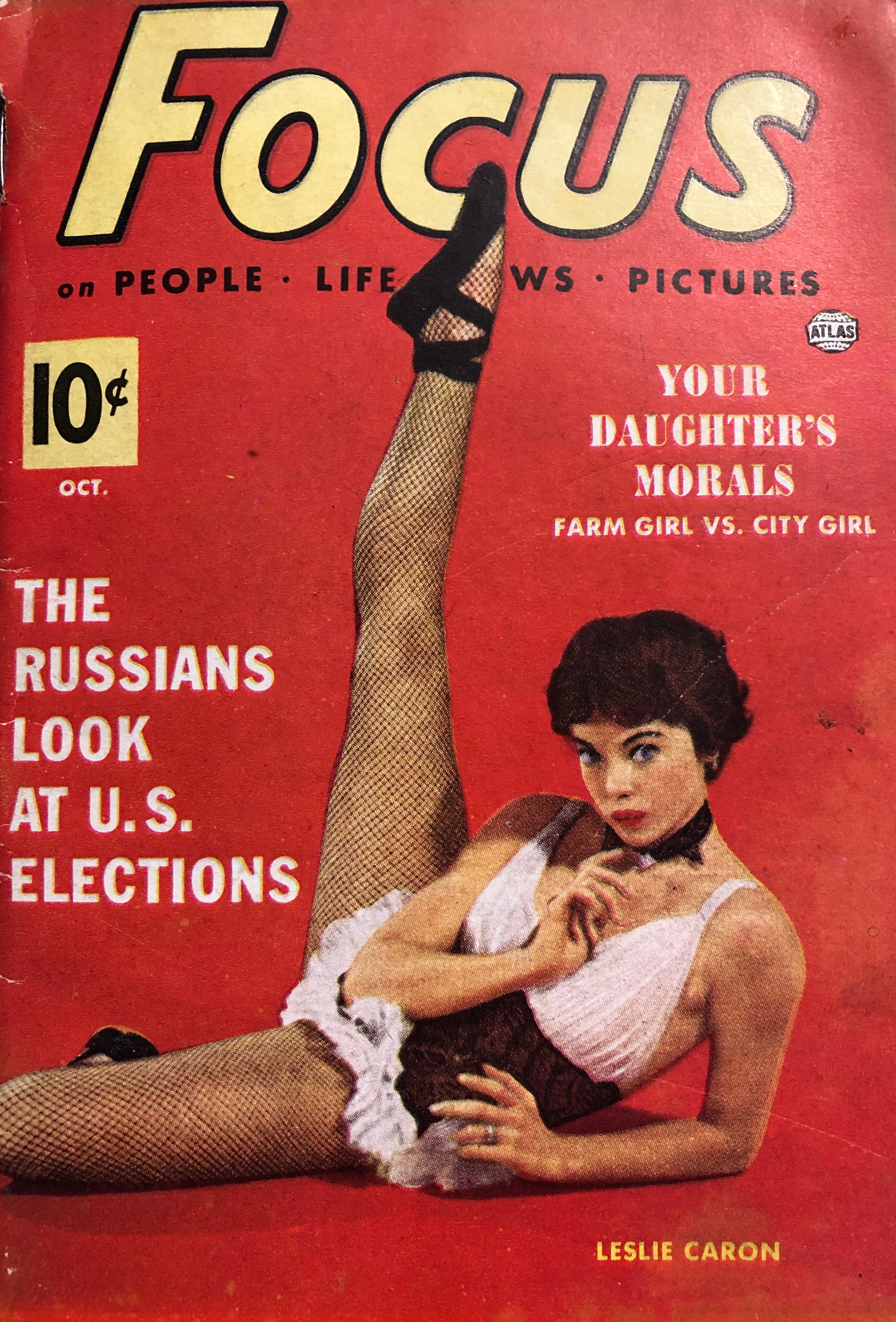
In my research I came across this article from Focus magazine, October 1952 about “The Russians Look At U.S. Elections.”

The similarities between now and then were more striking to me than any other article I have read from the 1950s so far.  Yes, the media platforms are different today, but the message is still the same.  And for those who believe there is anything new under the sun, read this article and let me know what you think….

Enjoy this blast from the past (Focus magazine, October 1952, Vol. 2, No. 10)…

The Russians Look At U.S. Elections

Moscow takes a crack at our every 4-year voting habits, comes up with a sizzling 2 Roubles’ worth on the candidates

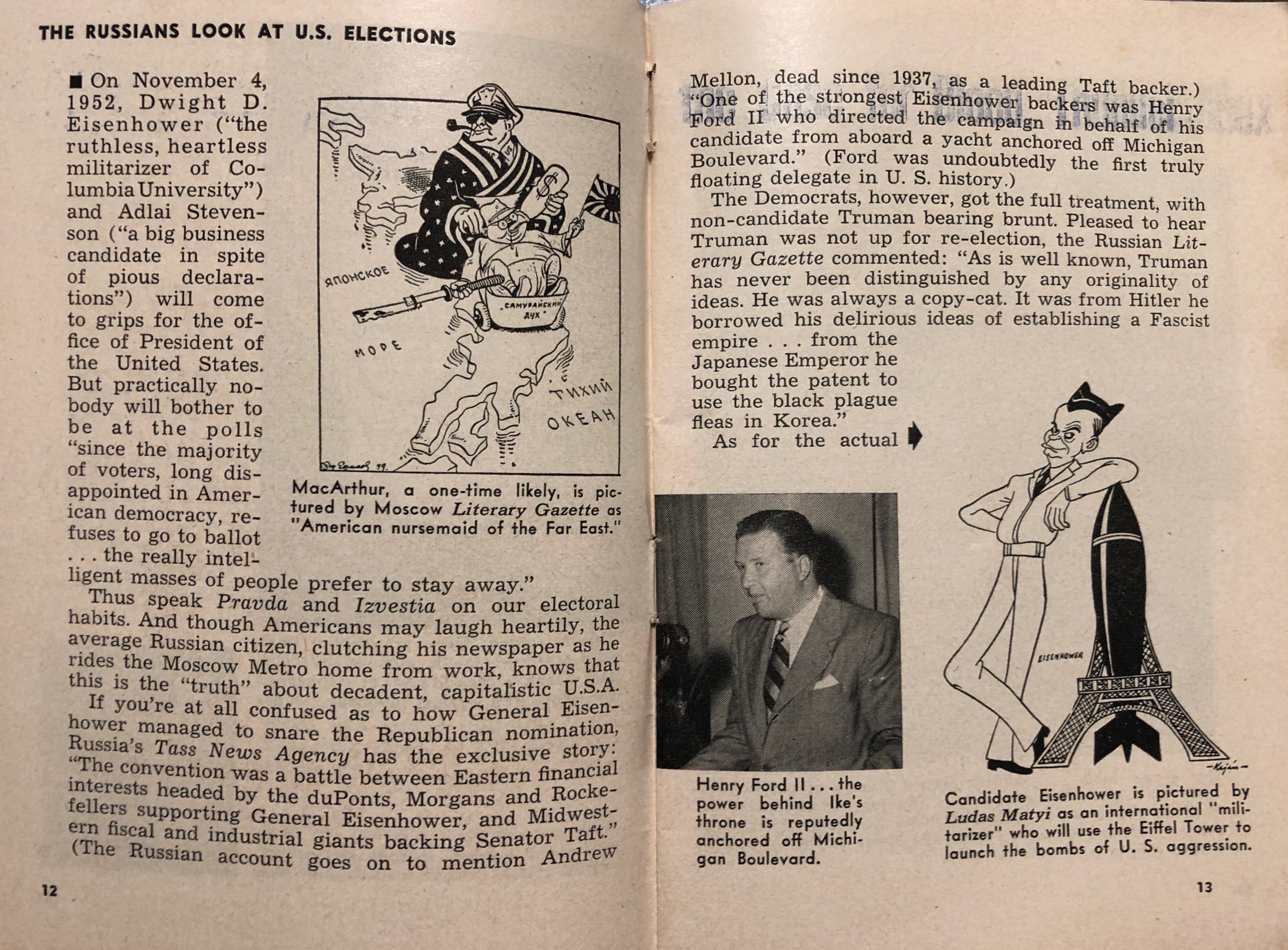
On November 4, 1952, Dwight D. Eisenhower (“the ruthless, heartless militarizer of Columbia University”) and Adlai Stevenson (“a big business candidate in spite of pious declarations”) will come to grips for the office of President of the United States. But practically nobody will bother to be at the polls “since the majority of voters, long disappointed in American democracy, refuses to go to the ballot… the really intelligent masses of people prefer to stay away.”

Thus speaks Pravda and Izvestia on our electoral habits.  And though Americans may laugh heartily, the average Russian citizen, clutching his newspaper as he rides the Moscow Metro home from work, knows that this is the “truth” about decadent, capitalistic U.S.A.

If you’re at all confused as to how General Eisenhower managed to snare the Republican nomination, Russia’s Tass News Agency has the exclusive story: “The convention was a battle between Eastern financial interests headed by the duPonts, Morgans, and Rockefellers supporting General Eisenhower, and Midwestern fiscal and industrial giants backing Senator Taft.” (The Russian account goes on to mention Andrew Mellon, dead since 1937, as a leading Taft backer.) “One of the strongest Eisenhower backers was Henry Ford II who directed the campaign in behalf of his candidate from abroad a yacht anchored off Michigan Boulevard.” (Ford was undoubtedly the first truly floating delegate in U.S. history.)

The Democrats, however, got the full treatment, with non-candidate Truman bearing brunt. Pleased to hear Truman was not up for re-election, the Russian Literary Gazette commented: “As is well known, Truman has never been distinguished by any originality of ideas. He was always a copy-cat.  It was from Hitler he borrowed his delirious ideas of establishing a Fascist empire… from the Japanese Emperor he bought the patent to use the black plague fleas in Korea.”

As for the actual candidate Stevenson, however, Communists can’t help whip up much enthusiasm because they have known since May that “Eisenhower is not a Republican at all.  He is a Trojan horse, skillfully smuggled by the Democrats into the opposing camp.” (Liberation, pro-Communist Paris paper.)
Russian Press attention included pre-convention closeups: Taft: “Die-hard companion of Dulles and company.” Kefauver: “He always tried to palm himself off as the personification of honesty, but he did not show any real zeal to uproot crime in America.” Pre-election propaganda focused on Ike, as “spiritual father of the 6-legged European monster, the NATO Army” and “an ignoramus who has not read a book in the last 9 years.”

On May 4 this year, Pravda told whom we’d vote for if not terrorized by capitalist bullies: Red-dominated Progressive Party and its candidate Vincent Hallinan.

But terrorized and bullied, caught between the Devil (“militarizer” Ike) and the deep blue see (“lackey” Adlai) close to 50 million unhappy Americans will turn out to vote.  And whatever happens, the Russians barrage of written and cartooned propaganda will continue, for, Republicans and Democrats, we’re a decadent lot. Consolation is: We are free, and our elections have more than one man from whom to choose.

h1

What’s Wrong With The Post Office? A Mr. Magazine™ Blast From The Past…

June 14, 2019

You may have noticed lately that I am not as active on the blog as usual.  Two reasons for that, first, the summer break and second, working on two books, the first on how to launch a magazine and the second on the magazines of the 1950s.

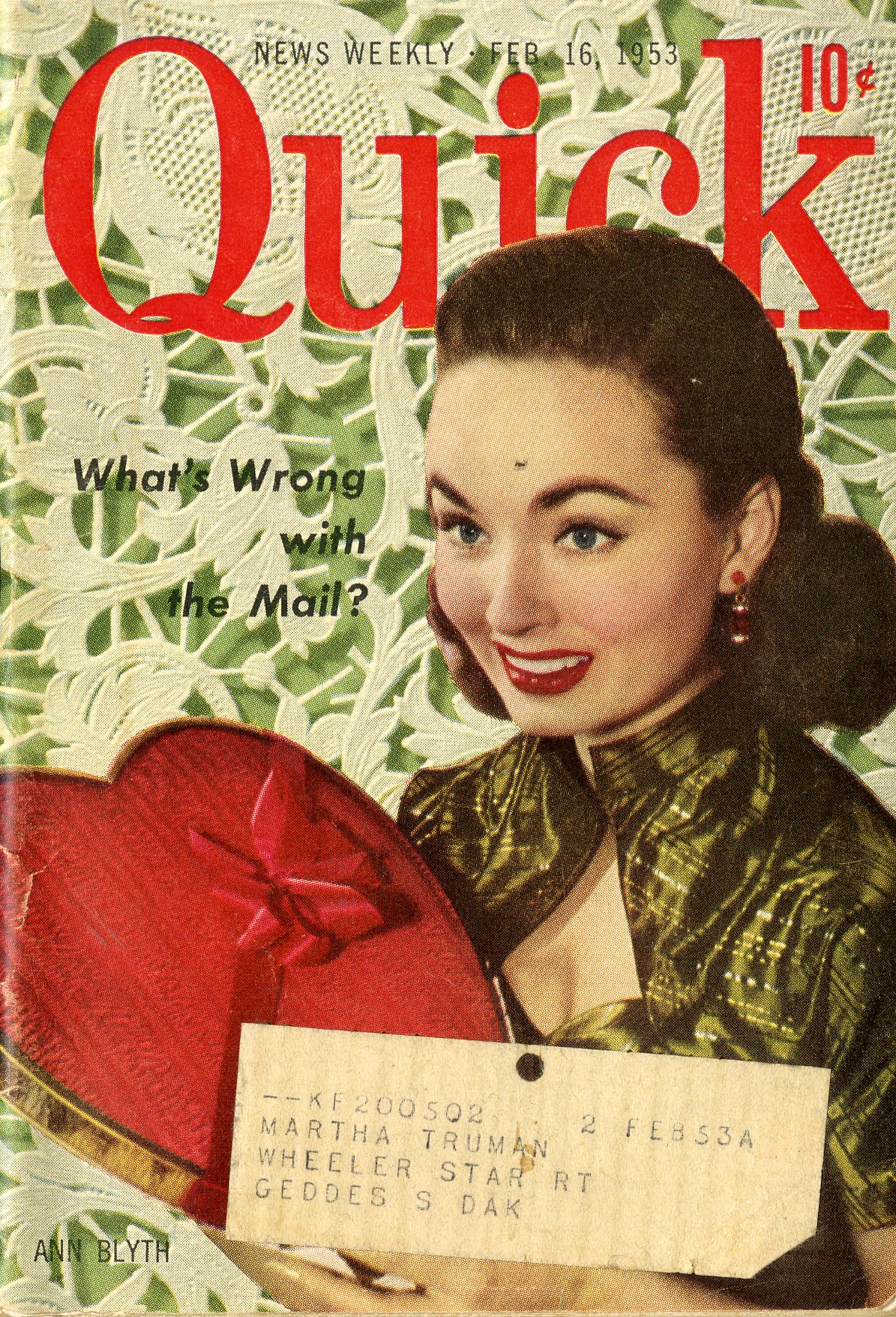
In my research I came across this article from Quick magazine, Feb. 16, 1953 about “What Wrong with the Mail?”

The similarities between now and then were striking to me, so I decided to publish the entire article here.  Would love to hear your comments…

Enjoy this blast from the past…


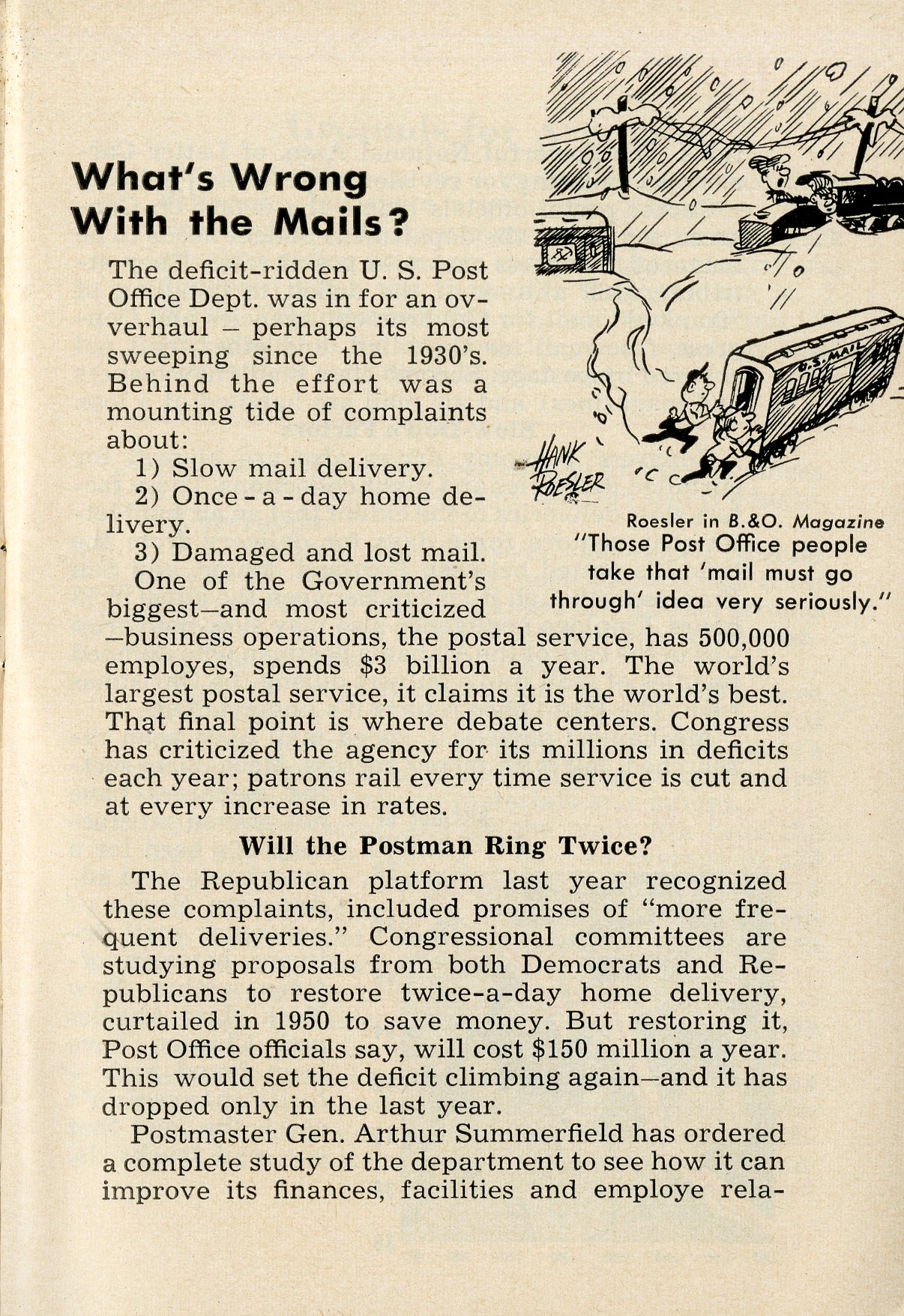
What’s Wrong With the Mails?

The deficit-ridden U. S Post Office Dept. was in for an overhaul-perhaps its most sweeping since the 1930’s. Behind the effort was a mounting tide of complaints about:

  • Slow mail delivery.
  • Once-a-day home delivery.
  • Damaged and lost mail.

One of the Government’s biggest and most criticized-business operations, the postal service, has 500,000 employes, spends $3 billion a year. The world’s largest postal service, it claims it is the world’s best. That final point is where debate centers. Congress has criticized the agency for its millions of deficits each year; patrons rail every time service is cut and at every increase in rates.

Will the Postman Ring Twice?

The Republican platform last year recognized these complaints, included promises of “more frequent deliveries.” Congressional committees are studying proposals from both Democrats and Republicans to restore twice-a-day home delivery, curtailed in 1950 to save money. But restoring it, Post Office officials say, will cost $150 million a year. This would set the deficit climbing again-and it has dropped only in the last year.

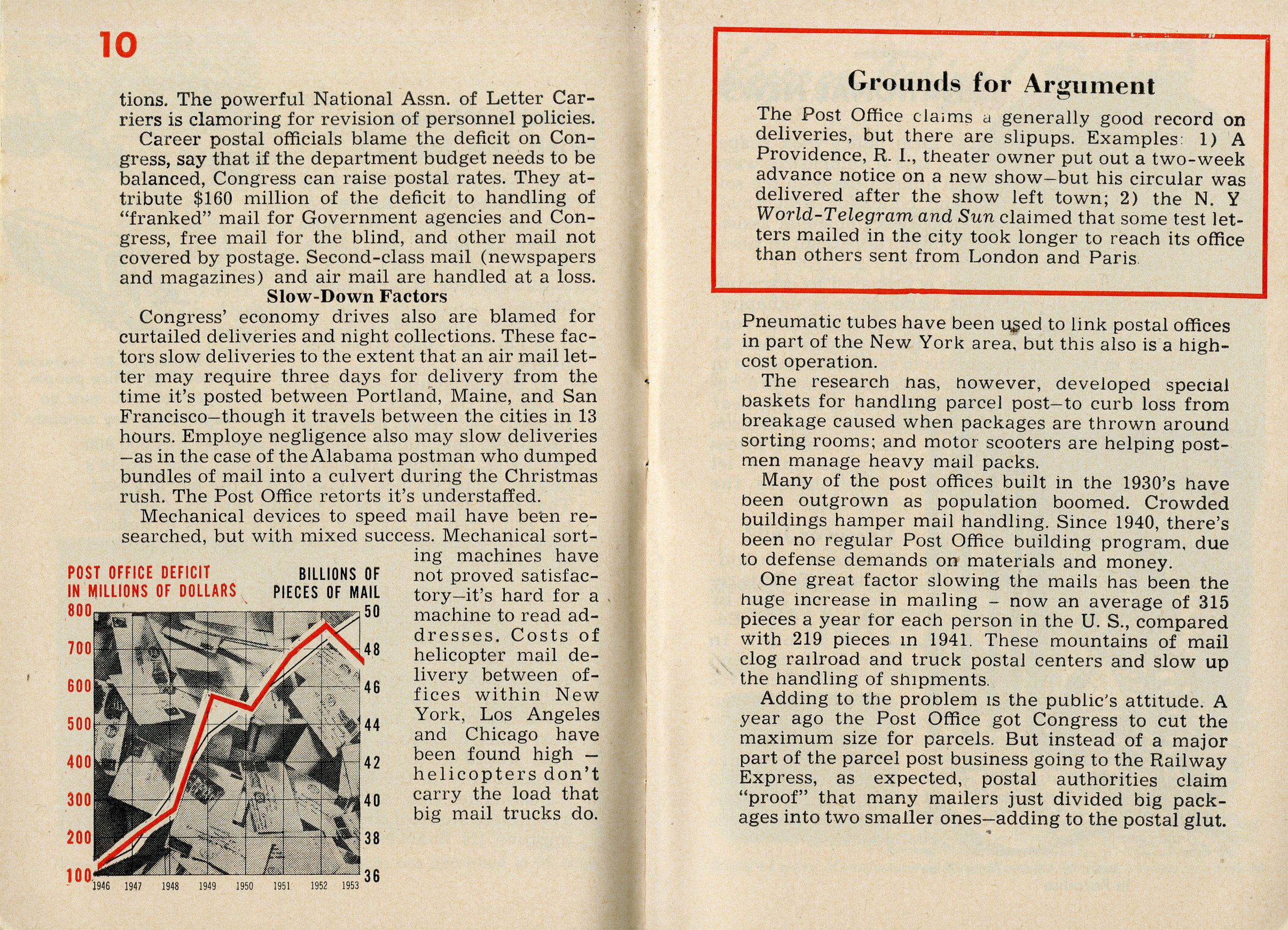
Postmaster Gen. Arthur Summerfield has ordered a complete study of the department to see how it can improve its finances, facilities and employe relations. The powerful National Assn. of Letter Carriers is clamoring for revision of personnel policies.

Career postal officials blame the deficit on congress, say that if the department budget needs to be balanced, Congress can raise postal rates. They attribute $160 million of the deficit to handling of “franked” mail for Government agencies and Congress, free mail for the blind, and other mail not covered by postage. Second-class mail (Newspapers and magazines) and air mail are handled at a loss.

Slow-Down Factors

Congress’ economy drives also are blamed for curtailed deliveries and night collections. These factors slow deliveries to the extent that an air mail letter may require three days for delivery from the time it’s posted between Portland, Maine, and San Francisco-though it travels between the cities in13 hours. Employee negligence also may slow deliveries-as in the case of the Alabama postman who dumped bundles of mail into a culvert during the Christmas rush. The Post Office retorts it’s understaffed.

Mechanical devices to speed mail have been researched, but with mixed success. Mechanical sorting machines have not proved satisfactory-it’s hard for a machine to read addresses. Costs of helicopter mail delivery between officials within New York, Los Angeles and Chicago have been found high-helicopters don’t carry the load that big mail trucks do.

Grounds for Argument

The Post Office claims a generally good record on deliveries, but there are slipups. Examples: 1) A Providence, R.I., theater owner put out a two-week advance notice on a new show left town; 2) the N.Y World-Telegram and Sun claimed that some test letters mailed in the city took longer to reach its office than others sent from London and Paris.

Pneumatic tubes have been used to link postal offices in part of the New York area, but this also is a high-cost operation.

The research has, however, developed special baskets for handling parcel post-to curb loss from breakage caused when packages are thrown around sorting rooms; and motor scooters are helping postmen manage heavy mail packs.

Many of the post office built in the 1930’s have been outgrown as population boomed. Crowded buildings hamper mail handling. Since 1940, there’s been no regular Post Office building program, due to defense demands on materials and money.

One great factor slowing the mails has been the huge increase in mailing-now an average of 315 pieces a year for each person in the U.S., compared with 219 pieces in 1941. These mountains of mail clog railroad and truck postal centers and slow up the handling of shipments.

Adding to the problem is the public’s attitude. A year ago, the Post Office got Congress to cut the maximum size for parcels. But instead of a major part of the parcel post business going to the Railway Express, as expected, postal authorities claim “Proof” that many mails just divided big packages into two smaller ones-adding to the postal glut.

h1

A Blast From The Past: Gossip Magazines Reign Supreme… From The Vault of Mr. Magazine™

June 11, 2019

You may have noticed lately that I am not as active on the blog as usual.  Two reasons for that, first, the summer break and second, working on two books, the first on how to launch a magazine and the second on the magazines of the 1950s.

In my research I came across this article from Show magazine, July 1955 about Gossip magazines (what we now call Celebrity magazines…)

The similarities between now and then was striking to me, so I decided to publish the entire article here.  Would love to hear your comments…

Enjoy this blast from the past…

GOSSIP…

America’s Newest Parlor Game

“ WHO WOULD have believed two years ago that gossip magazines would be sweeping the country,” remarked a Pulitzer prize winning author at a recent interview. He’s not the only one who has been shaking his head at the new trend in American reading habits.

Unlike anything in the history of the publishing business, gossip magazines have captured the fancy of readers of all ages. What’s behind this reading revolution? Why does the average American delight in seeing other people’s dirty linen washed in public?  Is it a new vogue?

In the first place, it’s the reader, not the magazines, who creates the demand for the gossip publications. The publishers just supply the demand. To date this demand has resulted in over two dozen such publications- all of them following the lead of confidential magazine. Confidential, the first publication to realize the unlimited potential of this market, today outsells on the newsstand any other single magazine- including such giants as Life, Ladies’ Home Journal or TV Guide. Its actual printing is an excess of 4 million copies.

Like any other controversial medium, scandal mags have come under their share of fire- and praise. Al this being done in public arouses public curiosity- and, of course, more sales.

Scandal, which includes anything from the love affairs of top movie stars to the café society set, was certainly not discovered by magazines. Gossip columnist have attracted to their newspapers millions of readers with scandal tidbits. Such items as “ Who is Renovating”- and why, has earned a fortune for Walter Winchell. Other columnists who try to jump into the gossip gravy train, are just imitating the master, Winchell.

DON’T BE SHOCKED

This may be a surprise to you, but in many instances the person whose life or romances is being exposed often gets early proofs of the story for corrections.

The reason? Some playboys and stars feel that publicity either flattering or damaging is good publicity. The publisher of one of the top scandal mags was thanked recently by an entertainer for revealing his “affair” with a movie star. Why? Well, as the entertainer put it, “You sure put me in the big leagues- now a dozen girls in Hollywood want me.”

Another Hollywood star who was a juvenile delinquent with a long record was fully aware he was getting the “treatment” in a gossip mag. It was his one way of getting attention- and did he get it! Readers revealed in the juicy gossip. There’ll be a lot of blushing faces when they read here that this movie star had read and okayed the story for publication. Result? Besides prestige, he now is in greater demand than ever and he’s boosted his movie price per picture by $50,000.

Scandal mags are based on the principle that people forget what they read in the newspapers.

The second gimmick is to research the past of famous people because mistakes and misdeeds of a dozen years ago makes juicy reading to new audiences today. Thus, someone in his or her twenties would be titillated by the Mary Astor Diaries and George Kaufman, the Fatty Arbuckle case, and the Simone Simon Affair- all of which appeared in the papers in sordid detail a number of years ago.

Such people as ex-Madame Polly Adler and Jelke and his V-girls are also fair game for the scandal magazines. The mags seldom, however, present anything that is new to the gullible public.

For any reader who isn’t aware of the pasts of famous stars, members of café society and the what’s what of the who’s who in the social register, the gossip mags provide rather entertaining reading.

SHOW magazine, curious as to why people revel in other people’s inglorious pats, checked with several psychiatrists. For the most part of the doctors agreed that: “Scandal magazines serve a need and are quite comparable to the Charlie Chaplin movies of old. People all over the world enjoyed watching the down-and-out tramp, for no matter how badly off the viewer was, there was someone (Chaplin) who was worse off than he. With the scandal magazines, the same principle holds true. Many people have skeletons in their closets- Kinsey’s report proved that. Yet people are eager to read the exposes of famous men and women whose skeletons are rattled in public- so they can gnaw at the bones. It boils down to the fact that gossip magazines appeal to the snobbishness in all of us.” P.S Several of the psychiatrists admitted that they read the scandal magazines themselves.

It is not mysterious, therefore, to figure out why people stand in line to buy Confidential or Uncensored, the second-best seller in that field. The magazines all follow the same, newsy format of three or four pictures on the cover with splashes of gaudy color all geared to invite the gossip reader to shell out that quarter.

All in all, total sales for the twenty-odd magazines in this scandal category reach close to 10 million per month. This fabulous impact has reacted on other top, general magazines who now seek to compete by placing at least one “scandal-type” expose story between the covers of every issue. The magazines reached the height of something or other recently when Jackie Gleason’s program plugged Confidential, and Time magazine interviewed the publisher of said magazine.

HOW LONG WILL IT LAST?

As long as the gossip holds out that’s how long the magazines will continue their run of popularity. Naturally, this could go on indefinitely- or as long as the public taste for gossip holds out. This could be tomorrow – or 50 years from now.

h1

Body And Soul: Bernarr Macfadden’s Magazines Covered It All And Some More… From The Mr. Magazine™ Vault

March 4, 2019

A Mr. Magazine™ Musing…

In March 1939, 80 years ago, the first issue of Macfadden-published “Your Faith” magazine came out. The idea was “Why Not Try God?” In the first editorial by Bernarr Macfadden himself, he wrote: A Religious Uplift Brings Spiritual Happiness. He talks about solving the mysteries of the universe and the impossibility of that without God. The magazine is an important part of Macfadden’s view on society and another example of magazines reflecting culture.

Mr. Magazine™ discovered this little nugget from his vault and took note of the amazing difference this magazine had from Macfadden’s other physical fitness and “true-fiction” type publications. And on the 80th anniversary of Your Faith magazine, as Bernarr Macfadden said himself in the first issue: This is a magazine for all who have an ear to hear.

And hear, Macfadden did. Some are just not sure what exactly he was listening to. But as any good entrepreneur would, Mr. Magazine™ believes he was listening to his passions and his own gut feeling. You be the judge.

Bernarr Macfadden is known as the “Father of Physical Culture.” What is “Physical Culture” you might ask. In its simplest definition, Physical culture is a health and strength training movement that originated during the 19th century in Germany, England, and the United States. But how did this topic find its way into a Mr. Magazine™ Musing, you might also ask. And of course, the answer in its simplest form would be: magazines.

Macfadden himself was an American proponent of physical culture. He was the predecessor of Charles Atlas and Jack LaLanne, and has been credited with beginning the culture of health and fitness in the United States.

But life was not always so kind to Mr. Macfadden. He changed his name from Bernard McFadden to “Bernarr Macfadden” in order to give himself an aura of strength and vitality. It seems that he was a very sickly and weak child who was an orphan by the time he was 11-years-old. But as fate would have it, Macfadden was placed with a farmer, leaving the life of an orphan behind, and soon began a regiment of hard work and wholesome food. His health improved and soon he became strong and hale again.

There is an entire website dedicated to the memory of this millionaire publisher, who many called a “kook” and a charlatan, and who Time Magazine referred to as “Body Love” for his lifelong advocacy of physical fitness, natural foods, outdoor exercise and the natural treatment of diseases.

In 1899, Macfadden, after a successful, national lecture tour and after founding Physical Culture “clubs” in several cities across the country, decided to publish a monthly magazine called “Physical Culture.” He tried unsuccessfully to find a publisher for his title and so decided to publish it himself, along with his own books about health and wellness (during his lifetime he wrote over 100 books). Physical Culture magazine remained in publication for over 50 years, and was the forerunner of today’s health and bodybuilding publications. Oh, and the magazine carried his name on the cover as well – the height of narcissism or just good business acumen? Either is possible.

Eventually Macfadden Publications was born and his company turned into an empire, with titles such as Liberty, True Detective, True Story, True Romances, Dream World, Ghost Stories, the once-familiar movie magazine, Photoplay, and the tabloid newspaper, The New York Graphic.

Macfadden even sought the Republican nomination for president in 1936, albeit losing the nomination to Kansas Gov. Alf Landon, who went on to lose to Franklin D. Roosevelt in the November election. But he was the first to propose that the President should have a National Secretary of Health on his cabinet ( he had originally wanted to be that person, but instead decided to run for office himself), all the while never giving up his love of physical health and his tendency to admire younger females, whether he was married or not.

Much of the basis of Physical Culture was religious in nature. And during his lifetime Macfadden also attempted to launch his own religion: Cosmotarianism, which combined physcultopathy with the Bible.

In an Esquire article written by Bruce Watson in 2013, Cosmotarianism was described as something that blended Macfadden’s bizarre theories on physical fitness with the Bible. Watson writes:

And some of his theories were, indeed, bizarre: convinced that baldness could be cured by tugging on one’s hair, he wore a towering pompadour; believing that physical contact with the “magnetic currents” of the earth could inspire feats of sexual prowess, he often went barefoot; furious at the fashion industry, he would wear his suits until they fell off his body.

Macfadden certainly seemed to fit the bill of an eccentric millionaire. Indeed, it’s a given. Bernarr Macfadden was an eccentric, a reputed womanizer, a multimillionaire publisher, a father of eight and a husband of four, a fitness guru who was before his time, who died in 1955 from a urinary tract infection that he refused to be medically treated for. And a part of American magazine history that should not be forgotten.

Until the next time…

See you at the newsstands…

Background information from:
http://money.com/money/4074103/wackiest-millionaire-ever-run-president/
http://www.bernarrmacfadden.com/
https://en.wikipedia.org/wiki/Bernarr_Macfadden
https://www.esquire.com/news-politics/news/a23610/strange-tale-historic-fitness-guru-bernarr-macfadden/