In a keynote address at the ACT 6 Experience, Professor Naomi S. Baron, Executive Director, Center for Teaching, Research, and Learning, and Professor of Linguistics (World Languages & Cultures, CAS), at the American University in Washington, D.C., professor Baron presented her latest research regarding millennials and print.
The results of her study may surprise you. Click on the video below to watch her presentation at the ACT 6 Experience:
More presentations and reports from Linda Ruth will be posted as they become available. Stay tuned.
Gil Brechtel and Josh Gary from MagNet coordinated the “Reimagining the Newsstand” segment at the ACT 6 Experience. Gil moderated the first panel on “Reimagining the Newsstand.”
The focus was on the newsstand business, its relevancy to publishers, how to stabilize it, as well as the current and future roles of each of the channel members… wholesaler, national distributor, retailer, and publisher, and how we as an industry engage the retailer to promote and increase sales.
Wholesaler participants included David Parry, President & CEO of TNG and Shawn Everson, Chief Commercial Officer of Ingram Content Group. Three CEOs of magazine media companies also joined this segment of the ACT 6 Experience. They are Hubert Boehle, CEO of Bauer Magazine L.P., Andy Clurman, CEO of AIM (Active Interest Media) and Eric Hoffman, CEO of Hoffman Media.
Videos of all the presentations will be posted on this site in addition to Linda Ruth’s reports. Linda, thankfully, accepted the role of the scribe of the ACT 6 Experience. All the videos are at the bottom of this blog.
And now for part 2 from Chapter 3 as reported by Linda Ruth.
Hubert Boehle, CEO of Bauer Media, came to ACT 6 to talk about the German newsstand magazine market, and lessons the US might draw from it.
An American publisher might wonder why we in the US magazine market might want to look to Germany as a model to emulate? As an answer, the example of Bauer Media itself might provide sufficient reason.
Bauer Media, a German publishing company, represents the largest seller, in terms of units, of magazines in the United States. On a dollar basis, Bauer is the second-largest media company in the US. Further, in a newsstand-challenged age, newsstand accounts for 90% of the Bauer publications’ sales.
A second reason to look to Germany for inspiration might be found in the nature of the German magazine market itself. Germany has a quarter of the population of the US, but its magazine revenue is equivalent—roughly $2.5 billion in each market. The average consumer in Germany spends about four times as much on magazines as the US consumer. Also, while sales and revenue have declined in both the US and Germany, the declines are not equivalent; Germany’s has been considerably smaller.
Boehle identified several reasons for the differences in the magazine market, focusing on each player in the magazine publishing supply channel; and he suggested initiatives based on these differences. First, looking at the wholesale network, he finds it much more concentrated In Germany , with a much higher level of service. In an area the size of California, he pointed out, there are 54 wholesalers, who, owing to their density, know their customers well and visit them daily. Partly in consequence of this service level, Germany’s average overall magazine sales efficiency stands at 60%. By comparison, the average sell-through in the US is 26%. How, Boehle asks, can we create a better service level in the U.S? How can we support our wholesale partners to enable them to provide this level of service to their retailers?
Part of the answer to that tracks back to the magazine publishers. Because publishing is profitable in Germany, publishers support their newsstand circulation. With higher efficiencies, and the lower costs resulting from fewer unsolds, there is more profit to all supply chain partners. This frees up a higher remit per copy sold to be paid to the publishers. Germany, in fact, remits about 60% of every retail dollar to the publisher, with 100% of sold copies paid a week after off sale. This allows for cover prices that are considerably lower, which in turn leads to multiple purchases by consumers at retail.
The overall health of the newsstand channel is supported by the fact that German subscription prices are not deeply discounted, as they are in the US. The price of each issue of a magazine subscription is roughly the same as the same issue purchased on the newsstand. What similar incentives, Boehle asks, could be created that would encourage US publishers to invest in newsstand?
.
While the US market is finding its incremental revenue through up-priced one-shots, specials, and bookazines, Boehle suggests that this approach is, at best, a band-aid to the problem. It takes a regular frequency to addict a customer to a magazine, a frequency that is supported by cover prices that make multiple purchases affordable. Germany’s market provides its readers hundreds of weeklies and bi-weeklies, as compared to the US market which provides only a handful of comparable frequency products.
And with the larger publishers now using their checkout space to rotate their bookazines into, checkout space, which relies on the addictive and frequently-turned weeklies for its vitality, begins to lose its effectiveness. Profitability drops as the checkout titles are unable to provide the needed turns as frequently as needed.
Another way to develop excitement and addiction at checkout is to provide frequent new releases to browse and buy. In the US, all publications go on sale the same day of the week. In Germany, they go on sale every day, incentivizing customers to look for fresh magazines more frequently.
How can the US magazine market learn and benefit from these lessons? Perhaps, Boehle suggests, wholesalers might consider penalizing publishers with low subscription prices. Perhaps checkouts space should be reserved for higher-frequency titles. Publishers might consider reversing the push to higher-cost product and implementing lower cover prices.
In fact, we in the US might re-think the entire checkout system. In Germany, magazines aren’t sold at checkouts—the mainlines are placed so you see them right away, coming into a store. The impulse at the checkout is becoming obsolete, as today people spend their time in the checkout lane looking at their phones. From a publisher’s point of view, each checkout lane has to be treated as a separate retailer, with its own allotment and order regulation, its own placement fee; and from a wholesaler’s point of view, the excess product in the checkout lanes exacerbates the return situation. Might it be possible, Boehle suggest, to rethink the dichotomy between checkout and mainline and, again emulating Germany, work on getting highly-visible mainline displays established in the vicinity of the checkouts,near the front of the stores?
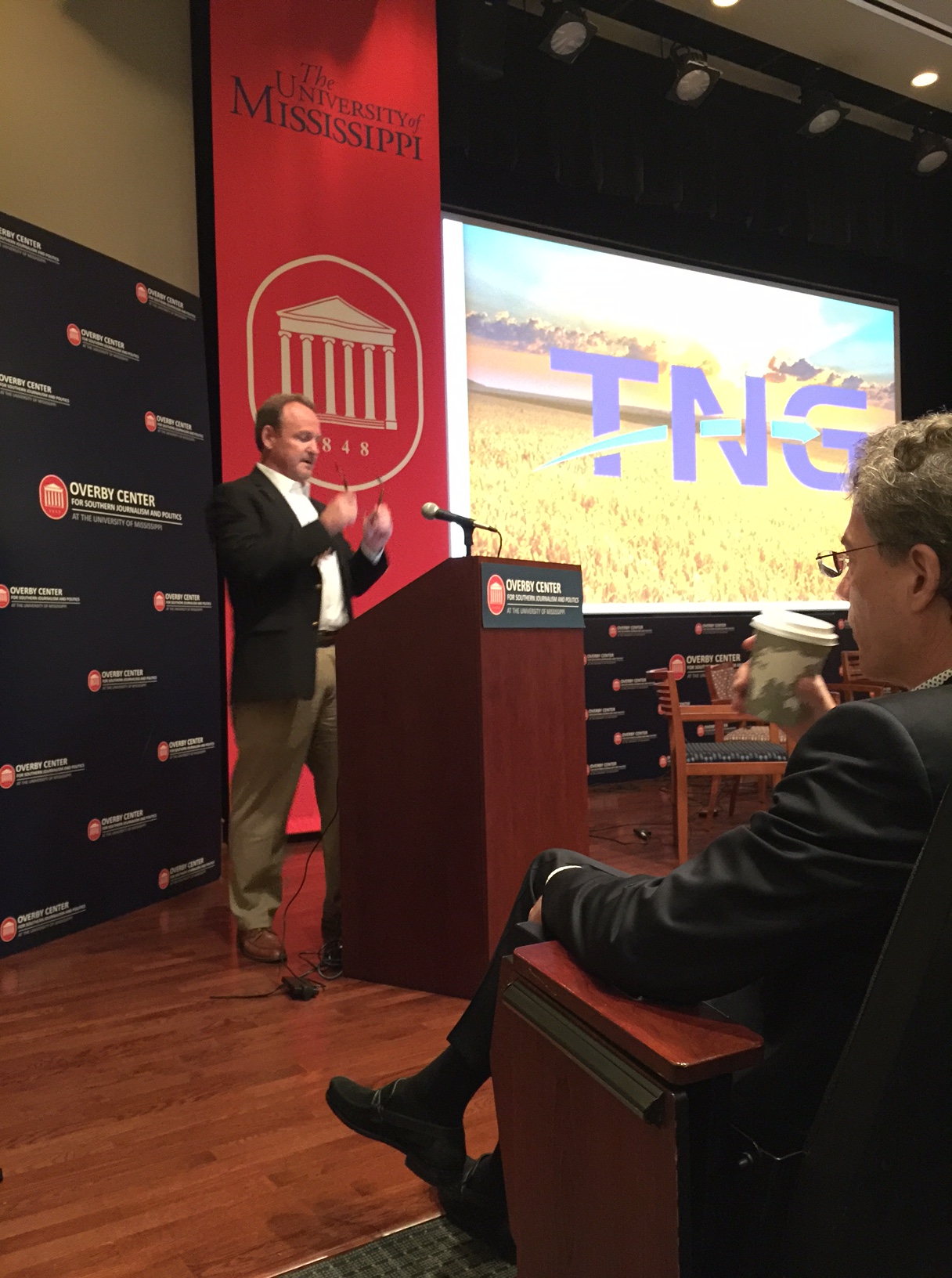
David Parry, the CEO of TNG, North America’s biggest magazine wholesaler, responded by speaking of TNG’s experience as a wholesaler with enormous fixed costs and declining net profits, in a market very different from Germany’s. Parry cautioned that, in getting publications to retailers throughout the country, in reimagining the newsstand, it is essential that the pressures are alleviated for all channel partners, and that continued viability is ensured all along the supply chain. With weekly delivery to over 70,000 retail locations in the US and Canada, and service provided at more-than-weekly frequency at retail level by over 10,000 TNG merchandisers who provide real-time reporting, a first order of business needs to be to ensure stabilization and survival of this channel, before looking to increase store visits or publisher remits.
With 23 million units delivered weekly, and 1.2 billion annually, across an enormous geographic area, the challenges here are very different from the ones faced in the compact German market. TNG, however, is working to develop new and innovative services far beyond the delivery of magazines.
Parry acknowledged that all channel partners need to constantly innovate. But far from letting go of front end placement, he said, it is critical that we defend that space, as a priority among all channel partners. With beverages and snacks competing in droves for that placement, we are fighting for all the checkout space we can get. It is understood that people are making the lion’s share of their purchases within 100 feet of the front door, and that space is not simply up for grabs. Major consumer goods companies are looking at that same 100 feet, and they are tough competitors.
TNG has experience with retailers that back up this perspective. Parry mentioned Chief Auto Parts, which tried four times with magazines, in four different places in their stores, and nothing worked until they put magazines at the front end. Other retailers, including, as an example, Loblaws, cut back on the placement of magazines at the front end and their customers protested. The chains were forced, by customer demand, to reinstate magazines at the checkout.
Yet, Parry acknowledged, checkout merchandising does drive up costs, and TNG’s merchandisers do need to be in many stores up to three times a week. With the physical wire checkout pockets getting thinner, they need to be restocked more often, and that requires merchandising presence in the stores.
What, from the viewpoint of a major wholesaler group, can be done then, to strengthen the supply channel and build profitability for channel partners?
Parry suggests working collaboratively to re-invent checkout space; focusing on promotions and events calendars to generate excitement at retail, finding new places to display product in stores through outposts, and capitalizing on trends and opportunities. Local interest is big: Texas Monthly can outsell People in some markets. Adult coloring books came out of nowhere to sell over $15 million at retail. Publishers and wholesalers need to get a seat at the table with the retailers to find ways of supporting magazine sales together. Try using beacon technology and instant coupons; participate in mixed displays and cross-merchandising opportunities.
And constantly innovate.
Click below to watch Hubert Boehle’s presentation at the ACT 6 Experience:
Click below to watch Shawn Everson’s presentation at the ACT 6 Experience:
Click below to watch David Parry’s presentation at the ACT 6 Experience:
And click below to enjoy the debate moderated by MagNet’s Gil Brechtel:
Gil Brechtel and Josh Gary from MagNet coordinated the “Reimagining the Newsstand” segment at the ACT 6 Experience. Gil moderated the first panel on “Reimagining the Newsstand.”
The focus was on the newsstand business, its relevancy to publishers, how to stabilize it, as well as the current and future roles of each of the channel members… wholesaler, national distributor, retailer, and publisher, and how we as an industry engage the retailer to promote and increase sales.
Wholesaler participants included David Parry, President & CEO of TNG and Shawn Everson, Chief Commercial Officer of Ingram Content Group. Three CEOs of magazine media companies also joined this segment of the ACT 6 Experience. They are Hubert Boehle, CEO of Bauer Magazine L.P., Andy Clurman, CEO of AIM (Active Interest Media) and Eric Hoffman, CEO of Hoffman Media.
Videos of all the presentations will be posted on this site in addition to Linda Ruth’s reports. Linda, thankfully, accepted the role of the scribe of the ACT 6 Experience.
Here’s Linda’s report on Andy Clurman’s presentation…
Andy Clurman of Active Interest Media spoke of the integrated approach and expanding reach of a successful publishing company. AIM is a case study in the flexibility and adaptability referenced by Folio’s Tony Silber on Act 6’s Day 1. The evolution of AIM has been such that, although it looks from the outside like a magazine publishing company, it has become much more than that.
Yet AIM was built for and by magazines. AIM publishes special interest titles in categories grouped around marine, sports, home, healthy living, outdoor, and horses. With six different groups, each of which encompasses multiple sub-groups, and over 50 magazine brands, AIM creates events, videos, and marketing services. They have a digital audience, membership programs, and have created an online education program. The brands and the business were built on magazines, and around the content, authority, and audience of their magazine program.
Clurman points out that, in building a company around the enthusiasm of the audience, entire groups can be, and are, run without a stitch of advertising, based on the wants and needs of the audience itself. As is indicated by the company’s name, the audience is actively engaged, connecting through print, digital, events, video, newsletters, classes, and social media.
For AIM, partnerships with specialty retailers are an important piece of their brand development and monetization strategy. This could range from a connection relating to products that the retailer carries or highlights in the stores to, at the extreme end, creating an SIP based on the retailers priorities and making it available exclusively in retailer stores.
Keys to building their brands, including publications that have dwindled and been marginalized, include upgrading the value of the publications through improving paper quality, cover and concept testing, developing specialty distribution, and partnering with distributors and retailers. It’s important to break down the silos and start talking to one another if we’re going to break out of the rut we’re in. We need to prove the efficacy of magazines as merchandisers.
Magazines are the story-tellers that amplify the value of the products found in partner retailer stores. This creates a basis for mutually-beneficial partnerships.
Click below to watch the first video from the Reimagining The Newsstand featuring GilBrechtel :
Click below to watch the second video from the Reimagining The Newsstand featuring Eric Hoffman:
Click below to watch the third video from the Reimagining The Newsstand featuring Andy Clurman:
Stay tuned for more reports from Linda Ruth and more videos from ACT 6 Experience…
The magazine newsstand is an American icon, a pleasure in itself to visit and browse. The channel, as we know, is compromised: what happened? John Harrington of Harrington Associates opened the Magazine Innovation Center’s Act 6 with an explanation and summary of the history of the magazine distribution
For 40 years the old system of magazine distribution supported hundreds of wholesalers, who received their publications via national distributors and distributed them to regional retail chains. It was a profitable system, although one which passed along only 27% of the cover to retailers. As retailers grew more powerful and were able to demand higher discounts, and the power in the distribution system shifted to retail, the economic viability of the system was compromised, and remains compromised today.
To understand the degree to which this system has been compromised, Harrington took us through the history of the channel. In 1994 sold 2.1 billion magazines, at a value of almost $4 billion at retail, with a sell through of 41%.
Eleven years later, in 2015, we saw a sale of only a quarter of those units, fewer than a half a billion copies. Despite cover price increases, we saw a loss of 40% in revenue, commanding only $2.5 billion at retail. Efficiency has dropped to 26%, creating huge economic pressures on the system that handles the publications.
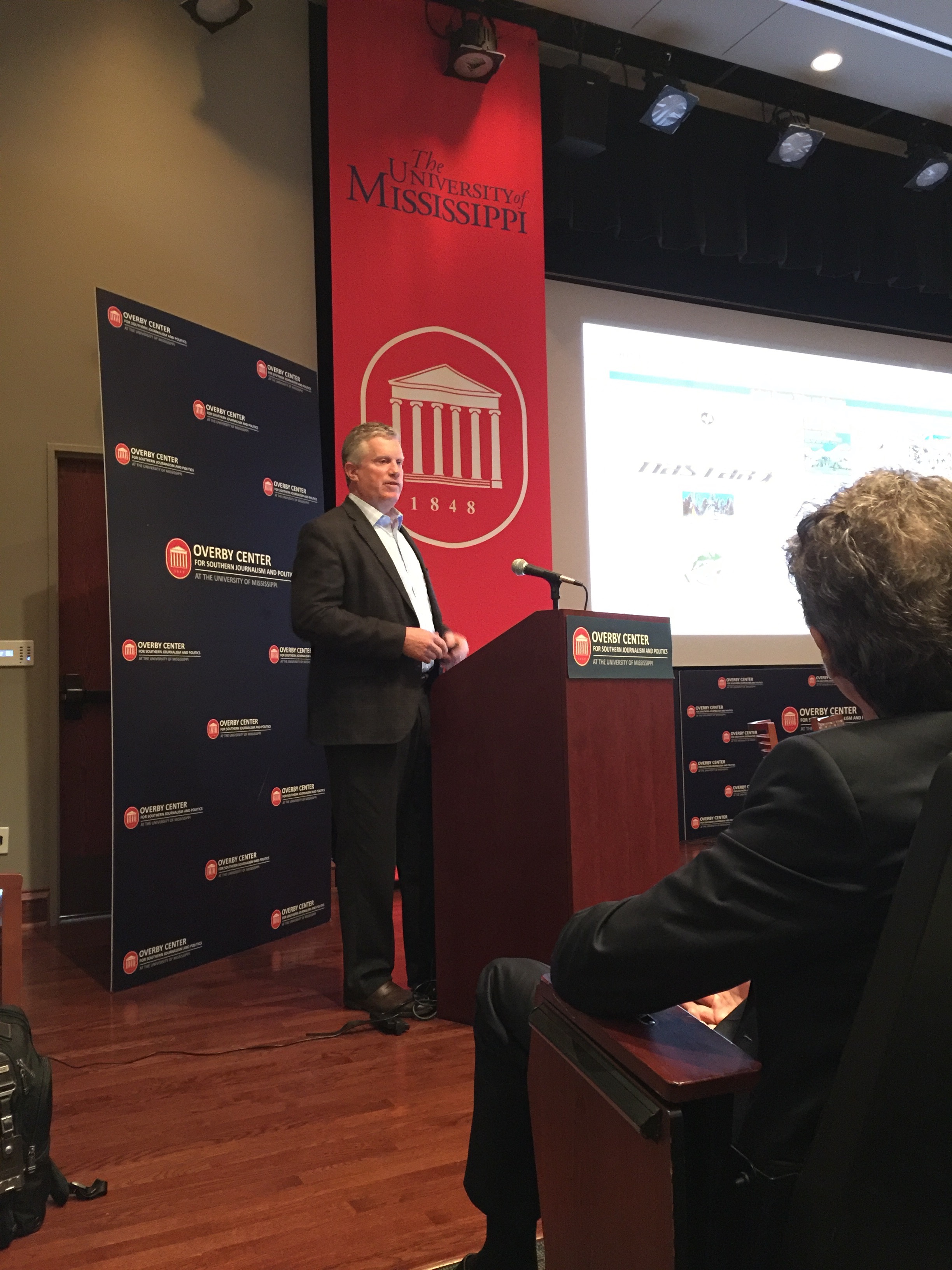
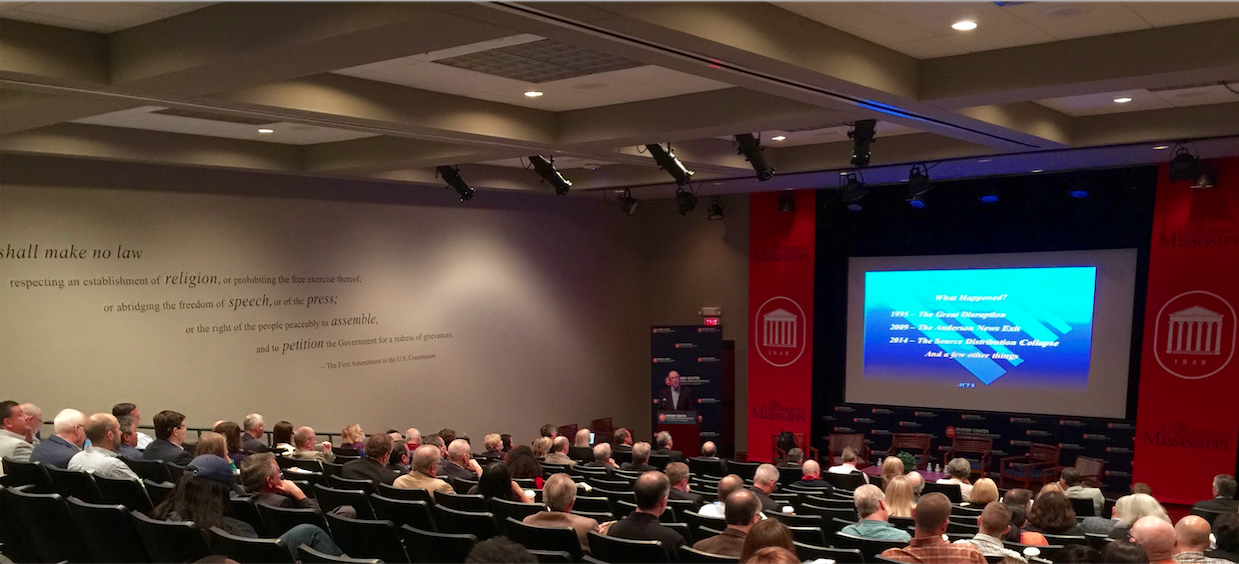
Harrington presenting at the opening of Day 2, ACT 6 Experience
What happened? At the same time that the market shifted incrementally and over time, there were three major events: the great disruption of 1995, the Anderson News ext of 2009, and the Source Distribution collapse of 2014. At the same time, digital and mobile information delivery grew.
In 1995 retailers threw out the old rules. The power they accumulated through their consolidation forced consolidation on wholesalers as pricing and service were reconstructed in ways mandated by retailers. The distribution channel was reconstructed and reconfigured as wholesalers lost their economic vitality, and most went out of business. By 1999,four wholesalers accounted for 90% of the business.
Retail chains had changed their footprints from regional to national, giving them more power and the need to work with fewer, and consolidated, vendors. More magazines were published, at the same time the mega-titles on which wholesaler profitability was based were disappearing. With more publications to handle, the profitability of each was considerably reduced.
In 2009, when Anderson News went out of business, 25% of the distribution channel vanished literally overnight. At the same time, the Great Recession resulted in a loss of the discretionary income that supports the impulse buy that drives sales of magazines at the newsstand.
In 2014, Source Distribution collapsed, leading to an overnight loss of 30% plus of sales, leaving two major wholesalers and one direct distributor.
Today we face a recession hangover, where consumers grew used to living without their magazines; many who depended on print now receive their information via digital media. Publishers shifted their focus to digital expansion and grew increasingly disenchanted with traditional channels. And the business has become fundamentally unsound.
How can we as an industry reverse or repair these disastrous trends? Or is this once-profitable channel to disappear entirely? These are questions we’ll explore throughout the coming days of Act 6.
And you can click below to watch John Harrington’s presentation at the ACT 6 Experience:
In an age which, six years ago, industry trend-spotters widely believed would be post-print, magazines are not only surviving—they are thriving. They have shown themselves to be flexible, adaptable, and robust. The creativity of publishers in creating multi-media platforms and leveraging them as a driver to print is a testament to that.
Folio magazine’s Tony Silber and Southern Living’s Sid Evans gave a structure to these concepts to the full room of attendees at the opening banquet of Dr. Samir Husni’s Magazine Innovation Center’s ACT 6. There are more titles on the newsstand than there were a decade ago; print advertising retains its credibility and authority with consumers; and magazines are an immersive, personal, and connective medium.
Opportunities are also challenge for publishers, and we can’t ignore that reality. While that Google and Facebook have become primary drivers of audience to publishers websites, they also leverage publisher content and audience, at no cost, to build their own sites and ad revenue; in doing so, they have built their own annual ad revenues to a point which eclipses that of the entire publishing industry.
Sid Evans delivers the keynote at the opening of the ACT 6 Experience
Yet, as Evans pointed out, a reader who spends four minutes on a website will spend ten times that with a single issue of Southern Living; that four minutes allocated on the webpage could be spent on the cover alone. And as to the Southern Living reader wrote: “Top three books of all time: One: The Bible. Two: To Kill a Mockingbird. Three: Fiftieth Anniversary Edition of Southern Living.”—what website can claim to receive a letter like that from a reader?
As we move into the content of the MIC’s ACT 6, we’ll look forward to hearing more about the re-inventions that publishers are implementing for their publications and their businesses in this age which has, in fact, not emerged as post-print after all.
Click below to watch Sid Evan’s opening keynote at the ACT 6 Experience:
And to watch Tony Silber’s opening remarks click below:
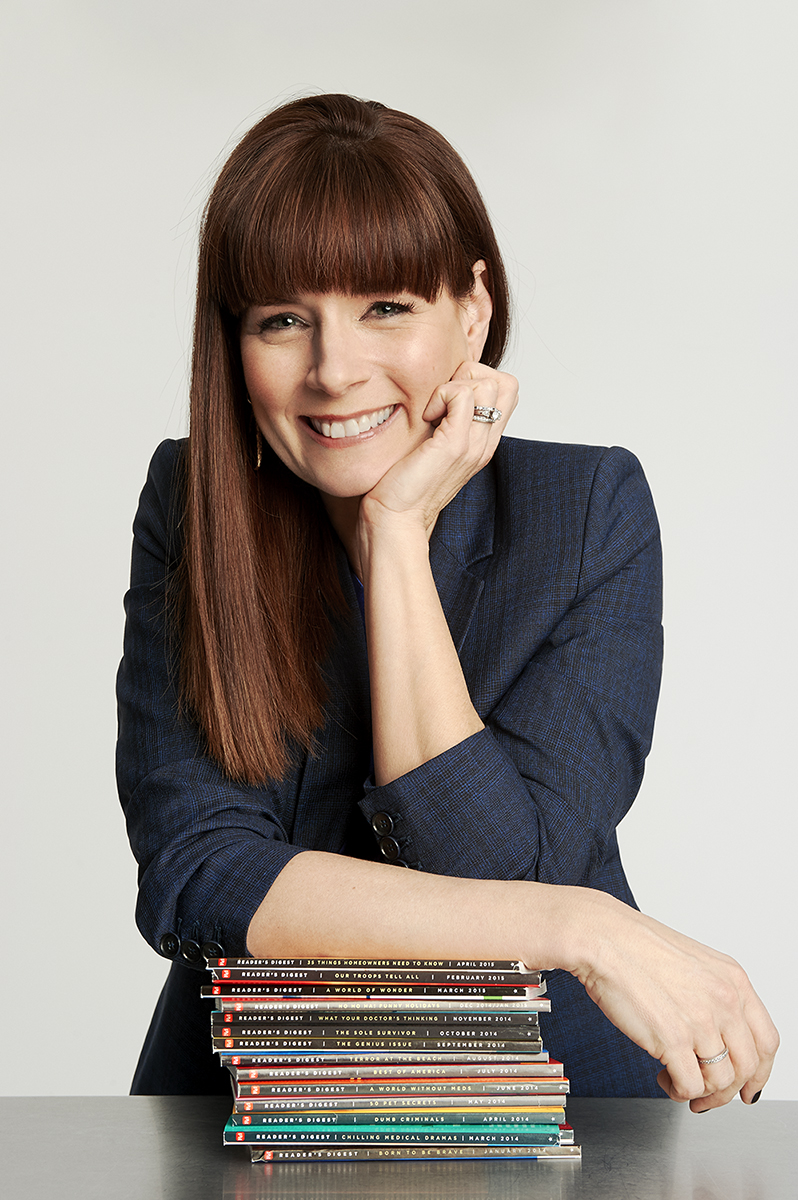
The ACT 6 Experience (click here to read all about segment 1) and (here to read about segment 2) will conclude with its final day on Friday April 22 with a keynote address from Liz Vaccariello, Editor in Chief, Reader’s Digest magazine, followed by Sherin Pierce, Publisher/VP, The Old Farmer’s Almanac.
PHOTOGRAPH BY STEVE VACCARIELLO;
It’s an informative morning of creative minds that wraps up its individual addresses with James Meyers, President & CEO, iMAGINATION., Scott Coffman, SVP and GM, i-5 Distribution, and Joe Berger, Joseph Berger Associates, before we get underway with the final keynote panel of the Experience, “Celebrate Print/Celebrate New Launches” with a host of magazine founders, editors and publishers who have launched new titles into the world.
We have Ron Adams, Publisher/Founder, Via Corsa, Fermin Albert, Founder, Sabor Magazine, The Netherlands, Lauren Clark, Editor, Take Magazine, Brandie Gilliam, Founder & Creative Director, Thoughtfully Magazine, Greg James, Publisher, Marijuana Venture Magazine, Michael Kusek, Publisher, Take Magazine, Carey Ostergard, Deputy Editor, Simple Grace, Monique Reidy, Publisher & President, Southern California Life Magazine, Andrés Rodríguez, President & Editor-In-Chief, SpainMedia, Spain, and Ryan Waterfield, Co-founder, Big Life Magazine.
It’s a celebration of our industry’s lifeblood: new magazines, as we wrap up the 6th Annual ACT Experience.
Be sure to join us April 20-22 as we Celebrate Magazines Celebrate Print at the ACT 6 Experience!
Space is limited to 100 attendees, so register today before all seats are taken.
At the end of the first segment (click here to read all about segment 1) of the ACT 6 Experience, the experience will resume after lunch with a keynote address on Millennials and Print by Professor Naomi S. Baron, author of Words on Screen followed by a panel discussion on Making Money in Print moderated by Brian F. O’Leary, Principal, Magellan Media Consulting Partners.
The agenda for Thursday afternoon’s segment of the ACT 6 Experience is as follows:
2:00 p.m. Keynote Address: Millennials and Print Naomi S. Baron, Executive Director, Center for Teaching, Research, and Learning, Professor of Linguistics (World Languages & Cultures, CAS),
American University, Washington, D.C.
3:00 p.m. Making Money in Print (A Panel Discussion)
This is a segment of the Experience that will focus on making money in print and what people are doing today to ensure that the revenue streams continue, whether it’s from circulation or advertising. Magazine Power is going to be a combination of the different ways and means by which people can still generate revenue from print, whether it is advertising in established magazines; advertising in new magazines, or bookazines and how those publications are making money.
Making Money in Print and the power of magazines will be moderated by Brian F. O’Leary, Principal, Magellan Media Consulting Partners, with the following panelists listed in alphabetical order: Newt Collinson, CEO, Collinson Media & Events, James Elliott, President, The James G. Elliott Co. Inc., Daniel Fuchs, Publisher and Chief Revenue Officer, HGTV magazine, Fred J. Parry, Publisher, Inside Columbia Magazine.
5:00 p.m. A Trip to the Mississippi Delta.
Board buses to the Mississippi Delta where we will stop at the Shack Up Inn for our traditional photo op and then to the Mississippi Blues Museum followed by dinner and blues music at Ground Zero in Clarksdale MS compliments of Scott Coopwood and Delta magazine.
9:30 p.m. Return to Oxford.
Stay tuned to find out what is going on during the ACT 6 Experience Segment 3.

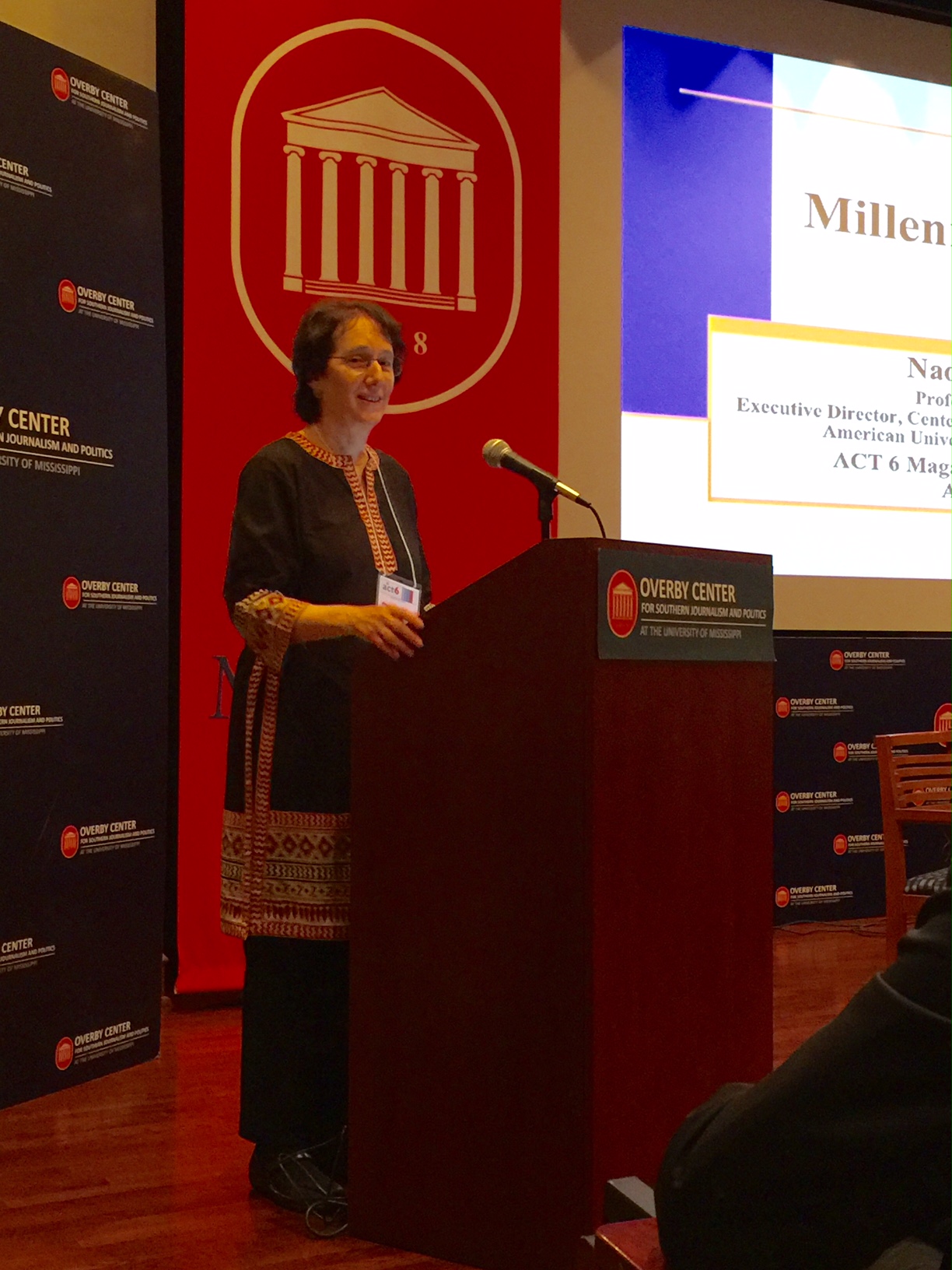 In a keynote address at the ACT 6 Experience, Professor Naomi S. Baron, Executive Director, Center for Teaching, Research, and Learning, and Professor of Linguistics (World Languages & Cultures, CAS), at the American University in Washington, D.C., professor Baron presented her latest research regarding millennials and print.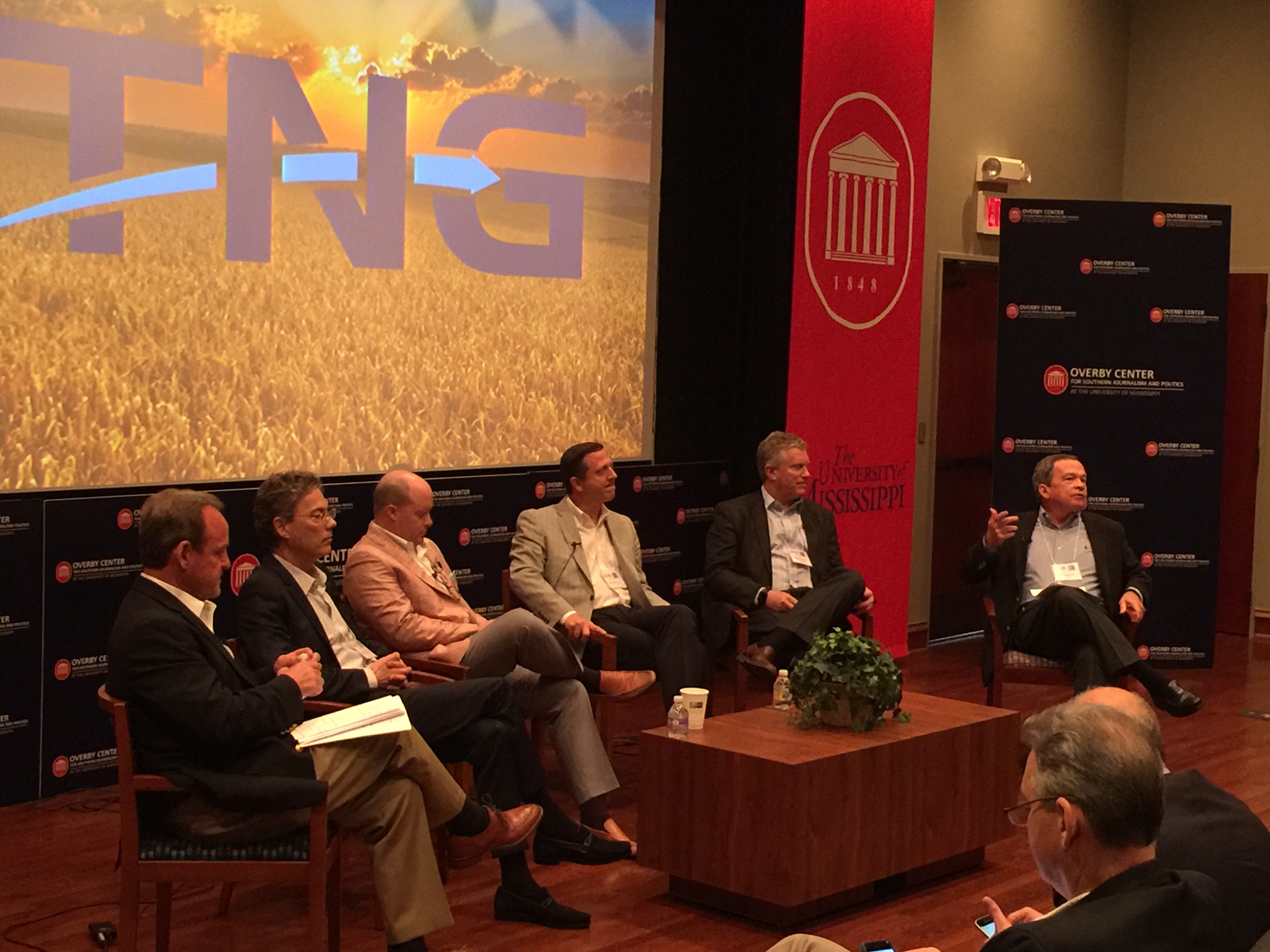





 Mr. Magazine