Editor’s Note: In this continuing Mr. Magazine™ MagNet exclusive research on the role of analytics and data in single copy sales for magazines, MagNet’s Luke Magerko continues to share with Mr. Magazine™ audience the role of cover tagging and what could happen in predictive analytics. Luke is not sharing the results yet, since he plans to share them with the Mr. Magazine™ audience in Mississippi during the ACT 5 Experience Oct. 7 to 10.
 This week we focus on how marketing and text analytics can provide key predictive insights for editors when designing a cover. Luke Magerko will walk us through high-level analytics concepts and how it will increase newsstand sales.
ANALYTICS CANNOT DESIGN A COVER!
I could not agree more, Samir, and this is the most important point: ANALYSIS IS DESIGNED TO HELP THE EXPERTS (THE EDITORS) MAKE INFORMED DECISIONS ON COVER TREATMENTS. THAT IS ALL!
THERE ARE DOZENS OF NEWSSTAND CONSULTANTS CLAIMING THEY KNOW WHAT WORKS ON A COVER. WHAT MAKES THIS DIFFERENT?
I spent the better part of 15 years looking at cover treatments and I can tell you there are few general trends that work on all on magazine covers. Each publishing group has a different vernacular for cover treatments (we will call each component of a cover an “attribute”). Let’s look in more detail at the four steps from our last interview:
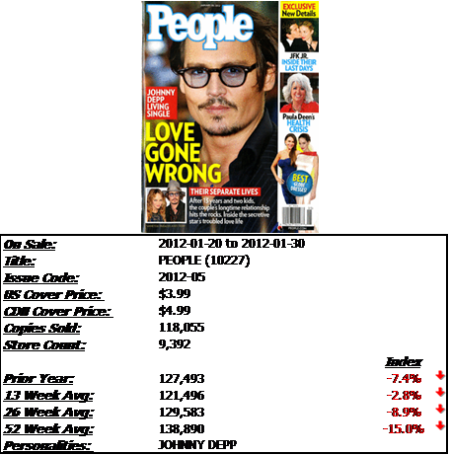
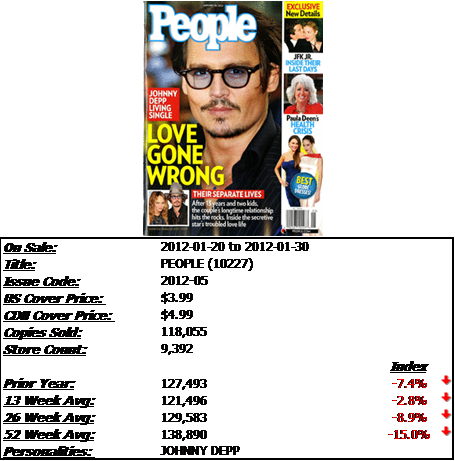
Let the editors play with covers – MagNet designed a Cover Analyzer to encourage an editor to peruse both their covers and competitive ones. This is an example from a couple years ago. This People Magazine cover is from early 2012. You can see sales based on scan data and various comparative sales results (prior year, 13 week average, etc.). This information is a very important ingredient in exploratory data analysis we discussed last time.
I IDENTIFY MANY ATTRIBUTES TO THE COVERS, BE IT THE MAIN BLURB, THE CELEBRITY CHOICE AND SO ON. HOW DO YOU KNOW WHAT TO LOOK AT?
As I said last time, editors have questions and analysts should answer those first. The editor has an intuitive sense what worked (or did not work) on the cover. If those ideas can be quantified, then that is the foundation of the cover analysis.
SO YOUR ANALYSIS IS LESS ABOUT WHAT YOU THINK OR GENERALIZED TRENDS AND MORE ABOUT CONFIRMING AN EDITOR’S INTUITION.
Absolutely! Editors know nuances on their covers and can identify what they were trying to accomplish. This insight deeply affects what should be analyzed. The analyst/newsstand consultant’s opinion of what succeeded and what missed the mark is wholly irrelevant to the cover analytics process.
FINALLY YOU MENTIONED THE CONCEPT OF COVER “TAGGING.” HOW DOES THAT WORK?
In my first class at Northwestern University’s Master Program in Predictive Analytics, we were taught that preparing the data and ensuring acceptance will comprise over 90% of the time needed to complete an analytics project.
This is where cover tagging comes in: the art director or editor must sit down and walk an analyst through each attribute of the cover to ensure the analyst is correctly identifying attributes. I highlighted the word acceptance because there would be nothing worse than running a cover analysis only to have the editors say, “we do not think of the cover like that!”
CAN YOU SHOW US AN EXAMPLE?
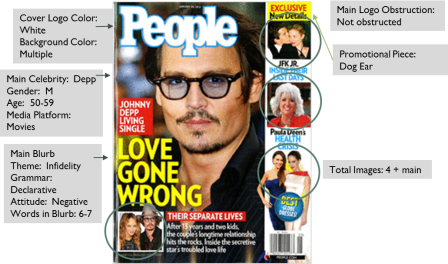
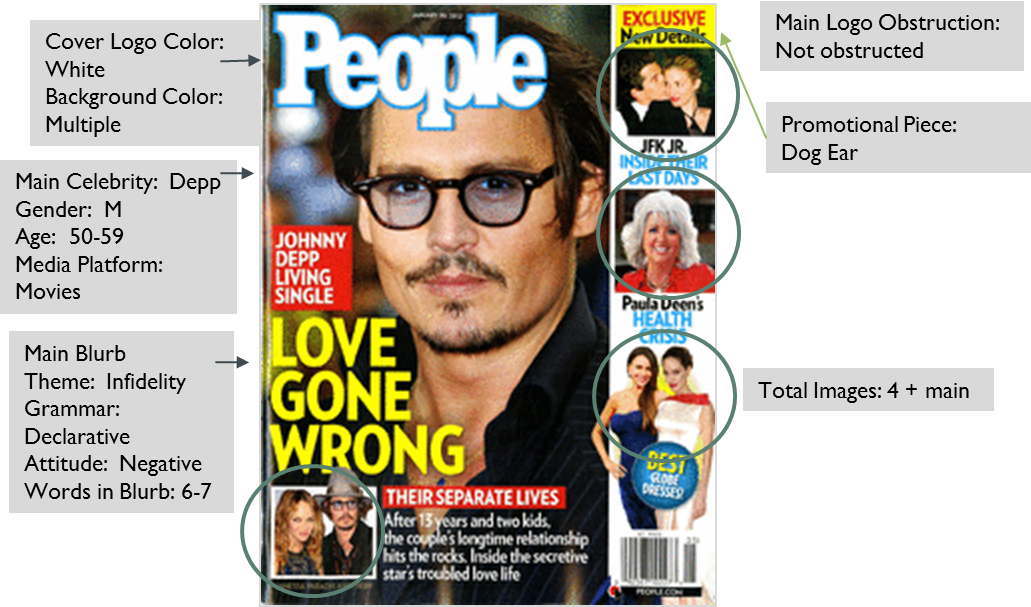
Let’s look at the same cover above:
We tagged over 500 celebrity covers on what we believe is important. DISCLAIMER: THIS WAS DONE TO TEST A STATISTICAL MODEL NOT TO PROVIDE CONCLUSIVE RESULTS. EDITORS MAKE DECISIONS ON WHAT WILL BE TAGGED.
Some of our attributes include:
• Cover logo color
• Background color
• Main celebrity name
• Main celebrity gender
• Main celebrity media platform
• Main Blurb Theme
• Main Blurb Grammar
• Main Blurb Attitude
• Main blurb word count
• Main logo obstruction
• Total Images on the cover
The effort is simple: look at a cover and determine each attribute.
THIS SEEMS LIKE A LOT OF EFFORT! WHAT KINDS OF RESULTS WILL YOU GET FROM THE ANALYSIS?
Once we have tagged the covers and run analytic tests, the editor/marketing department will learn:
• Which attributes are statistically “significant:” An editor might learn a brightly colored promotional starburst is not statistically significant and can be added or removed at their discretion.
• The percentage of sales affected by the “significant attributes: Once the significant attributes are identified, MagNet can inform the publisher what percentage of sales came from all those statistically significant attributes.
• How much each of the statistically significant attributes matter individually: An editor will know whether the gender of the celebrity is statistically significant and also how the gender will affect sales. In statistical terms, we call this “lift.”
• And yes, there is a predictive model: MagNet WILL NOT be able to provide an exact sales forecasting number per issue but can provide a solid trend line and an expected results based upon the predictions.
DO YOU HAVE ANY RESULTS YOU WOULD BE WILLING TO SHARE TODAY?
No, Josh Gary and I will walk your audience through an exclusive sneak peek of the cover analytics modeling tool at the ACT 5 Experience, October 8 at 11:30am at the Magazine Innovation Center in Oxford, MS.
I LOOK FORWARD TO SHOWING YOU HOW THIS ALL WORKS. IF YOU ARE AN EDITOR, I IMPLORE YOU TO JOIN US AT THE ACT 5 EXPERIENCE IN OXFORD, MISSISSIPPI OCTOBER 7 – OCTOBER 10. TO REGISTER CLICK HERE AND TO SEE THE AGENDA CLICK HERE.
THANK YOU.





 Mr. Magazine