By Bo Sacks
BoSacks Speaks Out: On Hearst, Mt. Olympus, Oxford and Great Publishing Conferences
 You would think that a guy who goes to a dozen publishing conferences a year and is also the writer/publisher of a daily newsletter on the subject of media, would find it easy to explain why the annual ACT magazine events at the University of Mississippi are so compelling. My problem is that it is hard to exactly define magic, and this special event is filled with magic and marvel. It is hosted by my good friend and industry debating partner Professor Samir Husni, who continuously attracts a world-wide concoction of diverse speakers. But it is not exactly the diversity of the presenters that makes it so special. If that was all it took, it would be easy to replicate, but nobody has an event quite like this one.
Perhaps the most unique thing about the conference is the intimacy of the event along with the interchange with the students. As conferences go it is probably the smallest by population, yet the biggest in comradery and geniality. The auditorium is filled with 40 professional speakers and about the same amount of journalism/media students. We are an intentionally mixed group sitting randomly in the journalism school’s cozy auditorium, senior publishing professionals hobnobbing side-by-side with the next and soon to be leaders of the noble enterprise we call media.
As a professional speaker I think that what I like and look forward to the most is the odd blending of presenting simultaneously to professionals and students. It is a special process to be able to mentor the young and eager and the seasoned professional in the same talk. It has to be detailed enough to keep the interest of the professional and exciting enough to entrance the apprentice.
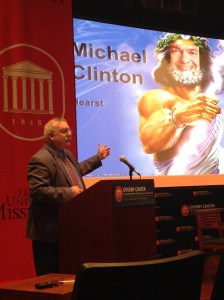
The list of luminaries was impressive. It started with a keynote by Michael Clinton, President, Marketing and Publishing Director of Hearst Magazines. Michael gave a truly passionate account of what Hearst is up to in this age of publishing transformation. He started with the declaration, “Our children and grandchildren will still read print.” He advised us all interestingly enough with the same advice delivered by Brian Hoffman of Hoffman Media two days later, that you should design your covers and content based on what you know your readers want and urged that we get into the “pulse of the zeitgeist” to know what Americans are looking for.
 Michael questioned, “If print is dying, why was the 2014 launch of Hearst’s Dr. Oz, the Good Life such a fantastic success? Its first issue sold out on newsstand and it achieved 300,000 subs in 4 months.” He pointed out that magazine readership has been relatively constant at 187 million, even while there is massive disruption in other mediums such as TV audiences. (I actually disagree with the implied serenity of that conclusion, but my reasoning will have to be discussed in another Bo-essay, at another time.)
Michael went on to familiarize us with Hearst “Unbound” and how magazine brands should now exist on a global scale and on many platforms with social media, you tube videos, websites, mobile applications, tablet editions and narrowed targeted editions; for example, Cosmo for Latinas.
Michael also went into some details about how the size of the audience matters more than the measurement of ad pages, (another conclusion that I reserve the right to explore and discuss at a later date.) He previewed the now available “Magazine Media 360,” which is the MPA’s new measurement tool for capturing how readers are connected to magazines across multiple platforms, and not only the print product. This is a bold attempt to combine total magazine reach, a combination of digital audiences and print circulations.
Michael discussed the many paths that Hearst is traveling down other than their core print products. The list of adventures and undertakings at Hearst is as huge as it is possible to imagine and an outside inspiration for publishers everywhere.
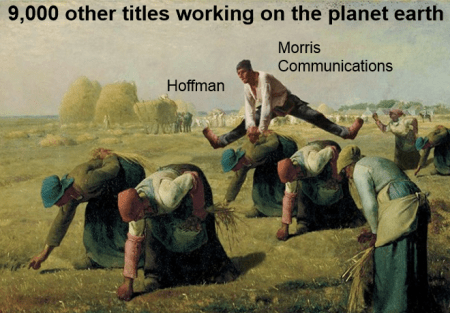
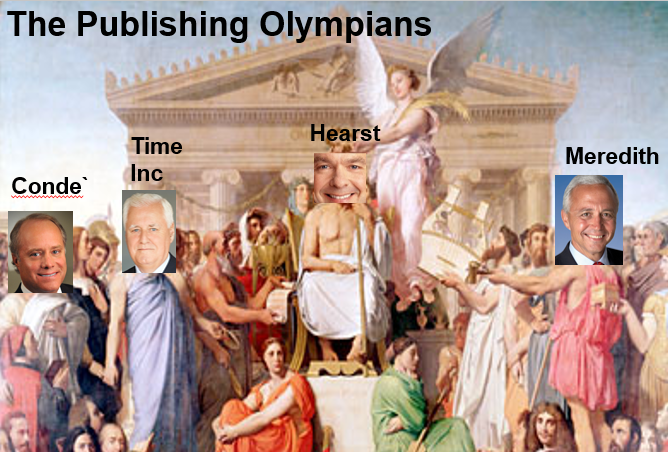
A few days later on in the event, when it was my turn to stand before the audience, I offered the following observations: “We heard from Michael Clinton on Tuesday night. His talk was enthusiastic, and uplifting. Indeed Hearst is doing many wonderful things. But he is from a group of Publishing Olympians. If you have as much money as a Greek god, it makes the transformation of our industry look pretty damn easy. They (Hearst) and the other Olympians, such as Time Inc, Meredith, Conde` Nast, Bonnier and a few others can afford to fail many times without effecting the long-term bottom line.

As wonderful as it is to hear of what is possible in the extreme, there are 9,000 other titles working down here on the planet earth, who oddly enough don’t have Olympian resources and yet some are still doing quite well anyway.
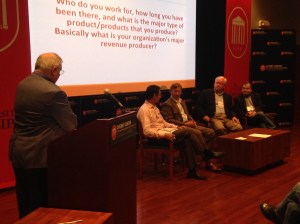
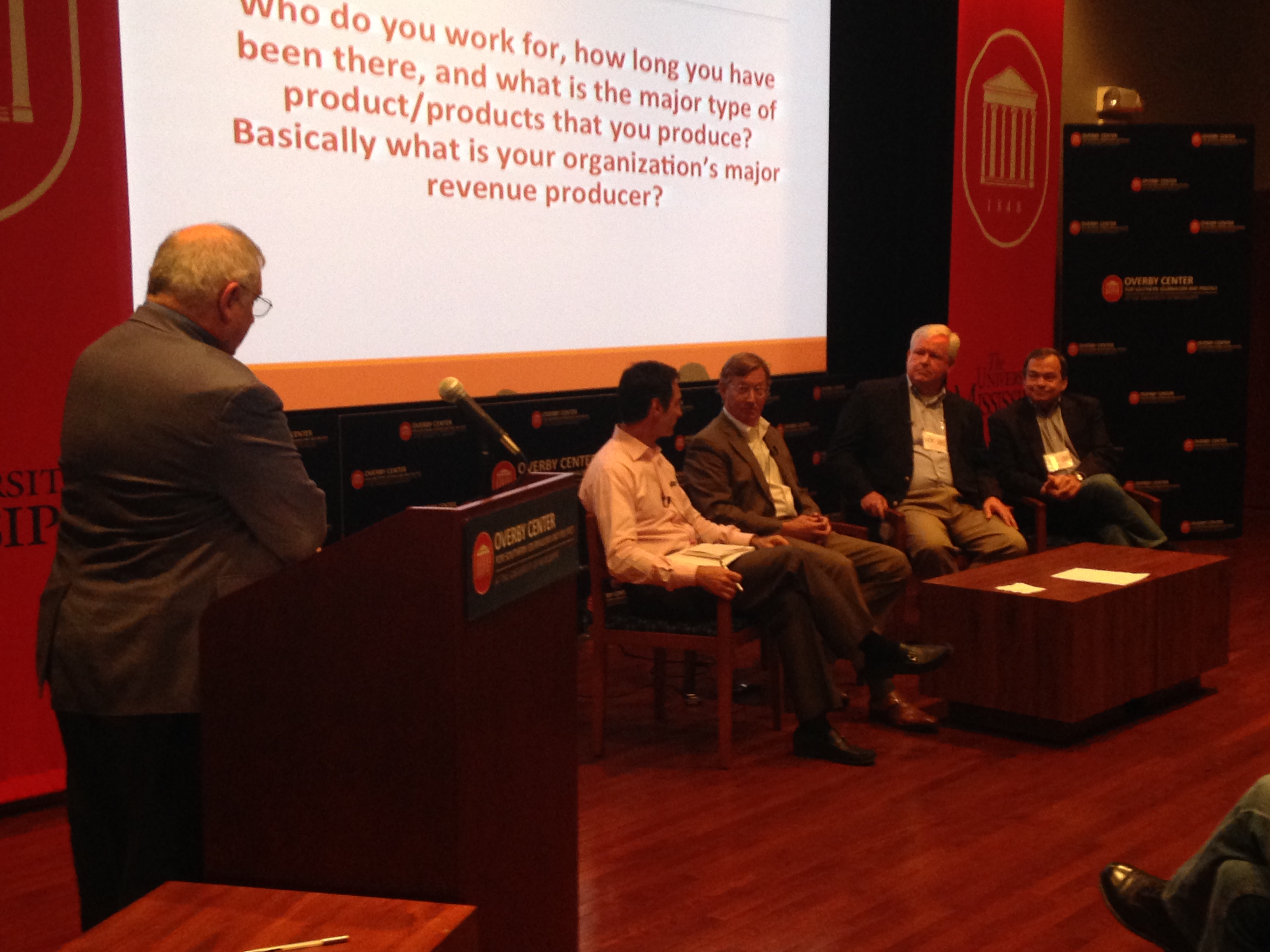
After that observation, I focused my discussion in an attempt to make a case for the students to understand that in the midst of the downward trends of print in today’s market place there still continues to be many success stories. In the next session, when I moderated a panel of printers, including Publisher’s Press, Democrat Printing, and Shweiki Media, they confirmed the same thought and took it a step further. The printers brought to everyone’s attention the many thousands of unaudited titles that exist in their shops and the vitality of free circulation magazines.
A thought worth remembering is that when it comes to counting magazines that are produced, it is the unaudited titles that are in the majority and the audited magazines in the minority. And that ratio is by a very large margin.
There is much more that is worth discussing, but I am writing this on my plane ride home and will have to end my recap here. In the next few days I will attempt to go over the many other highlights of this terrific conference.
Post Script: One part of the conference is the assignment of student “shadows” whose job it is to meet, greet and work with all the professionals for the duration of the event. A special note of thanks to my articulate, hard-working and impressive shadow, Jared L. Boyd, with whom it was a pleasure to work and mentor.
Here are just a few of the people and the notes that I’ll be writing about:
William Morris III (Chairman, Morris Communications):
* We’ve moved from information scarcity to information overload
Vanessa Bush (Editor in Chief, Essence Magazine):
* Print is giving birth to countless abundant opportunities to engage with our audiences
John Harrington (Publisher, The New Single Copy)
Malcolm Netburn (Chairman, CDS Global)
John Phelan (Executive Director Consumer Marketing, Rodale):
* Predictive data is the connective tissue between an issue and its readership
* The distance between content and audience must narrow
* We don’t know how to measure success right now — digital tools and platforms are changing everything
Gil Brechtel (President, MagNet)
Joshua Gary (MagNet):
* There’s turmoil in the newsstand but there can be a predictability to be made from it
* 15% of magazines sold are now bookazines, which are starting to flood the market
Espen Tollefsen (CEO, Interpress, Norway):
* Magazine markets are declining
* International titles are declining as well as domestic titles
* #1 reason for large drop is not mobile — it’s a decline in “in-store” focus and distribution issues
Keith Bellows (EVP, Editor-in-Chief, National Geographic Traveler and Travel Media):
* We’re still in the middle of the bridge between print and digital — still driving “dazed and confused”
* Natl Geo is not a media company — we have only 3 mags — rather it’s all about Natl Geo’s mission to teach people about the planet
* The era of relying on subs and advertising to keep the company profitable is over
* The stories are what drives media — don’t lose sight of that
Roy Reiman (founder, Reiman Publications):
* The Act conference brings together people who are “doers instead of dreamers” who are not afraid to share both their mistakes and their successes




 Mr. Magazine