Archive for the ‘A Mr. Magazine™ Musing’ Category

h1

Magazines As Entertainers. The Social Role of the American Consumer Magazines. A Blast from Mr. Magazine’s™ Past… Dissertation Entries Part 4

March 13, 2015

1983

The social role of magazines: we continue with entertainment.
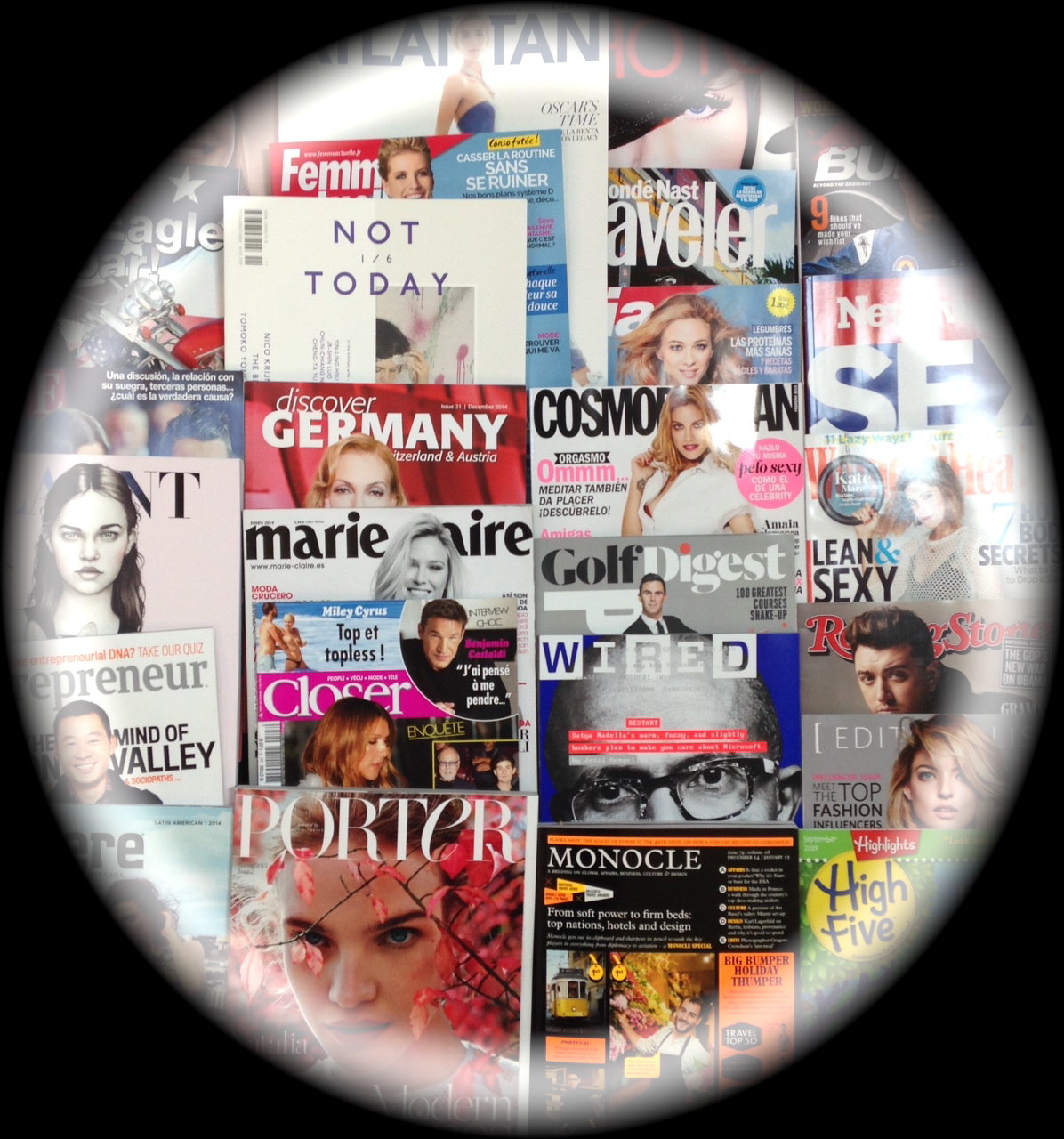
The social role of magazines: we continue with entertainment.

3. Magazines as Entertainers

Although entertainment was not considered a function of mass communication until late in the fifties when Charles Wright added it to Harold Dwight Lasswell’s three functions, magazine history books have described the role of magazines as entertainers since their earliest years. Wright defined the entertainment role as “communicative acts primarily intended for amusement irrespective of any instrumental effects they might have.”

Benjamin Compaine noted that magazines throughout their history “have provided a wide range of diversion – from sexual escapism to informative pieces on the space programs.” In fact, magazine historians say that for almost two centuries, the eighteenth and nineteenth, the American magazine was the most important entertainment medium available. Unlike other media, magazines did not arise out of necessity. “There was no immediate need for magazine reading,” says John Tebbel. Magazines were a leisure time occupation of the upper classes. This “leisure time occupation” soon spread to reach other classes of the American population, and the role of magazines as entertainers expanded to provide both entertainment and recreation to countless isolated American families in a period where those pleasures were few and far between.

The above information was written in 1983 and is taken from a portion of my dissertation when I was at the University of Missouri-Columbia where I obtained my doctorate in journalism. And while the majority of the material still holds true, things have changed drastically in some areas.

2015

The entertainment factor of magazines figures greatly into the social equation of their role in society. In fact, in 1983, when I wrote my dissertation, some of the biggest magazines on the newsstands were in the entertainment category. It was the year that McDonald’s introduced the Chicken McNugget and the second Cold War was at its height and it was a great year for entertainment reads. Magazines such as:
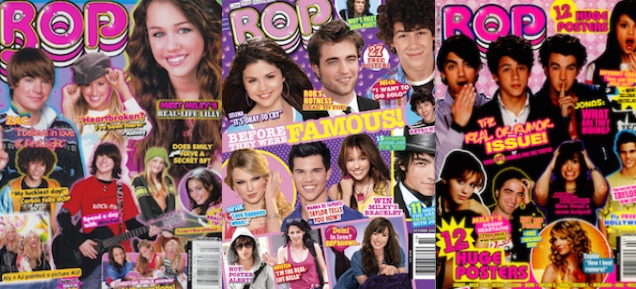
bop Bop – a monthly American entertainment magazine for kids 10 years of age and teens.
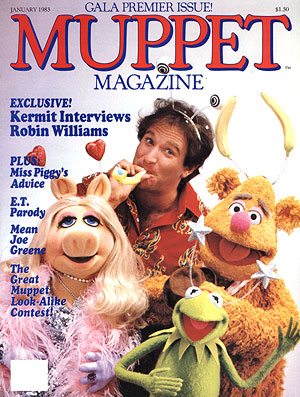
Mupmag01 Muppet Magazine – a full-color quarterly publication that was launched in January 1983, shortly after the last Muppet Fan Club Newsletter had been distributed.
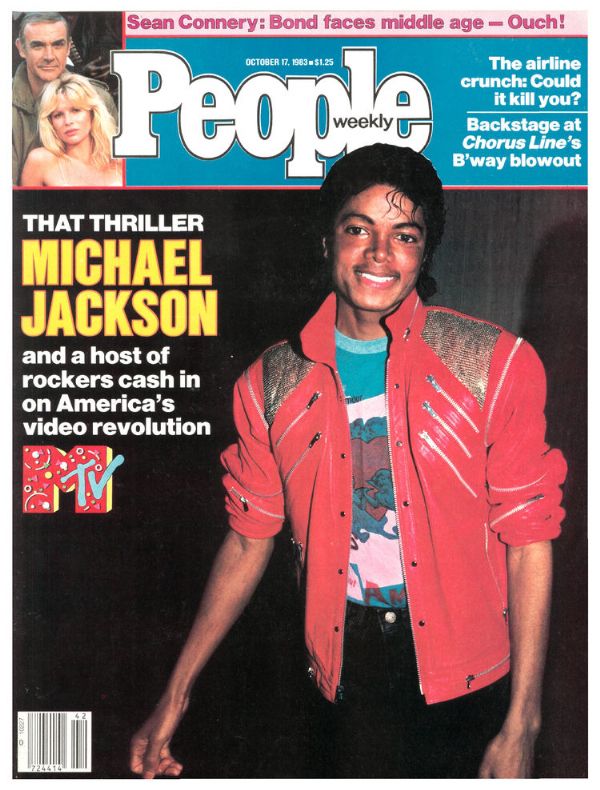
people mag People – a weekly American magazine of celebrity and human-interest stories, launched in 1974 by Time Inc. With a readership of 46.6 million adults, People has the largest audience of any American magazine.
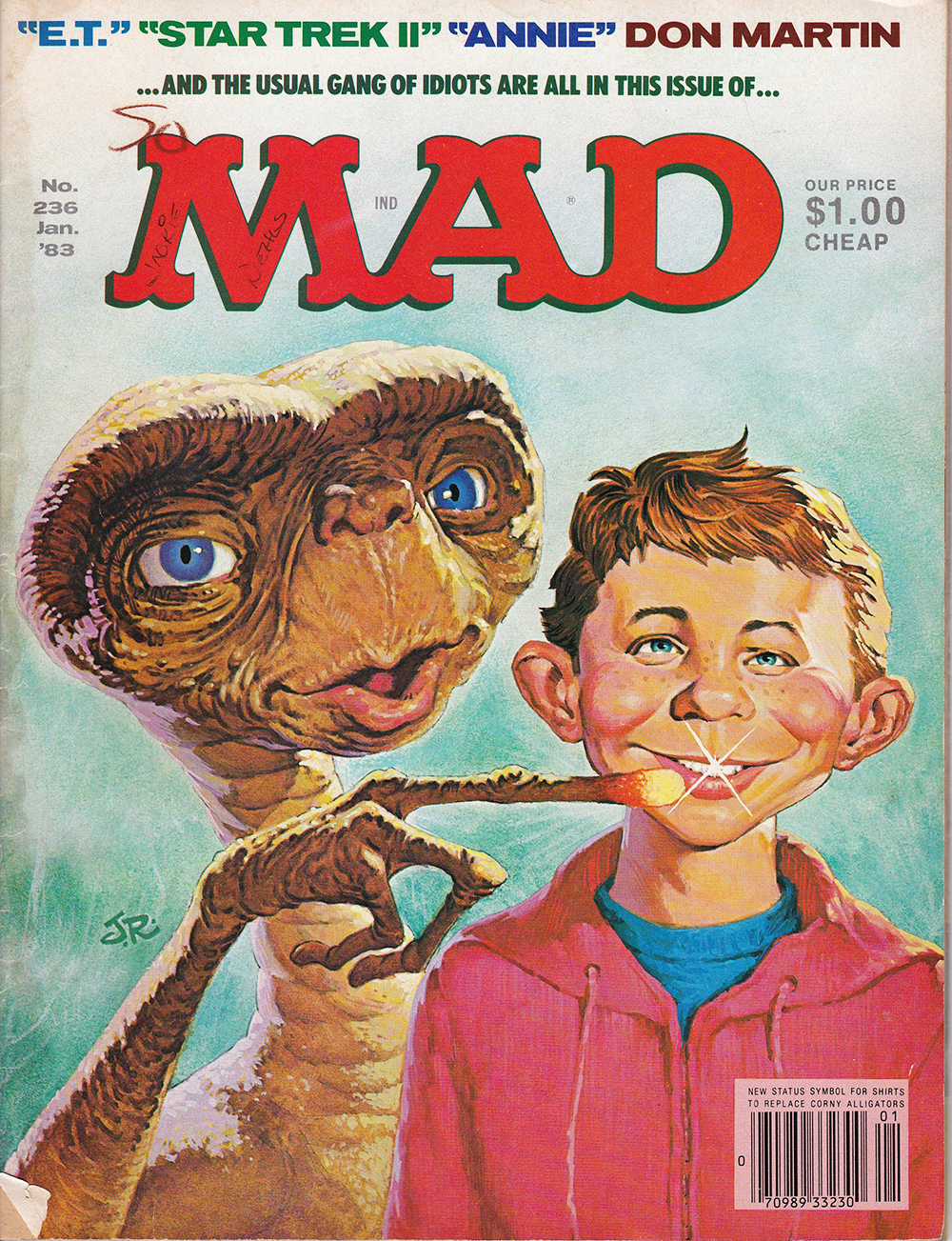
Mad_Magazine_E.T._1983 MAD – an American humor magazine founded in 1952 by Editor Harvey Kurtzman and publisher William Gaines, launched as a comic book before it became a magazine.
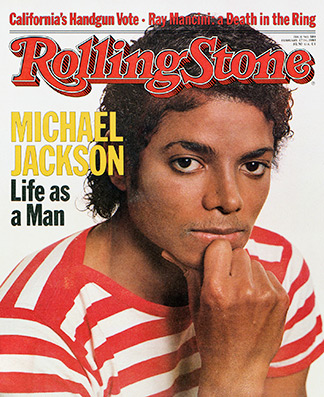
rolling stone Rolling Stone – a magazine that focuses on popular culture. It was founded in San Francisco in 1967 by Jann Wenner, who is still the magazine’s editor-in-chief, and music critic Ralph J. Gleason.
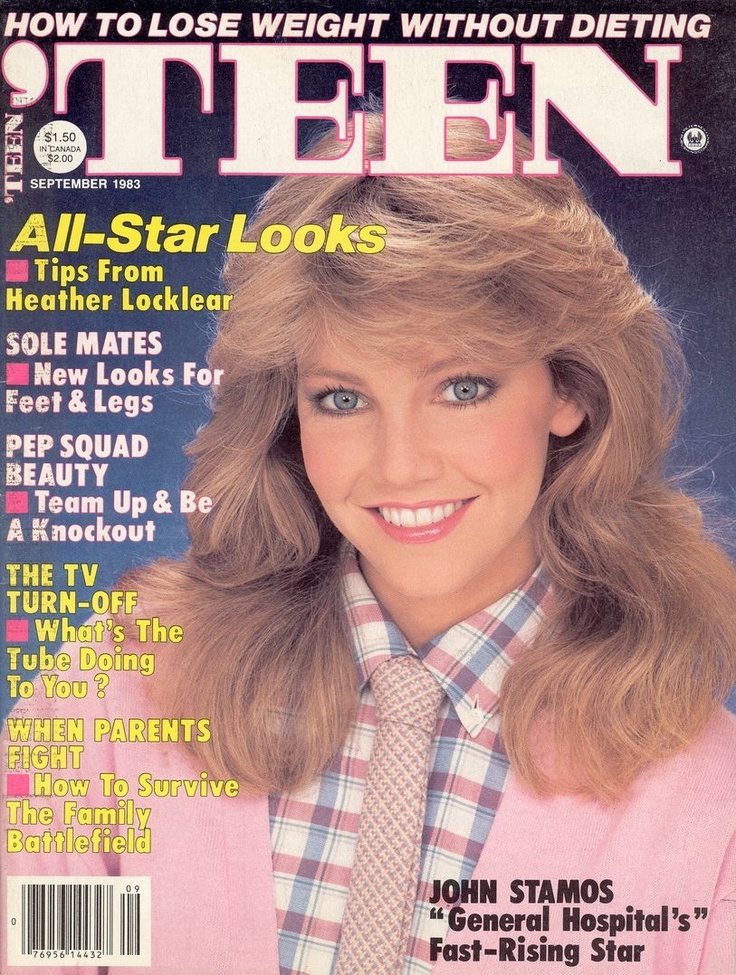
teen magazine Teen Magazine – an American teen lifestyle magazine for preteen and early teenage girls, ages 10 to 15.
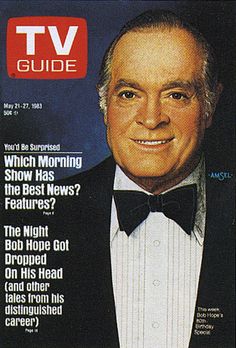
TV Guide 1983 TV Guide – the weekly American magazine that launched in 1953 and that provides television program listings information as well as television-related news, celebrity interviews and gossip, film reviews, crossword puzzles and in some issues, horoscopes.

Many of these leaders in the entertainment category are still going strong today and some are not, but the connection between magazines, media personalities and the interest and entertainment of the buying public is still just as magnetic as it was in the 1980s.

People love famous people; they love to read about them, learn all the juicy gossip that may or may not be going on in their lives, and they love to discuss them with friends and family.

But media personalities aren’t the only theme when it comes to entertainment magazines; there are crafts, games, hobbies, sports, music, collecting and in today’s niche magazine world; a host of other subject matter that is so spectrally broad that it boggles the mind.

inkonpaper_blog_ad As Tebbel wrote, “There was no immediate need for magazine reading,” I totally concur. And will add, there never will be a “need” for magazine reading. We’re not going to die out as a race if we don’t find out the latest scandal going on in the Kardashian camp, or whether or not Madonna will ever wear Armani again after her embarrassing fall at the Brit Awards, but I counter with this; while those topics and many others may not add years to our life spans in the scheme of things, they do make the dash between our birth and death dates much more interesting and enjoyable simply because they feed a “need” all human beings have: the connection to other human beings.

And that is a major role that entertainment magazines fill: linking one human spirit to another.

Until next week when Mr. Magazine™ sounds off on magazines as initiators…
h1

Magazines As Reflectors: The Social Role of the American Consumer Magazines…The Size, Role & Future of Consumer Magazines: A Blast from Mr. Magazine’s™ Past… Dissertation Entries Part 3

March 6, 2015

The social role of magazines: we continue with reflection.

The social role of magazines: we continue with reflection.

1983

2. Magazines as Reflectors

There is no better way to know what the new trends are in American society than to visit the local newsstands and take a look at the newest magazines that have been published. A visitor to the newsstands in early 1983 will see a huge display of magazines dealing with computers and video games. In 1982, the same was true with magazines dealing with health and fitness. Science had its share of the market earlier with six new magazines published, all with the promise to deliver science to the public in a language it can understand.

The magazine, throughout its history, has been a reflector of American life, or, as Ronald Wolseley put it, “what the owners think is American life.” Wolseley noted that “the solid values of the lives of millions of American families are reported by the national magazine, unsensationally but vividly and accurately, in articles and fiction, in pictures and illustrations.”

Drawing on Marshall McLuhan’s hot and cool theory, Wolseley developed a “much less startling theory,” yet one that he thought might be useful. “The magazines of any nation exist in circles corresponding to the circles created by the interests of the population,” Wolseley’s theory stated. That is to say that magazines play the role of a mirror of society reflecting between their covers week after week what is going on in the real life.

John Tebbel seems to support Wolseley’s theory when he says that magazines “have always faithfully reflected the society in which they are produced.” Tebbel believed that magazines have been, are, and will be reflectors of life in America. He considers this one of their most important functions. “Anyone who wants to understand what Americans thought and believed in the twenties, must read the back issues of the Saturday Evening Post of that decade.”

The above information was written in 1983 and is taken from a portion of my dissertation when I was at the University of Missouri-Columbia where I obtained my doctorate in journalism. And while the majority of the material still holds true, things have changed drastically in some areas.

2015

When you look in a mirror; what do you see? Your own reflection, of course, a mirror image of your features, expression and persona staring back at you.

Now, hold the cover of a magazine up in front of that same mirror; what do you see? Society’s reflection, without a doubt, a mirror image of the interests, issues and trends that hold importance for most American lives. And it doesn’t matter the content of that cover; whether it’s Gwyneth Paltrow on the cover of Harper’s Bazaar, or Mark Zuckerberg, Time’s Person of the Year for 2010; the symmetry and rhythm of whatever topics featured with any given issue, resonate with human beings everywhere.

This is what a print magazine does best: it reflects the souls and mindsets of the human consumer and engages their concerns and delights in a way no other medium ever has or ever will. It was true in 1983 and it still rings resoundingly accurate for the 21st century.

Mimicking cultures and menageries of people is a natural action for magazines; after all they are only echoing what’s going on around them; so, it’s not the fact that they’re capable of doing it; it’s the fact that they do it with such gusto and impact that no other medium can compete. That is the doorstopper; the wedge of ink on paper steel that digital, mobile and even television, can’t pry from beneath print’s portal, the place where the audience finds that ultimate connection and jolt.

So, was John Tebbel right? Have magazines “always faithfully reflected the society in which they are produced?”

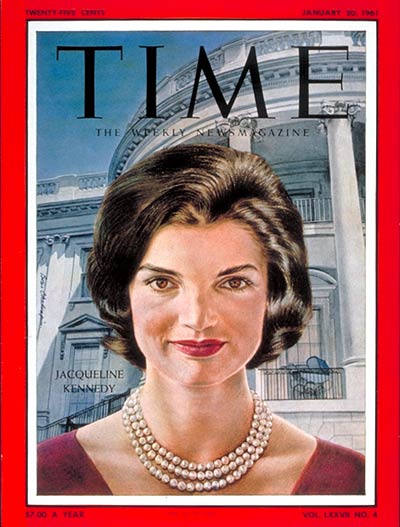
Jackie K• In January 1961, the cover of Time magazine featured Jacqueline Kennedy, apropos of the time since her husband was being inaugurated as President of the United States that same month.
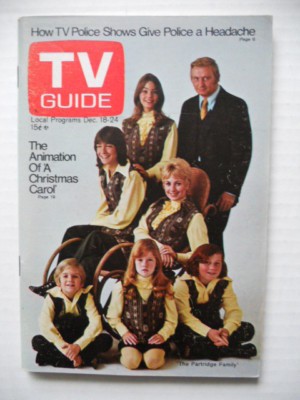
Partridge 1971• December 18-24, 1971; TV Guide had the Partridge Family on its cover, as the highly popular show was in its second season by then.

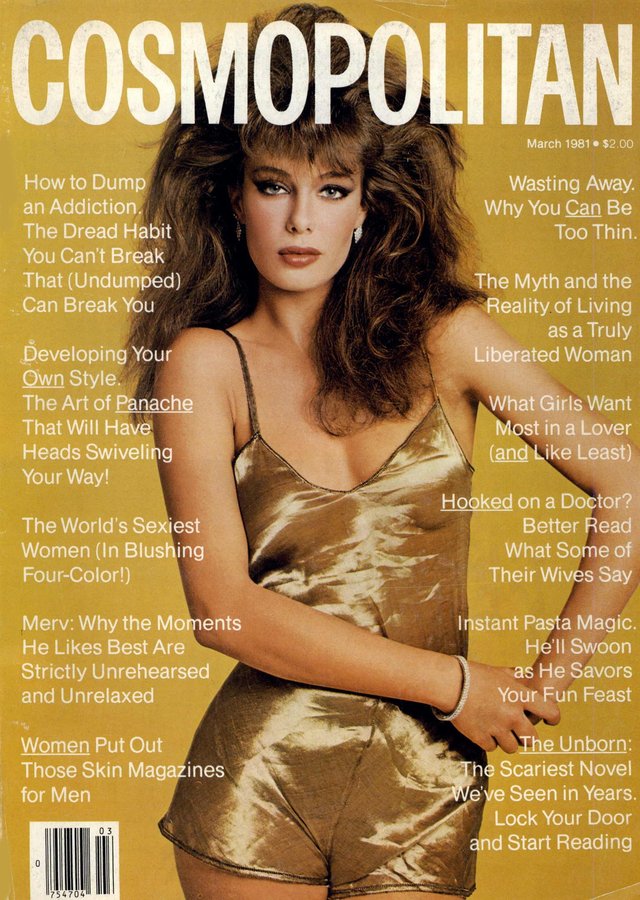
kelly lebroeck• Kelly LeBrock on the March 1981 cover of Cosmopolitan, a face of the 80s that at the time was considered one of the sexiest women in Hollywood.

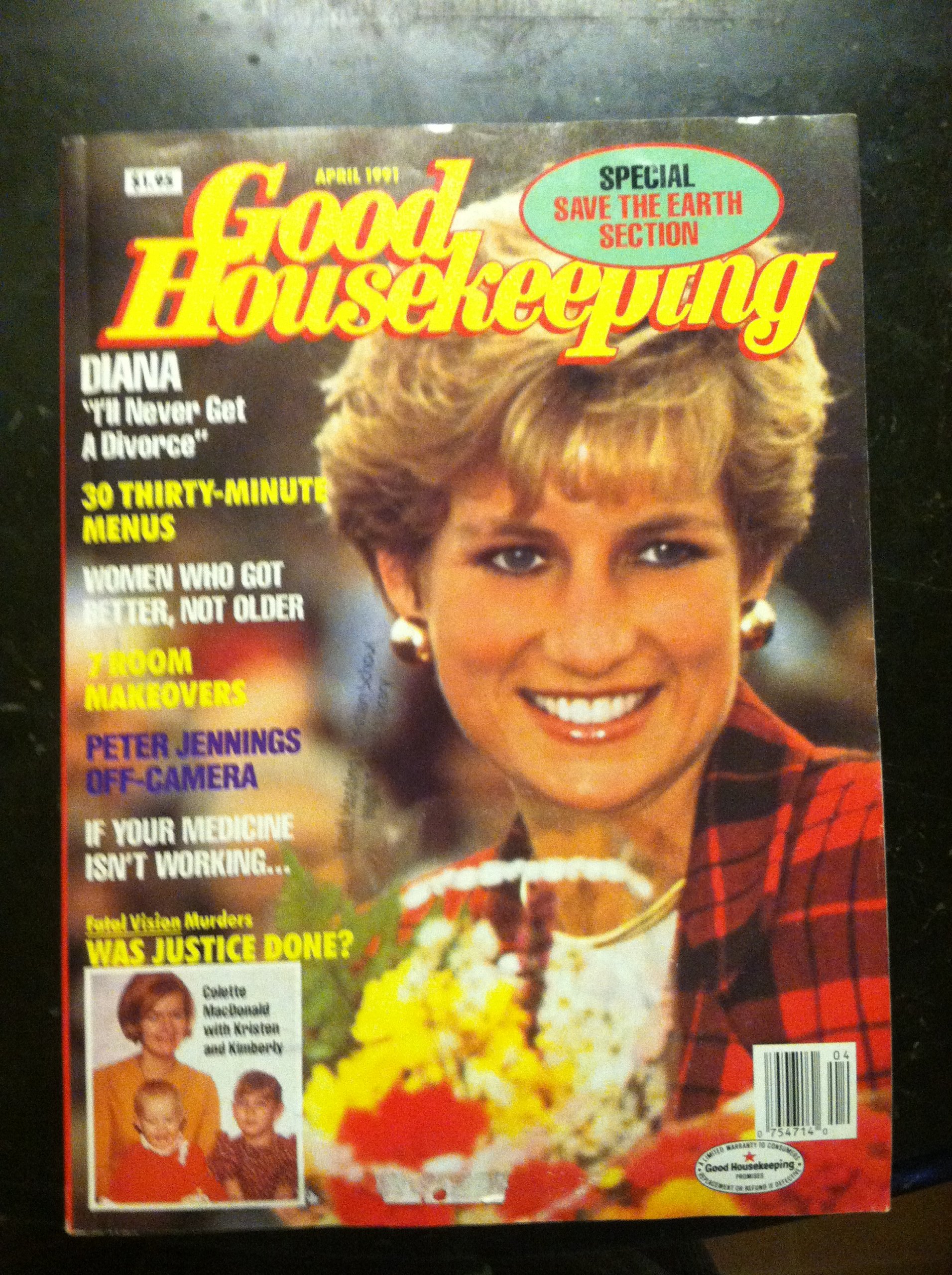
diana 1991• April 1991, Princess Diana graces the cover of Good Housekeeping, vowing to never get a divorce, her response to media when her marriage had begun to fall apart in the early 90s.

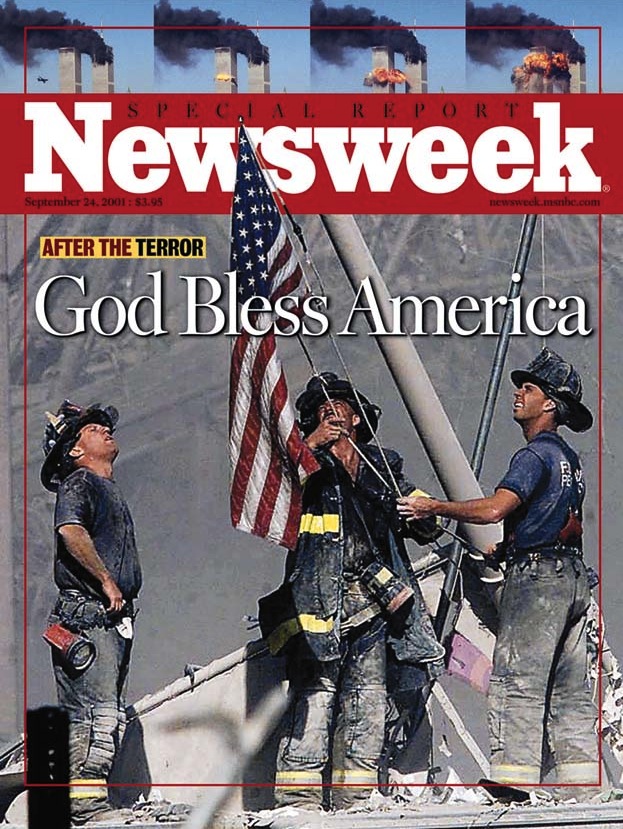
Domnoupc-P1.tiff• Newsweek’s September 24, 2001 special report cover after the horrible 9/11 tragedy: “After the Terror – God Bless America.”

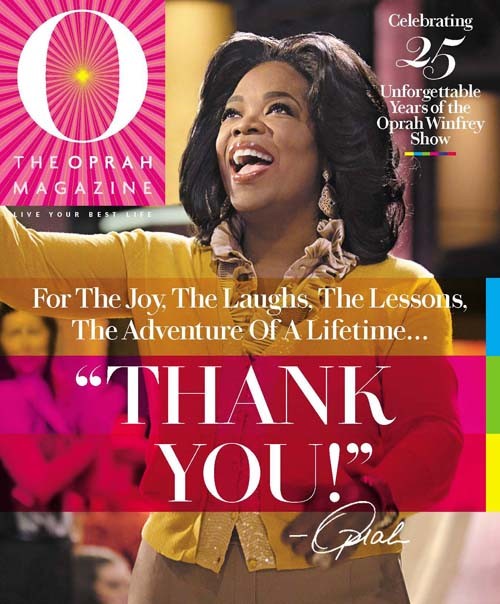
oprah-o-magazine-june-2011-2• The June 2011 issue of O – The Oprah Magazine, dedicated to the 25th and last season of The Oprah Winfrey Show.

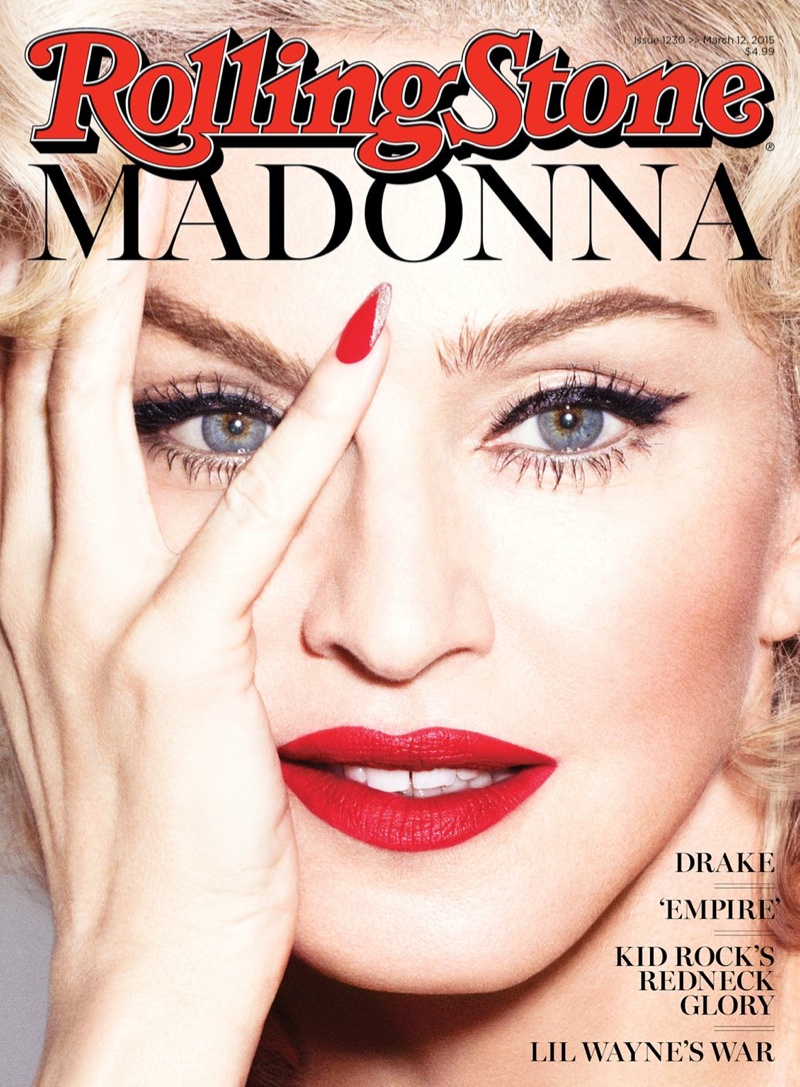
madonna-rolling-stone-march-2015-cover• March 2015 cover of Rolling Stone, Madonna shows she still has what it takes to grace the cover of one of the most popular music magazines around.

inkonpaper_blog_ad And these are only a few from the gargantuan list of magazine covers that have distinguished the nation’s newsstands over the decades. Looking at just the above list, I would say John Tebbel hit the print nail on the head when he stated: “magazines have always faithfully reflected the society in which they are produced.”

Wouldn’t you agree?

Until next week, when Mr. Magazine™ talks about the entertainment role magazines have played and still do in our world yesterday and today… and remember, if it is not ink on paper, it is not a magazine.™

h1

The Social Role of the American Consumer Magazines…The Size, Role & Future of Consumer Magazines: A Blast from Mr. Magazine’s™ Past… Dissertation Entries Part 2.

February 27, 2015

1983

The social role of magazines: we start with education...

The social role of magazines: we start with education…

1. Magazines as Educators

Consider any subject that comes to mind and the chances are good that there is a magazine to cover it. Indeed, magazines could be considered up-to-date encyclopedias. The depth of information that a reader gains from magazines cannot be found in any other mass medium. With the increase of variety in magazines year after year, much more so than any other medium, magazine readers are offered a wealth of reading matter that assists them in their pursuit of knowledge and education. Roland E. Wolseley in his book The Changing Magazine referred to this huge content of the magazine as “a jungle of reading matter.”

The educational role of the American magazine was recognized even in its earliest years. In 1788, George Washington wrote a letter to Philadelphia publisher Matthew Carey in which he expressed the hope that American magazines would succeed because he considered them “easy vehicles of knowledge” that are “more happily calculated than any other, to preserve the liberty, stimulate the industry and meliorate the moral of an enlightened and free people.” John Tebbel, commenting on Washington’s letter, noted that magazines were incomparably better purveyors of knowledge than the newspapers of Washington’s time.

The above information was written in 1983 and taken from a portion of my dissertation when I was at the University of Missouri-Columbia where I obtained my doctorate in journalism. And while the majority of the material still holds true, things have changed drastically in some areas.


2015

Magazines have always worn many hats when it comes to the roles they play in our society. From the days of Washington to the instantaneous information highway of today’s digital age; the printed magazine has blazed the trail of tomorrow and it always will.

One important representation they delivered then and still do now is the execution of educating society. While the internet offers us information with just a “click,” there is one blaringly relevant fact that the ease of the mouse can’t argue with: before one gleans that knowledge that awaits them in cyberspace, one must know what the heck they’re looking for. Think about that for a moment.

Mr. Magazine™ in his official role as a professor and educator.

Mr. Magazine™ in his official role as a professor and educator.

Before Google or Bing or any other search engine can “educate” you; your fingers have to compose the knowledge that you seek in the form of a question or a statement first. And that’s all well and good; provided you already know what you’re trying to learn. If that sounds confusing; let me simplify:

The definition of learning is knowledge acquired through experience, study, or being taught. And while a subject that you’re familiar with or partially know about is an apropos goose to drive to the internet’s market; what about things that you’ve never heard of before or even thought about? How do you Google those? The answer is simple: you don’t.

But with a magazine you can be intrigued by a cover or a tagline; pick it up from the newsstand and flip through it; see a story on how to decorate your home on $2.50 and before you know it; you’re learning about something that you had no idea you were ever interested in.

But that’s just one way magazines educate us and broaden our mind spans. They also help us to digest unbelievable issues that face our world today. Things like bombings and unexpected deaths and the controversies that sometimes plague our political scene.

And with the ever-growing population of niche magazines out there; there is no limit to our ability to pinpoint a topic and delve into it. From raising your own hybrid chickens to cultivating a crop of yucca plants; there is a magazine for it. And new ones are being born each and every day.

In 1983 I wrote: Consider any subject that comes to mind and the chances are good that there is a magazine to cover it. Indeed, magazines could be considered up-to-date encyclopedias. The depth of information that a reader gains from magazines cannot be found in any other mass medium.

In 2015 I write: Consider any subject that comes to mind and the chances are good that there is a magazine to cover it. Indeed, magazines could be considered up-to-date search engines that know what you’re interested in before you do. The depth of information that a reader gains from magazines cannot be found in any other mass medium.

Magazines are a fount of knowledge by their very existence and they remain today exactly as they were in 1788 when Washington wrote his letter to Matthew Carey: “easy vehicles of knowledge” that are “more happily calculated than any other, to preserve the liberty, stimulate the industry and meliorate the moral of an enlightened and free people.”

In other words, Professor Magazine is in the house…

Until next week, when Mr. Magazine™ weighs in on magazines as reflectors of our society…

h1

No “Fifty Shades Of Grey” For Magazines… A Mr. Magazine™ Musing

February 13, 2015

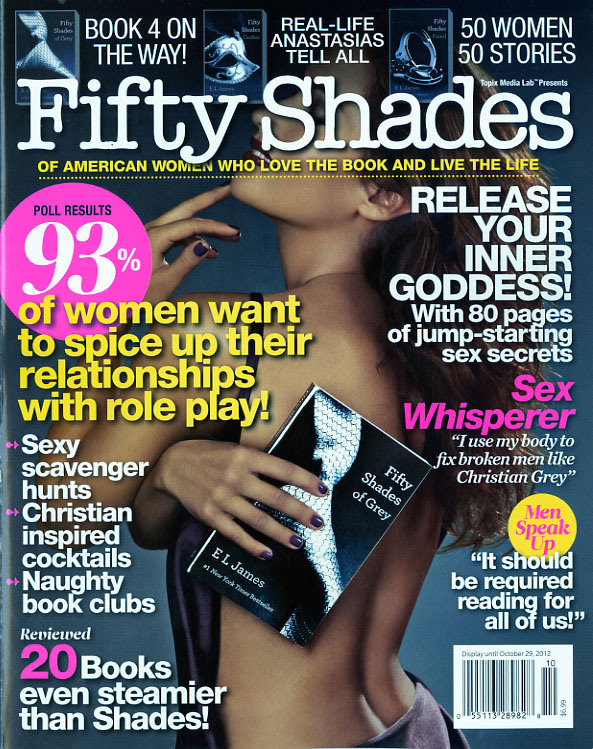
50 Shades1-1When it comes to magazines there is no limit to the number of shades one can find. But when it comes to one specific Shade of Grey one can hardly find a magazine or two reflecting on the movie that opens tomorrow across the United States.

The premier installment of the bestselling novel by the same name is scheduled to be released Valentine’s weekend. The movie hasn’t even been shown, yet there are plans in the works for the next two films in the book’s trilogy: Fifty Shades Darker and Fifty Shades Freed. Lucky Dakota Johnson (who plays the female main character, Anastasia Steele) and Jamie Dornan (lead male character, Christian Grey); their bank accounts just increased by several zeroes, no doubt.

While the controversy of the book’s plot really comes to light when it’s adapted into a movie; ticket sales have been through the roof for the movie’s debut. And while the hoopla of a good controversy only feeds the desires of most of us to actually go and see what the big deal is all about, the magazine media industry has been a bit more hesitant to dive ink first into this pool of contention.

In the past magazines have always played a great role in reflecting and complementing every other medium, be it a book, a television program or a movie. Magazines are the mirrors of life; they reflect and depict each and every social, moral and news issue in a way nothing else does. The film industry is no exception. From the The Harry Potter series, to the Twilight series, to The Hunger Games and everything before, after and in between; magazines have showcased and related the film’s story, complete with pictures, to a satisfaction that the script sometimes doesn’t even generate with the audience.

However, many times the movies, such as the ones previously mentioned: Twilight and its brethren, are geared toward the younger generation; the much younger generation, as in teenagers. And while that in itself isn’t a bad thing, the premises of some movies are not exactly meant for the teen set. One in particular comes to mind: Fifty Shades of Grey.

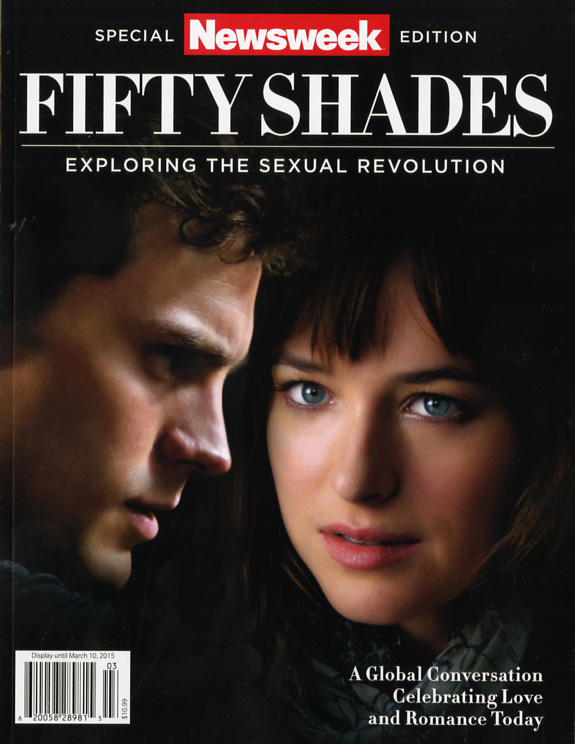
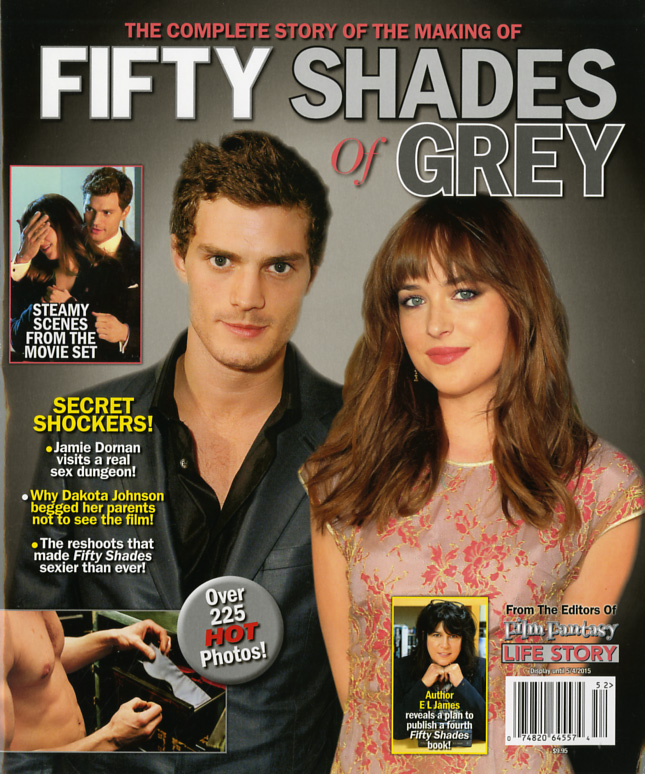
Fifty Shades 2-1 How do you get your target audience away from the younger generation when for the most part it’s that generation that will purchase your special issue? In fact, other than Topix Media (which published one magazine when the books came out in 2012 and now published a second title under the Newsweek brand about the movie), Bauer, so far, is the only other publisher who published a title related to the Fifty Shades of Grey movie. The magazine, The Complete Story Of The Making Of Fifty Shades of Grey is published under the brands Life Story and Film Fantasy. Titles under those brands from Bauer were mainly aimed at the teen scene including bands like One Direction and movies like Harry Potter.

So why then are there not at least fifty Fifty Shades of Grey magazines on the nation’s newsstands? The answer is simple, very simple. Such magazines are reflectors of the movies. And magazines reflecting a movie, which is touted to have extreme erotica and bondage-type scenes, have been few and far between, if not non-existent. In a book without pictures one can get away with any topic no matter how obscene or insane the topic is. Create a magazine and you will need pictures. There lies the source of the problem. Add to that all the negative publicity the movie is already generating from domestic violence groups and many pastors who are encouraging people to boycott?

The first magazine dates back to 2012.

The first magazine dates back to 2012.

In an article published in the largest paper in my home-state Mississippi, The Clarion-Ledger, the headline screams: Mississippi the most eager state to see ‘Fifty Shades of Grey’, the irony of that title is brought to the forefront; not only the irony, but also the factual truth of the statement, when the piece reports that The American Family Association, which has its office in Tupelo, Miss. is urging everyone to not see the movie. Ironic in that, according to the article, the Washington Post’s website reported that the film accounted for 60 percent of all Fandango ticket sales this week, especially in the South and Midwest. That makes it the highest-grossing R-rated movie in pre-release sales on the movie ticket website, and the No. 1 state, Mississippi, nearly four times its average for pre-show ticket sales, with the first city in the state to sellout a theater, Tupelo, where the AFA’s office is.

Sometimes truth is stranger than fiction. Go figure.

h1

Monogamy, Addiction and Storytelling – A Trio That Can’t Be Beat…1,001 Mr. Magazine’s™ Blog Posts Takes A Lesson From 1,001 Nights And Passes It On To Magazines.

February 10, 2015

There was a story written long ago, that I’m sure many of you remember reading or hearing about, called One Thousand and One Nights, often known in English as Arabian Nights. Now I won’t give you a long, drawn-out refresher course in literature; suffice it to say, the premise of the story was the King, Shahryar, is shocked to discover his sister-in-law has been unfaithful to his brother for quite some time and subsequently finds out his own beloved bride isn’t so lily-white either when it comes to the art of fidelity.

Magazines Magazines and More Magazines Worldwide... Monogamy, Addiction and Storytelling.

Magazines Magazines and More Magazines Worldwide… Monogamy, Addiction and Storytelling.

The King has her executed and becomes bitter toward all women, marrying a succession of virgins, only to execute them one by one due to his mistrust of the fairer sex. Eventually the Vizier, whose duty it is to provide them, cannot find any more virgins. Scheherazade, the Vizier’s daughter, offers herself as the next bride and her father reluctantly agrees. On the night of their marriage, Scheherazade begins to tell the king a tale, but does not end it; she only leaves him longing for more each night, which does wonders for her ability to stay alive.

And hence, Mr. Magazine’s™ narrative begins where Scheherazade’s left off. Magazines could learn a few things from One Thousand and One Nights. When Digital showed her curvaceous pixels onto the magazine scene, publishing kings were definitely affected by the temptations she offered. And while print was certainly more monogamous than Shahryar’s brother’s wife proved to be; publishing kings were merely chomping at the bit to ‘execute’ their ink on paper spouse and marry every digital maiden that happened along, seeing visions of digital empires and fruitful offspring throughout that new kingdom called cyberspace.

Unfortunately, it didn’t quite work that way for magazine media, or King Shahryar, for that matter; albeit their situations were slightly reversed, with the kings of publishing trusting their new digital brides just a bit too much.

But while Shahryar was always distrustful of women after his brother’s experience, there was one thing for certain, he was still addicted to the opposite sex and kept coming back for more with as many different young ladies as the Vizier could find.

The addiction must be there. Without the desire and magnetic pull urging and demanding the King to try again or in the magazine’s case, the customer’s habitual return to the product, there would never have been a continuing relationship with Scheherazade for him, or a recurrence of connection and relevance with the audience for the magazine.

There is absolutely nothing wrong with the customer being obsessed with your product. In fact, it’s encouraged, just in case someone out there was wondering. A printed magazine is one of the most obsessional items around for human beings who enjoy reading. It’s an experience that plays on all the senses on many levels. So don’t kick it to the curb just because it’s the 21st century. In fact, most publishers today are finding print to be the collectable part of their digital/ink on paper duo, with a lot of digital companies conceiving print components just to add that attribute to their brand. You can’t exactly stick a webpage in the bottom drawer of your grandmother’s antique dresser to pull out later when you have the time to savor it. I suppose you could stick your laptop there, but trust me, the experiences are much different. Not to mention, the computer would most likely be dead anyway, depending on how long it took you to get back to it.

Once you’ve established the addiction factor into your kingdom, never forget the allure and deep satisfaction people have for the art of storytelling. After all, it’s what kept Scheherazade alive every night, that ability that she had to keep the King wanting more.

Weaving enchanting stories into the content of your product will continue that all-important addiction and perpetuate audience connection and repetition in a way that nothing else can.

Just remember that the King’s curiosity about the story Scheherazade told always bought her another day of life. Magazines would do well to remember that lesson.

Monogamy, addiction and storytelling – three points of interest in One Thousand and One Nights and three points of interest in Mr. Magazine’s™ 1,001 blog post. And as it was in Scheherazade’s case, there is always hope when you’re willing to innovate, create and motivate your product to be the best it possibly can.

Until 1,002…

h1

On Magazines And Magazine Making… A Mr. Magazine™ Common Sense Musing.

February 6, 2015

samir2015 It does not take a genius to know that there is no magazine media without magazines and if I may add, there are no magazines without ink on paper. Inherent in the definition of the word magazine since 1731, is the fact that it is a printed bound product made from ink and paper.

Magazines were never referred to as such because of the fact that they are ink on paper publications. The name magazine was a descriptive adjective of a collective printed experience that did not need to be identified by the process of printing or the smell of the ink.

It was not until the dawn of online and digital publishing that we tried to outsmart ourselves and attempt to introduce new definitions of what is and what is not a magazine. We started with replicas and ended with a complete revision of the definition of what a magazine is. In this process of unnecessary change folks started to confuse the definition of a magazine with the many new platforms that started arriving on the scene. And with that confusion we started to move our eye away from the prize, the printed magazine, and began to focus on ways and means to replicate or duplicate what we have in print.

Without magazines there is no magazine media. Yes it is true, that magazines alone may not be the “cup of tea” for some of our audiences, but it should not and must not be true to our publishers and media companies who were/are too quick to jump ship and attempt to change the definition of what a magazine or a magazine company is or is not.

When Coca-Cola introduced the non-caffeinated drink Sprite, it did not change the name of the company. When Apple introduced the Mac, it did not change the name of the company. Magazine companies should and must introduce new products and new platforms to their mix of goodies, but they at the same time, should adhere and respect their history and brand name.

Changing the Coke Company to Coke and Sprite does not only dilute the company as a whole, but also introduces confusion into the marketplace. A magazine company that introduces new magazines, new videos, and new apps is still a magazine company. We should take pride in our history as we introduce new products and invent digital components the same way our predecessors invented printed magazines.

When I went to journalism school I was never taught the art of printing. I was taught the art of journalism. I was in the business of filling the pages with great stories and great content for that very specific product that is called a magazine or a newspaper. Never once did I learn anything about the making of ink or the making of paper.

That same creativity and curiosity must be adhered to when we are inventing new products from our magazine companies to the market place. We should not replicate or duplicate any or all of our products. A new medium requires new ways of presenting and engaging our audience. Digital products require digital thinking and digital creativity. Digital does not mean shoving print onto the screens of our digital devices. It is a completely different experience.

Magazines are not dead or dying. Some have committed suicide and some are attempting to do so. But a lot of others are doing very well, thank you. A whole lot more are arriving at the marketplace worldwide. They are not offering nor do they care to offer excuses of why they are arriving in a printed format. They know they are not publishing a magazine if they are not printed, and their audience knows that too…

No one can or should argue that we do not live in a digital age, but just living in a digital age does not mean we have to ignore the other media out there. Digital watches did not kill analog watches. In f act after a few years of digital watches’ advancement on the marketplace, analog watches made a strong, very strong comeback. Magazines are going to do the same.

As I mentioned in my Mr. Magazine™ Manifesto for 2015, pundits are no longer talking about the death of print, but rather the decline of print… Five years from now they will be talking about the power of print, the power of digital and the power of whatever else is going to be invented.

Magazines survived throughout their almost 300 year history because they were always first to innovate, adapt, adjust and engage with their audience and customers without changing their names from a black and white magazine to a four color magazine to a glossy magazine, etc. If we keep that in mind and continue to innovate in print and in the way we interact with our readers and customers we will be celebrating another 300 great years of magazines and magazine making.

Maria Rodale, CEO of Rodale Inc. said it best, “ We as an industry have undervalued our products and overvalued ourselves.”

Amen to that!

h1

Magazine Power In One, Two, Three Mr. Magazine™ Musings…

January 27, 2015

The Power of the Black Cover

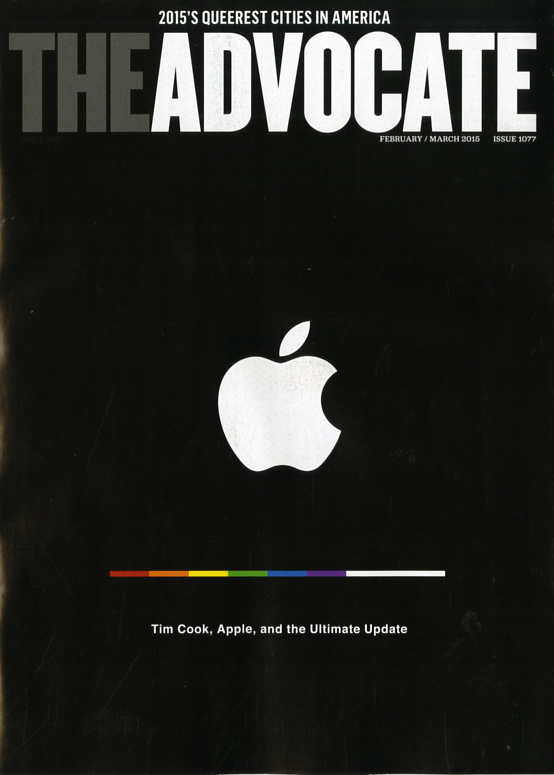
The Advocate-21

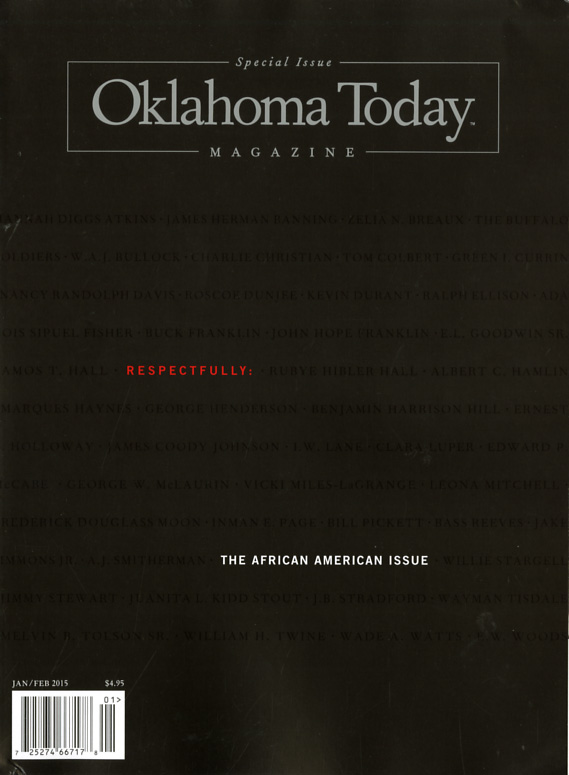
Oklahoma Today-20

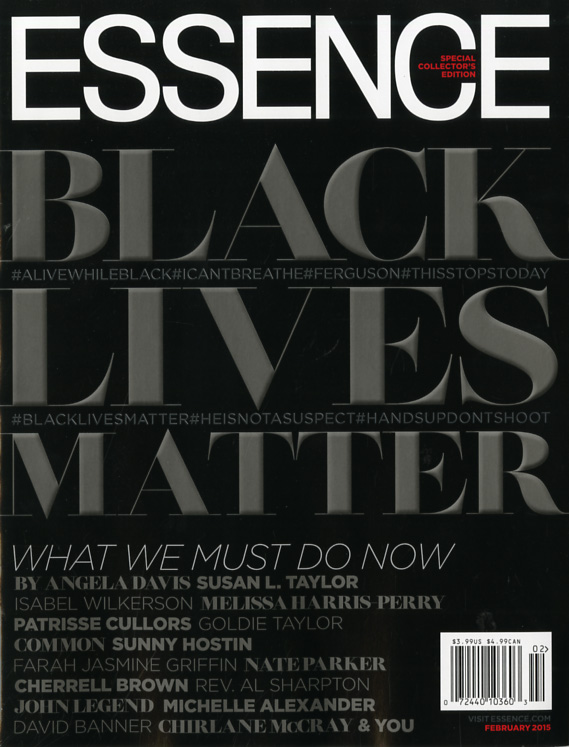
Essence-19

I picked up three magazines recently that I love to follow and read on a regular basis: Essence, The Advocate and Oklahoma Today. The content of these magazines is always stellar and the designs stunning, but my attention this time around was seized by more than the usual attributes these great titles bring to the table. This time I noticed that the covers were all done in black; spectacularly simplistic black.

In addition to the striking approach in design of these covers, the magazines all shared another common denominator that couldn’t be denied: a relevant and important message to their readers.

For Essence and Oklahoma Today, the message is delivered via special issues, while The Advocate dons its black tails for its February/March edition, but whether special or frequency, the impact and power of the print covers is unmistakable. All three grab the customer from the confines of the newsstand, wrestle him or her down, and show the reader the necessity of buying that issue. The dynamic consequences of covers in print emerge in the manifestation of commanded respect of the magazine and its vital information and a deep and abiding satisfaction for the reader. The special message the cover announces not only resonates with the audience, but with media as a whole and does it unlike any other platform out there.

Long live the power of the magazine cover!


“Make It” a Magazine, Please

Make It Vintage-31

Make It Patchwork-29

Make It Over-28

Make it Organized-30

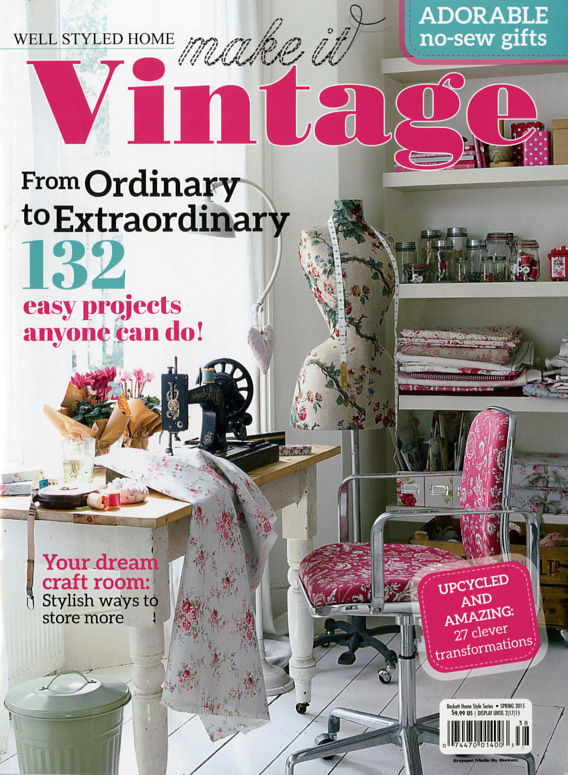
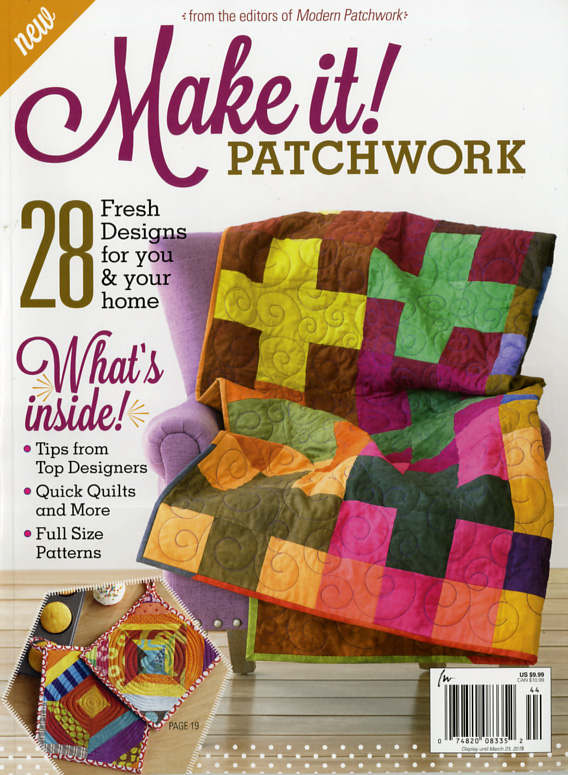
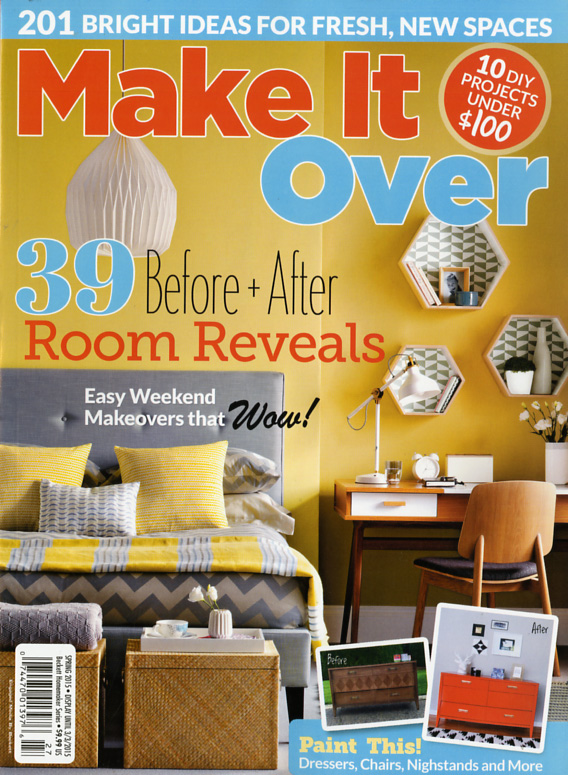
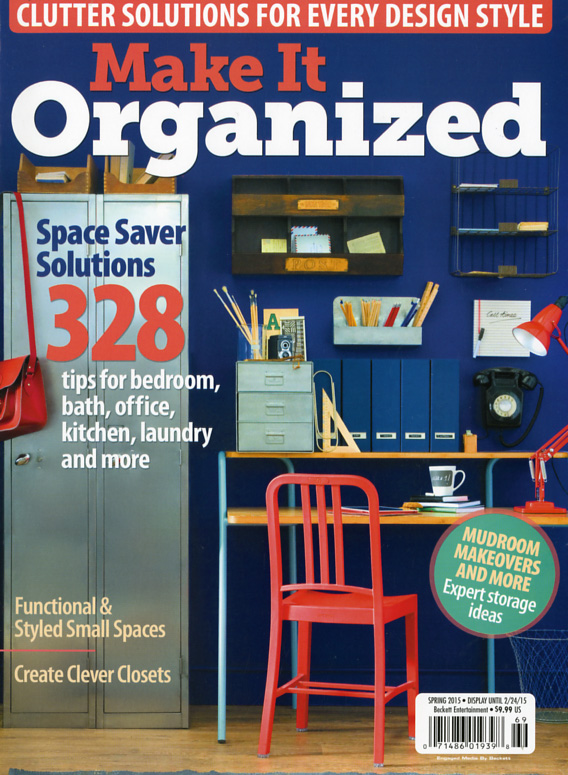
It seems lately there is a common thread weaving its way through some of the titles of new magazines. And with this thread, I may have discovered the secret to the successful naming of a multitude of newborn ink on paper. If so, the ramifications could impact the entire publishing industry. And maybe even Mr. Magazine™ might try his hand at putting out a new title; maybe.

It would appear that two words are all it takes to conceptualize a new magazine in today’s media world “Make It.”

Make It Over
Make It Vintage
Make It Patchwork
Make It Organized…just to name a few of the more recent titles.

The secret formula works like this: Verb+Subject+whatever-your-mind-can-conjure-up. Here are some ideas I’ve been playing with:

Make It Real
Make It Big
Make It Print
Make It Necessary
Make It Relevant
Make It Audience First…OK – it’s apparent Mr. Magazine™ should quickly add the ™ mark to those titles before some folks snatch them for their own use.

Now, I’m not saying the “Make It” trend is a bad thing, just an idea that has suddenly become like a revolving door with many different scenarios parading in and out of it. Remember the phrase discretion is the better part of valor?

Make It Carefully, please!


Will Facebook have an 80th Birthday?

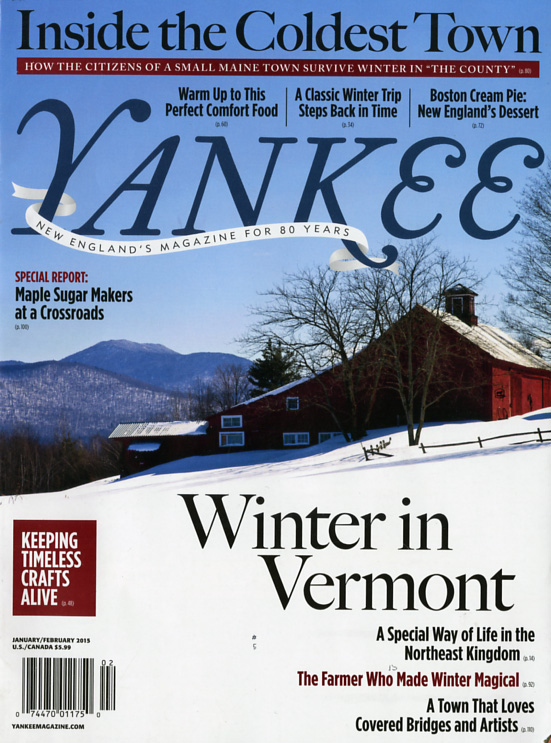
Yankee-8

The Backwoodsman-2

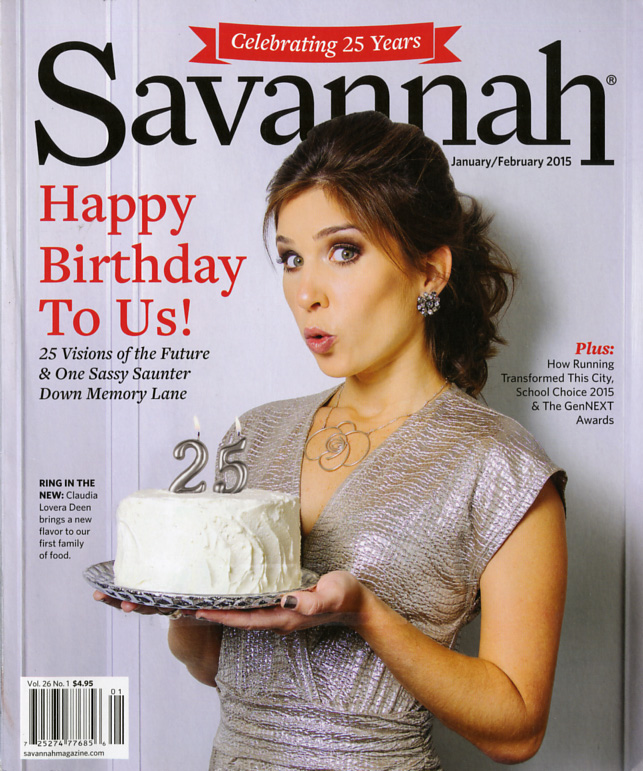
Savannah-10

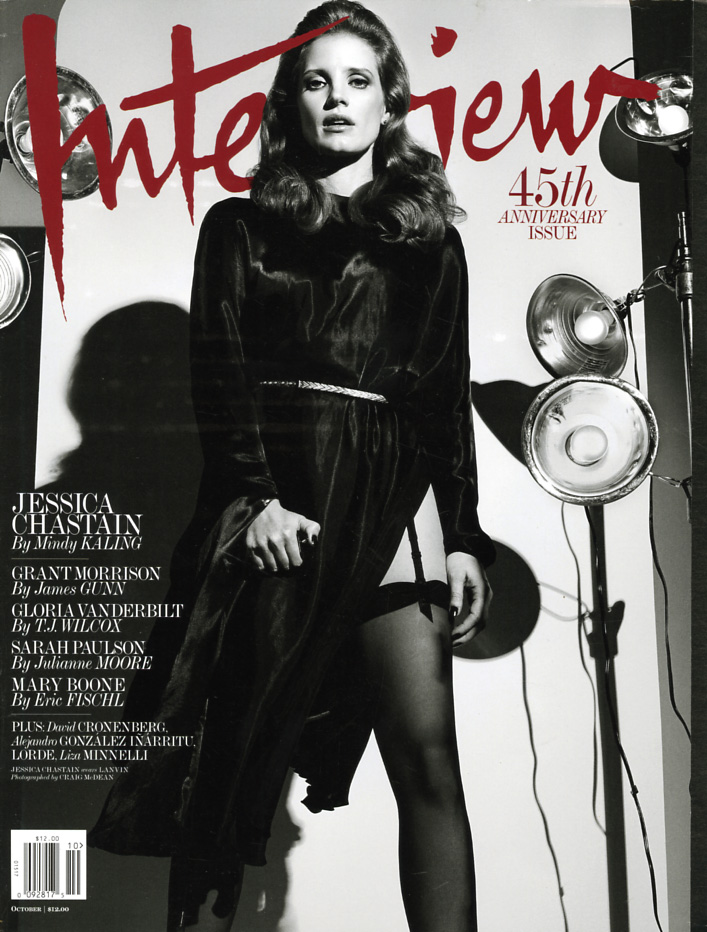
Interview-6

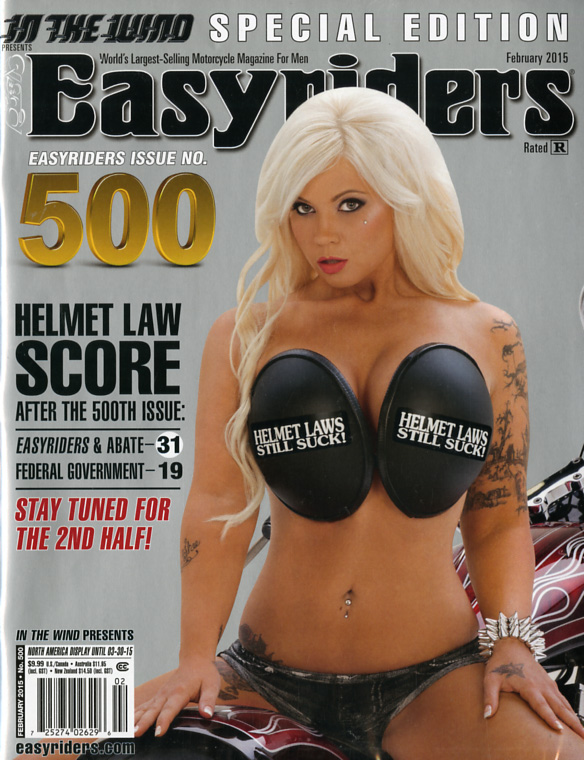
Easy Riders-1

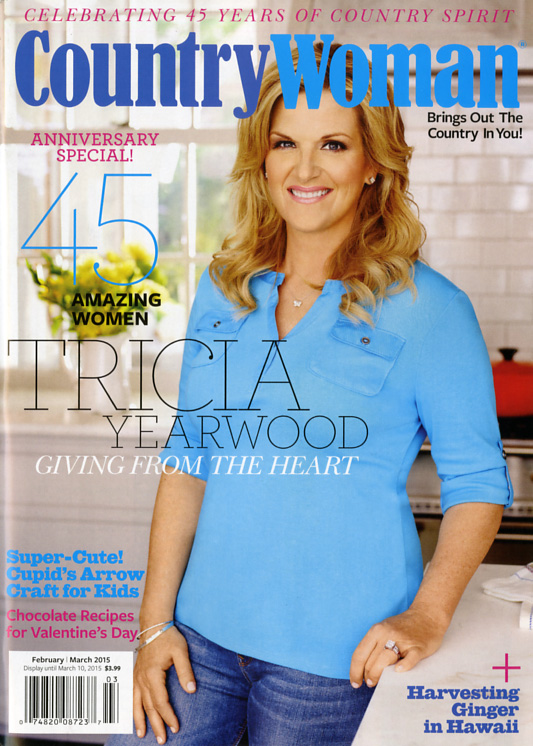
Country Woman-5

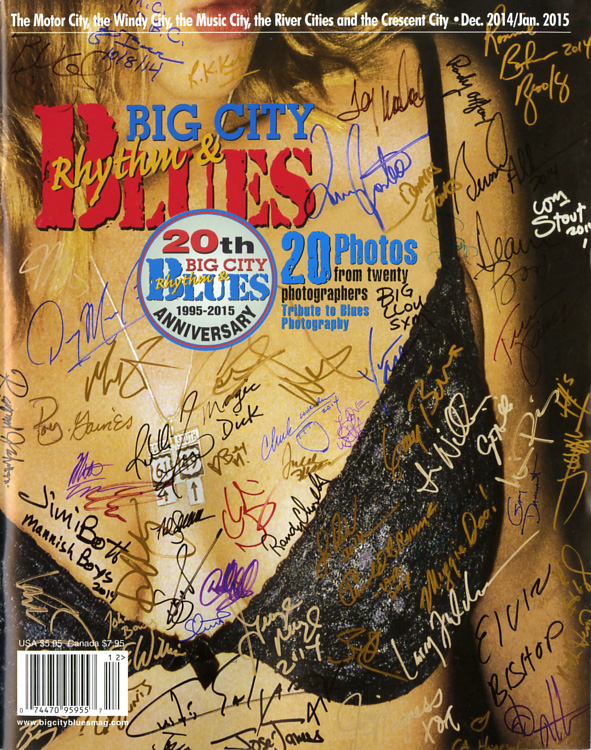
Big City Rythm & Blues-7

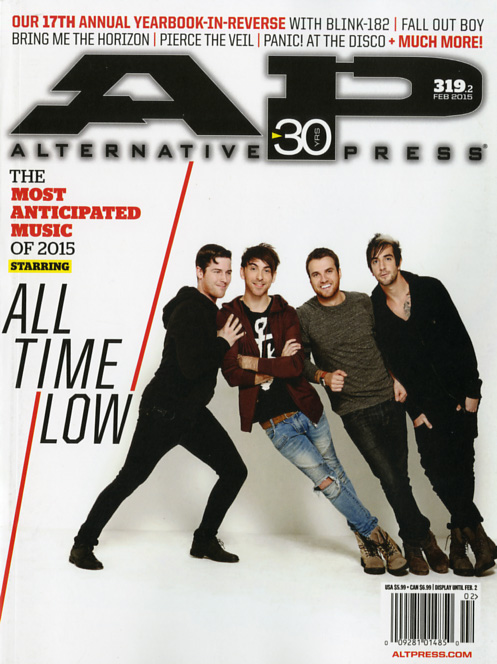
Alternative Press-4

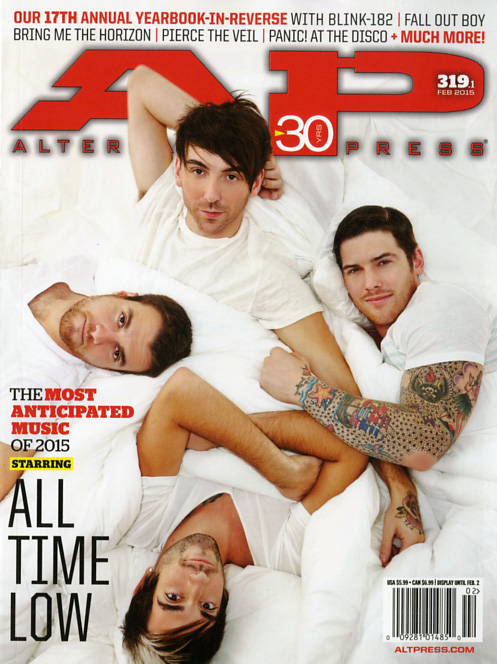
Alter Press-3

Longevity is something we’re all looking for; longevity plus good health. How many of us do not want to last for 100 years as long as we can stay in fantastic health?

Magazines are no exception. And there are some out there who have the staying power and stamina of a redwood. Here are some celebratory anniversary issues:

Alternative Press – 30th anniversary
Big City Rhythm & Blues – 20th anniversary
Country Woman – 45th anniversary
Easy Riders – 500th issue
Savannah – 25th anniversary
Interview – 45th anniversary
The Backwoodsman – 35th anniversary
Yankee Magazine – 80th anniversary

In media, magazines definitely have proven themselves when it comes to their staying power; the above titles are testament to that. No other medium can tout an 80th anniversary anything that I know of. No television show, radio program or website, for that matter. Trying to imagine the Internet having anything that remotely outlasts the latest edition of Good Housekeeping is very difficult.

Will Facebook have an 80th anniversary? Or Snapchat? Or Instagram? Or any other platform’s contribution to media? Mr. Magazine™ is going out on a limb here and saying: highly doubtful.

So, let’s celebrate the durability and endurance of these wonderfully-aged titles, because while they do have a few years on them, their content and designs are timeless.

Until the next Mr. Magazine™ Musing…

h1

The Mr. Magazine™ Manifesto 2015: Audience First…

January 6, 2015

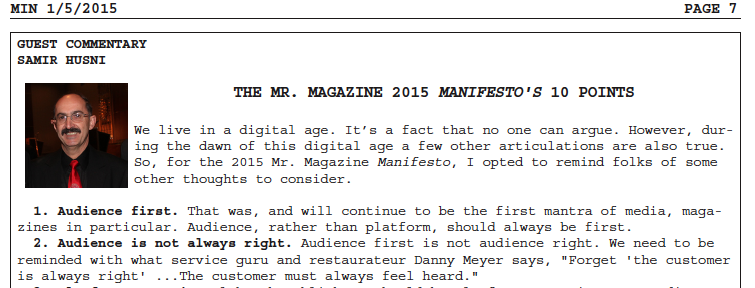
The Mr. Magazine™ Manifesto 2015

The Mr. Magazine™ Manifesto 2015

We live in a digital age. It’s a fact that no one can argue. However, during the dawn of this digital age a few other articulations are also true.

So, for the 2015 Mr. Magazine™ Manifesto, I opted to remind folks of some other thoughts to consider.

1. Audience first. That was, and will continue to be the first mantra of media, magazines in particular. Audience, rather than platform, should always be first.

2. Audience is not always right. Audience first is not audience right. We need to be reminded with what service guru and restaurateur Danny Meyer says, “Forget ‘the customer is always right’ …The customer must always feel heard.”

3. Platform agnostic. Although publishers should be platform agnostic, your audience is not. Readers have their preferred platforms and they are attached to them. So don’t fall in love with the platforms; rather, fall in love with the audience. Make each and every platform content complete.

4. Technology does not kill print. It’s neither technology nor its digital components that threatens the survival of printed magazines. The perpetrators are the people behind print, its content and the investment or lack thereof. Remember the old adage, “Guns don’t kill people; people kill people.”

5. Advertisers are not departing print. Some magazines in 2014 published their largest issues since their inception. More ad pages mean bigger magazines than ever. When you hear some ad agency folks declaring that “we have no customers walking into our office and asking to place their ads in print,” ask them who their clients are and what about those pages and pages of ads in print? Are they representing the wrong clients?

The Mr. Magazine™ Manifesto 2015 as it appeared in min:media industry newsletter Jan. 5, 2015

The Mr. Magazine™ Manifesto 2015 as it appeared in min:media industry newsletter Jan. 5, 2015

6. New printed magazines are thriving. Since the dawn of the digital age (desktop publishing) in 1984, more print magazines have started. Did you know that some of the most successful magazines in the country are less than 30-years old? Men’s Health, InStyle, Marie Claire, Food Network magazine, O The Oprah Magazine and ESPN are just a few.

7. Without new magazines, the industry is dead. Any industry that fails to introduce new products is a dying industry. We should pay more attention to the business of new print launches and cherish and celebrate their arrivals. The industry must also focus on the fact that these infants always give us hope and a reason to believe in the future.

8. Learn from digital. More digital and online companies have discovered print in the last few years. From Web MD to Cnet, they’ve all have opted to produce print magazines in addition to their digital presence. Those digital companies are in the business of “no customer left behind.” A good mantra to follow.

9. Rediscover print and its power. If digital is discovering print and its power, the magazine industry should do the same. Rediscovering print means investing, on both the physical and content side. Leave speed and disposability to digital and create and produce a product with lasting collectability. Ensure that your content is right and your paper is great.

10. Statistics lie, numbers don’t. When you hear the statistics and percentages of increases or decreases in a particular publishing area, please do me a favor. Ask for numbers, real numbers. One percent of a billion-dollar industry is larger than fifty percent of a thousand-dollar industry.

Last but not least, it gives me great pleasure to mention that the same people who promoted and used the phrase the death of print from 2009 to 2014 have revised their phrase and predictions. Their new slogan is now the decline of print. Give them five more years and they will swallow their pride, admit they were wrong not once, but twice, and their new phrase will be the power of print.
_______________________________________________________________________________________________________________________________
Screen shot 2015-01-04 at 2.21.28 PMEditor’s Note: The Mr. Magazine™ Manifesto 2015 was first published in the Jan. 5 issue of min: media industry newsletter: The authoritative media/marketing newsletter since 1947. In the Dec. 22 of min, the editor in chief Steve Cohn wrote, “This issue, min’s last for 2014, extends our 28-year tradition of magazine launch reviews with Dr. Samir Husni. When we return on January 5, 2015, Husni will present his fifth Mr. Magazine Manifesto of New Year’s resolutions. He knows which titles have been naughty or nice.” For more about min newsletter click here.

h1

It Is The Season…

December 24, 2014

It is the season… for weekly magazines to offer double issues combining the last week of the current year with the first week of the coming year.

The European Christmas edition vs. The American Holiday edition

The European Christmas edition vs. The American Holiday edition


But, it seems that naming the season remains a “politically correct” issue. Whilst we’ve seen plenty of magazines in the United States returning to use the word “Christmas” on their covers rather than “Holiday,” the folks at The Economist would rather stay politically correct with their American readers.

The “Christmas Double Issue” arrived at our shores edited to read the “Holiday Double Issue.”

Well, here’s to all, a wish from Mr. Magazine™: Merry Christmas, Happy Holidays and the best of the New Year.

h1

From Russia With Love: Different Media, Similar Challenges… A Mr. Magazine™ Musing.

December 1, 2014

On the banks of Moscow River and Kremlin
On the banks of the Moscow river with the Kremlin in the background.

The Russian press and magazines face the same challenges as the American magazines and magazine media. Distribution, advertising and the future of print are mainly the three major areas of concern a visitor to Moscow discovers during the first few hours of his visit to Russia. Amazingly they are the same challenges facing the American magazine market.

unnamed-2
Husni surrounded by hosts Dmitry Martynov (left) and Alexander Oskin during the PDA annual conference Nov. 25

I was invited to keynote the annual conference of the Press Distributors Association (PDA) in Moscow last week. My hosts, Dmitry Martynov and Alexander Oskin, president and chairman of the board of the PDA respectively, asked me to address their annual conference on a topic close to my heart, the power of print in a digital age. I was more than happy to oblige.

The PDA arranged for me visits with major magazine and newspaper companies in Moscow and visits with leaders in The State Duma (The Russian Congress) and the Federal Agency for Press and Mass Communications. My host at The State Duma was Andrey V. Tumanov, first deputy chairman of the committee for information politics, information technology and communication. At the Federal Agency for Press and Mass Communication, I met with the agency’s deputy head Vladimir V. Grigoriev.

IMG_7669
At The Federal Assembly of The Russian Federation The State Duma with Duma member Mr. Andrey V. Tumanov

During my visit to the Duma I was treated to a tour of the chambers of all major political parties in Russia and a lunch at the Duma’s cafeteria. At the Federal Agency for Press and Mass Communication Mr. Grigoriev and I engaged in a healthy conversation about the future of print in a digital age. His main areas of concern are books and preserving archives and historical records. “We have records on paper since the invention of paper and they still exist,” he told me. “With digital you have to update the digital files almost every five years to preserve them. Technology and technological devices are changing so fast, that what you save today will not work tomorrow unless you keep on updating the files.”

At the Federation of Press
At the Federal Agency for Press and Mass Communication with Deputy Head Mr. Vladimir V. Grigoriev

Mr. Grigoriev is focusing the agency’s effort on books as the major printed medium to preserve. He sees little, if any, role of news in newspapers or magazines. “The newspapers and magazines have to be in the business of explaining and editorializing. They have to tell their audience what the news means to them or how it impacts them.”
Mr. Grigoriev adds, “It is the not the medium that have the problem, it is what you put in the medium.”

The PDA arranged for an additional three meetings with different media companies. I met and interviewed the CEO of Burda Russia Jürgen Ulrich, the CEO of Kommersant Pavel Filenkov, and the General Director of Za Rulem Alexey Vasin. In the next three days I will be publishing my interviews with the aforementioned media leaders.

At my final dinner with my hosts Dr. Martynov and Dr. Oskin of the PDA, we engaged in a conversation about the problems facing the Russian and American press and magazine markets. The challenges are many, and the similarities are even more. Maybe, we can leave the political differences aside and work together to find common ground to solve the magazine and magazine media challenges together. As I usually say, there is hope, there is always hope.