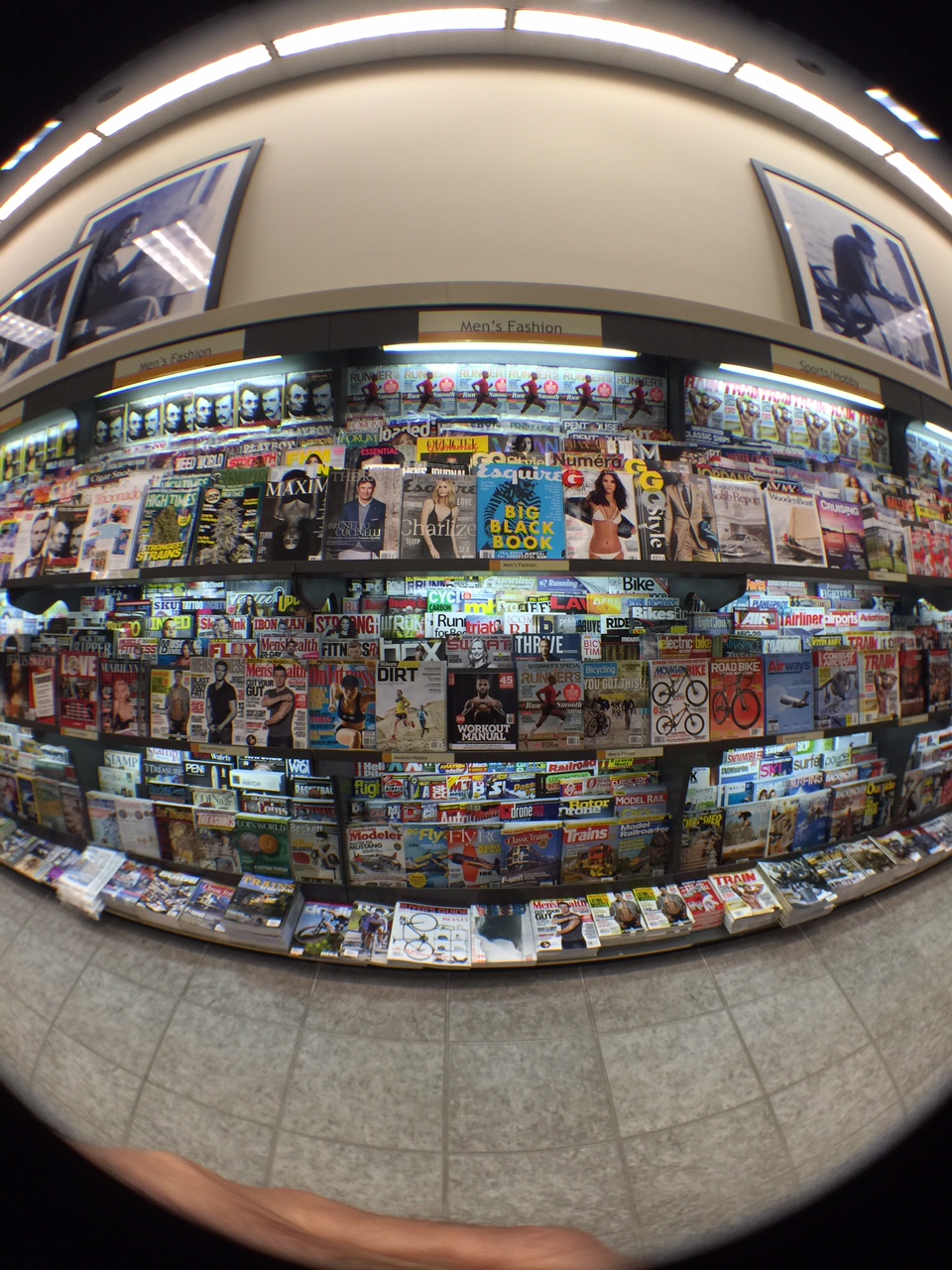
Archive for the ‘A Mr. Magazine™ Musing’ Category

h1

Why What Worked For Magazines In 2007 Won’t Work Today. A Very Strong First Six Months In The Land of New Magazines. A Mr. Magazine™ Musing.*

June 26, 2015

The numbers are strong for the first six months of 2015: 411 to be exact. 118 with frequency and 293 specials and book-a-zines. Major publishers are rediscovering the power of print.

samir2015 If the world of magazines and magazine media has changed at all in the last seven to eight years, and we all know that it has, then why does the industry insist on continuing to create magazines as though we’re still living in the year 2007? It’s a conundrum that, quite frankly, I fail to understand. We all know that we live in a digital age, not even Mr. Magazine™ will argue with that, but we also know, according to research from some of the largest publishing houses on the continent, that print is still a valued friend that the buying public will not turn their backs on. In fact, from Bauer’s Simple Grace to Meredith’s Parents Latina, the big players are back in the print game with vim and vigor.

Below are but a few new titles from major publishing companies that have launched new print titles within the last six months:

•Bauer – Simple Grace
•Harris – Ballistic
•Hearst – Trending NY
•Hoffman Media – Enjoy Every Day
•I-5 Publishing – Dogster and Catster
•Meredith – Parents Latina
•National Geographic – History
•Rodale – Organic Life
•Smithsonian – Smithsonian Journeys

And for the first six months of 2015, the numbers are standing strong and proud (with more details and comparisons next week):

• Total New Launches: 411
• Frequency: 118
• Specials: 293

IMG_8285 It’s not the ingredients for the recipe that need to change, we’re adding distinctive and enticing elements to the pot; it’s the way we’re mixing that delicious stew in the same old way, which is continuing to produce magazines as though the year was 2007 instead of 2015.

What do I mean by that? First of all, before the Internet explosion magazine media was complacently successful following the ad path and content trail set years before. And it worked. After 2007 and Web mania, that model ceased to be profitable or proficient. And the prophets of print gloom and doom had a field day crying, “Print is dead,” all the while publishers were holding their collective breaths and fearing the worst.

When TV was invented, radio didn’t die; when a popular brand such as “MASH” or “Dallas” lived its lifespan and died a natural death; the entire television industry didn’t curl up its toes and jump in the grave with it, of course not. So why with the advent of digital, did print publishers allow their ink on paper child to hang its head, pack its bags and go into exile, or in some cases, commit suicide?

Fear and the lack of understanding that digital wasn’t going to replace print; its mission was to promote and co-exist with it.

But we as an industry must learn print’s place in today’s digital world. Print must have that collectability factor that we never worried about before, because if you want to know how to replace your doorknob, you can bet your shiny new keyhole that Google can tell you that information quicker than next month’s issue of your favorite DIY magazine. You, as a publisher, instead should concentrate on showing your audience the most dazzling and up-to-date doorknobs on the market today, or the oddest places people install doorknobs on their doors, or…well, you get my meaning. Content-driven information that excites the reader and causes that little niggle in the pit of his/her stomach as they’re about to toss that magazine, once read, into the trash; now that’s the collectability factor.

I have outlined nine roles print media can play in today’s magazine environment:

1. Be curators of content. There’s too much content and a scarcity of curation. Print can say: we’ve done the research for you, now here are the answers. The uniqueness of print’s ability to validate those responses by using the trust factor of research and explanation is incomparable.

2. Be analyzers of data. Google knows more about me than my wife. We must analyze the data so we know our audiences. Rather than focus groups, take10 readers to lunch. Listen to their challenges. Then feed their hunger. The lunch table most publishers should use when offering their audience sustenance is social media. Nowhere can you gain a better understanding of your reader’s wants and needs than social media platforms. Once again, digital and print working together.

3. Be creators of solutions. Amid so much conflicting content, validate information for readers. Let them depend on you by being one step ahead– preview the near future.

4. Be masters of opinions. Start conversations and lead public debate – you are the authority. Then, importantly, let the audience know they’re being heard, even if you don’t agree. This can happen through social media or the interactivity of your print audience, preferably both.

5. Be makers of experiences. Share and create experiences that lead to engagement.

6. Be suppliers of addiction. Nobody needs a magazine, so you need to make readers dependent on you. Dispense the drugs the audience needs. Change their wants to needs. Today everyone wants and needs stability in our sometimes crazy world; they need a reason to hope and believe that tomorrow is going to be better than today, so Bauer gave us “Simple Grace” to hold onto. They saw the want and the need of this type of content in our world.

7. Be witty storytellers. Fulfill your readers’ needs, but don’t forget the cliffhanger to make them buy the next issue.

8. Be provokers of emotions. Create content that stirs emotional reactions.

9. Be innovators in print. Let’s keep doing things differently.

Exercising these nine stratagems into the way we stir our pots will mix things up a bit and change the texture of our stew in a positive way.

Many people thought the onset of digital with all its many devices was going to change the world of magazine media, and in some ways, it did. For one it showed us that bells and whistles don’t really matter; in the world of devices, digital and otherwise, there is really only one thing that matters when it comes to magazine reading; it’s called content.

In a recent interview I did with Martha Stewart Living Publisher, Daren Mazzucca, he elaborated on that sentiment when I asked him why Meredith decided to remove all the bells and whistles from its digital entity and make it a straight replica of the magazine:

“I think it makes the most sense. I believe that tablet access for all brands has kind of flattened out a bit; if you look at two or three years ago when we all believed that tablets were going to soar and some believed they would replace print, but that hasn’t been the case. The paper format is still the primary vehicle that women want to engage with. They curl up with it, take it with them, and tablets have pretty much plateaued in the marketplace.”

Today, in 2015, it’s more about the experience than ever before. We are all bombarded by notifications of information on a minute-by-minute basis and sometimes when your Smartphone seems to have a life of its own, those notifications can become second-by-second. It’s a fast-paced, never-slow-down existence that we lead.

However, there does come a time when all of us want to disconnect from our digital realities and just have a lean-back experience with a glass of wine and our favorite magazine.

Travel+Leisure’s Editor-in-Chief, Nathan Lump, said it best about the lean-back experience in a recent Mr. Magazine™ interview:

“I think for me, it’s really true in the sense that when you think about it, we have so much information at our fingertips; no one necessarily needs to read a magazine in order to learn things, so those that do are obviously making a very conscious choice that they want to give a certain amount of their leisure time to that experience.”

And without a doubt, we have to make sure that experience is phenomenal and merits a return visit to our publication. Let’s be provokers of emotion and reaction. Take the topic your audience is crying out for and then make them emotionally care about the words you’ve put together.

And always be print innovators; we have to continue to do things differently and not be afraid to take the path less traveled – even if that path takes us over the rainbow and far, far away. We’re not in Kansas anymore, Toto – and we have to remember that…

*The above is an updated version from my article that I wrote for the Magazines At Retail conference earlier this month.

h1

Digging ‘Print Is Dead’s’ Grave – Sounds Like Fun. A Mr. Magazine™ Musing…

June 3, 2015

Photo illustration of the dearly departed "PRINT IS DEAD" by Darren Sanefski.

Photo illustration of the dearly departed “PRINT IS DEAD” by Darren Sanefski.

From http://transom.org/2011/four-feet-under/ Picture used for illustration from http://transom.org/2011/four-feet-under/%5B/caption%5D I’ve been thinking a lot lately about all of the self-appointed media critics and analysts that seem to be coming out of the woodwork today when it comes to the vital signs of American magazines and magazine media. From a slight pulse to no pulse, these “chosen” ones have deemed it their mission in life to report negatively on the heart rate of magazines and magazine media.

I’m not sure when the pontificators of print’s demise were put upon their lofty thrones, or who dubbed them kings and queens of the print-is-dying court, but nevertheless, they know who they are, no matter how much they claimed to have never said ‘print is dead.’ I am sick and tired of reading and hearing their opinions on what I should think and how I should interpret what’s happening in the magazine industry today.

Not even in my wildest dreams have I ever imagined myself in a position where I could commandingly influence a CEO, an editor, or a magazine publisher on what they should be reading or how they should be running their company. I consult with them and offer my opinions, but never try to bewitch them to agree. Needless to say that with all my years of and in education, with my doctorate and all of my life’s studies, I have not considered that ability among my many talents.

I have always tried to be the bearer of positivity, rather than negativity when it comes to the status and health of magazines and magazine media. True, sometimes when you see the light at the end of the tunnel, be careful, because it could be the train coming. However, more often than not that scenario is the exception, rather than the rule. Usually, light doesn’t mean darkness; usually light is self-explanatory, it means light. Hope. Possibilities. The dark times have been illuminated.

I try never to curse the darkness; you never know what you may discover while you’re stumbling around in there; instead, I try to dig the match out of my pocket and light the candle.

Having said all of this; a few things have taken place over the last few days that motivated this particular justifiable tirade, justifiable because every con has a pro and every action has a reaction and this is mine.

One is the story of Caitlyn Jenner. If you’re a person who knows the media and knows how the media works; was it really a surprise to you that Caitlyn Jenner chose a magazine such as Vanity Fair to release the story and her first pictures to? What other medium could have created the same lasting effect, the same day in and day out, in-your-face exposure as a magazine like Vanity Fair? Every means of communication out there, from television to Internet, was talking about Vanity Fair magazine. Every social media site that digital media has brought into being was consumed with one thing: the subject matter of an ink on paper magazine, a print entity that was lighting the Internet up with more curiosity and concern than the latest pop-up ad from this store or that.

xeyqffdecqgbr9m9dyzz-2 That print publication, Vanity Fair, is as powerful today as it was yesterday, if not more. And the Caitlyn Jenner cover validates that.

Oh, the cynics will cry from their familiar spot at Complaining’s table that we have to be realistic and look at the condition of the newsstands and the numbers. But how often do we need to remind those same cynics (who have also appointed themselves media prophets) that in the United States of America, newsstands are only 8% of the total distribution for regularly published magazines?

I wish those same naysayers would try to tell someone like Tony Romando of Topix Media Lab, who’s making his entire living from the newsstands with his Bookazines, which really are only glorified magazines, that print is in decline or out the door completely. Tony has adapted his business model to the needs and the desires of the American public and it’s working.

I have decided to stop reading all of these opinionated, emotionally driven, power-seeking editorials and comments that continue to tell me how bad off the industry is and will remain, whether it’s circulation revenue in newspapers is starting to be larger than advertising revenue, which by the way should be reason to celebrate, we are finally charging the consumer the fair price for our products.

It was always known that if we created a product that’s worthy of buying, consumers would pay for it, because we’re not just in the content delivery business. The media company as a whole may be a content-generating company, but magazines are much more than content. Magazines are experiences. And the experience that Caitlyn Jenner’s story in Vanity Fair will generate, you can bet will be much more than a five-second click of the mouse.

When I travel overseas and bring back all of these new magazines and first editions; when I talk to these companies’ CEO’s, editors, and publishers and I see the energy and the intriguing responses they have for how media is changing; I never hear that negativity or that phrase: Print is dead or dying.

Needless to say, for those of us, including myself, who don’t have a horse in this race; I feel if we don’t have anything good to say, then we should keep our mouths shut. That’s just plain common sense. If we can’t edify the industry that we all claim to love; if our opinions shed misplaced doubt and negativity on the very profession that allows us to be talking about this today; then we should all stay quiet.

Look at any other medium, any other platform, any other product, and tell me where do you find as much negativism, as many energy-draining articles and predictions about an industry where every CEO you’ve spoken with tells you they’re still making money, good money, and if they start something that doesn’t work, they kill it and start something else. And that has always been the mantra of the magazine business. The death of one publication doesn’t mean the death of an industry. If so, when they removed your favorite TV program; your entire television experience was over. I guess you just haven’t realized it yet.

I am a student of the newsstands; I am a student of the streets; I am someone who spends almost $30, 000 a year buying magazines from the newsstands. I’m not just writing fiction. I live the newsstands; I walk it everyday. I purchase magazines every single day. My monthly magazine bill is larger than my monthly food bill.

And when I see those negative comments, I think about all of the digital entities that have either added a print component for the first time or brought one back from the grave. People like Creativ Magazine, who were digital before print; C-Net; Pitchfork Review, Porter and the list goes on and on. How do the naysayers of print pigeonhole those people?

Or major publishers who have launched new titles: Bauer’s Simple Grace, National Geographic’s History, Smithsonian’s Journeys and Rodale’s Organic Life, to name a few. These are people who don’t take their money lightly and yet, they’re investing in print. And they’re not listening to the self-appointed media critics? How dare they?

Like many in the publishing world, I will continue to refuse the gravediggers of print as they spout their invitations to join their negativity. And as their shovels toss dirt upon print’s coffin, I’ll refuse to play a part in that as well.

In fact, the only shovel you will ever see Mr. Magazine™ touch is the one that will be used after they lower the lifeless (pun intended) phrase “Print is Dead” into the ground. For that one, I will toss a shovel or two…

Until the next Mr. Magazine Musing…

h1

Be Magazine and Magazine Media Bolder… A Love Letter From The IMAG Conference. A Mr. Magazine™ Musing.

May 21, 2015

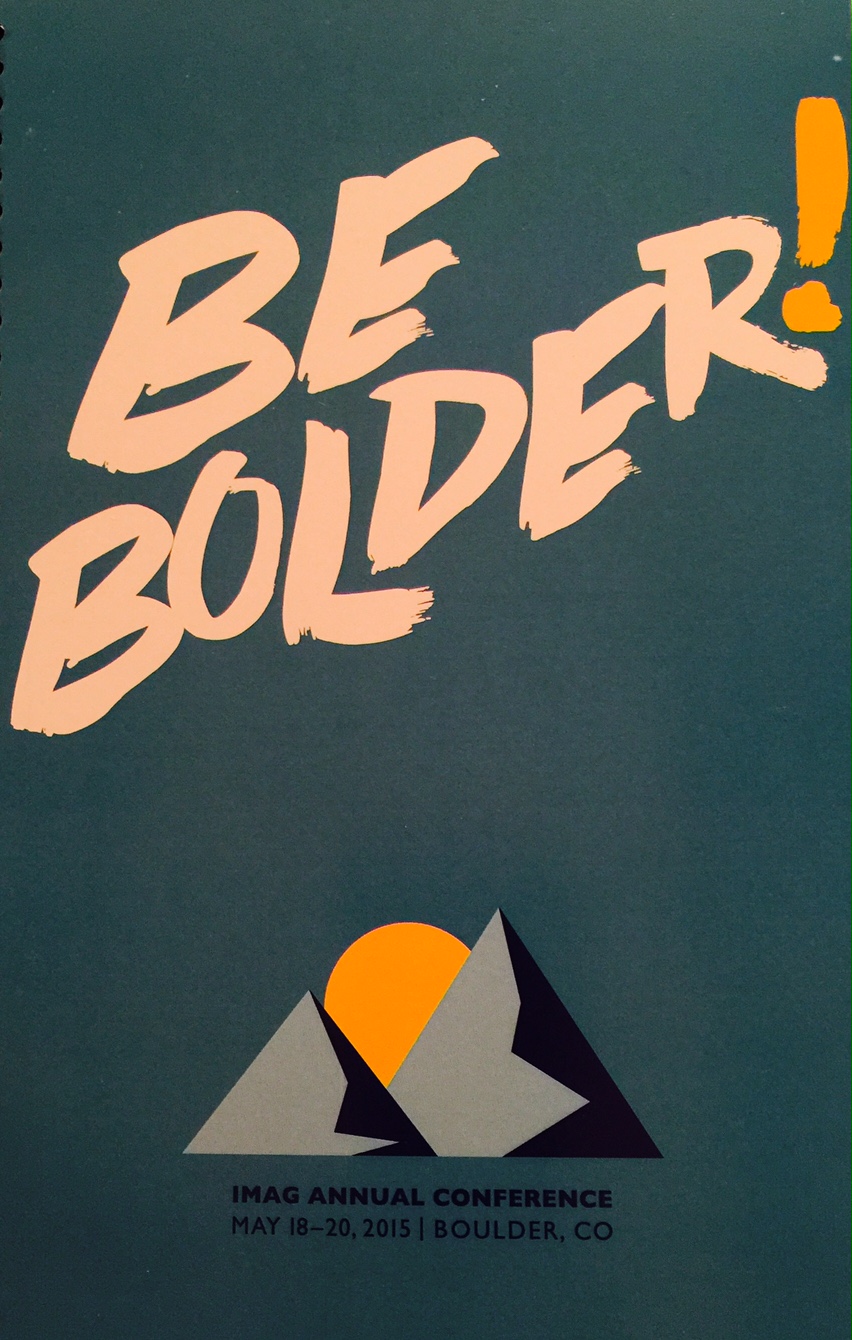
FullSizeRender-3 Without magazines, there is no magazine media. Without content, authentic content, there is no magazine brand. And without a brand, there is no future to the industry that we love and cherish.

That, in short, was what was enforced and repeated time and time again at one of the best magazine and magazine media conferences I have ever attended. The IMAG Annual Conference took place May 18th to 20th in Boulder, Colorado.

Be Bolder in Boulder was the theme of the conference that was organized under the watchful eye of Mary G. Berner, President and CEO of the MPA: The Association of Magazine Media, and the masterful execution of Beth Tighe, VP of Marketing and her team at the MPA. Ms. Berner and Ms. Tighe wrote in the introduction to the program booklet, “Some of the most innovative work in our industry today is coming from the group gathered here this week. We celebrate your boldness, we celebrate your innovation and we celebrate your success.”

And indeed, the speakers at IMAG, with no exceptions, a rarity in magazine and magazine conferences, all were bold, innovative and successful.

The leaders from almost every major magazine and magazine media company, sans the big four (Time Inc., Hearst, Condé Nast and Meredith) were among the speakers at the conference. While there was some debate on whether this company is number five or that company is number seven, the consensus among all speakers was that magazines, print magazines to be specific (and need not I remind you that in my book, if is it not ink on paper, it is NOT a magazine) were, are and will continue to be the core, the foundation of each and every content company that has a magazine or two (or 20) in its stable of content delivery systems.

However, speakers were quick to remind all that “Audience First” is the new mantra for the magazine and magazine media industry. Andrew Clurman, President and CEO, Active Interest Media, Inc. (AIM), reminded the audience that twenty years ago we used to launch magazines for advertisers. “We were fully obsessed with selling ad pages,” he said. “The business was small minded. All the focus of any new launch was on the advertiser,” but things have changed now and we look “audience first rather than advertising first is the new mantra.” And, companies are doing that now with less than half the staff that they used to have 20 years ago.

Michela O’Conor Abrams, President and CEO, Dwell Media, summed it well when she introduced her “3 Cs” that are magic formula that served Dwell Media very well. Ms. Abrams identified those three Cs that she likes to dwell on (pun intended) as such: Authentic Content, Engaged Community and Contextualized Commerce. Those 3 Cs: Content, Community and Commerce, are the foundation of the brand called Dwell. A foundation that has served Dwell very well indeed.

In fact, Ms. Abrams showed the audience a chart from a study that answered the question asked to design and architect professionals, “When you decide to undertake a project to renovate or improve your space, do you rely on any of the following resources for getting started with ideas, creating a plan, or selecting products?” The number one choice by far was the magazine, the ink on paper magazine. That was music to my ears and to many folks attending the conference. Without ignoring all the other types of platforms and tools to reach the audience, magazines and magazine media were right at the heart of the discussion and for all the right reasons I will add.

That power of engagement, was also echoed by Ms. Berner in her opening presentation at the conference. When it comes to engagement, “There is nothing higher than print,” she said. But Ms. Berner was also quick to remind the attendees that 2014 was a “pivotal year for our industry, marked by overall audience growth (on all platforms of magazine media as measured by the new Magazine Media 360 that the MPA introduced last year) of more than 10% in the first quarter (2015) compared to last year.”

“We are a content company,” says Scott Dickey, CEO, TEN: The Enthusiast Network. “We are no longer just a publishing company, thus we eliminated the title publisher and replaced it with general manager.” Mr. Dickey told the story of transforming an almost dead magazine company to a thriving content magazine media company in today’s marketplace.

Some myths were also demystified at the IMAG conference. “Direct mail is still one of the most productive sources to get subscribers,” said Jeff Paro, President and CEO, Outdoor Sportsman Group (OSG). Our audience still wants and reads magazines, he added. The other platforms, from video to television channels, etc. they all provide “air cover to the brand.”

The collective wisdom of all the CEOs in the audience was amazing. It was as if John Temple, President and CEO, Guideposts, was indeed able to channel the positive thinking and stories of inspirations from the pages of Guideposts, to the entire conference. His presentation, “Infusing a Media Company with a Digital Soul,” was the perfect magazine and magazine media 360 approach to focusing on the community without ignoring the ever changing marketplace. That focus on the community will result in a new magazine from Guideposts this fall called, “Mornings With Jesus.”

I guess by now, you can tell that Mr. Magazine™ fell in love with the IMAG conference head over heels, but the dear reader of this musing is approaching the end of their attention span, so I better close with what Scott Schulman, President, Rodale Inc., told the audience. “We at Rodale focus on the consumer and the consumer revenue.” Sweet, short and simple. Words of wisdom for those who are not struggling to stay alive in the magazine and magazine media world, but rather are thriving and doing very well indeed.

I hope the gentle readers and speakers of the IMAG conference will forgive me for not covering every speaker and every presentation in this short musings, otherwise you and I will be here for a long long time, and I was reminded at the conference that our average attention span now resides at 8 seconds… I know it has been more than 8 seconds since you started reading this… but when you are in love, who cares? Right?

Thank you MPA and thank you IMAG for a most pleasant experience in a very long time…

PS: Watch this space for The Mr. Magazine™ Interviews with some of the movers and shakers who attended the IMAG conference starting Tuesday after Memorial Day Weekend.

h1

The Virtual Power Of Magazines and Magazine Media: A View From 30,000 Feet. A Mr. Magazine™ Musing…

May 18, 2015

Mr. Magazine's™ Photo by Allie Haake.

Mr. Magazine’s™ Photo by Allie Haake.

As the magazine and magazine media world navigate their way through the maze of problems and possible solutions to the print + digital dilemma that faces publishers today; I had a thought as I was jetting across the sky at 30,000 feet.

What are the similarities of snow and the clouds that cultivate them?

Yes, that was the thought that popped into my head. And I know what you’re thinking: what in the world does snow and clouds have to do with magazines and magazine media and their problems or boons today? Most of you probably believe that Mr. Magazine™ may have had one too many cocktails as he flew through the air with the greatest of ease, but the truth is that one question put quite a bit into perspective for me when it comes to the quandary of print and digital and the ultimate question of: what is the power of print in today’s digital age.

Snow and clouds both contain water and are both made of the same substance; yet the clouds can’t be held or touched, while snow is tangible and able to create a sensory experience.

Now, imagine that the clouds are digital and the snow is print…think about virtual and real. Clouds are beautiful and of course, we all love to admire them and enjoy their presence, but when they produce the snowflakes or raindrops that we can actually go outside and physically touch and appreciate; we’re captivated. There is a major difference. And we know that feeling will never fade away.

So, using the analogy of snow and clouds; I decided to dig in and find out what are others saying or not saying about the power of print, the death of print or the decline of print.

Using the recurring phrase ‘print is dead,’ as a starting point and depending on the LexisNexis research database, I found 998 articles containing the phrase ‘print is dead’ or a relevant topic toward the subject. Of those 998, forty-six articles appeared which specifically related to the validity of print as a medium. Articles came from a print or digital platform and were editorial, feature or straight news content.

These articles intrinsically focused on the notion that “print is dead.” Since the digital revolution at the turn of the 21st century, that sentiment has seemed to gain more and more tread. But there is a silver lining for print. The articles surveyed reflected an overwhelming majority in favor of the continuing prowess and validity of print moving forward.

And of the 46 articles surveyed, the phrase, “print is dead,” or along the same grounds, was mentioned 28 times. Comparatively the phrase, “print is not dead,” was mentioned five times. The data initially indicates that the analysis of this content will be skewed in favor of the negativity of print in mass media. But after researching each piece, I found, in fact, that wasn’t the case.

The irony is that out of the 46 pieces (see side bar 2 below), only three come from the digital platform. Everything else in the search was published material. So journalists are defaming and critiquing the demise of the very channel they are using. No matter what someone publishes with ink on paper, it is concrete and tangible, which means it has lasting value. It’s most unfortunate that journalists themselves are the ones sounding print’s death knell, automatically sending it to that newsstand in the sky as though it were preordained.

I interviewed Joe Ripp, CEO and chairman of Time, Inc. in the fall of 2014. In Joe’s very knowledgeable opinion, print isn’t going anywhere and certainly isn’t dying. (Also check Side Bar 1 below for some random quotes on the subject of print).

“I’ve been very clear; I think print is around for the next 25 years. Print will be around for a long time. It’s in a slow decline. There’s always going to be room for someone to sit down with a magazine on a cozy afternoon and read a great magazine. That is always going to go on.”

The stigma with the World Wide Web is that, “Everything stays on the Internet forever,” which is in fact false. Ink on paper has lasting value. Print is something that can be touched, seen, and even smelled, adding to the overall sensory experience print evokes. Digital content can be updated, deleted, or changed at a whim, thus only being a sedentary content form. But when someone shares a piece of content on the web, it does not get the full attention as that of someone imploring another to read the article in print. Lasting value means it will last.

“There is something very particular about the act of physically holding a magazine in one’s hand and flipping through it slowly, then placing it aside onto your nightstand or coffee table or kitchen counter and returning to that same thing that you placed aside an hour later or even a few days later. The way that our minds and indeed our bodies interact with printed matter, it’s simply not the same,” said James Oseland, editor-in-chief, Rodale’s newest ink on paper magazine, Organic Life, in an April 2015 interview with me.

Print is the oldest form of mass media. When radio, television, and Internet all were adopted by the masses, these mediums signified the end of print. But print is still alive and kicking. As the numbers illustrate, this has been in constant debate since the digital revolution, and yet print is still viable, still vibrant. The first quarter of 2015 indicated that the print market rose three percent compared to the first quarter of 2014 (via publishersweekly.com). Print has a model that has worked for centuries, but it must continue to adapt to the technology to remain viable. It will be an uphill battle, but print is here to stay.

Snow and clouds; print and digital.

Tangible and virtual; one is, one isn’t.

It’s amazing what zooming across the sky will conjure up as one drifts off to sleep with a magazine in hand.

Until the next Mr. Magazine™ musing…
————————————————————————————
Side Bar 1: Quote and UnQuote: Random Collection of Words of Wisdom

1.Martin Sorrell, CEO of WPP plc
a.Perceptions may be changing. Sorrell is the oracle of advertising, if there is one, and recently told this to The Times of London:
b.“Maybe they [newspapers & magazines] are more effective than people give them credit [for].”

2.Anne Fulenwider, Editor-in-chief Marie Claire
a.“First I would say that I think the American audience, our reader, is interested in the fact that we have a global presence. I think that the Marie Claire reader does have a global view of the world. I believe that the print magazine will always be one of our core businesses and products. If you hadn’t just spent time with him, I’d try to steal this phrase, but Michael Clinton was just recently interviewed about what he calls print magazines: bricks and mortar businesses.”
b.“But our audience is also incredibly engaged on their mobile phones, on the web and on their social media voice. So, I think of print and digital working side by side, complementing each other and all of them being very valuable to our reader because she’s reading the magazine.”
c.“But it’s important that the Marie Claire voice, sensibility and point of view is communicated in the appropriate form for each media, so that when we’re speaking to you on Twitter, we’re catering our message to Twitter. When we’re speaking to you on your phone and showing you a Marie Claire story on your phone it has to be short, visual and popping up one after the other.”
d.“I believe print will always be central and a major part of the brand, but digital is becoming more and more important.”

3.Maria Rodale, Chairman & CEO of Rodale, Inc.
a.“I’m a firm believer in print; I love print and my kids love print. My eight-year-old daughter asked for magazines on her Christmas list, which I think is a good sign. But I think every media finds its place in our lives.”
b.“Magazines used to serve the role that Google does now, but it was a more passive way of helping people find things and get answers. Now magazines are more of a relaxing enjoyable, inspirational and motivational experience.”
c.“Everybody in the industry was probably surprised by how the advertising industry’s year wasn’t their best when it came to magazines. And one thing that surprised me in a good way was that digital, especially digital books and digital magazine subscriptions seemed to be finding their place. I think people were sort of returning to magazines as a print product and everything has stabilized today.”
d.“Print will always be a hugely significant revenue and contribution margin source for us, but the growth will be coming from digital, e-commerce and new products that we have not launched yet, but are in the works.”

4.Susan Glasser, Editor Politico
a.“For too long people greeted the rise of the Internet and digital technology in a very zero sum way. The rise of the Internet meant the decline of print. And clearly we have seen the decline of print, but I think Politico is a good example of how we all need to be thinking in a much more – not platform agnostic way, but multiplatform way and reaching audiences in a variety of different ways.”
b.“You know, you may serve audiences with multiple different kinds of approaches that work for them at different points in their day. They read and encounter The New York Times on their mobile phone and it’s different than the paper they consume in print in the morning over their coffee and it’s different than how they read it at work. And I think that’s a great thing.”
c.“I’m so thrilled about the magazine platform that we’ve built on the website. I think it’s beautiful; I think it’s a showcase for big impactful content and big stunning visuals and we’re really trying to signify to readers in every way possible that this is a different environment; this is a new kind of Politico for you to experience. In addition to – you came for all this great news and up-to-the-minute information and agenda-setting beat coverage of Congress, the White House or healthcare, but here is a space where there’s going to be a terrific cover story every day and three or four interesting things to go around it and I think that’s a cool model.”

5.Chris Kaskie, President Pitchfork, The Pitchfork Review
a.“Well, the idea of ownership has obviously changed and I think the processes haven’t changed as much as the definition. Just like Pitchfork is a magazine and has been. If you read it on the internet, you’ll never be able to own it beyond your computer or your phone.”
b.“At the same time, we were working very hard to create and redefine what it means to be a magazine in a digital publication on the web. And as we continued to do that it was always taking cues from the history of print and being inspired by it. But recognizing that there’s disposableness just like there is with magazines, or newspapers; you get your monthly copy of a magazine and it’s just a normal, glossy thing and you read it and you toss it. It’s not something that you feel like you want to keep.”
c.“We stepped back and we said: we really don’t want to do a magazine, per se. It’s more like a hybrid between a journal and a book and a bit of a magazine, but something that’s worthy of collecting and putting on your bookshelf for a long time and referring to over the years and complementing what we’re doing everyday online and how fast we’re working.”
d.“There’s something romantic about, not print per se, but the idea of having something that is tangible and that you can celebrate and enjoy. The festival is a good example too. You can’t take the festival home with you, but having that experience is something hard to replicate.”

6.Kai Barch, Founder & Editor Offscreen
a.“There were a number of reasons (he chose print) and one of the first was really quite selfish. I was doing web designs for clients and I got really tired of producing something that didn’t last very long; whenever you create a website or some other digital design, it lives as long as the next release cycle or the next version number.”
b.“And so print was becoming almost like this island where I could go and relax and discover the actual process of reading again. It was really nice and calming. And that was the other reason; I just wanted to create something that people would not find distracting and that they wouldn’t feel pressured to read on the go.”
c.“And then, of course, it’s hard to charge money for digital content, where you can put it in a magazine and provide a nice product experience; you make it something people want to keep, a collectable item, it’s then easier to charge people for it.”

7.Francesco Di Maio, Founder & Publisher Uomo Moderno
a.“I went for ink on paper because I believe that my magazine is a collector’s item. So I feel it’s something that people needed, not digitally, but in their hands, something that they needed to hold on to, something physical and tangible.”
b.“But at the same time, I look around me and I see people are still reading magazines and are interested in them and I think one of the most engaging things is that people are really interested in niche magazines. They’re looking to find information according to specific topics or specific categories.”

8.Danny Seo, Naturally
a.“Well, you would think being an environmentalist, doing a digital magazine would be something that I’d be interested in because there’s no trees involved, no waste; it’s as eco-friendly as possible. But when you think about digital magazines, the reality is anybody can do a digital magazine.”
b.“But the reality is, to actually create a beautiful, curated, well-edited printed magazine; it’s not an easy process. And when we really looked at the space and thought about who our reader and customer was and what she’s really interested in right then, which is having some me-time, we felt the reader was looking for a publication where she could actually turn off her phone or the TV and have an appointed reading time with a tangible product that she can hold in her hands and go through page by page.”

9.Joe Ripp, CEO & Chairman of Time, Inc.
a.“I’ve been very clear; I think print is around for the next 25 years. Print will be around for a long time. It’s in a slow decline. There’s always going to be room for someone to sit down with a magazine on a cozy afternoon and read a great magazine. That is always going to go on.”
b.“I come at it with a fundamental belief that there is real value in brands. Brands have always driven consumer interest, consumer affection; consumer purchasing power is created with brands, because brands convey to us a sense of trust, a sense of quality in what they are.”
c.“The reality is that the Internet fundamentally changed the way we all consume content and get information. It may fundamentally change the way democracy works in the future, who knows? None of us know if the Internet is a good thing.”
d.“What we’re trying to do is utilize the devices, utilize the way people want to consume our content and reach them and it’s one of the reasons we have a big video initiative going one. We’re producing thousands and thousands of videos now in this organization and that’s going to go up even more dramatically next year because video is an important component of the way we tell stories and people want to consume video. They want to see it on their phones and sit at the airport and watch them.”

10.Bruce Sherbow, Senior VP of Penny Publications
a.“I don’t think digital will be the demise of print at all, in fact, I don’t know why we keep talking about the death of print because I don’t think it’s happening.”
b.“So I don’t think that digital publishing is in fact going to take away or be the demise of all print, but I’m also not blind, because I know certainly there are advantages to some degree of interactivity, we talked about that a little bit. If you’re online reading a fashion magazine you can click a link and go see a video of someone wearing the fashion or something like that. But there are also some interesting things happening in print, which are more interactive, but we’re not a magazine that engages in a lot of the new technology with advertising, so I can’t comment fully on that, but there is some happening. But I don’t think digital will be the demise of print at all, in fact, I don’t know why we keep talking about the death of print because I don’t think it’s happening.”

11.Lewis D’Vorkin, Chief Product Officer, Forbes
a.“[..]but I can say audiences love magazines. They love the identification they have with a magazine; they love the tactile part of the magazine; they love getting it, whether they buy it or it comes to them; they love the storytelling; they love the photography, and they love what a magazine offers. The magazine business does not have an audience problem; the magazine business has an advertiser problem.”
b.“Technology is really hard to move fast enough for the change in consumer behavior. Consumers move faster than advertisers; they move faster in some ways than publishing technology; this is not about us; it’s about the industry and I think that we’re always finding ourselves just stumbling over the question: how do we move fast enough with the technology that we have?”

12.Ellen Caruuci, Publisher Rodale’s Organic Life
a.“I almost think there is sort of a rebellion against people’s screens right now. I was reading books on Kindle until a couple of months ago; I’m hearing that hardcover books are having resurgence. I think people want something in their hands, they spend so many hours on their screens for work, I think they’re looking for an opportunity to disconnect and have their own personal time.”

13.James Oseland, Editor-in-chief, Rodale’s Organic Life
a.“There is something very particular about the act of physically holding a magazine in one’s hand and flipping through it slowly, then placing it aside onto your nightstand or coffee table or kitchen counter and returning to that same thing that you placed aside an hour later or even a few days later. The way that our minds and indeed our bodies interact with printed matter, it’s simply not the same.”

14.Bob Sauerberg, Condé Nast President
a.“This industry has brands like no other, it has assets like no other, it has editors and consumer marketers like no other. And we’ve all accumulated incredible digital assets that I think will really help us grow. We’ve got to work together to ‘product-ize’ those things, to get to retailers and really move the needle.”

15.Steve Lacy, Chairman & CEO Meredith Corp.
a.“Our greatest corporate lesson in the last year has been to figure out how to connect those dots and help our advertisers sell product to her when she’s right there in the supermarket. Everything that we’re seeing indicates that Gen Y is very engaged in these brands on every platform, from mobile to print.”

————————————————————————————–

Side Bar 2: What Others Wrote About Print


The 46 articles in question originated from various regions and countries: USA, UK, India, Australia, etc: Here is the listing of the articles and its source:
1.“Print Shows Resilience” by John Obrecht in BtoB (May 13, 2013)
2.“The Dead Tree Manifesto” by Alistair Fairweather in Mail & Guardian (June 23, 2010)
3.“Review: Et cetera: Steven Poole’s non-fiction choice: Print Is Dead: Long Live the Digital Book, by Jeff Gomez” by Steven Poole in The Guardian (November 17, 2007)
4.“Johnston Press chief fails to spell out wonders of an online future” by Roy Greenslade in Guardian.com (November 17, 2011)
5.“Print media is just changing, not dying” by Gary Sawyer in The Pantagraph (December 22, 2013)
6.“Print is dead… or is it?” by Ryan Chatelain in amNewYork (June 24, 2009)
7.‘Newspapers must change to compete with new media’ by Hani Hazaimeh in Jordan Times (April 13, 2010)
8.“Media boss rejects ‘print is dead’ claims” in The Star (May 27, 2014)
9.“Tomes in tombs or paper’s evolution?; TURNING PAGES” by Jane Sullivan in The Age (July 30, 2011)
10.NATION DIGEST in St. Louis Post-Dispatch (July 26, 2012)
11.“Is print media dead or just slowly killing itself?” in The Pioneer (August 20, 2014)
12.“APN chief sure ‘print not dead’” by Darren Davidson in The Australian (July 29, 2013)
13.“CULTURE; off the shelf” by Lorien Kaye in The Age (September 19, 2009)
14.“They tell me print is dead – but…” by Roy Greenslade in Guardian.com (March 30, 2012)
15.“Libraries embrace changing demands” by Victoria Ford in Cambridge Times (February 20, 2013)
16.“Society: Print is not dead! Read all about it!” by Alex Spence in The Australian Magazine (May 17, 2014)
17.“Dead keen about digital” by Sarah Walters in Manchester Evening News (January 20, 2012)
18.“Viable print needs to be sold harder: Steedman” by Will Mumford in The NPA Bulletin (May 14, 2014)
19.“OUR POLITICIANS ARE MISSING THE STORY ON NEWSPAPERS” by Michael Gawenda in The Australian (June 22, 2012)
20.“For younger readers, e-books slow to take hold; Parents insist children better with print, even as they buy digital” by Matt Richtel and Julie Bosman in The International Herald Tribune (November 22, 2011)
21.“Do ‘Newsweek’ and ‘Time’ have a future?; Newsmagazines need excellence to make page-turning return” by Rem Rider in USA Today (March 11, 2014)
22.“Opinion: We’re not dead yet” by Paul Choiniere in The Day (October 3, 2010)
23.“Newsweek is dead. Long live Newsweek?” by Tom McCarthy in Guardian.com (August 5, 2013)
24.“Print is not dead: just feast on these banquets of paper” by John Lethlean in Weekend Australian (September 22, 2012)
25.“Books in print, still alive and selling” by Angela Hill in Contra Costa Times (October 9, 2014)
26.“Masters of our own destruction” by Tanya Pampalone in Mail & Guardian (February 19, 2010)
27.“Charging for content way of the future, says expat” in The National Business Review (April 1, 2010)
28.“Pizarro: New magazine celebrates San Jose culture” by Sal Pizarro in San Jose Mercury News (February 19, 2012)
29.“For journalistic greatness, the old model seems all but dead; Common Sense” by James B. Stewart in The International Herald Tribune (August 10, 2013)
30.“Group Says Newspapers Aren’t Dead, They’re Alluring” by Tanzina Vega in The New York Times (October 24, 2011)
31.“Hello! Aims to prove print’s still in fashion” by Gideon Spanier in The Evening Standard (September 10, 2014)
32.“There’s life yet in the old newspaper dogs” by Darren Davidson in Weekend Australian (August 10, 2013)
33.“The rise of the g whizzes” by Tara Brabazon in The Times Higher Education Supplement (January 10, 2008)
34.“Reading, writing and revolution” by Ian Bell in The Scotsman (July 19, 1996)
35.“30-SECOND SPOT / DISPATCHES FROM THE WORLD OF MEDIA AND ADVERTISING” by Nick Bilton in The Globe and Mail (October 2, 2009)
36.“Long live newspapers” by Neil Godbout in Prince George Citizen (April 16, 2012)
37.“A writer out of print is a dead writer” by Adil Jussawalla in Indian Express (June 2, 2014)
38.“Pixel or print, it’s about content; In the Blogs: Bits” by Nick Bilton in The International Herald Tribune (March 9, 2010)
39.“Journalism is the mirror of society – Yam Times 14th Anniversary” in Siasat Daily (August 5, 2012)
40.“Is technology erasing the printed word? Writers fear the ‘ebook’ is killing off newspapers and magazines. They may just – finally – be right, says Jimmy Lee Shreeve” in Cape Argus (October 27, 2007)
41.“The idea of the book” by Nishant Shah in Indian Express (April 8, 2012)
42.“Printed papers ‘will be dead in 5-10 years’” by Nic Christensen in The Australian (November 7, 2011)
43.“Newspapers must change or die” by Wang Wubin in China Daily European Edition (January 14, 2014)
44.“News chairman says media must adapt to changing world” by Richard Gluyas in The Australian (August 8, 2007)
45.“Are newspapers dead? Read between the lines; Value of spinoffs differs between investors, journalists” by Michael Wolff USA Today (August 11, 2014)
46.“So Much for Rumors of Print’s Demise” by Stuart Elliot in The New York Times (June 22, 2006)

————————————————————————————-
Nathan Weber, my graduate teaching assistant researched the data base and assembled the list of articles above.


h1

Magazines As Money Makers: The Commercial Role of the American Consumer Magazines. A Blast from Mr. Magazine’s™ Past: Dissertation Entries Part 9

April 29, 2015

Magazines as Money Makers
1983

magsatnewsstands “Magazines are big business,” said Howard Rusk Long of Southern Illinois University, Carbondale, in his introduction of James Ford’s book Magazines for Millions. No other description, no matter how many words are used, can better describe the money making role of the commercial function of the magazine. In fact, when a magazine, after a period of establishing itself, ceases making money, the graveyard is ready for it, together with the thousands that already rested there in peace.

The way magazines make money is in itself interesting because no other mass medium depends equally upon two sources at the same time to earn its income: the consumer and the advertiser. This was not the case in the early days of the magazine. Roland E. Wolseley noted that “the owners of magazines depended upon readers for nearly all their revenues. Advertising meant little.” On the other hand, with the advent of advertising in the early 1900s, a few magazines developed such power as advertising media that they were ready to give the magazine away free of charge in order to get the advertisers. Consumers became mere numbers to be sold to advertisers. Then television came. Together with the already existing radio and newspapers, it formed a new medium for advertising. The large mass circulation magazines could not compete. Losses started to accumulate, and profits started to disappear, and so did large mass circulation magazines.

The above information was written in 1983 and is taken from a portion of my dissertation when I was at the University of Missouri-Columbia where I obtained my doctorate in journalism. And while the majority of the material still holds true, things have changed drastically in some areas.

Magazines as Money Makers
2015

webmd magazine Making money in magazine media today is a bit of a sticky wicket. While a lot of magazines are still making a lot of money; of course, the changes that have been wrought during the last 32 years since I wrote the above information have definitely affected the magazine’s ability to bring in the big bucks the way it used to.

With the advent of the internet and all of its technological minions, magazines have had to reinvent themselves through innovation and creativity simply to survive in some cases, let alone make money.

Porter cover Yet, new blood is being generated each and every month (a proven fact that can be reflected upon through Mr. Magazine’s™ monthly Launch Monitor) and the magazine’s legacy is never far from the forefront of the buying public’s mind or the publisher’s heart.

With the realization that in today’s market magazines have to maintain a collectability factor rather than a disposability trait, publishers have gone above and beyond the call by creating literally pieces of art and literary treasures with some of the new magazines hitting the newsstands today. They’re coffee table additions and heirloom items that are aimed at the need people have to keep and collect. Quite the right thing to do in today’s world of fleeting digital content that disappears as fast as it’s deposited into cyberspace.

And with the undeclared new business model of higher cover prices for magazines instead of sole revenue dependence upon advertising; publishers are ever-so-slowly shifting the revenue responsibility from the advertiser to the consumer and generating real numbers (albeit not mass numbers) through newsstand and subscription by placing true value on their product.

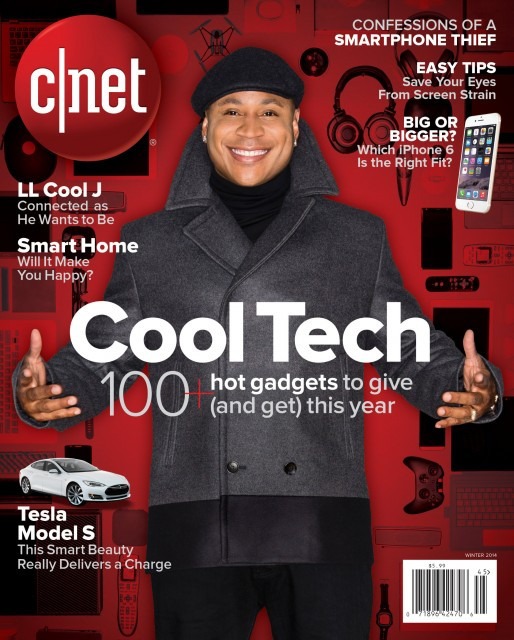
cnet_magazine_cover-1-514x640 Then of course, there is the controversial native advertising (I know, controversial to some, but the new norm to others) that some magazines have allowed to creep upon their content pages. As you read these ‘normal’ articles, it suddenly dawns on you (as the consumer) that what you’re consuming is not merely an article about margarine and its benefits or detriments, but an actual essay written by one company’s PR firm or staff member that in truth makes margarine for profit. Not that that particular fact is hidden among the wordage, but nevertheless, the article is presented in a way that it appears to be simple editorial.

But I am not here to judge, simply to state facts. Making money today in magazine media is no small feat. It is survival of the fittest and sometimes that means doing what one has to do to persevere.

And the fact remains that many digital entities are dipping their toes into the pool of print, seeing a lasting value that they can’t focus in on through just the web, from Airbnb and their magazine, Pineapple, to Porter, Pitchfork Review, C/Net, WebMD and Allrecipes, to name just a few.

AllRecipes-Magazine And while magazines may not be the towering moneymaking Titans that they were in the 1980s, they’re certainly as relevant and valuable to the buying 2015 public as they were thirty or forty years ago. And if we remember that fact, that ‘Audience First’ modus operandi, we’ll realize that is truly the only thing that matters throughout the whole exciting, fun, sometimes perilous journey of the magazine.

Apr15 Cover 300dpiLast but not least, I can’t conclude without a quote from Adi Ignatius, editor-in-chief of Harvard Business Review magazine, who told me in a recent interview with him, “When I’ve worked at legacy publications, we’d create this content that was basically designed to be an adjacency to advertising. Whatever, fine. Then the advertising disappears. Advertising definitely comes and goes; you have to make sure that you have a product at the end of the day that your readers actually care about, because the advertising dollar today will disappear tomorrow.”

Until next week, when Mr. Magazine™ continues the Commercial Role of the magazine with Magazines as Marketing Tools. Enjoy your week with a magazine!

h1

Magazines As Informers. The Social Role of the American Consumer Magazines. A Blast from Mr. Magazine’s™ Past: Dissertation Entries Part 8

April 17, 2015

Magazines as Informers
1983

Mr. Magazine™ in his official role as a professor and educator.

Mr. Magazine™ in his official role as a professor and educator.

In a country such as the United States, media critics claim that mass communication media should have a social responsibility toward the audience it is serving. In the case of magazines, for example, Roland Wolseley argues that they should have the obligation “to provide the people with a fair presentation of facts, with honestly held opinions, and with truthful advertising.” This obligation was obvious in the case of Curtis Publishing Co. v. Butts where the court penalized the Saturday Evening Post for not taking more time in checking its story on coach Butts. The Magazine Advertising Bureau agreed that magazines have more obligations than other mass media because they “do not have the spot news function of either the newspaper or the radio. With the advent of television and its role in entertaining, magazines began to focus more on informing people about different matters that help them with their daily living. This new focus covered a broad base of information. Topics such as how to prepare food better, or to cope with rigors of living, or even how to survive a nuclear war, are but a few examples of this new focus.

The role of magazines as informers is chiefly detected through the news they print, the meanings they give to events, and the descriptions used to identify those events. Benjamin M. Compaine divided this role of magazines into two parts: passive and active. The passive information, he said, is information intended for the reader’s entertainment or for his general knowledge. On the other hand, active information is intended for specific use. Compaine gave an example of each type. Passive information might be an article on the life of Billie Jean King, while active information might be an article on how to cure tennis elbow. Compaine also noted that the special interest consumer magazines deal with active information and that general interest consumer magazines deal with passive information.

Whether active or passive, the role of magazines as informers witnessed no basic change through the years. “There are just as many people who turn to magazines primarily for information,” the study found. “People regard magazines as an excellent way of keeping abreast of trends, keeping informed about new products, and securing information about individual and special interests and activities such as hobbies, decorating, family care, and fashion.”

John Tebbel went a step further in discussing the role of the magazine as informers. He said, “Among the consumer magazines, the informational function is preeminent, no matter what audience is being reached…We live in an Age of Information, and certainly magazines are the prime carriers of it.” Magazines carry information that is far different from that found in other media. This information, especially in the newsweeklies, has helped, according to John Hohenberg, to “fill an indefensible gap in the reporting of national and international affairs by less qualified daily newspapers of the nation and the bulletin-type coverage of radio and television.” This gap would only be filled by magazines in their roles as informers by offering the readers something quite different from that of newspaper or television information.

To put it in the words of Louis M. Lyons, then curator of the Nieman Foundation for Journalism at Harvard University, this information should “give the readers something to chew on, to mull over, something to stir his imagination, to reflect about, not only to broaden his awareness of current issues but to lead him to consider matters that are not now and may never be current issues, but should engage the attention of the questing mind.”

The above information was written in 1983 and is taken from a portion of my dissertation when I was at the University of Missouri-Columbia where I obtained my doctorate in journalism. And while the majority of the material still holds true, things have changed drastically in some areas.

Magazines as Informers
2015

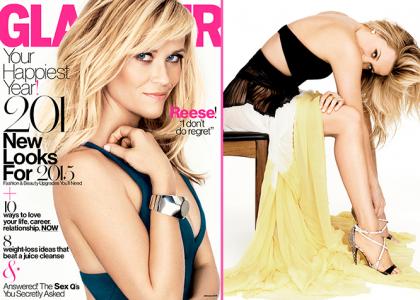
passive reeseactive cover

While many facets of magazine media have changed drastically over the years, this is one area that has not. In fact, I still stand behind every word that I wrote in 1983 concerning magazines as informers.

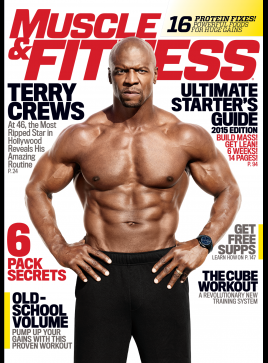
The voices remain status quo as well. In 2015, the passive information exists and so does the active. Examples today of Compaine’s observation could be: passive – Reese Witherspoon on the January 2015 cover of Glamour, offering a look inside her personal life with the statement “I don’t do regret,” and active – February’s Muscle & Fitness, which compels you to ‘Pump up Your Gains with a Proven Workout.’

Magazines inform on many levels: political, epicurean, fashion and beauty, science, celebrity, health, fitness, and the list goes on and on. The words of Louis M. Lyons have never been truer than they are today, the information one finds within the covers of a magazine should “give the readers something to chew on, to mull over, something to stir his imagination, to reflect about, not only to broaden his awareness of current issues but to lead him to consider matters that are not now and may never be current issues, but should engage the attention of the questing mind.” And without a doubt, they do.

Next week Mr. Magazine™ begins the journey of The Commercial Role of magazines then in 1983, and now in 2015.
Until next week…stay ‘informed,’ pick up a magazine.

h1

Magazines As Influencers. The Social Role of the American Consumer Magazines. A Blast from Mr. Magazine’s™ Past: Dissertation Entries Part 7…

April 3, 2015

Magazines as Influencers
1983

kanye Whether or not magazines have any effect through their role in exerting influence on the public is still debatable, as is the general question of effects of the mass media on the public. Paul Lazarsfeld and Robert Merton, two of the pioneering social scientists in this country, asked “What role can be assigned to the mass media by virtue of the fact that they exist?” Their answer was simple and brief: “It is our tentative judgement that the social role played by the very existence of the mass media has been commonly overestimated.” This does not mean that magazine owners, publishers, editors, and critics do not believe that magazines have an effect.

Roland Wolseley argued that magazines exert influence through two established policies: advertising and editorial. An example of the first can be seen in the 1968 issues of Esquire magazine. After the assassinations of Dr. Martin Luther King Jr. and Senator Robert F. Kennedy, the magazine adapted a policy of refusing advertising for any kind of guns. Science 83 and four other magazines, including Soldier of Fortune, have the same policy regarding cigarette advertising. On the other hand, decisions regarding the editorial policies of the magazine can be seen through the criteria editors set for their magazines. Page Knapp’s recent purchase of Geo made the news, especially with her argument that the editorial policy of the magazine will be shifted to show the brighter side of life, instead of the brutal and sorrowful side of it.

Esquire_magazine_April_1968 Wolseley considered this influencing role of the magazine as part of its social responsibility as well as its social effect. Although he believed that this role has been accomplished largely “through the magazine content rather than organized action,” Wolseley stressed that three departments have been influential: advertising, editorial, and promotion.

The above information was written in 1983 and is taken from a portion of my dissertation when I was at the University of Missouri-Columbia where I obtained my doctorate in journalism. And while the majority of the material still holds true, things have changed drastically in some areas.

2015

Texas_Monthly_Magazine,_January_2007_cover It’s a given fact that we rely on the media for news and facts that it deems important for us to know. This was true when the first piece of information was ever printed by a magazine or newspaper in ink and it still holds true today. However, a few things have changed. Where most of us trusted the news media and other information outlets implicitly; a few bad seeds have caused us to feel that trust was misplaced. We’re a little more wary and cautious these days.

With as much power as the media holds over public opinions and ideas, to say that magazines do not have a significant influence on society, maybe even more so today than in 1983 with the realms of cyberspace at its fingertips, is not only an understatement, it’s ridiculous.

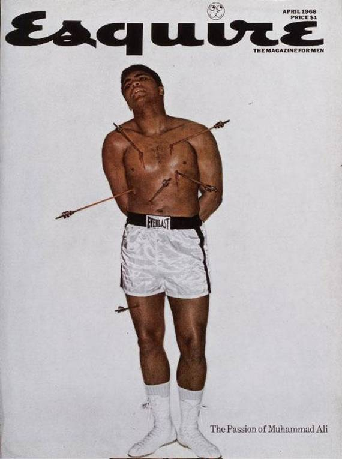
Let’s compare a few occurrences with those listed in 1983. First, Esquire was mentioned with its 1968 ban on gun advertisements in the magazine due to the tragic assassinations of Dr. Martin Luther King Jr. and Senator Robert F. Kennedy. By banning weapons ads in the magazine, Esquire was making a statement that couldn’t be ignored and wasn’t.

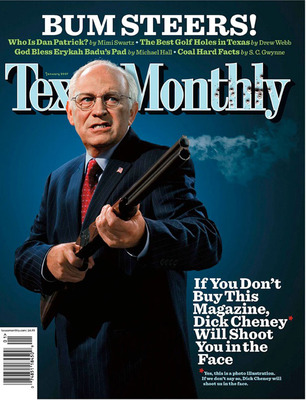
In January 2007, then Vice-President Dick Cheney was featured on the cover of Texas Monthly holding a smoking shotgun pointed out toward the reader with the cover line: If you don’t buy this magazine, Dick Cheney will shoot you in the face. The magazine was playing off the famous 1973 National Lampoon cover of a hand holding a gun at a dog’s head with a similar cover line and using the Vice-President’s hunting accident where he shot a colleague in the face as the basis for the spoof.

Questions had already been raised regarding the shooting and media’s satirical portrayals could certainly have been said to ‘stir the pot.’ Did it influence anyone’s opinion about the shooting? Maybe no one can say for sure, but it’s a given it opened up a few heated discussions about whether it was in bad taste or good fun.

The second point of interest mentioned in my 1983 dissertation was several magazines’ policies on no cigarette ads. Eliminating teen-smoking and the overall ill effects of tobacco played an important role in how people saw tobacco products then and now, compared to eras like the 1940s and 1950s where everyone smoked and it was considered cool.

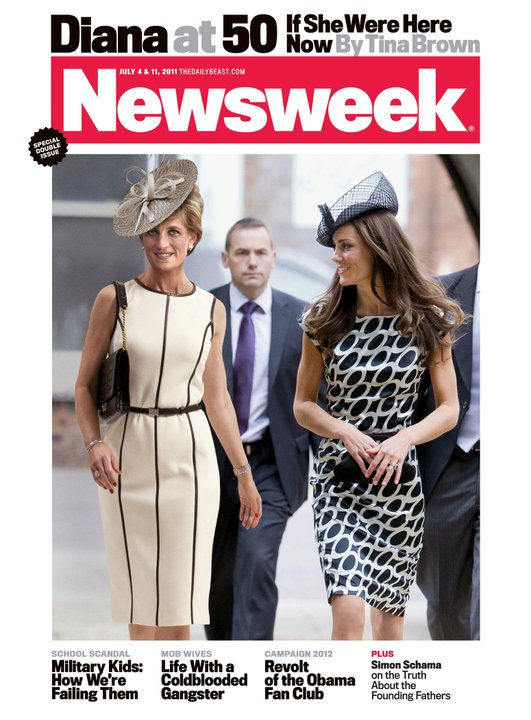
diana and kate A computer-generated photo on a 2011 Newsweek cover of Princess Diana and Kate Middleton walking side by side was considered in very bad taste by some people who saw it. The representation showed the women dressed very similarly, with their heads inclined toward each other as if they were talking. The issue was geared toward what would have been Diana’s 50th birthday that year.

The article inside touted author and then-editor, Tina Brown’s take on what Diana’s life might have been like had she lived. At the time, The London Telegraph called the cover photo “ghoulish” and gave Brown the moniker “Newsweek’s grave robber.”

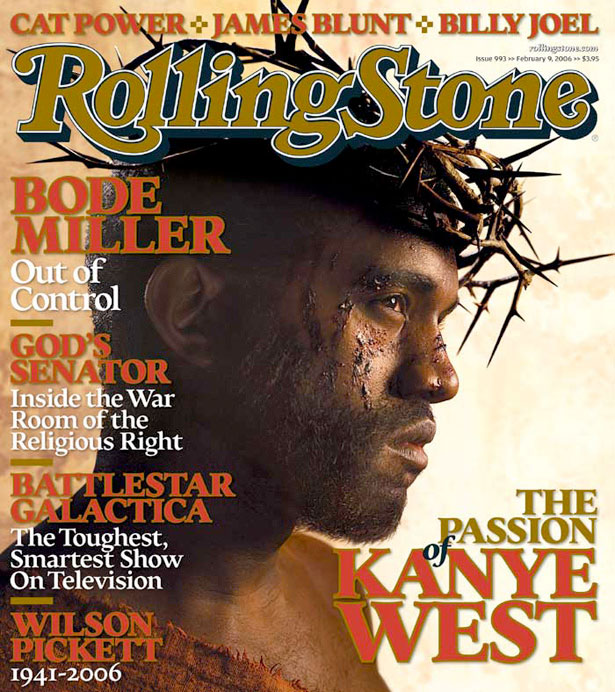
Saying that article and that cover had no influence over public opinion about what people consider a sacrilege would be like saying the 2006 Rolling Stone cover of Kanye West, with a crown of thorns upon his head and obviously depicting Jesus at the time of crucifixion, had no impact on what people deemed appropriate and inappropriate.

Magazines have played many roles over the years when it comes to society and the humans who occupy it, but none more so than that of influencer. In fact, the next time you pick up that bottle of shampoo at the store or decide not to buy that cut of meat because it’s just not healthy for you; odds are it was a magazine ad or article that influenced your decision.

Until next time when Mr. Magazine™ talks about magazines as Informers…

h1

Magazines Come To Jesus For Their Salvation… A Mr. Magazine™ Musing.

March 30, 2015

“Come to me, all you who are weary and burdened, and I will give you rest.”

Jesus 2015 7-7 This call from Jesus is found only in Matthew 11:28-30 and not in any of the other three Gospels. The request is fairly simple and straightforward: people whose souls are burdened by worries and troubles of this world can come to Jesus Christ and receive forgiveness, healing, help and peace of soul and mind. And in the world that we live in today, never has that request been more appealing and needed.

It would seem that Jesus’ invitation has also been accepted by the magazine industry as well; apparently needing a Savior isn’t limited to just those of us in the human race, now the weary and encumbered magazine market seems to be depending on Jesus too. Religious-themed covers of magazines, both with frequency and special editions, have long been a trademark in the world of magazine media, but more recently and specifically the topic of Jesus and his life and crucifixion have flooded magazine covers across the publishing spectrum.

And Jesus is not alone, but the Women of the Bible, the Holy Land, and the Apostles are all there too. It is a simple, yet ingenious idea, to present content from the Bible and dress it up like a magazine and then sell it to a hungry audience. Add to the fact that the editorial cost is almost non-existent, since those magazines aren’t paying royalties to Matthew, Mark, Luke and John or anyone else from the Biblical team, and the financial attraction is obvious. The message is clear in both the human world and the ink on paper sphere; for Christians and Christian-themed magazines, Jesus can and does save.

However, the business of consumer Christianity is a large one and is not by any means confined to the Christian faith alone. A lucrative and compelling business; marketing Christianity and religions of every faith can be a tricky feat; one where the question of, “Where is the line drawn when it comes to profiteering from religion and regaling in it?” might be asked. And then there is the reality of the matter; most don’t even give it a second thought.

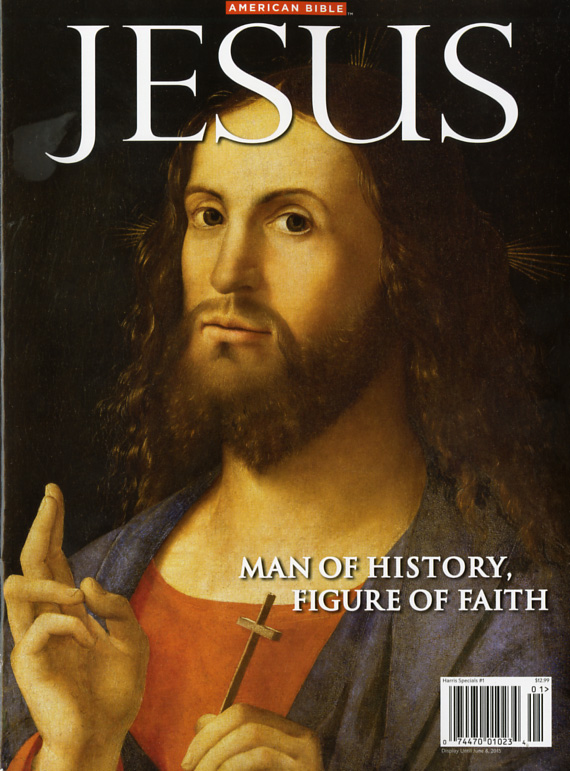
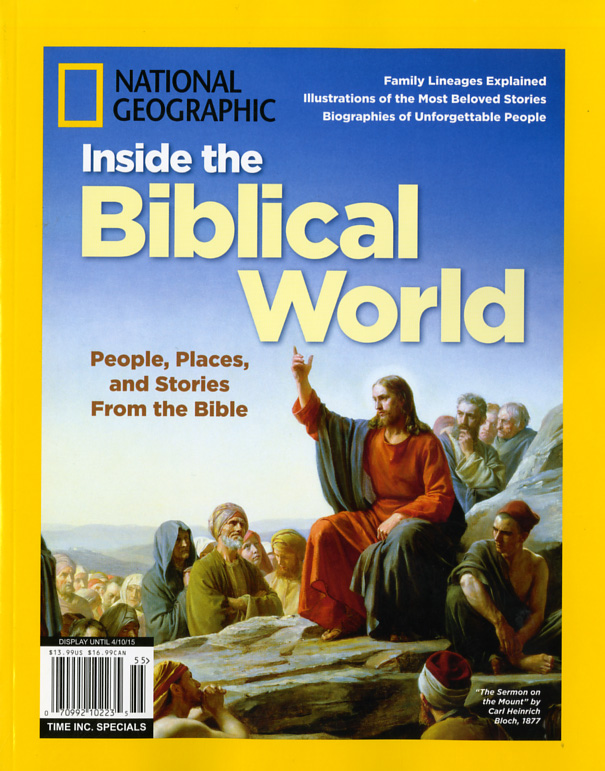
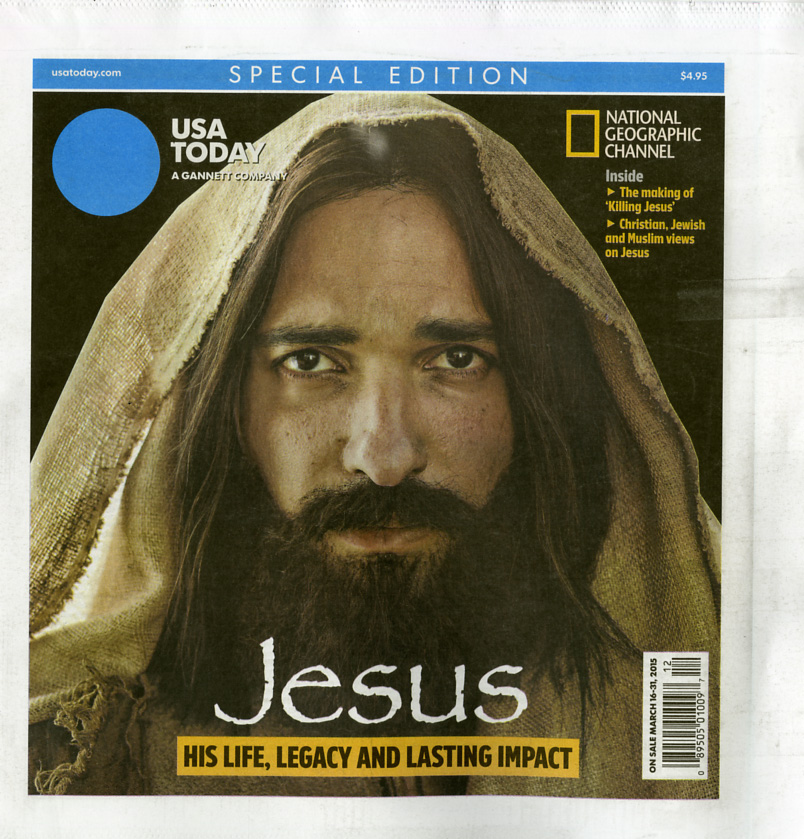
But some do and to those publishers, it’s all in the representation. When illustrating anything about God and Jesus, the depiction must be a true and accurate one, done with care, good taste and reverence. While the dollars collected into a publisher’s coffers may be vital for that given issue, there is a larger and more important responsibility that comes into play here: deference and respect for the subject matter. God isn’t taken lightly, especially when it comes to selling information about Him. Here are a few recent Special –issue titles that excel in that mission:

Women of the Bible – CBS Collector’s Edition
Jesus – American Bible
Inside the Biblical World – National Geographic
Jesus, His Life, Legacy and Lasting Impact – USA Today
50 Ways the Gospels Can Change Your Life – Time Home Entertainment
Women in the Bible – Beckett Entertainment
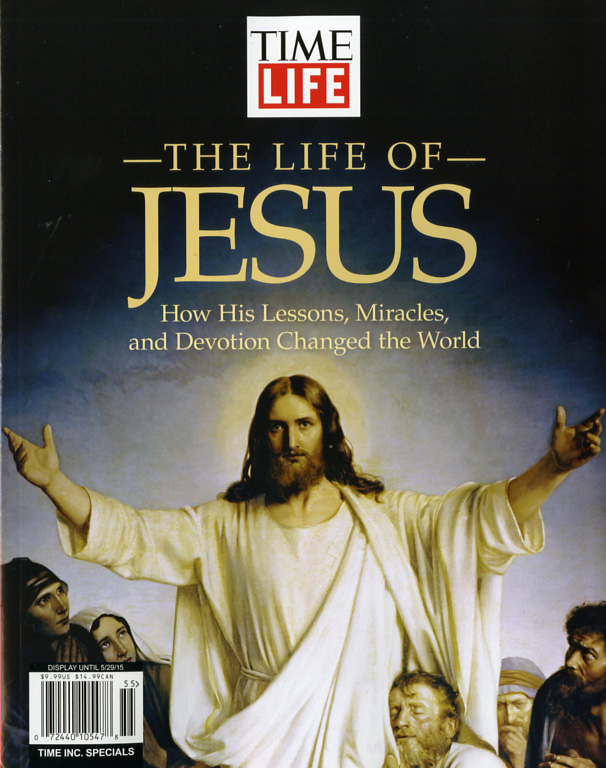
The Life of Jesus – Time Life
Jesus: His Life After Death – Newsweek
Jezus – Published in the Netherlands
Herod’s Palace-Fortresses – Biblical Archaeology

Jesus 2015 1-1Jesus 2015 2-2Jesus 2015 3-3Jesus 2015 4-4Jesus 2015 5-5Jesus 2015 6-6Jesus 2015 8-8Jesus 2015 9-9Women in the Bible-15

I’ve always said that magazines are reflectors of our society and religion is a highly important component of that infrastructure. And it’s a given that no other medium in existence can give God its best the way magazines can.

SGD-1505-cover And judging by the number of copies sold from the daily meditation book, Jesus Calling, and the decision of Bauer Publishing to launch Simple Grace magazine on April 8 (yet more proof endorsing the power of magazines as reflectors of the societies they exist in), this uplifting trend seems to be beneficial to all involved.

As the Easter season approaches for Christians everywhere; there is no better lasting, reading experience than that of the pages of a magazine with JESUS in its title. So, what are you waiting on; you still have a few days to get to the newsstands and pick up a magazine or two to help you celebrate the Jesus experience. And while you are at it, pick up another magazine or two to help you plan your Easter feast, step by step, in a way that only magazines can help you do.

Until the next Mr. Magazine™ musing…Happy Easter!

h1

Magazines As Literature Purveyors. The Social Role of the American Consumer Magazines. A Blast from Mr. Magazine’s™ Past: Dissertation Entries Part 6…

March 27, 2015

Magazines as Literature Purveyors
1983

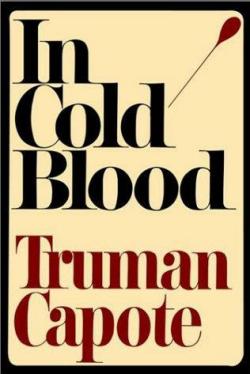
inkonpaper_blog_ad Although other media might surpass magazines in the basic four functions, there is one role no other mass medium could hope to match or steal from magazines. It is their role as a platform for literature. How many remember Hemingway for “The Old Man and the Sea” because it appeared in Life, or Truman Capote, whose “In Cold Blood” first appeared in The New Yorker? American magazines have made some outstanding contributions to American literature and will continue to do so, for no other medium is willing (not to mention, able) to do the same job in the same way magazines can do it.

old-man-and-the-sea-review The role of the magazine as a platform for authors and literature dates back to the day the first magazines were published. Benjamin Franklin, who is regarded as the first person to start a magazine in the United States (in 1741), wanted a magazine to be no more than a collection of book reviews. In fact, magazines “have given rise to a new epoch in the history of intellectual improvement,” said the editor of The Latter Day Luminary, T. Edgar Lyon, in his introduction to that magazine in 1818. “Many young authors, who have risen to considerable eminence, have here made their first attempt in composition.”

coldblood.jpg.CROP.article250-medium The role has changed through the years from strictly reviewing books to including new pieces by promising authors. Newsworthy books and memories are excerpted before they are published. In some cases the whole book in serial form is published in a magazine before being published in book form.

The above information was written in 1983 and is taken from a portion of my dissertation when I was at the University of Missouri-Columbia where I obtained my doctorate in journalism. And while the majority of the material still holds true, things have changed drastically in some areas.

2015

tom wolfe Throughout the 20th century, magazines continued to showcase books and novels between their covers. From the early writing labors of Stephen King, when he wrote and sold short stories to men’s magazines such as Cavalier, that were later republished in the 1971 collection, “Night Shift,” to Tom Wolfe’s 1984 novel “The Bonfire of the Vanities,” which first ran in serial form, 27 different entries, in Rolling Stone; magazines have displayed their devout friendship to literature.

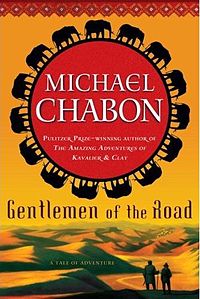
nightshift And more recently, 2007, Michael Chabon serialized his novel, “Gentlemen of the Road” in The New York Times Magazine, so the benevolence continues into the 21st century as well.

The definition of purveyor that applies to the ages-old relationship between magazines and literature would have to be: a person or group that spreads or promotes an idea or a view. And magazines have been promoting all types of literature and compositions since their inception.

gentlemen of the road Authors of great literature and not-so-great literature have long-recognized the importance and benefits of a significant liaison with magazines. It is a platform that can promote the unknown author with as much gusto as the King’s and Capote’s of the world, showcasing their creativity and gifted imaginations in page-form, allowing the audience to read for themselves the work before they buy the book, or in some cases, before it’s even published in book-form.

This service is by far something that no other medium has grasped or even attempted to grapple with, except for the world of digital, where a serial style of fiction can be found all over the internet. Unfortunately, the experience is a nominal attempt to replicate or even surpass what print magazines have been doing excellently for generations. While the endeavor of cyberspace can certainly be appreciated by some; the impact falls short in comparison to the history of the printed magazine in this venture.

Realizing the import and implications of magazines and their place in the annals of our times; one must certainly never forget their residual and highly valuable effects as purveyors of the written word.

Until next week, when Mr. Magazine™ reflects on Magazines as Informers…

h1

Magazines As Initiators. The Social Role of the American Consumer Magazines. A Blast from Mr. Magazine’s™ Past… Dissertation Entries Part 5…

March 20, 2015

Magazines As Initiators
1983

inkonpaper_blog_ad The role of magazines as initiators is a complex one because it is most often linked to its role as a reflector. If magazines do exist in circles, as Roland Wolseley said, then they should play the role of both initiators and reflectors. Over the years, magazines have been the only place for certain stories and pictures to exist or to start stirring things up from that ground.

Whether it was depicting the first woman to be shown lighting a cigarette or a discussion of corruption in government or big business, it appeared first on the pages of the national magazines. As stated by Benjamin Compaine, “Magazines have often taken the initiative in delving into national issues and problems.” Magazines have played this role since the days of Ida Tarbell and Lincoln Steffens at McClure’s. It was in the Ladies Home Journal in 1919 that the first woman was shown lighting a cigarette and in 1922 the first woman was shown drinking alcohol.

The above information was written in 1983 and is taken from a portion of my dissertation when I was at the University of Missouri-Columbia where I obtained my doctorate in journalism. And while the majority of the material still holds true, things have changed drastically in some areas.

2015

In today’s digital age, print magazines still hold the number one spot as initiators of conversation. It doesn’t matter what one reads online; what website catches their fancy, or what comment receives the most thumbs-up on a particular social media site; magazines can unnerve, please, or move an entire nation simultaneously.

While the content of controversy may have changed since the 1920s; not too many people today would blink an eye at a woman lighting a cigarette or having an alcoholic libation; the response to the topic in discussion has not.

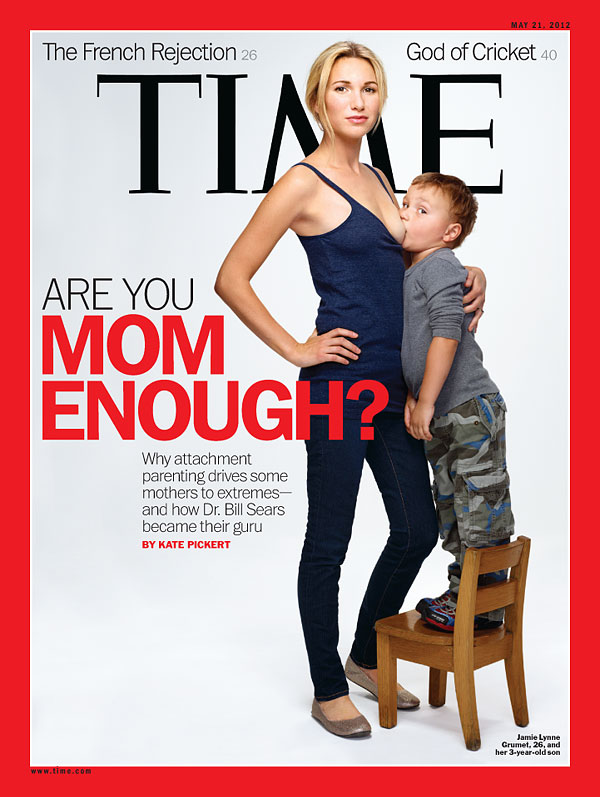
Time mom nursing For example, the May 2012 cover of Time magazine showcasing Jamie Lynne Grumet nursing her 3-year-old son. This particular cover initiated a firestorm of debate on the subject of attachment parenting. The entire country was talking about it. Some were aghast and some were pleased that a mother would continue to breastfeed (a natural act that’s considered the best possible nutrition for a child) and some were blasé about the whole thing; seeing it as no big deal. Regardless of the majority’s opinion, rest assured there were plenty of them and they all stemmed from a printed magazine’s cover. Initiation at its best.

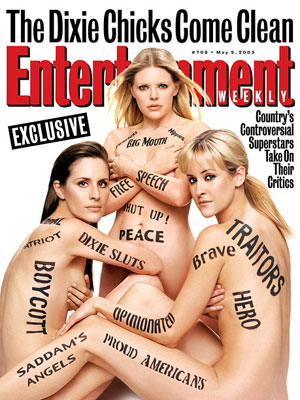
Dixie-Chicks-EW-COver Entertainment Weekly decided to have the Dixie Chicks on their May 2003 cover at the height of their fall from country grace with comments made about President George W. Bush during the run-up to the invasion of Iraq. Lead singer, Natalie Maines’ words hit a very sour note with their country music fans across the country and sparked criticism from all facets of media.

Yet, Entertainment Weekly used their forum to ignite and initiate the ‘other side’ of the argument; the Dixie Chicks’ side, and in turn roiled up the turbulent seas even more. But initiators do what they do best: they initiate.

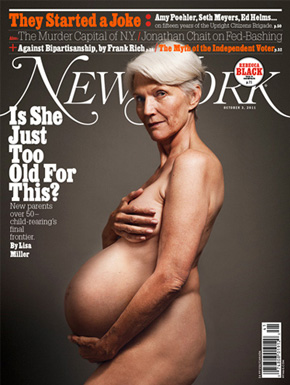
new york magazine And then there was the Photoshopped image on the cover of New York Magazine in 2011 of a woman in her 60s, naked and pregnant, replicating the 1991 Vanity Fair cover of a very naked, very pregnant Demi Moore. In the first case, the woman was neither naked nor pregnant; she was just digitally made to look that way. Maybe an unusual way to integrate print and digital, however it worked.

And while having pregnant moms on the covers of magazines is not controversial in and of itself, having one who is over the age of 50 stopped consumers in their tracks. And it initiated an ongoing pro and con exchange about older parents.

v2-Rollingstone When Rolling Stone put accused Boston Marathon bomber Dzhokhar Tsarnaev’s face on the cover of the July 2013 issue, it initiated such a backlash of controversy across the country that it’s still being talked about today in some circles. The magazine took a huge chance when they placed someone like Tsarnaev in such a prominent spot like its cover. The photo of the man, who was accused of killing three people and wounding more than 200 in the tragedy, was said by many to be more of a depiction of youth than guilt. However, there were those that thought it was a good likeness of a man who appeared to be an unlikely terrorist and that the public should be aware of that fact.

And whether you agreed or disagreed; you certainly couldn’t argue the fact that it initiated a communication that may have never been opened up without that provocative Rolling Stone cover.

As I wrote in 1983, magazines have played the role of initiators almost from the beginning, delving into national issues and problems as Compaine stated. And they do it in a way that is inimitable, with an impact that reverberates around the world.

Until next week, when Mr. Magazine™ continues his journey with a blast from the past.