Archive for the ‘A Launch Story…’ Category

h1

Making Digital Permanent OffScreen: The Mr. Magazine™ Interview With Founder/Editor Kai Barch. A Launch Story

February 26, 2015

“There were a number of reasons (he chose print) and one of the first was really quite selfish. I was doing web designs for clients and I got really tired of producing something that didn’t last very long; whenever you create a website or some other digital design, it lives as long as the next release cycle or the next version number.” Kai Brach
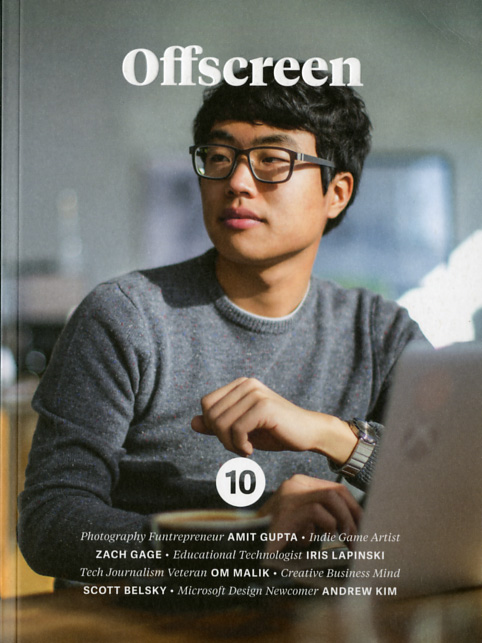
Issue 10 of Offscreen magazine.

Issue 10 of Offscreen magazine.

There is absolutely no doubt that we live in a digital age. From our laptops to our smartphones; being onscreen is a way of life for humans these days. But who are the people out there molding the web and building these virtual worlds that we all so embrace? Where are their stories; their tales of success and failure? Finally there’s a magazine that points to that place on the map; that continent called Cyber.

Offscreen is a print magazine all about people who use the internet and technology to be creative, solve problems, and build successful businesses. It’s an ink on paper that embraces digital – some might say integration at its best.

Kai Brach is a one man operation of Offscreen; he is the publisher, editor and art director for the publication. For ten years he was a web designer before he decided that he needed something more tangible than the virtual worlds of the internet to fulfill him. He needed to feel his work would last beyond mere pixels; he needed the collectability of print. He needed more than a software update; he needed the final version.

I spoke with Kai recently through Skype from his home in Melbourne, Australia. We talked about the life of a web-designer-turned-print-publisher; the fact that he taught himself InDesign and the basics of Magazines 101. Kai is an extremely ingenious and talented young man who knew what it would take to lift him to the next level of his creativity – from pixels to print – he found fulfillment in the printed word.

So sit back and enjoy this unique conversation with a man who learned for the first time what the phrase ‘final version’ truly means – a printed magazine – the Mr. Magazine™ interview with Kai Brach, Publisher & Editor, Offscreen…

But first the sound-bites:


On why a web designer would choose a printed product:
There were a number of reasons and one of the first was really quite selfish. I was doing web designs for clients and I got really tired of producing something that didn’t last very long; whenever you create a website or some other digital design, it lives as long as the next release cycle or the next version number.

On the launch of Offscreen:
It was a weird feeling because you send it off and a few weeks later this product, this magazine, comes back; especially for someone who hasn’t ever done anything in print before; it was a pretty amazing experience.

On his major stumbling block with the launch:
On the editorial side, and I still find this really challenging, working with 40 or 50 different contributors and getting them to give you what you want when you need it. That was and still is the biggest challenge of making any magazine; it’s working with the contributors.

On his most pleasant surprise:
The good thing was when I got the first issue in the mail, that was great, but what was even better was seeing other people get it in the mail and talk about it on Twitter and put the photos on Instagram, letting me know that opening the mail smelled amazing and that they had completely forgotten that print had these other multi-sensory experiences that they don’t get when they sit in front of a screen all day.

On whether he would ever work in the digital realms again:
Sure. I think everything has an expiration date and every project we do comes to an end at some point and I would never say I would not go back to digital.

On what keeps him up at night:
I think most of my worries that give me sleepless nights relate to contributors who are not getting back to me or are being late or telling me that they can’t do something at the last minute. Contributor worries definitely keep me up at night.

And now the lightly edited transcript of the Mr. Magazine™ interview with Kai Brach, Publisher & Editor, Offscreen…


Samir Husni: I was fascinated with your own personal digital background and the content of your magazine is all about the web and digital. Why did you choose print for your magazine?
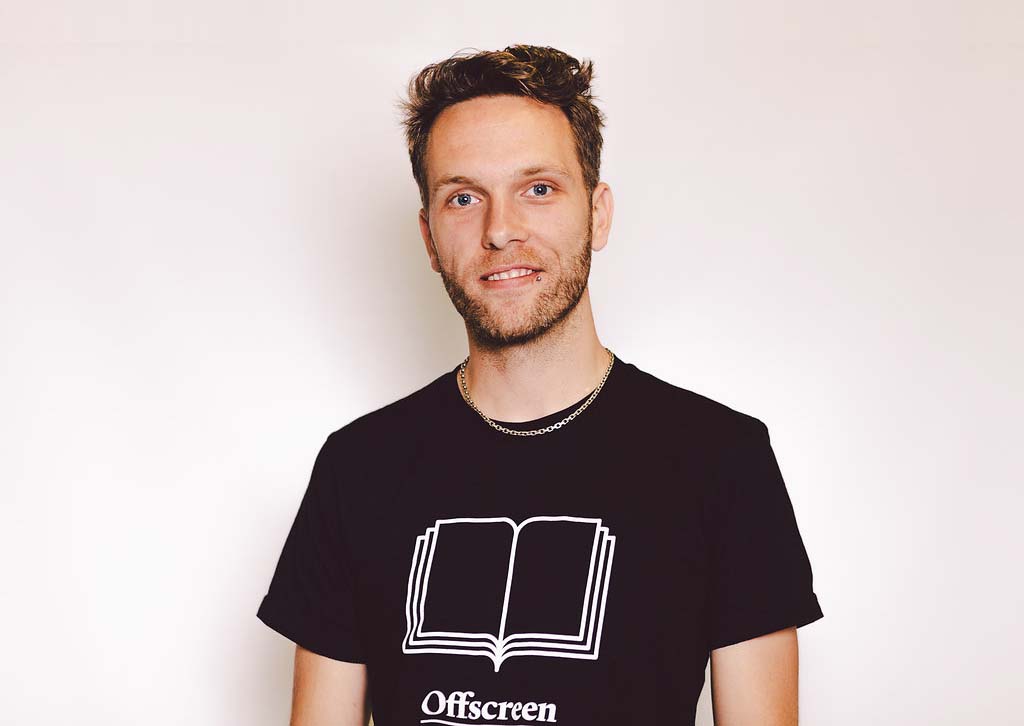
Kai Brach, founder, editor and publisher Offscreen magazine.

Kai Brach, founder, editor and publisher Offscreen magazine.

Kai Brach: There were a number of reasons and one of the first was really quite selfish. I was doing web designs for clients and I got really tired of producing something that didn’t last very long; whenever you create a website or some other digital design, it lives as long as the next release cycle or the next version number. So you produce something and it’s online now and two weeks later it’s already changed or it’s gone and disappeared into the ether that is the internet.

This process was not fulfilling at all and I really wanted to produce something that lasted longer than the average website. I wanted to create something that I could put on my shelf and say, look, this is what I made, and it will last as long as I have it on my shelf.

That was one of the reasons that I decided I was going to stop doing client work and try my hand at something completely different. If it turned out OK – I knew that I would be proud of it.

The other reason was there’s so much stuff being produced online. I personally find myself either reading something on my Kindle, iPad or my iPhone, which I don’t have an iPad any longer, but when I read something on any of my mobile devices, I get probably 10 minutes of read time before I’m interrupted by an email or some other notification. Or I’ll try to scan over articles or longer reads, but I find myself never engaging with them properly. And I noticed that whenever I read a book or a magazine on my travels, when I’m on the train or on the plane, that’s when I actually enjoy reading. So, I thought that it would be nice to have the things that I care about, reading about the web and how people build companies and how people are creative with technology, to read about that in a format that I actually absorb properly and not just scan through or quickly run over because I have another 15 messages to answer.

And so print was becoming almost like this island where I could go and relax and discover the actual process of reading again. It was really nice and calming. And that was the other reason; I just wanted to create something that people would not find distracting and that they wouldn’t feel pressured to read on the go.

So those were the main reasons, I guess. And then, of course, it’s hard to charge money for digital content, where you can put it in a magazine and provide a nice product experience; you make it something people want to keep, a collectable item, it’s then easier to charge people for it. Which doesn’t necessarily mean that you make a lot of money with it, because in publishing, and I’m sure you can attest to this fact, it’s really hard to actually make a lot of money, especially when it comes to independent publishing.

Samir Husni: Tell me the story of the launch; were you in Germany or had you already moved to Australia when you came up with the idea? Briefly, recount for me the launch of Offscreen.

Kai Brach: I was already in Australia and working as a web designer, but then I decided to stop doing that and gave myself six months to figure out what I wanted to do. I started traveling for those six months. I went to Europe and the U.S. and a few other places and I actually met up with quite a few people that I knew from the web industry.

It was during that time that I actually started to enjoy the stories that happened behind the scenes. We talked to a start-up guy who was very successful, but when you talk to him personally, you realize he went through a lot of failed attempts before he became successful and those stories that I was hearing from different people while I was traveling, encouraged me to somehow put them in a book or e-book or podcast, somewhere I could publish them.

So, I came back from my travels six months later and I decided at that point that I wanted to make a print magazine. I didn’t really know where to start, but I contacted some other magazines that I had sitting on my desk and asked them very simple questions about how to get started; what tools do you use; what production companies do you use; what printer do you use; just lots of questions.

Then I emailed a lot of printers in Germany and Australia, because I know German and the Germans know a thing or two about the printing press. (Laughs) I contacted various printers and asked them quotes based on very random numbers that I thought would make sense. I asked for a quote for 3,000 copies in the beginning and then I compared quotes and pretty much decided; OK, Germany is the only place where it makes financial sense to produce a magazine because in Australia it was extremely expensive. The cost of living is really high here.

From there, I decided to make a magazine based on the quote that I had. I had a quote based on 96 pages and I knew that was my limit. I put together a spreadsheet of people that I wanted to have in the first issue. Some of the people that I met during my travels were in the first issue, but also people that I knew through Twitter and Facebook were in there too.

Basically, I emailed a lot of people just asking them questions such as whether they would be interested in doing an interview with me and have that conversation printed in a magazine.

Of course, if you ask a web designer or some other digital person if they want to do an interview for an exclusive print magazine, you usually get some frowns and some weird looks, but once they saw the first issue, they really appreciated the magazine as well.

So, I pretty much taught myself just like when I did web design. Then, I jumped online and I actually did a course on a website called linda.com, which is an online tutorial where you pay $25 and you can watch videos of people using InDesign and preparing things for print and using color management; all those sorts of things. I taught myself how to use InDesign in a couple of weeks and of course, I used a lot of magazines that were sitting on my desk as a source of inspiration. I copied a bit here and there, but tried to be creative in other ways and after three months or so I did the PDF version of the first magazine and sent that to the printer in Germany and then I waited for four weeks or so and pretty much camped in front of my mailbox for the first issue to arrive.

It was a weird feeling because you send it off and a few weeks later this product, this magazine, comes back; especially for someone who hasn’t ever done anything in print before; it was a pretty amazing experience.

Samir Husni: What was the major stumbling block with this launch and how did you overcome it?
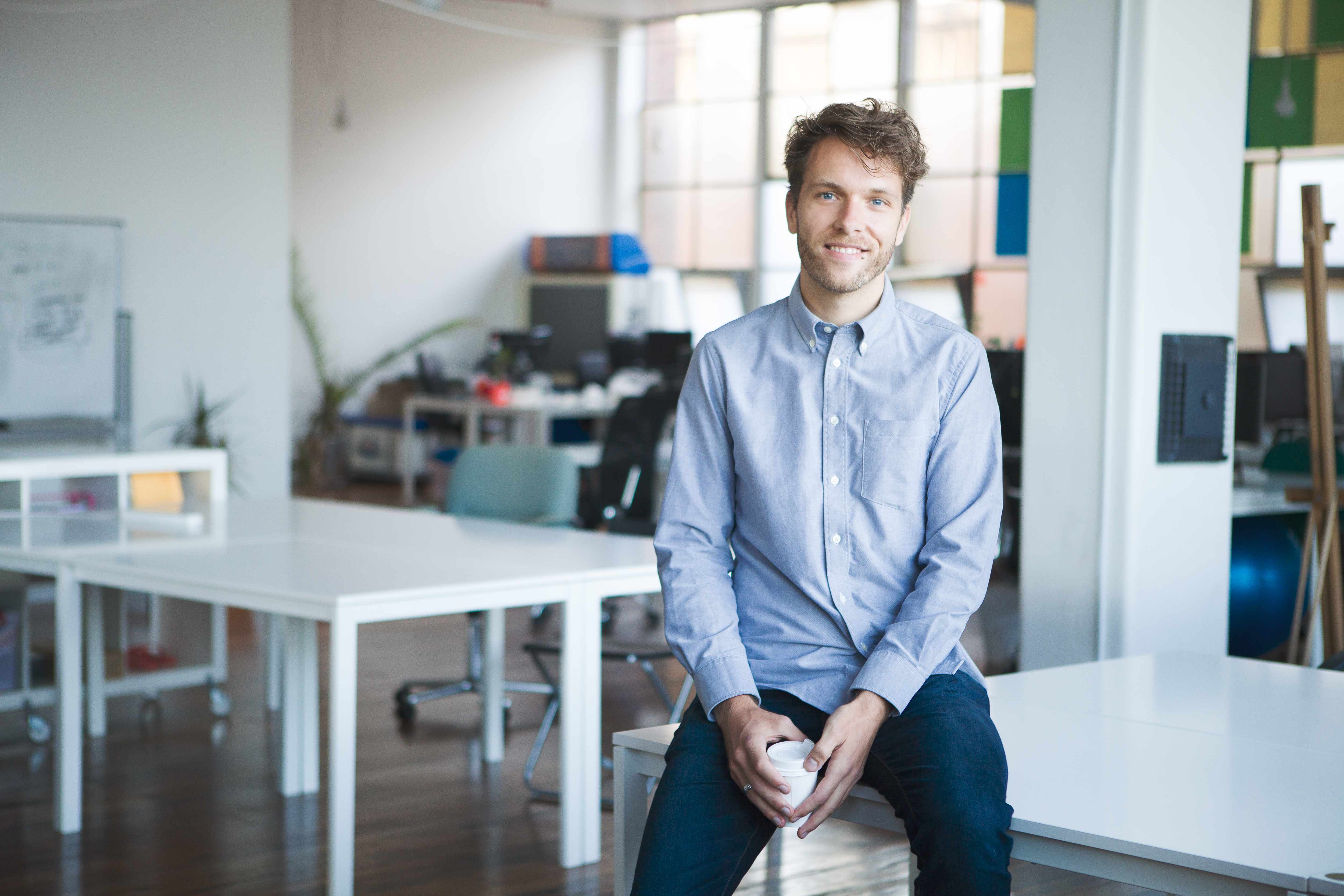
Kai  Brach, bringing virtual to reality.

Kai Brach, bringing virtual to reality.

Kai Brach: There’s the production side and then there’s the editorial side. The production side is, of course, figuring out how to avoid typographic issues, making the writing good, issues such as that. And that was a big challenge for me, because as a web designer I’m not used to creating something that has a final version. As a web designer, you produce something; you put it online and then you iterate and iterate and iterate until it’s as good as it can be. Coming to that final version was a big challenge for me on the production side.

On the editorial side, and I still find this really challenging, working with 40 or 50 different contributors and getting them to give you what you want when you need it. That was and still is the biggest challenge of making any magazine; it’s working with the contributors, especially if you’re trying to interview really busy people and get them to sit down and do a lengthy interview with you.

On top of that, keep in mind that I’m the only person behind Offscreen, so there’s no team. I do all the editorial, design, publishing and distribution myself. Every day I put on all these different hats and sometimes you get stuck in a certain area and it just doesn’t move forward.

So production was difficult because I was a web designer before I was a print magazine publisher and it was really hard to come to that final version and send it to the printer and be happy with it.

And the biggest challenge on creating the editorial side of it was dealing with so many different people at the same time and you have all these deadlines lined up.

Samir Husni: What was the most pleasant surprise?

Kai Brach: I think getting the magazine in the mail; the first issue, especially, was amazing. Unfortunately, other issues you get after that; you always see the things you can improve upon, instead of the things that you’ve done right. If you ask any publisher, he’ll always tell you that most of the time they always see things that are wrong with it, instead of the great things about it.

The good thing was when I got the first issue in the mail, that was great, but what was even better was seeing other people get it in the mail and talk about it on Twitter and put the photos on Instagram, letting me know that opening the mail smelled amazing and that they had completely forgotten that print had these other multi-sensory experiences that they don’t get when they sit in front of a screen all day.

Hearing the feedback from people with every single issue is what I live on and what I look forward to.

Samir Husni: Do you ever see yourself going back to web design and working within the digital sphere again?

Kai Brach: Sure. I think everything has an expiration date and every project we do comes to an end at some point and I would never say I would not go back to digital. At the same time, I’m still part of digital. I’m interviewing all these people and I also design and run my own website and I do a lot of social media activity. So, I’m still a part of digital and working within the digital industry as much as I am working in print.

But who knows what the future holds? Print is a great project and I really enjoy it, but I think every publication has a point in time where it either completely reinvents itself or it just stops. The makers or the publishers try their luck with something else.

Samir Husni: I hope you have a long life with Offscreen because the concept itself and the stories you’re telling, the people you’re profiling, is our world today. We live in a digital age, nobody can deny that. But very few people actually know those stories and I think you’re not only doing a great favor for the printed magazine industry, but also the digital world. You’re taking the fantasy out of digital and the virtual out of digital and bringing it to reality.

Kai Brach: I think there’s a lot of content that’s similar to what I do in the magazine that exists online. But for a lot of people when you put it into a magazine; first of all, it reaches a different category of readers. With magazines there is a category of readers that like to discover new things. When they go to shops or they see a magazine on a coffee table somewhere else, it’s a different type of reader that gets excited; you can’t really compare them with someone who subscribes to a certain blog or follows someone on Twitter.

But at the same time the content online is similar, there are a lot of interviews on podcasts and in e-books that everyone can listen to. Of course, my housemate who’s an architect probably wouldn’t listen to a two hour podcast about a digital product. So, for those people, they will discover that world through a magazine that they stumble upon. Would they stumble upon a podcast? Not really. (Laughs)

Samir Husni: Tell me a bit about your background. Are you originally from Germany, or did you grow up in Germany? And what’s the link between Germany and Australia?

Kai Brach: I’m German. I grew up there and lived there until 2002. I moved to Australia and settled here about six years ago. I was working as a web designer and I also did a lot of traveling and spent a few months in New York and went to other places around the world. I worked while I was on the go. I think that was one of the things that I was worried about when I started the magazine: would I be able to maintain that nomadic work pattern that I had, because I love being flexible and being able to go anywhere and work from my laptop. Luckily, I can still do that, but there are a few reasons I need to establish an address and be at home for, in terms of publishing. But 90% of it I can still do on the road, so I still travel.

Samir Husni: And you’re based in Melbourne now, right?

Kai Brach: Yes, in Melbourne. I spend a bit of time every year in Berlin, maybe one or two months. There is a lot of activity, in terms of independent publishing in Europe at the moment. I attend a lot of conferences and it seems for independent publishing; Europe is the place to be at the moment.

Samir Husni: My typical last question; what keeps you up at night?

Kai Brach: (Laughs) What doesn’t keep me up at night? Today I actually woke up at 4:00 a.m. Not because I was worried, but because I woke up for something and then I started thinking about my emails and how I had confirmed most of the interviewees for the next issue.

I think most of my worries that give me sleepless nights relate to contributors who are not getting back to me or are being late or telling me that they can’t do something at the last minute. Contributor worries definitely keep me up at night.

Samir Husni: Thank you.
h1

A “Collective Quarterly” Show And Tell Travel + Design Magazine. The Mr. Magazine™ Interview With Editorial Director Seth Putnam. A Launch Story.

February 24, 2015

“When I deal with the internet, I don’t feel there’s a sense of accomplishment necessarily or permanence with it; it’s so fleeting. And I wonder if that’s something that my generation is responding to, in terms of something tangible. When I finish reading a book or a magazine; I can look at it and say, I finished that, rather than just moving on to the next click or page.” Seth Putnam

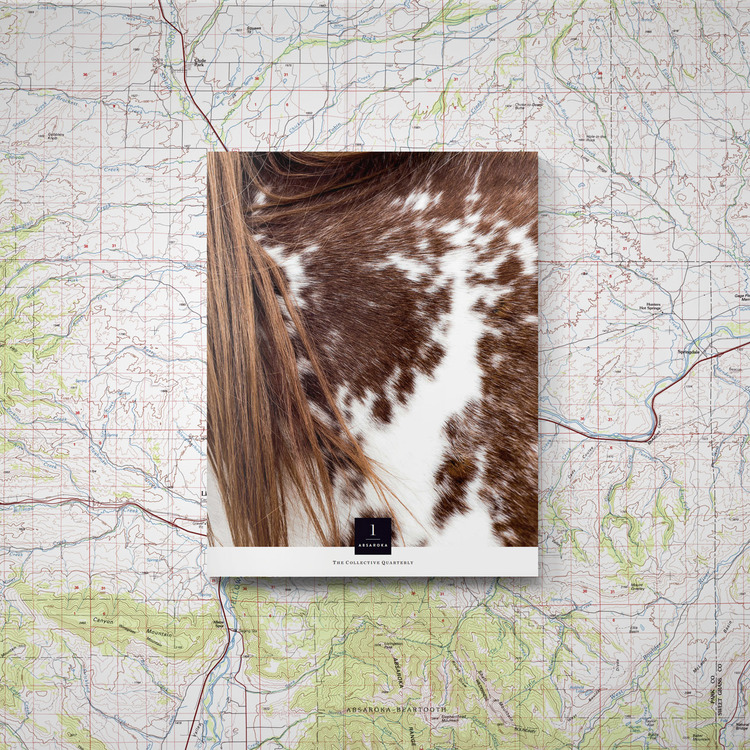
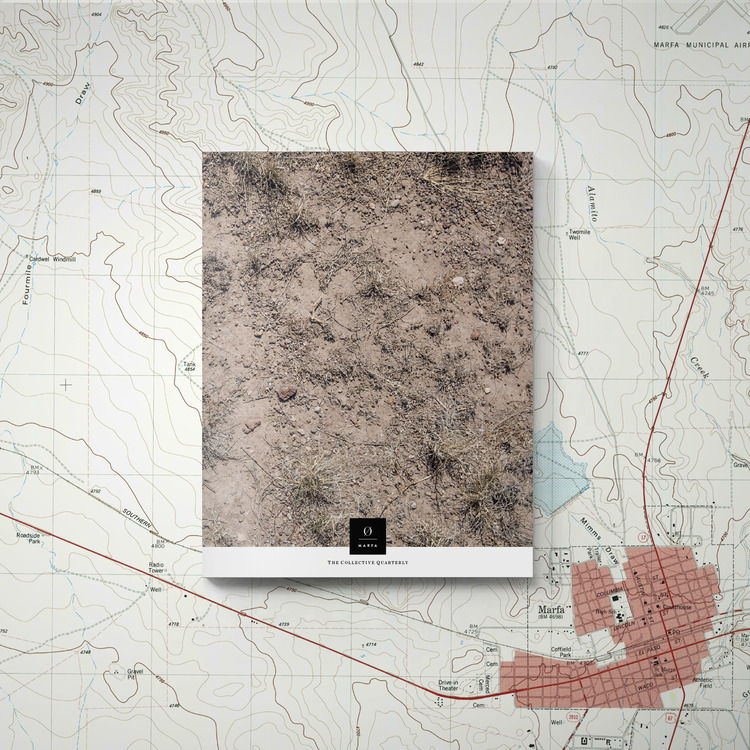
Issue Zero of The Collective Quarterly

Issue Zero of The Collective Quarterly

Bohemian destinations and creative accomplices who revel in the art of the uncommon, if that description seems unique and intriguing, then the magazine Collective Quarterly is calling to you.

Each issue of the magazine follows select craftspeople to an offbeat location, where they design uncommon objects while the cameras and writers capture their creative processes. It’s a journey deeply rooted in the heritages of the destinations that they visit. And they are the ‘Collective.’

Seth Putnam is the editorial director of Collective Quarterly and Jesse Lenz, an accomplished illustrator, is his business partner and creative director for the magazine. The two together have spawned an absolutely brilliant and well-done printed magazine that is both aesthetically pleasing and reader-satisfying with its rich and original content.

I recently spoke with Seth about the magazine. We touched on everything from the concept to the cover price, $25, and the fact that both he and his partner are digital natives who felt the need for a printed product to bring their audience a deeper and more meaningful engagement. The conversation was fascinatingly diverse and interesting.

I hope you enjoy this trip into a world where creativity in design and travel is the focal point for everything and the motivation behind two young men’s dream – the Mr. Magazine™ interview with Seth Putnam, Editorial Director for Collective Quarterly.

But first the sound-bites:

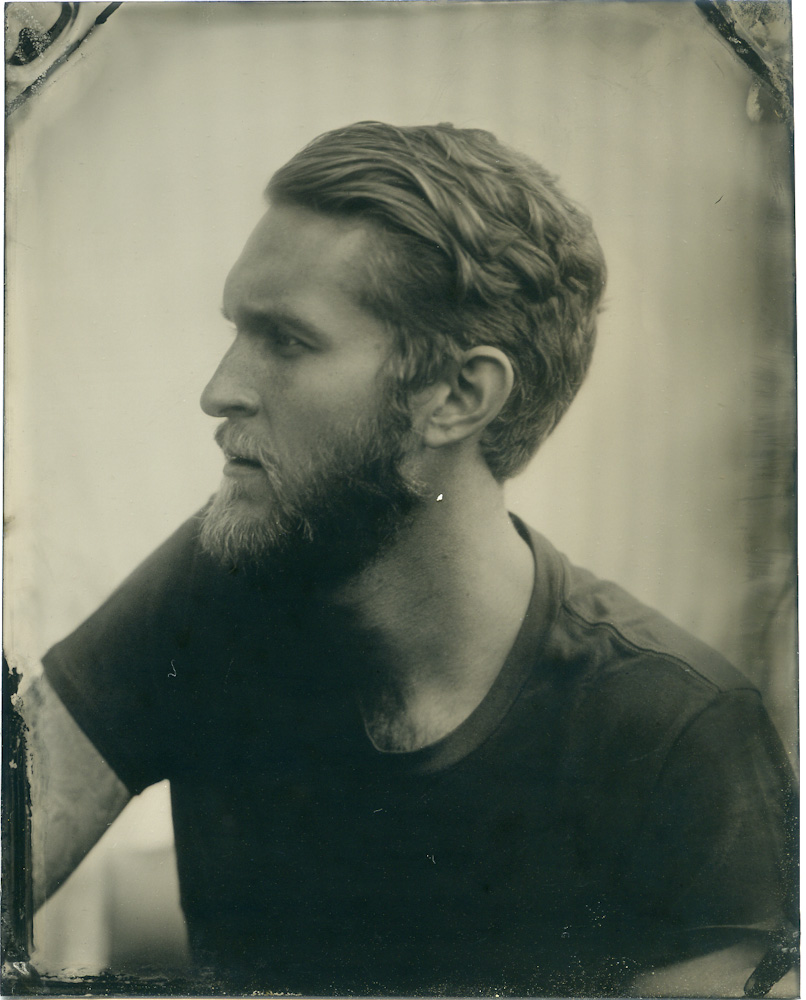
Seth Putnam, co-founder and editorial director, The Collective Quarterly magazine.

Seth Putnam, co-founder and editorial director, The Collective Quarterly magazine.

On the background of Collective Quarterly: It basically became a travel and design magazine where the travel portion is covered by each issue focusing on one location; one region. And then the design portion is covered by the fact that we bring with us a group of artists or craftspeople and we put together an experiential, inspiration trip for them, almost like an artist’s residency.

On why as digital natives, he and his partner decided they needed a printed magazine to connect with their audience:
Some parts of our business we approach with great research and thought, and then some we do simply out of a passion for something or a gut feeling. We decided to do print because, while yes, magazine subscriptions are falling and certain titles are closing, more titles are opening, particularly in independent, boutique niche genres’.

On the hefty cover price of the magazine – $25:
We landed on that price based on the cost to print a thousand copies of the issue 0 – we looked at it as an experiment. And it was very expensive.

On his opinion of why the digital natives of today are finding an endurable quality in the printed product:
When I deal with the internet, I don’t feel there’s a sense of accomplishment necessarily or permanence with it; it’s so fleeting. And I wonder if that’s something that my generation is responding to, in terms of something tangible.

On knowing who his target audience is:
Demographically, we haven’t run a lot of surveys or specific numbers, but I would say our audience skews younger, probably that 21 to 35 age-range, with a fairly even split of men and women, from the orders that I see coming in.

On how they came up with the name Collective Quarterly:
We were thinking of it as a place where, not only we could bring together really talented artists and craftspeople to go on these trips because each time the cast of characters is rotating, but also use our platform and voice as a medium for our readers to get involved as well. So, we had a sort of inclusive mindset and that’s why we ended up calling it the Collective Quarterly.

On how they decide on the destinations of each issue:
Usually it’s a collaborative decision between me and Jesse, the creative director, but we try and do a pretty good job of soliciting ideas at least from the other five or six people on our team or people that we’ve met on the ground in locations that we’ve visited.

On the biggest stumbling block he had to overcome:
Everything we have done so far has paid for itself and that’s been really exciting for us, but the challenge has been cash flow, for sure. Trying to make sure that when you’re working on two or three issues at a time, there’s enough money in the bank to pay your bills.

On his most pleasant moment:
The reason I got into journalism is because I have a very strong attachment to hearing other people’s stories. Oddly enough; that’s what we’ve been doing. It’s been really gratifying to see that we’re sort of living in a brave new world where if you’ve got a good idea and an internet connection, you can create your own platform for doing that kind of storytelling.

On advice he would give to students who are about to graduate and start their publishing careers:
If you have a story to tell, or if you want to tell someone else’s story, but there’s no obvious path to be able to do that through traditional media, then just do it; do it yourself.

On what keeps him up at night:
Just making sure that we’re doing good work and we’re treating people well, our sources and our team members, and that we’re doing a better job this time than last time.

And now the lightly edited transcript of the Mr. Magazine™ conversation with Seth Putnam, Editorial Director, Collective Quarterly…

Samir Husni: Give me some background on Collective Quarterly.

The first issue of The Collective Quarterly.

The first issue of The Collective Quarterly.

Seth Putnam: We’ve been working in earnest on it since January. 2013. My business partner and I met through the social networking site Instagram. I was working as a magazine writer in Chicago and he’s an editorial illustrator who has created covers for everyone from The New York Times Magazine to GQ to Money, and I think he actually did the Planet Hillary cover for The New York Times Magazine last year and then also the 10th anniversary of September 11th for the cover of Newsweek as well, so he’s a very accomplished illustrator.

As we looked at each other’s work on the social media sites, we became intrigued and decided to set up a call. During that call he told me that he’d like to start a magazine, so I asked him what he wanted it to be about and he asked: how about the creative process? I said that’s a little bit abstract to do an entire magazine about; how are we going to focus that?

We landed on the idea of travel, because we’ve found personally that the trips that we take and the people that we meet in these unseen, often, off the beaten path hideaways are certainly extremely inspiring to us and our passion for stories.

It basically became a travel and design magazine where the travel portion is covered by each issue focusing on one location; one region. And then the design portion is covered by the fact that we bring with us a group of artists or craftspeople and we put together an experiential, inspiration trip for them, almost like an artist’s residency. And then they go home and make something in their discipline, based on their time there, the things that they saw, and the people that they met. We chronicle those experiences and their design processes in the completed product and it’s available through our website as well.

Those are the two hooks of the magazine.

Samir Husni: When did you graduate from the University of Missouri?

Seth Putnam: 2010 – so, five years ago.

Samir Husni: You’re in your twenties?

Seth Putnam: Yes, I’m 26, as is my business partner.

Samir Husni: So, you’re a digital native; why print? When everyone is telling us that the future is digital and you even met your business partner via Instagram; why did you decide to go with print?

Seth Putnam: I guess we’re just young and foolish. (Laughs) Some parts of our business we approach with great research and thought, and then some we do simply out of a passion for something or a gut feeling. We decided to do print because, while yes, magazine subscriptions are falling and certain titles are closing, more titles are opening, particularly in independent, boutique niche genres’.

And much like we’re seeing people return to vinyl records, we’re seeing a love or an appreciation for tangible lifestyle, human interest coverage. So, sure newsweeklies and titles that rely on breaking events are probably suffering because of the immediacy of the internet, but I think that there’s definitely a market out there of people who are willing to put their dollars toward an experience or deeper stories that form another entertainment bucket for them.

But for us; it’s the beauty of being able to hold it; it’s the beauty of sending, as often as possible, reporters, writers and photographers places so that they can tell the stories in person; it’s a little hard to do sometimes, but it makes a better story. And I think the same is true for print versus consuming content on the web.

For the first few issues or the first couple of years, we focused entirely on print, whereas now we’re about to launch a journal on our website so that we can provide more daily stories for our readers, but print has definitely been the thing that we have thrown most of our energy into.

Samir Husni: I noticed that you have a hefty cover price for the print magazine.

Seth Putnam: (Laughs) That’s true. We landed on that price based on the cost to print a thousand copies of the issue 0 – we looked at it as an experiment. And it was very expensive.

What we’ve done is put out a second issue and we’re actually going for a third and we have negotiated a new deal with our printer that will hopefully allow us to get that cover price down in the $19 or $20 region, maybe not by the next issue, but in the not too distant future.

We’re finding that many of the magazines in our similar niche are charging in the $15 to $25 and sometimes up to $30 range, which is a luxury price point for sure. And we want to try and get that down as much as possible because we’ve seen that the magazines that are sticking around have come down somewhat from their original price point.

But again, when you’re printing a thousand copies, of course, we’re printing more than that now, but in the beginning we were doing a 1,000; the price per copy is exponentially higher than if you were printing 10,000 or 15,000 copies.

Samir Husni: I’m seeing more and more new magazines following your approach. The digital generation is finding some love for print or some enduring aspect of the printed product.

Jesse Lenz, co-founder and creative director, The Collective Quarterly

Jesse Lenz,
co-founder and creative director, The Collective Quarterly

Seth Putnam: Yes, I agree. When I deal with the internet, I don’t feel there’s a sense of accomplishment necessarily or permanence with it; it’s so fleeting. And I wonder if that’s something that my generation is responding to, in terms of something tangible. When I finish reading a book or a magazine; I can look at it and say, I finished that, rather than just moving on to the next click or page.

Samir Husni: And who do you view as your audience? Who bought that first issue and who’s buying the second? Do you have a sense of your target audience?

Seth Putnam: We’re beginning to get a better sense. I think the audience that adopts a magazine like Collective Quarterly in the beginning is definitely one that is sort of trend-focused; they care about travel and the story behind the destination and they might be the kind of people who shop at anthropology or urban outfitters, for example, which are some of the retailers we work with.

Demographically, we haven’t run a lot of surveys or specific numbers, but I would say our audience skews younger, probably that 21 to 35 age-range, with a fairly even split of men and women, from the orders that I see coming in.

But definitely people who have more than just one income and are able to purchase a magazine of that price point and also buy the products inside and maybe even take the trips that we’re recommending.

I suppose it’s an affluent audience, which raises some questions for us as far as how we want to make ourselves accessible to others as well.

Samir Husni: How did you come up with the name: the Collective Quarterly?

Seth Putnam: We put together a big Google document at the very beginning of our trip and the initial idea was much more focused on artists and makers than it currently is; I think we’ve achieved a little bit of balance there. We were thinking of it as a place where, not only we could bring together really talented artists and craftspeople to go on these trips because each time the cast of characters is rotating, but also use our platform and voice as a medium for our readers to get involved as well. So, we had a sort of inclusive mindset and that’s why we ended up calling it the Collective Quarterly. We toyed around with a lot of different names, but that one just seemed to fit.

Of course, since then we found out a lot of things are called collective. (Laughs) That raises some challenges for sure.

Samir Husni: (Laughs too) I noticed on the website that you refer to you and your team as ‘the Collective.’

Seth Putnam: Yes, definitely. That’s designed to create a sense of inclusion and to make it more about the group as a whole.

For example, there are certain titles out there, particularly in the independent niche genre, where they’re very much connected to a specific person, whether that’s Ben Ashby’s Folk magazine or Nathan Williams’ Kinfolk; they’re synonymous with one individual oftentimes. We wanted to start out at least by being a place where people could rise; the particular people that we find along the way and that we feature, and we’re hoping to be as active an organization as possible to help these people and give them success as well.

Samir Husni: The decisions to go to these places, whether it’s Texas or Montana or wherever you find those offbeat locations that the magazine focuses on; are they collectively decided on or are they just sudden ideas, someone saying, hey, why don’t we go to Texas?

Seth Putnam: Within our internal office structure, which is sort of a misnomer, because no one is in the same place; we have people in different cities: San Francisco, Phoenix and Chicago, also in West Virginia and Minneapolis; I don’t think any one of us is in the same city.

So, there is no office, so to speak, but within our decision-making structure there are definitely those who provide the drive and motivation and the pushing, and others who provide the steering, for sure. Usually it’s a collaborative decision between me and Jesse, the creative director, but we try and do a pretty good job of soliciting ideas at least from the other five or six people on our team or people that we’ve met on the ground in locations that we’ve visited. See what works with our schedules and our interests and then we go and scout those places to see if they have the kind of story quality that we’re looking for.

Samir Husni: When you graduated in 2010; did you ever think that you’d be doing what you’re doing now?

Seth Putnam: I had no idea. Usually people graduating from college aren’t sure about the next job they’re getting, much less what their long-term ambitions are. When the first issue came out I spoke through Skype to a class from the University of Missouri and I just did another one after the Montana issue came out and that first time I told them that I sure wished that I had taken magazine publishing because I didn’t have the first clue about making a magazine. There’s been a lot of trial and error, to be certain.

I spent the last four or five years freelancing and there’s a lot of isolation that comes with that when you’re working for yourself or rather, for 15 or 16 different editors or publications at a time, but you’re doing it from the comfort of your own home. So, I spent a long time as an individual rather than a manager or part of a team and I think that has been a really exciting challenge, and also transitioning from thinking that I’m not someone’s employee anymore, I’m a boss or an owner. That quick wired a definite mindset shift that I didn’t predict when I was in college.

Samir Husni: What has been the biggest stumbling block since launching Collective Quarterly and how were you able to overcome it?

Seth Putnam: When we all went to Texas, there were about eight or nine people on the trip, and everyone who was there paid their own way; we covered our own lodging costs and expenses, because as I said earlier, sometimes we make decisions without doing all the research that we could have. We started the magazine with no funding and we just paid our own way.

When we had gathered all of the content for stories and the photographs, and it became time to actually take it to print, we knew that we couldn’t foot that bill ourselves, so we considered whether or not we should do a Kickstarter. But we decided that if we were going to be a magazine that sells for that cover price, we wanted to establish ourselves less as needing help and more as something people would want to get in on early and be the first to get a copy.

We made a video and sort of styled it after a Kickstarter campaign and we ran that through our own website and we sold pre-orders rather than donations. And with what we earned in the first month or two, we were able to take it to print and the sales from that issue covered many of those expenses that we had paid out of our own pockets for the next one. So, it covered travel costs and lodging and some meals here and there.

Everything we have done so far has paid for itself and that’s been really exciting for us, but the challenge has been cash flow, for sure. Trying to make sure that when you’re working on two or three issues at a time, there’s enough money in the bank to pay your bills.

I think that’s one of the things that come along with not taking funding at the very beginning and obviously, there are tradeoffs. If you take funding then your investor owns part of your company and you lose a little control, but if you keep that control you may not have the liquidity to be able to do some of the things that you’d like to. We’re very much in that challenge mode right now and trying to figure it out; we’ve put out two issues now and we’re about to do a third; how do we stick around long enough to be able to keep this going for a while?

Samir Husni: What has been the most pleasant moment?

Seth Putnam: The reason I got into journalism is because I have a very strong attachment to hearing other people’s stories. I kept track of how many days I was on the road between this magazine and my other assignments last year, I was on the road for about 125 days, and most of the time was spent going to small hamlets around the country.

I don’t know if you’re familiar with the Georgia Rambler; he was an Atlanta Journal-Constitution columnist a few years ago, but he would go to small towns in Georgia and find someone and then ask them who was the most unforgettable person they knew. Then he would go and write about that person.

It’s funny because I corresponded with him; his name is Charles Salter, after hearing him on This American Life a few years ago; actually, when I was working in Mississippi, and we corresponded a little bit and I asked him as a naïve 21-year-old: how do I get a job like yours? And he said there aren’t that many out there anymore because you would need to be on a newspaper staff for 15 or 20 years to gain the experience, credibility and cache which would allow your editor to say: OK, go do this column. And then you’d have to write a daily column in the newspaper and the bottom is falling out of newspapers and that’s just not possible anymore.

But oddly enough; that’s what we’ve been doing. It’s been really gratifying to see that we’re sort of living in a brave new world where if you’ve got a good idea and an internet connection, you can create your own platform for doing that kind of storytelling.

Samir Husni: What advice would you give to students now who are reaching the graduation stage?

Seth Putnam: That’s a great question. I don’t generally have one go-to piece of advice where I say: if you’re a young journalism student, you need to know this, but one of the things that I really loved about my education, and still see at the University of Missouri when I go back and talk to students there, is that there are no limits on what they think is possible. And I think that’s worth reminding ourselves and them about to. If you have a story to tell, or if you want to tell someone else’s story, but there’s no obvious path to be able to do that through traditional media, then just do it; do it yourself.

Start a website or start some sort of platform online that allows you to tell that story and realize that it’s highly possible that you may have to do it for free because as a young student no one may be willing to pay you to do that.

But I think it’s a really powerful truth that when there’s something a person feels compelled to do or a story that someone feels compelled to tell, that’s inside and just has to come out, doing it on your own and doing it well; eventually, somebody is going to find a way to pay you for it. It’s an exciting time because there have never been fewer barriers to those of us in the storytelling industry to be able to seek our own path.

Samir Husni: My typical last question; what keeps you up at night?

Seth Putnam: Right now what’s been waking me up at 3:00 a.m. is the closing week of our Vermont issue. As I said; I’ve always worked as an individual and now I have a team of writers and colleagues and they’re depending on me to get things done, on time, and make sure all of the loose ends are neatly tied up, particularly when you’re about to send it to print. There are a lot of things that appear to be falling through the cracks and need your attention.

Just making sure that we’re doing good work and we’re treating people well, our sources and our team members, and that we’re doing a better job this time than last time.

It’s such a beautiful magazine and I am in such awe of our photographers and designers and the guys that are making sure it all happens. Another thing, from my standpoint, that sometimes keeps me up at night is trying to figure out how to elevate the quality of the writing, for sure, and to get people involved with us that are much better than we are, and can lift us to greater heights with the actual content.

Samir Husni: Thank you.

h1

A Return To Print: Plough Quarterly Digs Deep Into Christian Issues One Cause At A Time… The Mr. Magazine™ Interview With Publisher Sam Hine

February 19, 2015

“We had a very successful website, but we felt that the engagement with the material was superficial. People were only spending a few minutes, even less than a minute, on an article and not really thinking deeply about the topics we were raising.” Sam Hine

Plough1-1 In a world sometimes gone mad with violence from social and religious contentions and other issues that can only be handled from the far left or the far right; we all need a message of hope and renewal to refresh our hearts and souls and assure us that there is a greater good out there and we do have hope when it comes to a peaceful and loving future.

Not that socially and religiously-charged conflicts haven’t been going on since the Garden of Eden, it’s just that Adam and Eve didn’t have a Smartphone, iPad or computer to send them notifications about the battles every five seconds. Today the dissent is extremely in-your-face and there is no reprieve from it. But there are people out there dedicated to bringing us a different notification and message; one of hope and salvation from all the disunity we see in the world today.

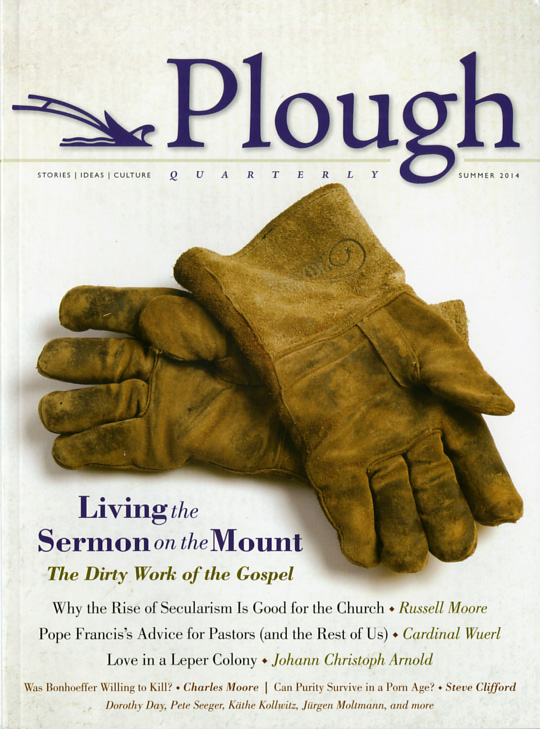
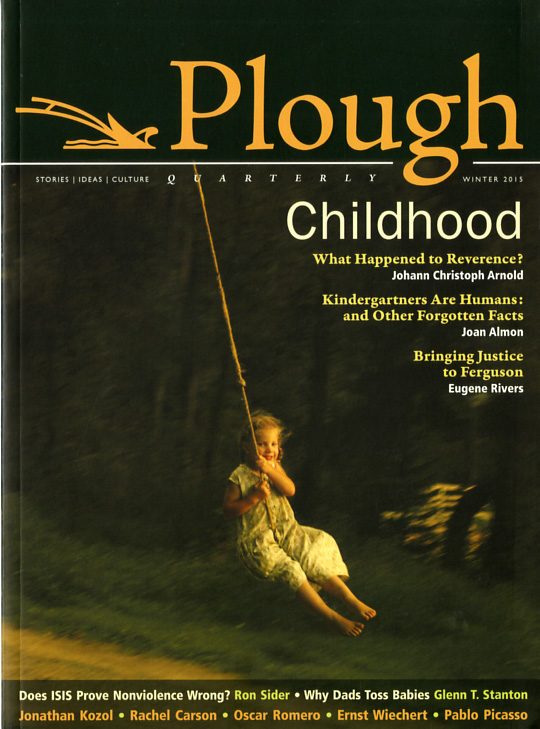
Plough Publishing re-launched its 94-year-old magazine as Plough Quarterly on June 10, 2014. It had been twelve years since the publication went online-only. Since then Plough.com had become a top destination for Christian e-books and online inspiration, and it seemed the editors learned a few things from its success online.

“Magazines are more relevant than ever,” said Sam Hine, publisher of Plough Quarterly in a press release that was released before the magazine’s re-launch. “They have been reimagined to answer a widespread dissatisfaction with the online reading experience. People are hungry for something that isn’t ephemeral—a quick scan, then on to the next thing with a click, swipe or tap. If content has integrity, people will be happy for a beautifully crafted product they can keep around or pass around.”

I spoke with Sam recently about the reasons behind Plough Publishing’s decision to bring back the print component of the brand and the message and mission of the company. As he talked about the compassion and genuineness of the magazine’s purpose: to proclaim the good news of Jesus Christ, his voice was soft-spoken and even, yet firm in his passion for the magazine’s mission and his determination to give his readers a more meaningful and engaging way to connect with that calling, through the power of the printed word.

I hope you enjoy this uplifting and inspiring conversation as much as I did. The words are real and the feelings behind them absolute: love and peace are much more satisfying than their antonyms any day of the week.

And now the Mr. Magazine™ conversation with Sam Hine, Publisher, Plough Quarterly.

But first the sound-bites:

Sam Hine On why Plough Publishing brought back their print magazine after 12 years:
There is also a limit to presentation, how nice you can make the reading experience online. And we heard from readers who missed the print magazine and told us that they would love to receive a quarterly journal from us. All of those things convinced us that it was time to bring back print.

On the DNA of Plough Quarterly and its focus:
It’s published by Plough Publishing House and we also publish books, currently about 12 titles per year, on faith, spirituality and social issues. And the focus of the magazine is to encourage people who want to put their faith into practice.

On why Christian magazines seem to be on the rise with consumers:
I think the United States has always been a very religious country. And I think people have always been serious about their faith. For a magazine like ours to succeed, it needs to offer something different and Plough Quarterly is really for people who are looking to go deeper with their faith and who are very serious about putting their faith into practice every day, not just on Sunday.

On what made him feel there was a place on the newsstands for Plough Quarterly:
Our sales are primarily subscription, but for us it’s important to be on the newsstands too so that new people discover us; that is the main reason we’re there.

On his biggest stumbling block during the re-launch and how he overcame it:
The decision was easy; we just had a lot to learn. The world has changed in many respects; how to promote and market a magazine; how to publish a product that offers something unique and different from what consumers can get online. And I think with each issue we’ve learned something and gotten better.

On his most pleasant moment:
The best thing was hearing from individual readers about how much they appreciated the magazine.

On what keeps him up at night:
Our mission as a publication and a publishing house is to proclaim the good news of Jesus Christ and to reach as many people as possible with the message of forgiveness, reconciliation and renewal that comes when we apply our faith to the needs of our time and we’ve hardly scratched the surface. Every day I think of how few people we’re reaching in comparison to how many are actually out there who need that message.

And now the lightly edited transcript of the Mr. Magazine™ interview with Sam Hine, Publisher, Plough Quarterly.

Samir Husni: Like the rest of the masses 12 or 13 years ago; your company said there’s no future for print, everyone is going online, so let’s fold our printed magazine and go digital. But then last summer you came back with a beautiful, very well-done, quarterly ink on paper magazine; what changed your mind after 12 years and made you decide you needed the print component again?

Sam Hine: The decision was made in 2002 to close the print magazine because we decided we could reach more people at less cost online only. And that was probably true, but over the years since, we had a very successful website, but we felt that the engagement with the material was superficial. People were only spending a few minutes, even less than a minute, on an article and not really thinking deeply about the topics we were raising.

There is also a limit to presentation, how nice you can make the reading experience online. And we heard from readers who missed the print magazine and told us that they would love to receive a quarterly journal from us. All of those things convinced us that it was time to bring back print.

Plough2-2 Samir Husni: For readers who are not familiar with Plough Quarterly, can you give me a little background? I know the magazine was founded in Germany in 1920, but can you give me more about the actual magazine, the movement and its mission?

Sam Hine: It’s published by Plough Publishing House and we also publish books, currently about 12 titles per year, on faith, spirituality and social issues. And the focus of the magazine is to encourage people who want to put their faith into practice. So, it’s applied Christianity; how can we apply what we believe to every area of life, from social issues to current events and popular culture. It’s a magazine of stories, ideas and art to inspire people to put their faith into action.

Samir Husni: Is the magazine published only in the United States, in English, or does it still exist in Germany?

Sam Hine: We’re only publishing in English, but it’s available worldwide. We have many subscribers in the United Kingdom, for example.

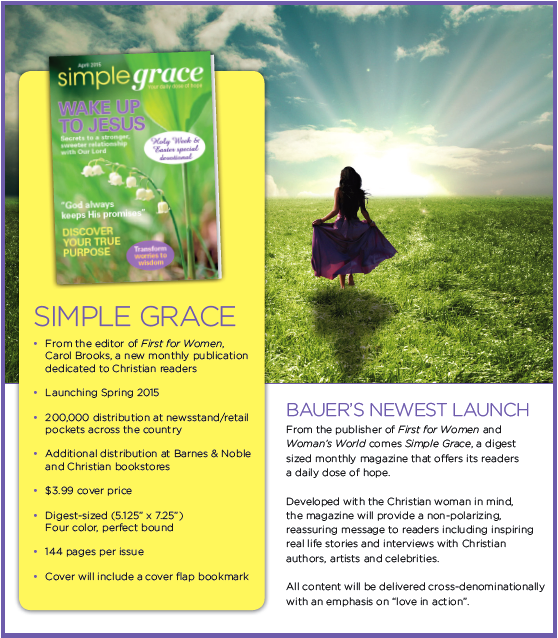
Samir Husni: I interviewed Carol Brooks last month from Bauer Publishing and they’re coming out with a new magazine called Simple Grace in April. And this is a secular publishing house that’s putting out a Christian-based monthly magazine on the nation’s newsstands. She quoted a lot of the same statistics that your company did in your press release, such as 77% of Americans are Christians and she also quoted the figures of how many copies the book Jesus Calling is selling. So, they decided to come up with this Christian magazine for the newsstands with a daily meditation for readers. Why do you think we’re seeing this resurgence maybe or renewed interest in Christianity now? Is it the political world that we live in or simply the changes that are happening? Why now?

Sam Hine: I think the United States has always been a very religious country. And I think people have always been serious about their faith. For a magazine like ours to succeed, it needs to offer something different and Plough Quarterly is really for people who are looking to go deeper with their faith and who are very serious about putting their faith into practice every day, not just on Sunday. It is a niche publication for people who are looking to dig deeper.

Another gap that we see we’re filling that other Christian publications for the most part are not, is the ability to build bridges between denominations. There are over 40,000 different Christian denominations and many Christian publications are published by a particular group or geared toward a particular segment. So, one of our goals and focuses is to really reach out across all these barriers and to include voices from all the different streams of Christianity. Plough Quarterly is a place where we can build unity and understanding between Christians of many different flavors and stripes. Jesus’ last prayer was for all of his disciples to be one.

Plough3-3 Samir Husni: I noticed that you put the magazine on the newsstands; in fact I found my copy at Books-A-Million. What made you feel that there was a place on the newsstands for this niche Christian-living type magazine?

Sam Hine: Our sales are primarily subscription, but for us it’s important to be on the newsstands too so that new people discover us; that is the main reason we’re there. We’re in Barnes & Noble as well as Books-A-Million and other independent newsstands. So, the main reason is that new people find the magazine and hopefully subscribe.

Samir Husni: When the decision was made to bring back the printed magazine; what was the biggest stumbling block that you faced and how did you overcome it? Or was the decision and the process easy and it was done?

Sam Hine: The decision was easy; we just had a lot to learn. The world has changed in many respects; how to promote and market a magazine; how to publish a product that offers something unique and different from what consumers can get online. And I think with each issue we’ve learned something and gotten better. And another important facet was that it had to be graphically pleasing. We’ll also sit down and spend a long time with an article and with print we’re able to do a longer form of journalism.

Samir Husni: What was the most pleasant moment with the re-launch?

Sam Hine: The best thing was hearing from individual readers about how much they appreciated the magazine. We’ve been pleasantly surprised; we passed our subscription goals for the first year within the first six months. We were a bit surprised at the reception.

Samir Husni: My typical last question; what keeps you up at night?

Sam Hine: Not Plough Quarterly. (Laughs) Our mission as a publication and a publishing house is to proclaim the good news of Jesus Christ and to reach as many people as possible with the message of forgiveness, reconciliation and renewal that comes when we apply our faith to the needs of our time and we’ve hardly scratched the surface.

Every day I think of how few people we’re reaching in comparison to how many are actually out there who need that message. We’re a mission-driven organization; we’re not for profit and we’ve barely begun. There is so much violence and suffering in the world and if we can encourage a few people each day to make a difference, to step out and do something for others, makes it worthwhile for me to come to work each morning and helps me sleep at night.

Samir Husni: Thank you.

_______________________________________________________________________________________________________________________________
Picture 40

h1

Jimon – The Man & His Magazine – A Five Year Anniversary Of High Fashion Photography With An Artful Design – The Mr. Magazine™ Interview With Jimon Aframian, Editor-In-Chief, Jimon Magazine

February 4, 2015

“The magazine is an outlet. We all need something to inspire us and if it’s going to inspire other people, so much the better. I get emails from people telling me they cry when they look through the magazine or they tense up. And when I read that I say, wow, it’s not just me. There are other people who appreciate what I’m doing.” Jimon Aframian

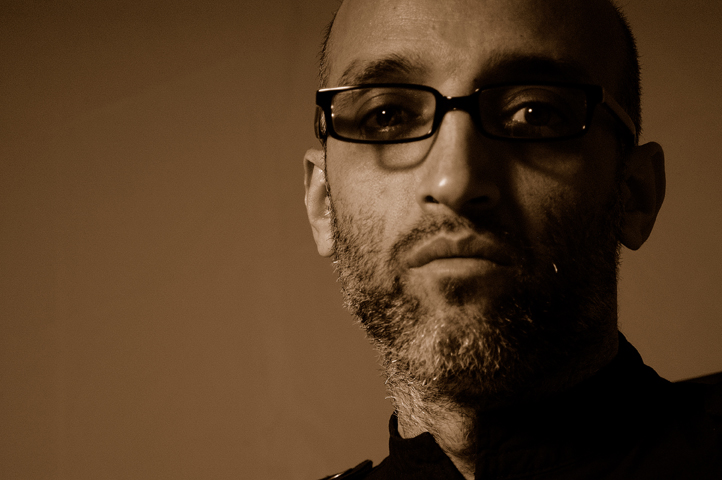
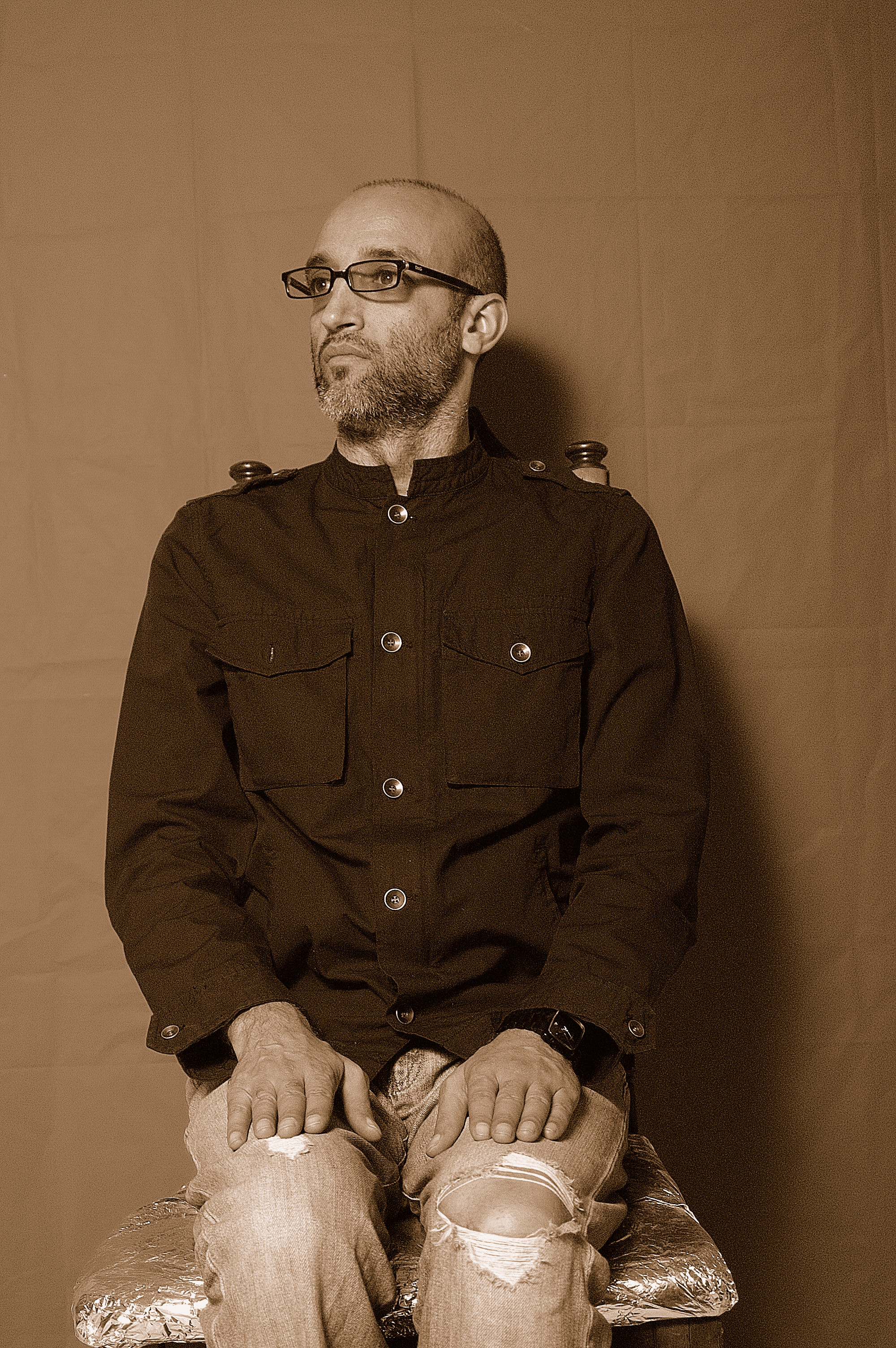
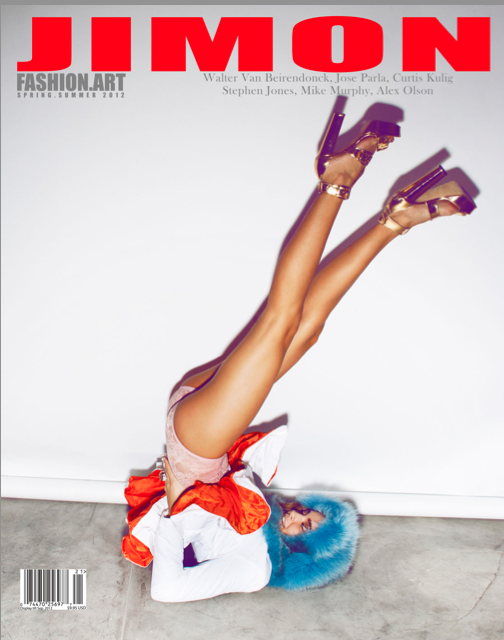
me From photographing beautiful models for Playboy in Europe to starting up his own sleek, oversized high fashion and art magazine; Jimon Aframian is a visionary who refuses to sell his soul to the minions of celebrity success and popularity.

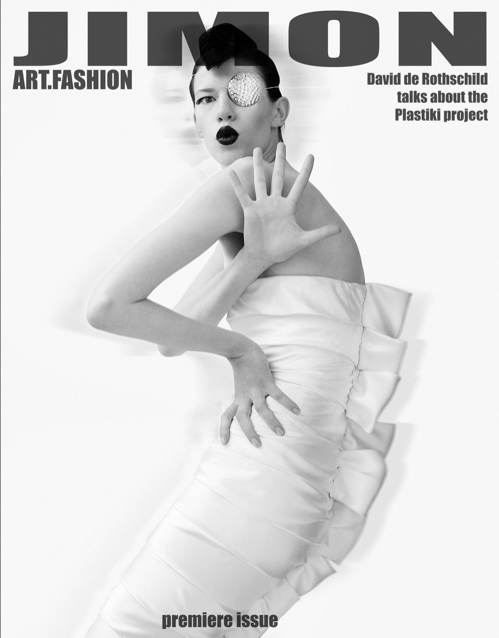
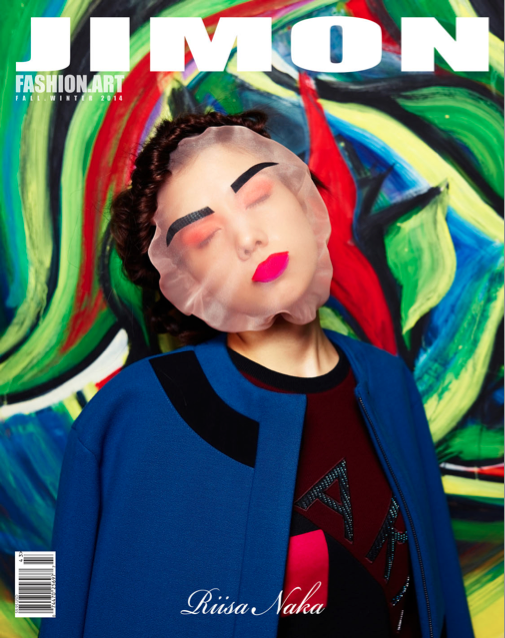
Jimon – the magazine, is celebrating five years of publishing perspective and while Jimon – the man, said that through those years there were many times he had asked himself why he was still doing the magazine, he always found a reason and the tenacity to go on.

The magazine is filled with different photographers’ muses and displays high fashion in an artful and creative way. When he could have bolstered the magazine’s acclaim and public approval by putting well known notables onto the covers and within the magazine’s pages, Jimon chose to stay true to his vision and the content of the magazine.

And by doing so, the magazine – Jimon is a true extension of the man – Jimon and brings clarity and a maxim of genuineness that cannot be ignored. It is a must-have for your coffee table conversation pieces.

Also a must-have is the limited edition, signed book Jimon is publishing of all 10 issues of the magazine that he has produced over the last five years. But as I said, it’s a limited edition and the copies are numbered. So, get your copy reserved quickly. Mr. Magazine™ is definitely looking forward to his. You can order on Jimon’s Facebook page.

I hope you enjoy this lively celebration of five years in the publishing industry with a man who stubbornly believed in his dream and continues to do so today. It’s a Mr. Magazine™ departure into the world of creative genius with Jimon Aframian, Editor-in-Chief, Jimon magazine…

But first, the sound-bites:

Screen shot 2015-02-03 at 2.11.11 PMOn how he came up with the concept of Jimon magazine: I love photography; so I started working on shooting fashion and soon realized that fashion photography was very different from other types of photography. At some point, I ran into the bureaucracy or maybe I should say the editors’ vision, where my views or my ideas were not really what they had in mind. That kind of set me back a while, but then I said to myself: you know what; maybe I’ll just start my own magazine.

On the biggest challenge he was able to overcome when launching the magazine: I would say the financial part of it. I had no idea; they say ignorance is bliss, well; mine was a perfect case of it. If I’d known at the time what it takes, I probably would have never started it.

On the secret to Jimon’s longevity: Ignorance is bliss, but my personality is one where I don’t necessarily give up that easily. As I went along I realized that this game is not a simple one. In other words, you need to build momentum.

On his most pleasant moment during this five year journey: That’s easy. The most pleasant moment for me was in the beginning, after the first and second issue had come out and I would go to the newsstands, anywhere really, in Milan or Paris or London, L.A. or New York and I would see the magazine that I had started sitting next to the magazines that I adored.

On why he decided to do a five year limited edition book of all 10 of the magazines he has published so far: From the beginning when I started doing it, I wanted to have a certain number of copies held back and publish a book. I hadn’t decided if it was going to be done in five or ten years, but at this point I just decided to do it.

On what he has planned for Jimon in the future: There are times when you ask yourself: why are you still doing this? But somehow you find a reason to keep going. And five more years from now, I would be surprised still, because it’s not easy or sustainable, but you do find a way to keep going with it.

On the advice he would give to someone looking to start their own magazine: If you want to start a magazine, a fashion magazine, have some money. You definitely need money. And you need to know every aspect of it yourself, especially if you don’t have any money.

On what keeps him up at night: It’s really not the magazine. (Laughs) I can tell you why it’s not the magazine; if it kept me up at night, I would not be doing it.

And now the lightly edited Mr. Magazine™ conversation with Jimon Aframian, Editor-in-Chief, Jimon magazine…

Screen shot 2015-02-03 at 2.14.25 PM Samir Husni: Congratulations on reaching this milestone: five years of publishing the magazine Jimon. Could you tell me the story of how you came up with the idea and launched the magazine?

Jimon Aframian: I was a photographer for a number of years and I shot Playboy Europe mainly. And I think it was in 2005 when I decided to do fashion because I figured when I’m 50 or 60 years old, it would not look proper for me to be shooting 18-year-old girls naked, although everyone might think it was cool; I wouldn’t think so. But I figured that I would still want to do fashion.

I love photography; so I started working on shooting fashion and soon realized that fashion photography was very different from other types of photography. It’s not that it’s competitive, it’s more: if you have access, I think. And I really can see that from the photography that’s in the magazines. It doesn’t mean the photography is good, but because you have access a person can pretty much create their own genre. And we see it a lot; it’s very common these days. You can see photographers who decide not to shoot the norm; it’s pretty outside of the box because they’ve done it and have found a following. They get paid for what they’re doing now.

I did some fashion and I was pretty good at doing it in California and I did a lot of fashion photography for different magazines at the time and some for European markets. In Europe things are different obviously, but in L.A. I did pretty well.

At some point, I ran into the bureaucracy or maybe I should say the editors’ vision, where my views or my ideas were not really what they had in mind and they would say that won’t work because they wanted simple stuff that people could relate to or understand. The magazine was a lifestyle magazine that I shot for then. So, I shot for a couple of other magazines, but basically what I had in mind was more of a European style and they just did not go for it.

That kind of set me back a while, but then I said to myself: you know what; maybe I’ll just start my own magazine. So, I did and started contacting new photographers that I knew and they were all interested in working with the magazine and shooting for it.

The toughest part was finding the printer to print the format that I wanted, which was oversized and on a very high quality paper. This is not easily found these days, because a lot of printing companies print digitally. And I needed a company that had a specific printing machine called a Heidelberg; I’m sure you’re familiar with them.

So, I looked around and I found a couple of companies that could basically do what I wanted to do. And that’s pretty much how I got started.

Samir Husni: What was the major stumbling block after you found the right printer, the biggest challenge that you were able to overcome when launching the magazine?

DSC_0091_sepia Jimon Aframian: I would say the financial part of it. I had no idea; they say ignorance is bliss, well; mine was a perfect case of it. If I’d known at the time what it takes, I probably would have never started it. And because my background was not in publishing, I was somewhat in the dark. I thought I was going to print a magazine and get advertisers left and right.

Even finding a distributor was very simple because I put a mock-up together and went to a pretty large distributor that carried titles that I adored myself and when they saw my mock-up they said sure, we’ll distribute this. So there was no problem getting a distributor.

Then as soon as the first issue came out I flew to Paris and met with the distributor in Paris and they also picked it up without any problem. I’m sure they had the incentive of not having a lot to do, but still they’re not going to pick something up that is no good. I truly believe that.

Samir Husni: Five years ago your magazine was the exception to the rule. Now we see a host of similar magazines, ones where people are using art/fashion photography to produce magazines. What has kept you going for five years while others after you have already come and gone after one or two issues? What’s the secret of Jiman’s longevity?

Jimon Aframian: I brushed upon this earlier, I think. Ignorance is bliss, but my personality is one where I don’t necessarily give up that easily. As I went along I realized that this game is not a simple one. In other words, you need to build momentum. Just like what you said; a lot of magazines come and go. They do one or two issues because it’s easy.

But to keep doing it over time, it takes a certain personality and the financial part of it is important. I did find some traction in that sense and I did a lot of research. I even went to FIT in New York and did research there because I go every year for fashion week. And I found out how the life of a magazine works. And I looked at other magazines’ histories to see what their progressions were. I found out that some of these magazines were still going strong. Those publications that started in the heyday of fashion magazines were still very popular. There was no internet per se and they struggled for almost ten years before they could really reach a level where they were sustainable.

And then there are the conglomerates. Conglomerates have so many titles they could lose money in. What if they lost money in 50 of them? But they could make money in 200 of their titles. So they distribute them out to keep the name going.

With an independent publisher you have one title and you just somehow have to maintain it the best you can. Everybody thinks that they can start a magazine and make money; I think they’re just hallucinating. (Laughs)

Samir Husni: (Laughs too) So why are you still persevering and publishing the magazine?

Screen shot 2015-02-03 at 2.13.26 PM Jimon Aframian: It’s art. To me the magazine is really art because I’ve been approached by artists who want to be in it. But maybe I shouldn’t say artists; I have been approached by certain starlets or some of today’s hottest personalities who have had their publicists ask about them appearing on the cover. And I have had to decline and tell them that this is not that type of publication. Just because I believe the magazine is more of an extension of me. I want to make sure that what’s on it and in it is a representation of who I am. Now for example, if I allow Kim Kardashian to be on it or in it that is completely against who I am. And I think she’s been on the cover of enough magazines lately as it is. (Laughs)

Samir Husni: What was the most pleasant moment for you in this five year journey?

Jimon Aframian: That’s easy. The most pleasant moment for me was in the beginning, after the first and second issue had come out and I would go to the newsstands, anywhere really, in Milan or Paris or London, L.A. or New York and I would see the magazine that I had started sitting next to the magazines that I adored. To see my magazine sitting next to them was pretty much all I needed. That was good enough for me. I counted that as done; achieved and ready. (Laughs)

Samir Husni: You have put 10 issues out over the five year period and you just published a collector’s edition with a very limited number of copies signed by you, which contain all 10 copies of the magazine. Why did you decide to do that?

Jimon Aframian: From the beginning I had this plan. You make a number of copies and you distribute them to the newsstands, Barnes & Noble and overseas. And either they send some back to you or they destroy the extras.

But from the beginning when I started doing it, I wanted to have a certain number of copies held back and publish a book. I hadn’t decided if it was going to be done in five or ten years, but at this point I just decided to do it. But I should have kept some more back for a tenth year book too.

Samir Husni: If you and I are having another conversation ten years from now; what do you envision yourself telling me?

Jimon Aframian: There are times when you ask yourself: why are you still doing this? But somehow you find a reason to keep going. And five more years from now, I would be surprised still, because it’s not easy or sustainable, but you do find a way to keep going with it.

But then again, you’re not willing to sell your soul and you could sell your soul easily. And I refuse to do that.

Samir Husni: What advice would you give the new generation of photographers and journalists? What would you tell someone who came to you and said: Jiman, I love what you’ve done with your magazine; what advice can you give me about my own career?

Screen shot 2015-02-03 at 2.21.32 PM Jimon Aframian: Going back to when you asked me about my most pleasant moment; there was another moment that I was really pleased by, which was when the Art Center College of Design in Pasadena invited me to come and speak to their graduating class. They have asked me twice so far. I haven’t been able to go because I have been so busy, but they would invite me to come and talk to their graduating class. They had seen the magazine and they couldn’t believe that it was being produced in L.A. They contacted me and wanted to me to talk to their graduating class in photography. And I was very pleased by that. To me that said that I was doing something right. I might have done a lot of things wrong (Laughs), but I had done something right for sure.

And going back to your question: I would have told each of the students to have a portfolio and find out what they want to do. A lot of people don’t really know what they want. They have no idea what’s out there, but that’s a good thing in this case, because if they did know, they might run away, especially in fashion photography.

The problem is the digital camera because everybody thinks they’re a photographer when they have a camera in their hand. And that’s not the case. A photographer needs to know how to frame something, even if it’s a teapot. And most people don’t know that. And you go to school and you can’t learn that. It’s inherent. It’s something that’s inside you. A person can learn a lot by going to school; you can expose your talent by going to school, but if you don’t know how to do it, it would be really hard on the photographer. You’d probably become a mediocre photographer at best. I would also tell them to keep shooting every day.

Now what would I tell somebody who wants to start a magazine? Or someone who wants to be a fashion photographer?

Samir Husni: How about both? You answered for the photography aspect, but what about starting a magazine?

Jimon Aframian: If you want to start a magazine, a fashion magazine, have some money. You definitely need money. And you need to know every aspect of it yourself, especially if you don’t have any money. If you don’t have money and you’re determined to go and start a magazine, then you need too many people working for you. You have to hire an art director, an editor, a copy editor, a graphic designer, and these people will want money. And if you don’t have the money, it becomes almost impossible. So, you really do need to know a lot yourself.

Besides that, find a niche. You have to have a niche. It could be anything. I went for art and high fashion. And then just do it. Put a mock-up together and go out and do it.

There were stages before I started the magazine… you’re familiar with the magazine called Stern from Germany?

Samir Husni: Yes, I am.

Jimon Aframian: They would show one photographer’s work in each issue, for example. My original thinking was to do something similar to that, but I slept on it for a couple of years and I decided that might be a bit monotonous for me and not work. And that’s why I changed my idea to making a more collaborative effort with five or six photographers in each issue and a few artists.

So, they need to find some sort of theme and let it evolve, because it will evolve. A lot of people will send them a lot of things, but they need to listen and take note of things around them. Some things work and some do not.

Samir Husni: My typical last question; what keeps you up at night?

Jimon Aframian: It’s really not the magazine. (Laughs) I can tell you why it’s not the magazine; if it kept me up at night, I would not be doing it. The magazine, like everything else in life, can be tough. I don’t have children, but I see my brothers and sisters children, and with having kids, there are tough moments, but also a lot of good moments.

So, the magazine is like that. It has a lot of good moments and it brings a lot of good to my life. It’s definitely not the magazine that keeps me up at night.

The magazine is an outlet. We all need something to inspire us and if it’s going to inspire other people, so much the better. I get emails from people telling me they cry when they look through the magazine or they tense up. And when I read that I say, wow, it’s not just me. There are other people who appreciate what I’m doing. And you’re not an artist until other people admire your work. If you’re the only one admiring your own work, you’re a hobbyist, not an artist.

Samir Husni: Thank you.

h1

Yoga Digest Magazine: A Launch Story. The Lifestyle Of Yoga Comes To Life In Print – The Mr. Magazine™ Interview With Co-Founder Cody Groth.

February 2, 2015

“Honestly, I think people are out of their minds to get out of print. I still think that the majority of people are just so engaged with something that’s in-hand and they look forward to getting something in the mail or seeing it on a newsstand; it’s just more appealing to them and to me too honestly.” Cody Groth

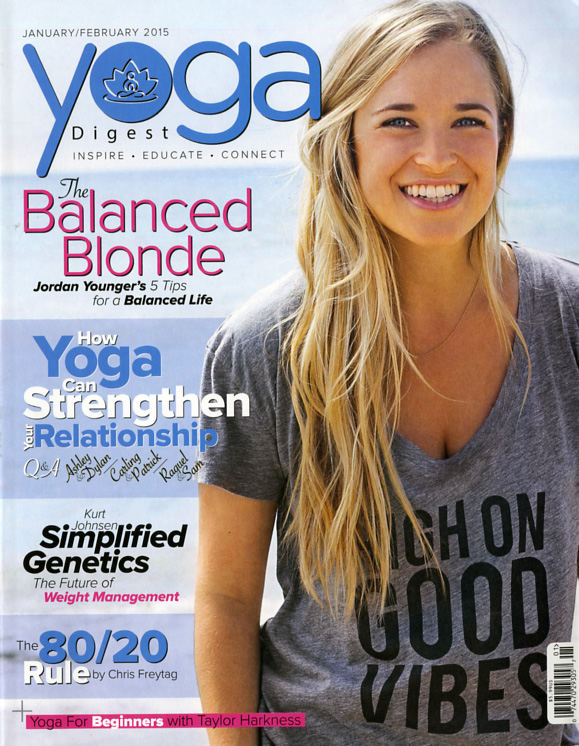
Yoga Digest 1-1 In June 2014, an online community of yoga enthusiasts and practitioners was born – yogadigest.com. Within that realm of digital connection a yearning for a deeper engagement with the lifestyle of yoga was communicated and in November 2014, the print version became a reality: Yoga Digest magazine.

Jenn Bodnar is a yoga teacher/trainer and Cody Groth, a former college basketball player who had his aspirations and career cut short by a back injury, co-founded the online site and the magazine. Jenn had been following the yoga lifestyle for some time, while Cody experienced the restorative power of yoga when his involvement with the practice healed his back injury completely, without surgery. Even though every doctor he saw said he would eventually need surgery to find relief from the injury.

I spoke with Cody recently about the ink on paper addition to the website and why it was necessary for the fulfillment of their mission. From the engagement factor of print to the tangible quality of the paper itself; the 26-year-old digital native confessed his obsession with print and his belief in its power to engross today, even with a myriad of digital screens at people’s disposal.

The interview was vibrant with positivity, the power of the dream, and a never-ending hope for tomorrow, all brought about by the birth of a printed magazine, proving once again that reality complements virtual quite nicely.

I hope you enjoy the Mr. Magazine™ conversation with Cody Groth, Co-Founder, Yoga Digest magazine. I know I did.

First, the sound-bites:

On the decision to do a print magazine: We initially started as an online community just to build a foundation. Then after a couple of months and after reaching out to many contributors in the industry, we were getting feedback from people who would much rather be in print. There’s still something about being in print that’s appealing to people.

On the conception of the magazine:
It was a natural flow that stemmed from the feedback that we were getting. The online community was doing great, we were getting a lot of hits to the site, but again, we sat down and decided that if we wanted to reach the amount of people that we did; we had to be in print.

On the biggest stumbling block they had to overcome:
The biggest stumbling block for us is was our unfamiliarity with the publishing business. We had no backgrounds in the magazine industry at all.

On what the future of Yoga Digest looks like: It’s looking very promising. We’re getting a lot of interest from the financial world. So, we have a lot of connections in place.

On how they hope to compete with the more established yoga magazines for advertisements:
As for advertising, right now we’re just working with the small range of products that you see in the magazine: the yoga lifestyle products and we want to keep it that way. We don’t expect to compete with the bigger magazines when it comes to advertising.

On whether they were out of their minds to start a print magazine in a digital age:
Honestly, I think people are out of their minds to get out of print. I still think that the majority of people are just so engaged with something that’s in-hand and they look forward to getting something in the mail or seeing it on a newsstand; it’s just more appealing to them and to me too honestly.

On what they will be concentrating on over the next 12 months with the magazine:
We will be trying to increase our brand recognition over the next year to go along with our magazine. We have a lot of fun things in place to counter our brand that’s known as a magazine right now, but we hope to expand on that with different events and involvements.

On anything else he’d like to add:
The main thing that we really want to emphasize is how we separate ourselves from the bigger magazines. They have their own audience, their own niche that they appeal to, but we really are trying to appeal to the everyday person who maybe wants to start yoga but thinks they need to be able to touch their toes before they begin. That’s not the case at all.

On what keeps him up at night:
I would have to say Yoga Digest keeps me up at night because it keeps me so busy.

And now the lightly edited transcript of the Mr. Magazine™ conversation with Cody Groth, Co-Founder, Yoga Digest…

Samir Husni: Take me through the journey of Yoga Digest. You started the website first and then you decided to do the print magazine. With the multitude of yoga magazines already out there; why did you decide to do a print magazine now? Tell me the story of Yoga Digest magazine.

cody groth Cody Groth: We initially started as an online community just to build a foundation. Then after a couple of months and after reaching out to many contributors in the industry, we were getting feedback from people who would much rather be in print. There’s still something about being in print that’s appealing to people. So, we sat down and we thought it through and in order for us to reach the amount of people that we wanted to reach for our mission, we decided to go into print as well.

From there, regarding the other magazines in the industry, we really wanted to separate ourselves by being an approachable resource, as opposed to what’s already out there, which is mainstream, Ph.D. yoga and kind of a naturalist, hippie-type yoga. We wanted to be the middleman between the everyday person and a resource that reaches all populations of yoga. Not everybody needs to wear high-end yoga gear or buy the most expensive mat in order to do yoga. Yoga is a lifestyle that contributes to overall health and wellbeing, not just an ego or materialistic-type of practice.

Samir Husni: You started on the web in June and then you launched your first print issue in November; what changed in that time frame, besides your contributors telling you that they wanted to be in print? Can you take me through the conception of the magazine through its status today?

Cody Groth: It was a natural flow that stemmed from the feedback that we were getting. The online community was doing great, we were getting a lot of hits to the site, but again, we sat down and decided that if we wanted to reach the amount of people that we did; we had to be in print.

The transition from online to print was just a steady flow. And it really did go very naturally in the direction that it did. We were accepted by the printer and the distribution company that we wanted. The other things sort of fell into place for us and are still going smoothly.

Samir Husni: What was the biggest stumbling block for you during this journey and how did you overcome it?

Cody Groth: The biggest stumbling block for us is was our unfamiliarity with the publishing business. We had no backgrounds in the magazine industry at all.

But everything just fell into place, from getting the right designer to set our style to getting accepted by the distributor. And we didn’t have anything to show other than a few mock-up articles and a website demographic. So, we were very surprised to be accepted by the distribution company that we did.

Samir Husni: Do you consider that the most pleasant moment in the launch of Yoga Digest?

Cody Groth: Yes, absolutely. The most difficult or something that almost stopped us was the funding. We had really hoped to raise some money to get it going, but we ended up having to self-fund it ourselves and it’s still 100% self-funded.

Samir Husni: You have two issues under your belt; what does the future look like for Yoga Digest now?

Cody Groth: It’s looking very promising. We’re getting a lot of interest from the financial world. So, we have a lot of connections in place.

Yoga Digest 2-2 Nothing is set yet, but there’s a good possibility that we’re going to be expanding our distribution to a broader audience, not just the targeted audience.

We have a lot of things in place, both with the magazine and a bunch of fun, external things that we’re getting involved with.

Samir Husni: Magazines have two major sources of revenue: circulation and advertising. With your circulation as it is now; how will you compete for advertisements with some of the more established yoga magazines out there?

Cody Groth: That’s a good question. Our current distribution is just over 10,000, that’s just in Wholesome Foods and Sprouts and what’s in the house markets and that’s with just one distribution company.

As for advertising, right now we’re just working with the small range of products that you see in the magazine: the yoga lifestyle products and we want to keep it that way. We don’t expect to compete with the bigger magazines when it comes to advertising.

Obviously, when we increase our circulation in the next couple of issues, we’ll have to hire an advertising team. But we want to make sure that our magazine is offering advertisement that is relevant to our reader. We don’t want to sell anything that isn’t relevant to our audience and our content within the magazine.

Samir Husni: Do you think that being a novice in the magazine business helped to make the transition from digital to print easier for you in an age when everyone says that print is dead or declining? Are you out of your mind to start a print magazine in today’s digital world?

Cody Groth: Honestly, I think people are out of their minds to get out of print. I still think that the majority of people are just so engaged with something that’s in-hand and they look forward to getting something in the mail or seeing it on a newsstand; it’s just more appealing to them and to me too honestly. I’d rather have something in-hand that I can take with me wherever I want to go as opposed to reading it on a screen.

Samir Husni: And if I may ask; how old are you, Cody?

Cody Groth: I’m 26.

Samir Husni: So, we can’t count you as a digital immigrant; you are a digital native.

Cody Groth: Right; I’m within the digital generation, but I’m still obsessed with print.

Samir Husni: Good to know. Tell me a little about the future of Yoga Digest; if I take a sneak peek into your business plan, what will I find you doing within the next 12 months?

Cody Groth: You’ll see a lot of brand recognition, not just in print; we’re trying to expand the Digest into festivals, retreats, and featured classes around the country, and also into the Quarterly partnership.

We will be trying to increase our brand recognition over the next year to go along with our magazine. We have a lot of fun things in place to counter our brand that’s known as a magazine right now, but we hope to expand on that with different events and involvements.

Samir Husni: Why did you opt to name the magazine Yoga Digest when you’re publishing a standard-sized magazine rather than a digest size?

Cody Groth: Yes, a lot of the digests and catalogues are smaller-sized, but we see “digest” as reading. Golf Digest also does a full-sized magazine, so that was helpful to us when we named the magazine. It let us know that we wouldn’t be completely out of the box by going with a full-sized magazine but calling it a digest.

When choosing our brand, the Digest, we were very surprised that it was available. If you look at all the major industries, any kind of niche digest is either well known within the industry that it’s in or it’s been around for 50 or 60 years.

But to have a growing industry like yoga have the brand “digest” available was very appealing to us.

Samir Husni: That was a surprise to me as well. With all the yoga magazines out there and none of them having the name Yoga Digest was amazing. But sometimes the obvious is the one thing people don’t think about.

Cody Groth: Yes, agreed.

Samir Husni: You have a partner and the two of you are publishing the magazine; did you both quit your day jobs?

Cody Groth: (Laughs) No, we do this as a…well, I was going to say hobby, but I guess it’s turning into a full-time gig. It started as a hobby; we both have a passion for yoga; we love doing and sharing it. Jenn Bodnar, my co-founder, is a yoga instructor and a yoga teacher/trainer, so she teaches people to become yoga teachers. She’s very knowledgeable in the industry and very well connected.

I’m just a product of how yoga feels. I was a college basketball player and I had a back injury that forced me to quit my college basketball career and every doctor I saw told me that I needed surgery. After doing some research myself and talking to quite a few people who had opted for yoga over surgery; I decided to start yoga. And even though it was a slow transition over the course of the last three years, yoga has completely healed my back. So, I’m very passionate about sharing that with people.

Samir Husni: Is there anything that you’d like to add?

Cody Groth: The main thing that we really want to emphasize is how we separate ourselves from the bigger magazines. They have their own audience, their own niche that they appeal to, but we really are trying to appeal to the everyday person who maybe wants to start yoga but thinks they need to be able to touch their toes before they begin. That’s not the case at all. Yoga is for everybody and everybody can do yoga.

I think it was Zig Ziglar who said: you don’t have to be great to start something; you have to start something to become great. So we’re trying to share our passion with everyone and separate ourselves into that audience.

Samir Husni: My typical last question; what keeps you up at night?

Cody Groth: I do sleep very well, but I would have to say Yoga Digest keeps me up at night because it keeps me so busy.

Samir Husni: Thank you.

h1

This Pineapple Is To Have, Hold, And Enjoy! The Story Of The Latest Travel Magazine Launch. The Mr. Magazine™ Interview with Publisher Christopher Lukezic.

January 30, 2015

“We believe print is a really unique way to experience content and a really unique way to engage with our readers. The tactile quality of the paper that we’re producing the magazine on, the photography; all of it, really comes to life on paper in a way you can’t necessarily get on a digital screen.” Christopher Lukezic

Pineapple-1 Airbnb, the world’s leading community-driven hospitality company, has added another component to their online presence: an ink on paper component, Pineapple magazine. Long known as the symbol for hospitality and welcome, the pineapple was a fruit that survived much during the 1400s and still managed to thrive, according to Pineapple publisher, Christopher Lukezic. It was brought to Europe from the West Indies and quickly became a sweet symbol of cordiality.

And the heritage of the “Pineapple” was a Godsend to Christopher as it represented everything he and his team wanted to present with their very unique travel magazine, which is slated to become the content force and driver of Airbnb’s community of readers and travelers, a hale and hearty symbol of travel that welcomes and greets warmly.

The magazine marks a major step for Airbnb to become not just a platform where stories are created, but where stories are told. Pineapple will reflect the unique perspective of Airbnb’s global community, with deeply local and personal content that hopefully will inspire travelers everywhere.

I reached out to Christopher recently and we talked about the excitement this ink on paper product has produced within the company and about the reasons for it. From the beauty displayed between the printed pages to the tactile feel of the paper itself; Christopher shared why he and Airbnb believe in the power of print as a digital entity themselves and why the distinct point-of-view of the magazine will go a long way in distinguishing it from the multitudes of competition on the newsstands already.

The magazine will cover a wide variety of topics – such as culture, art, food, and style – from a local’s perspective with neighborhood guides, insider tips, and unique, personal stories. Each issue will showcase three different cities through the lens of local community members and global travelers.

So grab your traveling gear and follow Mr. Magazine™ and Christopher Lukezic, Publisher of Pineapple, as they take you on a trip around the world of travel…

But first, the sound-bites:


Christopher Lukezic On why Airbnb chose a print component in a digital age:
I think that Airbnb wanted to be a bigger part of a producer of really high quality travel content. The magazine is a part of a larger effort by the company to move into the world of publishing and producing travel content.

On why he thinks more digital entities are adding a print component to their equation these days:
I believe that there is a certain tactile quality to print that engages with people and that’s something that doesn’t necessarily happen on a digital screen.

On the unique selling proposition he is offering the marketplace with so much competition out there already:
One of the things that we try to do is not to have a prescriptive travel magazine. We’re not a team of editors trying tell people what they should and should not do in a city.

On the major stumbling block he has had to face during the magazine’s conception and launch: You said it earlier: a digital company moving into print. It’s a very new world for us and we’ve been learning a lot as we go.

On that “aha” moment when he knew he’d hit on something special:
We went through a couple of iterations and a couple of ideas early on and we shifted course a few times, but I think for us it really all kind of came to fruition when we landed on the name. And I think that was the moment that we knew we were going to do something really special.

On his distribution strategy for the magazine:
We’re still trying to figure out what the future of the distribution strategy of the magazine will be. You will be able to purchase it and we’ll also distribute it to our community, so both of those ways will continue.

On the relationship between Airbnb the company and Pineapple the magazine: It’s very much a two-way street relationship. The future of this and how it ties into the business and how it relates to our core business, we’re still working on a lot of that, but it will very much be an integral part of the Airbnb experience.

On what he hopes to have accomplished with Pineapple a year from now:
Our real goal with Pineapple is for people to start to think about it as a place where they can come to plan their trip experience, as well as to book accommodations.

On what keeps him up at night:
Not much actually. I’m pretty happy with where things are and I’m really excited about the potential for this magazine and the future of it. The only thing that would maybe keep me up at night is not being able to do everything that we want to do.

And now the lightly edited transcript of the Mr. Magazine™ conversation with Christopher Lukezic, Publisher, Pineapple magazine…

Samir Husni: Airbnb has been a digital entity for almost seven years now, having begun in 2008; why did they decide to go with a print magazine now?

Christopher Lukezic: I think that Airbnb wanted to be a bigger part of a producer of really high quality travel content. We wanted to be a source for people to come to, not only to find great places to stay while they’re on a trip, but also when planning the trip itself; a source where they can find content that inspires them to visit places and also informs them about places they’re already going.

The magazine is a part of a larger effort by the company to move into the world of publishing and producing travel content.

Picture 36 Samir Husni: These days we are seeing more than one digital entity bring print into their equation and in this age where everyone not long ago was predicting the demise of print, we’re actually seeing a reversal of that bleak forecast. Why do you think this reversal is taking place?

Christopher Lukezic: I believe that there is a certain tactile quality to print that engages with people and that’s something that doesn’t necessarily happen on a digital screen. People are surrounded by screens all day long; they’re reading on their phones and their laptops and other digital devices. The engagement of content with print is that you can really get at someone in a different way with it. It’s a little bit of a slower experience and people will come back to it over and over again in the course of a few months, not consuming the magazine all at once, but in sort of bits here and there.

I think that from a travel standpoint print is still a really big part of the travel experience. Every year Google does a lot of research around different industries and they try to figure out what the different experiences are for the different industries. And for travel they put together an insight study every year. And actually they’ve shown year after year that print remains the most important source for travel, once they’re at a destination. When a traveler arrives in a city, print is still the predominant source of information that people use for planning their trip once they’re at the destination.

Those things combined make it an attractive opportunity for us as we move into content, to have a print aspect that is very much at the forefront of our content efforts as a whole.

Samir Husni: As a publisher of a new travel magazine and as you go on your sales calls; what is the unique selling proposition that you are offering the marketplace knowing that there are so many competitors out there?

Christopher Lukezic: One of the things that we try to do is not to have a prescriptive travel magazine. We’re not a team of editors trying tell people what they should and should not do in a city.

All of the content of the magazine is actually from people who live in these places, so we’ve actually gone and found people from every community in the cities that we feature. And we try to discover the city through their eyes. Not only places to see and eat, but to showcase what the life there is really all about.

We try to get at what the actual experience of living in the featured cities is and how these communities have formed over time and how people interact with each other in these cities. And on top of that, there are some tidbits and guides that are more digestible and easier to consume content which is important to travelers as they plan their trips.

But what we really wanted to get at was to honor the cities and unpack them from the inside out, rather than from the outside in. I think a lot of travel magazines approach that in the opposite direction; there’s a team of editors going to places and telling the reader about their experiences in the city and not necessarily going and finding people who live there and allowing them to tell the story.

Samir Husni: What has been the major stumbling block for you as a publisher and how did you overcome it?

Christopher Lukezic: You said it earlier: a digital company moving into print. It’s a very new world for us and we’ve been learning a lot as we go.

The big thing was trying to figure out what direction that we wanted to take with the magazine and how we could engage with our community in the right way. And we really wanted that balance of having this be something that was a collaborative effort that we made in conjunction with our community, but still contain a lot of interesting editorial content which engaged people in the right way. And we found a happy medium.

I think the challenge now is the future and continuing to expand the magazine and our content efforts as a whole, doing that both in print and online. So, we have a lot of work ahead of us and this is just the beginning of the process.

Samir Husni: And what has been your most pleasant moment or that instance when you just sat back and went “aha?”

Picture 38 Christopher Lukezic: This has been a team effort and there were four of us that were very involved in the production of the magazine.

Our editor-in-chief is Alex Tieghi-Walker and Brendan Callahan, who is our creative director and our photo editor, Carrie Levy. The three of them are all from magazine backgrounds and Alex has actually published a couple of his own magazines before and worked for Wallpaper, and so we have some great experience here. But trying to do something new and create something in a crowded market that we really felt proud of was important.

We went through a couple of iterations and a couple of ideas early on and we shifted course a few times, but I think for us it really all kind of came to fruition when we landed on the name. And I think that was the moment that we knew we were going to do something really special. We were struggling to find the right name for this magazine and when it did it was one of those moments when everything just seemed to fall into place. The name really tied together what the magazine is all about.

The name Pineapple is a descendant of hospitality; it’s a symbol that has been recognized for a very long time. The fruit was discovered back in the 1400s and was taken back to Europe by travelers and it’s one of the only fruits that survived the voyage from the West Indies back to Europe. And it became the symbol of hospitality. It was something you would leave for a guest when they came to visit you. It was a gracious sign that a host would leave.

And that’s what the magazine presents. We wanted the magazine to be a gift that a host would give to a guest when they arrived at their destination. So, naming the magazine Pineapple really reached the core of what we were trying to do with the content and the print magazine overall. We wanted this to be something that would greet the traveler when they arrived in their city somewhere around the world.

Samir Husni: I noticed that your distribution is divided; once people arrive at the place they are staying, part of Airbnb’s community of customers will get the magazine, or people can buy it on the newsstands at select bookstores. Will that be the norm for distribution, or are you thinking of building more of a presence on the nation’s newsstands and also of having a subscription base?

Christopher Lukezic: We’re still trying to figure out what the future of the distribution strategy of the magazine will be. You will be able to purchase it and we’ll also distribute it to our community, so both of those ways will continue.

We wanted this initial pilot issue to be a limited edition copy and there are 20,000 copies of this first issue, so we knew that it would be something quite special. We actually gave away a number of copies to our community free as a gift. But we also made them available for sale through very boutique shops and newsstands around the world. We’ll most likely be expanding our circulation into something much larger than it is now. But how we’ll actually distribute the magazine, we haven’t decided on.

Samir Husni: Can you describe for me the relationship between the magazine and Airbnb? Are the two entities separate or is it a two-way street relationship?

Christopher Lukezic: It’s very much a two-way street relationship. This is something that we created and all of the people that we feature in the magazine are from our community. These are all people who are active travelers, who are active hosts in the communities, so we have an incredibly diverse audience who read us and also an incredibly diverse community base who want to contribute to the magazine.

This is really a snapshot of the creative process of the world and I think that we’ve captured the most interesting people from our community and in these cities and brought their stories forward. The real pride of the community and the real pride for me is that the whole magazine is produced with the cooperation and in conjunction with our community. The photographers, the illustrators and all of the people we feature are Airbnb community members.

And the future of this and how it ties into the business and how it relates to our core business, we’re still working on a lot of that, but it will very much be an integral part of the Airbnb experience. Pineapple is our content arm, if you will.

Samir Husni: If a year from now, you and I are sitting down and talking about what Pineapple has accomplished in that year; what would you tell me?

Christopher Lukezic: Our real goal with Pineapple is for people to start to think about it as a place where they can come to plan their trip experience, as well as to book accommodations. So we’re clearly seeing it as a place where people come. Maybe they know where they want to go and they might actually rely on some of our hosts when they get to a destination to figure out what they want to do while they’re there.

We think that there is a real opportunity for content to play an important part in that experience. To help people plan trips and also to help people figure out what they want to do once they get to their destination. For us, that is the real goal of the magazine. We really want to be seen as a source for trusted, travel content.

Picture 37 Samir Husni: Will the frequency stay quarterly or are you planning something different for the future?

Christopher Lukezic: We’ve started issue two and it looks like we’ll launch sometime in the summer. From there, our goal is to continue to produce quarterly.

Samir Husni: Would you like to add anything else?

Christopher Lukezic: This is something that is very exciting for us as a company. It’s a new venture. In terms of a company going into print; I think print is very strong and I think it has changed.

We believe print is a really unique way to experience content and a really unique way to engage with our readers. The tactile quality of the paper that we’re producing the magazine on, the photography; all of it, really comes to life on paper in a way you can’t necessarily get on a digital screen. And for us that is really important. It means that the engagement with the magazine’s content and the relationship that people have with it is going to be much deeper than if we only did it onscreen.

Samir Husni: My typical last question; what keeps you up at night?

Christopher Lukezic: Not much actually. I’m pretty happy with where things are and I’m really excited about the potential for this magazine and the future of it. The only thing that would maybe keep me up at night is not being able to do everything that we want to do. We have to limit the things that we put into the magazine and for me that’s sometimes tough. There are things that we want to feature, write about and cover and produce, but we have a limited team and a limited number of resources we have to work with.

But for me, I’m really excited about where things are and I’m looking forward to the future of the magazine.

Samir Husni: Thank you.

h1

It’s A Bird, It’s A Plane – No, It’s A Drone! The Skies & Newsstands Are Making Room For The Latest Buzz – The Mr. Magazine™ Interview With Tim Kidwell, Editor-In-Chief, Drone 360

January 22, 2015

“I am not one of those people who think print is dead; I think print has a place and a role in publishing.” Tim Kidwell

Drone360 cover They are an unknown quantity in so many ways, yet becoming more and more used each and every day. From law enforcement to agriculture, photographers to a fascinated public; drones are captivating common interests all across the country.

Drone 360 is a new launch from Kalmbach Publishing, the company that brings us the science-based magazine Discover and a host of hobbyist magazines. Drone 360 pays tribute to the compelling world of multirotor aircraft and attempts to assist in answering some of the tougher issues about the flying machines, such as how the FAA plans on regulating their commercial use. While the magazine is only scheduled for this premiere issue, Editor-in-Chief Tim Kidwell is hopeful the special interest ink on paper product does well and he’s given the green light to fly his drone again, many times. But for now, the first issue will land on the nation’s newsstands on March 24.

I reached out to Tim recently to talk about the engaging world of drones and we discussed the many facets of the aircraft. From the hobbyists whose enthusiasm comes from a different level of curiosity, to the commercial world that would love to uncover the vast array of possibilities drones offer; Tim talked with an enthusiasm of his own about the aircraft.

So, sit back, relax and enter a world of alternative flight as you enjoy the Mr. Magazine™ conversation with Tim Kidwell, Editor, Drone 360.

But first, the sound-bites:

On the genesis of Drone 360: I guess by now drones have become a part of everyday life. They’re affecting our culture and pushing technology. They’re becoming a part of our businesses as people try and figure out how they can use them for all sorts of commercial and scientific efforts. They’re everywhere.

On the concept behind the magazine:
Right now it’s a special interest publication that we’re putting out in conjunction with Discover. We really thought that it was the perfect time for us to get in there and talk about a lot of the issues.

On the intended audience of the magazine:
The people that this (magazine) will probably interest the most are men, aged 18 to 39; I think that’s probably where the sweet spot is. However, when we were putting the magazine together I told our team that while 18 to 39 year old men might be where the sweet spot is, I want this magazine to be easily read by anyone who is interested in tech and gear.

On the major stumbling block he faces in launching the magazine:
Our biggest challenge to me is just making sure that we get market penetration and eyes on the magazine. If we can get eyes on the magazine I think that it will go.

On why print was the best format for the magazine’s message:
I am not one of those people who think print is dead; I think print has a place and a role in publishing. I believe there are ways to still get information out there on the internet, but I think the internet is very good at disseminating information but it’s all up to the reader when it comes to trying to cull down and decide what’s good and what’s bad.

On the most pleasant moment he had when putting the magazine together:
The coolest thing so far, I think, has been when we came up with the feature story list. We said the stories on that list were what we wanted to see happen. And what we started to see were these threads, these concerns and comments that were linking all of these stories together and it really made the entire magazine gel.

On what keeps him up at night:
If I had to pick one thing; I really love tech, but I worry about how tech is used. And that’s what keeps me up at night.

Screen shot 2015-01-21 at 7.14.47 PM And now the lightly edited transcript of the Mr. Magazine™ interview with Tim Kidwell, Editor, Drone 360…

Samir Husni: My first question to you is why did you decide to launch your magazine now? Do you believe drones are going to be a more integral part of our near future? Tell me about the genesis of Drone 360.

Tim Kidwell: I guess by now drones have become a part of everyday life. They’re affecting our culture and pushing technology. They’re becoming a part of our businesses as people try and figure out how they can use them for all sorts of commercial and scientific efforts. They’re everywhere.

And as far as whether it’s a fad or not, I don’t think that drones are a fad in the sense that I believe we’re going to see them used more frequently for law enforcement and in commercial endeavors. I think maybe we’ll see a drop off in their popularity as something that the hobbyist would use. What we’re seeing right now is, especially with quadcopters, they’re a lot easier to fly than fixed wing or traditional helicopters in RC circles. So, we’re seeing this surge of, “Wow, I too can fly something and it doesn’t take very much for me to get it into the air.”

We’re seeing a real fervor behind that, but I also think that will die back a little. I’m not saying it’s going to disappear, but I don’t think it’s going to remain as hot and as trendy for hobbyists as it is right now. Something else will come along and take that up. But for the foreseeable future, drones, multirotor aircraft, these sorts of things are here to stay.

Samir Husni: What is the vision behind Drone 360.

Tim Kidwell: Well, right now it’s a special interest publication that we’re putting out in conjunction with Discover. We really thought that it was the perfect time for us to get in there and talk about a lot of the issues, not only on the hobby side, because I think there is some space there for us to talk about beginning hobbyists and how they can get into multirotor aircraft and how they can fly safely, those sort of things.

But we also thought that, again, there is so much going on with the science end of tins and culturally with law enforcement that we really needed to get in there and touch on these different topics.

The other thing that really spurred us was the FAA was coming out with rules in 2015, so we thought this was the perfect time to get in there and start really talking about them and giving balanced coverage. You can get a lot of rhetoric on both sides, where they are extremely pro or extremely against, and I thought what we needed to do was come in and give a balanced approach and say there are some valid opinions on both sides and let’s explore both as we move along.

Samir Husni: Who is the intended audience; whom are you trying to reach with the printed magazine?

Tim Kidwell: If we’re going to be honest, the people that this will probably interest the most are men, aged 18 to 39; I think that’s probably where the sweet spot is. However, when we were putting the magazine together I told our team that while 18 to 39 year old men might be where the sweet spot is, I want this magazine to be easily read by anyone who is interested in tech and gear and RC, even casually, and who just want to find out what is going on with the drones. We wanted it to be open and accessible to everyone, but we do understand that our target audience is men, 18 to 39.

Samir Husni: Tim, what do you anticipate to be the major stumbling block when it comes to the launch of the magazine and how are you planning to overcome it?

Tim Kidwell: The major stumbling block is where magazine publishing and publishing in general is right now. It’s going to be penetration into the market and getting seen that will be our biggest challenge. I think the content and subject matter is great and I believe it’s pertinent and exciting. So, our biggest challenge to me is just making sure that we get market penetration and eyes on the magazine. If we can get eyes on the magazine I think that it will go.

Samir Husni: Do you think print is the best vehicle to reach that audience today?

Tim Kidwell: I am not one of those people who think print is dead; I think print has a place and a role in publishing. I believe there are ways to still get information out there on the internet, but I think the internet is very good at disseminating information but it’s all up to the reader when it comes to trying to cull down and decide what’s good and what’s bad, whereas I think a magazine like what we’re doing here, you have to be very judicious in putting together what stories we do. We only have so many pages; in this case, we have 92. We only have 92 pages, so we have to make sure those stories are as concise and as good as we can possibly do them. And a printed magazine is a great way to get that information out.

Samir Husni: As you were putting this magazine together; what was the most pleasant moment that you had? Or the “aha” moment as you were putting this first issue together.

Tim Kidwell: The coolest thing so far, I think, has been when we came up with the feature story list. We said the stories on that list were what we wanted to see happen. And then we began getting them assigned and as they started to come back in and we were reading through them, we started to notice common threads developing. And that was the neatest thing.

On one of the initial stories it was maybe just a reference or two to something like situational awareness. Then we see in another story that situational awareness come up again, but somebody else has a different take on it. And what we started to see were these threads, these concerns and comments that were linking all of these stories together and it really made the entire magazine gel.

Samir Husni: How often do you plan to publish Drone 360?

Tim Kidwell: We hope that there are going to be more of these. Like I said earlier, it’s a special-issue publication that we’re doing in conjunction with Discover. So, right now this is the one, this is our premiere; we hope we’ll get the green light to do more. But right now this is the only one that’s planned currently. We’ll see how well it does and if it does well, then we will consider what we can do next.

Samir Husni: Looking at the cover; this magazine is rooted in science; it’s rooted in Discover and it’s rooted in a company known in the field of special interest publications, connectivity to its audience and hobbyists in different realms of things.

Tim Kidwell: Yes, we’re pushing it in conjunction with Discover, so it’s going off of Discover’s bipad. However, we aren’t necessarily targeting just Discover’s audience. We’re looking at a broader mix of hobbyists and general interest, people who are interested in drones or people who are interested in the tech of drones or those interested in getting into the hobby of quadcopters or multirotor aircraft. So, we’re looking at a much broader audience than just the science end, which would be more of an interest for the Discover audience.

Samir Husni: Anything else you’d like to add about Drone 360? Is it going to be delivered via drone? (Laughs)

Tim Kidwell: (Laughs too) It will not be delivered via drone because we’re still waiting on the FAA decision on how to use them commercially. (Laughs) All I want to say is that we’ve been extremely excited about this project. We put it together and turned it around very fast and it’s been a great experience for all of us. Drones are here to stay and they are something that we’re going to have to live and cope with and figure out just where they fit in when it comes to our everyday life.

Samir Husni: My typical last question; what keeps you up at night?

Tim Kidwell: What keeps me up at night? (Laughs) I have a lot of things that keep me up at night. I have a new baby on the way, so worrying about that keeps me up. (Laughs)

If I had to pick one thing; I really love tech, but I worry about how tech is used. And that’s what keeps me up at night.

Samir Husni: Thank you.
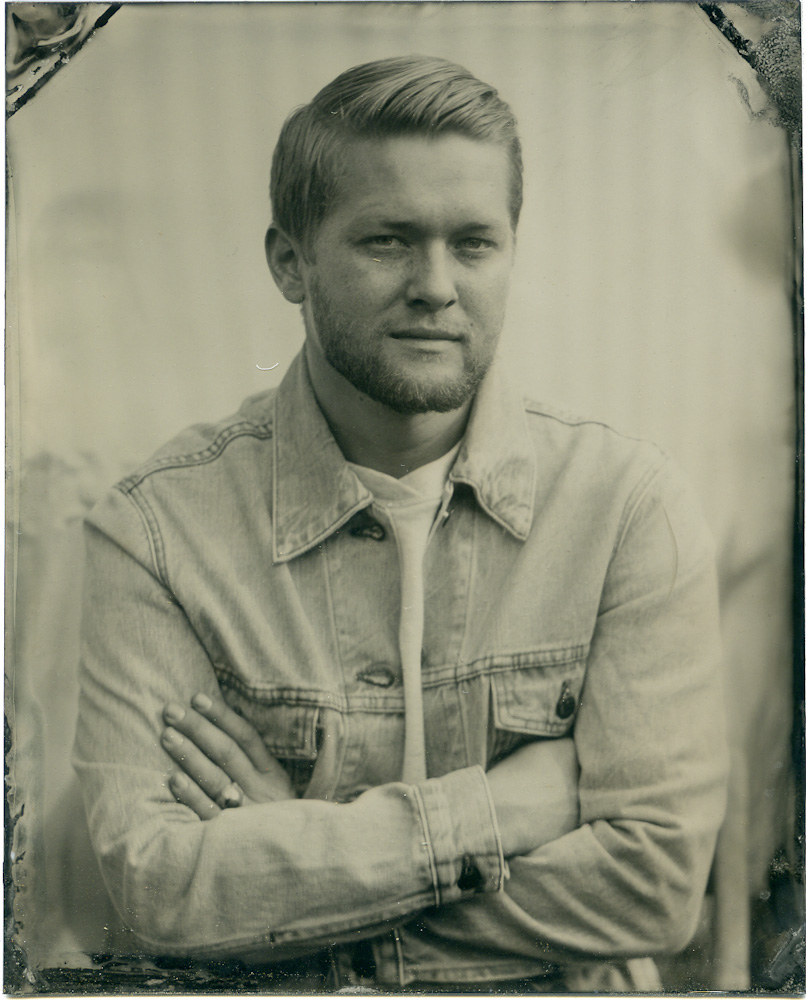
h1

Love Life; Live Big: It’s All In BigLife Magazine! The Mr. Magazine™ Interview With Ryan Waterfield – Co-Founder, BigLife Magazine…

January 21, 2015

“I love print magazines and I will never give up the fight or the belief that I have in their value. I was just at the beach with my family and everyone that I saw there had a print magazine. I mean, you just don’t read on an iPad when you’re at the beach.” Ryan Waterfield

big life-1 Fun – just think about the word for a minute and the images it conjures up in your own mind. Everybody’s “fun” is a little different, but the emotion is the same: a carefree sunshiny day and the passion of a child filling your heart, causing it to beat out of your chest with expectation of what the day might bring.

When you pick up the magazine BigLife for the first time and each subsequent moment thereafter, that’s the response you feel from the virgin touch. It’s alive with fun and passion and content so dynamic it fairly reaches out from between the pages and grabs you along for the ride.

BigLife could be described no better than in the words of the woman who co-founded it and also serves as its editor-in-chief, Ryan Waterfield:

“I like to tell my friends (or anyone with a sense of humor) to imagine BigLife this way: Garden & Gun and Esquire meet in a dark bar. They have a torrid one-night stand. One-night stand results in a love (lust) child. Love child moves west and sets up shop in a mountain town. Falls in love with the ways of the West and starts a magazine. That’s BigLife (at least our idealized version of ourselves b/c I love G&G and Esquire. We have fewer nearly-naked chicks telling funny jokes and less of the garden stuff, more of the backcountry skiing stuff. But, you get the idea.)”

And that, my friends, sums up BigLife very well. The passion that ignited this love (lust) child comes from deep within Ryan Waterfield. Wife and mother of two; Ryan had a dream to turn her Sun Valley Focus magazine into something bigger, something that displayed the type of larger-than-life environment in which she lived. And after seeing and feeling the ink on paper product of that dream, Mr. Magazine™ is impressed. Very impressed.

This is a magazine where you can actually feel the emotions of each page, each word and each photograph emanate in a resounding fashion. And the element of mischievous fun is never farther than the masthead – where Ryan tongue-in-cheek pokes fun at the Hemingway-approved way of getting the creative juices flowing: alcoholic libations, while her creative director Britt Johnston just dreams of having the time to clean her house. Each member of the BigLife team has their own humorous blurb designed just for them. It’s unique and it’s fun. Just like the magazine itself.

So, sit back, mentally dig up your snow skies, and enjoy the Mr. Magazine™ conversation with Ryan Waterfield, Co-founder & Editor-in-Chief, BigLife magazine

Ryan Waterfield with her son Townes Van Der Meulen (5). Ryan writes " my wonderfully stubborn and inventive son... and has an under-documented 18-month old sister."

Ryan Waterfield with her son Townes Van Der Meulen (5). Ryan writes ” my wonderfully stubborn and inventive son… Townes has an under-documented 18-month old sister.”

But first the sound-bites:

On what she was thinking to launch a print magazine in this day and age: I love print magazines and I will never give up the fight or the belief that I have in their value. And there are a lot of places where you don’t want to read a magazine on a digital device. So I believe in print.

On the concept of BigLife:
BigLife was born from this idea that in the mountain west, there really isn’t a magazine that captures the big life that we live here. There are magazines that do a great job of capturing the adventure side of it, but there is so much more to living in the mountain west. It’s a very rich life with commitments to causes and with a hunger for its culture.

On her own description of BigLife as the love child of Garden & Gun and Esquire: You’ll probably think it wasn’t such a one night stand between those two; I mean, Vanity Fair played a big role. I’m a huge reader of magazines, so there are so many that have inspired me over the years.

On the biggest stumbling block she had to face:
As for stumbling blocks; I’m a teacher by trade and I experienced 15 years in the classroom. I don’t have a background in publishing, but I have a love of magazines. So, the stumbling block for me is that I’m a novice in many ways.

On her most pleasant and surprising moment: The thing that was the most surprising and the most pleasant and the most encouraging was the amount of people I heard from. I heard from so many people that I knew and didn’t know.

On what she would tell someone who wanted to launch a new magazine:
I’d say: number 1 – make sure that you have a team that is willing to jump off the cliff with you and doesn’t mind figuring out how to fly on your way down together

On what keeps her up at night: I am so excited about what we’re doing that I can’t sleep because of that excitement. And then of course there is the terror of things like: do I have the right stuff in this issue of the magazine; have I talked to everybody I needed to talk to.

And now the lightly edited transcript of the Mr. Magazine™ interview with Ryan Waterfield, Co-Founder, BigLife magazine…

Samir Husni: My first question to you has to be are you out of your mind launching a print magazine in this day and age and with the added responsibilities of a family?

Ryan Waterfield: Absolutely, yes. (Laughs) That’s something my husband asks me all the time; what are you doing? Are you sure this is something that you want to do? I was laughing the other day because I moved to Sun Valley from Kentucky when I was 22-years-old. I had a job as a teacher at private school and took a very safe route for most of my life. And I loved teaching while I did it, but I always had this desire to write and to do something creative. Not that teaching isn’t creative, it definitely is. But writing was something that I wanted to do that was different. I got into writing and then the magazines came after that.

I love print magazines and I will never give up the fight or the belief that I have in their value. I was just at the beach with my family and everyone that I saw there had a print magazine. I mean, you just don’t read on an iPad when you’re at the beach. And there are a lot of places where you don’t want to read a magazine on a digital device. So I believe in print.

Samir Husni: Tell me a little about your new magazine, BigLife.

Picture 31 Ryan Waterfield: BigLife was born from this idea that in the mountain west, there really isn’t a magazine that captures the big life that we live here. There are magazines that do a great job of capturing the adventure side of it, some are very specific; they capture the skiing or the mountain biking side of it. “Powder” and “Outside” magazines are very adventure-based and they have wonderful writing and just do a great job.

But there is so much more to living in the mountain west. It’s a very rich life with commitments to causes and with a hunger for its culture. There is great architecture and design, especially now that the architecture scene is so exciting. There’s just so much going on.

And there seemed to be such a lack when it came to a magazine that encompassed all that. I just couldn’t find one that showcased the kind of life we live here. So, that’s what I wanted to do with BigLife.

Samir Husni: With BigLife, it seems as though you’re combining the power of photography with typography. Did you have a magazine in mind when you were creating yours?

Ryan Waterfield: A very good friend of mine, Britt Johnston, is the art director for BigLife. She and I worked together for three years on a property-based magazine here in Sun Valley; we weren’t the owners, but we helped the publisher launch the magazine. And she and I just had this great creative energy together.

So, when we started talking about what we wanted to do with the magazine BigLife; she brings the design and I bring the voice, to me the magazine reading experience is very elliptical, it’s not just the words. I mean, I love reading Harper’s and Atlantic Monthly for the articles, but I don’t get much in the way of design from those magazines. So we really wanted to put together smart, sassy editorial with a really great, energetic design.

Samir Husni: There are a few unique things that I’ve noticed in the magazine, including the way that you introduce your team and yourself.

Ryan Waterfield: It’s funny that you mention that – I wanted to do something like that with the property-based magazine that we did before, but we were kept on a much tighter leash. But since this is our own magazine and we don’t have to answer to anyone but ourselves, we just thought we’d have a lot of fun with it. And I have to say that I’m a big fan of McSweeney’s and Dave Eggers and I used to use Dave Eggers’ books in the classroom when I was teaching and just loved how playful he got with the copyright page and it was something that I had always wanted to do.

Reading is such an intimate experience; why not get to know the people who are putting the magazine together for you.

Samir Husni: In your description about yourself, it sounds as though you’re trying to channel Hemingway’s drinking lifestyle. (Laughs)

Ryan Waterfield: (Laughs) Yes, I’m mostly joking about that, although I’ll have an occasional drink here and there. (Laughs again)

Initially, we did two issues of a magazine called Sun Valley Focus and they were basically our test magazines. We wanted to make sure that our idea had legs and that advertisers would get behind it and readers would enjoy it. So we did the two test issues, only distributed in Sun Valley and only written about things going on in Sun Valley. But very similar to what we have going on with BigLife. And the response was overwhelmingly positive.

When we decided to make the move to cover our entire region and go after our natural audience, we obviously extended the editorial scope. There are so many things that tie people who choose to live in these towns, or who dream about visiting them, or just visit them on a regular basis. There is definitely a sense of adventure and a commitment to causes and an appetite for the culture. And I wanted all of these things in the magazine. And when it came to establishing a voice, I wanted to express a sense of playfulness to people as well.

When I think about our ideal reader, I don’t think of an age. Our reader is somewhat ageless. But what they do have is a sense of adventure and a sense of fun. And we try to play to that in everything we do.

Picture 33 Samir Husni: If we can go back for a minute to that moment of magazine conception, when, as you told me in your email, Garden & Gun met Esquire in a dark bar and had a torrid one night stand (Laughs); can you tell me a bit more about that one night stand and how this love/lust child called BigLife was born?

Ryan Waterfield: (Laughs) You’ll probably think it wasn’t such a one night stand between those two; I mean, Vanity Fair played a big role. I’m a huge reader of magazines, so there are so many that have inspired me over the years. But, as I said, I was a disgruntled reader for a while because there just hasn’t been a magazine that spoke to what I felt the experience was living in the mountain west.

And when I thought about what magazines I was always fascinated by as a teen, Esquire was definitely one. I’m not a guy, but I loved reading Esquire, I would always steal my brother’s copy. Eventually, he made me get my own subscription. And GQ was another one; I loved their tone of voice and their sense of style.

Picture 35 But Garden & Gun was one that I discovered late. I was from the south and I’m always homesick for the south, even though I love living here. My husband shared an office with a southerner at one point and in their backroom was an issue of Garden & Gun and I found it. And that was really when I thought about that kind of magazine was something that we didn’t have in our area. A magazine that focuses on this region and the wealth of things going on here, not just the skiing and mountain biking, but one that focused on how rich our lives are and how big our lives are.

So, that’s when Garden & Gun came into the equation and somehow gave me a vision and showed me that we could do what it does out here too, of course, obviously differently. Having been born and raised in the south and moving to the west; the west is definitely not the south, that’s where the difference in the voice and the look comes in for us.

Samir Husni: Can you tell me between that moment of conception, that “aha” moment, and giving birth; what has been the biggest stumbling block that faced you before the magazine was born?

Picture 34 Ryan Waterfield: That’s a really good question. One of the first things that I was really lucky about was to have found a partner in Britt Johnson. She and I have both lived here forever and knew each other peripherally, and this is a very small town. We knew each other peripherally for years, but just never connected. And then we had our first children within months of each other and they ended up at the same daycare. We were both full-time working moms and would pick up our kids at the same time. Before you knew it, pick up time became a glass of wine here and there and we had a common spirit and felt a common creative energy. And Britt really helped give me the courage to quit teaching and try something different in my professional life. I was very lucky to fall in with her and find someone with such creative energy that matched my own.

That was the first really lucky think to have happened and then we hooked up with two other partners, Dan Willett and Diane Moberg, who had worked on another publication in this valley called Western Home Journal and it was a very different publication . It’s a home, architecture, design resource magazine.

But Dan and Diane have been in six other resort markets so they know those markets well too and we also work really well together. They are two more reasons we have to feel really lucky about.

And then as for stumbling blocks; I’m a teacher by trade and I experienced 15 years in the classroom. I don’t have a background in publishing, but I have a love of magazines. So, the stumbling block for me is that I’m a novice in many ways, but I did one magazine for three years and I was a very quick study. And I took it very seriously. And I feel like, in terms of life experience, in between when I quit my job and decided to become an editor of a magazine, I have basically gained my master’s in literature. (Laughs)

So, my inexperience would be my first stumbling block, but I’m definitely committed to solving that problem. And the second stumbling block is money. It’s an expensive endeavor. We’re very lucky in that a lot of the people who write for us are our friends, my former students, and a lot of the photographers are people we have known and have a great relationship with. And they have a commitment to quality editorial and beautiful magazines as well.

But money is a huge stumbling block. I’m in the process of writing a business plan and seeing what happens. I think we probably put the cart before the horse in a lot of ways because we had such energy for this vision and we just went and did it. And we’re writing the business plan after the fact. Now we’re going to work on getting investors. And that’s another stumbling block, I would say.

Samir Husni: What was the most pleasant or surprising moment in this whole creation process?

Ryan Waterfield: The most pleasant and surprising, I think, was to write. I am one of those writers who draft a lot; I am like Hemingway, I guess. I’ll write a draft and my first draft is always over the top and, God help me if anybody else sees it. Then I usually rein myself in a little bit and by the time I put it into print, it still has a little edge to it and not something just anybody would publish.

The thing that was the most surprising and the most pleasant and the most encouraging was the amount of people I heard from. I heard from so many people that I knew and didn’t know.

One of the things that we’re doing right now is putting together an advisory board of pros in the industry, people who know publishing and circulation; people who know the ins and outs that I don’t know.

And one of those people we’re putting on the advisory board reached out to me. She happened to get a copy of our launch issue of Focus, it came out summer 2014, and she called me up out of the blue and said, I love what you’re doing, now what do you want to do with it? I shared my vision and she and I have been talking a lot and she has been a great mentor.

The fact that people loved the voice, loved the energetic look and the sense of style, have been really encouraging things.

Samir Husni: If someone came to you and said, “Ryan, I want to start a new magazine,” what would you tell them?

Ryan Waterfield: (Laughs) Write your business plan first.

Samir Husni: (Laughs too) So, the opposite of what you did?

Ryan Waterfield: I’d say: number 1 – make sure that you have a team that is willing to jump off the cliff with you and doesn’t mind figuring out how to fly on your way down together. Number 2 – believe in your vision and be really excited. I was talking to one of my friends recently and I talk more about my magazine than I do my two children. And she said, “Wow, it’s like you just had another child.” And that’s true; this one is getting a lot of my attention right now.

I’d tell them to definitely have a team that’s willing to take risks with them and know that they can have a lot of fun together doing it. And always believe in their vision.

Samir Husni: Are you going to have national distribution, or limit it to your area?

Ryan Waterfield: It’s going to be a magazine that writes about our region and covers our region, but with national and international distribution. It’s BigLife, I have big dreams. (Laughs) We’re distributing right now in Sun Valley, Jackson Hole and Park City, but we certainly want to grow that. And we want to start with a good readership base in these mountain towns.

Samir Husni: My typical last question; what keeps you up at night?

Ryan Waterfield: I am so excited about what we’re doing that I can’t sleep because of that excitement. And then of course there is the terror of things like: do I have the right stuff in this issue of the magazine; have I talked to everybody I needed to talk to. I’m constantly making lists of people that I think would want to support something like this because they believe that this magazine could be really good for a mountain town. I think that we live in a world where really smart, educated, cultured people choose to live in these towns and at the same time there is a lack of really great jobs for people in these towns. And I think something like BigLife, if it makes it, could really shine the local light on these towns.

So, one of the things that keeps me up is that I want to do something really good for Sun Valley; I want to do something really good for the mountain west and I want to be able to speak to why this is a great place to invest in and to visit, and the excitement of all that definitely keeps me up at night. Of course, the idea of finding investors keeps me up too.

Samir Husni: Thank you.
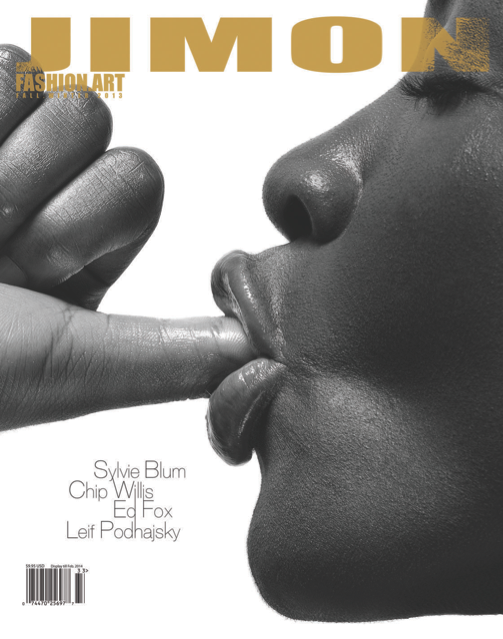
h1

Putting Some “Simple Grace” In Our Lives, Bauer Prepares To Launch Its Newest Magazine For 2015. The Mr. Magazine™ Exclusive Interview With Carol Brooks, Editor-in-Chief, & Ian Scott, President/Publisher.

January 16, 2015

“Simple Grace, Your Daily Dose Of Hope. It’s Actually Something Different From Anything Bauer Is Doing Locally and Globally. It’s Very New In The Magazine Space.” Simple Grace Magazine’s Launch Story. A Mr. Magazine™ Exclusive.

simple grace In my office hangs a sign that reads: there’s always hope, a simple phrase that holds a wealth of meaning. And in a few short months Bauer Media Group U.S. will have their own message of hope in the form of their newest print launch: Simple Grace. A message of hope that is two-fold and backed-up completely by proven successes, both from the inimitable Bauer Publishing and the sentiment itself which is preached from every Christian pulpit in the country: there is always hope.

A monthly devotional magazine with daily inspirational Bible quotes and content that is geared toward the love, kindness and support of God; Simple Grace is the first digest-sized, devotional magazine, targeting a mass audience on the nation’s stands, of its kind in the United States.

Simple Grace will be released in mid-April and is the brainchild of Carol Brooks, editor-in-chief for the past 13 years of First for Women. I spoke with Carol recently and Ian Scott, president/publisher, Bauer Media U.S. The concept behind the magazine is a unique one, a character trait of most of Bauer’s original launches, past and present. Being first and going somewhere no one else dares to go, is something Bauer firmly believes in; that is, when they firmly believe in the product. And Simple Grace is something that is near and dear to their heart and has the company’s full support.

But Carol said they didn’t go into this category without doing their homework. Between readers’ response from First for Women and the intense research on the market and what was and was not out there; Simple Grace was born from their reader’s desire to include God more as a part of their daily lives. Audience first is not only a Mr. Magazine™ mantra, but a Bauer one as well.

I hope you enjoy this refreshingly “hopeful” interview with Carol & Ian as we talk about a magazine that is filled with a “Simple Grace.”

But first, the sound-bites:


Carol Brooks

Carol Brooks

On defining Simple Grace: The tagline we’re talking about is “Your Daily Dose of Hope.” It’s going to be a digest-sized, primarily monthly, devotional magazine.

On whether a monthly magazine that targets a daily read will have a different approach with advertisers:
I think that our approach for one is that this is something that no one has done before; it’s totally new and a fresh aspect on the devotional.

On the moment of conception for the magazine:
I observed something through my readership; I’ve been editor-in-chief of First for Women for 13 years and when we queried our readership we found that God is a big part of their lives and we’ve just been surprised in different ways when we’ve heard from the First for Women readers how important God is in her daily life.

On Bauer’s ability to make the never-done-before a success:
How do I answer that? I think that we’re not afraid to try new things and I think we’ve shown that over the years.

On the launch plan for Simple Grace:
Our goal is to get it into as many stores as possible for the long-term. On the short-term, we’re going to be heavily-targeted at Wal-Mart and we’re going to be putting out in total about 200,000 copies of the first issue.

On the major stumbling block with launching the magazine: I guess the thing that is very different about it, in terms of even how book publishing works in this country, and it’s surprising honestly, is that there aren’t a lot of people speaking cross-denominationally to the Christian groups.

On the launch date of the magazine:
The first issue coming out for sale will be cover-dated May and will hit the newsstands mid-April.

On what keeps Carol up at night: Not wanting to unintentionally offend anybody or step on anyone’s toes. It’s a little bit daunting to enter an arena that is religious, because as much as you really don’t want to offend, maybe you might stumble into something.

Ian Scott

Ian Scott

And now the lightly edited transcript of the Mr. Magazine™ conversation with Carol Brooks, Editor-in-Chief, First for Women & Simple Grace magazines and Ian Scott, President/Publisher, Bauer Media U.S.

Samir Husni: Tell me about the magazine, Simple Grace. This is something completely different from any other Bauer publication that you have in the United States.

Carol Brooks: It’s actually something different from anything globally. It’s very new in the magazine space. So, yes, it’s a definite departure.

Samir Husni: Would you briefly define Simple Grace?

Carol Brooks: The tagline we’re talking about is “Your Daily Dose of Hope.” It’s going to be a digest-sized, primarily monthly, devotional magazine. The devotional category out there is generally books, but Simple Grace will be something that you read every day for about five minutes and it’s kind of divvied into every day of the month sections. It has an inspirational reading that the reader can spend five or ten minutes with each day.

Devotionals are really big business in the book market, but haven’t really been explored, in terms of periodicals and magazines.

Samir Husni: At least, on the newsstands. I know that there are a lot of devotional publications out there that different churches give to their parishioners, but nothing as major as Bauer is doing with Simple Grace.

Carol Brooks: Right, nothing on the newsstands like it.

Ian Scott: I think that one of the great things about this is I believe this is the first time any publisher has brought a magazine of this kind to mass retail in the United States, where the reader will be out doing his/her shopping, grocery and otherwise, and there the magazine will be for them to pick up. I think most of the other titles are on a subscription model of distribution. So, this is going to be something that is obviously very new as well.

Samir Husni: Ian, Carol just mentioned that this is a magazine that people will be using or interacting with for at least five or ten minutes each day, so that there is a repeat pick-up of the magazine on a very regular basis. Will that give you a different approach with advertisers for the magazine?

Ian Scott: I think that our approach for one is that this is something that no one has done before; it’s totally new and a fresh aspect on the devotional. We’re very, very excited about the whole thing.

Another thing is that the magazine is digest-sized, so it’s all about making it easily accessible, both in where you can buy it and also easily accessible to you, the consumer, where it can be pulled out of a briefcase or a purse and can be referred to because it’s a size that can be carried around.

And I think another one of the unique things that we’re doing with this magazine is on the inside front cover, when you open the magazine there’s going to be a detachable bookmark. The reader can literally pull it out and use it to mark their place in the magazine, so they’ll know where they are.

A lot of these magazines that I’ve seen recently appear to be quite flimsy, but this is a magazine that’s going to be 144 pages, perfect bound and it’s going to have a glossy cover with another four pages on top of that.

Samir Husni: Carol or Ian, can you describe that moment of conception? Who brought the idea to Bauer and when did that “aha” moment occur, when everyone realized that Simple Grace was something special?

Picture 27 Carol Brooks: I observed something through my readership; I’ve been editor-in-chief of First for Women for 13 years and when we queried our readership we found that God is a big part of their lives and we’ve just been surprised in different ways when we’ve heard from the First for Women readers how important God is in her daily life. So, when we looked into that we found that there is currently 250 million Christians in the U.S. and out of 80% of Americans, two-thirds pray daily.

So, we’re talking about people, “OK, this is a person that we’re reaching in terms of women’s service, but she has this other dimension in her life that doesn’t really fit within the boundaries of what we talk about in First for Women, but it’s a really important dimension.”

Also, there is a book called “Jesus Calling” that has now sold 13 million units, of the original book and other pieces of its franchise, and it has been a huge publishing success. So we took a look at it and saw that this is something that works in print; it’s a hardcover book and it’s really, really well-loved. And it continues to grow. It was published in 2004 and last year it sold 700,000 units. It’s something that has staying power and it’s desirable. And when we looked at it, we saw that it was a certain kind of devotional, but it’s a book that gives you a day, but it’s not the day of your year. For example, if you read it on a holiday such as Good Friday, it doesn’t reflect that it’s Good Friday.

So we thought, wow, if we could do a magazine we could combine beautiful visuals and make each entry very specific for that exact day of the week, year, or signify a certain holiday; even things going on in the news. We could do a similar kind of devotional, but with more immediacy.

Samir Husni: You may think I’m making this up, but my daughter and her husband were with me at Books-A-Million last week and actually bought “Jesus Calling” for their daily devotions.

Carol Brooks: Really? That’s interesting.

Picture 30 Ian Scott: This is something that Carol and everyone on the team have been working on now for nearly two years. So, it’s been a long time and a lot of work and research has gone into it before we got to the point we’re at today, where we’re ready to go forward with the magazine. Like any business you have to make sure that you have something that is wanted by the consumers that are out there and in a format that you think they’re going to love.

Samir Husni: Since the early 80s it seems as though Bauer keeps pulling these rabbits from their magic hat and putting titles on the marketplace that are revolutionary, meaning there is nothing like them already out there. When Woman’s World magazine was introduced, there were no weekly magazines for women on the newsstands. And when First for Women was announced it was a massive launch; so what makes Bauer click and tick when it comes to all of these new magazines?

Ian Scott: How do I answer that? I think that we’re not afraid to try new things and I think we’ve shown that over the years. We’re a company of individuals that are smart, we know publishing and we’ve never been afraid of trying the new and different and going out into the market where other people are maybe afraid to go. And I believe that’s testament to our commitment to the entire magazine industry.

Carol Brooks: And I think the reason that we came up with some of these ideas is because we’re very, very trained on the consumer. We know our readers, study and listen to them. The real genesis of this happened years ago when we heard from our First for Women readers. We pay special attention to what our readers tell us that they want and we really do our homework and research these things before we go forward. But we’re very profoundly consumer-driven.

Samir Husni: Can you describe the process of launching Simple Grace and will it be nationwide on all the newsstands?

Picture 28 Ian Scott: Our goal is to get it into as many stores as possible for the long-term. On the short-term, we’re going to be heavily-targeted at Wal-Mart and we’re going to be putting out in total about 200,000 copies of the first issue. We’re also looking into Barnes & Noble and obviously Christian bookstores and other places we can get distribution.

Like anything, we roll it out, but we want to be in a prominent position such as checkouts; we want to be right in front of the consumer’s eye so that it does capture their attention. Obviously, for us it’s a huge investment certainly to be in those prominent spots, but to us that’s the most important way to promote these products.

Samir Husni: Carol, what do you think will be the major stumbling block you’ll face in launching this magazine and how do you plan on overcoming it?

Carol Brooks: I guess the thing that is very different about it, in terms of even how book publishing works in this country, and it’s surprising honestly, is that there aren’t a lot of people speaking cross-denominationally to the Christian groups. There is evangelical publishing, catholic publishing, but there’s not as much cross-denominational talk. We’ve done a lot of market research and we’ve done a lot of looking at how the different denominations view different kinds of content and we feel very confident that we’ve hit on an approach that is extremely appealing and non-polarizing across denominations.

And I think that’s been the biggest challenge just because there are not a lot of people doing that intentionally.

Samir Husni: And when is the launch date for Simple Grace?

Ian Scott: The first issue coming out for sale will be cover-dated May and will hit the newsstands mid-April. And it will be a monthly magazine, priced at $3.99, digest-sized, with 144 pages; plus, as I said earlier, the four page cover and perfect bound.

Samir Husni: My typical last question, Carol; what keeps you up at night?

Picture 29 Carol Brooks: Not wanting to unintentionally offend anybody or step on anyone’s toes. It’s a little bit daunting to enter an arena that is religious, because as much as you really don’t want to offend, maybe you might stumble into something.

I would say I’m reading a lot from the Christian space and looking at a lot online and reading the comments. I’m just trying to calibrate myself so that I don’t upset anyone or offend anyone.

Samir Husni: Thank you.
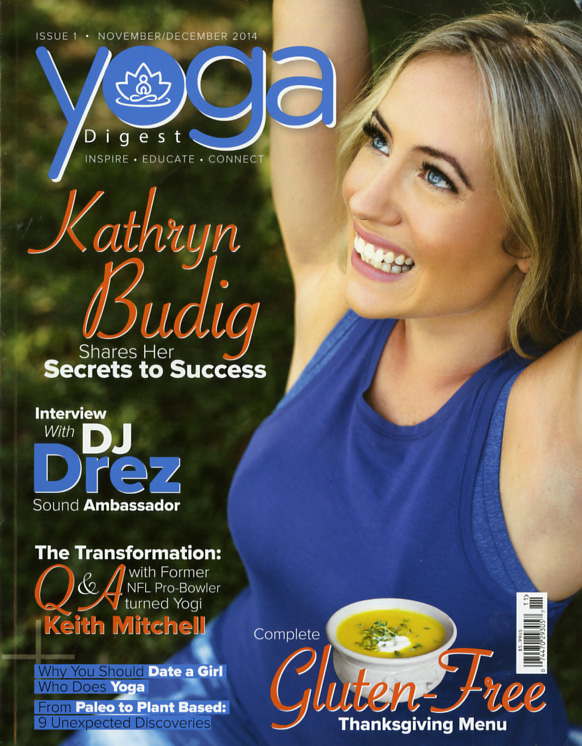
h1

Naturally, Danny Seo: The Man,The Magazine, The Movement. The Mr. Magazine™ Interview With Danny Seo.

November 21, 2014

“But the reality is, to actually create a beautiful, curated, well-edited printed magazine; it’s not an easy process. And when we really looked at the space and thought about who our reader and customer was and what she’s really interested in right then, which is having some me-time, we felt the reader was looking for a publication where she could actually turn off her phone or the TV and have an appointed reading time with a tangible product that she can hold in her hands and go through page by page.” Danny Seo

naturally 1-5Living “Simply Green” is something that Danny Seo has been doing and promoting for years. Through his books, television programs, magazine columns, and his how-to lifestyle lectures, Danny Seo has shared his creative ideas on modern, eco-friendly living to millions of people.

And now he has another platform for his environmental practices and beliefs that is as beautiful as it is sustainable. Naturally, Danny Seo is the latest offering from a man who has been described as an eco-friendly lifestyle expert. And looking at and touching his newborn brainchild certainly backs up the description. The magazine is harmonious and balanced, beautiful and filled with creative and innovative ways a person can help sustain our planet in many different ways. From food, home, style, health, travel and just plain fun, Danny embraces a health-conscious attitude about life in general, instead of producing a magazine that promises you to lose 5 pounds in 5 days.

But don’t look for his face on the cover. Ever. In fact, it’s in his contract. Instead, look for sustainable topics done in an oh-so stylish way. And the paper the magazine is printed on feels amazing.

It’s just a great magazine and definitely deserves to be one of this year’s hottest new launches. So, sit back and let your earthy, inner spirit soar as you enjoy the Mr. Magazine™ interview with a man who loves the planet and is determined to prove it, Danny Seo, Naturally, Danny Seo…

But first, the sound-bites:

Danny Seo On why he chose a printed magazine as a platform: Well, you would think being an environmentalist, doing a digital magazine would be something that I’d be interested in because there’s no trees involved, no waste; it’s as eco-friendly as possible. But when you think about digital magazines, the reality is anybody can do a digital magazine.

On whether, as an environmentalist, he thinks print adds or takes away from the environment:
I think what it is, there’s a lot of things in our lives right now that are just cheap and of bad quality.

On a stumbling block he had to face during this journey:
I think it’s what we’ve noticed in Issues 1 and 2: we need to find more women to profile in the magazine.

On where his mind is at when he decides on the covers of the magazine: The number one promise we try to make is nothing sensational, no false promises; five pounds in five days, forget it, that’s not going to happen.

On his most pleasant surprise since starting the magazine:
It’s probably going to sound cheesy, but I was at Whole Foods when the magazine hit newsstands and I was buying a sandwich for lunch, this was in New York. And a woman picked up the magazine and began reading it and I could see her stop at a page, like she was having an “aha” moment and I could almost hear her thinking: I’ve never thought of this, what a great idea. And she put it in her cart to buy it.

On whether he’ll ever be featured on the cover:
No, in fact, that’s in my contract. I will never be on the cover.

On some of his favorite magazines: I really love so many magazines. My all-time favorite magazine and it’s almost impossible to find in the United States is Jaime. It’s a brilliant magazine.

On what keeps him up at night:
Nothing, I sleep very well.

And now the lightly edited transcript of the Mr. Magazine™ interview with Danny Seo, Editor-in-Chief, Naturally, Danny Seo…

Samir Husni: Congratulations on being named one of the hottest new launches for 2014. We had almost 800 new magazines, with over 200 published on a regular frequency.

Danny Seo: Thank you. It was a huge honor and our publisher has been on Cloud Nine ever since. (Laughs)
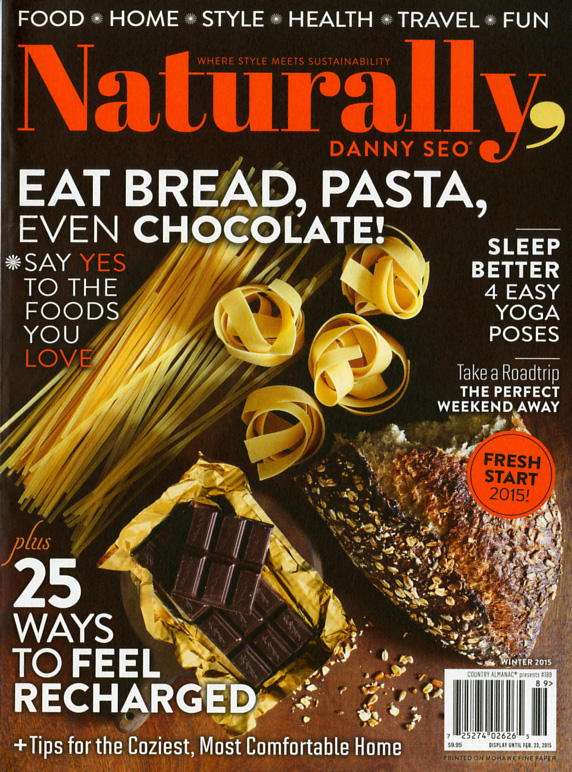
naturally2-6 Samir Husni: My first question to you is: why did you feel the need for a printed magazine? Your own personal brand is everywhere, so why the printed magazine?

Danny Seo: Well, you would think being an environmentalist, doing a digital magazine would be something that I’d be interested in because there’s no trees involved, no waste; it’s as eco-friendly as possible. But when you think about digital magazines, the reality is anybody can do a digital magazine. And I’m talking about my parents could do one, my neighbor; it’s almost like there’s absolutely no betting process about the quality of the product. If you have $20, you can buy a program and create something that people can flip through.

But the reality is, to actually create a beautiful, curated, well-edited printed magazine; it’s not an easy process. And when we really looked at the space and thought about who our reader and customer was and what she’s really interested in right then, which is having some me-time, we felt the reader was looking for a publication where she could actually turn off her phone or the TV and have an appointed reading time with a tangible product that she can hold in her hands and go through page by page.

When I’m in my office in New York, I actually answer my phone when it rings and women call me and are literally in tears as they tell me what a long time it’s been since they’ve read a magazine that didn’t talk down to them. And that this is the first magazine that’s not only incredibly inspirational, positive and fun, but it’s also beautiful to feel and look at. And that’s the number one reason we did this; there’s just a lack of respect in the printed space for this audience right now.

Samir Husni: When you talk about the environment; do you think that the printed word takes away from the environment or adds to it? You mentioned the trees; what do you think causes more environmental damage, all the computers, phones and devices that we trade in or get rid of every six months, or the paper we use to print magazines?

Danny Seo: I think what it is, there’s a lot of things in our lives right now that are just cheap and of bad quality. And you look at a lot of things in different categories: fast fashion, which is in retail where you buy clothes and after a couple of wears, you just throw it away; we would never think that in the 80s. (Laughs) No one bought clothes that way.

I’ve been a magazine editor at a number of titles and what I saw on the business side happening time and time again was people would say, “Oh, paper. It’s very expensive. We’re going to have to lower the paper quality.” And paper just got cheaper and cheaper and thinner and thinner and the overall product began to feel disposable.

And on the editorial side, I would hear things like, “We don’t have the budget to actually do original stories. So, we’re going to go into the archives and we’re going to reprint a story that ran in another magazine six months ago and no one will be able to tell the difference.” And to me, as a reader, I would think that kind of thing was really disrespectful, as someone who bought magazines. They still expected the reader to pay the same price for the magazine and the paper was so thin, I didn’t even like feeling it and I could see right through it. It was completely inferior in quality and I looked at the stories and things and they appeared more like stock photos and things that I’ve read and seen in the past.

If you just improve the quality of the paper and do all original stories, photograph everything without using any stock images, do original reporting, recipe development and actually go out and find untold stories and then you give everyone at least 8 pages to fully tell those stories; you really can still find an audience who’s willing to pay for that quality product.

If you’ll notice, we’re not $3 an issue or $4 an issue; we’re $10 an issue. And we have not gotten a single negative response from anyone complaining about the price of the magazine. Not a single email, or phone call, tweet or Instagram. (Laughs)

It’s like Field of Dreams: if you build it, they’ll come. (Laughs)

Samir Husni: Issue 2 is on the newsstands now. In the time between Issues 1 and 2, what has been the major stumbling block that you’ve had to face and how did you overcome it?

Danny Seo: That’s a tough one. But I think it’s what we’ve noticed in Issues 1 and 2: we need to find more women to profile in the magazine. You know, you sort of live in a cloud, a foggy, misty cloud when you’re shooting the stories. When we were laying out Issue 2, I was thinking; you know, that’s a lot of men we’re featuring. (Laughs)

We shot a beautiful story that’s going to be in the next issue and on day nine of a ten-day shoot, I was going to the raw images and I looked at the photographer and said, “Have you shot one woman on this trip?” (Laughs) I think we’re a women’s magazine and sometimes as a male editor-in-chief, I need to remind myself that our readers are mainly women, at home or working, with children or maybe thinking about starting a family. So, I have to constantly tell myself: think like your reader, not like yourself.

Samir Husni: When I was reading your editorial, you mentioned that you would never do a story about losing 5 pounds in 5 days, or some fad diet. But rather, I see your cover lines and they read: eat bread, pasta and chocolate. I can think of one other magazine that uses a similar approach and that’s Real Simple magazine, you’ll never find a diet or a celebrity on the cover. What’s your thinking behind the cover of your magazine?

Danny Seo: The number one promise we try to make is nothing sensational, no false promises; five pounds in five days, forget it, that’s not going to happen.

We’re trying to be a place that’s very realistic, but also again it’s very timeless. And what we’re trying to create is a product that people actually want to save and archive and build as a collection. And so there are very, very few magazines that are presented in a really timeless fashion. For me one of the inspirations was the very early editions of Martha Stewart Living. Those stories could be run in 2001 or they could be run today.

What you won’t see in the pages of our magazine are product shots, like 15 sunscreens under $15, because that’s not timeless. That’s now. And what that says to the reader is this is a disposable product and when you’re done reading this, you should throw it away, because 10 years from now those sunscreens aren’t going to be on the shelves and also, who cares about how to shop for sunscreens. (Laughs)

I think the biggest example of where we’re going, and we’re already at Issue 2; a lot of the stories that we’ve created in the first two issues we’re now partnering with One Kings Lane, it’s an online site that’s all luxury home products. We’re going to be doing a fine arts sale of the images from the magazine where people can actually buy them framed as original prints and put them in their home, because that’s been the number one request from readers is how do we buy these beautiful images. It’s very few magazines that could actually sell images from today, from a story that’s been done recently.

That’s sort of our promise when it comes to the covers; everything just feels real and it doesn’t scream at you on the newsstand like you’re five-years-old. (Laughs)

Samir Husni: And what has been your most pleasant moment since you started the magazine?

Danny Seo: It’s probably going to sound cheesy, but I was at Whole Foods when the magazine hit newsstands and I was buying a sandwich for lunch, this was in New York. And the day it launched, I was thinking that I didn’t know how it was going to sell or how people were going to respond to it; I felt like I was under the gun. I didn’t know what to do. That day I saw a woman standing in line and all the magazines were lined up at the check-outs and I saw our magazine among them. She picked it up and standing there in line, she began to read it. Eventually, she put it back on the stand and went to pay for her things and I remember thinking, we’re not a library, buy the magazine. (Laughs) But then the next person behind her picked it up and began reading it and I could see her stop at a page, like she was having an “aha” moment and I could almost hear her thinking: I’ve never thought of this, what a great idea. And she put it in her cart to buy it.

After that, I followed her to the register and asked her why she was buying the magazine. And she said, this (pointing to the article) just looks so delicious and I loved this story (she flipped through the magazine) and there’s just so much more to read and I don’t have time to read it all here. The flip quality to her was very important. And she was talking and pointing out to me the articles she really wanted to read as the cashier was ringing up her purchases. At that moment, I just pulled out my credit card and told her I was going to buy her groceries. (Laughs)

Samir Husni: (Laughs too) That’s a great story. Danny, I’ve read references that have been made about you, such as you’re the green Martha Stewart. But you’re not on the cover.

Danny Seo: Oh, yeah, I’m not.

Samir Husni: Are we ever going to see a Danny Seo cover one day?

Danny Seo; No, in fact, that’s in my contract. I will never be on the cover. It’s interesting, there is another publisher, a major magazine publisher, when we were talking about doing this magazine; we met in a room and they mocked up covers and I just saw a wall of me and I just looked at them and asked, “Why on earth would you want to put me on the cover?” And they said because you’re a brand, you have products in thousands of stores; you’re on TV all the time, so we have to put you on the cover. And I remember just saying, “Do you not want to sell magazines?” (Laughs)

This magazine is not a vehicle for me or to push me; it’s not an ego-driven project. It’s a magazine where also I don’t promote my products on the pages. People are investing $10, which is three times the normal price for a magazine, they deserve a better product. And I’m not going to advertise to my reader things that are only in my lifestyle. I have a very strong philosophy about how to live, how to eat and travel, about beauty and home and that philosophy is what I want to present. I think once you lose that trust or that bond about why you’re doing something like this, you lose the reader forever. That’s my commitment from myself to the readers. It’s about them and there is no other motive when it comes to the things we recommend or talk about.

Samir Husni: Any plans to increase the frequency from quarterly?

Danny Seo: In 2016 we’re going to six issues. We actually needed to increase the issues for Issue 2, but we couldn’t get more of the paper that we use.

Samir Husni: I know you’re a very busy man, but when you unwind or get your “me-time” and forget Naturally for a second, what magazine do you like to spend time with?

Danny Seo: I really love so many magazines. My all-time favorite magazine and it’s almost impossible to find in the United States is Jaime. It’s a brilliant magazine. We just came back from Ireland where we did a photo shoot and I actually went into a bookstore and bought back issues of the magazine. It was another inspiration for me in doing our magazine. I think Donna Hay is another beautiful publication; it also has that archival feel to it. Up in Canada, they do some great titles.

In the United States the titles that I really love is Real Simple, it’s one of the benchmarks that we look at and for news, I think New York Magazine is great and some of the supplement titles from the newspapers, like WSJ are fantastic too.

Samir Husni: My typical last question; what keeps you up at night?

Danny Seo: Nothing, I sleep really well. (Laughs)

Samir Husni: Thank you.