Archive for the ‘A Launch Story…’ Category

h1

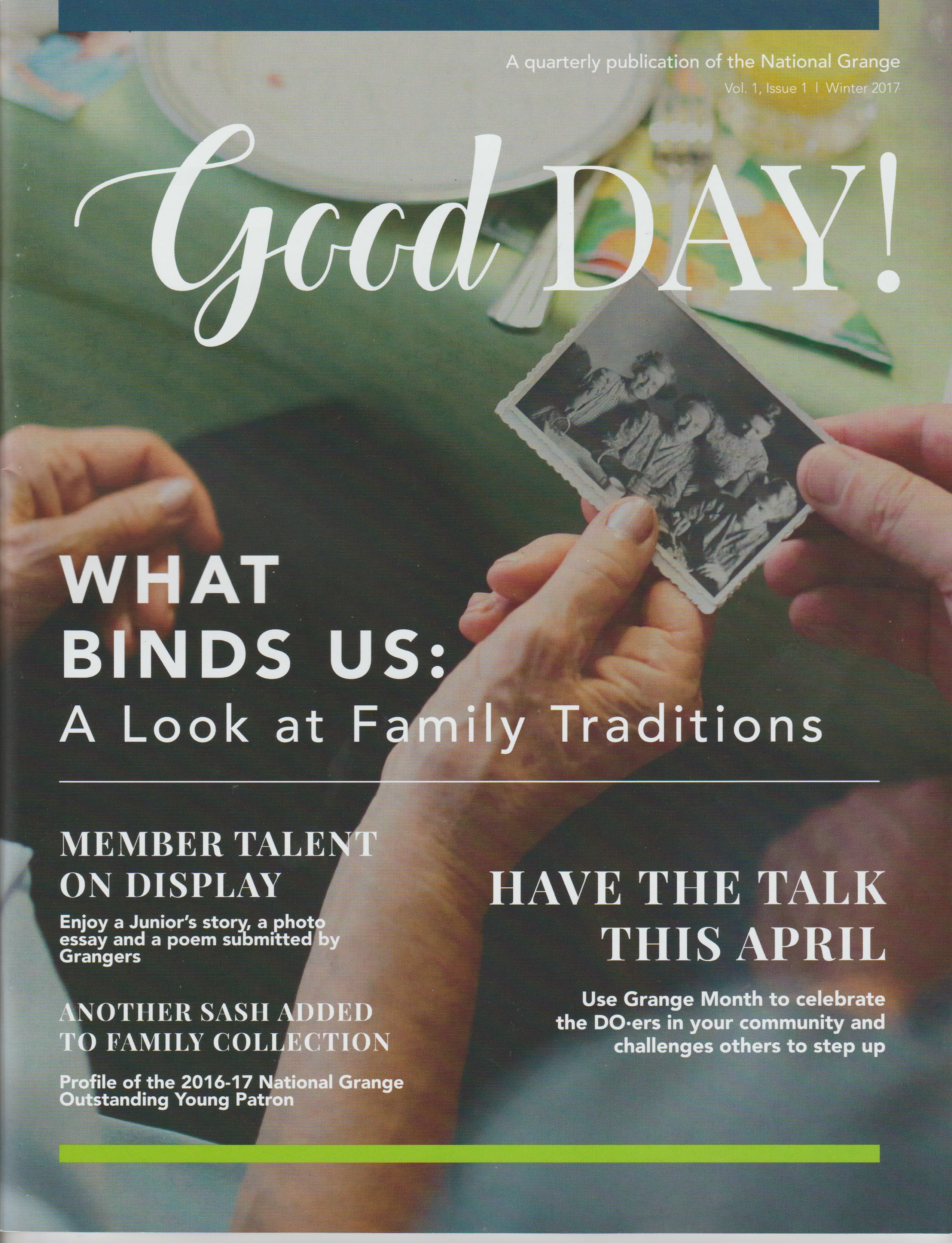
Good Day! Magazine: The National Grange’s New Magazine That Offers A Positive Message To People Who Desire The Grass Roots Beneath Their Feet – The Mr. Magazine™ Interview With Amanda Brozana, Editor, Good Day! Magazine…

March 25, 2017

A Mr. Magazine™ Launch Story…

“Getting that first printed copy. I think that has to be the most pleasant moment for anybody who has done a magazine. I loved when I opened the box, and it was in Connecticut at our president’s conference. And I got to see the first one and put it into my hands and smell it. Maybe that makes me a print geek, and I’m okay with that. That was definitely the most satisfying moment, even more satisfying than when our president said, wow, this is a real magazine. And I think we’ve really received a lot of that initial shock reaction. And I get really excited when I hear people say that we really can do this.” Amanda Brozana…

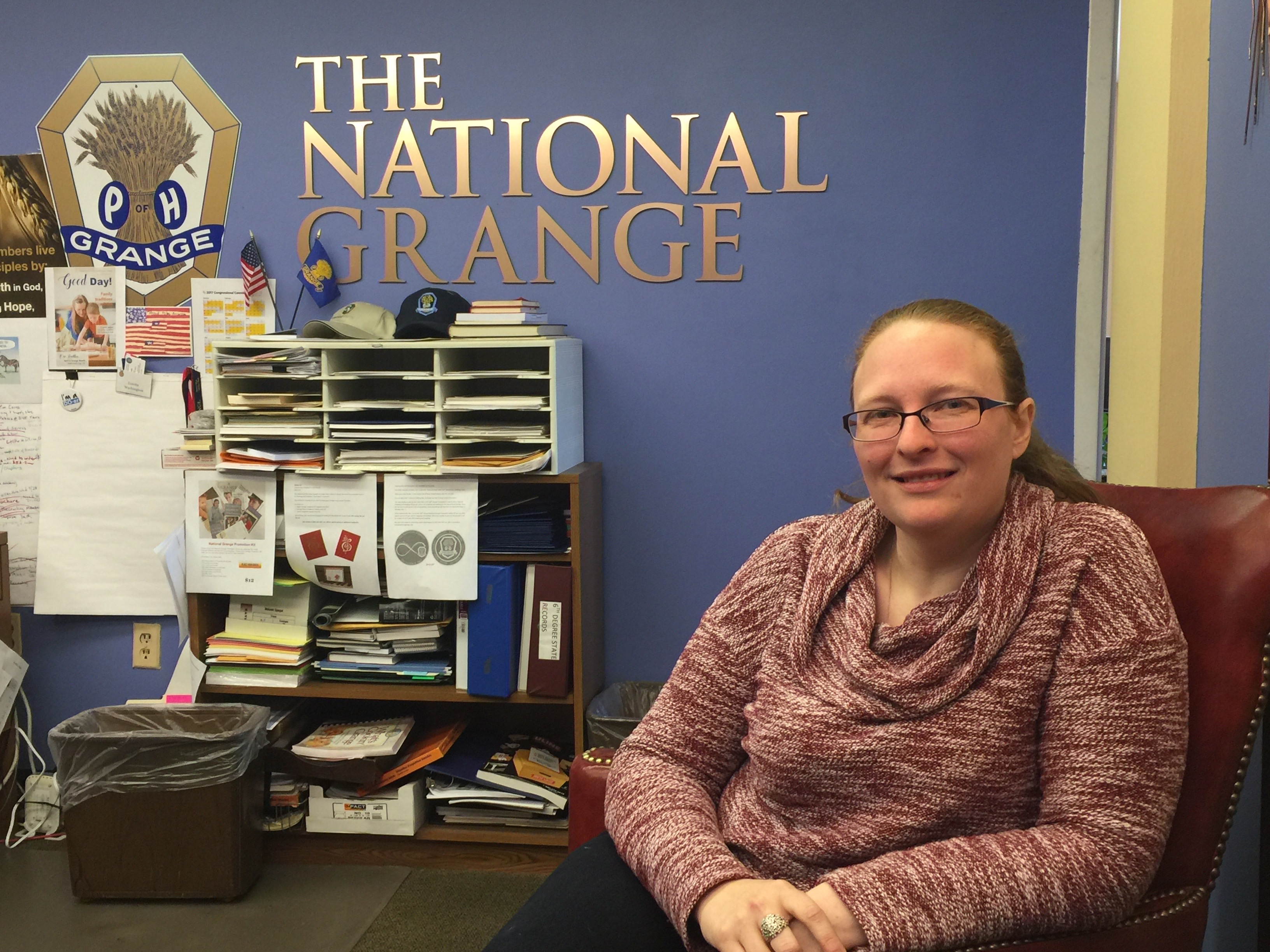
The National Grange was founded as a fraternal organization for farm families in 1867 and today is celebrating its 150th anniversary. The icing on the cake for this milestone occurrence for the Grange is the organization’s latest endeavor, the launch of a new print magazine called Good Day! Amanda Brozana is editor of this new publication and is a staunch advocate for all things sustainable and community-oriented, a mindset that aligns perfectly with the 150-year-old, member-based organization. And while the National Grange may be member-based, the magazine is not.

I spoke with Amanda on a recent trip to Washington D.C. and we talked about the fact that the print magazine is geared toward anyone who believes in a grass roots effort of sustainability when it comes to their food and their lives and community caring for all, not just Grange members alone, but the public in general. With its positive title that beckons all of us to have a “good day” and its contents that are written in a wider, more enveloping context, where everyone is included, not just Grange members, the magazine is a breath of fresh air on the newsstand shelves. In a world of chaos, confusion and, oftentimes, a frigidity toward our neighbors, Good Day! Magazine actually succeeds in its encouragement of all to have a “good day.”

And now, please enjoy the Mr. Magazine™ interview with Amanda Brozana, editor, Good Day! Magazine.

*Truth in reporting: Proud to report that Amanda Brozana is a former student of mine…

But first a Mr. Magazine™ minute with Amanda Brozana followed by the sound-bites:

On the genesis of Good Day! Magazine: Good Day! is actually a magazine under the umbrella of the National Grange, which is celebrating its 150th anniversary this year of being a fraternal family organization. And the concept was that we would introduce the Grange to people who may or may not have heard of it, but also to make our members more aware of what was going on in Granges throughout the country and reconnect them in a way that they haven’t been in several decades.

On the folding of the Grange’s monthly publication and the relaunch of the publication Good Day!: We had the other publication for more than 50 years and it had kind of cleaved itself from the organization as a whole and became almost an entity unto itself. And like many publications, it had its own financial troubles. And so, that was resolved in the ‘50s or ‘60s, I can’t remember exactly when. Introducing the publication again allowed us to bring back a little bit of that heyday and that nostalgia, but also allowed us to connect the primary membership that would be really interested in what was going on nationally with the Grange.

On who came up with the name Good Day! for the magazine: We talked quite a bit here in the office about what the name should be, there’s only a small staff of us, about six, and we had gone through the iterations of Grange News and Grange Monthly, and all of the Grange-oriented ones, but since we wanted to be more of a general interest publication, I had pitched Good Day! along with a couple of others. And we came down to that because it wasn’t used here in the states, and it was available. But also it gives a very positive vibe and right now, the way that our society currently is, we’re not happy; we’re pretty negative. So, I think all of us are looking for that positive news, those positive connectors and connecting moments.

On all of the different movements that are going on across the country today and how she plans on addressing those types of issues and whether just Grange members will be able to access that information: Obviously, our core audience right now are Grange members, just by virtue of who found out that we were going to be publishing, but this magazine really is oriented towards anybody who is interested in both the new food movements that you referred to, or sustainability. As well as issues in their own communities, that idea of volunteerism and being a little bit more than just yourself.

On her most challenging moment: We are a staff of six full-time here in the national office and we have an intern who has been here since February who has really helped us put this publication together entirely from the concept, Kim Stefanick from New Jersey. And I think the biggest challenge is the fact that this publication is just one part of an already full platter, a job that used to be three or four people’s jobs here even ten years ago. Juggling your normal day-to-day and adding this brand new thing, in addition to the other elements of our 150th birthday celebration, it was really a challenge when it came to time management, which I always felt that I was pretty good at, but it was stressful.

On her most pleasant moment: Getting that first printed copy; I think that has to be the most pleasant moment for anybody who has done a magazine. I loved when I opened the box, and it was in Connecticut at our president’s conference. And I got to see the first one and put it into my hands and smell it. Maybe that makes me a print geek, and I’m okay with that. That was definitely the most satisfying moment, even more satisfying than when our president said, wow, this is a real magazine. And I think we’ve really received a lot of that initial shock reaction. And I get really excited when I hear people say that we really can do this.

On anything else she’d like to add: I think that we play a really unique role and I hope that Good Day! helps reflect that. I hope that the magazine is something that can go way beyond our membership, because there is a need for people to look and think about what they’re doing to improve the lives that they’re living. Many of us talk about whether or not we want bigger government or other organizations involved in making decisions for us or doing things in our lives, and the only way that we get away from that is doing for ourselves and doing for others.

On what someone would find her doing if they showed up unexpectedly one evening at her home: Probably cooking for the household; I have a couple of roommates. I am also playing with my dog or at the dog park with the dog, you never know. Hopefully, as soon as the weather breaks, we’ll have a garden in the back and I think that’s very reflective of what people my age and my generation are doing.

On what keeps her up at night: Besides the fact that I work directly next to the White House and I realize that I have to drive an hour in everyday? No, honestly, what keeps me up at night is that I’m part of a 150-year-old legacy here, and I worry about having 150,000 members, instead of the one million members that we used to have. I worry about what that means for the Grange and what it means in general.

And now the lightly edited transcript of the Mr. Magazine™ interview with Amanda Brozana, editor, Good Day! Magazine.

Samir Husni: Tell me about the genesis of Good Day! Magazine.

Amanda Brozana: Good Day! is actually a magazine under the umbrella of the National Grange, which is celebrating its 150th anniversary this year of being a fraternal family organization. And the concept was that we would introduce the Grange to people who may or may not have heard of it, but also to make our members more aware of what was going on in Granges throughout the country and reconnect them in a way that they haven’t been in several decades.

Samir Husni: There used to be a monthly publication for the National Grange Society, why did that magazine fold and why did you decide to bring back another publication?

Amanda Brozana: We had the other publication for more than 50 years and it had kind of cleaved itself from the organization as a whole and became almost an entity unto itself. And like many publications, it had its own financial troubles. And so, that was resolved in the ‘50s or ‘60s, I can’t remember exactly when.

From then on, you could notice in trend on all of these organizations like us, where there was a peak of membership in the ‘50s, and that meant that many people were entering the Grange and other organizations like us at 20 and 30 years of age. Those people have stayed with the organization and have aged, so we’re now talking about people who are in their 70’s, 80’s or 90’s, who are a part of the organization. So, their primary mode of connection and communication is still print, yet we were servicing them mostly through digital means, which didn’t make a lot of sense.

So, introducing the publication again allowed us to bring back a little bit of that heyday and that nostalgia, but also allowed us to connect the primary membership that would be really interested in what was going on nationally with the Grange.

Samir Husni: Who came up with the name Good Day!?

Amanda Brozana: We talked quite a bit here in the office about what the name should be, there’s only a small staff of us, about six, and we had gone through the iterations of Grange News and Grange Monthly, and all of the Grange-oriented ones, but since we wanted to be more of a general interest publication, I had pitched Good Day! along with a couple of others. And we came down to that because it wasn’t used here in the states, and it was available.

But also it gives a very positive vibe and right now, the way that our society currently is, we’re not happy; we’re pretty negative. (Laughs) So, I think all of us are looking for that positive news, those positive connectors and connecting moments. And that was the one chosen in the end.

Samir Husni: There are all kinds of movements taking place in the country right now, in terms of things like, returning to the good old days, raising chickens on your balcony, putting a beehive on your roof, all those good things. How are you going to address these issues and do you have to be a Grange member to access the magazine or get that information?

Amanda Brozana: Obviously, our core audience right now are Grange members, just by virtue of who found out that we were going to be publishing, but this magazine really is oriented towards anybody who is interested in both the new food movements that you referred to, or sustainability. As well as issues in their own communities, that idea of volunteerism and being a little bit more than just yourself.

Maybe, it’s because I’m about to turn 35 and I think when you get to your mid-thirties you start having a legacy complex. I don’t have kids, so I have to figure out how to leave my mark, but I think that organizations like the Grange allow you to have those outlets, and so the magazine is allowing us to focus on people who are doing things for others. And also who are having some of the similar values that we have, which is figuring out how to be back to nature a little bit; back to being rooted in community and in your home and sustaining yourself, those types of things.

Certainly, you don’t have to be a member, we hope that everyone gets introduced to what the Grange’s values are what the organization is all about, but that doesn’t mean you have to become a member either. We hope that people enjoy the publication and that we’re a little bit more of a hometown and an in-home used name again.

Samir Husni: In the process of launching the magazine and getting the first issue out, what was the most challenging moment and how did you overcome it?

Amanda Brozana: We are a staff of six full-time here in the national office and we have an intern who has been here since February who has really helped us put this publication together entirely from the concept, Kim Stefanick from New Jersey. And I think the biggest challenge is the fact that this publication is just one part of an already full platter, a job that used to be three or four people’s jobs here even ten years ago. Juggling your normal day-to-day and adding this brand new thing, in addition to the other elements of our 150th birthday celebration, it was really a challenge when it came to time management, which I always felt that I was pretty good at, but it was stressful.

And the way that we overcame it was really compartmentalizing what needed to be done, by whom, and at what point in time. And where could we get assistance? So, we actually reached out to some freelance writers, something that I wasn’t expecting to have to do. I was thinking that we could do all of it in-house, but it just wasn’t going to happen, if we were going to be sure that we had the publication coming together with the quality content that we wanted.

But, I would also add that I think having those outside people writing gave it the shape and perspective that we wanted, of it being not just Grange. So, when we talk about family traditions in this first issue, we talked about the idea that the story would be about more than just Grange members’ experiences with this, but the fact that we had a non-member writing the story allowed them to pull in other resources and other contacts to put into it, that we wouldn’t have probably thought about or had otherwise. And that makes the story more appealing for somebody who doesn’t know a lot about the National Grange.

Samir Husni: What was the most pleasant moment throughout this first issue journey?

Amanda Brozana: Getting that first printed copy. I think that has to be the most pleasant moment for anybody who has done a magazine. I loved when I opened the box, and it was in Connecticut at our president’s conference. And I got to see the first one and put it into my hands and smell it. Maybe that makes me a print geek, and I’m okay with that. That was definitely the most satisfying moment, even more satisfying than when our president said, wow, this is a real magazine. And I think we’ve really received a lot of that initial shock reaction. And I get really excited when I hear people say that we really can do this.

Samir Husni: Is there anything else that you’d like to add?

Amanda Brozana: I think that we play a really unique role and I hope that Good Day! helps reflect that. I hope that the magazine is something that can go way beyond our membership, because there is a need for people to look and think about what they’re doing to improve the lives that they’re living. Many of us talk about whether or not we want bigger government or other organizations involved in making decisions for us or doing things in our lives, and the only way that we get away from that is doing for ourselves and doing for others.

And people don’t seem to see that. So, I think the Grange and organizations like us have a real place and we just need to refocus in on that. If we had magazines like Good Day! and other ones that tell people how to be more engaged in their communities and show them what it means to really be a good neighbor and a good citizen again. It’s stressful. I drive an hour to go 14 miles every day. It’s hard to go home and think about what I can do to help my own community. Do I really have the time or the patience to do that today? But it’s important. And so I’m hoping that this magazine is part of that revolution to get people to say what do they need to do to make sure that they have the life and the community that they want to live in.

Samir Husni: If I showed up unexpectedly to your home one evening after work, what would I find you doing?

Amanda Brozana: Probably cooking for the household; I have a couple of roommates. I am also playing with my dog or at the dog park with the dog, you never know. Hopefully, as soon as the weather breaks, we’ll have a garden in the back and I think that’s very reflective of what people my age and my generation are doing. We have roommates maybe, instead of large families or small children, and we have pets. We have gardens and we have ways that we are kind of reengaging, getting involved in little things in our communities.

Samir Husni: My typical last question; what keeps you up at night?

Amanda Brozana: Besides the fact that I work directly next to the White House and I realize that I have to drive an hour in everyday? No, honestly, what keeps me up at night is that I’m part of a 150-year-old legacy here, and I worry about having 150,000 members, instead of the one million members that we used to have. I worry about what that means for the Grange and what it means in general.

I don’t know if any of your readers have ever read “Bowling Alone” by Robert Putnam, it’s a 15 or 16-year-old book now, but he documented the disengagement basically of people from civic and social life and from civic organizations. And we’re still there. We’re still on that downward trend and I don’t know what we will look like if we don’t have organizations figuring out how to get prescription eyeglasses to kids who are in need or socks to the homeless, or anything like that. I don’t know what the country will look like if we don’t have people engaged with our communities. It really disturbs me to think that the Grange and any other organization like us would struggle to survive, and what we would look like without these organizations.

Samir Husni: Thank you.

h1

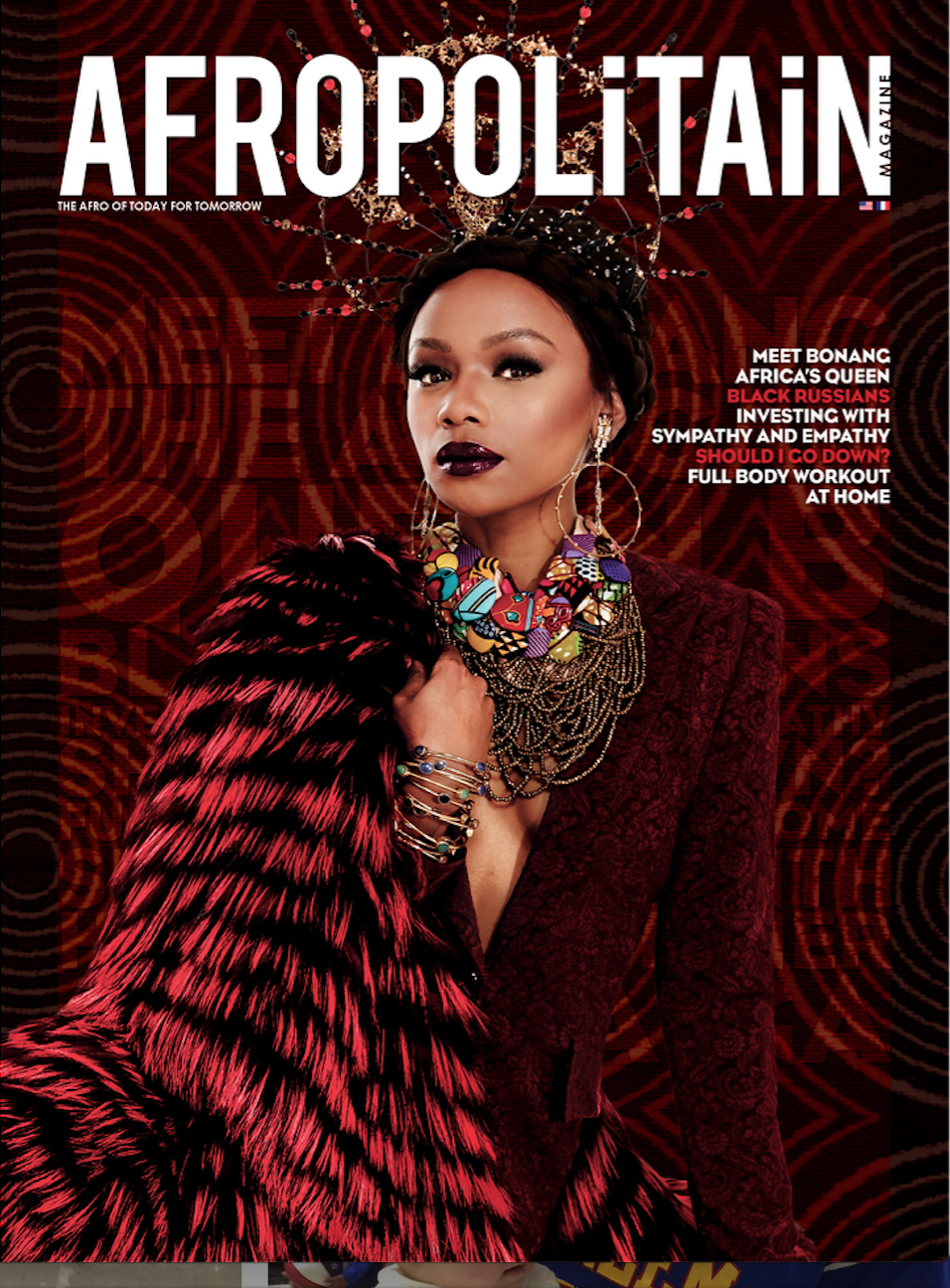
Afropolitain Magazine: A New Afro Lifestyle Magazine That Inspires To Bring All Africans & People Of Color Together Under “One United States Of Africa” – The Mr. Magazine™ Interview With Nsayi Keziah Makoundou, Founder & Creative Director, Afropolitain Magazine…

March 20, 2017

A Mr. Magazine™ Launch Story…

“We want to do both, (print and digital) because a lot of people were asking us where they could find our print magazine. And every time I would tell them to just pull up the website, they were insistent that they would rather have the print version. So, we’re definitely going to do both. But just to make sure that we reach as many people as possible, we’re going to pursue digital more, because there are a lot of countries right now where people do not have access to the print, so if we’re digital they can just grab their phones and access the content.” Nsayi Keziah Makoundou…

“Everybody was telling me not to do print. I heard that at least 2,000 times, maybe more. But there is something inside of me that has always said that somehow, print is not dead. Obviously, I’m a big fan of magazines and books because of my background, but I feel like the people that I’m trying to reach, they’ve never really had a product like this. So, I won’t say that print is dead, because a lot of people have been asking for the printed magazine. If we’d listened to what everyone had said, we would have never moved forward. I usually go with my gut feeling, and my gut was telling me that I should definitely do the print magazine.” Nsayi Keziah Makoundou…

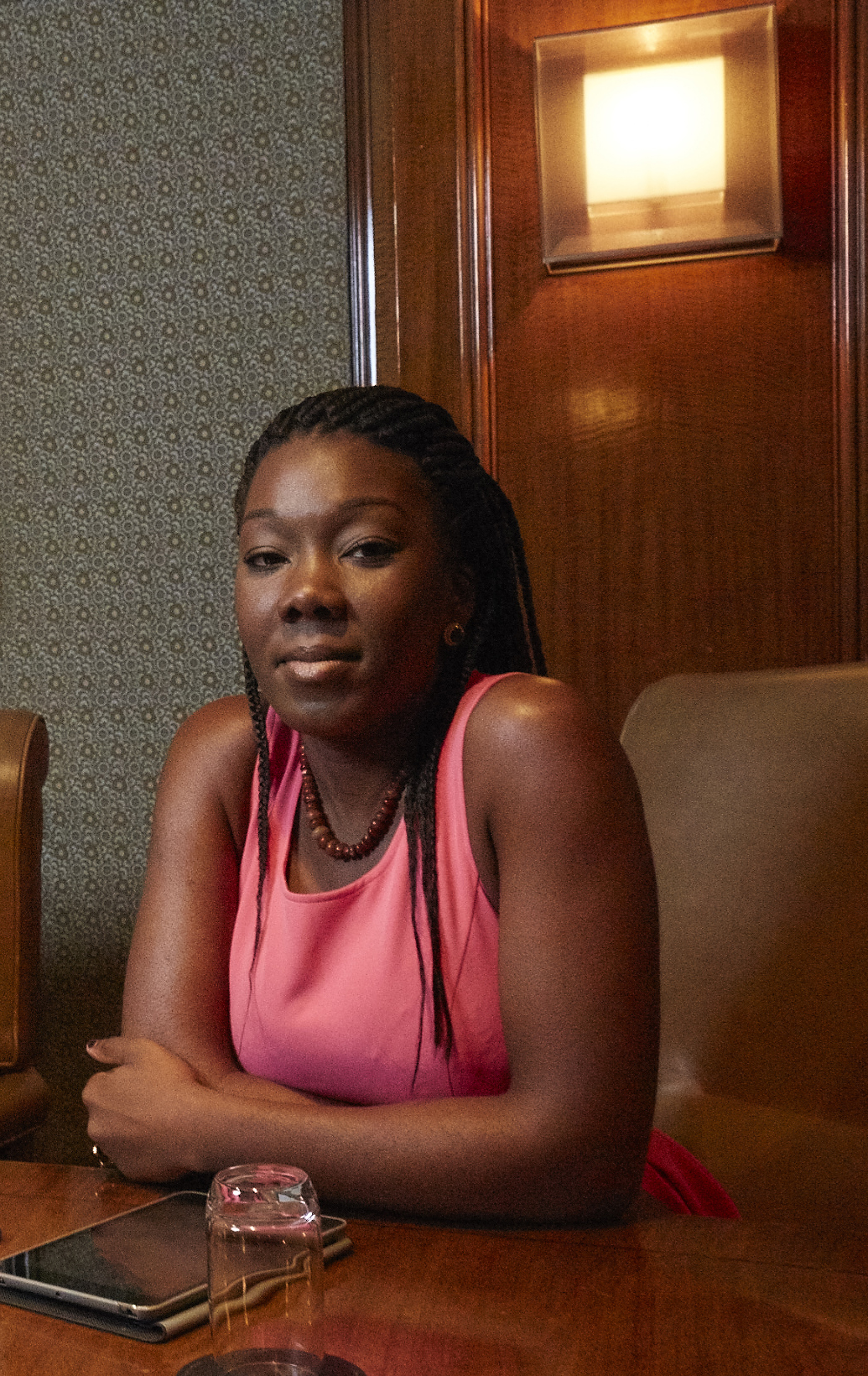
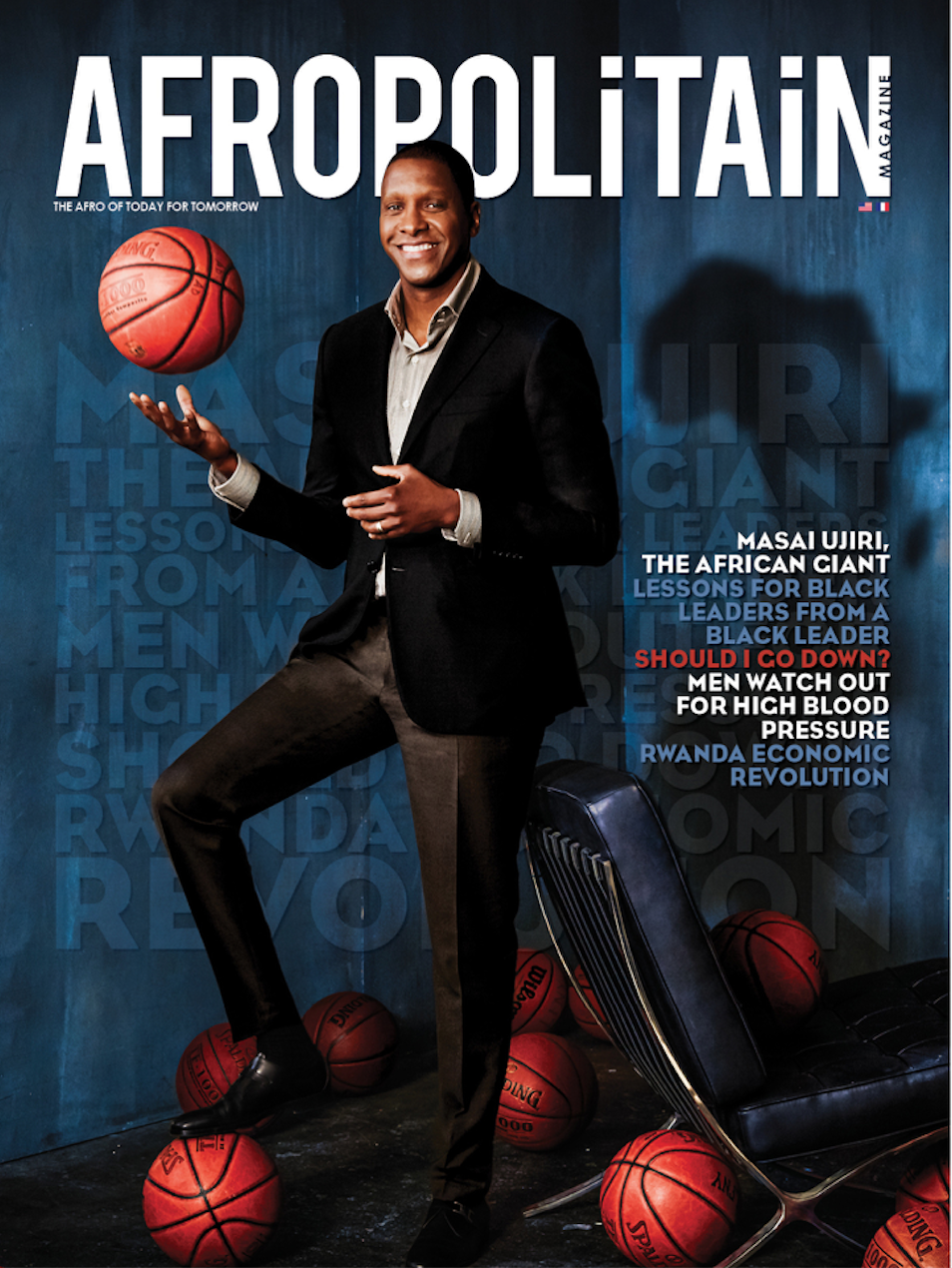
Nsayi Keziah Makoundou (Keziah) had a dream: launching her own magazine. Keziah comes from a magazine background, working for publications such as Popular Mechanics, UPTOWN Magazine and Vibe. But when the entrepreneurial bug bit, she literally stopped everything she was doing to focus on this project, Afropolitain Magazine.

I spoke with Keziah recently and she told me that what motivated her the most was that she realized there was a lack of a good Afro lifestyle magazine – especially in France, and in a lot of countries in Europe, hence the bilingual aspect of the publication, every issue is half English and half French. So, ignoring the naysayers and the fact that her creative side was much, much stronger than her business side, Keziah took a risk and launched Afropolitain’s first issue. And soon, Issue #3 will hit newsstands.

If passion and belief in your product makes a success, then look out world, Afropolitain is on its way, because Keziah has an ample amount of both. And her entrepreneurial spirit is no more pronounced than her philanthropic one, as she wants the magazine to be a tool that unites all Africans and people of color together to see what a difference they can make in business, fashion, and any other interest that grabs them, by amplifying each of their strengths. It’s a beautifully done magazine and one that Mr. Magazine™ is very excited to see on the newsstand.

So, I hope that you enjoy this Mr. Magazine™ interview with a woman who believes, as the magazine’s tagline reads, that her magazine provides “The Afro of Today For Tomorrow,” Nsayi Keziah Makoundou, founder and creative director, Afropolitain Magazine.

But first the sound-bites:

On the genesis of Afropolitain Magazine: I worked in the magazine business and I had always wanted to do a magazine that spoke to me and to African people. And with me being in the industry and working for all kinds of different magazines, I just decided to jump in the pool and start my own magazine.

On how she actually created the magazine: It was probably 2010 when the idea took hold in my mind, and I realized I needed to create a prototype, so I talked about it with some of my friends. It had been in the back of my mind for quite some time. And I worked a little bit on it, stopped, and then a couple of years ago I actually did a different prototype for someone who wanted to start a magazine for black women. And I think doing that prototype gave me a wakeup call, where I asked myself, instead of doing prototypes for other people, why don’t you just finish your own project? Who don’t you just push it until this project becomes a reality?

On the DNA of the magazine: Basically, Afropolitain represents the young, modern African that’s competitive, travels, has a good job, whether they’re in Africa, Europe or America. To me, Afropolitain is for people like us who are educated and who change the game in what we do. It’s to show the younger generation, and really, everybody, that you can be black, African, and be great at everything that you do. We just need to let people know that in every industry, there’s a black or of color person who is on a higher level.

On whether launching the magazine has been simple and easy for her: Oh, no, no, definitely not easy. The team is very, very small and we just started, so right now we’re just trying to put our name out there. We’re growing carefully, but we really need to be out there everywhere, on social media, but make sure that we’re consistent with the magazine. And we’re actually looking at a digital version of it, which will come out soon.

On the most challenging moment for her throughout this journey: Everything is challenging. I’m a woman and African, and trying to be a businesswoman. I’m an artist more than anything else, so being a businessperson is very new to me. It’s a big challenge to focus on the business side of the magazine, but it’s a learning process and I am learning it. It’s also challenging to be an African woman and to try and launch a business; is everyone taking me seriously, especially when you deal with African men.

On why she decided to make the magazine bilingual by creating half in English and half in French: There is a big break between Africans who speak English and Africans who speak French, in general. I feel like there is a lot about the English-speaking part of Africa that people in the French-speaking part don’t know about, and vice versa. For me, it was about trying to unite the continent.

On any conflict she finds between her creative side and her newly acquired business side: So far, the only conflict that I have is in doing the business part of it. Sometimes it can take away from me being creative, and that’s why in the context of growing, I want people who know how to handle the business side of the magazine better, so that I can focus on the product that we have and in making sure it’s always excellent. There are some problems with any beginning enterprise.

On launching with print first, and then considering digital: We want to do both, because a lot of people were asking us where they could find our print magazine. And every time I would tell them to just pull up the website, they were insistent that they would rather have the print version. So, we’re definitely going to do both. But just to make sure that we reach as many people as possible, we’re going to pursue digital more, because there are a lot of countries right now where people do not have access to the print, so if we’re digital they can just grab their phones and access the content.

On whether anyone asked her had she lost her mind for launching a big, thick print magazine in this digital age: Everybody was telling me not to do print. I heard that at least 2,000 times, maybe more. But there is something inside of me that has always said that somehow, print is not dead. Obviously, I’m a big fan of magazines and books because of my background, but I feel like the people that I’m trying to reach, they’ve never really had a product like this. So, I won’t say that print is dead, because a lot of people have been asking for the printed magazine. If we’d listened to what everyone had said, we would have never moved forward. I usually go with my gut feeling, and my gut was telling me that I should definitely do the print magazine.

On anything she’d like to add: Just that with Afropolitain, I want to unite people because I feel like being African, we don’t come together enough and in doing this product it brings us together. Everything you see in the magazine is done by Africans or black people: the photographers, the writers; my editor in chief is from Congo, my art director is from the Caribbean, so it’s really a black-made, African-made product. And I really want people to know that and to understand how we can come together and do something great. And I think that’s what we need in our communities. To come together and do something, instead of always trying to outshine or hate on the next black or African next to you.

On what someone would find her doing if they showed up at her home unexpectedly one evening: It’s really very simple, you’d find me sitting on my couch, on my computer, doing something for the magazine or emailing people or looking for different things to do. But most likely you would catch me working.

On what keeps her up at night: Being successful. Making sure that our magazine will always move forward and that people find out about us. Thinking about the next plan and the next move. My main focus right now is to be out there and reach the max number of people. My ultimate goal is that I want this magazine to become the top magazine for our community, so that’s what keeps me up at night. What is the next move for us to get there?

And now the lightly edited transcript of the Mr. Magazine™ interview with Nsayi Keziah Makoundou, founder and creative director, Afropolitain magazine.

Samir Husni: Tell me about the genesis of Afropolitain.

Nsayi Keziah Makoundou: I worked in the magazine business and I had always wanted to do a magazine that spoke to me and to African people. And with me being in the industry and working for all kinds of different magazines, I just decided to jump in the pool and start my own magazine.

Samir Husni: So, was it as easy as just deciding it? One day out of the blue, you created your own magazine, just like that?

Nsayi Keziah Makoundou: It was probably 2010 when the idea took hold in my mind, and I realized I needed to create a prototype, so I talked about it with some of my friends. It had been in the back of my mind for quite some time. And I worked a little bit on it, stopped, and then a couple of years ago I actually did a different prototype for someone who wanted to start a magazine for black women. And I think doing that prototype gave me a wakeup call, where I asked myself, instead of doing prototypes for other people, why don’t you just finish your own project? Who don’t you just push it until this project becomes a reality?

That’s when I decided to quit my job and focus on Afropolitain and do the prototype. And from the prototype we did Issue #1 and now the second issue just hit the market and we’re working on the third one. So, it was that wakeup call that motivated me to stop wasting time and to just do it.

Samir Husni: How did you come up with the name and what is the DNA of the magazine?

Nsayi Keziah Makoundou: I was looking for a unique and different name and a friend of mine, who is an artist, were having the conversation about what the name should be. I wanted something modern and that spoke to young Africans, young black people, and we were exchanging ideas when my friend suggested “Afropolitain” and I thought it was perfect.

Basically, Afropolitain represents the young, modern African that’s competitive, travels, has a good job, whether they’re in Africa, Europe or America. To me, Afropolitain is for people like us who are educated and who change the game in what we do. It’s to show the younger generation, and really, everybody, that you can be black, African, and be great at everything that you do. We just need to let people know that in every industry, there’s a black or of color person who is on a higher level.

And that’s what we hope to do with Afropolitain, I want the magazine to become a tool for people, so that they can grab the magazine and get advice for business, beauty, travel, recipes; learn things about African tradition, modern traditions, just a mix of lots of things. We’re in those Western countries too, so we need to bring everything together to make a great product.

Samir Husni: You’re working on Issue #3 now, so was it a walk through a rose garden for you with the first two issues? I mean, was it that easy?

Nsayi Keziah Makoundou: Oh, no, no, definitely not easy. The team is very, very small and we just started, so right now we’re just trying to put our name out there. We’re growing carefully, but we really need to be out there everywhere, on social media, but make sure that we’re consistent with the magazine. And we’re actually looking at a digital version of it, which will come out soon.

It’s an everyday challenge, but it’s worth it. We get a positive reaction from people and we’ve received positive critiques, so it’s good to know that we’re getting somewhere. We just have to keep pushing.

Samir Husni: What has been the most challenging moment for you throughout this journey?

Nsayi Keziah Makoundou: Everything is challenging. I’m a woman and African, and trying to be a businesswoman. I’m an artist more than anything else, so being a businessperson is very new to me. It’s a big challenge to focus on the business side of the magazine, but it’s a learning process and I am learning it. It’s also challenging to be an African woman and to try and launch a business; is everyone taking me seriously, especially when you deal with African men.

So, every step of the business is challenging. There are mistakes that we did with the first issue that we corrected with the second issue. And we’re working very hard on the third issue now. Every issue is a challenge for us to make sure we do better each time.

Samir Husni: Why did you choose for the magazine to be bilingual? You have half in English and half in French.

Nsayi Keziah Makoundou: There is a big break between Africans who speak English and Africans who speak French, in general. I feel like there is a lot about the English-speaking part of Africa that people in the French-speaking part don’t know about, and vice versa. For me, it was about trying to unite the continent.

It was really important to me to have French and English, because I wanted to be able and touch the whole continent, not just the French-speaking countries or the English-speaking countries. Or people just in America or Europe. That’s why it was very important to do both French and English, and to really include everybody from the continent.

Samir Husni: Where are you originally from?

Nsayi Keziah Makoundou: My origins are Congo Brazzaville (my dad’s side) and Côte d’Ivoire (my mother’s side).

Samir Husni: Being a creative person; being an artist, and being a creative person myself, I know that we think more with passion and our hearts than anything else, yet we have to apply a business type of thinking to most things. Do you feel a conflict between the two when it comes to Afropolitain?

Nsayi Keziah Makoundou: So far, the only conflict that I have is in doing the business part of it. Sometimes it can take away from me being creative, and that’s why in the context of growing, I want people who know how to handle the business side of the magazine better, so that I can focus on the product that we have and in making sure it’s always excellent. There are some problems with any beginning enterprise

But for me, I will say that there can be a little havoc that can take away from me wanting to be creative, such as doing a photo shoot. But, as I said, it’s a learning process, and the longer we go, the better I will learn how to balance the business side without taking away from the other.

Samir Husni: You’ve managed to create almost two magazines in one; it has that flip quality, where on one side it’s geared more toward men and the other side is geared more toward women. And you started with print first, and now you’re considering digital.

Nsayi Keziah Makoundou: Yes, we want to do both, because a lot of people were asking us where they could find our print magazine. And every time I would tell them to just pull up the website, they were insistent that they would rather have the print version. So, we’re definitely going to do both. But just to make sure that we reach as many people as possible, we’re going to pursue digital more, because there are a lot of countries right now where people do not have access to the print, so if we’re digital they can just grab their phones and access the content.

So, it’s very important to have a digital presence, but we’re going to continue to do both. We’re going to continue making sure that our print magazine is great, but also that people have access to the content wherever they want it.

And the fact that we do men and women, I think with my research into ethnic magazines, I felt like I never really saw a lifestyle magazine just for men, something where men can go and read about business, fashion, traveling, and relationships. Most of the magazines that are geared toward African men are more about politics and the economy. I’m not going to say they’re boring, but I felt like in today’s world African men travel, they go shopping , they like fashion, and they enjoy good restaurants. So, it was important for me to include men too, and that’s why I sort of divided the magazine into two parts, one for men and one for women.

Samir Husni: And when you talked to people about your idea of launching this print magazine, and a hefty-sized one too, we’re not talking about a 96-page publication; Afropolitain is a substantially thick, big magazine, did anybody ask you had you lost your mind for what you were about to do? You were launching a print magazine in this digital age.

Nsayi Keziah Makoundou: Everybody was telling me not to do print. I heard that at least 2,000 times, maybe more. But there is something inside of me that has always said that somehow, print is not dead. Obviously, I’m a big fan of magazines and books because of my background, but I feel like the people that I’m trying to reach, they’ve never really had a product like this. So, I won’t say that print is dead, because a lot of people have been asking for the printed magazine. If we’d listened to what everyone had said, we would have never moved forward. I usually go with my gut feeling, and my gut was telling me that I should definitely do the print magazine.

The print product is a great-looking one and we’re going to progress and do better and better, and keep pushing forward. The people that were telling me that print was dead weren’t even in the magazine industry, they were just going by what they had heard or the little bit they did know about the industry. It is more expensive to do print, but it costs money for digital too. To have an app up and running; to make sure the product is good, that’s expensive too. Right now, I want to keep doing both, and in the next year or two, we’ll see if doing print was a good idea or not. But so far, people are reacting very positively to it.

Samir Husni: Is there anything you’d like to add?

Nsayi Keziah Makoundou: Just that with Afropolitain, I want to unite people because I feel like being African, we don’t come together enough and in doing this product it brings us together. Everything you see in the magazine is done by Africans or black people: the photographers, the writers; my editor in chief is from Congo, my art director is from the Caribbean, so it’s really a black-made, African-made product. And I really want people to know that and to understand how we can come together and do something great. And I think that’s what we need in our communities. To come together and do something, instead of always trying to outshine or hate on the next black or African next to you.

If we understand that teamwork is important. I’m a creative person, but I can’t write. I have an editor in chief who can write and writers that are terrific, so they make the product look good. That’s another message that I want people to understand, working together is the future. If we want Africa to do better, we have to combine our strengths and create a unit that’s going to move forward together, not just country by country or tribe by tribe. It’s a group effort.

Samir Husni: If I showed up unexpectedly to your home one evening after work, what do I find you doing; reading a magazine; cooking; watching TV; or something else?

Nsayi Keziah Makoundou: It’s really very simple, you’d find me sitting on my couch, on my computer, doing something for the magazine or emailing people or looking for different things to do. But most likely you would catch me working.

Samir Husni: My typical last question; what keeps you up at night?

Nsayi Keziah Makoundou: Being successful. Making sure that our magazine will always move forward and that people find out about us. Thinking about the next plan and the next move. My main focus right now is to be out there and reach the max number of people. My ultimate goal is that I want this magazine to become the top magazine for our community, so that’s what keeps me up at night. What is the next move for us to get there?

Samir Husni: Thank you.

h1

ROVA Magazine: A New Magazine For Millennials Who Love Their RV’s & Hitting The Open Road For Epic Adventures – The Mr. Magazine™ Interview With Gemma Peckham, Publisher & Editor, ROVA Magazine…

March 3, 2017

A Mr. Magazine™ Launch Story…

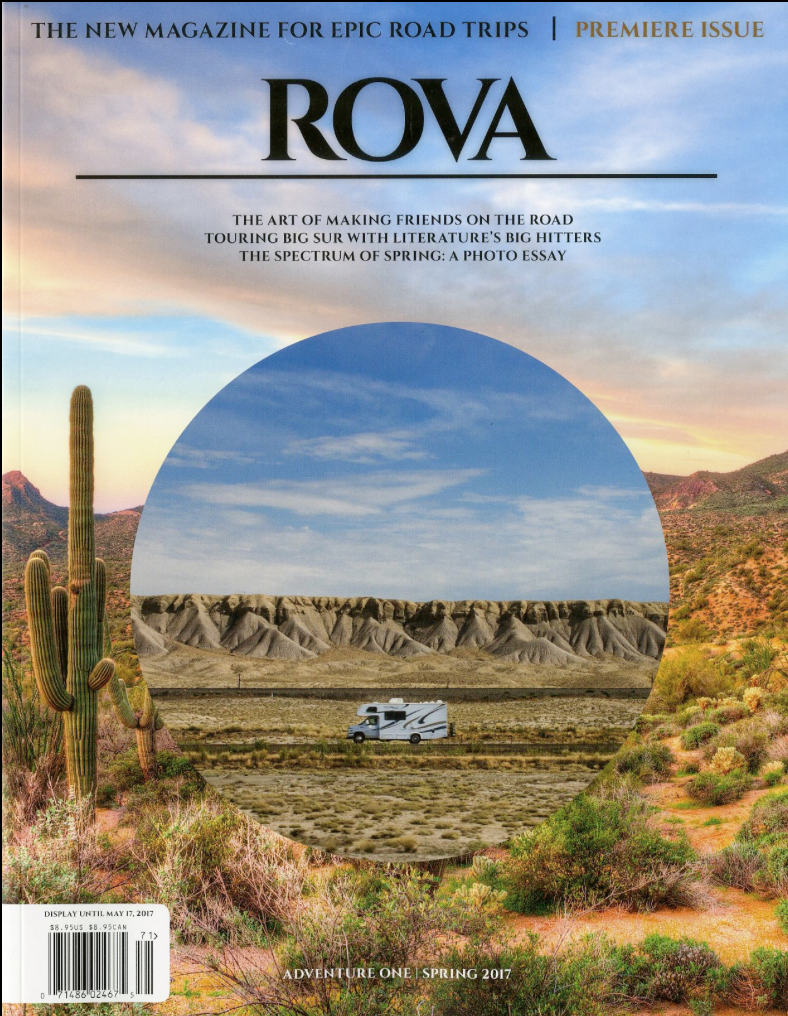
ROVA Issue 1“Sometimes I stop and wonder if I’ve gone a bit crazy, but I think those segments of millennials and younger people who are really into things that are a little bit retro, and who want authenticity and something that they can actually touch and hold; perhaps they even have a little bit of Internet fatigue, you know? There is a lot of scope for a magazine like ROVA, which is a niche area for these millennials who are out there on the road traveling. What I’m hoping is that it sticks to them and they enjoy reading it every few months.” Gemma Peckham (On whether she’s out of her mind for launching a print magazine for millennials)…

RV’s and millennials, the two haven’t necessarily gone together in the past, but a new title called ROVA thinks that they certainly do conjoin on today’s modern roadmaps. Gemma Peckham is a publisher and editor who works for an Australian company that has decided the United States has the right canvas to paint this particular portrait of millennials and RV’s on. And from the feedback she said she is receiving from the magazine’s premiere issue, they seem to be right.

I spoke with Gemma recently and we talked about the uniqueness of the concept. The premise is many millennials and Gen Xer’s are taking to the open road to work, explore and experience authentic, retro life. It’s a niche area usually reserved for retirees, but Gemma said that is no longer the case. From research she conducted herself; she discovered that RV buyers in the U.S. were getting younger by the mile and were off to find epic adventure in their homes on wheels.

Gemma herself is a digital nomad, as she describes younger people who like to jump in an RV and go, she loves road travel and she loves print magazines. And she believes that many millennials are a bit Internet fatigued, as she puts it, and Mr. Magazine™ would have to agree with her. There is nothing like the tangible print experience.

So, grab your paper map and your homey RV and let’s hit the road with Gemma Peckham, publisher and editor, ROVA magazine.

But first the sound-bites:

Gemma PeckhamOn whether she thinks she’s out of her mind for launching a print magazine for millennials: (Laughs) That is a very good question, and one that I’ve been asked numerous times. Sometimes I stop and wonder if I’ve gone a bit crazy, but I think those segments of millennials and younger people who are really into things that are a little bit retro, and who want authenticity and something that they can actually touch and hold; perhaps they even have a little bit of Internet fatigue, you know? There is a lot of scope for a magazine like ROVA, which is a niche area for these millennials who are out there on the road traveling. What I’m hoping is that it sticks to them and they enjoy reading it every few months.

On what her thinking was behind the premise of RV traveling for millennials: I’m from Australia and it came about because I work at a publishing company there, which I’ve brought here to New York, and we had a magazine there for RV traveling and it was called “Caravanning Australia” and it was very targeted toward the retired market, the audience had an average age of about 60 or so. When I decided to come here and bring the company over to the states, I looked at RVing here, because obviously we have experience in that area. And I did a bit of research and one of the things that I discovered was that the largest group of people buying RV’s currently is between the ages of 35-44. So, the demographic is slowly, but surely getting younger.

On the biggest challenge she faced in launching this first issue: Number one for us is this is the very first magazine that we’ve made in the United States. So, in terms of just making people aware of who we are and what we do, and then also trying to communicate the idea for this magazine to them was a bit of a challenge. And I guess that relates to advertising as well, as you said, some people asked were we crazy for doing a print magazine for millennials who are RV enthusiasts. They thought it was a very strange concept.

On how she is combining her passion for the magazine with business: In ROVA’s case, this is both. The stories that we have here and the kind of content that I’m curating for the magazine is really what I would like to read and other travelers that I know would like to read. We’ve created the design so that it appeals to people in my age group. But by the same token, I’m fully aware of the fact that we really need to make sure that what we’re putting into the magazine is really appealing to advertisers, because without them it’s not going to work.

On the future and other plans in the works: We definitely have more plans. ROVA is obviously our flagship publication at the moment, it’s the one we’ve been able to promote and it’s doing quite well. We think it’s doing quite well from the feedback we’re getting. The plan for ROVA is just to grow it, make it bigger and get it out there, and build on that. But Executive Media Global is a publishing company that’s based on a model in Australia where we have 50 or 60 different titles that we produce every year.

On her plan for connecting ROVA with its audience: Digital is a big part of it for us, simply because that’s where millennials and Gen Xer’s go to get their information. Other than that, we’re going toward a number of RV shows. For example, Escapees, which is a big RV club and they have a big yearly event. So, we have a booth and we’re going out there, where we’ll actually be talking to people and connecting with them, and showing them the magazine. We have plans to do a few of those over the next few months to get this first edition out there.

On whether she found any differences in traveling with an RV in the United States versus Australia and New Zealand: It’s very similar in one way, which is the size of the country. The size of the U.S. is very similar to the size of Australia. Road trips are a really big part of the way people explore their own countries. So, that’s very similar, both here and in Australia.

On any plans to take the magazine to Australia: I don’t know. I believe Australia is moving in a similar direction with the age of the people who are taking up the RV way of traveling. It could work. I think probably what we would do, because this is a very U.S.-centric publication, we could potentially make an Australian focus, and I think that’s definitely something that isn’t out of the question. It’s something that we have the resources to do.

On anything she’d like to add: The main thing that I’m experiencing is I have been so overwhelmingly pleased with the feedback that we’ve gotten and the way that people receive new magazines here. It’s very different than t is in Australia; people really give you kudos if you have an idea and you take it to the market and if you have passion behind the product, I think that people react in a really positive way. And that’s something that I’ve been really surprised by; the support and encouragement that we’ve gotten for this magazine. And that’s one of the things that make me happiest and most satisfied doing this, just seeing the reaction from people. And feeling like that we’re on the right track.

On what someone would find her doing if they showed up unexpectedly to her home one evening: It will depend upon how hard the day was. After a very hard day, yes, it will be binge-watching TV and having a glass of wine. Otherwise, I know it’s very strange, since I work in publishing, but I like to read when I go home. I’ll read the latest book that has caught my attention, or just having dinner with my husband and chatting, just catching up on the day.

On what keeps her up at night: Usually I go to sleep pretty quickly, but the status of politics in this country probably keeps everyone up. (Laughs) But usually I’m just daydreaming about different things, whether it’s personal or something to do with the magazine. And new ideas, imaginations, travel destinations, things like that. I’m always thinking of what’s next in my life, so that takes up a lot of my headspace when I have free time.

And now the lightly edited transcript of the Mr. Magazine™ interview with Gemma Peckham, publisher and editor, ROVA magazine.

Samir Husni: You’re embarking on this new venture, a print magazine, for millennials. Are you out of your mind?

ROVA Issue 1Gemma Peckham: (Laughs) That is a very good question, and one that I’ve been asked numerous times. Sometimes I stop and wonder if I’ve gone a bit crazy, but I think those segments of millennials and younger people who are really into things that are a little bit retro, and who want authenticity and something that they can actually touch and hold; perhaps they even have a little bit of Internet fatigue, you know? There is a lot of scope for a magazine like ROVA, which is a niche area for these millennials who are out there on the road traveling. What I’m hoping is that it sticks to them and they enjoy reading it every few months.

Samir Husni: Not only is there a tendency for people to think you might be crazy because this magazine is targeted toward millennials and it’s in print, but you might be considered double-crazy because it’s for millennials who also like to travel in RV’s, rather than retirees. When most people think about RV travelers, retirees come to mind. What was your thinking on this?

Gemma Peckham: I’m from Australia and it came about because I work at a publishing company there, which I’ve brought here to New York, and we had a magazine there for RV traveling and it was called “Caravanning Australia” and it was very targeted toward the retired market, the audience had an average age of about 60 or so.

When I decided to come here and bring the company over to the states, I looked at RVing here, because obviously we have experience in that area. And I did a bit of research and one of the things that I discovered was that the largest group of people buying RV’s currently is between the ages of 35-44. So, the demographic is slowly, but surely getting younger.

And that seemed very positive to me, because I’ve been all over RVing myself, and I’m just a millennial, right on the cusp between a millennial and Gen X, and I’ve driven an RV across the states, around New Zealand, and in Europe. And to me there is a culture there that is really growing that isn’t necessarily catered to by any of the publications out there at the moment. The main RV magazines in America are “MotorHome” and “Trailer Life” and they do incredibly well. They’re geared toward the older, retired RV users, but there is this whole contingent of people who are missing out on a quality, print product that speaks to them and shows the kind of experiences that they want.

So, we set up shop and we’ll see how it goes. There’s obviously a bit of a lack in the market. We thought that we could reach a younger audience and appeal to millennials. And we’re giving it a shot. We’ll see how it goes. So far, the feedback has been great. We’ve managed to sell some advertising, and obviously that was a very important thing. I’m hoping that it will keep growing.

Samir Husni: As I look at the first issue, which recently hit newsstands, what was the biggest challenge that you had to face in launching it and how did you overcome that challenge?

Gemma Peckham: Number one for us is this is the very first magazine that we’ve made in the United States. So, in terms of just making people aware of who we are and what we do, and then also trying to communicate the idea for this magazine to them was a bit of a challenge. And I guess that relates to advertising as well, as you said, some people asked were we crazy for doing a print magazine for millennials who are RV enthusiasts. They thought it was a very strange concept.

Being able to communicate this vision that was something a bit different and probably unexpected was a bit of a challenge. But when you have something that you really believe in as we do, it’s easier. I have a vested interest in it just because this is the kind of stuff that I love. Our sales team is really excited about the product, so all of that has really helped to communicate to people what we’re doing. And it’s turned out well. In the first edition we have something like 15-16 advertisers, and in the next edition, which we’re working on now, we have a similar amount already, so it looks like it’s going to be a little bit bigger.

In terms of challenges, just really making ourselves known and getting the word out about what we’re doing would be the number one challenge.

Samir Husni: You wrote in the first issue that you started ROVA because you love road travel and you love print magazines. So, is it a magazine based on passion? How are you combining the passion part with the business part?

Gemma PeckhamGemma Peckham: It’s definitely a bit of both. When I was in Australia I tried to start a similar magazine, but it was more global travel than RV travel. And that was something that was definitely a passion for me, because I have traveled a lot and it was something that I felt really strongly about. And I think we did have a really strong niche for that magazine, but it was competing with a lot of other travel magazines and it just wasn’t getting the advertising that it needed to. From that experience I learned that it doesn’t really matter how much passion you have for something, if it doesn’t fit into a market in some way, it may not work.

But in ROVA’s case, this is both. The stories that we have here and the kind of content that I’m curating for the magazine is really what I would like to read and other travelers that I know would like to read. We’ve created the design so that it appeals to people in my age group. But by the same token, I’m fully aware of the fact that we really need to make sure that what we’re putting into the magazine is really appealing to advertisers, because without them it’s not going to work.

We’ve put a lot of effort into marketing; we had a 1,000 followers on Instagram before the magazine was even launched, which was great. It’s really a matter of balancing the two. I’ve been working in magazine publishing for 10 years and over that time I’ve learned that no matter how much you want something to work, it’s not going to unless you have a business plan in place as well.

Samir Husni: Tell me a little about your future plans. You’ve established a magazine and yourselves in the United States; what’s next? Is ROVA going to be the entire ball of wax or you have other things in the works?

Gemma Peckham: We definitely have more plans. ROVA is obviously our flagship publication at the moment, it’s the one we’ve been able to promote and it’s doing quite well. We think it’s doing quite well from the feedback we’re getting. The plan for ROVA is just to grow it, make it bigger and get it out there, and build on that. But Executive Media Global is a publishing company that’s based on a model in Australia where we have 50 or 60 different titles that we produce every year.

So, what we’re trying to do here is build a publishing company in a similar way and it will take a while. We already have another magazine that we’re working on, which is a custom publication for a private club in New York City, in Manhattan. What we do for them is produce a magazine for their membership and the magazine is sent to every member of this club, as well as targeted to essential members. So, that’s another aspect of the business that we established in Australia and we’re trying to establish here, custom publishing on behalf of organizations, clubs and those sorts of things. And that’s what we’re looking at for the moment, just trying to get some partnerships happening and build a stable of publications.

Samir Husni: What is your mechanism for connecting ROVA, the printed magazine, with its audience?

Gemma Peckham: Digital is a big part of it for us, simply because that’s where millennials and Gen Xer’s go to get their information. Other than that, we’re going toward a number of RV shows. For example, Escapees, which is a big RV club and they have a big yearly event. So, we have a booth and we’re going out there, where we’ll actually be talking to people and connecting with them, and showing them the magazine. We have plans to do a few of those over the next few months to get this first edition out there.

Other than that, just reaching out to PR companies; sending out press releases. We’ve been interviewed by a couple of the online RV news sources, industry people, manufacturers and dealers. So, it’s really just a matter of finding the kinds of people that we think would disseminate this kind of information, putting ourselves in front of them and hoping they see enough value in our product to tell their audiences about it.

Samir Husni: Content-wise, you mentioned that you’ve taken a few trips in the United States, Australia and New Zealand. Did you find any differences between traveling with RV’s here, in the United States, versus other countries?

Gemma Peckham: It’s very similar in one way, which is the size of the country. The size of the U.S. is very similar to the size of Australia. Road trips are a really big part of the way people explore their own countries. So, that’s very similar, both here and in Australia.

But I do think that in the United States there’s a bigger group of younger people who are doing this. What they’re trying to do is get out and see their country, have these really authentic experiences. They’re all about living life on their own terms, so they’re trying to make a life for themselves that they enjoy. A lot of them work through this too; they call themselves digital nomads. So, they might be graphic designers or writers or photographers. There’s a lot of that happening here; instead of people doing a normal 9 to 5 job, they decide to get out and work from there. And I think that’s something that’s a lot bigger here than it is in Australia. In general though, the cultures are pretty similar. Hit the road, drive to the place that you’ve always wanted to see, interact with people along the way, and just enjoy yourselves.

Samir Husni: I noticed that the company that’s publishing the magazine, Executive Media Global, lists not only New York, but Sydney, Melbourne and Adelaide. Any plans to take the magazine to Australia?

Gemma Peckham: I don’t know. I believe Australia is moving in a similar direction with the age of the people who are taking up the RV way of traveling. It could work. I think probably what we would do, because this is a very U.S.-centric publication, we could potentially make an Australian focus, and I think that’s definitely something that isn’t out of the question. It’s something that we have the resources to do.

The thing with launching a magazine here as opposed to in Australia, we just have such a huge audience as a population; I can’t remember what exactly the difference in population is, but it’s quite substantial. Australia only has 20-25 million people, where the U.S. is around 370 million. I think ROVA is working because we really do have a large audience, but in Australia, we did very well with “Caravanning Australia” magazine, so it’s definitely something we’ll look at down the road.

Samir Husni: Is there anything that you’d like to add?

Gemma Peckham: The main thing that I’m experiencing is I have been so overwhelmingly pleased with the feedback that we’ve gotten and the way that people receive new magazines here. It’s very different than t is in Australia; people really give you kudos if you have an idea and you take it to the market and if you have passion behind the product, I think that people react in a really positive way. And that’s something that I’ve been really surprised by; the support and encouragement that we’ve gotten for this magazine. And that’s one of the things that make me happiest and most satisfied doing this, just seeing the reaction from people. And feeling like that we’re on the right track.

Samir Husni: If I showed up at your home unexpectedly one evening, what would I find you doing; watching TV with a glass of wine; flipping through a magazine; or on the road in an RV?

Gemma Peckham: (Laughs) It will depend upon how hard the day was. After a very hard day, yes, it will be binge-watching TV and having a glass of wine. Otherwise, I know it’s very strange, since I work in publishing, but I like to read when I go home. I’ll read the latest book that has caught my attention, or just having dinner with my husband and chatting, just catching up on the day. Or I’ll go to the gym, if I’m feeling really energetic.

Samir Husni: Are those books you read ink on paper or e-books?

Gemma Peckham: Right now, I’m reading a paper book. But generally, I read on my Kindle, because it’s so much easier to store, because I travel with it. I just love being able to carry a 1,000 books with me if I want to.

Samir Husni: My typical last question; what keeps you up at night?

Gemma Peckham: Good question. Usually I go to sleep pretty quickly, but the status of politics in this country probably keeps everyone up. (Laughs) But usually I’m just daydreaming about different things, whether it’s personal or something to do with the magazine. And new ideas, imaginations, travel destinations, things like that. I’m always thinking of what’s next in my life, so that takes up a lot of my headspace when I have free time.

Samir Husni: Thank you.

h1

Curious Jane Magazine: Empowering Young Girls To “Think With Their Hands” Through Innovative Summer Programs & A Quarterly Print Magazine – The Mr. Magazine™ Interview With Samantha Razook Murphy, Founder, Curious Jane…

February 24, 2017

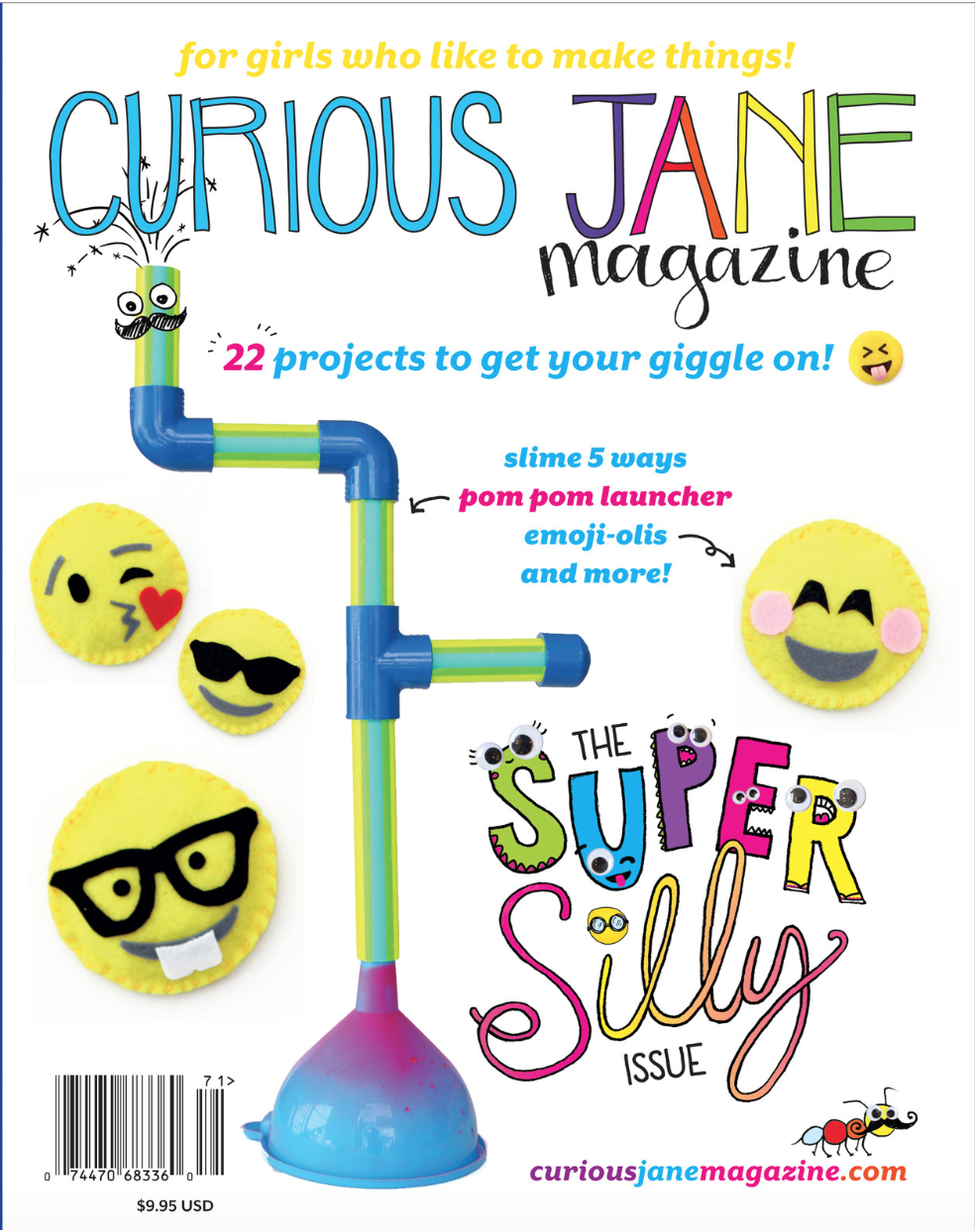
Curious Jane Super Silly issue

“A few other people have said that I was crazy to launch a print magazine and that I really needed to be in the digital space, but part of it is a personal passion, having a background in design and loving objects and paper and magazines. So, the print part was very important to me. But also our audience is 6 to 11-year-old girls, so they’re not really consuming online media in a way that say, a 12 to 13-year-old girl would, so the in-print aspect of it was important to us. But plenty of people asked and still ask what in the world was I thinking.” Samantha Razook Murphy…

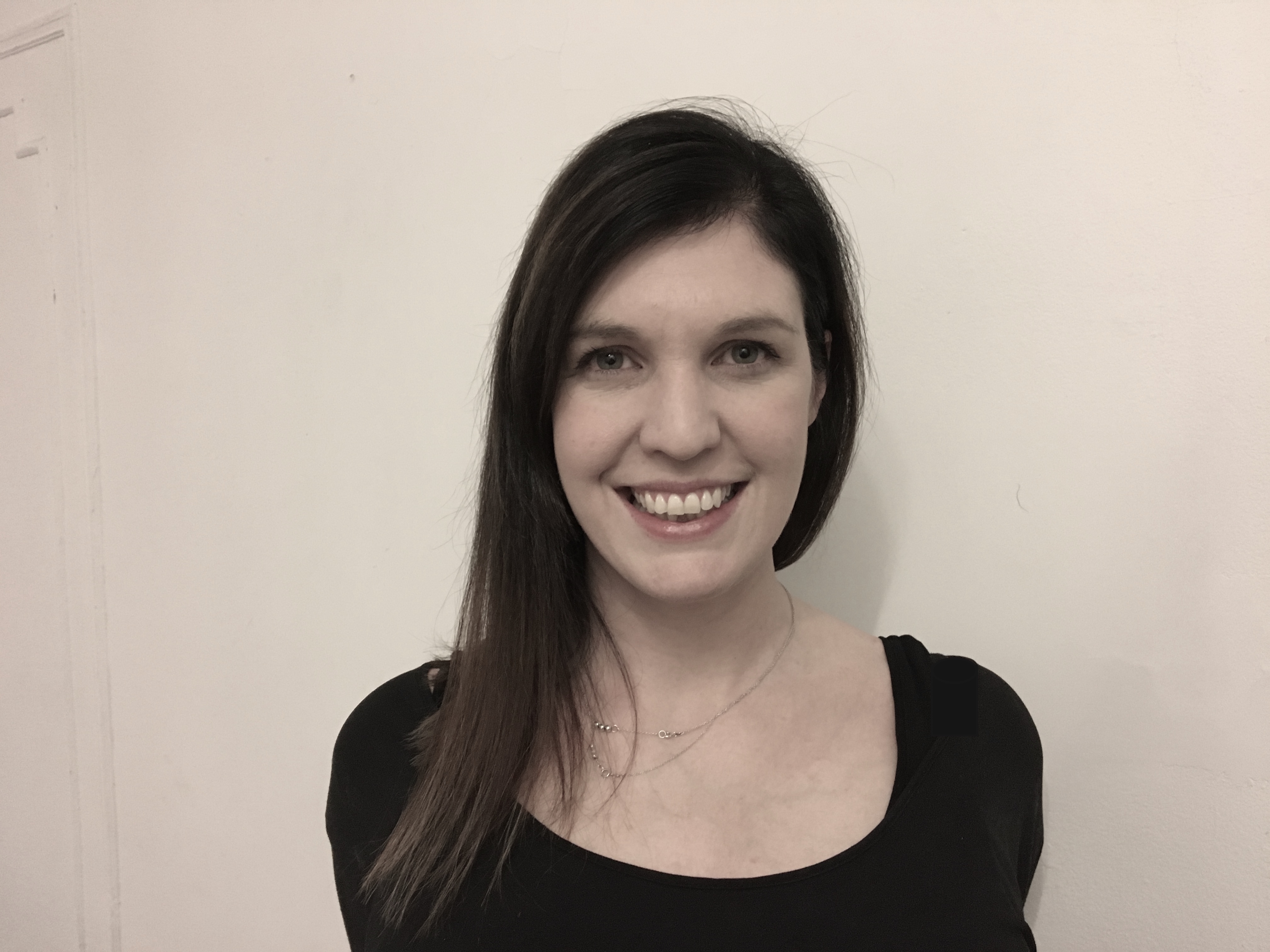
A community of confident, inquisitive girls between the ages of six and 11, who like to make things, is the heart of Curious Jane magazine. And the woman who pumps that heart with her passion and dedication is its founder, Samantha Razook Murphy.

I spoke with Samantha recently and we talked about the genesis of Curious Jane, the projects and the summer programs, and we talked about Curious Jane, the magazine. All of which fall under one brand that has become quite popular with its audience and with those readers’ parents. Samantha actually gave birth to the idea for a great summer camp when her own two daughters were small and has worked hard to grow the business since then. The magazine was launched two years ago and has become an incredible tool to promote the brand and engage with readers. Today, you don’t have to live in the NYC area (which is where Curious Jane originates from, Brooklyn to be exact) to have a Curious Jane experience. It’s happening for girls all across America with the magazine.

So, I hope that you enjoy this interview with a woman who believes empowering young girls to “think with their hands” and be curious, while learning to create at the same time, is done best through an environment of projects, programs and print, Samantha Razook Murphy, founder, Curious Jane.

But first the sound-bites:

Samantha Razook MurphyOn the genesis of Curious Jane: When I started Curious Jane, I literally opened up a bank account with $500, so there wasn’t a business plan, it wasn’t funded, anything like that. It was just its own truck, sort of motoring down the road. And when we received this grant we were able to use some of that to work with a group, focus on how we might grow Curious Jane and the business. And one of the ideas that came out of it was taking all of these projects and activities that we had developed over the years with the summer camps and repackaging it into an in-print magazine for girls that was ad-free, subscription-based, so that girls in different parts of the country who certainly couldn’t actually attend the camp due to geography could be a part of the Curious Jane experience. And girls who were a part of our programs could continue to have those projects during the schoolyear, instead of just during the summers.

On whether anyone told her she was crazy to start a print magazine in this digital age: This man I was chatting with said to me that just because I was getting bored with the camps didn’t mean that I should start a magazine. And that was a pretty eye-opening statement, but it did help me to reframe. We continued with the magazine though, and I actually had lunch with him recently and told him that we had continued, but that his statement was very helpful in reframing my thoughts about it and about how the numbers work around the magazine.

On how she chose the name Curious Jane: The fact that there is a Curious George and that people know it and it sort of rolls off the tongue has certainly worked in our favor. Honestly, I think it was right before the first summer of camp and I was thinking about what to name this little thing that I was doing for my young daughters in order for me to be able to work, and I truly think it was one day when I was walking back from the laundromat and thinking what was the most important attribute that I wanted to instill in my girls? And it was curiosity. And something that I say even now when I work with girls is, think with your hands. Take the thinking out of your head and think with your hands.

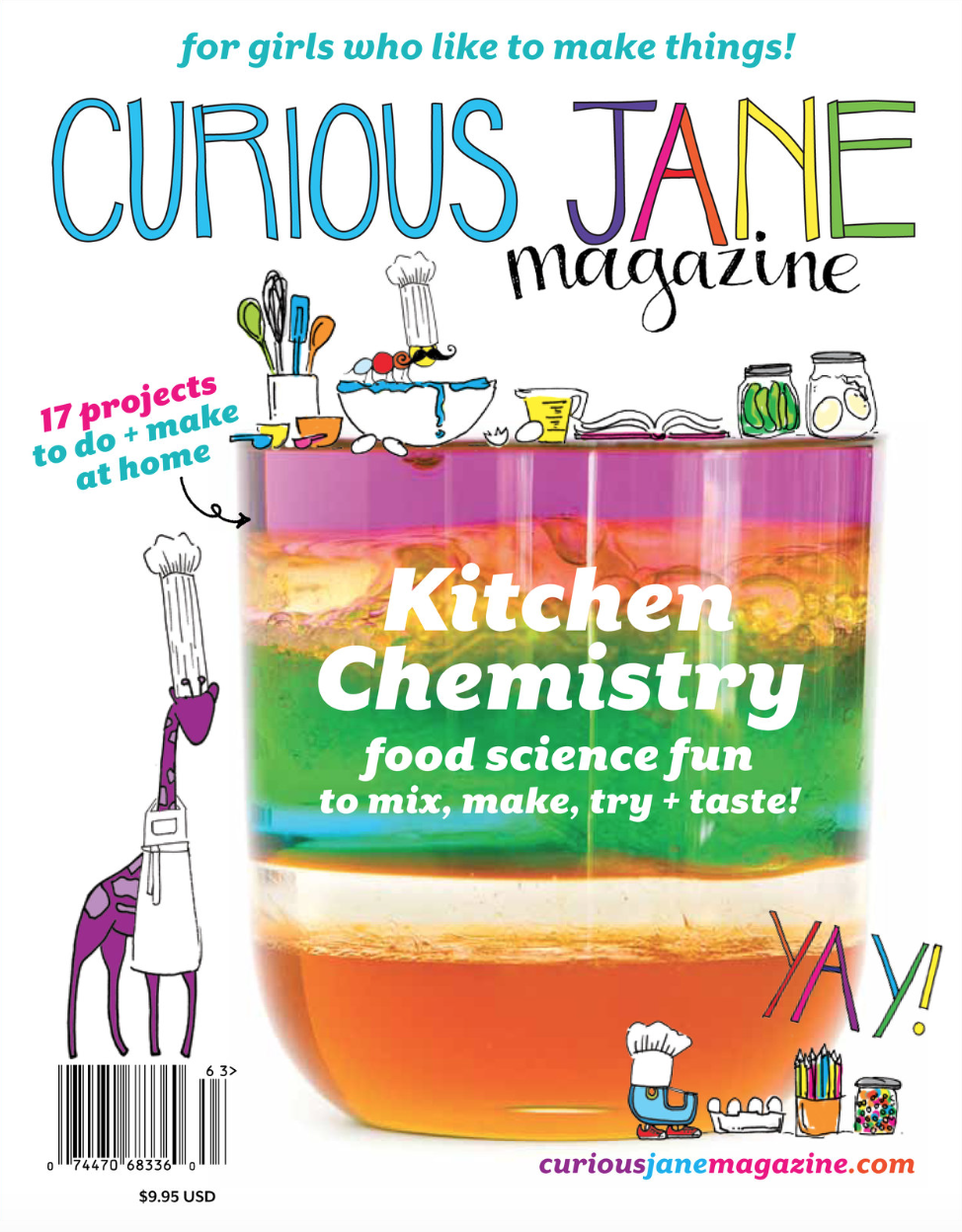
Curious Jane Kitchen ChemistryOn the biggest challenge that she’s had to face: I think the biggest challenge that we’ve had and continue to have is how to make it a financially positive aspect of what we do. When we started we had a very small subscriber base, a lot of them were our campers and people who knew us. And then about a year and a half into it, a mother of one of our camper’s works with a group called Sterling Publishing. She came to me and asked whether I had ever thought about doing a book of our projects. And I told her that in my mind a book meant taking a lot of time and resources and not making any money. We’re such a small business, wearing a million different hats; I can’t devote the resources to that. And she said that they wanted to make it really easy on me by taking all of the content that we’ve produced for the magazine so far and repackage it for the book.

On her most pleasant moment: Every time we work on the magazine is the most pleasant moment. We have a great time working on the projects and the fun little tidbits that have come up into it. A lot of things have changed from the first issue, in both the trim size and the layout. With my background in industrial design, something that I think has benefitted me is the comfort level I have of getting something to prototype stage and then getting it into people’s hands, and seeing the feedback we get and how we feel about it.

On how she met Jack Kliger and John Griffin: I met someone who knew Jack, and when I was telling this woman that we had just printed the first pre-issue of the magazine, she said she knew a few people who might be of help. I wrote down their names and she asked if I would like her to connect me with them. And one of them was Jack. And at that time we were looking for funding, we’re always open to it. But I specifically wanted to pick his brain and get as much advice as I could, so I met him for coffee. And at that point I understood what his very large and successful background in publishing and magazines was, and something that I really appreciated was he was willing to talk to someone who had only printed the second issue of a magazine. It was ad-free, we had 250 subscribers and he was able to give me very specific and useful suggestions for the magazine. About a week later, he called me and asked me was I interested in a little bit of funding and taking on an advisory board. He had another friend, John Griffin, who he wanted me to meet. So, that’s how I met them. And then they did ultimately become investors, but really advisors, and not just in the magazine, but in Curious Jane as a company.

On anything that she would like to add: Via the magazine, which has been a great tool for us, when I think of Curious Jane, it started as a camp, now we have a magazine; I really think of it as a community. I want it to feel like a community for girls, where they make things and feel empowered and self-confident. And to remove fear of failure is really at the core of that as well. In the past couple of years we have been able to work with a few organizations that have a national audience, Amy Poehler, Smart Girls, Parents Magazine, Family Fun, and we have our book coming out, so these types of collaborations with other groups, and likeminded organizations are something that we really enjoy and that we want to encourage and continue to grow.

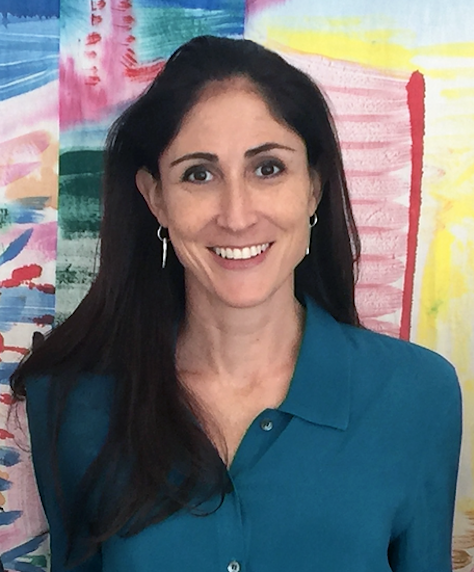
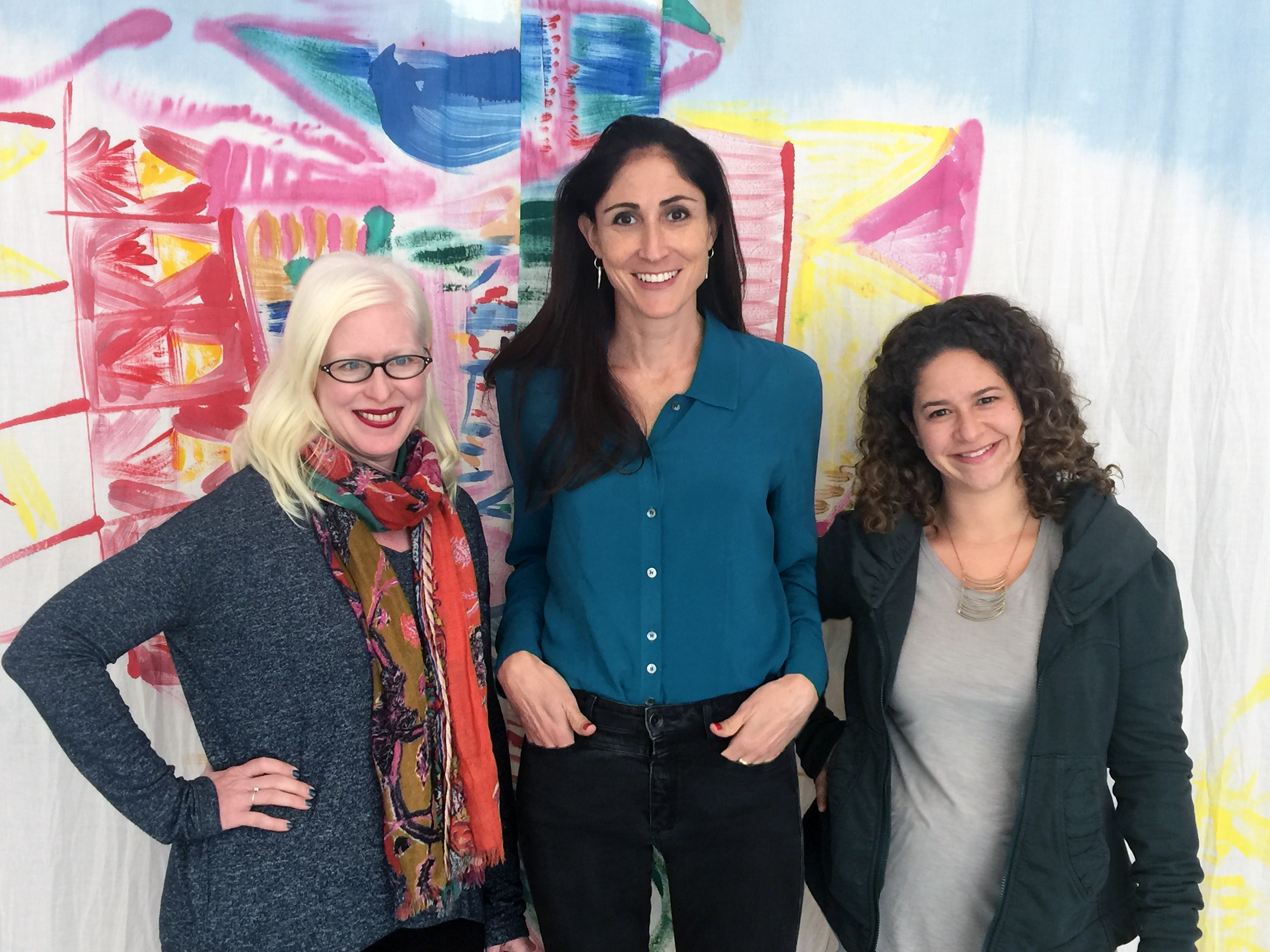
The Curious Jane team: Melisa Coburn (L) – editorial, Samantha Razook Murphy (M) brainstorming, projects and layout, and Elissa Josse (R) –  artwork, doodles, layout and project creation.

The Curious Jane team: Melisa Coburn (L) – editorial, Samantha Razook Murphy (M) brainstorming, projects and layout, and
Elissa Josse (R) – artwork, doodles, layout and project creation.

On what drives her and makes her get out of bed every morning: All of the things that drive me are getting to work with the amazing people that I work with; we’re a small office year round. There are three to four of us; a tremendous, awesome, fun group. And then during the summer we hire about 100 to 120 young women to work with us, and the type of people that Curious Jane attracts to work with the girls over the summer is outstanding. So, getting to work with them is a complete honor.

On what someone would find her doing if they showed up unexpectedly to her home one evening: I really value the evening time. You would find me cooking; I find that to be really enjoyable and relaxing. I put a lot of value on the family meal in the evenings. My older daughter is quite musical, and what you will find in my small, cozy, warm apartment is cooking and music and candles, things like that. I don’t have a television and I don’t really consume digital media, but I guess a lot of people don’t have a television anymore; they use their computers for that sort of thing.

On what keeps her up at night: That’s a good question and I have a very specific answer, which is that I constantly run numbers in my head. I’m very fortunate that I have two girls, sort of a reconstructed family, and none of these things keep me up at night. Everyone is doing great, knock wood. As far as enjoyment of my workday, all of that is wonderful. It’s the numbers and how to keep the business moving forward.

And now the lightly edited transcription of the Mr. Magazine™ interview with Samantha Razook Murphy, founder, Curious Jane.

Samir Husni: There seems to be a movement when it comes to launching new magazines for girls. In the last two or three years, I’ve seen at least five or six magazines that have come to the marketplace and each one of them are one-of-a-kind. Tell me about the genesis of Curious Jane.

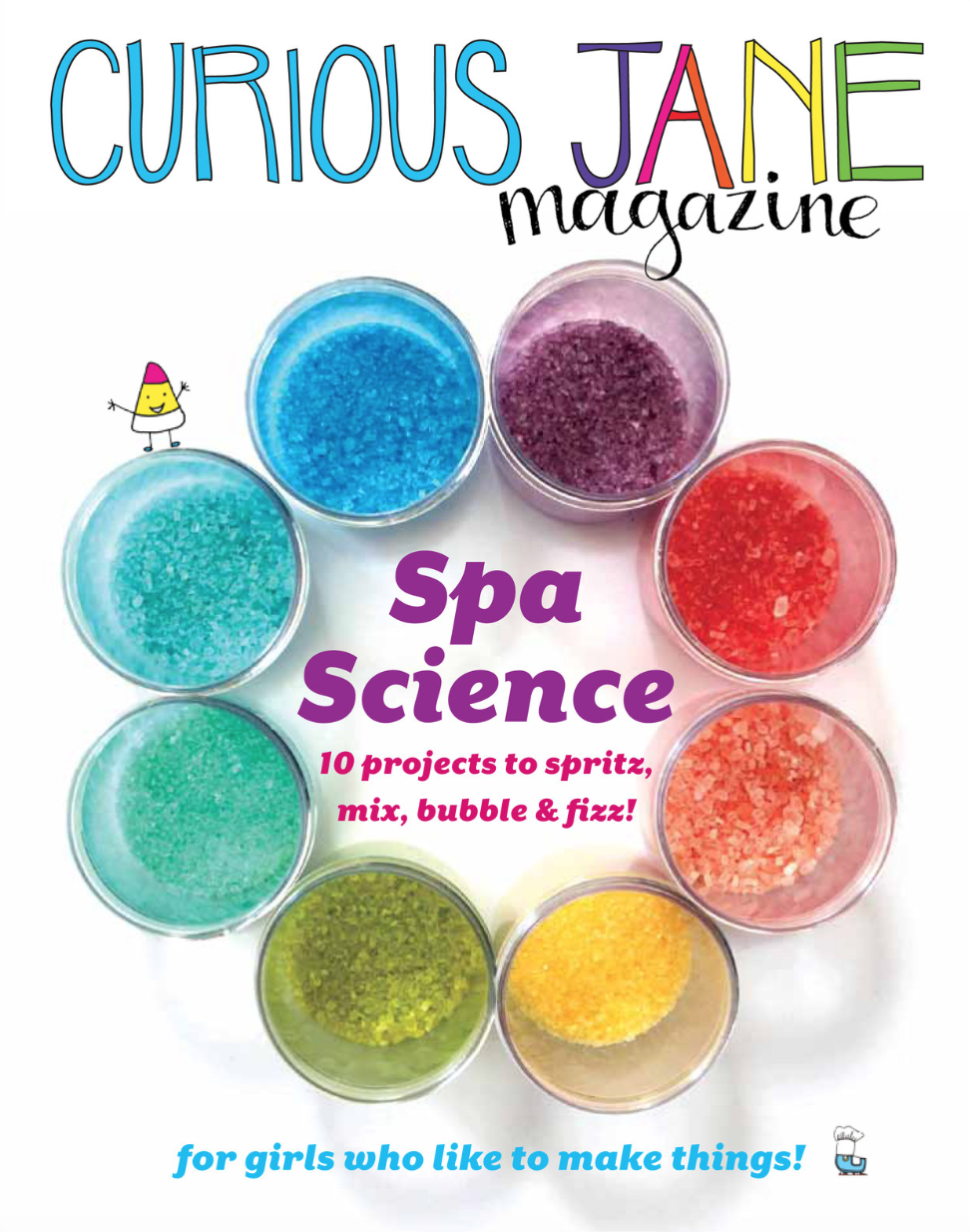
Curious Jane Spa ScienceSamantha Razook Murphy: I have two daughters; they’re now 13 and 15. And I started Curious Jane nine years ago. It really started as a summer camp and continues as a summer camp. I did my undergraduate degree in Graphic Design at Yale, and then I moved to Brooklyn and did my master’s in Industrial Design at Pratt. And both of my girls were born by that time. They were young during the summers when I was pursuing my master’s at Pratt, and I directed all-girls residential programs on college campuses, so that’s how I go into the all-girls summer camp environment.

And then 2008/2009 rolled around and the economy took a nosedive and at that time my husband and I had to get a bit creative with what we did and how we stayed in Brooklyn, so I started an overnight camp program because that’s what I was familiar with and used to. But I needed something for my own girls to do; they were early elementary school aged, so I started Curious Jane. And it began truly as something for them and their friends to do during the summer months while I tried to get this overnight camp for girls off the ground.

That was the summer of 2009 and I hired a couple of instructors; I rented a van from a rental place in the city, we were living in Brooklyn and still do, and literally drove the camp van, picked up their friends, dropped them off at a school where we had rented some classrooms and the teachers were the instructors who taught the programs.

So, from that first summer of Curious Jane, the way the camp worked was girls could sign up for a week or two or three weeks, and then they would choose their favorite theme for the week. And all of the themes revolved around science, engineering and design. And that’s still what we do. That first summer we had just a handful of girls, but they could take a week-long class called “Why Buildings Stand Up,” which was architecture and engineering combined. They could take a week of “Toy Design.” So, these were the types of things that were the foundation of Curious Jane.

Then over the years Curious Jane really grew. People were really receptive to it; the girls loved it; the parents loved the idea of it, and in the end the residential programs certainly didn’t grow at the same pace and ultimately shrank. So, we stopped running the overnight program and only focused on Curious Jane. We added things like after-school programs, and we did run it in a few other states, but now we just focus on the New York City area.

In 2014, we applied for and did receive a small business grant; we are for-profit, so the word “grant” is a little bit misleading, but we applied via Chase through a program they had at the time called “Mission Small Business” and it was an unrestricted quarter of a million dollars. It was pretty competitive, I think there were around 35,000 applicants, and we were one of 12 recipients. And that helped us continue doing what we were doing and it also gave us the opportunity to work with, for the first time, a business development group and they were wonderful.

When I started Curious Jane, I literally opened up a bank account with $500, so there wasn’t a business plan, it wasn’t funded, anything like that. It was just its own truck, sort of motoring down the road. And when we received this grant we were able to use some of that to work with a group, focus on how we might grow Curious Jane and the business. And one of the ideas that came out of it was taking all of these projects and activities that we had developed over the years with the summer camps and repackaging it into an in-print magazine for girls that was ad-free, subscription-based, so that girls in different parts of the country who certainly couldn’t actually attend the camp due to geography could be a part of the Curious Jane experience. And girls who were a part of our programs could continue to have those projects during the schoolyear, instead of just during the summers.

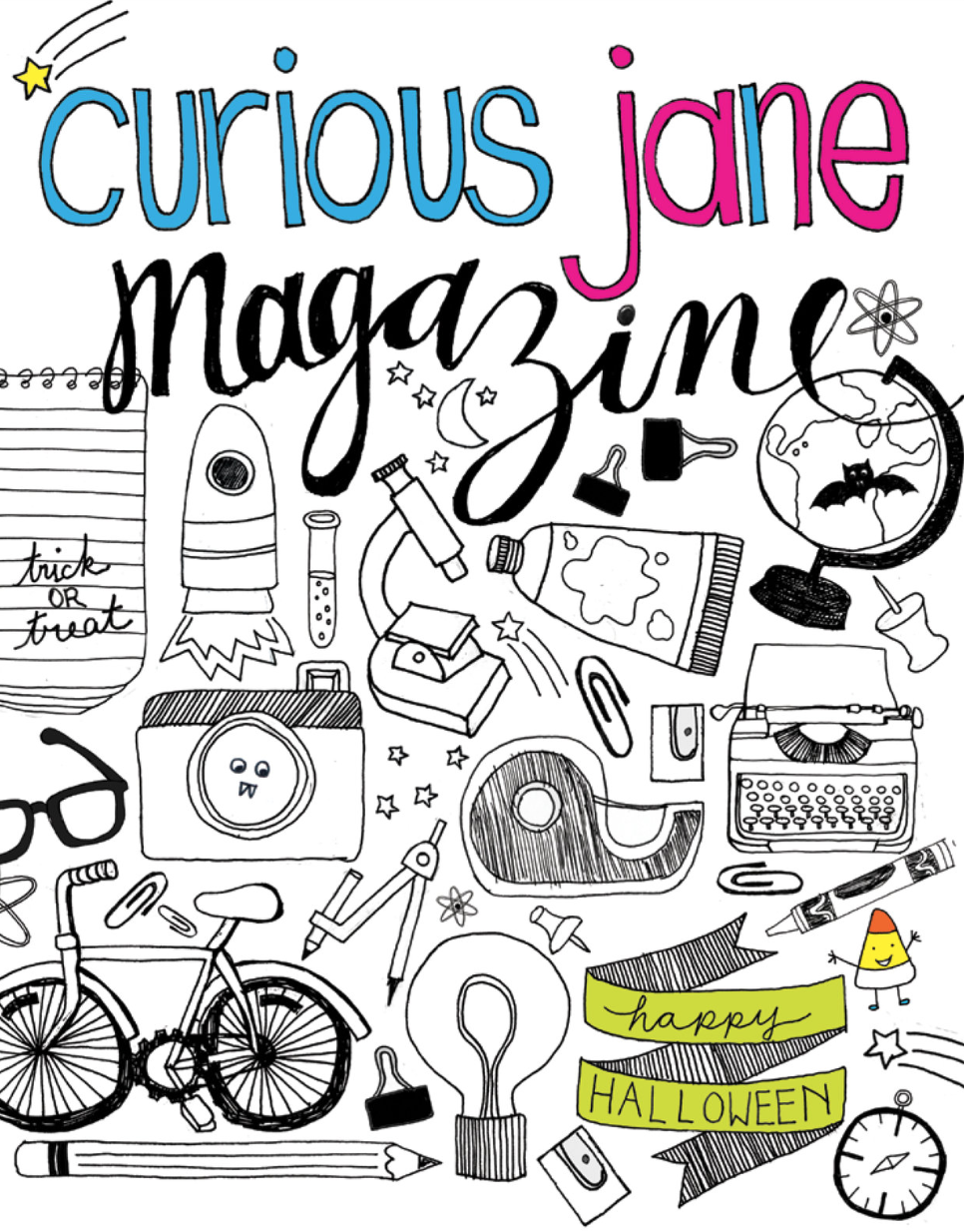
We have been printing the magazine itself for two years now and it comes out quarterly. I think the issue you have is the “Super Silly” issue, and most of our issues revolve around our popular camp themes and we have used those projects to repackage into a magazine. The “Super Silly” issue was kind of a fun departure from that. It was a little bit more lighthearted and filled with different craft projects. But for example, some of the others were a “Spa Science” issue, girls could make anything to do with bath products and spas, and also learn about science in the process. We had a “Spy Science” one, which is very popular at classic camp, which is learning about detective work and things like that.

Samir Husni: You took your passion and your necessity and created Curious Jane, both the summer programs and the magazine. Did anybody tell you that you were out of your mind to start a print magazine for girls in this digital age?

Curious Jane Pre Launch IssueSamantha Razook Murphy: Actually, there was a conversation that I had a couple of years ago, because when we started the magazine it wasn’t as though we were receiving additional funding, the camp business was what was funding and continues to fund the magazine, so a couple of years ago before I met Jack (Kliger) and John (Griffin), I had lunch with a brother of a friend of mine and he has a private equity group, and his group particularly focuses on grants, so it’s sort of a niche area for private equity. And I think at that time we had printed the first, very slim pre-issue of the magazine at great expense, and when I say “we” I mean our small office of two to three people, where most of what we do is other business and then we have a sunny space in the office where we do all of the photography and layout, because my background is in graphic design; all of that is done in-house.

So, this man I was chatting with said to me that just because I was getting bored with the camps didn’t mean that I should start a magazine. And that was a pretty eye-opening statement, but it did help me to reframe. We continued with the magazine though, and I actually had lunch with him recently and told him that we had continued, but that his statement was very helpful in reframing my thoughts about it and about how the numbers work around the magazine.

And then a few other people have said that I was crazy to launch a print magazine and that I really needed to be in the digital space, but part of it is a personal passion, having a background in design and loving objects and paper and magazines. So, the print part was very important to me. But also our audience is 6 to 11-year-old girls, so they’re not really consuming online media in a way that say, a 12 to 13-year-old girl would, so the in-print aspect of it was important to us. But plenty of people asked and still ask what in the world was I thinking.

Samir Husni: I know the name Curious Jane is obvious, but tell me how you chose that name. Everybody knows Curious George. Is it the fact that you have two girls and you didn’t want them reading Curious George, you wanted them to have their own magazine?

Samantha Razook Murphy: The fact that there is a Curious George and that people know it and it sort of rolls off the tongue has certainly worked in our favor. Honestly, I think it was right before the first summer of camp and I was thinking about what to name this little thing that I was doing for my young daughters in order for me to be able to work, and I truly think it was one day when I was walking back from the laundromat and thinking what was the most important attribute that I wanted to instill in my girls? And it was curiosity. And something that I say even now when I work with girls is, think with your hands. Take the thinking out of your head and think with your hands.

Having spent eight years in an educational environment, graphic and industrial design, we’re basically studio classes. I mean, everyday you’re putting your work in front of someone and having it critiqued and talked about and given feedback on. So this idea of continuing to be curious and collaborative, and to feel comfortable putting yourself and your work out into the world in order to learn and grow from it, rather than to feel defensive about it, private about it, or shutdown about it; the idea of curiosity is very important to me for myself, my girls and what we do as a business. So, that word was set. And Jane is just the idea that I wanted it to reference every girl, Jane being a sort of “every girl” theme.

Samir Husni: What has been the biggest challenge that you’ve had to face and how have you overcome it?

Samantha Razook Murphy: I think the biggest challenge that we’ve had and continue to have is how to make it a financially positive aspect of what we do. When we started we had a very small subscriber base, a lot of them were our campers and people who knew us. And then about a year and a half into it, a mother of one of our camper’s works with a group called Sterling Publishing. She came to me and asked whether I had ever thought about doing a book of our projects. And I told her that in my mind a book meant taking a lot of time and resources and not making any money. We’re such a small business, wearing a million different hats; I can’t devote the resources to that. And she said that they wanted to make it really easy on me by taking all of the content that we’ve produced for the magazine so far and repackage it for the book.

That helped us continue the magazine and it sort of balanced out the cost that we were using to get the magazine off the ground. In order to produce this book, she made it very easy on us. Sterling happens to be owned by Barnes & Noble and so via that she asked why I didn’t send some magazines over to the woman who runs newsstand for Barnes & Noble. And we did that, and she has been incredibly supportive. So, the issue that you picked up at Barnes & Noble is actually only the second issue that has been on newsstand.

The obstacle has been how do we continue to print this, grow the word, get it into girls’ hands, and thrive as a business.

Samir Husni: And what has been the most pleasant moment?

Samantha Razook Murphy: Every time we work on the magazine is the most pleasant moment. We have a great time working on the projects and the fun little tidbits that have come up into it. A lot of things have changed from the first issue, in both the trim size and the layout. With my background in industrial design, something that I think has benefitted me is the comfort level I have of getting something to prototype stage and then getting it into people’s hands, and seeing the feedback we get and how we feel about it.

So, the most pleasurable moments of all have been seeing the magazine itself. And I continue to look forward to working on it. Even for the next issue, which we’re working on now; we have new ideas for how we want to change a few things, really include more girls, that sort of thing. This growing organic product has been a huge amount of pleasure to me, and then also just the chance to actually work on the magazine is great fun.

Samir Husni: How did you meet Jack Kliger and John Griffin? These are giant names in the industry.

Samantha Razook Murphy: I really enjoy talking to people, learning about business, growing a business, and Curious Jane itself is a female-started and female-run business that, like I said, was started with $500 in the bank. A few years ago, we did cross the one million in revenue mark, which is somewhat of an indicator. So, we started connecting to other people in the business world. I like to meet other people. And they would tell me that more female business representatives were needed at such and such dinner and if I could please come.

So, through those channels I met someone who knew Jack, and when I was telling this woman that we had just printed the first pre-issue of the magazine, she said she knew a few people who might be of help. I wrote down their names and she asked if I would like her to connect me with them. And one of them was Jack. And at that time we were looking for funding, we’re always open to it. But I specifically wanted to pick his brain and get as much advice as I could, so I met him for coffee.

And at that point I understood what his very large and successful background in publishing and magazines was, and something that I really appreciated was he was willing to talk to someone who had only printed the second issue of a magazine. It was ad-free, we had 250 subscribers and he was able to give me very specific and useful suggestions for the magazine. About a week later, he called me and asked me was I interested in a little bit of funding and taking on an advisory board. He had another friend, John Griffin, who he wanted me to meet. So, that’s how I met them. And then they did ultimately become investors, but really advisors, and not just in the magazine, but in Curious Jane as a company.

Samir Husni: Is there anything that you’d like to add?

Samantha Razook Murphy: What I would add is that we’re a small business, but we are completely committed to getting this off the ground and growing it. What I’m doing now is reaching out to as many people as possible to continue to spread the word, to grow subscriber base; and what I’m looking for is, in general, feedback and thoughts. I’m very open in that way in connecting and working with people.

Via the magazine, which has been a great tool for us, when I think of Curious Jane, it started as a camp, now we have a magazine; I really think of it as a community. I want it to feel like a community for girls, where they make things and feel empowered and self-confident. And to remove fear of failure is really at the core of that as well. In the past couple of years we have been able to work with a few organizations that have a national audience, Amy Poehler, Smart Girls, Parents Magazine, Family Fun, and we have our book coming out, so these types of collaborations with other groups, and likeminded organizations are something that we really enjoy and that we want to encourage and continue to grow.

Samir Husni: If someone were to stop you on the street and tell you that they had seen your brochure and that they knew you were the founder of Curious Jane. And they knew what all you did, summer programs, workshops, events and a magazine. And they asked you, with all of that, what drives you? What makes you get out of bed in the morning; everything or one thing in particular?

Samantha Razook Murphy: I do love getting out of bed every morning and coming to Curious Jane. That is something that I value so highly and have a great appreciation for. I actually had this conversation with my 15-year-old daughter the other night and we were talking about if you’re with a new social group, especially for adults, and they ask the common question: what do you do? And I said to her sometimes Eleanor, I’ll say to the person that I’m happy to tell you what I do, but something that’s even more relevant to me is “what do I enjoy about what I do?”

So, all of the things that drive me are getting to work with the amazing people that I work with; we’re a small office year round. There are three to four of us; a tremendous, awesome, fun group. And then during the summer we hire about 100 to 120 young women to work with us, and the type of people that Curious Jane attracts to work with the girls over the summer is outstanding. So, getting to work with them is a complete honor.

Getting to have a balance to my day; you know, sometimes it’s admin and paperwork, sometimes it’s getting to do photos for the magazine, sometimes it’s trying out a new project; there is so much variety. And then also there is challenge and that’s a complete pleasure. So, I would say that these things that create a work environment or a professional environment are what I enjoy so much. And then also I get to do something that has such a strong, positive social mission, and that’s a real treat.

Samir Husni: If I showed up unexpectedly to your home one evening, what would I find you doing; reading a magazine; doing some designing; having a glass of wine; or something else?

Samantha Razook Murphy: I really value the evening time. You would find me cooking; I find that to be really enjoyable and relaxing. I put a lot of value on the family meal in the evenings. My older daughter is quite musical, and what you will find in my small, cozy, warm apartment is cooking and music and candles, things like that. I don’t have a television and I don’t really consume digital media, but I guess a lot of people don’t have a television anymore; they use their computers for that sort of thing. What you’ll see when you walk in is a guitar, a keyboard, a bass, a kitchen, a dining table, which is where we eat and do homework. It’s where we do crafts, when the opportunity arises I like to make things. But really the office is a great place to make things. And that’s what you would find me doing in the evening.

Samir Husni: My typical last question; what keeps you up at night?

Samantha Razook Murphy: That’s a good question and I have a very specific answer, which is that I constantly run numbers in my head. I’m very fortunate that I have two girls, sort of a reconstructed family, and none of these things keep me up at night. Everyone is doing great, knock wood. As far as enjoyment of my workday, all of that is wonderful. It’s the numbers and how to keep the business moving forward.

Samir Husni: Thank you.

_________________________________________________________________________________
act7Magazines Matter. Print Matters. That is the theme for the Magazine Innovation Center’s ACT (Amplify, Clarify, Testify) 7 Experience that will take place April 25 to 27. Space is limited, so check the agenda and register to join us for an experience of a life-time.

h1

Long Live Vinyl Magazine: Some Things Are Meant To Be Connected Forever, Like Magazines & Music. The Print & Vinyl Love Affair Continues – The Mr. Magazine™ Interview With Ian Peel, Founder & Editor At Large, Long Live Vinyl Magazine…

February 16, 2017

A Mr. Magazine™ Launch Story…

long-live-vinyl597

“How valuable is print? Well, it’s incredibly valuable within the context of coexisting with online, because if I think of all of those people at BMG Records working away, they all look at email newsfeeds every morning. Then when you walk into their reception area, there are print magazines everywhere. And both have to exist, they each have their role.” Ian Peel…

Ink on Paper and vinyl records have always had an easy courtship. From Rolling Stone to Spin, these music magazine couplings usually turned into magic. That is, until the world decided both genres were dead or dying a slow, digital death. Of course, those with their fingers on the pulse of both industries knew that evolution did not necessarily mean extinction. In the 21st century our airspace is large enough for turntables and iPods; tablets and print magazines; and just about anything else the innovatively, creative human mind can come up with. No reason to fret.

And that’s exactly what the founder and editor at large of Long Live Vinyl magazine knew when he thought about the many ways you could make a print publication about vinyl records interesting in this day and age. As simple as “American Pie” really.

Ian Peel is a freelance journalist, marketing consultant, and magazine thinker and maker. He has contributed his fresh and innovative ideas to Anthem Publishing in the U.K., and so far, together, the two have created Classic Pop and Long Live Vinyl magazines, which are both increasing their frequency from bimonthlies to monthlies. Not bad for two industries that are on the verge of extinction, hmm?

ian-peel-long-live-vinyl-classic-popI spoke with Ian recently and we talked about the newest edition to the fold, Long Live Vinyl, and about the creative design, a 12-inch format that, as Ian put it, lacks only the hole in the middle to actually fit on a turntable. Ian is a man with two obvious passions: music and magazines. And his adoration for both runs deep, as I soon learned early in our conversation when I asked him what he’d say to people who would accuse him of using two dying or vanishing industries to create this magazine. His answer: I’d say to them they’re not dying, they’re changing. And his success is proof of that belief.

So, I hope that you enjoy this look into the relationship between magazines and music, because just like Diana Ross & Lionel Richie sang: it’s an “Endless Love.” OK – music puns are over – enjoy the Mr. Magazine™ interview with Ian Peel, Founder and Editor At Large, Long Live Vinyl magazine.

But first the sound-bites:

On that moment of conception for the magazine and how he brought it to fruition: I started to talk to the team at Anthem Publishing about my ideas; how you could do a really interesting magazine about vinyl records. And of course this happened at the exact same time that the vinyl revival began. So, they thought about it for about two years, and then eventually we decided to give it a go.

On what he would say to those who would criticize him about combining two supposedly vanishing industries (print & vinyl) to create a new magazine: What would I say to them? Well, I’d say that these industries aren’t really dying, they’re changing. And with the changing times too, you have to be really, really bold, and try and strike out and do something new. When vinyl and magazines were both flourishing, it was probably harder to take risks, so it might have been harder to have done this 10 years ago, because there was far too much in the publishing world and the music world, so it was easy for people to just sit back and carry on with what they were doing and had always done. But when people’s backs are against the wall they have to be a bit more creative and daring. So, that’s what we did.

On why he thinks it took the magazine industry so long to realize that print and digital must co-exist with each other: Sometimes it’s just easier, isn’t it; to keep doing the same thing all of the time. And this is why maybe it was quite an interesting role for me, because I’ve never launched a magazine before Classic Pop. What I had been doing was working in the music business creating CD compilations and album reissues, and then trying to sell them into the media to get press coverage. So, I was coming from a slightly removed standpoint, and I was finding it very difficult in the case of classic pop music to get the page space in the traditional music magazines and newspapers.

On the biggest challenge he’s had to face: I don’t know if it was a challenge, but there was always a concern that I was just in a bubble and no one else would agree or see the value in it. That was a concern. There’s always this challenge that you have to create the magazine, or at least the structure and the style, before the publisher can start selling ad space, so there is a challenge, which is to get over that initial hump of going from concept to actually being able to gauge the revenue that the publication can generate.

On his most pleasant moment: When Anthem said yes, it was a surprise, because don’t forget, I had pitched Long Live Vinyl about two years ago to them, so they had sat very quietly and watched the vinyl revival grow for two years and remembered the proposal. So, it was a nice surprise when they phoned and said we will do this. We will make it happen.

On whether he thinks he could have achieved what he’s achieved with just a digital platform and no print component: We could have, but there are lots of vinyl blogs out there already, and I really like them. In fact, it’s interesting, because when I was devising Long Live Vinyl, there were some really great websites about vinyl, in terms of how they looked and what they said and their viewpoint. And I thought, none of that exists in print. There wasn’t a cool, contemporary vinyl print magazine. So, there was another reason, to replicate how far forward with vinyl journalism the Internet had moved.

On what role he will play at Long Live Vinyl now that he’s there full-time: On the masthead I’m founder plus editor at large. And in fact, that’s the title for both Classic Pop and Long Live Vinyl. So, that involves something that Anthem is quite keen on, and that is monitoring and developing what they call the DNA of the magazine. And I think they know from experience that it’s possible for the DNA to drift if it’s not sat up on a regular basis. And that could be anything from a font that someone has used temporarily for one issue that still accidentally in place 10 issues later, because no one has sat down and had a proper font discussion. Or it could be about the tone of voice that’s used.

On anything new he’s working on now: Yes. (Laughs) The third one is going to be brilliant. (Laughs again) Classic Pop was great and exists in its own way; Long Live Vinyl is kind of broader and a slightly wider platform, then the third idea is broader and wider still, but with a quite unique sense of purpose.

issue-01On whether he believes we’re seeing a return to a broader-topic type magazine with a niche audience, rather than a niche magazine itself: That’s a very interesting question, actually, because I think that one of the reasons that Classic Pop magazine did very well is that the four or five music magazines in the U.K. are all general list. They’ll have a Rock front cover, then they’ll have an Electronic front cover, and that was fine in the ‘70s and ‘80s, when the only way that you could get music content was to buy a magazine. They were duty-bound to cover all of the genres. But now that I can’t avoid music content, it’s coming out of my phone, computer, TV and everywhere, I think the job of the magazine is to be specialists, to celebrate more specialist areas.

On what advice he would offer to someone who came to him with an idea for starting a new magazine: If someone has a great idea for a print magazine, then I would encourage them to go and see a print publisher, because you’re taking them a revenue stream. And it would be great if that idea for a print magazine had really good unique content. And maybe you do start to blog, but I think if what we’re asking is, would it be best to do it online for a year and see how it goes, the answer is no, because you’re creating a totally different product than the one that you wanted to create in the first place. The best case scenario is they coexist together, straight on.

On what someone would find him doing if they showed up unexpectedly at his home one evening: There’s quite an easy answer to that, which is, as soon as the magazine goes to bed, I go straight on to the next one. And it’s because it’s like this weird zone that you get into, when you’re finishing an issue, you just can’t stop. You’re on a roll.

On what keeps him up at night: (Laughs) I think the easy answer to that is the idea for magazine number three. It does keep me up at night, because when I look at this proposal, I’m excited. I’m excited and happy to read the proposal through.

And now the lightly edited transcript of the Mr. Magazine™ interview with Ian Peel, founder and editor at large, Long Live Vinyl magazine.

Samir Husni: Can you relive that moment of conception, that moment when you came up with the idea for Long Live Vinyl, and how did you bring it to fruition?

Ian Peel: It’s quite a long story, so I’ll try and give you the abridged version. There’s a magazine in the U.K. called “Record Collector” and I started writing for them when I left school in 1988. And I had lots of fun, really, writing for them. But I always had strong views as to how you could do a magazine for people who loved vinyl and loved records. And I would pitch these ideas to Record Collector over the years at different times and in the intervening 25 years. And some of those ideas they listened to and took onboard and some of them they didn’t.

Then flash forward to 2011when I had a great idea for a magazine about Pop music that I called “Classic Pop.” I went to Anthem Publishing and they really jumped onboard; they loved the idea. They set the magazine up and we made it a great success, so Classic Pop has been running for three years as a bimonthly.

And once that was doing really well and it was in supermarkets in the U.K., I started to talk to the team at Anthem Publishing about my ideas; how you could do a really interesting magazine about vinyl records. And of course this happened at the exact same time that the vinyl revival began. So, they thought about it for about two years, and then eventually we decided to give it a go.

long-live-vinyl-2598We did a test issue for Long Live Vinyl in November, 2016. I wasn’t hugely involved in anything other than conception with that, because I was doing a long consultancy with a record label called BMG, so I was working in-house with them on lots of vinyl releases as it happens. Aside from kind of setting Anthem Publishing up with the idea for Long Live Vinyl, and some very strict notes initially about pitching and selling in stage around two or three years ago, I left them to go ahead and put the magazine together.

One of the most exciting things was seeing Issue One on the shelves in November and it being pretty much exactly what I’d hoped for and exactly what I had dreamt we could do. All that time ago during the pitching process, I’d written really detailed notes about the style, tone and how the pages should be laid out; the type of fonts that should be used and the writers that should be in the magazine, and they worked through all of those notes and it came out really well. So, it was a good team effort, albeit quite remotely for me during Issue One.

So, then we sat back and looked at how Issue One had sold in November, and it sold very well and advertisers had picked up on it, so it was enough for me to leave BMG, and as of this month, turn Long Live Vinyl into a monthly magazine. We go monthly in April, and at the same time, we’re going to expand the remit of Classic Pop magazine, which is really the forerunner of Long Live Vinyl, and that will switch from bimonthly into a monthly in May.

Samir Husni: What would you tell the naysayers who might come to you saying that you are taking two supposedly dying or vanishing industries and combining them to create a very well-crafted, beautiful, album-sized magazine?

Ian Peel: What would I say to them? Well, I’d say that these industries aren’t really dying, they’re changing. And with the changing times too, you have to be really, really bold, and try and strike out and do something new. When vinyl and magazines were both flourishing, it was probably harder to take risks, so it might have been harder to have done this 10 years ago, because there was far too much in the publishing world and the music world, so it was easy for people to just sit back and carry on with what they were doing and had always done. But when people’s backs are against the wall they have to be a bit more creative and daring. So, that’s what we did.

And it was quite daring to do the magazine in 12-inch form, which was one of the initial ideas that we came up with. I wanted to go one step further and that was put a hole through the middle. (Laughs)

Samir Husni: (Laughs too).

Ian Peel: But I couldn’t get approval on that. We’re still going to drill some holes though, for promotional type things.

Samir Husni: If we consider magazine makers the most creative people around, why do you think it took the magazine industry so long, almost a decade, to recognize that print isn’t going anywhere; digital isn’t going anywhere, and we have to live in an environment where all forms of media exist?

CP23.Cover.FINAL.inddIan Peel: Sometimes it’s just easier, isn’t it; to keep doing the same thing all of the time. And this is why maybe it was quite an interesting role for me, because I’ve never launched a magazine before Classic Pop. What I had been doing was working in the music business creating CD compilations and album reissues, and then trying to sell them into the media to get press coverage. So, I was coming from a slightly removed standpoint, and I was finding it very difficult in the case of classic pop music to get the page space in the traditional music magazines and newspapers.

But I knew there was a market for it, because there were festivals and they were booming and the CD and music business was booming with classic pop music, and there were television stations launching. It became quite clear that it should be very straightforward for a magazine to work in tandem with all of those other areas of media. So, why do we find it difficult? I don’t know, maybe a lack of objectivity.

Samir Husni: What has been the biggest challenge that you’ve had to face and how did you overcome it?

Ian Peel: I don’t know if it was a challenge, but there was always a concern that I was just in a bubble and no one else would agree or see the value in it. That was a concern. There’s always this challenge that you have to create the magazine, or at least the structure and the style, before the publisher can start selling ad space, so there is a challenge, which is to get over that initial hump of going from concept to actually being able to gauge the revenue that the publication can generate.

With Classic Pop magazine, it was a challenge to get certain businesses onboard, in terms of seeing its value, but not so with Long Live Vinyl. Every record label is producing vinyl editions, and when I went out to them; it was like a one-word pitch. What’s the magazine? Vinyl. And then they were straight onboard. So, it wasn’t too much of a tough sell in that respect.

There is this other magazine that has existed in the U.K. for a long time called “Record Collector” that I’ve written for and that gave me my first job in journalism. And I love that magazine; I have a lot of respect for it. And long may it continue. But I set myself the challenge of looking and feeling completely different that the Record Collector, in terms of tone of voice, type of photography used, because I wanted them to carry on being successful in their world, and I wanted us to be successful in ours. And I also wanted to avoid any confusion between potential readers as to what to buy.

Samir Husni: What has been the most pleasant moment? Was it when Anthem said yes?

Ian Peel: Well, when Anthem said yes, it was a surprise, because don’t forget, I had pitched Long Live Vinyl about two years ago to them, so they had sat very quietly and watched the vinyl revival grow for two years and remembered the proposal. So, it was a nice surprise when they phoned and said we will do this. We will make it happen.

I think the nicest part of it was as I described earlier when I saw the first issue. Once I’d gone off into the corporate world and seen that we’re all on the same page, it was great; all of my notes and ideas really gelled with theirs. That’s always a worry, especially if people work remotely, in different offices, emailing, rather than sitting at the same desk. To realize that everyone is thinking along the same lines is great. On which note I should mention Andy Jones, the editor of Issue One, who did a great job, and Jon Bickley, who is the CEO of Anthem Publishing and a big vinyl lover. And a big music fan. The two of them especially, and then Simon Lewis, who is our commercial and advertising man It didn’t take too much description on my part, we could see what it could be quite quickly.

Samir Husni: You combine your passion, music/journalism, and you’re in the music industry, you’ve worked with the labels; what value do you think print, as opposed to digital, brings to this genre? Could you have done what you’ve done with just a digital platform?

Ian Peel: We could have, but there are lots of vinyl blogs out there already, and I really like them. In fact, it’s interesting, because when I was devising Long Live Vinyl, there were some really great websites about vinyl, in terms of how they looked and what they said and their viewpoint. And I thought, none of that exists in print. There wasn’t a cool, contemporary vinyl print magazine. So, there was another reason, to replicate how far forward with vinyl journalism the Internet had moved.

How valuable is print? Well, it’s incredibly valuable within the context of coexisting with online, because if I think of all of those people at BMG Records working away, they all look at email newsfeeds every morning. Then when you walk into their reception area, there are print magazines everywhere. And both have to exist, they each have their role.

Samir Husni: Now that you’re at the magazine full-time, what role will you play at Long Live Vinyl? Are you going to be the editor in chief or the editorial director?

Ian Peel: On the masthead I’m founder plus editor at large. And in fact, that’s the title for both Classic Pop and Long Live Vinyl. So, that involves something that Anthem is quite keen on, and that is monitoring and developing what they call the DNA of the magazine. And I think they know from experience that it’s possible for the DNA to drift if it’s not sat up on a regular basis. And that could be anything from a font that someone has used temporarily for one issue that still accidentally in place 10 issues later, because no one has sat down and had a proper font discussion. Or it could be about the tone of voice that’s used.

So, really I will be monitoring and measuring the DNA of both publications, while at the same time I’m doing lots and lots of writing. For issue two of Long Live Vinyl, I will be news editor and reviews editor. With Classic Pop, I think I wrote 80 percent of the first issue, partly to build structures and templates for the different sections so everyone could just go off and replicate.

Samir Husni: After Long Live Vinyl, is there anything else in the hopper; something new that you’re working on now?

Ian Peel: Yes. (Laughs) The third one is going to be brilliant. (Laughs again)

Samir Husni: (Laughs too).

Ian Peel: Classic Pop was great and exists in its own way; Long Live Vinyl is kind of broader and a slightly wider platform, then the third idea is broader and wider still, but with a quite unique sense of purpose.

Samir Husni: Are we seeing a return from the ultra-niche magazines, or what you refer to in the U.K. as the “Patchwork” magazines, to a broader topic type magazine with a very niche audience, rather than a niche magazine?

Ian Peel: That’s a very interesting question, actually, because I think that one of the reasons that Classic Pop magazine did very well is that the four or five music magazines in the U.K. are all general list. They’ll have a Rock front cover, then they’ll have an Electronic front cover, and that was fine in the ‘70s and ‘80s, when the only way that you could get music content was to buy a magazine. They were duty-bound to cover all of the genres. But now that I can’t avoid music content, it’s coming out of my phone, computer, TV and everywhere, I think the job of the magazine is to be specialists, to celebrate more specialist areas.

So, Pop is a specialist area; vinyl is a specialist area, because people are in love and they want to read about vinyl for one, number two, is what’s on it, the actual music that’s on it. But the number one reason is the love of vinyl.

With my third project, it’s broader, but you’re right, it has to have an absolute purpose and that purpose might actually be quite niche, and that audience might actually be quite niche. Even if it’s maybe covering, without giving too much away, various area of entertainment, there has to be a twist or a particular unifying factor.

Samir Husni: You’re a believer in print and bringing new ideas to the forefront, and you’re also, it would seem, more of a believer in protecting that DNA. So, if somebody comes to you and tells you that they have an idea for a new magazine, a new print entity; what do you tell them? You’re out of your mind, go start a blog, or you offer them different advice?

Ian Peel: If someone has a great idea for a print magazine, then I would encourage them to go and see a print publisher, because you’re taking them a revenue stream. And it would be great if that idea for a print magazine had really good unique content. And maybe you do start to blog, but I think if what we’re asking is, would it be best to do it online for a year and see how it goes, the answer is no, because you’re creating a totally different product than the one that you wanted to create in the first place. The best case scenario is they coexist together, straight on.

Even with Long Live Vinyl, two or three years ago when I first pitched it, Anthem did say why don’t you start it as a section within Classic Pop magazine, and as a section within Vintage Rock, which is another of their print music listing magazines. But from the start we created it asking the question: how would it look in print? As opposed to let’s start a Twitter page and see how many people we can amass.

So, I think if someone came up with a great print idea, they have to absolutely work hard to get it into print. And then bring everything else along with it. I would encourage someone, instead of starting a blog; I’d encourage them to mock up the first issue, to lay out the pages and think about the type of paper or the page size, and what other print magazines that it would sit alongside.

Samir Husni: If I show up at your house unexpectedly one evening, what do I find you doing; reading a magazine; playing your vinyl; watching television; having a glass of wine; or something else?

Ian Peel: There’s quite an easy answer to that, which is, as soon as the magazine goes to bed, I go straight on to the next one. And it’s because it’s like this weird zone that you get into, when you’re finishing an issue, you just can’t stop. You’re on a roll.

And that’s why I think that bimonthly magazines are quite hard, because there’s that dip for readers and potential purchasers, of two months, where they might forget about you in the middle of those two months. But there’s also this kind of dip in energy between the two months, which is why a monthly is great. It keeps the energy levels up all of the time. With Classic Pop, when it was bimonthly, I would literally finish one article and start making the next one, because I couldn’t get out of the zone.

Samir Husni: My typical last question; what keeps you up at night?

Ian Peel: (Laughs) I think the easy answer to that is the idea for magazine number three. It does keep me up at night, because when I look at this proposal, I’m excited. I’m excited and happy to read the proposal through.

Also, whether these ideas work or not, it’s a lot of fun and very rewarding to put them together and to try them.

Samir Husni: Thank you.

h1

Wild Hope Magazine: Sometimes It Takes A “Wild Hope” To Help Sustain Us & Save The Many Species That Live In Our World – The Mr. Magazine™ Interview With Kathryn Arnold, Story Curator, Wild Hope Magazine

February 13, 2017

A Mr. Magazine™ Launch Story…

wild-hope-issue485“As you know, print is a very different experience than online. And people consume media in different ways; they consume information in different ways. And it’s been amazing to me to see what has been happening in bookstores; people picking up the magazine and writing to me. Or they’ll pick up Volume II and order Volume I directly from me. The physical presence of the magazine creates its own type of awakening that’s different from what happens on the Internet. Plus there’s just the beauty of the design itself; it’s a very different experience than you get online. One of the things that I’m trying to do with the magazine is to present other species as individuals and as being as real as humans. And I don’t think that you get that when you’re looking at pictures on the Internet. When you see it in the beautiful way that Jane lays it out in the magazine, it has a different, more powerful impact.” Kathryn Arnold (on why she felt her mission needed a print magazine)

We humans have been put in charge of planet Earth. Its water, food supply and wildlife are all under our supervision and dominion. Unfortunately, sometimes we are not the best of caretakers. We tend to put other, more personal intentions ahead of what’s best for the biodiversity of our planet. That’s when checks and balances are called into play. And one of those indicators comes in the form of a new magazine: Wild Hope.

neladio1Wild Hope’s co-creator, or story curator, as she calls herself, is Kathryn Arnold, former editor in chief of Yoga Journal. Kathryn has over 30 years’ experience in the business of magazines, having worked at many titles throughout her career. But it was when she started volunteering at a marine mammal center that she began to realize she knew very little about the planet we all live on. So, she went back to school and got a degree in Natural History. And the rest, as they say, is…well, history.

Today, she is in the business of trying to help save planet Earth and all of its living creatures that are threatened or endangered in one way or another. Bringing awareness through a beautiful print magazine that is elegantly put together and quite a joy to read: Wild Hope.

I spoke with Kathryn recently and we talked about the birth of this beautiful new infant, and about how she plans on sustaining it and using it as a tool for awareness of many of our planet’s biodiversity issues. From a little porpoise in the Gulf of California called a Vaquita, to the individuality of each animal that exists, Kathryn’s passion to help is evident with every page of Wild Hope.

And as we all need, and must have hope to exist; sometimes it takes a braver, wilder hope to sustain something as uniquely complex and beautiful as Mother Earth and all of her inhabitants. So, enjoy the Mr. Magazine™ interview with a woman who has that kind of hope, Kathryn Arnold, story curator, Wild Hope magazine.

But first the sound-bites:

kathrynphoto2On why she refers to her position at the magazine as story curator: I’m calling myself that, a “story curator,” because that’s really what I’m doing. I’ve spent my career as a magazine editor or a book editor, but in creating Wild Hope, what I’m doing is reaching out to my community of veterinarians, wildlife rehabilitators, conservationists and biologists who aren’t necessarily professional writers. I encourage them to tell us their personal stories about the work that they’re doing to help save Earth’s biodiversity.

On that moment of conception with Wild Hope: The story has a few points to it; one, back in 2002 I began volunteering at a place here in Marin County called The Marine Mammal Center, taking care of the animals that we rescued and admitted, then rehabilitated and released back into the wild. And that awakened me to the fact that I knew very little about the ecosystem that I lived in. So, that set me on the path to go back to school and get a degree in Natural History. So, the idea to create Wild Hope came out of that wanting to share the hope that I had and that I had gleaned from being in that community; I wanted to share that hope among the community to lift their spirits.

On the business model for the magazine: I spent 30 years in magazine publishing, so I’m very familiar with the traditional models, both in consumer and B to B publishing. I have years of working within that model. And when I started Wild Hope, my intentions were not to try and emulate that model. It began with becoming a 501(c)(3); I was adopted as a fiscal sponsor of Earth Island Institute, so I am a project of the Earth Island Institute, so that provide me with 501 (c)(3) status. My approach has been to be sort of a crowdsourced magazine, if you will. And to not necessarily think of it as something that’s going to be financially successful in the traditional sense of a magazine, but successful in terms of raising people’s awareness of our need to save our biodiversity. It’s really mission-driven; it’s not financial-driven.

On why she thinks it’s important that the magazine’s mission has a print component: As you know, print is a very different experience than online. And people consume media in different ways; they consume information in different ways. And it’s been amazing to me to see what has been happening in bookstores; people picking up the magazine and writing to me. Or they’ll pick up Volume II and order Volume I directly from me. The physical presence of the magazine creates its own type of awakening that’s different from what happens on the Internet.

On how she feels the role of editor in chief has changed over the years: I’ve certainly seen it change. I began my career at Working Woman magazine in the 1980s and from there went to Savvy magazine, and from there went to New Hope Natural Media in Boulder, Colorado. And then from there to Yoga Journal, and through my career I definitely saw the role of editor in chief changing from one of being an editor and creator of experiences to one of being a marketer. The content selection became all about what’s going to sell the magazine and what’s going to sell advertising.

On her feelings when she held that first issue of Wild Hope in her hand: It was definitely like holding a newborn for me. I’m a very self-critical individual (Laughs), so I can always see the flaws in the work that I do. And because this was something that became so central to my value system; it became a driving motivation for me to get the magazine done and to start this conversation in a bigger way than just talking to friends.

On the biggest challenge she thinks she will face: It’s going to be interesting to see how it plays out. In the first issue, every one of the stories came from either a direct experience I’d had, or from someone who knew someone who could contribute the stories or the photographs. But then after the first issue, I started receiving submissions from people I didn’t know. And that’s been true of the third issue as well. So, I think that’s going to be my greatest challenge going forward. Will that be sustainable, or am I going to have to start assigning stories at some point? Will this organic system of submissions continue?

On what someone would find her doing if they showed up unexpectedly at her home one evening: Actually, I work a full-time job that’s not Wild Hope. I am the marketing and communications manager for Spirit Rock Meditation Center here in Marin. So, if you were to come over to my house in the evenings, what you would find me doing is working on Wild Hope. (Laughs)

On what keeps her up at night: The challenges that accompany the work that I’m trying to do and the work of the people who are contributing to Wild Hope. The challenges to those efforts are what keep me up at night.

And now the lightly edited transcript of the Mr. Magazine™ interview with Kathryn Arnold, Story Curator, Wild Hope magazine.

wild-hope-1st-issue484Samir Husni: I’ve seen a lot of magazines and magazine mastheads throughout my career, but I have never seen one that refers to a “story curator” as you do for your own position at Wild Hope magazine. Tell me about that new title that you have created for yourself.

Kathryn Arnold: I’m calling myself that, a “story curator,” because that’s really what I’m doing. I’ve spent my career as a magazine editor or a book editor, but in creating Wild Hope, what I’m doing is reaching out to my community of veterinarians, wildlife rehabilitators, conservationists and biologists who aren’t necessarily professional writers. I encourage them to tell us their personal stories about the work that they’re doing to help save Earth’s biodiversity. So, really, I’m curating their stories as opposed to what you would conventionally think of a magazine editor doing, things like assigning stories. I’m not assigning stories; I’m collecting stories. And then I’m shaping them into a magazine that I hope will inspire others to engage in saving Earth’s biodiversity.

Samir Husni: Tell me about that moment of conception with Wild Hope. What clicked in your brain and made you think that you needed to do a print magazine about this topic?

Kathryn Arnold: The story has a few points to it; one, back in 2002 I began volunteering at a place here in Marin County called The Marine Mammal Center, taking care of the animals that we rescued and admitted, then rehabilitated and released back into the wild. And that awakened me to the fact that I knew very little about the ecosystem that I lived in. So, that set me on the path to go back to school and get a degree in Natural History.

And along the way, I met so many other people who were engaged in the work of saving other species. And I found it very inspiring, yet among that community I also felt that there was a great deal of despair.

So, the idea to create Wild Hope came out of that wanting to share the hope that I had and that I had gleaned from being in that community; I wanted to share that hope among the community to lift their spirits. I first thought of it as a website, because truthfully, it was less expensive to do.

But then I was inspired by two former staffers that worked with me at Yoga Journal. I used to be the editor in chief of Yoga Journal. They were two young people on my staff who launched their own print magazine. And honestly, my protégés inspired me to start a print publication, and then I just happened to meet up with Jane Palecek at a “Women in Publishing” conference and mentioned to her my concept. And Jane told me that she would be happy to partner with me on the magazine and help to create it. And of course, Jane was an award-winning designer at Afar magazine and she was also at Mother Jones.

So, it was those factors that compelled me to start Wild Hope. Me wanting to create a place where people in this community who were engaged in saving wildlife could talk to each other and lift each other’s spirits and know that we’re all not alone. There was this huge community of people out there who were endeavoring to save Earth’s biodiversity. I wanted to bring them together in a magazine and lift their spirits. And then when my own protégés inspired me to start a magazine, and meeting up with Jane during that mindset; those factors coming together inspired me to start Wild Hope.

Samir Husni: You’re following your passion, this is something that you’ve been involved with and something that you’ve volunteered for; this is the heart part of launching the magazine. Where does the brain part of launching Wild Hope come in? What is your business model for surviving in this day and age?

Kathryn Arnold: I spent 30 years in magazine publishing, so I’m very familiar with the traditional models, both in consumer and B to B publishing. I have years of working within that model. And when I started Wild Hope, my intentions were not to try and emulate that model. It began with becoming a 501(c)(3); I was adopted as a fiscal sponsor of Earth Island Institute, so I am a project of the Earth Island Institute, so that provide me with 501 (c)(3) status.

My approach has been to be sort of a crowdsourced magazine, if you will. And to not necessarily think of it as something that’s going to be financially successful in the traditional sense of a magazine, but successful in terms of raising people’s awareness of our need to save our biodiversity. It’s really mission-driven; it’s not financial-driven.

We found an amazing printer in Minnesota that can actually print a quality magazine for less than you can have it printed for in China. And I have priced the magazine at a point where we can make the print-run cost with each issue. And all of our contributors are contributing for free. So, that’s our business model. And it’s definitely mission-driven; everybody that’s contributing is doing so because this mission is so important to them, to help raise awareness and to help share the stories.

I am growing the magazine gradually. I started out with zero distribution, and it was picked up by Small Changes, a distributor out of Seattle. They were the first distributor to pick me up. And then most recently, I was picked up by Disticor Distribution. So, we’ve gone from zero distribution in bookstores to, with the printing of the third issue, which is now at the printer, a distribution of 3,400 copies in bookstores. So, I’m growing it very slowly, gradually and strategically. I intend for the magazine to be able to wash its face (Laughs); for it to break even with every issue.

So, the distribution is growing gradually as people discover the magazine, and bookstores have also been contacting the distributors. It’s a very careful strategy that appears to be working. But I’m not creating this magazine for the sake of creating one as a business. It’s all grounded in the mission.

Samir Husni: Why do you think it’s important for that mission to have a print component in this digital age?

Kathryn Arnold: As you know, print is a very different experience than online. And people consume media in different ways; they consume information in different ways. And it’s been amazing to me to see what has been happening in bookstores; people picking up the magazine
and writing to me. Or they’ll pick up Volume II and order Volume I directly from me. The physical presence of the magazine creates its own type of awakening that’s different from what happens on the Internet.

Plus there’s just the beauty of the design itself; it’s a very different experience than you get online. One of the things that I’m trying to do with the magazine is to present other species as individuals and as being as real as humans. And I don’t think that you get that when you’re looking at pictures on the Internet. When you see it in the beautiful way that Jane lays it out in the magazine, it has a different, more powerful impact.

Samir Husni: From your experience as editor in chief of Yoga Journal for many years, and now the story curator for Wild Hope; how has the role of a magazine editor evolved or changed over the years?

Kathryn Arnold: (Laughs) I’ve certainly seen it change. I began my career at Working Woman magazine in the 1980s and from there went to Savvy magazine, and from there went to New Hope Natural Media in Boulder, Colorado. And then from there I went to Yoga Journal, and through my career I definitely saw the role of editor in chief changing from one of being an editor and creator of experiences to one of being a marketer. The content selection became all about what’s going to sell the magazine and what’s going to sell advertising.

I think it moved away from delivering content that was of value first to the reader. I was always tried to balance that in my positions, but the editor in chief’s job has become mainly one of a marketer. And it does also depend on the magazine. Certainly, there are those where that isn’t true, but I think at the really big circulation magazines that is what’s happening. And even at smaller niche magazines like Yoga Journal, special interest magazines; it’s all about that market.

Samir Husni: Once that first issue of Wild Hope arrived and you held that magazine in your hand; what was the degree of satisfaction for you? Was it like holding a newborn baby; or more like, finally it’s done?

Kathryn Arnold: It was definitely like holding a newborn for me. I’m a very self-critical individual (Laughs), so I can always see the flaws in the work that I do. And because this was something that became so central to my value system; it became a driving motivation for me to get the magazine done and to start this conversation in a bigger way than just talking to friends.

It was this feeling of having actualized something from inside me that was of core importance to me and to the people I know. And then to get the really positive response to it, which let me know that I had done something worthwhile and would continue.

Samir Husni: What do you think will be the biggest challenge that you’re going to face raising this newborn?

Kathryn Arnold: It’s going to be interesting to see how it plays out. In the first issue, every one of the stories came from either a direct experience I’d had, or from someone who knew someone who could contribute the stories or the photographs. But then after the first issue, I started receiving submissions from people I didn’t know. And that’s been true of the third issue as well. So, I think that’s going to be my greatest challenge going forward. Will that be sustainable, or am I going to have to start assigning stories at some point? Will this organic system of submissions continue?

It’s been amazing to receive these stories from people I don’t know and who want to be a part of Wild Hope. That feeds my hope that I am on the right path here, but I think that will be my greatest challenge. I just don’t know if that can be sustained. And because I’m being so cautious about distribution and the printing and all of that, I’m not concerned that I can’t sustain the financial model, it’s whether I can sustain my story curation model.

Samir Husni: As I flipped through the pages of the first issue, I can’t remember the last time that I’ve seen a magazine that had the binding sewn; I can actually see the stitches in the binding. It’s not glued or saddle stitched, which gives it that feel of collectability. That sense of, this magazine isn’t going anywhere. You can actually lay the pages flat and they’re not going to break.

Kathryn Arnold: And I don’t want people throwing it away. Corporate Graphics is our printer and they do an amazing job. They are very inspired by the magazine and its editorial. And they’ve given us, what I think, is a very reasonable price, which includes the stitching. I highly recommend them to anyone interested in printing a magazine or something else. It’s great quality.

Samir Husni: If I showed up unexpectedly at your home one evening after work, what would I find you doing; reading a magazine; reading your iPad; having a glass of wine; watching television; or something else?

Kathryn Arnold: Actually, I work a full-time job that’s not Wild Hope. I am the marketing and communications manager for Spirit Rock Meditation Center here in Marin. So, if you were to come over to my house in the evenings, what you would find me doing is working on Wild Hope. (Laughs)

Samir Husni: My typical last question; what keeps you up at night?

Kathryn Arnold: The challenges that accompany the work that I’m trying to do and the work of the people who are contributing to Wild Hope. The challenges to those efforts are what keep me up at night.

For instance, in the Gulf of California, there is a small porpoise that’s on the edge of extinction called the Vaquita. There are probably fewer than 30 left due to the illegal gillnet fishing for another endangered species, a fish called the Totoaba. And it’s all because the swim bladder of this particular fish is prized in China. So, the Vaquita porpoise gets caught in the gillnets and drowns. And although the areas in which they inhabit, the Gulf of California, is off-limits to fishing, the poaching continues. So, the future doesn’t look very bright for the Vaquita.

And that’s the sort of thing that keeps me up at night. There are a lot of people who are engaged in rescuing the Vaquita, and we’re working with the government of Mexico to try and save them. So, that keeps me up at night; will we be able to save the Vaquita, or is it too late?

And I have that story in the next issue of Wild Hope. The question is can we bring enough light to this situation that even if the Vaquita is extinguished, it can be a call to action for the next endangered species? It’s a heroic effort to go in and try and save this little porpoise. But the next time, can we start sooner?

With the magazine, I’m trying to help others see wild species as individuals, because in my wildlife rehabilitation work it has become very clear to me that animals are as individual as humans are. You can’t just talk about a California sea lion; every California sea lion is different and has its own personality and needs just like we humans do. And that’s one of the things that I’m trying to do with Wild Hope. Not just show pictures of gorillas, but show pictures of a specific gorilla that has its own personality, which I believe you can see in the first issue. We’re trying to help people see other species as real as they do human beings. And to show that every species contributes to the web of life, and educate people about what it is that different species do contribute.

Samir Husni: Thank you.

h1

Brooklyn Magazine: Born From The Womb Of Its Mother, The L Magazine, This Artistically-Focused Magazine With A Regional Title Is Much More Than A Dart On A Map As It Showcases The Creative Movement That’s Alive & Well And Living In Brooklyn – The Mr. Magazine™ Interview With Daniel Stedman, Co-Founder and Publisher, Brooklyn Magazine

December 20, 2016

p1328273718-4

“In 2015 we decided that even though The L Magazine was still successful, and it was a difficult decision to make, but the decision was just really based on where we put the time and attention of the people in our office. And we thought that we should increase the circulation of Brooklyn magazine from four times a year to ten times per year, and end the print run of The L Magazine. And so we just did it. So that’s really the story of the birth of The L Magazine and the genesis of Brooklyn magazine and their eventual merger into a now 10-times-per-year, full sized, glossy Brooklyn magazine.” Daniel Stedman

Brothers Daniel and Scott Stedman are two very busy young men. As publishers of The L and Brooklyn magazines; organizers of the annual Northside Festival and Taste Talks, which showcases the culinary cutting edge food movement emerging in Brooklyn; publishers of the BAMbill in partnership with BAM (Brooklyn Academy of Music) which is a program guide distributed to all attendees of theater, dance and music performances at the Brooklyn Academy of Music and its three performing arts venues, it’s very easy to see that the Brothers’ Stedman have their fingers on the pulse of culture that is blossoming and growing in Brooklyn.

Recently, I spoke with co-founder and publisher of Brooklyn magazine, Daniel Stedman. Daniel and I talked about the challenges and triumphs of producing a print publication in this digital age. And while sometimes the challenges seem insurmountable, the magazine has basically thrived since its launch, and is a showcase of the rich, artistic lifestyle that encompasses all of the artisans, from writers to painters to musicians, that live in the cultural hub of Brooklyn, New York. And while the magazine is regionally directed and titled, its lifestyle touch is strong and exceptionally far-reaching to any and all that are fascinated by the Brooklyn artistic community movement.

So, I hope that you enjoy this Mr. Magazine™ interview with a man who is constantly thinking and planning the next big thing that can move his brand and his company forward, from events to new publications, Daniel Stedman, co-founder and publisher, Brooklyn magazine.

But first the sound-bites:

brooklyn

On how The L Magazine became Brooklyn: We both (Daniel and his brother Scott) moved to Brooklyn and felt like there were no media in all of New York City for us and the people like us; young creatives who were living in Brooklyn. We got this idea to launch a print publication that would service the creative communities of Brooklyn and Manhattan downtown, and it was probably one of the worst times in the history of the world to launch a print publication, but it happens to be the best time in our country to capture a really nascent, creative community and to be kind of the first media outlet for what was developing as one of the new creative epicenters of the world. And in 2015 we decided that even though The L Magazine was still successful, and it was a difficult decision to make, but the decision was just really based on where we put the time and attention of the people in our office. And we thought that we should increase the circulation of Brooklyn magazine from four times a year to ten times per year, and end the print run of The L Magazine. And so we just did it. So that’s really the story of the birth of The L Magazine and the genesis of Brooklyn magazine and their eventual merger into a now 10-times-per-year, full sized, glossy Brooklyn magazine.

On whether the fact that Brooklyn is more of a lifestyle magazine than a regional was intentional: Brooklyn magazine is really a lifestyle publication for the Brooklyn enthusiast or the Brooklyn lover, or anybody nationally or worldwide who’s inspired by the creative culture that comes from Brooklyn, and also coverage of the national and global communities that also inspire Brooklyn.

On whether he enjoys the role of editor or publisher more: My brother was initially our editor and then became our publisher. And in the early years of our launch I was 100 percent focused on sales. I can say that for myself personally, my creative passion lies in creating things. I love to make things. I have a lot of ideas, mostly bad. Sometimes I joke that my job is to come up with bad ideas, and as many bad ideas that I can possible come up with, the better that I’m doing my job. And then it’s the responsibility of some of the people around me who I trust to pick the good ones out of the bad.

On the biggest stumbling block he’s had to face and how he overcame it: Certainly, the one that I might point out would be from 2008/2009 when the financial crisis hit us really hard and we were able to create a strategic partnership with one of our biggest vendors. We had a conversation with a vendor that we relied most upon as a company and were able to say that if they helped us through that terrible period they would be able to keep us as a client for a long time, but if they couldn’t help us they would unfortunately lose our business because we may be going out of business ourselves.

On the most pleasant moment that he’s had: That’s a great question. I can say that over these 14 years all of my best friends have been people that I work alongside. And work for me has always been a pleasant place to go because of the people who are there and the culture that I think we’ve worked very hard to foster.

daniel-stedman-home-1On what someone would find him doing if they showed up unexpectedly to his home one evening: I’m starting a family, so I’m playing with my young child, and I have one on the way. Me personally; a little bit of very low-volume fingerpicking is my favorite meditation; I love playing guitar. I always hope that no one can hear it; I don’t have any aspirations to do that publicly, it’s just a hobby. I’m also a chess player; I love to play chess. I’m a bit of a stargazer too. I love to look at the sky and I love spirituality or non-spirituality of life and physics that inspires; or I’m grinding away at some personal or professional creative idea.

On what keeps him up at night: The state of our country has currently and truly been keeping me up at night, but I’m sure that I’m not alone in that fact. The challenges of being a small business owner and meeting payroll, and making my office a really employee-first and pleasant place to work, and probably a lot of distractions about things that I want to happen with my company that are probably a healthy mix of realistic and unrealistic plans. I want something to happen, but I don’t acknowledge or see that it’s unrealistic, or I’m kept up at night by something totally realistic that just isn’t happening for one reason or another.

And now the lightly edited transcript of the Mr. Magazine™ interview with Daniel Stedman, co-founder and publisher, Brooklyn magazine.

Samir Husni: You and your brother Scott began The L Magazine and then later the publication morphed into Brooklyn Magazine; tell me about this transition from one magazine into another and how the two became one.

brooklyn-3Daniel Stedman: I was making short films at the time and my brother, Scott, was a freelance writer for MIT Technology Review, and we both moved to Brooklyn at the same time. Many of the creative people of our generation were moving to New York City and I always loved this John Lennon quote, which is: “If I’d lived in Roman times, I’d have lived in Rome.” And New York City is the “Rome” of today.

And so I think that 10 or 15 years ago, even 20 years ago, New York City was this magnet for all of these young creatives, musicians, filmmakers, poets, artists and writers. And later on, the technologists were seen as part of the creative class; developers are now part of that creative class, but New York City was what drew us in. And Brooklyn just happened to be the place where everybody could find an affordable place to live, people were moving to Greensburg, Red Hook or Carroll Gardens, so we both moved to Brooklyn at the same time.

And I think my brother had the dream of starting a magazine and I had the dream of being a filmmaker. We had both I guess you might say developed our sense of independence by doing the Study Abroad program. We had lived in Paris at the same time and he had lived in Berlin, and we found that there were these digest-sized event guides in Paris; there were Pariscope and l’Officiel des spectacles.

We both moved to Brooklyn and felt like there were no media in all of New York City for us and the people like us; young creatives who were living in Brooklyn. There was the Village Voice, which was at the time our source for leftwing news, but it was kind of unwieldy in its size, and of course the back page ads that we did early on associate with. And then there was Time Out New York, which felt like something at the time that would be on your uncle’s coffee table in the Upper East or West side, but no media whatsoever across the board was doing any regular coverage of the cultural moment happening in Brooklyn.

Scott and I got this idea for The L Magazine, which admittedly has been a difficult brand name over time; people thought it was a lesbian magazine, or people have confused it with Elle, the fashion magazine, but the significance of the name I think was always appropriate in the subway that connected Greensburg with the East Village, or you could say more broadly, one of the trains connecting Brooklyn and downtown.

So, we got this idea to launch a print publication that would service the creative communities of Brooklyn and Manhattan downtown, and it was probably one of the worst times in the history of the world to launch a print publication, but it happens to be the best time in our country to capture a really nascent, creative community and to be kind of the first media outlet for what was developing as one of the new creative epicenters of the world. The same way that Austin had its creative moment and Haight-Ashbury in San Francisco had its creative moment, The L Magazine really was the first media that was capturing this creative moment of Brooklyn. But it was a terrible time to launch a print publication.

When we launched we thought that we would break even or be profitable like on local, classified advertising alone, and of course this was the year, 2003, that classified advertising potentially disappeared from print because of Craigslist and other things like it.

brooklyn-1So, we did launch the magazine, 26 times per year, with a pretty significant circulation, and year after year we hit our singles; we hit our doubles; we had our triples and our homeruns, and managed to keep our print operation going, and at the same time we started doing large scale events. We first did the outdoor movies in Williamsburg in the abandoned, graffiti-covered McCarren Park pool, which that year Rolling Stone I believe called the “coolest venue in the country.” And then we launched our Northside Festival and we eventually launched Taste Talks, our food content, and we had always struggled with the brand name of The L Magazine and the confusion of it and the web URL. The name was just always a struggle.

Our magazine was always something that when we would tell people the name, The L Magazine, and they would always react the same; they didn’t recognize the magazine. Then we’d show them a copy of it and they’d remember it and know it. It had pretty wide recognition, but it still had these significant name struggles.

So, one day we had this idea. Brooklyn was really becoming a thing and advertisers didn’t just want our downtown Manhattan circulation, they wanted our Brooklyn circulation too and people wanted Brooklyn; people liked Brooklyn and even though the artists and writers had been in Brooklyn for decades, we were starting to find that advertisers, and companies that really surprised us were starting to be excited by our Brooklyn readership. And that was when we decided to launch Brooklyn magazine; no one else was doing it.

Around the time that we launched The L Magazine, there were a handful of other full-sized, glossy Brooklyn magazines. There was Brooklyn’s Bridge magazine and there was BKLYN magazine, and there has been some history of other people doing Brooklyn magazines, but both Brooklyn’s Bridge and BKLYN, the two other Brooklyn, full-sized glossies, had both gone out of business, but we thought that we could do it. We thought that we could just do Brooklyn magazine; no one was doing it; the trademark was available.

We decided to launch Brooklyn magazine as a quarterly. It launched successfully and profitably. At a certain point we as a company were getting so deep into our events business, and we are also doing custom publishing; we publish the program guides for BAM (Brooklyn Academy of Music) and The Joyce Theater and Playwrights Horizons, and we began to look at our publishing calendar and realize that between The L Magazine, Brooklyn magazine and our custom publishing, we had something between 50 and 60 print deadlines per year.

And in 2015 we decided that even though The L Magazine was still successful, and it was a difficult decision to make, but the decision was just really based on where we put the time and attention of the people in our office. And we thought that we should increase the circulation of Brooklyn magazine from four times a year to ten times per year, and end the print run of The L Magazine. And so we just did it. So that’s really the story of the birth of The L Magazine and the genesis of Brooklyn magazine and their eventual merger into a now 10-times-per-year, full sized, glossy Brooklyn magazine.

Samir Husni: When you look at Brooklyn magazine, it doesn’t really have the feel or appearance of a city magazine; it’s more about capturing that artistic movement in Brooklyn. Was that the intention? Although the name is one of a regional title, the magazine is much more than that; are you intentionally keeping it more of an artistic publication just for Brooklyn, or do you have plans to make the magazine nationwide or even global?

daniel-stedman-2Daniel Stedman: Brooklyn magazine is really a lifestyle publication for the Brooklyn enthusiast or the Brooklyn lover, or anybody nationally or worldwide who’s inspired by the creative culture that comes from Brooklyn, and also coverage of the national and global communities that also inspire Brooklyn.

I will say that as a family-run company, national and international distribution is a tricky and expensive game. We do have a national and an international audience, but relationships with national and international distributors is something of a club that has a certain barrier to entry.

Samir Husni: You’re the editor and you’re the publisher; you and your brother do almost everything. Both The L Magazine and Brooklyn were based on passion, rather than a structured business plan.

Daniel Stedman: (Laughs) Yes, existentially and much to our surprise, but yes. In many ways, you’re right.

Samir Husni: (Laughs too) Which do you enjoy more, being the chief creator/editor or being the publisher?

Daniel Stedman: My brother was initially our editor and then became our publisher. And in the early years of our launch I was 100 percent focused on sales. I can say that for myself personally, my creative passion lies in creating things. I love to make things. I have a lot of ideas, mostly bad. Sometimes I joke that my job is to come up with bad ideas, and as many bad ideas that I can possible come up with, the better that I’m doing my job. And then it’s the responsibility of some of the people around me who I trust to pick the good ones out of the bad.

I’ve never been an editor, but I do have a passion for taking ideas and bringing them to life and hopefully, knock on wood, they’re successful from a creative perspective and obviously from a business perspective we didn’t launch a print publication because we thought that it would make us rich, but to a certain degree if your ideas don’t generate revenue then they cease to exist.

Samir Husni: What has been the biggest stumbling block for you throughout this magazine journey and how did you overcome it?

brooklyn-2Daniel Stedman: Certainly, the one that I might point out would be from 2008/2009 when the financial crisis hit us really hard and we were able to create a strategic partnership with one of our biggest vendors. We had a conversation with a vendor that we relied most upon as a company and were able to say that if they helped us through that terrible period they would be able to keep us as a client for a long time, but if they couldn’t help us they would unfortunately lose our business because we may be going out of business ourselves.

One of the biggest challenges that we had was that moment. That moment when we were really facing the question of what were we going to do; we may have to go out of business. But we were able to form a strategic partnership with our biggest vendor to get us through that period.

Samir Husni: And you resolved that challenge by going with the vendor?

Daniel Stedman: We basically resolved it in the form of an investment. We actually got our vendor to be an investor so that we could get through that period. And it ended up being a great experience for us because you always want your investor to offer more to your company than just their money; you want their knowledge, support and skills. Ideally, any investor is more of a strategic partner and has skills that the company needs, than just providing money to your company. And that turned out to be the case. A vendor is a great place to go; your biggest vendors are probably going to have a very strong skillset in your field.

So, we had our vendor come on as an investor and they helped us financially, but also with their business acumen. And even to this day that’s a very important relationship and somebody that I can say helped to save our company.

Samir Husni: And what has been the most pleasant moment since you began this journey?

brooklyn-4Daniel Stedman: That’s a great question. I can say that over these 14 years all of my best friends have been people that I work alongside. And work for me has always been a pleasant place to go because of the people who are there and the culture that I think we’ve worked very hard to foster.

And there are times that it’s not easy to foster a great culture, because culture can mean so many different things. Things like our 10th anniversary; I just remember that as a great moment because it was a celebration of a great milestone with all of my best friends who were obviously there because they weren’t my best friends who I invited to the party, they were my colleagues.

And another thing that I might add is that sometimes I wish that we were a company with one product and one mission that did it better than anybody, but we’re not. We’re a company that does a few different things; we have a couple different large scale festivals and we have a few different media brands. We’re always starting something new. This past year we launched a large scale food award show at BAM (Brooklyn Academy of Music) in the opera house, and we also expanded our Taste Talks festival to a new city, to L.A. The actual genesis of new programs is always exciting and a little bit hard to believe. I remember when the press release came out that announced we were doing it; I literally couldn’t believe it. I knew it was happening; I helped write the press release, but when I saw it go out I had a moment of actual disbelief. So, I have those moments of disbelief and joy at the birth of and the realization of every new idea.

Samir Husni: If I show up one evening unexpectedly to your home, what do I find you doing; reading a magazine; reading your iPad; having a glass of wine; watching television; or something else?

Daniel Stedman: I’m starting a family, so I’m playing with my young child, and I have one on the way. Me personally; a little bit of very low-volume fingerpicking is my favorite meditation; I love playing guitar. I always hope that no one can hear it; I don’t have any aspirations to do that publicly, it’s just a hobby. I’m also a chess player; I love to play chess. I’m a bit of a stargazer too. I love to look at the sky and I love spirituality or non-spirituality of life and physics that inspires; or I’m grinding away at some personal or professional creative idea.

Samir Husni: My typical last question; what keeps you up at night?

Daniel Stedman: The state of our country has currently and truly been keeping me up at night, but I’m sure that I’m not alone in that fact. The challenges of being a small business owner and meeting payroll, and making my office a really employee-first and pleasant place to work, and probably a lot of distractions about things that I want to happen with my company that are probably a healthy mix of realistic and unrealistic plans. I want something to happen, but I don’t acknowledge or see that it’s unrealistic, or I’m kept up at night by something totally realistic that just isn’t happening for one reason or another.

Samir Husni: Thank you.

h1

Zeke Magazine: Incredibly Powerful Global Documentary Photography Combines With Journalistic Collaborations To Bring Awareness Of What’s Going On In The World Around Us – The Mr. Magazine™ Interview With Glenn Ruga, Executive Editor, Zeke Magazine…

December 14, 2016

A Mr. Magazine™ Launch Story…

“Personally I love print and I believe a lot of other people do as well, both photographers and the general public who look at photography. It’s just much more compelling in print, particularly large, and that’s one thing that we’re committed to at the magazine; we make the photographs as large as we can. So, it really gives the audience a chance to experience the photograph in a way that they rarely can online.” Glenn Ruga…

zeke

More than a photography magazine, Zeke is a force to be reckoned with. It is powerful and emotional pictures of the world we all live in, from one side of the globe to the other, but it is also journalistic collaborations of passion and depth that help us to understand and appreciate the dynamic photographs even more. Zeke is the magazine of global documentary, so says its tagline. And Mr. Magazine™ would have to agree that documenting current global issues and bringing awareness to those stories is certainly what the publication does best.

Glenn Ruga is founder of the Social Documentary Network and executive editor of Zeke. Also a graphic designer, photographer and a lifelong human rights activist himself, Glenn’s passion for Zeke’s mission is strong and his love of print obvious as you flip through the pages of this beautiful magazine.

I spoke with Glenn recently and we talked about Zeke and where it is today and where he hopes it’s headed. The hope is to build a strong subscription base and possible partnerships with others who see the same vision; a photo-driven magazine that brings back the conscience of us all when it comes to global awareness. In Mr. Magazine’s™ opinion, not since Life or Look has there been such a breathtaking showcase of photography.

So, without further narrative, here is the Mr. Magazine™ interview with Glenn Ruga, executive editor, Zeke magazine.

But first the soundbites:

On why he decided to launch a print magazine after being online first: It’s a combination of a few things; a few forces that were at work. One is that photographers really appreciate the opportunity to have their work in print. Since the advent of the Internet and so much of the work is going online, and that’s clearly the growth opportunity for photographers; it’s not really valued as much for them. To have their work in some type of print form is just so much more valuable done a lot of documentary work in the ‘90s in the Balkans and the former Yugoslavia. I was involved with aid and advocacy groups there and doing both direct advocacy and humanitarian aid, but also doing photography.for their careers and their opportunities.

On what gave him the idea to do a global awareness magazine:
It’s a direction that I’ve always been personally headed for. My day job has always been in graphic design, and although I’ve been very involved in photography, it’s never been what financially supported me. I had done a lot of documentary work in the ‘90s in the Balkans and the former Yugoslavia. I was involved with aid and advocacy groups there and doing both direct advocacy and humanitarian aid, but also doing photography.

On the biggest stumbling block he’s had to face with the magazine:
The cost of paper and printing clearly limits the number of pages and it’s always a trade-off; I would love to have more pages to showcase more work. But really the biggest stumbling block is the business side of it. The content; the curation, is the fun part and the easier part. There’s no lack of work to choose from. People are very eager to support the magazine with photography, but it’s really figuring out a sustainable business model to make it work. That’s clearly the biggest problem.

glenn_ruga

On what he is doing to ensure the magazine has a future: Our revenue model is based on two things right now; one is paid subscriptions. Clearly, that’s a very important part of it. And growing our subscription base is critical. Another important revenue model is that through the Social Documentary Network we do competitions; we’re doing two per year right now, and the winner of the competition is featured in the magazine. So, one of the features in the magazine is always the winners of the competition and they pay to enter. That’s a significant source of revenue for the magazine.

On whether there was that one moment when something clicked and he knew that he needed a print component to complete his vision: It really didn’t click in any one, particular moment. The concept had gelled over many, many years. Almost from day one we had toyed with the idea of having some type of print presence with the Social Documentary Network. So, it was just a matter of what the right model for it was and when was the right time.

On whether he feels this digital age is the best of times or the worst of times for design and photography: It’s a declining industry; print publishing is in a very difficult time right now. And so much emphasis is going towards mobile devices. First it was electronic and digital, but now everything is focused on our mobile devices for content and information. We have a digital version; it’s never been the primary presentation of this, but we do have it and it’s important.

On whether the photography business is being hurt by the Internet:
The photography industry has taken a hit as bad as the publishing industry in the last 10 to 15 years, particularly the still photography industry, which I’m based in. For all of the reasons that magazine publishing has had a difficult time, so have still photographers. Their work has been much devalued and their day rates have gone down. For just middle of the road photography, particularly in journalism, so many publishers now just hand their writers cameras or phones and say you take the pictures; we don’t need photographers any longer.

On whether he is still seeing quality photography in today’s world of iPhones and Smartphones: That’s a very interesting question. It’s clearly a much broader question than simply about magazine publishing. I think the technical quality of photography has improved immensely because of digital photography. Just the equipment alone makes it so much easier to take a well-exposed, sharp picture with good color. But the intent of that picture; the meaning of that picture; what’s behind it; all of the technology in the world doesn’t improve that. What that relies on is the eye and creativity of the photographer, and the soul and spirit of the person behind the camera.

On what we can do today to improve photography: For one, we totally need to accept and embrace the new horizons for social media, and the fact that everybody has a camera in their pocket. Generally, photography is so much more ubiquitous than it ever was, but it means something different as well, than it used to mean.

On what picture he considers to be the most important one of his lifetime: That’s a hard question; Robert Capa’s Falling Soldier during the Spanish Civil War; the picture of the Napalm Girl from the Vietnam War by Nick Ut. And while I appreciate the question, for me the more significant question is, on a regular basis do we continue to see really good and meaningful images, or as you said earlier, has the general feel lost its impact?

On whether he thinks now is a good time for a photo-driven print magazine: It’s not the best of times, but neither do I think those times are gone. The challenge that I always face is that I believe people really love to look at photographs, and they love to look at Zeke magazine, but it’s hard to get people to make that decision to actually subscribe. I don’t know what the key is. I don’t have the resources to have marketing professionals or to pay for the direct-mail campaigns that a traditional magazine launch would require, maybe if I had those resources things could turn around.

On anything else he’d like to add: We can’t talk about any of this without talking about the role that social media plays, particularly in our lives of digital and visual information, and publishing. I think what we’ve all experienced is, yes, everybody can now publish their own work; everybody can put their work on Facebook, Twitter or Instagram, but at the same time there is so much more noise as a result. The competition is so much greater than it’s ever been and that makes it almost harder for people to break through because of the chatter out there.

On what someone would find him doing if they showed up unexpectedly at his home one evening: Cooking, having a glass of wine; I love being with other people and sharing a meal. I like going to the gym and to go for bike rides. Recently, I went hiking in the White Mountains of New Hampshire. I don’t take a lot of serious photographs myself anymore, and I’m always kicking myself because of that. Every week I say that I should dust off my camera again, but I just never get around to it.

On what keeps him up at night: Stress about money. (Laughs) And generally, and most recently, stress about Donald Trump. That has certainly kept me up at night. But over the last few years it’s stress about the financial situation with what I’m doing

And now the lightly edited transcript of the Mr. Magazine™ interview with Glenn Ruga, executive editor, Zeke magazine.

Samir Husni: You’re the first person that I know of who named his magazine after his cat.

Glenn Ruga: (Laughs) I’m surprised because cats are so popular.

Samir Husni: (Laughs too) Take me back to April, 2015 when you launched the magazine and tell me how the magazine came about after being a website; why did you decide to go print after being online for a few years?

Glenn Ruga: It’s a combination of a few things; a few forces that were at work. One is that photographers really appreciate the opportunity to have their work in print. Since the advent of the Internet and so much of the work is going online, and that’s clearly the growth opportunity for photographers; it’s not really valued as much for them. To have their work in some type of print form is just so much more valuable for their careers and their opportunities.

The other thing is that personally I love print and I believe a lot of other people do as well, both photographers and the general public who look at photography. It’s just much more compelling in print, particularly large, and that’s one thing that we’re committed to at the magazine; we make the photographs as large as we can. So, it really gives the audience a chance to experience the photograph in a way that they rarely can online.

And then the third reason is, I don’t know if you spent any time looking at the Social Documentary Network website which we started in 2008, but the website is a very democratic, open platform where pretty much anyone doing legitimate documentary work will have the opportunity to publish that work on the website, which is great because that’s our concept.

But the magazine is really a way for us to do a much more curated presentation of this work. Where almost anybody can put their work online, it’s much more selective when it comes to the magazine. It gives us the opportunity to really showcase the best of what’s put onto the website. So, I think those three reasons are really what propelled us to do it.

Samir Husni: Were you the founder of the Social Documentary Network?

Glenn Ruga: Yes.

zeke-1-1

Samir Husni: So, tell me more about the genesis of all of this. I know that you’re a photographer and I know that the tagline of the magazine is: The Magazine of Global Documentary. So, you’re not limiting yourself to any geographic area. Why did you feel that there was a need to document all of this global awareness? Truthfully, I discovered you through the magazine, before I looked at the website, and I was completely bowled over by the publication. So, what gave you the idea to put global awareness into a magazine?

Glenn Ruga: It’s a direction that I’ve always been personally headed for. My day job has always been in graphic design, and although I’ve been very involved in photography, it’s never been what financially supported me. I had done a lot of documentary work in the ‘90s in the Balkans and the former Yugoslavia. I was involved with aid and advocacy groups there and doing both direct advocacy and humanitarian aid, but also doing photography.

I produced two exhibitions, one on Bosnia and one on Kosovo during that time. And both of these started out as physical exhibitions that traveled to different locations around the U.S. and to some locations around the world. But also in both cases, I produced a website for these exhibits. I have design and web design skills, but even for me it was quite an involved and arduous task back then, in the early 2000s.

It occurred to me that there had to be many photographers out there who had extraordinary work, but didn’t have the design skills that I have, and I thought it would be an opportunity to create a platform and tools for photographers to very easily create websites for their documentary projects.

My background has always been involved in human rights issues outside of my direct work. Even my graphic design work often works with human rights organizations. So, it’s really my background and my interests and proclivities that led me to the direction of global issues.

Samir Husni: As you celebrate the first anniversary of the magazine; what has been the biggest stumbling block for you and how did you overcome it?

Glenn Ruga: The cost of paper and printing clearly limits the number of pages and it’s always a trade-off; I would love to have more pages to showcase more work. But really the biggest stumbling block is the business side of it. The content; the curation, is the fun part and the easier part. There’s no lack of work to choose from. People are very eager to support the magazine with photography, but it’s really figuring out a sustainable business model to make it work. That’s clearly the biggest problem.

Samir Husni: What are you doing to ensure that the magazine will be here in the future?

Glenn Ruga: Our revenue model is not based on advertising. When we first started, with the premier issue, we were actually more successful with paid advertising because I think people were willing to get onboard right away and give us the benefit of the doubt. But I don’t think our advertisers really feel that our outreach and circulation is enough to justify the cost of advertising.

So, our revenue model is based on two things right now; one is paid subscriptions. Clearly, that’s a very important part of it. And growing our subscription base is critical. Another important revenue model is that through the Social Documentary Network we do competitions; we’re doing two per year right now, and the winner of the competition is featured in the magazine. So, one of the features in the magazine is always the winners of the competition and they pay to enter. That’s a significant source of revenue for the magazine.

And the third yet to be realized is that we would very much like to find a significant partner or sponsor that sees the value of the magazine and would like to contribute support to it financially, just because they see the value in it. And that is certainly a possibility; to find somebody. We just haven’t found that entity yet.

zeke-1

Samir Husni: You’ve done the Social Documentary Network for six years now, but did you feel as though something was missing without a print component? Can you describe that moment when it clicked and you knew you wanted or needed a print magazine?

Glenn Ruga: It really didn’t click in any one, particular moment. The concept had gelled over many, many years. Almost from day one we had toyed with the idea of having some type of print presence with the Social Documentary Network. So, it was just a matter of what the right model for it was and when was the right time.

And two years ago was a time when I was really in a growth mode with the organization and really looking for new ways to increase our visibility and credibility in the field. To me it just seemed like the right time to pull it all together.

We have an advisory committee that meets periodically and we had kicked around some ideas; everything from a very cheap type of publication to something that was more substantial. And I think we kind of met in the middle with that. It’s not a book and it’s not a monograph. The idea is to use the magazine model, but to make it as high quality as we can as a magazine. Having it perfect bound, rather than saddle stitch was a very important decision. Having heavier than normal paper was also an important thing; everybody who feels it thinks that it’s substantial and real. And that means a lot to the community that we work with; the photography community.

Samir Husni: As a creative designer and a photographer, what are the strengths and weaknesses of this digital age as it relates to graphic design and photography? Do you feel like it’s the best of times or the worst of times?

Glenn Ruga: It’s a declining industry; print publishing is in a very difficult time right now. And so much emphasis is going towards mobile devices. First it was electronic and digital, but now everything is focused on our mobile devices for content and information. We have a digital version; it’s never been the primary presentation of this, but we do have it and it’s important.

But in the same respect, we’re not a major corporate publisher that needs a huge circulation to survive. If we can hit a few thousand paid subscribers, we could pretty much do what we need to do and continue to grow and assure success. And I don’t think that’s by any means an impossible thing.

But getting back to your earlier question, selling print magazines, as you know, is a very difficult thing to do. And as much as people appreciate it, people still look at it as a magazine and we’re asking them to pay $17 a year for two issues. People love it, but it’s hard to get people over that hurdle to fill out a form with their credit card and say buy, because there’s so much free content on the Internet. It’s all out there free, so people ask themselves why they should pay $17 when I could go to the Social Documentary website and get this for free or go to The New York Times or anyplace else and get it for free. It’s a hard environment out there.

Samir Husni: Are you telling me that the abundance of free content online is hurting the professions of photography and creative design? As a photographer, is the Internet helping you or hurting you? Yes, you can upload any picture and put it on the web, but who is paying you for that picture?

Glenn Ruga: The photography industry has taken a hit as bad as the publishing industry in the last 10 to 15 years, particularly the still photography industry, which I’m based in. For all of the reasons that magazine publishing has had a difficult time, so have still photographers. Their work has been much devalued and their day rates have gone down. For just middle of the road photography, particularly in journalism, so many publishers now just hand their writers cameras or phones and say you take the pictures; we don’t need photographers any longer.

So, because of that the value of what a photographer gets paid has gone down and their work has gone down. We’re not paying the photographers, they’re generally happy to have their work in the magazine. We would love to be able to pay them; if we were more successful financially that’s the first thing that we’d like to do. But right now we’re not.

Samir Husni: Do you think that the quality of photography that we have now is better or worse? I look at some of those documentary photographers from the ‘30s and ‘40s in some of the old magazines that I have in my collection, and it’s like one “Wow” after the other almost on every page. And that’s the same reaction I had when I looked at your magazine. It seems that with all of the digital platforms, everyone who Tweets has become a journalist and everyone who takes a picture with their iPhone or their Smartphone has become a photographer. Are you still seeing that quality of photography that brings that “Wow” every time a page is turned?

Glenn Ruga: That’s a very interesting question. It’s clearly a much broader question than simply about magazine publishing. I think the technical quality of photography has improved immensely because of digital photography. Just the equipment alone makes it so much easier to take a well-exposed, sharp picture with good color. But the intent of that picture; the meaning of that picture; what’s behind it; all of the technology in the world doesn’t improve that. What that relies on is the eye and creativity of the photographer, and the soul and spirit of the person behind the camera.

As you say, looking at the documentary photography from magazines in the ‘30s, ‘40s and ‘50s, and today, that hasn’t changed or improved. In many cases, a lot has been lost. A lot has been lost because so many non-committed photographers, so many non-professionals are in the field now and they all think that all they have to do is point a digital camera at something and it’s a good picture. And as we all know, that’s not the case.

Samir Husni: You’re the doctor of photography here today, so what’s your prescription? What can we do today to change things, or has that train already left the station?

Glenn Ruga: For one, we totally need to accept and embrace the new horizons for social media, and the fact that everybody has a camera in their pocket. Generally, photography is so much more ubiquitous than it ever was, but it means something different as well, than it used to mean.

But then at the more serious level, the higher level in journalism where we’re trying to inspire, educate and motivate people; I think the prescription for that just has to be the industry understanding what quality photography can do and what is lost if they don’t embrace that. And I think the major media out there still gets it. The New York Times gets it and they do extraordinary work. Who else? New York Times Magazine; it’s still one of the leading forces. New Yorker magazine when they publish photography; Time is having a bit of difficulty in this field. I think as a journalist entity and a newsweekly, it’s a very difficult space for them to be in right now, although, they do have good photo editors there.

Samir Husni: What picture comes to mind as the most important and powerful photograph of your lifetime?

Glenn Ruga: That’s a hard question; Robert Capa’s Falling Soldier during the Spanish Civil War; the picture of the Napalm Girl from the Vietnam War by Nick Ut. And while I appreciate the question, for me the more significant question is, on a regular basis do we continue to see really good and meaningful images, or as you said earlier, has the general feel lost its impact?

And I have no doubt that there are excellent photographers out there doing excellent work and that’s the core belief that I had when I created the Social Documentary Network and Zeke magazine, because I see this work often. But what I don’t see is a wide scale distribution of this work. And that’s one of the things that I want to be able to add to this world is the ability to showcase really good documentary photography work. There’s no doubt that there are photographers out there as committed as ever and doing as good work as ever, and the only limiting factor is the business model for publishing; editors can’t afford to pay them because there’s not enough revenue being generated.

I think the concentration of wealth is a huge problem, because investors expect such returns these days and that slides down what everybody else gets paid. It’s ridiculous that a photographer for The New York Times day rate is $250. I think that’s criminal. That’s a leading media organization in this country and they pay their freelance photographers so little.

zeke

Samir Husni: With your experience, do you share my feelings that this is the best of times to publish a photo-driven magazine in print, such as Life and Look, or do you think those days are gone?

Glenn Ruga: It’s not the best of times, but neither do I think those times are gone. The challenge that I always face is that I believe people really love to look at photographs, and they love to look at Zeke magazine, but it’s hard to get people to make that decision to actually subscribe. I don’t know what the key is. I don’t have the resources to have marketing professionals or to pay for the direct-mail campaigns that a traditional magazine launch would require, maybe if I had those resources things could turn around.

People love the magazine, but how do you get people to really pony up and purchase a subscription. I don’t know what that magic key is and that’s what we struggle with every day.

Samir Husni: Is there anything else that you’d like to add?

Glenn Ruga: We can’t talk about any of this without talking about the role that social media plays, particularly in our lives of digital and visual information, and publishing. I think what we’ve all experienced is, yes, everybody can now publish their own work; everybody can put their work on Facebook, Twitter or Instagram, but at the same time there is so much more noise as a result. The competition is so much greater than it’s ever been and that makes it almost harder for people to break through because of the chatter out there. And I don’t know if that’s a good thing or a bad thing, but it’s certainly a challenge that everybody faces.

Unfortunately, it’s almost a race to the bottom as we saw in this last election cycle; the more outrageous you can be the more people will pay attention to what you’re saying. And it has nothing to do with truth, integrity or values; it just has to do with capturing eyeballs and clicks however you can, as we’ve seen with Breitbart News, which is in my view despicable and that they were successful because they didn’t care about any ethical issues whatsoever, as long as they could get people to pay attention and purchase their product.

Samir Husni: If I showed up unexpectedly at your home one evening after work, what would I find you doing; reading a magazine; reading your iPad; taking pictures; having a glass of wine; or something else?

Glenn Ruga: Cooking, having a glass of wine; I love being with other people and sharing a meal. I like going to the gym and to go for bike rides. Recently, I went hiking in the White Mountains of New Hampshire. I don’t take a lot of serious photographs myself anymore, and I’m always kicking myself because of that. Every week I say that I should dust off my camera again, but I just never get around to it.

I look at and watch a lot of news; I read the newspaper every morning before I go to work. I have a cup of coffee and I read The New York Times. I always catch the news at night. I’m involved politically as well; I just helped to organize a fundraising event for the Syrian American Medical Society, where we had nearly 600 people at a concert recently. That took almost six months of organizing, so I’m often involved in things like that.

Samir Husni: My typical last question; what keeps you up at night?

Glenn Ruga: Stress about money. (Laughs) And generally, and most recently, stress about Donald Trump. That has certainly kept me up at night. But over the last few years it’s stress about the financial situation with what I’m doing.

Samir Husni: Thank you.

h1

Food Network Magazine: Seven Years Strong & Growing Exponentially – The Print Magazine That Brings Passion And Fun To Cooking – The Mr. Magazine™ Interview With Vicki Wellington, Vice President, Publisher & Chief Revenue Officer, And Maile Carpenter, Editor In Chief, Food Network Magazine…

December 12, 2016

“If you just look at our sheer circulation numbers, we’ve grown every single year. So, again, to all of the naysayers, just for a minute take a look at all of our rate base examples; all of our circulation; look at our sub file and our renewals. I mean, everything has grown positively.” Vicki Wellington

“I truly believe that because the need for a curated, calm space to look at the things you love and to get inspired to do the things you love to do, the better off we are. And so the importance of the magazine and the way it makes you feel is even more precious now than it ever has been, and we see that socially. When the magazine comes out; when people post that they received their magazine, more than ever now they’re posting pictures of themselves on the couch, in the bathtub, on the beach, it’s me-time, my magazine arrived and I’m spending my hour with it. No one talk to me, I just got my Food Network magazine. And those are my favorite posts.” Maile Carpenter…
december-2016

In a way that no other food magazine on the market has, Food Network magazine has captured the imagination and attention of its audience completely for the last seven years. Since its launch in 2009, the publication has grown each and every year and proven to the naysayers of print that there will always be a place for a great ink on paper read no matter how many websites come and go in the world of cyber, especially one with a warm and welcoming invitation “to just join it in the kitchen” the way Food Network magazine does.

The head cooks in this exceptionally fun and passionate kitchen are two wonderful women whose personalities and mindsets are so in tune with each other, their thoughts and visions for the title are simpatico. It’s a positive environment when these two get together to create and along with a team of talent that they both credit with the magazine’s success, the only prediction one can have for the brand is a continued one of growth and achievement.

On a recent trip to New York, I stopped by the Hearst Tower and had a delightful conversation with Vicki and Maile and we talked about the brand’s past, present and future. Amid laughter and a true spirit of camaraderie, the two were open, honest and positive about the very successful print world that they live in. For anyone who believes that ink on paper is not a vibrant, viable and vital part of magazines and magazine media, I suggest you visit Vicki and Maile and let them show you otherwise.

The only thing that both Vicki and Maile did not reveal to me is the fact that the Food Network magazine is expecting, expecting a new magazine that is. The day after my meeting with them Hearst announced that they are launching a new magazine The Pioneer Woman in June that is edited by Malie and spearheaded by Vicki. They knew extremely well how to keep a secret.

But back to the Food Network magazine… From 13 rate base increases to circulation numbers that have grown each and every year, to a solid subscription base that has only risen in renewals, to the growth in line extensions that the brand has seen; it’s clear that Food Network magazine is a rocket ship (as Vicki describes it) that has no plans of reaching the end of its present universe. In fact, it’s soaring so high; it may just discover another one while it’s out there.

So, without further ado, I hope that you enjoy the Mr. Magazine™ interview with Vicki Wellington and Maile Caprenter, because it’s a given that Mr. Magazine™ did.

But first the sound-bites:


On the genesis of the Food Network magazine (Maile Carpenter):
I think that it turned out to be a smart time to launch. For one; the brand was super-strong, economy aside, it was a strong brand and the funny thing was, I remember going into a focus group and we had the cover up for people to comment on, and one woman pointed at it and she said, “I love that magazine.” I was thinking we don’t exist yet. (Laughs) But it made so much sense to everyone that she thought she had seen it already because the brand was so big and it was everywhere.


On the genesis of the Food Network magazine (Vicki Wellington):
Maile was there before me. I came onboard and I had only been at this company for a short while, and I started taking the magazine out and people asked who would launch a magazine; no one needs another food magazine. And I thought, oh dear, I’m done before I even begin. And I remember speaking to Food Network over at Scripps, and they weren’t worried for a second. They said just you wait and see. We know our people; we know our fans, and sure enough, the magazine was like a rocket ship as it flew off of newsstands. And in four issues we hit a million in circulation.
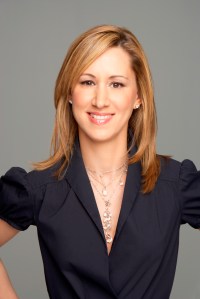
Vicki Wellington

Vicki Wellington

On basically flipping the model of cooking magazines from niche to expansive (Vicki Wellington): (Maile Carpenter) That’s exactly right. I went in looking for a vertical space and we came out with a horizontal one. We were looking for our vertical among all of these other verticals. There were some personality-driven ones; quick and easy titles; straight-up women¹s service; some that were totally aspirational and that were going to all ends of the earth and cooking things that you¹d never cooked before, but no one was doing this across any of the ideas. They were doing it on the air; it changed from hour to hour; you could get everything from combining cans of things to Iron Chef. But no one was seeing that in print. And that turned out to be the secret.


On whether someone asked them when they launched the magazine in 2009 whether they were out of their minds to launch a print magazine in a digital age (Vicki Wellington):
A lot of people asked that for a minute, and then three minutes later they weren’t asking anymore, because this was such a huge homerun and that was obvious to everyone. But at that time, you’re right, digital was a big deal and Food Network, the brand that we come from, had a very successful cable channel for 17 years, and they had a very successful digital platform for around 16 years. And obviously, now years later, everything has grown, and so they were really ahead of the curve on all of it. We didn’t even know that, but it was a big advantage.

On whether someone asked them when they launched the magazine in 2009 whether they were out of their minds to launch a print magazine in a digital age (Maile Carpenter): Well, the very simple answer to that is, the more digital distractions we get and the more choices that we have digitally, the better off we are; I truly believe that because the need for a curated, calm space to look at the things you love and to get inspired to do the things you love to do, the better off we are. And so the importance of the magazine and the way it makes you feel is even more precious now than it ever has been, and we see that socially. When the magazine comes out; when people post that they received their magazine, more than ever now they’re posting pictures of themselves on the couch, in the bathtub, on the beach, it’s me-time, my magazine arrived and I’m spending my hour with it.
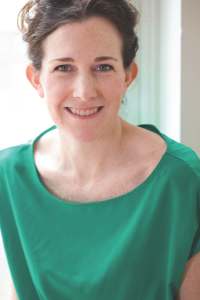
Maile Carpenter

Maile Carpenter


On whether either of them expected the success they have today when the magazine launched (Maile Carpenter): No, I didn’t really set a goal, but it was so clear to me that it was going to work. I remember the moment when I was called in to talk about a food magazine and I didn’t know what it was, and that was a hard thing to brainstorm. I remember the minute that Eliot Kaplan called me and said, “I can tell you what it is now, it’s the Food Network.” And it was just BOOM; I just knew that it was going to work. I had been a fan of the Network forever and I could just immediately picture what it was going to look like.


On whether either of them expected the success they have today when the magazine was launched (Vicki Wellington):
And we’re not that duplicative. Maile’s edit is different than what’s on air and online, so that’s a good reason to have a different platform. And also people are coming for different reasons. In a lot of ways, it’s the best of both worlds, because you could always get TV, it’s practically free with your package, and we have online and that’s free, but you’re paying for this. So, I think it speaks for itself with the surrounding numbers.


On why they think it took so long for the magazine industry to appreciate print again (Vicki Wellington):
Good question. I don’t know. We’re here in our world and we’re growing; the magazines are profitable; we’re reinventing every minute on edit, on business. And I think you survive by paying attention to people’s behavior and what they want. And we’ve changed a lot. We don’t do it quickly and we don’t do it abruptly. You’re not going to get an issue that looks dramatically and suddenly different from the issue before, but if you look at the ones from when we launched; we’re totally different too.


On whether it’s easier for Vicki to sell the magazine now (Vicki Wellington):
I don’t want to say that our days are easy, and I don’t want to say that it’s always been easy, yet it’s a great brand. It’s a brand that everyone loves, men, women and children. Any room I go into, 60 percent of the people say they love Food Network, so we’re already in a very warm room. It’s an inviting environment always.


On the biggest challenge they’re facing today (Maile Carpenter):
When we launched we were in a world where you wouldn’t put an Eggo recipe next to a waffle story and that was not that long ago. And in that amount of time the entire industry has changed. We’ve been on a learning curve and I think we’re really hitting our stride, in terms of what we can do with our advertisers. I think the hardest part is negotiating that and doing it in a way that’s respectful to the reader and to the advertiser.

On whether Maile feels her job as editor is easier or harder today than it used to be (Maile Carpenter): It’s just not as straightforward. I mean, operating in your own space without any concern for marketing and advertising, that’s linear and simple. So, this is more challenging, but it’s more interesting now.


On what advice Maile gives when someone asks her about being an editor (Maile Carpenter):
We’re asked that often when college classes come in. You mean a magazine editor? Because I feel like our skillset could play out in any number of ways. I don’t think print is going anywhere, so I always hope that they go into the business. The advice would be that it’s about being real and true to yourself, and that’s our guiding principle whenever we’re dealing with these advertising concerns. You have to know who you are and stick to that. The readers know when you’re not being real.


On how Vicki defines her job as publisher and CRO (Vicki Wellington):
I think we’re everything. Sales executive; I’m a marketing executive; I’m not a PR director per se, but I think you have to be able to do everything. My advice for any young person is that they have to learn it all. It’s great to be a great writer, but go take some business classes. The successful people are going to have all of these skillsets. And I think there are fewer people doing everything, and that’s who we hire. Not a person who can only sell or market; I want a person whose mind can work in every way.


On how they deal with any misfortune that happens to the chefs on the Network or any of the programs in the magazine (Maile Carpenter):
That was a decision that we made early on and I’m grateful every day that we made it, which was that this magazine was not going to be flattening the TV program into print. That’s the opposite of playing to the strength of print. Suddenly, you look like a less energetic version of the Network. So, we decided right off the bat that we were not going to have columns with specific stars; we were not going to base stories on TV shows. This is supplemental material and I think the readers took to that.


On whether there was a specific moment in time when it hit them how successful the Food Network magazine really was (Vicki Wellington):
I knew early on. It was like a rocket ship and we were on this fast-moving object and it was going fast and high. And I feel like we still are. We had another great year; we’re up over last year. We’ve done amazing, unique work; we continue to win awards; our circulation is up and our newsstand is strong and our subscriber renewals are up. It’s all good, so we’re still on that rocket ship. And I enjoy it.


On whether they think other magazines have tried to imitate Food Network magazine (Maile Carpenter):
I think visually things change after we launched. We had a specific look in mind when we launched. We really starting stripping the props out and going with food in focus. Believe it or not, when we launched, it was a big ask from some photographers to just shoot the food in focus. We had to fight that with some people and I think the readers appreciated just seeing things the way they were really going to look. Not all dressed up and dolled up in an environment that would never be in your house. So, that was a big thing and I think other magazines did kind of start doing more of that.


On who would be standing there if they could strike the magazine with a magic wand and turn it into a living, breathing human (Vicki Wellington):
We’re so many different people. I think if we were other magazines it would be an easier question. But everyone loves us.


On line extensions with the brand (Vicki Wellington):
We still do travel; we do family, which was Kids. We did a Disney edition this year, which was a partnership with Disney. We are looking to do college this coming year in 2017, which is exciting. The Disney edition is something that Maile and her team created. It’s about the experience and food at Disney for families, which I think came out beautiful, smart and fun.

On being one of the first food magazines to go outside endemic advertising (Vicki Wellington): Yes, that was the plan from the very beginning. Part of it is the readership. And I always knew that; it’s a strong readership and I knew how obsessed they were about the brand, about the chefs; about all that goes on within this brand. And I knew that our numbers were strong. We were measured in MRI pretty early, which is a good and a bad thing for us; it was good.

On why they think media is always reporting that millennials don’t read print (Vicki Wellington): I know it’s not true. I know it’s not true from my numbers. And I met the lovely Linda, who you will be meeting with at the MPA, and during one of her presentations she talks about millennials and about the fact that magazine audiences have grown. She talks about the fact that magazine audiences are larger than the biggest 10 cable shows on air. So, when you look at the facts, they don’t back up what you read in the press. I don’t know why the press doesn’t report on all of the other.

On anything either of them would like to add (Vicki Wellington): I can’t report on anything that might be in the works, but I can say keep watching. We’re always working on new things; the entire company is. Michael (Clinton) is launching Airbnb and that’s very interesting. And I think we’re all looking at new opportunities constantly. I don’t know if that goes on at other companies, but it goes on here and it’s exciting.

On what someone would find either of them doing if they showed up unexpectedly at their homes one evening (Maile Carpenter): I made 90 sugar cookies for my daughter’s holiday cookie decorating class that I’m teaching next week, that’s what I was doing.

On what someone would find either of them doing if they showed up unexpectedly at their homes one evening (Vicki Wellington): I recently moved into the city just a few months ago; my girls are in college. I’m in a different place than Maile is. I’m actually having very nice evenings. I’m doing something different all of the time. I’m going out to dinner; I’m meeting a girlfriend tonight for dinner; I’m taking clients out to dinner; I’m going to the gym. I’m living a very civilized life, which I haven’t lived in many years. It’s true. And I’m sleeping a bit more, so these are good things.

On what keeps them up at night (Vicki Wellington): I think about that and the truth is, not work, which is a wonderful thing for me to say. I am really happy with our magazine and I’m happy with our relationships. I love our team; I’m proud of the work that we do every day. For me what keeps me up would be the fact that I have two daughters in college. I picked up my phone today and the first line of the text I had gotten was, “I’m vomiting.” So, I read further. Even though they’re in college, you never stop worrying.


On what keeps them up at night (Maile Carpenter):
Somebody asked me how I handled that Sunday night dread and I can honestly say that has never happened, never. And I think that’s a nice gift to give my kids, to see the importance of doing something you love. I can tell every time I’m interviewing somebody if they’re passionate or not. You can’t fake it. You can fake a lot of things, but you can’t fake your excitement. You can just tell if someone is excited or not.

And now the lightly edited transcript of the Mr. Magazine™ interview with Vicki Wellington, Vice President, Publisher & Chief Revenue Officer, and Maile Carpenter, Editor in Chief, Food Network Magazine.


Samir Husni: Let’s start from the very beginning. It’s rare, or it’s becoming rare in our industry, to see a founding editor and a founding publisher stay together through the years.

Vicki Wellington: We’re like an old married couple now. (Laughs)

Samir Husni: So, do you have that seven-year-itch? (Laughs too) How have you maintained your relationship?

Vicki Wellington: No, we’re a team. We’re like a married couple; we are. I feel like this is our baby; she has other babies, but this is our baby.

Samir Husni: Take me back to the beginning. In 2009, the worst economic year ever, Gourmet folded. And then suddenly along comes a magazine like Food Network. How many rate base increases have you had since the launch?

Vicki Wellington: 13.

Samir Husni: 13 rate base increases. Tell me the genesis of the Food Network magazine.

Vicki Wellington: That’s for Maile; she’s the birth mother.

Maile Carpenter: I think that it turned out to be a smart time to launch. For one; the brand was super-strong, economy aside, it was a strong brand and the funny thing was, I remember going into a focus group and we had the cover up for people to comment on, and one woman pointed at it and she said, “I love that magazine.” I was thinking we don’t exist yet. (Laughs) But it made so much sense to everyone that she thought she had seen it already because the brand was so big and it was everywhere.

So, it was kind of a no-brainer to have a magazine with the timing right; it turned out to be a good time for people to be home cooking with their families. It was comforting to people and they trusted it, so it just took off.

Vicki Wellington: Maile was there before me. I came onboard and I had only been at this company for a short while, and I started taking the magazine out and people asked who would launch a magazine; no one needs another food magazine. And I thought, oh dear, I’m done before I even begin. And I remember speaking to Food Network over at Scripps, and they weren’t worried for a second. They said just you wait and see. We know our people; we know our fans, and sure enough, the magazine was like a rocket ship as it flew off of newsstands. And in four issues we hit a million in circulation.

And once it was off newsstands, it was huge. I feel like the momentum picked up immediately. And it changed everything. Gourmet closed. People started shooting food differently and the entire conversation changed.

Maile Carpenter: The reality was there really was a hole in the market and that’s when a product succeeds. We had thought that would be the case, but I came back from the focus groups knowing that was the case, because we had all of these women saying that they couldn’t get everything that they wanted in one magazine. They had to find it in up to five different magazines. They couldn’t get a certain mix that they had seen on Food Network. They couldn’t get the quick and easy combined with other things they wanted. People who needed a 10-minute meal on a Monday night, and who would then host a big, elaborate party on Saturday night, and no magazine was touching on all of that the way the Network was. So, we came back with such clear direction about what we could do and I think it just filled a need.

Samir Husni: Technically, you flipped the model. Where everybody was going specialization, such as chicken dinner magazines or some other niche title, you were going broader.

Maile Carpenter: That’s exactly right. I went in looking for a vertical space and we came out with a horizontal one. We were looking for our vertical among all of these other verticals. There were some personality-driven ones; quick and easy titles; straight-up women¹s service; some that were totally aspirational and that were going to all ends of the earth and cooking things that you¹d never cooked before, but no one was doing this across any of the ideas. They were doing it on the air; it changed from hour to hour; you could get everything from combining cans of things to Iron Chef. But no one was seeing that in print. And that turned out to be the secret.

Samir Husni: In 2009 we were in the beginnings of digital really taking hold and coming onto the scene; the iPhone followed by the iPad, and the economy busted; did anyone ask you while you were out trying to sell the magazine if you were out of your mind, a print magazine in a digital age?

Vicki Wellington: A lot of people asked that for a minute, and then three minutes later they weren’t asking anymore, because this was such a huge homerun and that was obvious to everyone. But at that time, you’re right, digital was a big deal and Food Network, the brand that we come from, had a very successful cable channel for 17 years, and they had a very successful digital platform for around 16 years. And obviously, now years later, everything has grown, and so they were really ahead of the curve on all of it. We didn’t even know that, but it was a big advantage.

Maile Carpenter: Well, the very simple answer to that is, the more digital distractions we get and the more choices that we have digitally, the better off we are; I truly believe that because the need for a curated, calm space to look at the things you love and to get inspired to do the things you love to do, the better off we are. And so the importance of the magazine and the way it makes you feel is even more precious now than it ever has been, and we see that socially. When the magazine comes out; when people post that they received their magazine, more than ever now they’re posting pictures of themselves on the couch, in the bathtub, on the beach, it’s me-time, my magazine arrived and I’m spending my hour with it. No one talk to me, I just got my Food Network magazine. And those are my favorite posts.

I truly see more of these type posts than I ever have and I think it’s because of this digital frenzy; you feel like you’re always supposed to be checking this account or that account and posting and checking on your friends. So, for a minute you can put that aside and fall into something.

Vicki Wellington: And it is true; if you just look at our sheer circulation numbers, we’ve grown every, single year. So, again, to all of the naysayers, just for a minute take a look at all of our rate base examples; all of our circulation; look at our sub file and our renewals. I mean, everything has grown positively.

Samir Husni: Did you expect this success when the job was offered to both of you? Did you have any inkling that this was going to be the biggest launch of the last decade?

Maile Carpenter: No, I didn’t really set a goal, but it was so clear to me that it was going to work. I remember the moment when I was called in to talk about a food magazine and I didn’t know what it was, and that was a hard thing to brainstorm. I remember the minute that Eliot Kaplan called me and said, “I can tell you what it is now, it’s the Food Network.” And it was just BOOM; I just knew that it was going to work. I had been a fan of the Network forever and I could just immediately picture what it was going to look like.

Vicki Wellington: And we’re not that duplicative. Maile’s edit is different than what’s on air and online, so that’s a good reason to have a different platform. And also people are coming for different reasons. In a lot of ways, it’s the best of both worlds, because you could always get TV, it’s practically free with your package, and we have online and that’s free, but you’re paying for this. So, I think it speaks for itself with the surrounding numbers.

Samir Husni: Why do you think that it took so long as an industry to actually appreciate print again?

Vicki Wellington: Good question. I don’t know. We’re here in our world and we’re growing; the magazines are profitable; we’re reinventing every minute on edit, on business. As an expert, why do you think it took so long? It pains me.

Samir Husni: I don’t know either, maybe fascination with the new. When Time magazine was published in 1923, the reason Henry Luce gave for launching the magazine was there were 22 newspapers in New York City; people didn’t have time. People were busy; so he gave them something different. And yet, you look at Esquire of the ‘30s,’40s and ‘50s and it would take you two days to read it all.

Maile Carpenter: And I think you survive by paying attention to people¹s behavior and what they want. And we¹ve changed a lot. We don’t do it quickly and we don’t do it abruptly. You’re not going to get an issue that looks dramatically and suddenly different from the issue before, but if you look at the ones from when we launched; we’re totally different too.

In print we’ve changed the importance of that idea of inspiration versus information even more so now. People do not need us to provide listings of a million places to go in a certain city in our On the Road Section or lists of things; they can get that online, so now more than ever we have to play to the power of print; what can you do in print that you could never do online. We can package beautiful things; have big images, so I think if you look, our images have grown a bit. You have to fall into the page or else you’re competing, and you can’t compete with the amount of information that people can get online. It’s really about inspiring, I think.


Samir Husni: Is it easier for you to sell the magazine now?

Vicki Wellington: I don’t want to say that our days are easy, and I don’t want to say that it’s always been easy, yet it’s a great brand. It’s a brand that everyone loves, men, women and children. Any room I go into, 60 percent of the people say they love Food Network, so we’re already in a very warm room. It’s an inviting environment always.

Maile Carpenter: It’s a more creative process now than it ever was. And Vicki and I are working more closely than we ever have.

Vicki Wellington: And it’s more exciting. We do a lot of work together and it makes a difference.

Samir Husni: What’s the biggest challenge that you’re facing today?

Maile Carpenter: When we launched we were in a world where you wouldn’t put an Eggo recipe next to a waffle story and that was not that long ago. And in that amount of time the entire industry has changed. We’ve been on a learning curve and I think we’re really hitting our stride, in terms of what we can do with our advertisers. I think the hardest part is negotiating that and doing it in a way that’s respectful to the reader and to the advertiser.

We’ve put out native units that have been win, win, win. We win editorially; the reader wins; the advertiser wins and everybody is happy.

Vicki Wellington: And we take so much time, hours and hours; we sit and we brainstorm and we figure out what’s right for edit; what’s right for the readers; what’s right for the client, and we tailor things toward all of these accounts and that’s why I think, not that it’s easier, but it’s exciting and we win, and I think clients feel that.

We were just on a call with King’s Hawaiian, for example, which we worked with in October. Have you ever tasted their rolls? Oh my, they’re delicious. And you know what? A lot of people don’t know where to find them in the grocery stores, so part of it was awareness, part of it was claiming this past October “Hallowaiian” instead of Halloween.
october-kings-hawaiian-cover-peel
Anyway, Maile and I were both out in California; we met with the client, just lovely people; it’s a family-owned company, so to them it’s more personal, it’s not just a big corporation. It’s personal, so it really had to make a difference. So, Maile created this faux cover and you pull it away and then you get your real cover, and of course, you get these delicious recipes on the back.

Maile Carpenter: And here’s where the win, win comes in. We’re being clear with the reader; we’re not tricking anyone, it’s very clear that this is a King’s Hawaiian piece; you can peel this off if you want. But a lot of the readers totally loved it, sent us notes editorially saying how cute the sandwiches were, so that was the dream scenario where it’s just all comfort zone.

Vicki Wellington: On top of that we were able to create, Hearst has a wonderful shopper marketing division, and we were able to work with national grocery stores and we just spoke with them and we increased sales, a crazy amount, year over year. So, the client was just on the phone with us and he was delighted. We exceeded every single goal that was set up, and we had a memorable, unique cover to boot. So this is what we’re doing, but it takes time to do this.

Another example is we wanted to find a way to work with Land O’Lakes, and we had a sort of a callout for all bakers to compete and win this bakeoff that we put out there. And that was in May, I believe, our May issue. And in our September Reader’s Choice issue, Land O’Lakes was the cover, Maile and her team, and I think a Land O’Lakes judge chose the winner, and how amazing to get their unique recipe on the cover. So, you have Land O’Lakes here, but again it’s clear, and it’s separate from the other cover, and then we had runners-up inside the magazine with their unique recipes. So, I just think that it ties in beautifully to what our edit is doing, and again, it delivers service to readers.

Samir Husni: Do you feel your job as editor today is easier or harder than it used to be?

Maile Carpenter: No, it’s not easier.

Vicki Wellington: Because I’m taking up all of her time.

Maile Carpenter: (Laughs) It’s just not as straightforward. I mean, operating in your own space without any concern for marketing and advertising, that’s linear and simple. So, this is more challenging, but it’s more interesting now.

Samir Husni: What advice would you give someone who came to you and said that they were aspiring to be an editor?

Maile Carpenter: We’re asked that often when college classes come in. You mean a magazine editor? Because I feel like our skillset could play out in any number of ways. I don’t think print is going anywhere, so I always hope that they go into the business. The advice would be that it’s about being real and true to yourself, and that’s our guiding principle whenever we’re dealing with these advertising concerns. You have to know who you are and stick to that. The readers know when you’re not being real.

Samir Husni: We’ve always been in the business of marketing content, and then a few years ago some wizard came up with the term content marketing. Vicki, how do you define your job; are marketing content or are you a content marketer? Or are you both?

Vicki Wellington: I think we’re everything. Sales executive; I’m a marketing executive; I’m not a PR director per se, but I think you have to be able to do everything. My advice for any young person is that they have to learn it all. It’s great to be a great writer, but go take some business classes. The successful people are going to have all of these skillsets. And I think there are fewer people doing everything, and that’s who we hire. Not a person who can only sell or market; I want a person whose mind can work in every way. Since there are so few of us, everybody has to be that good and strong and talented, and their mind has to work in every way. You have to be creative and you have to write. You have to sell and you have to be able to speak.

It’s a better world for us now because there’s a lot more to do. And it’s not boring, that’s for sure. And we’ve been successful, but I’m a biased person to ask.

Samir Husni: You have so many different chefs and programs that you reflect; how do you deal with things if some bad luck hits one of the chefs or one of the programs?

Maile Carpenter: That was a decision that we made early on and I’m grateful every day that we made it, which was that this magazine was not going to be flattening the TV program into print. That’s the opposite of playing to the strength of print. Suddenly, you look like a less energetic version of the Network. So, we decided right off the bat that we were not going to have columns with specific stars; we were not going to base stories on TV shows. This is supplemental material and I think the readers took to that.

And that way we knew that we’d be able to go wherever the Network went, so I meet with them once a month and I have a pretty clear view three to six months out of what shows are doing really well and which stars they’re excited about. Our lead time is very similar, so we can line up. And we look like we’re in lock-step with them.

Vicki Wellington: It’s a benefit of being a brand filled with so many; you’re not relying on one personality.

Samir Husni: Was there a specific day or time when it hit you on how successful the Food Network magazine really was?

Vicki Wellington: I knew early on. It was like a rocket ship and we were on this fast-moving object and it was going fast and high. And I feel like we still are. We had another great year; we’re up over last year. We’ve done amazing, unique work; we continue to win awards; our circulation is up and our newsstand is strong and our subscriber renewals are up. It’s all good, so we’re still on that rocket ship. And I enjoy it. We’re a powerful brand with exactly the right editor and team and I don’t worry about tomorrow because we’re in a great position.

Samir Husni: Do you think people have tried to imitate the Food Network magazine?

Maile Carpenter: I think visually things change after we launched. We had a specific look in mind when we launched. We really starting stripping the props out and going with food in focus. Believe it or not, when we launched, it was a big ask from some photographers to just shoot the food in focus. We had to fight that with some people and I think the readers appreciated just seeing things the way they were really going to look. Not all dressed up and dolled up in an environment that would never be in your house. So, that was a big thing and I think other magazines did kind of start doing more of that.

Deirdre (Koribanick) to her credit, our creative director, does not constantly look to other places to come up with her designs. She says that she designs out of her head and she really does, I’ve watched her do it.

Vicki Wellington: And she looks like this magazine to me. I don’t know if I’m here too long, but I look at her and she’s beautiful and simple and elegant. And I look at the magazine and I see her in every page. So, it’s really meant to be.

Samir Husni: If I gave you a magic wand that could transform the magazine into a living, breathing person, and you struck the ink on paper with the wand, who would be standing there afterwards?

Vicki Wellington: It’s going to look like Deirdre, isn’t it? (Laughs)

Maile Carpenter: (Laughs too) She should get so much more credit; I feel like she’s not always mentioned in these success stories. And the visual statement this magazine made from day one was so strong and that’s really her. She just had it in her mind.

Vicki Wellington: There’s a lot of fun in this magazine. But back to your question; we’re so many different people. I think if we were other magazines it would be an easier question. But everyone loves us.

Maile Carpenter: I think it’s a family. It’s a whole family.

Samir Husni: Tell me about the line extensions. You’ve tested the Food Network Kids…
april-disney-travel_cover
Vicki Wellington: Which is still doing well; we actually expanded that to be family. We still do travel; we do family, which was Kids. We did a Disney edition this year, which was a partnership with Disney. We are looking to do college this coming year in 2017, which is exciting. The Disney edition is something that Maile and her team created. It’s about the experience and food at Disney for families, which I think came out beautiful, smart and fun.

And millennials are so crazy about food and crazy about this brand, they’re posting more pictures of food on their phones than their families. They’re saving up to go to restaurants, not bars. So, I feel like what an opportunity for us to speak to that arena, so college is one that we’re looking at for this coming year.

Samir Husni: So, everything is going great; advertising is up?

Vicki Wellington: We were up this year, and we were up, not only in food and beverage which you would expect, but we’re up in home. And Maile has done a bit with Stars at Home, which I can show you.

Samir Husni: You were one of the few, if not the first, food magazine to go outside of endemic advertising and you’ve brought a lot to the magazine, from the very beginning.

Vicki Wellington: Yes, that was the plan from the very beginning. Part of it is the readership. And I always knew that; it’s a strong readership and I knew how obsessed they were about the brand, about the chefs; about all that goes on within this brand. And I knew that our numbers were strong. We were measured in MRI pretty early, which is a good and a bad thing for us; it was good.

We were able with this story to bring in travel, and this year we really did a lot on home. We had home prior, and this year we brought in a load of beauty business. So, I do think Maile has expanded a little bit, which has been wonderful. She’s showing the chefs at home, Marc Murphy and his beautiful home and you can see how he lives. And you can’t see this anywhere else, so it’s really our special relationship with the chefs and the readers love it because they can see what their backyards are like; what their bedrooms are like; just how they really live. And I think that’s a big advantage.

Samir Husni: You mentioned that millennials loved the magazine; why do you think that every time you pick up a media-related item, it’s always reporting that millennials don’t read print?

Vicki Wellington: I know it’s not true. I know it’s not true from my numbers. And I met the lovely Linda, who you will be meeting with at the MPA, and during one of her presentations she talks about millennials and about the fact that magazine audiences have grown. She talks about the fact that magazine audiences are larger than the biggest 10 cable shows on air. So, when you look at the facts, they don’t back up what you read in the press. I don’t know why the press doesn’t report on all of the other.

It¹s frustrating because I know what I see and I know that’s not true. And I know what the readers are showing us and doing with us. It’s a shame that there’s not more press on good stories. We had a phenomenal year, maybe there could have been more reported about that.

It’s easier to talk about the negative rather than the positive, maybe?

Samir Husni: Is there anything else either of you would like to add, anything new in the works?

Vicki Wellington: I can’t report on anything that might be in the works, but I can say keep watching. We’re always working on new things; the entire company is. Michael (Clinton) is launching Airbnb and that’s very interesting. And I think we’re all looking at new opportunities constantly. I don’t know if that goes on at other companies, but it goes on here and it’s exciting.

Samir Husni: If I show up at either of your homes unexpectedly one evening, what do I find you doing; reading a magazine; reading your iPad; watching television; having a glass of wine; cooking; or something else?

Maile Carpenter: I made 90 sugar cookies for my daughter’s holiday cookie decorating class that I’m teaching next week, that’s what I was doing.

Vicki Wellington: I recently moved into the city just a few months ago; my girls are in college. I’m in a different place than Maile is. I’m actually having very nice evenings. I’m doing something different all of the time. I’m going out to dinner; I’m meeting a girlfriend tonight for dinner; I’m taking clients out to dinner; I’m going to the gym. I’m living a very civilized life, which I haven’t lived in many years. It’s true. And I’m sleeping a bit more, so these are good things.

Samir Husni: My typical last question; what keeps you up at night?

Vicki Wellington: I think about that and the truth is, not work, which is a wonderful thing for me to say. I am really happy with our magazine and I’m happy with our relationships. I love our team; I’m proud of the work that we do every day. For me what keeps me up would be the fact that I have two daughters in college. I picked up my phone today and the first line of the text I had gotten was, “I’m vomiting.” So, I read further. Even though they’re in college, you never stop worrying.

But the good news for me on the work front; we’re supported by them, Michael and David upstairs. We’re doing good work; we’re doing smart work. We have an excellent team, so I don’t worry about this. And that makes me happy to say.

Maile Carpenter: Somebody asked me how I handled that Sunday night dread and I can honestly say that has never happened, never. And I think that’s a nice gift to give my kids, to see the importance of doing something you love. I can tell every time I’m interviewing somebody if they’re passionate or not. You can’t fake it. You can fake a lot of things, but you can’t fake your excitement. You can just tell if someone is excited or not.

And I can honestly say that everyone who’s here makes this a fun place to work. Everyone loves what they’re doing. We have our stresses like everyone and we worry about things, but not to the extent that I lose any sleep. (Laughs) Sleep is important. Sleeping and eating.

Samir Husni: Thank you both.

h1

Stand Magazine: The Tagline Says It All: The Magazine For Men Who Give A Damn – A Men’s Magazine That Promotes More Than Just Looking Good – The Mr. Magazine™ Interview With Dwayne Hayes, Founder & Managing Editor, Stand Magazine….

December 7, 2016

A Mr. Magazine™ Launch Story…

“I’m just a huge fan of print. When I read something, I want to grab it in print. When Borders (Bookstore) was opened, I would go there during my weekly Friday afternoon routine when I would get out of work early, sit down with a dozen or so magazines and just read through them all afternoon. And I think that the digital focus and emphasis in our lives actually provides a great opportunity for really beautifully-made print magazines. People enjoy being able to sit down and have a cup of coffee or have a beer and read something beautifully-made in print.” Dwayne Hayes…

stand

With the mission of encouraging men to be much more than just snazzy dressers, Stand magazine challenges all of us testosterone-charged beings to look at everything we do with a bit more conscious thought than we might do normally. To try and be better partners, better fathers, better husbands, better friends and neighbors and better…well, just better men all the way around.

Dwayne Hayes is the founder and managing editor of Stand, but he’s much more than just those adjectives. Dwayne is the vision behind the mission, coming from a long career in social work as a therapist to young males and adult men with a history of domestic and sexual abuse. His compassion and exemplary skills, while no longer being utilized on that personal, one-on-one patient basis, shine through the pages of the magazine, stirring all men, regardless of their ethnicity or sexual orientation, to be better people.

I spoke with Dwayne recently and we talked about the new magazine, which has seen its 4th issue, with number five on its way. The quarterly magazine is not his first attempt at the publishing business, as Dwayne has also had a very notable literary magazine called Absinthe out in the world. But by his own reflections, Stand brings with it a whole new experience for him when it comes to publishing a magazine four times a year. Along with the art of finding his footing, Dwayne is also seeking his audience; as this first year he admits has been more of an experiment than anything else. Planning a thematic format going forward, he’s also gearing up events to further the conversation with his audience around the theme of each future issue.

So, I hope that you enjoy this very thought-provoking and inspirational interview with a man who seeks to be a better man himself with each issue of the magazine that he creates and hopes to encourage other men to do the same, the Mr. Magazine™ interview with Dwayne Hayes, founder and managing editor, Stand magazine.

But first the sound-bites:

On why he felt the need to start Stand magazine: Well, I didn’t think there was a magazine out there for men such as we envisioned, and that was one that really promoted a different view of what men and masculinity meant. And to encourage and challenge men to reject some of the stereotypes about manhood and to really embrace a view that spurs men to be equal partners in all aspects of life; in raising children; in parenting; in taking a more conscious and ethical look at their work and what they do; reducing violence in the world, violence against women and children.

dwayne

On how the idea actually developed into a magazine: It really happened years and years ago. My background is in social work; I was a therapist for a number of years. I have a master’s in social work from the University of Michigan. And my work was with boys who were perpetrators of sexual abuse. And I did that for a number of years and I also worked with men on domestic violence and anger issues. I ended up leaving social work and got into publishing. I’d always written and was very interested in publishing. And I did that for a number of years; primarily with information and reference publishing, and had started my own literary magazine that I published for 10 years. It was during this time that I began to conceive of the idea of Stand and decided that there should be a new men’s magazine for men who wanted to stand for something besides just trying to look good.

On any stumbling blocks he had to face during the development of the magazine: Everything feels like a stumbling block. (Laughs) As you know very well, doing a magazine is not a walk in the park. I was very fortunate though; when I finally decided to take the step and do it, which happened after leaving my job that I had been doing for about 16 or 17 years, I happened to meet a guy, Carl Johnson, who as it turned out, lived right around the corner from me, and was and is a fantastic designer, and we sat down and I told him about the vision I had for the magazine. He was very interested in it and really got the look I was going for, the design that we had in mind, and began to take it from there.

On why he started a print magazine in this digital age: That’s something that we’re constantly rethinking and reworking. We’re looking at all of this in our first year and we see it as a kind of experiment to see what happens. But I’m just a huge fan of print. When I read something, I want to grab it in print. When Borders (Bookstore) was opened, I would go there during my weekly Friday afternoon routine when I would get out of work early, sit down with a dozen or so magazines and just read through them all afternoon. And I think that the digital focus and emphasis in our lives actually provides a great opportunity for really beautifully-made print magazines.

On the addictive quality of Stand for men: I think it’s a combination of the photography in the magazine and the readability of the design. One thing that we have stayed away from is long form essays and journalistic pieces. I know that can work well in some formats, but I also know that attention spans are perhaps not what they used to be, so we try and provide content in a way that people can grab one essay or one piece and read it, then put it down for a week and come back and want to read another one.

On whether his prior literary experience spilled over into Stand or he had to wipe his brain clean and start over: It was kind of both. When I first started my literary magazine, it was called Absinthe after the drink and it was focused on European writing and translation, so as you can imagine there was a wide audience for that in the United States. (Laughs) But we had a really great group of readers and writers and translators that we associated with. But certainly having that experience helped, Absinthe was not nearly the amount of work that this was and is. Absinthe was published biannually and I think doing a quarterly really steps up the pace.

On whether he’s trying to set the record straight about men with Stand or he feels there is a gap that media isn’t addressing when it comes to men’s magazines: A little of both. We envisioned the magazine kind of turning some of the conventions of the men’s magazine on its head. Originally, our intent was that we would show a regular guy on the cover; there wouldn’t be celebrities. That is likely to change; that’s something that we’re working on, and the change is based upon some feedback that we’ve gotten. But we really want it to be a magazine that the average guy relates to, so for example, the fashion section that we did for the first year; we did it and called it “Curated Thrift” and we focused exclusively on fashion and style that men could afford. And we really tried to do things that men could wear that were under $100, as opposed to what they’re normally going to see in GQ or Esquire or any other men’s magazine.

On what he hopes to accomplish in 2017: In 2017 we’re going to be doing a number of things. We’re going to be adding a podcast and I hope that will have taken off and have found listeners. We’re also going to be adding events that will be part of each release of the issue. Issue #4, as you noted, focused on male body image, and going forward the issues will have more of a thematic focus and we’re going to be developing events around those themes. Hopefully, this will further the conversation among men on the issues that are important to them.

On any changes he’s made to the magazine since the first issue: If you haven’t seen Issue #1, the obvious difference is that we changed the way the logo type is on the cover. We had the logo on the first two issues with just the “S” and the small Stand, and we changed the logo across the cover.

On the magazine resonating with each and every man, no matter race or sexual orientation: The intent is that it’s for the man that you want to become too. Going back to the beginning of the magazine; you do a magazine like this that’s idealistic in a way and calls men to really think more consciously about themselves. As an editor and a founder, you kind of set yourself up for people to view you as thinking that you’re an example of what a man should be. (Laughs) And for anybody who reads my editorials in each issue, I think one of the things that has resonated with our readers is that my editorials are full of failure; the ways that I have failed as a man. And how I’m struggling and learning to become a better man.

On what someone would find him doing if they showed up unexpectedly at his home one evening: Typically, the four of us are having dinner together, my wife, Jessica, and our two children, Logan and Savannah. Logan is six and Savannah’s four, and we’ll sit down and have dinner together. And once we take care of what they have going on, and they work off all of their energy and go to bed; my wife and I will sit down with a book or watch a movie, and have a glass of wine to relax.

On what keeps him up at night: It’s ironic that you ask this question now, because last night it was my daughter, who climbed into bed with us, and I have no idea what time it was. If it’s not my daughter; probably like many people I tend to get inspired in the middle of the night and that drives me crazy because I can’t sleep. I’ll come up with an idea and I have to take some time to write it down.

And now the lightly edited transcript of the Mr. Magazine™ interview with Dwayne Hayes, Founder/Managing Editor, Stand magazine.

Samir Husni: The tagline for Stand magazine is: for men who give a damn. Tell me, why did you give a “damn” so much that you felt you had to start a magazine?

Dwayne Hayes: Well, I didn’t think there was a magazine out there for men such as we envisioned, and that was one that really promoted a different view of what men and masculinity meant. And to encourage and challenge men to reject some of the stereotypes about manhood and to really embrace a view that spurs men to be equal partners in all aspects of life; in raising children; in parenting; in taking a more conscious and ethical look at their work and what they do; reducing violence in the world, violence against women and children.

I love men’s magazines. I grew up reading GQ and Esquire and others, and I just felt like there was a place for a men’s magazine that encouraged men to think a little bit more consciously about the decisions that they make.

stand-2

Samir Husni: Take me back to that moment of conception, when you said to yourself: this is what I feel and I want to put it into a magazine and call it Stand. How did the idea develop into an actual magazine?

Dwayne Hayes: It really happened years and years ago. My background is in social work; I was a therapist for a number of years. I have a master’s in social work from the University of Michigan. And my work was with boys who were perpetrators of sexual abuse. And I did that for a number of years and I also worked with men on domestic violence and anger issues.

I ended up leaving social work and got into publishing. I’d always written and was very interested in publishing. And I did that for a number of years; primarily with information and reference publishing, and had started my own literary magazine that I published for 10 years.

It was during this time that I began to conceive of the idea of Stand and decided that there should be a new men’s magazine for men who wanted to stand for something besides just trying to look good. But I was doing all of these other things, so I didn’t have the time to do it then. I thought it was a good idea, but couldn’t do it at that time. Later however, my career changed and I made some other decisions, and I ended up having some time to develop it.

Samir Husni: Were there any stumbling blocks that you had to face during that development, and if so, how did you overcome them?

Dwayne Hayes: Everything feels like a stumbling block. (Laughs) As you know very well, doing a magazine is not a walk in the park. I was very fortunate though; when I finally decided to take the step and do it, which happened after leaving my job that I had been doing for about 16 or 17 years, I happened to meet a guy, Carl Johnson, who as it turned out, lived right around the corner from me, and was and is a fantastic designer, and we sat down and I told him about the vision I had for the magazine. He was very interested in it and really got the look I was going for, the design that we had in mind, and began to take it from there.

It’s difficult to get a new magazine out there, I’m not Condé Nast or some other large company, so we don’t have all of the resources that some of their startups might have, so that’s certainly a stumbling block. And to answer questions like: how do we reach our readers; how do we find our audience?

Samir Husni: We live in a digital age, so why did you feel the need for a print magazine and one with such an expensive cover price, $15?

Dwayne Hayes: That’s something that we’re constantly rethinking and reworking. We’re looking at all of this in our first year and we see it as a kind of experiment to see what happens. But I’m just a huge fan of print. When I read something, I want to grab it in print. When Borders (Bookstore) was opened, I would go there during my weekly Friday afternoon routine when I would get out of work early, sit down with a dozen or so magazines and just read through them all afternoon. And I think that the digital focus and emphasis in our lives actually provides a great opportunity for really beautifully-made print magazines. People enjoy being able to sit down and have a cup of coffee or have a beer and read something beautifully-made in print.

And that’s what we wanted to do. Make something in print that’s really beautiful that people would want to keep around and put on their coffee tables and come back to. The content that we’re envisioning for the magazine is pretty timeless; it’s not something that once the new issue comes out you feel the need to discard the other issues.

Samir Husni: I must admit I have taken Issue #4 of Stand home with me; I bring it back to the office; then I take it home again. I really can’t put it down. What’s the secret recipe in Stand that makes it so addictive for men?
Dwayne Hayes: I think it’s a combination of the photography in the magazine and the readability of the design. One thing that we have stayed away from is long form essays and journalistic pieces. I know that can work well in some formats, but I also know that attention spans are perhaps not what they used to be, so we try and provide content in a way that people can grab one essay or one piece and read it, then put it down for a week and come back and want to read another one.

I’ve had people tell me that they sit down and read it straight through from beginning to end. Some people flip through it, almost like it is a website. We’re still figuring out how people read it and how they prefer to read it.

Samir Husni: What’s the impact of your previous experience with the literary magazine; did that somehow spill over to Stand or you had to completely wipe your brain clean and start over with Stand?

Dwayne Hayes: It was kind of both. When I first started my literary magazine, it was called Absinthe after the drink and it was focused on European writing and translation, so as you can imagine there was a wide audience for that in the United States. (Laughs) But we had a really great group of readers and writers and translators that we associated with.

When I first started it I went to a reading by a Greek poet, Dino Siotis, who has published a number of literary magazines and newspapers. And he was speaking about his publishing experiences and about how you had to be a little bit crazy to start a magazine. And I knew that craziness, so I think that’s why I resisted doing Stand for a while, because I knew that it was going to be a quarterly and I knew it was going to be bold and have a big vision for where it was going to go and for what it was going to do. And I was a bit scared to take those steps and try something new and reach out.

But certainly having that experience helped, Absinthe was not nearly the amount of work that this was and is. Absinthe was published biannually and I think doing a quarterly really steps up the pace.

stand-1

Samir Husni: One of the things that I noticed about Stand is that you seem to be going against the norm; I mean you have an article about men, body image and the media. Are you trying to set the record straight when it comes to men or do you feel there’s a gap that media isn’t addressing when it comes to men’s magazines?

Dwayne Hayes: A little of both. We envisioned the magazine kind of turning some of the conventions of the men’s magazine on its head. Originally, our intent was that we would show a regular guy on the cover; there wouldn’t be celebrities. That is likely to change; that’s something that we’re working on, and the change is based upon some feedback that we’ve gotten. But we really want it to be a magazine that the average guy relates to, so for example, the fashion section that we did for the first year; we did it and called it “Curated Thrift” and we focused exclusively on fashion and style that men could afford. And we really tried to do things that men could wear that were under $100, as opposed to what they’re normally going to see in GQ or Esquire or any other men’s magazine.

But we’re going to expand that; it’s not going to be quite the same as we move forward, because we also want to highlight the work of a number of ethical and sustainable designers out there, so that will change.

You’re not likely to see women in bikinis in Stand either. (Laughs) In Issue #4 we have the swimsuit portfolio, which was literally suits swimming on a beach. We are attempting to turn some of the things upside down that is usually in men’s magazines. And similar to what you might see in GQ or Esquire and some of the others; we’re going to highlight a woman that we admire and that woman is going to be someone we admire for the quality of her character; who she is and what she does, rather than how she looks in a bikini or lingerie.

Samir Husni: If you and I are having this chat a year from now; what would you hope to tell me that you’ve accomplished in 2017 with Stand?

Dwayne Hayes: In 2017 we’re going to be doing a number of things. We’re going to be adding a podcast and I hope that will have taken off and have found listeners. We’re also going to be adding events that will be part of each release of the issue. Issue #4, as you noted, focused on male body image, and going forward the issues will have more of a thematic focus and we’re going to be developing events around those themes. Hopefully, this will further the conversation among men on the issues that are important to them.

Samir Husni: If you can go back to Issue #1; is there anything different that you’ve done with the subsequent issues since that first one?

Dwayne Hayes: If you haven’t seen Issue #1, the obvious difference is that we changed the way the logo type is on the cover. We had the logo on the first two issues with just the “S” and the small Stand, and we changed the logo across the cover. We’ve made some tweaks along those lines.

Right now we’re really looking at the first year as an experiment. What can we do to make it better and what can it become? For example, I think the mission of the magazine is very clear to readers, but we also want to touch on other issues that our readers are interested in.

Samir Husni: When did you decide on the tagline: the magazine for men who give a damn? And is that for all men; all races; all sexual orientations, because it seems the magazine is a mirrored reflection of society? You do not exclude any man in the magazine.

Dwayne Hayes: No, not at all. The intent is that it’s for the man that you want to become too. Going back to the beginning of the magazine; you do a magazine like this that’s idealistic in a way and calls men to really think more consciously about themselves. As an editor and a founder, you kind of set yourself up for people to view you as thinking that you’re an example of what a man should be. (Laughs) And for anybody who reads my editorials in each issue, I think one of the things that has resonated with our readers is that my editorials are full of failure; the ways that I have failed as a man. And how I’m struggling and learning to become a better man.

The magazine is really about that struggle that we all go through to live as the men that we envision ourselves to be and as the men that we’ve always wanted to be as well. So, the magazine is a way to call us to that vision and to encourage us to that. And we realize that men have various interests. The magazine is really for guys who want to look good; who want to feel great; and who want to do the right thing.
Samir Husni: From the masthead, it looks like you have the entire Hayes family working for you?

Dwayne Hayes: (Laughs) They’ve been involved to various degrees, yes. There’s a bit of fudging on the masthead though, because you’re probably seeing the names of my son, who is six, and my daughter, who is four. Their primary roles are inspiration, but my brother has been involved; he writes a piece on the content of character that we have at the end of each issue. And my nephew, Steven, has managed our social media presence.
stand-3

Samir Husni: If I showed up unexpectedly at your home one evening after work, what would I find you doing; reading a magazine; reading your iPad; watching TV; cooking; having a glass of wine; or something else?

Dwayne Hayes: On a good day, I’m able to do all of those things. Typically, the four of us are having dinner together, my wife, Jessica, and our two children, Logan and Savannah. Logan is six and Savannah’s four, and we’ll sit down and have dinner together. And once we take care of what they have going on, and they work off all of their energy and go to bed; my wife and I will sit down with a book or watch a movie, and have a glass of wine to relax.

Samir Husni: My typical last question; what keeps you up at night?

Dwayne Hayes: It’s ironic that you ask this question now, because last night it was my daughter, who climbed into bed with us, and I have no idea what time it was. If it’s not my daughter; probably like many people I tend to get inspired in the middle of the night and that drives me crazy because I can’t sleep. I’ll come up with an idea and I have to take some time to write it down.

Coming up with ideas for the magazine; coming up with thoughts about how we’re going to build the audience and reaching people who would love the magazine is what I’m thinking about.

Samir Husni: Thank you.