Archive for the ‘A Launch Story…’ Category

h1

The Raddington Report: An Online Global Source That’s Coming Soon To Print And Promises To “Change The World Through Conversation. Not Censorship.” – The Mr. Magazine Interview With Yassin Fawaz, Publisher, Raddington Report & CEO, The Raddington Group…

July 31, 2017

A Mr. Magazine™ Launch Story…

“As robust as online media is, I’m still an old-school guy in many ways. Nothing compares to having your hands on a physical, glossy copy of an engaging magazine or newspaper. And really spending time delving into it. Part of the biggest problem with online news media is that it lives in your browser or your phone. And you have so many other notifications and distractions that are always going to get in your way.” Yassin Fawaz…

“When you have a physical magazine or newspaper in your hand, two things happen. First is you have a unique connection to the medium; in fact, in some ways the content feel is right there in your hands. You’re forced to really sit down and think about it and just read. And you’re not distracted by so many other things. And I think that’s the primary reason that I believe print is important, because no matter how far technology goes, in my opinion, the only way that is conducive to reading and conducive to thinking and analyzing is by having it physically in your hand.” Yassin Fawaz…

According to The Raddington Report’s publisher, Yassin Fawaz, the online journal and soon-to-be print entity, takes on global issues by opening dialogues that are sometimes considered taboo and removes that censorship, seeking the truth above all else. The Raddington Report is published by the Raddington Group, of which Yassin is also the CEO. The new media brand is designed for leaders around the world who are shaping the future and want to know why a story is important for their security and their bottom-line. Yassin says the Raddington Report was developed to change the way important events are reported in the global marketplace.

And while the online/mobile version is strong, Yassin also added that a print component was something that he felt the brand needed. Something tangible and engaging. With experts ranging from a former president of Latvia to a former CIA deputy director, the Raddington Report seems to have its finger on the pulse of some of the most in-the-know and relevant people in the world of politics, government and many other world affair topics. With such a broad and diverse base of experts, the Raddington Report is poised to become a very powerful voice for all who have been inundated with mainstream media’s present-day trials and tribulations.

I spoke with Yassin recently and we talked about the Raddington Report and what he hopes it accomplishes, both online and with its upcoming print edition. For a man who says the three principals he was reared on: integrity, professionalism and diligence, are what he used to shape the person he is today, you would expect no less than a media brand that is dedicated to the truth. And Yassin says that’s the truth for everyone, from heads of state to the ordinary person who lives around the corner. Every voice should be heard and recognized, and the Raddington Report is here to make sure that happens.

So, I hope that you enjoy the Mr. Magazine™ interview with a man who supports the truth, no matter the topic, believing that one can only change the world through conversation, not censorship, Yassin Fawaz, publisher, Raddington Report, & CEO, The Raddington Group.

But first, the sound-bites:

On the reasons behind the Raddington Report and why it’s important in the scheme of today’s media: The simple answer is that traditional media is broken. We can’t wait any longer for solutions. The Raddington Report isn’t the be all/end all of publications, but what we’re offering is unique and a breath of fresh air. And the reason why I believe that is because we give readers in depth articles, not simply about news, but more about what the news means. So, we go beyond just simply covering key events.

On what motivated him to become interested in this type of global media: To be quite honest with you, we obviously want to be an integral part of the conversation. Not by being loud, but by being thoughtful and offering concise and informative information. And being able to offer it from a global perspective, because I believe today that the biggest issue in a lot of reporting is that many people don’t actually have the ability to deliver on the ground information that’s unfiltered and coming from a strategic perspective that really tells people what they need to know.

On how he plans to reach an audience already saturated with an overabundance of information: We are intending to make the Raddington Report the go-to source for information, but most importantly, the go-to source for the truth.

On the possibility of some to say the truth is in the eye of the beholder: I think the truth is being able to report with objectivity. And unfortunately, this is the biggest problem with a lot of journalism today. If you allow your personal views and perspectives on issues to get in the way of your reporting, then obviously you’re not reporting on the truth.

On where the Raddington Report’s base of operations is:
Our base is in Washington D.C., but we have an extensive presence throughout the Middle East, Africa, and beyond Asia. So, we have a presence in a lot of key parts of the world. And when I say we have a presence; we have high-level contacts with heads of state and with decision-makers; so obviously that gives us the ability to deliver what others can’t.

On when the print edition will come out: The print edition is obviously something that we are planning to put out in the very near future. And to further answer your question regarding our objective, there is no reporting source, and please quote me on this; there is no reporting source like the Raddington Report on world affairs. Today any good reporter knows you have to go to the source to get the truth. We live in the source.

On why he felt the need for a print component:
I’ll say something to you to answer your question on the issue of print, which I think is obviously a very good question. I still believe that print is very important and there are a lot of reasons why that’s true. A lot of people would ask why go print when today you have so many media outlets that are obviously online. Why do you think they’re online? As robust as online media is, I’m still an old-school guy in many ways. Nothing compares to having your hands on a physical, glossy copy of an engaging magazine or newspaper.

On the plan to convert the Raddington Report’s online audience to a print audience:
I think our plan is mainly through detailing the content as far as how we’re going to be transferring things out.

On how the Raddington Report managed to put together such an illustrious mix of experts for its board:
To simply put it, the Raddington Group has a very extensive network and that very extensive network has given us the ability to obviously make the best use of that network for the benefit of readers all around the world.

On the genesis of the Raddington Report’s tagline, Change the World Through Conversation. Not Censorship: The genesis of that is there are so many people in so many different parts of the world that are voiceless and they have no one to speak for them. In many of these countries, in faraway places that is away from the United States, there is the law of the jungle. And many publications many times overlook reporting on topics, because they are so political and they feel the topics are just too dangerous to cover. But considering our resources and our capabilities, and who we are and who we represent, we believe that we are now ready to be a voice for anybody out there who needs to be heard.

On who Yassin Fawaz is: My family formed my character and shaped the values that guide me. The three things that guide me as a person are integrity, professionalism and diligence. I have a very good understanding of the world. I’ve become very successful in my business, and that’s mainly due to the support that I’ve gotten from the upbringing that my family provided me. And ultimately I’d say, to describe me in simple terms, my main focus is prosperity and peace. That’s the cycle I want to see, because I believe that it’s a cycle that basically opposes corruption breeding terrorism.

On his background: My background has really been focused on security, and I’ve done extensive research on a full range of issues. I’ve mainly used all of my expertise focusing on that to really make the Raddington Group a success.

On anything he’d like to add: I think the world has been waiting for an on-the-ground source of diverse expertise to provide reporting on highly valuable information. The Raddington Report fills that space and meets that need. And there is no publication out there that gives insight from a head of state or national security experts, that gives the reader insight from established authors, and at the same time gives the ordinary person the ability to be heard. And I think that’s one of the main pillars; we’re a voice for everybody up and down the ladder.

On what someone would find him doing if they showed up unexpectedly one evening at his home:
To be quite honest, I do a lot of reading. And a book that I continue to read over and over is “The Prince” by Machiavelli.

On what keeps him up at night: There’s not much that keeps me up at night, because considering the sensitivity of what I do and just the overall scope of work that we’re involved with, I think we keep a lot of people up at night waiting to see the next move from us and waiting to see what we’re going to put out. (Laughs)

And now the lightly edited transcript of the Mr. Magazine™ interview with Yassin Fawaz, publisher, Raddington Report, & CEO, The Raddington Group.

Samir Husni: I read the press release for the Raddington Report and I was definitely intrigued. Tell me, why are you doing this and why now?

Yassin Fawaz: The simple answer is that traditional media is broken. We can’t wait any longer for solutions. The Raddington Report isn’t the be all/end all of publications, but what we’re offering is unique and a breath of fresh air. And the reason why I believe that is because we give readers in depth articles, not simply about news, but more about what the news means. So, we go beyond just simply covering key events.

We often go a step further and try to give the reader tangible information to take away, whether that’s useful tidbits such as something that will help them make a better investment decision, or perhaps some kind of breakdown of a new development that will impact their marketing, or whether to explore operating in certain parts of the world; this is the sort of thing that they get. And I really don’t see that being offered in a lot of other places.

Samir Husni: You already have the Raddington Group and now you’ve launched the Raddington Report online and you also plan on launching a print edition; what motivated you to get interested in all of this? When was that defining moment when you said to yourself, ‘Somebody has to do it and I’m going to be the one?’

Yassin Fawaz: To be quite honest with you, we obviously want to be an integral part of the conversation. Not by being loud, but by being thoughtful and offering concise and informative information. And being able to offer it from a global perspective, because I believe today that the biggest issue in a lot of reporting is that many people don’t actually have the ability to deliver on-the-ground information that’s unfiltered and coming from a strategic perspective that really tells people what they need to know. Today, too much of what you’re seeing out there is being reported by people who don’t really have the detailed insight and knowledge of some of these places they’re reporting on.

Samir Husni: Are you going to take the media world by storm when the first issue of the print edition comes out? What’s your plan? How are you going to reach an audience that’s been so saturated with all kinds of media, left and right?

Yassin Fawaz: We are intending to make the Raddington Report the go-to source for information, but most importantly, the go-to source for the truth.

Samir Husni: What if someone tells you that the truth is in the eye of the beholder?

Yassin Fawaz: I think the truth is being able to report with objectivity. And unfortunately, this is the biggest problem with a lot of journalism today. If you allow your personal views and perspectives on issues to get in the way of your reporting, then obviously you’re not reporting on the truth.

Samir Husni: Where is your base of operations?

Yassin Fawaz: Our base is in Washington D.C., but we have an extensive presence throughout the Middle East, Africa, and beyond Asia. So, we have a presence in a lot of key parts of the world. And when I say we have a presence; we have high-level contacts with heads of state and with decision-makers; so obviously that gives us the ability to deliver what others can’t.

To answer your question on why we’re doing this now; we carefully looked at what’s going on today in the world. We have many of our experts and members of our team who are constantly being approached by media outlets all around the world that tell them that they’re writing this report on one thing or the other, and they need some expert insight in order to beef up their piece.

You look at what’s out there and you always see somewhere within the article expert X or foreign official A, current official B; it always comes down to being able to use someone who has access to information in order to make a piece complete. What we’re doing is using our own resources and by doing so, we have what it takes to put out a solid product.

Samir Husni: When do you plan to introduce the print edition of the Raddington Report?

Yassin Fawaz: The print edition is obviously something that we are planning to put out in the very near future. And to further answer your question regarding our objective, there is no reporting source, and please quote me on this; there is no reporting source like the Raddington Report on world affairs. Today any good reporter knows you have to go to the source to get the truth. We live in the source. My team, the people that make up what we are as an organization, those are the folks who know the generators of intel. Who know how to gain important information.

And most importantly, many of the folks associated with us are trained to tell the difference between false and the truth, because we live here and we know what is real. That is what we believe is part of our strategic advantage, because we have a very solid team of folks that have a background in information, and they’re able to verify and look at reports and automatically be able to say that’s the truth or not. Just by simply looking at it.

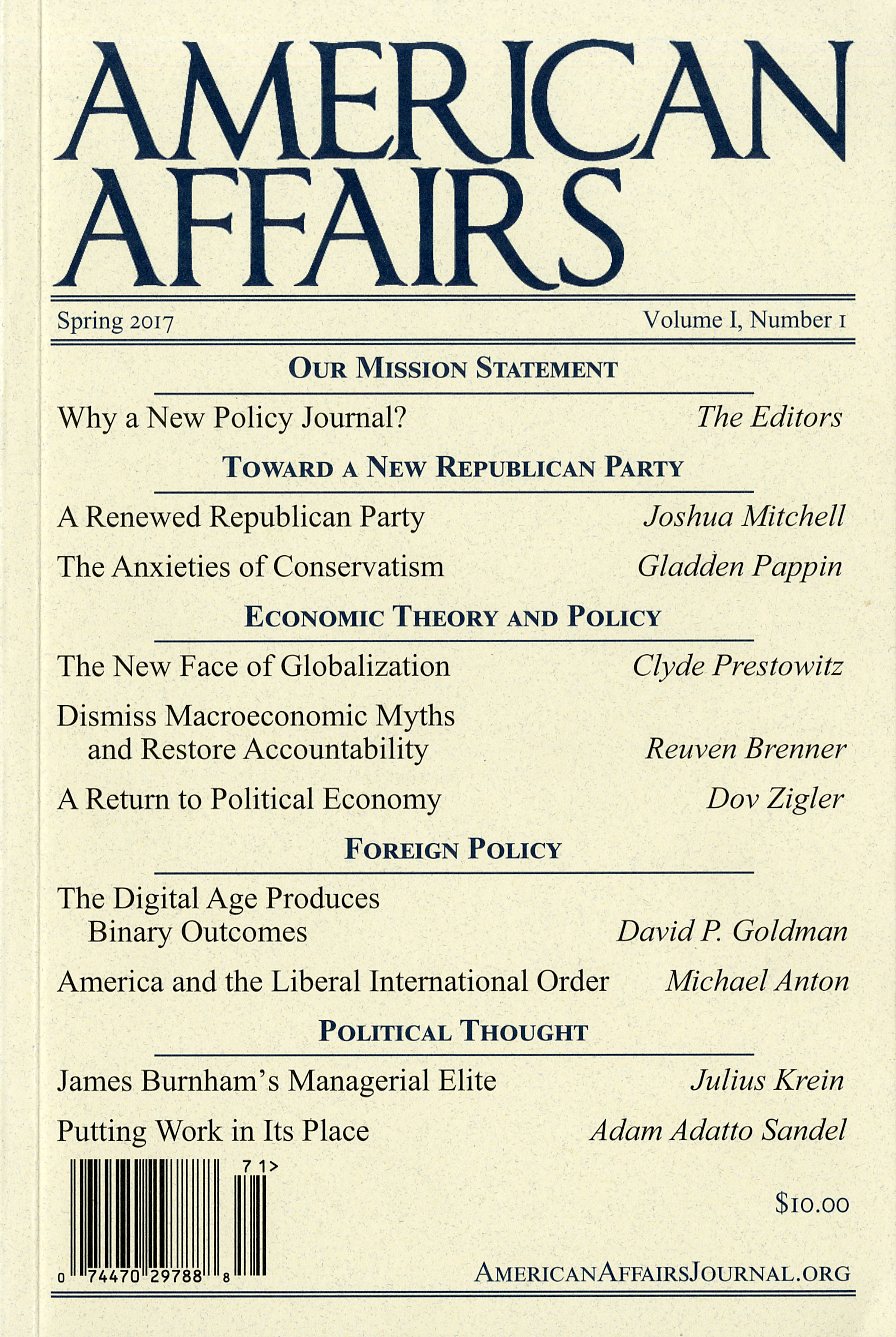
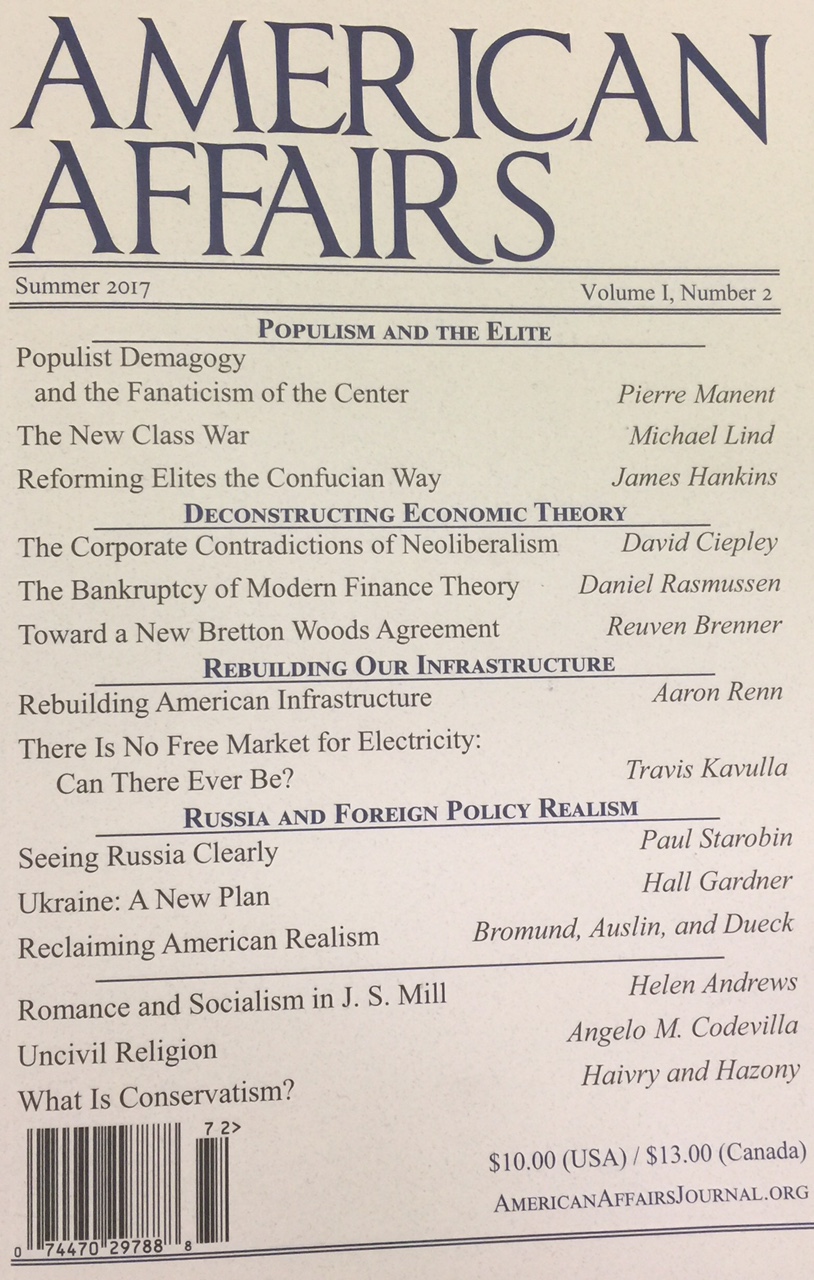
Samir Husni: Recently, I interviewed the founding editor of a new journal called American Affairs. And one of the things that he told me was that because of the status of the media today, they felt the need to add a printed magazine to what originally started as a blog. And the status of media today being called everything from fabricated news to alternative facts to fake news. So, there is a need and a necessity.

Yassin Fawaz: I’ll say something to you to answer your question on the issue of print, which I think is obviously a very good question. I still believe that print is very important and there are a lot of reasons why that’s true. A lot of people would ask why go print when today you have so many media outlets that are obviously online. Why do you think they’re online?

As robust as online media is, I’m still an old-school guy in many ways. Nothing compares to having your hands on a physical, glossy copy of an engaging magazine or newspaper. And really spending time delving into it. Part of the biggest problem with online news media is that it lives in your browser or your phone. And you have so many other notifications and distractions that are always going to get in your way.

But when you have a physical magazine or newspaper in your hand, two things happen. First is you have a unique connection to the medium; in fact, in some ways the content feel is right there in your hands. You’re forced to really sit down and think about it and just read. And you’re not distracted by so many other things. And I think that’s the primary reason that I believe print is important, because no matter how far technology goes, in my opinion, the only way that is conducive to reading and conducive to thinking and analyzing is by having it physically in your hand. And those are the two main activities that we want to encourage.

Samir Husni: With your online presence and the variety of content available; what’s the plan to convert that online audience to a print audience?

Yassin Fawaz: I think our plan is mainly through detailing the content as far as how we’re going to be transferring things out.

Samir Husni: As I look at the list for your board of experts, you have a variety of people who come from all over the world. From the former president of Latvia to the former vice president of Iraq, to the former private secretary and chief of staff to Princess Diana. How did you manage to put this mix together?

Yassin Fawaz: To simply put it, the Raddington Group has a very extensive network and that very extensive network has given us the ability to obviously make the best use of that network for the benefit of readers all around the world. And that has been key and has allowed the Raddington Report to be successful so far.

Samir Husni: Your tagline is “Change the World Through Conversation. Not Censorship.” What is the genesis of that?

Yassin Fawaz: The genesis of that is there are so many people in so many different parts of the world that are voiceless and they have no one to speak for them. In many of these countries, in faraway places that is away from the United States, there is the law of the jungle. And many publications many times overlook reporting on topics, because they are so political and they feel the topics are just too dangerous to cover. But considering our resources and our capabilities, and who we are and who we represent, we believe that we are now ready to be a voice for anybody out there who needs to be heard. We will stand up for them. We will support them and stand by their side.

Samir Husni: And if someone asks who is Yassin Fawaz, how would you answer?

Yassin Fawaz: My family formed my character and shaped the values that guide me. The three things that guide me as a person are integrity, professionalism and diligence. I have a very good understanding of the world. I’ve become very successful in my business, and that’s mainly due to the support that I’ve gotten from the upbringing that my family provided me. And ultimately I’d say, to describe me in simple terms, my main focus is prosperity and peace. That’s the cycle I want to see, because I believe that it’s a cycle that basically opposes corruption breeding terrorism.

Corruption breeding terrorism breeding corruption cycle, this is the biggest problem with the world today, and where too many regimes find themselves. And I’m a big global supporter and visionary that they must stand up and support the truth. That’s the whole motive and what I stand for as a person.

Samir Husni: What’s your background?

Yassin Fawaz: My background has really been focused on security, and I’ve done extensive research on a full range of issues. I’ve mainly used all of my expertise focusing on that to really make the Raddington Group a success. And that’s really been my background in simple terms.

Samir Husni: Is there anything else you’d like to add?

Yassin Fawaz: I think the world has been waiting for an on-the-ground source of diverse expertise to provide reporting on highly valuable information. The Raddington Report fills that space and meets that need. And there is no publication out there that gives insight from a head of state or national security experts, that gives the reader insight from established authors, and at the same time gives the ordinary person the ability to be heard. And I think that’s one of the main pillars; we’re a voice for everybody up and down the ladder.

Today, too much of the world is built on connections and for the ordinary person out there, if they’re not connected, believe me, their voice goes unheard.

Samir Husni: If I showed up unexpectedly at your home one evening after work, what would I find you doing? Having a glass of wine; reading a magazine; cooking; on your iPad; watching TV; or something else?

Yassin Fawaz: To be quite honest, I do a lot of reading. And a book that I continue to read over and over is “The Prince” by Machiavelli.

Samir Husni: My typical last question; what keeps you up at night?

Yassin Fawaz: There’s not much that keeps me up at night, because considering the sensitivity of what I do and just the overall scope of work that we’re involved with, I think we keep a lot of people up at night waiting to see the next move from us and waiting to see what we’re going to put out. (Laughs) I’m confident that within a few months we will have made a solid dent in addressing the problems of ridiculously high levels of partisan division.

Samir Husni: Thank you.
h1

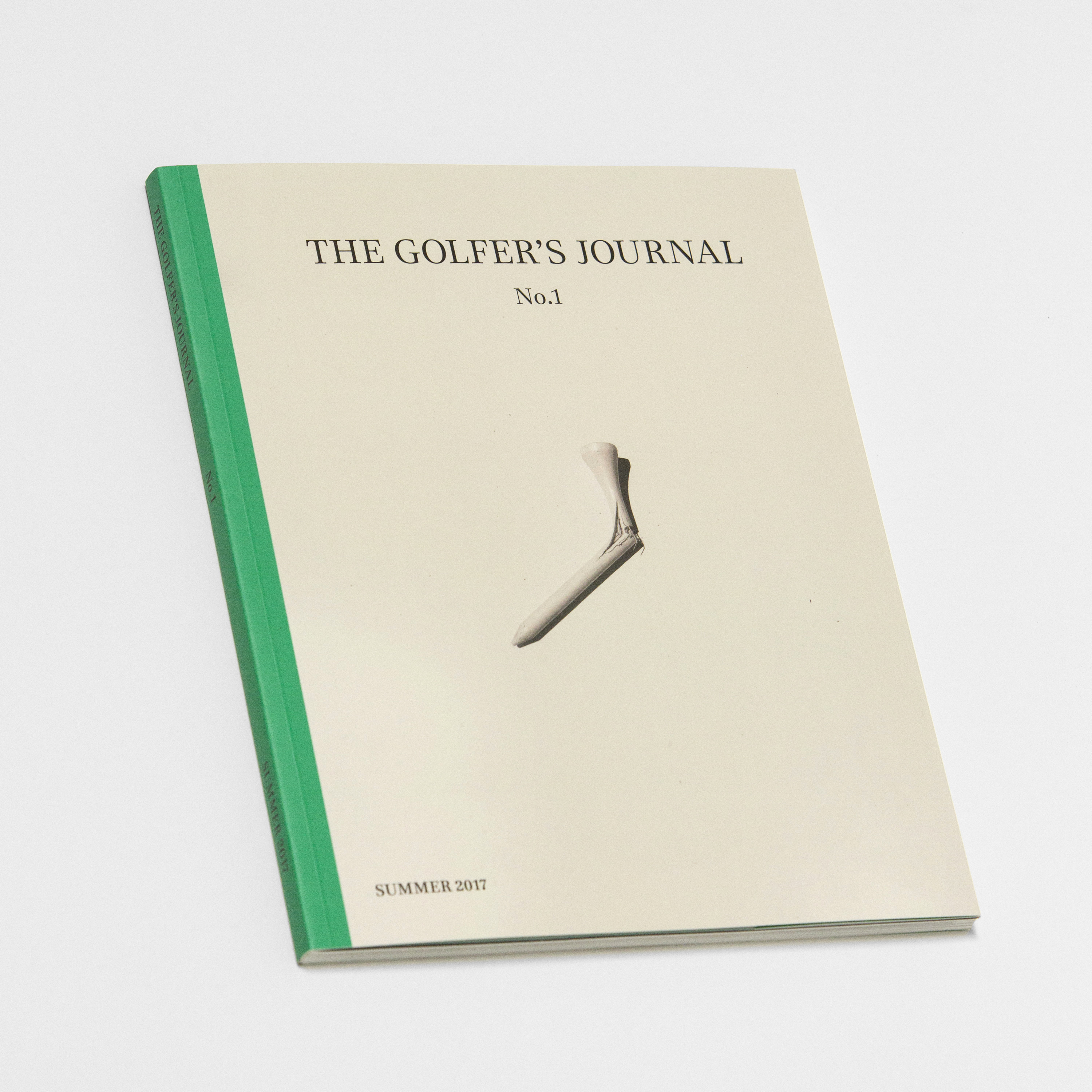
The Golfer’s Journal: A New Golf Magazine That Focuses On The Purity, Culture, History, And Places Of The Game – The Mr. Magazine™ Interview With Brendon Thomas, Publisher, The Golfer’s Journal…

July 26, 2017

A Mr. Magazine™ Launch Story…

“At the Journals we have a slightly different strategy, in that the digital exists to point people to our print products. And it’s a wonderful way to do that, because we can reach so many people and bring them into the fold. But we don’t have a digital version of the magazine. There is no place that you can get our content online, unless you are subscribing, in which case you have access to all of our archives digitally, so that you can download and read them. I found in my last position and here that it’s the same as if you were selling any other physical product; the website exists to sell that product.” Brendon Thomas…

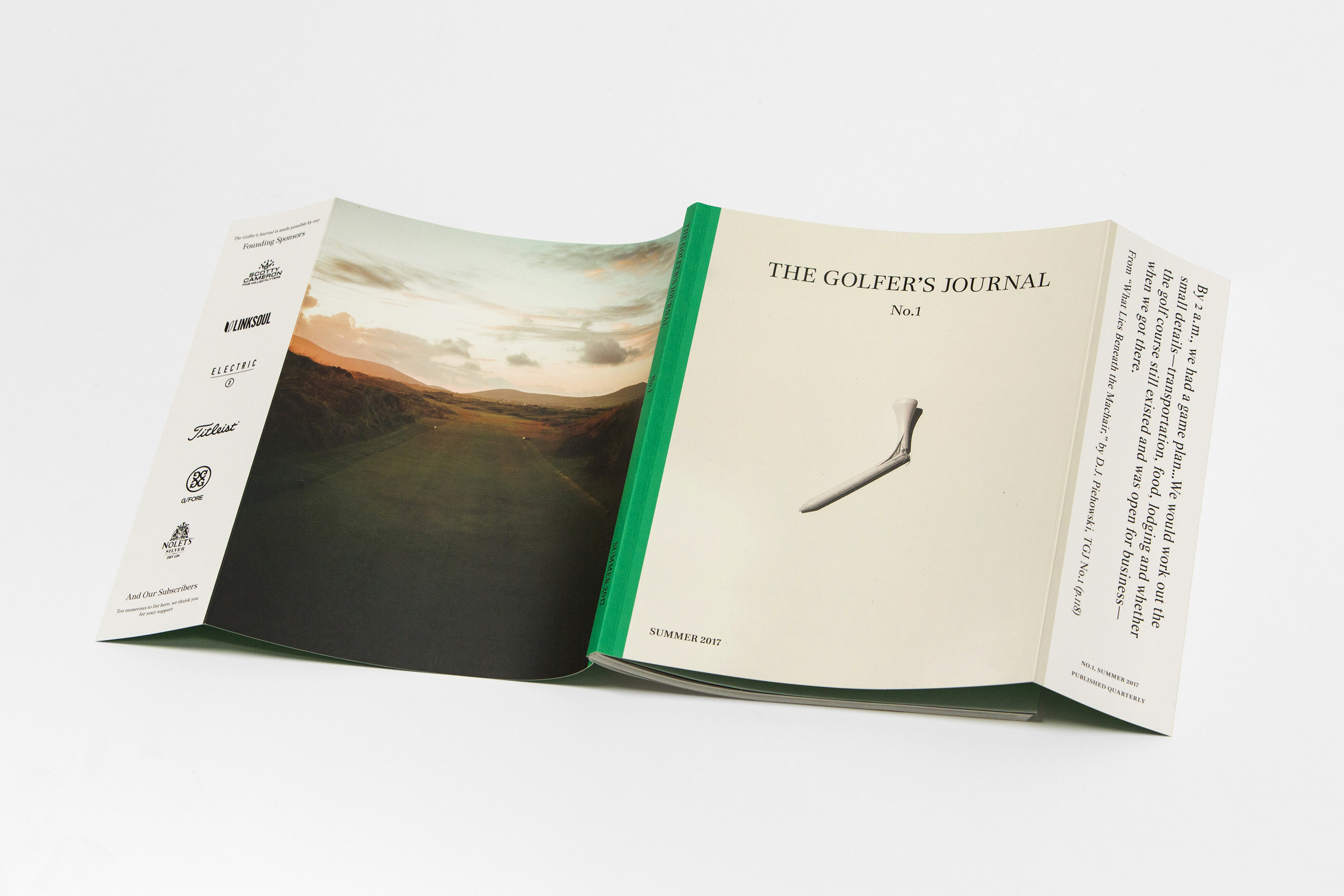
A new title about golf in its purest form. September will bring us the latest “journal” from the makers of The Surfer’s Journal, and if its premier issue is any indication, the magazine should be a stunner. The Golfer’s Journal makes its debut with a boxed presentation for VIP subscribers that’s also filled with goodies and promises of more to come down the road. Brendon Thomas, the magazine’s publisher, brings us his latest offering and does not disappoint. From the unique first edition to the commercially uncluttered pages that he promises within the magazine, The Golfer’s Journal aims to become the defining rallying point for people who want more from their golfing magazine than mere tips and celebrity statistics.

I spoke with Brendon recently and we talked about the business model that enables him to bring these amazing books to life. Half paid by the sponsors (not called advertisers by Brendon), and half paid by the consumers who support it, The Golfer’s Journal, not unlike its sister publication, The Surfer’s Journal, makes no apologies for its premium-priced content. Why? According to Brendon, because the magazine is worth it. By limiting the ads in the magazine, the pages are instead filled with insightful and creative content, pictures and artwork by some of the best in the business. It’s an escape that takes you into a world of golf unlike any you have known. The magazine strives for the true connoisseur of the sport and reaches a deeper level than most of its counterparts that are on the marketplace. And Brendon, an avid golfer himself, wouldn’t have it any other way.

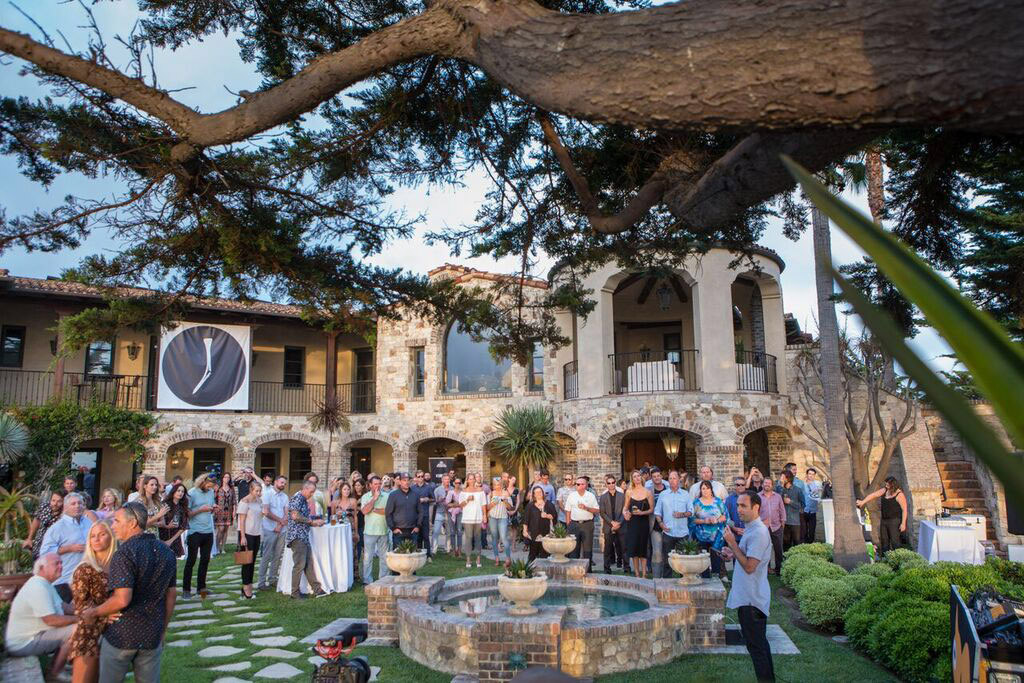
Brendon shared that The Golfer’s Journal recently held its launch party and a great and successful time was had by all, with the energy and excitement of everyone fairly palpable.

So, I hope that you enjoy this most delightful and insightful interview with a man who loves golf and surfing and who shares those passions eloquently through his magazines, the Mr. Magazine™ interview with Brendon Thomas, publisher, The Golfer’s Journal.

But first, the sound-bites:

On his thinking behind bringing a specialty magazine that covers a broad topic into the marketplace despite the negative things said by many: You hear a lot of things about the marketplace, but on the ground, that’s not what I’m seeing. All I have to go on is my experience with The Surfer’s Journal and that’s going exceptionally well. Subscriber base is growing; we’ve increased interest from advertisers and have a waiting list of people trying to sponsor our Journal.

On the response he’s received already from the magazine: We had pretty modest goals, frankly, since we’re primarily in the surf space. I’m an avid golfer with a lot of connections in the golf industry, but that’s mostly due to my position at Surfer Magazine before. So, we didn’t expect to get the interest and traction that we’ve received so far. As far as quantifying it is concerned, we’re printing 30,000 for the first issue and half of that print-run is accounted for already.

On which he enjoys more, being an avid golfer or being the publisher of a golf magazine: (Laughs) Obviously, being a golfer. I absolutely love the game. I’m a low, single-digit handicap player, whose handicap has gone a bit higher since I’ve had children. And since I decided to start a golf publication; I’m not getting out as much. But there’s a lot of similarities between golfing and surfing. I love both of them. I’d rather be playing golf everyday if I had a choice. But we have to make a living.

On any major stumbling block he thinks he might face as he moves forward with the magazine and how he plans to overcome it:
Distribution will be difficult, and awareness. Obviously, with social media platforms, we can get a lot more awareness going quickly, but the selling point of these books, apart from the great editorial, is the physical product. To really understand how cool they are, you have to hold one. In The Golfer’s Journal, there are far more solutions to that problem than there are in The Surfer’s Journal. There are existing clubs and charity golf tournaments; lists of people who are avid golfers and who are members of country clubs and golfing communities. So, our plan to overcome that problem is to form a coalition with these clubs and communities to share our interests and our golf and enlighten them to our rare product.

On the magazine’s business model (the very high cover price) and his practice of calling advertisers sponsors: As you and I know as magazine geeks, there’s obviously ways to cover the costs of your production through selling physical copies. We have found a balance between having our sponsors underwrite a lot of the costs of production, not all of it. We call them sponsors because they don’t just appear in print, they appear on every, single thing we do. They’ve got a logo on every page of our website; they’re at the events we hold; they’re on the bumpers of our videos online. They have the call-out on the cover flap; they’re listed on the masthead as sponsors. The reason why the price is so high is that we’ve found that there are a lot of readers who are tired of the commercialism in magazines and who are tired of how many ads they have to sift through to find the editorial.

On being Print Proud, but Digital Smart at the same time: I come from a digital background. I was a computer programmer before I got into editing and publishing, so I’m very intensely aware of the pitfalls and the benefits of digital media. My previous position at Surfer Magazine; we took a more traditional approach to kind of blending the two and monetizing each vertical and treating them both almost as separate entities under the same brand umbrella. At the Journals we have a slightly different strategy, in that the digital exists to point people to our print products. And it’s a wonderful way to do that, because we can reach so many people and bring them into the fold.

On the premier boxed issue of The Golfer’s Journal, which costs $150:
Essentially, the way we’ve framed it is the same as in public radio or something. You become a benefactor of this reader-supportive project. It’s like a Kickstarter campaign, people are pledging money and in return they’re going to get some benefits by doing so. What we’ve done for the premier issue is we’ve created a really beautiful box that the issue will come in. We have one of our sponsors, G/Fore, has done a Golfer’s Journal glove with our logo on it. We have a hand-forged ball marker that will come inside the box. And they’re all presented beautifully inside the premier issue.

On whether he’s trying to form a community where, other than the game of golf itself, the magazine will be a magnet for them: Yes, I think so. We’ve found the same thing with The Surfer’s Journal; we have this inner circle of people who love the sport so much and the magazine is kind of the rallying point for them to coalesce around. In golf, there are a lot of those types of things. There are clubs and societies; book clubs and those sorts of things that really exist around the game. We want to create one that’s similar to that.

On whether he thinks of The Golfer’s Journal as being more a cause than a business: Yes, absolutely. We’re doing our best here to kind of stop the scourge of anti-intellectualism. We’ve been making a surf magazine for 26 years and when you think of surf magazines, you don’t think of great literature, but that’s what The Surfer’s Journal has really set itself apart with. It’s this fantastic writing, interesting characters, and highlighting people who are doing terrific art and really elevating the conversation.

On whether the VIP subscription to receive the boxed first edition has a deadline:
No, what will happen is it will morph into a premium subscription after the founding, so the founding subscribers will remain the founding subscribers, they are the people who came in on the ground floor and contributed and helped get the thing off the ground. But as we come out with the second and third issue, that will change into a premium subscription and the offering will essentially be the same.

On anything he’d like to add:
The first issue will be shipping out the first of August; it will be in our hands the first or second week of August, and then we will be shipping it out to subscribers. Also, one of the interesting things about this process, and it’s been going on for 18 months now to make this first issue, has been the willingness of really topnotch writers, photographers and artists to take part. We haven’t had one person that we’ve approached to say no, and say that this is not something they want to be a part of. They have all leapt at the opportunity to contribute and become part of the family.

On what he would have tattooed upon his brain that would be there forever and no one could ever forget about him:
My number one thing is I want to deal honestly with everyone I work with, and to deliver on what I promise. That’s basically my number one goal.

On what keeps him up at night: Everything. Starting a new title is scary and there’s so much that goes into it. We’re not just a print publication, obviously. We have social arms and digital arms and the mechanism that runs the business has to constantly be refined and upgraded. So, it’s not a simple thing. There are moments where I’m wildly optimistic about what we’re putting together and how well our titles are doing. And then there are other moments where there is always uncertainty.

And now the lightly edited transcript of the Mr. Magazine™ interview with Brendon Thomas, publisher, The Golfer’s Journal.

Samir Husni: Some people today, when they hear about a new magazine coming, especially in print, they are quick to qualify it as very niche or some sort of limited edition. They say the future for big print that deals with big subjects is really non-existent anymore. Yet, you’re coming out with; yes, a specialty magazine, The Golfer’s Journal, but by the same token, it’s not a tiny topic. What was your thinking behind bringing The Golfer’s Journal into the marketplace?

Brendon Thomas: You hear a lot of things about the marketplace, but on the ground, that’s not what I’m seeing. All I have to go on is my experience with The Surfer’s Journal and that’s going exceptionally well. Subscriber base is growing; we’ve increased interest from advertisers and have a waiting list of people trying to sponsor our Journal.

And I have been working on this idea for five or six years now. Seeing all of the stars align by being at The Surfer’s Journal and seeing its continued success, and seeing what appears to be a giant gap in the market in golf, which is to say, there aren’t any magazines like The Surfer’s Journal in the golf space. There are one or two premium publications, but they’re littered with advertising. And they cater to a really elite, affluent audience exclusively.

So, we wanted to create something that is The Surfer’s Journal for golf, which is to say that it’s a beautiful publication that is half book, half magazine. The subject matter appeals to a broad readership, but it’s also very focused on the purity of the game. We don’t deal with offering swing tips and game improvement tips and celebrity profiles, and those sorts of things; golf is a lot more than that.

All the major publications seem to copy each other and do the same thing over and over again. So, we wanted to create something that celebrates the game for all of its diversity. And celebrate the photography, which is gorgeous and often underrepresented in other publications. As well as celebrate the culture around the game; the art that’s inspired from the game, and the people. There are so many interesting people who play golf and who are in the game neck-deep. So, we’re trying to provide avenues to tell those stories. And so far, the response has been fantastic.

Samir Husni: And since you announced the launch of The Golfer’s Journal, you just mentioned that the response has been fantastic, could you quantify that statement a bit more?

TGJ Launch Party

Brendon Thomas: Sure. We had pretty modest goals, frankly, since we’re primarily in the surf space. I’m an avid golfer with a lot of connections in the golf industry, but that’s mostly due to my position at Surfer Magazine before. So, we didn’t expect to get the interest and traction that we’ve received so far. As far as quantifying it is concerned, we’re printing 30,000 for the first issue and half of that print-run is accounted for already.

Samir Husni: You said that you’re an avid golfer, and I saw your title on The Golfer’s Journal as the publisher; which of the two hats do you enjoy more, being a publisher of a golf magazine or being a golfer?

Brendon Thomas: (Laughs) Obviously, being a golfer. I absolutely love the game. I’m a low, single-digit handicap player, whose handicap has gone a bit higher since I’ve had children. And since I decided to start a golf publication; I’m not getting out as much. But there’s a lot of similarities between golfing and surfing. I love both of them. I’d rather be playing golf everyday if I had a choice. But we have to make a living.

And I also want to create something about the game that preserves its history and celebrates the gifts of golf that never see the light of day. The game is ancient and people have been writing about it for hundreds of years. So, there’s a lot of ground to cover and that sort of thing isn’t presented in a way that can be kept; in a tone that will last as it’s presented in some publications. Those publications are generally monthlies that are discarded when they’re finished being read. And as we’ve found with The Surfer’s Journal, our journals don’t get thrown away; they are kept on bookshelves and on coffee tables for years.

Samir Husni: What do you envision as the major stumbling block that’s going to face you as the magazine moves forward and how do you plan to overcome it?

Brendon Thomas: Distribution will be difficult, and awareness. Obviously, with social media platforms, we can get a lot more awareness going quickly, but the selling point of these books, apart from the great editorial, is the physical product. To really understand how cool they are, you have to hold one. And the same is true for The Surfer’s Journal. That’s a challenge, because these books are costly to produce and we don’t give discounts or give them away for free.

So, we have to find clever ways to get them into people’s hands so they can experience it. And really understand the quality of the paper; the quality of the photography; the quality of the writing; and the exceptional layout and design. It’s getting copies into people’s hands.

In The Golfer’s Journal, there are far more solutions to that problem than there are in The Surfer’s Journal. There are existing clubs and charity golf tournaments; lists of people who are avid golfers and who are members of country clubs and golfing communities. So, our plan to overcome that problem is to form a coalition with these clubs and communities to share our interests and our golf and enlighten them to our rare product.

Samir Husni: As you mentioned, the magazine is not cheap; you’re charging a premium price and you’re doing a unique presentation of the premier issue that comes out in September. Can you tell me a bit more about your pricing strategy, which is also a part of the business model of The Surfer’s Journal? And tell my readers how you refer to the advertisers as sponsors instead of advertisers.

Brendon Thomas: As you and I know as magazine geeks, there’s obviously ways to cover the costs of your production through selling physical copies. We have found a balance between having our sponsors underwrite a lot of the costs of production, not all of it. We call them sponsors because they don’t just appear in print, they appear on every, single thing we do. They’ve got a logo on every page of our website; they’re at the events we hold; they’re on the bumpers of our videos online. They have the call-out on the cover flap; they’re listed on the masthead as sponsors. So really, it’s an all-encompassing sponsorship of a brand. Everything we do, we’re out there representing those brands and delivering their message.

The reason why the price is so high is that we’ve found that there are a lot of readers who are tired of the commercialism in magazines and who are tired of how many ads they have to sift through to find the editorial. And they’re willing to pay for their commercially-quiet experience. And simply put, that’s what it’ll cost us to provide that for them. With our sponsors paying a part of it and our readers paying the rest to cover the cost of the publication of these books.

Samir Husni: The theme of my 2018 ACT Experience is Print Proud, Digital Smart. And if I could think of one entity that actually manifests itself in that way, it would be The Surfer’s Journal and soon The Golfer’s Journal. You don’t shy away from being proud of your print product, but you also have a very smart digital strategy.

Brendon Thomas: I come from a digital background. I was a computer programmer before I got into editing and publishing, so I’m very intensely aware of the pitfalls and the benefits of digital media. My previous position at Surfer Magazine; we took a more traditional approach to kind of blending the two and monetizing each vertical and treating them both almost as separate entities under the same brand umbrella.

At the Journals we have a slightly different strategy, in that the digital exists to point people to our print products. And it’s a wonderful way to do that, because we can reach so many people and bring them into the fold. But we don’t have a digital version of the magazine. There is no place that you can get our content online, unless you are subscribing, in which case you have access to all of our archives digitally, so that you can download and read them. I found in my last position and here that it’s the same as if you were selling any other physical product; the website exists to sell that product. That’s the strategy we’re taking with the Journals.

And the best way to advertise that product is to put out good content on the websites and make sure that it’s showing what’s unique about our offering, but not showing all of it. To get the entire story, you have to be a subscriber.

Samir Husni: Tell me more about the premier issue due out in September. It’s in a box and for people to get it they will have to pay $150.

Brendon Thomas: Essentially, the way we’ve framed it is the same as in public radio or something. You become a benefactor of this reader-supportive project. It’s like a Kickstarter campaign, people are pledging money and in return they’re going to get some benefits by doing so.

What we’ve done for the premier issue is we’ve created a really beautiful box that the issue will come in. We have one of our sponsors, G/Fore, has done a Golfer’s Journal glove with our logo on it. We have a hand-forged ball marker that will come inside the box. And they’re all presented beautifully inside the premier issue.

Afterward, our premier subscribers will be basically on our VIP list, so when we hold an event in your city in September, all of our premier subscribers will be invited. We will be surprising some subscribers with tickets to other events. There’s no competition, they’ll just get surprised with tickets to another premier event.

Also, we know that those premier subscribers are the most avid golf supporters and fans, so they are going to become benefactors of some of our sponsors’ products, such as Targus when they send out golf balls to test, and other different items. So, they really are being brought into this elevated little club, that is similar in some ways to luxury magazines that will send you out of the blue a little gift from one of their advertisers. One of our sponsors may be sending some subscribers a gift throughout the year. So, we really want to treat those people well and say thank you for their belief and support in us and they do get benefits in return.

Samir Husni: In addition to creating the magazine, I have a feeling from just hearing you talk, that you’re also trying to form a community group where, besides the game itself, The Golfer’s Journal will be the magnet for them?

Brendon Thomas: Yes, I think so. We’ve found the same thing with The Surfer’s Journal; we have this inner circle of people who love the sport so much and the magazine is kind of the rallying point for them to coalesce around.

In golf, there are a lot of those types of things. There are clubs and societies; book clubs and those sorts of things that really exist around the game. We want to create one that’s similar to that. And that’s why I’ve been so surprised by the response, because really that community has taken shape pretty quickly. Surprisingly. There wasn’t a lot put out into the world, and suddenly all of these very interesting characters starting coalescing around our cause, which reinforces my belief that this thing was missing from the game. And that people were searching for this type of thing. So, that’s very encouraging.

Samir Husni: As a publisher, you’re talking about a cause much more than you’re talking about a business plan.

Brendon Thomas: Yes, absolutely. We’re doing our best here to kind of stop the scourge of anti-intellectualism. We’ve been making a surf magazine for 26 years and when you think of surf magazines, you don’t think of great literature, but that’s what The Surfer’s Journal has really set itself apart with. It’s this fantastic writing, interesting characters, and highlighting people who are doing terrific art and really elevating the conversation.

We don’t believe we have to play to the lowest common denominator, and get thousands or millions of subscribers. That’s not what we’re after. We want to get the people who are looking for an elevated experience, and for people who want to read great writing, and be enlightened and learn something, and to find a new way to appreciate the game of golf.

Samir Husni: Will the VIP subscription close? Is there a deadline for receiving the boxed, first edition?

Brendon Thomas: No, what will happen is it will morph into a premium subscription after the founding, so the founding subscribers will remain the founding subscribers, they are the people who came in on the ground floor and contributed and helped get the thing off the ground. But as we come out with the second and third issue, that will change into a premium subscription and the offering will essentially be the same.

Samir Husni: Is there anything else that you’d like to add?

Brandon Thomas: The first issue will be shipping out the first of August; it will be in our hands the first or second week of August, and then we will be shipping it out to subscribers.

Also, one of the interesting things about this process, and it’s been going on for 18 months now to make this first issue, has been the willingness of really topnotch writers, photographers and artists to take part. We haven’t had one person that we’ve approached to say no, and say that this is not something they want to be a part of. They have all leapt at the opportunity to contribute and become part of the family. The incredible talent that we’ve brought in has been mind-blowing. We’ve got authors of books and famous photographers, notorious editors and writers. And also great artists; all who have contributed in the first and second issue. That’s been great, and it’s been really fun to work with all of those people from what to me is an entirely different industry, having spent the last 12 to 15 years in Surf.

Samir Husni: If you could have one thing tattooed upon your brain that no one would ever forget about you, what would it be?

Brendon Thomas: My number one thing is I want to deal honestly with everyone I work with, and to deliver on what I promise. That’s basically my number one goal.

Samir Husni: My typical last question; what keeps you up at night?

Brendon Thomas: Everything. Starting a new title is scary and there’s so much that goes into it. We’re not just a print publication, obviously. We have social arms and digital arms and the mechanism that runs the business has to constantly be refined and upgraded. So, it’s not a simple thing. There are moments where I’m wildly optimistic about what we’re putting together and how well our titles are doing. And then there are other moments where there is always uncertainty. The world is a pretty uncertain place at the moment. And we’re just not sure what’s going to happen next.

Samir Husni: Thank you.

h1

Meredith Core Media: A Strong Belief In Print As Its “Core” Business With Several New Titles To Prove It, And More On The Way – The Mr. Magazine™ Interview With Doug Kouma – Editorial Content Director, Meredith Core Media. A Mr. Magazine™ Exclusive…

July 5, 2017

Two New Magazines, Hungry Girl, Waste Less, Save More, To Join Eat This, Not That, The Magnolia Journal, And Forks Over Knives, In Meredith Core Media’s Stable Of New Shining Print Stars…

“I actually think the tangible magazine you can hold in your hands is a feather in the cap for a digital-first brand. It’s what says, “We’ve made it. We’re here to stay. We’re legitimate.” And, almost counterintuitively, I suspect a lot of that is being driven by millennials. For as digitally savvy, and as digital-first a generation as millennials and Gen Z’s are, there’s also this yearning for authenticity and for something real. Again, I think it’s based on the type of content. I think with that generation in particular. It’s not fair at all to say millennials aren’t magazine readers. They’re magazine readers, but they want different types of magazines and want to consume information in different ways.” Doug Kouma…

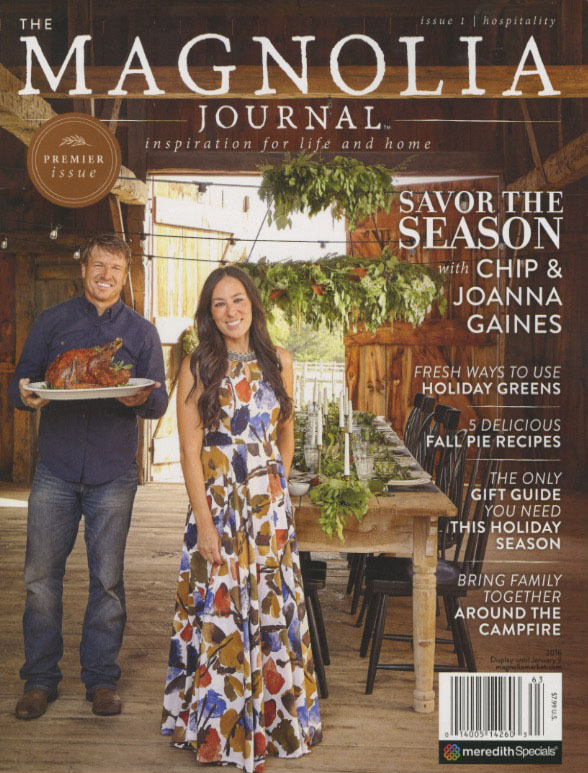
When a company puts print first, or at least at its core, no matter what the negatively-slanted pundits might say, in Mr. Magazine’s™ humble opinion, the future will be rosy indeed. Last week I wrote about Hearst Magazines and their print proud philosophy, today I am proud to highlight Meredith Corporation’s Meredith Core Media group. The group helped launch The Magnolia Journal, and with its recent phenomenal success the magazine is now been brought into the bigger fold of the Meredith Corporation. Meredith Core Media is enjoying a definite print prosperity.

From the early beginnings of the successful Eat This, Not That brand, where Meredith partnered with David Zinczenko’s Galvanized Media Group, to their extremely beneficial Chip and Joanna Gaines association, Meredith Core Media has proven that affiliations with other successful brands can certainly be major opportunities for the realms of print. And the company’s editorial content director, Doug Kouma, believes that wholeheartedly.

I spoke with Doug recently and we talked about Meredith Core Media’s success with The Magnolia Journal and its past accomplishments with Eat This, Not That, and also about the Beekman 1802 Almanac, which was a beautiful attempt to bring the unique brand to the mass market audience. From successes to even the shorter-lived achievements, Meredith Core Media has always put print at the helm of its ship and never strayed off course.

And the mission continues, as in January, 2018, the company will partner with former Food Network channel star, Hungry Girl (Lisa Lillien) to bring Hungry Girl Magazine’s premier issue to the marketplace.

And they will be partnering with the CropLife Foundation on a new magazine that will bring attention to the issue of food waste, a hot topic in sustainability circles today. Tentatively titled “Waste Less, Save More,” this annual bookazine will provide real-world strategies for planning, shopping, and cooking, as well as 50+ recipes, to help consumers use more of the food they bring into their homes and cut back significantly on what goes into to the landfill.

It doesn’t sound like print is declining in Meredith’s world at all. And according to Doug, it’s more relevant than ever, even with millennials. So, enjoy this informative interview with a man who believes the tangible nature and power of print is still a legitimizing factor in the world of media, across all platforms; the Mr. Magazine™ interview with Doug Kouma, editorial content director, Meredith Core Media.

But first, the sound-bites:

On defining Meredith Core Media: It’s something that’s evolved over the last couple of years out of Meredith Special Interest Media. I think it was three years ago that we first entered into a partnership with the Eat This, Not That brand; that’s David Zinczenko’s brand through his Galvanized Media Group. We launched a bookazine with them. At the time, the bookazine format was for—and I don’t want to use the phrase “lookbook,” but that’s kind of where we were using it—a high end décor and building side. This was a new opportunity to try something in a high quality format that was really mass market-driven and really service-driven.

On why many publishers have lost faith in print, while companies like Meredith and Hearst have never given up on their “core” product: I think it requires a change of mindset in many cases. We’re not out there trying to launch a $3.99 general interest magazine with anyone. In a lot of cases, these products are pretty niche, they already have a pretty loyal brand following, and they’re premium products. I don’t always think of them as magazines in the traditional sense of the word “magazine,” something you have sent to your home or you purchase, you sit down with it for half an hour or an hour, and then you’re pretty much done; you move on. That’s not what these are.

On how The Magnolia Journal came into being: The idea started as a seed with Joanna herself, with both Chip and Jo believing that they had a concept here that their consumers would respond positively to, and that would be unique in the marketplace. But, they didn’t have anyone on staff who had really worked in the publishing industry, or really knew anything about it.

On any conflicts that may have arisen between the Gaines, “Fixer Upper” and Meredith: As we were conceptualizing the magazine with her, we had to get our heads around what the Magnolia brand meant versus what the “Fixer Upper” brand was, and how we knew them from that show. Magnolia is far broader and encompasses far more aspects of the lifestyle, from food and gardening, to family relationships, to travel. Because of their relationship then with Scripps we were restricted in some ways, in terms of how much home and remodeling content could be a part of the magazine. I can’t say that really tied our hands, because Joanna’s vision was for something broader than that.

On whether he has a favorite “baby” or is he proud of all of the magazine children under his care at Meredith: I would say that, obviously, everybody here is really proud of the success of The Magnolia Journal, it was—I don’t like to use the cliché phrase labor of love—but I think that’s what it was for a lot of that team. I guess if I had to identify one that kind of holds a special place for me, it would probably be the Forks Over Knives launch. It was a content area where we saw a need in the marketplace. One of the leading—if not the leading—brand in the plant-based eating lifestyle, and to see how that came together and to see how successful it was on newsstand, and how it did it quietly, as some higher profile projects were hitting the marketplace around it…it’s just pretty cool to see something like that.

On whether any of his “children” have disappointed him: Yes, I would say the Beekman 1802 Almanac, mostly because I love that product. I loved working on it—Josh (Kilmer-Purcell) and Brent (Ridge) are fantastic guys to work with. We had a great time putting it together, and there’s still a little bit of sadness there that we couldn’t figure out, in the limited time we had available to us, how to make that product work in the mass market.

On any new projects in Meredith’s future: We’ve got a couple of irons in the fire that are pretty hot. Hungry Girl, who is a former Food Network personality, a cookbook author; she’s got a really good digital and social presence; we are launching a new magazine with her. It’ll be Hungry Girl magazine, coming out in January, 2018. That’s the newest launch that we’re really in the thick of right now.

On why he thinks media reporting is always so negative about the magazine industry: I don’t know. That’s a good question. I haven’t spent a lot of time thinking about it, but I would say it probably requires a shift in mindset. You can’t even say that the big brands, the Better Homes & Gardens of the world, are necessarily struggling from a consumer standpoint. I think they’re just as relevant as ever. The rate base is just as strong as it’s ever been. When I’m cooking, I’ve learned that I don’t like to cook by trying to read a recipe on my phone or my computer, because I have to scroll back and forth and my fingers are dirty and it’s messy and it’s not convenient and I spill something. I’d rather have a magazine or a cookbook in those cases.

On whether he believes print legitimizes online media and that’s why many blogs and websites are adding a print product to their portfolios: Yes, I think actually the tangible magazine you can hold in your hands is a feather in the cap for a digital-first brand. It’s what says, “We’ve made it. We’re here to stay. We’re legitimate.”

On anything else he’d like to add: Just that we’re seeking out ideas on our own, but we’re always happy to have inbounds as well. If somebody out there has got a great concept and wants to float it our way, we’re happy to have those conversations. And, if it’s not right for us, maybe help identify who it is right for. That’s part of all of this; we’re really passionate about this. A good idea is a good idea, and I always like to see that come to fruition—whether it’s with us or someone else.

On what someone would find him doing if they showed up unexpectedly at his home one evening after work: You will catch me cooking dinner—that’s kind of my unwind. I specifically cook something several days a week, usually with a glass of wine. I’m pretty passionate about my California Sonoma County wines. You’ll see me taking my dog out for a walk. You probably won’t see me reading magazines at home.

On what he would have tattooed upon his brain that would be there forever and no one could ever forget about him: I would like to believe that people view me as honest, kind and authentic.

On what keeps him up at night: I think the future; the future of the industry; my own personal future. I think we’re doing a little bit of reinvention here, and that doesn’t mean everything’s a success. It’s human nature, and it’s my nature especially, to want to succeed at what we’re doing. And that just doesn’t always happen. So, I think it’s worry about whether we can really make some of these things work.

And now the lightly edited transcript of the Mr. Magazine™ interview with Doug Kouma, editorial content director, Meredith Core Media.

Samir Husni: Tell me, what is Meredith Core Media?

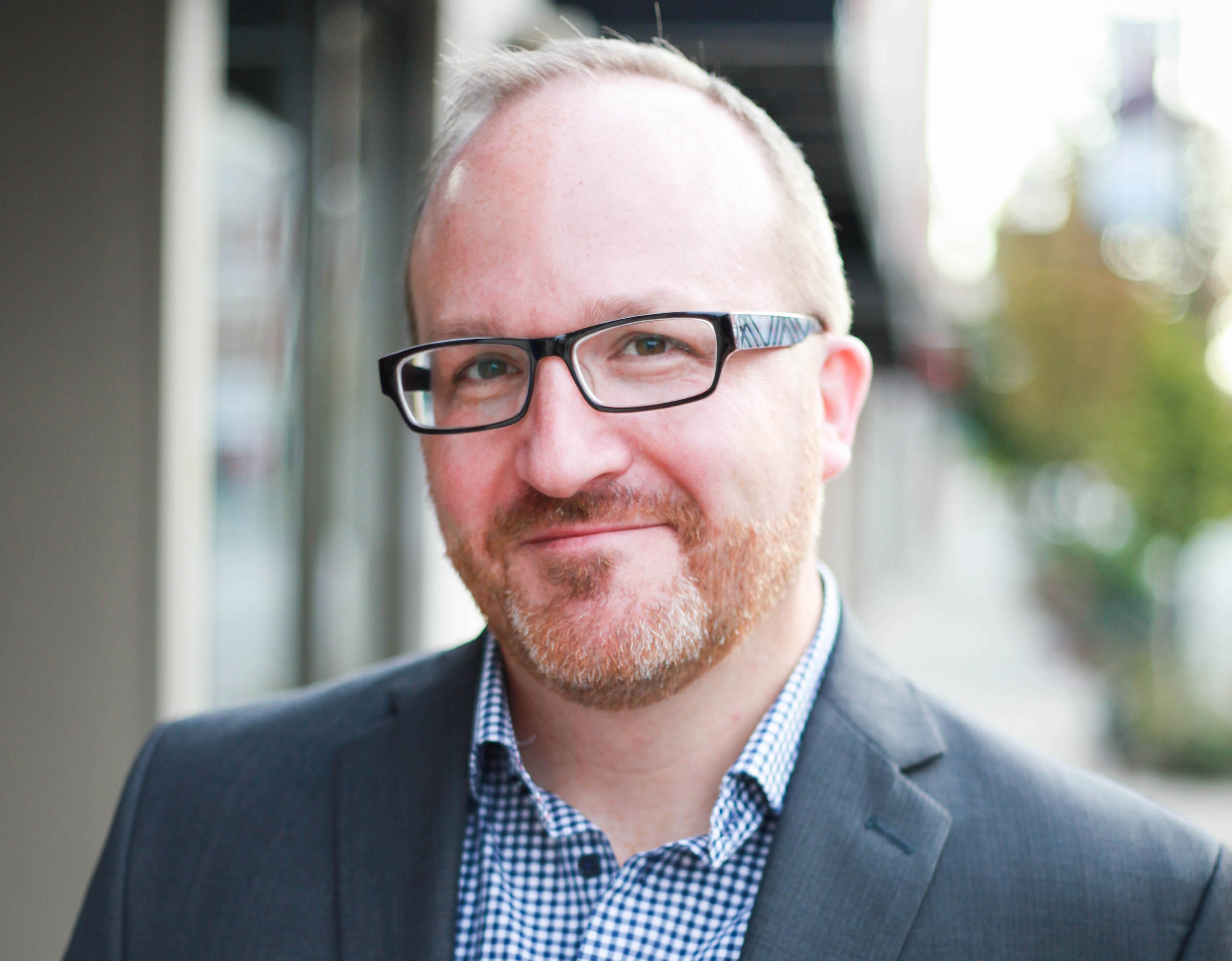
Doug Kouma speaking at the ACT 7 Experience, April 2017.

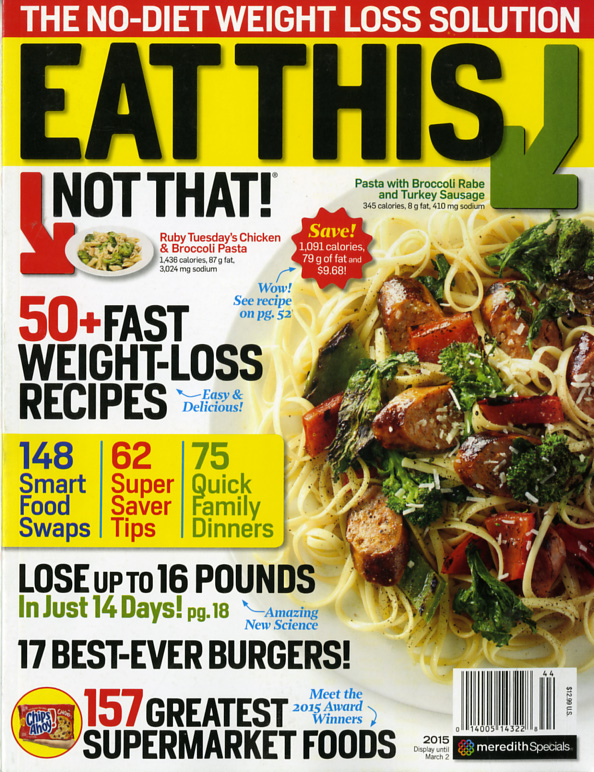
Doug Kouma: It’s something that’s evolved over the last couple of years out of Meredith Special Interest Media. I think it was three years ago that we first entered into a partnership with the Eat This, Not That brand; that’s David Zinczenko’s brand through his Galvanized Media Group. We launched a bookazine with them. At the time, the bookazine format was for—and I don’t want to use the phrase “lookbook,” but that’s kind of where we were using it—a high end décor and building side. This was a new opportunity to try something in a high quality format that was really mass market-driven and really service-driven.

That magazine, Eat This, Not That, has books publishing around that, and David Zinczenko has a pretty robust digital program around that; but the magazine is what fleshed that out and allowed it to be a true 360 brand. That was successful from issue one. It’s been solid on newsstand over the years. The product has continued to evolve as they, and we, figured out what that mass market consumer is looking for in that type of product at that price point.

That relationship began to show the possibilities of working with other brands, working with third parties who had great ideas or had great existing products in other spaces, and who sought to move into the print magazine space.

What Meredith brings to the table is huge scale on the backend, and some significant cost efficiencies, in terms of the printing production and distribution. Then, of course, by working through the special interest media group, we have traditionally had a team of scrappy editors who work on a wide variety of projects—who are pretty nimble, who are able to pivot from one to another across a variety of content areas.

So, we began to look at other opportunities and others began to look at us as a potential publishing partner. I would say over the course of a year / year and a half, that grew to the point that we identified the need to create a group within Meredith that would specifically take on or manage some of these projects. That’s where Meredith Core Media was born.

At the time, it also included some other Meredith brands that were unique properties unto their own; I’m talking about our diabetes publications, our quilting publications, things that didn’t necessarily align nicely with Better Homes & Gardens, which is where most of the special interest portfolio was.

At the time that Meredith Core Media was born, those were part of our group as well. I’d say it was about half managing our own brands, and half managing or working with outside partner brands. And, again, that continues to evolve over the next year / year and a half to where we are today. Those Meredith brands have realigned with other properties within the Meredith infrastructure that makes sense for them. What Meredith Core Media is today is a business entity specifically designed to work without side-brands on print magazine products.

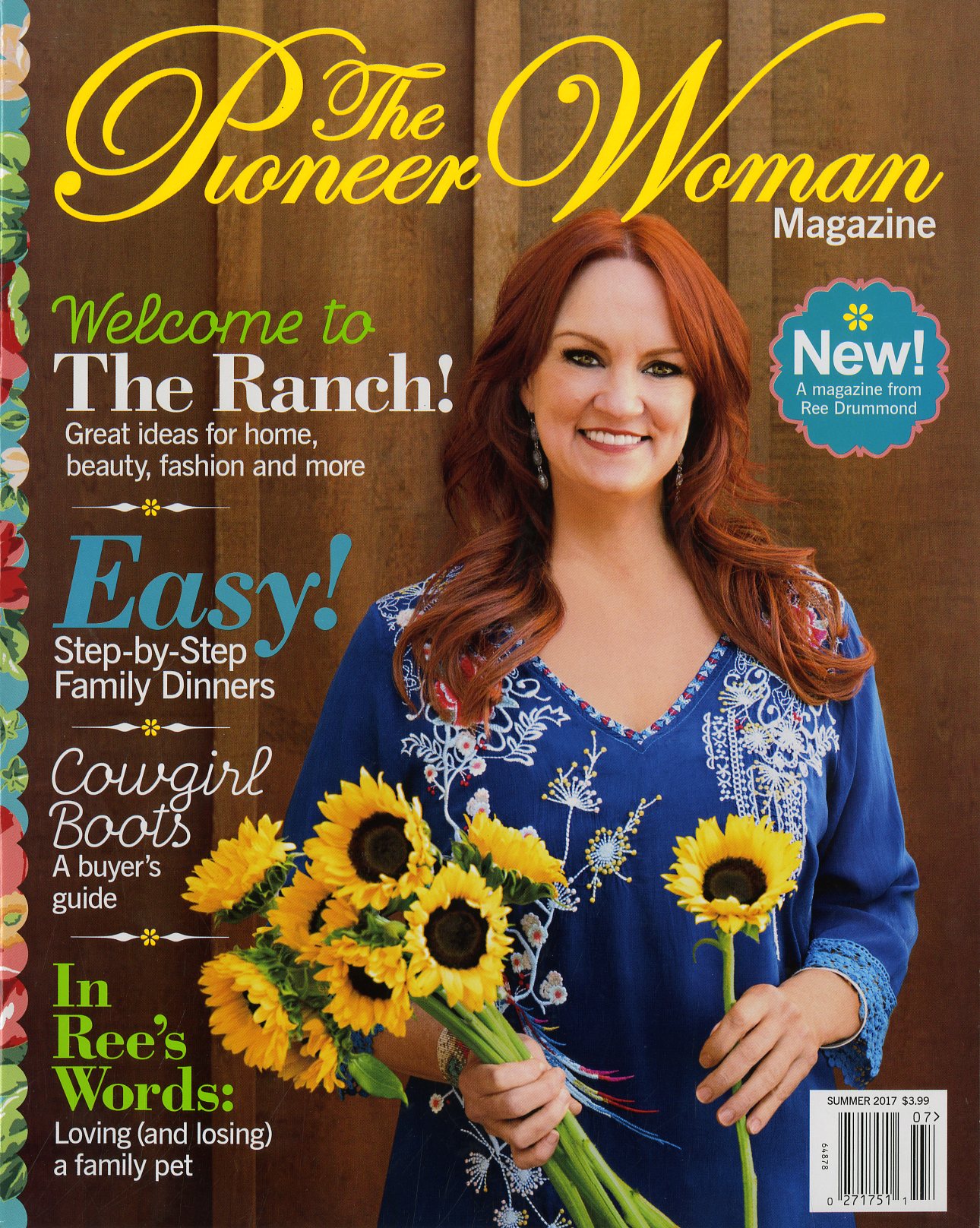
Samir Husni: I’ve tried to think who, besides Meredith and Hearst, are actually bringing those print magazines to the marketplace and going into second printings. Forks Over Knives, a Meredith Core Media brand, had a second printing on the newsstands. Also, who hasn’t heard about The Magnolia Journal and the rapid move the magazine had from zero to one million in a very few months? The same thing is happening with Hearst’s Pioneer Woman. Why do you think, as an industry, that a lot of publishers have lost faith in print?

Doug Kouma: I think it requires a change of mindset in many cases. We’re not out there trying to launch a $3.99 general interest magazine with anyone. In a lot of cases, these products are pretty niche, they already have a pretty loyal brand following, and they’re premium products. I don’t always think of them as magazines in the traditional sense of the word “magazine,” something you have sent to your home or you purchase, you sit down with it for half an hour or an hour, and then you’re pretty much done; you move on. That’s not what these are.

So, in the case of a magazine like Magnolia, which is not quite to the full premium bookazine end of the spectrum, but it’s definitely a premium product; it has that limited frequency—it comes out quarterly—and it’s a high quality product, but it has recipes that you’re going to want to go back to on a regular basis. It has the beautiful lifestyle photography and the beautiful home décor photography.

It’s really meant to be a coffee table magazine, something that you are going to want to hang onto for a while. What we have seen with that brand in particular is those consumers, who are very passionate about the Magnolia brand and what Joanna (Gaines) does, they want to build a collection of those magazines. Even subscribers who got into the system on issue two—in pretty decent numbers—started contacting Magnolia, wanting to get their hands on issue one. They wanted to build that library for themselves at home.

I don’t know if that’s quite answering your question, but when I look at some of these brands, what they want to do, and what we’re doing with them…you’re really creating an experience for, largely, the brand loyalists, while you do look to expand the reach of the brand a bit in the newsstand space. It’s a focused, curated experience, and it’s meant to be something that the consumer is going to hang onto for a while.

Samir Husni: I understand that The Magnolia Journal has now immigrated to the “main ship” at Meredith, but you were there at the beginning. Can you describe for me that moment of conception? How did the idea of The Magnolia Journal come to fruition, and how did you team with the Gaines to make it happen?

Doug Kouma: The idea started as a seed with Joanna herself, with both Chip and Jo believing that they had a concept here that their consumers would respond positively to, and that would be unique in the marketplace. But, they didn’t have anyone on staff who had really worked in the publishing industry, or really knew anything about it.

As I understand it, because I wasn’t involved in those very early conversations, they sought out a couple of publishers to begin to pitch the idea to. At the point when they got more serious, they began discussing it with Meredith, which is the point when the conversations moved from our business development group to begin to include the editorial teams.

That’s what those early conversations were; they were sitting down with Chip and Jo and a couple of members of their staff and listening to what they wanted to do, listening to what they thought would work. Then, once we had a deal, taking ourselves down to Waco and immersing ourselves in their brand and in the Magnolia world so that we could really understand what it is that they wanted to convey to consumers.

They’re building a brand that’s separate and apart from “Fixer Upper” as a broadcast property, and that was something that we had to get our heads around very early in the conversations. I think it’s something that consumers had to begin to see differently with that first issue.

Samir Husni: At present, and I don’t know the latest status with the Gaines and HGTV, but does their relationship with HGTV change anything in the game? Have there been any conflicts with any of the brand’s established platforms?

Doug Kouma: Well, there’s a lot of stories out there and rumors out there that aren’t based in fact, and what Joanna has said is if you don’t see it come from Magnolia themselves, through their own properties, then view it with a skeptical eye. I can’t comment on the status of any of that.

What I can say is, as we were conceptualizing the magazine with her, we had to get our heads around what the Magnolia brand meant versus what the “Fixer Upper” brand was, and how we knew them from that show. Magnolia is far broader and encompasses far more aspects of the lifestyle, from food and gardening, to family relationships, to travel. Because of their relationship then with Scripps we were restricted in some ways, in terms of how much home and remodeling content could be a part of the magazine. I can’t say that really tied our hands, because Joanna’s vision was for something broader than that. We’ve been able to include the team and been able to include the right amount of home content for that brand, but there were some considerations there with some places we weren’t able to go because of that relationship.

Samir Husni: To specifically talk about you and your role as editorial director; is there one of the many babies you take care of that has a special place in your heart? Or do you try and treat all of your children the same? Do you think, “Wow, look at the success of the Magnolia Journal, or Eat This, Not That, or Forks Over Knives or the Beekman 1802 Almanac; I’m so proud of one of them or all of them? How do you handle being the editorial director for all of these magazines?

Doug Kouma: Well, it’s a bit of a double edged sword. On the one hand, I get to work with a really diverse group of brands and outside contributors and get to see things from different points of view, and I really enjoy that. On the other hand, I really don’t get to dive in as deeply or work as closely with some of the content on most of these as you might assume, or as might be interesting or fun.

I would say that, obviously, everybody here is really proud of the success of The Magnolia Journal, it was—I don’t like to use the cliché phrase labor of love—but I think that’s what it was for a lot of that team. It was a small group of us who all had—I’m not saying this isn’t our job—but we all had full time jobs when that came into our world. It was “hey, let’s all put in some extra effort here and some extra hours, and see if we can turn this thing into something. So, we’re all really proud of that.

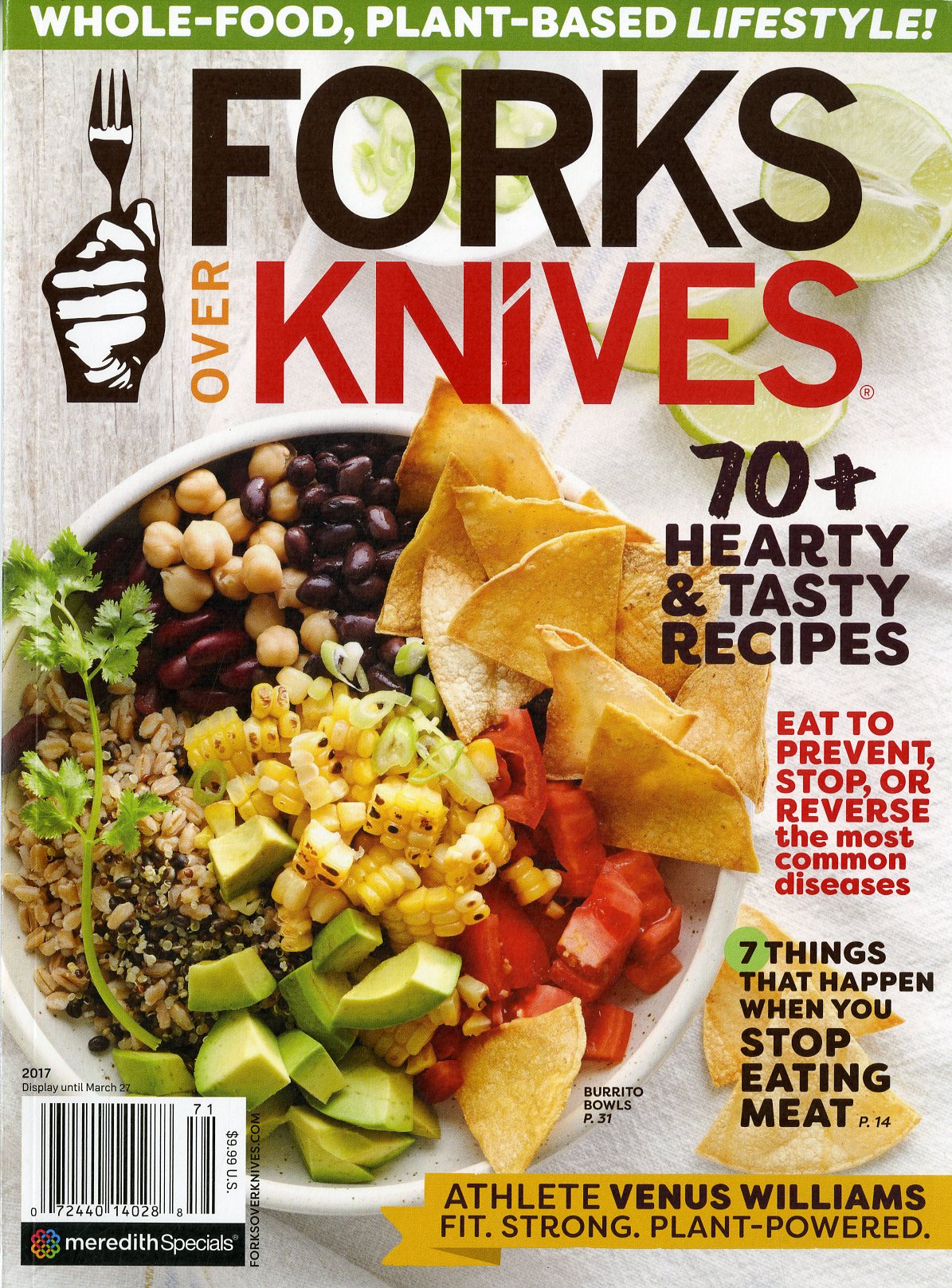
I guess if I had to identify one that kind of holds a special place for me, it would probably be the Forks Over Knives launch. It was a content area where we saw a need in the marketplace. One of the leading—if not the leading—brand in the plant-based eating lifestyle, and to see how that came together and to see how successful it was on newsstand, and how it did it quietly, as some higher profile projects were hitting the marketplace around it…it’s just pretty cool to see something like that.

Samir Husni: Is there a child that disappointed you?

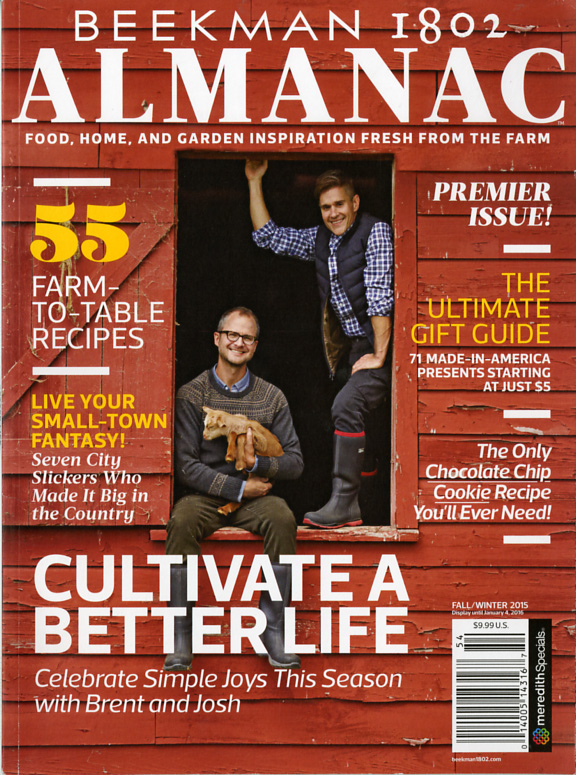
Doug Kouma: Yes, I would say the Beekman 1802 Almanac, mostly because I love that product. I loved working on it—Josh (Kilmer-Purcell) and Brent (Ridge) are fantastic guys to work with. We had a great time putting it together, and there’s still a little bit of sadness there that we couldn’t figure out, in the limited time we had available to us, how to make that product work in the mass market.

That’s the challenge here. Ultimately, the delivery vehicle we have available to us through Meredith is mass. Over the course of the last year, in particular the last six months since the success of Magnolia, we’ve had a few ideas. And there’s really good ideas out there that are not necessarily right for Meredith as a publisher, because, although we can go focused and direct, we can’t go too niche in many cases. That’s not who we are.

So, that one was hard. I think it was a gorgeous product, but we’re just not in an environment—I mean, it’s a creative lab, I’ll say that—but it’s not a creative lab that allows us to spend a lot of money or, frankly, lose money in any case. We want to know if we can break even out of the gate and build something from there; maybe we can get some longevity with something. But, unfortunately, on that one we just weren’t able to scale it. I’m really pleased that they’ve been able to continue publishing it on a smaller scale, but that one will always have a special place for me as well.

Samir Husni: What does the future hold for Meredith Core Media? Any major things in the making?

Doug Kouma: We’ve got a couple of irons in the fire that are pretty hot. Hungry Girl, who is a former Food Network personality, a cookbook author; she’s got a really good digital and social presence; we are launching a new magazine with her. It’ll be Hungry Girl magazine, coming out in January, 2018. That’s the newest launch that we’re really in the thick of right now. And I think you are already aware that Forks Over Knives is going into two more regular productions in 2018, so we’re in the thick of that as well.

Also, we recently announced another project. We’re partnering with the CropLife Foundation on a new magazine that will bring attention to the issue of food waste, a hot topic in sustainability circles today. Tentatively titled, “Waste Less, Save More,” this annual bookazine will provide real-world strategies for planning, shopping, and cooking, as well as 50+ recipes, to help consumers use more of the food they bring into their homes and cut back significantly on what goes into to the landfill. We haven’t announced a publication date yet.

Samir Husni: I feel as though you might agree with me when I say, “We don’t have a print problem and we don’t have a magazine problem; we have a magazine business model and content problem.” If you look at all the media reporting, you would think print died in 2009. And then you hear that Rodale is putting their magazines up for sale. Then the media reporters tell you, “Oh, because print is in decline; everybody is selling.” Why don’t we see more stories about what Meredith Core Media is doing and what Hearst Magazines are doing? From a journalistic point of view and being an editorial director, why do you think people have that mentality?

Doug Kouma: I don’t know. That’s a good question. I haven’t spent a lot of time thinking about it, but I would say it probably requires a shift in mindset. You can’t even say that the big brands, the Better Homes & Gardens of the world, are necessarily struggling from a consumer standpoint. I think they’re just as relevant as ever. The rate base is just as strong as it’s ever been.

I have my own theories on that. I think consumers over the course of the last decade, particularly in the last five years, have begun to—consciously or not—digest different types of information in different ways, and I’m the same. There’s the stuff that I want to see through my social media feeds, there’s the regular websites and blogs that I go to where I’m happy to get that information, but when I want to really enjoy big, beautiful photography, I don’t want to look at that on my phone. I want to look at that on a beautiful printed magazine page.

When I’m cooking, I’ve learned that I don’t like to cook by trying to read a recipe on my phone or my computer, because I have to scroll back and forth and my fingers are dirty and it’s messy and it’s not convenient and I spill something. I’d rather have a magazine or a cookbook in those cases.

When I’m dreaming a little bit, when I’m wanting to feel inspired a little bit, again, it depends on what it is. If I don’t really know what I’m looking for, but it’s the end of January and spring is right around the corner and you can smell it in the air, I love to get my hands on a gardening magazine and begin to get inspired. If I want to find 10 ideas on how to style my porch, then maybe I’m going to get online and look for those, because there’s immediate gratification and I’m looking for something very specific. Whether we, as consumers, have really begun to think about it in that way, I do think you’re seeing a resurgence in consumer recognition of the value of the printed product in parts of their life.

I think it’s evolving, just like every introduction of a new form of media. When television came along it didn’t kill radio. When the ability to record to VHS tape and then to record to DVR came along, it didn’t kill live TV. But everything’s evolving, and it’s therefore informing the content decisions that are being made across those different platforms. So, I suspect that’s what’s happening in the magazine space.

It’s probably also not quite fair to say that today; you know, maybe these partnerships, maybe building around these dynamic brands that were not print-first brands, that might be the future of magazine publishing—it’s certainly not what’s ultimately paying the bills and keeping the lights on today; those are the big boys, like Better Homes & Gardens. There’s definitely opportunity here, it’s definitely growing.

Samir Husni: Do you think that’s the main reason we’re seeing a lot of blogs coming to print and publishing magazines, that there is something missing in that 360 brand if you don’t have a print product?

Doug Kouma: Yes, I think actually the tangible magazine you can hold in your hands is a feather in the cap for a digital-first brand. It’s what says, “We’ve made it. We’re here to stay. We’re legitimate.”

And, almost counterintuitively, I suspect a lot of that is being driven by millennials. For as digitally savvy, and as digital-first a generation as millennials and Gen Z’s are, there’s also this yearning for authenticity and for something real. Again, I think it’s based on the type of content. I think with that generation in particular. It’s not fair at all to say millennials aren’t magazine readers. They’re magazine readers, but they want different types of magazines and want to consume information in different ways.

Samir Husni: Is there anything else you would like to add?

Doug Kouma: Just that we’re seeking out ideas on our own, but we’re always happy to have inbounds as well. If somebody out there has got a great concept and wants to float it our way, we’re happy to have those conversations. And, if it’s not right for us, maybe help identify who it is right for. That’s part of all of this; we’re really passionate about this. A good idea is a good idea, and I always like to see that come to fruition—whether it’s with us or someone else.

Samir Husni: If I showed up unexpectedly to your home one evening after work, what would I find you doing? Are you on an iPad; cooking; sitting and reading a magazine with a glass of wine? What’s your end-of-day “me” time?

Doug Kouma: You will catch me cooking dinner—that’s kind of my unwind. I specifically cook something several days a week, usually with a glass of wine. I’m pretty passionate about my California Sonoma County wines. You’ll see me taking my dog out for a walk. You probably won’t see me reading magazines at home.

Samir Husni: If you could have one thing tattooed upon your brain that no one would ever forget about you, what would it be?

Doug Kouma: I would like to believe that people view me as honest, kind and authentic.

Samir Husni: My last typical question; what keeps you up at night?

Doug Kouma: I think the future; the future of the industry; my own personal future. I think we’re doing a little bit of reinvention here, and that doesn’t mean everything’s a success. It’s human nature, and it’s my nature especially, to want to succeed at what we’re doing. And that just doesn’t always happen. So, I think it’s worry about whether we can really make some of these things work.

Samir Husni: Thank you.

h1

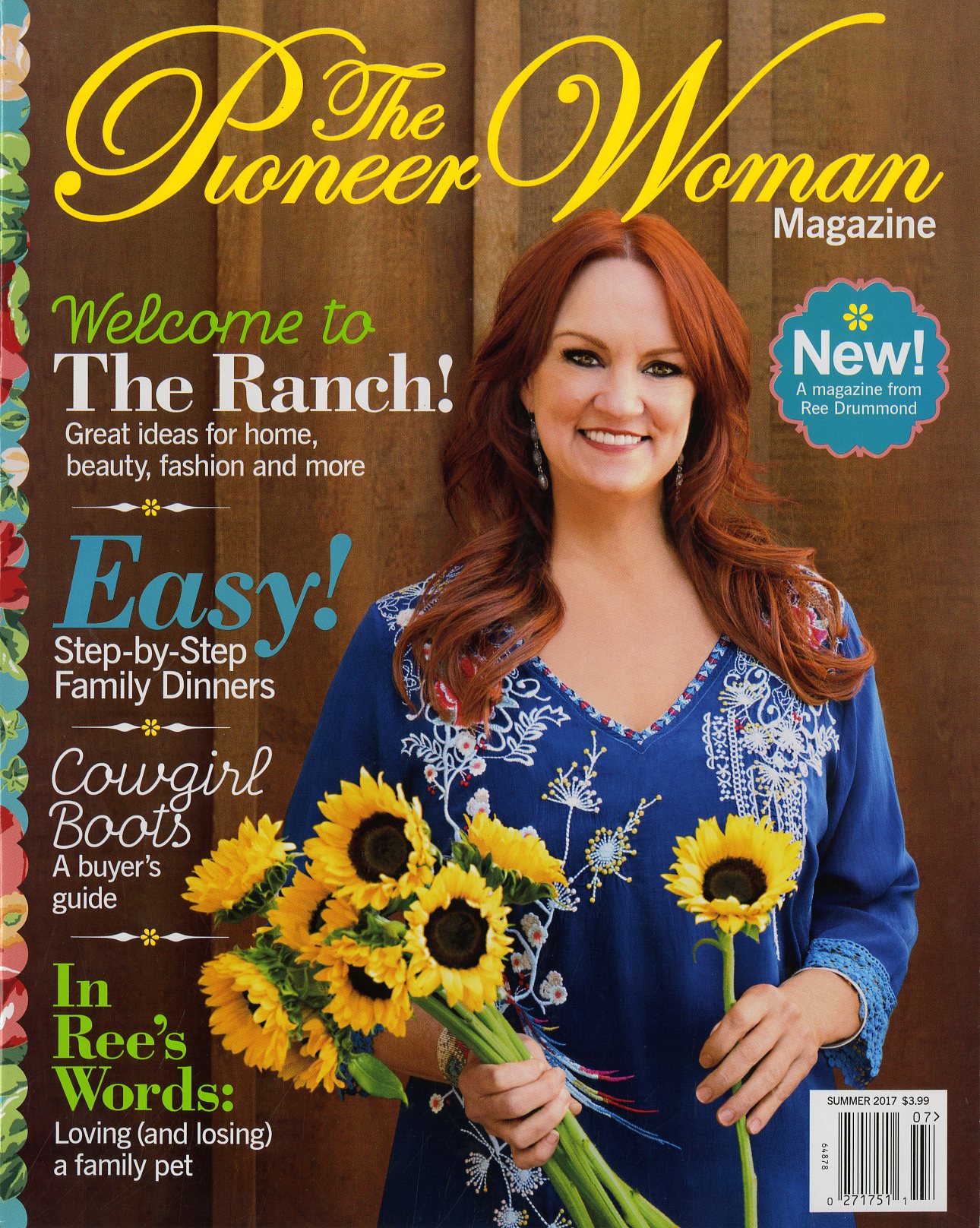
The Pioneer Woman Magazine: Pioneering Its Way To A Phenomenal Debut And Proving That The Power Of Print Is Stronger Than Ever – The Mr. Magazine™ Interview With Vicki Wellington, Vice President, Publisher & Chief Revenue Officer And Maile Carpenter, Editor In Chief, The Pioneer Woman Magazine…

June 28, 2017

NEW YORK, NY – JUNE 06: (L-R) Vicki Wellington, Ree Drummond, and Maile Carpenter attend The Pioneer Woman Magazine Celebration with Ree Drummond at The Mason Jar on June 6, 2017 in New York City. (Photo by Monica Schipper/Getty Images for The Pioneer Woman Magazine)

“We’re never done climbing the mountain, Samir, you know that. (Laughs) Ever. And I’ll tell you what I love, and I feel this maybe more than I did back when we launched Food Network, everybody is rooting for us. Everyone is so excited that we have this great news. And Ree (Drummond) as well. I just feel there is a lot of positive energy around us, wherever we are. Whether we’re inside Hearst; Michael (Clinton) said it better than anybody, this company is very much print-proud.” Vicki Wellington…

“We talked about this in the past; a magazine is such an intimate experience. It is so perfect for her brand. As I said, she has such a great connection with her fans, and the idea of spending this precious “me” time with Ree really happens in the magazine. It’s different from the other platforms. Her blog is amazing, and you get all of these personal details, so that’s incredibly successful in its own right. But a magazine is something that you can sit back and really fall into.” Maile Carpenter…

The Pioneer Woman Magazine: A Mr. Magazine™ Launch Story

At the beginning of June, The Pioneer Woman Magazine debuted at Wal-Mart, the retailer where Ree Drummond, who is the “Pioneer Woman” has her line of cookware, dinnerware and home products sold. Initial distribution of the Hearst Magazines’ premiere issue was 150,000 copies. Mere weeks later, the magazine was nearly sold out and went back to press for another 100,000 copies. Can we say – wow! The power of print brings another facet to an already successful brand.

Vicki Wellington is publisher of the new magazine and Maile Carpenter is editor in chief. These two ladies are a proven team, having launched the Food Network Magazine with amazing success. Now, at the helm of this latest Hearst print endeavor, an immediate grand slam is no surprise to anyone, especially Mr. Magazine™.

I spoke recently with Vicki and Maile, and we talked about The Pioneer Woman, both the magazine and the living, breathing human being. Although, in all honesty, Mr. Magazine™ couldn’t tell the difference between the two, as the ink on paper reflects the person so beautifully.

It’s an intimately personal and connected look at Ree Drummond and her family, but more importantly at her lifestyle. And according to Vicki and Maile, it’s something her fans have readily accepted and that was long overdue for the woman who has shown many people a unique and exciting way of life.

As for Hearst’s involvement, it has been my experience in watching the company and in how they handle new launches, and their portfolio in general; the folks absolutely know what they’re doing. They’ve been bullish about print forever, even when most everyone else was buying headstones in the ink on paper cemetery. But Hearst never gave up on the power of the printed word, and to this day still proclaims it the core of their business. As does Vicki and Maile. So, who better to head up The Pioneer Woman than two ladies who “put the wagons in a circle” and headed out on their own print journey a few years back, when most everyone else was boarding the cyberspace connection?

So, without further ado, here is the Mr. Magazine™ interview with Vicki Wellington and Maile Carpenter as they share their excitement about Hearst’s latest print success story: The Pioneer Woman Magazine.

But first, the sound-bites:

On how the magazine came into being (Maile Carpenter): We’ve been working with Ree (Drummond) for years through the Food Network. Ellen Levine gets credit here, because she noticed a couple of years ago that Ree just had such huge appeal with people, and Ellen said then that we should keep an eye on her. And sure enough, Ellen did, and had some conversations with Ree, and now here we are.

On how Maile’s editing approach differed from the Food Network Magazine to The Pioneer Woman (Maile Carpenter): It’s always different when something is based on a person than when it’s based on a brand. It presents different possibilities. What’s great about Ree is she has such a clear vision and such a clear brand. Her following is there and it’s strong. So, we really had a very good sense of who she is when we started.

On whether Vicki has any preference or inner struggle when it comes to selling ads for the Food Network Magazine versus The Pioneer Woman (Vicki Wellington): As you know, I have two girls in real life, and I love them both equally, but they’re both very different girls. And Maile actually has two girls as well. So, when it comes to the two magazines, I really feel exactly that. I literally call them the big girl and the baby; that’s actually what I say here at work. So, you know what? No, they’re totally different girls; they have different needs, and we love them both, but they’re two, completely different kids. That may sound funny, but it’s actually true.

On the advertisers reaction when Vicki first starting meeting with them about the first issue of The Pioneer Woman and whether it was different than when she first started selling the Food Network Magazine (Vicki Wellington): It was different. When we started with Food Network, the world was a mess and people sort of questioned whether the Food Network Magazine would really be a success. Now, I think we walk in with great credibility and they know that our editors have created this fantastic magazine, right on brand, that continues to sell amazingly well on newsstand and to subscribers with renewals. So, now I think we walk in as really credible, experienced people, where there’s very little risk, to be honest. And what was neat about this, which I’d never done before and is kind of interesting, we limited the number of ads that we took, because it was all about the edit and the content and how consumers would react to the content. So, we brought in a limited number and we couldn’t fit everybody in. It was a nice strategy and people were really dying to get in the magazine.

On the ad focus for the second issue (Vicki Wellington): With our second issue, we will be accepting more advertisements, but we’ll be limiting them as well. When we were out selling the first issue, we sold them both at the same time, which is really an advantage for the advertisers. So, a lot of it was presold in the very beginning. What’s neat is now you see it’s a huge success, as you said we went back to press for another 100,000, the feedback and the early research has been phenomenal.

On the role the printed magazine plays within The Pioneer Woman’s already successful brand (Maile Carpenter): We talked about this in the past; a magazine is such an intimate experience. It is so perfect for her brand. As I said, she has such a great connection with her fans, and the idea of spending this precious “me” time with Ree really happens in the magazine. It’s different from the other platforms. Her blog is amazing, and you get all of these personal details, so that’s incredibly successful in its own right. But a magazine is something that you can sit back and really fall into.

On the fact that Hearst still holds that print is the core foundation of its business, while others continue to doubt the power of print (Vicki Wellington): Let me just say, and you know how I feel about this, and I feel like this is true of the press in many ways; it’s always so much more exciting to jump on the negative, and to jump on the things that are going badly. And I’ve always thought this. We’ve had this amazing story from the very second that we started, yet it’s not always interesting to the press. And I don’t know why, because it really should be.

On whether Maile feels as though she’s reached the top of the mountain with The Pioneer Woman (Maile Carpenter): I will say that creatively it’s been like, as we all said, adding a new baby to the family, but for all of us it’s been so fun and exciting to work on another brand. It’s helped both. It’s helped us define ourselves at Food Network, and know who we are, and when funny story ideas come up, we know that they’re exactly right for Food Network.

On whether Vicki feels as though she’s reached the top of the mountain with The Pioneer Woman (Vicki Wellington): We’re never done climbing the mountain, Samir, you know that. (Laughs) Ever. And I’ll tell you what I love, and I feel this maybe more than I did back when we launched Food Network, everybody is rooting for us. Everyone is so excited that we have this great news. And Ree as well. I just feel there is a lot of positive energy around us, wherever we are. Whether we’re inside Hearst; Michael said it better than anybody, this company is very much print-proud. But we’re out in the community. Clients, everybody is excited for Ree.

On what’s next for The Pioneer Woman (Vicki Wellington): Well, we have a second issue to put out, which obviously, everyone will do a beautiful job on. And we’re doing a lot of research; we’re checking consumer feedback, which again, just the first 20 days are crazy off the charts. Obviously, Michael (Clinton), David (Carey), and ourselves, will make a decision about our next steps. Again, we’re feeling bullish, but you know how the company is; they’re smart, and slow and steady wins the race; we’ll check all of the consumer research make sure that this is something that people really want, and we’ll take it from there.

On why they think more publishers aren’t doing what Hearst does when it comes to new print publications (Vicki Wellington): I honestly don’t know that answer, it’s hard to know what goes on in other families, it really is. I really don’t know the answer. I’m just glad we’re here.

On why they think more publishers aren’t doing what Hearst does when it comes to new print publications (Maile Carpenter): I wouldn’t want to be anywhere else. Hearst knows how to launch magazines and puts the support behind them in the right places.

On anything else they’d like to add (Vicki Wellington): I will just say that with The Pioneer Woman, the feedback that we got was great. But not only on the food front, which we would expect, of course, but also the feedback that readers seemed to love when we showed pieces about the ranch and her family, and her life beyond. Right now the magazine has about 33 percent food, so it’s much more of a lifestyle, plus everything else. And we’re excited that the feedback came back so positively on these other fronts.

On anything else they’d like to add (Maile Carpenter): We’ve just been so happy with how closely we’re working with Ree. Like I said, you never know when you start something, but she’s been so great to work with, and she has such clear vision. It’s been really fun and exciting to work with her, and see her creativity at work. She really touches every page.

On breaking new ground with non-endemic ads or new advertisers in The Pioneer Woman (Vicki Wellington): I think the L’Oréal piece was good. They came in very early on, an exclusive beauty advertiser, actually in both of our issues. They’re running many different kinds of ads, and I think they got it. They got it early on, they were excited about it. So, I think that might have been a surprise for people.

On whether either of them are a “pioneer woman” themselves (Maile Carpenter): Well, Ree gave me a pair of cowboy boots, so now I am, I guess. (Laughs) I’m pioneering my way through the city. (Laughs again).

On whether either of them are a “pioneer woman” themselves (Vicki Wellington): You know what, I’m not. I’m definitely not a pioneer woman, but here’s the neat thing, and this is why I get it. I see how great it is to lift the veil and see what a life would be like that’s so completely different from my own. And I love that.

On what they would have tattooed upon their brain that would be there forever and no one could ever forget about them (Vicki Wellington): For me, it would be “fight on.” Keep on moving; keep on climbing the mountain. Keep moving ahead; keep the positivity moving forward. I try not to involve my brain with all the craziness of our world and our country, and life in general. I just come in everyday to this amazingly beautiful Tower and I’m excited to be here and to see my team. And I’m excited to work with Maile and her team. So, fight on and keep it going.

On what they would have tattooed upon their brain that would be there forever and no one could ever forget about them (Maile Carpenter): Mine would be “to always be authentic.” That’s the magic of Ree and we’re all learning that from her and reminding ourselves when we work with her of how important it is to be authentic and true to yourself.

And now the lightly edited transcript of the Mr. Magazine™ interview with Vicki Wellington, vice president, publisher & chief revenue officer and Maile Carpenter, editor in chief, The Pioneer Woman Magazine.

Samir Husni: I understand The Pioneer Woman is going for a second printing, so let’s begin with our last conversation. The last time we talked, both you and Maile hinted that something was brewing. At that time, you couldn’t really tell me anything except that something was going to happen. And lo and behold, The Pioneer Woman Magazine was born. And I read the letter that both of you wrote that basically said: here’s a woman who had everything but a magazine. And now, we all have the magazine.

Vicki Wellington: Yes, we do have the magazine. I can let Maile tell you about how we got it up and running, and I can certainly talk a little about the feedback and success.

Maile Carpenter: We’ve been working with Ree (Drummond) for years through the Food Network. Ellen Levine gets credit here, because she noticed a couple of years ago that Ree just had such huge appeal with people, and Ellen said then that we should keep an eye on her. And sure enough, Ellen did, and had some conversations with Ree, and now here we are.

What’s interesting about Ree, and I think what makes her so successful, is that she really built her following from the ground up, one person at a time. She was one of the original mom-bloggers, and she cares deeply about every single person who follows her. She really does reach out to them and has conversations with them, so this isn’t the same as having someone who launches a television celebrity, who then begins talking to people on social media. Ree really knows the people intimately and they know her, and they feel a very personal connection to her. And we’re seeing what that does. They just love everything that she does; they want to be a part of her life and they could not be more excited to have a magazine based on her. We’re getting such a great response from people. They’re going to multiple stores to find a copy.

Vicki Wellington: We saw a first issue selling on eBay for $40. We had a few others, but how funny is that?

Samir Husni: Maile, as you put the first issue together, and you’ve been editing the Food Network Magazine for some time now; how did your approach to The Pioneer Woman differ from your approach to the Food Network brand?

Maile Carpenter: It’s always different when something is based on a person than when it’s based on a brand. It presents different possibilities. What’s great about Ree is she has such a clear vision and such a clear brand. Her following is there and it’s strong. So, we really had a very good sense of who she is when we started.

The other great thing is she is super-involved. You never know when you go into something like this, how much time a person is going to have to put into it, but she’s been amazing. With every, single page she’s been involved. Picking out every item, the headlines and the decks and the stories. She’s writing for the magazine and providing images; this is truly hers. And people will accept that because they know her so well and have a very personal connection to her. They would know if it wasn’t hers. (Laughs) It has to be authentic. She is truly authentic, and people know that about her.

Samir Husni: Vicki, this is the new baby, but do you have any preference? When you’re selling the Food Network Magazine versus when you’re selling The Pioneer Woman; is there any inner struggle when it comes to getting ads for the magazines, in choosing one over the other?

Vicki Wellington: As you know, I have two girls in real life, and I love them both equally, but they’re both very different girls. And Maile actually has two girls as well. So, when it comes to the two magazines, I really feel exactly that. I literally call them the big girl and the baby; that’s actually what I say here at work. So, you know what? No, they’re totally different girls; they have different needs, and we love them both, but they’re two, completely different kids. That may sound funny, but it’s actually true.

Samir Husni: Can you relive that moment when you first started meeting with advertisers and talking about the magazine; did you get the same reaction from them as when you introduced the Food Network Magazine or was it different?

Vicki Wellington: It was different. When we started with Food Network, the world was a mess and people sort of questioned whether the Food Network Magazine would really be a success. Now, I think we walk in with great credibility and they know that our editors have created this fantastic magazine, right on brand, that continues to sell amazingly well on newsstand and to subscribers with renewals. So, now I think we walk in as really credible, experienced people, where there’s very little risk, to be honest.

And of course, as Maile said, interestingly, Ree started from this social platform when nobody was on social. So, if they needed to know who she was and what she was doing, they could go right on her blog and find out. You could see her taking her kid and looking for colleges, like we all do. You could see her bringing out sandwiches to her son and the whole baseball team. You can see all of these things and you also see her fans responding back and forth with her. So, I believe people get the relationship right away. That, combined with the credibility of what we’ve already done; I think this was easier, much easier. It really was.

And what was neat about this, which I’d never done before and is kind of interesting, we limited the number of ads that we took, because it was all about the edit and the content and how consumers would react to the content. So, we brought in a limited number and we couldn’t fit everybody in. It was a nice strategy and people were really dying to get in the magazine. We didn’t do that with Food Network; we didn’t do that with Domino, but we did it here and it was really nice and encouraging to see the great interest from advertisers to get in on the action.

Samir Husni: What’s the focus for the second issue?

Vicki Wellington: With our second issue, we will be accepting more advertisements, but we’ll be limiting them as well. When we were out selling the first issue, we sold them both at the same time, which is really an advantage for the advertisers. So, a lot of it was presold in the very beginning. What’s neat is now you see it’s a huge success, as you said we went back to press for another 100,000, the feedback and the early research has been phenomenal. So, anybody coming into the second issue should run and sprint to get in, honestly. Seriously, because they’re getting such a sure thing.

Samir Husni: Maile, you write in the introductory letter that you felt it was high time that Ree had a magazine too. From an editor’s point of view, what role does the printed magazine play within The Pioneer Woman’s already successful brand?

Maile Carpenter: We talked about this in the past; a magazine is such an intimate experience. It is so perfect for her brand. As I said, she has such a great connection with her fans, and the idea of spending this precious “me” time with Ree really happens in the magazine. It’s different from the other platforms. Her blog is amazing, and you get all of these personal details, so that’s incredibly successful in its own right. But a magazine is something that you can sit back and really fall into.

And her images, she photographs her ranch in the most beautiful ways. People have been seeing these images on her blog, and we’re able to really fall into them in print and tell stories from her ranch. I think the magazine is such a nice format for her. And as I said, her fans want so much to be a part of her life, and they want her in every possible form. And it’s not like they’re choosing a medium; they want her on TV; they want her blog; they want everything they can get. And the magazine was just the right piece. We’re already seeing the results.

Vicki Wellington: The results are just phenomenal. I can’t share them just yet, because they’re so early, but from what I understand, this company has not seen results like this in a long time. So, we’re very bullish.

Samir Husni: Vicki, tell me, when I interviewed Michael Clinton recently, he said that print is still the core business at Hearst. Yet, we see so many other companies and so many articles out there still doubting the power of print. From a publisher’s point of view, what’s your secret sauce? What are you doing differently at Hearst?

Vicki Wellington: Before the secret sauce, let me just say, and you know how I feel about this, and I feel like this is true of the press in many ways; it’s always so much more exciting to jump on the negative, and to jump on the things that are going badly. And I’ve always thought this. We’ve had this amazing story from the very second that we started, yet it’s not always interesting to the press. And I don’t know why, because it really should be.

And honestly, it’s Maile and her team. From the minute I met Maile, her only care has been about the reader. What does the reader want? What is the reader looking for? And she asks this in every meeting we have; how about the reader? And I think, because she’s executed it so perfectly, it’s easy and a pleasure to market and sell something like that. She makes our job easy. So, I think it’s about her getting the product right.

You look at this magazine, our baby, and you look at our big girl, and they look nothing alike. But the same team, the same small team, put both of these products together and they’re right on brand, and they look nothing alike. So, I think that says a lot.

Maile Carpenter: Our creative director, Deirdre Koribanick, is amazing. Her secret; she always talks about this, she has since we launched, is about being able to open a magazine to any page and know what magazine you’re in. And if you can open to different sections and they look entirely different, then you haven’t successfully created a single design method. And I think that she’s been so great in both magazines in unifying the look.

Samir Husni: Maile, have you reached the top of the mountain?

Maile Carpenter: I will say that creatively it’s been like, as we all said, adding a new baby to the family, but for all of us it’s been so fun and exciting to work on another brand. It’s helped both. It’s helped us define ourselves at Food Network, and know who we are, and when funny story ideas come up, we know that they’re exactly right for Food Network.

Vicki Wellington: We’re never done climbing the mountain, Samir, you know that. (Laughs) Ever. And I’ll tell you what I love, and I feel this maybe more than I did back when we launched Food Network, everybody is rooting for us. Everyone is so excited that we have this great news. And Ree as well. I just feel there is a lot of positive energy around us, wherever we are. Whether we’re inside Hearst; Michael said it better than anybody, this company is very much print-proud. But we’re out in the community. Clients, everybody is excited for Ree.

We had a party for her to celebrate the premier issue, and we had people come from hours away. We had a client who took their private jet and flew in for this party. Ree was there, her family, which was actually really neat. And you’ll see her daughter in the magazine, and her handsome, cowboy husband is so excited about the magazine. But I just think everybody is rooting for it, so it feels good. It feels good to have a new baby that everybody wants to see succeed.

Samir Husni: So, what’s next?

Vicki Wellington: Well, we have a second issue to put out, which obviously, everyone will do a beautiful job on. And we’re doing a lot of research; we’re checking consumer feedback, which again, just the first 20 days are crazy off the charts. Obviously, Michael (Clinton), David (Carey), and ourselves, will make a decision about our next steps. Again, we’re feeling bullish, but you know how the company is; they’re smart, and slow and steady wins the race; we’ll check all of the consumer research make sure that this is something that people really want, and we’ll take it from there.

That said, we’re proud of everything we’ve done, as we always are, of the product we represent and the new baby. And we’re proud of our big girl. We don’t talk about our big girl, but we’re turning 10. We have a birthday next year in 2018, which it went by like a minute, but it’s a big birthday for us.

Samir Husni: Every time I speak with David or Michael, there’s something new brewing. It seems like you’re always having a baby right after the new baby has been born, especially this year as you had almost twins with The Pioneer Woman and Airbnbmag.

Vicki Wellington: But they’re very different kids, as you know. They’re in our family, so think of them as cousins. (Laughs)

Samir Husni: (Laughs too).

Vicki Wellington: Born around the same time; they hang out a little bit, but born to different families.

Samir Husni: With the true “Rose Garden” picture that you’ve painted, why do you think that only a few other publishers are doing what Hearst is doing?

Vicki Wellington: I honestly don’t know that answer, it’s hard to know what goes on in other families, it really is. I really don’t know the answer. I’m just glad we’re here.

Maile Carpenter: Yes, I wouldn’t want to be anywhere else. Hearst knows how to launch magazines and puts the support behind them in the right places.

Vicki Wellington: And we love the joint venture teams. Again, we have our family and we have their family; combined, we have so many more assets together. I don’t see anybody else doing that, but it’s a wonderful thing that we’ve got this extended group of knowledgeable, smart people, with again, a very positive culture, able to help.

For example, when we put out the premiere issue, we supported it at Hearst, obviously, and across Hearst Digital in many ways, but of course, Scripps supported it in a huge way. So, again, I feel like everybody doesn’t get that kind of advantage.

Samir Husni: Any stumbling blocks that you’ve ran into?

Vicki Wellington: Not right now, Sir.

Maile Carpenter: We need more hours in the day. (Laughs)

Vicki Wellington: We’re busy, that’s for sure. But we can’t complain about that; we really can’t.

Samir Husni: Is there anything else that either of you would like to add?

Vicki Wellington: I will just say that with The Pioneer Woman, the feedback that we got was great. But not only on the food front, which we would expect, of course, but also the feedback that readers seemed to love when we showed pieces about the ranch and her family, and her life beyond. Right now the magazine has about 33 percent food, so it’s much more of a lifestyle, plus everything else. And we’re excited that the feedback came back so positively on these other fronts.

Maile Carpenter: We’ve just been so happy with how closely we’re working with Ree. Like I said, you never know when you start something, but she’s been so great to work with, and she has such clear vision. It’s been really fun and exciting to work with her, and see her creativity at work. She really touches every page.

Samir Husni: As I look at the ads in the first issue, did you feel that you broke any new ground? I remember in the past, you and I had talked about getting new advertisers, non-endemic advertisers in the Food Network Magazine. How about in The Pioneer Woman?

Vicki Wellington: I think the L’Oréal piece was good. They came in very early on, an exclusive beauty advertiser, actually in both of our issues. They’re running many different kinds of ads, and I think they got it. They got it early on, they were excited about it. So, I think that might have been a surprise for people.

Samir Husni: If someone asked either of you if you were a “pioneer woman,” what would you say?

Maile Carpenter: Well, Ree gave me a pair of cowboy boots, so now I am, I guess. (Laughs) I’m pioneering my way through the city. (Laughs again).

Samir Husni: (Laughs too).

Vicki Wellington: You know what, I’m not. I’m definitely not a pioneer woman, but here’s the neat thing, and this is why I get it. I see how great it is to lift the veil and see what a life would be like that’s so completely different from my own. And I love that.

Maile Carpenter: No, but you are, Vicki. This is the thing; I love Ree’s editor’s letter, and did not change a single word of it, she turned it in exactly as it appears in the magazine, word for word. And it was about how we’re all pioneer women, no matter where we happen to live or what we’re going through in life. I thought it was a nice way to see things. And I think Vicki is a pioneer woman.

(Everyone Laughs).

Samir Husni: I always thought Vicki was a pioneer woman.

Vicki Wellington: I’m an urban pioneer woman, perhaps. Again, I think it’s like a kind of fantasy. It’s an opposite life from mine, but it would be so cool for me to pop on a neat pair of blue cowboy boots and go out on the ranch. I don’t know how long I could live; I might die within 48 hours. (Laughs) But I think it would be exciting to try. For me, that’s how I look at it.

Samir Husni: I’ll give you eight hours, Vicki. (Laughs)

Vicki Wellington: My husband might give me four hours. (Laughs too)

Maile Carpenter: It’s really an incredible experience to go out to Oklahoma. Everyone is trying to sign up for the next trip when we shoot out there. It’s breathtaking. It’s just so beautiful.

Samir Husni: My new last question to you both; if you could have one thing tattooed upon your brain that no one would ever forget about you, what would it be?

Vicki Wellington: For me, it would be “fight on.” Keep on moving; keep on climbing the mountain. Keep moving ahead; keep the positivity moving forward. I try not to involve my brain with all the craziness of our world and our country, and life in general. I just come in everyday to this amazingly beautiful Tower and I’m excited to be here and to see my team. And I’m excited to work with Maile and her team. So, fight on and keep it going.

Maile Carpenter: Mine would be “to always be authentic.” That’s the magic of Ree and we’re all learning that from her and reminding ourselves when we work with her of how important it is to be authentic and true to yourself.

Vicki Wellington: And that’s the secret of Maile’s editing success, it really is. For both magazines. Her honest, authentic genuineness.

Samir Husni: Thank you both.

h1

American Affairs: A New Print Journal, Born From The Web, That Provides A Forum For A Much Needed Public Policy Debate– The Mr. Magazine™ Interview With Julius Krein, Editor, American Affairs…

June 26, 2017

“The surprising popularity is what lead us to conclude that we should do something more and move from an anonymous blog to a signed, fully out-there larger publication—with a print edition as well as an online presence—and try to build on the success of the online blog. Make the content a little more formal, a little more far reaching, and hopefully offer something unique intellectually.” Julius Krein…

A Mr. Magazine™ Launch story…

When a relatively unknown blog that began during the last presidential campaign begins to take off with viewers by providing a forum that takes exception to the more conventional partisan platforms, what could the powers-that-be at this new player in the political media game do next to top that surprising coup? Why, bring a print component into the game, of course.

Julius Krein is the editor of American Affairs, a quarterly journal of public policy and political thought. According to part of the magazine’s mission statement: We (American Affairs) seek to provide a forum for the discussion of new policies that are outside of the conventional dogmas, and a platform for new voices distinguished by originality, experience, and achievement rather than the compromised credentials of careerist institutions.

I spoke with Julius recently and we discussed this new policy journal called American Affairs. Along with being a (now) magazine editor, Julius is also an investment analyst and said that the differences between journalism and investment analysis aren’t as many as some might think. Uncovering facts and discovering unique and new views on the world is a must for either profession.

Photo by N.Y. Times

And with American Affairs, and Julius’s own background in finance, they’re hoping to bring many new voices and perspectives to the journal, giving the magazine a much-needed contrast from some of the other, more traditional political media outlets.

So, I hope that you enjoy this intellectually stimulating and informative discussion with a young man who has a definitive idea about what a journal on public policy should be, and it’s called American Affairs.

But first, the sound-bites:

On why he decided to publish American Affairs, with all the journal-type magazines already out there: The magazine basically arose as a response to the 2016 campaigns, the issues that came about during them, and the surprising results revealed to everyone. There had been a lot of issues that hadn’t really been addressed in conventional, elite political discourse. We wanted to do that.

On the public’s reaction to the magazine’s first issue: So far, the reaction has been very positive. There has been a lot of media attention, both from conservative media as well as from liberal media, including places like The New York Times, The Nation, etcetera. Most of it has been pretty positive and pretty open-minded. Inevitably, you get some very critical and hostile pieces as well, but that’s all part of the game.

On that moment of conception for the magazine: This journal really arose out of a blog that we did. It started in 2015 and then went on in early 2016 through the primary campaign, and this was just a little anonymous blog on a blogspot.com address, absolutely nothing fancy. We didn’t really think anyone would read it, but it ended up getting in the low hundreds of thousands of views per day.

On why in this digital age they decided on a print edition too: I can’t really explain why this is the case, but it seems like having a print edition does add a certain level of prestige, cachet, and seriousness to it. It also imposes a little bit of editorial discipline as well. With online, there’s really no limit to the content, but with print you have to lay it out; you have to decide which articles are going to go into the print edition.

On any stumbling blocks they’ve had to face since starting the magazine: Actually, in some ways the biggest stumbling block maybe, was the surprise of Donald Trump’s victory in the presidential election, which we didn’t expect. That ended up being a bit of a challenge for us because some of the people that were involved in the blog ended up going into the administration, and therefore obviously wouldn’t be participating in the journal. It also created a weird situation where, you know, on the one hand it’s harder for people to see this project as independent from some of the day-to-day political events or the administration itself, even though it is independent. But at the same time, it’s created an opportunity in that I think it’s gotten a lot more attention than it would have otherwise.

On his being an investment analyst and whether that brings a different perspective to the role of magazine editor: A lot of people might be surprised, but much of investment analysis is very similar to journalism and sort of analysis anyway. It typically commands higher salaries, but fundamentally, all you’re doing is either trying to uncover facts or sort of develop a unique view on the world that is different from what everyone else has, but at the same time, hopefully, a more accurate description of reality and prediction of future events.

On whether he feels the mass audience is lost today between two extreme political points of view: That seems to be increasingly the case. I think it’s a very troubling phenomenon. In many ways, I would like to see this project as an attempt to counteract that. And as I said, we bring in interesting voices from both the right and the left, to actually try and have a dialogue and a substantive discussion, rather than the sort of increasingly vicious—and not particularly serious—Twitter wars or television sound bites. Increasingly, as you mentioned, there’s this sort of complete separation of the country, where people are just reading completely different things and have sort of two sets of “facts” and two viewpoints that never interact or overlap.

On what he hopes to have accomplished a year from now with American Affairs: I’d like to think that it will shed some light on the major issues in our economic and political life that we don’t’ really think about much, and that have been obscured by the conventional, ideological molds of “Big Government” or “Small Government” or “Internationalism” or whatever the opposite of that is. And show what’s happening in the finance industry, and in tech. And answer the questions, “How does our economy actually work?” and “How does that influence our politics in ways that the typical slogan doesn’t really capture?”

On anything he’d like to add: One thing I want to be able to do, and we’ve done a little bit of it so far, but one thing I’d like to be able to do is actually get people from the investment world, from the tech world—you know, professionals working in this industry—to write a little bit more. And, given my relationships from finance, I think I can.

On what someone would find him doing if they showed up unexpectedly one evening at his home: I generally do enjoy reading these articles and editing them, so there’s a very fine line between work and leisure for me. Reading this stuff is what I would be doing anyway, so typically you’ll find me trying to read more articles, especially things that I haven’t read—maybe I didn’t have the time or incentive to read—before starting the magazine. I’m just trying to, again, find a larger group of writers, new people, new audience to include in the magazine.

On what keeps him up at night: Not to be too dramatic or sanctimonious or anything, but I am genuinely worried about the state of the country and what, to me, seems like the deeper fraying of the social and intellectual fabric that I’ve seen in my comparatively brief lifetime.

And now the lightly edited transcript of the Mr. Magazine™ interview with Julius Krein, editor, American Affairs magazine.

Samir Husni: In the midst of all the journals that are out there, why did you decide to publish American Affairs today, in this marketplace?

Julius Krein: The magazine basically arose as a response to the 2016 campaigns, the issues that came about during them, and the surprising results revealed to everyone. There had been a lot of issues that hadn’t really been addressed in conventional, elite political discourse. We wanted to do that.

Photo by N.Y. Times

The other opportunity of doing a new publication is that we didn’t bring any ideological—or other—baggage that inevitably arises from existing publications, and therefore we can bring together interesting voices, hopefully from the right and the left, to address these issues that perhaps both sides have ignored.

Samir Husni: What was the reaction to the launch of the first issue of American Affairs?

Julius Krein: So far, the reaction has been very positive. There has been a lot of media attention, both from conservative media as well as from liberal media, including places like The New York Times, The Nation, etcetera. Most of it has been pretty positive and pretty open minded. Inevitably, you get some very critical and hostile pieces as well, but that’s all part of the game. So far, it’s been okay. David Brooks wrote a column about it recently, other fairly prominent people have been reading it and talking about it. I’ve been very happy with the reaction so far and the reception and so forth.

Samir Husni: Can you go back with me to that moment of conception, when the idea hit you or hit the team, and you said, “You know, this is a completely different election year. We’ve never seen anything like this. Maybe we need a journal.” How did it actually happen?

Julius Krein: This journal really arose out of a blog that we did. It started in 2015 and then went on in early 2016 through the primary campaign, and this was just a little anonymous blog on a blogspot.com address, absolutely nothing fancy. We didn’t really think anyone would read it, but it ended up getting in the low hundreds of thousands of views per day. Everybody was talking about it; it became surprisingly popular. I think it was evidence of the fact that we had hit upon some things that other people weren’t talking about or maybe just approaching things from a new perspective, in a new way.

Anyway, the surprising popularity is what lead us to conclude that we should do something more and move from an anonymous blog to a signed, fully out-there larger publication—with a print edition as well as an online presence—and try to build on the success of the online blog. Make the content a little more formal, a little more far reaching, and hopefully offer something unique intellectually.

Samir Husni: Why did you decide to have the print edition? People say we live in a digital age, so why do we need print?

Julius Krein: I can’t really explain why this is the case, but it seems like having a print edition does add a certain level of prestige, cachet, and seriousness to it. It also imposes a little bit of editorial discipline as well. With online, there’s really no limit to the content, but with print you have to lay it out; you have to decide which articles are going to go into the print edition.

Those constraints, I think, add some level of rigor and discipline and, for some reason, still command a little more prestige in the wider public. That was basically why we decided to do it, and really in my experience adding the print edition really didn’t add any more work. It’s not particularly expensive, so it really wasn’t all that difficult. I think it was a good decision, and it probably gained us a little more attention than we probably would receive. And I’m glad to see that the print edition is now out there in stores across the country.

Samir Husni: After the blog and since the first issue came out, has it been a walk in a rose garden, or has there been some stumbling blocks that impacted the launch? And if so, how did you overcome them?

Julius Krein: Actually, in some ways the biggest stumbling block maybe, was the surprise of Donald Trump’s victory in the presidential election, which we didn’t expect. That ended up being a bit of a challenge for us because some of the people that were involved in the blog ended up going into the administration, and therefore obviously wouldn’t be participating in the journal. It also created a weird situation where, you know, on the one hand it’s harder for people to see this project as independent from some of the day-to-day political events or the administration itself, even though it is independent. But at the same time, it’s created an opportunity in that I think it’s gotten a lot more attention than it would have otherwise.

I honestly have to say, since the actual launch in February… nothing’s ever quite the walk in a rose garden, but it’s been as close to that as I could really imagine. I think we’ve been very fortunate. So far, things have fallen into place really well, with a lot of new authors coming out of the woodwork. I think the media attention has taken care of itself, so we don’t have to worry about that too much. Really, it’s just trying to find good articles and make the magazine as good as possible, which of course is a problem we want to have.

Samir Husni: I see you wear two hats. You are the editor of the magazine, but you are also an investment analyst. Which one of the two do you enjoy more? Or, does the investment analyst bring a different view to editing a magazine than just a journalist editing a magazine might?

Julius Krein: A lot of people might be surprised, but much of investment analysis is very similar to journalism and sort of analysis anyway. It typically commands higher salaries, but fundamentally, all you’re doing is either trying to uncover facts or sort of develop a unique view on the world that is different from what everyone else has, but at the same time, hopefully, a more accurate description of reality and prediction of future events.

So, it’s not actually as different as you might think. I would say the one bigger difference is just the kind of people you end up meeting and talking to. Having moved over to work on the magazine, it has been a lot more travel than I’m used to, and—in a good way—a lot of meeting new people, scholars, academics, other people in the industry, and journalists. That’s been very interesting, but like I said, it’s actually not as different as you might think.

Samir Husni: As both an analyst and a journalist, what advice would you give the masses today that are bombarded by two extreme points of views. Whether you watch CNN or whether you watch Fox, whether you read this paper or that… Do you feel the mass audience is lost in the middle? That there’s no intersection between the two?

Julius Krein: That seems to be increasingly the case. I think it’s a very troubling phenomenon. In many ways, I would like to see this project as an attempt to counteract that. And as I said, we bring in interesting voices from both the right and the left, to actually try and have a dialogue and a substantive discussion, rather than the sort of increasingly vicious—and not particularly serious—Twitter wars or television sound bites. Increasingly, as you mentioned, there’s this sort of complete separation of the country, where people are just reading completely different things and have sort of two sets of “facts” and two viewpoints that never interact or overlap.

I don’t know that I have any advice; it seems to be that if you don’t have time to read everything, then you should almost not bother reading anything, because most of it, in my opinion, is pretty terrible, not true, and a waste of time. If you don’t have time to read and sift through everything, then it’s probably not good to sort of selectively just pick the things that you agree with. I’ve always felt that if I read something and agree with it one hundred percent, then I probably didn’t learn anything. I wish more people would take that view. But, this is just the climate we live in.

I don’t think there’s any real solutions to it. In a way, I think it’s one thing that makes us unique. It’s an advantage for us at American Affairs, and I hope that we can actually succeed in bringing more people from different sides and with different perspectives in dialogue around, maybe, some surprisingly common issues that have been overlooked and that certain people have an incentive to overlook.

Samir Husni: If you and I are having this conversation a year from now, what would you hope to tell me that you have accomplished in this first year of the print version of American Affairs journal?

Julius Krein: It won’t be for me to judge what it actually accomplished, but what I hope it will accomplish is to have brought together, like I said, interesting voices—new voices—from both the right and left to really address the questions of, “What actually holds us together as a nation?” “What are the common themes of our politics that might actually move us forward toward more positive politics all around?”

And also, I’d like to think that it will shed some light on the major issues in our economic and political life that we don’t’ really think about much, and that have been obscured by the conventional, ideological molds of “Big Government” or “Small Government” or “Internationalism” or whatever the opposite of that is. And show what’s happening in the finance industry, and in tech. And answer the questions, “How does our economy actually work?” and “How does that influence our politics in ways that the typical slogan doesn’t really capture?”

Samir Husni: Is there anything else you’d like to add?

Julius Krein: One thing I want to be able to do, and we’ve done a little bit of it so far, but one thing I’d like to be able to do is actually get people from the investment world, from the tech world—you know, professionals working in this industry—to write a little bit more. And, given my relationships from finance, I think I can.

It seems to me that a lot of what’s written out there, and not that it’s bad, but it’s always written a lot by scholars, think tank people, who typically have not really done anything in the real world. I think that inevitably misses some things, and I’d like to think that maybe we could bring in some more voices from the actual business community to comment on their industries. I hope that will provide some unique perspectives as well.

Samir Husni: If I showed up unexpectedly at your home one evening after work, what would I find you doing? Having a glass of wine; reading a book; on your iPad; watching TV; or something else?

Julius Krein: I generally do enjoy reading these articles and editing them, so there’s a very fine line between work and leisure for me. Reading this stuff is what I would be doing anyway, so typically you’ll find me trying to read more articles, especially things that I haven’t read—maybe I didn’t have the time or incentive to read—before starting the magazine. I’m just trying to, again, find a larger group of writers, new people, new audience to include in the magazine.

In a good way, it’s taken up a lot more of my time editing this than I ever anticipated, but, as I said, it’s been a very positive experience so far and I have really enjoyed spending more time on these issues.

Samir Husni: My typical last question; what keeps you up at night?

Julius Krein: Not to be too dramatic or sanctimonious or anything, but I am genuinely worried about the state of the country and what, to me, seems like the deeper fraying of the social and intellectual fabric that I’ve seen in my comparatively brief lifetime.

But, it just really worries me. These items every day, such as the recent shooting (GOP Baseball practice); I think we’re going through a potentially very frightening and troubling stage in our politics, and I really do worry about that. I hope we at American Affairs can offer something useful towards fixing it.

Samir Husni: Thank you.

h1

Cuisine Noir: From A Website To A Printed Magazine, And A Brand Where African American Culinary Talents Shine – The Mr. Magazine™ Interview With Sheree Williams, Publisher & Editor In Chief, Cuisine Noir Magazine…

June 23, 2017

A Mr. Magazine™ Launch Story…

“Also, I love, but just can’t compete with, in some instances, Essence and Black Enterprise and Ebony. They all have forty plus years on me. I’m a newbie in the game. So, there are some challenges there in terms of the advertising dollars and things like that. But, we continue to move forward. I have a wonderful staff of different people around the world, and we continue to believe in the project, what we’re doing and telling the stories that we tell; the stories of some of the heroes that are in these industries that are not necessarily featured in some other publications. That really keeps us going. Unfortunately, there is no walk in a rose garden, but we’re just excited to be able to be in the space and tell the stories that we are able to tell.” Sheree Williams…

Cuisine Noir debuted in the world of cyberspace in 2007, setting a precedent by featuring the talents of African American culinary and wine professionals. The online entity tapped into the world of African American foodies and became a vehicle for showcasing these great chefs from the industry.

In 2009, Sheree Williams took the lead with the website and began to show that not only did African Americans like to experiment with different flavors and food cultures, they also loved traveling, wine and the entire scope of the foodie lifestyle. Sheree raised the bar even more when she took the pixels from the screen and transposed them to the printed page with vibrant life and amazing vision.

I spoke with Sheree recently and we talked about Cuisine Noir and the multicultural message the magazine strives to convey with every page. Showcasing what African Americans are doing around the globe is a cultural movement and Sheree is determined to passionately continue the magazines mission.

From celebrities who are just as at home in the kitchen as they are onscreen or onstage, to unsung heroes who know more about mixing ingredients and producing amazing flavors than they do holding a mike or reading a movie line, Cuisine Noir is the platform that encourages both factions. And shows that African Americans have influence throughout the worlds of food and travel around the globe.

I hope that you enjoy this very “tasty” Mr. Magazine™ interview with a woman who knows a thing or two about food, wine and travel, but more importantly, about the passion it takes to put that knowledge to the test, inside the pages of a magazine, Sheree Williams, publisher, editor in chief, Cuisine Noir magazine.

But first, the sound-bites:

On the genesis of Cuisine Noir: I always tell everyone that I didn’t start the magazine. A different chef who is in California started it in the late ‘90s. He’s a chef down in L.A. and just wanted to get more exposure to black chefs. I connected with him in 2007 and, at that time, he had introduced the concept to me. So, we worked together to launch it [the Cuisine Noir site]. Then in 2008, I took it over because he wasn’t quite sure what he wanted to do with it.

On whether everything went as she expected, or there were some bumps along the way: I’m sure you know how tough the magazine industry is. We still face that challenge, you know, being a multicultural publication, in terms of dollar allocation. Before, a lot of advertising agencies would have pockets of money just for multicultural initiatives, whether it was black, Latino, Asian, etcetera. Now we’re finding a lot of the agencies are rolling those dollars into the general market and not having that pot anymore, so it is tough.

On whether Cuisine Noir’s platform is about promoting famous chefs or discovering hidden talents: Well, we go in and out. I’ve personally had the honor of speaking to Dr. Maya Angelou; that was an awesome interview that I was able to do. With her two books that she had out, she was all about cooking and entertaining. We’ve interviewed Russell Simmons and Wendy Williams, so we do try and capture the celebrity foodies. We don’t make it just about celebrity foodies, because again there is so much talent among people who are not celebrities. But, we do want to capture what the celebrities are doing.

On how she convinces advertisers that Cuisine Noir is deserving of their dollars: We’ve really tried to present my analytics; we’ve got a great customer base. Unfortunately, there are some stereotypes and there are some perceptions about black consumers, about black travelers, etcetera, that we try to make sure we, in terms of where we’re spending, especially, our disposable income.

On getting traction in the multicultural publications with ad dollars: I have found, not naming any particular brands or companies, but I’ve worked with some in the past and had a good relationship. But then people are always changing in agencies. People are always leaving, and sometimes it’s like a revolving door. You have to ask, “Okay, who is the new person overseeing this account?” and you have to start building that relationship all over again. I think it’s important to have people in these roles that are making the decisions of where these multicultural dollars are going, to understand publications such as ours. Again, you want the quality of trying to reach the consumer—in terms of the quality of the consumer and not necessarily the quantity.

On whether she feels being based on the West coast is helping or hindering her success with the magazine: For me, I think it helps—especially when it comes to the food [industry]. I feel California is a leader when it comes to the food movement, especially around sustainable eating and things like that, and especially when it comes to the wine industry. I feel that I either need to be here or in New York, and luckily I’ve got correspondents in New York that help me make sure that if there’s anything in New York that we’re invited to, then we’re there. I definitely think that we’re in a good place, being here in Oakland and San Francisco that allows us to keep a good pulse on the industry and what’s going on.

On if she had the opportunity to present her sales pitch about Cuisine Noir to a big ad agency CEO, what she would say: I would definitely try to talk about, one: working with someone who is truly about getting their brand in front of consumers and making a difference. For me, it’s not about just taking someone’s money. I understand that there’s a return on investment that needs to come back and that they’re looking for certain things. For me [though], it’s about relationship-building. So, if they [the advertising CEOs] are looking for someone who is going to partner with them to help meet their goals, plus build a really good relationship, that’s who Cuisine Noir is.

On the most pleasant moment so far during her Cuisine Noir experience: It was one of those days where I was thinking, “Oh, you know, nothing is clicking today.” It was just one of those off days. I remember receiving an e-mail from the Smithsonian Channel, and it was one of the producers that was putting together a video for the African American Museum of History and Culture in D.C. They wanted to secure one of our covers to be placed in a video that can still be seen today when you go to the fourth floor of the museum. There is a video that talks about African American cuisine, and the cover of Cuisine Noir comes up on the video.

On the biggest stumbling block she’s had to face: I think one of the biggest ones unfortunately, is around engaging advertisers. When there’s an advertiser that you’re trying to engage and, for whatever reason—it could be something that we did, but I try to make sure to fulfill our agreements—but when they decide to go in a different direction, those are advertising dollars that are taken away from you. Those are planned, and so the only thing that I can do is just work harder. It shows you that you really still have to work harder because nothing is guaranteed. No one is guaranteed to stay. That was sort of, I think, an eye-opener.

On anything she’d like to add: I would just say that we really love the people we are able to showcase and the stories. It’s really great. I love getting emails from people who have discovered us. For instance, we just got an email from the comedian Bernie Mac’s ex-wife’s publicist, about doing something with her.

On what someone would find her doing if they showed up unexpectedly to her home one evening: You would probably, if I’m not on a deadline, find me with a glass of wine, just watching my TV or something. I think sometimes I just try and turn my brain off. I read so much; I’ve got a whole table full of magazines. But, you know, I definitely just like to relax.

On the one thing she would have tattooed on her brain to be remembered about her forever: That I never gave up.

On what keeps her up at night: Trying to figure out how to get my advertisers and my sponsors engaged. That keeps me up at night.

And now the lightly edited transcript of the Mr. Magazine™ interview with Sheree Williams, publisher, editor in chief, Cuisine Noir magazine.

Samir Husni: Tell me about the genesis of Cuisine Noir. How did you come up with the name, and then how did you get from the blog all the way to the magazine?

Sheree Williams: I always tell everyone that I didn’t start the magazine. A different chef who is in California started it in the late ‘90s. He’s a chef down in L.A. and just wanted to get more exposure to black chefs. I connected with him in 2007 and, at that time, he had introduced the concept to me. I was doing my backgrounds in PR advertising and PR, and thought it was a very interesting idea, because I also was writing as well.

So, we connected in 2007 and I told him, because at the time I was in grad school, that the web was about to really blow up and a lot of media properties were going to be on the web. I worked with him to launch a Cuisine Noir site online in 2007. It was really exciting, because that’s when Tre Wilcox was on Top Chef and Aaron McCargo, Jr. had just won Food Network Star and the Neely’s (Gina and Pat) were just coming out. That’s when we were really starting to see diversity in Food Network and things like that.

So, we worked together to launch it [the Cuisine Noir site]. Then in 2008, I took it over because he wasn’t quite sure what he wanted to do with it. From there, I said, “You know what, I want to do food, wine, and travel.” I was an avid reader of Food & Wine and Travel + Leisure magazines, and I just saw that there was a big opportunity to really showcase black food, wine, and travel.

In 2009, as I started to lead the magazine and take it over, that’s when I started to rebrand it. I relaunched it, and relaunched a website online with Carla Hall, so that was exciting. Then, in 2011 is when I said, “You know what? I think we’ve got a good following and a good market, let’s take it into print.” I took it into print then, with Tre Wilcox being our first cover story. We’ve been going ever since then.

Samir Husni: Has it been like a walk in a rose garden for you—everything went exactly like as you expected—or have you hit some bumps along the way?

Sheree Williams: I’m sure you know how tough the magazine industry is. We still face that challenge, you know, being a multicultural publication, in terms of dollar allocation. Before, a lot of advertising agencies would have pockets of money just for multicultural initiatives, whether it was black, Latino, Asian, etcetera. Now we’re finding a lot of the agencies are rolling those dollars into the general market and not having that pot anymore, so it is tough.

Also, I love, but just can’t compete with, in some instances, Essence and Black Enterprise and Ebony. They all have forty plus years on me. I’m a newbie in the game. So, there are some challenges there in terms of the advertising dollars and things like that.

But, we continue to move forward. I have a wonderful staff of different people around the world, and we continue to believe in the project, what we’re doing and telling the stories that we tell; the stories of some of the heroes that are in these industries that are not necessarily featured in some other publications. That really keeps us going. Unfortunately, there is no walk in a rose garden, but we’re just excited to be able to be in the space and tell the stories that we are able to tell.

Samir Husni: It has been said that when it comes to the multicultural—to African Americans, to Latinos, to folks from Middle Eastern descent, like me—that you have a certain color until you become rich and famous. Then, everybody’s color is green. How do you deal with that? Are you featuring the famous? Or, are you working more as the talent discoverer and that’s what the Cusine Noir platform is all about?

Sheree Williams: Well, we go in and out. I’ve personally had the honor of speaking to Dr. Maya Angelou; that was an awesome interview that I was able to do. With her two books that she had out, she was all about cooking and entertaining. We’ve interviewed Russell Simmons and Wendy Williams, so we do try and capture the celebrity foodies. We don’t make it just about celebrity foodies, because again there is so much talent among people who are not celebrities. But, we do want to capture what the celebrities are doing.

We just talked about—we had her on the cover before—Laila Ali. She was on one of my fall covers and just announced that she’s coming out with a cookbook to honor her father that’s due to come out in January, 2018. We talk about Patti LaBelle’s cookbook that just came out. So, we do celebrities, and I think if we can do more, get the brand out there more… I don’t know if the celebrities are going to help us blow up a little bit more? But definitely just more of them communicating to their audiences who will probably help bring more awareness to what we’re doing.

We definitely find as we’re growing, when it comes to the dollars, it seems to be a numbers game. They [the advertisers] want the millions of viewers. Essence has a circulation of over 800,000, and I’m not there yet. When it comes to those dollars, if they’re looking at eyeballs and things like that, then they [Essence] are going to be the obvious choice, and deservingly so. I get it; it’s just a numbers game.

Samir Husni: So, how do you then convince those advertisers and ad agencies that you’re more about the customers who count, rather than counting customers?

Sheree Williams: We’ve really tried to present my analytics; we’ve got a great customer base. Unfortunately, there are some stereotypes and there are some perceptions about black consumers, about black travelers, etcetera, that we try to make sure we , in terms of where we’re spending, especially, our disposable income.

Looking at a snapshot of our reader [base], I try and tell them that our readers are very sophisticated. They love to try different cuisines. They love to travel internationally—and this next print issue that we’re working on is all about travel. We’re all about that, so we talk about that. We talk about the spending power of African Americans, and how it’s in the trillions, and a lot of that is being spent in the food and beverage categories. We really just try to look at our customers, where they shop and what they like to do. I try to make sure, as much as possible, that I can say, “You know what? Here is a customer that is all about trying new products and getting out and trying new experiences,” saying, “This is someone that you definitely want to market to. This is someone that we’re talking to directly.”

We’ve got a very active group on Facebook. We’re sharing recipes all of the time. We’re sharing stories all of the time. Really, we’re just trying to let the advertisers know that the readers are engaged and they’re all about food, so if you’re coming out with a food product or you’re talking about this, then we’re the right people to talk to. That’s what the readers are coming to us for.

Samir Husni: Why do you think this is falling on deaf ears? Why do you think, after all these years, we keep celebrating diversity and yet—when the rubber hits the road—we feel as though we are not getting any traction?

Sheree Williams: I have found, not naming any particular brands or companies, but I’ve worked with some in the past and had a good relationship. But then people are always changing in agencies. People are always leaving, and sometimes it’s like a revolving door. You have to ask, “Okay, who is the new person overseeing this account?” and you have to start building that relationship all over again. I think it’s important to have people in these roles that are making the decisions of where these multicultural dollars are going, to understand publications such as ours. Again, you want the quality of trying to reach the consumer—in terms of the quality of the consumer and not necessarily the quantity.

Sometimes, I have to admit, and I can’t say it for sure, but sometimes I have to wonder are the people making the decisions in some of these agencies, do they truly understand our publications, the influences that we can have in these markets and in these communities? And, if they did, would that change things? Would they say, “You know what? I’m not going to spend a $100,000 here, or $50,000—or whatever they’re spending on some of the more seasoned publications—but I am going to take a risk with you.” Again, sometimes I think it comes down to who is making the decisions and [whether or not] they truly understand what we do and who we reach in order to give us a chance to really knock it out of the park.

Samir Husni: Do you think that being based on the west coast is helping or hindering you when it comes to the magazine’s success?

Sheree Williams: For me, I think it helps—especially when it comes to the food [industry]. I feel California is a leader when it comes to the food movement, especially around sustainable eating and things like that, and especially when it comes to the wine industry. I feel that I either need to be here or in New York, and luckily I’ve got correspondents in New York that help me make sure that if there’s anything in New York that we’re invited to, then we’re there. I definitely think that we’re in a good place, being here in Oakland and San Francisco that allows us to keep a good pulse on the industry and what’s going on.

Samir Husni: If you had the opportunity to meet a CEO of one of those big ad agencies, say, you’re alone with him or her in an elevator and you have 18 seconds to give your sales pitch about Cuisine Noir, what would you tell them?

Sheree Williams: I would definitely try to talk about, one: working with someone who is truly about getting their brand in front of consumers and making a difference. For me, it’s not about just taking someone’s money. I understand that there’s a return on investment that needs to come back and that they’re looking for certain things. For me [though], it’s about relationship-building. So, if they [the advertising CEOs] are looking for someone who is going to partner with them to help meet their goals, plus build a really good relationship, that’s who Cuisine Noir is.

We’re really about those relationship buildings, and we’re really about getting their products in front of our consumers—and I also love getting new things in front of my readers; that’s what it’s all about too. I think it’s a win-win situation. That’s what we’re all about: that relationship-building, trying to be an influencer for them, and then also engaging our readers and letting them know this is what’s new, this is what’s great, and this is what’s out there.

Samir Husni: What has been the most pleasant moment in the history of you and Cuisine Noir. Is there one specific moment you reflect back on and say, “Wow?”

Sheree Williams: It was one of those days where I was thinking, “Oh, you know, nothing is clicking today.” It was just one of those off days. I remember receiving an e-mail from the Smithsonian Channel, and it was one of the producers that was putting together a video for the African American Museum of History and Culture in D.C. They wanted to secure one of our covers to be placed in a video that can still be seen today when you go to the fourth floor of the museum. There is a video that talks about African American cuisine, and the cover of Cuisine Noir comes up on the video.

And that just made me cry. We celebrated that with the opening of the museum last September. My family and I went to the museum a couple of days later to see the cover just flash up on the screen in the museum. That was ad still is definitely a very proud moment for me.

Samir Husni: And what has been the biggest stumbling block you’ve had to face, and how did you overcome it?

Sheree Williams: I think one of the biggest ones unfortunately, is around engaging advertisers. When there’s an advertiser that you’re trying to engage and, for whatever reason—it could be something that we did, but I try to make sure to fulfill our agreements—but when they decide to go in a different direction, those are advertising dollars that are taken away from you. Those are planned, and so the only thing that I can do is just work harder. It shows you that you really still have to work harder because nothing is guaranteed. No one is guaranteed to stay. That was sort of, I think, an eye-opener.

But I also have to admit, too: I have a bachelors in advertising, and I did an advertising internship here in California before I actually moved from Chicago to California. I’m glad that I had that background. I think this whole thing with trying to solve the advertising puzzle and what is really going to get our foot in the door comfortably, is softened because of my background, knowing the lingo, what they’re looking for, and things like that.

I’m constantly having to overcome objections of “You’re too small. You’re great! But you’re too small.” So that’s still a stumbling block that I’m still overcoming right now. I’m actually constantly working on what is a good strategy, and I actually have a meeting with someone who I’m throwing out some strategy ideas to continue to overcome that stumbling block. I would say that’s one of the things I am constantly trying to overcome.

Samir Husni: Is there anything you’d like to add?

Sheree Williams: I would just say that we really love the people we are able to showcase and the stories. It’s really great. I love getting emails from people who have discovered us. For instance, we just got an email from the comedian Bernie Mac’s ex-wife’s publicist, about doing something with her.

We just contributed to something with Steve Harvey’s producer who is a baker. I love being able to tell those stories, when it comes to the community heroes. And also to share the stories of the celebrity foodies who are known for singing or doing something else, but also just awesome in the kitchen. I really am excited about that and just excited to see where we can go. I definitely hope people continue to follow us and join us for the journey and the ride.

Samir Husni: If I showed up at your home unexpectedly one evening after work, what would I find you doing? Would you be drinking a glass of wine, eating some Southern cuisine, reading a book, watching TV, on your iPad, or something else?

Sheree Williams: You would probably, if I’m not on a deadline, find me with a glass of wine, just watching my TV or something. I think sometimes I just try and turn my brain off. I read so much; I’ve got a whole table full of magazines. But, you know, I definitely just like to relax.

You’d probably find me, if I’m not out eating with someone, just sitting here on different things. I’ve been trying to catch up on what’s going on, watching some of the culinary competitions on TV to see who’s doing what. Or I’m just organizing. We get so busy sometimes. I’ve got a bookshelf I need to put up, so one evening I’m going to get to the bookshelf that I need to do. It really just varies, but one thing is sure, I’m relaxing. I definitely need to relax.

Samir Husni: If there was one thing you would want engraved or tattooed on your brain, that would be remembered about you forever, what would it be?

Sheree Williams: That I never gave up.

Samir Husni: My typical last question; what keeps you up at night?

Sheree Williams: Trying to figure out how to get my advertisers and my sponsors engaged. That keeps me up at night.

Samir Husni: Thank you.

h1

Spoonful Magazine: When Passionate Entrepreneurship Is The Prescription For Launching A Magazine, A “Spoonful” Is Definitely The Right Dose – The Mr. Magazine™ Interview With Kristina Pines, Founder/Publisher, Spoonful Magazine…

June 15, 2017

“The truth is, we didn’t have much time to reflect quietly on the magazine because, as soon as it got printed, we actually had a launch party. I think that I hadn’t even had a chance to read through the entire physical copy of the magazine until after the launch party. At that point, everyone had a copy and everyone was just feeling it. They were feeling that it had a soft-touch glaze and they would smell the pages—there’s something really wonderful about freshly-printed magazines. So they were sniffing it, they were feeling it. There was such a tactile sense to the product that they were literally petting it during the launch party.” Kristina Pines…

A Mr. Magazine™ Launch Story…

In 2016, Spoonful Magazine was one of Mr. Magazine’s™ picks for the 30 Hottest Magazine Launches of the year. The passion that radiated from the pages of the unique food magazine was palpable. After talking at length with its founder/publisher, Kristina Pines, I now see where the magazine gets its intense warmth and zeal from.

Kristina started the magazine with a group of friends who had one thing in common: they were creatives who had a strong belief and love for the subject matter they were about to launch into the magazine marketplace. While the business side of publishing wasn’t exactly their forte, the entrepreneurial spirit was certainly something they were riding high on. And when you flip through the pages of Spoonful Magazine, you can see and feel the result of Kristina’s dream.

Having grown up in Saudi Arabia, watching her parents open their home to other immigrants that were living and working in the country, home entertaining became second nature to Kristina and the experience has overflowed into the pages of Spoonful. It’s a unique magazine that uses food and home cooking to bring people together. And isn’t that what magazines do best? Bring people into the circle of communities where they can experience joy and comfort?

I spoke with Kristina recently and we talked about Spoonful and her hopes for its continued production. And while nothing is assured in this crazy world that we live in today, one thing is absolute when it comes to her passion and love for the magazine: a “Spoonful” is definitely the right dose for her dream’s prescription.

And now the Mr. Magazine™ interview with Kristina Pines, Founder/Publisher, Spoonful Magazine.

But first, the sound-bites:

On how she used her own passion for the subject matter to create the magazine: This was a passion project between friends that kind of took over and became its own thing, and became this magazine. We’re hoping that with this magazine we’re giving the modern-home cook—those who don’t have the same luxury of time as in years past—to entertain again in their home by giving them recipes that other home cooks have trusted for years in their own family, giving them time management tips, and giving them other resources that would make it a successful event for them.

On how she took her passionate idea and actually turned it into a magazine: I was always a writer, and I wanted a platform to bring this message out there. I’ve had a blog for a long time. My other friends that have worked in various publications helped me start this. But, we were all freelancers. We had never done this full time. So, we just started researching, asking, “What are the practical measures?” and “How much do we need to raise?” We knew that the concept of the magazine was interesting enough. It was a niche in the food industry that hadn’t been covered yet.

On her most pleasant surprise after holding the finished magazine in her hands for the first time: To be able to kind of step back and watch everyone else who was seeing it for the first time fall in love with it, and to just understand what we’re trying to get… When we say that we’re about celebrating home cooking, it’s such a vague concept, you know? There are a lot of other publications that talk about home cooking and, you know, the different niches that are in home cooking; whether it’s gluten-free or paleo or easy recipes under thirty minutes and that type of thing. But we [Spoonful] are talking about specifically entertaining, and when all of these people who have thrown parties and who have opened their doors for us to take photos of them and show other people how they gather and then they see it all put together, they’re like, “Oh, this is what it is! I understand now.”

On the biggest challenge that she’s had to face: The problem is that we are not as widely circulated. Our distribution is still pretty minimal, compared to a lot of the other publications, so we’re not able to attract the same advertisers. And we kind of held off too long. So, I think the honeymoon started dwindling when we were trying to make this a financially viable project, and it was no longer just a passion project. But it’s all still about passion and just doing it for fun. You know, you kind of throw caution to the wind and say, “Okay, whatever happens happens.”

On the magazine’s current circulation: We have just over 1,000 subscribers, and we have 14,000 circulating as single copies throughout stores. About 500 single-issue purchasers per issue, at least, and then the rest are through our distribution point.

On whether she has any regrets about the magazine’s $20 cover price: I wish that we’d been more pragmatic and immediately dove into trying to get those ad sales. We were hoping, to be quite honest, that we would survive just through subscribers, you know? We were kind of like a “Field of Dreams” philosophy, “If you build it, they will come,” that type of thing. And they are coming, but it’s not as fast as we were hoping it would be, and it’s not as widely distributed as we would want it to be.

On what someone would find her doing if they showed up unexpectedly one evening to her home: At the end of the day, I cook. I mean, I cook every single day for my family. Friday nights are my only night off; I’ve decided that’s when we order in stuff. But for every other day, every meal, I cook. That’s what I do, and I find joy in that.

On what keeps her up at night: I think the sense of uncertainty that is in the publishing industry, but specifically for Spoonful; I want this to be stable for the people that are working for me. I want them to continue with that sense of joy and pride, without feeling vulnerable because our product feels vulnerable to the tides of time.

And now the lightly edited transcript of the Mr. Magazine™ interview with Kristina Pines, Founder/Publisher, Spoonful Magazine.

Samir Husni: I know for a lot of people who publish new magazines these days, it’s more of a passion rather than a business. So, tell me, how did you combine that passion of yours for this specific subject matter, Spoonful, and create the magazine?

Kristina Pines: You’re right, this was a passion project between friends that kind of took over and became its own thing, and became this magazine.

I personally grew up in Saudi Arabia. When my parents moved there, met each other there, and got married, they didn’t really know the people that lived in the area. So, to combat that loneliness, they started inviting people to their home – as a potluck party. Through that, they started building a community in Saudi. That community became their family. And they kept up the tradition.

Soon, they became known as the people that would invite you over if you were new in town. So, if you were a fresh, new immigrant to Saudi Arabia; if you were working there; if you didn’t know anything about the city, and didn’t know anyone else, you were typically invited to my parents’ home. That’s where all of these other immigrants, from all over the world, would come together and they would have weekend potluck parties. That was my childhood.

When I came to America and moved to Chicago, I first experienced that sense of separation—there’s so much space in America, more than I’ve experienced in any other country that I’ve lived. In the Philippines, certainly, everyone lives side by side. So, there you didn’t really have that sense of separation or isolation.

So, when we moved to Chicago my parents did the same thing—they decided to open their doors, invite in strangers, and soon our immediate neighborhood became our community, our family, and our friends. When I moved to Philadelphia, I did the exact same thing. I had moved away from my family, I didn’t know anyone in the Philadelphia area, and I knew the power food had over building communities. I wanted to show that.

So, Spoonful is really the vehicle for me to send that message out there, and it makes sure that people continue inviting people over. Because, these days, you don’t hear people saying, “Come on over for dinner!” They say, “Let’s go out for pizza.” Or, “Let’s go eat somewhere at a restaurant.” Which does build a relationship, but it’s not the same sense of intimacy.

And so, we’re hoping that with this magazine we’re giving the modern-home cook—those who don’t have the same luxury of time as in years past—to entertain again in their home by giving them recipes that other home cooks have trusted for years in their own family, giving them time management tips, and giving them other resources that would make it a successful event for them.

Samir Husni: Besides the family upbringing and all the travels, what gave you the idea to do a magazine? Just thinking: ‘Oh, I know nothing about this magazine business, but I know a lot about how I grew up.’ How did you put the two together?

Kristina Pines: (Laughs) I was always a writer, and I wanted a platform to bring this message out there. I’ve had a blog for a long time. My other friends that have worked in various publications helped me start this. But, we were all freelancers. We had never done this full time.

It really began when we started reading books on how to launch a magazine. We used Lorraine Phillips’ “Publish Your First Magazine” as a guide. That book had very practical tips in it. We also used James B. Kobak’s “How to Start a Magazine: And Publish It Profitably.”

So, we just started researching, asking, “What are the practical measures?” and “How much do we need to raise?” We knew that the concept of the magazine was interesting enough. It was a niche in the food industry that hadn’t been covered yet. So much of the food magazine industry currently is focused on celebrity chefs and how they cook at home. And there are other magazines that don’t have that same angle, but we’re really all about entertaining. We knew that at the heart of the concept of the publication, it would work and, at least be attractive to people.

We knew what we wanted—visually. We decided to hunt around for a printer that would partner with us, and we were lucky enough to find Standard Group Analytics that was able to handle our small run. At first, we were looking at larger printers, but they had a minimum of 50,000 and we just couldn’t commit to that.

So, having gotten the numbers and having gotten a practical understanding of what we needed to start it, we began putting together a pitch for investors. Our immediate funders were private investors—people that we knew, family, friends. And, as you put it in that entrepreneur article that I read; we were “Family, friends, and fools.” (Laughs) But, most of them were family and friends. I hope that they weren’t fooled, anyway. They were very supportive of the concept, and that’s how we got our first seed funding. From there, we started building our first issue, which was the ‘Love Affairs’ issue, Spring 2016, and we are now on our 6th issue. We just released our ‘Salt’ issue, with Carla Hall as the feature story.

Samir Husni: What was the most pleasant surprise that you can recall when the issue came back from the printer and you were flipping through the pages? What was the most pleasant moment for you when you finally held your baby in your hands for the first time?

Kristina Pines: The truth is, we didn’t have much time to reflect quietly on the magazine because, as soon as it got printed, we actually had a launch party. I think that I hadn’t even had a chance to read through the entire physical copy of the magazine until after the launch party. At that point, everyone had a copy and everyone was just feeling it. They were feeling that it had a soft-touch glaze and they would smell the pages—there’s something really wonderful about freshly-printed magazines. So they were sniffing it, they were feeling it. There was such a tactile sense to the product that they were literally petting it during the launch party.

I think the most pleasant surprise was being able to step back that evening and watch their reaction to this thing we’d been working on for a year. We had a year lead time to prep the Spring 2016, so, for me, it was old material. We were already at that point working on our third issue, at least content-wise. So, mentally, I was no longer really attached to the subject of the first issue.

But to be able to kind of step back and watch everyone else who was seeing it for the first time fall in love with it, and to just understand what we’re trying to get… When we say that we’re about celebrating home cooking, it’s such a vague concept, you know? There are a lot of other publications that talk about home cooking and, you know, the different niches that are in home cooking; whether it’s gluten-free or paleo or easy recipes under thirty minutes and that type of thing.

But we [Spoonful] are talking about specifically entertaining, and when all of these people who have thrown parties and who have opened their doors for us to take photos of them and show other people how they gather and then they see it all put together, they’re like, “Oh, this is what it is! I understand now.” And that type of understanding that they had on the concept of the magazine, the support that they’d already given us, plus having that double, even triple that evening was really a pleasant surprise and a pleasant experience.

Samir Husni: What has been the biggest challenge with the magazine? Is the honeymoon phase still going on, or have you had your first fight?

Kristina Pines: (Laughs) I think the first fight happens when you start feeling like it’s not as profitable as you’d hoped it would be. We also didn’t have as much experience with publishing. First of all, we didn’t have 100,000 in circulation. We couldn’t attract the same advertisers that we wanted to at the beginning—at least not the big, national brands. So, we were hoping to build more of a portfolio to attract them, to show them how we are unique, and who all our subscribers are.

Now we’re in our second year and we have a 90% re-subscribe rate, which is amazing. So the people that have signed on with us in the first year, have then actually recruited their friends to subscribe. It’s amazing, really, the reception to the magazine. Once you understand and see the magazine, you fall in love with the magazine.

The problem is that we are not as widely circulated. Our distribution is still pretty minimal, compared to a lot of the other publications, so we’re not able to attract the same advertisers. And we kind of held off too long. So, I think the honeymoon started dwindling when we were trying to make this a financially viable project, and it was no longer just a passion project. But it’s all still about passion and just doing it for fun. You know, you kind of throw caution to the wind and say, “Okay, whatever happens happens.”

But when you start relying on it as a source of income, as a source of stability, your relationship with it becomes tenuous, because it’s now laden with other responsibilities. You’re making it responsible for your livelihood. So, that makes it a little bit more of a difficult relationship. We still love what we’re doing, we still love the product that we’re producing. I think we have a really beautiful product, and with the launch of our summer issue, I think we’ve really hit our stride, in terms of the look and the writing and the aesthetic that we’re trying to put out there. But, at the same time, there is a lot more strain in making this profitable.

Samir Husni: What is your current circulation; how many subscribers do you have now?

Kristina Pines: We have just over 1,000 subscribers, and we have 14,000 circulating as single copies throughout stores. About 500 single-issue purchasers per issue, at least, and then the rest are through our distribution point.

Samir Husni: And, if I may add, your cover price is $20?

Kristina Pines: Yes, it is.

Samir Husni: And what’s your subscription price now?

Kristina Pines: We usually have a 10%-20% off discount, depending on the season. It’s $80 a year standard, but it’s usually around $64 to $72, depending on what promotion we’re putting out there.

Samir Husni: You’re one of the many, what they like to call in the United Kingdom, boutique magazines, where you need to find your cult audience and get them to pay that high cover price, because for the price of one issue of Spoonful, you can buy two years of other food magazines on the marketplace. But, yours is more like the “Kinfolk,” more like the “Jarry” magazines—I mean all of these boutique magazines that have the very high cover price, yet, once the honeymoon is over and you start thinking about the business model, that’s where the rubber meets the road. So, as you look toward the future, do you have any regrets? I mean is there ever a time that that you’ve said, “I wish that I had done this, rather than that?”

Kristina Pines: If we could start over, knowing what I know now, we would have started looking for advertisers as soon as our first issue hit the shelves, and for our second, third, and other issues. We wouldn’t have waited until we’d perfected our writing style or really found our voice.

But, we were hoping that once we kind of put together the perfect package, what we thought was the best work that we could really put out there, that it would just come; that other people would agree; that advertisers would see what we’re trying to do and say, “Yes, I believe in what you’re doing. Here’s some advertising money.”

I wish that we’d been more pragmatic and immediately dove into trying to get those ad sales. We were hoping, to be quite honest, that we would survive just through subscribers, you know? We were kind of like a “Field of Dreams” philosophy, “If you build it, they will come,” that type of thing. And they are coming, but it’s not as fast as we were hoping it would be, and it’s not as widely distributed as we would want it to be.

Samir Husni: If I show up at your house unexpectedly one evening after work, what do I find you doing; sitting on your couch, having a glass of wine; cooking; reading a book or a magazine; watching TV; or something else?

Kristina Pines: At the end of the day, I cook. I mean, I cook every single day for my family. Friday nights are my only night off; I’ve decided that’s when we order in stuff. But for every other day, every meal, I cook. That’s what I do, and I find joy in that. My family would much prefer to eat in than they would eating out. That’s how I relax. After business hours are over, I step away from my phone—I literally turn it off and put it away—because I devote all of my focus on my family at that time.

Samir Husni: My typical last question; what keeps you up at night?

Kristina Pines: I think the sense of uncertainty that is in the publishing industry, but specifically for Spoonful; I want this to be stable for the people that are working for me. I want them to continue with that sense of joy and pride, without feeling vulnerable because our product feels vulnerable to the tides of time. We don’t know if it’s going to survive the test of time. So, we’ll see.

Samir Husni: Thank you.

h1

FourTwoNine: Cracking The 429 Code In Luxury Men’s Magazines – The Mr. Magazine™ Interview With Maer Roshan, Editor In Chief/Chief Content Officer & Richard Klein, Publisher/Chief Creative Officer, FourTwoNine Magazine…

May 16, 2017

“When people say print is dead, I just think that’s idiotic. Print stays relevant in the sense that it needs to provide an aesthetic, sensory and tactile experience that the web can’t. You ought to use print to display gorgeous photography or a deeper read, where you’re not hunched over your cell phone reading. I just read recently that e-books are plummeting, while printed books are really doing amazingly well. And I think what we’re going to see with magazines is similar. I don’t think the newsy magazines, like Time, are going to do very well in this Internet age. But if your magazine is about a more leisurely, substantial read, or about the imagery; you can have great imagery, but on the web it just doesn’t hit you in the same way, you know? In the same way that vinyl and books are back, I think magazines will definitely have a place.” Maer Roshan

“People like something tangible. The magazine is quarterly right now, and it definitely feels like a coffee table book, but back to the reverse engineering of media; we’re also very focused on our website as well. While we started out as a social network, we’re now a print magazine; a huge event company, in June alone, we’re doing 18 events; and then of course, our digital. Maer is running the contents of the website as well.” Richard Klein

You say 007, folks say James Bond. You say 429, folks-in-the-know say the very successful website, dot429, the online network for LGBT professionals, a brand that also manifested itself through the pages of an ink on paper magazine, aptly named FourTwoNine. But where did the name originates from, well, you don’t have to look further than the dialing pad on your phone. Four is for G, Two is for A, and Nine is for Y. Four Two Nine = GAY. However, the magazine focuses on a myriad of topics, from politics to fashion, and touts itself as much more than just a gay-based magazine. According to publisher, Richard Klein, it’s a men’s title and a brand that aims itself at people of all genders.

Editor in chief, Maer Roshan, who has known success at such high-profile titles as Talk, Radar, and Vanity Fair, hopped onboard with Richard and agrees that FourTwoNine is definitely a differentiator among the LGBT magazine communities.

I spoke with Maer and Richard recently and we talked about the factors that make FourTwoNine a game changer when it comes to content, design and audience engagement within the gay magazine space. It was an often fun-filled conversation, but also a very informative glimpse into what each of them think a gay magazine should be. And according to Maer, it’s most definitely not supposed to be earnest, dull, or predictable.

So, without further ado, enjoy the Mr. Magazine™ interview with the powers behind FourTwoNine Magazine, Maer Roshan and Richard Klein.

But first the sound-bites:

On how FourTwoNine is different than other gay media (Richard Klein):

Richard Klein, publisher and creative director, FourTwoNIne magazine

We’re a small brand, but we’re growing. We don’t really brand ourselves necessarily as a completely gay magazine. We have taken more of a sense that within this landscape right now, there really are no brands, in terms of gender. We see ourselves as more of a men’s title.

On how FourTwoNine is different than the many other magazines that Maer Roshan has worked at or started (Maer Roshan): I think in the universe of gay magazines right now; when Richard said that we’re not trying to brand ourselves as gay, I think what makes FourTwoNine Magazine a gay magazine is its sensibility more than its entire content. We did a piece on Adam Schiff, and it’s not exactly a gay story. It has interest to gay people; he happens to be a congressman from West Hollywood, but it wasn’t told from a particularly gay perspective. But it’s within our world, so it made sense.

On how the magazine seems aimed at a very upscale audience (Richard Klein): The magazine was born from Dot429, which was the professional website/social network. When we started that, which was over five years ago now, it was aimed at a very affluent audience within the LGBT community. Really, the professionals. Brands like Cartier, Lexus and Cadillac have longed to really reach this community and demographic, and we are producing a product that they feel comfortable within. There isn’t a lot out there that they’re able to reach this audience with.

On what Maer thinks and says about the magazine at the end of the day (Maer Roshan): Every day it’s going to be something different. I want something that stands on its own and that people will look at and not just say it’s a good “gay” magazine, but they’ll say FourTwoNine is a great magazine, period. And that’s actually enthusing, because a lot of friends of mine who are not gay, but in the media business, subscribe to the magazine and read it and then get back to me. And the fact that it’s them and they have something to relate to, that’s pretty cool to me. As Richard was talking about; we’re aiming for a high demographic, in the sense that we have a culturally aware audience.

On whether they feel there is still room for print in this digital age (Maer Roshan):

Maer Roshan, editor in chief, FourTwoNine magazine.

For sure. And you know, I went and did The Fix after Radar, which we sold, and it has done very well. It’s like the biggest recovery website in the world now. Obviously, Radar Online, we’ve worked really hard on, and it’s huge now. And then I work with Tina (Brown) and Women in the World for the Times. So, I love what you can do digitally and it gives you a lot of room for things that you couldn’t do in print. But, when people say print is dead, I just think that’s idiotic. Print stays relevant in the sense that it needs to provide an aesthetic, sensory and tactile experience that the web can’t. You ought to use print to display gorgeous photography or a deeper read, where you’re not hunched over your cell phone reading.

On whether they feel there is still room for print in this digital age (Richard Klein): People like something tangible. The magazine s quarterly right now, and it definitely feels like a coffee table book, but back to the reverse engineering of media; we’re also very focused on our website as well. While we started out as a social network, we’re now a print magazine; a huge event company, in June alone, we’re doing 18 events; and then of course, our digital.

On how Richard balances his roles as both publisher and chief creative officer (Richard Klein): I studied architecture and graphic design as well. When I launched Surface magazine; I launched it as the creative director, but I think in publishing, when you are a staff of a dozen, or less than 20 people, everybody wears a lot of different hats. Maer and I were in New York recently, visiting a number of different partners and advertisers, and focused very much on the business side of things. We both have a clear vision of what the aesthetic of the brand should be; what image-makers we want to work with.

On the strategy behind the multiple covers of the same issue (Maer Roshan): It’s a general interest magazine in some ways, which is a rarity. It’s obviously a gay magazine, but under that umbrella, we cover fashion; we cover personalities, and many other topics. And what that allows us to do is to showcase different elements of what we’re doing to the different audiences that we have.

On whether Maer believes the journal-like, high cover-priced magazines can overtake the industry (Maer Roshan): I’m glad that you just said that, because there’s one point that I’ve been wanting to make as well, which is, and this is something that I think makes us new and from just looking at other magazines that are like that, the ones that charge a lot of money, and stay longer on the newsstand or are a coffee table magazine, those are not very vital, up-to-date, or in the moment. A lot of times, their content could be from last year and you wouldn’t know, because it’s kind of vague and not trying to keep up with the moment.

On the comparison of FourTwoNine to Monocle (Richard Klein): Monocle is such an iconic brand today, and you mention Monocle to somebody and they know exactly who the reader is and where the magazine fits in the landscape. And I think that’s really important for what we’re doing too. And while we’re a print magazine and events and the website; we’re really creating this brand. And when someone picks it up or we talk about FourTwoNine, we know who we are.

On the origins of the name FourTwoNine for the magazine (Richard Klein): The number 429 on the telephone keypad spells GAY. So, when we launched the social network, we wanted to create a name that wasn’t hitting you over the head, but it was kind of like a handshake, if you will.

On anything either of them would like to add (Richard Klein): I think the only thing that we really didn’t touch on is the West Coast sensibility.

On anything either of them would like to add (Maer Roshan): Oh, thanks. You know me, I’ve been an East Coast boy for many years, and then I moved to the West, along with a lot of other people. Back in the day, you would have gone to L.A. and thought of it as kind of a second-rate version of New York, but that has changed. Particularly with the political energies; the cultural energy, there has been a big shift westward.

On what either of them would be doing if someone showed up at their house unexpectedly one evening (Maer Roshan): That’s an interesting question; I would be working. (Laughs) Funny enough, recently, I was on my way home and I drove by this theatre here; the Director’s Guild, and I wondered what was going on there. As it turned out, that was where James Comey was supposed to speak. And so I called one of our reporters and told him that he had to get there, because that was where he was supposed to be. So, we both found our way into this place.

On what either of them would be doing if someone showed up at their house unexpectedly one evening (Richard Klein): I moved to Los Angeles from San Francisco a year and a half ago. And I’m exploring the city almost every night. But as I said, we do a ton of events. And there’s always something going on in Los Angeles. We have a really close relationship with Soho House. There’s seems to always be an event or a talk going on at Soho House. A friend of mine just launched a gallery; a kind of popup gallery at her loft. There is literally always a major event going on in Los Angeles. It’s a lot of friends and things are popping up all over the place here.

On what keeps them up at night (Richard Klein): There are a lot of things that keep me up at night. (Laughs) If you’re asking what my worries are; we are holding this with a very careful team. We’re kind of in the throe of that, while we’re starting to see really great traction. It’s still quite a bit of work. But we’re keeping at it. And then just the issue of how to keep us alive. But, as I said, we’re getting it and it’s going well.

On what keeps them up at night (Maer Roshan): Donald Trump. (Laughs) That’s about it. But I wake up every morning excited about being a journalist, so for that, I guess I should thank him.

And now the lightly edited transcript of the Mr. Magazine™ interview with Maer Roshan, editor in chief/chief content office & Richard Klein, publisher/chief creative officer, FourTwoNine Magazine.

Samir Husni: Richard, since you’re more of the publisher and chief creative officer, which is somewhat of a rarity in the magazine business; if someone were to ask you how you differentiated FourTwoNine from all of the other gay media out there today, what would you say?

Richard Klein: It has changed quite a bit. We’re a small brand, but we’re growing. We don’t really brand ourselves necessarily as a completely gay magazine. We have taken more of a sense that within this landscape right now, there really are no brands, in terms of gender. We see ourselves as more of a men’s title.

Samir Husni: Maer, you’ve edited several magazines, whether as top editor or in starting your own. How do you differentiate? If someone asked you: you’re the editor of FourTwoNine, how is that different from anything else you’ve done; what would you say?

Maer Roshan: That’s a good question. One of the first magazines that I started right after college was a gay weekly in New York, called NYQ, and it was right in the midst of the AIDS crisis. Eventually, it was sold to Time Inc.

But what made me interested in doing this (FourTwoNine) was how much the gay landscape has changed since I did NYQ. And just the definition of how gay people fit into society and what gay culture means has changed dramatically.

Basically, I know how to do a very limited amount of things. I like making new stuff and pushing the envelope a little bit. And adjusting culture and good writing. So, we try to do the same thing in every magazine, and in that way things haven’t changed.

But I think in the universe of gay magazines right now; when Richard said that we’re not trying to brand ourselves as gay, I think what makes FourTwoNine Magazine a gay magazine is its sensibility more than its entire content. We did a piece on Adam Schiff, and it’s not exactly a gay story. It has interest to gay people; he happens to be a congressman from West Hollywood, but it wasn’t told from a particularly gay perspective. But it’s within our world, so it made sense. And we’ve had a great response. We’re one of the earliest people to cover him in that way.

You mix that with some of the other stories that we’ve done, especially when applying a sensibility, and I think that things now are more political for gay people that it’s been in a while. But it defines itself less just as being gay; it’s part of a larger movement.

One of the things that has always amazed me about a lot of gay magazines is that gay culture is humorous and fun, and kind of pushing the envelope. And gay magazines tend to be so earnest and dull. (Laughs) A while back someone had talked to me about doing Logo, the gay network, and they asked me what Logo should be like. And I said Logo should be Bravo, so it’s not ostensibly a gay network. And if we were to put magazines in that way, we would go to a Bravo model over a Logo model, which is earnest and dry…

Samir Husni: (Laughs)

Maer Roshan: …if that gives you some idea.

Samir Husni: Richard, in addition to the great editorial content; even looking at the ads, it seems like you’re aiming at a very upscale audience. Is that by choice or is that another point of differentiation? You’re not a mass magazine, or like you said; you’re not a big major brand, but at the same time, you’re aiming high.

Richard Klein: The magazine was born from Dot429, which was the professional website/social network. When we started that, which was over five years ago now, it was aimed at a very affluent audience within the LGBT community. Really, the professionals. As we built that network, and started speaking to the membership of the network and to partner that with the way we sort of differentiated ourselves from brands like the dating sites that were out there and the hook-up sites, and some of the magazines that aren’t with us any longer, such as “Instinct” or “Next,” that kind of syllabus in the gay landscape.

So, brands like Cartier, Lexus and Cadillac have longed to really reach this community and demographic, and we are producing a product that they feel comfortable within. There isn’t a lot out there that they’re able to reach this audience with.

Samir Husni: Maer, I noticed that you’ve assembled quite a team, from your East Coast editor, Hal (Rubenstein), to all the others working and writing for the magazine; at the end of the day, what do you think and say about the magazine?

Maer Roshan: Every day it’s going to be something different. I want something that stands on its own and that people will look at and not just say it’s a good “gay” magazine, but they’ll say FourTwoNine is a great magazine, period. And that’s actually enthusing, because a lot of friends of mine who are not gay, but in the media business, subscribe to the magazine and read it and then get back to me. And the fact that it’s them and they have something to relate to, that’s pretty cool to me. As Richard was talking about; we’re aiming for a high demographic, in the sense that we have a culturally aware audience.

But I also hate pretentiousness, you know? One of the things that I’d talked to Richard about when he asked me to come over here was, when I think about what the purpose of the magazine is I think “Vanity Fair” meets “Vice.” It has great reporting and great production values and great writing. It’s edgier and pushes the envelope and has its finger on the pulse of culture.

Samir Husni: Maer, you’ve worked at some very high profile titles, whether it’s Talk or Radar, which you started. And then we came to a point where everyone was saying print is dead, we’re folding our print edition and going online. Yet, FourTwoNine is almost reverse engineering; it started as a website and now it’s a print magazine. Do you feel that there’s still room for print in today’s digital age?

Maer Roshan: For sure. And you know, I went and did The Fix after Radar, which we sold, and it has done very well. It’s like the biggest recovery website in the world now. Obviously, Radar Online, we’ve worked really hard on, and it’s huge now. And then I work with Tina (Brown) and Women in the World for the Times. So, I love what you can do digitally and it gives you a lot of room for things that you couldn’t do in print.

But, when people say print is dead, I just think that’s idiotic. Print stays relevant in the sense that it needs to provide an aesthetic, sensory and tactile experience that the web can’t. You ought to use print to display gorgeous photography or a deeper read, where you’re not hunched over your cell phone reading. I just read recently that e-books are plummeting, while printed books are really doing amazingly well. And I think what we’re going to see with magazines is similar. I don’t think the newsy magazines, like Time, are going to do very well in this Internet age. But if your magazine is about a more leisurely, substantial read, or about the imagery; you can have great imagery, but on the web it just doesn’t hit you in the same way, you know? In the same way that vinyl and books are back, I think magazines will definitely have a place.

Richard Klein: People like something tangible. The magazine is quarterly right now, and it definitely feels like a coffee table book, but back to the reverse engineering of media; we’re also very focused on our website as well. While we started out as a social network, we’re now a print magazine; a huge event company, in June alone, we’re doing 18 events; and then of course, our digital. Maer is running the contents of the website as well.

Maer Roshan: I don’t think you could have a media property these days and not have web and print and events and all that stuff. The days where you could just have one of those things are over. All of those things play into each other and they’re vitally important . All of these different elements work together and are important in building a community, which we’re trying to do, but also building an ad-base and a web engine base too.

Samir Husni: I started as a graphic designer, even when I was in high school, before I left Lebanon. That was my whole work before I went to college, and now I work more on the business side. How do you balance your roles? Do you work both sides of the brain when you’re the publisher and the chief creative officer? Do you have to change hats or does it just come naturally to you?

Richard Klein: I studied architecture and graphic design as well. When I launched Surface magazine; I launched it as the creative director, but I think in publishing, when you are a staff of a dozen, or less than 20 people, everybody wears a lot of different hats. Maer and I were in New York recently, visiting a number of different partners and advertisers, and focused very much on the business side of things. We both have a clear vision of what the aesthetic of the brand should be; what image-makers we want to work with. While it’s left-lane, right-lane in one sense, they both go hand-in-hand and are very much a brand ambassador to FourTwoNine.

Samir Husni: In the case of the print magazine, I noticed that with the first issue you had different covers; with the second issue, you had three covers that you edited. What’s the strategy behind the multiple covers of the same issue?

Maer Roshan: It’s a general interest magazine in some ways, which is a rarity. It’s obviously a gay magazine, but under that umbrella, we cover fashion; we cover personalities, and many other topics. And what that allows us to do is to showcase different elements of what we’re doing to the different audiences that we have. It’s all tied together by sensibility and point of view, but there are some people who are really interested in one thing and some who are interested in another, so we try and showcase different elements within the magazine that will hopefully resonate with different audiences.

Samir Husni: There is a lot of buzz around these new types of magazines that look like a journal, but read like a magazine. They have the high cover price and the connectivity with the audience; can those types of magazines overtake the industry?

Maer Roshan: I’m glad that you just said that, because there’s one point that I’ve been wanting to make as well, which is, and this is something that I think makes us new, and from just looking at other magazines that are like that, the ones that charge a lot of money and stay longer on the newsstand or are a coffee table magazine, those are not very vital, up-to-date, or in the moment. A lot of times, their content could be from last year and you wouldn’t know, because it’s kind of vague and not trying to keep up with the moment.

And if you look through our issue, we’re as up-to-date as possible. And part of that is because we keep our deadlines really, really late, before we go to press, precisely because we want to stay in the moment. It gives you this rare combination of really good production values and coffee table quality, but most of the content is vital and makes news. Looking at newsstands, which I obviously did a lot before starting this venture, there’s not a lot of magazines that provide both of those things. And that’s what made me interested in this project.

Samir Husni: When I picked up Issue #9 and then Issue #10, the magazine that comes to mind more than anything else is Monocle. I don’t know whether it’s the combination of glossy and matte paper or the design; am I way off here?

Maer Roshan: I could see where you would say that. What you should look at as maybe a better example is Monitor. I like Monocle a lot; it’s very packaged and glib. I’m hoping that we’re less that. When I hold Monocle, I love what it says about me, but I’m not sure that I would be an avid reader of the magazine. Does that make any sense?

Samir Husni: Yes.

Richard Klein: “Monocle” is such an iconic brand today, and you mention Monocle to somebody and they know exactly who the reader is and where the magazine fits in the landscape. And I think that’s really important for what we’re doing too. And while we’re a print magazine and events and the website; we’re really creating this brand. And when someone picks it up or we talk about FourTwoNine, we know who we are.

Maer Roshan: “Monocle” also seems a bit earnest to me at times. I think that we take a little bit more liberties and that’s because of our content and our audience. We have a little bit more of a point of view. But it’s beautiful and very well-conceived and put together. And it’s a compliment for you to compare us to it.

Samir Husni: To me, Maer, FourTwoNine is one of the best magazines that you have created so far.

Maer Roshan: Thank you.

Samir Husni: Richard, what is the origin of the name FourTwoNine? It isn’t the area code.

Richard Klein: The number 429 on the telephone keypad spells GAY. So, when we launched the social network, we wanted to create a name that wasn’t hitting you over the head, but it was kind of like a handshake, if you will.

Samir Husni: Is there anything that either of you would like to add?

Maer Roshan: I think we covered everything; the combination of things that we’re doing. The fact that it’s not just in one sphere, it’s all these different spheres at once.

Richard Klein: I think the only thing that we really didn’t touch on is the West Coast sensibility.

Maer Roshan: Oh, thanks. You know me, I’ve been an East Coast boy for many years, and then I moved to the West, along with a lot of other people. Back in the day, you would have gone to L.A. and thought of it as kind of a second-rate version of New York, but that has changed. Particularly with the political energies; the cultural energy, there has been a big shift westward.

And while we’re a national magazine, I kind of look at it like when I was in New York, working for “Talk” or “Vanity Fair.” You covered the nation, but it was from a distinct New York/East Coast sensibility. It’s kind of amazing to me how few magazines are like this, are rooted in the West Coast ideas and values, but cover the world from that. It’s not really a regional magazine, but takes the best of what the cultures are doing on this coast and magnifies it in coverage and everything else.

Samir Husni: If I showed up at either of your houses unexpectedly one evening after work, what would I find you doing; reading a book; watching TV; cooking; having a glass of wine; or something else?

Maer Roshan: That’s an interesting question; I would be working. (Laughs) Funny enough, recently, I was on my way home and I drove by this theatre here; the Director’s Guild, and I wondered what was going on there. As it turned out, that was where James Comey was supposed to speak. And so I called one of our reporters and told him that he had to get there, because that was where he was supposed to be. So, we both found our way into this place. (Laughs) Most of the reporters were waiting outside, but we were saying that we might possibly want to join the FBI, so they ended up letting us in and then I got kicked out. (Laughs again) They checked my ID. But my reporter went in and I think we were one of the only people to be reporting from the actual location of where James Comey was supposed to be. And it’s on our website now.

I go out with friends and try to keep up with the culture, because that’s my job, but also because I love it. A lot of it goes into the things that excite me, and that ends up making me a good editor, I think. Curiosity brings a lot of different stuff. I try to keep up with all the appointments, television, things like that. I still read books, because I’m old school that way. And I hang out with friends.

Richard Klein: I moved to Los Angeles from San Francisco a year and a half ago. And I’m exploring the city almost every night. But as I said, we do a ton of events. And there’s always something going on in Los Angeles. We have a really close relationship with Soho House. There’s seems to always be an event or a talk going on at Soho House. A friend of mine just launched a gallery; a kind of popup gallery at her loft. There is literally always a major event going on in Los Angeles. It’s a lot of friends and things are popping up all over the place here.

Samir Husni: My typical last question; what keeps you up at night?

Richard Klein: There are a lot of things that keep me up at night. (Laughs) If you’re asking what my worries are; we are holding this with a very careful team. We’re kind of in the throe of that, while we’re starting to see really great traction. It’s still quite a bit of work. But we’re keeping at it. And then just the issue of how to keep us alive. But, as I said, we’re getting it and it’s going well.

Maer Roshan: Donald Trump. (Laughs) That’s about it. But I wake up every morning excited about being a journalist, so for that, I guess I should thank him.

Samir Husni: Thank you.

h1

Coloring With Mommy: A New Magazine From Bauer Media That Offers Moms & Daughters A Return To That Special Bonding Time That In Today’s Busy World Is Often Hard To Come By – The Mr. Magazine™ Interview With Brittany Galla, Editorial Director, Bauer Media Group’s Youth Division…

April 10, 2017

A Mr. Magazine™ Launch Story…

“Right now there isn’t a digital component for Coloring with Mommy, because it’s really print and paper-driven. It’s a book that digitally, even if you printed out a comic book page, it wouldn’t be the same quality and it wouldn’t have the heart that we put into the magazine, because it’s not just coloring book pages. It’s that bonding time and the extra stuff that makes the magazine feel more special.” Brittany Galla…

“… But of course with our other launches, such as Bake It Up! with our digital team, there have been things such as recipes that they’ve put on Facebook live, and there are things to promote the magazine and the content on there, but really we are looking at targeting the newsstand reader and the newsstand parent with these new launches.” Brittany Galla…

Bauer Media’s youth division has been offering up new print titles throughout the last few years as though digital was simply a extensional platform that could complement print or offer a different perspective than its ink on paper counterpart – and what do you know, I do believe they’re right. Brittany Galla, editorial director for the media group’s youth division, said their latest title “Coloring with Mommy” offers something that Bauer strongly believes in, a break from “screen time” and that bonding experience that many mothers and daughters find elusive in this fast-paced digital age.

I spoke with Brittany recently and we talked about Coloring with Mommy, and about the other titles that are growing up under her wing. With this latest launch, Bauer is targeting the loyal readers of Star-tastic Coloring Book, and Brittany said that the new magazine featured 28 beautiful side-by-side, outward facing images for mom to color along with her child, while bonding and spending quality time together, something she feels parents need today.

Brittany added that while Bauer is very excited about its digital division, these new launches are targeted strictly for newsstand and, as with Coloring with Mommy, offer something that both children and parents need in this busy time we live in, a moment to escape and exhale from the bombardment of information that we all receive second-by-second onscreen.

So, sit down, relax, and take a breath from your busy schedule and enjoy the Mr. Magazine™ interview with Brittany Galla, editorial director, Bauer Media Group’s Youth Division.

But first the sound-bites:

On why Bauer is putting out more and more print magazines for teens and children in this digital age: What’s going on here is that we’re just bursting with creativity and ideas, and I think in a time when we do see a lot of digital growth, which we’re excited about for our digital sides of the brand, we also see a lot of opportunity to concentrate and focus on print and what’s on the newsstand and what’s not really being offered to readers right now.

On where the ideas for these new magazines come from: Honestly, it’s a mix of different things. An idea comes from a focus group or where we’re talking to 10 or 12 girls and Sebastian (Raatz, executive vice president of Bauer Media Group) and I are taking notes and they’ll say something about a hobby that they love and everyone talks about it and discusses what that could mean on the newsstand. Some ideas do come to me at night as well and some ideas come to my great staff and then they present it to me.

On how she brings the idea to life: Time-wise, it was probably over a span of three to four months, from beginning to end. First, we decide if it’s really a good idea, such as with Coloring with Mommy, which is a way to get a child and her mom to bond more. It’s something more than just a coloring book they’ll find on bookshelves. It’s different and it means more than that. And it has more reselling factors.

On whether there is a digital component for Coloring with Mommy: Right now there isn’t a digital component for Coloring with Mommy, because it’s really print and paper-driven. It’s a book that digitally, even if you printed out a comic book page, it wouldn’t be the same quality and it wouldn’t have the heart that we put into the magazine, because it’s not just coloring book pages. It’s that bonding time and the extra stuff that makes the magazine feel more special.

On what she feels the role of print is in today’s digital age: I feel like the role of print is to really give these young kids and tweens across America and the world something that they’re not getting digitally, and it’s a way to still connect and to bring families together, still speak and relate to their lives. And I think that it’s also just a chance to be creative and to challenge digital. There are many great things happening digitally and at Bauer XCEL, but I think that there is still a lot of growth and room to succeed on the newsstand and it’s time to challenge what we can do and what we can offer readers.

On whether as an editor she believes that there is a responsibility to help with the digital addiction that many children are reported to have: I do. Speaking from a personal sense, my mom is actually a teacher and a reading specialist, and has been for many years. It’s so important to read books. And it’s constantly encouraged by teachers in schools to read the sight words and practice index cards. And there’s something about reading a book together, with your parent, with your mom or dad, as opposed to just everybody being connected to their tablets or phones. It’s so important to have that communication and to have those times together to read.

On whether she feels that she has a social responsibility and a duty to push reading on paper: I feel like I do. I oversee J-14 Magazine and I feel that way when I think of the teenaged reader that I’m targeting. I do think a lot about the reader and a lot about the families that are buying the magazines and what they need and what’s going on. How stressed they could be and maybe they just need 10 minutes with their child to bond, and that’s what I think about every day. I think of the reader and how we can help them bond with their daughter, or their mom, to feel a bit more connected.

On what makes her tick and click and get out of bed each morning, looking forward to her day: It’s the reader. I have wanted to work in magazines since I was a young teenager growing up in Long Island. I read all of the magazines: YM, Cosmo Girl, and they weren’t just magazines to me, they were much more. I lived by every word. They really were my bible. They told me about myself and they empowered me. And that’s what drives me. When I think of the reader that I once was and what magazines were able to provide for me, escape, advice, just being a big sister; when I get out of bed every morning, I’m thinking about that same reader and how I can connect with them. And I think about what our reader needs. That really drives me every day.

On what someone would find her doing if they showed up unexpectedly at her home one evening: I’m obsessed with my dog. My husband and I have a rescue dog named Bo and he’s a Black Lab/Rottweiler mix, and we are just completely obsessive. So, if you were to find me at our house, I would be playing with him or hiking with him or just walking him.

On what keeps her up at night: I usually just fall right asleep because I’m so tired from the day, but if I do toss and turn a little bit, it’s usually just thinking about all the new ideas we have and how to put them in motion.

And now the lightly edited transcript of the Mr. Magazine™ interview with Brittany Galla, editorial director, Bauer Media Group’s Youth Division.

Samir Husni: What’s happening at Bauer; are you all crazy, putting more print magazines out there for teens and children when everybody is telling us the entire future is digital?

Brittany Galla: (Laughs) What’s going on here is that we’re just bursting with creativity and ideas, and I think in a time when we do see a lot of digital growth, which we’re excited about for our digital sides of the brand, we also see a lot of opportunity to concentrate and focus on print and what’s on the newsstand and what’s not really being offered to readers right now.

We do a lot of focus groups and we talk to a lot of moms and daughters; tween girls who are not on their phones just yet, they might have iPods, but it doesn’t always connect to Wi-Fi, of course, and they don’t have iPhones until fifth or sixth grade, or even later. Some parents are really insistent that they don’t have a cell phone before fifth grade, so we do see these ages who are younger who really do need magazines and are looking for something to read and to do during their free time.

And I think here, what’s been going on in the past year is we sat down and thought about how we could attract a reader who is not being targeted on the newsstand right now in different ways, just getting new readers. And we have a lot of conversations with girls and moms who are not really spending the time together that they used to, because things are so busy with sports and school. The moms are on their phones a lot too, and admit that.

So, we really wanted to create products where we are bonding the family together. We think that family time is really important and so we created products like “Bake It Up!” and even “Star-tastic” and now with “Coloring with Mommy,” you can really sit down with your mom. With “Bake It Up!” it was baking and making cute stuff in the kitchen together, and now with “Coloring with Mommy” it’s a different type of coloring book, where the left side of the page is more difficult and detailed, and the right side is an easier replica of the same image. So, it’s a coloring book that they can share and do together. They’re working on the same page, but the mom has a bit more of a detailed one and the daughter has a little easier one and they’re sharing and doing it together.

And then the mega poster that we have is an image that they can fill in together; it’s completely joined on one giant page, so they can do a beautiful mega image together. And we also added content in the book, and we call it “Bonus Bonding” time. There are 10 questions where both mom and daughter can interview each other, such as “What is your biggest fear?” “What was your favorite childhood toy?” Questions that someone may have never asked their mom. I’m 31 and there were questions that I didn’t even know about my mom that I asked her. Just little ways to spend time with your mom and have these special moments that you don’t always get because life is so crazy right now.

Also, in the mega we have a little list where they can write 10 reasons that they love their moms and then a place where the moms can write 10 reasons why they love their daughters. Then they can cut it out and color it. We really wanted it to be a magazine that makes them happy and makes them have that warm and fuzzy feeling inside that I think a lot of girls can identify with. In 2016, we launched five new titles, and this is our first for 2017, so really excited about it being on newsstand.

Samir Husni: Who comes up with these creative ideas for the new magazines? In the last two or three years, you have been putting out one new title after the other aimed at a segment of the population that almost everyone else has written off. As the editorial director, how do you come up with these new ideas? Is it a group effort or do you have this dream at night and wake up and say we need to do this Coloring with Mommy magazine?

Brittany Galla: Honestly, it’s a mix of different things. An idea comes from a focus group or where we’re talking to 10 or 12 girls and Sebastian (Raatz, executive vice president of Bauer Media Group) and I are taking notes and they’ll say something about a hobby that they love and everyone talks about it and discusses what that could mean on the newsstand. Some ideas do come to me at night as well and some ideas come to my great staff and then they present it to me.

Over the last year, Sebastian and I have really worked together quite a lot and we met on a weekly basis and we had a list of over 100 ideas. We would write everything down, from the simplest and most obvious ideas, to the craziest and most extreme ones. And we’d keep this running list that we would add to and then choose which to focus on. With the coloring, obviously, it’s no secret that coloring has been huge on the newsstands for magazine publishers in both 2015 and 2016. And so we thought about how we could make it different and that’s when Star-tastic Coloring Book came into play, so people could color their favorite celebrities.

And then we just thought about what we could do in the coloring section that was a little different from Star-tastic, such as going a bit younger like the Coloring with Mommy, and where it’s not just a coloring book. If you look at the adult coloring books, those could be way too complicated for a little girl with all of the fine detail. She may could do it, but it would be very time-consuming. And then the kid coloring books are very easy, almost too easy. So, this was a way to combine both, where it’s not just an adult coloring book or one for just the child, it’s a coloring book that you can enjoy together and that’s perfect for your age group. It’s perfect for the parent to do, and then the page right next to mom’s is perfect for the daughter to color. And it’s sometimes the same image, just easier, and takes the same amount of time to finish.

So, really, the ideas do come to us in a variety of different ways. I think being creative and thinking outside of the box is something that Bauer has always really encouraged since I’ve been here. And just talking with readers and understanding what’s going on in their lives and finding out what they need and talking to moms. Also, I have six nieces that are my go-to when I have a lot of questions about what kids like and want to see. And all of those things just help form an excellent idea.

Samir Husni: Can you take me through the process of actually bringing the idea to fruition, maybe relive that a-ha moment when you decided that you were definitely bringing Coloring with Mommy to life?

Brittany Galla: Time-wise, it was probably over a span of three to four months, from beginning to end. First, we decide if it’s really a good idea, such as with Coloring with Mommy, which is a way to get a child and her mom to bond more. It’s something more than just a coloring book they’ll find on bookshelves. It’s different and it means more than that. And it has more reselling factors.

So, once we’re a 100 percent go on that, I pitch a bunch of ideas for the title, Coloring with Mommy was one of a few. My team also pitched some and Sebastian picked maybe one or two favorites. Then we presented them to the focus group to make sure that they liked them and that they spoke to the reader. And then we check to make sure that the title we’ve chosen can be used. After that, our art director, who is excellent, and we have an art pool of designers that we use, and we start a style guide for the magazine. For this one, it was almost like a “Girls’ World” type category, we used a lot of the “Girls’ World” fonts and bright colors.

And really, in just a few hours we had the templates and the images ready. I thought about the “Bonus Bonding” content, and then really the magazine was designed pretty quickly, I would say. When we have an idea, there are little tweaks here and there, and then I show Sebastian and the team, make any other tweaks that are needed and we go through the magazine together, and then that’s it.

Samir Husni: You’re newsstand-driven, but is there a digital component, or do you think that print is enough?

Brittany Galla: Right now there isn’t a digital component for Coloring with Mommy, because it’s really print and paper-driven. It’s a book that digitally, even if you printed out a comic book page, it wouldn’t be the same quality and it wouldn’t have the heart that we put into the magazine, because it’s not just coloring book pages. It’s that bonding time and the extra stuff that makes the magazine feel more special.

So, with Coloring with Mommy there’s not a digital component, but of course with our other launches, such as Bake It Up! with our digital team, there have been things such as recipes that they’ve put on Facebook live, and there are things to promote the magazine and the content on there, but really we are looking at targeting the newsstand reader and the newsstand parent with these new launches.

Samir Husni: From an editor’s point of view, what do you feel the role of print is in today’s digital age?

Brittany Galla: I think that digital has obviously opened up many avenues of different creativity, but I think that there’s still a need for families and kids to unwind. We’ve read about kids literally being addicted to social media and all of these apps. In an article in the New York Post, it was basically called digital heroin by a psychologist.

I feel like the role of print is to really give these young kids and tweens across America and the world something that they’re not getting digitally, and it’s a way to still connect and to bring families together, still speak and relate to their lives. And I think that it’s also just a chance to be creative and to challenge digital. There are many great things happening digitally and at Bauer XCEL, but I think that there is still a lot of growth and room to succeed on the newsstand and it’s time to challenge what we can do and what we can offer readers.

Samir Husni: Based on the research you’ve done, and all the studies we’re beginning to see, we’re starting to learn that millennials do read, and yes, while they do spend a lot of time on their digital devices, they’re also engaged in reading ink on paper. As an editor do you believe that there is an obligation to help remove the addiction or help with it a little bit?

Brittany Galla: I do. Speaking from a personal sense, my mom is actually a teacher and a reading specialist, and has been for many years. It’s so important to read books. And it’s constantly encouraged by teachers in schools to read the sight words and practice index cards. And there’s something about reading a book together, with your parent, with your mom or dad, as opposed to just everybody being connected to their tablets or phones. It’s so important to have that communication and to have those times together to read.

I do think that we can play a role in encouraging the reading. In our magazines we have fiction stories in Girls’ World and little starred facts and even puzzle fun targets the sight words. Puzzle fun is for kindergartners and it’s great as a kindergarten prep. So, there really is a call for us to be able to offer this educational content. And with Coloring with Mommy we’re helping with that bonding time and helping them to connect more than they would be if they were just sitting there with tablets looking at screen time. It’s a way to give a screen time break, which I think is something that many families are craving right now.

Samir Husni: Do you feel then that in addition to being an editorial director in charge of the magazines that you also have a social responsibility and a duty?

Brittany Galla: I feel like I do. I oversee J-14 Magazine and I feel that way when I think of the teenaged reader that I’m targeting. I do think a lot about the reader and a lot about the families that are buying the magazines and what they need and what’s going on. How stressed they could be and maybe they just need 10 minutes with their child to bond, and that’s what I think about every day. I think of the reader and how we can help them bond with their daughter, or their mom, to feel a bit more connected.

In terms of my other magazines, there are so many topics that we cover in J-14 and in Girls’ World, and it’s always about the reader and purpose and how we can make their lives better. And that’s always what I’ve seen my job as.

Samir Husni: What makes you tick and click and get out of bed each morning, looking forward to your day?

Brittany Galla: It’s the reader. I have wanted to work in magazines since I was a young teenager growing up in Long Island. I read all of the magazines: YM, Cosmo Girl, and they weren’t just magazines to me, they were much more. I lived by every word. They really were my bible. They told me about myself and they empowered me. And that’s what drives me. When I think of the reader that I once was and what magazines were able to provide for me, escape, advice, just being a big sister; when I get out of bed every morning, I’m thinking about that same reader and how I can connect with them. And I think about what our reader needs. That really drives me every day.

Samir Husni: If I showed up at your house unexpectedly one evening after work, what would I find you doing; reading on your iPad; watching TV; cooking; reading a book; or something else?

Brittany Galla: I’m obsessed with my dog. My husband and I have a rescue dog named Bo and he’s a Black Lab/Rottweiler mix, and we are just completely obsessive. So, if you were to find me at our house, I would be playing with him or hiking with him or just walking him. I go home and it’s all about Bo. (Laughs) I do some work, but in the mornings I hike with him and as soon as I get home, he just has so much energy, I become completely obsessed and that’s what I’m usually doing after work.

Samir Husni: My typical last question; what keeps you up at night?

Brittany Galla: I usually just fall right asleep because I’m so tired from the day, but if I do toss and turn a little bit, it’s usually just thinking about all the new ideas we have and how to put them in motion.

Samir Husni: Thank you.
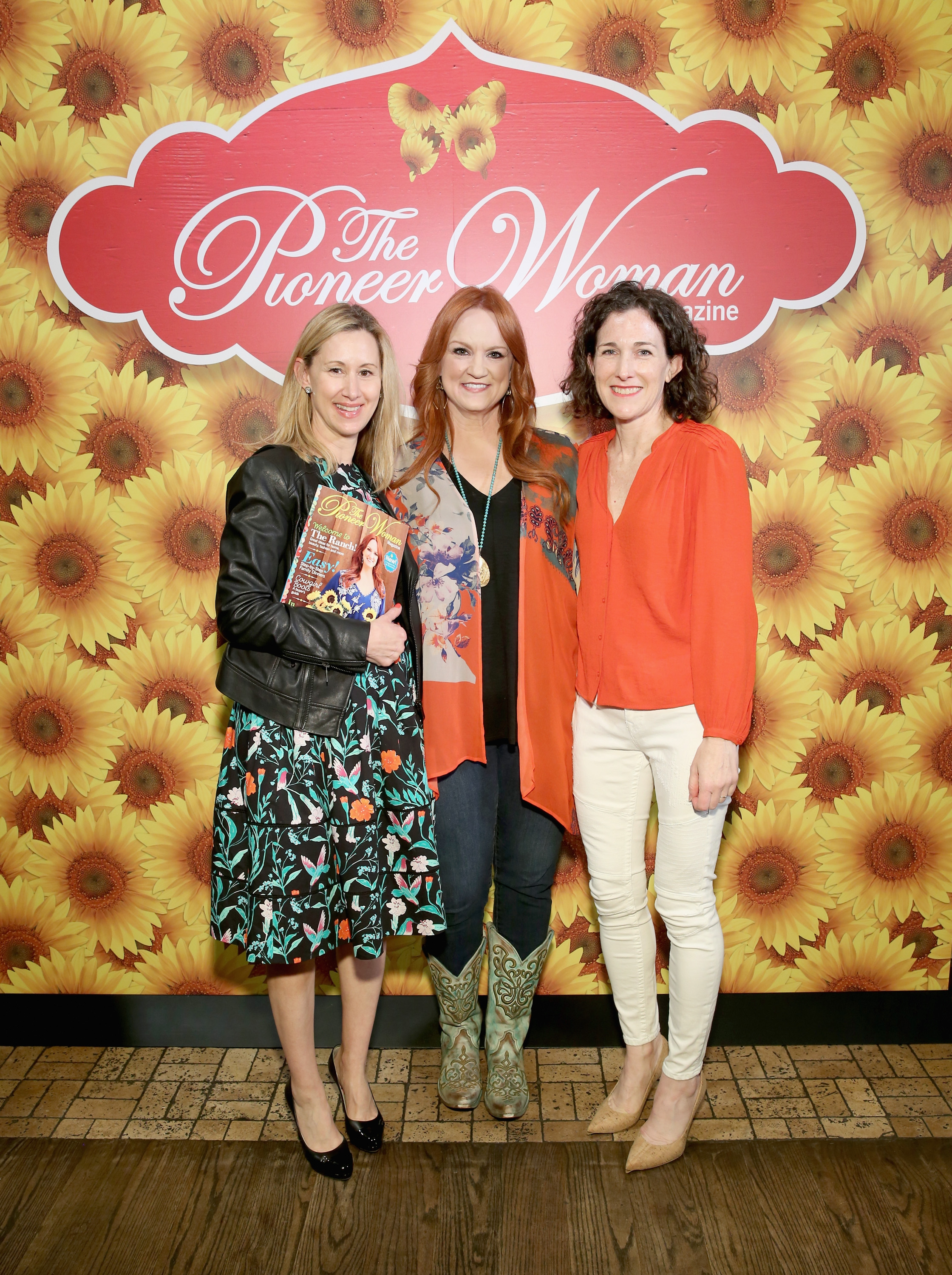
h1

ChicagoMod Magazine: A New Luxury Title That Promises To Deliver On Its Tagline By Showing Us How To Have A “Life Well Lived” – The Mr. Magazine™ Interview With Shannon Steitz, President & Publisher, ChicagoMod Magazine…
April 5, 2017

A Mr. Magazine™ Launch Story…

“The first five years of any business is never a walk in a rose garden. (Laughs) I knew that when I set out to do this, so I was never expecting a walk in a rose garden. Also, this industry is a challenge. As you mentioned earlier, there is a lot of competition out there, and there will continue to be, regardless of the misconceptions about print. And certainly, around niche publications, I feel there is a heavy misconception.” Shannon Steitz (On whether launching two print magazines has been an easy endeavor)…

A luxury magazine geared toward the ultra-affluent market, ChicagoMod joins its sister publication, HudsonMod, and gives us a glimpse of modern-day luxury for the Chicago metropolitan area, while also offering international perspectives for its very niche audience.

Shannon Steitz is president and group publisher of MOD Media, the company that produces both ChicagoMod and HudsonMod and said that their newest publication presents a fresh and different look at all the things that pique the interests of individuals who have a minimum annual income of $500,000, which she is the first to admit, is a very niche audience indeed, but one that isn’t being served in the way that ChicagoMod delivers.

I spoke with Shannon recently and we talked about this latest endeavor and how her company, which includes a custom publishing division, focuses on partnering with its clients to meet key marketing objectives, something that Shannon said is a must in the luxury magazine business. She hopes ChicagoMod will create opportunities for its brand partners to connect with Chicago’s most discerning audience and present the “Windy City” as a sought-after worldwide market for them.

The magazine will be distributed six times a year through exclusive in-home delivery to Chicago’s most affluent residents between the ages of 35 and 55, at high-profile events in the Chicago area, and through placement in-room at hotels and resorts and in high-end establishments, such as luxury retailers, spas and private jet terminals. It’s a beautiful, glossy publication that promises to deliver on its tagline of showing its readership how to have a “Life Well Lived.”

So, I hope that you enjoy this up close look into a luxury market magazine and the woman behind it – the Mr. Magazine™ interview with Shannon Steitz, president & publisher, ChicagoMod Magazine.

But first the sound-bites:

On whether people have asked her if she’s out of her mind for producing another luxury title for an already crowded Chicago market: I’ve heard that Chicago is a crowded luxury market before, but I don’t really view it that way. Greenspun and Modern Luxury are there, that’s two publications, and there are some others that we’re certainly aware of as well. But I think that’s just an indication that it’s a viable market, really. Competition is good; I’ve always viewed it that way.

On how her luxury titles differ from the others already in the marketplace: From a content standpoint, people will see a distinction there, in that while it is a Chicago magazine, and we certainly have a lot of Chicago content, there is also international content to serve the discerning appetites of our ultra-affluent readership.

On whether she thinks print is still the best way to reach that readership: I think a customized, multimedia solution is the best way to reach any audience, including the ultra-affluent. Print is one of many pieces of the puzzle, and that’s how we approach all of our client relationships.

On what she offers in that multimedia approach: We approach each relationship with a comprehensive needs analysis, really trying to understand our clients’ objectives and coming up with custom-tailored solutions to meet them. And that’s different for every client.

On what some of those solutions are: It really ranges, but at the end of the day, it’s really about tapping into their perspective buyer who has the ability based on demographics, and we’re able to deliver that more effectively, I feel, than most other media companies.

On the magazine’s tagline “Life Well Lived” and what it means: As far as the meaning of a “Life Well Lived,” we’ve learned over the years by interviewing many, many people and asking them what luxury means to them, it’s so subjective and it means very different things to various people.

On who would be standing in front of her if she could strike the magazine with a magic wand and turn it into a living, breathing human being, and would it be her: It wouldn’t be any one person. I think, certainly, my opinions weigh heavily, in terms of our publications, but at the same time, I look toward others on my team to collaborate and ensure that we’re putting out the very best quality product that we can possibly produce. I’m the type of person that sits in meetings and encourages feedback from my staff, realizing at the end of the day that I don’t know everything, and it’s impossible to stay on top of everything that we have to cover.

On whether her last five years in the publishing business with HudsonMod and now with ChicagoMod has been a walk in a rose garden, or she’s had to face challenges along the way: The first five years of any business is never a walk in a rose garden. (Laughs) I knew that when I set out to do this, so I was never expecting a walk in a rose garden. Also, this industry is a challenge. As you mentioned earlier, there is a lot of competition out there, and there will continue to be, regardless of the misconceptions about print, certainly around niche publications. I feel there is a heavy misconception.

On what motivates her to get out of bed in the mornings: What makes me most satisfied is when I see that our services and our products are working on behalf of our clients, and that we’re having a positive impact on their business. As a former CFO, there’s nothing better than that.

On what’s next for her company: That remains to be seen, but there will certainly be another market next year, and we’ll continue to also grow the custom publishing division of MOD Media as well.

On anything else she’d like to add: I think Chicago is a great city and I’m so thrilled that we chose it for this magazine. I’ve spent a lot of time there. Aside from all of the statistics that support us moving into that territory, it’s just a place that I now consider home myself.

On what someone would find her doing if they showed up unexpectedly to her home one evening: I’m rarely at home, you’d be lucky to catch me there, but you would certainly find me with my dog, Missy. I have a rescue that is half Shar-Pei and half Yellow Labrador. Her pen name is Hudson Maddie, as she grew up in the office of HudsonMod. So, I’m certainly with my dog and my children, when they’re not off playing sports and doing their thing, because they take a lot after their mother, so they’re rarely home as well.

On what keeps her up at night: Just thinking about the things that I wasn’t able to get to during any given day. It’s never fast enough; it’s never good enough; it could always be done better, quicker and differently. So, I’m always looking to, basically, enhance and elevate all that we do as a company, in each and every publication.

And now the lightly edited transcript of the Mr. Magazine™ interview with Shannon Steitz, president and publisher, ChicagoMod magazine.

Samir Husni: Do people ask are you out your mind because you published a print magazine five years ago, and now you’re doing another one in a very crowded luxury market; what gives?

Shannon Steitz: I’ve heard that Chicago is a crowded luxury market before, but I don’t really view it that way. Greenspun and Modern Luxury are there, that’s two publications, and there are some others that we’re certainly aware of as well. But I think that’s just an indication that it’s a viable market, really. Competition is good; I’ve always viewed it that way.

And we do offer key points of distinction and unique offerings to our clients, so I think there’s room for another publication, and there is certainly room for ChicagoMod.

Samir Husni: When you say there’s room for other publications and other points of differentiation; tell me the DNA of ChicagoMod, and HudsonMod, since you’ve been doing that title for five years now, and how are your titles different from the other luxury titles in the marketplace?

Shannon Steitz: From a content standpoint, people will see a distinction there, in that while it is a Chicago magazine, and we certainly have a lot of Chicago content, there is also international content to serve the discerning appetites of our ultra-affluent readership. In order to receive ChicagoMod, one has to earn a minimum of $500,000 annually, so we want to ensure that we’re serving those appetites with insider perspective and content written by industry experts.

Samir Husni: Do you think print is still the best way to each that audience?

Shannon Steitz: I think a customized, multimedia solution is the best way to reach any audience, including the ultra-affluent. Print is one of many pieces of the puzzle, and that’s how we approach all of our client relationships.

Samir Husni: Can you describe that multimedia approach in your client relationships; what are you offering besides the content of the magazine that is a different experience than they can get with Modern Luxury or Greenspun?

Shannon Steitz: We approach each relationship with a comprehensive needs analysis, really trying to understand our clients’ objectives and coming up with custom-tailored solutions to meet them. And that’s different for every client. More times than not, given our track record on the events side, our clients do want us to host events. So, we typically produce events on their behalf, in addition to digital and other strategic marketing offerings.

Samir Husni: Can you name a few of those solutions?

Shannon Steitz: It really ranges, but at the end of the day, it’s really about tapping into their perspective buyer who has the ability based on demographics, and we’re able to deliver that more effectively, I feel, than most other media companies.

Samir Husni: You’re tagline is “Life Well Lived.” And your Letters from the Publisher are so personalized, they actually reflect your life well lived. Do you see yourself as the persona of the magazine and it’s a reflection of you?

Shannon Steitz: As far as the meaning of a “Life Well Lived,” we’ve learned over the years by interviewing many, many people and asking them what luxury means to them, it’s so subjective and it means very different things to various people.

As far as what I view myself as, that’s an interesting question because I’ve never thought of it. What is top of mind is, I view myself as a businesswoman and an entrepreneur; I love what I do and I think that represents a piece of that “Life Well Lived,” loving what you do every day.

Samir Husni: If you could strike the magazine with a magic wand and turn it into a living, breathing human being, who would be standing before you afterwards? Would it be Shannon Steitz?

Shannon Steitz: It wouldn’t be any one person. I think, certainly, my opinions weigh heavily, in terms of our publications, but at the same time, I look toward others on my team to collaborate and ensure that we’re putting out the very best quality product that we can possibly produce. I’m the type of person that sits in meetings and encourages feedback from my staff, realizing at the end of the day that I don’t know everything, and it’s impossible to stay on top of everything that we have to cover. So, at the end of the day, yes, I think the magazine, of course, represents a fair amount of me personally, but also my staff.

And on our staff we have experts. If there’s an auto feature, it’s written by Ferrari magazine’s former editor in chief, Dom Miliano. He’s an expert and has driven every make and model car prior to writing about it. So, I really look toward my staff quite a bit to ensure that the quality level is there in this publication.

Samir Husni: Has it been a walk in a rose garden for you these last five years with HudsonMod and now with launching ChicagoMod, or have you had some challenges along the way?

Shannon Steitz: The first five years of any business is never a walk in a rose garden. (Laughs) I knew that when I set out to do this, so I was never expecting a walk in a rose garden. Also, this industry is a challenge. As you mentioned earlier, there is a lot of competition out there, and there will continue to be, regardless of the misconceptions about print. And certainly, around niche publications, I feel there is a heavy misconception.

I think we’ve been very fortunate, and we’ve been very blessed at the same time to have had the five years that we’ve had. Part of that is probably luck, and the other part is our hard work. We live this. There is a lot of blood, sweat and tears in every client relationship; in every publication that we produce, especially on our custom publishing side. So, nothing is a walk in the park. (Laughs again)

Samir Husni: What makes Shannon click and tick; what motivates you to get out of bed every morning and look forward to another day in a life well lived?

Shannon Steitz: What makes me most satisfied is when I see that our services and our products are working on behalf of our clients, and that we’re having a positive impact on their business. As a former CFO, there’s nothing better than that.

Samir Husni: You began with New Jersey/New York, now Chicago; what’s next?

Shannon Steitz: (Laughs) That remains to be seen, but there will certainly be another market next year, and we’ll continue to also grow the custom publishing division of MOD Media as well.

Samir Husni: Is there anything else you’d like to add?

Shannon Steitz: I think Chicago is a great city and I’m so thrilled that we chose it for this magazine. I’ve spent a lot of time there. Aside from all of the statistics that support us moving into that territory, it’s just a place that I now consider home myself. And I couldn’t be more thrilled.

In fact, we’re premiering the magazine in Chicago very soon and Taylor Kinney and the cast of “Chicago Fire,” a number of athletes and other celebs will all be lining the red carpet.

Samir Husni: If I showed up unexpectedly to your home one evening after work, what do I find you doing; reading a book; watching TV; having a glass of wine; reading a magazine; or just playing with your dog?

Shannon Steitz: I’m rarely at home, you’d be lucky to catch me there, but you would certainly find me with my dog, Missy. I have a rescue that is half Shar-Pei and half Yellow Labrador. Her pen name is Hudson Maddie, as she grew up in the office of HudsonMod. So, I’m certainly with my dog and my children, when they’re not off playing sports and doing their thing, because they take a lot after their mother, so they’re rarely home as well.

Samir Husni: My typical last question; what keeps you up at night?

Shannon Steitz: Just thinking about the things that I wasn’t able to get to during any given day. It’s never fast enough; it’s never good enough; it could always be done better, quicker and differently. So, I’m always looking to, basically, enhance and elevate all that we do as a company, in each and every publication. Occasionally, does that keep me up at night? Absolutely. But not often, because typically when my head hits the pillow, I’m out, preparing to go onto the next day and the next adventure, which I love.

Samir Husni: Thank you.