Archive for September, 2024

h1

Ray Seebeck , The Twenty Something Young Person* Behind The Unique Print Magazine “Magazine TM” The Mr. Magazine™ Interview

September 28, 2024

“There’s something different about holding something in your hand and looking at it to actually create that experience that we want to create.” Ray Seebeck, Founder and Editor

They say Gen Z is the digital generation, and print is their parents and grandparents’ medium.  However, one twenty something young person from Chicago begs to differ from that adage. They are the founder and editor of  the print “Magazine TM” which they launched last year. 

The oversized, accordion bound magazine, is a beauty to view and a delight to flip through its pages. Ray wants the magazine to be an experience for artists and the audience. An experience it is. It is a very pleasant experience that ends with a series of pages that looks like a wall mural.

To say Ray is passionate about print, would be an understatement, but they are also very digitally oriented.  They use online for their research and searches for anything and everything beautiful. They hope to invest in that passion to create a profitable magazine that will hopefully make a living for them and those who work with them.

So please enjoy my conversation with a print fanatic, Ray Seebeck, founder and editor of “Magazine TM,” but first the soundbites:

On the role of print in a digital age: “For me the end solution is print. Part of what I’m trying to do is make that finished product.”

On the binding method for Magazine TM: “I wanted to do something that was memorable, that was unique for the first issue. We settled at the accordion bound method.”

On the magazine audience: “Right now, it’s mostly people in the art community is who I want to reach.”

On their vision of the magazine: “It’s more an experience of actually viewing art through how it’s designed.”

On their goal for the magazine: “I’m trying to make a model where it’s positive for the artists. It’s building community for the artists.”

On their aim to help artists: “It’s really important for the artists to have their work published. It’s huge. And then just to be doing something that I love is hopefully showing people and inspiring them in a small way.”

On the TM in Magazine: “The answer is no. It’s a play on letters… it’s not actually a trademark, but what it means is TM stands for The Magazine. So it’s basically Magazine, The Magazine is what it stands for.  And TM is like abbreviation.”

On what keeps them up at night: “It’s just the idea of the keeping the magazine running. That’s a big one.”

And now for the lightly edited conversation with Ray Seebeck, the founder and editor of Magazine TM:

Samir Husni: My first question to you is, you’re a young man in his 20s, and you launched and produced a print magazine unlike any other print magazine that I’ve seen in a long time. What’s your fascination with print?

Ray Seebeck: It probably started when I was a young kid. I did collect some magazines. I collected National Geographic, and we had Life Magazine running around the house, and Sports Illustrated.

I was a big Sports Illustrated fan, but I really got into print as an art form in college at the School of the Art Institute of Chicago. I had some really great experiences there where I learned from teachers screen printing, lithography, and letterpress as well. So I really just developed. It was a great opportunity where I was able to chart my own education, and so I studied in the print media department at SAIC, where you were able to take the classes you want to take, and I was able to take a lot of classes related to printmaking and try to develop a lot of skills in that field.

Samir Husni: People will tell you we live in a digital age. What makes print so attractive to you? You’re so passionate about print, you produced a magazine called Magazine. What’s in you that makes you feel print is essential today as it was yesterday?

Ray Seebeck: It’s kind of a tough question to answer, but I feel print is just the answer, it’s the solution.

There’s no other solution for me. There’s no other possible route, like the end product. For me the end solution is print. Part of what I’m trying to do is make that finished product. There’s something different about holding something in your hand and looking at it to actually create that experience that we want to create. So printing is sort of a solution for that.

Samir Husni: Why did you choose this format for magazine? It opens up like an accordion and it becomes like a mural.

Ray Seebeck: I worked with, I worked with a few people to make it.

We had five meetings as we were preparing to make the magazine and as I was gathering submissions. And so one friend from New York, one of my classmates from college, and a friend’s friend from college. We had a few Zoom meetings.

My friend Christiaan, who’s a designer, the print designer, who works with me to design print, put together this like Pinterest board with different print and different binding ideas. We talked through what were the design details we wanted to have for the magazine. We discussed different binding formats.

We all kind of came to a decision together. I wanted to do something that was memorable, that was unique for the first issue. We settled at the accordion bound method. That opened up so many possibilities for the actual design of it, which was really exciting.

Then one of the people who I was working with asked what size we wanted to make it and we decided large format would also be very memorable. We went by the 11X17 size. Those are the two key elements as we decided accordion bound and large format.

Christiaan and I  had some book binding skills from our college days, so we were able to figure out how to do that.

I definitely want to turn it into a business and hopefully make a living off it and help other people make a living off it.

Samir Husni: Who’s your audience? Who do you want to reach with this magazine?

Ray Seebeck: Right now, it’s mostly people in the art community is who I want to reach.

I would love to reach art collectors. It is an audience I want to grow to. Anyone who’s like interested in art and artists. So I’m hoping to expand the audience. But right now it’s mostly people in our community.

Samir Husni: Give me the elevator pitch the magazine?

Ray Seebeck: I would say there’s a few things that are really important: I’m really trying to create a different kind of publication, something that’s different than what most people have seen before. A magazine that’s more an art experience. It’s a simple magazine. It’s more an experience of actually viewing art through how it’s designed. That’s one huge aspect is trying to do something really creative.

The second aspect is that I’m trying to create a better experience for the artists. So there are a few art magazines they make artists pay them to get involved in their magazine. I’m trying to make a model where it’s positive for the artists. It’s building community for the artists. And it’s something that artists want to be a part of and they can themselves grow through being involved in it. So those are the two key probably aspects, I would say.

Samir Husni: Is the magazine a mirror reflection of you? Are you the magazine?

Ray Seebeck: I would say yes and no. I put so much of myself into it. So in one way, it’s a lot of the artists in the magazine are artists, that I’ve had the pleasure of experiencing at art shows or events. I’m kind of reinterpreting the art that I’ve taken in through the magazine. So in that way, it’s sort of a reflection of me. And then also, I would say, being it’s not meant to be super loud. It’s not meant to be super loud and showy.

It’s meant to be reserved. Once you start looking at it, it’s kind of an amazing experience. In that way, it’s maybe a reflection of my personality maybe kind of a reach. I definitely put a lot of myself into it. But at the same time, I feel like it is something totally different. Just like an end product of a lot of hours of work.

Samir Husni: It sounds like you have a love affair with this publication. Do you ever or would you consider it to be also a business? Is your dream to make money from this or just to do a magazine and say, hey, I have a magazine?

Ray Seebeck: No, I definitely want to turn it into a business and hopefully make a living off it and help other people make a living off it.

That’s the dream. So I’m trying to take small steps every month to achieve that. So in terms of  producing the magazine, I have to figure out how much each issue costs and how much I’m selling each issue.

And then packaging and mailing is a huge thing I’m working on trying to reduce the cost of. Then just trying to create more revenue by expanding to new areas such as a podcast I started, which is basically just interviews for the next issue of the magazine.

I’m trying to create new ways to maybe make money off it. I have some like possible goals for the future. But right now it’s a passion project.

So I work on it whenever I can. A lot of times late nights and things like that. But my dream is to definitely turn into business.

Samir Husni: Good luck on that.

Ray Seebeck: Thank you.

Samir Husni: What are you looking for to work in print?

Ray Seebeck: I’m really looking to just to keep the magazine going. That’s the main goal.

So if I can keep it afloat, and not losing money on it. At the end of the day, if I’m what’s most important to me, is to put something out into the world and to have it mean something to people. That’s a big part of it.

It’s really important for the artists to have their work published. It’s huge. And then just to be doing something that I love is hopefully showing people and inspiring them in a small way.

Samir Husni: So Because you have limited distribution, how can people get the magazine?

Ray Seebeck: So I did, with the first issue and also will do with the second issue coming out next March, a presale for them, probably the month of February. I’ll have a presale online and that determines how big the edition is going to be for the next issue. Basically print however many copies we sell for the limited edition.

Samir Husni: And your website is?

Ray Seebeck: It’s rayseebeck.com backslash magazine dash tm.

Samir Husni: Okay. Were you able to register magazine as a trademark?

Ray Seebeck: That’s a good question. The answer is no. It’s a play on letters.  So it’s slightly misleading, which I understand because it’s not actually a trademark, but what it means is TM stands for The Magazine. So it’s basically Magazine, The Magazine is what it stands for.  And TM is like abbreviation.

Samir Husni: Is there any question that I should ask you that I didn’t ask you? Or anything you would like to add.Ray Seebeck: I would say I have done a lot of market research, not necessarily market research, but read research on different publications and podcasts that has really informed me in the evolution of the magazine, the design evolution for especially for this next issue. So I could talk about that a little bit, if you wanted me to.

So have you ever heard of Esopus magazine? It’s no longer published.

There was a show at the Colby College Museum of Art about Esopus magazine. I learned about it because of that show. I actually found a copy at a bookstore in Chicago. That was really cool to see that magazine because they do a lot of similar things in terms of creatively, making creative layouts, interviewing artists, and having different formats in the magazine. That was pretty cool. It’s something to look up to.

But it’s definitely not the perfect model of what I’m trying to do. But it was cool to see. I’ve gained a lot of research by going to libraries and looking through old magazines, or print design inspirations.

I also have gotten a lot of inspiration from different art books, too. I just wanted to share that I’ve done a lot of research of looking through magazines and also art podcasts. I’ve been listening to a lot of art podcasts in the last year or so.

Samir Husni:  Let me ask you my typical last questions. If I come uninvited to visit you one evening at your home or apartment, what do I catch Ray doing? Watching TV, cooking, having a glass of wine?

Ray Seebeck: So to be honest, most nights, what I’m doing is after I’ve done everything I need to do that day, I’m generally pretty busy.

I generally will like take a shower, change into like a comfortable t-shirt and shorts and make dinner. I will turn on the TV basically every night. I watch a lot of different television shows.

Right now I’m watching like the Great British Bake Show. And RuPaul’s Drag Race is a big show that I like.  I watch a lot of TV shows. I’m currently watching Only Murders in the Building.

I like to decompress. I know the  magazine is very print oriented, but I’m also a very digitally oriented person. So I do a lot of online research and look through a lot of photographs all the time. That’s generally what I’m doing at night.

Sometimes I’ll… If I have something to work on for the magazine, I will work on that at night. That’s kind of my exception is that because I love doing it. If I have like if I have a submission from an artist, I will like organize all the content or work on the design layout at night.

Samir Husni: My typical last question is what keeps you up at night these days?

Ray Seebeck: I’m worried about the magazine falling apart. I would say that keeps me up. It’s just the idea of the keeping the magazine running. That’s a big one. There’s a lot of things that goes into that. Making money for the magazine also sometimes will keep me up. And just like diversifying.

Samir Husni:  Thank you and good luck.

  • Ray is a non-binary and they use they/them pronouns.
h1

They Don’t Make Magazine Like They Used to! Do They?  A Mr. Magazine™ Musing

September 26, 2024

Magazine making is an art.  It was, is, and always will be.  However, there is great art, mediocre art and just plain bad ugly art.  To each its own.  Continuing my journey into the magazines from years gone by, let alone a century, I happened to come across the first issue of Horizon magazine from September 1958.  It is a hard back that is encyclopedic in look and content.

The editors wrote in the foreword (two full pages) to the first issue: “We take for our title the word horizon because it is here, where earth and sky meet, that one may observe those jagged interruptions in the landscape that are the words of man: the squat mud houses of ancient Sumer;”  The editors continued, “the gleaming statuary of the isles of Greece; the stately sky line of Venice when “she did hold the gorgeous East in fee”; a perfect bridge in Peking; our own soaring, protean civilization; all that moved Milton to write that

         Towered Cities please us then,

          And the busie humm of men.

I wonder if today’s reader would need a translation of the above.  Remember, this is just part of the foreword of the magazine.  The editors continue, “Culture, the concern of this new magazine, is both achievement and dream, a work of hands and a movement of the spirit, the special property of man since the great miracle of the Sixth Day – since Darwin’s hairy quadruped dropped from his tree and (how many millennia later?) first lifted up his gaze to seek something beyond mere food and drink.”

If that’s not enough of pure excellent prose, read on and say how magazines were made and how they were meant to be.  The editors of Horizon continued, “ Culture is art and ideas, past and present, taken in sum as a guide to life.  It is history too, the science which Dionysius tells us is “philosophy teaching by examples,” with philosophy suspended between the I-believe of theology and the I-know of science.”

The editors added, “ This magazine in any case is commenced in the belief that some better guide than now exist in America is needed to the house of culture, with all its thousands of rooms.”  In conclusion, the editors wrote, “We invite all those whose interests lie in this broad field, whether as contributors or readers, to join us in this venture.”

When was the last time you read something like this? Something that makes the magazine a piece of art to keep and collect?  Are the magazines of today worth keeping?  Are they a “better guide than” what exists in America today? You be the judge and the jury. 

Would love to read your comments. As always keep in mind that if you would like to take a dive into the “oldies but goldies” magazines of the past, feel free to reach to John Henry at the Specia Collections division of The University of Missouri Libraries and ask for the Samir Husni Magazine Collection.

Until the next musing, stay tuned …

All the best

Samir “Mr. Magazine™” Husni

h1

Model Cars: The Hobbyist Magazine Celebrates 25 Years.  The Mr. Magazine™ Interview With Gregg Hutchings, Editor & Publisher Extraordinaire.

September 22, 2024

“Print is forever… With magazines, its there. It’s permanence. It’s always there.” Gregg Hutchings

Those who read my blog know that I don’t use adjectives such as extraordinaire, or incredible, or outstanding and such.  But after my conversation with Gregg Hutchings, editor and publisher of Model Cars magazines, I felt the urge and the need to use such adjectives.  The one-man band has been at it for more than two decades, with the last 15 years dedicated to Model Cars magazine.

To quote his bio, “My name is Gregg Hutchings, and I grew up in Kailua, Hawai’i, on the windward side of the island of Oahu. I graduated from Kalaheo High School in 1979 majoring in hot rods and girls, and went into the automotive industry as a mechanic. Around 1984, I hurt my back working at a Porsche/VW/Audi dealership, and had three back surgeries during the 1985-1987 time frame. To help pass the time, I got into building model cars, a hobby I grew to be a part of locally.”

Hurting his back was just the beginning of his journey with pain and surgeries.  He was rear-ended twice in car accidents which only enhanced the pain and introduced more surgeries, that as you will read in my conversation with Gregg, forces him to work on the magazine laying on his back.  The pain is so severe at sometimes, he can’t sit down to work. “Because I fall a lot. My head gets knocked up from the falls,” Gregg tells me, “my back will just seize up and I lose all feeling and everything. And it’s not a good way and it’s not a fun way to live life.”

With at least six surgeries so far, and a host of screws and pins in his back, Gregg refuses to give up and is so happy to announce that this coming October the magazine will celebrate its 25 anniversary. 
The first issue of Model Cars was published in October 1999.

So please join me as you read this incredible story of an extra-ordinary man, wishing him a very happy anniversary and all the best for his health.

But first the sound bites from the conversation with Gregg Hutchings, editor and publisher, Model Cars magazine:

On getting published in the magazine: People must have “done something good to get in print, because anybody can get on the web. But to get in print is something else.”

On whether the magazine is a hobby or a business: “It pays my bills, it pays my monthly bills. And I’m able to travel to shows all over the country whenever I can because my wife and I actually caregivers for her mom. So that’s my full-time job.”

On the usage of digital and online: “We’re getting a lot of our content from online. So it’s a lot of accumulating what we see online and finding new people that want to be in print and are tired of their internet fame, because it is so fleeting.”

On his pain and physical health: “I can’t sit up. My whole desk is elevated. I can stand up and work. Or I actually lay down here. This is where I do a lot of work too, just laying down.”

On the audience reaction to him: “It’s like, here’s this guy from Hawaii that’s done something he loves to do. And people all across the country and the world just love to talk to him.”

On the plans for the 25th anniversary celebration: “I’d love to have a social media blitz going. Just to say, it has been 25 years. It’s the only magazine out there that’s lasted this long. I want to get more new people. Because one thing with COVID, I had 247 dealers, which gave me a lot. It did really well for my bottom line. After COVID, I’m down to 146. Now, I’m down to 129.”

On working on model cars: “I can’t work on cars anymore. I can’t build cars. I was an incredible mechanic. But with this hobby, it’s just every day I can work on cars.”

On what keeps him up at night: “Pain. Besides pain, it is the next project, I think, it’s always the next thing. It’s what do people want to see? Because they trust me.”

And now for the lightly edited conversation with the incredible Gregg Hutchings, editor and publisher, Model Cars magazine:

Samir Husni: My first question Gregg, you are approaching the 25th anniversary of Model Cars, and you’ve been the owner for the last 10 years. What’s the attraction to a print publication, a specialized print publication in this digital age?

Gregg Hutchings: Somebody gave me that word: eternity. It’s permanent. Because digital, you have to know where you’re looking. With magazines, it’s there. It’s permanence. It’s always there.

That’s what everybody likes, because everybody can put their self in or on a website or whatnot. But to get yourself into a magazine, to be in print, that means something to all these people. It’s self-acknowledgement.  They’ve done something good to get in print, because anybody can get on the web. But to get in print is something else. Print is forever.

You can go ahead, and if you did a mistake, you are not going to reprint the magazine. I always call my mistakes, I spell them M-I-S and then steak, like eat a steak. That’s how I spell my mistakes. I said, oops, I made a mistake. No backspace in the magazine. No control alt V or what.

Samir Husni: Give me your elevator pitch for Model Cars, for people who don’t know the magazine. You’re based in Hawaii, but the magazine is distributed in the entire country and internationally.

Gregg Hutchings: It’s the hobbyist magazine. It’s the magazine for the model car hobbyists. I got into it as therapy. A lot of the people I talked to have had health issues and whatnot, and that’s why they get into the hobby or got back into the hobby mostly. It’s always been that way. I think that’s why it’s not corporate, it’s down grassroots, that’s the word. It’s the grassroots magazine.

And the fact that I was able to do something really smart when I had Plastic Fanatic magazine, when I bought it, I think the circulation was about 2,500 or 3,000 and it was okay. But then I come up with this idea to sell directly to the hobby shops. That’s the core, that’s the key, billing the hobby shops directly. That’s why I’ve lasted 25 years, because I don’t have to worry about advertisers or circulation or doing renewals. Every issue I send out invoices and it pays for the printing.

Samir Husni: You mentioned, besides being therapy and hobby, that it’s your life, it’s your business. You’re not doing this for charity work or anything. You said that through this distribution system, it pays the bill for the printing. How about for the publisher, for the editor-in-chief?

Gregg Hutchings: It pays my bills, it pays my monthly bills. And I’m able to travel to shows all over the country whenever I can because my wife and I actually caregivers for her mom. So that’s my full-time job.

She’s 92 years old and she’s got major health issues. We are caregivers for her. I watch her during the day and my wife watches her at night, which is when I get to do my work that I need to.

Samir Husni: Describe for me, what’s a day in the life of Gregg? I mean, when you are putting this magazine together.

Gregg Hutchings: One thing I do like about what you did mention about the digital part is we’re getting a lot of our content from online. So it’s a lot of accumulating what we see online and finding new people that want to be in print and are tired of their internet fame, because it is so fleeting. Once they get in print, it’s forever.

Finding the people, making sure they’re a good fit, because like you said before, in your book, you got to keep that lighthouse going of what you’re actually about. And that’s what I think has kept me different from everybody else is I love this hobby. I love the people.

My best friends are model car builders, and I wouldn’t have it any other way. I was a mechanic for many years. I ran one of the biggest firms here for 10 years, all while doing the magazine too.

But the people with the hobby are just fantastic. I think that’s what makes these niche magazines so great, because it’s not a huge corporation. It’s a bunch of guys I can call up any time of day, say, hey, how are you doing? What are you building? What are you doing? Or if I need help, they’ll come and help me here. I couldn’t ask for something better. I really couldn’t. It makes good money because I can live here comfortably. It pays all the bills, but I have to chase the money. That’s the only thing I don’t like. I have to chase the money. That’s the hard part.

Because I can’t sit up. My whole desk is elevated. I can stand up and work. Or I actually lay down here. This is where I do a lot of work too, just laying down. And I always said, if I was 100%, I’d probably have this magazine at 20,000 circulation.

But it’s just hard to chase it. Right now, I’m at 5,500. And when I was with Source Interlink and Ingram we were at about 7,500 with a 63% sell-through. That’s unheard of.  The Atlanta group recently approached me to be back on the newsstands. A lot of people are asking for it. But because I’m so behind all the time, I’m about two months behind schedule. It’s just really hard to get back up to speed and being able to have a solid publication schedule. Still trying to do six issues a year. I started at six, went to nine.

Then when I got hurt in 2016, I went back to six. But when we’re doing nine issues a year, it was doing really good.

Samir Husni: You’re the publisher and the editor-in-chief.

Gregg Hutchings: Yeah, everything. Accounting, taxes, subscription, renewal.

Samir Husni: Which hat do you like more? The publisher or the editor-in-chief?

Gregg Hutchings: That’s a tough one. I kind of like the incognito guy, if that makes sense. Because if I go to shows and stuff, sometimes I won’t wear my shirts or my uniform, and people don’t know me.

I’ll just walk up behind them and talk to them, and they find out who I am. It’s like they met their idol or something. And it’s an incredible feeling. It really is. It’s like, here’s this guy from Hawaii that’s done something he loves to do. And people all across the country and the world just love to talk to him.

It’s not egotistical. That’s one thing about Hawaii. We don’t really have egos and all that stuff.

A couple of quick stories. When I go to shows, nine times out of 10, the person’s wife is the one that comes up to me and thanks me. Because it’s made such a difference in the husband’s life for doing the model cars. That’s what I like. I just think it’s unreal to be able to touch that many people. I know it sounds corny.

Samir Husni: No, it is your passion, love, and work all in one and one in all. So tell me, when Larry Bell retired and said, okay, here’s the magazine, in 2015, can you describe that moment? Can you describe your feeling?

Gregg Hutchings: Well, back up to 1999 when I went to the mainland and got hooked up with Golden Bell Press. I was co-owner with Larry Bell from the start of 1999.

And then about a year or two later in 2001, I was in a serious rear-ended accident in Denver. The back of the Honda Civic I was in, the bumper hit my seat. The back bumper hit the back of my seat.

I was the passenger. So I was extricated from that. And I came back to Hawaii and then Larry said, instead of being co-owner, he just paid me a straight salary.

So that way I didn’t have to worry about, I had strict income, I didn’t have to worry about percentages or whatnot. So he took over complete ownership and I was paid a salary or 1099.  I’m on heavy medications too. You became more like a freelance. You became on a set salary.

I became the editor instead of just the co-publisher. But he always considered me the publisher because I did everything still. It was just the financial part of it was it was safer for me because I had to go.

I went, I had three surgeries before that. Then after the accident, I had two more. And then it worked out great. We went up to nine issues a year. And then in 2015, he wanted to retire. And so he just gave me everything.

At that time, I had started another magazine called Slot Cars Magazine. And that one was doing really good. But the problem with that is when he gave me that magazine, he didn’t give me. The needed paperwork for the periodical mailing.

It’s terrifying. My wife, Kelly, and I went through the whole schooling process of that. But when he gave me Model Cars Magazine, he didn’t give me all the original paperwork.

So, I didn’t have the original requesters, all the copies of everything they had and whatnot. So, I could not get my periodical permit.

The post office really tried to help me out. They came to the house. They did the audits and everything. But I didn’t have the original paperwork. So, that was… I just gave up. And then in 2016, December, I was hit again.

I was rear-ended. My wife hates it because I drive by the rearview mirror. She’s like, what are you looking at? I said, I’m just watching, just watching. If I get hit again, I’ve got so much rods and screws in my back, it would be… This time, my next surgery is going to go through the front, break two ribs, fuse the front of it, flip me over, take out all six levels of rods and screws and go all the way up.

So, it’s not going to be fun.

Samir Husni: I wish you the best.

So, tell me, what are the plans for the 25th anniversary?

Gregg Hutchings: I don’t know. I’d love to have a social media blitz going. Just to say, it has been 25 years. It’s the only magazine out there that’s lasted this long. I want to get more new people. Because one thing with COVID, I had 247 dealers, which gave me a lot. It did really well for my bottom line. After COVID, I’m down to 146. Now, I’m down to 129.

So, I lost a lot of shops, a lot of hobby shops. I want to find more. Either go back to Barnes & Noble or find other ways to find other retail shops. Because that’s what does it for me. They pay the bill within 30 days. And it is about chasing the money.

I mean, the advertising revenue is not that high. I think I’m at 6.5%. But with my printing schedule,  I don’t have the reputation of being timely. Most of these people know me. And they know that,  he’ll be down for a week if something happens. Because I fall a lot. My head gets knocked up from the falls. My back will just seize up and I lose all feeling and everything. And it’s not a good way and it’s not a fun way to live life.

Samir Husni: Yeah, it’s not. So tell me, if I come uninvited to your house, not that I’ve been to Hawaii before, but let’s say I come to see you one evening, what do I catch Gregg doing? Reading a book, watching TV, or laying on the floor?

Gregg Hutchings: Probably the last one. Laying on the floor. I’ve got what I call the squirrel syndrome. I’ll see something shiny and I’ll just jump right on it and I’ll forget about what I was working on. And I’ll have so many projects going on.

I guess with the specialized part of the hobby, I’m always building something. I’m always working on something. I added the projects I am working on now on a spreadsheet. I’ve got 157 projects like that started. And it’s always something going.

I can’t work on cars anymore. I can’t build cars. I was an incredible mechanic. But with this hobby, it’s just every day I can work on cars. And then I got into computers.  I just met so many unreal people with the magazine. I’m just such a small little guy that has been able to do such unreal things.

Samir Husni: And what keeps Greg up at night these days?

Gregg Hutchings: Pain. Besides pain, it is the next project, I think, it’s always the next thing. It’s what do people want to see? Because they trust me.

Samir Husni: Is there anything you would like to add or I failed to ask you?

Gregg Hutchings: One thing I’ve always said is I don’t do reviews on something I haven’t had in my hands. So if a company sends something a PR piece, I’ll say, no, no, no, you got to send me the actual thing. Because people trust that.

Because they know that if I’ve looked at it, if I read it, if I wrote about it, so it’s either thumbs up, thumbs down, or like we say, a shocker or a no shocker. But I love the business side of it.

I really do. Because it’s got the potential to be really well. I used to tell Kelly, if I hit 20,000, that’s a million bucks a year for one guy.

That’s pretty good. So I mean, it can be done. And it’s just physically being able to do it.

It’s just, I wish I could. But I’m not going to give up. That’s the one thing people ask me with the pain and stuff.

How do you keep on doing it? I don’t know. I’ve got too much junk to pass on to my wife that I’ve got to keep on looking forward. And it’s just, I love the magazine industry too much.

Samir Husni:  Thank you.

h1

I Have Two Eyes…. A Mr. Magazine™ Musing

September 16, 2024

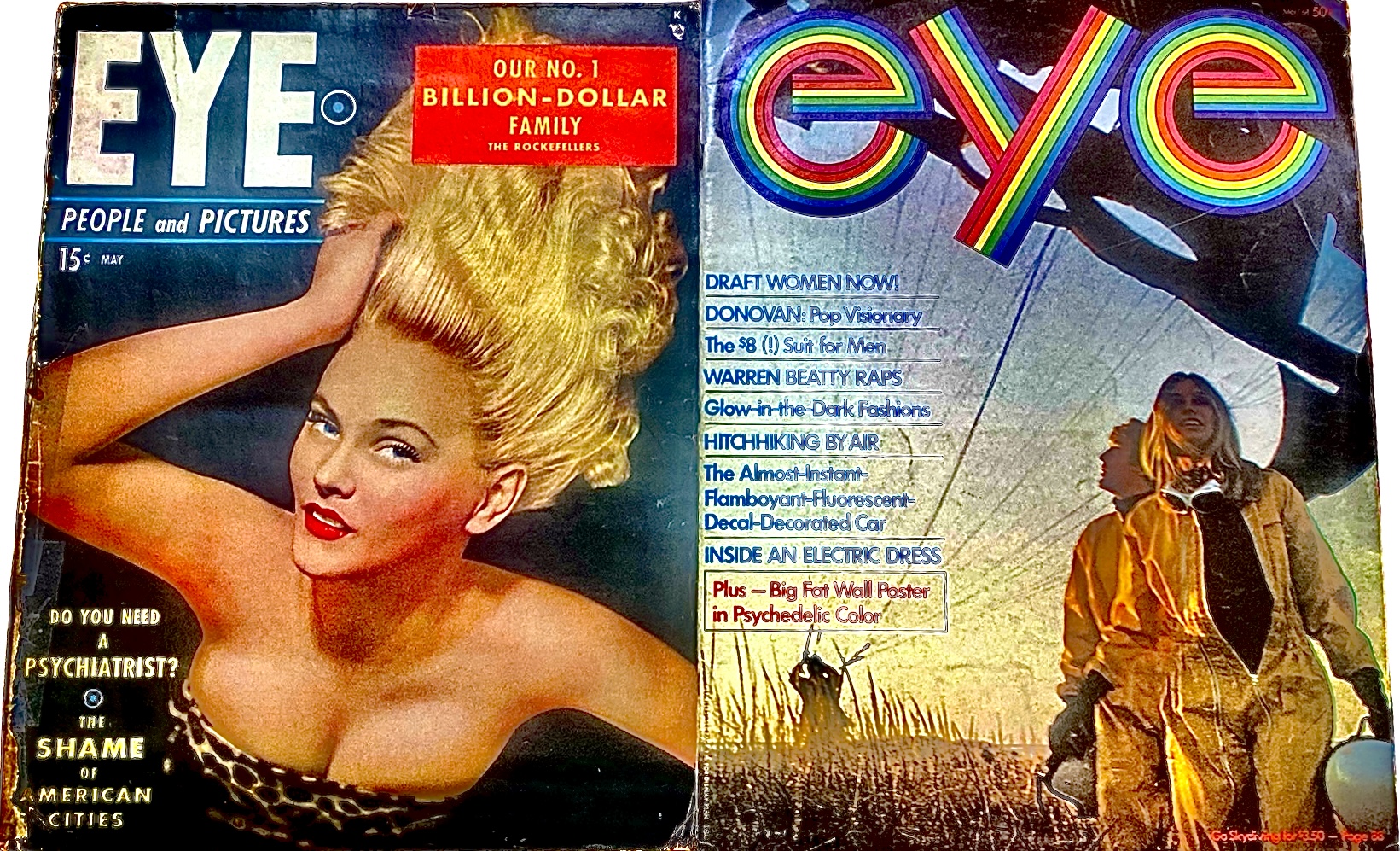
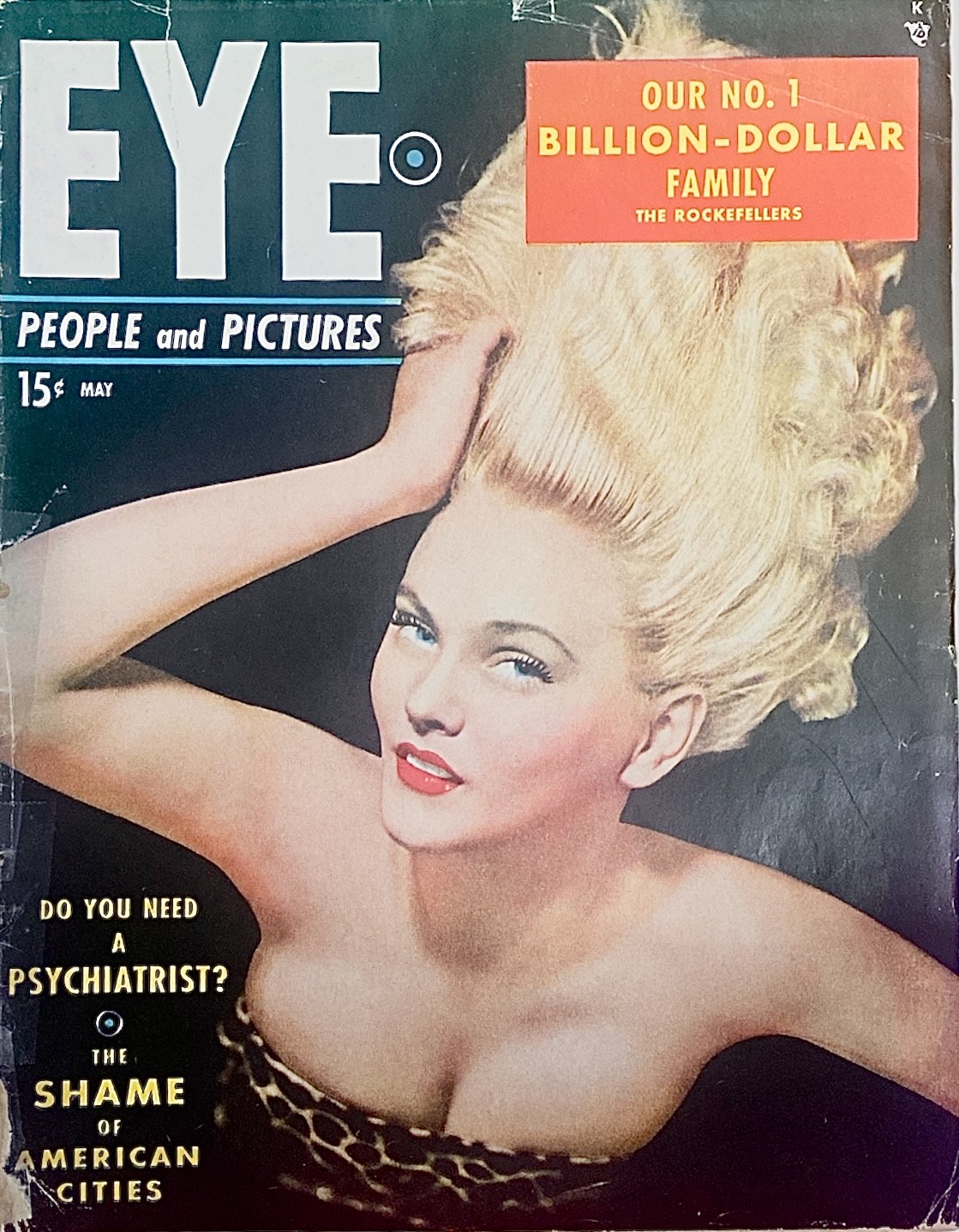
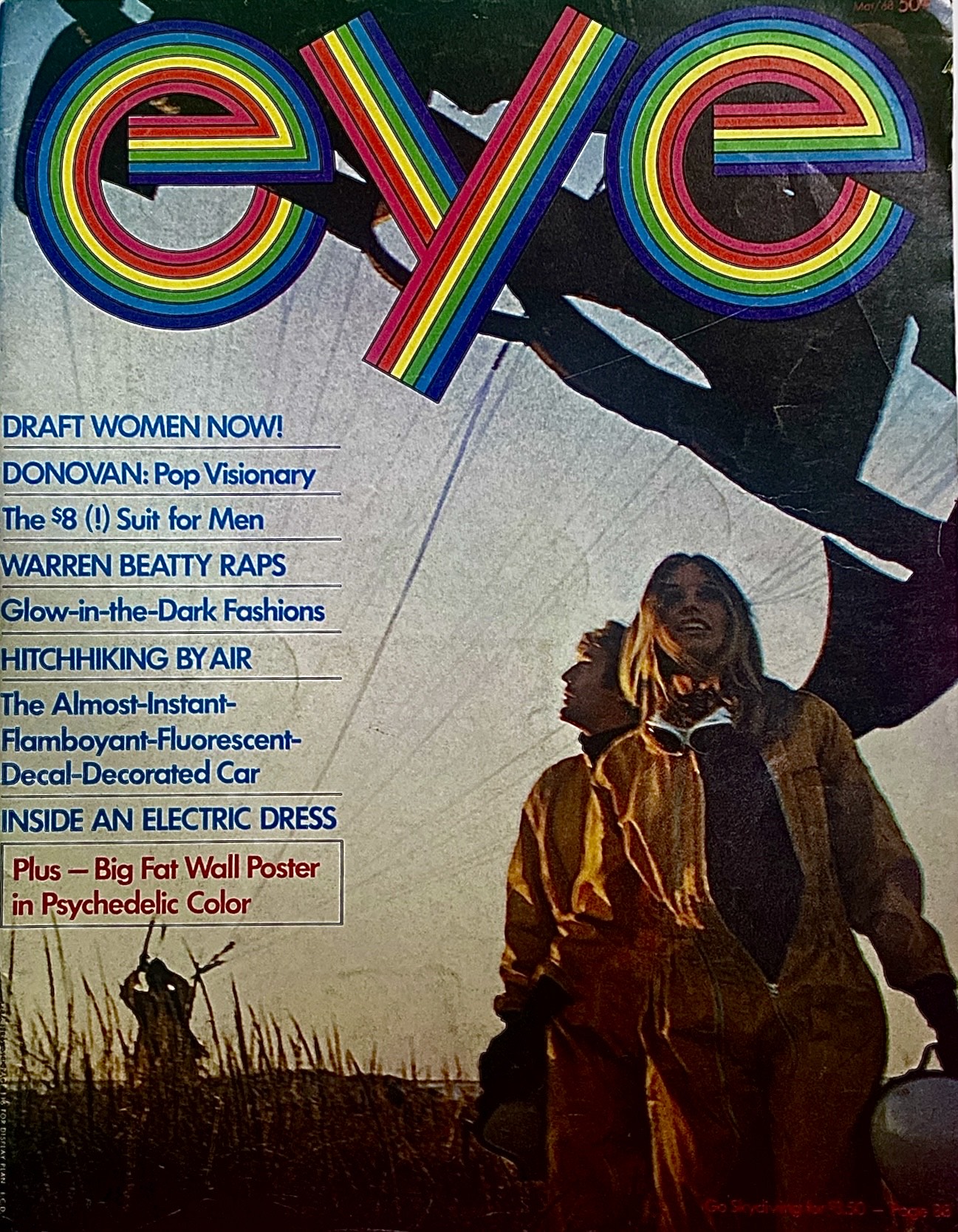
That is two Eye magazines.  One from the days before I was born, and the other when I was a 13-year-old teenager.  However the two Eyes have a lot in common and few good lessons to learn if you ever thought or think of going into the magazine business.  And by magazine, I mean the ink on paper publication that is published on some regular frequency.

So without any further ado, here are the lessons I have found in those two Eyes that are still applicable in the year 2024, some 75 years after the first EYE was born:

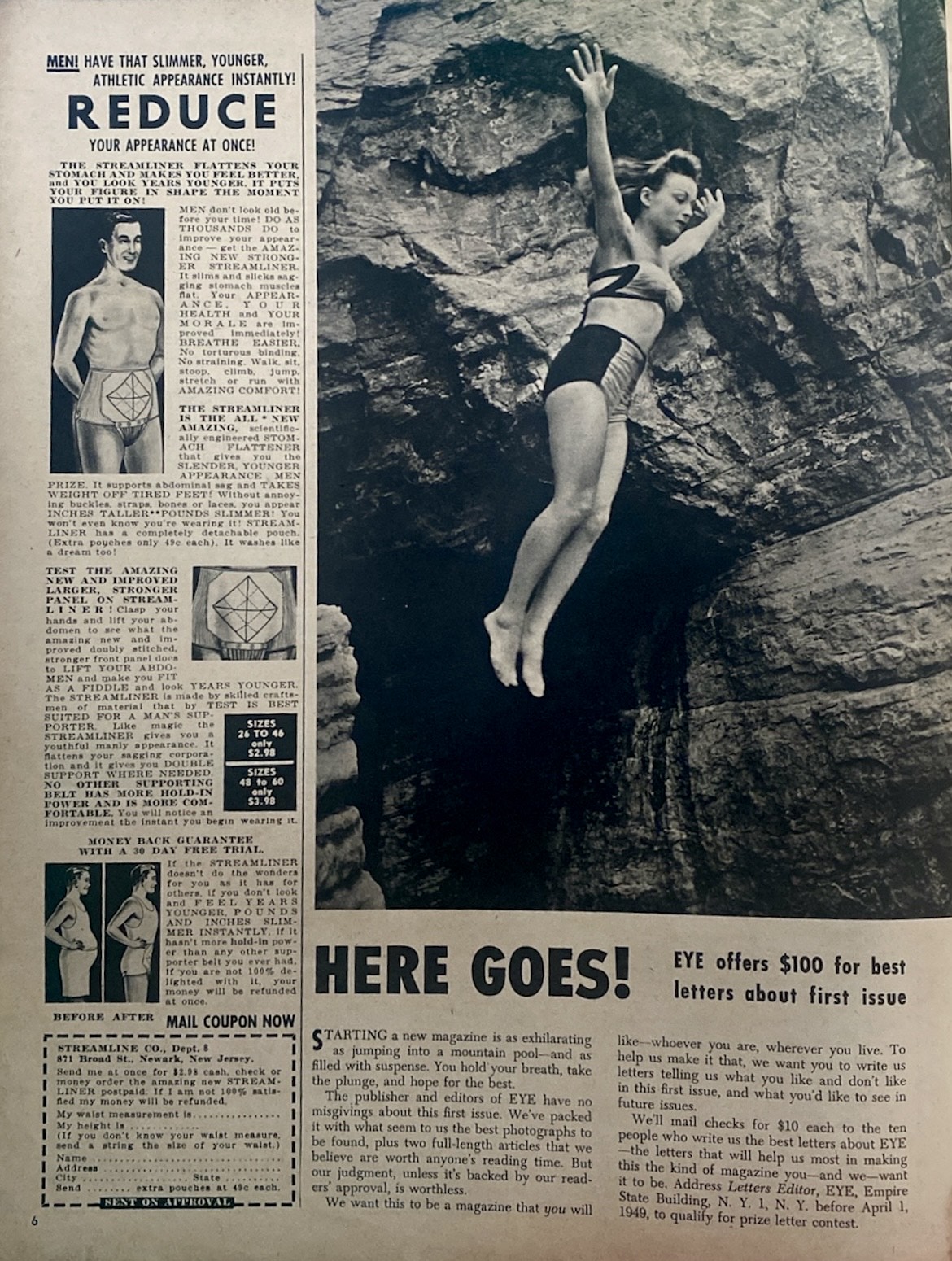
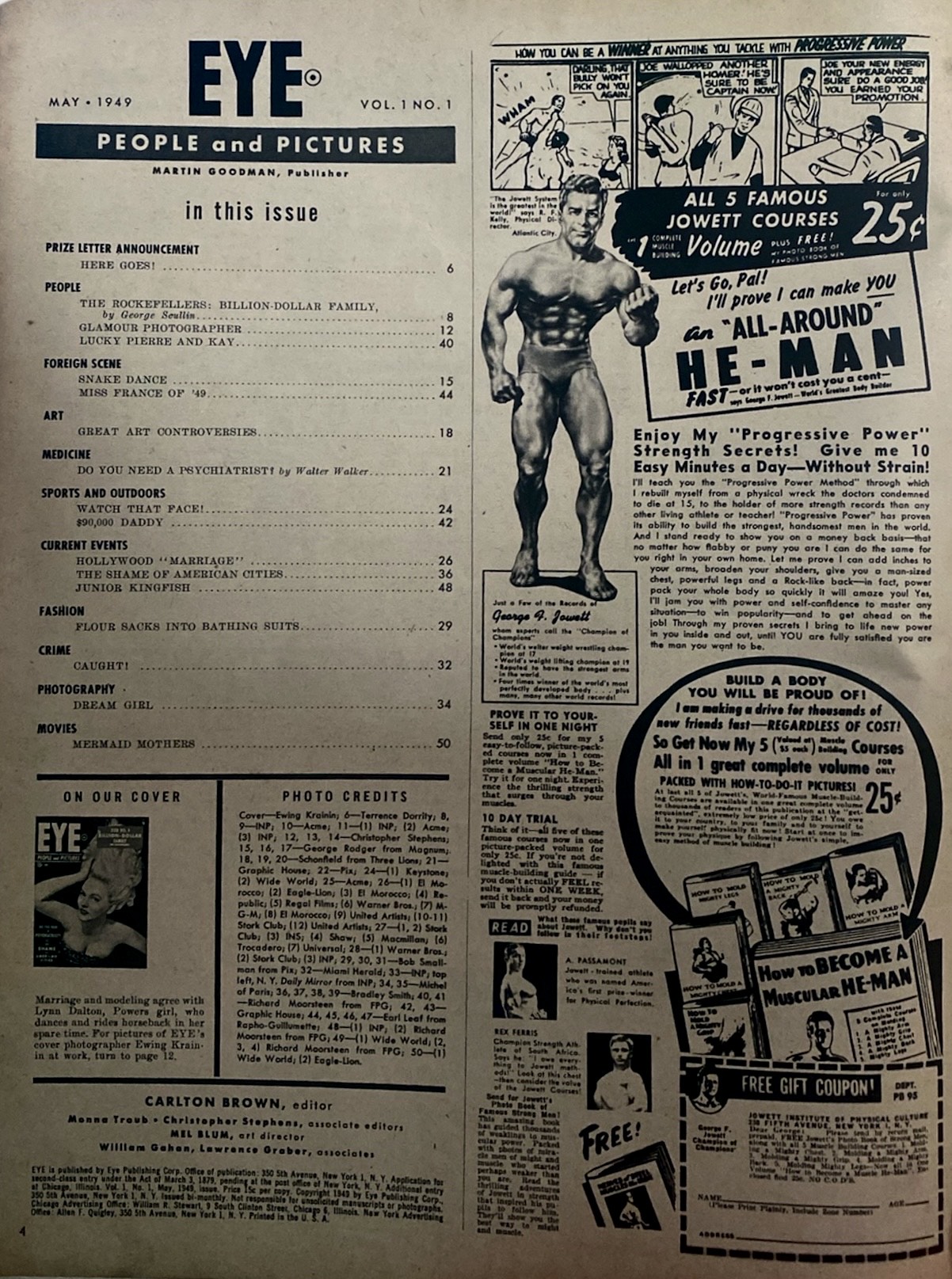
Lesson number 1:  Magazine publishing is not for the faint of heart.  In 1949 when the first EYE ( Martin Goodman, publisher and Carlton Brown, editor) was published, magazines were the only mass medium available to the public nationwide.  This EYE was first published in May 1949 with the tag line “People and Pictures.” The editors wrote in the first letter to the readers, “Starting a new magazine is as exhilarating as jumping into a mountain pool – and as filled with suspense. You hold your breath, take the plunge, and hope for the best.”

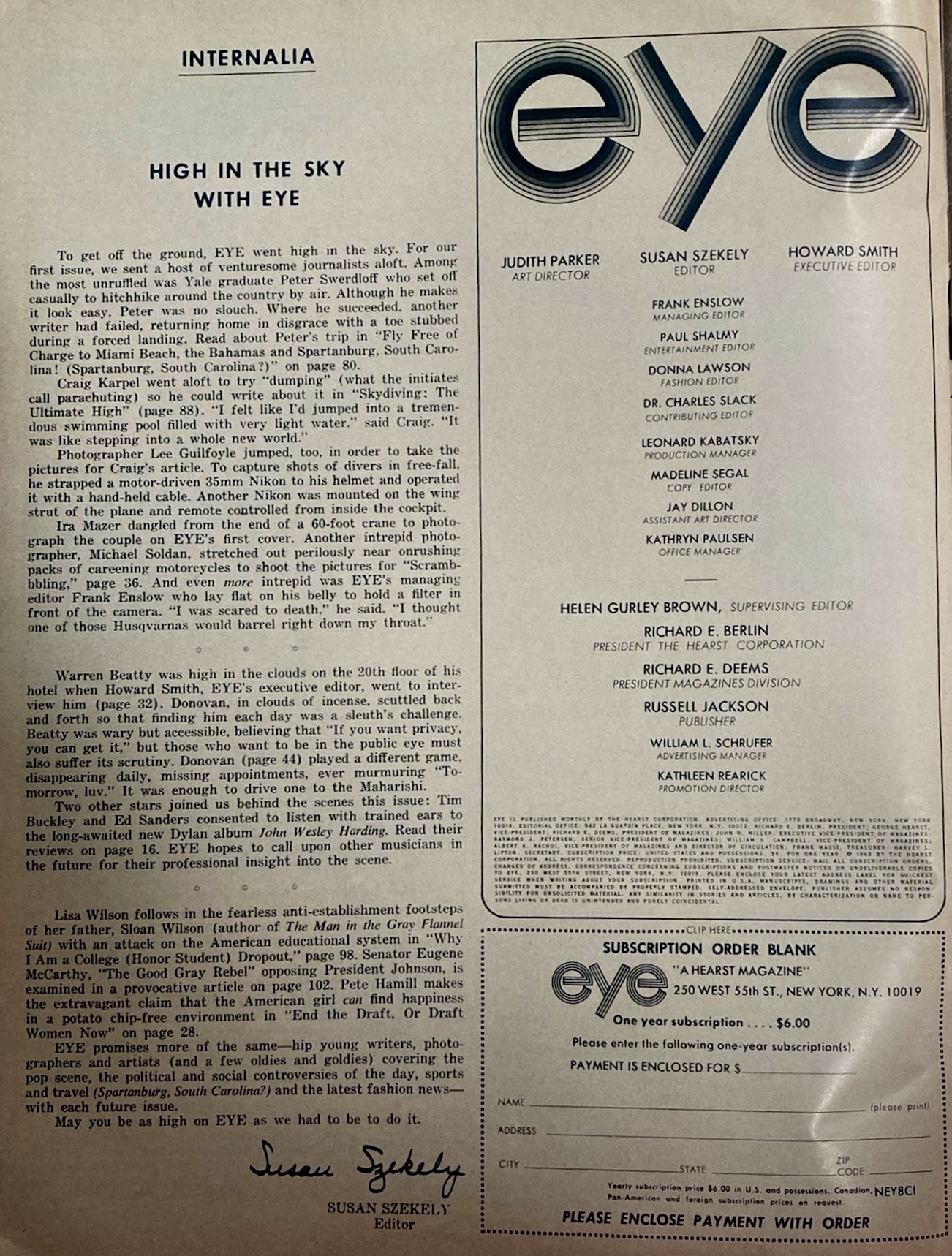
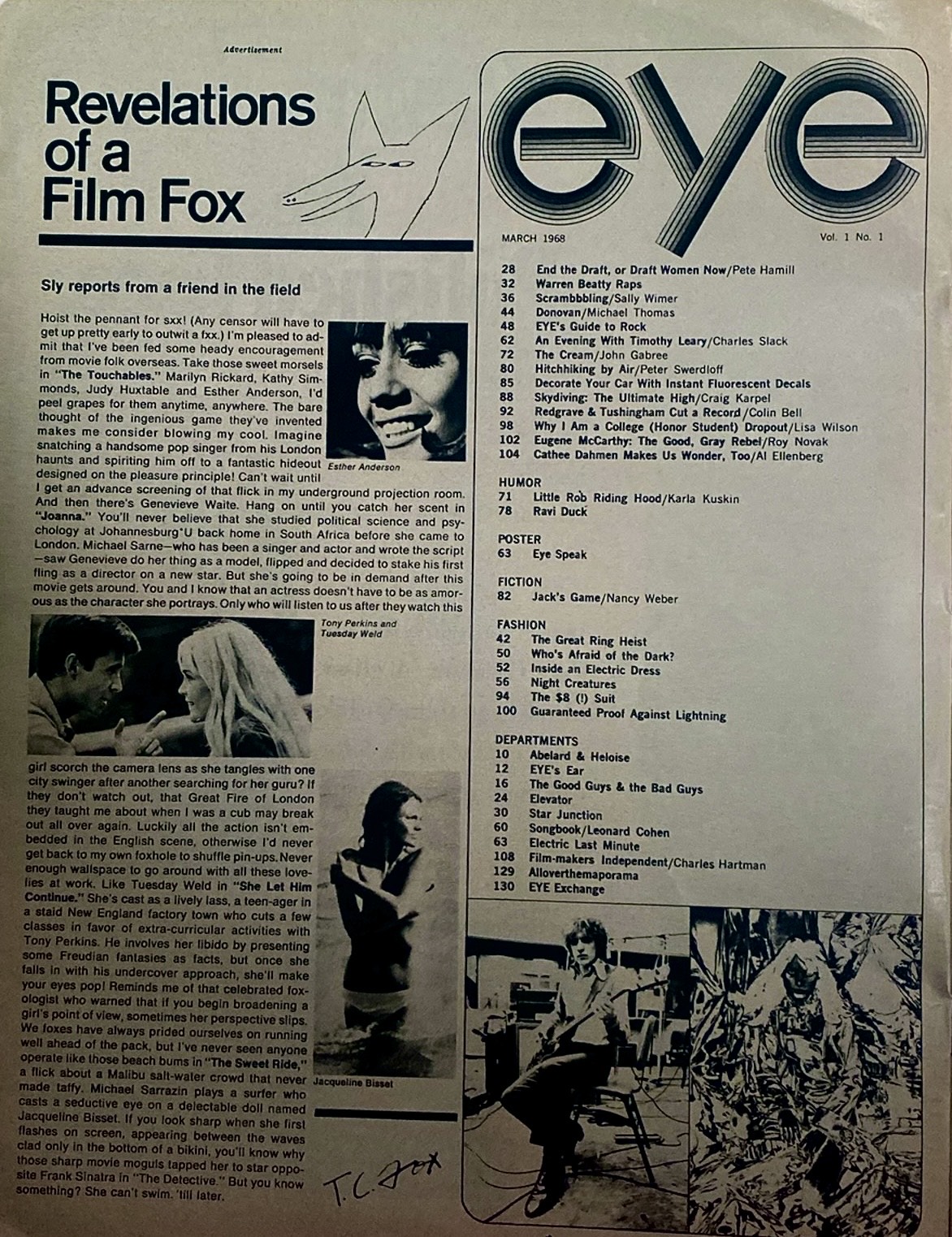
In March of 1968 editor Susan Szekely, wrote in the first issue of the Eye published by the Hearst Corporation  (Helen Gurley Brown was the supervising editor), “ To get off the ground, EYE went high in the sky.  For our first issue, we sent a host of venturesome journalists aloft. Among the most unruffled was Yale graduate Peter Swerdloff who set off casually to hitchhike around the country by air. Although he makes it look easy, Peter was no slouch. Where he succeeded, another writer had failed, returning home in disgrace with a toe stubbed during a forced landing.”

Both magazines took calculated risks and knew that magazine publishing, even in the 40s and 60s of the last century was not for the faint of heart.

Lesson number 2:  Plea for help from the audience.

Without your readers, the magazine is not going anywhere.  Readers input is essential. EYE of 1949 offered readers money for the best letters about the first issue. “We want this to be a magazine that you will like – whoever you are, wherever you live. To help us make it that, we want you to write us letters telling us what you like and don’t like in this first issue, and what you’d like to see in future issue,” the editors wrote.  They continued, ‘We’ll mail checks for $10 each to the ten people who write us the best letters about EYE – the letters that will help us most in making this the kind of magazine you – and we – want it to be.”

Hearst’s eye was more on the wishful side of things with the audience.  “May you be as high on EYE as we had to be to do it,” wrote the editor.

Lesson number 3:  Great content was and will always be king and queen.

The importance of good quality content is as important as it was in 1949.  For magazine content goes beyond good writing to include good photography, design, and the art of packaging a coherent and pleasing publication both for the eye (pun intended) and the brain.  “The publishers and editors of EYE, have no misgivings about this first issue. We’ve packed it with what seem to us the best photographs to be found,” EYE’s editors wrote, “plus two full-length articles that we believe are worth anyone’s reading time.”  The editors were humble enough to admit, “But our judgment, unless it’s backed by our readers’ approval, is worthless.”

As for the May 1968 Hearst’s eye, the editor wrote, after paragraphs of introducing the writers and photographer for the volume 1, number 1 issue, “EYE promises more of the same—hip young writers, photographers and artists (and a few oldies and goldies) covering the pop scene, the political and social controversies of the day, sports and travel (Spartanburg, South Carolnia?) and the latest fashion news—with each future issue.”

Publishing a magazine, a good magazine still depends on those three premises stated above.  Recognizing it is not for the faint of heart, engaging your audience from the very beginning, and providing excellent content that can’t be found any other place.

If you would like to take a dive into the “oldies but goldies” magazines of the past, feel free to reach to John Henry at the Special Collections division of The University of Missouri Libraries and ask for the Samir Husni Magazine Collection

Until the next musing, stay tuned…

All the best

Samir “Mr. Magazine™” Husni

h1

An Upscale Magazine For The Masses. The Story Of The Launch Of hiii: “The Vanity Fair For Weed.”  The Mr. Magazine™ Interview With Rob Hill, Co-Founder And Editor In Chief, And Pam Patterson, Co-Founder And Creative Director.

September 12, 2024

“We love magazines. We’re finding out that a lot of other people who didn’t know they love magazines, love magazines. I’m feeling really buoyant and positive. You say, “Will this be a business? Yes, we are very, very confident. This is not a vanity project. We’re here to make money. The universe is conspiring such a thing.” Rob Hill

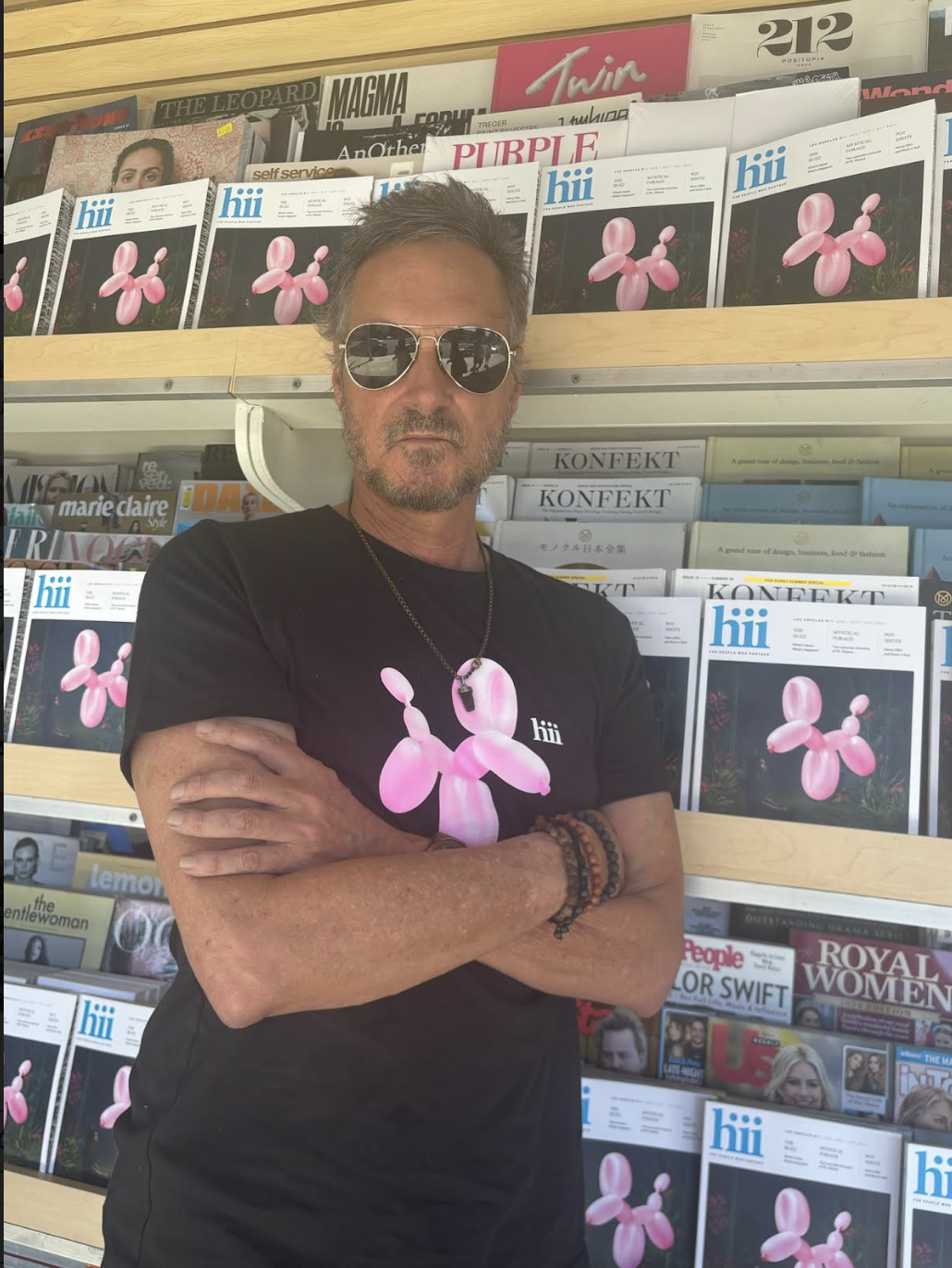
An upscale magazine for the masses “who partake.” A “Vanity Fair for weed.” A new twist on marijuana magazines. Elegant in design and even more elegant and sophisticated in writing and photography.  The brainchild of Rob Hill and Pam Patterson, hiii magazine arrived on the newsstands in the city of Los Angeles and at all its dispensaries.

The lifestyle magazine utilizes every inch of space to channel messages to its readers and advertisers.  From the margins to the spine and the front edge of the magazine, there is content, a very specific message to the audience.

To say the magazine is well done will be an understatement.  Rob and Pam poured their heart and soul into this new publication that goes beyond the ink on paper magazine.  To find out about this hiii adventure I reached out to Rob and Pam and had a delightful conversation about the magazine and the entities surrounding the publication. 

Please enjoy this conversation with Rob Hill, co-founder and editor in chief, and Pam Patterson, co-founder and creative director,  that is sure to give you a hiii whether you partake or not.  But first for the soundbites:

On the genesis of the magazine idea: “My thinking was that the industry had nowhere to brand. And there are about 2800 potential advertisers in this city. So I just saw it as a numbers game. But it also had to bring a new and veneer to the industry. A new take for a new time.”

On the mission of the magazine: “Because what this industry didn’t need was another rag that was basically looking backwards and not forwards, actually propelling the stereotypes. We’re totally anti that. We don’t believe that. I think 64% of people use cannabis in this country.”

On scoring an ad from Porsche: “We don’t all live in a silo. We buy Porsches. I hope you saw the ad. We booked Porsche, which has never been done in a cannabis magazine. They booked it for the full year and paid. So we’re going after car companies, we’re going after mainstream brands.”

On expanding beyond Los Angeles: “We’re getting calls from Vegas, NYC, and Detroit, etc, to bring the magazine there. It’s just been so exciting. I don’t want to say we’re saving print, but I think we’re part of a resurgence of print. Nylon is back, Spin is back, Creem is back, Life is back, Playboy is back. There is a digital fatigue that has set in.”

On the role the magazine aims to play: “One of the things that makes this audience so much different is we really are a lifestyle magazine. It’s a tool for connection between people. I think people who don’t smoke wouldn’t completely understand it.”

On the flipbook in the margins: “When I heard that Mickey Mouse came into public domain, at least Steamboat Willie, we took a look at it. He’s driving the boat and it’s just begging for a joint in his mouth. “

On the distribution model: “The thinking is to conquer the country through cities rather than the traditional way of printing half a million magazines and putting them on newsstands all over the country.”

On the creation of the magazine: “We just felt we were the best people to redefine, update, and package it in a way that made sense to everyone. Concentrate on the positive, creative, and medicinal parts.”

On the content: “We’re going to always have some really good stories in there too. Like the prison story we did. People don’t know that there are people still rotting in jail for selling three joints in 1975. It’s crazy.”

On the audience: “The audience is very broad, but it’s like the coolest people in all of those sort of segments smoke weed.”

On young folks reaction to the magazine: “We have a lot of young people that work in our office who are in their twenties and a lot of people that come through here who are millennials that treat the magazine like it’s a jewel. It’s an exotic thing to them that they’re liking. What’s not to like?”

And now for the lightly edited conversation with Rob Hill, Co-founder and editor in chief, and Pam Patterson, Co-founder and creative director of hiii magazine:

Samir Husni:  In this digital age, you are launching a print magazine, and not any print magazine, a print magazine for people who partake.”  What’s the reasoning behind it? What were you thinking? Are you out of your mind?

Rob Hill: Well, during COVID, I was sitting home alone a lot. I kind of fell back in love with cannabis. I’ve had an on and off love affair with it.

I was coming from a business to business cannabis magazine called MG, which was the biggest cannabis business to business magazine with a very different model. It was a subscription only model. It went out to CEOs and owners of companies.

I would go down to the Malibu newsstand before they locked us all down. Even when they did, and just kind of, buy magazines and bring them home. I started to make a collage on my wall and started to just envision it.

My thinking was that the industry had nowhere to brand. And there are about 2800 potential advertisers in this city. So I just saw it as a numbers game. But it also had to bring a new and veneer to the industry. A new take for a new time.

I thought if we could bring it into the 21st century, and give it a splashy, fun, and modern take, that it would work.  That was kind of the thinking behind it.

We’re going to make money. We spent the first 18 months after we developed the idea and got it where it needed to be.

I think what’s really broken in the magazine industry is the distribution model and the fact that if you don’t love magazines don’t launch one. Anyone can have a blog and a website but not everyone can have a magazine.

In addition the print pages, we sold eight activations at our launch party, which means that a company brings their product, sets up a table, has their signage, while educating consumers and handing out samples.

Samir Husni: hiii is unlike any of the cannabis magazines that were launched even as back as the 70s. We had a lot of magazines like High Times, Inside Dope, Head, Kush,  you name it. hiii is more like an upscale magazine, yet it’s a mass magazine. Tell me the thinking behind combining upscale and mass at the same time.

Rob Hill: I think that’s the target we needed to hit to be successful. Because what this industry didn’t need was another rag that was basically looking backwards and not forwards, actually propelling the stereotypes. We’re totally anti that. We don’t believe that. I think 64% of people use cannabis in this country.

We don’t all live in a silo. We buy Porsches. I hope you saw the ad. We booked Porsche, which has never been done in a cannabis magazine. They booked it for the full year and paid. So we’re going after car companies, we’re going after mainstream brands.

Our hope is by this time next year, a third of the magazine is going to have advertising in it that has nothing to do with cannabis. We’ll get Levi’s and Doc Martens and Bentley and Range Rover. Porsche plowed the road for us, so to speak. They parked their cars at our party to out in front of Woody Harrelson and Bill Maher’s cannabis lounge/garden The Woods in West Hollywood which was really cool.

Porsche’s whole marketing team came and it’s a really big deal.  Ad Age or Adweek should really do an article on that.

We were hoping to have 15 ads and we booked 26. And the Porsche ad, goes above and beyond what they paid. It’s not even about the money with Porsche. It’s about having that real estate for the full year in the magazine

Samir Husni: That’s not your first venture editing a magazine. You’ve been there, done that. What’s the difference? You and Pam are now owners and publishers. Does it feel any different that just being an editor?

Rob Hill: The last time we spoke we were  launching Treats magazine. That was pretty exciting. Hugh Hefner tried to buy it the day after we launched it. He invited us up to the mansion.

But this is different. Pam and I purposely put our emails in our editor’s letters because we wanted people to email us. We didn’t want to do info@ or editorial@. And we’re getting about a dozen a week of just people that are saying things like, “I saw your magazine at the dispensary. I picked it up. I commute to work on a bus. I read it cover to cover.”

We’re getting calls from Vegas, NYC, and Detroit, etc, to bring the magazine there. It’s just been so exciting. I don’t want to say we’re saving print, but I think we’re part of a resurgence of print. Nylon is back, Spin is back, Creem is back, Life is back, Playboy is back. There is a digital fatigue that has set in. People are tired of being on their phones and all ages are looking for more tangible experience. This is why we spent lavishly on our paper stock, size, and design. And it’s paying off.

Samir Husni: The design of the magazine from printing on the edge of the magazine or having an edgy design. Tell me about the creative design of  hiii.

Pam Patterson: I’m the creative director and I’ve been a weed smoker since I was 13.

One of the things that makes this audience so much different is we really are a lifestyle magazine. It’s a tool for connection between people. I think people who don’t smoke wouldn’t completely understand it. But when you’re part of this community, there’s a bond there that we channel when we’re concepting the magazine.

We wanted to create a toy, something where people could relate to it in a lot of different ways. We could have a story of substance, and then have a story that speaks to the tools of the trade and whatnot. Also where they could have a little passage from some novel that someone may see in a new light. 

We want to be fun like Bob Marley’s quote on the edge printing. It’s just a fun way. I think it’s kind of a wink to our audience that we get it. Weed smokers are thinkers. We’re creative thinkers.

Samir Husni: What about the flipbook? I mean, the images that run in the margins?

Pam Patterson: When I heard that Mickey Mouse came into public domain, at least Steamboat Willie, we took a look at it. He’s driving the boat and it’s just begging for a joint in his mouth.  We wanted to do a flipbook for some time, and that was kind of a thing we devoted that real estate, the right hand margin to, in addition to a literary passage and the edge-printing. People were like, oh, advertisers are not going to like you getting into that space. But it’s been just fine.

Samir Husni: It looks like you have a love affair with the magazine and with print. But my question to you how is hiii as a business? Are you going to spend your savings or are you going to make money out of this?

Rob Hill:  Absolutely. We’re going to make money. We spent the first 18 months after we developed the idea and got it where it needed to be. We have a CFO who was CFO from Hard Rock Cafe and other companies. We did talk to a lot of people. But what we found was the investors didn’t get it as much as the advertisers did. So our business development consultant said, “Well, your advertisers are your investors. So just go start selling and don’t worry about all of this other stuff.”

We were hoping to have 15 ads and we booked 26. And the Porsche ad, goes above and beyond what they paid. It’s not even about the money with Porsche. It’s about having that real estate for the full year in the magazine and being able to go to other brands like Woody Harrelson, Whiz Khalifa, Snoop, Jay-Z, Willie Nelson etc., and say, “Hey, your ad is going to be after Porsche.” They like that.

We just started to knock down some barrier to entry and it was difficult in the very beginning. People were saying cannabis isn’t the hottest thing right now and magazines aren’t the hottest thing right now. But we didn’t believe that. And Samir, I think what’s really broken in the magazine industry is the distribution model and the fact that if you don’t love magazines don’t launch one. Anyone can have a blog and a website but not everyone can have a magazine.

I think we’ve come up with a way to do distribution right. In fact, last night, I went after dinner to go check the markets in Studio City and Laurel Canyon, where we distribute the magazine on the racks outside the markets. And there we put 25 on each and they’re gone in three days. There are 128 dispensaries and cannabis lounges that also carry the magazine in their stores and half a dozen that we have partnered with to deliver the magazine right to their door of their VIP customers with their cannabis.

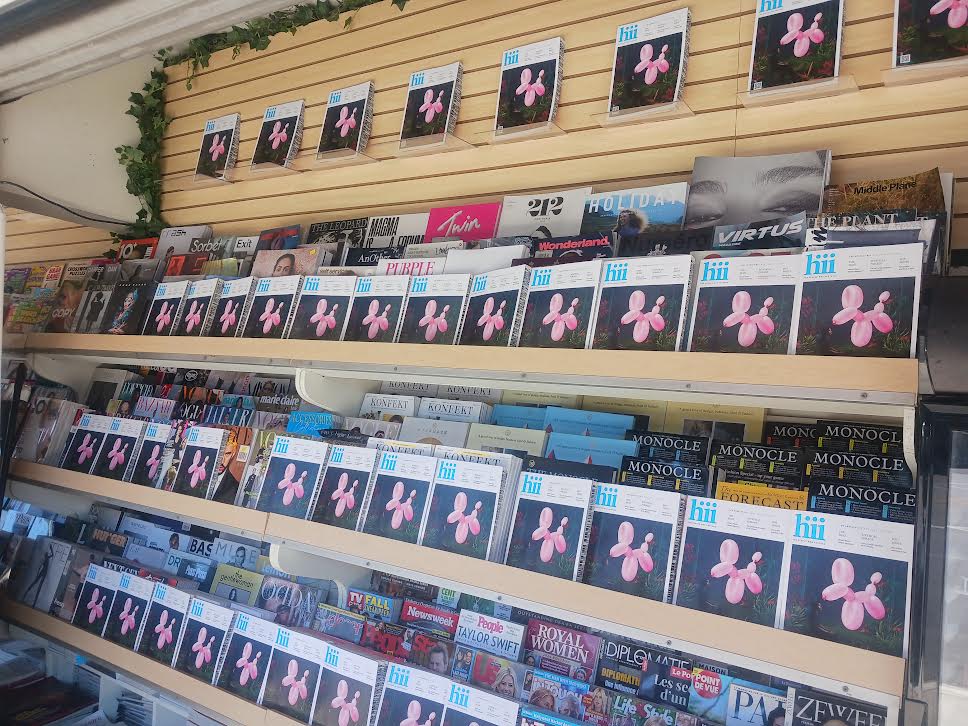
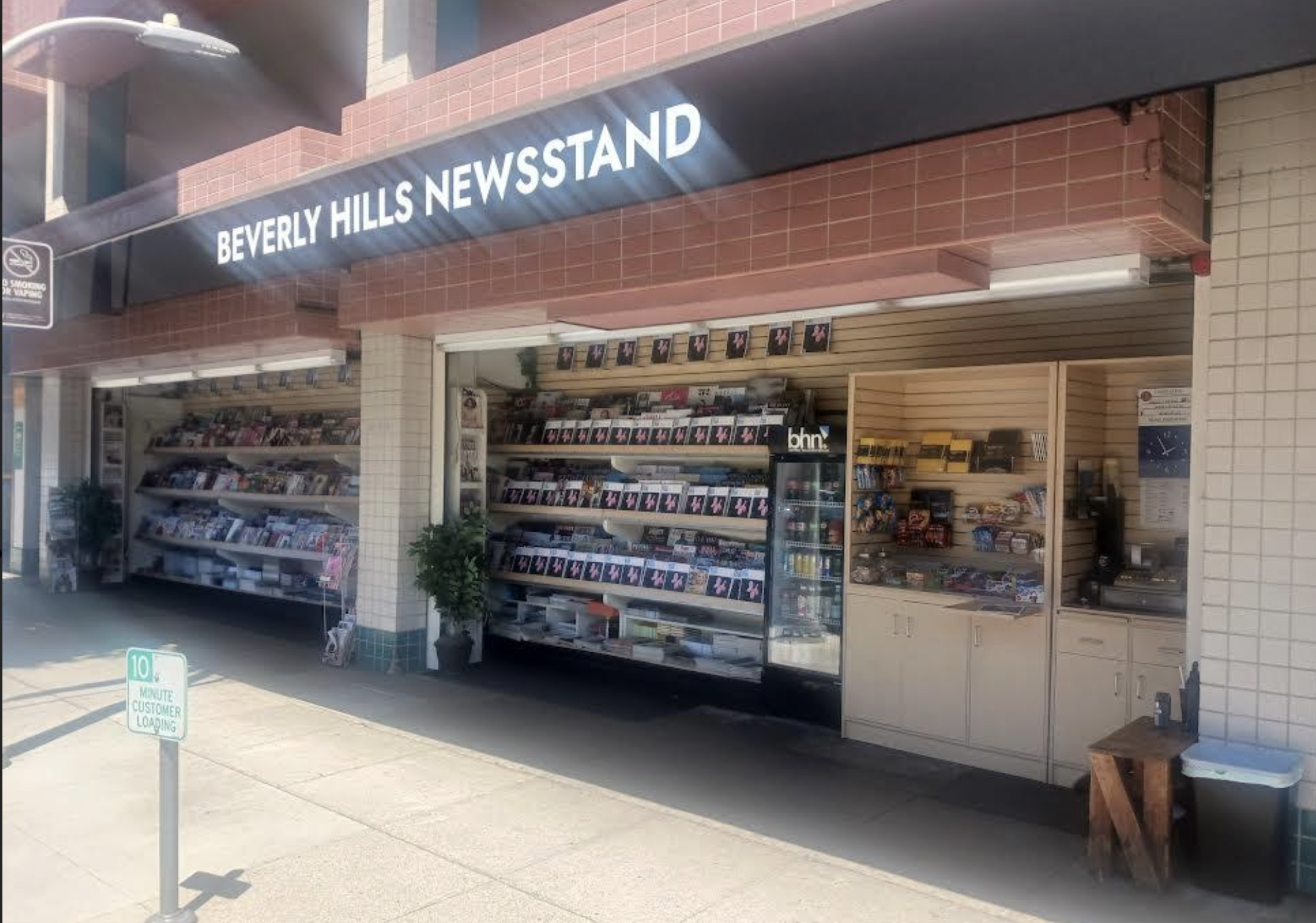
And that’s all over the city. That’s Erewhon, Vons, Ralphs, Whole Foods. And then we do have a paid model. We’re distributed through Mader News. We took over the Beverly Hills newsstand for the month of August! Never been done before by a cannabis magazine. The first day David Lynch sent his assistant to buy the magazine. The next day it was Quentin Tarantino.

They put us right next to Monocle, which was really cool because Tyler (Brule) is one of my heroes. I think we figured out distribution, and the model is to take this to the next city in second quarter 2025.

The thinking is to conquer the country through cities rather than the traditional way of printing half a million magazines and putting them on newsstands all over the country. We’re sort of doing what Cigar Aficionado does married with what Departures did, with a dollop of traditional newsstand and the whole National Geographic in the dentist office thing.

Once Cigar Afficionado got distribution in the thousands of cigar lounges, the advertisers were like, What more could we want? If you’re an advertiser, you have a guy or a woman that’s in a cigar shop, hanging out, having a good time, talking with their friends and then they pick up Cigar Aficionado and spend 20 minutes enjoying it. It’s a warm audience. That’s hiii in the lounges and dispensaries.

The other unique and singular thing hiii does is reach not only consumers but also the budtnders, buyers, and owners of cannabis dispensaries who are all reading the magazine. The competition is fierce for foot traffic and for space on the shelves. Yesterday I got two calls from buyers who saw ads in the magazine of products that they would like to carry. Both brands scored over a 1000 unit order. That will be 10x what they paid for the ad. Needless to say, they called and asked to book for the rest of the year. Smart. Happy advertisers make my day.

Samir Husni:  You wrote that you’re going to change the perception and the veneer of the industry.” What do you mean?

Rob Hill: I think that so much of this world is about perception and whether that perception is real or not, it is your reality. If you are a person that is perceiving cannabis users as criminals and low-lifes, then that’s not good for our industry. I always felt if we don’t define it, someone else will, and they have tried their darndest. Even magazines like Rolling Stone and The Atlantic have begun to take pot shots at the industry.

We just felt we were the best people to redefine, update, and package it in a way that made sense to everyone. Concentrate on the positive, creative, and medicinal parts.

Pam Patterson: Not everyone’s asleep on the couch. I think some of the highest performing individuals, and especially in the creative fields, are smoking pot all the time.

Rob Hill: You know what I’m most proud of? I’d say 80% of our advertisers have never done a print ad before. They’ve never done any marketing. This is a brand new industry, so to speak. And it’s hitting another phase because the genie can’t be put back in the bottle.

They’ve tried to slow it down and that’s not working either because humans are very malleable, flexible, and we figure stuff out. So one of the good things that happened to us right when we were getting out to sell ads, a law was passed that’s going to allow cannabis companies to write off their marketing and their advertising like every other industry. And that kind of gave us a little bit of a tailwind where we were coming from a headwind.

That changed a lot right there. Right after that, we went to the biggest cannabis expo and met with over 400 companies and started selling ads. Started telling them, “You can now write this off, like a beer company or a clothing company.”

Samir Husni: So here’s my question to you. What can you do in print that you could not do on the digital portal?

Rob Hill: Well, I was going to make a comment that because the industry is not federally legal, it makes a lot of media vehicles unwilling to do any advertising with cannabis. So things like radio, TV, much of print, etc. is off limits to cannabis companies. Also you can’t trade across state lines. So it’s all very regional play. There are some very unique, specific things to this industry that make hiii something that the community really needs.

They need an advertising vehicle. They need a place to brand. We can’t be shadow banned. We can’t be censored. We feel good. And we are something that the industry can be proud of. Every revolution needs a magazine, right?

I like the idea that we’re not going to wake up in the morning and have our Instagram taken down. I mean, like a lot of people wake up in the morning, have their Instagrams just taken down. That just happened to the biggest guy in our industry who had 8 million followers. He just woke up and it vanished. The disruption to people’s businesses who depend on that for a product that’s locally legal it’s kind of crazy.

We’re finding that print done well, like the paper that Pam picked and the size of the magazine, she’s so good at just packaging things and understanding what’s good and what catches the zeitgeist.

Print is a tangible object, people are buying vinyl albums again, and magazines are back in vogue. Are there going to be 2 million circulation magazines launching weekly? No. Those days are over.

Life magazine is coming back as a quarterly. Not a bad idea. I think quarterly is where these magazines are finding their sweet spot. Mader News told us what’s working right now are quarterlies with high quality and a high cover price. That’s why we’re charging $20 for that because they said you will get that at these newsstands.

Samir Husni: To me, this year is the year of the relaunches. But you are the year of the launch. You are launching something from scratch and using all the experience that you had for year. It’s manifested in hiii. The goal now is quarterly and LA. What next?

Rob Hill: Well we may change our minds. We talk about telepathy every night when I’m in my bed and she’s in her bed, 25 miles away. We started  thinking the same. It’s been interesting.

One of the things I do want to say that’s very important to our business and unique to this business is the trade shows and the events. This industry will write big checks, 50,000, 70,000, 150,000 to have booths at these trade shows. They’ve been doing it for about a decade now.

So they’re very comfortable writing those checks. What they haven’t been comfortable with or what they haven’t been doing is writing checks for magazine advertising because there hasn’t really been that vehicle. So we wanted to combine the two.

 In addition the print pages, we sold eight activations at our launch party, which means that a company brings their product, sets up a table, has their signage, while educating consumers and handing out samples.  We had 500 people at our launch party We’re packaging this with, You get the goodie bag, which they all want because they want these products in people’s homes very badly.

They want the activation to basically give samples away and to educate the consumer. They all fell in love with the magazine too. That’s going to be a big revenue generator for us.

We have an event space here that’s 12,000 square foot that’s outside that can fit 500 people. For every issue we’ll do a party. So we’re selling a 360 product because our newsletter has a 67% open rate.

We’ve curated a newsletter that’s like triple or double what you’d hope to have—a 67% open rate. We’ll be able to, as we grow that, monetize it. Digital is obviously really important, but we want the magazine to drive ROI and traffic to the stores. And so far after a month the ROI is tangible.

Digital doesn’t really do that well, but a magazine that you pick up and put in your car that when you go pick up your girlfriend and her friends after class or whatever, and they all see it and begin passing it around and gawking at the ads, does that really well. There’s something happening right now and it’s totally counterintuitive, but it’s happening. I’ve never been more excited in my life. We had to throw caution to the wind. We’ve had to just jump in.

I really do feel it. We have a lot of young people that work in our office who are in their twenties and a lot of people that come through here who are millennials that treat the magazine like it’s a jewel. It’s an exotic thing to them that they’re liking. What’s not to like?

Pam Patterson: It pays off. People who take the time to open the magazine, get rewarded. And that is an essential quality. One thing I wanted to mention, too, is that weed smokers are of all different ilks, all ages, highly diverse, from all different kinds of communities including LGBTQI+. The audience is very broad, but it’s like the coolest people in all of those sort of segments smoke weed.

There’s a common thread. It’s intentionally made to relate to a broad section of people, to be a unifying factor among everyone, and something everyone can be proud of. People who are in this industry are in it because they love it. It’s still very much a mom and pop industry.

Rob Hill: You know, it’s very difficult to be a big Coca-Cola type brand when you can’t sell your product in many states and almost all countries. That’s going to start changing pretty rapidly. Japan, Thailand, Germany, and Israel are opening up. We’re probably going to have to think about some licensing deals here because it looks like globally this thing is just on fire and I think is very interesting.

I liked what Imbibe did for the alcohol industry and they rallied behind it and they have stuck with it. It’s a good magazine. They have big brands in there and we actually really feel like we’re going to get a lot of those alcohol brands at some point. You only lose when you run away from the internet or run away from the things that you know are coming. Well, and in LA I think that there are more dispensaries than McDonald’s now.

Pam Patterson: And it’s outselling wine. There’s a lot of really big categories that cannabis is marching past.

Samir Husni: So before I ask you my typical last questions, is there any question I failed to ask you or is anything you would like to add.

Rob Hill: No, think you covered it. You totally understand the magazine.

I’ve always had a lot of respect for you and follow your blog and did my favorite interview with Treats with you. And, you know, it’s great to be endorsed. You love magazines.

We love magazines. We’re finding out that a lot of other people who didn’t know they love magazines, love magazines. I’m feeling really buoyant and positive. You say, “Will this be a business? Yes, we are very, very confident.

This is not a vanity project. We’re here to make money. The universe is conspiring such a thing.

Samir Husni: I know you are playing on the word high and hi. What was the thinking about the Hii?

Rob Hill: Well, we really liked the sing-song because it’s when you see somebody that you like, or maybe you’re flirting with, it’s kind of like, hiii. And so we thought that that was a sweet way to do it.

You got to be careful in this industry to not be too obvious. A lot of those like really obvious brands get into that realm of just showing pictures of flower and stuff like that. We wanted to be something fresh, new,  and friendly.

It just made a lot of sense in that regard. We trademarked the whole thing. “hiii: For People Who Partake.”

Pam put on the spine “The Third Eye,” which is referring to our pineal gland, our antenna to other dimensions, etc. There’s evidence that cannabis, CBD, and mushrooms help to decalcify the gland which has been corroded with Fluoride, etc.

Pam Patterson: We’re going to always have some really good stories in there too. Like the prison story we did. People don’t know that there are people still rotting in jail for selling three joints in 1975. It’s crazy. Not many. Lots of them have been pardoned, but it’s pretty crazy.

Samir Husni: If I come to visit you one evening unannounced, what do I catch you doing? Reading a book, smoking a joint, watching TV?

Rob Hill: At six pm we’re still at work. We’ll probably have people dropping in and probably smoking a pre-roll, but we’re not watching TV. We’re talking about issues.

We’re talking about the magic of the plant. Our office and event compound has a neighborhood clubhouse feel; hundreds and hundreds of people flow through here every month. The word is out. Frogtown and hiii are the place to be.

We’re the center of the community. We have this event space. We have the magazine that people are rallying behind.

We just hired the woman that used to work for Bob Guccione Jr. at Spin. She also worked at Cosmo too. She’s on our ad sales staff; we have now five ad sales people.

I just really feel like the ads are going to go from 26 to 40 to who know how many pages. Our main competitor, who’s not really a competitor, but he’s more of a newsstand magazine, he’s doing consistently 176 pages six times a year.

He’s doing pretty well. He has a different audience than us and a different business plan, but it’s good. We see that as a good thing.

Samir Husni: My typical last question is what keeps you up at night?

Pam Patterson: We’re hitting our stride. We have a lot of fun stories.

Rob Hill: There’s a difference when you can’t sleep at night because you’re freaking out and stressed out. Then there’s this other side that for me, it’s just excitement, almost like I don’t want to go to bed.  I know I have to, because the rocket’s taken off. There’s so much to do in so many fantastic ways. It’s really a playground over here. The timing is perfect.

I think we’ve caught lightning in a bottle.

Samir Husni: Thank you both and good luck.