Archive for May, 2019

h1

The Importance Of Journalism And Literacy In A Democracy… The ACT 9 Experience. Linda Ruth Reporting… Part 7

May 3, 2019

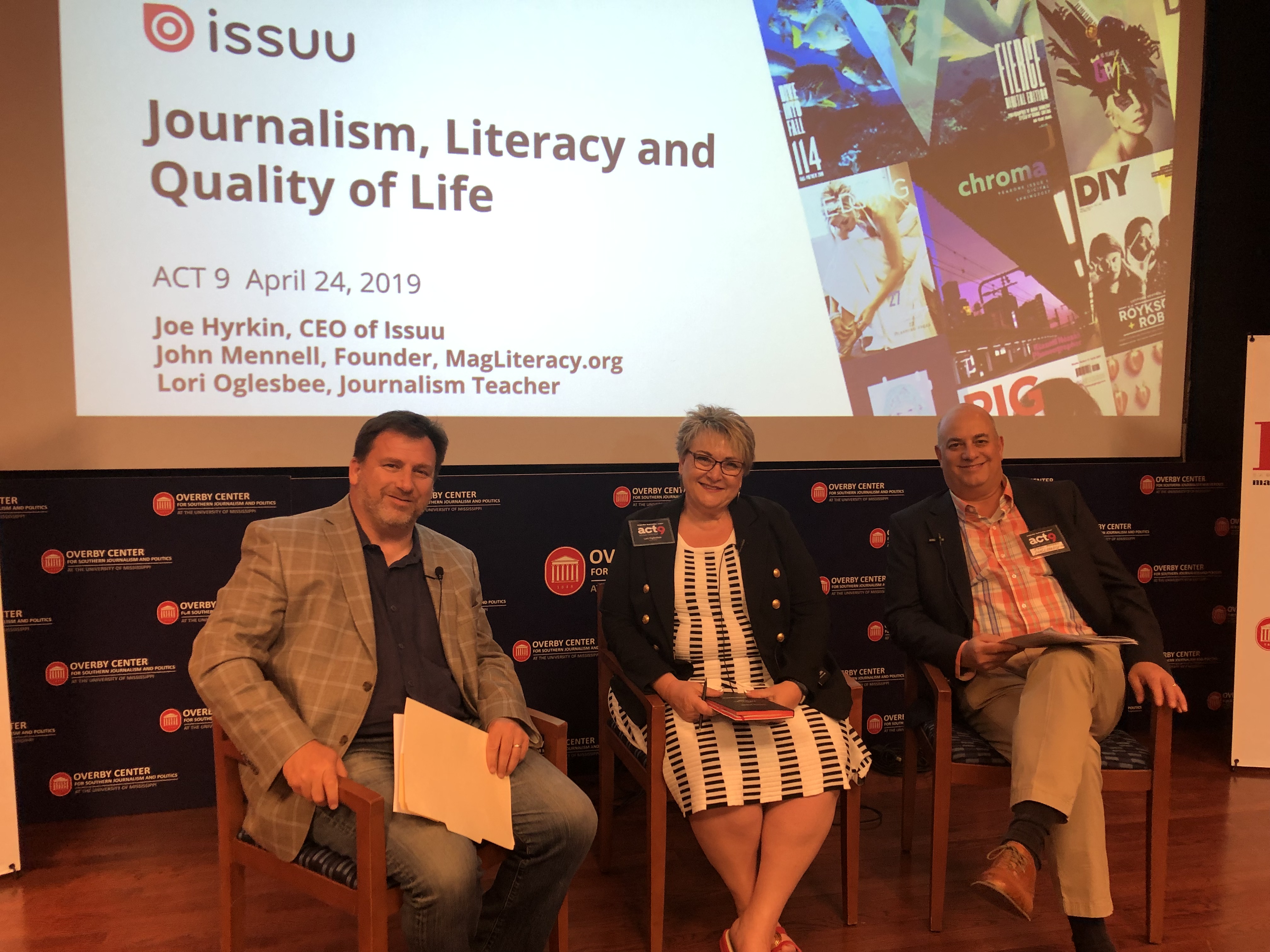
“The future of democracy depends on you,” Joe Hyrkin, CEO of Issue, told the journalism students present at Mr. Magazine’s ACT 9, reflecting what Linda Thomas Brooks had said earlier in the day. Over the last couple of decades, the folks in the digital world have gotten in the middle of the relationship between the publisher and the audience. These platforms are amazing to enable a publisher to reach an audience; the key is to be able to reach this audience without doing endless versions of the content customized by platform. Think of it as providing pieces of existing content in ways consumers can read on any platform, wherever they are.

“I am out of a job today because of my stand for first amendment rights,” reported former journalism instructor Lori Oglesbee. “I was teacher of the year in Texas, and I lost my job because I refused to take down three articles.” Five kids can change a state, she tells the audience of enrapt students. Journalism is under attack today; but iwithout journalism, democracy fails. Students need to learn to be inquisitive, to discern the difference between biased and balanced reporting, to become thoughtful consumers of the news to improve their world.

No one has done more to get magazines into the hands of the at-risk communities than John Mennell, the founder of Magazine Literacy. Earlier today we leaned that children need print for the development of their brains, which stay on a distracted level in a digital-heavy environment; Mennell’s mission is to provide children throughout the world with magazines. Literacy, he told us, ends poverty of the pocket, mind and spirit. Echoing the other panel speakers, he said that freedom, independence and prosperity depend on literacy. In the US 18 million people live in poverty; 2/3rds of those children have no books at home.

A child unable to read is a child lost. Magazines, he told the group, are the most powerful literacy engines on the planet. There are over one million homeless students; these children are effectively invisible. Imagine giving a magazine to that child. It says: you see me. I matter. “I am here today because I want to share the joy I experienced from magazines as a child; I want to share it with the most vulnerable among us.” Our industry’s undivided attention toward literacy is crucial; the experience with reading materials is what is needed to create readers. There are tens of millions of magazines available that we as an industry can get into those homes, onto those coffee tables, into those backpacks. Because there are magazines for every interest, we can reach deep into this inventory to address specific literacy needs. Magazine Literacy has airlifted magazines to Inuit families in the Arctic Circle; and one of the families served opened a magazine stand in the village food pantry. One of ML’s goals is to open magazine stands in every food pantry throughout the world.

Magazine Literacy’s mission is to build the most powerful literacy marketplace on earth by tapping the enormous potential of magazines, and by engaging every stakeholder in the magazine supply chain to share the joy and the love and the incredible power of reading magazines with at risk readers. He has the mission that Jo Packham told us we all need; he has a dedication to the journalism that Lori Oglesbee has told us is necessary for the survival of a democracy; he provides children with the reading material they need, according to Linda Brooks, for the development of deep, undistracted thinking.

People died for free speech, said Oglesbee. It’s important. And, said Mennell, let’s get these reading materials into the hands of the next generation.

To watch the entire panel click on the video below:
h1

It’s All About Data… The ACT 9 Experience. Linda Ruth Reporting… Part 6

May 3, 2019

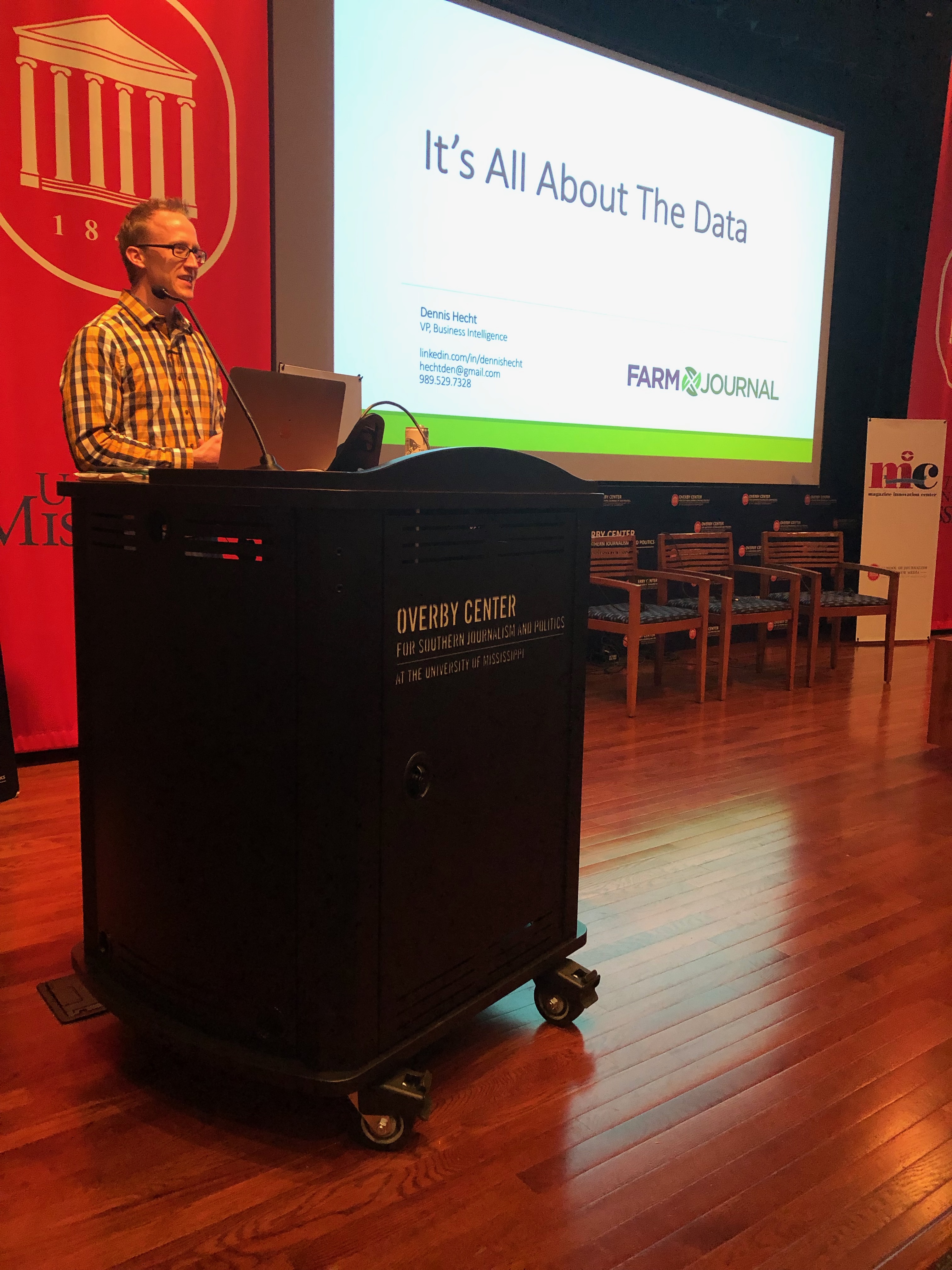
Every interaction gives a bit of data that enables you to learn about your audience and make strategic business decisions, said Dennis Hecht, VP Business Intelligence, Farm Journal magazine, on the first afternoon session of Mr. Magazine’s ACT 9. Over the past few years more data has been generated than in all previous history put together.

Companies must shift to a data-driven business, one which gives privacy back to the customer. In contests of opinion against data, the data wins; when the contest is data against data, the best data wins. The key value drivers are timeliness, uniqueness, actionable, adjacency to opportunity, and the value of the monetary opportunity.

In using data to create sales, Hecht tells us, it’s important to consider the customer’s intent at both the top and the bottom of the sales funnel. Data can conceivably be used to eliminate a step in the funnel—if someone is ready to make a purchase before going through the entire process. Data is also used to build different versions of the magazine based on audience needs. Different pieces of content can be inserted in different versions of the magazine. A corn story will be inserted into the copies going to corn farmers; a cattle story to the cattle farmers. This customized experience can also be re-created online.

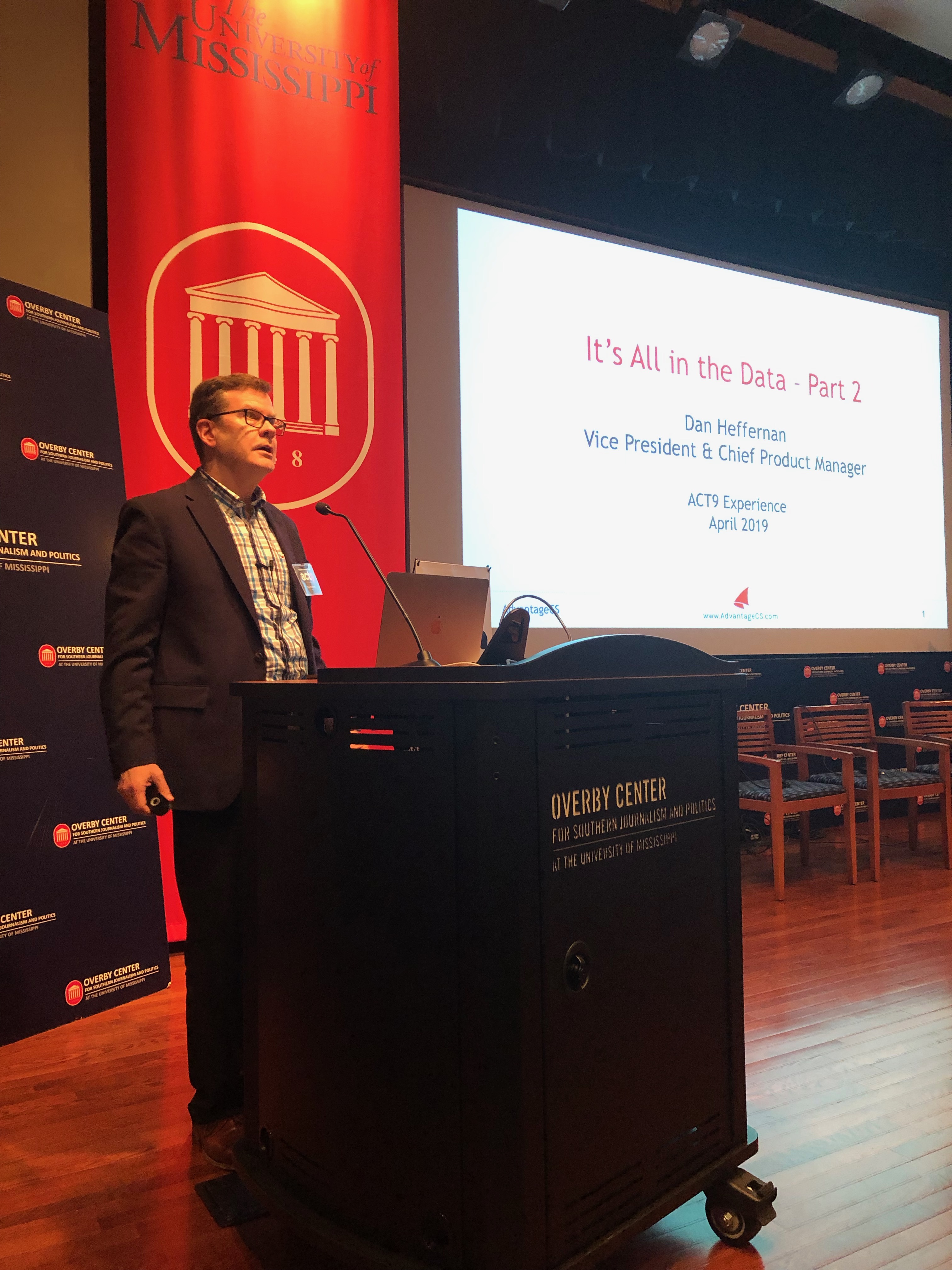
Dan Heffernan, VP of sales, marketing, and product planning for Advantage CS, serving the magazine community on the subscription side, picked up the data story from there. You need accurate data for informed decisions; and the next step of gathering masses of data is making it actionable. To do so, Heffernan said, you need to seed the data people with the business team and the business team with the data people. You identify KPIs—key performance indicators; these are often mid-identified. The KPI has to have a practical correlation with the satisfaction of the reader; so the number of copies released, for example, might be less important than retention. Bi-lateral literacy.

Your KPI will be based on your goals, which will be based on your mission. If you identify building and maintaining relationships as your mission, it affects what your key indicators are and how you go about improving them.

Overwhelming as data might be, it is a precious tool in building and improving your business, Heffernan says. Your next million dollar improvement is already hidden in the data. Learn to read it.

Click the videos below to watch Dennis Hecht and Dan Heffernan presentations:

h1

The Joys And Opportunities Of Magazine Publishing… The ACT 9 Experience. Linda Ruth Reporting… Part 5

May 1, 2019

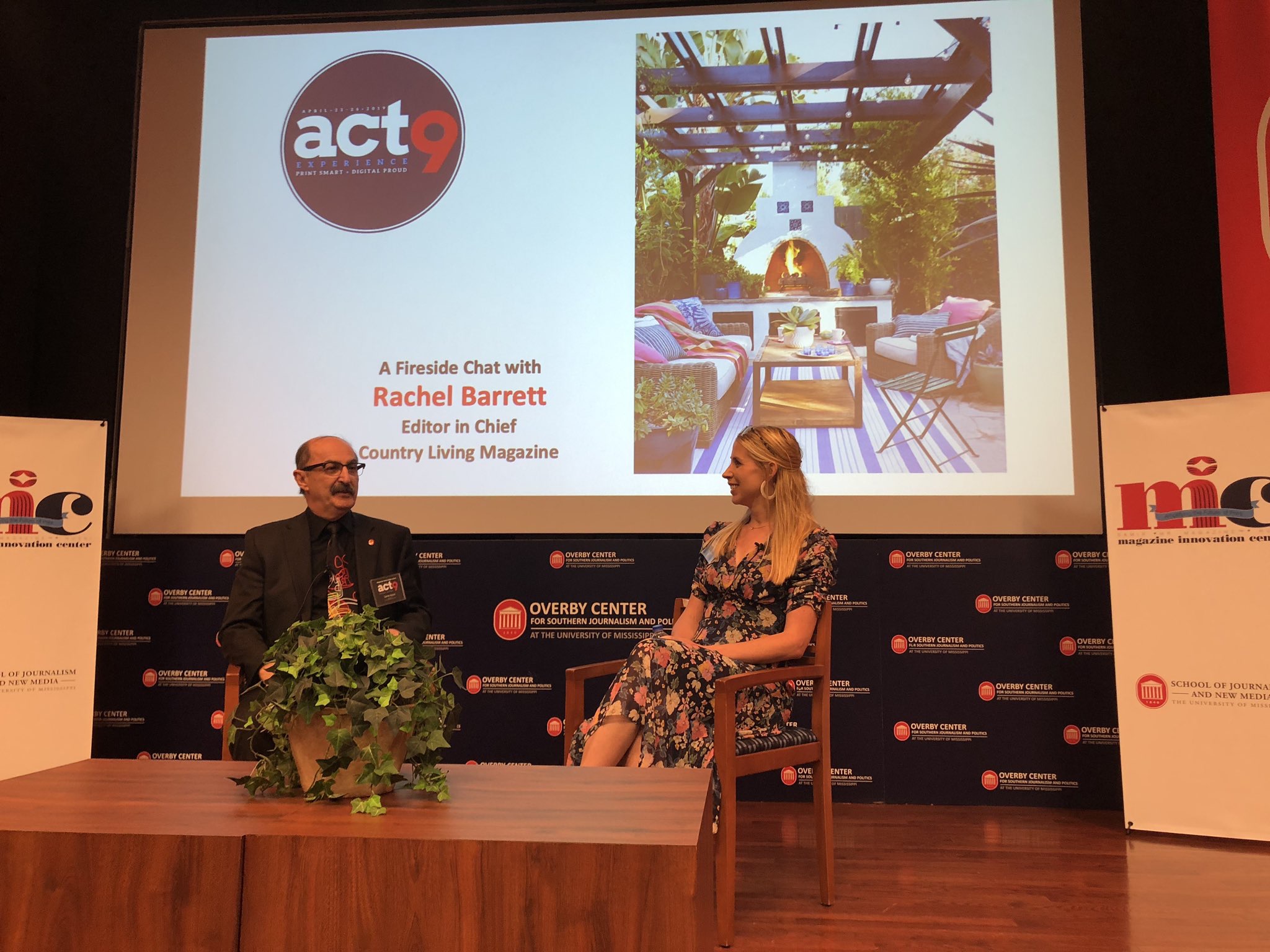
A magazine is so much more than a magazine now, and the job of an EIC so much more than editing, said Rachel Barret, Editor in Chief of Country Living Magazine, at the University of Mississippi’s ACT 9. Opportunities are coming up beyond the New York bubble, with publishing centers in Des Moines, Birmingham, and elsewhere; opportunities exist for scrappier ways of publishing to drive the brand economically and connect with the reader.

Jeff Joseph, publisher of Luckbox, concurs. “The first rule is there are no rules,” he said. “One of the advantages of coming in from outside the print realm.” You can’t be in the news business and be in print; Luckbox learned this from experience, and was nimble enough to pivot to a new model. For Joseph, the single most important metric is what percent of your audience don’t throw out your magazine. Luckbox is at an astounding 58%, as a result of providing useful, evergreen content. If your revenue model is from advertisers, then you are a content marketing platform. For online, look for how many clicks take the reader to content over three months old.

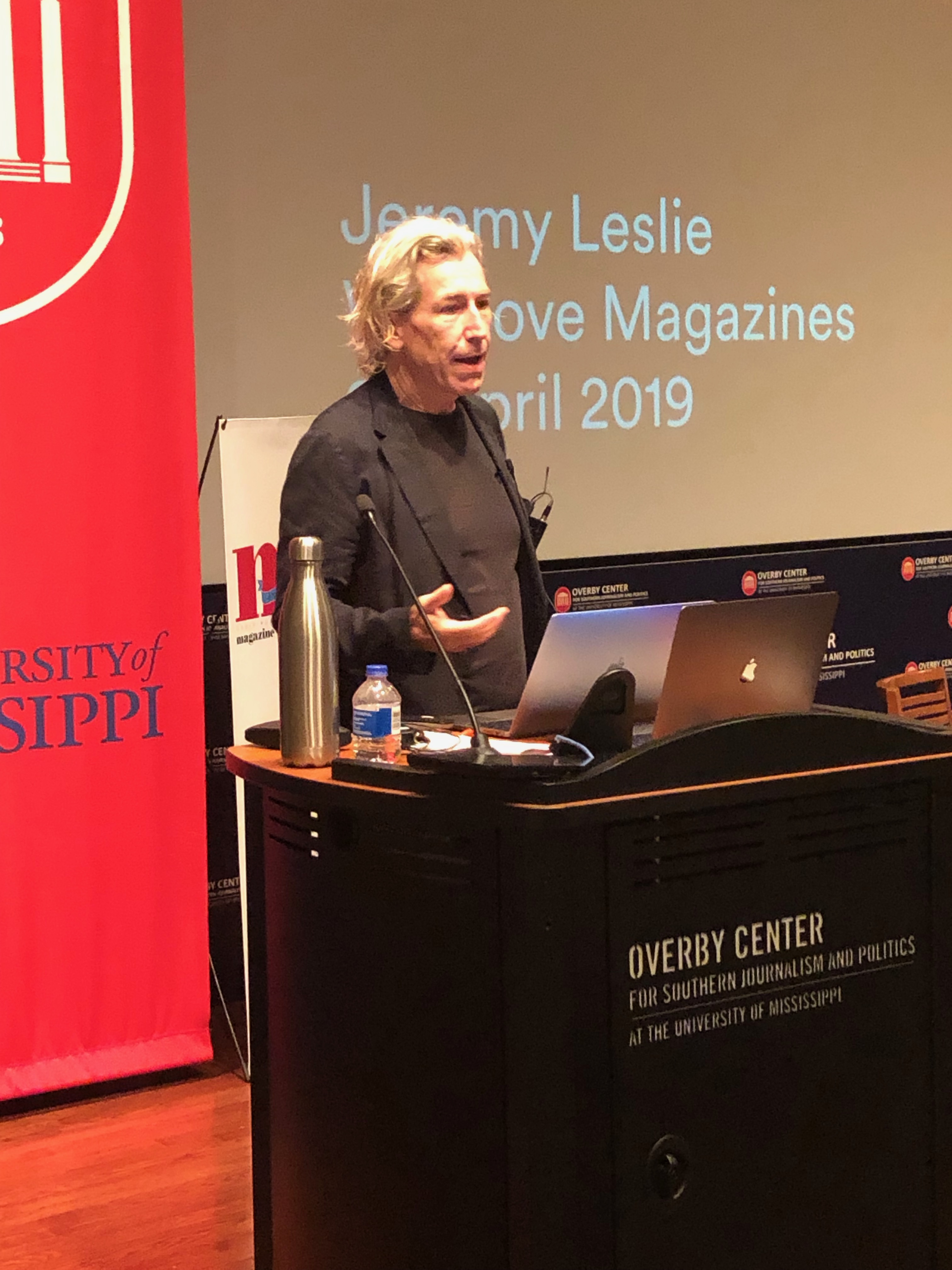
Now is a great time to be involved in magazines, said Jeremy Leslie, Founder and Curator of Magculture. “I love magazines,” he says. “They are like people; they have character, and they reflect the character of the people making them up. They become your friends.” They reflect the world they were created into, they exist in a historical context and become a great record of what people wanted, thought—and how they designed. The world of independent publishing, while still undervalued and under recognized, is coming into its own, breaking new ground to show people what a magazine can be. For example, Delayed Gratification, launched to look back at news three months ago and point out what was important. Migrant was launched to re-address the topic of immigration, limited itself to six issues and wound up the topic with the last issue. MacGuffin takes one object and tells many stories around it. Civilization melds design and content. Real Review is published as a triple fold. And Ordinary has a blank cover every issue, and every issue has an “extra” on the cover; they use that object in the photos in the visual-only content. These groundbreaking independent publishers are leading the big multi-title publishers in new directions.

Jo Packham, the 2018 Magazine Launch of the Year Winner (Where Women Create and its sister titles) launched Where Women Work with an augmented-reality video on the launch cover. Magazines are alive, she tells us, but must be integrated into the world of technology. The audience, the small entrepreneurs, the makers, loves print. Every publisher, every person, should have a mission in life, and Packham’s is to educate people on what it takes to create, and to deepen the appreciation of this process. Packham thinks of herself, not as a publisher, but as an entrepreneur who specializes in the written word. Entering publishing, she promised herself her magazines would be authentic. Her photos are submitted and her articles are in the writers’ voices, not re-written.

Her advice to others who want to share the joy and opportunities of this field: Be selective. Build a community. And do not waste your valuable time doing something you don’t care about. Do what you love.

To watch my fireside chats with Rachel Barrett and Jeff Joseph, Jeremy Leslie’s presentation, and Jo Packham presentation click on the videos below.

h1

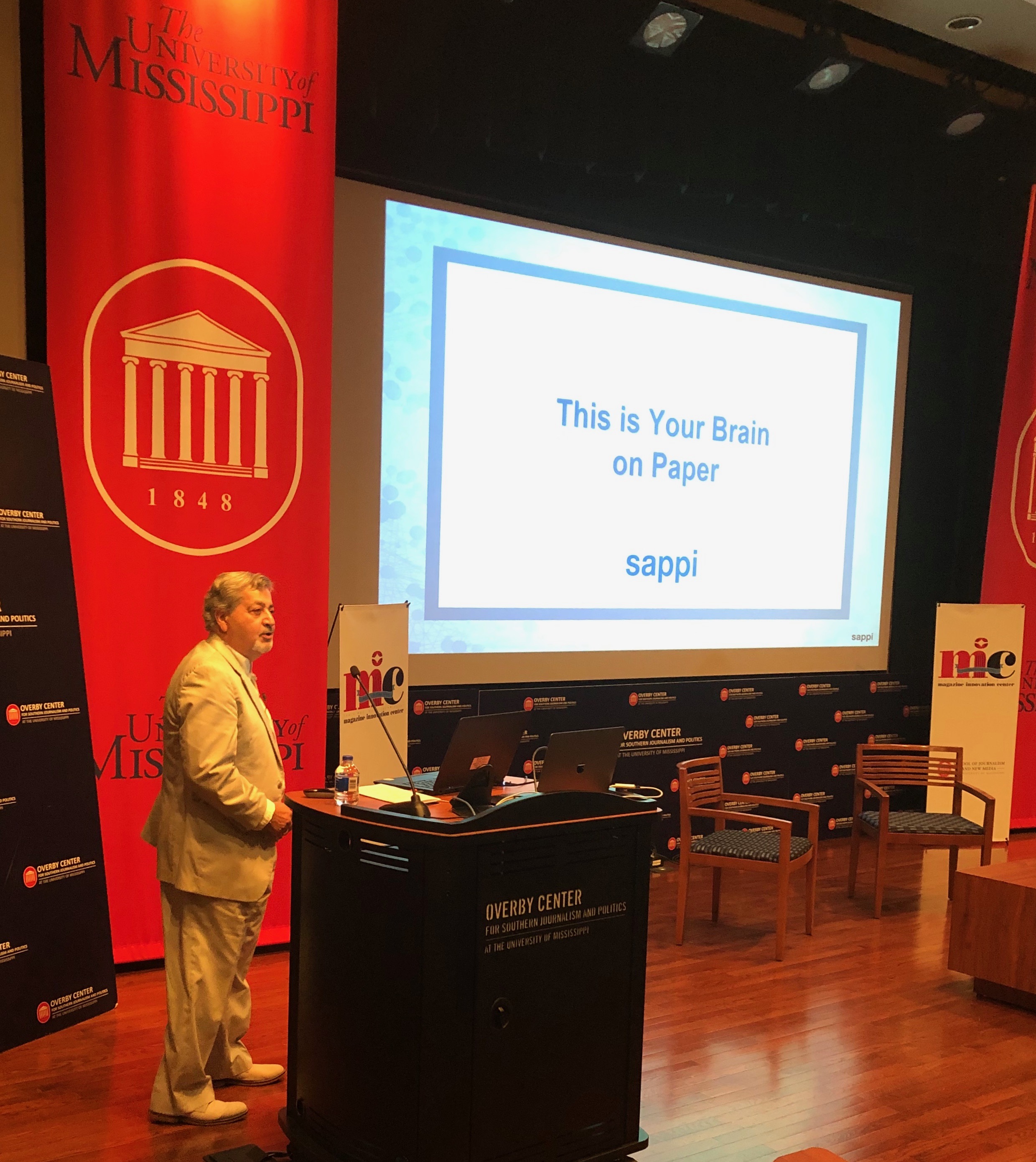
“This Is Your Brain On Paper” Says Sappi’s Daniel Dejan… The ACT 9 Experience Recapped. Linda Ruth Reporting… Part 4

May 1, 2019

Is content just content? Daniel Dejan, Print Creative Manager for North American Sappi Paper, asked the question at Mr. Magazine’s ACT 9. If you take the same content and duplicate it across platforms, is it the same content, is it the same experience? Has technology impacted the user experience, and if so how? Sappi decided to do a deep dive research to answer these questions.

Brain activity is very different when reading on paper compared to reading on a device. The device adds nothing to the reading experience. Reading on paper stimulates visual memory. It leads to mapping of information in our brain for later retrieval. Mapping can’t be done well with the moving stream of digital. Ink on paper is tactile, stimulating four senses.

The endowment effect means that you want something more if you can touch and hold it. Touch is an important part of our decision making. Print can trigger ownership imagery. Well-crafted advertising in print creates connection with consumer, leads to purchases. Even online purchases, for example in catalog industry, are begun at the print level—in fact over 75% of online purchases, in some cases, are begun at the print level.

When you read ink on paper, you slow down. Your heart rate and blood pressure slow. You have a higher valuation of the content, the authorship, better understanding, better retention, and you have a higher valuation of the brand. Reading the same content on a digital device switches our brain to skim mode. Our brains have new, evolved digital synaptic cortexes, and the moment we open a device we switch to that mode, seeking key words, highlighted copy, links. This is called bi-lateral literacy. When we read content digitally, we don’t get the full depth of the content.

The next level of print offers opportunities to enhance the tactile nature of the medium and offers new levels of connection with the consumer. Electroluminescent Ink creates a mesmerizing cascading effect. Electroconductive Ink can connect paper to your phone.

The US ranks 24th in the world in reading. This problem might be connected to our increasing digital dependency. The child who is distracted will not learn as deeply. How we read is as important as what we read. Can we provide a foundation for the child so the formation of deep reading is part of our transition to digital? It is essential that we do so.

Because, we find, content is not just content. How we encounter that content is critical, and print is essential to our continued depth of experience and depth of learning.

To watch Daniel Dejan’s entire presentation click on the video below: