Love it or hate it, MagNet is on a mission to cleanse the single copy sales data for the magazine industry while attempting to make sense of that data at the same time. On Oct. 24 MagNet is offering a training day for publishers, circulation people, marketeers, and anyone interested in learning more about the single copy sales data and how to better understand and utilize that data. I asked Joshua Gary from MagNet why is the company doing this and why should publishers attend.
Here is The Mr. Magazine™ Interview with Joshua Gary, vice president for systems and operations at MagNet.
Samir Husni: Why is MagNet doing this?
Joshua Gary: At MagNet, our goal is not only to aggregate and cleanse the industry’s data, but also to make the best possible use of that data. To understand what this means, it’s important to show people hands-on how much they can affect their own profitability and efficiency. We believe in the tools we’ve built and we want people to have the opportunity to see just how powerful the information can be in today’s day and age. We estimate that the industry wastes more than $144 million annually on PPD (Print, Paper, Distribution) on products that are going to accounts that generate $0 in sales. But there is still much we can do as an industry to properly manage this distribution if we use the right tools.
SH: What is in it for the publishers, distributors, etc.?
JG: This lab is really about education. It’s meant to give everyone an opportunity to learn, to inquire, to look under the covers as it relates to the MagNet systems and take them for a test drive. We want the industry to understand just how much they control of their own newsstand destiny, We have built the industry’s premiere Centralized Distribution Management tool in AIMS, and a world class reporting and analytic engine, nicknamed NIRC. We want to give people the opportunity to experience just how powerful these systems can be, and how they can help in our everyday business.
SH: How are the MagNet tools helping the industry or better yet, how do you see MagNet helping the entire print industry?
JG: MagNet is in a very unique position, simply based on our relationships and interconnectedness to members of this supply chain. It’s part of our mission to provide the best data available, make it actionable to all, and provide value to this industry. It’s our intention to use our expertise in newsstand, data and technology, and to curate solutions that are applicable to everyone within this ecosystem. One of the steps required for doing this is to let people experience these systems for themselves, which is why we have created the MagNet Training Day on 10/24.
Vibrant, energetic and elegant, Suzanne Boyd, the editor in chief of Zoomer magazine, Canada’s leading magazine aimed at the baby boomer generation, is a true reflector of the magazine she edits. Zoomer is in fact a vibrant, energetic and elegant magazine. Every page of the magazine screams with all of the aforementioned characteristics and with each turn of the page one can feel the emotional attachment to the magazine and its ink on paper.
I asked Ms. Boyd why is there such a shortage of print magazines for baby boomers and what is the future of print for both generations: the baby boomers and the young people? Her answer is in this Mr. Magazine™ Minute. Enjoy.
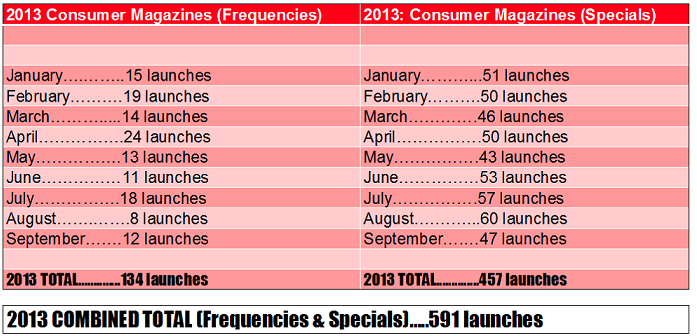
2013 IS the year of book-a-zines and special issues when it comes to the new magazine launches and the newsstands. In the first three quarters of 2013 new magazine launches witnessed a decline of 24 titles, from a total of 614 in 2012 to a total of 591 in the same period of 2013. The charts below show the increase of 11 book-a-zines in 2013, compared to 2012, and a decrease of 34 magazines with a regular frequency. However, launching a new magazine is still best in the worst of times… enjoy the numbers.
When Steve Lacy talks, people should listen. Why? He is the CEO of the Meredith Corporation, the media company that reaches 100 million women. CEOs of major companies are in most cases, very guarded in what they tell you and what they share with you. Not Steve Lacy. I invited Mr. Lacy to keynote the one-day workshop, “CPR for Magazine Media,” that was sponsored by the Magazine Innovation Center and Publishing Executive Magazine in New York City last week. Mr. Lacy delivered a prescription sure to heal those who are willing to listen and follow it.
He engaged the audience with a passionate, transparent and honest discussion, answering questions, as frank as he can be, and at some cases, just saying he did not know. Simple, but powerful.
Highlights of Mr. Lacy’s discussion…
There really isn’t any such thing as a tired media brand as there are often times tired marketers around that brand.
Our sales in print are up more than our sales in digital. Not on a percentage basis but on an absolute basis. Two percent, guys. You have 98 percent that’s still in print. I’m a huge believer in the tablet. It’s the first time you can bring together what was in print but the seamless transition to digital and we can add video to it, it’s got to be a richer experience right, but guess what? She wants print. So we have to do all of it. It’s about that simple.
I would love all of our consumers to be rushing to the tablet but in fact industry wide except in some very vertical publications that create time sensitive information, it’s 2 percent of the audience. And don’t let anyone fool you with other numbers because it’s not true.
But the heart and soul of the Meredith Corporation is really our national magazine brands that have been aggressively extended to new platforms over a very, very long period of time.
Read on to discover more words of wisdom from Steve Lacy, Meredith Corporation’s Chief Executive Officer:
The Power of Better Homes and Gardens:
Better Homes and Gardens is almost 90 years old, and it has remained very successful over lots of evolutions in our culture. So I always think there really isn’t any such thing as a tired media brand, as there are often times tired marketers around that brand.
On Where the Money at Meredith is Coming From:
I’m going talk a bit about Meredith maybe for some of you who aren’t as familiar with the company, and then talk about some of things that we have done, and I think about all these newer activities in addition to our most important activity which is our printed consumer magazines because even to this day, it’s still where we make the vast majority of our money. So, I’m going to talk a lot about many new things but they are all built on a very solid foundation of print. So it’s like in addition to it’s not in exchange for — at least not in our world.
On Meredith’s National Media Group:
This is where we create, and in a platform agnostic way, distribute our content nationally, and sell our advertising nationally — again in a very platform agnostic way.
On the Heart and Soul of Meredith:
The heart and soul of the Meredith Corporation is really our national magazine brands that have been aggressively extended to new platforms over a very, very long period of time. Samir mentioned that we have a very, very focused portfolio of brands and products. So when we have the opportunity to look at a potential acquisitions, the very last people who come into the room are the ad page sellers because what I’m most interested in is what our circulation marketers believe our knowledge of the consumer and our consumer database can do for that brand. Because if in fact we can make the circulation stronger, if we can increase the rate base, if we can extend it to other platforms, I promise you we can find somebody to sell advertising into those platforms. Not that it’s easy, but it’s impossible without a strong consumer connection
On Meredith’s Audience Reach:
We do in fact reach 100 million unduplicated women every month, and 45 million of those interactions are in our digital environment.
On The Strategy for Growth:
So these are really the five key growth strategies that we work on each and every day. From maintaining our content and our connection with the consumer in a very fresh and vibrant way all the way to continuing to look in the marketplace for other brands that we can add to our portfolio that we can add value to and grow over time
On the Myth that Print is Going Away:
There is this very unfortunate belief that everything in print is going away. And there are some very challenged print media brands, but in most cases, they are print media brands that create time sensitive information. So, if you didn’t read it today, or this week, by the time you get next week’s, it’s yesterday’s news. But most of us are not in that business. We are in an enthusiastic area. The vast majority of the content that we create in this industry is in fact, over the relative near term, evergreen content that can be very easily extended across platform. And I dismiss the naysayers who say, “Oh my god you’re in the magazine business, have you bought your coffin yet?” It’s simply not the truth.
On the Revenue from Digital Compared to Print:
Now I’m going to talk about digital, including tablets.Today we spend $300 million on things that I do not think are particularly valuable to our consumer. Paper, printing and about $100 million to the postal service. So, I would love all of our consumers to be rushing to the tablet but in fact industry wide except in some very vertical publications that create time sensitive information, it’s 2 percent of the audience. And don’t let anyone fool you with other numbers because it’s not true. So, I would love to get out of the paper business, but we don’t have 100 million women rushing our corporate office telling us no more print. They in fact like the print, they in fact like the website, they like the tablet if they’re traveling, and if they’re in the grocery, they want a recipe from allrecipes on their smartphone. So guess what? They want it all. And what we have to do is figure out an efficient way to maintain that connection and try to find some way to monetize all that digital content we’re creating — the vast majority of which is not monetized in our industry today. But we have to be there so the trick is how do you do it in an efficient way and not end up bankrupt in the process?
On the Importance of Research in Creative:
I said if you don’t listen to the research, then you need to go find another job. Because so many of these creative people get a little disconnected from what the consumer really wants. And I think those of you who are leading businesses and if someone is telling you that they know more about the consumer than the consumer does, that’s a big problem. So we do a lot of enhancements, they are all research-based, and we listen, very carefully. If they don’t like something we’re doing we stop, and we try to provide them the content that they would like to receive. We always try to make it aspirational, so that there’s something to be learned.
On the Launch of allrecipes magazine:
We will launch an allrecipes magazine at a guaranteed rate base of 500,000 and like I said, we’ve never sold orders as easily. So, I think you want to keep all those things in mind as well all look toward the future. And I don’t think there’s been another magazine launch off of a digital brand at that sort of a scale, and all of those orders were paid with real American money.
On the Use of Digital to Move Transactions:
We have been rather successful at moving more transactions to a digital interface, and of course, the larger digital scale we have now helps us with that. We make about $5 more per order on every digital order compared with direct mail.
On Why Sales in Print are Up More than Digital:
Our sales in print are up more than our sales in digital. Not on a percentage basis, but on an absolute basis. Two- percent, guys. You have 98 percent that’s still in print. I’m a huge believer in the tablet. It’s the first time you can bring together what was in print but the seamless transition to digital and we can add video to it, it’s got to be a richer experience right, but guess what? She wants print. So we have to do all of it. It’s about that simple.
On Making Your Brand a Part of Your Customers’ Life:
But more importantly, it’s about making our brand a bigger part of her day-to-day life. We know she shops at Walmart. So if she’s going to pick out towels, I just assume they’d be Better Homes and Gardens towels, or tabletop, or shower curtain, or decorative pot fora deck — that kind of thing. I think that helps with newsstand sales and subscription renewal and watching our daily television show that we create. I think it’s just about surrounding her with the brand.
On the Freedom of Editorial and Creative at Meredith:
We never mess with the creative group. We’ve got little creative groups all over the country. We’ve never fiddled with them. Sometimes they’re in remote places. Eating Well is up in Vermon,t so it’s still up in Vermont. But we bring the sales and marketing together. We bring all the purchasing together. We bring the finance together. And those things that either the consumer customer can’t see or the advertising customer can’t see, we centralize. We don’t mess with the editor-in-chief, we don’t mess with the creative vision because that’s really how the audience got aggregated. So my board goes crazy with all these little offices we have around the country but I don’t mess with those creative people. Nor do they ask for my advice on cover design and other things like that. Some day I’m going to get to get to pick a cover and I’m sure it will bomb.
On When Women Use Digital:
Our digital is always at the highest at two times of the day. And when are those? Noon and four o’clock in the afternoon. She’s at work. She’s getting her recipe for tonight from the office. Watch what you see assistants doing. She’s at work. The highest traffic on BHG is never at seven o’clock at night — she’s trying to get the kids in bed. Never. Never has been since 1995 when it was launched. Noon hour and 4-6 p.m. This is like a regular person who shops and cooks and cleans. She has to do it all and nobody’s helping her — certainly not the husband.
On the Minimum Circulation Needed for a National Magazine:
Well, generally speaking for the advertising part of it to work, we have to have about a half a million guaranteed rate base But generally speaking, it’s more, what’s the rate base, and is that rate base healthy and profitable and can we sustain it or if it’s too small can we fairly quickly make it big enough that then it fits into the portfolio.
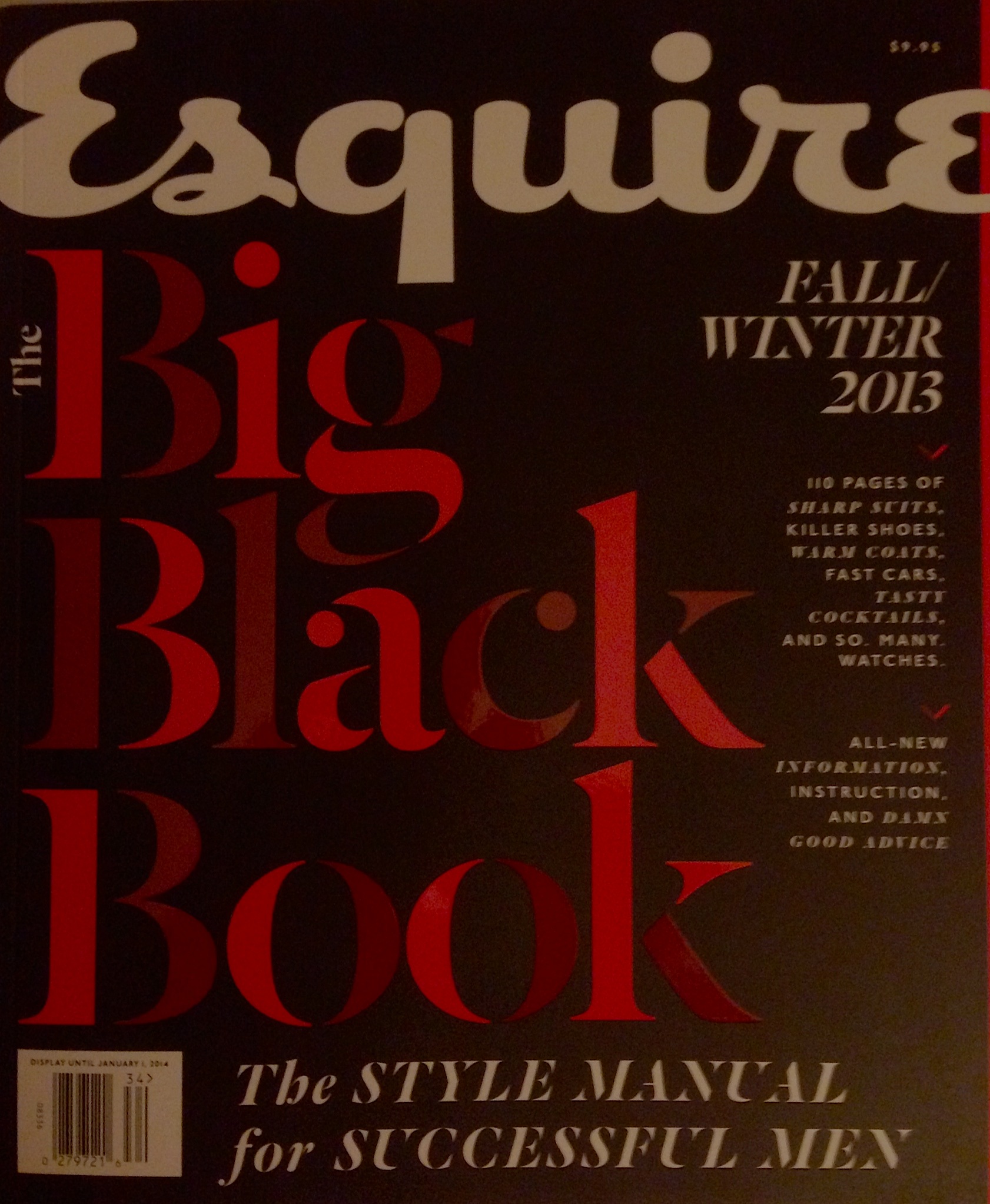
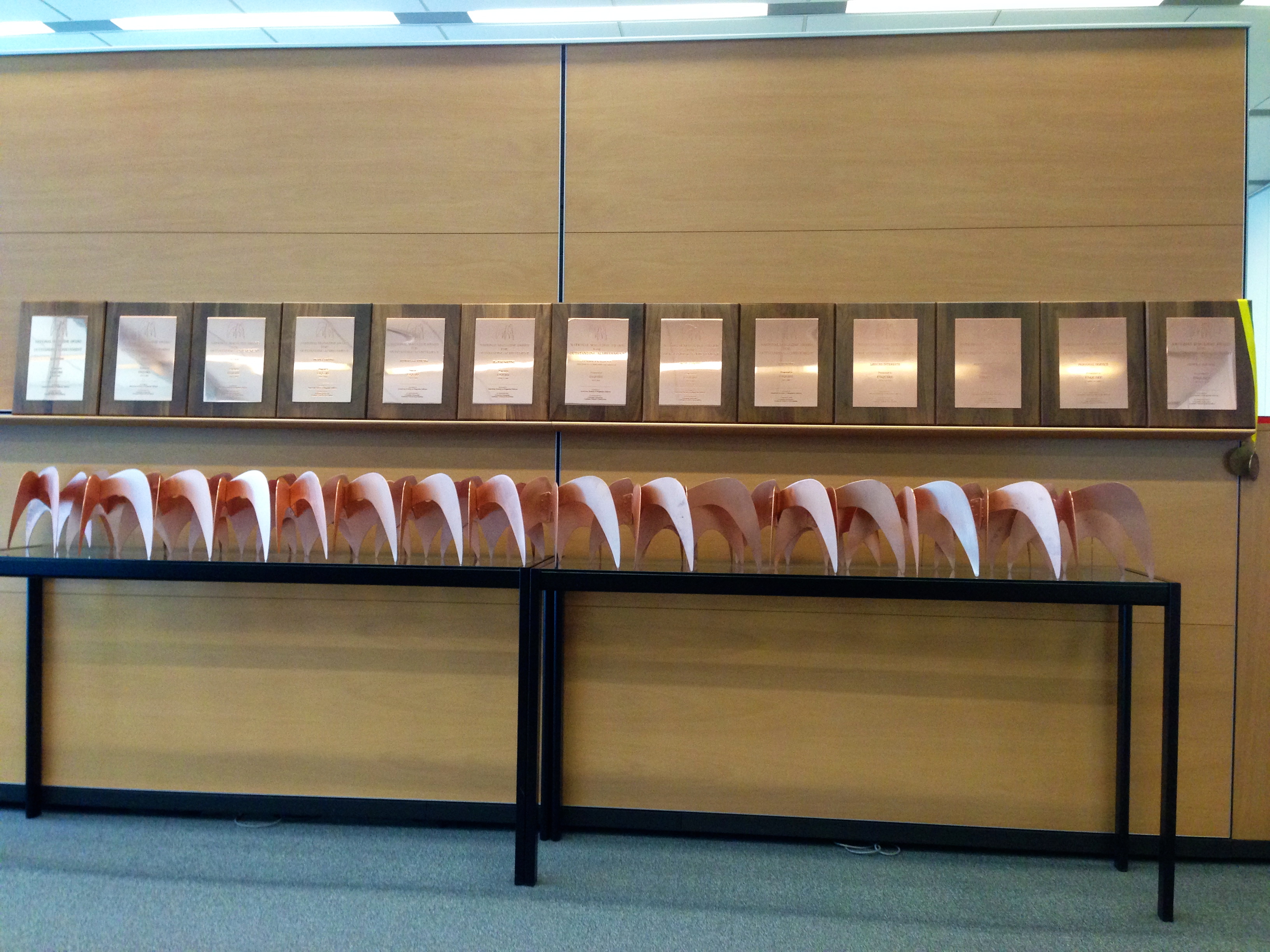
With a tag line Man At His Best, Esquire magazine enters its 9th decade of life with much deserved fanfare. The printed magazine is having one of its best years, the Esquire Weekly has dawned on the tablets, the Esquire Black Book is a must have for men, and last but not least the new Esquire Network that launched on September 23. Esquire, was, is and still continues to cater to Man At His Best, but this year it sure is Esquire At Its Best.
And who knows more about Esquire At Its Best then the man behind the magazine and the brand: David Granger, Esquire’s editor in chief and one of the top advocates of the power of print at the same time that he enjoys having all kinds of fun with all the digital devices at our disposal in today’s magazine and magazine media marketplace.
I met David at the Esquire’s office on the 27th Floor of the Hearst Tower on the eve of the launch The Esquire Network. My interview with him is in two parts. First the Mr. Magazine™ Minute with David Granger followed by an in-depth interview about the magazine, the digital world, the future and of course, what keeps him up at night.
So first, here is the Mr. Magazine™ Minute with David Granger (followed by the transcript of the video)…
And here is the transcript of the above video… Samir Husni: Today (September 23) you launch the Esquire Network. Esquire is man at its best — is this moment Esquire at its best?
David Granger: That’s such a hard question. I think this is one of the best moments in Esquire’s existence right now. We just have access to so many forms of expression and we’re trying to use them to the best of our ability. It’s not just the fact that we have a television network that uses our name and some of our ideas but it’s that we get to express ourselves in print primarily — and possibly most gratifyingly. But then we get to do like funny things for the iPad and do funny things on Esquire.com and comment on things in real time and bring to bear all our writers’ and editors’ knowledge in real time for Esquire.com and then give this moment in time just a little bit of thought for Esquire Weekly. We just have so many options when it comes to seeing the world through an Esquire lense that I think it has to be about the best time in the history of Esquire.
SH: You’ve been known to be a great advocate of print, yet you’re everywhere. You recognize that we live in a digital age but how do you differentiate print? What’s the value of print in this digital age?
DG: We live in a time when everything is so ephemeral. It comes and it goes. And lately I’ve been thinking about how I consume things in a new way. There are things that I consume qualitatively and there are things that I consume quantitatively. Quantitative is just all the stuff that gets referred to me. It gets referred to me by the 35 people that work with me. It gets referred to me by my writers. It gets referred to be by Digg or any of the other referral entities. And those things they just kind of bounce on and off of you and go on their way. But I try to make time for the qualitative things. I try to make time — 45 minutes at least — to read The New York Times. I try to take time to read the few magazines that I read. I make a lot of time for fiction, for reading novels because it makes me use my mind in a different way. So anyway, I think the value of print is that print encourages the production of qualitative experiences and I think that’s going to be the value that moves print forward and makes it become even more of a thing to be cherished.
And now for The Mr. Magazine™ Interview with David Granger, editor in chief, Esquire.
First the Sound-bites:
On how the role of editor has changed over the years: I think the editor’s role changed in a lot of ways so that I became a referee and an enabler. I had to coordinate our efforts in three realms for the benefit of all of those.
On whether brand expansion is possible to imagine without the print entity of Esquire: No, because we still and always will I think, create things for print Esquire that isn’t created for purely digital media.
On the power of print: The power of magazine design is something that people truly underestimate. I think that’s one of the true strengths of print magazines, is that we can do and package things in such a beautiful way.
On whether digital technology is helping or hurting journalism today: It hurts in one way that so many websites are just about reprocessing somebody else’s story by putting a headline or a slight spin on it rather than going out to do original thinking or original reporting.
On what keeps him up at night: Everything. I wake every morning between 2:30 and three worrying about absolutely everything. Whether it’s budgetary things or why haven’t I plotted out an editorial plan for 2013 or what am I going to wear in the morning.
And now the lightly edited Mr. Magazine™ Interview with David Granger – Esquire Magazine…
Samir Husni: How has the role of the editor of a major magazine changed in the last five to 10 years?
David Granger: I was fortunate enough to demand change from my staff and my writers by saying eight years ago, when everybody was talking about how, of course, new media was going to destroy traditional media — of course everything was going digital — we deliberately set out to prove that print and particularly the magazine medium was the most exciting medium ever created. That led us to do crazy things.
First, we did this with the basics of our medium — paper, ink, photos, words and designs. We started messing with those combinations. Whether it was using the margins of the magazines differently or whether that was doing Origami with our covers. Or whether it was new kinds of fiction. We did reported fiction and we did fiction on napkins. We did all sorts of crazy things. We just tried to mess with our medium to call attention to it and prove to people that it was the most exciting medium that had ever been created.
That led us into experimenting with a digital cover, the first cover of print magazine where the words and images moved. That led us to augmented reality. And we were the first magazine that had an iPhone app. We were so ready to leap into all these other opportunities that have come our way that it seemed kind of natural and easy.
All of a sudden we were redesigning and reimagining the print magazine for the iPad. Before too long, we created Esquire weekly just to enhance our timeliness and give our iPad subscribers more. And then early on in the days of digital and websites, there was this inherent tension between the web operation and the print operation. That was because of the thought that one was going to eat and destroy the other.
But as soon as the iPad came along and there were three it became almost immediately apparent that we could use each other’s resources and use each other’s creative imagination for the benefit of all three and so it wasn’t like a push and pull and a struggle between two forms of media anymore. It became this combined effort on the part of all three and so I think the editor’s role changed in a lot of ways so that I became a referee and an enabler. I had to coordinate our efforts in three realms for the benefit of all of those.
So, I think the main thing that is required of an editor in the 21st century is just enthusiasm. You have to see opportunities and you have to find entertaining ways to take advantage of them.
SH: Without the print entity of Esquire, is it possible to imagine this brand expansion to the iPad weekly, to the network?
DG: No, because we still and always will I think, create things for print Esquire that isn’t created for purely digital media. I mean, everyone lionizes the idea of long-form journalism and lots of people read it on their devices. But most of the best of it is not created for a digital platform. It’s still created for first books and then for the 50 or 60 magazines that still care deeply about it.
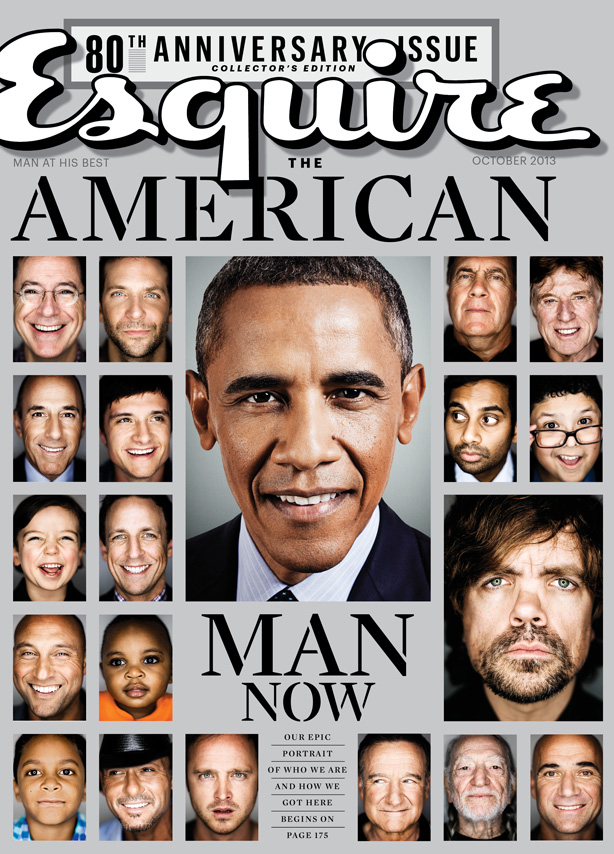
I think there are more good feature writers in magazines than there’s ever been. So there are so many things we do in Esquire that are done because they are for a magazine. This thing we did for the 80th anniversary, The Life of Man, where we tried to create a portrait of the American man now — 80 photographs — one each of a man born every year of Esquire’s existence all by the same photographer. That was like a massive, ambitious project that I’m not sure somebody who works for a purely digital publication would think “We’re immediately going to get the traffic return” because it’s all about traffic.” With magazines there is still an appreciation on the part of both readers and advertisers for doing something great and I’m not sure that the purely digital media have matured to that degree yet.
SH: When I received the 80th anniversary issue, the first thing that came to my mind was that it won’t feel the same even on their own iPad edition. It won’t have the same collector’s value. It’s not something I could display on my coffee table and tell folks to take a look.
DG: One of the reasons for that is not just the heft of it and the tangibility of it — but it’s also design. When you’re flipping through that magazine and all of a sudden you come onto the spread of Bill Murray and Robin Williams next to each other or the spread of Dr. Dre and Steven Colbert next to each other or you see the weird combination of people of like Merle Haggard and Tom Brokaw and Senator Harry Reid and it’s just none of that was able to be caught in any of our digital expressions.
The power of magazine design is something that people truly underestimate. I think that’s one of the true strengths of print magazines, is that we can do and package things in such a beautiful way. I mean, we’ve been practicing it for hundreds of years, so we’ve gotten really good at making great magazine designs. I just think that’s the power of getting Esquire’s 80th anniversary issue in your hands. It’s a more satisfying experience.
You know, I have complete faith that we’ll get there and there are certain things with our digital expressions but we’re not quite there yet —though there are lots of fun things that we do on the iPad that we can’t do as effectively with paper.
SH: You’ve been known to say that the fundamentals of journalism have not changed. You need good reporters, good writers and good editors. Do you think digital technology is helping or hurting this?
DG: That’s a good question. Again, I think it’s a matter of maturation to some degree. It hurts in one way that so many websites are just about reprocessing somebody else’s story by putting a headline or a slight spin on it rather than going out to do original thinking or original reporting.
I’ve been talking lately to my writers and other groups about the thing that I think journalism needs more than anything right now and that’s to be more presumptuous. I mean I think there’s a reason that we’re called the Fourth Estate.
The reason that journalism is the Fourth Estate is because we are supposed to affect the course of events as much as the president, or the congress or the senate or anybody else in the United States of America. And I think we, as we’ve gone into the digital age, especially as journalism has gone into the digital age, has been trading access even more readily and giving away the ability to be skeptical and the ability to be critical. They’ve gained access but they’ve traded away influence and that’s something that I think we need to grab back. My hope is that — I mean The New York Times is still a miracle of journalism — and my hope is that with greater funding for institutions like the Washington Post and other bastions of great journalism we’ll be able to grab some of that presumption back.
SH: That’s an excellent point. It feels like journalism was much more powerful and had much more, say pre-digital.
DG: I mean imagine if Politico actually decided that they wanted to be a player. They squander too much of their capital by sort of putting out press releases on the behalf of politicians. When they decide they want to become a player, they’ll become massively influential.
SH: One of the things people like to say is that in this digital age that we’re living in you have to integrate print. And you’re a prime example of that.
DG: We didn’t do it because we had to — we did it because we wanted to.
SH: And because of the fun of it… Do you see a day when people will enjoy just sitting down and reading without interruption, without having to put my iPhone on the page, without having to do this or that?
DG: I still think that’s how most people read the magazine. I mean we created this Netpage app so you can experience some of the extras that we created for the iPad or for Esquire.com while you’re reading the print magazine.
But you know all the evidence is that most people are completely satisfied by the experience of sitting there and reading the print magazine and the same with our iPad edition. You don’t have to touch play at any point, but I do think people enjoy some of the fun things we do. Yeah, that’s why people read books. Everybody was talking about how books were going to become these highly interactive things — through the Kindle, you’d be able to touch and do all these things — but I think even when people are using their Kindle or iPad, they’re reading the book. So, I think there’s a great value, I hope, in immersing yourself in a great piece of writing and thinking.
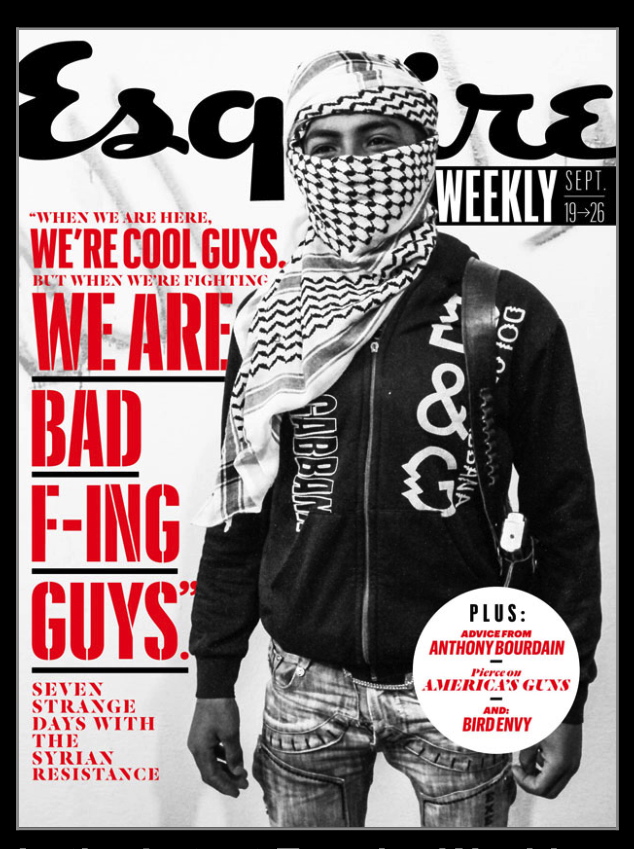
SH: I noticed the covers of Esquire Weekly are sometimes a little more daring or different. Do you envision a different cover if it’s for print or a different cover if it’s for the iPad? Do you have more liberty with the iPad cover?
DG: With our iPad covers from the beginning we created something unique, which are these moving covers where the person who’s on the cover welcomes you to Esquire and they’ve become more elaborate as time has gone on.
But now in order to read it on the iPad you’ve got this library of all the Esquires you’ve bought. And first we wanted to differentiate the look of monthly Esquire from weekly Esquire. We also wanted weekly Esquire to like shout a little bit more. It’s like “Hey, hey we’re over here. You don’t know what we are, but here we are.” And so we try to be a little more different like the new one, which is based on a story from Syria. It’s a really dramatic cover — we took a big step forward with that cover. The design department just wanted to call attention to the things that we do.
With the weekly, we are going to shout a little bit. That was the whole idea with the monthly as well, especially on the actual newsstand. We’ve been doing the wall of type for like seven or eight years, where we’ve literally been trying to kind of yell at people a little bit. “Hey, we’re over here. Buy us!”
SH: My typical last question, what keeps David up at night?
DG: Everything. I wake every morning between 2:30 and three worrying about absolutely everything. Whether it’s budgetary things or why haven’t I plotted out an editorial plan for 2013 or what am I going to wear in the morning.
The greatest motivator for me is fear and as long as the fear doesn’t overwhelm you, but merely causes you to be impatient with what you’re doing so that you’re eager to change what it is you do, and then it’s a good thing. Worry and fear haven’t lapsed over into crippling paranoia, and when they do I should probably quit.
While others are killing magazines, David Carey, Hearst Magazines President, is launching new products. Mr. Carey was, is, and always will be, in a launch mode. He believes in new magazines, and in the role they provide to both the readers and the advertisers. In fact, Hearst is getting ready to launch Dr. Oz’s magazine in early 2014. Plus, there are other plans for more new introductions on the white board inside the Hearst Tower.
I asked Mr. Carey about the reasons why he continues to introduce new products at Hearst Magazines. His answer in the following Mr. Magazine™ Minute. Enjoy!
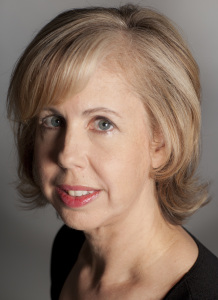
A lot has changed since my interview in 2011 with Nancy Gibbs, now TIME’s new editor, but one thing did not and will not ever change: Ms. Gibbs’ belief in the future and role of journalism and storytelling. Part of her recipe for the future of TIME is to continue to innovate on the original recipe for TIME created by Henry R. Luce and Briton Hadden in 1923: Making sense of the world one story at a time.
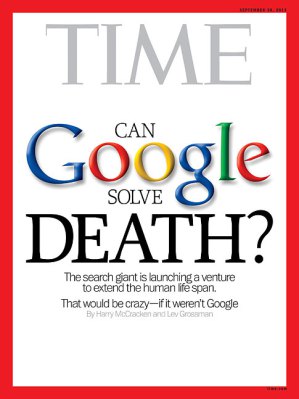
When I asked Ms. Gibbs how TIME is going to be different under her tenure, she answered, “My interests start with the presidency and extends into health and science, into technology, into family issues, into the intersection of public and private life…” Her debut cover as the new managing editor* of TIME is a prime example of how Ms. Gibbs puts her “cover” where her “interests” are.
And as in every Mr. Magazine™ Interview, first the sound-bites followed by the lightly edited transcript of the interview.
So, first here are the sound-bites:
On the recipe for the survival of TIME: I think it’s the continuing innovation of the recipe that’s made TIME so successful for so long. We do the most interesting stories. We’re able to talk to the most important and interesting people who are not only in the news but behind the news.
On the importance of storytelling in reaching your audience: I think that the need to make sense of the world for people, and to tell stories in a way that they remember, that moves them, that is powerful, I think that’s something that TIME has always believed in, and I certainly do as well.
On Luce’s coining of the tagline “Newsweekly” for TIME and whether a new tagline is in the magazine’s future: I think what’s great in the 21st century is that we now can do for the minute, hour, for day what TIME as a newsweekly has always done for the week.
On whether or not there’s no more room for a newsweekly on the newsstands: There’s always going to be room for a newsweekly. And what’s great is that that’s just not me saying that, that’s our audience saying it.
On the future of journalism: I’m actually very bullish about the future of journalism and there are a couple of reasons why. One is because I think our audience and I think our readers know how much news matters. We’re living through such a period of just unprecedented change.
On what keeps her up at night: At the moment, it is actually the journalism, and that’s kind of what I’m grateful for.
And now for the lightly edited Mr. Magazine™ Interview with Nancy Gibbs, TIME managing editor.
Samir Husni: You’re the first woman editor of TIME in its entire history. Are we going to see a softer, gentler TIME from now on or is it still going to be the same?
Nancy Gibbs: Well, I don’t think it will be the same but not because it’s softer or gentler. I think every editor has particular interests that they bring to the job. My interests, as you know, start with the presidency, which I’ve written a lot about, and extend deeply into health and science, technology, family issues and into the intersections of public and private life. I think we’re long past talking about soft news and hard news or male news and female news. I don’t think anyone thinks that way; I certainly don’t think that way.
SH: We’ve seen the demise or semi-demise of U.S. News World Report and of Newsweek. What is Nancy Gibbs’ recipe for the survival of TIME?
NG: I think it’s the continuing innovation of the recipe that’s made TIME so successful for so long. We do the most interesting stories. We’re able to talk to the most important and interesting people who are not only in the news but behind the news.
The great advantage that TIME has, partly because we now have the largest audience that we’ve ever had in our entire history, is that we are able to go places where other people can’t and do the kind of both deep investigative work and quick, high-velocity news coverage.
And so what I think is so terrific going forward with our plans to re-launch our website and hire a lot of new staff, is that it allows us to be even faster, even stronger and to go even deeper into the stories that people care most about.
SH: You told me in 2011 that humans need storytelling the same way they need sleep, food and water. Are you still a believer in this day and age that the best way to reach an audience is through storytelling? If so, how are you going to apply that to the magazine, the printed magazine, the website and the digital side?
NG: I’m more a believer in great storytelling than ever partly because we keep getting these fantastic new tools with which to do it.
If you look just at what we’ve been doing in recent weeks, we just launched a new documentary film unit, Red Border Films, which lets us take the great photojournalism that we’ve been known for years and add new dimensions to it with first-rate film making by our photographers.
We did a fascinating interactive project this summer to honor the 50th anniversary of Martin Luther King’s “I Have a Dream” Speech that was a combination of photo galleries, oral histories and video. This is the most important kind of storytelling, but now we’re not at all limited to the story that you can put on a page. Having the additional dimensions that we get on the tablet, on mobile, on our website and the tools that we have just make storytelling that much richer.
But I think that the need to make sense of the world for people, and to tell stories in a way that they remember, that moves them, that is powerful; I think that’s something that TIME has always believed in, and I certainly do as well.
SH: Back in 1923 when TIME was launched Henry Luce coined the phrase “newsweekly” as a tagline for TIME. What will be the phrase that people will remember Nancy Gibbs coining for TIME magazine in 2013? If you wanted to give the magazine a new tagline, what would it be?
NG: I think Luce was very wise and quite prescient in his understanding that people were so bombarded with information that they needed a source of news that they could trust and that made sense of the world to them. I think what’s great in the 21st century is that we now can do for the minute, hour and the day what TIME as a newsweekly has always done for the week.
SH: So, would you say that there’s no room anymore for a newsweekly?
NG: Of course not. There’s always going to be room for a newsweekly. And what’s great is that that’s just not me saying that, it’s our audience saying it. The audience for our weekly print journalism and our weekly tablet edition is very strong and very stable.
And of course, there are things that you can do, there’s a perspective you have, in the longer form and in the weekly format that is different than what we’re able to do everyday online. It’s not that one is going away at the expense of the other, it’s that both are important, both are strong, both are growing, and they feed each other.
What we do digitally makes what we do in print stronger and vice versa. This week’s cover story is a classic example.
The magazine cover: How Wall Street Won, was an important explanation about where we are five years after the economic meltdown. It triggered an ongoing debate that we carried out on Time.com between our author Rana Foroohar and the Treasury Department. President Obama himself ended up weighing in when George Stephanopoulos held up the cover to show him during their interview on Sunday morning. In that sense, it’s all one story that we’re telling in print and we’re pursuing online. I don’t think it’s a tradeoff where one is stronger at the expense of the other. I think all platforms can magnify the important journalism that we’re doing.
SH: You’ve been known as a prolific writer, interviewer and as a well respected journalist. What’s the future of journalism to you? Do you feel like journalism schools are wasting their time these days? What’s the future of journalism as a whole from the editor of the top leading news magazine in the country?
NG: I’m actually very bullish about the future of journalism and there are a couple of reasons why. One is because I think our audience and I think our readers know how much news matters. We’re living through such a period of just unprecedented change. If you look at what has happened, we’ve come through a decade where we’ve fought two wars and spent the last few weeks debating whether we were likely to get pulled into a third. We’ve gone through enormous economic transformation, enormous technological transformation and people understand that making sense and understanding what’s at stake in the midst of all this change requires sources of information that you can trust.
What journalists are trained to do is to ask hard questions and see around corners and sort out what’s important from what’s not. I think that people who develop the skill sets to be good reporters, to understand data, to read a spreadsheet, to do deep research, to interview newsmakers in a probing way, those skills and the work that it yields I think is more important than ever.
I’m not surprised that the quality of candidates who are interviewing for jobs is spectacular. These are really bright young men and women who have clearly made the decision that of all the things they could do, journalism is their future. That’s been enormously exciting for those of us who have been committed to it for years, to see the amount of energy that’s coming into the profession from its newest members.
SH: What keeps Nancy Gibbs up at night?
NG: What keeps me up at night? At the moment, it is actually the journalism, and that’s kind of what I’m grateful for. It’s not worrying about the business model and not worrying about office politics or any of the things that can distract editors. I’m worried about how we’re going to cover Syria when that story is so difficult and dangerous to cover. I’m concerned about being responsible in how we cover the navy yard shooting and having the right people deployed in the right way. My job is to worry about the journalism and I will always do that and I’m grateful that that’s where my focus gets to be.
SH: Thank you.
*(Managing Editors at Time Inc. are the highest ranking editorial position in each magazine… they are in fact the editor of the magazine).
On February 24, 2011 I interviewed Nancy Gibbs, who was then TIME’s executive editor. Today, it was announced that Ms. Gibbs has been appointed TIME’s new managing editor. She is the 17th managing editor since TIME was founded in 1923 by Henry R. Luce and Briton Hadden. Ms. Gibbs is the first woman to hold this title.
No matter how much technology changes, no matter how much the political environment changes, the human need for stories is every bit as powerful as the need for food and water and sleep.
Storytelling as an important service and art form is always going to be important. Having more ways to tell a great story, having more platforms for storytelling is terrific.
What print allows you to do is to have a contract with your reader that they’re willing to spend some time with you.
Everything seems to be additional, rather than a replacement. That doesn’t worry me. I love print, but I also love what we’re finding we’re able to do on these other platforms as well.
If you want to have a much more manageable, edited and curated account of things that really matter and are interesting and surprising and provocative to think about, then the magazine is a very efficient vehicle for that.
This whole (change) process was launched and pursued completely independently of anything Newsweek was doing.
This is a fantastic time to be in journalism and the changes in technology only make it better.
As for my friend Rick Stengel, the former managing editor of TIME, he is heading to the State Department. Today, President Obama announced his intent to nominate him to the position of
Under Secretary for Public Diplomacy and Public Affairs, Department of State.
Congratulations are in order to Nancy Gibbs and Richard Stengel.
Knee-jerk reactions to the onset of digital have been a problem to print publishers since the dawn of cyberspace. The cries of ink-on-paper being swallowed up by the “Digital Black Hole” could, and still can be heard resoundingly throughout the media world. But rather than reacting to the uncertainty of the moment, Manuel Yáñez Herrero, Director General of the Asociación Mexicana de Revistas, A.C., believes that magazine publishers should be creators of change, not Chicken Little running from the Digital sky that is about to fall upon their heads. And while content is vital to the success of your magazine; the engagement of that content is nothing without passion and emotion motivating each and every facet of the publication, from design to writing, to the ads placed within the pages.
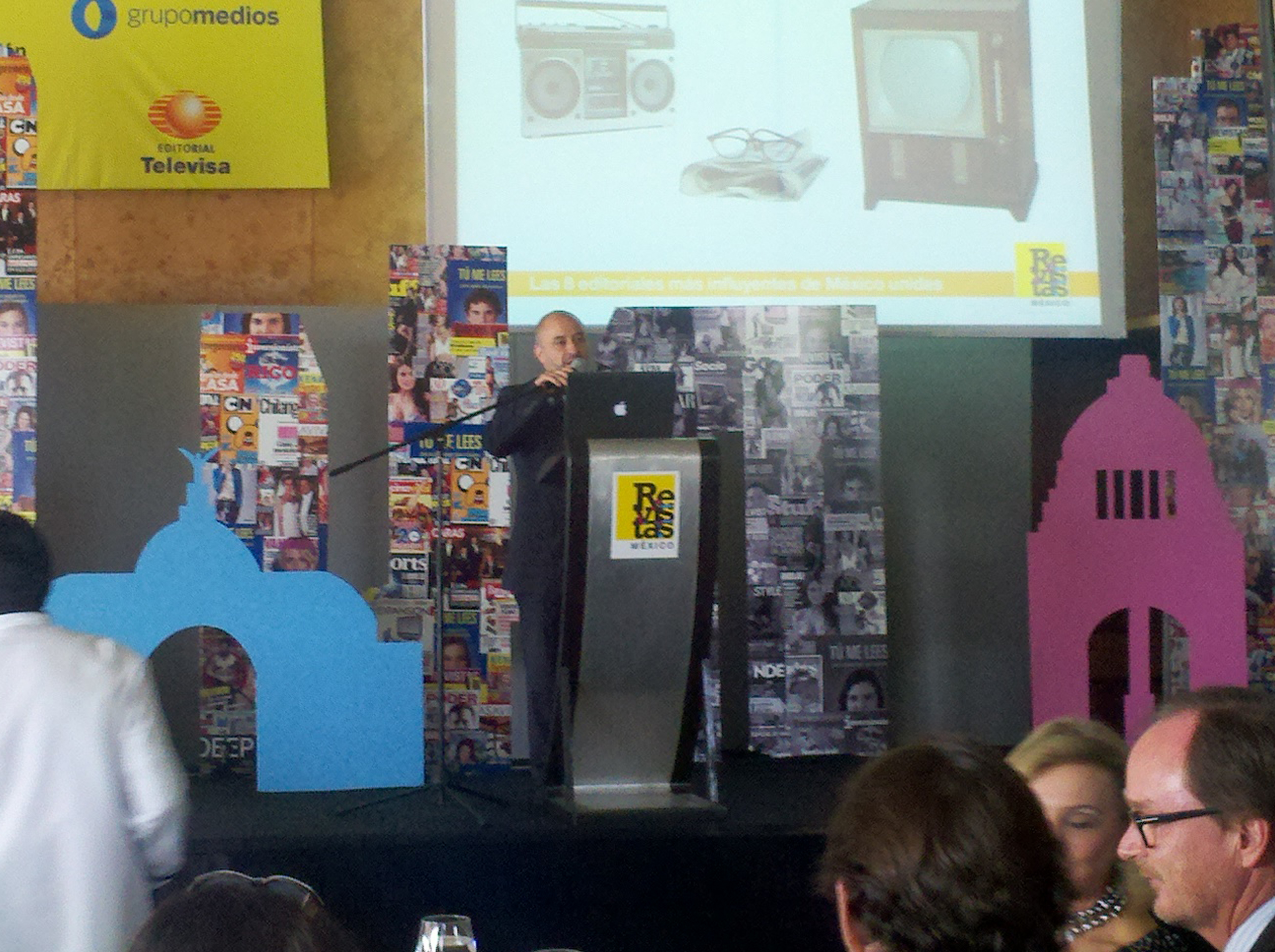
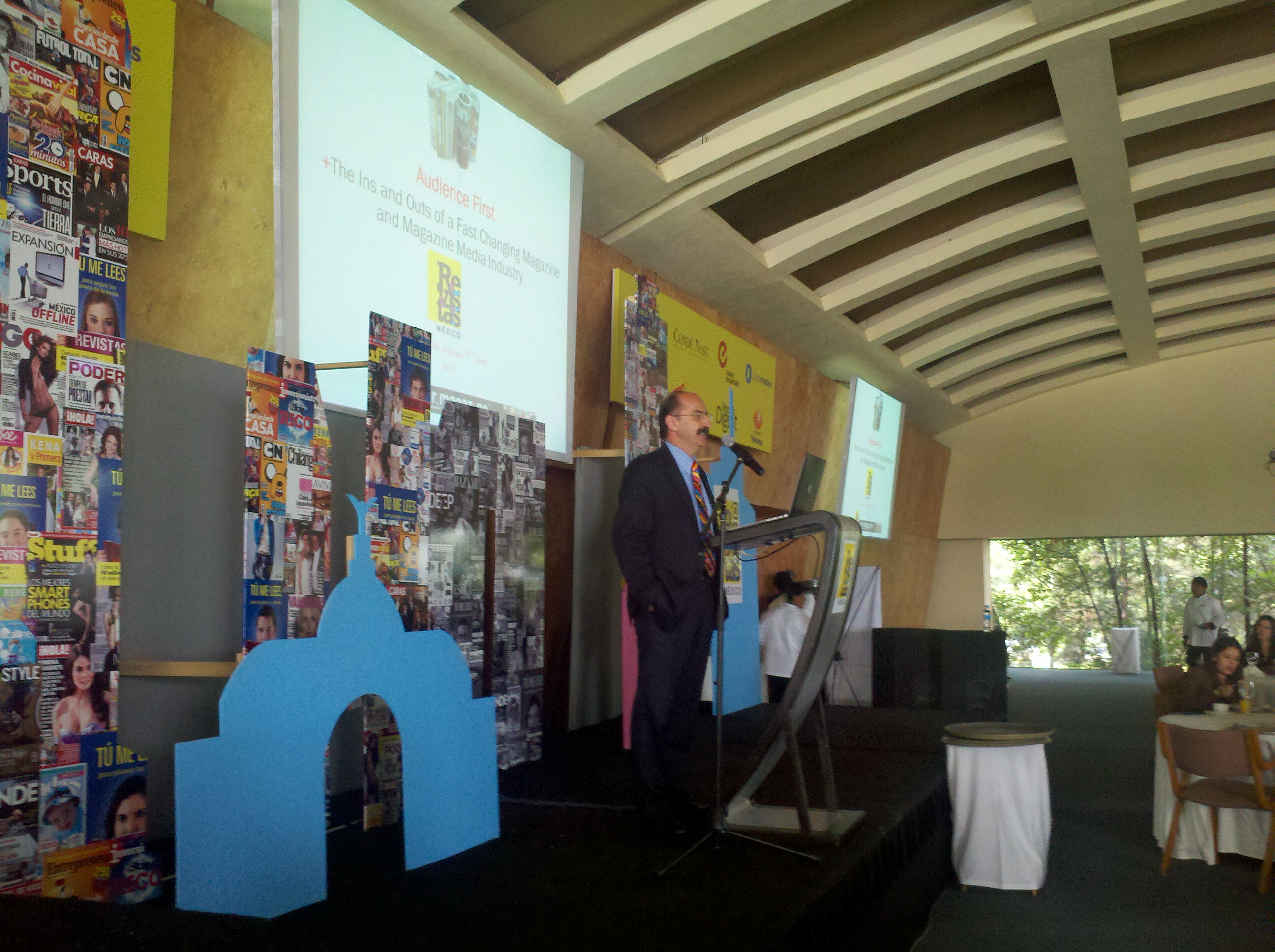
Last week I was honored to be asked by the Revistas Mexico to be the keynote speaker at their annual breakfast meeting in Mexico City. I seized the opportunity to ask Mr. Herrero some questions about the magazine market in Mexico and the challenges that our neighbors south of the border are facing. His detailed answers to my questions are below in the Mr. Magazine™ interview with Manuel Yáñez Herrero… and get ready to be inspired!
Samir Husni: What do you think are the major problems facing the magazine industry in Mexico? Single copy sales? Advertising? Move to digital?
Manuel Yáñez Herrero: Mexicans have been, for centuries, very creative people; we love color, music and having fun. This means we have a bunch of young creative people putting out great magazines.
So in this field we really do not see a threat. We have strong traditional titles and we continue to launch new ones. BUT, and as you can see it is a big but, it’s our distribution.
As you experienced, Mexico City is a huge, quite complicated place and for the past 80 years or so we have been distributing magazines the same way. We, via our printers, send allotment of our titles to the old part of the city located, as in every city, in the center. Then we have a Union. This Union controls newsstands. If you want to own one you must be part of the Union. These newsstands are hereditary.
So the Union there delivers our magazines to a ¨Despacho,” which is mainly a small warehouse. Then another part of the Union that owns a smaller warehouse called an “expendio,” which is a sort of wholesaler, goes to a Despacho (there are 4 of them) and takes the magazines. Then every day at 5 in the morning the voceadores (owners of newsstands) buy the magazines they think will sell. Some of them have credit so they take a bigger allotment, but some do not, so they just take what they can afford.
You know what this means, it, off course, limits sales tremendously and dooms new launches. Then they take the magazine to the newsstand to sell and after display time concludes, depending on frequency, weeklies, fortnightly, monthly etc., they take the ones that didn’t sell back. This also means that monthlies and bimonthlies suffer because they very seldom are displayed for the whole 30 or 60 days.
We give credit to the Union, so we get sales info and payment 8 days after closing date. Ten years ago this channel used to account for up to 60% of sales now it is only around 15%.
What has happened is there are more and more convenience stores (7 elevens and such) and there is a chain called oxxo that owns almost 12,000 convenience stores around the country. So now these stores account for around 25% of sales.
Then there were, for the past 40 years, three National Distributors: DIMSA (owned by an American, Brian Weiner), CITEM (owned by the biggest drugstore medicine distributor in the country), and Intermex (owned by editorial Televisa).
It’s the usual terrible system; we deliver allotment, they make bundles depending on volume for each state or retailer (Wal-Mart and such), then they truck every bundle to its destination. We get sales info and payment 90 days later. They keep, on average, 40% of the cover price, with which they cover every expense: delivery returns, the cost of renting space in retail stores, etc., and as you can imagine they were losing money a lot of money. Payments were on average after 140 days instead of 90 and just last month CITEM folded and stopped payments all together.
So for starters, with this business model distribution was never the way it should have been due to lack of cash flow; distributors just took our titles to places where they could make money. Titles that did not sell, no one cared about, as long as they sold advertising, distribution was free! And successful magazines covered the costs of lousy ones.
As you can see, the future looks gloomy. We, in Revistas Mexico, are trying to take control of distribution. In the meantime, we are losing readership and exhibit space. We are almost there; we already negotiated with retailers and agents in every state (newsstand and convenience store local distributors), but our cash flow has been affected immensely. We are also working very closely with Intermex Editorial Televisa’s distribution arm to consolidate all our titles and work together in getting info and having just a group of supervisors (there used to be three groups, one per each National Distributor, and maybe one from at least 3 editors groups).
It’s an interesting problem to have. I know that in England, France and Spain they’ve had similar problems and similar solutions, with different results, none of them that successful. I would like to design a better business model.
Sorry for the long answer, but this is a big problem.
As far as Ad sales, we currently represent 4% of adspend pay. We know we should at least grow a couple of percentage points and that is an objective.
Samir Husni: What is the role of Revistas Mexico?
Manuel Yáñez Herrero: Due to all of the above, three years ago the industry’s bigger players decided to work together. In the past we worked with the Mexican Chamber of the Editorial Industry (CANIEM: Camara Nacional de la Industria Editorial Mexicana), which grouped Book Editors, Newspaper editors, Magazine editors together.
After hundreds of hours, finally, on October 2011, we came to an agreement and legally formed the Mexican Association of Magazine Editors (AMER: Asociacion Mexicana de Editores de Revistas) with the Revistas Mexico brand.
We have 4 objectives:
1.- To promote the intimate relationship we have with our audience
2.- To make more transparent the way we measure our industry
3.- To have more and better distribution and exhibition spaces
4.- To promote editorial professionalism
For the first time we are working with PWC sharing industry information, very basic, but hard information:
· Jobs generated
· Single Copy Sales
· Ad Page sales
· Readership segmentation by age, geography and economic status
· Advertisers: who they are, how much do they invest and which gives us our Top 10 group.
We have this information per Quarter and we are sharing it with Industry players, Brands Agencies, and such.
We work with a government sector that supervises magazine contents and covers. They are in charge of giving title and content certificates for every magazine. They see that no child porn exists, that if a crime is committed by a minor there is no disclosure of any information about him/her and things like that. We also help make sure that there is no censorship regarding any publication.
We work also with the education side of the government with a program designed to professionalize every economic sector. In our case we focus on Editorial Industry. We are currently describing what we do, how we do it and who does what. Then we describe each job and so forth. We will then have a certificate which will help design courses for the betterment of people working in Editorial. We are working closely with Colleges and Universities to revise and design courses, Masters Degrees and even a specific career in Magazine Editorial.
We at Revistas Mexico are working with CEOs of our affiliates to solve the distribution problem.
We are working to promote creativity in magazine advertising (there is none!) so we are developing Lynx Awards for creativity in magazine advertising. Right Now TV ads are created and then maybe there is a still photo with a caption that turns into the magazine ad. We know specific design ads are by far more effective.
Samir Husni: You have such a marvelous magazine reading campaign. Tell me a little bit about the power of print and reading campaign?
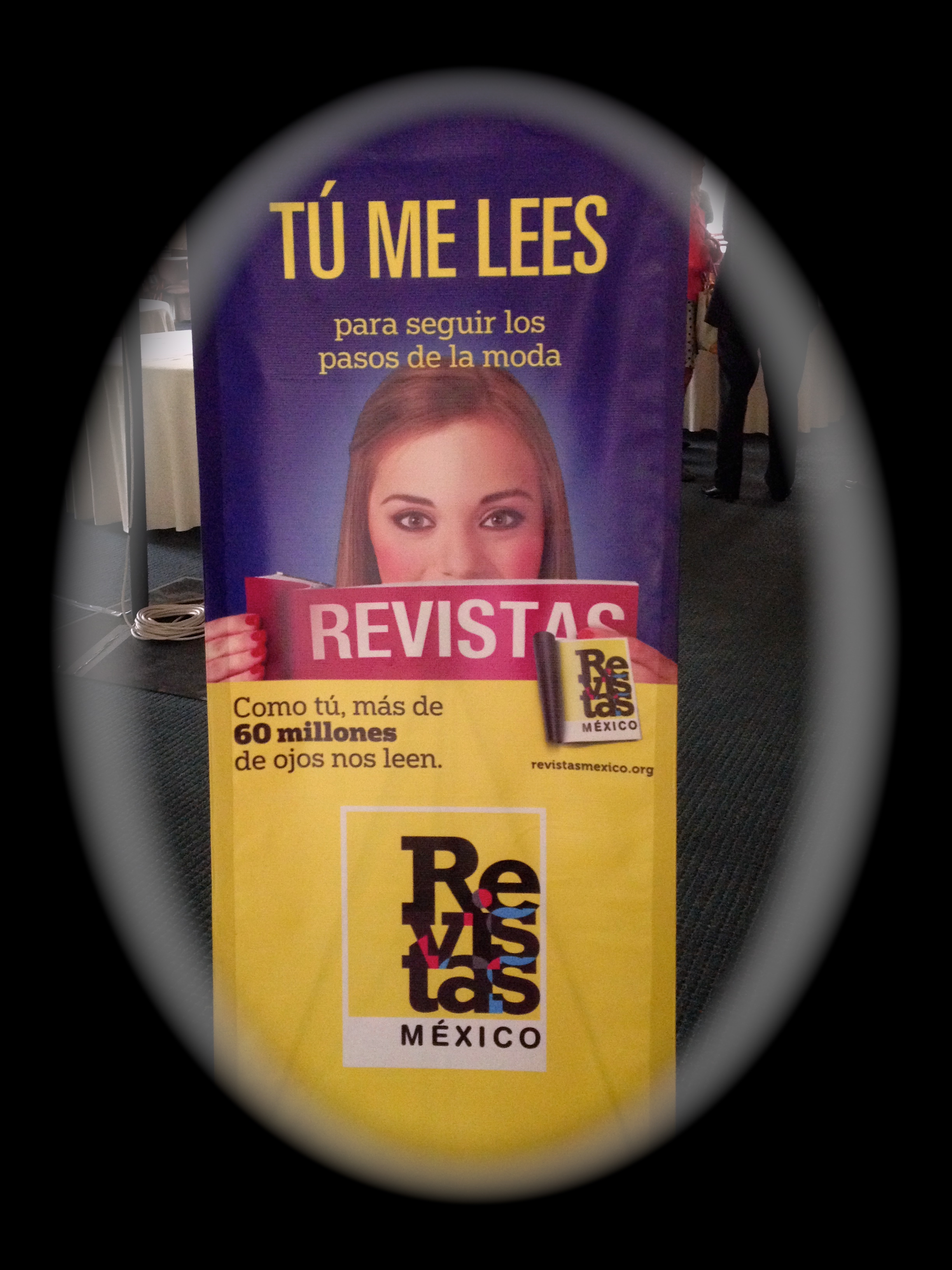
Manuel Yáñez Herrero: Talking to friends and family, I realized that most people do not comprehend how many magazines they actually read. Very commonly their answer to the question: do you read magazines were a flat NO. Then talking a bit more they came to the realization that they read all the time. We started the statement, You Read Us When…and then we added…when you want to know about business, when you want to know about celebrities, when you are planning your wedding, when you get pregnant, when you have a baby, on the plane, at the dentist, at the checkout, even when you go to the restroom. Like you, more than 60 million people read us.
We invested more than 30 million pesos on a print campaign in our titles, some out of home and a couple of TV ads. You can see all of it on our page www.revistasmexico.org .
Speaking of which, we developed a web site where our advertisers can find which magazines are better for their specific target audience. You fill out sex, age and socio-economic status and we display all our magazines that cover that specific readership.
We are present on FB, Twitter and Linkedin @revistasmexico
Manuel Yáñez Herrero: The future is quite interesting. We stopped reacting to digital buzz and readership changes and are working on being the creators of change. We know that not only is content important, but what that content means to our audience. Engagement is nothing without passion and emotion.
Also, every media is different. Our brands should speak differently in each one, same message, same brand identity, but different ways to be read or heard or viewed.
“This is an event that is very important to me, and I have found that it resonates profoundly, not only with the students, but with every professional that attends.”
“As most of the long-term readers of this newsletter know, my dear friend Dr. Samir Husni, who sometimes in some circles is known as Mr. Magazine, is the founder and director of the Magazine Innovation Center at the University of Mississippi’s Meek School of Journalism, and he is also a Professor at the School of Journalism there at ‘Ol Miss.
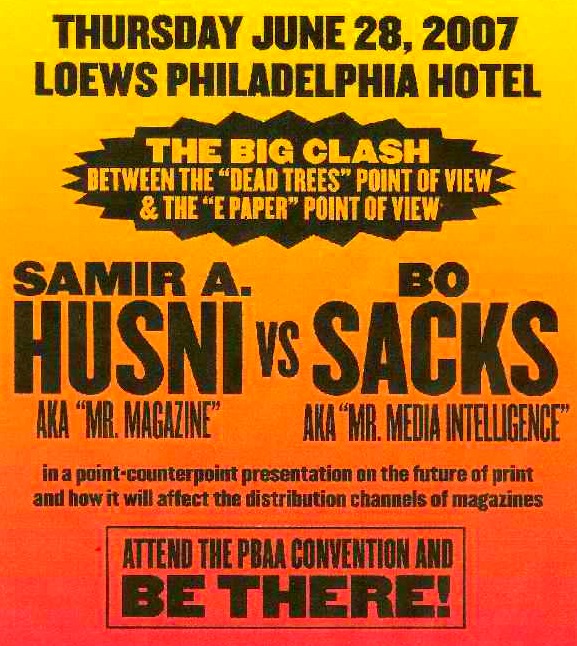
Samir and I have been publicly debating the future of this industry since at least 2006 and probably before.
I want you all to know that the Thrilla on Manila is still truly an amazing event to see and is happening three times in a convenient media boxing ring conference near you. I assure you that each of these events will be completely different, with different formats, different subjects of focus, but not without the heat of two respectful, yet formidable adversaries. In general we are always talking about the future of media. To be truthful, if you think about it, that future, would be your future. For me, I look forward to these events with greatest of anticipation. They have been enjoyed over the years by thousands.
But before we get to the report of those events listed below, there is another event happening early in November, after the big debates, on Samir’s own turf at the University of Mississippi. This will be the 4th time that Samir has invited publishing luminaries to the school to speak to the students of journalism and also in turn to each other. This is an event that is very important to me, and I have found that it resonates profoundly, not only with the students, but with every professional that attends. I have been to every one of these events except the year that I was laid low by disrespectful publishing hating kidney stones. If you look at the list of speakers you will be greatly impressed too. It is one of the most relaxed and inspiring events of the publishing year, and I should know as I attend almost all of them.”

 Love it or hate it, MagNet is on a mission to cleanse the single copy sales data for the magazine industry while attempting to make sense of that data at the same time. On Oct. 24 MagNet is offering a training day for publishers, circulation people, marketeers, and anyone interested in learning more about the single copy sales data and how to better understand and utilize that data. I asked Joshua Gary from MagNet why is the company doing this and why should publishers attend.


![Gibbs Color Rec[1][1][1]](https://mrmagazine.me/wp-content/uploads/2013/09/gibbs-color-rec111.jpg)




 Mr. Magazine