h1

Small And Mid-Sized Publisher Opportunity In A Contracting Market. A Mr. Magazine™ Exclusive from MagNet..

May 13, 2014

Picture 10

An ongoing series of Mr. Magazine™ exclusive interviews with MagNet’s Luke Magerko.

Luke Magerko was a consistent contributor to my blog in 2013. Luke has partnered with MagNet to provide retail analytics for the publishing industry. Today, we pick up our conversation from two two weeks ago and, going forward, MagNet will provide me with an interview with Luke every other week highlighting retail analytics.

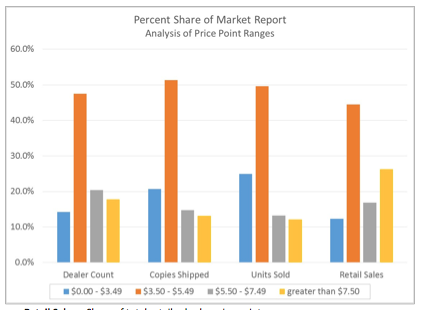
This week, we focus on increasing sales by changing the checkout status quo, especially for smaller and mid-sized publishers. First, we report on the overall magazine share of market and sales trends based upon price point. This analysis is based on all titles off sale in the previous 12 months ending February 2014.

HOW DID YOU ANALYZE PRICE POINTS?
We segmented our analysis into four price groups and observed four national sales results. The four price groups are:

•$0.00 – $3.49: examples include Women’s World, First for Women, All You
•$3.50 – $5.49: examples include People Magazine, HGTV Magazine, Shape Magazine
•$5.50 – $7.49: examples National Geographic, New Yorker, Country Sampler
•Greater than $7.49: examples include Cuisine at Home SIP, Fine Cooking and Taste of Home Bookazines

We analyzed weighted cover price. Weighted cover price is revenue generated in the United States and Canada divided by total unit sales. For example, Muscle and Fitness magazine has a U.S. retail price of $6.99, however its weighted cover price is greater than $7.00 due to Canadian sales.

The four sales comparisons are:

•Dealer Count = How many stores received a magazine. A monthly title ships to 10,000 dealers an issue. This equates to 120,000 dealers annually.
•Copies Shipped = Share of total copies shipped (“draw”) by price point.
•Unit Sale = Share of total unit sale by price point.
•Retail Sales = Share of total retail sales by price point.

Screen shot 2014-05-11 at 8.20.20 PM

I AM SURPRISED THE $3.50 – $5.49 CATEGORY REPRESENTS NEARLY HALF COPIES SHIPPED AND UNIT SOLD. WHAT ELSE CAN WE LEARN FROM THIS CHART?
$0.00 – $3.49 price points – These titles represent 14% of the dealer count, but 21% of copies shipped and 25% of units sold. These titles have a high penetration at checkout and have a higher sell-through efficiency than national averages. However, these titles generate just 12% of all retail sales.

$3.50 – $5.49 price points – This group represents nearly half of all dealers and units sold; just under half of all units sold, but only 44% percent of all retail sales. Again, these titles are highly represented at checkout, but have a below-average retail sales share.

Combination of both higher price points – These titles represent 38% of the dealer count, but 28% of copies shipped and 25% of units sold. These titles are either part of a checkout pocket rotation (such as BH&G Special Interest Publications) or are relegated to the mainline. These magazines generate 45% of all retail sales revenue and are easily the most profitable group of all price categories.

BUT THE HIGHER PRICE POINT PRODUCT HAS LOWER SELL THROUGH EFFICIENCIES.
Yes, but wholesalers wisely pushed higher price product in spite of the lower sell through because it generates more revenue/profit for the retailer.

WHAT ARE THE SALES TRENDS BY PRICE POINT?
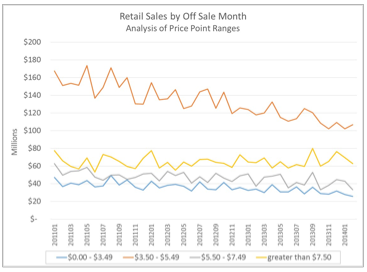
Let’s look at monthly retail sales by the price point grouping in this chart.

Screen shot 2014-05-11 at 8.21.19 PM

The lower priced titles weigh heavily upon the entire category. The $5.50 – $7.49 group, however is declining less dramatically while the greater than $7.50 group sales is increasing.

THE UNDER $5.49 TITLES REPRESENT MOST OF THE CHECKOUT SPACE!
Yes, they do. Retailers are shrinking the magazine footprint in store because retail buyers focus on checkout results and punish categories where sales fall rapidly.

HOW DO WE CHANGE THE STORY AT RETAIL?
I mentioned this in a past interview, but it bears repeating: there has been little change at the checkout in the past 10 years. There is similarity of product at checkout, and the publishing industry needs a new mix of titles to generate life into this industry.

WHICH PUBLISHERS SHOULD PURSUE CHECKOUT SPACE?
We analyzed one publisher which produces high-priced, high-quality special interest publications this week. We determined that this publisher could improve both sales and profit by purchasing checkout space.

HOW DO YOU DETERMINE PROFITABILITY?
For this exercise, we estimate revenue and expense. Our estimates are fairly accurate, but we always prefer to work closely with a publisher to produce exact results.

WHAT DID YOU FIND?
This publisher creates more than 50 releases a year. Although the overall sell-through efficiency of 27% underperforms national averages, this publisher makes over $1.40 per copy sold. This is an excellent profitability number that lends itself well to investing in checkout space.

WHAT STOPS THIS PUBLISHER FROM EXPANDING INTO CHECKOUT?
In my experience, smaller to mid-level publishers believe checkout pockets are too expensive, both in pocket fees and in waste. More than one publisher representative said they would not want to increase the print order to cover the checkout space.

BUT THE TITLE WOULD SELL MORE PRODUCT!
Yes, but what we cannot do is predict the exact increased sale. One senior-level wholesale representative told me a title moving from the mainline to the checkout sees a 5:1 increase in sale. I believe that is too high, but it is reasonable that any title moving from an aisle in the middle of the store to checkout will see increased sale. We need to make publishers more comfortable in this arena so they can test product at checkout and determine if it is right for them.

WHAT ABOUT EXISTING TITLES AT CHECKOUT?
Some of those top-30 titles need to reduce space or be sent to the mainline based on lack of productivity. The publisher we analyzed could credibly walk into many retailers and point out its line of mainline titles already outsell many checkout titles right now.

WHAT WOULD HAPPEN AT CHECKOUT?
It has been well reported that wholesalers are in financial trouble and retailers compound that trouble by reducing the magazine retail footprint. A more diverse checkout with higher priced product will bring back some consumers and spur sales. Higher-priced product at checkout will help the retailer’s bottom line which is a win for the publishing industry as a whole.

INTERESTING, LUKE. YOU CAN CONTACT LUKE AT LMAGERKO@MARKET-ANALYTICS.COM OR JOSH GARY AT JGARY@MAGNETDATA.NET IF YOU WOULD LIKE AN ANALYSIS OF YOUR OWN TITLES.

©Samir “Mr. Magazine™” Husni, 2014. All Rights Reserved.

h1

An Experience Spearheaded by Print: Men’s Health South Africa

May 11, 2014

Men’s Health – South Africa – Keeping The “Experience” In The Experience… The Mr. Magazine™ Interview With Editor-In-Chief Jason Brown…

“I think brands that will survive are strong brands that have a multi-faceted approach which offers the user or the reader an experience. It will be spearheaded by a print experience because people appreciate that.”…Jason Brown

JB_headshoulders Men’s Health, South Africa, is the epitome guide for men and what they need to know to have a well-balanced and healthy life. It is a magazine committed to improving each and every area of a man’s life – from diet to relationships; the magazine is there to shed light on any current topic that might interest them.

Jason Brown is the Editor-in-Chief of the South African edition, but has worked globally in his career. Recently I spoke with him on a trip to South Africa. From the States to the UK and now South Africa, Jason talked about the differences, culturally and locally in the markets and about how distinctive they really were.

After helping to launch various versions of Men’s Health magazine, Jason knows what a magazine needs to attract readership and keep them – provide the audience with an experience they’ll never forget.

So sit back and enjoy the Mr. Magazine™ interview with Jason Brown – Editor – Men’s Health, South Africa.

But first the sound bites…

On the differences between global markets: There is definitely a distinctive difference between all the markets, even though we’re all English-speaking and pretty much have the same background. I’d say the biggest difference is the connection to the cultures of the country.

On the biggest stumbling block in taking a title global: Not making it local enough. Not giving it enough local flavor and not giving enough credit to the audience you’re going to be addressing. People think if you have a big international brand it automatically means success.

On his most pleasant surprise when it came to the various launches of the magazine: The response to a guy with muscles on the cover. So whether it was in India, or Brazil, there was some initial skepticism that it was an American magazine.

On his thoughts about the future of magazines, print or digital: I think that it’s a combined experience.

On how he sees the glass when it comes to the magazine marketplace in South Africa – half full or half empty: It changes every month and I think that’s just the nature of where we’re at. I think it’s very easy to become despondent about magazines at a time like this, because we’re in such an age of transition.

On what keeps him up at night: Keeping ahead of my readership and understanding their needs.

And now the lightly edited Mr. Magazine™ conversation with Jason Brown – Editor-in-Chief, Men’s Health, South Africa…

CoverMay14lo-150x200Samir Husni: You’ve worked in the United States for two years as Editorial Director at Rodale International and now you are the Editor-in-Chief of Men’s Health in South Africa. You’ve also worked with other magazines here and also in the UK. What’s the first impression you had about the differences in journalism in the States versus South Africa and the UK? Is it all the same or is there distinctiveness about the different markets?

Jason Brown: There is definitely a distinctive difference between all the markets, even though we’re all English-speaking and pretty much have the same background. I’d say the biggest difference is the connection to the cultures of the country.

Working at Men’s Health, we used to say so much is the same, but so much is different. So while many things that have to do with men are the same, men have the same sort of goals and a lot of the same ambitions, culturally how that magazine reflects its society, there is definitely a difference. And I saw it between Men’s Health, UK, the United States and South Africa.

And the biggest thing is the sophistication of the market and the influence of the other things in society. In South Africa we have a lot more of an outdoor society, more closely related to Australia. So the magazine reflects our lifestyle and also the diversity of the audience, 66 % of our audience is black. And that is a big economically growing and I suppose ambitious part of our society.

So the black middle class is growing and it’s reflected in our readership. Perhaps what we think are ideas that have had their time in the UK or the U.S. is still very valid here. Upwardly mobile, young men are looking for things in South Africa that perhaps still have strength and validity, whereas perhaps in the UK or the U.S. they no longer hold that same appeal, or they have to be evolved.

I think we’re probably about two years behind in that sophistication of the marketplace. But it’s caught up very quickly as more international brands have come to South Africa.

Samir Husni: You helped launch several editions of Men’s Health worldwide. What do you think was the biggest stumbling block in taking titles like Men’s Health or Women’s Health or Cosmopolitan and move them across borders?

Jason Brown: Not making it local enough. Not giving it enough local flavor and not giving enough credit to the audience you’re going to be addressing. People think if you have a big international brand it automatically means success.

I think it’s a great advantage because there are a lot of common lessons and a lot of common ground with many men around the world and certain brands are successful because they approach subjects in a universal way. However, not recognizing how much to localize and how important it is to create a local version that has a local flavor is a big mistake.

Samir Husni: And what was the most pleasant surprise with those various launches?

Jason Brown: The response to a guy with muscles on the cover. So whether it was in India, or Brazil, there was some initial skepticism that it was an American magazine. Our country is different is a phrase that we heard very often. But once we had localized, the basic premise of the magazine held true. And I think that was really the surprise, to see how this global concept, once localized well could be so successful and resonate with the audiences.

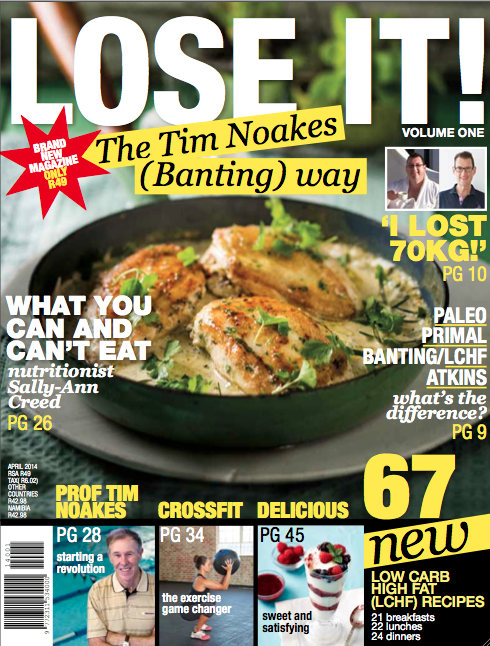
Samir Husni: Talking about local concepts, I interviewed one of your colleagues who had just launched a magazine about a very specific diet, the Banting Diet, Lose It! Magazine. And I see on the cover of this month’s issue of Men’s Health something like the questioning of this diet. Are we talking about the same market? Or does that diet only work for women or men?

Jason Brown: I don’t think we do it often enough here. Because it shows more than one angle to a story and I’m glad they’re having success with Lose It! but I think that our responsibility is to be slightly different and our angle, slightly more questioning.

When the Banting Diet was released here, we did an in depth report over a year and a half ago. We’ve now followed it up with a bit more of an investigative report and I suppose you could say we’re taking advantage of the trend toward this diet and our compelling newsstand cover line is the counterintuitive one, the one in opposition to what you are seeing on newsstands and what people are finding so popular at the moment.

So I think that there’s more than one angle to the story and we found our news angle in counterpoint to what Lose It! is doing. I think both have validity and that shows the health of magazines, that we can take one subject, investigate it and come up with different conclusions and only the reader benefits.

Samir Husni: What makes Jason tick?

Jason Brown: Great ideas. I love smart ideas. I love original ideas and whether I’m on Twitter or being sent a story idea or I find a magazine story and I say, wow…that is a smart, well-executed idea and I wish I had thought of that. And that is what keeps me in magazines and what keeps me inspired by what’s out there and gives me hope that great experiences and great content will keep on driving audiences to the newsstand.

Samir Husni: What do you think is the future of magazines? Print or digital? Both?

Jason Brown: I think that it’s a combined experience. We spoke about it earlier and one of my beliefs is that no one thing is the solution. I think brands that will survive are strong brands that have a multi-faceted approach which offers the user or the reader an experience. It will be spearheaded by a print experience because people appreciate that. They don’t have to click three times to get to their favorite magazine and they enjoy that lean back, but then you’re also offering them an app that can keep them on the go. Your social media is giving them a daily or hourly experience, but the magazine is giving them the longevity and the belief in the experience over the month, the week or over the year.

Samir Husni: As an insider, how do you see the magazine market in South Africa – is the glass half full or half empty?

Jason Brown: It changes every month and I think that’s just the nature of where we’re at. I think it’s very easy to become despondent about magazines at a time like this, because we’re in such an age of transition. And I think to be extreme or to write one thing off in favor of another is looking at it as a problem rather than an opportunity.

For me it’s about reaching an audience, quality content and a quality experience will always find an audience. And for me it’s an exciting opportunity to create more of a holistic brand. I think the future is in the entire 360. What we’re struggling to find right now is the balance between how each of those will work, and how we will create a revenue opportunity across all of them.

Samir Husni: My typical last question; what keeps you up at night?

Jason Brown: Keeping ahead of my readership and understanding their needs. And I suppose anticipating the next move to always stay relevant.

Samir Husni: Thank you.

© Samir “Mr. Magazine™” Husni, 2014 All Rights Reserved.
Truth in Reporting: Media 24 Magazines in South Africa, is a media company that I consult for. This interview is not related to my consulting role, but rather giving my readers a better understanding of the magazine and magazine media marketplace in South Africa. This is the last of the four interviews.

h1

A Love Affair with Magazines: Crowded, But Loved, South Africa’s Women’s Interest Magazines…

May 11, 2014

Women’s Magazines In South Africa Are A Growing Market And When It Comes To How The Industry Has To Function To Keep Them That Way – The General Manager Of Women’s Interest Magazines at Media 24 – Has The Answers – The Mr. Magazine™ Interview With Liezl de Swardt.

“But the move is definitely just not to digital, the move is to people thinking: I don’t have time for someone or something, meaning a magazine, which doesn’t understand me or bring me something that is really useful.”… Liezl de Swardt

Liezl de Swardt The market for women’s magazines in South Africa may be crowded and it may have undergone drastic changes over the years, but there is one thing for certain when it comes to the country’s readers: they do love their magazines.

Liezl de Swardt is the general manager for Media 24’s Women Interest Magazines in South Africa and is the one with her fingers on the pulse of the women’s market there more than anyone else. On a recent trip to the country, I chatted with her about the market, print versus digital and a host of other topics that are important to their audience, plus the future of women’s publishing in the country and what she’s doing to keep women’s magazines growing there.

So sit back and be prepared to enjoy the informative and eye-opening Mr. Magazine™ interview with Liezl de Swardt, General Manager, Media 24…

But first the sound-bites:

On the women’s market itself in South Africa: We have a very crowded market, but also a very long history of excellent magazines.

On print versus digital in the country: While all of our developing titles also have mobile sites and they’re very successful, it’s not like Time Magazine, ours are something you might read while you’re sitting in a taxi having a quick look, but the print magazine is the big currency.

On the future of women’s magazines in South Africa: I’m a half full type of girl, so I always say the glass is half full. But our biggest challenge is to rethink the way we’ve always done business.

On the major stumbling block she has faced: Our biggest stumbling block would probably be we think the advertisers will come back or the readers will come back. Nothing will just come back.

On her most pleasant surprise: The biggest excitement for me is unlocking niches. There are still areas of incredible excitement and interest. And we have an ability to get quickly in there.

On what keeps her up at night: The immense responsibility that I feel about the legacy brands that we have and how to sustain them in the future.

And now the lightly edited transcript of the Mr. Magazine™ Interview with Liezl de Swardt, General Manager, Women’s Interest Magazines, Media 24…

Samir Husni: Can you tell me a little bit about the women’s magazine market in South Africa?

Liezl de Swardt: We have a very crowded market, but also a very long history of excellent magazines. And the traditional population that loves their magazines read a lot. But over the last 10 years the market has changed dramatically. Our general interest women’s glossies that were always the very big ones have declined in circulation. There was a lot of new interest in the market, mostly licensed. They came in about 10 years ago and a lot of them have now exited the market.

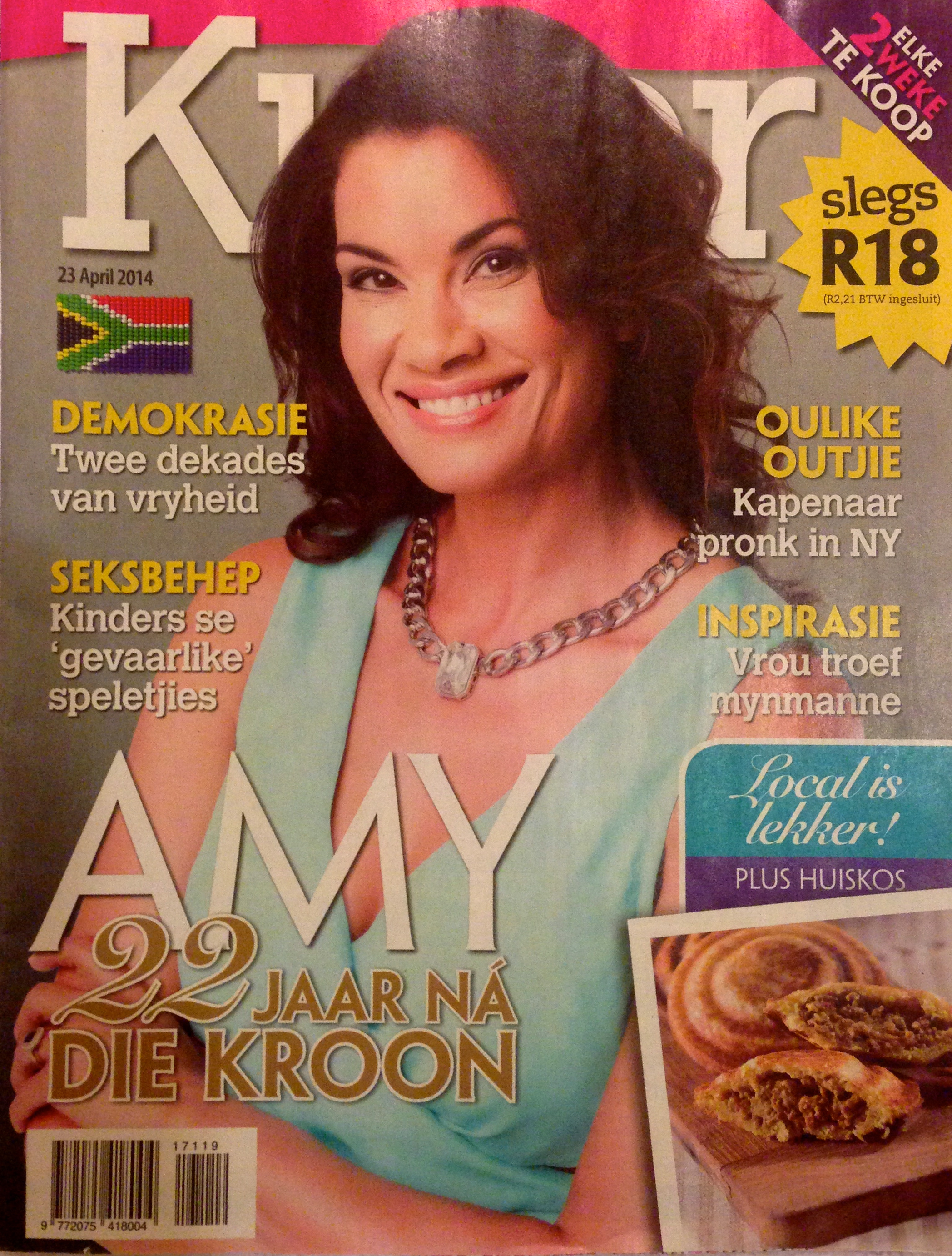
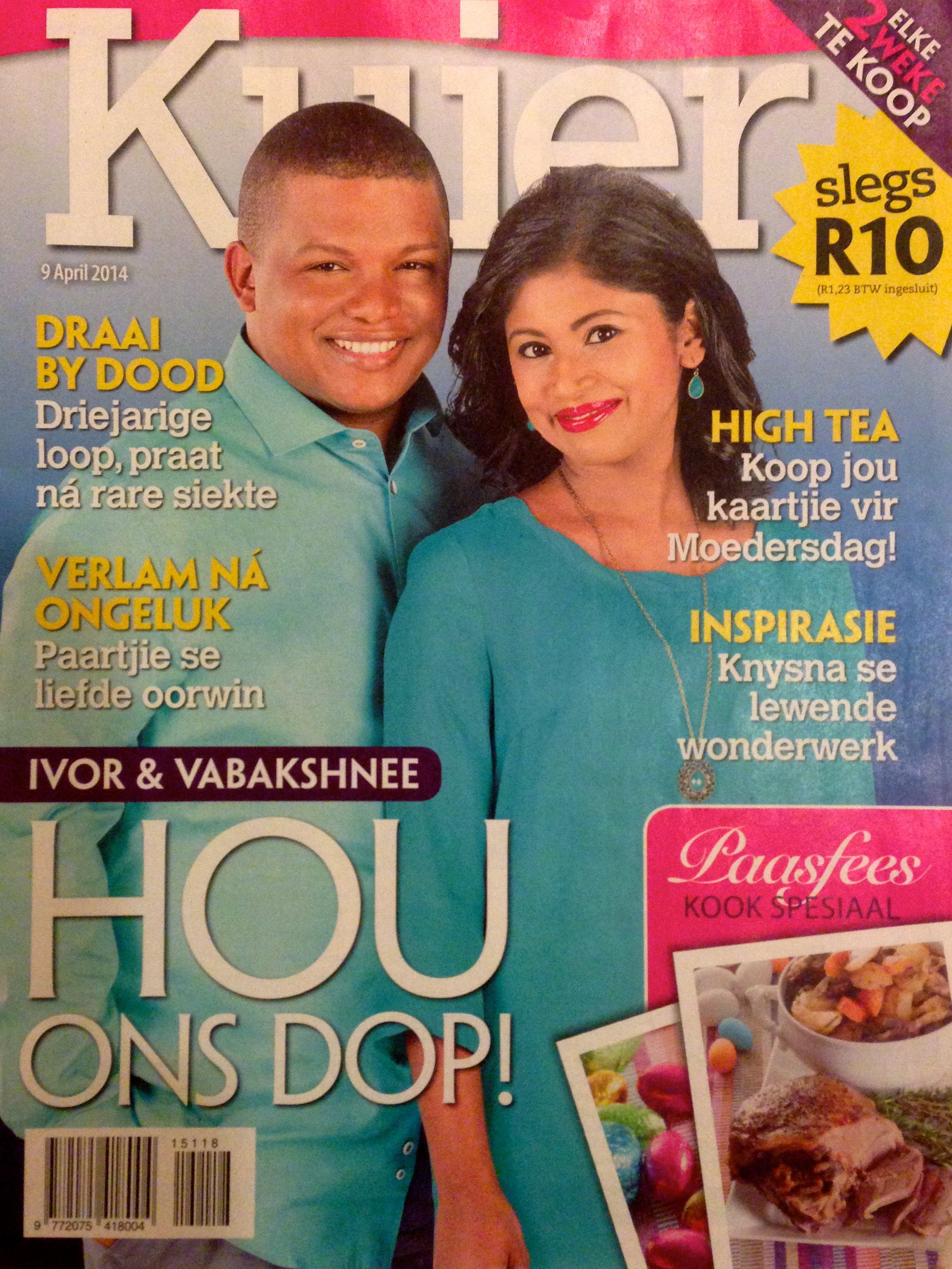
So over the last two years the market has contracted quite tremendously to the point where we are now left with a few traditional mass market glossies at the top, a sprinkling of licensed titles that have contracted a lot and the only area where we are seeing some really exciting growth is right at the lower end, so nothing glossy. Only the very practical, very direct and very focused magazines on, not niche in terms of small, but niche in terms of a very tight focus on very specific groups, for example we have Kuier, which is a bi-weekly magazine aimed at a mixed race audience, it’s quite a tight focus and our fastest growing title.

On the other end of the spectrum, focusing on black women, we used to have, or we still have, True Love, which is a big iconic title and it is contracted whereas Move! is much cheaper and it’s weekly, very practical, very salacious and growing rapidly.

Samir Husni: A lot of people think print is something from the past and digital is becoming the mainstay, but you’re telling me something different…

Liezl de Swardt: South Africa is a developing country and we basically have three countries in one. At the top end, we have a large penetration of digital devices and we also have a large population who’s not necessarily becoming first-time readers, but first-time magazine buyers.

Whereas the developing market has moved on from the top magazines that we worked on when we came into the industry about 20 years ago, those magazines are very useful for a whole lot of new readers.

And while all of our developing titles also have mobile sites and they’re very successful, it’s not like Time Magazine, ours are something you might read while you’re sitting in a taxi having a quick look, but the print magazine is the big currency.

Samir Husni: How do you view the future of women’s magazines in South Africa? As one of the top publishers in the country; if someone asks you – is the glass half full or half empty?

Liezl de Swardt: I’m a half full type of girl, so I always say the glass is half full. But our biggest challenge is to rethink the way we’ve always done business. On the glossy side, while the African market is much more balanced in terms of circulation versus advertising income, the glossy magazine market is definitely funded by advertising income and circulation income was secondary to that. With tremendous pressure on advertising income, we have to cut our cloth accordingly to put into what we can attain through circulation income, which means being more cautious of our spending, in terms of what we spend I production, also sometimes contracting our market by putting cover price up.

So I think the future for us is more expensive, luxurious titles for the top end, whereas we have a title like Ideas which is focused on people who love doing crafts and creative things, we don’t get advertising for the magazine, well, we do, but very, very slight, it’s very expensive editorial to produce because it’s original crafts and we nearly doubled the cover price, but we lost in circulation. And I think that’s the kind of thing we’ll have to do in the future.

About five years ago we were doing a lot of things to satisfy advertisers and not necessarily the readers. The future of magazines is to satisfy the readers’ very specific needs and if we satisfy them, they’ll either pay for it or advertisers will want to get to those readers.

And the same principle applies to the bottom end of the market because if we do things there that advertisers want, then it’s not right for the market. If we do things right for the readers, there’ll be loads of them, and then advertisers can’t ignore them.

Samir Husni: So what do you think is the major stumbling block in this strategy?

Liezl de Swardt: The stumbling block for us is to be incredibly sober about titles, the brands and practices, meaning the way we’ve always done things and to ask: is this the right way for the future, because not all of the brands that we’ve had are always sustainable for the future. Or the way that we’ve done it has always been sustainable for the future.

In some instances it would be about the general interest glossies, but I don’t think just general interest is ever going to work anymore. In order to capture people’s attention we just have to be much, much stronger on the bottom end in terms of exactly what we deliver.

So if we think it will never be business as usual, we cannot think, but oh, it used to work in the past. Our biggest stumbling block would probably be we think the advertisers will come back or the readers will come back. Nothing will just come back.

But the move is definitely just not to digital, the move is to people thinking: I don’t have time for someone or something, meaning a magazine, which doesn’t understand me or bring me something that is really useful.

Samir Husni: And what has been your most pleasant surprise during this transitional period?

Liezl de Swardt: The biggest excitement for me is unlocking niches. There are still areas of incredible excitement and interest. And we have an ability to get quickly in there. We’ve been in the industry for a long time and we used to think: oh, we plan something and we recruit an editor and we plan that maybe in six months’ time we’ll put out a magazine, for example, Lose It! was an idea and less than 60 days later, we had our first issue out on the street. No extra team, nothing; it was just get it out there. And I think our success will be about using our existing expertise in teams and acting very quickly on what could been seen as fads or trends, but things now have to be done immediately. You can’t set a goal for three years from now. If it’s good, it’ll work immediately. If it’s not good, it’s not going to work anyway.

So we have to be a bit tougher on ourselves and less tough on the market.

Samir Husni: How many titles do you oversee?

Liezl de Swardt: 40 brands, which is about 26 magazines.

Samir Husni: And my typical last question; what keeps you up at night?

Liezl de Swardt: The immense responsibility that I feel about the legacy brands that we have and how to sustain them in the future. Because we have extraordinary brands that have been around for many years and the world’s magazine archives are full of iconic brands that died or were phased out. And I don’t want to be that one who messes up one of our archive brands.

Samir Husni: Thank you.

© Samir “Mr. Magazine™” Husni, 2014 All Rights Reserved.
Truth in Reporting: Media 24 Magazines in South Africa, is a media company that I consult for. This interview is not related to my consulting role, but rather giving my readers a better understanding of the magazine and magazine media marketplace in South Africa. This is the third of four interviews.

h1

Giving Its Readers A “Voice” Is The Mission Behind Kuier Magazine – The Number Five Magazine In South Africa.

May 9, 2014

Kuier Translates To The Word Visit In English And Never Has A Print Product Been So Apropos Of Its Name – The Mr. Magazine™ Interview With Kay Karriem – Editor-In-Chief – Kuier Magazine…

“Because our philosophy is we don’t want to be the best magazine in South Africa, if you are looking for the best magazine in South Africa, Kuier is not it. We do not want to be it, nor do we aspire to be it. We want to be your favorite magazine.”… Kay Karriem

kay karriem Cape Town, South Africa: First of its kind in South Africa, Kuier Magazine exists to give readers practical and realistic advice on everyday things like finance, careers, relationships, parenting and health. Affordable and relevant is their mantra.

Kay Karriem is Editor-In-Chief and believes so strongly in the down-to-earth approachability of her community-based print product; she has no doubt about its continuing growth. Today it is the fifth most popular magazine in the country. But by tomorrow, who knows! If its Editor-In-Chief’s enthusiasm is any indicator, the magazine will surpass its current placement very quickly.

On a recent trip to South Africa, I spoke with Kay about Kuier magazine, and learned a tremendous amount about loyalty to the audience and a cluster community of readership unlike anything most of us have ever known.

So sit back and enjoy the Mr. Magazine™ conversation with the Editor-In-Chief of Kuier Magazine, Kay Karriem…

But first the sound-bites…

On why she believes the magazine is growing with readers so quickly: You know Kuier in itself is a mission. It’s not just a magazine, it’s a statement about South Africa and it’s not just for enjoyment, it means something, because Kuier is the first of its kind.

On keeping her finger on the pulse of the magazine’s audience: I don’t want to sound like it’s simple, but in a way it is simple, because the kind of woman that I write this magazine for; she is my mother, she is my grandmother or my aunt because they all need it and they all have something to say about it.

On whether she believes the magazine’s popularity has grown due to its message or the lack of that message up until Kuier: Definitely it’s a combination. Once you’re fulfilling the message and the gap, people start to look at the other products out there that they have been buying and ask: why haven’t you been talking to me?

On her stance about the digital side of the magazine: So we said goodbye website and we launched a mobile site instead where we, in our philosophy, take Kuier the brand to the platforms, not content.

On the biggest stumbling block she’s faced: I would say the advertising sales department because as much as I believe in this market and the size of this market, our target market, they are not very attractive to advertisers because in the country’s history it is a true wisdom of economic power; where does the money lie?

On her most pleasant surprise: To have people come up to me and ask: do you know what a difference this has made in my life? Just to know Kuier has made that difference in their lives is wonderful.

On what keeps her up at night: It’s my team. I worry for them. Because they believe in the vision and the work we do and why we do it, so I worry about them.

IMG_5240 And now the lightly edited transcript of the Mr. Magazine™ interview with Kay Karriem – Editor-In-Chief – Kuier Magazine…

Samir Husni: You’re the editor of one of the fastest growing magazines in South Africa; could you tell me a little about it and tell me why you think the printed magazine is growing so fast?

Kay Karriem: You know Kuier in itself is a mission. It’s not just a magazine, it’s a statement about South Africa and it’s not just for enjoyment, it means something, because Kuier is the first of its kind. It came into being at an opportune time in the history of South Africa; there was nothing like it before in the community and people adopted it because it made them feel like there was finally something for them. So it immediately changed the media landscape. And the community, which was the target market it was for, they took ownership of it immediately as well. We did no marketing, per se, of the magazine to sell it to the community. Once they took it up, they were the marketers and they sold the magazine. They would tell their neighbor: did you see this? And that’s how the magazine became so popular, by word of mouth.

It went from a nothing magazine, to number five in the country through the people who read it. All our events, our Mother’s Day event is coming up, the tickets sold out within an hour and people called and complained by saying why couldn’t I get a ticket and why are the events so small, because it is very important for them to be at our events, due to the fact that they are geared specifically for them. Everything in the magazine is for them. They get that feeling and it’s their magazine. We didn’t have to sell that message, we didn’t have to sell this is for them, they can see for themselves that the recipes and fashions are for them and the stories are about them and they could feel that and it became their mission with us to make it a go.

IMG_5241 Samir Husni: You’re so passionate about this magazine and your passion is reflected on the pages of the magazine. How do you keep your finger on the pulse of that audience who thinks this is their magazine and they are the ones promoting it?

Kay Karriem: I don’t want to sound like it’s simple, but in a way it is simple, because the kind of woman that I write this magazine for; she is my mother, she is my grandmother or my aunt because they all need it and they all have something to say about it. And what they should do next.

Every time I go home they come with the magazine and they tell me that was a good story or they ask me, why did you do this? And they even comment on my lead-ins, because sometimes I write about my family and they will ask, why did you say this? Your grandmother never did this. They comment and stay so involved in it.

So I know what’s going on their lives and their struggles and I reflect that in the magazine. So in a way it is easy, because we talk about what’s happening right now in their lives and communities. And that’s how I knew what was missing for so long, because no one ever took the time to say this is a valuable community and it is a community that needs to be served. Their voices need to be heard and their stories need to be told in the magazine, because they were ignored for so long.

That’s why our team always talks about the service we offer everybody, we are in the service industry, how can the consumer feel valued, when they’ve never been valued before. So we take time to listen. Customer service is very big. Even though we ourselves are not directly involved in customer service, we have a team that takes care of that, we do answer them on Facebook to service the needs of our customers. We feel that they need to be heard and they’ve never had that kind of service before. So that is the cornerstone of Kuier.

Samir Husni: Because of the growth of the magazine and in reaching the number five spot; do you think that mainly happened because of the message or the lack of the message for years and now people are hungry for it?

Kay Karriem: Definitely it’s a combination. Once you’re fulfilling the message and the gap, people start to look at the other products out there that they have been buying and ask: why haven’t you been talking to me? I’ve been buying you and have been loyal to you, so why aren’t you talking to me in my language about the topics that matter to me? I have been buying your excuses for years, but now someone else is printing that I am number one. At Kuier, we treat our target market like they are the main dish, where others treat them like a side dish. And people see that.

And also now in the economic times that we’re all in, we contribute through the middle class market, while everyone else is into the upscale market. They want to be glossier and aspire more; no one wants to look cheap. And I always say there’s a big difference between cheap and affordable. And we want to be affordable. We want to talk to people on that level.

Kuier has two points in the market: the cultural point, which is the mixed race market and the economic point; all of a sudden there are areas in five or six middle class that have become your attractive markets and then there is the other market, which is upwardly mobile, and they’re going to become yours as they move, so we want them now and for them to become loyal to us.

And they need affordability. And they can’t afford these products that are going higher and higher by the day because they are chasing profit margins. So, whoever is very unattractive to everybody else is very attractive to us. Because our philosophy is we don’t want to be the best magazine in South Africa, if you are looking for the best magazine in South Africa, Kuier is not it. We do not want to be it, nor do we aspire to be it. We want to be your favorite magazine. Because that’s the one you keep coming back to.

Samir Husni: Are you afraid of the digital side of the business?

Kay Karriem: Absolutely not. At Kuier we were the first, because we are so budget conscious and in tune with our market, we never had money and we would put a website on and we would get knocked down because everybody believed our market did not have access to the Internet. And with the cost, we just didn’t have money for a website.

So we had to come up with a solution on whether we wanted digital in our spectrum. So we said we do not want a website, cancel the website.

We decided that the technology our market has the most access to, and yes, they do have Internet, but a website isn’t the best solution, our market has their cell phones everywhere. The first digital option shouldn’t be mobile, as in an iPad tablet, it should be mobile as in a phone.

So we said goodbye website and we launched a mobile site instead where we, in our philosophy, take Kuier the brand to the platforms, not content. So you don’t have the same content on the mobile site that you have in the magazine and on Facebook, but the brand values are the same across all the platforms.

So for example we would have, and we call it Mini-Kuier because you take it everywhere with you, these questions, like: how has the mobile phone changed our physical behavior and we came up with people sitting on trains and doing this and we demonstrate the thumbs and the posture of texting, when they’re not talking on their phones and we wanted to give them something. And we’re not a news source, so we’re not giving them news updates.

But what is our brand about? It’s about people, engagement and community. So we wanted those things to be on the mobile site as well. And our recipes are very popular, so we give them recipes. Something you can pick up on your way to work and make in the same day.

People are creatures of habit. So if you are traveling the train or bus every day, we give you a short story or a chapter of a book to read, so you can do it with us daily and it’s a habitual thing. But that you don’t find on our Facebook or in the magazine, only on our mobile. That’s one thing we don’t do is repeat content. Each platform is its own unique property. So this is where we see the growth of the brand, in the digital format.

Samir Husni: What has been the biggest stumbling block that has faced you in your career with the magazine?

Kay Karriem: I would say the advertising sales department because as much as I believe in this market and the size of this market, our target market, they are not very attractive to advertisers because in the country’s history it is a true wisdom of economic power; where does the money lie? The old money is white, the new money is black African, so somewhere in the middle and not a very attractive proposition, is the mixed race audience and you have to do so much convincing that the mass middle class market is upwardly mobile and that this market can’t go down.

Everything shows that over the past 20 years that market has grown, not just in numbers, but also economically. And they don’t want to be talked to as just a mixed race market, they are saying if you want our money, talk to us in a different way. We are strong economically, so if you want our money talk to us and not just as a part of something else. So convincing advertisers that yes, this is a viable, growing market, can be tough.

Samir Husni: What has been the most pleasant surprise?

Kay Karriem: To have people come up to me and ask: do you know what a difference this has made in my life? Just to know Kuier has made that difference in their lives is wonderful.

And you can ask anyone on the team, they can’t go into stores without people recognizing them as associates of Kuier. They recognize everyone on the team.

And people love sharing their stories with us and we encourage that. Our stories are very personal and people recognize our team because of that sense of community. It extends to the staff and we love it when people come up to us and tell us that we have changed their lives.

Samir Husni: My typical last question, what keeps you up at night?

Kay Karriem: It’s my team. I worry for them. Because they believe in the vision and the work we do and why we do it, so I worry about them. We are here to change the South African media, not just set and accomplish goals. It’s never had a Kuier.

We believe so strongly in our magazine that we sometimes call it the Church of Kuier. We’re not just here to draw a paycheck; we have a mission in life. And my team and I are in it together. And that mission is our driving force.

Samir Husni: Thank you.

© Samir “Mr. Magazine™” Husni, 2014 All Rights Reserved.
Truth in Reporting: Kuier magazine is published by Media 24 in South Africa, a media company that I consult for. This interview is not related to my consulting role, but rather giving my readers a better understanding of the magazine and magazine media marketplace in South Africa. This is the second of four interviews.

h1

A Launch Story: Lose It! A New South African Magazine Promoting A High-Fat Low-Carb Diet…

May 7, 2014

People May Wonder If South Africa’s Suzy Brokensha is “Losing It” With The Launch Of A New Magazine Promoting A High-Fat Diet – But The Editor-In-Chief Of Fairlady Magazine Is Quick To Tell You That’s Just Not True – The Mr. Magazine™ Interview With Suzy Brokensha…

Screen shot 2014-05-07 at 11.16.07 AM Cape Town, South Africa: Controversial doesn’t even begin to describe it, low-carb and high-fat; two terms that most nutritionists and doctors have heart palpitations over when they hear them. But the Editor-in-Chief of South Africa’s Fairlady magazine, Suzy Brokensha, isn’t sweating it. She believes in the concept and in the new magazine: Lose It! 100 percent.

The new ink on paper product is inspired by Professor Tim Noakes and his reversal of his former doctrine of a high carb diet. Once a promoter of this type of eating routine with his book “Lore of Running” Noakes backtracked a few years ago when late onset diabetes took the lives of his father and uncle. His change in view has brought him both kudos and lividness from South Africans and people everywhere.

But Suzy Brokensha – Editor-In-Chief of the new magazine – is behind him all the way. She knows first-hand due to her own family’s experience with late onset diabetes that sometimes the most logical of ways doesn’t always work and blazing new trails with a print magazine that provides cutting edge evidence of unfamiliar horizons may be the only right answer.

I spoke with Suzy on a recent trip to Cape Town, South Africa and her beliefs and convictions about this magazine and as she calls it: this movement, are evident in our conversation.

So get ready to hear some things your cardiologist may not want you exposed to as you read the Mr. Magazine™ conversation with Suzy Brokensha about the new print magazine – Lose It!…

But first the sound-bites…

On the concept of the new magazine: The new magazine is based on the Banting Diet, or a low-carb, high-fat diet that is not new at all.

On why she decided to launch Lose It! in the first place: I became interested in it about four years ago because my dad was also a late onset diabetic and because he died in the end of diabetic complications. And I know diabetes is a huge issue in South Africa and my brother is also a pre-diabetic and I didn’t want it happening to me.

On the initial reaction from the marketplace: It’s only been on street now for about a month and the initial reaction was incredibly positive.

On the uniqueness of the magazine and the diet itself: So I think what appeals to men is that performance aspect of it. You don’t feel deprived, in fact, you feel very satisfied and it’s a very satiating diet.

Screen shot 2014-05-07 at 11.02.12 AM On the need for print versus a digital entity: I think this is a magazine that explains the differences and the route that we’ve taken. And it’s very direct and it’s very directional. And it tells you exactly what to do. Whereas if you went online, you might find different, little snippets of information from a whole lot of different sites, but it wouldn’t be as directional as the magazine.

On what keeps her up at night: What am I worried about? I’m not worried at all about this magazine. There is absolutely nothing that worries me about it. I think that we’re lucky in that we struck at the right time.

And now the lightly edited transcript of the Mr. Magazine™ interview with Suzy Brokensha – Editor-in-Chief of Lose It! magazine…

Samir Husni: You recently launched a new magazine – Lose It! – can you talk a little bit about the concept of this magazine?

Suzy Brokensha: The new magazine is based on the Banting Diet, or a low-carb, high-fat diet that is not new at all. The first person to talk about the diet was probably Atkins, maybe forty or fifty years ago, when the idea for the Atkins Diet first came into being.

And since then it has been written about extensively by Gary Taubes in the States, in particular. He’s the most famous. He wrote a book called “Why We Get Fat” and it’s all about the Banting Diet.

The first incidence of the diet was around 1812 when a British doctor advised his client to go on the diet and he lost a huge amount of weight. He was a very wealthy guy and he published a little book about the diet which is still circulating today and is quite fabulous. It’s beautifully written actually.

Anyway, it’s been around for a long time, but what happened was in the 70s the whole way that we eat changed. And it basically coincided with the food pyramid in the States which had all the carbohydrates at the bottom and right at the top, a few fats and oils, vegetables and fruits. And that diet and that way of eating have been recommended for years.

The history is that what happened in America in the 70s was that there was a problem with corn growers and they weren’t making money and actually that pyramid was deliberately designed, not by nutritionists, but in order to boost the sales of the corn growers in Middle America, which it completely did.

And what it did also was create a market for corn starch which is the most lethal substance known to man. And American food, in particular, is full of corn starch. It’s incredibly fattening, with no nutritious value at all. And it’s highly addictive.

So all this diet is really is looking at all of the 70s and looking at the way people ate then with more real food and less pre-packaged food, where the idea of low-fat didn’t exist. Because when they take fat out of a product, to make it appetizing, they have to add sugar. And even if it’s artificial sugar, that’s what they do and none of that is good for you.

If you look at the amount of sugar, for example, that we eat now in the Western diet, compared to the amount of sugar Westerners ate 80 years ago, it increases unbelievably. And it’s not only in the diet drinks; it’s specifically in the low-fat foods. And that’s the issue.

Samir Husni: So why, after all these years, did you decide to launch Lose It! magazine now?

Suzy Brokensha: Well, what’s really interesting is South African Professor Tim Noakes who has become very famous internationally because of this book; he was always a marathon runner. He himself has run about a 150 marathons, he’s very fit, started the Sports Science Institute in South Africa and he wrote a book about 15 or 20 years ago called “The Lore of Running.” It was all about how a high carbohydrate diet was essential in order to run or to be an athlete and to be healthy.

And his father was a late onset diabetic and he became a late onset diabetic and he started noticing in himself that he couldn’t run anymore and he was getting fatter despite the fact that he was eating sort of militantly healthily according to his own doctrine. And he started questioning what was going on. And he kept on trying to exercise more and he tried to eat more carbohydrates and less fat, but nothing worked. And he saw himself going exactly the same way as his father had gone.

And when he started questioning it, he realized that he was wrong. And he had the courage to, about three or four years ago, to come out and say that he was wrong and that he wished he’d never written that book. It was wrong. Every bit of advice I gave about carbohydrates in that book was wrong. And in South Africa there was a massive backlash against him. Everyone was livid that this guy who they had revered for so long could reverse his decision. I thought it was excellent science. I thought with all the evidence to the contrary, it’s a great scientist who can reverse his decision and say that he was wrong.

I became interested in it about four years ago because my dad was also a late onset diabetic and because he died in the end of diabetic complications. And I know diabetes is a huge issue in South Africa and my brother is also a pre-diabetic and I didn’t want it happening to me.

So I started reading what he was saying and I went to all the talks that he was giving and I tried to get as much information as I could. And I thought he really is changing the way that people think about food in this country. And I started looking at the response when he wrote the book “The Real Meal Revolution” and it sold 200,000 copies in South Africa which is really the biggest selling book we’ve ever had in this country. And I thought there is a market for a magazine like that. The book was mainly a recipe book and there is so much information to get across about this diet that I thought it was ripe for a magazine.

I sat next to him at the launch of his book and I said to him what you need is a magazine and he said perfect. And he said we need to get the information out there, so I knew that we had his interest. And that’s what we did. We started the magazine.

Samir Husni: And what was the initial reaction from the marketplace?

Suzy Brokensha: It’s only been on street now for about a month and the initial reaction was incredibly positive. I think that I’ve seen two detractors on Twitter who were saying it’s absolute nonsense, it’s unhealthy, how could you recommend a high-fat diet in a country like South Africa, isn’t that irresponsible when obesity is such a huge problem.

But the point is that it makes people lose weight. And that diabetes is a massive issue in South Africa and it actually stops late onset diabetes, diabetes Type II. Most people go off their medication when they’re on this diet.

The biggest criticism comes from cardiologists or people who say it’s bad for your heart. And increasingly, as you know from Dr. Oz, you’ll know that cardiologists are reviewing that decision that they made all those years ago, that fat or cholesterol is the cause of heart disease. But they are seriously reviewing it now. I see it as the beginning of a movement, a revolution. And I believe in it.

Samir Husni: So do you feel you are a leader in the movement?

Suzy Brokensha: I do. I feel like I’m a leader, because there hasn’t been a magazine like this. There is a Paleo Magazine, I think; I’m not sure where it’s published, probably in the States. But it’s a different diet. I just don’t think there’s anything like it in South Africa.

And I know that it’s hugely influential because sports people are increasingly using it, because it improves their performance.

Samir Husni: After looking at the magazine, you are reaching a dual audience. You are going after, men, women and children. Most diet magazines are aimed at women; it’s rare to see a diet magazine aimed at men. What’s the uniqueness of Lose It!?

Suzy Brokensha: What I think is interesting is that it’s your performance that improves, your performance in life improves, your brain functions better, you can run farther, and you can run faster. If you look at those statistics about people who are on this diet and Professor Tim Noakes is tracking some of those people, the athletes and their performance since they started eating this way; it’s absolutely incredible. Someone I read about recently knocked 21 minutes off their marathon. And that’s really huge.

So I think what appeals to men is that performance aspect of it. You don’t feel deprived, in fact, you feel very satisfied and it’s a very satiating diet. Because of the fat, because the fat, the fix and the hormones that tell you that you are full. And that’s actually always been the problem with low-fat diets; you never feel full because you constantly feel dissatisfied because those hormones are not activated.

But the person eating a high-fat diet, those hormones are activated, so they don’t feel deprived and they perform better. And they sleep better and that fact appeals to men, I think and that whole idea that they’re functioning as a bit of a machine. And women like it because they lose weight.

Samir Husni: And why did you feel the need for a print magazine instead of just going to the website and finding all that information?

Suzy Brokensha: I think it’s about curating. So we have got several different experts speaking in this magazine and they will appear in all the magazines. And it’s about a different aspect every time. We work together to curate the best content possible for this.

So you could find little bits, but everybody that I have spoken to as well has asked: what is the actual difference between Paleo, Atkins and Banting? What are the actual differences between multitudes of diets? And I think this is a magazine that explains the differences and the route that we’ve taken. And it’s very direct and it’s very directional. And it tells you exactly what to do. Whereas if you went online, you might find different, little snippets of information from a whole lot of different sites, but it wouldn’t be as directional as the magazine. It’s a blueprint, not just a magazine. And I don’t think we could have done that just online and achieve the same thing.

Samir Husni: Do you think it’s a trend or a fad?

Suzy Brokensha: I don’t think it’s either. I think it’s a return to the truth of how we should eat. Because I think a trend also implies that it will have an end; I think this is a rediscovery of the way that we should eat. I also think it will last forever and have a massive impact on the way people will live their lives.

Samir Husni: And I have to ask you; do you follow the diet?

Suzy Brokensha: I do. But my weakness, and it’s interesting as to what your weakness is, some people battle an issue with carbs, I don’t do battle with carbs at all. I’m not eating bread or pasta, that doesn’t bother me. Potatoes? I wouldn’t care if I saw any of that again in my life.

My weakness is chocolate and wine. It’s those two things. And you can have both sparingly, but it’s the sparingly that presents the problem.

Samir Husni: My typical last question; what keeps you up at night?

Suzy Brokensha: What am I worried about? I’m not worried at all about this magazine. There is absolutely nothing that worries me about it. I think that we’re lucky in that we struck at the right time. I think that there are going to be followers and imitators. My main concern is when we were thinking about it was to get it out first. I wanted to be first and to put it out with the authority of the people we have contributing to the magazine. And I think we have achieved that and I’m sure there will be imitators, but because we were first and because we have that staff of authority; we will stay the distance.

Samir Husni: Thank you.

© Samir “Mr. Magazine™” Husni, 2014. All Rights Reserved.
Truth in Reporting: Lose It! magazine is published by Media 24 in South Africa, a media company that I consult for. I had no role in the launch of Lose It!.

h1

Covering Every “Stitch” Of The Crafting Community And Every “Thread” Possible; Stampington & Company Isn’t Slowing Down When It Comes To Launching New Magazines In Print…The Mr. Magazine™ Interview With Christen Olivarez – Editor-In-Chief & Director Of Publishing – Stampington & Company…

May 2, 2014

“It sounds silly that we have a magazine about aprons, but it’s still doing extremely well. And people who love aprons love aprons. That’s what we’re finding.”… Christen Olivarez.

Christen Olivarez When it comes to the art of crafting, no one does it better than Stampington & Company. Not only do they publish the largest number of crafting and arts magazines in the industry; the magazine media company recognizes the value and the target points of niche marketing as well.

With seemingly endless additions to their repertoire, Christen Olivarez, Editor-In-Chief and Director of Publishing, talks with Mr. Magazine™ about the company’s desire to fulfill every want their readers might have by offering up a multitude of variety and discernible selection when it comes to the titles available under their banner.

And in the words of the inimitable Carly Simon, “Nobody Does It Better.” From crafts to cooking to business to aprons – yes, I said aprons, Stampington & Company is proving that niche is where it’s at when it comes to launching new magazines.

So grab your favorite pastime and bring it along as you read the Mr. Magazine™ interview with Christen Olivarez – because there’s a good chance she has a magazine just for you…

But first the sound-bites…

On why she believes there is still room for more crafting magazines:
What we’re noticing is that the entire craft movement and even just a move back to domesticity with cooking and things like that are becoming more and more popular especially thanks to the rise of Pinterest as a website.

On whether or not she believes print is the right platform for all their new launches:
Right now we’re solely focusing on the print product and any of our new publications; upon first printing is always a print magazine.

On all the specialized titles and whether they’re still reaching the same audience: I think what we’re trying to do is that we’re finding that a lot of our loyal readers and some of our new readers have so many interests that we’re trying to cater to all them.

On the major stumbling block they’ve faced:
Our biggest thing is just trying to keep everything fresh so that people feel drawn to pick up the magazine when they could just as easily find something on the computer to make.

On her most pleasant surprise:
That people still get so excited about our new launches.

On her favorite title out of the 32 they have: That’s just so hard. I’ve been with the company for almost seven years and I’ve been in charge for a little over three years now. I have to say right now that Willow and Sage has taken me completely by surprise, I can’t believe how much I’ve grown to love it.

On what keeps her up at night:
For me, it’s all the ideas we have and how we’re going to put them into place and where we’re going to put them.

And now the lightly edited transcript of the Mr. Magazine™ interview with Christen Olivarez – Editor-In-Chief and Director of Publishing – Stampington & Company…


1WIL-1401 Samir Husni: Over the last few years, you’ve been bringing a lot of new titles into the fold. So why do you think there is still room for more craft, business and cooking magazines, the style that you do, on the market? Why did you think that today was a good time to launch yet another one with Willow and Sage?

Christen Olivarez: What we’re noticing is that the entire craft movement and even just a move back to domesticity with cooking and things like that are becoming more and more popular especially thanks to the rise of Pinterest as a website. More people are getting involved in arts and crafts; it’s becoming a more mainstream type of hobby versus just a few select women doing it at home. As well as a lot of people are realizing that they can make this into that and so we’re able to launch a magazine based on having creative businesses.

So we really just watched the industry as a whole and saw what seemed to be emerging as a trend and a lot of our readers were at the forefront of setting those trends. So that’s what really determines how we’re going to launch a magazine. We don’t have big focus groups or anything like that; if we feel like something needs a magazine, then we’ll go ahead and launch it because we’re a very small company so we can turn things around really quickly.

And we’re noticing a huge rise in people making bath and body products, especially to give as gifts. So we thought sure, there’s stuff available online but let’s put it all together in a nice book and have it as a magazine twice a year so that people can learn a bunch of different things about handmade bath and body products. The market really drove the need to launch it, so how could we not do it. It’s also a dream that our publisher, Kellene Giloff, had had for a long time.

Once the market seemed right for it, we went headfirst and we’re just thrilled at how it came out.

Samir Husni: Are you still a firm believer that print is the right platform for all these publications or do you think you’ll be moving more in the direction of merging print with digital?

Christen Olivarez: Right now we’re solely focusing on the print product and any of our new publications; upon first printing is always a print magazine. Once we’ve sold out a title, because we do not do reprints of anything, we will then go ahead and issue it as a digital magazine, but no new content right now. Our model is we will not produce anything new that will be solely a digital platform.

We just think that there is still a good market for print. It may be a little bit smaller now, but the people we cater to really like the feel of a print magazine. So we’re still continuing to invest money and all of our resources with our great paper and everything like that to produce a quality magazine that customers feel like investing in, so for now digital only after we have sold issues out.
Samir Husni: Your titles are becoming more and more specialized: Digital Inspiration, Willow and Sage, Where Women Create Business, Where Women Create; are you still reaching to the same audience or are you trying to slice and dice the market?

APR-200x200 Christen Olivarez: I think what we’re trying to do is that we’re finding that a lot of our loyal readers and some of our new readers have so many interests that we’re trying to cater to all them. There’s just so much available out there, especially in the crafts realm, people like sewing, so of course we want to have sewing magazines. People like making jewelry, so we want to have jewelry magazines for them.

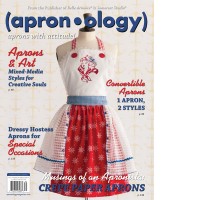
So we just see a big wide world and that’s why we’re able to create these almost niche of a niche magazines for people. And they seem to really like them. It sounds silly that we have a magazine about aprons, but it’s still doing extremely well. And people who love aprons love aprons. That’s what we’re finding.

So we’re not trying to split people up, we’re just realizing that people have many interests. And so we have a jewelry artist who also wants to find out about launching her own business. Maybe she also likes sewing on the side, so we’re just trying to offer something for everyone.

Samir Husni: What has been the major stumbling block that you’ve faced in the process of launching all these magazines?

Christen Olivarez: I think there’s so much available online. So we’re trying our hardest, especially with craft blogs and Pinterest, there’s just so much on the web and so we’re always trying to find things that are not available there so that people feel compelled to pick up the magazine and they’re not just getting something that they’ve already seen on the Internet.

Our biggest thing is just trying to keep everything fresh so that people feel drawn to pick up the magazine when they could just as easily find something on the computer to make. That’s our greatest struggle.

Samir Husni: And what has been the most pleasant surprise?

Christen Olivarez: That people still get so excited about our new launches. We actually have another one coming out in August that we’re working on and people are still so excited to see what we’re going to do next. And we’ve been around for 20 years and of course readers move on but we still have the same base of readers and they’re still picking everything up and that’s great to see that we’ve built such a loyal base that they can’t wait to see what specialty pub we’ll make the next time. Just to see what tiny little area of crafting that we’ll decide to explore.

Samir Husni: You mentioned that the market may have shrunk a little bit for print, but as a publishing director; do you still think this is a good business and will it continue to be a good business?

Christen Olivarez: I think so as long as people follow smart business models. I think when people try to undersell their magazines and sell them at such a low rate of subscription that’s really hard. And I think that we’re really smart in the way that we handle our business model in that we still keep the high cover price that’s going to keep us in business. If we offered a two-year subscription for $2 we would have been out of business a long time ago.

Staying true to the product is important. We’ve seen some other magazines, not our own, over the years that the quality of the material they use just keeps getting lesser and lesser and it becomes thinner and thinner. And we haven’t changed paper, we’re still buying the same paper and we’re still keeping our page counts higher than ever. So you really just have to stay true to your product.

Also not having to have these huge print counts and just trying to stay small helps us, we’re not trying to be the next huge magazine, we’re just trying to develop a good product that people want.

Samir Husni: You have 32 titles now. If someone asked you which one is your favorite baby, what do you say?

Christen Olivarez: That’s just so hard. I’ve been with the company for almost seven years and I’ve been in charge for a little over three years now. I have to say right now that Willow and Sage has taken me completely by surprise, I can’t believe how much I’ve grown to love it. I think it’s because we got involved with creating a lot of the content ourselves because people weren’t sure of what we wanted when we were seeking submissions from people.

And I feel like when you launch a new magazine it’s so important to set the right tone for the first issue so people will know what to expect and if they want to take part in it and they know what you’re looking for. And we worked so hard on Willow and Sage and I was just so surprised at how much I fell in love with the content and just coming up with the product and the design. It’s really taken over for me.

And then our next launch is actually called Bella Grace and it’s our first time going into the women’s interest section. And it’s not a craft magazine this time. And this is another one that has taken me completely by surprise because I am a crafter at heart and I usually like the craft-related magazines. But these two new launches have completely taken over for me because it’s new and it’s a challenge.

Samir Husni: Tell me a little bit about Bella Grace?

Christen Olivarez: It will launch in August. And it will be in the women’s interest section, which is completely new for us and a little scary, but it’s coming together really beautifully.

Samir Husni: And what about Digital Inspiration, which you launched last month?

BDI-200x200 Christen Olivarez: Digital Inspiration was fun for us because it was our first Bookazine. We launched it in a larger format with a bigger dimension and what we did was we published so much incredible digital artwork in our other magazine, Somerset Digital Studio, we thought we’d go through and pick our favorite pieces and our best of and go ahead and put it together in a newly designed magazine and hopefully entice people who maybe haven’t seen Somerset Digital Studio to pick up Digital Inspiration and see the artwork coming from that magazine and maybe they’ll pick up the other one as well, because they are in two different areas of the newsstands. Somerset Digital Studio often winds up in the crafting section and our hope was that Digital Inspiration would be in the graphic design section to hopefully entice readers to pick up both titles.

So that one was really fun just learning the new format of working with the larger dimensions. We had to work with a different printing press this time and the different dimensions were challenging and fun and it’s been really well received, which is great.

Samir Husni: So, if someone comes to you today and says, you’re an expert, you’ve been doing this for years and you’ve established a print-driven customer-based business model, high cover price and subscription; I have an idea for a magazine. What advice do you have for them?

Christen Olivarez: I would first make sure that they have a really concrete idea of what they want. We’ve had people come to us before who’ve said I have an idea for a magazine and it’s “this.” And I’ll ask, what visuals will you have to go with it and what kind of contributors? And a lot of times people won’t fully think it out. So there are great ideas, but you have to see how logical they are and make sure there will be a market for it as well.

So I would just say to plan everything. There are a lot of people putting great magazines together, but it’s a lot more work than people realize. They have to make sure they have a great marketing plan too; how are they going to get it to people? It’s not always as easy as it seems. And it might seem easy because there are so many digital magazines out there too.

I would just say you really have to think it through. Will you have advertising, what kind of contributors will you have? You just have to consider every facet of it.

Samir Husni: My typical last question; what keeps you up at night?

Christen Olivarez: For me, it’s all the ideas we have and how we’re going to put them into place and where we’re going to put them. We just have so many ideas and the office is full of people just going back and forth saying, what if we tried this in this magazine or why don’t we try doing this.

I stay up because I get excited and think how in the world are we ever going to do all the things we want to, especially working in a small company. We sometimes have our hands tied with how much we can do with the staff that we have.

And that’s what keeps me up at night…the excitement and how to carry out all our ideas.

Samir Husni: Thank you.

h1

A Mr. Magazine™ State of New Magazines Report: A Healthy First Trimester of 2014.

April 30, 2014

A Snapshot of Popular Culture:
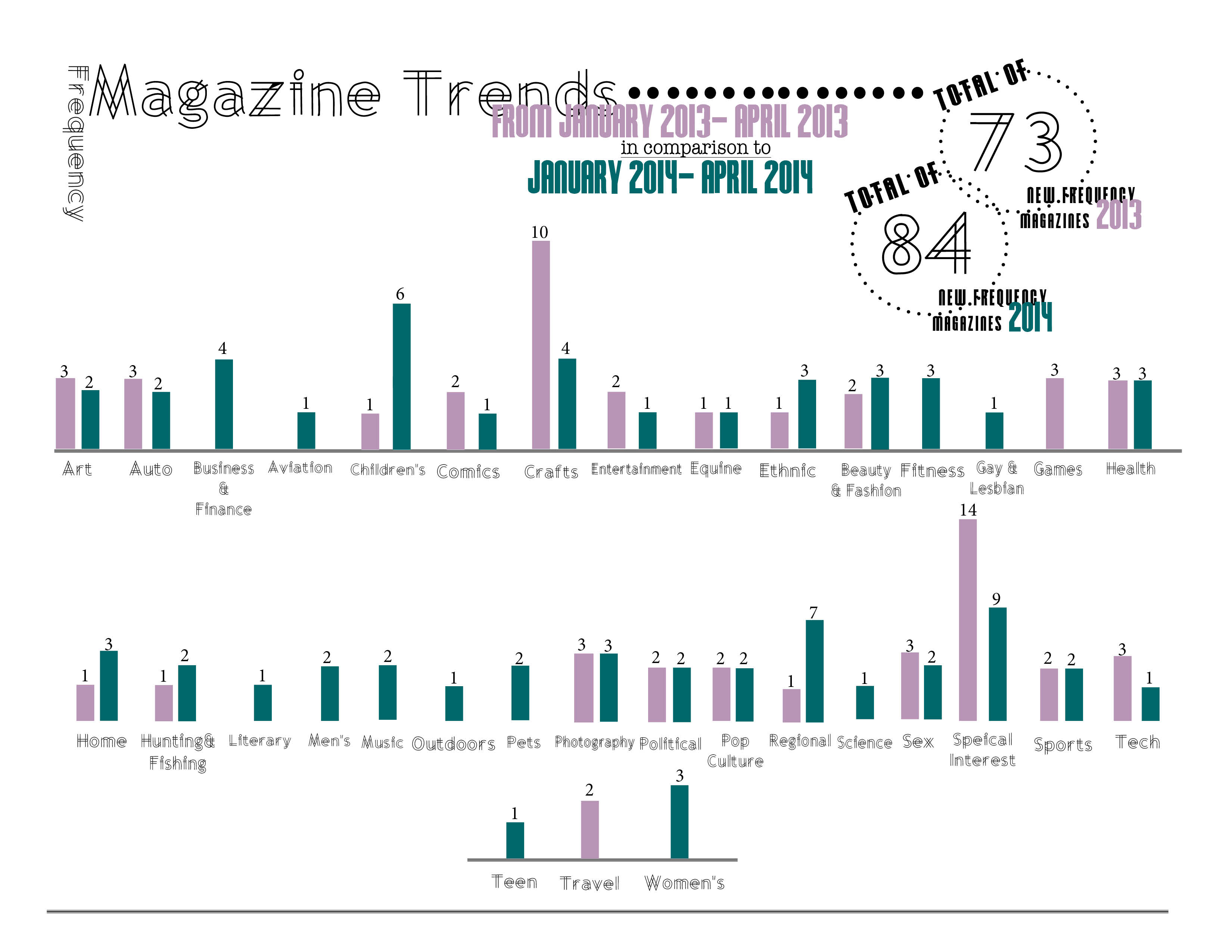
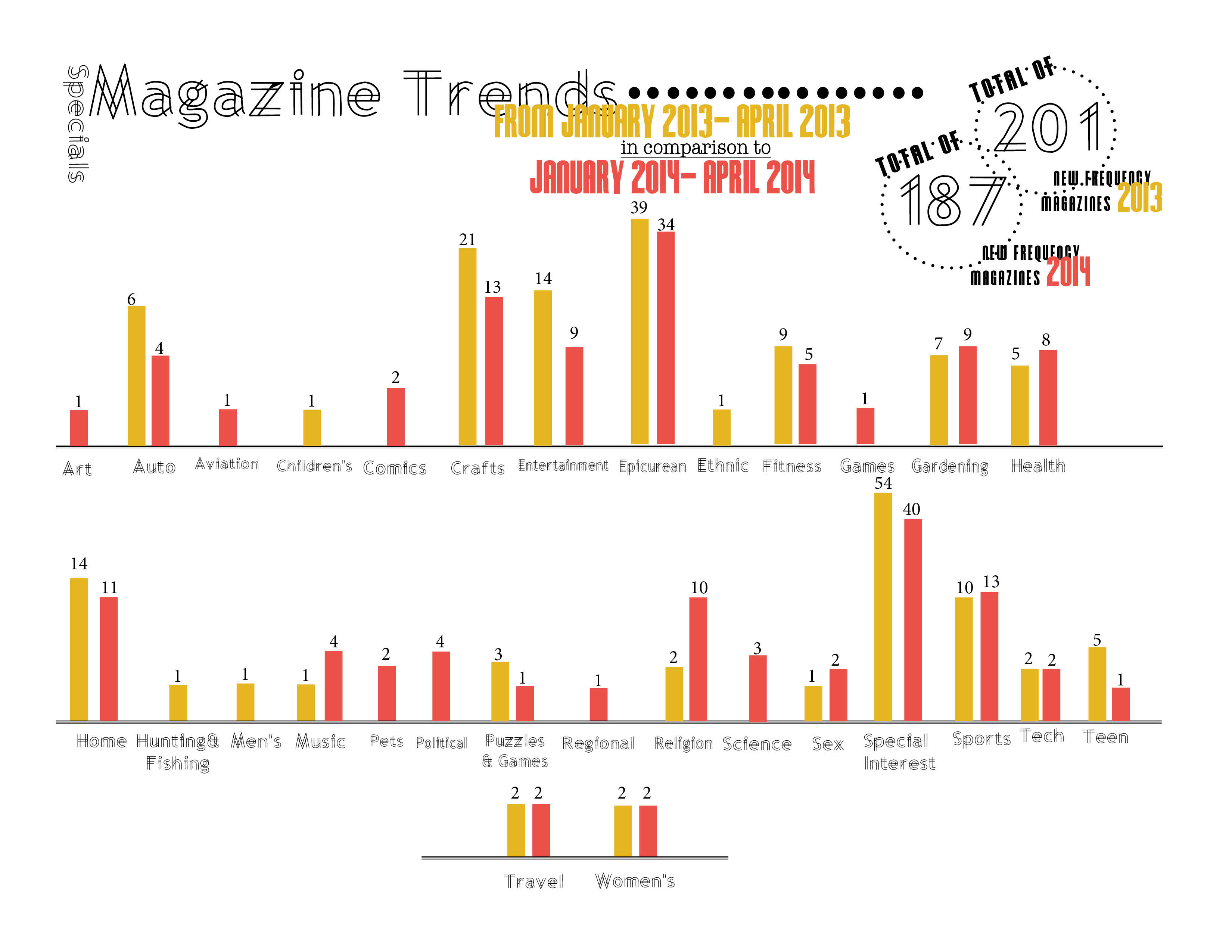
84 Magazines Launched with Frequency + 187 Specials and Annuals in the First Trimester of 2014…
The Mr. Magazine™ State of New Magazines Report

Magazine Frequency NEWEST! (Chart by Madisen Theobald)

The term mirror image comes to mind when I think of magazines and our society – past and present. Magazines have been reflectors of pop culture in a very tangible way for generations. They have accurately taken the pulse of both the population and the culture like no other media could have done. And there is no better way to gauge such culture than by tracking the slew of new magazines arriving at the marketplace. New titles record, reflect and note every trend or innovation people become fascinated with.

Dating back to the French during the Enlightenment written literature has been a reflection of society as the medium for politics and the arts. Ideas and concepts pre-existed due to the exposure of literature and the way in which it was written and conveyed. Literature shaped society then by widening knowledge, philosophies, criticisms and parodies. The more creative the prose, the more minds were molded within the society. Politics could be influenced too, along with the basic foundations of the culture.

And today’s literature, in the form of new magazines and the present populace are no exception. The trends of the 21st century are certainly being echoed back as precisely as a “Hello” reverberates across a canyon and comes back to the voice that initiated it.

When I first started documenting new magazine launches in the early 80s of the last century, more new magazines were being published devoted to sex and other erotic topics. As we moved into the 90s media celebrities and music started to take prominence due to the impact of cable television and the specialized networks that it ushered in.

As we entered the 21st Century, September 11, 2001 happened and the home became once more the palace of the American people. Crafts, needlework, hobbies became the largest segment of new magazines, dethroning sex, music and media personalities. The more we cocooned the more titles moved in that direction including food, the leader of such categories for the last four years.

One of the trending topics today is fitness and health, along with eating organically and smartly. And as we look at the new launches that have been born in the first trimester of 2014, we see that movement clearly in some of the titles in print.

dr-oz-the-good-lifeNFM_Spring_Issue_Cover

From Naked Food magazine, the title of which has absolutely nothing to do with anything or anybody being without clothes (it’s an acronym for New American Kind & Enlightened Diet) and is strictly concerned with eating foods that have not been tainted and are not toxic with genetically-modified organisms, to Dr. Oz The Good Life; the magazine’s mirror definitely resonates with what’s important in today’s culture.

The two magazines mentioned above are included in the 84 new launches with frequency. So far, 2014 has surpassed 2013’s first trimester by 11 new titles. Frequency numbers for that period were at 73 and the titles trending then were just as resonant with the times as they are one year later.

cake-whiskey-2

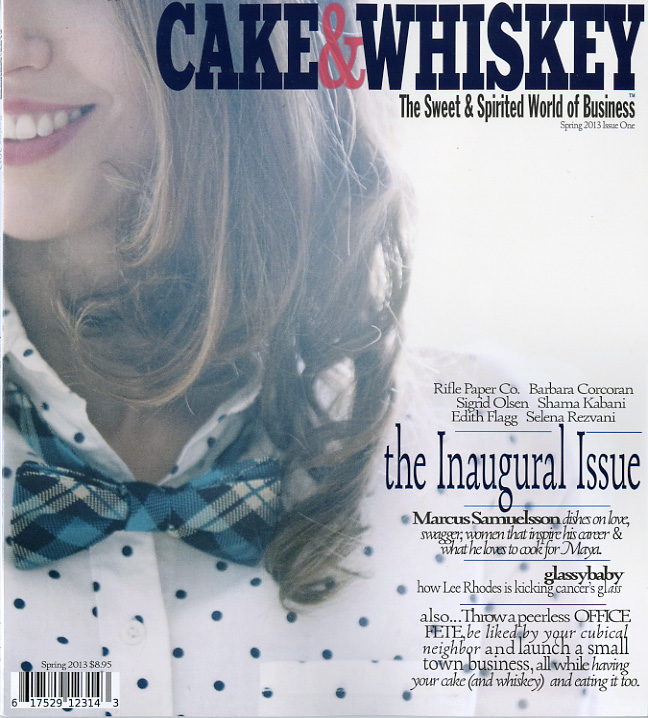
From a business magazine dedicated to women with the intriguing title, Cake & Whiskey, where businesswomen and entrepreneurs gather in groups to eat cake & whiskey and discuss their profitability or start-ups, to an epicurean delight called One True Vine; the magazines from a year ago remain vibrant and relevant today.

wolfdinosaur2

Today, oversized and sophisticated is also part and parcel of what’s piquing the public’s interest. A new magazine called Dinosaur, which focuses on people over 50, is sleek and extremely fetching and perfect for the coffee table (another trending experience people are enjoying) and a beautiful photography showcase, Wolf magazine, would look perfect lying right beside it.

The fascination with whatever tickles our fancy is never lost on our print counterparts we call magazines. Nothing is as perceptive and relevant to our wants and desires as ink on paper.

magazine specials new(Chart by Madisen Theobald)

Special issues and bookazines also breathe life into what we exhale as important. The niche marketing of these types of publications is vital in today’s marketing. There have been 187 specials and bookazines in this first trimester.

simply-sweet-best-cupcakes-and-moretastes-of-home-13x9

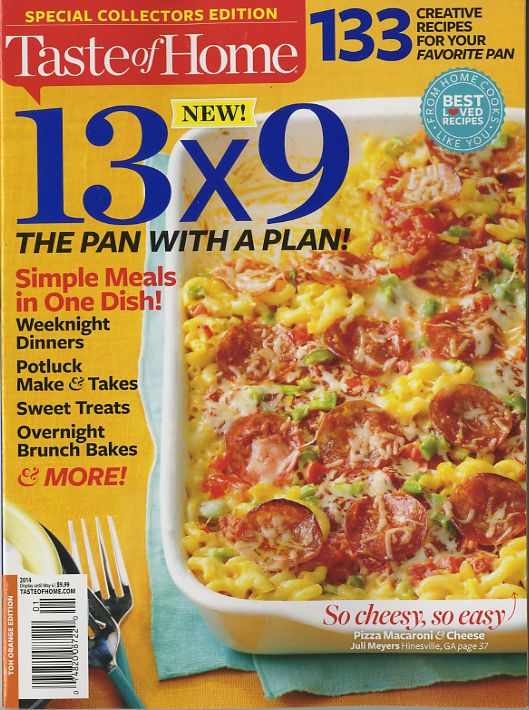
Epicurean delights led the way in the specials with titles such as Simply Sweet’s – Best Cupcakes & More, Taste of Home’s 13×9 Pan With A Plan and Bisquick’s Breakfast and Brunch, with many more to tantalize and tease your taste buds.

From remembering D-Day to a multitude of specials focusing on Jesus and the Greatest Story Ever Told, the topics and titles are diversified and definitely reflective of what’s important to readers today.

The numbers for last year’s Specials and bookazines were slightly higher, with 201 gracing newsstands in 2013’s first trimester.

life-pope-francis-299soap-opera-digest-general-hospital-turns-50life-icons-willie-nelson

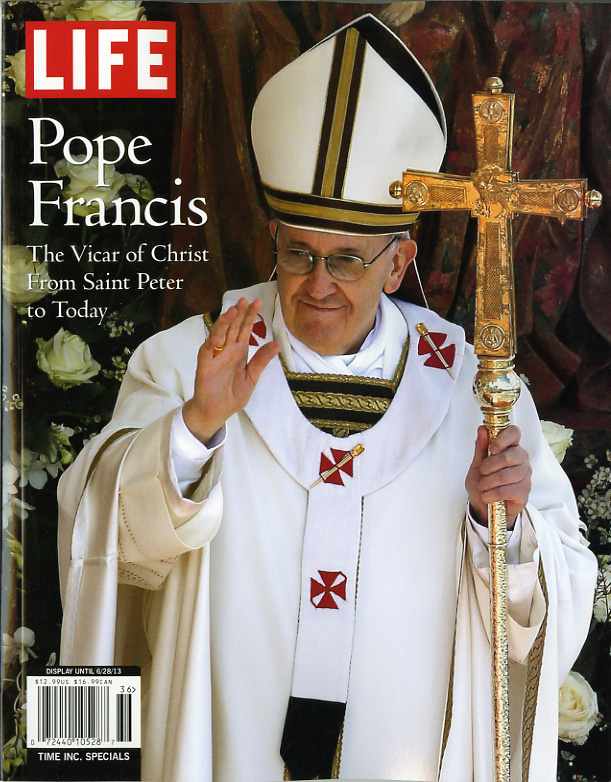
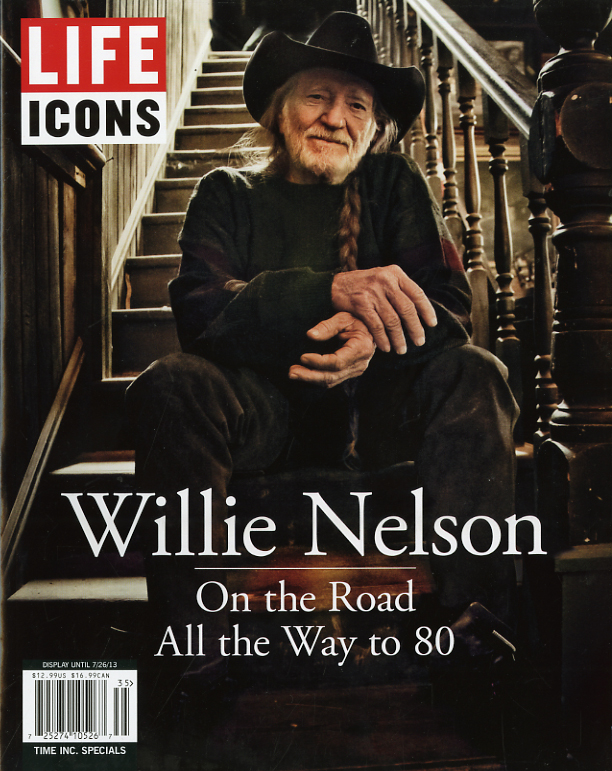
Special interest topics lead the way with everything eclectic, from Willie Nelson, Pope Francis and the celebration of 50 years of General Hospital, to flower and vegetable gardening; specials and bookazines were riding high on the niche wave and very successfully too.

As the world continues to spin on its axis and babies continue to be born; the way American culture sees itself will also continue to be reflected by the magazine reader’s demands. For every publication that rolls off of the printer’s press, there will be a living, breathing human being somewhere who can relate to it.

So the next time you buy a magazine or pull one out of your mailbox, be sure you hold it up in front of your face first and as you smile at its cover, don’t be surprised when you see the same smile staring back at you…

Happy reading!

© Samir “Mr. Magazine™” Husni, 2014. All Rights Reserved.

h1

When it Comes to Niche Magazines: “Speaking to the Base” is the Best Solution… A Mr. Magazine™ MagNet Exclusive

April 29, 2014

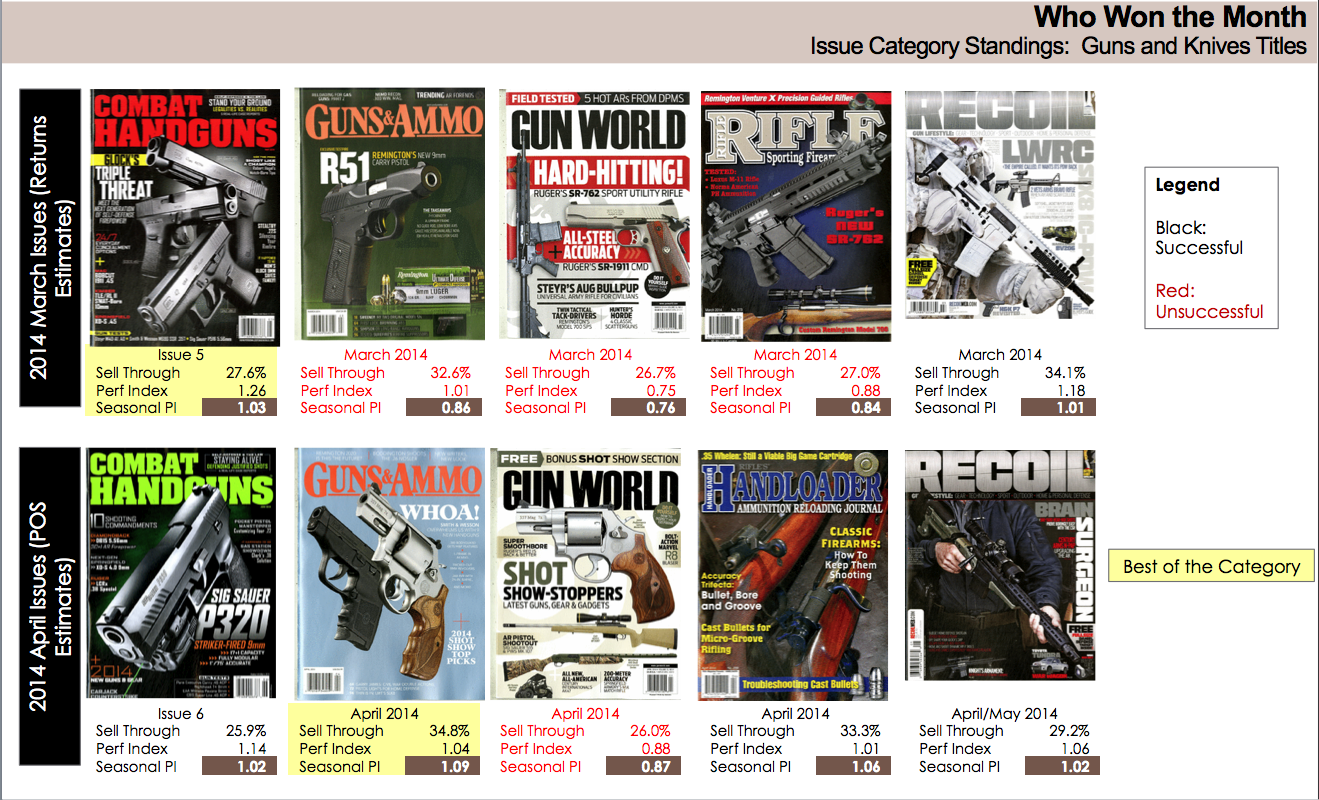
A Niche of Niches: The Guns/Knives Category. While overall magazine retail sales plummet, this category claims year-over-year sales increases.

Picture 10

An ongoing series of Mr. Magazine™ exclusive interviews with MagNet’s Luke Magerko.


Luke Magerko was a consistent contributor to my blog in 2013. Luke has partnered with MagNet to provide retail analytics for the publishing industry. Today, we pick up our conversation from two two weeks ago and, going forward, MagNet will provide me with an interview with Luke every other week highlighting retail analytics.

This week, we focus on preventing sales loss by better understanding general consumer shopping habits. Here, we report on the niche category of Guns/Knives for March 2014 and April 2014 issues.

HOW IS THIS CATEGORY PERFORMING COMPARED TO THE INDUSTRY?

While overall magazine retail sales plummet, this category claims year-over-year sales increases. For 12 months ending February 2014 (based on off-sale dates), unit sales increased by two percent and retail dollars increased eight percent.

SEASONAL PERFORMANCE INDEX RESULTS: WHO WON THE MONTH?

Overall, March issues were soft with Combat Handguns performing slightly above average while April issues are stronger with Guns and Ammo estimated to win the month.
Picture 7

I SEE SOME VERY STRONG AND SOME VERY WEAK ISSUES. THERE SEEMS TO BE MORE VARIETY IN THE PERFORMANCE INDEX FOR THIS CATEGORY.

Correct and this is a larger point: niche titles sustain significant performance index variance because of their audience. Consumers of these products are called “enthusiasts” for a reason: when editors communicate a desired message, these consumers reward the publication with strong sales. When the product misses the mark, consumers reprimand the magazine through reduced sales.

CAN YOU DETERMINE WHAT WORKS ON A NICHE COVER?

Not exactly. MagNet looks at historical sales data and provides an outline of the enthusiast consumer. We also determine if a specific issue followed that outline. The editor and the consumer marketer drive the brand; we provide newsstand results and guidance.

WHAT DID YOU LEARN ABOUT THE GUN ENTHUSIASTS’ MAGAZINES?

MagNet analyzed one of the five gun magazines (“Magazine X”) to determine consumer habits. We identified one issue (on sale in May 2013) which significantly underperformed and attempted to identify the cause of the sales decline. MagNet’s looked at different slices of the data and determined why this issue underperformed. To do this, we first analyzed sales for one year’s worth of issues. The results became our baseline and the comparative data for the issue analysis.

DID THE COVER REACH THE INTENDED AUDIENCE?

The cover message (image and/or text) did not reach Magazine X’s core audience. We designed a composite sketch of consumer attributes to shed light on why this issue underperformed.

DATA MINING: SOME OBSERVATIONS

MagNet implemented a sequence of analyses to determine a cause for the weak sales. Let’s look at four analyses of this poor-performing issue:
First, we analyzed issue sales by class of trade (“COT”) and by geographic region. We found that supermarkets, mass merchants and all other classes of trade underperformed equally in every region of the country. CONCLUSION: These two categories were not the cause of sales declines.

We then studied county information. The baseline data identified the rural “D” counties and the exurban “C” counties as traditionally strong. However, these counties underperformed much more than the more urban A and B counties. CONCLUSION: This cover was a significant miss with a large and important part of the audience.

Finally, we used A.C. Nielsen PRIZM clusters to look at the demographic make-up of the stores. A.C. Nielsen provides 66 individual demographic clusters identifying patterns at the most granular level. Here is an example of one cluster:

FAST-TRACK FAMILIES (From A.C. Nielsen)
Upscale Middle Age w/ Kids
With upscale incomes, numerous children, and spacious homes, Fast-Track Families are in their prime acquisition years. These middle-aged parents have the disposable income and educated sensibility to want the best for their children. They buy the latest technology with impunity: new computers, DVD players, home theater systems, and video games. They take advantage of rustic locales by camping, boating, and fishing.
http://en.wikipedia.org/wiki/Claritas_Prizm

Our research indicated the best performing baseline clusters SOLD MORE COPIES of the worst performing issue of the year while poorer performing clusters sold significantly less. CONCLUSION: The most reliable readers of Magazine X appreciated this issue, but all others demographic categories did not. This issue targeted the “niche of niches.”

WHAT IS THE NICHE OF “NICHES?”

In politics, this is “speaking to the base;” providing a campaign that excites the motivated partisans while ignoring the moderate parts of the party. This issue communicated to a narrow audience: those who are at the highest end of the enthusiast category. While those shoppers purchased more copies than before, their increased sale could not make up for losses in the larger core of the readership.

WHAT DO PUBLISHERS DO WITH THIS INFORMATION?

Publishers must determine a magazine’s core audience by analyzing newsstand, consumer marketing, and survey data. Once they define a clear picture of the core reader, then each cover should reflect the needs of that reader.

Rodale epitomizes this philosophy with Men’s Health Magazine. The basic format of a Men’s Health has stayed the same for a generation: red logo, white background, a physically strong model (yes, a shirt was added to the models, but that is a small adjustment) and the word “abs” on the cover.

I do not recommend this strict cover formula for each magazine, but it is a good place to start when deciding how to build an issue. This will not ensure increased sales, but should help mitigate the damage of a poor performing cover.

© Samir “Mr. Magazine™” Husni, 2014. All Rights Reserved.
——————————————————————————————————————————————
Mr. Magazine™ Monday Morning

mrmagapril28 Want more news, interviews and views from Mr. Magazine™? Be sure to subscribe to the new Mr. Magazine™ Monday Morning newsletter. It is free and it is delivered to your in-box every Monday morning. Click here to subscribe.

h1

The Medium IS Still the Message 50 Years Later… A Mr. Magazine™ Musing.

April 28, 2014

photo(4) Marshall McLuhan said it best: “The medium is the message.” We live in a digital age, that is a fact. However, that statement is as true now as it was when McLuhan first said it in 1964, as it applies to both digital and print.

McLuhan’s statement is as valid today as it was 50 years ago. The medium cannot be separated from the message. So when it comes to print, I firmly believe that in order for print to survive, magazines and newspapers have to create something that eliminates the disposability factor. Print cannot afford to be expendable the way it used to be. Newspapers can’t lose their engagement with their audience in 10 or 15 minutes. They have to have an inherited engagement for at least 24 hours of their existence before the new issue comes out.

Weeklies have to do the same thing. They can’t just be a momentary read; they must engage readers with in-depth articles, concise reporting, analyses, editorials and opinions.

Monthlies must have the feel of a coffee table magazine and provide that high-gloss quality of a quarterly magazine.

Daily newspapers must become weeklies on a daily basis. Weekly magazines and newspapers must become monthlies on a weekly basis and monthly magazines must become coffee table publications.

However, the industry is preaching one thing and practicing another by cutting staff, trimming page sizes, choking production costs and any other integral part of the publishing business that it deems disposable. Magazines and newspapers are using cutting as a means for profitability. The bare bones will begin to poke through and eventually will leave a hole in the industry’s side too big to fix. Cutting is not a strategy to profitability.

While readers and advertisers are not personally affected by the size of the staff, they are when it comes to end product. The best example of this, as of late, is the weight of the paper. Certain magazines are now being printed and published on paper that is thinner than tissue paper. And because it is apropos of the context of that statement, tissue paper is not made to last; it’s made to be thrown away.

When I receive a magazine that has the feel of tissue paper, my thoughts are that this is a disposable item and there is no value in it… even before I read a single word of the content.

Frank Luther Mott, the author of A History of American Magazines, and the founding Dean of the Missouri School of Journalism (for the record, my Ph.D. is from Missouri School of Journalism) wrote in the first volume of his book that the definition of a magazine is much more than just content or a storehouse of information. It’s the form of the magazine, being printed, bound and stapled, etc. That is what the magazine is: the actual physical, tangible component of the product.

Therefore, when we send those publications to our audience, whether on the newsstands or via subscriptions, the first impression they are going to get, after looking at the cover, is the feel and the weight of that magazine in their hand.

mf1 I recently received my subscription copy of Men’s Fitness magazine and as always I went to the newsstand and bought the same issue just to compare the different cover designs. And guess what? Aside from the different cover designs, the newsstand copy is almost double the weight of the subscription copy. Why? (The red logo is the newsstands copy and the silver one is the subscribers… guess which one of the two is standing tall?”)

mf2 The answer for the most part, I’m sure, would be: we are saving on paper because that ultimately saves on postage, along with a multitude of other generic excuses that we hear from publishers of magazines. Yes, I used the word “excuses.” (As a side-bar, I wonder which of the two copies advertisers and ad agencies receive?)

Why do magazines punish their valued subscriber who trusts them and order and pay for an entire subscription year with a product as inferior as a couple of sheets of tissue paper? Does that make any sense to anyone out there? It certainly doesn’t to me.

Those magazines available on newsstands are misleading the future subscribers by giving them a far superior product when they make a single copy purchase. Again, does that make sense to anyone? And again, not to me.

Another example of this sad situation is when I received my Sports Illustrated magazine this week. While I know that issue is only 64 pages, it felt more like a pamphlet than a magazine. The paper is so thin you can see through it to the articles on the next page. It doesn’t have the feel that I’m appreciated as a subscriber.

What I’m trying to say with this Mr. Magazine™ Musing is that if you decide that you’re going to continue to be in print, you have to invest in your print product. It isn’t an option. You must invest in quality print and quality paper.

As Marshall McLuhan said: the medium is the message. That first impression is going to determine whether the audience engages with the publication. The feel, the touch, as well as the smell are essential.

Some might say that I’m preaching to feed the eye instead of the brain; but that’s what being human is all about. We are visual animals and a visual society. Remember, sight and feel are what it’s all about for the first impression. Your value is delivered at the same time your product is: when the customer first sees and touches it.

If you are like me and believe that the medium is the message, my message to you is invest in print. Because the future of digital starts with print.

© Samir “Mr. Magazine™” Husni, 2014. All Rights Reserved.
—————————————————————————————————————————
Mr. Magazine™ Monday Morning
mrmagapril28 Want more news, interviews and views from Mr. Magazine™? Be sure to subscribe to the new Mr. Magazine™ Monday Morning newsletter. It is free and it is delivered to your in-box every Monday morning. Click here to subscribe.

h1

ESPN Is Scoring Big With Their Multiple Screen Additions – Without Killing The Parent Platform – Mr. Magazine’s™ Conversation With Rob King – Senior Vice President, SportsCenter and News at ESPN… A Mr. Magazine™ Blog for the Weekend.

April 25, 2014

ShxlhSAU_x6ySGm5aSa9uj2PVLRwuNXnSP8J4TifYGAqF8SYl5Srxdv5JQUJ_26JZQ=w1416-h832 While some leading media companies are going digital first and in some cases, digital only – ESPN has proven that you don’t have to annihilate your parent platform when you bring digital into the picture. With ESPN’s multiple screens, audiences have never been more catered to and pampered, as they should be. Whether on television, in print or on the tablets and mobile ESPN is there. (Photo by Mallory Bailey)

Rob King is Senior Vice President, SportsCenter and News at ESPN and is very strong-willed when it comes to the media company’s fans and the ESPN brand itself. Serving the audience in the most interactive and compelling way possible, while keeping the brand moving forward is a simultaneous strategy that King firmly believes in. And he knows his business when it comes to content and advertising too.

So summon up your team spirit and get ready to enjoy the Mr. Magazine™ conversation with Rob King, that took place during his visit to The University of Mississippi last month. Mr. King was the keynote speaker at the first Ole Miss New Media conference at the Meek School of Journalism and New Media. The conversation took place in front of a standing-room only session with Mr. King at the School of Journalism.

But first the sound-bites…
ESPN-65 Sound-bites:


On the fans and focusing on audience first:
A lot of it also is just paying attention to what the numbers tell us. We get ratings every fifteen minutes and we know how and when people are engaged and when they’re not.

On how they handle the competition: We just set out to do things very differently. And we often say that the core business is not TV or dot.com or is not just the magazine; the core business is the ESPN promise to fans, the brand promise, to serve fans anywhere and anytime.

On ESPN’s second and third screen additions:
And it’s just natural. We don’t really talk about second screen honestly. We talk about best available screen. And for many people the best available screen may be the smallest screen, the one in your pocket.

On the most pleasant surprise during ESPN’s journey:
Clearly WatchESPN has changed everything. WatchESPN has enabled me to at all times have one eye on what I’m supposed to be responsible for.

On his expectations for ESPN three years from now:
We’re redesigning the website and I think the thing that’s going to be most impactful in the next three years is our ability to create a channel of content that is not only personalized, but is very much about now.
On the audience keeping up with all the changes: All I know is our audiences are very accustomed when they start Twitter not for it to be something that they have to get around curation. They’ve already done the curation.

On mixing advertising and editorial in the digital realms:
So I see a lot of articles from people in content groups who do not have anything to do with the business wringing their hands over the scary, infiltrating native ads, but that’s not how we do it at ESPN.

On methods to grow ESPN business:
(a): a great experience for our fans, (b): not intrusive when we’re trying to drive great content and (c): be a great experience for advertisers.
On what keeps him up at night:
The one o’clock SportsCenter.

And now the lightly edited transcript of the Mr. Magazine™ conversation with Rob King, Senior Vice President, SportsCenter and News at ESPN…
Husni-King 2
Samir Husni: You have said that the very first point is embracing service, the fans and focusing on the audience first. How do you actually put that into practice at ESPN?

Rob King: First of all, we are fans. There’s generally a lot of excitement everyday about what we’re covering. Probably the unfair advantage at ESPN or that any sports network has is most of our stuff sits on a schedule. So we generate excitement about things weeks out. And our fans do too. At the start of baseball season, if you’re a Red Sox fan, you know the series against the Yankees is coming.

So we have an opportunity to get out in front and think about things and think about how we can get our fans fired up. We know when the pro days are scheduled, so we know things like today was Johnny Manziel’s day to throw.

But a lot of it also is just paying attention to what the numbers tell us. We get ratings every fifteen minutes and we know how and when people are engaged and when they’re not. We know the average minute audience on our digital platforms.

So we can tell when there’s a lot of engagement with our stuff, like tonight at 7:15 when the tournament games start, the average minute audience will just take off.

We know that people are downloading our apps and how much time they’re spending with them. So there’s a lot of data that’s helping us understand what excites our fans. We know enough about our fans to know they’re early adopters of technology. That gives us permission to plan the app space.

From its very beginning ESPN started as a fan site, Bill Rasmussen was a Connecticut sports fan. So he bought some land and got some satellite time and he got some trucks and started this network that he was most interested in watching.

So it’s kind of in our core to be our fans and behave like our fans. When we got into the magazine business, we knew that we had fans who enjoyed longer stories and a different way of looking at things, maybe not a magazine that was a weekly that was off the news, but a magazine that could anticipate the news and tell different kinds of stories, which is why ESPN the magazine publishes biweekly instead of weekly. It doesn’t seek to be right off the headlines; it seeks to get out in front. So even now our magazine strategy is reflective of our audience. Our audience really wants to know what’s going to happen. It’s not just what happened or how did it happen; but what’s next?

We have this whole strategy around the magazine that’s built on looking at the sports calendar and saying, OK, people will be thinking about baseball this week, so we’ll have a baseball preview and people will also be thinking about the World Cup, maybe about analytics because there’s a big MIT sports analytics conference coming up, so we should think about that issue.

We’re getting ready to do an amazing issue called “One Day, One Game,” which really is about, not just about the magazine publishing cool pictures and stories, it’s also about people liking this notion of touching live games, so we actually publish a live photo gallery the night of the game. And then we create a magazine a few weeks later that is based on all the other things that happened around that live photo gallery, because photos are a real communication device.

People like the human form so we do the body issue, but we do it in a very different and very specific way, which is designed to celebrate shapes and sizes of all kinds and men and women. By the way, seven women primarily put that issue together. So that’s one of the reasons it doesn’t feel or read like our competitor who has an issue built around the human form.

Our approach has really always been to reflect as broad an audience as possible and do it with the sense of urgency that the audience expects.

v_mIaP7zW3JCW6ZnZnB-LMqb2EmPGWt7owRf5t405mvO5f0EY5y6VksP-HqyLan2bg=w1416-h832 Samir Husni: How did you manage to capture that audience today? Was there a systematic approach that you used to beat the competition or simply forget about it or did you just decide to do something different and let the audience decide?
(photo by Mallory Bailey)

Rob King: We set out to do something very specific and very different, which is we started out as a television network and we were getting as many sports rights as possible and letting you see these sports and athletes as much as possible for longer stretches of the day. And as we got into digital publishing, we launched our website 19 years ago, when we started getting into mobile publishing and even when we started the magazine almost 16 years ago, our point of view was really about how do we take this volume of stuff that we’re doing and find places to go deeper with it? And when we do that; how is that really reflective of how audiences are actually spending time thinking about sports?

Because there is a community of sports fans that very few people will talk about but who are driving a ton of activity and that’s gamblers. And there’s another community, fantasy, that’s driving a new language around sports consumption. And we wanted that to be part of what we were doing in a way that was really and truly integrated and not just hanging off the edges.

So we just set out to do things very differently. And we often say that the core business is not TV or dot.com or is not just the magazine; the core business is the ESPN promise to fans, the brand promise, to serve fans anywhere and anytime. That’s our core business. So we’re not in the magazine business or the ESPN business and I think our competitors start off in different places, some are TV networks, and some are magazines.

For almost 13 years, we’ve been very clear we are a multimedia company and we create an ESPN experience for people no matter where they are. So it’s really a kind of apples to oranges comparison.

Samir Husni: Can you talk about how you created a second, third and even a fourth screen? Someone at ESPN told me that 19 out of 20 sports programs that are not aired on ESPN are being interacted with an ESPN second or third screen. Can you explain a little about that?

Rob King: Yes, I will, but first here’s the thing; you have to think about it a little differently. The way we look at it: the first social media was fantasy football. You chose your own community, looked at things in very different ways; you looked at the news of the day through a very different prism; so fantasy was our first social network.

To be in the fantasy space it was very important for us to learn about community and learn about how folks interacted with each other when they have to create their own communities.

We actually had a whole community group where we had our own ESPN social place where you could log in, rearrange the site to make it look like yours and connect with other folks. It’s just from paying attention to what people are doing. And then it comes from being a sports fan. And in some cases being a sports fan is apparent or it’s a sports fan who has another life and can be at so many events, other events outside of a sporting event, a concert and you want to know the score, or be in a library and want to know who’s winning or you want to catch a highlight and that drove us to want to make stuff to solve that problem. It’s just really thinking about the problems that sports fans have.

And then by being aggressive, getting out with our distribution partners like cable companies and saying, listen we think we can make something that people haven’t seen before and will actually pay money for. Or people just want to see live games and there are a whole lot of live games out there that aren’t getting broadcast because there are only so many hours. How do we make that available to people?

And then we wanted to figure out if there were games and events of a global nature that we couldn’t even appreciate what kind of audience they could generate. Last football season there was an LSU/Kentucky game exclusive to ESPN 3 that we put on a Saturday afternoon and their were more people watching a Cricket match directly opposite that LSU/Kentucky game because they had access from a lot of points around the globe that out rated the football game. And then that’s when you start saying; you know we might be onto something.

So then this is just really about meeting a need. If you’re watching a game we can give you a little score panel in the upper left-hand corner that we’re running a bottom line on down here, but you might want to know what the overall box score looks like, stats on innings pitched are. We’ve created these experiences like GameCast that are really rich and have all this data, that can sit right next to your television screen and make you feel as though you’re getting a much richer experience.

sdLayWxizwsoOB2jfWcBh4EDZAdv_oNJCAtSDfUN-oIMr51wRaLPLDNyqolKXJknnA=s190 We’re doing things like instant polling and asking people to participate with our shows. We did this thing on the Super Bowl where we asked who’s going to win the Super Bowl and people voted and whichever team got the most votes we changed the color of the Empire State Building. So the Empire State Building on that Saturday night for the Super Bowl, the lights were green and blue. We didn’t do that, the audience did that. The audience could have made it any color scheme. (Photo by Margaret Collins)

We covered this Duke/North Carolina game recently and we asked people to send in any of their camera video from the game and we integrated that into the highlights, so some of the key moments from the game, we had our beautiful HD shots and then suddenly these shaky camera shots, but that’s because we invited people to participate and how we actually appreciated their highlights.

And it’s just natural. We don’t really talk about second screen honestly. We talk about best available screen. And for many people the best available screen may be the smallest screen, the one in your pocket. It could be your tablet. And people may take this new screen here and get in front of the other screen and they don’t turn it off, they may sit it over here or there. Maybe they’re looking for texts or some other communication, but the screens stay on. And we want to be really good about that and we want to be mindful of the advances that are going to happen. More and more people are going to care about airplay and spend more time taking content they’re getting from E3 and flipping onto a big screen and then having it resolve to Game Cast so they have multiple experiences.

And this goes beyond just ESPN. I mean, think about it, they put screens in your cars, there are people who walk around with screens clipped to their eyeglasses; it’s all happening. Imagine a world in which the walls in your home don’t have big TV’s sticking out the side with wires, but they actually have screens that are attached to Wi-Fi and you have instant access to information. We’re just trying to make sure that we’re in that conversation.

And we have an audience right now that is very comfortable with technology, so we’re taking full advantage of that. And by exception, we’re teaching others how they can do it.

Samir Husni: So what has been the major stumbling block in all this?

Rob King: So we launched a phone, Mobile ESPN in 2014, and we spent a lot of money on the marketing. Basically the ad campaign was a guy walking along looking at his phone and as he crossed the street an Indy car would zoom by and then he’d open the door and a bunch of mascots would run out of the door and the whole time he’s just looking down at his phone. This incredible and elaborate Mobile ESPN. And then we created a character who was talking about sneaking onto the ESPN campus because he’s just discovered Mobile ESPN. We spent a ton of money.

And then we put all these phones out there, $399 dollars for the phone, plus the data plan and people who had phones were saying I can’t get out of this one, so why would I spend $400 over here? And they just decided not to.

Meanwhile, we had people furiously trying to figure out really cool content to get into the phones and people who had the phones were using the content because the data plans were really going. But people weren’t buying the phones enough to justify the whole thing.

So this told us that we’re not a phone hardware company, we are a content company. So let’s look at the appropriate connection between content and product and what our end is in actually building the product versus our end in figuring out the content piece.

It was one of the most significant learnings that we’ve had because then it freed us up to start thinking about if we’re just focusing on content we don’t care if it’s an android tablet or whether it’s an iPad; we don’t care if it’s this brand of phone and yes, Microsoft’s IOS is different from others and we have to be smarter about that, but we don’t have to go out to people who are making a specific kind of box and tailor everything to them. We’ve got a content solution that actually goes in those places. And that’s one thing that’s changed.

Samir Husni: What was the most pleasant surprise in your journey?

Rob King: Clearly WatchESPN has changed everything. I have three kids and they dominate the television when it’s on and I really don’t want them watching the television all the time. So for me to have Sports ESPN on would make me a hypocrite. So I have a lot of surreptitious viewing.

WatchESPN has enabled me to at all times have one eye on what I’m supposed to be responsible for, but not in a way that says let’s sit on the couch and just watch TV.

Recently we were having this meeting in Burbank and a bunch of us ESPN executives were talking about how WatchESPN had changed everything for us and that it’s the best thing ever.

But the idea that we can make sure that folks can see Sports Center, regardless of where they are is great and we’ve changed and added highlight clips, side by side viewing and we’ve expanded the notion of what Watch is. Watch has also helped, through the Disney Company, and ABC and Disney understand how to connect with people through these devices.

When we first started looking at it, we didn’t know about tablet adoption. We said: what’s tablet adoption going to look like? And now there’s hundreds of millions of tablets in the marketplace and they’re just pre-cursing the screens, they’re going to show up in malls and store kiosks and on phones. And that is just everything.

zW2I9IHUggU5fzVuOGoROiibAfYZejZlRqDHlvB5R0-qekLbCyA4_i3a8jcAYLqJLA=w1416-h832 Samir Husni: If you and I are sitting here three years from now, will you tell me a different story? Such as there’s no need for the printed magazine anymore or no one is watching the TV channel at home. What’s your expectation as an executive for ESPN three years from now?
(Photo by Alex Edwards)

Rob King: I don’t think I’ll be saying any of those things. I think people will be watching television and people will be reading magazines, especially our magazine.

I do think over the next three years the ubiquity of screens is going to change the way people publish, so they’re not trying to publish magazines in a digital space that are built exactly like their magazines, but are built more native.

Certainly from our perspective the magazine is a great brand, but what’s also a great brand is storytelling in general. And over the next three years certainly at ESPN we’re going to look at all of our long-form storytelling as experience.

So maybe it carries a great deal of branding, maybe it carries magazine branding or maybe it just carries read ESPN branding, where if you like that kind of experience you can immerse yourself , dip in and out, like WatchESPN.

And we’re redesigning the website and I think the thing that’s going to be most impactful in the next three years is our ability to create a channel of content that is not only personalized, but is very much about now. I think “now” is the concept that eludes media companies more than anything else. The ability to create a place where you just go in and you’re getting nothing but alerts and personalized stuff and social is a niche, an expectation. You’re expectation is to always have an experience that is personalized and relevant to you.

And mainstream media publishing starts not just with what’s always relevant to you, but here’s what we have planned for you today. And I think that’s the biggest media paradigm publishing shift, that you’re not waiting for me to tell you what’s important. I have the advantage in that sports generally galvanizes communities so we don’t miss that often.

And we have to maintain a balance. There’s nothing wrong with us telling you stories you haven’t heard before, breaking news and coming up with things that are really important stories so long as we provide an equal balance of you having an easy access to the things you care about first and foremost.

That’s one of the things we’re learning about right now with the Sports InterApp. We created all this personalization within this Sports InterApp and we’re learning every day. We didn’t use to have an inbox in the Sports InterApp when it was ScoreCenter. There wasn’t one place you could go and find all the alerts you missed. That thing is getting like 18 percent of the traffic, a huge percentage of video starts that are starting not from the main news channel of the app, but from the team specific pages, so people are saying no, I’m going to go to my Jets page and that’s where I’ll start most of the video, not from the main section.

So we have a sense of urgency about making that easier for you and I think you’re going to see that in the redesigned website. You’ll see a very clear channel of the top stories, but a very targeted section of here’s what’s happening right now and when you personalize with us, here are the things that you care about the most front and center.

Husni-King 1 Samir Husni: Do you think the audience is keeping up with all of these changes or are the changes moving way too fast for them?

Rob King: All I know is our audiences are very accustomed when they start Twitter not for it to be something that they have to get around curation. They’ve already done the curation. Your Twitter experience is something you made. Your Facebook experience is something you made. The interruptions of advertising and all these other cutesy things that Facebook is trying to introduce in a race to monetize; that’s interfering with what you’ve already built on Facebook, which is why some folks are leaving. This is why people are spending time on Instagram and other places because this is an experience that they made.

And when we say media companies are getting that; we don’t get that, we’re behind the curve on that, because an entire generation of folks have been raised to believe that the first experience is their own. Nobody goes to Netflix without any idea what to watch and just starts to search it. You go to Netflix for a purpose. And Netflix knows you. If you’ve watched something already, then they know what you’re interested in. And that’s just a core experience.

Samir Husni: You rose to your current position from the editorial ranks; do you have any fear with this mixing of advertising and editorial that’s creeping into the digital world and if you do, how are you avoiding it at ESPN?

Rob King: I’m not going to answer this question the way you expect me to. I’m going to tell you that I don’t have fear of it and I’m going to spin it.

I was in newspapers for 20 years. I was at the Philadelphia Enquirer for my most recent job. So I’ve been in five newsrooms. And in all those newsrooms, we were very careful to separate church and state from the perspective of thinking about the business. I’m not talking about in terms of the way we covered the news, but thinking about the holistic business.

And I was in newsrooms where the business writers were writing stories about Craig’s List. They were writing these long stories about Craig’s List and the business around Craig’s List and none of them went into a classified sales office and said we have a problem. And now you open up a newspaper and no classified. Because the folks who are actually driving content, who knew what was happening on the street had no association with the folks who were trying to drive the classified business and therefore they weren’t aligned in moving the business forward. We had separate conversations.

So we literally at ESPN Media last year made ad innovation one of our five priorities along with growing video and redesign. Ad innovation: we had two hackathons. One was designed around new cool products and experiences, so folks were creating things like the ultimate Breathalyzer and it measured your pulse and it had access to a social network. It was like a party machine where you watched games and your blood alcohol content would show up on the screen next to your pulse. And they built this in 48 hours.

We had this hackathon where all these ideas showed up around content experiences, but then we had an advertising hackathon. And the way we do the hackathons is we get designers and programmers and content people working in teams on projects and we do the same thing with the ad hackathon. We had people in sales and marketing, programmers, designers and content folks go off and say what are some advertising experiences we could create? And you can see some of them online right now. If you go to ESPN.com on certain days, you’ll see some of the modules on the front page flip over and show an ad, then flip back over and show content.

That came out of the ad hackathon where we were coming up with ways to grow our business that is (a): a great experience for our fans, (b): not intrusive when we’re trying to drive great content and (c): be a great experience for advertisers. Because if we didn’t do that somebody would come over here with some ad execution, a content person would harrumph – oh you’re interrupting with my coverage and we wouldn’t be in it together.

Now these hackathons don’t have anything to do with what happens in content. In fact, what we also do is we sit down and look at the sports calendar and we identify 35 sports holidays. So it’s Wimbledon and U.S. Open tennis or golf or the Super Bowl. And we look at those weeks. What are the days where we have on average the most traffic and what hour of the day does this occur? And when do we want to interfere with the sports fan’s experience the least? They just want to get a score or a piece of video; let’s block out those hours and then let’s look at the other hours and figure out when do we have the scale and when do we do something from an ad perspective that is bigger and grander so that an advertiser will say I want to spend time with ESPN.

And I’ll give you a great example. We did this when Prometheus came out on DVD. We had this incredible takeover of ESPN.com. It was like Prometheus on the side and a big trailer started playing and it would resolve and then go back to ESPN.

And I would ask people what was the main story we were covering that day? And nobody remembered. But there’s a reason no one remembered, because there was nothing happening that day. It was a Tuesday and it was really important for that release to be a smash hit. And that’s why we did it.

But that’s a matter of sitting down as a complete team and thinking about the business. So I see a lot of articles from people in content groups who do not have anything to do with the business wringing their hands over the scary, infiltrating native ads, but that’s not how we do it at ESPN. And I feel that those businesses need to change. I’ve noticed where some businesses where a big part of their digital is video starts. So you start an ad, then a piece of video; so people just do video online only to start an ad basically. That’s the only reason they’re in the video business.

So in some news enterprises the video group does not reside in the content team, they reside in the business group. So you’ve got content groups that are entirely in the business, when in fact what they should be doing, which I’m proud to say we do at ESPN, is to have team building exercises. Things like here’s the state of our business, opportunities for fans, here’s content we’re doing unlike anything else; how do we get that on the calendar and deliver it in a way that builds everybody’s business.

Samir Husni: My typical last question, what keeps you up at night?

Rob King: The one o’clock SportsCenter.

Samir Husni: Thank you.

© Samir “Mr. Magazine™” Husni, 2014. All Rights Reserved.