Archive for the ‘Redesigns’ Category

h1

Health Magazine is HEALTHY and on its way to be a “Life-Changer.” The Mr. Magazine™ Interview with Ellen Kunes, Health Magazine’s Editor in Chief

August 26, 2010


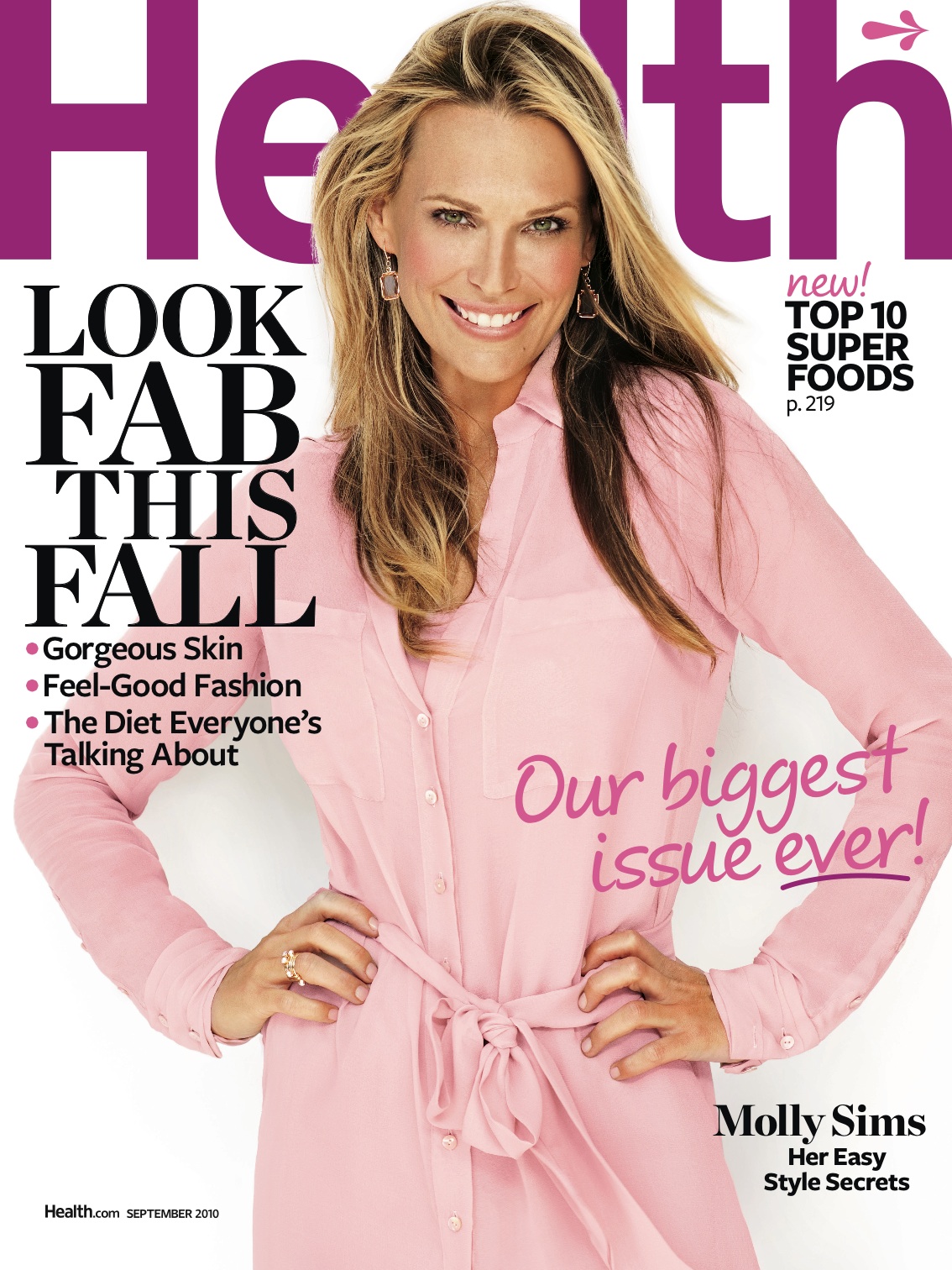
Health magazine is healthy. Thank you very much. A statement, of course, that does not reflect the status of the majority of the magazine industry. However, Health magazine has been able to live up to its namesake. The September issue (now on the stands) is the largest issue ever in the history of the magazine. Health magazine is also sporting this month a total new look outside-in. A new logo (a shame that it was half covered by the head of the beautiful Molly Sims) and a lot of new departments and features covering all subjects related to its readers well-being. Be it the obvious (health, food and fitness) or the more focused (beauty) or the brand new (fashion), the magazine moves with the new design and look from a special interest health publication to a “full-fledged women’s lifestyle magazine.”

To quote Ellen Kunes, editor in chief of Health magazine and editorial director of Health.com (who in turn is quoting her mentor Kate White, Cosmopolitan magazine’s editor in chief), Health magazine is “blowing it out.” Kunes adds, “doing things by halves doesn’t get you anywhere.”

I asked Ms. Kunes seven questions regarding the magazine’s redesign and reinvention. Her answers, although short and sweet, are as healthy and energetic as her magazine. The energy and resilience that you read in every answer is nothing short of an “active, fun, reader-oriented” editor who wants to “infect” her readers by the same bug she has. She wants her readers to do things that are pretty revolutionary. “Actually enjoy living the healthy life,” she says.

Health magazine is much more than a content provider, it is yet another example of how a magazine can and should be an experience maker. To quote Ms. Kunes again, “What more could you ask from a magazine?”

Yes indeed. What follows is my interview with Ms. Kunes.

Samir Husni: Is the magazine moving from a specialized health magazine to a more general interest women’s magazines by adding fashion and beauty to the content?

Ellen Kunes: Health has always featured a monthly front-of-book beauty section along with a beauty well feature. Now we’re introducing a new fashion section in the front of book as well as a well feature, and we’re also including spreads in both of these sections, which gives readers a much more exciting visual experience. With our new design and content, we’ve become a full-fledged member of the women’s lifestyle category.

SH: Few years back when the magazine moved from SF to Birmingham, beauty was added to the content, but soon after was pulled out? Why do you think this will work now?

EK: Beauty was never pulled out nor has beauty coverage ever been reduced: In fact, our beauty paging has consistently increased in size in the past 10 years.

SH: Health had a good ride both in terms of circulation and advertising in the last two years. Why mess with success?

EK: In this media landscape who can afford to sit on their laurels? You have to push the envelope with every single issue. My great mentor, Cosmopolitan’s Kate White, always taught me to “blow it out”—doing things by halves doesn’t get you anywhere. We’ve been talking to our readers and they tell us they want more beauty, fashion, food and fitness coverage—along with the same trusted, healthy-life advice we’re famous for—and we always listen to our readers.

SH: How are you using digital and the web to ensure a print future for Health magazine?

EK: We’re so lucky at Health because our web business has 12.5 million unique users, which brings the Health magazine + Health.com reach to a total audience of 20.8 million readers and users each month. We’re also far ahead of our competitors in the social media arena, with 121,800 Facebook fans, and 1.2 million Twitter followers. In addition to bringing us a hefty number of new subscribers each month, we’re able to reach consumers in ways that are both broad and deep—and advertisers and marketers really appreciate that unique strength.

SH: The magazine industry is recovering from one of the worst years in its history, how do you see the future of the industry in general and Health magazine in particular?

EK: I believe that those magazines delivering an experience that’s original and exciting and is enhanced by other digital platforms are going to continue to do really well—which is exactly what Health does. We’re in complete brand-building mode right now, with a website that both expands on our magazine experience and goes beyond it, giving consumers, marketers and advertisers full-circle, healthy-life information and opportunities. We’re also taking the brand into books, with our New York Times bestseller, The CarbLovers Diet, and What the Yuck?!, both released this month. These build on our brand platform: to give women great new ways to enjoy their healthy lives.

SH: In the 1980s the marketplace was flooded with health magazines… today the market has shrunk to a handful of health magazines. What gives and how is today different than the 1980s?

EK: What we’ve discovered is that smart, customized medical content and vital wellness information is incredibly engaging online, while enjoyable, fun, visually-driven, feel-great stories and advice are perfect for print. We’ve learned how to inspire people to enjoy healthier lives using the best possible platforms. Which means that at Health, we now able to reach more than 20 million readers—and that number is growing all the time.

SH: Magazines are much more than content providers; they are experience makers. How do you describe the experience readers have with Health magazine and where to you see this experience heading with all the changes taking place with the magazine?

EK: Reading Health today is really life-changing for our readers: We know that every minute of every day they want to feel great. When they read Health, they expect smart and fun new ways to stay in shape, look amazing and eat fabulous and healthy food. We help them do something pretty revolutionary–actually enjoy living the healthy life. What more could you ask from a magazine?

SH: Thank you.

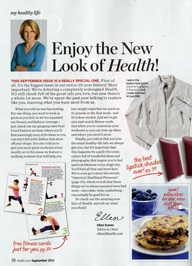
(The pictures above are for Health magazine new logo (now you can see it without the beautiful Ms. Sims head covering it), the newsstands cover and the subscription cover, the letter from the editor page, and Ms. Kunes picture taken by Heather Weston).

Don’t forget to register for the first Magazine Innovation Center’s Experience ACT. Click here for information and registration forms.

h1

Josh Tyrangiel, Editor of the New Bloomberg Businessweek: Make a Great Magazine and You’ve Got a Great Future. The Mr. Magazine™ Interview.

April 26, 2010

Armed with a hefty dose of knowledge about the web and print and the way people use both media (from his days at Time.com), Josh Tyrangiel, Bloomberg Businessweek editor knows the web in and out and knows what the web can and can’t do. So, when he started planning the new ink on paper edition of the reinvented former Business Week magazine and turning in into Blommberg Businessweek, he knew that he needed “to be very conscious of the strengths of each medium.”

“What the web is good at is grazing, “ he told me in a phone interview. “Where magazines have made a mistake in the past couple years was going with really tiny short webby style stories and headlines. When you make a decision to open a magazine, you actually make a decision to shut out the rest of the world. You have a person’s focus in a way that you don’t online. You need to capitalize on that.”

Mr. Tyrangiel wants to create a magazine that can actually prepare people “to compete every week. You read our magazine on the weekend and you go into the office and you’re covered on a diversity of subjects. On top of that, in addition to being comprehensive, it’s a seductive magazine.”

What about the future of print, I asked. Mr. Tyrangiel answer, “I think the future of print is very bright for people who make great magazines and great newspapers, but the bar has been raised.”

What follows, is in typical Mr. Magazine™ Interviews style, my lightly edited interview with Josh Tyrangiel, editor of the new Bloomberg Businessweek:

Samir Husni: Congratulations on a job well done. It feels like you’ve created a monthly on a weekly basis.

Josh Tyrangiel: You know what? It feels like that. It’s a lot of work, but I really appreciate it.

SH: How are you going to follow up with issue two and three and four? Is it going to be that simple to create a monthly on a weekly basis?

JT: I’ll tell you, one thing that I have told the staff since day one about where we were headed is that it was going to be awfully hard work and that it was going to require us to think in ways that were slightly different to the ways magazines have been created before. You have to think not just about stories, but you have to think visually, you have to think about story mix. We have to really pack it full of things. Everybody has responded. We talk much more about story than we ever have before. The integration between the edit and the art department is much better than it’s ever been and that’s the way it has to be. There aren’t multiple ways to make this particular kind of magazine. It’s very difficult and I want to keep everybody focused. If I can do that, then the payoff is that (the magazine) feels like a really rich reading experience.

SH: Can it be done on a weekly basis? From a reader’s prospective, is it too much?

JT: I think it’s just right. Over the past five, ten years, one of the secular challenges we have is that we haven’t invested in our product particularly well. Paper stock got thin, more white space crept into the layout, story count went down and the price of the issue and the subscription went up. To me the value proposition was just off. What we’re trying to say here is, “We’re worth the money.” One of the ways you do that is being genuinely comprehensive so that you know you pick up this magazine, it arrives on your mailbox on a Friday, you read it and you covered for the week ahead. I would love for people to read the magazine front to back, every single word, but you and I both know that’s not necessarily how people interact with the book. But, for those who do, they’re going to be completely covered. For those who pick and choose, we’ll still give them enough coverage about the areas they care about that they feel like the magazine has an indispensability to it.

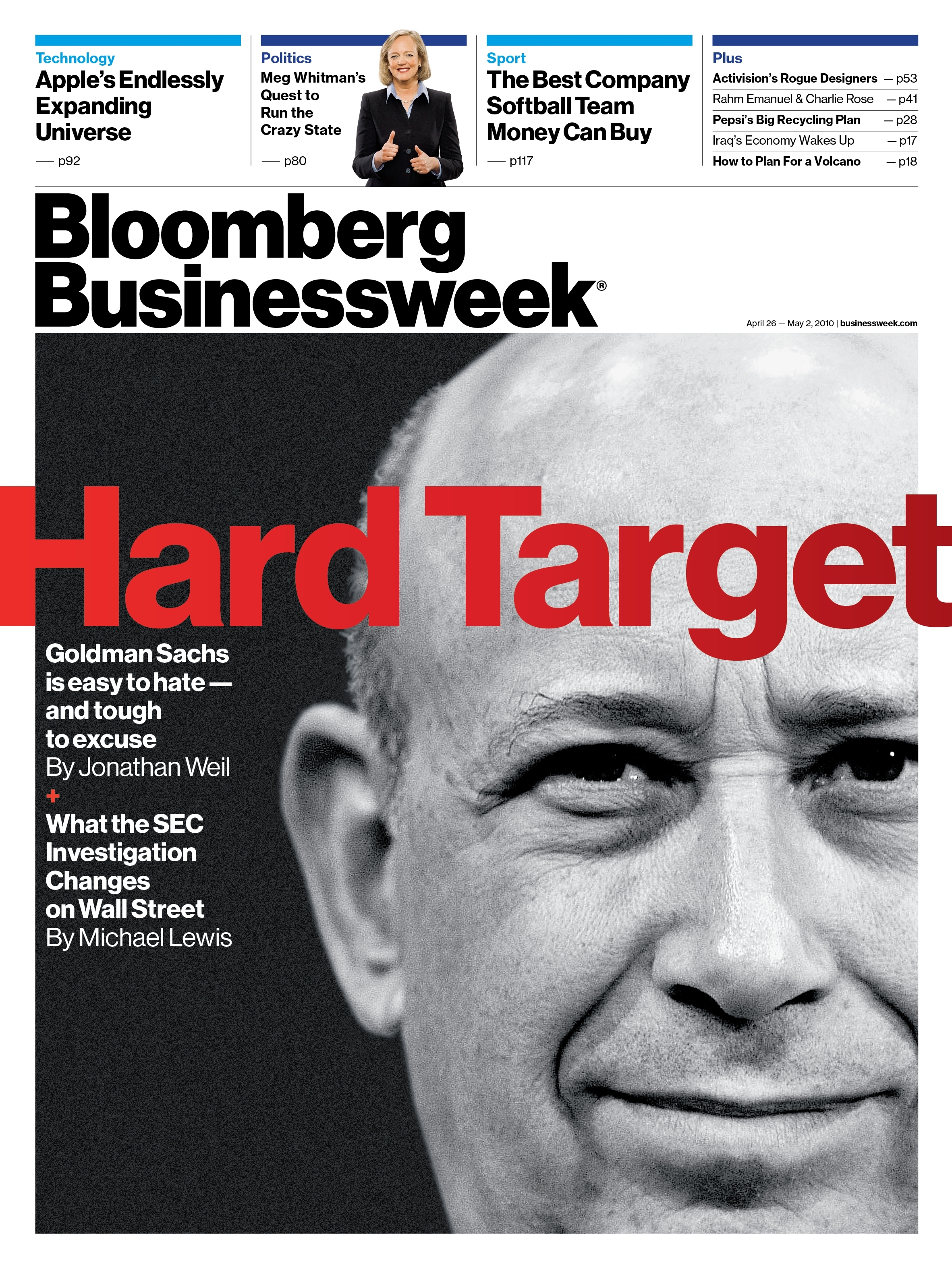
SH: Your cover reminds me so much of the front pages of The Guardian and The Observer, the UK papers. The cover has the look of a daily. Yet, once you go inside, it has the look of a monthly. What was the intention behind that cover design?

JT: Remember that this is only one issue and that the consistent aspects of the magazine are inside and that this is our first cover. The idea was to convey some urgency. This is a weekly magazine and one of the reasons that people stopped subscribing to weekly magazines is that they get piled up. My goal is to make sure our subscribers, on the walk from the mailbox to the front door, open this magazine. I want them to engage with it right away. No one expects us to tell them the future, but I think they expect us to be on the news. So, I want our covers to convey urgency. I want them to have enough stuff in those rooflines so that people always find something they’re interested in on those 20 steps from the mailbox to the front door.

SH: One of the things that caught my attention is that you are trying to ensure a future for print in a digital age. Whether you are enhancing the print quality, adding pages, using heavier paper weight, etc. But, so many others have done that before and six months later, we’re back to where we were before that. What’s the long term plan? Somebody just remarked to me today, “Are they going to drop “week” from “business”?” Is it going to be “Bloomberg Business” like Nissan did with Datsun? What’s the plan six months from now?

JT: We have the benefit of being privately owned and having tremendous support from our company. The plan six months from now is to keep growing and to keep doing work, week in and week out. Bloomberg has faith in journalism. The company has faith that if you put out a great product, people will come. So, that’s the plan. The plan is to make a great weekly magazine every week.

SH: Fortune just redesigned. Forbes will probably redesign. The three of you have always been looked at as the cornerstones for business journalism in this country. Besides the frequency, what can you tell your readers, “This is what you need Bloomberg Businessweek for, this is what you need Fortune for, and this is what you need Forbes for?”

JT: I can’t do the work of telling them what they need Fortune and Forbes for, but I can tell them, beyond just the frequency and periodicity, we’re packed with stories and packed with information. We can actually prepare for you to compete every week. You read our magazine on the weekend and you go into the office, you’re covered and you’re covered on a diversity of subjects. On top of that, in addition to being comprehensive, it’s a seductive magazine. There’s lots of stuff we’re telling people that they don’t know and taking them on journeys to meet people, to hear new ideas, to discover new companies they can impact their business lives. I think that’s something we can do uniquely and again, I don’t want to offer positioning statements for Forbes or Fortune, I think they’re both good magazine, but I think we’re in a kind of different category just based on what we’re trying to do.

SH: Sometime back, I think as far as the mid 1980s, some folks were saying the news weeklies are dying and that there is no room for weeklies. All of a sudden we are seeing a great emergence of the weeklies and all are trying to reinvent themselves. What are you doing in this digital age to ensure a print future?

JT: I think you have to be very conscious of the strengths of each medium. I’ve worked on both (mediums) for a long time now and what the web is good at is grazing. People use the web peculiarly for news between 11 a.m. and 2 p.m. They’re sitting at their desks, they’re eating lunch, the voicemail light is on and they’re looking for just a little bit of a break. Stories have to be pretty short, headlines have to be written a certain way, and the immediacy of those stories is the capital. In a magazine, you’re getting people in a different frame of mind. You need to recognize that. Where magazines have made a mistake in the past couple years was going with really tiny short webby style stories and headlines. When you make a decision to open a magazine, you actually make a decision to shut out the rest of the world. You have a person’s focus in a way that you don’t online. You need to capitalize on that. You need to think through some one in that frame of mind actually wants from their reading experience. I think there are some people who have done it very well and that is something I think about a whole lot when we redesigned and it’s something I think about with every story. What’s the frame of mind of our reader? What do they want from this? How can we deliver on that?

SH: I remember the first time I met you at Time when you told me about that 11 to 2 timeframe for the web.

JT: You’re running into vacant space. That’s the thing. One the weekend, if you’ve got a magazine, you’re running into prime time.

SH: What is the weakest link in this issue? After this issue came out, what was it that made you say, “I wish we did not do that.”

JT: That’s very funny. I’m going to give you a very honest answer. I just wish it wasn’t all so awesome. I’m going to go back, and part of the culture here, is that we do very brutal post-mortems. I want us to be our own toughest critic, but that’s why I’m really really happy with our issue.

SH: That negates my second question, which is what is your most proud moment in this issue?

JT: My most proud moment is how awesome it all was? Same answer? No, I proud of the fact that it feels original. People have been making magazines for a long time and it’s a beloved format, but I think there are things in here that feel genuinely original and I feel proud of that.

SH: Every time one of our weeklies change someone says, “it’s going to be like The Economist, or they are trying to be like The Economist.” Are you?

JT: No! We’re trying to be like Bloomberg Businessweek. The fact is that I certainly think The Economist is good magazine, but I read everything. On my desk right now is The Economist, People magazine, New York Review of Books, Spectator. I read a lot of stuff, but I just feel like our mission is a unique mission. I’m not trying to be like anybody else. That’s why I said I’m proudest of the fact that it feels original. We have a unique mission, we have readers who are unique and they’re asking for us to deliver to them something they haven’t see before and something that’s useful. So, I’m not trying to be like anybody else at all. I want our magazine to feel different.

SH: One final question, how do you see the future of print?

JT: I think the future of print is very bright for people who make great magazines and great newspapers, but the bar has been raised. Part of our problem is that there was way too much competition and not a lot of it was very good. There are many things that failed, that sadly probably should have. The medium itself is still very strong and has tremendous promise, but our reader and our advertisers are demanding great product. So, make a great product and you’ve got a great future. My own personal belief is that great things rarely fail. So, make a great thing and worry about the rest after you’ve done that first.

SH: Thank you.

h1

Keeping Southern Living magazine Southern: The Mr. Magazine’s™ Interview with Southern Living’s Editor in Chief Eleanor Griffin: We are born and bred Southerners and We Will Always be Based in the South

September 26, 2009

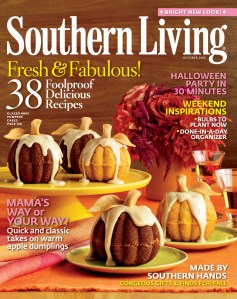
SLOCTHighresSouthern Living, the south’s largest magazine, is sporting a new look this week. The Time Inc.’s southern publication is under the helm of a woman editor for the first time in its 43 years history. Eleanor Griffin, editor in chief, of Southern Living, a native southerner, came to the magazine from its now departed sister publication Cottage Living, the magazine she founded at the company once know as Southern Progress. She has one mission in mind: Keep it Southern.

This is the second magazine that Time Inc.’s Lifestyle Group restyles and redesigns in less than two months. Last month it was Cooking Light, this month it is Southern Living. The pace of change begs the question why and why now? I asked Eleanor Griffin this question and a host of other questions including the one that is on every southerner’s mind: are those Yankee New Yorkers messing up with our Southern Living and they moving the magazine up North?

Well, here are the headline sound bites (or what Eleanor refers to as bumper stickers) from my interview with Eleanor Griffin followed by the usual informal and lightly edited interview with Ms. Griffin.

Eleanor Griffin’s Bumper Stickers:

We are born and bred Southerners and we will always be based in Birmingham, Alabama

I am not messing with the DNA of the magazine. I’m tinkering a little bit more with the presentation.

We also talk about “Keeping it Southern” because I never ever want to be just another service magazine. I want to always, always be Southern Living.

Time Inc. is fertilizing us and I mean that in a positive way, no negative connotation. Time Inc. knows enough to let us do what we do best.

Southern Living still swings a pretty big bat in ad revenue and circulation.

The fun challenge here is to edit a magazine for people with shorter attention spans but still give them the richness they look for in a magazine like Southern Living.

No one has that differentiated Southern voice like Southern Living does.

New York (that is Time Inc.) recognizes that yes, they’re going to help us, but we know country ham and biscuits, we know barbecue, we know Southern football.

I want to seduce the reader, and I mean that in G-rated way. I want to give them something pleasurable, I want to give them a memory, I want to give them an experience.

Eleanor_GriffinAnd now for the Mr. Magazine’s™ interview with Eleanor Griffin, editor in chief of Southern Living magazine:

SH: Why now? Last month Time Inc. restyled Cooking Light and now Southern Living and the rumor mill in the southern United States is that there is something going on at what used to be known as Southern Progress Corp. A lot of people are leaving, losing their jobs, and at the same time all of these changes are taking place. Is Time Inc. taking over literally and moving Southern Living from here to New York?

EG: No, we are still born and bred Southerners and we will always be based in Birmingham, Alabama. As for the change, primarily two factors come into play: one, Time Inc. is giving us the resources. They’ve given us resources to spend money and improve the magazine; and the second thing is coming in as a new editor, I’m old and ornery enough to want to put my stamp on the magazine and they gave me permission to do so. The reason we changed now is that it was part of my deal coming to Southern Living. I was born here and I worked here for 30 years, however I wanted to make the magazine a little more contemporary.

SH: I saw the October issue of Southern Living and somehow it had the feel of Cottage Living. Is it only me, or is this the plan?

EG: I will not argue with you. It’s still very Southern Living; that is our goal. But I’ve brought in a touch of informality–and that’s on purpose–to reach out to our younger readers. That’s intentional.

SH: How did you do that?

EG: We did the dreaded focus groups and listened very closely to my mail and my email, and I was hearing from a younger reader that said, “Oh, I like Southern Living, but I don’t have the time for it I used to. I’m too busy. I wish you had more for the novice.” Two of the areas they mentioned were that they assumed that we assumed they knew more than they did on cooking and gardening, so that’s how we started two columns. One of which is “Gardening 101” and the other is “Southern Living Cooking Class”. I kind of expanded that thought to kind of break it down a little bit. Then, I added “Half-Hour Hostess” to our food section, which is busy people who want to entertain after working all day, and we also added “Done In A Day”, which is a quick home project. I’m very proud of it because Southern Day Homes projects are Bedazzlers and sewing walls, and they look so dated. This is very, very stylish and much more contemporary.

SH: One thing that stopped me while flipping through the pages of the magazine is the fact that there is a lot of “How-To” with the exception of one or two of the feature articles, I asked myself, “Are we missing that storytelling aspect Southerners are known for? Are we moving toward a direction of making Southern Living a “How-To” magazine rather than a “Know-How?”

EG: That’s a great question: absolutely not. We did a lot of “How-To” in the magazine because I want a younger reader to know that you can find solutions in Southern Living, not just pretty pictures and recipes. I want her to know we have solutions. But to your point, you will see the soul of the South in this magazine. We had Pat Conroy, who we’ve gotten terrific response to in August. We had the Rosenwald Schools in September, and I’ve got the Everglades in November. So, granted, I didn’t have the signature soul of the South story in October, but if anything, you’re going to see more of that in the months to come. One example is we’re starting a new tradition in January that we’re going to have the “South Ten Comeback Neighborhoods.” I’m very pleased about that. You’ll see more historic preservation. We’re trying to do it all. My problem is that I don’t have the pages I need due to the economic and advertising situation. But, we’re very pleased that advertising started to come back in the fourth quarter because I want to do it all.

SH: One of the things that I have noticed with the October issue is that you’ve gone places where, if my memory serves me right, only for a brief, short moment in the history of Southern Living, which was back in the late 80s I think when the late Nancy Woodhall was the editorial director, dared to change the yellow color of the name to purple and other things and that did not last long. Do you expect any response from readers that all of a sudden the yellow nameplate is gone, it’s white. You have pink cover lines. Are you messing with Southern tradition? Or, as your editorial says, “Keeping it Southern?”

EG: We changed the logo color this month only because I had so much yellow on the cover that it was a little redundant. So we will probably 9 times out of 12 be yellow. This is done for graphic reasons. I am not messing with the DNA of the magazine. I’m tinkering a little bit more with the presentation. We will always be the South’s lifestyle authority. We will always be the go-to place for recipes, and how to put your house together. All we’re doing is freshening the delivery methodology so it’s delivered a little bit quicker and little bit more precise—not dumbed down—but, just a little bit quicker. As one of the biggest things I’ve learned from our reader mail, and speaking to these young women saying, “I love being a Southerner, but I don’t have time to do things that my mom did. I don’t have that kind of time. Can you break it down for me.” And that’s kind of the genesis of our signature column “Mama’s Way or My Way.” Sometimes we have a guilt thing that we Southern women want to do it all, kind of the Martha Stewart concept, and that’s not possible anymore. So “Mama’s Way, Your Way,” although it’s just starting out as a food column with the apple dumplings the traditional way, and a quicker way, that column may grow to come into other areas such as homes and gardens, for example.

SH: That’s a great column, if you really want to reach that dual audience, especially with the mother/daughter relationship that exists in the South.

EG: I speak in bumper stickers. With the staff we speak about “Modernized, but in Moderation” and we talk about “Update but not Upscale.” We also talk about “Keeping it Southern” because I never ever want to be just another Service magazine. I want to always, always be Southern Living. The fourth building block is a phrase we all use called “New Icon, Old Icon” and that’s that in every issue of the magazine, there should be some stories that an old icon, like on classic garden in Raleigh, North Carolina that speaks to a traditional reader, or a party in The Grove at Ole Miss, but then we have new icon stories on a loft in downtown Austin. So, the mix will always tilt toward old icon, but it’s just going to be leavened with some of the new icon things we’re doing.

SH: Which is something you mention in your editorial in the October issue that you’re respecting the past and looking to the future.

EG: Absolutely. Southern Living has been too successful for too long without my help. I am not going to come in and mess it up. My job is just to continue the vision and just update where we need to be. Two other areas that are we are updating, we’re doing a three page “Go To the Source” section where in the past we weren’t as helpful as we could have been on sourcing because we all want it at the click of a mouse now. We’ve also introduced a recipe index. And again, these are not earth shaking changes, they’re just ancillary improvements to make this magazine more useful everyday. The third thing I’m real proud of is we’ve introduced the “Made by Southern Hands” shopping page, and you being Mr. Magazine, know that one of the pages magazines do worst are the awful popcorn product pages. I think they’re a total throw away waste of time, but I feel like “Made by Southern Hands” so differentiates us because it’s showcasing Southern crafts people that someday may be the next Kate Spade. That’s a great way of presenting current things women love, which is shopping, but differentiating it that it’s got to be by a Southern, small, crafts-person. It’s not Michael Kors.

SH: I’m sure you’re hearing all the rumor mills that all the Southern Progress magazines are no longer a domain of their own, that the folks from New York are running the show. What message can you send to the mass audience, outside the media people with the rumor mills, that this 43-year-old magazine isn’t having its roots cut and grafting some new identity (heaven forbid, a Yankee one) in this magazine.

EG: I’d like to say that Time Inc. is fertilizing us and I mean that in a positive way, no negative connotation. We are in what’s called the lifestyle group at Time Inc., which groups us with Cooking Light, Real Simple, This Old House and because Cooking Light and Southern Living are two of the largest and most profitable titles, we are getting some resource dollars to continue to do what we do best. I’ve gotten some extra money to help me do some things that I need to like hiring a photo director, just kind of editorial improvements the reader may not notice the underscoring, structural changes, but they will notice they’re getting a better magazine. So, also you can say that you have 87 people who are born and bred Southerners down here, I’m a native Kentuckian. We do what we do so well, and we will continue to do it because New York recognizes that yes, they’re going to help us, but we know country ham and biscuits, we know barbecue, we know Southern football, we know all those touchstones that national cultural magazines don’t necessarily touch on and Time Inc. knows enough to let us do what we do best and they’ve been very helpful so far. Southern Living still swings a pretty big bat in ad revenue and circulation and that’s why Time Inc. has invested resources in us because the larger titles aren’t getting the money now, and I’m taking it and running with it and delivering a better product each month if I can.

SH: Is the restyling and redesign of Southern Living an attempt to catch up with the changing editorial?

EG: I think that’s a great point. I don’t like to say we’re written in sound bites, I would never say we’re simplified, but we are written a little bit punchier, and we’re working extra hard on reader entry points because I know one of your questions was we are getting used to seeing things on a screen and digitally with shorter attention spans. The fun challenge here is to edit a magazine for people with shorter attention spans but still give them the richness they look for in a magazine like Southern Living. It’s a bit of a balancing act, but I feel like it’s working out with both our signature one page columns and then the longer reads, which we’re known for and will continue to be known for.

SH: How are you going to enhance this new approach, this new print identity for the magazine, via the websites and the mighty arm of Time Inc. and AOL? What are doing to use technology to enhance the print edition of the magazine?

EG: First of all, we’re working very closely on our website, and we’re putting much more original content on our website. We’re doing more, particularly in our Homes area. Our galleries and our slide shows do extremely well. On the food side we are hooked up, as you probably know with MyRecipes.com, which leverages us with a much larger audience. Our Home stories, they start you with SouthernLiving.com and those leverage you to MyHomeIdeas.com, which is an aggregate website of our sister publications. Again, not only for more audience, but for richer experience on the site. I think just as Condé Nast had success with Epicurious and Concierge.com, the aggregate site, we’re having similar luck where we aggregate our sites into MyHomeIdeas and MyRecipes.com. That seems to be the way to go these days.

SH: So you differentiate between the magazine experience and the brand experience on the web?

EG: I’m a magazine junkie, not quite as much as you are, but I’m probably in the top ten, I surf a lot too. I think the best magazine websites may start out as a vertical, but they need to funnel you into titles with similar appeal. Because if I’m looking for a travel story or a recipe, I really don’t want to go to eight websites, I want it all at one click. In the same way, when you’re buying a air ticket, it’s such a pain to bounce back between Expedia, Travelocity, and Orbits. I like to go to Kayak and all those windows pop up with my ticket. Same thing with MyHomeIdeas and MyRecipes, I like to go to one site and it gives me aggregate from the title I like and other titles with a similar look and feel.

SH: What makes Southern Living, today, as relevant as it was 43 years ago when it was started for Southern women?

EG: I wish I could just read you my November editors note, which I just wrote about that very topic. We’re even more relevant today than we were 43 years ago because there are so many magazines, so many websites, and so many TV channels clamoring for our time. We’re the one voice that says, “Yes, we are a lifestyle, shelter magazine but we speak with a Southern accent, we know your values, we know your traditions, we’re edited for you, and again, a eye for the past and a respect for the future.” No one has that differentiated Southern voice like we do. I think that’s what makes us relevant, it will make us relevant 10 years from now.

SH: Are there any plans to reach that woman, besides the traditional web and print that will enhance that Southern Living brand?

EG: We’ve got several brand extensions going. We’re doing quite a bit right now in licensing. We have seven licenses for towels, furniture, paint, which we are expanding through licensing. That’s probably our number one brand extension right now for this magazine.

SH: What do you expect once this issue hits the newsstands on September 29th, what are you betting on from the audience?

EG: I’m expecting quite a bit of email based on what Mary Kay Culpepper (the departing editor in chief of Cooking Light magazine) based on her experience at Cooking Light. I’m expecting my very oldest readers to not email me, they’re going to write me and say they’re a little disappointed. But I think the vast majority are going to go, “It’s about time. Thank you for taking the magazine I love and just freshening it just a little bit, not messing with it, but just making it a little bit fresher for the busy life I live. I went through it with Cottage Living where some people though, “Oh, gosh, I thought it was going to be retirement cottages on the Coast, I’m not happy.” But the vast majority were, “I love this magazine.” And I expect the same reaction here. You can’t include everybody all the time, but I have a staff that has worked very hard for six months to really tune into where the modern young Southerner is going and we think we’re on tap to what you’re looking for.

SH: In the midst of all these changes, Southern Living is known for the white cake cover every December. Am I going to see my white cake on the December cover?

EG: I knew you were going to ask me that. I’m testing two white cakes. The answer is yes, but we’re testing an old icon which is a very traditional white cake and then we’re testing kind of a young sexy one and I’m going to see which one wins and go with my gut. But you will see a white dessert. I will put it that way.


SH: You are known to say that you want to “seduce the readers.” What is Eleanor Griffin recipe to seduce Southern Living readers?

EG: My thought is, Samir, it’s such a busy, hectic world and if you open up a magazine and I’m just giving them a cheesecake recipe, that’s fine but I feel I short-changed them a little bit. I want to seduce the reader, and I mean that in G-rated way. I want to give them something pleasurable, I want to give them a memory, I want to give them an experience. When I talk about transforming or transporting, a mediocre magazine gives you a cheesecake recipe and a paint color. Those are a dime a dozen. We talk about seducing the reader, but in a good way. We talk about transforming the reader a little bit too. It’s not just ink on paper. But a magazine that speaks to readers, transforms them and transports them either to a place they’d like to live or like to travel, that’s the best of print journalism. Solving a problem is good, but transporting and transforming is the goal of all good editors.

SH: Thank you.

h1

Mainstreaming The Week…

June 25, 2009

The Week UKThe Week New USAThe Week Old USA
As Felix Dennis’ The Week continues to spread its wings across the globe (a new Australian edition published earlier this year) and a possible Canadian edition later, in addition to the British and American editions, the US edition just revealed a new cover look that makes the magazine closer to the look of its British counterpart. The cover sports a skyline of topics rather the older left side rail approach. It is easier to read and is more single copy friendly. The inside of both editions is the same, thus making the look of The Week the same regardless where you pick it up. Of course design is not the only reason you pick up The Week for, but rather the smart and true tag line that states “all you need to know about everything that matters.” If it is not in The Week, it does not matter. The covers above are from left to right, the British edition, the new American edition and the old American edition.

h1

“Change (in Rolling Stone) You Can Believe In”

October 20, 2008


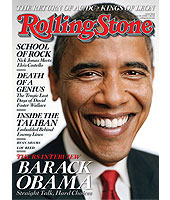
“Like the man we are featuring on the cover for the third time in seven months — a record equaled only by John Lennon — we embrace the idea of change.” Thus starts Jann Wenner’s introduction to the newly redesigned and re-sized Rolling Stone magazine. Sporting a tightly close-up, and as far as I can tell un-retouched photo of Barack Obama (See Newsweek’s Sarah Palin’s Cover Photo here if you don’t get when I mean), Wenner the magazine founder, editor and publisher introduces the magazine that started in 1967 as a “tabloid-size newspaper.”

For those who are not familiar with the history of Rolling Stone, Mr. Wenner takes them through a trip down memory lane. From the 24-page newspaper black and white tabloid, to the 1973 four-color printing, to the 1981 “big step when we essentially became a hybrid of a newspaper and a magazine.” For the 21st Century Rolling Stone offers its readers (all 13 million of them according to Mr. Wenner) change that is “not change for the sake of change, but change as the kind of cultural renaissance that gave birth to Rolling Stone more than four decades ago.”

Wenner ends his intro writing, “Of course, what never changes is our DNA. A great magazine is a set of voices and values, artfully and urgently translated into great stories and great pictures. The soul and mission of Rolling Stone remain the same as a magazine coming from midtown Manhattan as they were when we were a rock & roll newspaper published from a warehouse-district loft in San Francisco…”

The success of Rolling Stone is totally embodied with that last paragraph from Wenner’s Editor’s Note. Not too many magazines can claim that they have been true to their DNA, soul and mission through the years. Even when the magazine deviated from its original mission and soul, ever so briefly, Jann Wenner was able to navigate the ship back to its course. A job well done. This issue is a keeper whether you paid $4.50 on the newsstands or a mere 33 cents by subscription. A great example of how change can be executed without messing up with the DNA and soul of your publication. Whoever coined the phrase “size does not matter” was absolutely right when in comes to the new standard size of Rolling Stone. The only thing that matters now is that the magazine feels, forget about feels, it actually has, more pages and more “good” stuff that I can only hope that I will have the time to read every other week. To quote Graydon Carter editor of Vanity Fair at last week’s TimeWarner Summit Politics 2008, “We carve out our ground and try to tell great stories and have great pictures, which is something you can’t get on the internet.” I know he was not talking about Rolling Stone, but about his magazine Vanity Fair, yet I feel what he said is even more applicable to Rolling Stone. Thank you Jann Wenner for the change in Rolling Stone that we can believe in.

Click here to read more about Rolling Stone and good journalism.

h1

Interview: The Definition of a Good Magazine…

September 2, 2008


After a hectic Labor Day break, a very welcomed surprise arrived in the mail. Alan Katz, Group Publisher at Brant Media, publishers of Interview, Art in America and The Magazine Antiques, and the ex-Publisher of New York magazine, Cargo and Vanity Fair, sent me a copy of the renovated “bigger, bolder and sexier” Interview magazine. I think the word renovated does not give the changes in the magazine justice… It is more of a rebirth from cover to cover. A rebirth using the same DNA that the magazine founder Andy Warhol created when the magazine was conceived.
In a rather unique Interview style, the new editorial directors of the magazine Glenn O’Brien and Fabien Baron engage in an interesting exchange about the changes in the magazine, opting for a dialogue between the two rather than the traditional letter from the editor. Baron tells O’Brien, ” I think Any Warhol invented a new kind of magazine. It happened around the same time the cassette recorder was introduced. It was the first oral magazine…And being Andy’s magazine, visually it was up to the level of a great artist.” Baron responds to O’Brien saying, “But magazines have changed. Today the Internet does what magazines used to do. They give you the news, the flash, the buzz. Today a good magazine is more like what a book was in the past. I think that what we’re doing is going against the instant, disposable thing. I think we are offering something made with real craftsmanship, with a very high level of work coming from many people.” All I can add to that is just say Amen!
The brand new Interview with a glowing red and silver metallic cover featuring Kate Moss in all her glory, together with some hefty well written and photographed articles are worthy much more than the $3.99 cover price. Check it out today, the power of the photography, the feel of the typography, and the passion of the design make the new Interview a good magazine, a good one indeed.

h1

When Alternative becomes Natural…

January 29, 2008

alternative-medicine.jpgnatural-solutions.jpg
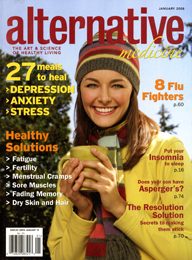
That is of course Alternative Medicine magazine changing its name to Natural Solutions and its tag line from The Art & Science of Healthy Living to Vibrant Health Balanced Living. Why the change? Well the editor-in-chief goes into great length trying to assure readers that nothing have changed except for the name and design. Linda Sparrowe writes in the first issue of Natural Solutions,”…you’ll be happy to discover most everything about the magazine is still here. It looks different, but all the departments you trust remain intact and all the topics continue to have that “AltMed” spin.” In the January issue (with the old name) Ms. Saprrowe writes about the change, “We’ve talked about this (the name change) for quite a while, and now it’s official. For our New Year’s resolution — one we know we can keep — we vow not to change the content you have come to trust month after month, year upon year.” If that is the case, why then bother and change the name of the magazine after 14 years of publishing it under the name Alternative Medicine. The newsstands are already crowded and some magazines will kill to have a 14-year brand to depend on and continue to promote. Change is the only constant in our business; that is a given. But to change for the sake of change is the worst thing than can happen in our business. Many have tried it before and many have failed. I just hope that the folks at Alternative Medicine, sorry Natural Solutions are not destroying a 14-year branded history in one swift change that they go to length to say it is not a change!

h1

Redbook joins the redesigned women’s magazines crowd…but will it help?

June 21, 2007

redbook-5.jpgredbook-3.jpgredbook.jpg
redbook-2.jpgredbook-4.jpgredbook-6.jpg
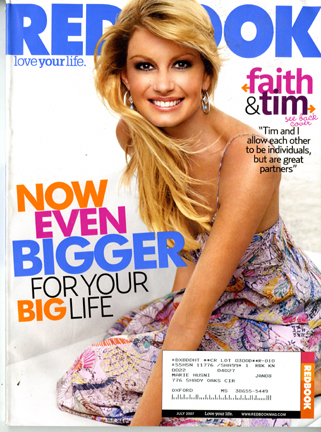
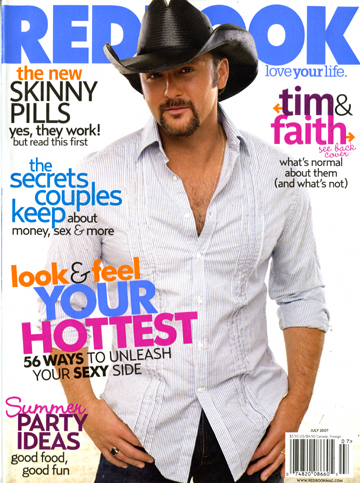
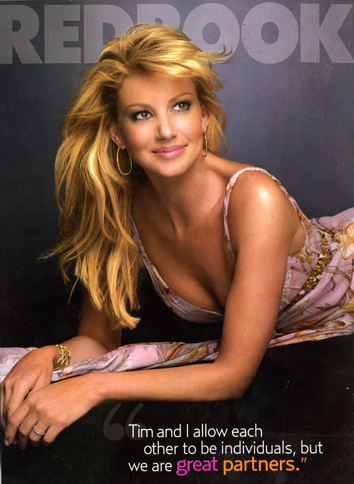
The last magazine from the field of the traditional women’s service magazines (used to be referred to as the Seven Sisters: Better Homes and Gardens, Ladies’ Home Journal, Woman’s Day, Family Circle, Good Housekeeping, Redbook, and the departed McCall’s) just released its “new editorial platform.” Redbook sports a new tagline (love your life), a bigger physical size, and a new design. The re-launch issue comes with two newsstand covers and one subscription cover. All editions have their own flip cover of either Tim or Faith. The famous love/sex exchange is absent from this revamped look. Will all these revamps help the traditional women’s magazines regain some of their newsstand’s momentum? Not really, says a friend who is a magazine publisher of a non-traditional women’s service magazine. She told me in an e-mail responding to my blog about Woman’s Day’s redesign,

“I have to say…much of what was identified in your article about Woman’s Day, is not at all in keeping with what we heard directly from the readers. In my personal opinion, the great failing of magazines is that they don’t listen to the reader, and instead follow the lead of the advertising community that pays the bills!!”

I could not have said it any better…listen to the reader. Thank you.

h1

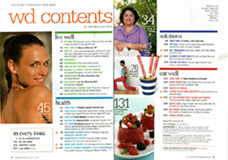
Simplify and 9 other tips I learned from the new Woman’s Day

June 14, 2007

cover.jpgmy-daily-wd.jpgeditors-letter.jpg
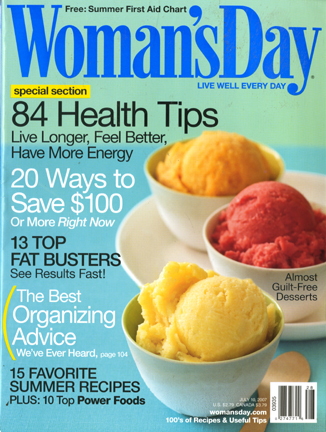
I do not believe in redesigns. I tell my clients all the time that magazines are not born for redesigns and face-lifts. Plastic surgery will not help. The best way for a magazine to succeed is to debut a “new editorial platform,” to keep up with the times. Change is the only constant in our business and for us to change it means we have to go beyond a redesign. Woman’s Day, starting with the July 10 issue debuts such a “new editorial platform.” The last of the women’s service magazines to reinvent itself is Woman’s Day. I was able to find 10 good examples to follow in the process of “reinvention.”
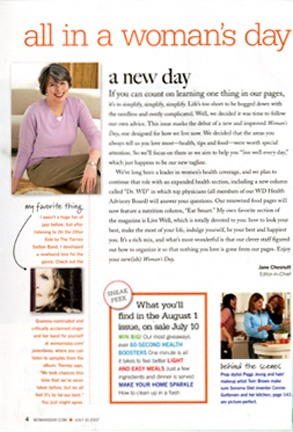
1. Simplify. Editor in Chief Jane Chesnutt writes, “If you can count on learning one thing in our pages it’s to simplify, simplify, simplify.”
2. Navigate. In the age of the internet, magazines can be the best vehicle to ease the navigation through the pages. Woman’s Day offers an easy to follow navigation marker: Live Well Every Day.
3. Create a Splash page. In order to make navigation easy, every section of the magazine must have its own opening page. I call that the “Splash Page.” Woman’s Day offers four splash pages: live well, health, solutions, and eat well.
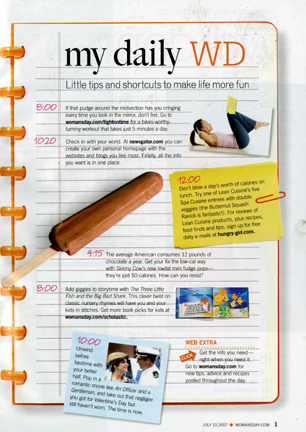
4. Welcome from both ends. Make sure that your readers feel welcomed whether they look at the first page of the magazine or the last page. In Woman’s Day My Daily WD welcomes you on page one and the Last Word help you re.new on the last page.
5. Engage in all pages. From the editor’s letter to the masthead Woman’s Day engages the readers with more than 11 entry and exit points. Pages that a lot of people write off as wasted space, Woman’s Day creates a good hook for readers to stick to those pages.
6. Group. Do not be afraid to gather all the information about the same topic in the same place. Whether it is an article, a department or some tidbits of information put them all together in one area of the magazine. Readers are busy. They like for you to save them time from searching from one side to the other of the magazine in order to find all the health articles. Place them in one place. In Woman’s Day if it is food and eating well, it is all on pages 125 through 152. It is all about food. No flip flops here.
7. Promise and Deliver. A lot of magazines promise and a lot of readers buy the magazine once for the promises, twice for the delivering of those promises. Woman’s Day promises 84 Health Tips, 20 Ways to Save $100, 13 Top Fat Busters, 15 Favorite Summer Recipes and 10 Top Power Foods… Do not be afraid from too many promises. Remember you can never have too many promises if you deliver on them in the magazine.
8. Bonus. Always try to offer your readers a bonus. Something extra. Something for nothing. It make readers feel good and at the same time benefit from the added bonus. Keep the bonus related to the magazine mission and focus. Woman’s Day offers a free Summer First Aid Chart.
9. Personalize. Make the magazine the reader’s magazine and not the editor’s. “my daily WD” is a very good example of such personalization. All what you need is to write your name.
10. Repeat and Repeat. Do not be afraid of repetition. Readers are creatures of habit. It they like something, they want more of the same. Editors get bored faster than the readers. Keep that in mind and let us hope for a repeat with the next issue of Woman’s Day.
contents.jpg

h1

Good (Make that Better) Housekeeping

April 10, 2007

ghmay.jpg
Rosemary Ellis has done some good housekeeping on the May issue of Good Housekeeping magazine. The magazine sprouts a new look and a lot of new additional departments, all in time for Mother’s Day. One of my favorite pages is the Index page. The Index page offers you Good Housekeeping’s content for that month by topic. It gives the magazine the fastest search engine available. Check the category you are interested in from Beauty & Skin Care to Food & Nutrition, to Tech and you will find the name of the article and the page number next to it. Even the recipes are divided into Sides and Salads, Main Dishes and Desserts. An easy to use approach with a lot of consideration to today’s busy woman, the magazine provides “good” information in less time and less space. The May issue of Good Housekeeping is dedicated to “all the wonderful mothers” like Rosemary’s own mother who, in Rosemary’s own words, “kept Good Housekeeping on her night table for roughly half a century, and she learned I was coming here as editor only a couple of weeks before she died.” A great Mother’s Day gift and a wonderful tribute to all the moms of the world who make our homes a better place to be.