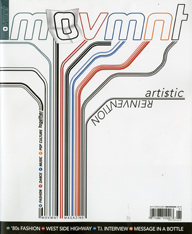
Three years ago David Benaym launched the first issue of Movmnt magazine. A magazine aimed at “fashion, dance, music, pop culture together as a lifestyle.” His magazine was not aimed to be just a magazine, but rather a movement, although spelled differently. His latest issue was anything but normal. He opted for a magazine that folds out to be a poster. His reasons are simple: the economic crisis and the environmental crisis. His solutions were to reduce the size of the magazine for this issue, try to reinvent the publication and save both on money and trees. I met David at the Periodical and Book Association of America convention in Atlantic City and asked him about Movmnt, innovation in print and the future of print. Click on the video below to listen and see the passion of a publisher and editor in chief whose all over ink on paper but with some room for pixels on the screen.
Archive for the ‘News and Views’ Category

Innovation in Print: David Benaym and Movmnt magazine
June 9, 2009Innovation in print: Step one: FOCUS
June 5, 2009When you aim to go everywhere you are set to reach nowhere. That sums up the status of print and print driven companies these days. The rush to be everywhere, to compete and compliment the new technologies and to blame the current slum in the business model on any and everything but the business model itself, will, in short, lead us to nowhere.
You can call it self-destruction, or you can call it misguided information. In both of the aforementioned scenarios, the end result is the same: another death of a printed product and another praise for the power of digital in attracting everything print including, but not limited to, the print readers. Case in point the recent announcement of Viacom in shutting down Nickelodeon magazine. Joe Flint, writing in the LA Times said, “But like other magazines, Nickelodeon has suffered from the double whammy of more of its audience going to the Internet (darn those early adapters) and a prolonged advertising slump. Although the cable network remains dominant, the value the magazine provided as a marketing tool for it had faded over the last few years.”
Did you see the real problem why the magazine is dead? It lost its “value as a marketing tool,” on one hand and on the other hand those “early adapters” are going to the internet. Try telling that to the folks at Highlights and Highlights High Five, Ranger Rick, Lady Bug, Ask and the tens of kids’ magazines that carry no advertising and their only marketing value is to deliver good educational and entertaining content to their readers. When your readers are your customers, you do not need your magazine to be a marketing tool, especially in the kids’ magazine market.
The first step toward innovation should be Focus. We should stop and focus our efforts on the content of our publications and whether our products are serving the needs, wants and desires of their intended audience. Focusing on the relevant content in our relevant ink on paper product should be our first and most important step. Using print as a mere tool to direct traffic to the web or to be a marketing tool will not help our case of survival. Admit it to yourself that we are not the web, we are not television, we are not radio. We are a 400 years plus technology and unless we use it for what it was invented to produce we are going to miss the point, struggle and die.
Innovation in print must start first within the premise of print. Everything else will be the icing on the cake. Keep in mind if the cake is rotten, no matter how good the icing, no body will take another bite.
So, my friends, examine your recipe for the cake, check it once, and check twice. Mix the ingredients and bake on low heat in those high pressure times. The end result will be a relevant printed magazine with a relevant audience who is not migrating to the internet because the cake you’ve baked can’t be found on the net. Happy eating, oops, I meant happy reading.
PS: And for those who still doubt the power of relevant content to a relevant audience, check the video below of my 17 month old grandson searching for Ernie page by page for more than 21/2 minutes. I am grooming him to be the next Mr. Magazine™ junior.
Seven Questions with Ali Ghanbarian: From SoMa to SOMA and the man behind the “sought-after” arts, culture and fashion magazine
June 4, 2009 There is no question on who came first, Ali Ghanbarian or SOMA magazine. It was Ali who saw the need in the San Francisco marketplace 20 years ago. He quickly moved to create a magazine that filled that need and beyond. His cup overflowed and the magazine spread its wings from the west coast to the east coast, and for that matter to the international marketplace too. The legacy that SOMA is leaving, and will continue to leave, on the arts, culture and fashion category will ensure a place for Ali among those visionnaires who followed their gut-feeling analysis rather than their statistical spread-sheets analysis. Who can blame him and he is the one that opted in all of his business ventures to be in the two riskiest types of business: launching a magazine and opening a restaurant. Well, Ali did both and in both he continues to beat the odds.
I had the opportunity to ask Ali seven questions regarding SOMA’s past, present and future. However you will not find any questions about his other successful ventures, i.e., the restaurants. This is, after all, the Mr. Magazine Interview™.
Enjoy.
Samir Husni: As you look back at the first issue of SOMA, what are the differences and similarities of the first issue and the most current issue?
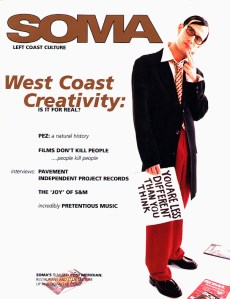 Ali Ghanbarian: The first issue was totally in your face, edgy-magazine, with a sole purpose of supporting the creative community and the artsy-warehouse district of San Francisco, which was similar to SoHo in the ’60s. Now, 20 years later, the magazine does not have much to do with SoMa or San Francisco for that matter. It has evolved to a respected, high-visual, sought-after arts, culture, and fashion magazine with extensive followers in every metropolitan area and beyond, all over the world. Its unique content, innovative design, creative subjects is sought-after, respected, and looked for by 18-38 year olds throughout the world, with special emphasis and appeal to the creative community.
SH: How would you explain SOMA to a prospective reader and to a prospective advertiser?
AG: SOMA is the longest running, independent, avant-guard, arts and culture magazine, with an organic bond and appeal to the most sought-after demographics in the world, 18-38 year old, who are creative, innovative, trend-setting, social warriors, at the forefront of every trend in music, film, fashion, electronics, etc. all over the world.
SH: SOMA has been a breeding ground to editors, designers and other staffers in other major magazines…do you feel that SOMA is stuck in its role as a candle that burns to light other publications?
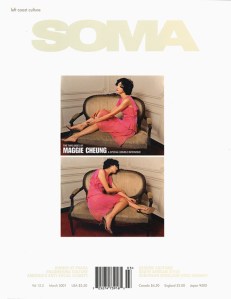 AG: As for SOMA being a breeding ground for editors, designers, and staffers for other magazines, I can easily add that it has also launched the careers of PR directors for some of the biggest fashion houses, fashion editors, art directors of numerous high-end magazines, good number of creative directors and photographers as well. This is one of the three main pillars of the existence of SOMA Magazine, and not contradictory to our purpose, as we try to accomplish three things with the magazine.
(A) Identify the most talented creative young people all over the world and offer them a platform to launch their careers. Hundreds of iconic talents (fashion photographers, writers, stylists, architects, designers, i.e. Alexander Wang, Alek Wek, etc.) have had their careers launched by SOMA.
(B) Covering the best of emerging arts, cultural trends, fashion, music, design, and providing our readers with refreshingly new ideas and perspectives.
(C) Last but not least, SOMA’s most important mission, which also keeps myself energized, is providing kids out of school a great training ground to learn every aspect of the magazine and help them to find their niche with different aspects of the creative world, and in a short time they move to bigger environments and continue their endeavors to reach the pinnacle of their careers.
SH: With the media pundits focusing more on digital and anything electronic, what are the plans at SOMA and what role do you think the PRINT edition of the magazine can play?
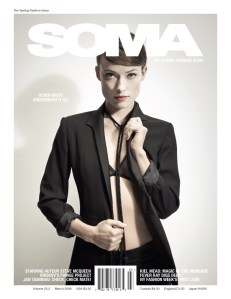 AG: Because SOMA is primarily a visual magazine, it is more like an art book that people collect, keep on their coffee table, and go through it for enjoyment, relaxation, and appreciation of great arts and cultural ideas with simple, gracious, and elegant presentation. Unlike newspapers and trade publications or mainstream magazine, the digital revolution will not necessarily impact SOMA’s appeal. However, we are not naïve and most our readers being technology-savvy themselves, we have a very innovative website that provides our readers with access to our magazine online. Millions of SOMA fans all over the world would not possibly have access to a hard copy, but they can go online and check out the issue and enjoy it. Furthermore, because we run numerous competitions among young graphic designers, fashion designers, architects, etc. we continuously improve our website to be able to accommodate these campaigns and utilize the latest technology to make it as extensive and efficient as possible. In fact, we are in the middle of drastically expanding our online presence.
SH: In a sentence or two, how do you define Ali Ghanbarian? Who are you? What makes you tick?
AG: For this, I leave the judgment to you. However, I will describe myself as hyperactive, visionary, luckily with an abundance of energy and determination to push boundaries of my imagination 18 hours a day, and at the end of the day looking back, being content with all that I have accomplished on a daily basis. My background has involved a range of different fields. I started as an engineer, to a marketer, to being credited with some of the most innovative concepts in restaurants, clubs, and lounges throughout the west coast, producing some of the most innovative cultural and consumer events, to launching more than half of the premiere spirits throughout the west coast, etc. But to summarize in one sentence what I am most proud of, it would simply be the mentor-ship.
SH: If you are to forecast the future, where will SOMA be five years from now?
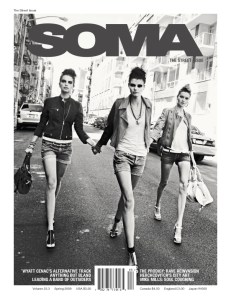 AG: After all these years, I think of SOMA as not just a magazine but a brand. We are in the process of launching numerous SOMA-related ideas, i.e., apparel, products, beverages. We are also launching a series of specially-designed venues in major cities called SOMA Racks, to be an absolute destination point for the creative communities across the world. As you know, most arts and culture magazine like SOMA would not be able to get proper exposure in chain stores, i.e., Walgreen’s, Safeway, Wal-Mart, etc., so I have decided to create SOMA Racks to provide an exclusive and innovative place for hundreds of these titles from all over the world, with some additional concepts which would make it a compelling case for all the creative people throughout each city to frequent. This concept will be started in San Francisco very soon, then LA, New York, and so on.
SH: What is your favorite magazine (SOMA not included) and what is the magazine that you can’t stand to see or read? Why?
AG: This is a tough one as I have many favorite magazines. Numero, i-D, The New Yorker, Dazed, Purple, etc. As for the one magazine that I cannot stand. I absolutely hate all the trashy club throwaways and celebrity magazines.
13 new magazines… 13 more reasons to amplify the power of print… and a chance to win a free New Magazine Guide from me
June 1, 2009We all know that a magazine is more than ink on paper. It is an experience. An experience that is lived, felt and cherished. We also all know that ink and paper are manufactured in factories, but magazines and their brands are manufactured in readers’ minds, one at a time. This past weekend I had the luxury of looking over 13 new magazines covering all types of topics and reaching all segments of the population. Needless to say I had 13 different experiences, each and every one of them helps me believe even more in the need to amplify the future of print and its byproduct that we call magazines.
 Rebel Ink: a new monthly magazine with “a match made in Hell. Tattoos and a life style that make moms weep and grown men cross the street.” The tag line of the magazine is “A tattoo magazine with attitude.” So, for the rebel in me (after all we are the Ole Miss Rebels) and the tattoos on them, that is one of a heck of an experience. They get the tattoos and I get to see them. Now, I am getting ready to cross the street!
 Natural Cat: From the folks who brought you Natural Dog and Cat Fancy comes this latest addition to the family of pet magazines. The magazine “provides your cats with a more natural lifestyle.” And if you are still wondering what type of magazine is this, wonder no more. Here is an experience I never think I will be involved with any time soon. The experience of learning “how the ancient technique of acupuncture can bring relief to your aging or ailing feline companions.”
 Mambo Scene: “Learning how to dance, at any level, is like learning how to speak a new language: it takes patience, lots of practice, great instructors, someone to practice with, and then some more patience…” This is an experience to learn and enjoy the Mambo Scene (the magazine also comes with a CD to help put you in the mood) and a guide to the top Mambo radios, songs, and plenty of advise to get “good in Salsa.”
Brazilian Jiu-Jitsu Legends magazine: Staying in the Latin American scene, this new quarterly offers the experience of “training tomorrows legends today.” According to BJJ, “Jiu-Jitsu is the only martial art that a smaller person can beat a stronger person.” The magazine comes with a DVD with “over 3 hours of content, 25 techniques, interviews and fights.” Well, needless to say, I may experience Salsa, but BJJ is taking my experiences a little bit too far.
 Fighters Only: This British import offers a monthly “essential fighting magazine” that is “The world’s leading mixed martial arts and lifestyle magazine.” The over-sized magazine provides an excellent addition to the Mixed Martial Arts magazine scene that has been growing slowly but surely. It is worth the experience.
 Blurt: Time to relax a little bit after all the fighting and dancing experiences. Just sit down and read about the music and the “14 ways to forget about the recession.” This new magazine, from the folks at Blurt-Online.com, is about “real music, real artists and real opinions,” and comes from music folks who experience nothing in life “next to drinking coffee endlessly, it’s all what we know how to do.” And it shows.
Prestige New York: From the music escape to “The Very Best in Life,” fantasy escape. The magazine that was launched nine years ago in Singapore, arrived on our shores last month with the launch issue “for no matter who in business or society you talk to, New York is viewed as a place of international awareness, culture and intelligence where people embrace new concepts, relish new challenges, thirst after information and are tickled by the quirky side of life.” This is one experience you will not find at a newsstand near you, but if you belong to this “experience” you should have a copy of the magazine on your coffee table already.
 Loft Life: Well this magazine will have you put some affordable fantasy in your loft or condo and will provide a “guide to life in the city.” What strikes me first is the recession-geared article that will help you move from want to need when it comes to design. In addition the experience is not limited to reading but also tweeting, communicating, enjoying, blogging, living, relaxing and of course subscribing… three issues will cost you $8.
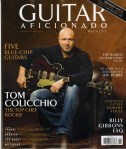 Guitar Aficionado magazine: Taking a page from Cigar Aficionado, this Future US new quarterly does not limit itself to guitars but also ventures into “cars, watches, wine and the deluxe life.” The magazine experience debuts “for passionate people who enjoy the guitar in all of its timeless, functional beauty — people who, likewise, have enthusiasm for the very best that life has to offer.”

Technikart Paris-New York: Here is an experience that has been in the making for 230 years since Lafayette came to the USA assistance and “we’ve had a long and passionate relationship since…though sometimes recently the Atlantic seemed a very cold and wide wall separating us…” This art and artists magazine “was created in 72 hours in France and we cannot be responsible for any damage caused by trans-continental language, incoherent internationalisms or translated European thought.” Quite a hefty experience and admission.
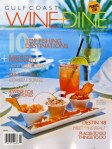 Gulf Coast Wine+Dine: This is a very doable experience for me since it is closer to home than any of the aforementioned magazines. This new launch aims to cover “coastal Louisiana, Mississippi, Alabama and Florida.” It is a “celebration of our passion for living (and if I may add loving) life.” And in a typical Southern hospitality the magazine’s editor Tim McNally welcomes the reader to the neighborhood and asks “Can I fix you a drink?” A refreshing experience indeed.
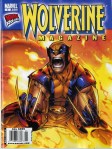
Wolverine magazine: I will admit it from the very beginning. I am a Superman fan, so no matter how many new magazines arrive on the market place celebrating all the other super heroes, none will replace the experience I had with my very first magazine I ever bought, Superman, the one that started my magazine hobby, education and career. Well, enough about me and my Superman experience. Wolverine is the latest full size – full color bimonthly in the Marvel series of new up-sized super heroes magazines. It you are a Wolverine fan, this experience is for you.
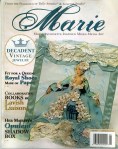 Marie: Leaving the best for last, if for nothing else but the name. Marie is my wife’s name and although I have no idea whether my in-laws named my wife after Marie Antoinette for which this magazine is named after, I have to say good things about anything that carries the name Marie. The experience, otherwise, will not be as good. This new entry from the publishers of Belle Armoire and Somerset Studio provides “Marie Antoinette – Inspired Mixed-Media Art.” The magazine feature “decadent vintage jewelry” and “royal shoes made of paper.”
So here you have it. 13 different experiences in one weekend. So, what is in it for you? How about Samir Husni’s Guide to New Magazines, Vol. 24. The new Guide will be out soon listing all the new magazines of 2008 is yours for free if you are one of the first five people who comment on this blog and give me the correct answer on how many times did I use the word “experience or experiences” including the aforementioned two in this blog.
A new PRINT magazine for university students? Say it ain’t so…
May 28, 2009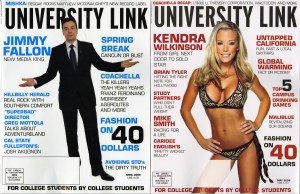
It is not an oxymoron. A new PRINT magazine aimed at college kids by college kids. Yes, yes I know, but please keep on reading… University Link magazine describes itself as “an edgy, fun and socially conscious magazine written exclusively for college students by college students that informs and entertains.” When I heard of the newly launched monthly last April, I had to take a double take. A print magazine for college kids! Didn’t all the “media pundits” tell us that college kids are no longer interested in print, and if they are interested, than it is only in free print. So why on earth will someone, anyone, launch a new monthly magazine aimed at college kids and written by college kids and, to top it all, has the guts to charge for it $20.00 for 10 issues.
Well I took my questions to Ali Salomi the managing director and co-publisher of the Southern California based magazine and here’s what he had to say:
Samir Husni: A print magazine for college students? Isn’t this concept outdated? Some say college kids don’t use print anymore? Care to comment…
Ali Salomi: We don’t believe this concept is outdated. We have three years of research that we completed prior to launching this magazine that gave us enough confidence in welcoming the phrase “Print is Dead.” We found that other than local school papers, there really isn’t any print media aimed only at college students. We felt that by publishing a magazine that was edgy and entertaining and at the same time informative we would capture our readers’ attention.
We have street teams that are on college campuses everyday to sell subscriptions and to take surveys from students to find out what they want to read about. We wanted to design a magazine with the reader in mind and because we’re generating income with our subscriptions we’re not beholden to our advertisers for content. We keep the students and their interests first.
We charge the students $20 per year (10 issues) for our subscriptions and DO NOT publish any of our stories FREE on the web. We are the ONLY subscriber-based, college-magazine in Southern California.
With our first issue we had 12,000 subscribers, and our second 15,000. We are forecasting 20,000 subscribers by our September issue and 30,000 by year’s end. For a magazine that just launched (and the first we’ve published), these numbers are incredible. Our reader responses have been amazing and the flood of email from students asking to write for us is always nice as well. Students regularly report to our street team how nice it is to take a “break” from school and read the magazine between and sometimes even in class.
SH: Why is the magazine limited to Southern California and what are the expansion plans?
AS: The magazine is currently limited to Southern California. We did this for two reasons; one was to make sure that the voice of the magazine remains the voice of Southern California college students. It speaks to them in their own lingo and covers subjects within their own communities. We also wanted to assist student writers within the Southern California region. All our stories are written by college students. We are trying to give students a leg to stand on when they enter the world of journalism. By writing for our magazine they will gain hands-on experience while still in school.
The second reason we are only in Southern California is for our advertisers. There are many companies that are located in Southern California who don’t need a nationwide advertising campaign. By advertising in our magazine, they are able to hit a niche 18-24 year old demographic within their own region.
Our expansion plan is to cap off at 50,000 subscribers in Southern California then open up to another major market. Once in another major market, we will publish a magazine only for that area, i.e. University Link Magazine: Miami Edition, it will be a different magazine with different writers and different content. We will use student writers from that area. Our long-term goal is to target 10 major U.S. markets.
SH: What innovative things you consider yourself doing launching ULM?AS: We consider ourselves the first paid, subscriber-based magazine targeting college students; that is also written by college students. We will strive to keep our advertising costs low, so that local businesses can advertise in a high quality publication.
Best of all, starting in September, we will be launching our “Editor Internship Program.” This will be a 5-month internship program where we will select five students to work with University Link Magazine. During these five months, each student will be able to edit one of our next five issues with the other four interns learning and assisting. The five interns will be working directly with our Managing Editor, Taylor Van Arsdale, who has more than 15 years of editorial experience.
The covers above are those of the first and second issues of the magazine.
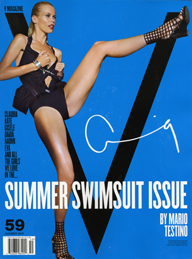
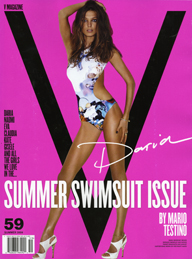
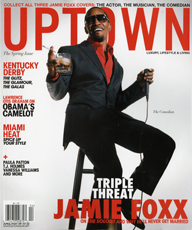
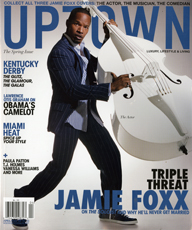
A rainbow of colors, some fox(es) and a wizard of a president, make a great coffee table display
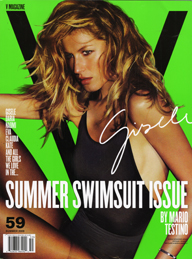
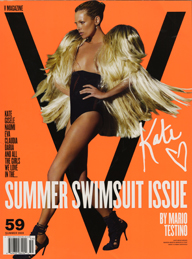
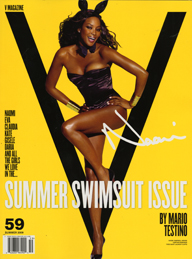
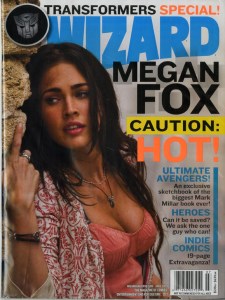
May 27, 2009This is one of those blogs where a picture is worth at least 900 words. Three magazines and 12 covers makes the perfect dozen to adore your coffee table and start quite a conversation. V magazine’s special swimsuit issue by Mario Tastino shed some new light and color on an old topic; Uptown magazine provides its readers with three different covers starring no other than Mr. Foxx himself; and Wizard magazine goes for their regular 3-way split with yet another collector’s edition cover featuring President Obama and the First Lady. The other two deal with other super-heroes and a Fox. So take a peek, walk to the newsstands, pick up a copy or 12, display them on your coffee table and let the conversation start.




Newsweek of 2009 is no different than Newsweek of 1933?
May 21, 2009
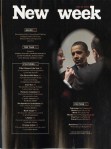
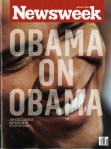 What if I tell you that the reinvention of Newsweek dates back to 1933. After I read all the media reports regarding the “reinvented and rethought NEWSWEEK” I decided to go into my archives and dig up the first issue of Newsweek dated Feb. 17, 1933. You can always learn about the future from looking (and hopefully) learning from the past.
The 1933 magazine’s logo separated the News from the Week with a hyphen. The 2009 Newsweek’s table of contents eliminated the S from Newsweek leaving it as a New Week. The 1933 magazine was divided into five sections: The Front Page, The News-Week at Home, The News-Week Abroad, Headliners, and The News-Week in Sports, Business and Entertainment. The 2009 magazine is divided into four sections: Scope, The Take, Features and Culture. The examples of the frontispieces (or the splash pages as we call them now) of the 1933 and the 2009 are anything but the same treatment with the added factor of the 76 years of advances in print and color technologies.
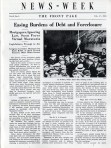
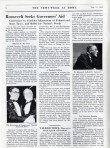
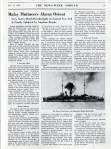
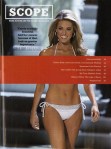
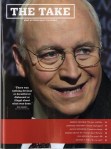

Scope (for short-form pieces) in the new magazine is what The News-Week at Home and Abroad used to be in the original Newsweek. The Take in the new magazine is what The Front Page was in the original Newsweek; analysis of the news of the week. The only difference is in The Take you have the columnist names; in the original it was all Newsweek’s. Culture in the new Newsweek is what The News-Week in Sports, Books, Media, etc. were in the original Newsweek.
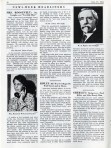
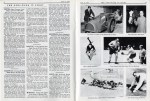

So how is the new Newsweek different from the old Newsweek? Better paper, better design, better pictures, higher cover and subscription prices (see PS below) and in the words of its editor Jon Meacham “As we see it, Newsweek’s role is to bring you as intellectually satisfying and as visually rich an experience as the great monthlies of old did, whether it was Harold Hayes’s Esquire or Willie Morris’s Harper’s, but on a weekly basis.”
However, if we believe that readers’ time and attention are our biggest competitors, one must ask, is Newsweek as “a monthly on a weekly basis,” going to fare better than the weekly, turned monthly, U.S. News & World Report? If time (no pun intended) is of no concern to either magazine, I can’t but wonder, what about TIME (pun intended)? I guess the survival of the fittest rules in the magazine world, the same as it does in all other industries. At least no one is comparing TIME to The Economist or Martha Stewart Living for that matter.
PS: All the changes to Newsweek do not come without a change in the price of the magazine. The cover price is now $5.95 (almost $320.00 for a year) with an 87% discounted annual subscription of $40.00. Just for the curious folks out there, the cover price in 1933 was 10 cents (almost $5.20 for a year) with a 22% discounted annual subscription of $4.00. The newsstand price grew by almost 6,000% while the subscription grew by only 1,000%. Go figure.
Yes, Bob. There is innovation in print: A micro magazine called Abe’s Penny
May 20, 2009

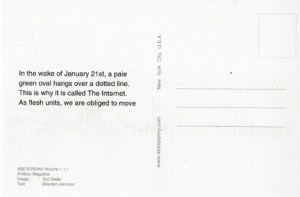
Innovation in print is well, alive and kicking. Abe’s Penny: A micro magazine created by Anna and Tess Knoebel, is the latest of such innovation. Each volume of Abe’s Penny “contains four postcards that subscribers receive one by one, once per week, for one month. Each postcard features an image and a few lines of text. The full set of four postcards is a full story.”
This new magazine caught my attention and provided a nice answer to my friend Bob Sacks who spoke earlier in the week in Colorado and defined the word magazine as anything but ink on paper. So, Bob, read my interview with Anna Knoebel and, please, come down from you high horse and discover the beauties (and money making) advantages of ink on paper. (By the way Bob, can you name ten magazines with no ink on paper editions that are making any considerable amount of money? I can name hundreds if not thousands of ink on paper magazines that are making a lot of money, even in this depressed economy).
Well, enough of Bob and plenty of Anna and her Abe’s Penny. I asked Anna:
SH: What was the idea behind Abe’s Penny?
AK: Why does anyone start a magazine? The idea definitely didn’t start with, “Let’s figure out a way to sell advertising.” We were looking for a way to communicate. Abe’s Penny starts a conversation. First, between the artist and the writer, then between the result of their work and the person who reads it.
SH: In this age of digital and digital social networks, what do you
expect to achieve with Abe’s Penny and how do you propose to do that?
AK: Our current aim is simple: to pursue the dialogue. Of course, any print publication competes with online, but we’ve received such positive feedback. People still want tangible things. Another really positive result of starting Abe’s Penny has been discovering communities of people working to preserve letter writing / mail art: Postcrossing, The Letter Writers Alliance, PodPost, etc.
SH: Is there future for print or you are just “yet another crazy print lover”?
AK: We don’t consider ourselves fanatical about print. It’s more about recognizing a common desire to share experiences, and then providing space — in our case a postcard — where those experiences can be shared. It’s nothing new. It doesn’t matter whether you find it online, in something you hold, in people you meet, but it matters that you find it. Is there a future for print? Books have been around since something like 2400 BC. Seems like print will last.
Form follows function at Good Housekeeping: A Q and A with Publisher Pat Haegele
May 19, 2009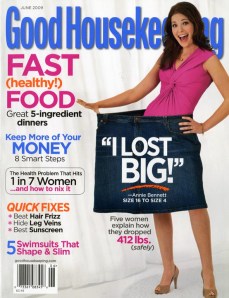
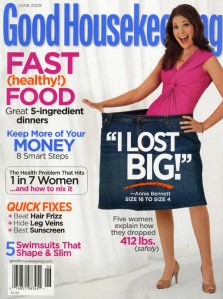

First it was the content, now it is the format… talk about common sense! Few in our industry actually still utilize common sense as a strategy to achieve what is needed in today’s magazine world, and Good Housekeeping is one of those few. The first step came in April 2007 when the content of the magazine was revamped and now the magazine plans to revamp the format (physical size) of the magazine: form following function. Although the official changes will not take place until next year, the magazine continues to test the new size and cover price in limited areas of the United States. The examples above show the June issue of GH in both sizes and cover prices.
 I asked Pat Haegele, the first woman publisher in the history of the 124 year-old Good Housekeeping, few questions regarding the changes at the magazine.
Q. In a market where everyone else is trimming the size of their publications, you are increasing the size, why and why now?
A. We see this as a huge opportunity to make a long-term investment in our brand. Good Housekeeping’s mission has always been to provide the best service in the form of advice and tips for saving time and hassle, and our 25 million readers clearly trust our content and our voice. We’re always looking for new ways to add value, and by increasing our size, we are able to provide readers with a more pleasurable aesthetic – what our editor in chief Rosemary Ellis calls “a visual vacation” – and make Good Housekeeping that much more satisfying. Our newsstand tests proved that readers clearly saw the increased value and were willing to pay for it.
Q. I have noticed that you are reducing the circulation and raising the cover price. Are you going to increase the sub prices as well?
A. We’ve found that once people are introduced to the magazine, they become loyal, long-term subscribers. Right now, we are looking closely at our sub file, and eliminating those sources that renew at very low rates. The next step will be increasing the longer-term subscription prices.
Q. With such a mass audience GH reaches, what are some of the innovative ways you are doing to keep that audience, increase the audience and maximize the brand?
A. We engage our current readers and attract new ones by spotlighting the incredible work we do at the Good Housekeeping Research Institute, which is at the heart of the unique value proposition our readers connect with so deeply. For 100 years, the Good Housekeeping Seal has been a hallmark of the magazine’s promise of quality. Every product that has earned the Seal has been evaluated by the Good Housekeeping Research Institute, our state-of-the-art laboratory, staffed with engineers, scientists, chemists and nutritionists who are dedicated to protecting consumers by testing products for safety and efficacy. Products with the Seal carry a limited warranty: if the product proves to be defective within two years of purchase, Good Housekeeping will replace the item or refund the consumer. The same holds true for every product advertised in the magazine: if it does not clear the Institute, the ad does not run. And if a product currently advertising doesn’t perform as it claims, Good Housekeeping will replace it or refund the consumer within two years of purchase. There is no other magazine that offers this kind of assurance.
This year, to celebrate the Seal’s 100th birthday, we opened the Research Institute for public tours so consumers can see first-hand all of the careful work we do. We started by offering one monthly tour, but the response was so great that we quickly doubled that, giving two tours a month.
Another initiative is the Green Good Housekeeping Seal, an environmental extension to the existing Seal. At a time when there is no universal definition of “green,” the Green Good Housekeeping Seal will evaluate products based on their measurable environmental impact and offer consumers guidance about buying truly green products. It is now in beta testing and we plan to roll out the first Green Good Housekeeping Seal holders later this year. With so many products claiming to be green, consumers are confused by, and even mistrustful of, many product promises, and we feel a responsibility to help them make the wisest and healthiest choices. Of course, a product that earns the Green Good Housekeeping Seal must have to first pass the Institute’s evaluations and earn the original Seal.
Q. What is the future of print and where do you see GH five years from now?
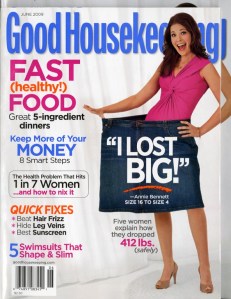
A. Magazines provide a sensory experience that no other medium can, which accounts for the passion readers have for their favorite titles: it’s why we’re investing in that sensory experience to grow our brand following. Now more than ever, magazines are truly brands, and it is essential to take a 360° approach. For Good Housekeeping, this means a vibrant Web site, filled with information and how-to on everything: health, beauty, recipes, parenting and more, our one-hour television specials that are attracting more viewers than ever before and partnerships that resonate with our readers. Good Housekeeping will always be the trusted and reliable resource for consumers and the leader in consumer advocacy, with the Good Housekeeping Research Institute, the Seal and now the Green Good Housekeeping Seal. (Picture to the right of the current size of GH on top of the new size).
In an interview with Industry Intelligence: Husni on all things print, web, the future and innovation
May 17, 2009“If we really want to amplify the future of print, we should not leave any stone unturned.” That was my concluding statement in a lengthy interview with Industry Intelligence Inc., for its Executive Perspective newsletter, I answered a host of questions regarding the future of print, the web, the Magazine Innovation Center and the magazine industry as whole. Industry Intelligence Inc. mission, in the words of its CEO Rami Ghandour, is “To do anything in life successfully, you need the right information at your fingertips. Our cross-enterprise system ensures that all types of information users, in every position in a business, have information they need, when they need it, and how they need it.”
What follows are excerpts of the Q and A with me in the May 2009 issue of Industry Intelligence Executive Perspective:
Industry Intelligence: With some newspapers either shifting online or completely closing, do you see a similar fate befalling the magazine industry?
Samir Husni: I gave a speech maybe three years ago, and the very first slide I showed was: Newspapers in America aren’t dying; they’re committing suicide. And magazines are starting to do the same thing. It’s what I call the shovel policy— everything I have, I give it to you for free on the Web site and charge you for print. I have to be stupid to continue buying your print product, so we have nobody to blame but ourselves when we offer this great content that we create for free. I think we’ve made two major mistakes. We did not think digital, we were thinking print on the Web, so our industry did not look at the Web and say, “What are the strengths of pixels on a screen that I cannot have in print?” All we tried to do was imitate this on the screen. Then we decided it costs nothing to start a Web site compared to print. If somebody comes to me and says. “I want to start a new magazine,” one of the first things I ask for is, “Show me the business plan, your entry and exit strategy, the plan for the content, the budget.” When someone wants to start a Web site, they sit down on their computer and create a Web site. But we didn’t have a business strategy that says: I’m in the business to make money, and if
I’m going to create great content, somebody has to pay the price.
IndustryIntel: What would you say about the magazines that have closed or shifted completely online?
SH: Whether it’s Teen People, CosmoGirl, Elle Girl, all these magazines that they killed in the last few years, they said we’re going to be on the Web now. Where are they? The Web has been the best excuse for someone to kill a magazine that had no audience or was just given away. When they folded Blender—what did they say? We’re going to be on the Internet only. Give it six months … if you are a print product, you are not going to survive on the Web. It should be a crime when you have a magazine like Hallmark that had doubled its circulation in one year, from 400,000 to 800,000, and had increased its ad pages 35% from last year to this year for the company to say, “We looked at the future, and the future does not look good, so we’re not going to continue publishing.” For you not to be able to continue publishing a magazine with 800,000 subscribers—there’s something wrong with that picture, and it’s not the ink on paper, it’s the publishing model.
IndustryIntel: Do you think it was premature for some of these magazines to close?
SH: It’s not only premature, it’s also the publishing model [that says], I’m going to make all my money from advertising, put all my eggs in one basket and then saying, the advertising is going to dry up and I’m not making any money from circulation. This model worked so well for us since World War II until September 2008 when the economy busted.
The majority of our revenue had come from advertising—80%, 90%—so we ended up being in the business of counting customers and taking that number and giving it to the advertisers. So what I’m saying is we have to stop and start finding customers who should be willing and able to pay the high price of the product. Look at The Economist—it’s a news weekly like Time, like Newsweek. Their circulation is up, their advertising is up, and people pay $129 to subscribe to the magazine.
IndustryIntel: Aren’t publishers worried that people won’t pay a premium for a print magazine, especially with competing mediums like TV and the Internet?
SH: Look at the book industry. Book sales were up in Europe last year—book sales in the first two months were up in Germany 2.3%, up in France 2.4%. We were down in America 1% mainly because in ‘07, we had this giant book called Harry Potter that sold millions. So you give me something relevant, I will pick it up. If you tell me, here is this book that you can pay $29.95 or you can go download this on your computer for free … it’s just pure common sense. The Internet companies make you feel that you’re getting all this free stuff, but you’re actually paying a price of connectivity. The average household pays $30 (a month) just to be connected to the Internet on a daily basis. But you don’t think about the monthly fee. You don’t think I’ll multiply that $30 times 12—do you know how many magazines and newspapers you can get for $30 a month? And then the publishing industry came and told those utility companies, “You want to fill in that space, let me give you stuff for free and you collect the money.” It’s like printing the newspapers and giving it to the truck drivers and telling the drivers to go ahead and keep the money.
IndustryIntel: Can the U.S. market sustain 7,000 consumer magazines?
SH: Those 7,000 are in a constant state of change. Last year, we had 715 new titles come into the marketplace in 2008. Probably half of them will die before 2009 is over, but another 700 or 800 will come this year. It’s a cycle. It keeps on coming and going, and that’s nothing new. It’s been like this since 1741 before radio, before television, before the Internet.
IndustryIntel: But there is evidence that we’re entering unprecedented times in terms of closing print newspapers and other publications.
SH: I gave an example yesterday to a group of journalism students in Jackson, Missssippi. I said, “Imagine The New York Times or USA Today or any major metropolitan papers as a nice mansion and then somebody in that neighborhood decided to build a swimming pool, and of course, the word spread. Everybody wants to build a swimming pool, so everybody starts digging. Everybody hires the best contractors to build the most amazing swimming pool. They put in the diving board, and they heard someone say jump and they jumped. Oops, we forgot to fill the swimming pool with water.” That’s exactly what we did with the Internet. We went in with no business plan. We went in with no thinking. We went in because everyone else was going in and we gave away all of our content. And now we are complaining why nobody is buying our newspapers, why circulation is down.
IndustryIntel: Still, isn’t it a terrible time to start a magazine right now?
SH: It’s the best time. When the economy is bad, when everybody is shrinking, when the big media companies are at a standstill, that’s the best time to start a new magazine because it’s going to take one to two years for that magazine to evolve and establish itself. Then you hope in two years, the economy will pick up and you’re ready for that marketplace. Historically speaking, some of the best magazines in this country were started in the worst of times. Fortune started in the midst of the Depression in 1930; Reader’s Digest and Time Magazine in the ‘20s; Esquire and BusinessWeek in the ‘30s during the war.
IndustryIntel: Why did you create the magazine think tank?
SH: One, I can’t believe an industry as big as we are in this country has lost our minds and decided to commit mass suicide. The minute I heard about Hallmark … I used them as an example for the launch of a new magazine. I was speaking at the same press conference with the minister of media in Belgium, and I gave Hallmark as an example of a success story. Two weeks ago, they sent me an e-mail saying they doubled their circulation and their ad pages, and then I come back from Belgium and I get this e-mail that they’re killing the magazine. I said, there’s something crazy about this industry.
IndustryIntel: Was the closure of Hallmark Magazine the first spark for this idea?
SH: I had the idea a long time ago, but that was like, “This is it, I have to do it.” I don’t want to be chair of the [journalism] department anymore. I just want to teach and I want to do this. I made my announcement and my note to my boss and said I’m stepping down in June and I’m going to raise some money for the center. I hope I can raise $1 million. We’ll have a board of advisers, a board of directors. I have three CEOs from printing companies who are very interested in taking part. I’m not going to say no to anybody who’s willing to come here, sit down, and think for a day or two on how we can innovate our business. We’ll have very specific topics, whether it’s distribution, single copy sales, printing, innovations in printing … we’ll have people from the tech industry, and we need to get their ideas. If we really want to amplify the future of print, we should not leave any stone unturned.


 Mr. Magazine