In an exclusive report on Foliomag.com, the Hearst Communications’ new launch Food Network magazine was named The Most Notable Launch of the Year. The magazine, launched in Nov. 08 was selected from a field of 752 magazines published between Oct. 08 and Sept. 09. Read the entire story by Folio’s Matt Kinsman here.
Some excerpts from Foliomag.com are below:
While 2009 may be remembered more for the number (and quality) of magazines that closed, it was also an active year for launches, with 752 new titles debuting between October 2008 and September 2009, according to Samir “Mr. Magazine” Husni, director of the Magazine Innovation Center at the University of Mississippi.
Of those 752 new magazines, Husni has identified the 15 most notable launches of the past year. His criteria include five key questions:
■ How much publicity did the magazine generate?
■ How relevant was the magazine to the intended market?
■ Was the magazine notably diversified and specialized?
■ How innovative were the magazines?
■ Was the magazine so bizarre it had to be included?
“Since the industry seemingly came to a crashing halt in September 2008, we are starting to see more and more evidence that the American publishing model of the past is dead and that our industry has to innovate to survive,” says Husni. “Many of these notable launches are witnesses to that.”
For a complete look at Husni’s 15 Most Notable Launches of the Year, and his interview with Food Network magazine publisher Vicki Wellington, look for FOLIO:’s December issue.
“It will continue to be essential.” Those were the six-word-answer that Roberto Civita, CEO and Editor in Chief of the Abril group in Sao Paulo gave me when I asked him about the future of journalism. An avid speaker and an engaging journalist first and most, Mr. Civita was the lunchon speaker at the Third Brazilian National Association of Magazine Editors Forum (ANER) in Sao Paulo last week. The theme of the Forum was “A digital future that preserves the print.” In one of those rare positions in today’s marketplace, Mr. Civita holds the highest rank, on both editorial and business sides, of one of Latin America’s largest publishing, printing and electronic media companies. The last person, in modern times, to play such a dual role in a major media company (as far as I can remember) is Henry Luce, the founder of Time Inc. in the early 1920s in the United States of America.
Mr. Civita spoke about Quality Journalism in the Multimedia Age. “Quality journalism comes before everything else,” he told the audience at the Forum. “This means journalism must continue to provide engaging content that respect the facts and is committed to the truth.” His call to action included a broad definition of what a journalist should do, now, tomorrow and in the future. “Journalist must verify all the information, be creative, respect the readers and always be ethical, no exceptions regardless of what type of journalism they are engaging in: news, fashion, sports, etc.” he added.
“Our future,” Mr. Civita said, “depends on competent and able journalist who can produce the content readers want and need. We should not stop at the want, but also include the need.” He emphasized the need to establish a long lasting relationship with our readers, one that is based on the publication, the magazine, the brand. “Yes, I resisted using the word brand for years,” he said, “But now I am willing to use it. However, I will never refer to our magazines and publications as products. Products are for things like soap and other stuff that you just use and finish with. We are much more than products, with all due respect to soap and all other products. We are about relationships.”
As for the changing media landscape, Mr. Civita said, “Managing a company today, in a world that has changed, needs organizational competence. Just like the printing press changed the entire world in the 1400s, so is the digital revolution is doing now. “Mind you, however, this revolution is still in its infancy. You need to improve your competence and add a digital component to what you do,” he added. “People now have access to more things, more information and in the end they will converge in the same place.” But no matter what, there are two things that will never change when in comes to our future Mr. Civita said. “There will always be only 24 hours in a day and there will always be the need to look for reliable and credible information.”
Mr. Civita’s final words charged the journalists with six essentials to ensure a future full with quality journalism:
1. Understand the technological changes and trends that are taking place
2. Focus on your audience. Get to know them. It is the journalist who should know the audience, not the marketing person.
3. Produce and deliver content that works in this new environment… as they (the audience) want it.
4. Integrate interactivity and social media… one way is over.
5. Explore and extend your brand… at the end it is going to be an issue of who can they trust.
6. Bring together VERIFIED digital and print content. It is the key to do everything. There should be no talk about journalism without multimedia skills.
“Our job here is not just to make money,” the CEO of Abril said, “Our job is to make a difference, to change the world, to produce magazines with souls. That will make all the difference in the future of quality journalism.”
The next day, I had an opportunity to visit with Mr. Civito at his headquarters in Sao Paulo where I asked him during lunch with him and some of his key Abril folks about the future of journalism. Listen to the short, but most effective six-word-answer from the man himself, Mr. Roberto Civita, the Henry Luce of Brazil.
From Brazil with love, yours truly standing on the balcony of the executive dinning room at the media company Abril. On Wed. Nov. 11, I gave a speech at the Third ANER Forum in Sao Paulo entitled, “Don’t Promote The Suicide of Your Print Magazine” and on Thursday Nov. 12, I spoke at the second annual Web Conference at Abril on the “Using Technology to Amplify the Future of Print.”
Esquire’s December issue screams Augmented Reality Issue, The First Ever. Well, first things first, COLORS magazine had its Augmented Reality issue on the newsstands at least two weeks before Esquire, so what gives with this First Ever business.
However, I am first to give credit where credit is due, and Esquire magazine in the last 12 months has not been afraid of experimenting with innovative ideas and mixing technology and ink on paper, so kudos goes to the folks at Esquire for not being asleep behind the wheel. That aside, both magazines are promising the readers “A living, breathing, moving, talking magazine? For instructions on how to use this thing Downey’s sitting on, see pg. 21 and visit www.esquire.com/ar” as in the case of Esquire, and “This magazine is incomplete… aim this square towards a webcam at www.colorsmagazine.com to find the full content.”
Well, I did. I followed both instructions and recorded my experiment with both magazines using my laptop and my flip camera to record the “the first ever” in what I am sure will be many other first evers. The result was fun, captivating and useless, all three in one… like eating cotton candy…eating all that hot air that will satisfy your taste buds but will leave you hungry rather than satisfied.
Later today, I am speaking at the Brazilian Association of Magazine Editors (ANER) in Sao Paulo and my topic is “Don’t promote the suicide of your print magazine.” Experimenting with Augmented Reality before giving my speech, gave me more ammunition to push even more towards creating a necessary, sufficient and relevant medium… one medium at a time. (More about the ANER conference in an another blog later).
Enjoy the two experiments and let me know what you think? One final word of caution: Focus on the experiment and not my ability to handle a Flip Video camera, a lap top, and two ink on paper magazines all at the same time. By the way, don’t you think it would have been easier on the readers and more helpful to just post those videos on the website and ask readers to go watch them… at least then, there will be nothing between your face and your lap top screen… Go figure.
Enough commentary from me…watch the two two-minute videos and judge for yourself.
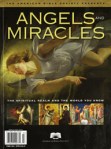
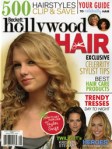
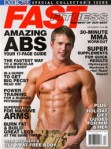
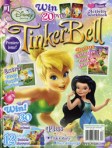
Here are the facts: almost 100 new magazines were launched in the month of October. Those magazines covered every single topic you can imagine. From Best Loved Casseroles to Yoga for beginners; from Angels and Miracles to Hollywood Hair; from Fast Fitness to Men Fetish; and Woodworking for Your Home to Greatest Aviation Photos. Who would have thought that new magazines would be flooding the market place during one of the worst economic times of all time. Magazine closures are announced almost daily and media critics have written magazine obituaries time and time again.
So, what gives? That is what makes my business of collecting and tracking magazine launches interesting. It is like swimming against the current, something I have learned from my professors of journalism who taught me what real journalism is all about: swimming against the current and never accepting the status quo as the be all end all status. And, I am not alone. Folks who are willing to launch a New Awareness magazine “all over the world” six times a year, or those who are re-introducing Tinker Bell as a bimonthly magazine, or even those who publish a Resistance, the journal of the Earth Liberation Movement or JM magazine (Just Models) are all swimming against the current.
However, as I look and count my October collection of new magazines, the figures amazes me: a whopping 99 titles that I was able to find on the nation’s newsstands for the first time. But wait, as they say in the info-mercials, there is more to the story. I have noticed a huge increase in the number of specials and one shots flooding the market place. In fact, of the 99 new titles, 87 were specials with an average cover price of $8.66. I spend almost a $753.62 on those new titles.
When you hear the stories about how crowded the newsstands are and how the sales of the audited ABC titles are slipping, do you ever stop and ask yourself what impact those specials are creating for the marketplace. Mind you that most of these specials are not coming from small publishers or individual entrepreneurs who are trying to find a foot hold in the marketplace. These are coming from big publishers such as Time Inc., Reader’s Digest Association, Taunton Press, Meredith, etc. You get the picture.
So what is one to say about this phenomenon of specials and one shots? Is it the future of magazine publishing? Is this where the future of print is going to be? Well, I have always said that magazine publishing is all about relationships. In my book there are three types of relationships: the one night stand, the love affair and the long lasting partnership. To me those specials are like those one night stand affairs. They do not create an addictive relationship that people will come back for more. It is a one time occurrence that ends with the end of the experience itself.
If we are going to ensure a bright and healthy future for our industry, maybe that is one place we need to take a look at. We need to stop the one night stands and start creating magazines that will introduce our readers and customers to love affairs and long lasting relationships. One night stands will not do it.
Once again, I am back on my soap box preaching the importance of creating print that is worth keeping, repeating and engaging. We should be in the business of long lasting relationships if we are going to survive the future. The band-aids we are using today will not stop the bleeding, and if we can’t survive our present, do you really think the future will matter?
Roy Reiman, founder of Reiman Publications (Country and Taste of Home among many others) and current publisher of Our Iowa magazine, was the keynote speaker for the 26th annual Fall Journalism Week at the University of Mississippi’s School of Journalism and New Media. He spoke about the Gloom, Doom and Zoom in the media industry. I asked Roy after his presentation what will he tell someone who asks him what does it take to launch a new magazine in today’s marketplace. Click on the video below to hear his answer.
“Romancing Journalism” would have been a great title for the speech that Bob Guccione, Jr., founder of Spin and Gear magazines gave during Journalism Week at The University of Mississippi’s School of Journalism yesterday. Guccione spoke to the students about his “labor of love and seeking truth” during his career as the publisher of Spin, Gear and Discover magazines. I had the chance to catch up with Bob after his speech and asked him about the essence of journalism. What is the utmost importance to journalists today and what role should technology play in this whole new ball of wax we call new media. Click on the video below to hear Bob’s answer:
What does it take to run a remarkable business and not just a good business? Roger Fransecky, founder and CEO of the consulting group APOGEE, has the answer to this question using his famous three Ps: Prose, Poetry and Plumbing. View his answer below.
Roger spoke today at the opening of the Fall Journalism Week at the School of Journalism and New Media at the University of Mississippi.
There are over 7,000 magazines distributed on the nation’s newsstands every month and few of the aforementioned magazines ever makes it to the heartland of American homes and customers. In fact more than 3,000 independent magazines never engage in any type of direct mail solicitations, so they remain unnoticed by many.
Well, not after this coming January. My friend Andrew Losowsky, author, writer, editor and co-curator of the independent magazine forum Colophon, has embarked on a new venture: Stack America. He writes about this new subscription service, “Think of it as a private magazine club that brings a fresh perspective on the world every two months. It’s the perfect gift for anyone who works in editorial, graphic design or advertising – or even a doctor or dentist looking for something fresh to put in their waiting room. If you live in the USA and you’re at all interested in modern storytelling, Stack America is for you.” (Just a side note, did I mention that those magazines arriving at your home are Ink on Paper magazines and not digital entities!)
The goal of Stack America is “to help connect amazing magazines with curious readers, showcasing the best in imaginative, independent publishing.” The idea of Stack America comes from Stack Magazines, a subscription service that was founded in London in 2008 by journalist Steve Watson, to bring the best independent publishing to a wider audience. The majority of its magazines are European-based. Stack America is its New England-based offshoot, sending out mainly American independent magazines.
The subscription price to Stack America choice of magazines is $71.99, quite a hefty price compared to the majority of the traditional American magazines. So I asked Andrew:
Why do you think people will pay such a high price for magazines they do not know about? While the average sub. price is still under $25, why do you think readers are willing to pay that high price?
AL: Part of Stack America’s mission is to help people rethink what they understand as being a magazine. In reality, we’re talking about two different kinds of magazine.
Those who have subs under $25 are the big name glossy magazines, where much of the editorial is sourced from press releases and PR. Though there are occasional exceptions, these are publications created for advertisers ahead of readers, and by editorial teams who are scared to innovate much, in case they lose their market position and put off a potential advertiser.
Stack America, however, deals with a very different kind of magazine: publications created by imaginative, groundbreaking people outside of the mainstream, telling stories through words, design and images as they want them told. Not all of these are successful experiments – but when they get it right, they point to a future for print, showing the mainstream how and where to go next. Their biggest problem is distribution – which is where Stack America comes in. We’re handpicking only the best magazines to showcase to an audience that we think will love them too. No magazine can pay to be part of Stack America – the credibility and selection is our guarantee, and we think that people will agree it’s worth the price (which still works out cheaper than buying the magazines individually).
It isn’t for everyone – and we don’t expect the majority of glossy magazine buyers to sign up. However, those people who love great design, storytelling, creativity and imaginative publishing are in for a treat.
SH: What are the obstacles that you envision to see in the near future?
Stack America is only as strong as the magazines who are a part of it, but for the next few years at least, I’m not worried about that. There are plenty of fantastic magazines out there that we’re either talking to already or will be soon, about being a part of Stack America. It’s amazing the work that’s being produced out there, and a tragedy that it isn’t reaching its natural audience. I’m hopeful that we can help make at least a small difference in giving them a boost.
Thanks Andrew. It you have started such a service years ago, you would have saved me hundreds of dollars in airline tickets traveling the country searching for those magazines, because I knew that I can’t find them in small-town USA. Indeed, a fantasy service for magazine lovers all over the United States, a fantasy that can now easily be fulfilled. Sign me up!
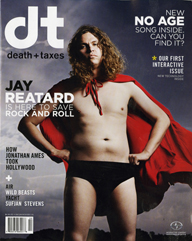
In a letter to a friend, Benjamin Franklin wrote, “In this world nothing can be said to be certain, except death and taxes.” The aforementioned death and taxes have been the idea behind “the smartest, coolest music magazine in the world: Death + Taxes.” In fact, I selected Death + Taxes as one of the “most notable launches of the year” four years ago, and I am glad to hear one of its editors Stephen Blackwell saying, “I am happy to say we’re thriving.”
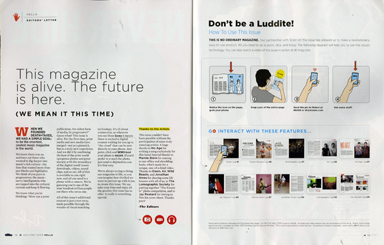
After 21 issues of print only publication, the editors of Death+Taxes magazine, through what they labeled as their first interactive issue of the magazine, have added technology to the two unavoidable things in life: Death + Taxes. “For the first time, print media and new media have merged — not as a gimmick, but as a truly new experience,” write Death + Texas editors in their Nov./Dec. issue of the magazine. They explain that this new experience has been created by “combining the best of the print world (gorgeous photos and great stories) with the immediacy of the digital world (music downloads, videos, sound clips, and so on).” All what you need is a copy of the printed magazine and a phone with a camera, and, voila, you have an experience that amplifies the future of print rather than nullifies that future.
Mr. Blackwell, Death+Taxes magazine editor told me that “this is not a traditional piece of print media. It is the first magazine that utilizes mobile technology and cloud computing to deepen the editorial experience for readers.”
I asked Stephen Blackwell few questions regarding this latest innovation in amplifying the future of print:
Samir Husni: You present this issue of the magazine as its first interactive issue, why and how did you decide to do that and do you think the future of print will include interactive media to complete the experience?
Stephen Blackwell: The technology we used to produce the interactive issue, which is called Mobot, has been around for a couple of years. It’s been used in out-of-home marketing campaigns as well as advertising campaigns in a few magazines. Basically, people would take pictures of ads and get coupons in return. We started discussing its possibilities with Scion and we figured, instead of making advertising interactive, why don’t we make our editorial interactive? We ran an editorial on a great guitarist named Marnie Stern. If you take a picture of the page with your cell phone, you’ll get a video in return where you can watch her perform and experience what we’re writing about. We’re providing another editorial dimension via the print magazine. The technology is a little limited — it compresses the content and can only deliver about 30 seconds of material — but our imaginations still ran wild with it. Our partner Scion loved the idea and really made the experience a reality.
SH: How much of a lesser experience do you think DT will offer if there was no interactive link with the mobile technology?
SB: Death+Taxes came together after the social network and blog bubbles happened, so it’s in our DNA to be as innovative as possible. To us, creating an interactive issue was an irresistible idea, mainly because it was a way to get a group of artists to collaborate with each other in way they never have before through our magazine. That said, print is still the most aesthetically and mentally rewarding form of media when it comes to diving into long-form editorial content. As an experience, the depth offered by a well-written and well-designed magazine article isn’t rivaled anywhere on the web or in a quick video clip. Print is not an incomplete experience, so I don’t think delivering a product without interactivity will lessen the quality of our magazine, or any magazine for that matter. But we do embrace the opportunity to explore different dimensions with new tools that technology makes available.
SH: Where do you see innovation in print is heading and how can we use technology to amplify the future of print?
SB: Magazine titles need to use technology to leverage their brands however possible. The days of shipping your product to a newsstand in hopes of obtaining readers through a flashy cover are over. That’s not say magazine covers shouldn’t be flashy and attention-grabbing, but developing a constantly updated website, developing an iPhone application, and developing readership through social networks all fall under the hat of a magazine editor these days. At Death+Taxes, we’ve never thought about print as being in competition against online. They are both avenues for creative people to deliver different types of content, and they can have a symbiotic relationship that drives readers to and from the other. I think we’re just starting to see the start of that.
So what are you still waiting for? Head to a nearby newsstand and pick up a copy of the Nov./Dec. 2009 issue of Death+Taxes and let technology rock your print world.
I am not in the habit of posting blogs based on press releases or such, however, I received an e mail from Howard Polskin, Senior Vice President, Communications & Events at the Magazine Publishers of America with a link to a short, two-minute video about the vitality of magazines. Howard says, the MPA calls it “The Twenty Tweetable Truths About Magazines.” The MPA wanted each “truth” to be short and simple to understand, which is why they’re 140 characters or less.
The video shows how vital, alive and kicking the magazine industry is today, and, for a change, is a step in the right direction of promoting what we do best: create great magazines with no apologies needed. Check if for yourself here.


 “It will continue to be essential.” Those were the six-word-answer that Roberto Civita, CEO and Editor in Chief of the
  From Brazil with love, yours truly standing on the balcony of the executive dinning room at the media company Abril. On Wed. Nov. 11, I gave a speech at the Third ANER Forum in Sao Paulo entitled, “Don’t Promote The Suicide of Your Print Magazine” and on Thursday Nov. 12, I spoke at the second annual Web Conference at Abril on the “Using Technology to Amplify the Future of Print.”











 I asked Stephen Blackwell few questions regarding this latest innovation in amplifying the future of print:


 Mr. Magazine