
Archive for the ‘New Launches’ Category

h1

It’s the Economy, Stupid!

October 31, 2008

Ann Moore, CEO of Time Inc. is reported in Folio saying that

Time Inc.’s decision to reorganize had “nothing to do with digital and one hundred percent to do with the recession.” The reasons for Time Inc.’s reorganization, Moore said, included centralization for faster decision making; collaboration and sharing across titles; simplification to eliminate all work that doesn’t add value to Time Inc.’s editorial department or client services (“you can always add them back,” she said of cut positions); alignment of goals to reduce costs and grow revenues; and innovation, citing the company’s launch of Maghound and LIFE.com.

The prophets of doom and gloom continue to rally their forces to predict the death of print using examples of magazines either shutting down or scaling down their publishing frequency. What those prophets fail to see is that we are witnessing the worst economic crisis in our history. Banks are closing, credit lines are frozen, and investment banks are disappearing… and guess what, the web and the internet are not the reason for that… it is the economy. Why is it so hard for our prophets of doom and gloom to accept the fact that this down cycle in the magazine industry has little, if not nothing, to do with the web or the internet, but rather with the economy and the publishing model that our magazine publisher follow in this country since WWII. The advertising funded model has worked fine for years and years. It is time to change and to start to look at circulation driven models where readers and customers pay the price of the magazine without ad subsidies. The publishing model is broken, and most of the bailout plans that I have seen so far, fail short of a drastic change in the way we do business. If now is not a good time for change, I have no earthly idea when will be a good time.
On another front, it never ceases to amaze me that when I report bad news when it comes to new magazine launches, the prophets of doom and gloom directly post my blog on theirs and spread the news. When I reported last month about what a great September it was for new magazines, only one newsletter reported the story. In few days I am going to report on Oct. launches, and guess what, the numbers are up again and they will surprise you in the midst of those dreadful economic times. Don’t count on the prophets of doom and gloom to report those number either. There are still a lot of good news to read and enjoy in our magazine world. Take a look at the 3rd quarter of the new magazine launches. Relax and take a deep breath. The light at the end of the tunnel is NOT the train coming.

h1

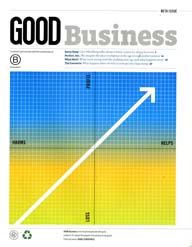
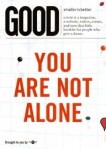
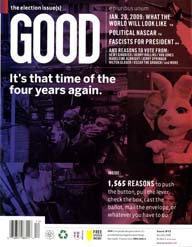
A Whole Lot of GOOD…The Mr. Magazine™ Interview with Max Schorr, Community Director of GOOD Magazine

October 27, 2008


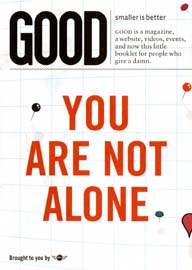
GOOD is for people who give a damn. Its an entertaining magazine about things that matter.” That is the tag line that appears on every issue of GOOD magazine since its inception two years ago. Well, I have decided to talk with a person “who gives a damn and knows things that matter about GOOD.” Max Schorr, the 28-year-old C0-Founder, Publisher and now Community Director of GOOD, has seen GOOD grow from a printed magazine to a whole lot more… It is a printed magazine, a website, a weekly GOOD Sheets distributed free at Starbucks Coffee shops, a Mini GOOD magazine distributed via The New York Times, a beta new magazine GOOD Business among other things. The aforementioned communities have one thing in common: showing that people can and should give a damn. Whether it is education, politics, money, food, immigration, health GOOD has been on the forefront of the issues. Great content that is complemented by excellent design, GOOD is on a mission to change the world and Max Schorr with his co-founders and buddies of GOOD Ben Goldhirsh and Casey Caplowe is ready to do that.


I asked Max what is GOOD?

Good is a BIG idea that we became so inspired that we felt like we needed to create a platform for it and the first platform was in print. We now see Good as a collaboration of the people, businesses and non-profits pushing the world forward. We really think there is an exciting cultural moment, kind of what Wired was for technology. We see ourselves filling that role for social engagement. Whether it is an individual or a business looking to align their self-interest with a broader interest, it is just such an exciting moment. A lot is changing, but we think that this idea is really coming to the forefront, so we want to be both entertaining and relevant. We want to be both pragmatic and idealistic. We want to be local, but also global, and we want to be fun and serious and always keep a sense of humor, even when we deal with serious topics. That is a brief overview of Good.

What is the mission of Good? What are you trying to accomplish with Good?

I think the mission of Good is to move the world forward and to do as much good as possible.

Can you briefly tell me a little bit about the genesis of the idea of Good? How did the idea come into being and who was behind the idea?

When I was in college and when the other co-founders were in college, I thought that if you look around, you will see that people give a damn. They are hungry for what they can do that is both meaningful, but also can allow them to achieve success. I think there just weren’t that many opportunities to choose from. Are you going to be an investment banker or join the peace corp.? What we really wanted was a way that you could do both at the same time, and we knew a lot of other people felt this way. So, we wanted to create a platform for this. I think simultaneously that the idea of a do-gooder was something that was seen as a pejorative term. It was soft, it was naive, and it was weak. At the same time, we really wanted to make a difference in the people who we really respected and admired. They were making a difference and were doing good, so we thought there is a real perception gap here, and this needs to be re-branded as a moister, energized, clean, fun and serious thing that is not about altruism and getting people to postpone their self-interest, but a way to really align people’s self-interest with a broader interest. That was in 2004, when Ben Goldhirsh (chairman of Good and son of the late Bernard Goldhirsh founder of Inc. and Sail magazines) who was one of my best friends from high school, started a film company called Reason Pictures with the goal to use film to make the world better. The idea was to make films that were both entertaining and relevant. He called his college roommate and me up and said that he thought it would be a good idea to do a magazine called Good that was all about sensibility. We kind of knew what he was talking about; it was an idea that we had all been kicking around for a while. We were in the back room of this little office in Los Angeles and were allowed to just think big and dream what would this platform be. It has been such a thrill to see it come to life and see the idea resonate with other people; all of the amazing contributors and businesses that we have been able to partner with. It has been just a couple of years into it, but it has been an amazing experience.

What was the biggest stumbling block you faced during that process?

I think the biggest stumbling block that we faced and continue to face is how do you grow print circulation in a cost effective quality way. It is so hard. You see all of the independent titles struggling with this, and I think it is a large reason why there aren’t that many independent titles. Direct mail is obviously the way most magazines do it and have done it, and, with the internet, we thought that there has to be a better way. We looked at how expensive it was and all of our advisers, who were really smart and we really respected, basically said you have to do direct mail. I think it has been a constant challenge to figure out how to grow without really prioritizing direct mail. We came up with the Choose Good campaign, which has been really successful and has built us an incredible community of people and done so in a cost effective way while generating money for non-profits, but the challenge has been scale, so right now we are at a 75,000 rate base, and we are doing quite well on the newsstand. We are selling about 30,000 copies an issue, which is about a 45 % sell-through rate, which is all wonderful, but still we face that ongoing challenge of how do we scale this in a cost effective way.

Can you tell me more about the genesis of the Choose Good campaign?

The genesis of the Choose Good campaign (in which all the proceeds of the magazine subscriptions go to non-profit organizations of the subscriber’s choice) was that we were working with some advisers helping us figure out how to make this magazine work. Circulation was the key and direct mail was their solution and, basically, the only way to go. We outlined an acquisition cost of about $45.00 per subscriber, and, at the same time, we said we are doing six issues a year, so the most we could charge was $20.00. We were stuck. We didn’t even think that direct mail was going to get the young-minded readers that we wanted to reach, because we knew that we don’t respond to direct mail. We were thinking that it is really expensive, and we aren’t even sure if it is going to work in the way that we need it to work, so how could we use that $20.00 in a different way? It just came to us that all of these amazing non-profits inspired us, and it just came up as a crazy idea and everyone liked it, so we went live with it. I think it really helped convey this idea to people.

What do you think was the most pleasurable surprise that faced you through this process?

There are several things that have stunned me. One is when the physical issue was out there and you could see it. I was at a coffee shop the other day, and this really cool looking person was reading a copy of GOOD; It always stuns me to see a normal person reading it. Just seeing the process of it going from an idea to actually being a real thing in the world was a really moving thing for me. Going into these incredible institutions and being treated with respect and having so many wonderful organizations want to partner with us has been an incredible experience. I think that all of that has been encouraging and really exciting.

Are you now more into a community business? Tell me more about the Good community.

I think that is the key. We really think of GOOD as an idea and as a collaboration. The print form has been really amazing. We love it, and we love what we can do whether it is the magazine or print extension in The New York Times, but I think we are really excited about how we can best use this idea to connect businesses and individuals and move the world forward. I am taking on more of a role and thinking in a broader sense how that applies to print, online and in personal experiences.

Do you think that is the future of publishing?

Yeah. I am not one to necessarily predict the future, but I think that integrated media is a good thing. We are learning.
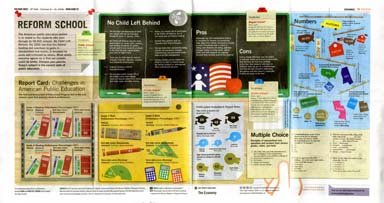

What is behind the idea of presenting information using info-graphics and charts?

That has been a really fun section in the magazine. Casey Caplowe, who is a co-founder and our creative director, has done an amazing job at coming up with this transparency stuff and design. Also, our Design Director Scott Stowell has done such incredible work for us. He is such a pleasure to work with. The two of them took this idea of how we can convey information in a really powerful way, and they go out to different design firms each time. The results have been really fun. I think we live in an information age, but there is still so much noise, and I think it is fun to take a relevant piece of information and present it in a dynamic way. I guess that is the challenge each time.

What makes you tick in the morning?

I think this has been my dream job. It has been such a wonderful opportunity to create something you believe in and work with such incredible people. I think this idea is something we believe in, and it is really, really hard to make this happen so if you stir that up, it gets me fired up in the morning. I think that and the combination that a lot of things are wrong right now and a lot of things aren’t going well — whether it is the economy, the war or the environment — there is a lot of stuff that isn’t going right, and, at the same time, there has never been more opportunity. Also there is so much talent. It is the challenge of the generation to try to do something about it.


Do you think that the magazine business in general is in trouble? Do you think we need a bailout?

I think it is going to be a period of creative destruction, and I think that innovation has to happen. I think print will always be useful for what it is, but the question is how to make that work as a business; and that is going to change. I think there is also the question of how do you reach young people through print. I think that is an ongoing question. I don’t have a bailout plan right now.

What is your view or your vision of the future for magazine publishing? Do you see GOOD in print five years from now or ten years from now?

I see us definitely doing print initiatives for a long, long, long time to come. The question is how. We want to work with our audience, advertisers and work internally to figure out the best ways to do that. I think it is exciting that a lot of the answers are still unknown.

How about the GOOD Sheets. Is it going to continue or is it just the election?

This is an eleven-week program, so after the election we are going to regroup and talk about how this went, and we hope to do more stuff like that in the future.

What advice would you give people younger than you who are in journalism schools now? Should they stay in journalism? What should they know to be prepared to be where you are now?

Can you find a way to do what you love more than anything else? Is this what you love to do? I think if you do that then it is going to work out. If they actually wanted to start a magazine then go to a local paper. If they are on the editorial side, then do the best editorial work in the world. There will always be a space for the best content creators. If they want to create their own magazine, I think it would be foolish to not look online before you look in print. You can do print in a really local, simple way and scale it up, but I would try to be profitable as soon as possible. If we were to do it again, I would have more energy going online before throwing so much energy in print. I just think the joy in life is doing what you love to do. Journalism is so needed right now.

h1

Bloom in the Midst of Gloom… The 3rd Quarter New Magazine Launches Report

October 16, 2008

I am sure that we all need a touch of bloom in the midst of all the doom and gloom economic climate we are witnessing these days. So, without further due, here is some good news. The number of new magazine launches for the third quarter of 2008 exceeded that of the similar period of 2007 by 29 magazines. For the first time this year, the new magazine launches reversed the huge downturn trend that started with the third quarter of 2007 and continued throughout the first half of 2008. Read the first half report here.


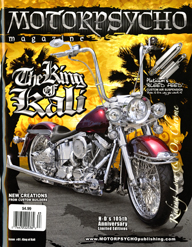
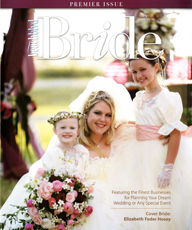
Motorpsycho, LA and Beach Blvd. Bride are but three out of the 155 new titles that were launched in the third quarter of 08 compared with 126 in the same period of 07. There were at least 462 new titles launched so far this year compared to 480 in the same period of 07, thus closing the wide gap between 07 and 08 to a mere 22 titles less this year. However, if the fourth quarter continues to reflect the third quarter numbers, we are on the road to witness more magazine launches this year than the year before.

And for the prophets of doom and gloom, here is more good news from the third quarter of 2008. A total of 51 magazines were launched with a frequency of four times or more in the third quarter compared with 43 last year. An increase of 8 new titles. It never fails to remind folks all the time not to write-off the launches of new magazines from the media landscape. Every new magazine published is a new media by itself. Check all the titles published throughout this year here and be your own judge on how healthy our magazine industry is.

h1

And then came September… A Flurry of New Launches

September 17, 2008


Back when I was a student at The University of Missouri-Columbia in the early 80s, I had my first chance to meet the legendary magazine editor John Mack Carter. Mr. Carter has launched more new magazines than anyone I have met. So, needless to say meeting him was like meeting the candy man in the candy store. I was introduced to Mr. Carter and was amazed by the vast knowledge and wisdom he possessed when it came to magazine editing and new magazine launches. Later in life, I was fortunate enough to work with Mr. Carter and learn a lot from his style of publishing and editing.

The reason for this lengthy introduction is of course a sentence that I still remember he told me back then. He answered my question regarding “when is the best time to launch a magazine?” Mr. Carter looked at me and without hesitation he said “September, and if you miss September then October.”

His prophetic words are as true today as they were in the early 80s. September is proving to be a great month for new magazine launches. From the mass 9 million giants like Spry, to the mass luxury 800,000 circulation WSJ., to the monster 360-page Michigan Avenue in addition to the tens of other titles that have appeared, so far, on the nation’s stands for the first time this month.
September, so far, has been a breath of fresh air when it comes to new magazines. All of sudden we are witnessing the media (yes the media, and the print one in particular) increase their doses of publishing the prophecies of those “end of print” doomsayers and the future is for every thing pixels.

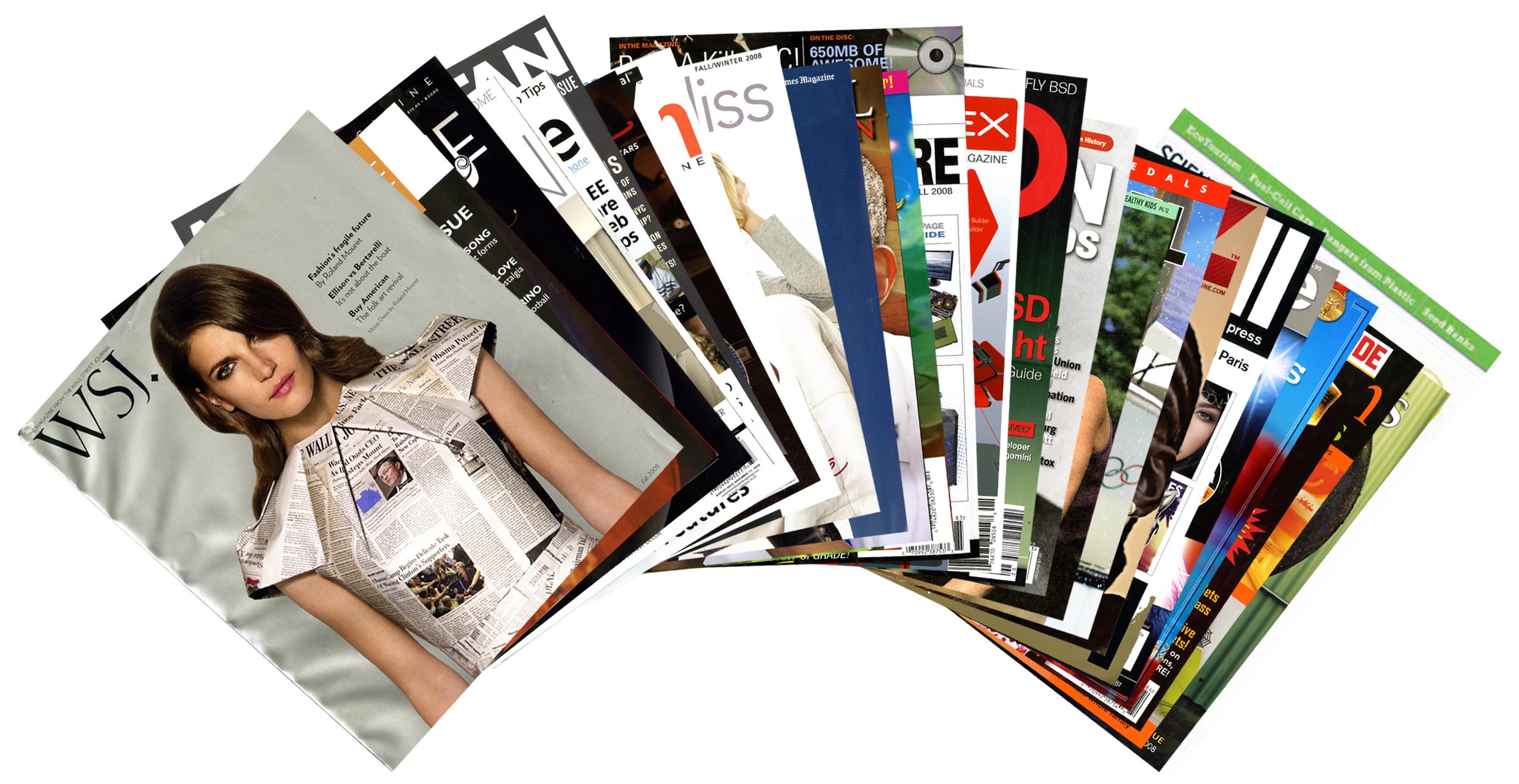
Try telling that to the publishers of the aforementioned magazines or to those select few mentioned hereafter that have seen their birth in “the best month to launch a new magazine: September.” Magazines like Wing., BBC Knowledge, Flash & Flex, debbie bliss knitting magazine, Tinker Bell, LA, the Los Angeles Times Magazine, Distill, Manhattan, Arkansas Life, Home Theater Design, Yoga Mom, iPhone Life, Strategy, Signatune, Scientific American Earth3.0 and Fine Champagne.

Yes, I know the newsstands are facing a lot of problems, and some say that one of those problems is the overcrowded magazine field and the host of new titles that keep arriving on the nation’s stands. To those I say, new magazines are the life line of our industry, they are the ones that add new and fresh blood to our body and keep us ticking. Without new magazines our industry will be as stagnant as it can be. We need the new magazines for two main reasons: one to keep our industry fresh and lively, and two to show those prophets of doom and gloom that the magazine industry is still, and will continue, to be well, alive and kicking… and not only in the special interest, limited circulation arena, but in all aspects of publishing form the mass to the class, there will continue to be new magazines published.

Thank you John Mack Carter for your 80s advice, and thank you to all of the aforementioned magazine publishers who indeed are willing to take up yet another gamble on a new magazine. Sorry, my friend Bob Sacks, the new magazines, in all shapes and forms will continue to appear on our market place; and guess what, they will continue to be in ink on paper. Cheers.

h1

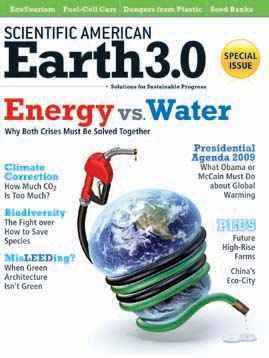
The Dawn of a New EARTH…

September 12, 2008


A new magazine will soon make its debut on the nation’s stands from the folks at Scientific American. The name Scientific American Earth3.0 and the content is

“Going way beyond the ubiquitous “green” service coverage in much of the media today, SciAm EARTH3.0 addresses the most urgent challenges facing our environment, economy and public policy decisions. As the authoritative publication on innovation and research, SciAm informs and elevates the public debate about the environment and energy, clarifying the science and debunking the myths surrounding issues like global warming and sustainability. Our future depends on successfully managing these complex issues.”

The greening of the magazine business have been witnessing a flood of new “green” magazines in the United States and abroad. Click here to read about the latest entries in the green magazine marketplace in the United States and click here to read about the latest entry in Europe.
So what is the secret behind the name Earth3.0? The publishers of the magazine explain it in simple terms:

Earth1.0
The natural world, undisturbed
Earth2.0
Excessive use of natural resources in order to achieve prosperity
Earth3.0
The sustainability of Earth1.0 + the prosperity of Earth2.0 for a new way forward.

h1

Spry, The New 9-Million (Newspaper Distributed) Health Magazine: Are They Out of Their Minds?

September 7, 2008


On Thursday Sept. 11, Spry magazine launches with a record 9.2 million copies distributed via newspapers. Yes, you read that right, distributed via newspapers. If, for a moment, I ignore the fact that a new magazine is being launched this week with a circulation of 9.2 million (200,000 copies delivered as a bonus on the 9 million guaranteed base), I can’t but wonder about the fact that the magazine is going to be distributed via newspapers. Remember, newspapers, the medium that more people have predicted its demise than there are actually newspapers in this country. Well, I have said it before and I will say it again, newspapers are not dying in America, however, some of them are just committing suicide. It was ironic to see few days ago a report on the Cox news service (part of the Cox newspapers chain) talking about the flourishing status of the European newspapers. The sad/funny part about the report is that we publish it in our American newspapers but we do not bother to learn any lessons from it. We continue to chase the news and try to stay up-to-date on our pages, while we know at the same time that it is not possible to do so with ink on paper anymore.

Well, back to my original reason for this blog, publishing a mass circulating magazine using newspapers as the method of distribution. Spry, is of course not the first national magazine distributed via newspapers. In fact it is the third title from the same company Publishing Group of America (PGA). PGA publishes American Profile on a weekly basis, Relish on a monthly basis and now Spry.

I asked Dick Porter, PGA’s CEO what were they thinking to launch a new printed magazine to be distributed in a medium that some say is dying. Are you out of your mind? I said. His response:

“I say look at our circulation growth (in both American Profile and Relish). In every medium today (newspapers, televison, etc), it is painful and partly it is because of the impact of technology. Consumers can put stuff on the internet that is free with a digital camera that is pretty good. (However) I think there is always a premium for the best storytellers… In the newspaper channel, clearly there is pain. I had this question when I was in Chicago and was asked aren’t you in a channel that is dying. I said first of all, look at the capacity. There is at least three buckets to segment newspapers, metro dailies, which are probably hurt more today than non-metro weeklies, and then there are free newspapers. The free newspaper market is growing like crazy. We are not even in that market and maybe we should be. I think if you added up all the paid circulation of newspapers on a daily basis, the number is something like 60 to 70 million. (The 770 daily audited newspapers have a circulation of about 45 million). I don’t know the exact number. But if you figure 60 million a day times 365 days a year that is an awful lot of capacity. Even in a doom’s day scenario, pick your number if you think it is going to be halves in three years. As long as I am only trying to launch a twelve time frequency, there is a lot of capacity out there for us to have enormous magazines. I think the proof of that mass is pretty simple. Look at Relish. Two years ago people thought why would you launch a newspaper magazine? That is such a tough environment. We launched at six million and today it is twelve million and in January it will go to fifteen million. We are also looking at frequency growth there too. We think there might be room for a thirteenth issue. In the case of Spry, six million wasn’t good enough. We launched at nine and had to raise the bar for ourselves. Probably the newspaper industry is tougher in 2008 than it was in 2006. There is just not a lot of conventional magazines out there approaching three million circulation today.”

Needless to say PGA is not the only publishing company putting its faith in the newspaper industry and using newspapers as a good distribution system for their magazines. The Gannett newspaper chain is using USA Today to distribute their outdoor magazine Open Air and the Dow Jones company is using The Wall Street Journal to distribute WSJ. The aforementioned titles are but a few of newly launched national magazines to be distributed through the newspapers, thus hitting two birds with one stone. First, they avoid the entire distribution problem (the crowded newsstands and the expensive direct mail) and second the need to search for an audience, since the newspapers have their captive audience ready and willing to receive the new publications.

Spry, WSJ., Open Air, Relish and American Profile have been a welcomed addition to the national magazine scene in the last few years and a major vote of confidence in the future of mass circulation magazines. Creative ways of distribution show that a special interest magazine does not need to have a circulation of less than 100,000, but rather can reach 15-million circulation as in the case of the food magazine Relish.

I think our industry needs to take an in-depth look at the aforementioned magazines and the way they are able to buck the trends and the prophets of doom and gloom. The future of magazines in print is definitely not limited to special interest and coffee table magazines, but to creative, well done, content driven magazines such as Spry, WSJ. and Open Air. Three new national magazines born in 2008 providing three solid answers to anyone who questions the vitality of print and whether print is well, alive and kicking.

h1

WSJ.:The New Standard of Luxury Magazines

September 3, 2008


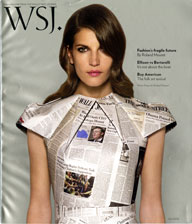
Reading The Wall Street Journal is normal. Wearing The Wall Street Journal is another story. The new WSJ., the magazine of The Wall Street Journal, does exactly that with its launch issue cover. Turning the pages of the newspaper into a “Moon Dress by Ronald Mouret” is the first of many glimpses of what this new magazine is going to be. Elegant, upscale and aimed at the “cream of the crop” of The Wall Street Journal readers, the magazine offers its readers a European look and feel from the cover all the way to the inside pages. The cover image echos the famous British ID magazine’s “one eye closed” image that appears on every cover of ID. Toned down cover typography makes the image jump at you from behind the metallic sliver ink that has become synonymous with luxury titles. (See the Interview magazine blog below.)
A unique table of contents adds to the intrigue of this new magazine. The departments are divided into Hunter and Gatherer instead of just listings of department heads. The feel of the publication reflects the readers the magazine is trying to attract. Tina Gaudoin, the British-imported editor-in-chief, opens her letter from the editor by stating, “Here’s what we know about you, the Wall Street Journal reader: You are smart, well-read, discerning about what you consume, opinionated and generous.” She adds, “At WSJ. we believe luxury is not about how you spend — it’s the way you live that counts.”
I asked Michael Rooney, the chief revenue officer at The Wall Street Journal, what makes WSJ. different than the rest of the luxury magazines. He responded, “I think the difference will be that it will have The Wall Street Journal DNA which is that we provide clarity to our readers about all issues… they come to us not just for the facts, but they come to us for what (the facts) mean.” Crystal clear clarity is what he really meant, because the content, the audience and the design of WSJ. is more than crystal clear in what they are trying to achieve.
WSJ. magazine is yet another welcomed new magazine bucking the trend that print is dead and the future is for something else. The audience of WSJ. was already there, the advertisers were already there, all what the folks at the Journal had to do was build the bridge that links the readers/customers to the advertisers…and they build one good “London” bridge… In fact, WSJ. is, to me, the new standard in luxury magazines and has become my standard (even after only one issue) in comparing other luxury magazines to.

h1

Brits Bring Knowledge to the American Shores…

August 27, 2008


The British are coming… This time they are coming armed with Knowledge for “the curious mind.” Whether it is science, history or nature the first issue of the BBC Knowledge magazine does indeed offer a wealth of knowledge. Andy Benham, the magazine’s publishing director said in a press release that “the magazine has been poistioned to capitalize on the strength of the BBC’s brand in the U.S. and while the content will feed American interests, the Britishness and BBC-ness of the magazine are seen as being key assets, offering consumers a fresh alternative to what is currently on the market.”
Two things captivated me about the BBC Knowledge: the first is the variety of content and design that indeed sets the magazine apart of what is on the market. The mix of in depth stories and great stunning photography made me stop on every page of the 100-page premiere issue. I can feel the European flair of the magazine in every page, yet it also felt so American. A welcomed blend of that Euro-American mix that hopefully one day will find its way to more magazines and newspapers in our country. The second thing that grabbed my attention is the dependency on circulation rather than advertising to survive in today’s market place. It is something that I have been advocating for some time. The magazine carries a limited number of ads, but Benham comments in the press release that “our primary aim is to build a solid core of subscribers…we want to offer readers the best of BBC stories in the magazine while carefully considering the tone and quality of any potential advertisers.”
BBC Knowledge is indeed a breath of fresh air in today’s market place where more major magazine publishers are committing suicide with some of their magazines rather than attempting to adjust to the changing market place. Check BBC Knowledge here, buy a copy at the newsstand for $5.99 or order an annual (six issues) subscription for $29.95. Real prices for real content. Enjoy your imported knowledge for the week.

h1

First Six Months New Launches Report: June to the Rescue

July 6, 2008


June came to the rescue of the total numbers of the new magazine launches with a total of at least 57 titles hitting the newsstands, two short of last June 07 and 20 more May of this year. The total number of new magazines launched so far this year stands at 291, still short 75 titles from the 366 titles published in the same period last year. However, the biggest drop this year comes in the regularly published magazines with a frequency of four times or more. The first six month of 2007 saw the launch of 132 magazines with the intention to publish at least four times or more. This year the numbers are a mere 78 titles. That is a drop of almost 40% than the previous year. This is a first since I have started tracking the magazine industry over 30 years ago.
The specials continue to match the numbers of last year with a total of 193 this year compared to 197 for the same period of last year. The annuals on the other hand saw an increase from 12 titles last year to 18 this year. The remaining titles were those published two or three times a year.
As I have written earlier, this is going to be the second year out of three that we are going to have a decrease in the number of new launches. It is part of the life cycle of new magazines. The reason I believe June witnessed the launch of 15 new magazines with a frequency of four times or more is the old-aged belief in the fact that launching a magazine during hard times (think Fortune, Esquire, Entertainment Weekly) is often better for the survival of a new magazine than launching it during good times. It will take a year or two for the magazine to establish itself and the hope is that the economy will rebound and the new magazine will be ready for the marketplace.
Some great magazines have been published during the first six months of 2008 that adds to my belief that the problem is not with our medium, but rather in the message we carry. Check my reviews on what’s hot and what’s not here and take a peek at every magazine I was able to locate for the first six months of 2007 here.
In my attempt to make sure that every new magazine is properly added and coded I make every effort to locate the first issue of the magazine. If yours is not here please feel free to send me a copy of the first issue to: Samir Husni, Box 2906, 105 Farley Hall, University, MS 38677.

h1

New Magazine Launches: First Quarter ’08 — totals are up, 4x or more are down

April 26, 2008

The number of new magazine launches in the first quarter of 2008 witnessed an increase of five titles compared to those introduced in 2007. A total of 150 new magazines were introduced to the American magazine scene in the first quarter of 2008. This is an increase of five from 2007, but still a far cry from the introduction of 192 new magazines in the same time period of 2006. However the number of titles published four times or more in the first quarter of this year has dropped by nine. Only 41 magazines were launched with the intention to be published at least four times a year compared with 50 in 2007, and 72 in 2006.
So what does this mixed bag of numbers mean? Not much. Since I have started tracking new magazine launches, I have witnessed a two or three years’ declines after a very healthy and busy year. 2005 was a very healthy year. 1013 new magazines were launched. The decline started in 2006. We are in our third year of decline. In 2006 we have seen 901 new launches, the number dropped to 715 last year, and if the trend of the previous years continues, we will see another drop again this year before the numbers bounce back. Call it market correction if you please, but definitely it is NOT a sign that print is on its way out. History will tell us otherwise. So enjoy this quarter’s crop and look forward to more titles to come next month.

Here is the break down of the numbers by month:

January-March – 150 total magazines

January – 42 magazines (14 published 4x or more):
6 quarterly
5 bimonthly
2 monthly
1 10x
28 special

February – 52 magazines (16 published 4x or more):
10 quarterly
2 bimonthly
2 monthly
1 9x
1 10x
1 bi-annual
3 annual
32 special

March – 56 magazines (11 published 4x or more):
9 quarterly
2 monthly
5 annual
40 special

Click here to see images of all magazines launched so far in 2008.