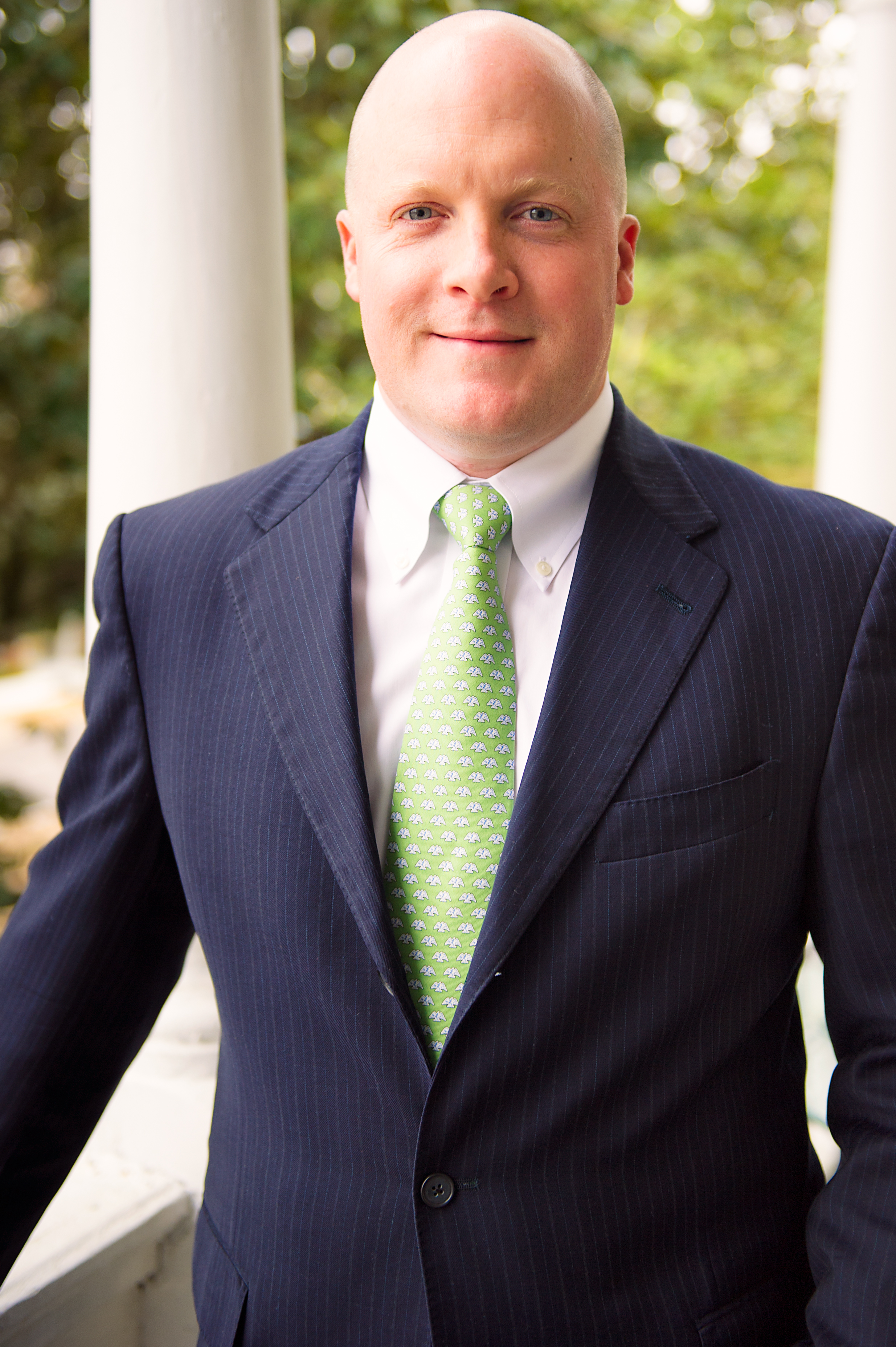
Eric Hoffman, CEO, Hoffman Media To Samir “Mr. Magazine™” Husni: “We’re Not Running From Print; We Still Embrace It.” The Mr. Magazine™ Exclusive Interview…
January 11, 2024
“I think in a world where we have our phones with us all day, Smart TVs at night, multiple monitors we’re looking at throughout the day, I think the tactile experience of print in itself really is valuable. There are people who need that in their lives.” Eric Hoffman
“Our team has stepped up in incredible ways. We’ve got great people. And it goes back to the legacy that my mom built. As a company, we’ve spent a lot of time in these last few months thinking about why we do what we do. And if you think about when Phyllis started the business 40 years ago, at its core it was to enrich people’s daily lives. And that’s still true today.” Eric Hoffman
Hoffman Media may have started out as the little engine-that-could, where a mother of twin sons took her hobbies of needlework and sewing to a new path professionally and made it into a business. But that was 40 years ago. While Phyllis Hoffman DePiano dedicated her talent and her determination to making her company what it is today, her sons Eric and Brian Hoffman have kept it focused in the right direction since her passing in July 2023. Today, it is a family owned and operated special-interest publisher based in Birmingham, Ala. that is going strong and poised on a positive course.
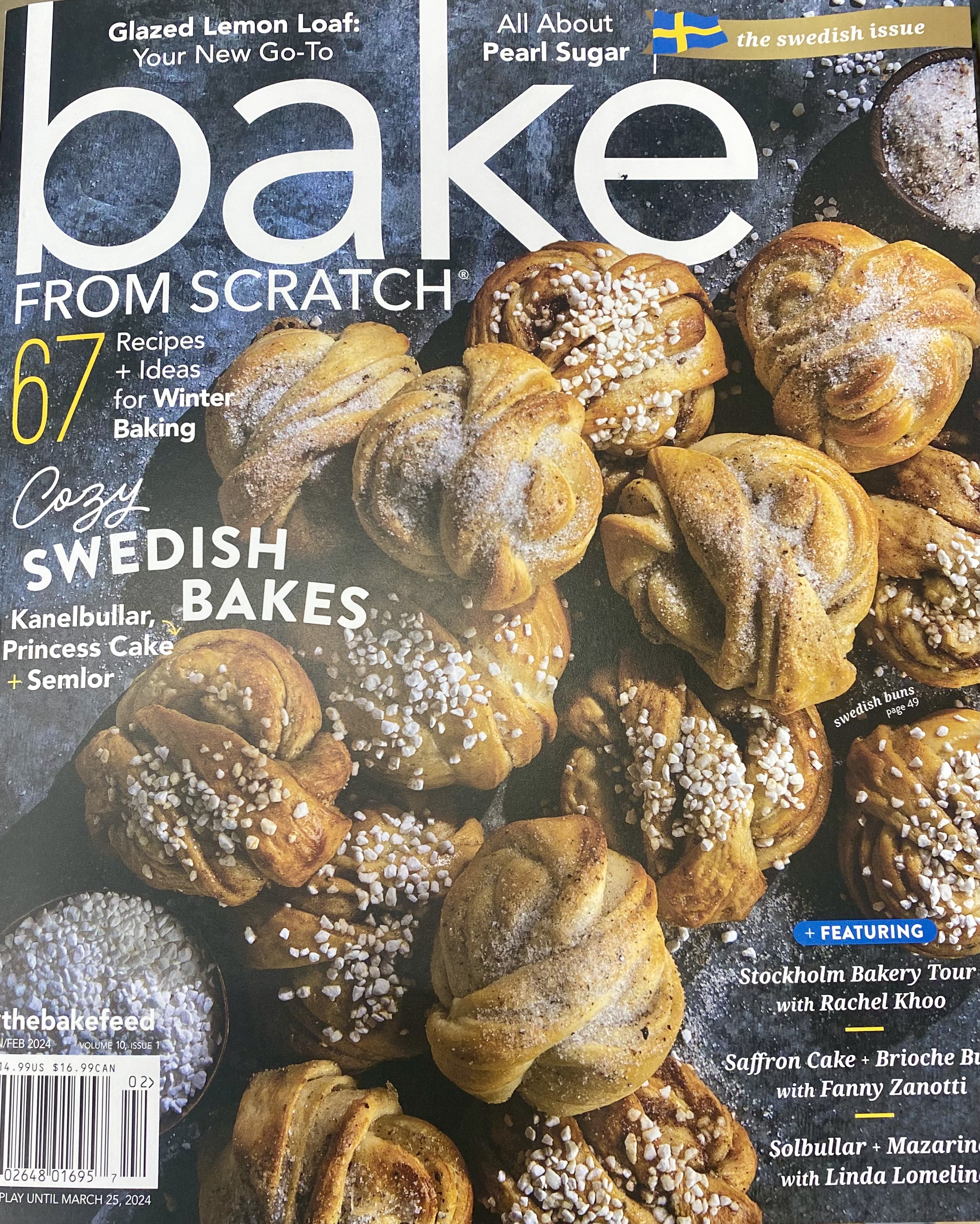
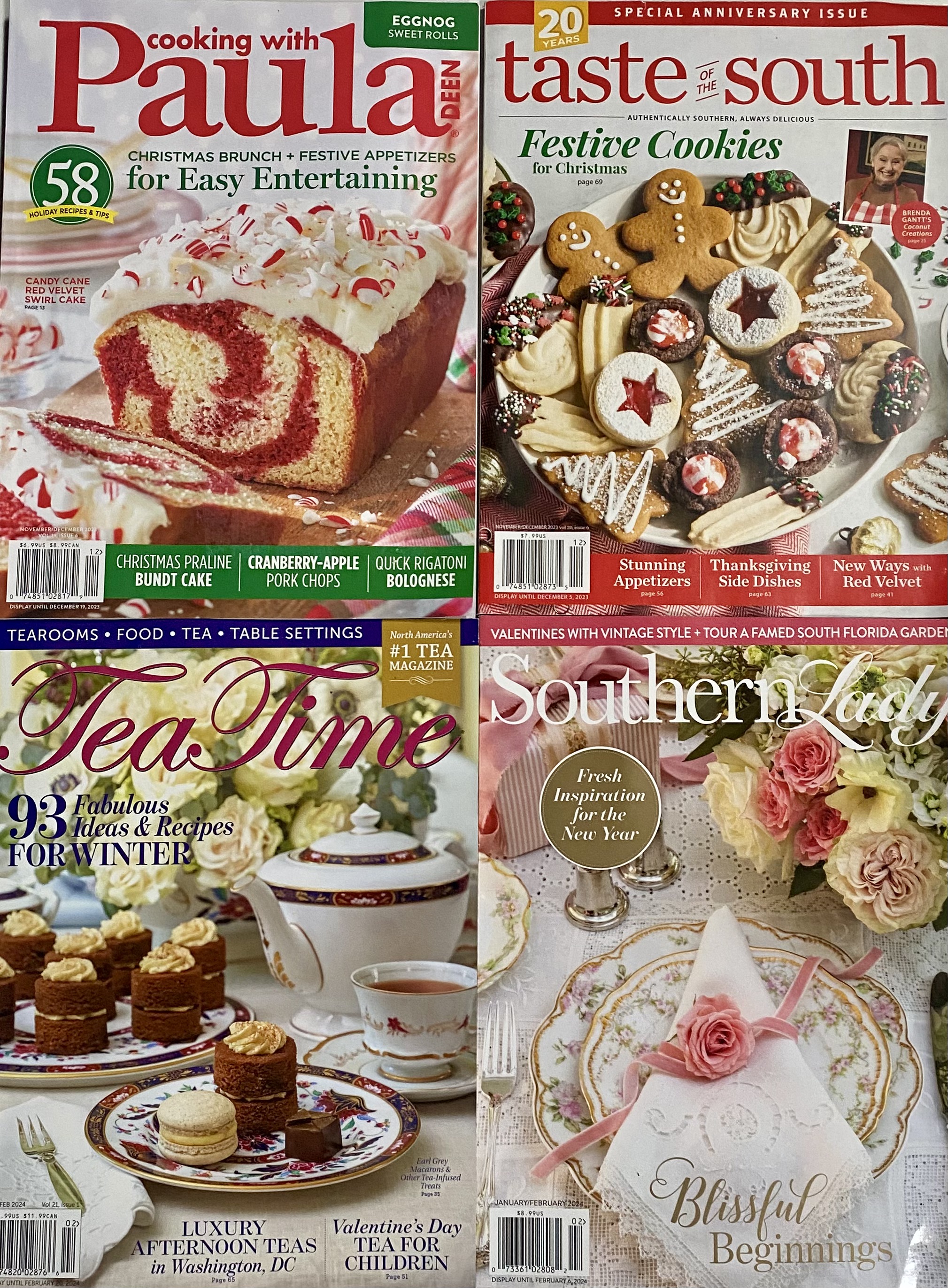
From Southern Lady to Bake from Scratch, Hoffman Media creates some of the most popular and iconic brands in the marketplace today. And Phyllis would be very proud of her sons and what they have accomplished.
I spoke with Eric recently and we discussed his position as CEO of the company. While he is grateful and proud of his mother’s faith in his abilities, he also acknowledges and recognizes her convictions in his twin brother’s creative talents – Brian is the Chief Creative Officer and Co-President of the company. They’re a fantastic team that their mother believed in.
I spoke with Eric about the things that 2023 brought to the company and changed it and to the brothers. The new leadership team, the unfortunate reductions they’d had to make, but also the camaraderie and success they established. It’s an informative interview with a great guy, a loving son and brother, and an excellent CEO.
So please enjoy the Mr. Magazine™ interview.
But first the soundbites:
On losing his mother, Phyllis Hoffman DePiano, in 2023: You never really expect to lose a parent, particularly at the age of 69. We worked together for 17 years; she brought me in young, and I had a little bit of experience, but I owe her for everything that I’ve learned about the business.
On how hard it was to assume the title CEO after losing his mother: Leading up to her passing, we had already started to assemble a new leadership team, aligned people across the business differently. So, to her credit, she gave me the full reins to the business. The end of June and July, we just had amazing people that could step up and really left us to focus on ourselves and our grief and everything that came with it.
On continuing to publish frequency magazines in a world where that’s an unusual idea: I think it comes down to the fact that it’s not about the quantity; it’s about the quality. I believe we’ve had this conversation before. (Laughs) We think about being in these niche markets that have this passionate base of readers and followers. If we do our job and we produce high quality, unique content, we think that will stand the test of time.
On why he’s a firm believer in print: I think it’s about following the customer. For example, this year our direct mail campaigns all exceeded budget expectations on response rate. We saw the average revenue per customer going up. So we feel confident that we’re not seeing pressure that would tell us otherwise.
On the trust factor with print: It is about building trust with the customers. We really don’t do a lot of gimmicky offers to get subscribers. I think that’s part of the integrity that you’re building. And the other things that we do: the video components, the events; everything ties back to what that brand is, print is just one component of how we interact and build that relationship.
On the rather high prices of Hoffman’s magazines and whether the audience puts up any resistance: You always do a test when it comes to these things, but my mother was also a firm believer in following your gut. As costs have gone up in the business with overhead, healthcare cost increases, paper increases, postage increases; as we think about how to continue to deliver that experience, we have to be mindful that we need to charge more. But we’re always testing. But so far it’s still a fairly healthy business.
On whether the highlight of his year was his mom naming him CEO: I would say better than that, the closeness my brother and I have been able to develop as business partners really even supersedes that. The fact that we’re a forty-year-old business, second generation, and we’re twins, we really balance each other out very well. The creative force that he is, coupled with my hands-on when it comes to the business side is great. Then seeing our team step up to support us through this year that we’ve had, it was amazing.
On what keeps him up night: I think about our strategic planning meeting that we had as an executive team in December. We probably had 50 ideas on the wall. If we could go do all of these things, what would we go do? And we challenged ourselves to focus on four. And those four things really connect back to our theme for the year on how we’re going to run the business.
And now the lightly edited transcript of the Mr. Magazine™ interview with Eric Hoffman, CEO, Hoffman Media.
Samir Husni: Needless to say, 2023 was a very tough year for you and your family. In your own words, can you elaborate a bit on that?
Eric Hoffman: Sure. You never really expect to lose a parent (Phyllis Hoffman DePiano), particularly at the age of 69. We worked together for 17 years; she brought me in young, and I had a little bit of experience, but I owe her for everything that I’ve learned about the business.
Earlier in the year, one of the highlights of my career was when mom named me CEO. She was sick, but was still coming to the office when she could. Then in one meeting over lunch, she named me CEO, which was incredible and timely in that I think she knew that she was sick, and didn’t want to leave anything unsettled. What it did was set the path for the company to be able to have continuity through what was a horrible transition in July. It allowed the business to really continue to push forward.
Our team has stepped up in incredible ways. We’ve got great people. And it goes back to the legacy that my mom built. As a company, we’ve spent a lot of time in these last few months thinking about why we do what we do. And if you think about when Phyllis started the business 40 years ago, at its core it was to enrich people’s daily lives. And that’s still true today.
Samir Husni: And you did not miss a beat, there was no interruption whatsoever. Everything was published on time. How hard was that for you, becoming the CEO after what happened?
Eric Hoffman: It’s interesting, I called a meeting in the spring and I sat down with my mother to lay out some ideas I had about the business, some strategic things. I would have never asked for the title CEO; I always had deep respect for what she had and what she had built, but that was a very exciting day for me.
So leading up to her passing, we had already started to assemble a new leadership team, aligned people across the business differently. So, to her credit, she gave me the full reins to the business. At the end of July we just had amazing people that could step up and really left us to focus on ourselves and our grief and everything that came with it.
Coming out of that, I was able to assemble a new leadership team. When I looked at the business I knew that we needed a new executive suite that would really run with great alignment and focus. So I promoted Greg Baugh to Chief Operating Officer, which was my previous job. Greg has been in the business for over 20 years and probably knows more about our business than anybody. He’s just an amazing mind and not only knows the production side, but also looks across a lot of the revenue.
Then we hired our first ever Chief Marketing Officer, Missy Polhemus, who actually worked at Time Inc. when she was younger. She spent five years, from 2008 to 2013, working with us here doing digital marketing and consumer marketing. Then she left and spent the better part of a decade doing other things, such as she helped Shipt, a large company in Birmingham that is a grocery delivery company, build, which ultimately was a fantastic exit. Then she went on to be the Chief Marketing Officer at TaxSlayer.com and so she had a unique perspective. And this past summer, at the end of July, she joined us as our first CMO, so she’s bringing a whole new level of strategy to the business, which is exciting.
We hired and ultimately promoted Laura Sappington as our Chief Financial Officer and she spent 25 years at Time Inc. working in finance, marketing and operations. She had a lot of experience on the Oxmoor House side of the book business. So the financial acumen coupled with the operations is something that we really value.
Then we promoted Brooke Bell to our Chief Content Officer. And this is an amazing story; she’s worked in virtually every aspect of editorial in our business. She’s had continual growth throughout her career. She worked really tight with my brother, Brian, who remains Co-President and our Chief Creative Officer. One of Brian’s passions, as you know, was launching Bake From Scratch, so Brooke works alongside him. Of course, she’s across all the editorial, but she’s really helped bring Bake From Scratch to life. It’s now our most profitable brand. So the energy they have put into that is really exciting to see.
That leadership team coming together and being perfectly aligned in where we’re going as a business is great. We talked about the Why – to enrich people’s daily lives; the how is that we really are creating content and experiences that inspire people to pursue their passions.
So knowing those things; we think a lot about where we are in the media landscape. Everything we do is good and positive. And in a crowded media landscape with politics and negative news, shock value and all that, we get to bring positive experiences to people. We know that when our magazines arrive at someone’s house it’s a good day. One of the few things they’re probably looking forward to.
Samir Husni: What’s your secret? Other magazine companies are trimming and cutting frequency, including major magazine companies. Yet you’ve stayed the course. That little engine that could that Phyllis started 40 years ago is still going strong. You’ve never cut the frequency and continue with all the publications. You’ve joined the crowded bookazine market; what’s your secret?
Eric Hoffman: I think it comes down to the fact that it’s not about the quantity; it’s about the quality. I believe we’ve had this conversation before. (Laughs) We think about being in these niche markets that have this passionate base of readers and followers. If we do our job and we produce high quality, unique content, we think that will stand the test of time.
I will say that if you look at our revenue mix, one of the interesting things that has changed is that print, subscription and newsstand itself really comprises just a little over half of our total revenue. So what we’ve done is really layer on other business units as ways to further service our customers.
We launched 83 Press, which is our book imprint, and not only do our magazine brands produce books, but we’ve also really gotten into authored books. We’ve sort of become the publisher for influencers. We’ve done several projects, I think we have five or six under contract for next year; the book business will be probably north of 25% of total revenue.
And then the consumer events business; we acquired the Original Sewing and Quilt Expos, which is nine shows around the country, we bought that business from F+W Media prior to their bankruptcy. This year we’ve seen recovery there where it’s on a path to be back to pre-COVID levels.
And we’ve gotten into highly targeted events; we’ll do probably 15 this year, and those look more like 16 to 20 people, week long curated experiences. Bake From Scratch, for example, will probably have a dozen of them. And we call them our baking retreats. We get to do them in places like Paris, France, Italy, San Francisco, Alaska, and we do a handful of them in Birmingham in our new headquarters that we built. So the event business is double-digit growth with fantastic margins.
We’re not running from print; we still embrace it. We have very healthy brands, but being able to take that customer through a bigger journey we think is interesting.
And then advertising is really about 10% of the revenue mix, but very valuable in terms of margin and how we think about those brands and categories, it’s all endemic to what we do. We’re actually budgeting double-digit growth in advertising next year because of what we’ve seen. Advertisers are really looking to connect with passionate consumers now more than ever. The mass reach traditional rate base environment is a broken model. And I’ve said that before. What we’re finding out is that our larger clients really want custom experiences. They want to experience our video studios, our test kitchen, and they want a balance across print and digital. We’re now able to offer that. We’ve seen enormous growth in our home and décor category, in particular with Southern Home Magazine.
We’ve had fantastic traction in the travel and tourism business connecting people, whether that’s through southern lifestyle or culinary. We like where we’re positioned for that.
So the revenue mix in general has changed a little bit, but healthy overall. We’ve seen the most pressure at newsstand. I think the consolidation that’s going on there, in terms of the publishers, the merger and also now having one national distributor; we still very much believe in the single copy business. You did an interview with Doug Olson and I think he kind of highlighted that, but there’s still definitely a place for the newsstand. How you think about it: where it’s distributed, what’s the price point, what are you doing there.
I think the bookazine, the SIP business, is a pretty robust opportunity for us because we are able to be very targeted in subject matter and it becomes a little bit less of a price point.
Samir Husni: From everything you’ve said, you’re still a firm believer in print. Why?
Eric Hoffman: I think it’s about following the customer. For example, this year our direct mail campaigns all exceeded budget expectations on response rate. We saw the average revenue per customer going up. So we feel confident that we’re not seeing pressure that would tell us otherwise.
I think in a world where we have our phones with us all day, Smart TVs at night, multiple monitors we’re looking at throughout the day, I think the tactile experience of print in itself really is valuable. There are people who need that in their lives. And the book business too. The cookbook business is strong; I’ve probably got 100 of them at my house. I enjoy looking at them and reading them. It’s not about being antiquated, it’s really about delivering on that promise of what the brand stands for.
Samir Husni: What about the trust factor? I’m giving a speech in Germany in May about print and trust compared to digital. Once you print a magazine you can’t go back and change something.
Eric Hoffman: I think about the authenticity that comes around, at least in our experiences. We have people every day who are passionate about what they’re doing. And they’re creating content from scratch. We’re testing recipes in a test kitchen to make sure that they work. The style of photography is shot in such a way that it can’t be duplicated.
But it is about building trust with the customers. We really don’t do a lot of gimmicky offers to get subscribers. I think that’s part of the integrity that you’re building. And the other things that we do: the video components, the events; everything ties back to what that brand is, print is just one component of how we interact and build that relationship.
Samir Husni: Your magazines are not cheap, such as Cast Iron, it’s almost $50 for a subscription. Some are $30 for a subscription.
Eric Hoffman: We actually have a sewing magazine called Classic Sewing and it’s a quarterly and it’s $75.
Samir Husni: Is there any resistance from the audience toward these prices?
Eric Hoffman: You always do a test when it comes to these things, but my mother was also a firm believer in following your gut. As costs have gone up in the business with overhead, healthcare cost increases, paper increases, postage increases; as we think about how to continue to deliver that experience, we have to be mindful that we need to charge more. But we’re always testing. But so far it’s still a fairly healthy business.
Samir Husni: I know it was a tough year for your family, but what was the highlight of your year? Was it that meeting in April where your mom named you CEO?
Eric Hoffman: I would say better than that, the closeness my brother and I have been able to develop as business partners really even supersedes that. The fact that we’re a forty-year-old business, second generation, and we’re twins, we really balance each other out very well. The creative force that he is, coupled with my hands-on when it comes to the business side is great. Then seeing our team step up to support us through this year that we’ve had, it was amazing.
One of the hardest things I’ve had to do this year was implement our first-ever reduction in force that we’ve ever had to do in our 40-year history. That was incredibly difficult, but unavoidable. We tried virtually everything possible, managing costs, everything.
And what came from that, unfortunately, was saying goodbye to super-talented, incredible people. But after that and seeing the business and our remaining people step up and take an ownership mentality; we’re already seeing the positive from that.
As we think about 2024 and real revenue growth, greater alignment across the business, and then being even more strategically focused, I would say it’s the people. That’s the highlight. It’s going through the adversity, through the loss of the founder, and some difficult choices that had to be made.
I’ll share this with you, in the last two years we were able to retire all of our debt. The business probably had four and a half million dollars of debt. Other than needing a line of credit for just managing working capital, we don’t have a lot of the burdens that many others do.
Also, we have no outside investors. My brother and I as successors have the business. Don Logan, a legend in this business, he and his sons still own a small portion of the company, but we don’t have that private investor pressure. We have a long view on the industry. And I think it allows us to follow some of these things that we see working, like the event business and videos.
We built up two video studios in Birmingham and we’ve seen some great things come from that. We formed a partnership with Williams Sonoma. We do a live Monday night baking class. And we’ve done over 100 live classes out of our studios and that’s become a real revenue stream. Each week we might have anywhere between 400 to 1,200 people taking the class.
So we’ve seen the ability to make those investments into studios, we’ve built new headquarters in Birmingham, we revitalized the property in downtown Birmingham. We’re just taking a patient view of where we are and we think that’s good. There’s not many of us like that in our industry. We’re family run with no outside pressure from investors and a fairly healthy balance sheet. It gives us the ability to withstand a lot. Also lean into where we’re getting growth.
One of the things that we’re doing for the first time in the forty-year history, the company is going to an open book management. Our first town hall is set for January 16th. And through that we’re going to really be communicating to the whole business about just where we’ve been, performance, top to bottom, kind of how the game of business works. And then roll out our budget.
More specifically is, rolling out an incentive plan where every employee in the business will participate based on our success. So as we develop greater alignment push, responsibility, accountability and authority through the organization, we think that will be an interesting way for us to grow the business and develop opportunities for everyone in the company to reward them financially and professionally. That’s starting this year. I’m excited about it because it’ll be a new approach to how we run the business. We have a lot to do.
Samir Husni: My typical last question; what keeps you up at night?
Eric Hoffman: Wow! I wish I could tell you. (Laughs) I think about our strategic planning meeting that we had as an executive team in December. We probably had 50 ideas on the wall. If we could go do all of these things, what would we go do? And we challenged ourselves to focus on four. And those four things really connect back to our theme for the year on how we’re going to run the business.
So I guess what keeps me up at night is knowing that there are a lot of good things that we could go do. And maybe it’s getting better at saying no to 10 or 15 good ideas so that we can say yes to some great ones. We’re excited about where we’re going, but creative businesses are interesting because there’s always something new to explore, chase and figure out. You have to decide if it’s a distractor or the next homerun.
I’d also like to express my deepest gratitude to every one of my employees. I want them to know that leading the business is a privilege and caring on the legacy that Phyllis has left us is a big burden to carry and I can’t do it alone. My brother and I can’t do it alone. It really is everyone in the organization that makes Hoffman Media such a special place.
[…] Eric Hoffman, CEO, Hoffman Media To Samir “Mr. Magazine™” Husni: “We’re Not Running From P…: “I think in a world where we have our phones with us all day, Smart TVs at night, multiple monitors we’re looking at throughout the day, I think the tactile experience of print in itself really is valuable. There are people who need that in their lives.” Eric Hoffman “Our team has stepped up in… […]



 Mr. Magazine
[…] Eric Hoffman, CEO, Hoffman Media To Samir “Mr. Magazine™” Husni: “We’re Not Running From P…: “I think in a world where we have our phones with us all day, Smart TVs at night, multiple monitors we’re looking at throughout the day, I think the tactile experience of print in itself really is valuable. There are people who need that in their lives.” Eric Hoffman “Our team has stepped up in… […]