

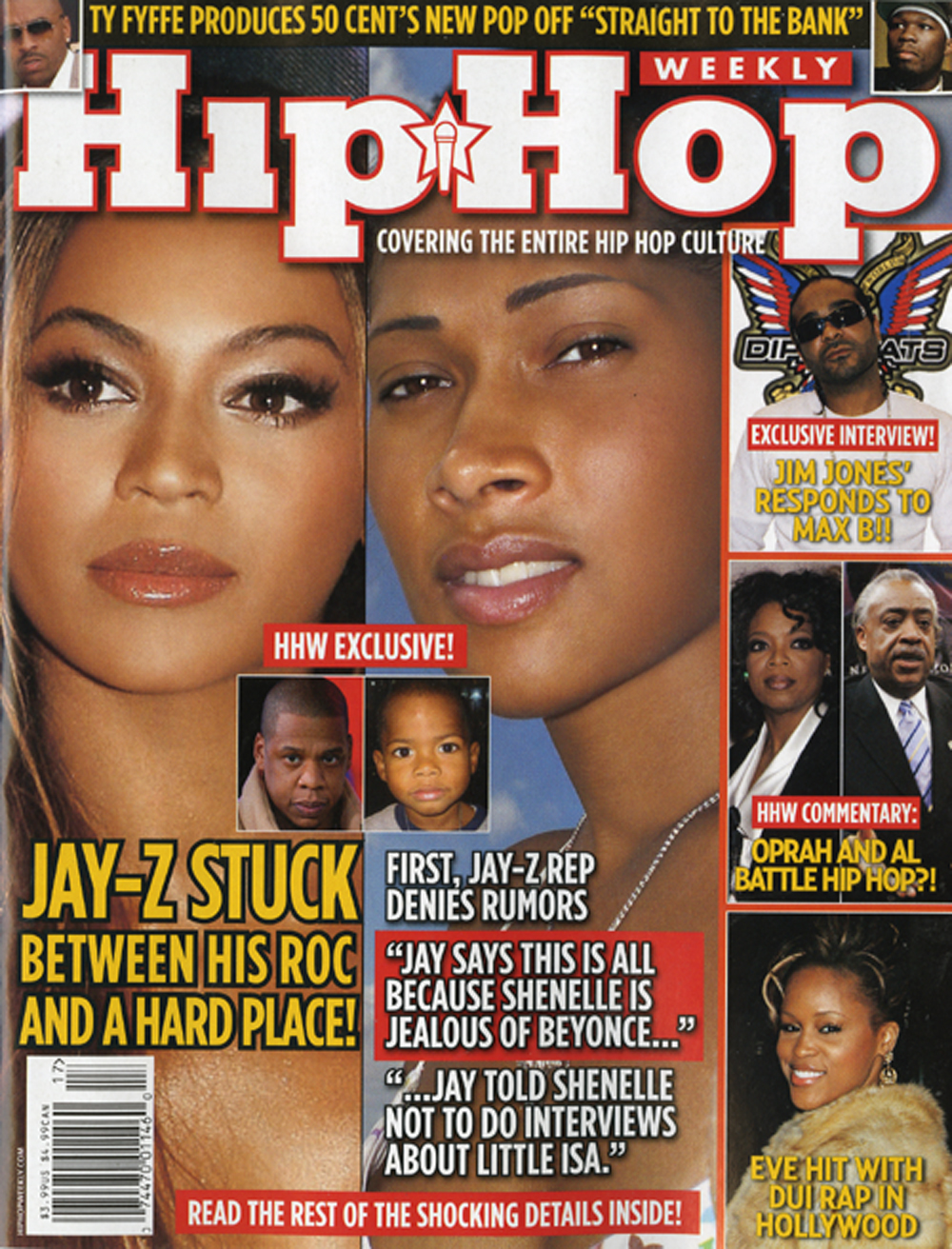
So what is the formula for good cover design? Well guess what, there is no such thing regardless what some may tell you. The variables are way too many and what makes one issue sells more than the other depends on the many variables that will need more than this space to list. However, one variable I know will work every time is that of repetition. The number one selling magazine on the newsstand per issue Cosmopolitan has been doing it for over 40 years. Use cover lines, with same themes in the same location. Men’s Health is doing the same. Some may say those two magazines are cluttered with cover lines (by the way, I call them sell lines), and I say but those cluttered covers sell magazines. We are in the business of designing covers to hang on a museum wall, we are in the business of selling magazines. However, if you want to be cluttered, you need to do so in all the right places. The upper left-hand corner is the most important real estate on a magazine cover… you ignore it and buyers will ignore you. Hip Hop Weekly uses the cluttered approach on its cover in all the wrong places… compare those three covers and judge for yourself…none will win an award for design, but two out of three will sell very well on the newsstand. You want to bet which two? Drop me a note.
Archive for May, 2007

Good clutter vs. Bad clutter
May 12, 2007There is nothing new under the “cover”
May 11, 2007

As you can see from the pictures above, good cover design repeats itself every now and then. Esquire has a history of great cover designs and now you have the opportunity to see all the covers of Esquire from 1933 until today by clicking here. I was browsing these covers this morning and the image on the November 1989 cover looked so familiar in its design to a magazine that I’ve just bought. Not to issue rush judgments, I reached into my stack of magazines for this month, and lo and behold the cover design of this month’s GQ looked a lot like the Nov. 1989 Esquire cover. Judge for yourself. By the way, I have always used Esquire’s covers in my classes as a great example of great men’s magazine cover designs together with those of Vogue’s as an example of great women’s magazine cover designs.
From one to 96 issues a DAY: Check out the G24 paper
May 11, 2007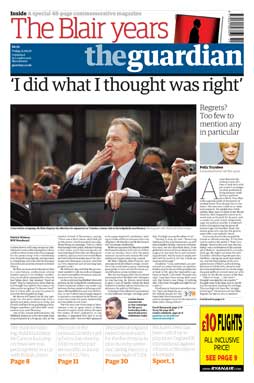
The (British) Guardian newspaper has added yet another innovative way to show how a newspaper can read, feel, and look like a magazine on a daily basis. The G24 daily magazine on the Guardian Unlimited newly revamped web site offers readers the opportunity to download and print, yes PRINT the pdf of five different sections that are updated every 15 minutes, yes UPDATED every 15 minutes. The sections offered are Top Stories, World, Media, (check it here media.pdf), Business and Sports. The family of The Guardian newspaper continues to grow and to provide readers/viewers a good, very good interactive paper that provides a link between the pixels on the screen and the ink on paper. Check it out here and note the content, the ads and the design of the G24 paper that publishes 96 times a day in five different sections. There are a lot of lessons to be learned here. Just keep in mind that all the planning for the future will not help if you can’t survive the present. When will our newspapers wake up and stop killing themselves…I keep on wondering which paper will be the first to take the lead and make us survive the present and help us look for a great future… Our industry needs a leader who is willing to look across the Atlantic and see what has been done with newspapers all across the world (including the one above). Our future is NOW… either CHANGE or DIE, there is no third option.
There is no nudity in NUDE
May 10, 2007
Washing on our shores in the United Stated is the first international issue of NUDE magazine, the British magazine with “100 pages of countercultural goodness.” The folks at NUDE tell the readers that the magazine was born in 2003 “as a 36-page magazine that was distributed primarily in London. However, as the magazine has grown, it’s scope has broadened in recognition of the fact that great artists, musicians, filmmakers and writers etc, come from all over the globe. As such, NUDE will continue to cover an eclectic mix of international mainstream culture, but from a very British perspective.” Well, NUDE will be a welcomed, but different, addition to the United States market. The square-sized magazine ushers an easy to follow design combined with lots and lots of “Music & Graphics & Hip Lit.” The handy sized magazine is worth every penny of its $6.99 cover price. One important final note about NUDE, you can expect a lot of things in this magazine, NUDITY is not one of them. Even with its name, the magazine goes “beyond the counter culture.”
See no evil, hear no evil and say no evil
May 9, 2007That was the first thing that came to my mind as my colleague Mark Dolan at the Department of Journalism (University of Mississippi) commented on the major disconnect which exists between the most journalism faculty’s published research and what goes on in real life newsrooms and television stations.
We were debating how many times we ever heard an editor or publisher refer to an article in Journalism Quarterly or Journalism Monographs (two major publications in journalism education that help faculty get tenured if they publish in them) when they meet with you or talk to you about the business.
It never happens.
The opposite is true with almost any other profession. Doctors refer to the New England Journal of Medicine every time they talk about their research, so do scientists when they refer to Nature magazine. And then come the journalists. We try to debate and analyze the most obscure things that bring our industry no benefit.
I still remember that day in 1985 when I presented my first research on the survival rate of magazines and the looks I received from my academic colleagues. They thought I am the anti Christ. Writing about things that are not historical in nature, which do not analyze the nature of content of the coverage of some war in some magazine, or some women’s issues in some non-women’s magazines—the list goes on and on. From my early career days, I promised myself to make all my research relevant to the industry I love and teach about. From that summer of ’85, I started directing all my work to the industry rather than my colleagues. All my books, all my articles, my web site and now my blog aim to answer ‘what is in it for me, the reader, the publisher, the editor and the art director’. The industry needs academia to be on the forefront of the future—to be learning from our past, not living in it.
When I read some of my colleagues’ writings and discoveries for things that have been taking place for years, I can’t help but to wonder why our industry leaders do not use our research in their works and daily discussions. We can’t continue this disconnect with the industry. Yes, we are academia, but we should be in the service of our students first and the industry second. It can be done without having to sacrifice one on the alter of the other.
Our magazines, newspapers, the entire media field is screaming for help. Do not bury your heads in the sand and pretend that it does not matter to you. You and your relevant research are needed now more than ever.
New Magazines: The numbers for the first trimester
May 8, 2007
Flower is but one of 202 magazines that were born in the first trimester of 2007. Two trends appear to go hand in hand for the first four months of 2007 when it comes to new magazine launches: the first is the drop in the number of special issues and one time publications (almost 33% drop from last year); and the second is the drop of the number of magazines with a frequency of four times or higher (almost 20% drop from last year). As I mentioned earlier on this blog, this is NOT an unnatural occurrence in the field of magazine publishing. Every few years we see a market correction and the numbers drop. It is not new. This market correction has happened every few years, both before and after the birth of the internet. However, the silver lining in all of this is that the number of magazines with four times frequency or more is closing the gap with the numbers of the specials and one-time titles. So, here goes the numbers (at least for now as we keep on updating the numbers as we receive titles we’ve missed) for this year compared to the numbers of last year. In the first trimester (Jan. through April 2007) at least 202 new magazines were launched with the following frequencies: Four times or more, 79 titles (100 in 2006), Specials, 104 titles (155 in 2006), Annuals, 12 titles (25 in 2006) and the remaining seven titles were published either two or three times a year. For a complete list of all the titles of the first trimester click here. To send us a first issue that we’ve missed from the first trimester click here for address.
Lessons to learn from a Newspaper not committing suicide…
May 7, 2007“And a witness from their own testified,” so goes an old Arabic proverb. And so does Walter E. Hussman publisher of the Arkansas Democrat-Gazette in an opinion piece in The Wall Street Journal today about the reasons newspapers are sinking rather than growing. The Arkansas Democrat-Gazette is one of few, very few, newspapers that does not offer free content to its readers and in fact, send readers back from the web to the paper. An excellent road map for anyone who is interested in seeing their paper not only survives but also thrives. Check it here.
Alef magazine or the Middle East like you’ve never seen…
May 6, 2007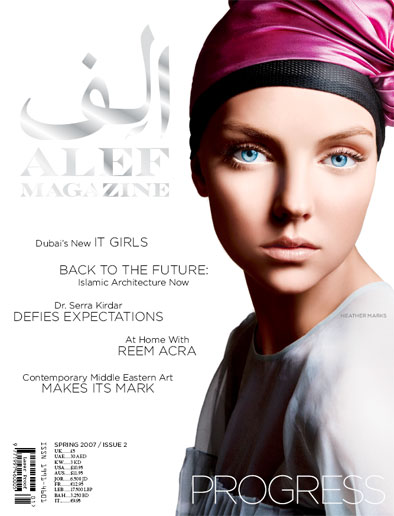
Alef is the name of the new quarterly magazine that aims to “showcase a progressive vision of the Middle East and to spotlight the cultural contribution of people of Middle East origin.” For those of you not familiar with the Arabic language, Alef is the first letter of the alphabet; same as the A in English and the Alpha is in Greek. What the editors promise, the editors deliver. It is indeed one of the best showcases of the Middle East and is unlike any showcase you may have seen from the Middle East. No war pictures, no killings and no stereotypical content, but rather art, fashion, lifestyle, travel, music and architecture spreads that will stop you every turn of the page. It is a stunning reversal of the image you see on your daily television shows or in the movies when it comes to the Middle East. The second issue of the magazine (Spring 2007) is now out and available for your “indulgence and pleasure” about an area of the world that you’ve never seen presented this way. Check Alef magazine here or pick up a copy at your nearest bookstore or newsstand.
The power to HEAL and more (Hot and New this Week, take 5)
May 4, 2007Once a week, I highlight three new magazines on my web site www.mrmagazine.com. This week the three new magazines are Heal, Laid Low and Map. Read here about these new launches. To be considered for review on my web site, please send a copy of your first issue to Samir “Mr. Magazine™” Husni, Department of Journalism, The University of Mississippi, University, MS 38677.
The VIP Factor in Magazines
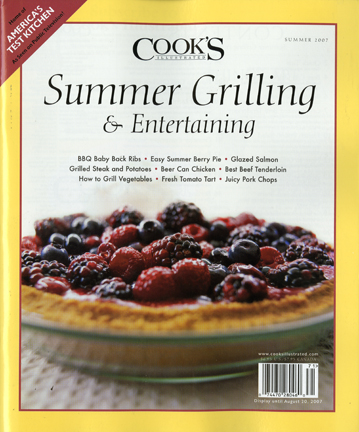
May 4, 2007For years I have been telling my students and my clients that the Visual Impact in Print (the VIP factor) depends on marrying the photography with the typography to create a visual impact that will stop you and make you pick up the magazine. Well, today while scanning the newsstands I found a great example of how not to achieve that impact. In fact it was just the opposite. The cover of the new special from Cook’s Illustraded magazine on Summer Grilling & Entertaining stopped me in my tracks for the complete wrong reason. Summer grilling screams the name and berry pie screams the picture… My brain kept showing me images of a grill and barbecue and my eyes kept showing me a delicious cold pie ready to eat…confused by the mixed messages I started to walk away, but then I remembered it is a first issue that I need to add to my collection plus, I thought, it will make a great blog on what NOT to do with your magazine cover. Well check the cover for yourself. It is grilling below this blog…


 Mr. Magazine